Year: 2016

  • Eye In The Sky: Political thriller debates real-world issues

    Eye In The Sky: Political thriller debates real-world issues

    Conflicts in morality and ethical responsibility at the highest levels of government take center stage in the political thriller “Eye in the Sky,” now in wide release.

    Oscar winner Helen Mirren headlines an elite cast as a British colonel remotely leading a mission to capture international terrorists in Nairobi, Kenya. When the mission ultimately changes from capture to kill by drone strike, the legal and political stakes gets elevated to extreme levels as a young Kenyan girl unwittingly sells bread on a street corner within the target zone.

    Officials from three different nations, military experts, legal minds and spies working on the ground all must make difficult decisions in short order, with “Eye in the Sky” providing gripping drama throughout.

    The film works thanks in large part to Mirren’s commanding presence on camera. While the role of military leader isn’t a typical role for her, Mirren blasts through dialogue with ruthless efficiency and insists viewers take notice. This is a rarely seen side of Mirren as an actress and one definitely worth the screen legend exploring further in other films.

    Veteran character actor Alan Rickman appears in one of two 2016 films completed before his death in January. His performance as Mirren’s commanding officer is quintessentially Rickman, subtle and profound while simultaneously maximizing his character and not overshadowing his co-stars. An actor’s actor, this film will live on as a reminder of Rickman at his finest, putting the success of a film as a whole above any personal spotlight.

    “Breaking Bad” star Aaron Paul plays an important supporting role as the lead American drone pilot in the mission, forced with the constant threat of having to pull the trigger on his first targeted missile strike. Paul’s performance is solid, but not entirely memorable mostly due to the superior work of others in “Eye in the Sky” and not through any fault of his own.

    Barkhad Abdi, best known for his Oscar nominated turn as the lead Somali pirate in “Captain Phillips,” gives a strong performance as Jama, a Kenyan national working undercover for the British government tracking the terrorist cell.

    Coming off a very showy performance opposite Tom Hanks in his debut film, Abdi proves he can capably maneuver through limited material and develop a layered character with ease. It will be interesting to see if Hollywood is able to cast Abdi in parts that move beyond playing African nationals in war-torn regions. He certainly seems capable of acting outside that realm.

    Director Gavin Hood has the difficult task of drawing out and then combining these terrific individual performances from Mirren, Rickman, Paul and Abdi without any two of them ever setting foot in the same room. Hood’s beautiful imagining of Guy Hibbert’s pitch perfect screenplay gives the film vibrancy and tension that probably wouldn’t work nearly as well with lesser talent at the helm.

    While the tendency in film is to take controversial topics like drone warfare, surveillance and government red-tape and have the movie advocate one position over another, Hibbert keeps viewers firmly on the fence with “Eye in the Sky.”

    There’s a wonderful debate (never fully solved) that questions saving one individual life versus preventing the potential deaths of hundreds. Both sides are ardently argued in the narrative structure of Hibbert’s script, making “Eye in the Sky” a uniquely moderate political film.

    Visually, “Eye in the Sky” is more technically sound than a political thriller limited in action and on-screen violence should be. The authenticity and unique camera angles Hood is able to achieve with the film’s drone technology are astounding.

    Each next-generation drone featured in “Eye in the Sky” – from the wide scope aerial drone armed with Hellfire missiles to the beetle-sized drone controlled via cell phone – offer innovative ways to capture military drama without ramping up the explosions or gunfire. The film’s worldview where every pull of a trigger is called into ethical question is an ideal situation to employ this incredible technology.

    There’s interesting parallels that can be drawn between “Eye in the Sky” and the classic political comedy “Dr. Strangelove,” most notably in the ways that bureaucrats and military leaders endlessly debate every possible situation, collateral damage assessment and moral question all while having their finger on the launch button.

    Incredibly relevant to today’s political climate, “Eye in the Sky” is a profoundly compelling political drama and features some of the year’s best performances from Mirren and the late Rickman. Moviegoers who don’t mind a slow-burning, character driven drama would be foolish not to see “Eye in the Sky” as soon as possible.
  • Demolition: Jake Gyllenhaal brings down the house

    Demolition: Jake Gyllenhaal brings down the house

    Following back-to-back successes with “Dallas Buyers Club” and “Wild,” director Jean-Marc Vallée hits another cinematic homerun with “Demolition,” now in select theaters.

    Jake Gyllenhaal beguiles audiences with one of his most compelling performances, taking what could have been a very ordinary performance and elevating it to an Oscar-nomination worthy effort.

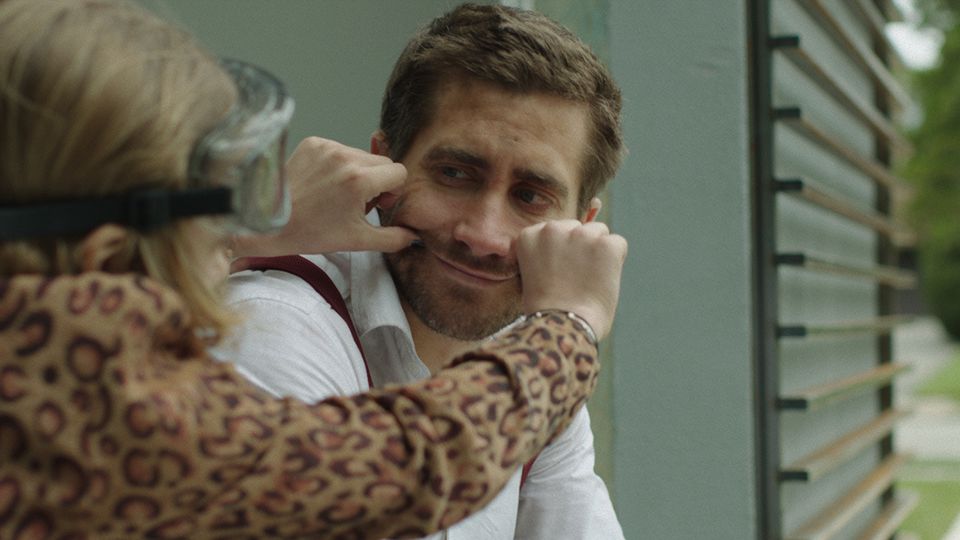
    Gyllenhaal stars as Davis, a man struggling to cope with the death of his wife following a tragic car accident that somehow leaves him unharmed. In an attempt to process his thoughts, he continuously writes letters to the customer service department of an area vending machine company.

    His performance is incredibly refreshing given his recent loud, brash work in both “Nightcrawler” and “Southpaw” and Gyllenhaal proves once again he can play subtle, natural characters as well as the bombastic, in-your-face ones.

    “Demolition” is also supported by a terrific secondary cast led by veteran character actor Chris Cooper, who reminds audiences once again that he’s one of the best performers with gravitas in the business. As Davis’ father-in-law Phil, the quiet resentment Cooper builds within his character for Davis is remarkably refined, understated and quite simply, beautiful to watch evolve on screen.

    Davis’ constant letter writing puts him in contact with a curious customer service representative slash single mother in Naomi Watts, who picks her moments to shine while keeping Gyllenhaal in the forefront.

    Like most everything else in “Demolition,” the potential romance between the two leads is slow burning, just on the edge of being too tedious. The quirkiness of both characters, expertly played by Watts and Gyllenhaal, keeps the romance interesting, however.

    The film also features a terrific fresh face in Judah Lewis, who plays Watts’ rebellious loner son Chris. In his biggest role to date, the 14-year-old Lewis astonishes as a young man himself struggling with identity and relationship issues. The natural bonds Lewis is able to establish with Gyllenhaal in such small screen time together is perhaps the single best relationship between characters in the entire film, a credit to both actors.

    There’s a wonderful metaphor within “Demolition” that Davis exposes himself to the world emotionally by literally taking his world apart piece by piece.
    Though that’s most glaringly done during an iconic scene in which Davis and Chris destroy Davis’ home with sledgehammers and a bulldozer, the internal deconstruction of Davis is readily evident in Gyllenhaal’s spectacular performance, one of the finest of his career.

    Conceptually, Bryan Sipe’s screenplay works better than in its actual execution on the written page, though the wonderful cast of “Demolition” bring the absolute most out of a slightly hindered script.

    What ultimately appears on screen is a quirky companion piece to David O. Russell’s “Silver Linings Playbook,” but only if the romantic dramedy went in a decidedly darker direction.

    “Demolition” works as a film thanks in large part to another directorial masterpiece from Vallée, who allows slightly muted performances from his leads to filter their way throughout the material in such an honest way.

    There’s a version of this film that could have been made from another director with an actor like Robert Downey Jr. or Bradley Cooper that would have turned “Demolition” into an emotional, rage-filled atomic bomb of a film where pain and loss are hammered home with brutal force. Vallée rightly opts for the subtle and draws a career-defining performance from Gyllenhaal.

    Visually, “Demolition” has its moments of brilliance especially in its closing moments. The film’s several musical montages are another cinematic highlight, seeing Gyllenhaal dance through the streets of New York City to Free’s “Mr. Big” or destroy his home to Heart’s iconic “Crazy on You.”

    While not for everyone, “Demolition” serves as another fantastic example of small, almost independent level filmmaking focused more on the characters themselves than the actions they take. Moviegoers who appreciate nuance in film won’t be disappointed.

  • Hardcore Henry: You’re in the driver’s seat

    Hardcore Henry: You’re in the driver’s seat

    Incredibly violent with not much of a plot to go on, “Hardcore Henry” plays out like a video game.

    Audiences aren’t really in control, however, as director Ilya Naishuller and his team of filmmakers take viewers on an insane, gore-filled ride for 90 minutes.

    The hook here is simple.

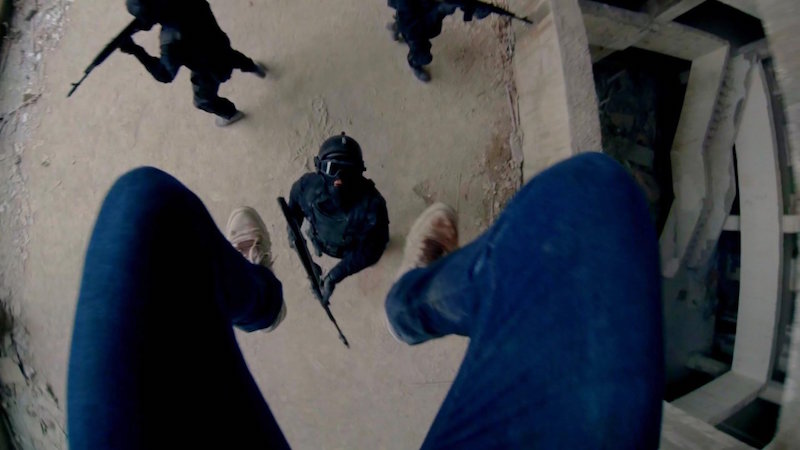
    Filmed with Go-Pro cameras, viewers see everything from the perspective of Henry, a once-dead human brought back to life through futuristic cyborg technology. Like almost every other action movie ever filmed, his mission is clear: save the woman he loves from a psychopathic villain and his army.

    The technological wizardry required to develop the intense first-person shooter cinematography style of  “Hardcore Henry” is simply astounding. “Hardcore Henry” was shot by three different cameramen, each taking turns playing the role of Henry while outfitted with a specialized helmet camera rig.

    Every movement taken by Henry throughout the course of the film, from parkour style chase scenes to avoiding explosions on the freeway – is painstakingly shot by professionally trained stuntmen. “Hardcore Henry” puts the viewer in the driver’s seat and will be the closest most people will ever come to performing these mind-blowing feats.

    Naishuller goes to great lengths to orient viewers in his cinematic world, keeping the pace down at the outset to prevent audiences from getting motion sickness. More sensitive viewers might want to steer clear, however, as the high-octane thriller moves into overdrive within the first 20 minutes and doesn’t let off the gas until the final seconds.

    While action films vary on their level of violence, “Hardcore Henry” pushes the limits of gore to extreme measures and is definitely not for children. Characters are routinely stabbed, shot, decapitated and burned alive without hesitation and the graphic nature of these acts performed by Henry and others in the film is shown in complete detail.

    Henry isn’t a character so much as an instrument for audiences to interpret the world of the film. In this regard, Naishuller – who also wrote the script – opted to render Henry mute. This enables viewers to better put themselves in Henry’s shoes as they follow the action, reinforcing the fact that they are quite literally Henry.

    On his quest for vengeance and blood, Henry is aided by Jimmy, who may be one indestructible man with multiple personalities all played by “District 9” and “Elysium” star Sharlto Copley.

    As the only developed character, Copley is a revelation as Jimmy, jumping from persona (indie punk rock Jimmy) to persona (military sniper Jimmy) to persona (hippie Jimmy) with ease. For what can best be described as a second-tier action film, Copley delivers a first-rate performance by elevating sub-par material beyond what it probably should have been.

    Beyond Copley, most of the actors in the film don’t last long enough to matter save for Haley Bennett and Danila Kozlovsky. Bennett suffices as the pretty damsel in distress and Kozlovsky is an interesting choice to play the mysterious villain aiming to kill Henry just because, but neither stands out.

    Veteran character actor Tim Roth makes a small, but important cameo as Henry’s father and the film would have been better served by expanding his role in the narrative.

    As most second-rate action movies go, story and character development are tossed in the backseat with “Hardcore Henry.” Naishuller opts for bigger, bolder, bloodier action in lieu of giving viewers a satisfying storyline. It’s likely though that many audiences will be so entranced by the visuals that why things are happening won’t really matter.

    Ultimately, “Hardcore Henry” isn’t as much a movie as it is a cinematic experience for the mature, blood-thirsty adult who routinely enjoys first-person shooter video games.

    The point-of-view technology developed and used by Naishuller in “Hardcore Henry” has interesting and wide-ranging possibilities for other filmmakers, though the hope is that future films can better implement plot devices to keep the movie more engaging beyond a visual level.

    Fans of Copley from “District 9” or “Elysium,” those wanting a bloody good time at the movies or moviegoers excited about the first-person perspective of the film will find “Hardcore Henry” exactly what they’re looking for. Other film fanatics should probably wait and take a chance on the film when it arrives on Bluray and DVD later this year.

  • God’s Not Dead 2: Religion stands trial in spiritual drama

    God’s Not Dead 2: Religion stands trial in spiritual drama

    Fans of the 2014 surprise box-office hit “God’s Not Dead” will surely be thrilled with its brand new sequel, the aptly-named “God’s Not Dead 2” which hit theaters on Friday.

    In the original film, the question of God’s existence was debated in college philosophy class, while the sequel swiftly moves out of the classroom and into the courtroom, where Christianity can more ceremoniously be put on trial.

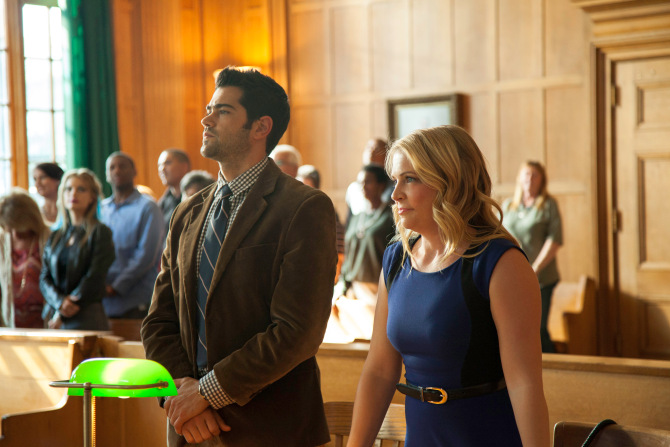
    Melissa Joan Hart stars as Grace Wesley, a young history teacher in Arkansas who comforts one of her students following the death of her brother.

    When the same student later asks Grace to compare the beliefs of Martin Luther King Jr. and Mahatma Gandhi to the teachings of Jesus Christ, the teacher comes under fire from the school board (and later the ACLU) for answering the student’s question openly in class. From this, Grace’s belief in God is put on trial in a civil lawsuit.

    Hart is surprisingly compelling as Wesley, delivering the film’s most well-rounded performance. Even when she’s not the focus of the scene, all eyes remain on Hart as she effortlessly engages with audiences well-dispositioned to like her.

    Her public defender lawyer who just happens to be non-Christian is competently portrayed by “Desperate Housewives” and “Dallas” actor Jesse Metcalfe, who gives a sincere effort but doesn’t have the acting chops to elevate the script beyond the words on the page.

    Veteran character actor Ray Wise smirks and snarls his way through an over-the-top, almost laughable turn as ACLU lawyer Pete Kane. Wise plays Kane as if he were the caricature of an evil vaudevillian ne’er-do-well out to prove Christianity as hokum while twirling his comically ridiculous mustache in his fingers.

    Ironically enough, the case is presided over by a judge played by “Ghostbusters” star Ernie Hudson, best known for the infamous line “Ray, when someone asks you if you’re a god, you say yes!” Though with as humorless a film as “God’s Not Dead 2,” it’s difficult to imagine the filmmakers have ever seen “Ghostbusters.”

    While most of the acting is credible and entertaining,  Chuck Konzelman and Cary Solomon’s script completely misses the mark with  antagonistic straw-man arguments and a Swiss cheese plot littered with holes.

    It’s in characters like Kane – and the performance from Wise – that secular critics feel more secure in negatively generalizing the entire film and simply writing it off as pure propaganda.

    “God’s Not Dead 2” is more than that, but its director and screenwriters often shoot themselves in the foot with poor cinematic and plot choices. Visually, “God’s Not Dead 2” feels like a made-for-TV movie and plays up its overly bright cinematography at every turn.
    https://m.youtube.com/watch?v=NibUS14eBnQ
    Message isn’t the issue here. In fact, “God’s Not Dead 2” shows a surprisingly high diversity ratio when compared to other films in the faith-based genre and Hollywood in general.

    The underlying message of “God’s Not Dead 2,” which seeks to reaffirm faith in Christian believers and preach the Gospel to others, comes through clearly.
    But “God’s Not Dead 2” is fatally flawed by its writing, which taints the entire production and prevents the film from becoming a bigger success. Konzelman and Solomon’s script lacks true dramatic punch despite culturally relevant subject matter or any comedic quality to offset the seriousness of the film.

    The film also struggles to be relatable for newcomers to the series, with a number of secondary characters filling out an otherwise thin primary story. While it’s not absolutely imperative that audiences see “God’s Not Dead” before catching the sequel, new viewers may find themselves totally lost in large sections of the second film in the franchise.

    Make no mistake, filmmakers Pure Flix wholeheartedly intend to make “God’s Not Dead” a full fledged franchise. A poorly explained subplot involving Reverend Dave, one of several hold-over characters from the original film, takes center stage in the film’s post-credits scene, a first for the faith-based genre. After watching the extra footage, it’s impossible not to believe a third “God’s Not Dead” film is in the planning stages.

    Hart’s performance and the film’s Christian message make “God’s Not Dead 2” a must-see for frequent movie-going believers and a probable pass for those not interested in the film’s overarching message.

  • The Divergent Series Allegiant: Sleepwalking through cinema

    The Divergent Series Allegiant: Sleepwalking through cinema

    If you’ve ever wanted to take a long nap while watching a movie in theaters, there’s likely no better film to snooze through this year than “The Divergent Series: Allegiant.”

    No one will blame you, least of all the film’s cast and crew, who sleepwalk their way through “Allegiant,” the third in the teen dystopian film franchise based on the books by Veronica Roth.

    Based on the first half of the final book in the trilogy, the latest movie finds rebellious teen Tris leading a small band of friends outside the walled compound of what used to be Chicago. Their escape and journey beyond the walls they’ve always known should be compelling cinema, but nothing ever comes together in director Robert Schwentke’s lackluster film.

    There’s no sense of urgency in “Allegiant,” an all too damning indictment of a series well past the point of usefulness to a broad audience.
    https://m.youtube.com/watch?v=0G0C-vMHcQY
    Shailene Woodley does a passable job as Tris, though her character is relegated to the background for much of the film leaving Woodley with almost nothing to do.

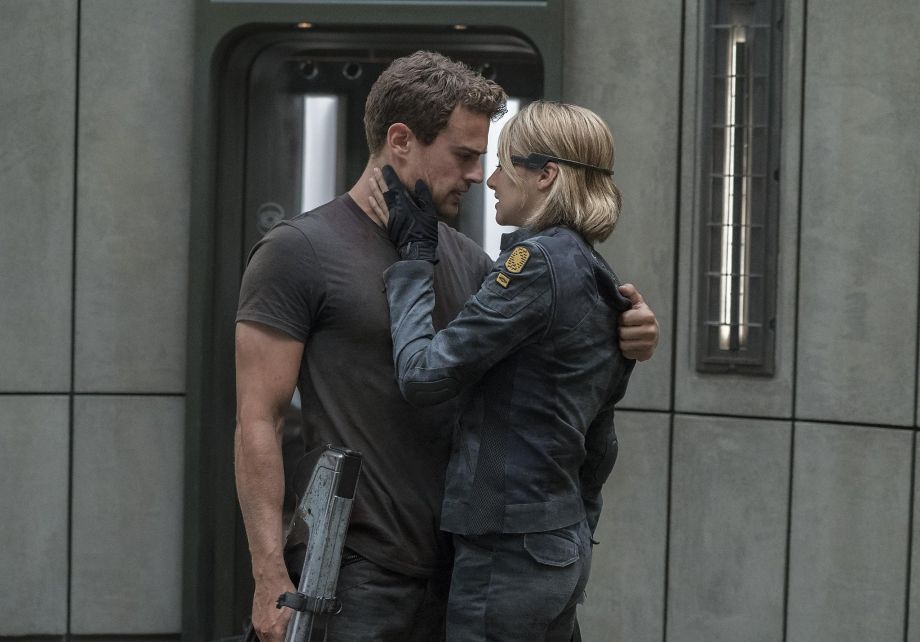
    Much of the focus in her stead is given to Theo James, who plays Tris’ love interest Four. James gives a very mechanical, almost robotic performance — and in a film littered with miscues – focusing much of “Allegiant” on James proves to be the movie’s biggest mistake.

    Across the board, lines of dialogue are delivered in the most mundane ways imaginable, where even Oscar winner Octavia Spencer cannot muster the desire to rise above the bland material on the script page. As a result, her performance as resistance leader Johanna screams of a woman who simply doesn’t want to be there and viewers can immediately read it on Spencer’s face.

    The lone newcomer to the “Divergent” franchise, Jeff Daniels gives the villainous leader David very little character beyond the script and is only mildly effective as a foil for either Tris or Four. Daniels has played better villains in other films, though the material he’s given here is largely to blame.

    Perhaps the most effective performance in the entire film comes from Miles Teller, who thrives in any role where he is allowed to be a smarmy jerk to everyone he encounters.

    Teller’s Peter reads as wholly unlikeable throughout all three “Divergent” films, but it takes a true talent of Teller’s caliber to beautifully and seamlessly bend back and forth between good and evil that viewers never truly know Peter’s intentions.
    https://m.youtube.com/watch?v=VZoNM1q6_8M
    Visually, it’s easy to see where most of the film’s $110 million budget went given the extraordinarily high use of CGI in “Allegiant” compared to the first two installments in the film franchise.

    While the decent action scenes make the most use out of the film’s CGI-heavy production value, there’s simply not enough dynamic moments in “Allegiant” to justify the cost of making the film nor the time audiences spend watching the film.

    Lionsgate, the studio behind both the “Divergent” and “The Hunger Games” films, largely destroyed any potential for success by splitting the final book into two parts.

    In rushing to get “Allegiant” in theaters one year after the previous entry “Insurgent,” the script penned by Adam Cooper, Bill Collage and Noah Oppenheim is lacks any oomph and lazily stumbles from scene to scene. Only Teller is able to lift the material to new heights.

    Scenes of dialogue often are poorly shot. Schwentke’s near-universal use of green screens and computer generated imagery to develop the film’s background stand out like a sore thumb in the film’s tediously slow moments.

    Ardent fans of the “Divergent” series, be it the book or film version, will largely be satisfied with how true “Allegiant” is to the source material. The decision to split the third book into two films, however, leaves “Allegiant” with too little action or drama to keep viewers actively engaged for the 110-minute running time.

    Average moviegoers deciding whether or not to catch “Allegiant” in theaters would probably be better off waiting until the film’s release on DVD and streaming later this year.

  • Miracles From Heaven: The power of the message

    Miracles From Heaven: The power of the message

    Jennifer Garner’s terrific performance as a desperate mother searching for a way to save her dying daughter paces the uneven faith-based film “Miracles From Heaven,” now in theaters.

    Based on the true story of a Burleson family, “Miracles From Heaven” finds Garner as Christy Beam, mother of three and devoted Christian whose faith is tested as her middle daughter, Anna, struggles with a life-threatening and seemingly incurable stomach disease.

    Despite the film’s many technical flaws, “Miracles From Heaven” offers a pure, sweetly sincere story that’s difficult not to enjoy, especially in the redemptive third act.

    Garner offers up perhaps her best work in several years as Christy, playing an all-too-familiar character with requisite intensity while not overpowering the film. Often the role of the protective mother can be overdone to the point of caricature, but Garner hits all the right notes in an effortless, yet incredibly memorable performance.

    Child actors are generally a hit or miss proposition. Kylie Rogers, who plays near death Anna, delivers on all the film’s most gut-wrenching moments and performs equally well regardless of the situation Anna finds herself in.

    Many young actors would find it impossible to correctly navigate dialogue where Anna explains faith in the face of death to a young cancer patient she shares a room with. Rogers beautifully manuevers through this scene with ease, perhaps the highlight of the entire movie.

    Queen Latifah, one of the film’s biggest names and a prominent star in trailers for the film, ultimately has little more than an extended cameo as a waitress who befriends Christy and Anna and gives the Texans a sightseeing tour of Boston.

    The remainder of the cast offer varying degrees of sufficient performances, with funnyman Eugenio Derbez bringing light comedic balance to an otherwise heavy story as a Patch Adams-esque doctor at Boston Children’s Hospital. Grammy award-winning Christian rock band Third Day also cameos as musical worship leaders at the Beam’s home church in Burleson.

    The film is adapted from Beam’s book of the same name, though screenwriter Randy Brown struggles to elevate the source material beyond a paint-by-numbers formula. Many scenes feels inorganic and mechanical, burdening the film with moments of needless minutia.

    Brown’s inability to pull something greater out of the material even in the film’s most gripping segments. Late in the film, Garner delivers a fantastic monologue while preaching about the tragedies Beam’s family has gone through, dragging subpar material up to a mild respectability.

    The film’s script so grossly hinders “Miracles From Heaven” that it’s nearly impossible for viewers to completely immerse themselves in the journey Christy and Anna endure.

    Director Patricia Riggen, fresh off her work at the helm of Chilean miner crisis film “The 33,” does a serviceable job guiding viewers through the Beams’ story, though she does little to help offset the film’s major pacing issues.

    Visually, “Miracles From Heaven” doesn’t break any new ground and often feels like more of a made-for-TV movie than a film intended for the big screen. However, one flashback scene late in the film does offer some surprisingly impressive computer generated imagery (CGI) that was an unexpected treat.

    Though Hollywood has made significant strides in production quality in the faith-based genre, “Miracles From Heaven” proves there’s still a ways to go before a truly dynamic, groundbreaking film hits theaters.

    Message remains the most important element within the genre and “Miracles From Heaven” holds spiritual meaning in spades. Garner’s work will captivate believers well suited to the genre and provide some cross-over appeal to a more mainstream audience as well.

    Despite its cinematic flaws, “Miracles From Heaven” is a film viewers might want to consider hitting theaters for if they’re in the mood for a feel-good story of healing and faith.

  • 10 Cloverfield Lane: Claustrophobia inducer a surprise hit

    10 Cloverfield Lane: Claustrophobia inducer a surprise hit

    Eight years ago, a surprise hit film came out of nowhere to wow viewers with its unique found-footage style adaptation of the classic monster movie genre.

    The film, “Cloverfield,” had a grandiose, epic feeling that pervaded the movie from start to finish, while new release “10 Cloverfield Lane” – dubbed a “blood relative” to the 2008 monster movie by producer J.J. Abrams – couldn’t be farther from its spiritual sibling.

    Confined to small, terror-inducing spaces deep underground, “10 Cloverfield Lane” is a cinematic master course in paranoia, evoking the best elements of a “Twilight Zone” episode and Alfred Hitchcock’s “Rear Window” at the thriller’s high points.

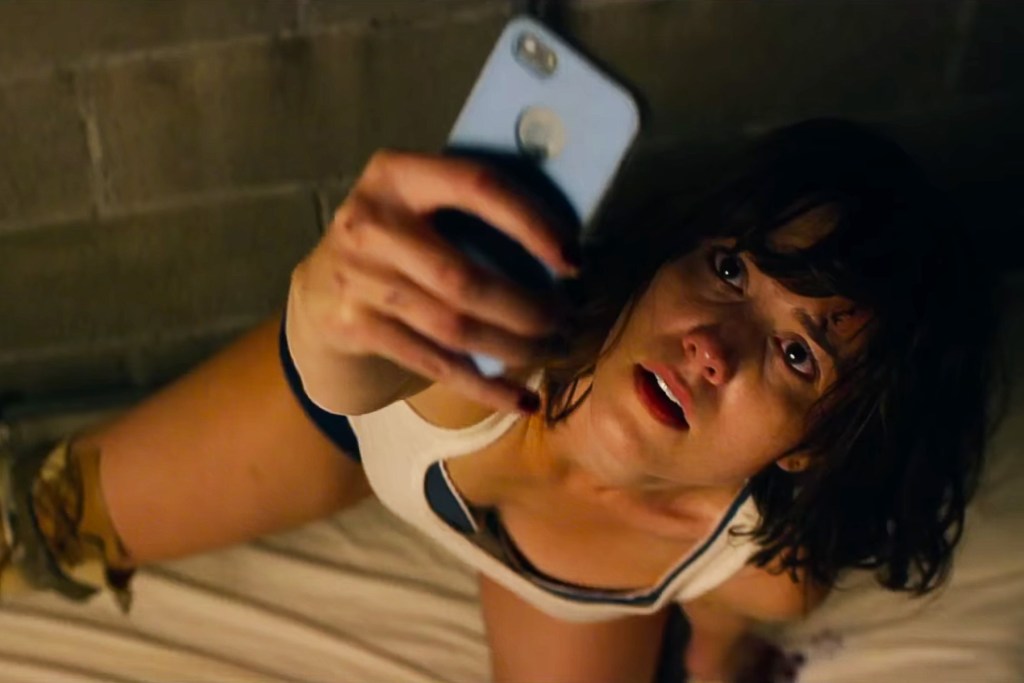
    Indie darling Mary Elizabeth Winstead stars as Michelle, a woman who awakes from a car accident chained to a wall in an unknown location. Her captor Howard, played by a mesmerizing John Goodman, believes he has saved her from the impending apocalypse by hiding in an emergency bunker outside his rural farm house.

    What ensues is about 80 minutes of a scintillating dramatic thriller with Michelle and fellow captive Emmet attempt to figure out whether Howard is friend or foe and more importantly, whether or not the world is ending.

    It’s important for viewers to know as little as possible heading into “10 Cloverfield Lane” and watching 2008’s “Cloverfield” doesn’t affect the viewing experience either way. The two films, aside from name alone, are polar opposites visually and structurally, with the new “Cloverfield” incarnation ultimately being a much better film overall.

    A mainstay on the indie film circuit, “10 Cloverfield Lane” could represent a breakout moment for Winstead, whose Michelle is incredibly easy to get behind as a viewer. These seemingly generic “damsel in distress” roles can be easily overplayed and become caricatures, but Winstead effortlessly provides Michelle with a level of authenticity not typically found in either the thriller or horror genres that “10 Cloverfield Lane” toes the line between.

    While not on the same level as Brie Larson’s more showy Oscar-winning performance as a woman in captivity in last year’s “Room,” Winstead gives the film a proper balance and keeps “10 Cloverfield Lane” from being too much about Goodman’s stellar supporting work or the film’s looming (and largely disappointing) end.

    Annual award shows typically never recognize quality cinematic work in psychological thrillers and despite a nomination-worthy supporting performance, Goodman won’t get the recognition he deserves as Howard. The veteran character actor layers Howard with equally convincing moments viewers will believe he is either sinner or saint, Michelle’s captor or her savior.

    A performance like this has always seemed to be right at Goodman’s fingertips, though he’s never been as captivating in bigger films like “Argo” or “O Brother, Where Art Thou?” as he is in “10 Cloverfield Lane.” Director Dan Trachtenberg’s choice to use extreme tight shots, closing viewers into confined spaces, helps make Goodman’s domineering size and powerful performance all the more intense.

    While “10 Cloverfield Lane” is primarily a two-handed film between Winstead and Goodman, John Gallagher Jr. offers a compelling supporting performance as fellow captive Emmet and Oscar nominee Bradley Cooper has a small, voice-over cameo as Michelle’s boyfriend.

    The film only falters in its final moments, when it largely abandons the visual and narrative structure Trachtenberg has created for a poorly sequenced, generic ending more befitting a second-rate horror movie. The insistence on tying this “spiritual sequel” back to its predecessor in name alone totally changes the entire tenor of the film, and not for the better.

    Visually, Trachtenberg creates a dynamic environment for Goodman and Winstead to play in, keeping the pressure on from moment to moment thanks to gripping close-up shots and expertly lit spaces. The film’s cinematic homage to “Die Hard” with Winstead crawling through air vents like Bruce Willis was an especially welcome touch.

    “10 Cloverfield Lane” ultimately suffers from being 10 minutes too long, with the claustrophobia-inducing film on track to be one of the year’s best films only to shoot itself in the foot at the very last second.

    Though almost nothing like its cinematic relative “Cloverfield,” “10 Cloverfield Lane” is worth a trip to theaters if for no other reason to experience Winstead and Goodman verbally duke it out in close quarters.

  • Zootopia: Animals live out loud in instant Disney classic

    Zootopia: Animals live out loud in instant Disney classic

    There’s something for everyone with Disney’s latest animated classic, “Zootopia,” which arrived in theaters Friday.

    The appeal for children should be obvious as kids will be drawn to the vibrant world of the film, where animals of all shapes and sizes co-exist in harmony, while behaving and working like human beings.

    Parents will get to revel in all of the subtle (and not so subtle) hidden jokes stashed throughout as the film goes out of its way to make “Zootopia” equally appealing for adults. For example, a large subplot of the film parodies Marlon Brando’s larger than life character in “The Godfather” and is one of the best comedic representations of the gangster classic ever.

    “Zootopia” offers a complex, wonderfully developed world filled a nearly unlimited assortment of animals as viewers follow a young rabbit named Judy as she struggles to become, and later fit in, as a police officer in the big city of Zootopia.

    Paired with a con-artist fox and tasked with tracking down a missing otter, Judy’s adventure is one part buddy cop flick and two parts vintage film noir, mixed in Disney’s superior animation style and littered with top notch vocal talent.

    Visually, the film from directors Byron Howard and Rich Moore and co-director Jared Bush is vivid and dynamic with each district within “Zootopia” having its own distinct cinematic style. Rural Bunnyburrow feels lifted straight from early spring advertisements for Peeps while the Rainforest District is dark and drips of tension pulled from “The African Queen.”

    Every single frame of “Zootopia” is littered with immense detail, both in the technical wizardry required to create the film and within the countless Easter eggs for fans to chuckle at during inevitable second, third, or 50th viewings of the film in theaters or at home.

    Ginnifer Goodwin of the television show “Once Upon a Time” is refreshing and charming as the voice of Judy, while Jason Bateman is ideally cast as the slick, wisecracking fox Nick Wilde. Their banter propels “Zootopia” through both hilarious and emotional moments; Goodwin and Bateman both prove more than up for the task.

    The film’s talented ensemble cast astounds as well, led by Idris Elba as a water buffalo who’s chief of police, Octavia Spencer as a grieving otter, J.K. Simmons as a lion elected mayor of Zootopia and indie comic Jenny Slate as a meekly sheep serving as assistant mayor.
    https://m.youtube.com/watch?v=zQ2XkyDTW34
    Messages run deep within “Zootopia,” led by the universally understood “anyone can be anything they want to be” that propels Judy on her journey to become a police officer despite skepticism from everyone around her.

    Disney also tackles diversity issues head-on with great success, using the film’s central storyline to explore topics such as racial profiling and stereotyping. “Zootopia” focuses on the concept of predators versus prey – where 90 percent of mammals are prey and only 10 percent are predators – to help make well designed points about acceptance and inclusion.

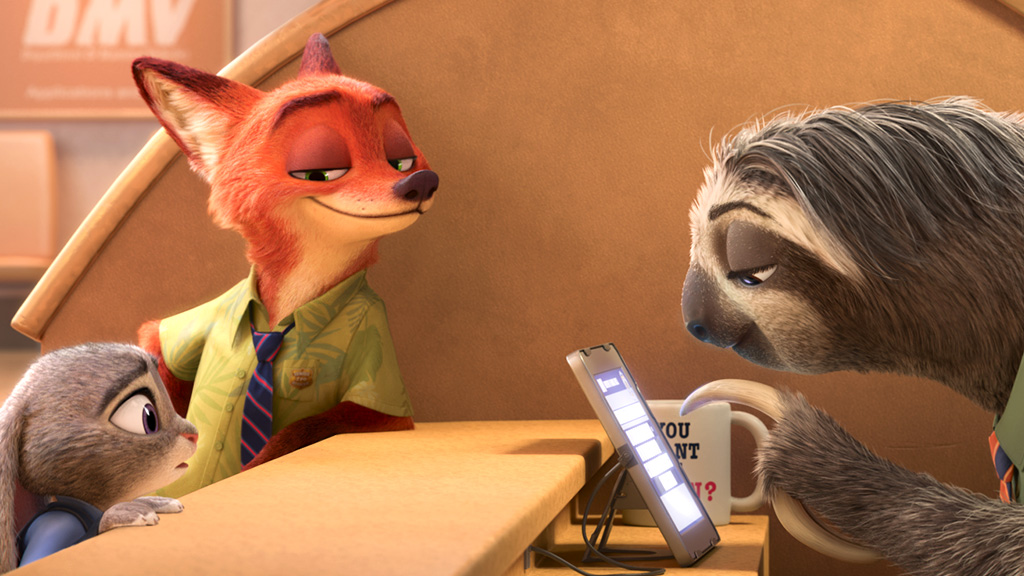
    There are numerous stereotypes within “Zootopia,” but universally they are about the jobs the animals hold and done for comedic effect. Bateman’s slick fox opens the film as a hustler, the workers at the Department of Mammal Vehicles (DMV) are slow-moving sloths and there’s a terrific “blink-and-you’ll-miss-it” joke about bankers being lemmings that will have fans of Oscar nominee “The Big Short” rolling in their seats.

    Along with “Frozen” and “Big Hero 6” before it, Walt Disney Animation Studios continues an astounding trend of producing most of the decade’s best animated films and represents the studio’s best three-picture run since the early 90s brought viewers “Beauty and the Beast,” “Aladdin” and “The Lion King.”

    Parents and children of all ages will enjoy this layered, hilarious entry into the family friendly film genre and a movie sure to give the long anticipated sequel to “Finding Nemo” – the aptly titled “Finding Dory” – a run for its money when that Pixar film arrives this summer.

    Regardless of genre, “Zootopia” is perhaps the most complete film to arrive so far in 2016 and without a doubt is a can’t miss experience for young and old alike in theaters.

  • Race: Inspirational biopic runs around in circles

    Race: Inspirational biopic runs around in circles

    There’s a terrific film out there somewhere about African-American sprinter Jesse Owens, who overcame racial prejudice in both America and Nazi Germany on his way to Olympic gold.

    Owens, a pioneer in the world of track and field as much for his courage and perseverance off the track as his athletic accomplishments, is a more than worthy candidate to be honored with a feature film biopic of his life story.

    Unfortunately, the new Focus Features film “Race” simply isn’t it. To be sure, it’s the rare biopic where viewers are left wanting to see more of the person the film is ostensibly about.
    https://m.youtube.com/watch?v=E31LnSw47xo
    Even the racial tensions of the 1930s are treated with more of a winking “you know what we’re talking about here” rather than tackle issues head on as more heralded films like “Straight Outta Compton,” “Selma” and “12 Years a Slave” have.

    This isn’t to say that Stephan James, the up-and-coming actor charged with bringing Owens to life on screen, doesn’t do a remarkable job in the role. James plays with great subtlety Owens’ inner conflict between simply doing right by his family and serving as an international spotlight to a greater cause.

    It’s a performance that shows great strides toward a long, prosperous career in film, but is sorely wasted by a lackluster ensemble and shoddy screenplay.
    “Race” suffers most from the fact that director Stephen Hopkins and writers Joe Shrapnel and Anna Waterhouse try to do too many different things and fail to succeed at most of them, making “Race” a mediocre film at best.

    At 134 minutes, the film sits about a half-hour too long for comfort.

    While the story should rightly be focused on the trials and tribulations of a Olympic gold medalist dealing with racial prejudice in the 1930s, large segments of “Race” have viewers mired in geo-political debates between the American and Nazi German Olympic committees as a means of setting the stage for the film’s final act at the 1936 Berlin Olympics.

    This bi-coastal game of World War II-era plot hopscotch isn’t something new, but last year’s “Woman in Gold” directed by Simon Curtis does a far more effective job of counter-balancing multiple storylines.

    “We’re the Millers” lead Jason Sudeikis is horribly miscast for the part of Owens’ college coach Larry Snyder as the former “Saturday Night Live” comedian just doesn’t have the acting chops for heavy drama.

    His performance feels like Sudeikis is aiming for a caricature of what legendary Dallas Cowboys coach Tom Landry would look like if he coached track and field, but Sudeikis can’t even hit that. This comes as a major letdown after his surprising, yet terrific turn last year in the independent dramedy “Sleeping with Other People,” which is highly recommended.

    Nazi propaganda minister Joseph Goebbels plays far too large a role both as an on-screen and off-screen character within “Race,” though Barnaby Metschurat’s performance is stoic and effective when it needs to be.

    Largely, the German leadership in “Race” – Goebbels, a distant Adolf Hitler and propaganda filmmaker Leni Riefenstahl – come off as cartoonish vaudeville baddies twisting their mustaches like the villainous Dick Dasterdly from Hanna-Barbera’s “Wacky Races”.

    Looking at the film by the sum of its parts, it’s clear that Hopkins didn’t know what kind of movie he wanted to make with “Race,” so he tried, and failed, to make every kind he could think of.

    Those hoping for a more traditional sports drama won’t really find what they’re looking for until the film’s final act and it’s in the moments “Race” follows Owens’ athletic pursuits on the track that the film is most compelling.

    However, there’s a much better option now in theaters with “Eddie the Eagle,” which stars Taron Egerton as Michael “Eddie” Edwards, a young Brit seeking to become an Olympic ski jumper no matter the cost.

    When we ultimately look back on “Race” several years from now, moviegoers will lament what could have been done with such a rich narrative history as Owens’ career. For now, it simply goes down as a mild disappointment and a film worth waiting to catch on DVD.

  • Eddie the Eagle: Fun, light-hearted biopic worth checking out

    Eddie the Eagle: Fun, light-hearted biopic worth checking out

    Odds are pretty good you had never heard of Michael “Eddie” Edwards this time a year ago.

    Edwards, a British man and unlikely Olympian, overcame adversity to compete as a ski jumper during the 1988 Winter Games in Calgary while essentially a total novice in the sport.

    His tale – told in a similar vein as the classic football drama “Rudy” – opens in theaters this Friday with Hugh Jackman and “Kingsman: The Secret Service” star Taron Egerton as the titular “Eddie the Eagle.”

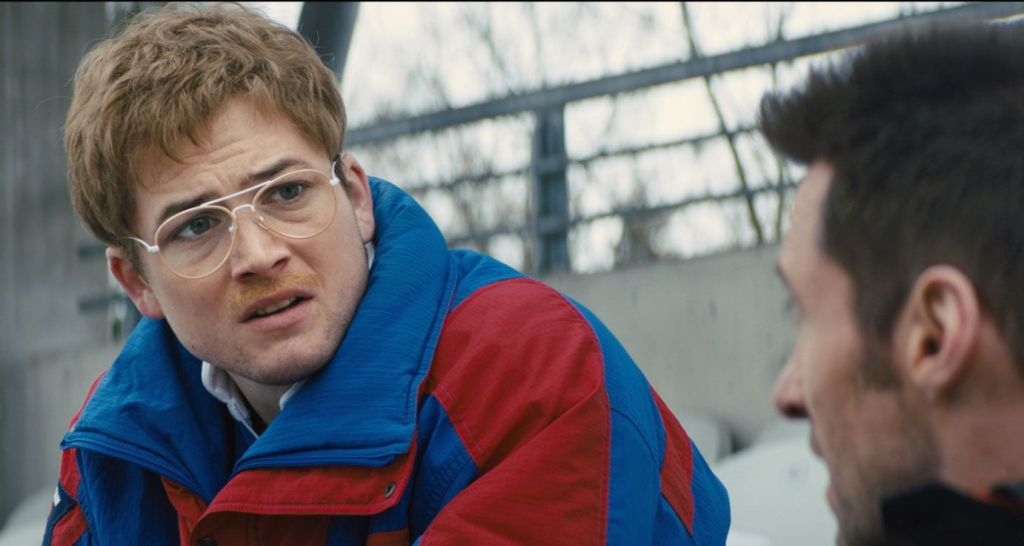
    Egerton, a relative unknown before bursting onto the scene this time last year as a young spy in training, plays Eddie as a bumbling, lovable yet aloof dreamer willing to do whatever it takes to make his life long goal of becoming an Olympian a reality. Even heavily made up, Egerton doesn’t quite look the part especially when contrasted with the real Edwards shown in photographs during the film’s credits.

    It’s not overly difficult to play naivety well and Egerton is certainly capable in “Eddie the Eagle,” though his relative inexperience isn’t able to pull the formulaic script up to the same extent he did while surrounded by the likes of Colin Firth, Mark Strong and Samuel L. Jackson in “Kingsman.” There’s enough there in Egerton’s performance to root for and feels a lot like Sean Astin’s work in “Rudy,” a film “Eddie the Eagle” aspires to, but doesn’t quite get there.

    Seemingly stuck in the minds of audiences as un-killable X-Man Wolverine, Hugh Jackman finds some softer edges to his typecast role as former Olympic ski jumping sensation turned drunken flameout Bronson Peary, who takes Edwards under his wing for training.

    Jackman uses his charisma to make what could have been a terribly, unlikable character somewhat charming, but let’s all remember, Peary (and especially Jackman’s performance) can’t be mistaken for   Burgess Meredith’s Oscar-nominated turn as Rocky Balboa’s aging coach Mickey in the “Rocky” franchise, either.

    Christopher Walken makes a small, yet impactful cameo (because he’s Christopher Walken) as Peary’s former coach, but Jim Broadbent – fresh off a fantastic supporting role in Oscar nominee “Brooklyn” – shines best in support as the lead British commentator announcing Eddie’s Olympic exploits. His turn from anti-Eddie to pro-Eagle is one of the best things about the entire film.

    What “Eddie the Eagle” gets very right is the universal and incredibly relatable underdog story structure. While it’s true that the screenplay from Sean Macaulay and Simon Kelton isn’t filled with twists, turns and other surprises, the film’s pure simplicity works effortlessly to make “Eddie the Eagle” a family friendly adventure (for the most part).

    Eddie is portrayed as a beyond reproach, naïve near-adolescent who doesn’t pick up on women making sexual advances and can’t quite relate to his coach’s analogy between body position in flight and going all the way with Bo Derek.

    To be sure, there are some mildly violent crashes where Eddie and his fellow jumpers take bone crushing tumbles down the side of a mountain, but children old enough to handle PG-13 material shouldn’t have any issues here.

    Like its “Kingsman” cousin, “Eddie the Eagle” greatly benefits from a pitch-perfect 80’s soundtrack, led by a terrific score from Matthew Margeson, Thin Lizzy and even the super-cliché “You Make My Dreams Come True” by Hall and Oates during a training montage.

    And really, that’s the hook for “Eddie the Eagle.”

    As an audience, viewers know that it’s kind of hokey to have Hall and Oates providing the ambience to an extra-traditional training montage. Director Dexter Fletcher and his team make “Eddie the Eagle” so warm and inviting that it simply doesn’t matter. Sports-minded moviegoers definitely need to check out this fun biopic rather than slog their way through the uneven, disappointing Jesse Owens biopic “Race.”

    Light-hearted and fun, the inspiration-heavy “Eddie the Eagle” is perfect for those audiences too old for “Kung Fu Panda 3” and too young for “Deadpool” and is a great middle ground film that should do better in a home viewing experience than in the theaters.