
Year: 2023

  • The Whale: Fraser’s emotional odyssey

    The Whale: Fraser’s emotional odyssey

    Film is often about redemption, the seeking of absolution or, at times, both.

    There’s tales about comeback kids, underdogs, the forgotten, the unforgiven, the unforgivable, the isolated.

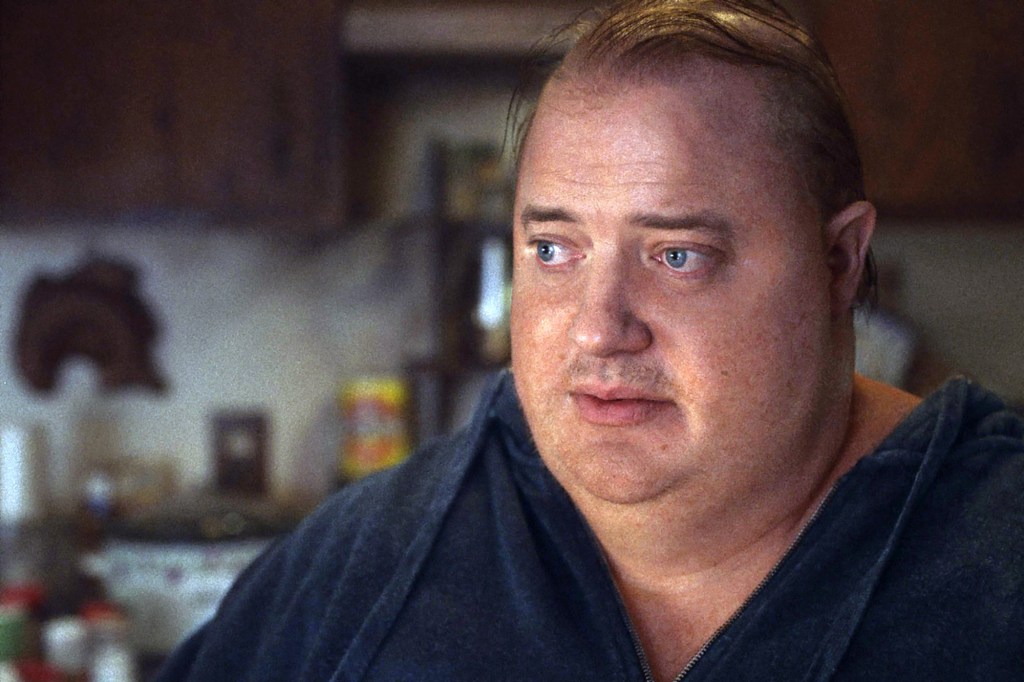
    In a way, director Darren Aronofsky’s latest feature is a bit of all of this, most notably being a return to stardom for Brendan Fraser with the year’s most committed, devastating performance. 

    Structurally, The Whale tells the story of a reclusive, obese English teacher and his attempts to reconnect with his estranged teenage daughter at all costs to his health and psyche. But it’s also an allegory with strong evocations and outright references to the Hermann Melville classic “Moby Dick” and a treatise on mental health traumas.

    There’s a depth of humanity to the film that shouldn’t be there at first glance, but the screenplay from Samuel D. Hunter based on his 2012 play of the same name opens up opportunities for Fraser to overwhelm audiences with a tremendous heartfelt performance.

    Aronofsky and Fraser approach Charlie with such care that once viewers become accustomed to his size, all the matters at the core of the film are the purity of Charlie’s heart and how his inner pain forced him to succumb to chronic overeating and isolation. 

    The weight and eating aren’t done as circus spectacle, though the technical skill and expertise required to design and fit Fraser with a prosthetic suit to realistically make the heavy-set actor appear as if he weighed 600 pounds.

    It’s more clearly, once the story unfolds, that Charlie is a mere vessel by which Aronofsky could reasonably explain intense isolationism and its effects on those around them.

    Unquestionably, it’s Fraser’s most introspective, emotional and powerful performance to date and Aronofsky is able to mine the depths of Fraser’s soul for raw emotional and honesty that hasn’t been shown so far in the veteran actor’s career.

    The film’s small ensemble cast do a solid job helping to frame Charlie’s plight in a larger social context and it’s in scenes between Charlie and his daughter Ellie played by Sadie Sink that the most intriguing, provoking scene-work is done.

    Sink provides The Whale with a raw emotion of blind rage masked behind layers of manipulation as Ellie. Her relentless combativeness doesn’t come across as pure malice, but weathered pain from the toll a strained relationship with Charlie brought upon Ellie during her formulative years.

    It’s a terrific contrast to Hong Chau’s more empathetic, nurturing yet stern caretaker role as Liz, who takes the pain she feels from her own traumas and latches onto Charlie with sympathy rather than disdain.

    The one odd duck in the ensemble is the presence of wandering missionary Thomas, played by Ty Simpkins. While the actor isn’t out of place with his performance, the character of Thomas unnecessarily muddies the waters and takes away from the larger allegory at play.

    The Whale can be a bit heavy-handed in its dialogue at times, especially in the rare moments when Charlie isn’t at the center of conversation. The secondary storylines can become a bit clunky and forced to make additional, unnecessary points about organized religion and homosexuality.

    Audiences will not be capable of being apathetic to the story and its larger themes. The Whale is especially overwhelming in this regard, bathing viewers in a constant tsunami of anger, frustration and sentimentality.

    From a production standpoint, cinematographer Matthew Libatique excels at the ability to make the confining space of Charlie’s small apartment constantly feel large by approaching scenes of dialogue from fresh angles and perspectives to reframe audiences and prevent a stale, monotonous feel to the film.

    With Fraser as a clear-cut Best Actor contender, The Whale was always going to be in the awards season race, but it’s become increasingly likely that it could exceed a single acting nomination and join the Best Picture race, with Chau also receiving enough support to have a chance at a supporting actress nod as well.

    While it certainly won’t be everyone’s cup of tea, The Whale touches upon important social issues from an emotional, yet respectful place and is worth cinephiles spending two hours on at home or in theaters this awards season.
  • Babylon: All the glitz and glamour

    Babylon: All the glitz and glamour

    When auteur directors get to the point in their careers where they have established the pedigree to have carte blanche with a studio’s checkbook, it opens all sorts of possibilities.

    Damien Chazelle – who burst on the scene with Whiplash and is best known for his Oscar winning musical La La Land – dips his toe back in the waters of making movies about Hollywood with a roaring 20s, gallant and audacious examination of the transition from silent films to “the talkies.”

    A three-plus-hour epic odyssey, Babylon follows two newcomers to the industry who are thrust into the spotlight in different ways as well as a veteran silent film star struggling with hubris and finding his place in a changing landscape for the moviemaking business.

    For a film led by Brad Pitt and Margot Robbie, the true star of Babylon is Chazelle.

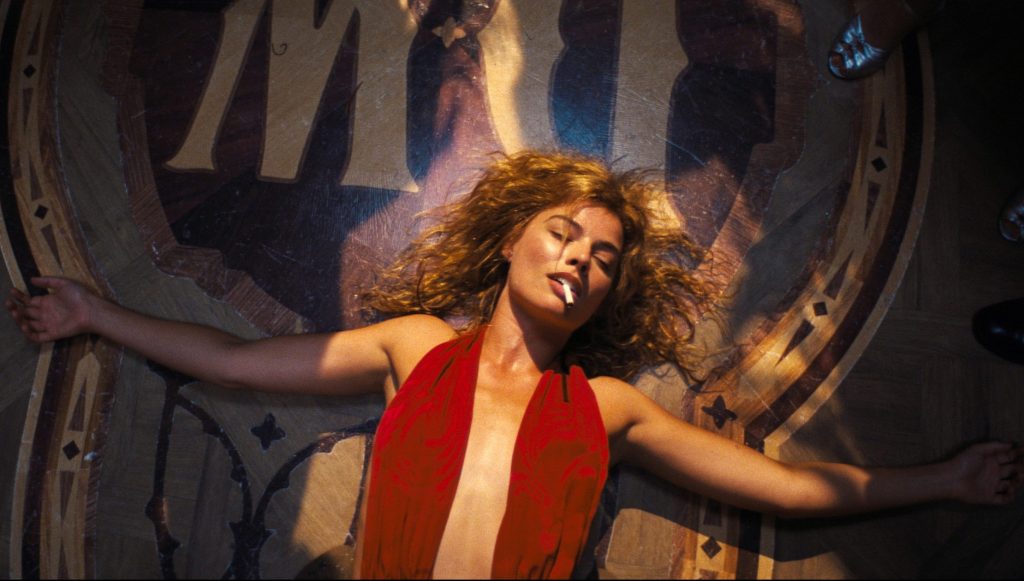
    From the opening sequence – a relentless, lavish and indulgent 30-minute cavalcade of debauchery in the home of a film producer – Chazelle overwhelms his audience with a plethora of sights and sounds that are bold and audacious, reveling in the same sort of excess as Martin Scorsese’s The Wolf Of Wall Street would, but in a more frivolous, carefree Hollywood ideal.

    Chazelle masterfully whips the camera around a room filled with drugs and nudity as if it were an ingenue taking in the spectacle of Hollywood and succumbing to the seductive, illicit appeal.

    When it comes to the technical aspects of Babylon, the film truly shines in Chazelle’s ability to capture nuance, referencing small pieces of early film history that would take scholars several viewing to find minute trivialities, but at the same time, making the most of modern cinema in order to fully engulf the viewer in the world of Babylon.

    As Nellie, Robbie is a firecracker whose fuse is brightly flickering close to explosion through the entire 180-minute run time. 

    While her franticness as the starry-eyed wild child comes to define everything about Nellie’s character, it’s incredibly impressive just how much control Robbie must change gears at a moment’s notice from laughter to a single tear to everything in between in a split second. 

    In stark contrast, Diego Calva’s Manny is the most restrained character in the film, with Chazelle hoping viewers will view Babylon through his earnest eyes. Amidst the world of chaos, Calva is demonstrably calm and resourceful in the ways Manny climbs the ladder of success and it’s a breakout role showcasing vulnerability and empathy.

    Pitt feels a bit on an island of his own as the silent film star Jack, but it’s a welcome salve from the main storyline of Manny and Nellie. Pitt excels at masking his inner pain and age with the bravado of a typical flawed leading man and the culmination of Jack’s arc throughout the film wouldn’t make any sense with the longing and brooding Pitt is able to subtly bring out in Jack’s eyes.

    If there is a major flaw within the film, Babylon suffers at times with haphazard pacing and balance between its three lead stars which often leaves audiences disoriented and ready for a finale that doesn’t come until much later than expected.

    Babylon features several of what could be considered false endings that jar casual viewers when the credits don’t roll.

    This isn’t to say that the editing is bad by any means. Chazelle and editor Tom Cross are quick on the knife to make vibrant cross-cutting sequences that transport viewers back and forth between different film sets to heighten the urgency of the moment. While there’s a kinetic energy to Babylon, it doesn’t come out evenly which leaves more individual sections of the film as highlights rather than one cohesive piece of cinema.

    At its strongest points, Babylon embraces the artistry of moviemaking whether it be small, intimate tidbits like filmmakers adding dialogue to silent films with handwritten messages on chalkboards to a side-splitting sequence where Nellie must repeat a scene over and over because sound and picture difficulties prevent shooting.

    As is the case with most noisy movies about the film industry, Babylon is sure to be a major player this awards season in everything from best picture to best director and actress to any number of technical categories like production design, costuming, cinematography and composer Justin Hurwitz’s radiant score.

    It’s going to be particularly hard for audiences to completely digest, or even stomach at times, everything that’s going on in the loud, boisterous world of Chazelle’s Babylon, but viewers willing to take the time and effort to allow themselves to be overwhelmed by grandiosity may reasonably find themselves loving and/or loathing enough of the three-hour odyssey worth a trip or two to the biggest screen possible.

  • White Noise: Cinematic static

    White Noise: Cinematic static

    It seems as though every year Netflix puts out a film that makes one wonder how it was greenlit into production. 

    Whether it’s an exorbitant budget for a languishing Martin Scorsese epic like The Irishman or an overly sarcastic, nihilistic dramedy like Adam McKay’s Don’t Look Up, the streaming service can’t quite find its footing for an award season contender to draw large audiences with 2022 being no exception.

    Noah Baumbach, whose previous effort Marriage Story saw Laura Dern win a Best Supporting Actress Oscar, returns to Netflix with an adaptation of Don DeLillo’s avantgarde 1985 novel, the first feature the director has made without telling a completely original story.

    White Noise is an eclectic, strange, befuddling black dramedy of a feature released in select theaters in early December before hitting the streaming service Dec. 30. The film stars Internet darlings Adam Driver and Greta Gerwig as a couple living in an undisclosed Midwestern town whose lives are uprooted by a chemical spill.

    Baumbach breaks his film into three parts, much like the novel it draws inspiration from, with each section only loosely connected through minor characterization and general themes.

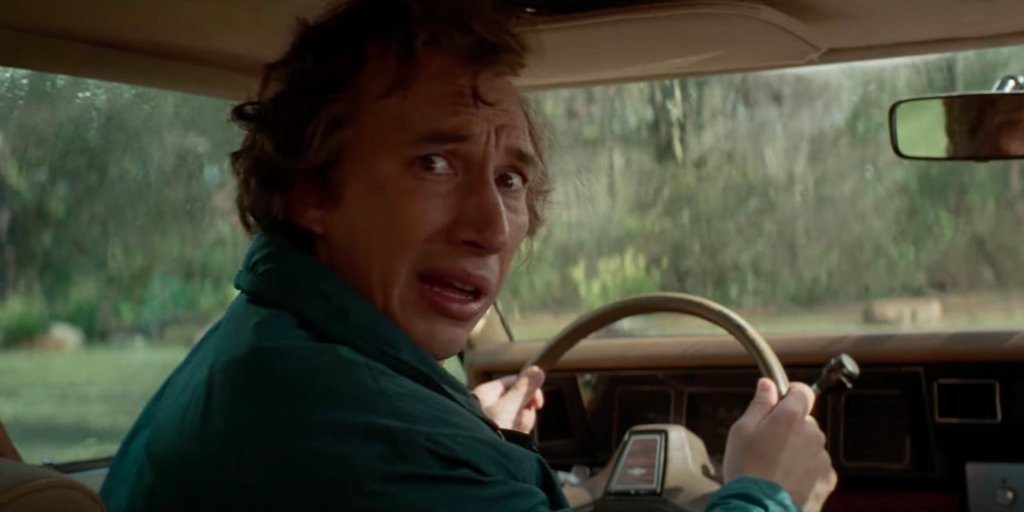
    White Noise is absolutely mystifying for those unfamiliar with the source material and wildly inconsistent in tone. In many ways, it’s like a train wreck that bystanders see coming and can’t look away from, which Baumbach almost revels in with the amount of time he spends on car crashes and people’s voyeuristic nature.

    At the core of the film, Driver as a college professor in Hitler studies is quirky in physicality and dress, but ironically the most normal character in the entire film. The cadence with which his Jack pontificates is in keeping with Baumbach’s idiosyncratic dialogue and it’s clear that Driver relishes each opportunity to emote in a spiritualistic way.

    Conversely, Gerwig – who audiences see significantly less of in the film – is more subdued as White Noise plays out with the most memorable part of her performance being a wacky frizzled 80s haircut and at times, a riff on a Beverly D’Angelo-esque character from National Lampoon’s Vacation.

    The family dynamic doesn’t really evolve much over the two-hour feature, though each younger performer is given some opportunity to shine and moments between Driver and Raffey Cassidy’s eldest daughter character Denise over an unknown prescription are the most entertaining elements of a screenplay that’s all over the map.

    From a production standpoint, White Noise does an exceptional job of creating a hyper-realistic recreation of 1980s middle America with bombastic costuming, over-teased hair and makeup and a fully transformed, inexplicably intricate supermarket viewers could spend hours in actually shopping in and being completely transported back in time.

    There’s an overwhelming brightness to White Noise visually that harkens back to classic John Hughes comedic style and sets an expectation for audiences that the outrageousness of Baumbach’s adaptation of the avantgarde source novel just cannot meet. Much like the Gladneys’ home and family live, the film is stuffed full with detail and nuance to the point where there’s no room for audiences to breathe given the strangeness and complexity of the narrative.

    Given Baumbach’s track record with Marriage Story and Netflix not having a true contender this awards season, it’s possible that White Noise could slip into the nomination mix for accolades like adapted screenplay or production design, but the relative inaccessibility could leave it on the outside looking in.

    After an underwhelming theatrical performance, Baumbach’s film could find much more friendly waters on the streaming service where audiences can process the intricacies in chunks without having to digest the entire feature in one sitting. As it is, White Noise may prove to be too avantgarde and niche for the average moviegoer regardless of the setting.