Author: Matt Ward

  • Arkansas: One too many slashes

    Arkansas: One too many slashes

    When actors make the transition from being in front of the camera to behind it in the director’s chair, the quality of their work can vary greatly depending on not just their talent in a new role on a film set.

    First time directors may lean on key assistants or department heads to help shape their vision or these actors may want to direct themselves on screen, fully immersing themselves in multiple worlds simultaneously.

    Clark Duke – a veteran comic actor known for smaller roles in ensemble films and guest spots on TV sitcoms – makes the leap with his feature directorial debut “Arkansas,” based on the 2009 novel of the same name by John Brandon.

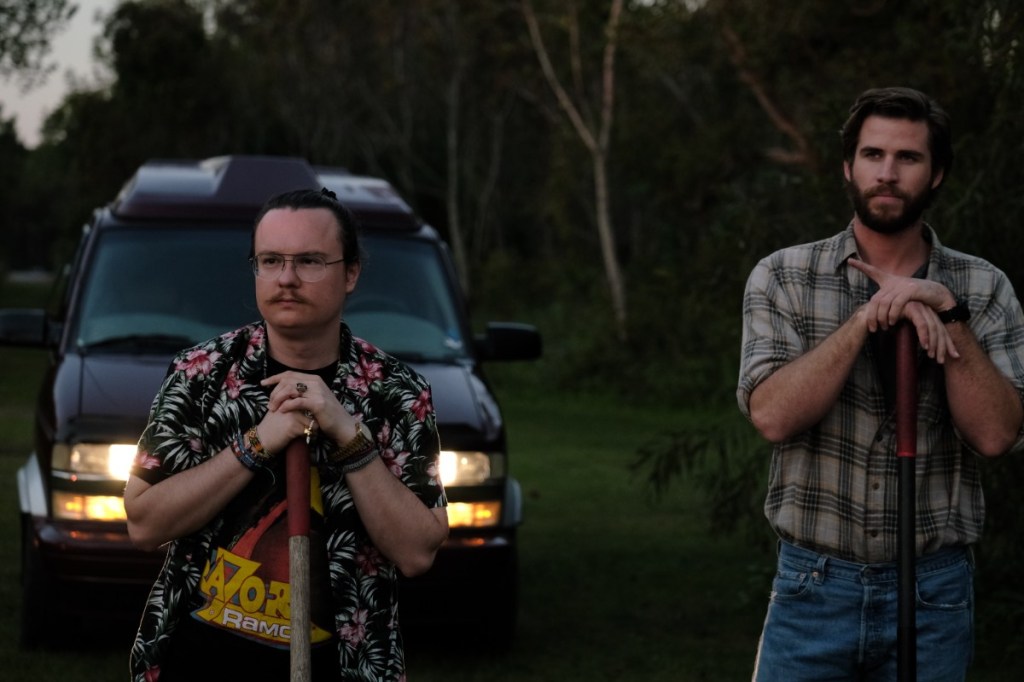
    On top of directing and producing “Arkansas,” Duke also co-wrote the screenplay with Andrew Boonkrong and cast himself as Swin, one of two naïve drug dealers who serve as the film’s protagonists.

    Cutting across much of the South but set primarily in the titular state, “Arkansas” follows Kyle and Swin as they attempt to climb the ranks of a drug trafficking ring led by a mysterious dealer known simply as Frog. After a job turns bad, Kyle and Swin are forced to keep up appearances while dealing with the fallout that could get them killed.

    On paper, it’s a feature with elements of traditional crime, noir and black comedy that would appeal to a broad audience, but “Arkansas” is a middling independent movie that suffers most from its creator taking on far too much. 

    The film’s significant identity crisis stems from Duke wanting to put every idea he had from a writing perspective into the screenplay, trying to emulate all his favorite directors and their contrasting styles and on top of all of that, reinvent himself as an actor by taking on a meaty, transformational part unlike anything he’s ever done before.

    Technically, Duke achieves all of this with “Arkansas.”

    His script is inventive, playing with the narrative structure both in time-jumping between decades and focusing on different characters by breaking up the film into chapters as master screenwriter Quentin Tarantino might do.

    Duke’s direction is engaging, pushing a heavy hand visually at times with bold night cinematography that helps set the mood of “Arkansas;” although it’s not particularly surprising that the film’s best scenes directorially come when Duke’s Swin isn’t in them, which allows the filmmaker to focus on the whole scene and not confine himself to a single character.

    As an on-screen performer, Duke swings for the fences with a nearly unrecognizable look, hiding behind glasses and a wiry mustache, dulling his accent slightly and evoking a strange combination of Phillip Seymour Hoffman and Steve Buscemi for the film’s most interesting performance.

    And yet, all the pieces that Duke assembles together to create the world he envisioned for 
    “Arkansas” become a garbled noir mess with mixed tones that reflect his love for Martin Scorsese’s “Goodfellas” one minute and the Coen brothers’ “No Country For Old Men” the next.

    A strong ensemble cast led by John Malkovich’s signature eccentricity as a state park ranger and Vince Vaughn maintaining understated composure in a significant role as a pawn shop owner give “Arkansas” plenty of flavor that it richly needs, while Eden Brolin (daughter of Josh) is a welcome surprise as Swin’s love interest.

    Characters in “Arkansas” are vague, but memorable enough to have a Tarantino-esque vibe that any one of them could have their own story or film made about them.

    The rare exception here is Liam Hemsworth’s Kyle, who gives a solid effort opposite Duke but isn’t rough enough around the edges to play the sort of dirtbag that would pair well with Swin. It’s key to the success or failure of the film that Swin and Kyle feel like they’ve come from similar backgrounds to wind up at the same place, but Hemsworth isn’t matching Duke’s dedication to the part and falls flat relative to the rest of the cast.

    “Arkansas” suffers greatly from missing out on a theatrical release, opting for a May 5 release on Bluray and streaming platforms after the film’s world premiere at this year’s South by Southwest Film Festival was cancelled due to the coronavirus pandemic.

    It’s a movie that needs an actively engaged, rowdy audience to laugh and reinforce the film’s dark humor and it needs a confining theater to prevent viewers from checking out as Duke resets the film over and over again by switching decades and perspectives.

    The best chance for “Arkansas” to find its audience and have viewers appreciate its uneven eccentricities is for people to wait until the film inevitably lands on a streaming service where viewers can take a free chance on Duke’s directorial debut.

  • Bad Education: Keeping up appearances

    Bad Education: Keeping up appearances

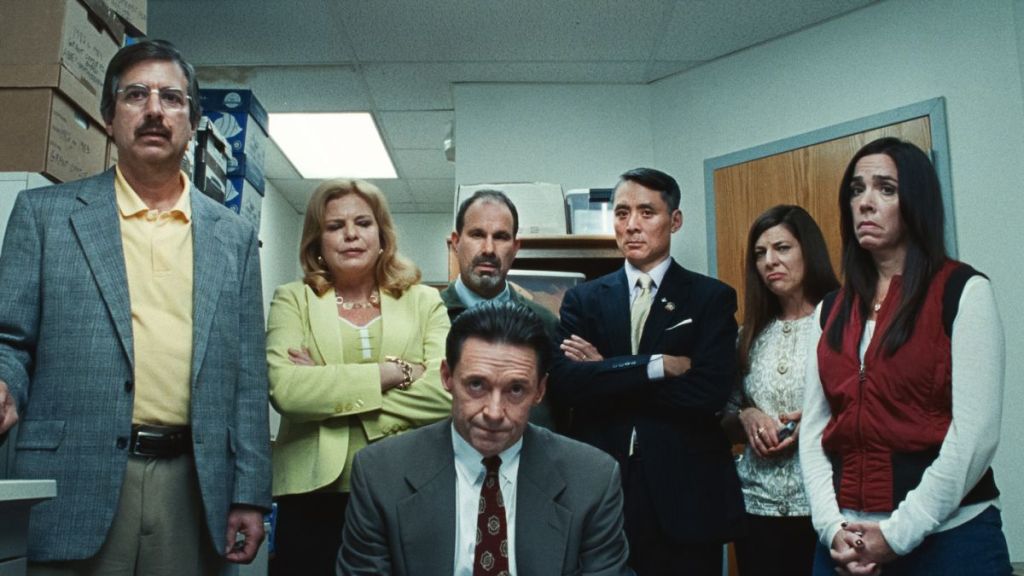
    To understand what kind of a film “Bad Education” seeks to be, it’s important to first be introduced to the values of the world director Cory Finley and screenwriter Mike Makowsky bring audiences into.

    Set in an affluent Long Island community, Roslyn School District Superintendent Frank Tassone aims to make his district number one in America (they’re number four) and the school board president begins his meeting updates by tallying up how many Roslyn students have been admitted to elite universities.

    “The better the school system, the higher the price tag on the homes,” one grateful community member (and real estate agent) brags to Tassone in the film’s opening moments.

    Money and status are the keys to power in this world, and Finley and Makowsky find their way to communicating elitism to a broad audience with a dark, subtle humor and smart writing.

    Based on a true story, the film follows Roslyn’s school system as it navigates a financial scandal that could destroy not only the school’s finances, but the reputations of its seemingly perfect staff.

    “Bad Education” gives Hugh Jackman the opportunity to show off the biggest part of his on-screen persona – the relentless charm of a showman – in a way that other actors might turn into a snake-oil salesman, but that the Australian actor turns into a revealing, nuanced look into the effects of the public education system on those who work to help kids excel.

    The allure of casting Jackman as Tassone preys on the film’s audience by luring them into a false sense of security with the performer that masks his character’s true intentions. There’s a sense of naturally rooting for Jackman that extends over to Tassone as audiences watch everyone in the world of the film faun over Tassone and place him on a pedestal.

    Viewers who come into “Bad Education” without any history with the true story may be confused as to how things turned sideways for Roslyn. One Jackman smile and it all makes sense.

    Even in moments where Tassone is forced to verbally confront others, Jackman’s measured approach comes across as genuine to the other characters in the scene and slightly underhanded to knowing viewers. It’s a deep, engaging performance that may well be one of the best in Jackman’s career.

    While all eyes are rightfully on Jackman’s performance throughout, there’s an easy case to be made that Emmy and Oscar-winning actress Allison Janney’s scene-stealing turn as assistant superintendent Pam Gluckin deserved a full two-hour spotlight. Janney excels in roles that allow her to elongate naturally dry, sarcastic humor and her performance as Gluckin is a masterclass in facial expressions to convey contempt.

    Ray Romano plays a convincingly dopey school board president, while “Blockers” star Geraldine Viswanathan showcases her potential to be a breakout star with another stellar performance as Rachel, a skeptical Roslyn journalism student encouraged by Tassone to dig deeper into her stories.

    On the surface, “Bad Education” is a straightforward, simply shot and plainly directed film. But underneath the cosmetics are layers of subtle, nuanced critiques of elite East Coast ideologies and societal pressures to succeed at any cost.

    Smartly, many of these themes are laid out in reverse where the audience sees the end results of actions before understanding what is happening in context and the cinematic subterfuge only truly reveals itself after the credits roll or on a subsequent viewing, where minor characters who didn’t seem important at first glance make sense in the aftermath.

    If there’s a major flaw within “Bad Education,” it’s the journalistic strings that the film doesn’t tug on as events reveal themselves. Rachel’s investigation into the school’s finances stops dead in its tracks for large segments of the film despite being some of the most compelling from a plot perspective and a deeper look at Roslyn in the vein of the New York Magazine article by Robert Kolker this film was based on would make for a worthy, entertaining companion piece.

    After debuting at last year’s Toronto International Film Festival, “Bad Education” was quickly purchased by HBO’s film division, which released Finley’s feature on the premium cable channel Saturday evening. It’s sure to be a major player at the Golden Globes and Emmys with acting nods for Jackman and Janney a certainty and “Bad Education” a contender for best miniseries or television film.

    With a dynamic lead performance from Jackman and a terrific ensemble cast, “Bad Education” offers up a revealing, subtle glimpse inside the world of public school education on a country club budget and is well worth seeking out on HBO.

  • Blow The Man Down: The secrets women will keep

    Blow The Man Down: The secrets women will keep

    Grizzled fishermen singing old sea shanties is an unexpected, yet perfect way to set the mood for a fresh independent dark comedic noir mystery film from Amazon Studios.

    A feature debut for the writing/directing team of Bridget Savage Cole and Danielle Krudy, “Blow The Man Down” is a striking, exceptionally crafted work of art that pulls in some of the best elements of “Fargo,” Agatha Christie novels and “Gilmore Girls” to create a unique take on the genre.

    Set in a remote fishing town in Maine, “Blow The Man Down” follows sisters Priscilla and Mary Beth Connolly in the days following their mother’s funeral as a confrontation with a strange man leads the women down a path of murder and intrigue that entwines their close-knit community.

    Newcomer Sophie Lowe brings a quiet, introspective presence to Priscilla – commonly known as Pris – and audiences can feel the wheels constantly churning in her head despite a lack of reaction by all outward appearances. There’s a sadness at the front of her performance that leaves Pris numb to the world around her that occasionally comes across as cold and callous, but Lowe softens the edges enough to ensure that this never feels to the point of being calculating.

    “Homeland” star Morgan Saylor floats across the screen with reckless abandon, playing on Mary Beth’s impulsive nature to deliver a performance that draws viewers in without ever letting them get on Mary Beth’s side.

    Lowe and Saylor have remarkable chemistry as sisters who double as identical opposites. Their reactions, although in contradiction with one another are perfectly in character and feel at times as if the same person is having two different reactions to one event. Mary Beth’s frantic emotions coalesce with Pris’s controlled demeanor to balance the sisters out as a rational unit.

    Lowe plays off Saylor’s impulsiveness with a muted reaction that crystalizes her Priscilla as a cinematic inverse of Mary Beth, the same, but opposite person. Even at the times when it seems the two flip roles, Saylor turns down Mary Beth’s irrational nature as Lowe escalates Priscilla’s desperation to maintain this sense of balance.

    With a brisk pace and laundry list of characters that populate Easter Cove, “Blow The Man Down” leaves audiences constantly yearning for more from the film’s terrific ensemble cast, which includes Academy Award nominee June Squibb and three-time Emmy Award winner Margo Martindale.

    Martindale casts an especially large shadow over the mystery of the film as a ruthless bed-and-breakfast owner who expertly utilizes both charm and intimidation to get her way. In a screenplay that infers much more than it explains outright, Martindale perfectly uses her screen presence and inflection to make Mrs. Devlin authentically respected and feared.

    Facial expressions play a key role in helping audiences navigate their way through the narrative web and Martindale is always able to maintain the proper tone with a subtle glance or twist of her mouth. There simply isn’t enough of Martindale in “Blow The Man Down,” which could easily have been turned into an eight-episode HBO miniseries.

    Cole and Krudy are meticulous in the details of their world building, from costuming and production design to authentic casting and dialogue that gives viewers a true sense of place. Even though mystery is a primary element of the film, “Blow The Man Down” reveals its secrets as a part of world building rather than simply laying out the elements of the suspense in connect the dots fashion.

    Camerawork presses in tightly on its leads to accentuate the tension and claustrophobia Pris and Mary Beth feel as their small world further closes in on them.

    While the editing might feel unnecessarily jumpy at first glance, Cole and Krudy ping-pong back and forth between various camera angles within the same scene to capture specific images, disorient the viewer to heighten their attention or build suspense. Each element of the film from the script to the cast to the production team has a kinetic, frantic energy that provides a unique overall tone and visual style for the feature.

    Composers Jordan Dykstra and Brian McOmber provide a mesmerizing soundtrack that heightens all the emotions that buzz around key moments in the film. Their exceptional use of strings jumps off the screen within the first 20 minutes and leaves audiences paralyzed with its ominous reverberations any time their score seeps its way back into the film.

    If the tension provided in the soundtrack begins to suffocate audiences, revisiting the singing fishermen several times over the course of the 90-minute feature becomes a soothing reprieve from a makeshift Greek chorus.

    The film debuted almost a year ago at the 2019 Tribeca Film Festival, where it was acquired for distribution by Amazon. After screening at the Toronto International Film Festival in September, “Blow The Man Down” skipped a theatrical release and was added to Amazon Prime in mid-March.

    Tightly wrapped into a 90-minute frame, “Blow The Man Down” offers plenty of tense drama, dry humor and noir uncertainty to keep audiences entranced in the world Cole and Krudy create in their small Maine fishing town. Easily accessible at home on Amazon’s streaming platform, “Blow The Man Down” is easily one of the best and most unique films to be released so far in 2020 and well worth investing in for part of an afternoon or evening.

  • You Only Live Twice

    April 15, 2020 · Watch the trailer

    Why do Chinese girls taste different from all other girls?

    The first words out of Sean Connery’s mouth in his fifth turn as British secret agent James Bond set the tone for the worst films in the entire franchise and certainly the lowest point for Connery in the role – even including his work in the non-canonical “Never Say Never Again” released in 1983.

    Racial insensitivity – or in a truer sense, outright racism – is rarely more apparent in the series than in “You Only Live Twice,” loosely based on the Ian Fleming novel and written for the screen by celebrated children’s novelist Roald Dahl, who had never tried his hand at a screenplay before Fleming asked him.

    Director Lewis Gilbert’s first 007 feature has Bond trample his way across Japan following leads to try and stop the hijacking of American and Soviet spacecraft that might lead to World War III on a nuclear level.

    Over the course of the film, Bond is shown having an affinity for sake served at the proper temperature and a disdain for Siamese vodka, training in the martial arts

    When Dahl requires him to alter his appearance to blend in as a poor Japanese fisherman, things go terribly wrong as a team of women in kimonos apply makeup to change the curvature of his eyes and fit him with a short haired wig cut in traditional style. Dahl could have easily written around this plot problem by having Bond live remotely away from the village he hides out in, but intentionally opts to “immerse” the character in the culture which feels even more inappropriate than the sexism that pervades the series.

    Other attempts are made to celebrate Japanese culture, showcasing a traditional sumo wrestling match Bond and Aki attend early in the film before meeting Henderson, but this is later undercut with the laughable notion of ninjas armed with pistols and throwing stars ridiculously raiding Blofeld’s lair.

    Visibly bored in the role of Bond, “You Only Live Twice” is the clear weak link in the Connery era of the franchise as the star expressed a desire to not return to the series after “Thunderball” until producers Albert R. Broccoli and Harry Saltzman increased his salary.

    Dialogue doesn’t quite have the same zip that it used to and Connery essentially goes through the paces in a role that feels less charming, less energized, less James Bond than the character he created over the prior four installments.

    Perhaps the fatigue of his fifth turn in the role in six years – a pace unlike any other actor in the franchise – or the relentless notoriety it gave him that made filming “You Only Live Twice” difficult with Japanese crowds invading sets weighed on Connery too much for him to maintain the same quality he had prior.

    The first true face of S.P.E.C.T.R.E. leader Ernst Stavro Blofeld, Donald Pleasence’s performance in the role is more notable for what viewers see of him – glaring eyes offset with a long vertical scar – than for what Pleasence brings to the role. His iteration of the role is largely monotone and lacks emotional range, although whether or not this is a choice by Pleasence as an actor or a limitation of the prosthetic makeup on his face is unclear.

    Tetsurō Tamba’s turn as Japanese secret service head Tiger Tanaka is largely engaging, although as per usual with station chiefs in the Bond films, Tanaka serves more as a device for moving the plot forward than an actual character.

    The two traditional “Bond girls” in the film, Aki and Kitty Suzuki, couldn’t possibly be more different. Akiko Wakabayashi’s vivid, engaging turn as Tiger’s right-hand woman Aki is distinctly more pronounced than Mie Hama’s subdued, underutilitized stint as Kitty Suzuki primarily because Hama could not pick up the English language quickly enough for filming and Wakabayashi – who was originally cast as Kitty – swapped roles with Hama.

    Aki openly challenges and antagonizes Bond as many of the best “Bond girls” in the series do and their banter is among the best repartee in the entire film, whereas Kitty’s late entrance and Hama’s language struggles paint “You Only Live Twice” into a corner.

    Large sections of the final act are virtually pointless as Bond could have just as easily done everything himself that he’s forced to do with Kitty and the film would have been much tighter and crisper as a result.

    Charles Gray makes a brief appearance in “You Only Live Twice” as a contact for Bond named Henderson, only to flip the script entirely – and subtly change audiences’ perspective on him here – when he returned to the franchise as Blofeld in “Diamonds Are Forever,” the final Bond film with Connery in the lead. His Henderson is also notable for making Bond’s signature drink “stirred, not shaken.”

    “You Only Live Twice” may very well be the first and only successful film to see an action hero fend off an attacker using an entire couch as a handheld weapon, but somewhat surprisingly it’s the least comical sequence of its kind in the entire film.

    The film has two notable action sequences – an aerial battle featuring Bond taking on four helicopters in a small vehicle designed by the Q Branch and a massive full-scale assault on Blofeld’s volcano compound with a team of 100-plus ninjas in grey suits.

    The former battle takes on combat from a variety of perspectives, with multiple angles at close quarters that give the viewer a true range for both Bond and his pursuers as they dogfight over a series of mountains. It has a crisp, dynamic energy that gets relatively cut at the knees when the choppers start falling from the sky as the explosion special effects make the miniature versions of the helicopters almost too obvious.

    Blofeld’s lair being sieged has a lot going on from limited vantage points as a super wide camera angle gives audiences a broad perspective on the size of the battle and production designer Ken Adam’s fantastic set creation. Meanwhile, the action is middling in closer range as forced perspective cross cutting has ninjas tossing grenades and S.P.E.C.T.R.E. minions flying ridiculously away from explosions at separate moments that hinders the quality of the action.

    The bigger the action in “You Only Live Twice” the less effective it becomes.

    In Japan, men always come first. Women come second. – Tiger Tanaka

    I may just retire to here. – James Bond

    Women are used as discardable tools as much as objects of affection in “You Only Live Twice,” with servant girls bathing Bond and Tanaka by hand and, in one case, literally giving up their agency and independence by marrying a faux-Asian Bond in a religious ceremony to protect his cover.

    Practically canonical after four films, sexism is to be expected in the Bond franchise, but never as blatantly or as poorly contrived as Dahl does in “You Only Live Twice.” At Tanaka’s request, Bond selects one of his servants to give him a massage, to which Tanaka replies her to be a good choice as she is “very sexyful.” Later in the same scene, Bond whisks Aki off to bed in his arms with her seductively telling the spy, “I think I will enjoy very much serving under you.”

    Ken Adam’s crowning achievement as production designer in the Bond franchise might very well be Blofeld’s volcano lair, a massive spherical structure equipped with a monorail system and full-scale rocketship that serves as the ideal locale for the final battle sequence. It’s beautifully paired with Blofeld’s office and its piranha-filled pool to create a visual style for decades to come.

    Nancy Sinatra serenades audiences over the film’s title sequence with a guitar-infused, Asian-inspired theme song that’s catchy in the moment and as equally forgettable as the silhouetted women fronting clips of volcanoes spewing lava in a nod to the film’s climatic setting.

    Easily the weakest of the initial five films in the franchise, “You Only Live Twice” helped cement the need for EON Productions to make plans beyond Sean Connery to secure the longevity of the franchise. Its troublesome racial and gender politics along with Connery’s waning interest in the character make it one of the lesser entries in the Bond canon and not a film that would draw much interest from casual action fans.

    This is the fifth in a series of retrospective reviews of the James Bond film franchise as made by EON Productions in anticipation of the release of the 25th entry in the series, “No Time To Die,” which arrives in American theaters on November 25.

  • Thunderball

    April 13, 2020 · Watch the trailer

    Movies can feel of the moment for a variety of reasons.

    They can be released at the perfect time, coinciding with current events for political or social commentary. They can be constricting, made during a certain point in time with technological or societal limitations that make the final product less universal.

    The fourth entry in the James Bond film franchise, “Thunderball,” is a film very much grounded in the time of its release in the mid 1960s, where nuclear warfare on a global front was present of mind for every audience member.

    Coming off the heels of movies like “Dr. Strangelove” and “Fail-Safe,” “Thunderball” puts James Bond right in the center of the atomic fray with a screenplay emitting tones of the 1962 Cuban Missile Crisis three years earlier despite the fact that Ian Fleming wrote the novel this film was based on a year prior to that U.S. standoff with Russia.

    It’s ironic that EON Productions tried to make “Thunderball” the first feature film in their series after the book’s release, which would have framed the nuclear thriller directly in the middle of current political events at the time. However, legal issues with the screenplay rights led to three other Bond films being made in the meantime and, later, the return of Sean Connery to the role of Bond in the 1980s with the non-canonical adaptation of “Thunderball” entitled “Never Say Never Again,” co-starring Kim Basinger.

    The fourth entry in the Bond saga finds the MI6 agent hot on the trail of two atomic bombs stolen off a British Vulcan bomber and exploited for ransom by the terrorist organization S.P.E.C.T.R.E.

    Connery is at his most playful as Bond in “Thunderball,” fully relishing in the sexual gamesmanship and flirtations while maintaining an effortlessly cavalier casualness to his demeanor. His Bond knows and doesn’t care how his words and actions affect those around him, especially with women, and Connery aggressively plays the upper hand on nearly everyone Bond comes into contact with.

    The film’s primary antagonist, Emil Largo, wears an eye patch and has an affinity for sharks and life on the ocean, yet Italian actor Adolfo Celi and vocal double Robert Rietty portray Largo as if those defining characteristics are all there is to the villain aside from a general evil demeanor. Nothing about the performance feels malicious nor threatening, especially when paired next to characters like the femme fatale assassin Fiona Volpe’s treachery or even Bond’s underhanded anti-hero tactics.

    Former Miss France Claudine Auger – along with frequent Bond series voice double Nikki Van Der Zyl – offers up a serviceable, yet underwhelming performance as the naïve ingenue in Bond’s professional and romantic crosshairs. Her Domino exudes a meek exterior in spite of overwhelming beauty, although an occasionally biting line delivery from Van Der Zyl does challenge Bond more than Largo.

    More so than most Connery films in the franchise, “Thunderball” is fraught with problematic sexual aggression towards women. Although Bond frequently seduces women throughout the series, the manner in which he achieves his goal is especially troublesome, trapping women in bearhugs and forcing himself into their mouths, ruthlessly blackmailing them into bed with him.

    His relationship with Domino is far more verbally aggressive than with other Bond girls in the franchise, pushing his way into a relationship curtly and matter-of-factly as if his conquest of her was inevitable and for her own good.

    On land, the action in “Thunderball” is limited in scale and relatively mundane hand-to-hand combat, save for a physical brawl between Bond and a S.P.E.C.T.R.E. operative that opens the film and ends with a memorable jet pack ride to safety.

    In the water, however, the dramatic tension and scope of the film widens considerably as director Terence Young soaks up all the extravagance for numerous underwater adventures that see Bond outmaneuver frogmen with harpoon guns and a variety of sharks culminating in a languishingly elongated sea battle that highlights Boren’s expert camerawork and intricately coordinated fight choreography of expert divers.

    Where “Thunderball” truly stands out is in its exceptional aquatic cinematography, shot by celebrated underwater photographer Lamar Boren, whose talent behind the camera to create vivid and clear shots continued in several future Bond films including “You Only Live Twice,” “The Spy Who Loved Me” and “Moonraker.”

    Camerawork is surprisingly steady and clear given all the quick maneuvering actors have to do in such close proximity to the frame and it’s a wonder that the final battle doesn’t have any of the shaky-cam movements prevalent in modern action films like director Paul Greengrass’ work in the Jason Bourne franchise.

    Young and his team create a color palette of oranges, blacks and aqua blues to offset the depths of the dark ocean floor and help to tell a visual story identifying good from evil, simplifying a cluttered mass of bodies writhing around underwater into an endlessly entertaining spectacle.

    Production designer Ken Adam’s striking set work continues to be among the highlights in any early Bond film as his ability to create iconic locales for villains to play in is unrivaled even by modern standards.

    The S.P.E.C.T.R.E. lair hidden inside a Parisian domestic aid office reveals the inner workings of the organization from the secrecy and intricacy of their operations to the power structure laid out as numbered lieutenants sit in isolating office chairs in the center of an empty steel hall turned conference room as the leader towers over them, his face obscured and haunting voice pouring into the room via speaker system.

    Coming off of Shirley Bassey’s sheering vocals in “Goldfinger,” Tom Jones’ booming tones overlaying the opening title credits of “Thunderball” mimic the pulsating horns and crashing drums that prelude a return showdown between Bond and the looming S.P.E.C.T.R.E. organization. Mixed on top of silhouetted women swimming underwater, the titles are an ideal way to foreshadow the events to come while providing audiences with a classic Bond theme song.

    The last of four Bond films to come out in successive years, “Thunderball” marks the closing of the opening chapter in the history of the franchise before Connery’s waning interest in the role begins to seep in.

    This is the fourth in a series of retrospective reviews of the James Bond film franchise as made by EON Productions in anticipation of the release of the 25th entry in the series, “No Time To Die,” which arrives in American theaters on November 25.

  • Jump Shot: More than a simple act

    Jump Shot: More than a simple act

    At uncertain times like these, inspirational films can be a salve and reprieve from the outside world and a reminder of wholesome goodness.

    Sports movies in particular are a frequent source for these moments of positivity, with themes of underdogs overcoming the odds or unlikely teammates rallying together for a common cause.

    A new documentary – which won the prestigious Audience Award at the 2019 Hill Country Film Festival – is a sports film of a forgotten basketball hero who happened to be so much more than just the game he played or the move he invented.

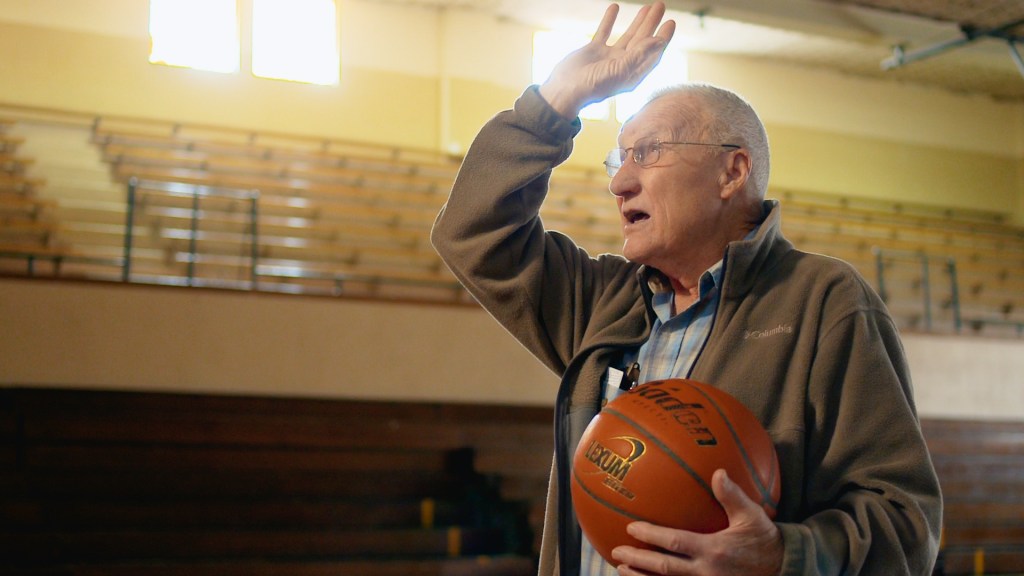
    Texas filmmaker Jacob Hamilton follows former University of Wyoming star Kenny Sailors over the span of more than seven decades from his beginnings as a three-time collegiate All-American and national champion as well as his professional career over six seasons.

    Through archival footage and interviews with Sailors himself, Hamilton is able to explore the history of basketball until a single decision by one player changed the game permanently.

    Then a game primarily played almost entirely on the ground, Sailors revolutionized the sport by being the first major college athlete to leap before shooting the basketball, providing a height advantage over defenders on the ground which rendered his shot nearly unblockable.

    “Jump Shot” showcases highlights from the 1940s with Sailors dribbling around the court like a member of the Harlem Globetrotters, stopping on a dime and then rising up for a shot sports fans see in every modern game.

    Hamilton and his archival team do a fantastic job of not only finding the footage with help from the University of Wyoming but presenting it in a myriad of ways that elevate the material and are visually stimulating.

    One sequence in the middle of the film compares Sailors’ shooting form to that of all-time greats like Michael Jordan, Larry Bird and Stephen Curry, one of the film’s executive producers. Within a single frame, Sailors is rightly placed in the middle of the best shooters in basketball history with each man frozen at the top of their shot, visually confirming Sailors as a pioneer of the game.

    Hamilton smartly also uses this archival footage as an interview tool, handing iPads with Sailors’ highlights to a wide variety of basketball legends including Dirk Nowitzki, Hall of Fame coach Bob Knight, Kevin Durant, Nancy Lieberman and Curry.

    In a sense, “Jump Shot” could be viewed as a cinematic resume for Sailors to be inducted into the Naismith Basketball Hall of Fame, an accolade members of the University of Wyoming’s athletic department submit Sailors for during the documentary.

    Sailors likely wouldn’t have sat for as many interviews as he did – appearing in the majority of the film over age 90 – if all Hamilton was interested in was basketball.

    Notoriously humble, Sailors’ humanity and relationships with others shine through like a beam of light over the course of the 80-minute film as Hamilton reveals his courtship and marriage to Marilynne, which in part due to her health, led Sailors away from the game to the Alaskan wilderness.

    From his military service to his dedication to family and those he taught, Sailors is rightly portrayed as an American hero worthy of the spotlight the film places upon him. His vibrant personality radiates off the screen so warmly that it’s impossible not to be charmed more by the man, not the legend of a sports revolution.

    “Jump Shot: The Kenny Sailors Story” debuted last year at the South by Southwest Film Festival and spent the majority of 2019 touring at festivals across the country. It was slated for a theatrical release earlier this month until the spread of the novel coronavirus shut down movie theaters across the country.

    Since then, the film’s producers have leapt on the growing trend of releasing their film digitally in lieu of waiting for theaters to reopen.

    This worthy, inspirational documentary will be premiering for the public with a special three-day event release Thursday through Saturday, April 16-18. Audiences will be able to watch the film in the privacy of their own homes by purchasing a $7.99 digital ticket for a 48-hour viewing window at http://www.jumpshotmovie.com.

    A portion of proceeds from this event will benefit the Convoy of Hope for COVID-19 meals in affected communities.

    More than just a simple sports documentary, “Jump Shot: The Kenny Sailors Story” is a revealing, heartwarming look at a man who lived fully and unapologetically for others and it’s a film well worth seeking out during its limited digital release this weekend.

  • Goldfinger

    April 9, 2020 · Watch the trailer

    It should come as little surprise that a quest for gold would prove to vault the James Bond film franchise to new heights as director Guy Hamilton’s first time behind the camera with “Goldfinger” pushed spy cinema to the next level.

    Without question the best of the six official films starring Sean Connery, “Goldfinger” has everything great about a James Bond movie in spades: iconic villains and gorgeous women to challenge him, picturesque locales, a killer theme song, inventive gadgets, fast cars and intense action.

    In EON Productions’ third film in the series, “Goldfinger” finds James Bond on the trail of a nefarious gold magnate whose international smuggling may just be the prelude to something much more vile and deadlier.

    Setting aside Bond’s exploits on the hunt of S.P.E.C.T.R.E., this entry in the canon serves as a standalone operation that puts the British spy on American soil for the first time.

    Giving his best performance in the series, Connery maximizes his charm and bravado as Bond, engaging in Hamilton’s signature combination of action and humor with gusto.

    There’s a subtle glee in Connery’s eyes when he delivers an understated quip about a foe’s demise or a charmingly aggressive pickup line. But his work is matched with a deeper empathy than shown on screen before for a rounded turn that brings Ian Fleming’s novels to life in a rich way.

    Fully comfortable in the part, Connery also has impeccable chemistry with his scene partners and effortlessly interacts with his intelligence counterparts, the women he tries to woo and his adversaries with considered affectations that adjust as needed but remain firmly in the distinct character he’s crafted for Bond.

    Honor Blackman gives Connery a run for his money as the first female in the franchise to truly go toe-to-toe with Bond as Goldfinger’s personal pilot.

    With as sexually charged a name as Pussy Galore, it might be expected that the character would be yet another femme fatale for the British spy to have his way with. But Blackman presses the attack with every line of dialogue, challenging Bond as Galore and Connery himself as an actor.

    Her performance perfectly shades the lines of good and evil, never revealing her true intentions to Bond nor Goldfinger and always keeping the hero guessing.

    Unlike nearly every other woman in the series to this point, Galore never uses her sexuality as a weapon or a way to get what she wants and Blackman expertly dismisses suggestions and flirtations with an aggressive calm. Even the lead up to what is assumed to be off-screen sex with Bond is physical in a way that suggests a battle of equal forces rather than a romantic predator and prey scenario.

    Just as memorable but for vastly different reasons, Shirley Eaton’s Jill Masterson is the gold standard for Bond iconography, glistening off the screen in a shining golden palette on the bed in Bond’s hotel room. Eaton gives a worthy performance in her five minutes on screen as a woman helping Goldfinger cheat at cards, but it’s in her character’s death that the franchise is permanently altered.

    The first female to die in the series, Jill’s shocking death gave both Goldfinger and Oddjob instant credibility as villains not to be trifled with and painted a portrait of artistic violence that would carry out in a myriad of way throughout the series.

    Gert Fröbe dazzles in his major film debut as the titular villain Auric Goldfinger, combining his imposing stature with rich, cunning facial expressions to give Goldfinger an antagonistic cunning for the perfect Bond foil.

    The German actor had difficulty speaking English at the time of shooting and Hamilton pressed him to deliver his lines phonetically at twice the normal speed. This allowed Hamilton to dub over the large majority of Fröbe’s dialogue with stage actor Michael Collins, who infuses the character with a dry wit and controlled maniacal obsession with gold.

    The film also heralded the arrival of perhaps the most iconic henchman in the entire series, the silent but deadly Korean bruiser Oddjob. Perfectly portrayed by Olympic medal winning weightlifter Harold Sakata, Hamilton creates a mystique around Sakata’s short but stout frame through a suspenseful introduction and brooding intensity from Sakata.

    A man capable of killing others by throwing a bowler’s hat feels incredibly preposterous, but Hamilton and Sakata make it more than convincing whether he’s crushing a golf ball with his bare hand or brushing off punches as if they were mere inconveniences.

    After sitting out “From Russia With Love” to work on “Dr. Strangelove” for Stanley Kubrick, “Dr. No” production designer Ken Adam returned to the Bond franchise, creating the most elaborate and iconic sets to date.

    Goldfinger’s farm estate is a magnificent achievement for the mid 1960s, with his lavish, sprawling parlor revealing itself to be home base for the plans of “Operation Grand Slam.” This transformation, complete with reversible pool table and walls on pulley systems, revolutionized and inspired a new height for the classic villain’s lair.

    Adam matches his special work several scenes later, constructing a four-story gold vault room with working elevator to imagine the interior of the famed Fort Knox, thus setting the stage for another iconic Bond one-on-one fight sequence.

    Hamilton builds the relationship between Bond and Oddjob gradually over the course of the film, showing Oddjob physically dominate the spy and Bond outwit the bruising butler, propelling them towards an inevitable showdown that’s perfectly choreographed to accentuate both their strengths.

    “Goldfinger” marks the debut of the signature Aston Martin DB5 in the franchise as Hamilton whips Bond across the Swiss countryside in multiple car chases filled with slick driving, bulletproof glass and spy gadgets that would come to define the series.

    Tension builds and is perfectly paced by Hamilton over the course of the film and especially on a scene by scene basis. The dramatic intensity crafted in a scene where Goldfinger aims to cut Bond in half with a laser ping-pongs back and forth across three different shots – a wide shot of Connery strapped to a table, a mid-shot of Fröbe discussing his plans and tight closeups of Connery.

    Melded together by Hamilton and editor Peter Hunt, the scene takes a nonsensical situation and pulls audiences in with compelling antagonistic dialogue and a haunting underscore from composer John Barry to create the first true “Bond in peril” moment in the series.

    Barry also wrote the music for one of the best songs in Bond franchise history as Shirley Bassey’s growly voice echoes in the background of the opening title sequence. Backed with blaring horns and crashing cymbals, this iconic title track instantly asserts itself in the ears of audiences and declares this third entry as another major leap forward for the series and foreshadows Eaton’s golden fate.

    Bassey is the only artist to perform multiple Bond themes, also singing the title songs for “Diamonds Are Forever” and “Moonraker.”

    “Goldfinger” has come to define the Sean Connery era of the James Bond film franchise with its elevated take on the classic British spy. With strong antagonists and a well-crafted screenplay, Connery is able to deliver his most dynamic performance in the role and cement the legacy of the series for decades to come.

    It’s no secret why Sam Mendes and his team of writers relied so heavily on “Goldfinger” for their nostalgia aesthetic for 2015’s “Skyfall.” Rarely did another film in the franchise come close to “Goldfinger” in terms of its storytelling, performances and dynamism.

    Essential viewing for introducing new audiences to the James Bond franchise, “Goldfinger” is a pinnacle of 1960s action/adventure filmmaking and a top five entry overall.

    This is the third in a series of retrospective reviews of the James Bond film franchise as made by EON Productions in anticipation of the release of the 25th entry in the series, “No Time To Die,” which arrives in American theaters on November 25.

  • From Russia With Love

    April 8, 2020 · Watch the trailer

    Movie franchises trying to capitalize on success by getting the next film out as quickly as possible feels like a modern trend perpetuated by Marvel Studios and their endless supply of superhero content.

    And yet, Albert R. “Cubby” Broccoli and Harry Saltzman cornered that market decades earlier with their EON Productions studio seizing on the box office acclaim for their debut James Bond film “Dr. No” in 1962 with three subsequent features over the next three years.

    The immediate follow-up, 1963’s “From Russia With Love,” jump started the franchise thanks to the continuity of the production team and the return of both star Sean Connery in the lead role and Terence Young in the director’s chair.

    With double the budget and many times the scale of its predecessor, “From Russia With Love” is a classic entry in the Bond canon for its influence on the series as a whole and expansion of the world of cinema’s favorite MI6 agent.

    Based on the Ian Fleming novel, the second James Bond film follows the British secret agent to Turkey in pursuit of a Soviet decoding machine being offered up by a young Russian intelligence officer who has seemingly fallen for Bond from a single photograph. The machine is also being pursued by S.P.E.C.T.R.E., which has put Bond in their crosshairs following the events of “Dr. No.”

    Connery feels as though he’s relaxed, more self-assured in the role of Bond with this second run as he’s unafraid to be more deliberate and combative with line delivery. This isn’t Connery at his best in the part, though the foundations laid in the first two films will soon pay off for his most engaging work.

    “From Russia With Love” carries over the tradition of casting a pretty foreign face as Bond’s love interest with Miss Universe runner-up Daniela Bianchi, an Italian model who learned English for the film but ultimately had her lines dubbed over by British actress Barbara Jefford. Their combined work in the role of Soviet ingenue Tatiana works well enough; Bianchi has a flair for intense facial expressions and Jefford provides a convincing enough accent to mask audiences from the fact that she’s not Russian nor that it isn’t the actress seen on screen actually speaking.

    It goes without saying that in a film with too much going on, “From Russia With Love” is overloaded with villains – and not simply the nameless ones Bond and his allies eliminate in short order over the course of the franchise.

    Lotte Lenya relishes the role of ruthless Soviet counter-intelligence boss Rosa Klebb, infusing the iconic character with bitterness and controlled rage. The character on the script page is rather bland, but Lenya gives the part a distinct edge that helped make Klebb iconic in Bond lore and the primary influence on the Frau Farbissina character from the “Austin Powers” movies.

    Robert Shaw is thinner, over a decade younger and nearly unrecognizable from his iconic “Jaws” role here as blunt force object and SPECTRE assassin Red Grant. While the character is intended to be the silent, but deadly type, Shaw is able to infuse Grant with an engaging amount of charm, revealing Grant to almost be Bond’s villainous mirror image.

    The villain who works least well in “From Russia With Love” is the chess-playing mastermind Kronsteen, played serviceably enough by Vladek Sheybal, but lacking the screen time or character development required to make Kronsteen valuable or memorable.

    The same cannot be said of Anthony Dawson’s extended cameo appearances as S.P.E.C.T.R.E. leader Ernst Stavro Blofeld, whose appearance helps to define the villainy of the franchise despite audiences only seeing a portion of his body. As Dawson played the role of Professor Dent in “Dr. No,” this might help explain his obscured appearance and the fact that his lines were dubbed over by an uncredited Eric Pohlmann.

    The film’s signature action sequence, a thrilling close-quarters fight in a train, is expertly directed by Young and choreographed to highlight the cleverness of Bond against Grant’s straight-forward brutality. Each movement is deliberate and considered, well ahead of its time in terms of hand-to-hand combat in spy cinema.

    This moment feels personal, intimate in Bond lore given how much of the action within the series is littered with large, bombastic scenes that depict Bond in the middle of a war battle in essence. Young’s directorial style is more adept in wide shots that give action a sense of scale, which works well in a dynamic sequence where Bond takes on pursuers in a helicopter.

    That it comes so closely after the train sequence is no mistake either, highlighting the stark contrast between the two fighting styles and elevating Bond’s versatility as an agent.

    The Bond franchise is notorious for the ways in which it objectifies and subverts its female characters and “From Russia With Love” ramps this up tenfold from its predecessor “Dr. No.” The raw sexuality is not as overt, but still problematic.

    A catfight between two gypsy women plays a significant role during the middle of the film, debasing both women first by pitting them against each other for sexual dominance, then having both submit to Bond in an implied threesome.

    Klebb’s position as a Soviet agent is used – as frequently is done in Western films – to imply villainy, but subtle references to her being a lesbian are also used as an implication that her homosexuality is a further cause to her evil ways.

    The film saw the debut of its signature title card sequence featuring belly dancers from the stomach to thighs gyrating to an orchestral version of the title song as well as the iconic “James Bond Theme” penned by Monty Norman. The catchy, but largely forgettable “From Russia With Love” theme sung by Matt Munro scored the movie’s end credits, a rarity for the series.

    Where “From Russia With Love” becomes problematic is in how much the world of Bond expands in the second film from its rather contained origins with “Dr. No.” Young introduces a cacophony of new villains for Bond to take on, beginning the further reveal of the S.P.E.C.T.R.E. organization, while also having audiences navigate through multiple countries and the geopolitical relationships between Turkey and the Soviet Union.

    It’s clear engaging in the film that the screenplay was changed, often on the day of shooting, to help elevate certain characters like Red Grant and help mold James Bond into a larger connected franchise. On an individual film level, events are especially rocky, but in the greater context of the whole series, “From Russia With Love” sets precedents and creates the landscape for decades to come.

    This is the second in a series of retrospective reviews of the James Bond film franchise as made by EON Productions in anticipation of the release of the 25th entry in the series, “No Time To Die,” which arrives in American theaters on November 25.

  • Onward: Movie watching heading ‘homeward’

    Onward: Movie watching heading ‘homeward’

    One month ago, the latest film from Disney’s Pixar Studios opened in over 4,300 theaters nationwide and grossed more than $39 million in its opening weekend.

    With the hopefully short-term decimation of the movie theater experience thanks to the novel coronavirus, “Onward” has gone from the biggest box office hit of March to just one of countless new films available on a streaming service in April.

    The movie was one of the first major studio releases still in theaters to be available on demand for $19.99 – alongside early 2020 hits like “The Invisible Man” and “Birds of Prey” – but “Onward” has the further distinction of being the only one to move two weeks later to a streaming service, in this case, Disney+.

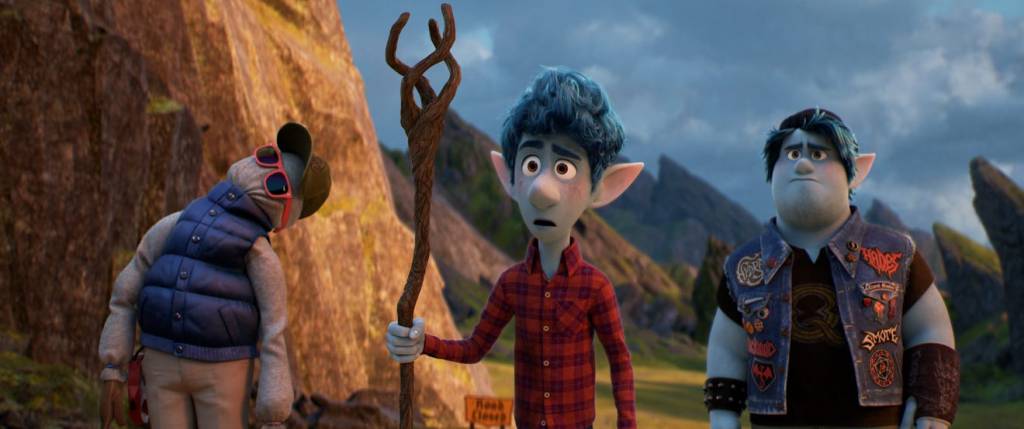
    The latest Pixar feature follows a pair of teenage elven brothers, Ian and Barley, who go on a magical quest to spend one more day with their father, who died when they were too young to remember him.

    “Onward” has an interesting hook for this seemingly simple tale, placing the narrative in a world where traditional mythical creatures like dragons, fairies and elves have traded in their magical heritage for the ease of modern living.

    The success of the film requires a voice actor with the ability to make Ian a relatable, sympathetic lead character that audiences can relate to and the choice of Tom Holland strikes this tone from the outset. With Marvel’s “Spider-Man” and “Avengers” films, Holland has proven to be well adept at creating genuine earnest characters that can also carry the emotional stakes of the film.

    Chris Pratt is perfectly cast as the voice of Ian’s eccentric, magical quest obsessed brother Barley, giving the character an equal infusion of Jack Black-esque enthusiasm and “Lord of the Rings” style fandom.

    Relentless energy is a tricky thing to balance in a vocal performance, though Pratt finds the right balance between boundless intensity of spirit and annoyance that doesn’t overwhelm Barley as a character and sets up some genuine emotional moments in the second half of the film.

    Holland and Pratt have a well-balanced chemistry that allows the primary themes of family and brotherhood to shine through despite some rocky moments in the screenplay.

    “Onward” translates well from the big screen to the home viewing experience with a 4K quality transfer onto the Disney+ platform. Characters have more texture and depth visually that creates a three-dimensional look on a two-dimensional viewing format.

    This works especially well during the film’s cinematic action sequences where “Onward” plays up its mythical origins with magic and mystical creatures that provide for engaging, entertaining moments.

    Absent from the move to the streaming platform is the animated short film “Playdate with Destiny,” a lighthearted, family-friendly tale that marks the first crossover between Pixar and one of Disney’s recently acquired Fox properties, “The Simpsons.” While not currently on the Disney+ platform, this short following baby Maggie Simpson should be on the service eventually and is worth checking out.

    The coronavirus has impacted every film studio in remarkable ways, none likely more so than Disney, a studio whose tentpole features prop up the theatrical release calendar for the entire film industry and help keep smaller theaters alive with massive family-friendly and superhero films.

    A seismic shift in Disney’s 2020 slate of films has drastically impacted their theatrical model with “Onward” hitting Disney+ likely six months before it would have and anticipated hits like a live-action remake of “Mulan” and the Marvel prequel “Black Widow” delayed by half a year.

    Disney spent $125 million on director Kenneth Branagh’s adaptation of the popular “Artemis Fowl” children’s novels, a film slated to be released next month and now pulled from theaters entirely for an exclusive, upcoming run on Disney+.

    How things play out for avid moviegoers over the next several months is unclear, but hopefully the promise of early hits like “Onward” finding new life on streaming services will stem the tide until social distancing is a thing of the past.

    Until then, “Onward” is a worthwhile family-friendly feature to fill the void and something worth checking out on Disney’s exclusive streaming platform.

  • Uncorked: Fathers and sons

    Uncorked: Fathers and sons

    Over the last several years, major film directors have made their way to the small screen, making limited series in search of creative freedom and risk-taking with the help of content hungry streaming services.

    Slowly but surely, this trend is starting to pay dividends for movie lovers as young, talented television writers and creators are making their way to feature films.

    Prentice Penny, show runner and one of the executive producers of the hit HBO series “Insecure,” partnered with Netflix for his directorial debut “Uncorked,” which debuted on the platform last weekend.

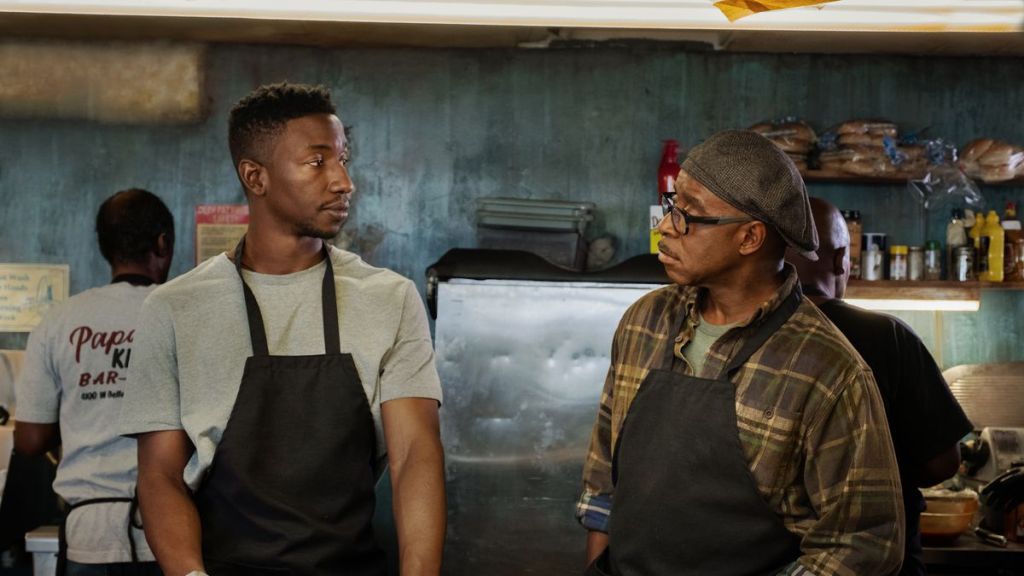
    “Uncorked” follows a young African American man in Memphis looking to break into a world dominated by white men as he seeks to become a master sommelier, an elite accreditation for wine professionals. Elijah struggles to balance his love of wine with familial obligations, mostly put upon him by his father who runs the family’s popular barbecue stand.

    Mamoudou Athie gives a solid, unspectacular performance as Elijah, offering the character the cool civility and demeanor required of a master sommelier candidate but with enough personality to carry scenes in the barbecue stand and at home.

    Emmy winner Courtney B. Vance is the ideal choice to play Elijah’s father Louis as the “American Crime Story” star provides immense gravitas and credibility to the project with his understated performance that belies the tremendous amount of work he’s doing with a limited part.

    Vance wears the burden of family legacy well in the role as Louis presses Elijah with a stoic, yet heavy hand and the transformation of his character over the course of the film feels genuine and earned.

    Veteran comedienne Niecy Nash steals every scene she’s in with her most compelling work to date as Elijah’s mother Sylvia, a cancer survivor trying to bridge the gap between father and son while stoking Elijah’s passion for wine. Her performance has the traditional humorous line deliveries viewers are accustomed to from Nash, but there’s also a refreshing tenderness to her work that helps Sylvia resonate with audiences in a way they can’t get to with Elijah or Louis.

    Penny takes liberties with his screenplay to paint a larger picture with broad brushstrokes, often leaving audiences to fill in the blanks as time fluidly progresses at various rates over the course of the film.

    For example, the development of Elijah’s relationship with Tanya floats in the background of his larger struggle between wine and barbecue. Landmark moments in their romance are shown – their flirtatious meeting discussing wine as rap artists, a first date at a roller rink, meeting his parents – but their love remains shallow and out of focus.

    Penny trusts his audience to fill in the gaps, leaving aspects intentionally unwritten to keep focus on the worlds of wine and barbecue, passion and family, pulling Elijah in different directions.

    It’s a bold strategy that doesn’t entirely pay off for viewers, who will occasionally have trouble orienting themselves after unannounced leaps in time.

    Visually, “Uncorked” has a smoky, seductive hue that draws audiences in and cinematographer Elliot Davis elevates the film with an engaging energy that pairs well with the rhythmic hip-hop soundtrack transitioning in and out of dialogue scenes.

    “Uncorked” was slated to debut earlier this month at the South by Southwest Film Festival in Austin, a premiere cancelled due to the coronavirus pandemic that would have provided a much-needed word of mouth boost as it headed toward its release on Netflix this past Friday.

    An imperfect film in many ways, “Uncorked” does provide a welcome respite from current events and a promising feature debut from a filmmaker to watch in the future.