Author: Matt Ward

  • Once Upon A Time In Hollywood: Tinseltown fantasy

    Once Upon A Time In Hollywood: Tinseltown fantasy

    “Once Upon A Time In Hollywood” is everything one might come to expect from a Quentin Tarantino film and yet somehow, it’s also nothing like what one might expect from Quentin Tarantino.

    Reflective of a man who grew up in the movies engrossed in every aspect of filmmaking, Tarantino’s ninth feature ramps up the dialogue and nonlinear storytelling while tempering down his trademark rampages of violence for a distinctly original piece of cinema.

    It’s a slow-burn ode to late 1960s Los Angeles that embraces a deep nostalgia for classic television westerns and lesser known stars whose bright futures got derailed by choice or circumstance.

    Audiences are propelled into this world by bouncing around between three mainstays of Hollywood at the time: a veteran television actor trying with fledgling success to transition to the big screen, his best friend and stunt man carrying the load however needed and up-and-coming actress Sharon Tate, freshly married to director Roman Polanski.

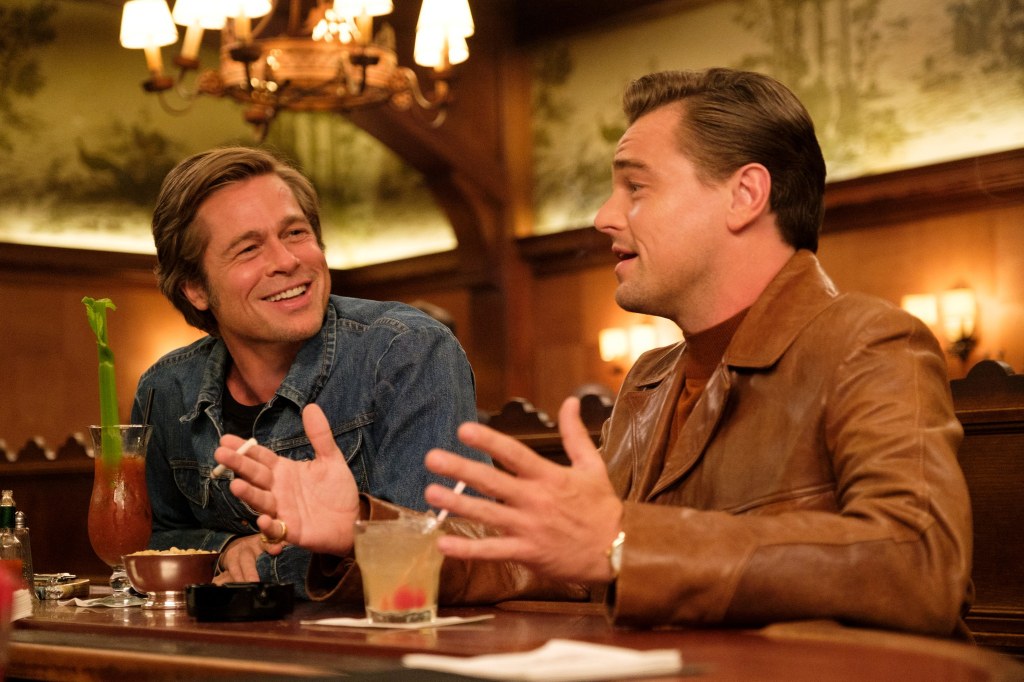
    Written as a strong duality, the natural ebb and flow between the classically handsome actor Rick Dalton and ruggedly confident stuntman Cliff Booth is a joy to watch on screen. Both DiCaprio and Pitt inhabit the roles so fully that the characters feel ripped straight from a by-gone era while audiences are still able to see the A-listers on screen as Leo and Brad at the same time.

    Tarantino knows the strengths of his acting talent and rarely does he lean into them as confidentially as he does here with DiCaprio and Pitt.

    Pitt’s cool machismo as Cliff perfectly offset the more manic charisma of DiCaprio’s Rick; two men’s men hanging on to their waning years on soundstages in radically different ways, yet always together.

    Both actors shine during individual moments, DiCaprio especially on the set of TV western “Lancer.” But it’s together where their unlikely kinship truly elevates “Once Upon A Time” for large stretches of flashbacks and side-plots about making television in the 50s and 60s as viewers tumble towards that fateful August night on Cielo Drive.

    Margot Robbie floats through “Once Upon A Time” as if she were a figment of imagination or a half-remembered dream rather than simply the actress Sharon Tate, whom Robbie portrays in the film.

    It’s both a gross underutilization and a perfect utilization of the Australian actress on Tarantino’s part.

    Tate delivers by a wide margin the fewest lines among the film’s primary characters, a counterintuitive, but shrewd move by the filmmaker to keep Tate masked in a golden palate of mystery while brightening up the entire feature with an effervescent physicality.

    The less revealed to audiences about Tate over the course of the film, the better as Tarantino holds the late actress up as a sunny palate cleanser from the minutia of Rick and Cliff’s journeys and an ode to Hollywood ‘what could have beens.’

    “Once Upon A Time” also affords small glimpses into the lives of celebrities, industry talent and wayward hippies that easily could have garnered their own films or miniseries.

    Tarantino expertly uses acting icons like Kurt Russell and Bruce Dern as well as he does young up-and-comers like a mesmerizing one-scene turn from Dakota Fanning as Squeaky Fromme and Margaret Qualley as a hippie Cliff encounters.

    The fact that a rare good late-career Al Pacino appearance here is the 17th or 18th best thing about “Once Upon A Time” says a lot about this film’s incredible depth.

    Cinematographer Robert Richardson shows exemplary poise adapting to a wide variety of visual styles, matching television and film looks of the era. Richardson feels just as at home in 16×9 black-and-white as he does with early color film palettes.

    When “Once Upon A Time” pulls off set, the camera widens to give audiences larger perspective and enhance Los Angeles as a character in the film.

    There’s also plenty of opportunity here for viewers to find Tarantino’s hidden details, nuggets of nuance that inform and/or remind the time period. These can be broad strokes like major locations dressed to the era or subtle, yet accurate touches like what movies were showing at specific theaters, which shows were airing on television on a given night or what songs were in rotation on specific radio stations on certain days.

    In this regard, “Once Upon A Time” is Tarantino’s most self-indulgent film. He often languishes audiences with leisurely car rides with Cliff that linger far too long for casual viewers or diatribes about “inside Hollywood” topics like casting former heroes as villains, job-to-job rivalries and other moviemaking politics.

    These musings usually don’t further the plot in any significant way but provide a welcome depth and color for those interested in being fully immersed in the world Tarantino creates on screen. It does make the film’s nearly three-hour running time a bit much for some audiences to handle, though every second is carefully and critically constructed by one of the movie business’s premiere auteurs.

    Hollywood rarely loves to reward films more than they do movies about Hollywood.

    A well-made Tarantino film with three A-list stars at or near the top of their game will be heralded come awards season.

    Tarantino should be in the running for best director and best original screenplay for his dialogue-heavy ode to Hollywood, while both DiCaprio and Pitt have potential in the lead actor and supporting actor categories respectively.

    While ideally seen in 35mm film print at select theaters, the film is far too exceptional of a movie not to be seen on the big screen any way possible.

    Among Tarantino’s best work, “Once Upon A Time In Hollywood” is certain to appear on many a best of 2019 list and could be a prime contender come awards season.


  • The Lion King: A joyless wonder

    The Lion King: A joyless wonder

    Looks aren’t everything.

    Disney’s latest remake of an animated classic delivers a visually impressive cinematic experience that fails to hold muster over the course of two hours.

    Released 25 years after the two-time Oscar winning original in 1994, “The Lion King” swaps hand drawn cartoon animation for near perfect, photo realistic computer graphics.

    In so doing, Disney and director Jon Favreau have excised the soul of the film as a sacrifice to visual innovation.

    The plot of “The Lion King” hasn’t been altered in any significant way in spite of being 20-plus minutes longer.

    All the iconic songs penned by Elton John and Tim Rice are still there though sung by new voice talent. The script itself seems to be identical word for word by in large.

    Yet something significant is missing.

    Lion cub Simba still longs to be king of the Pride Lands, succeeding his father Mufasa, until a fateful stampede orchestrated by his nefarious uncle Scar changes the Pride Lands forever and sends Simba into exile.

    What stands out most in the 2019 version of “The Lion King” are fantastic, revolutionary computer graphic work from the Disney Studios team to elevate a plethora of wild animals to a National Geographic documentary level sharpness. Each creature looks like viewers could reach out onto the screen and touch a live animal, and this sensation is oftentimes mesmerizing.

    By insisting on a photo-realistic interpretation of “The Lion King,” however, all sense of emotion is lost, and the joy young audiences felt watching the original for the first time won’t be as pronounced here.

    When the animals talk, their mouths move in small, natural ways that don’t seem as fluid as they should and Favreau often positions the camera on the side or behind the speaker to minimize this animation.

    Showing the animals in such a documentarian way eliminates the cartoonish playfulness a young Simba brings to songs like “I Just Can’t Wait To Be King” and “Hakuna Matata” or his genuine sadness at the end of the stampede.

    It’s nearly impossible to animate true emotion in this style and the film solely relies on vocal performance to get audiences emotionally invested in the characters.

    There are more name actors providing voice work in the 2019 version than the 1994 original, though the only holdover talent – James Earl Jones as Mufasa – is both the most obvious and best choice to reprise a role in the new film. Jones’ voice elevates the material and gives immediate gravitas.

    Most of the newcomers are fine; Donald Glover works as the older Simba and John Oliver’s riff on the bird Zazu has a lot of charm in spite of the fact Oliver cannot sing.

    Billy Eichner often steals scenes with his frantic, sarcasm heavy turn as the meerkat Timon and he has great chemistry with Seth Rogen, who is an awkward fit as warthog Pumbaa as his heavy belly chuckle evokes too many of the stoner comedies the Canadian actor is known for

    BeyoncéKnowles-Carter stands out like a sore thumb as the biggest stunt casting in the film.

    Though she can sing better than almost anyone on the planet, her acting doesn’t really hold water as her voice fluctuates while delivering dialogue between obvious reading off the script in monotone and concert-level hype yelling.

    As in most recent Disney films, there’s a female empowerment action sequence randomly inserted with little setup or impact on the plot, this time led by a Knowles-Carter power yell reminiscent of Destiny’s Child.

    Knowles-Carter does contribute a new song to the film, “Spirit,” sung in part during a visually stagnant running montage that doesn’t add anything to the film except an excuse to cram in a Beyoncé song.

    There’s a strong chance that “The Lion King” may get shut out entirely come awards season as its questionable eligibility and poor critic scores may keep Disney from fighting a battle for its inclusion in the best animated feature category, especially given the strength of “Toy Story 4” and the upcoming “Frozen 2.”

    The best bet for “The Lion King” is a nod in visual effects, which are largely stunning and could follow in the realistic CGI footsteps of a film like “War for the Planet of the Apes” to earn a nomination. Disney may also opt to push “Star Wars: The Rise of Skywalker” in that category to the detriment of a “Lion King” nod here as well.

    As good as the visual enhancements look, everything else about “The Lion King” is so underwhelming that fighting the crowds to see this remake in theaters might not be worth the expense.

    Instead of validating Disney’s cash-grab insistence on reimagining their entire animated catalog, staying home to watch the 1994 original and taking a chance on a DisneyNature documentary instead is probably the better option.

  • Be Natural: Uncovering a film legend

    Be Natural: Uncovering a film legend

    Before there was Charlie Chaplin, there was Alice Guy-Blaché.

    Odds are, if you know even just a cursory amount of movie history, the silent film star is one of the first people rattled off the top of the list.

    The industry’s first female filmmaker – involved in almost 1,000 films as some combination of director, writer and producer – rarely comes to mind, if ever.

    A new documentary based on years of research by an independent filmmaker and decades of historical preservation by international archivists seeks to correct all that.

    Written and directed by first-time feature documentarian Pamela B. Green, “Be Natural: The Untold Story of Alice Guy-Blaché” is an interesting, frequently engaging look at a largely forgotten filmmaker whose influence and precedent setting far outweighed her notoriety.

    Green paints a compelling case that Guy-Blaché’s former colleagues sought to revise film history in an attempt to diminish (or in some instances, erase entirely) her contributions to the world of early cinema.

    The documentary premiered last year in the Official Selection of Cannes Classics before making its way through the film festival circuit. “Be Natural” is currently touring the United States and international markets on select dates.

    “Be Natural” acts like a cinematic treasure hunt with Guy-Blaché and Green running concurrent searches over the course of the documentary: Guy-Blaché for her missing film prints and Green for information and sourcing on the director.

    The documentary may wander a bit too much for some casual viewers, especially those unfamiliar or less interested in early cinema history.

    Green often jumps between interviews with famous directors and actresses talking in vague generalities about what life must have been like for her as a pioneer in a male-dominated industry.

    These moments are usually spliced with clips from various Guy-Blaché films in rapid succession to give a broad sense of her filmmaking style in the hopes of making the clips more accessible to casual audiences. At the rate these moments whiz by, however, it’s hard to discern a true sense of Guy-Blaché’s work as a viewer without having an interviewee or the documentary itself describe it.

    Whether it was an editing choice or a lack of large segments of Guy-Blaché’s work, the biggest disappointment of “Be Natural” is the absence of several uninterrupted minutes of one of Guy-Blaché’s signature films to allow audiences to formulate their own opinions of her work.

    Extended clips of her adaptation of the passion story, “The Life of Christ,” or the hysterical comedy, “The Drunken Mattress,” would have been welcome additions to the documentary.

    Small fragments from these films – and a plethora of others – are littered throughout “Be Natural,” although each is so fleeting and often overlapped with other clips or interviewee dialogue that it’s difficult to appreciate any one film from Guy-Blaché’s filmography.

    There’s also a chronological narrative layered into the documentary as Green attempts to piece together Guy-Blaché’s history from birth to death.

    Intense crosscutting in the documentary requires audiences to bounce back and forth through history to the present to archived interviews from the 1950s and 1960s and this can be somewhat jarring for some audiences.

    Green also includes telephone conversations tracking down potential sources that give important storytelling points, but often feel like rehearsed recreations of unrecorded conversations rather than fluid, spontaneous accounts.

    This section admirably blends modern day sleuthing over Google and Skype with wonderfully rendered animations to provide historical context. The film’s 3D model of Guy-Blaché’s Solax Studio headquarters in Fort Lee, New Jersey, is especially effective as it contextualizes the entire filmmaking process succinctly and inventively while giving viewers a profound sense of space and place.

    These dynamic visual moments are the most impressive directorial choice made by Green and really make the most impact as the documentary tries to make its subject matter as accessible to the lay public as possible.

    “Be Natural” is a solid documentary in spite of its storytelling flaws thanks in large part to the compelling subject matter and exceptional animations. It certainly should make viewers want to seek out Guy-Blaché’s work as they become available online.

    Ideally suited for ardent cinephiles, “Be Natural” should prove to have longevity touring various film festivals before finding a home on streaming services where it could be most appreciated.

    Note: ‘Be Natural’ has yet to screen publicly in Texas and a screener copy of the film was provided for review purposes.

  • Stuber: Not a five-star ride

    Stuber: Not a five-star ride

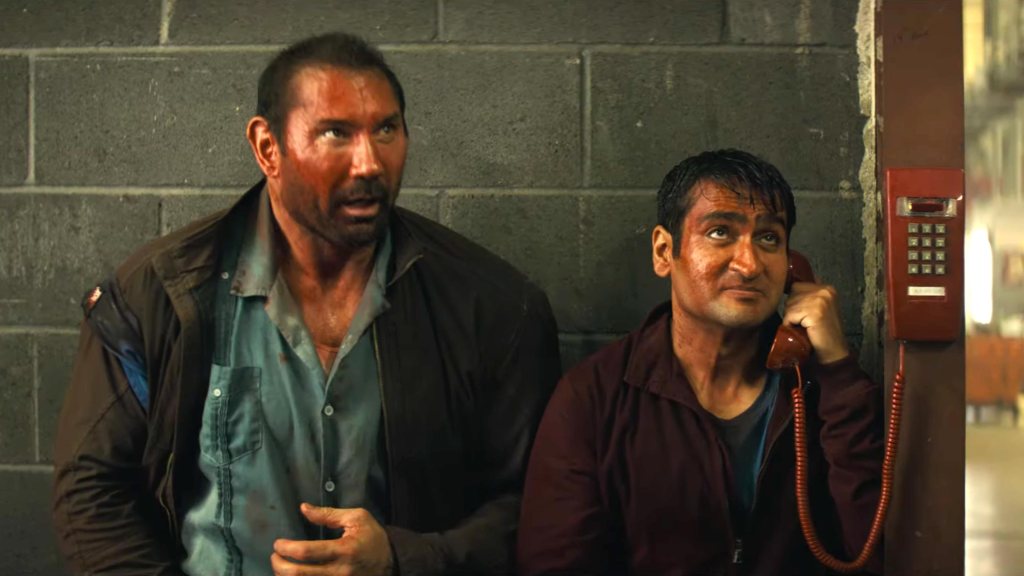
    Kumail Nanjiani, writer and star of the 2017 breakout hit “The Big Sick,” is an extremely funny man.

    Dave Bautista, former World Wrestling Entertainment performer and “Guardians of the Galaxy” co-star, is following in the footsteps of wrestlers past like Dwayne “The Rock” Johnson and John Cena and can be a very funny man in his own right.

    Their first collaboration, a buddy comedy about a Los Angeles detective matched with a shy Uber driver, is not funny.

    A generic and on the nose action flick destined for basic cable, “Stuber” is aptly named as its lead character Stu drives for the ridesharing service Uber, giving him the unwanted nickname Stuber.

    Overly timid and stuck in the friend zone with a girl he secretly loves, Stu’s world turns upside down when he crosses paths with an intimidating, aging cop coming off Lasik eye surgery and in need of a ride.

    What sounds incredulously silly on paper comes to life on screen as an increasingly less funny premise.

    Talented as they may be, Nanjiani and Bautista have middling chemistry together and fail to elevate Tripper Clancy’s bland, unoriginal screenplay.

    Nanjiani brings an earnest attitude to the role of Stu that makes the character relatively easy to root for in spite of his total ineptitude around women.

    His dry delivery becomes disarming after a while and the awkward social commentary the film attempts to make on the concept of toxic masculinity doesn’t harm “Stuber” as much when it comes to Nanjiani’s performance.

    Bautista, on the other hand, finds less success in this regard as his cold machismo and aggression both physically and in line delivery reinforce the “real men don’t cry” mentality that the film seeks to subvert.

    There’s a whole secondary storyline keyed on Vic’s advanced age for law enforcement that doesn’t really work with Bautista as well as it might with a veteran actor in the genre like Bruce Willis. Despite the fact that the wrestler turned actor is indeed 50 years old, Bautista certainly doesn’t look or act the part and Vic having a 30-year-old daughter isn’t nearly as plausible.

    The secondary characters in the film are largely ineffective and forgettable, especially Natalie Morales’ tepid turn as Vic’s estranged daughter.

    Clancy and director Michael Dowse treat every character outside of Vic and Stu as figuratively – or in some cases, literally – expendable. This shallow approach to storytelling prevents the film from becoming something more than surface level hijinks and gives supporting actors so little to work with that their performances are one-note caricatures.

    “Stuber” is mildly entertaining as Nanjiani and Bautista both give likable performances that make the 93-minute running time a relatively pain free watch.

    The jokes just don’t land nearly as often as they should.

    A lack of humor severely hinders the success of a film like “Stuber,” where the plot mainly serves as an access point for situational comedy.

    What “Stuber” reeks of is a script penned in the wake of buddy cop films like 2014’s “Ride Along” and 2010’s “The Other Guys” that stagnated on a studio executive’s shelf until actors could be convinced to sign onto the project and jokes then tailored towards those performers.

    In this regard, Nanjiani and Bautista are too comedically similar despite their vast physical differences and there’s no sense of balance to the humor.

    Whether it’s the way the script is written or simply how the pair both approach the dialogue, Bautista’s relatively monotone delivery blends too much with a surprisingly timid Nanjiani, who proves to be much more effective when the dialogue is more biting.

    For an R-rated comedy, “Stuber” doesn’t take enough chances to separate itself from the endless pile of action bro flicks rotating through HBO programming, which is probably the best place to watch this middling film.

  • Yesterday Ed Sheeran

    July 6, 2019 · Watch the trailer

    We need to talk about Ed Sheeran, like Yesterday.

    I like Ed Sheeran.

    As a soon to be 35-year-old man, I probably enjoy his music a little more than I should.

    His tunes are catchy, the lyrics are free-flowing in a white dude rapping along to the “Hamilton” soundtrack sort of way. It just works.

    And now, somehow, the spell of Sheeran has been broken for me. Permanently, most likely.

    Sheeran plays a slightly exaggerated version of himself (I’m assuming) in the Danny Boyle film “Yesterday,” a musical “what if the Beatles never existed” film penned by rom-com heavyweight Richard Curtis.

    After a worldwide power outage that leaves significant pop culture gaps in history, a musician about to give up playing realizes he’s the only one on the planet who’s ever heard the Beatles. This prompt Jack to reconstruct their entire catalog…… and become the best songwriter on the planet in the process.

    It’s a fantastic concept that plays out pretty well for most of the film’s two hour run time.

    Yet in a world without Paul, John, George and Ringo, all we need is Ed?

    It should be stated at this point that a discussion of Ed Sheeran’s performance can’t really be done without spoiling a large portion of “Yesterday.” SPOILERS AHEAD, read on at your own risk.

    There’s far too much Ed Sheeran in a movie about the greatest rock band in history, too much of his face, too much of his just woke up sense of fashion and far too much of his music.

    When you look at “Yesterday” structurally, Curtis’ screenplay consolidates a number of influential musicians Jack could have met along the way down to one person. As such, the Ed Sheeran audiences see becomes a character with far more agency in the film than rightfully deserved.

    Doing this also reduces Jack as a character.

    If Jack were to meet a number of pop icons, this would have made each cameo more impactful while keeping the focus on Jack’s journey and the music of the Beatles.

    Simplifying this to one artist with a constant presence in the film certainly makes things easier on the filmmakers, but elevates the character (in this case, Sheeran) to plot-essential status and reduces the validation of Jack that multiple musicians gushing over him could have given the character.

    Let’s break this down scene by scene.

    Early in his discovery, Jack performs “In My Life” on a British television show. Off screen, Ed watches the performance at home and is driven to not only call him immediately but show up unannounced at his parents’ house late that night to invite Jack to open for him on a European tour and share a pint of cider.

    On its own, this sequence isn’t that bad and actually engages the audience with some lighthearted ribbing at Ed’s expense. Jack’s dad comments that Ed looks exactly like Ed Sheeran, which works comically in the scene. The overall incredibility of the scene’s premise – that a world-famous musician would drop everything to invite a nobody to open for them – works well and is charmingly quaint.

    One night on tour, Ed challenges Jack backstage to a songwriting contest, where both have 10 minutes to write the best possible song that they’ve never worked on before. Ed returns with a cutesy tune about his love reminds him of a penguin on the ice not meant to fly. This song verse is regarded by everyone in attendance as unbeatable until Jack sits at a piano and “debuts” a deeper cut from the Beatles’ discography, “The Long and Winding Road,” which wins in a no-contest.

    Again, on its own, this scene doesn’t really harm the overall film much and has a decent amount of fun until the end. Once the contest is over, Ed laments to Jack about his inferiority to this musical savant and claims to be the Antonio Salieri to Jack’s Amadeus Mozart. Indeed, the rest of the film then places Ed in a John the Baptist-esque role of herald for the coming of Jack Malik, emerging rock king.

  • Spider-Man Far From Home: Passing the superhero torch

    Spider-Man Far From Home: Passing the superhero torch

    Spider-Man has some big shoes to fill.

    Following a 22-movie march to the events of “Avengers: Endgame,” the Marvel Cinematic Universe (MCU) has always been building towards something larger.

    Left in the wake of the second highest grossing film of all time, superhero movies turn once again to a web-slinging wall-crawler to point the way forward.

    Such is the daunting task before “Spider-Man: Far From Home,” a responsibility it both subverts and begrudgingly takes on.

    Director Jon Watts’ second Spidey film successfully lowers the stakes for the MCU while maintaining a grandiose scale and spectacle fans have come to expect from the franchise.

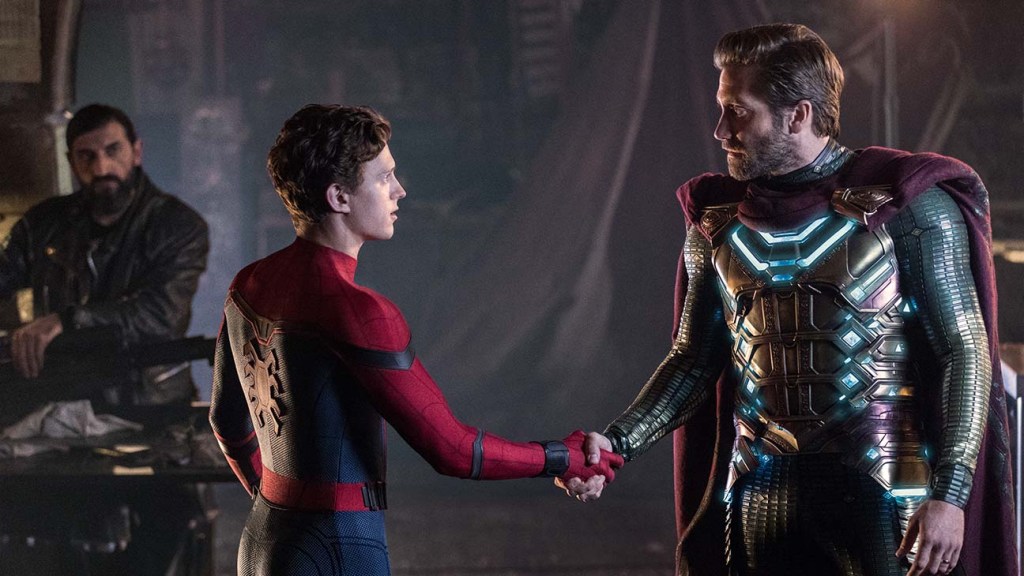
    “Far From Home” takes Peter Parker on a European tour as he hopes to take a break from his superhero alter ego and enjoy a class science trip until interdimensional elementals and the enigmatic Mysterio hijack Peter’s vacation.

    Tom Holland further cements himself as the most authentic Peter Parker in Spider-Man film history, pairing his boyish good looks with a plucky awkwardness befitting the John Hughes-esque tone of the 80’s high school movies Watts’ take on the wall-crawler films emulates.

    His performance is engaging on screen and makes viewers take notice in spite of the outlandishness around him whether that be intergalactic opponents for Spider-Man or typical high school drama for Peter.

    Connecting with audiences is important here for the suspension of disbelief to the comic book Marvel-ness of the film’s plot and Holland makes the entire adventure more enjoyable to watch in much the same way Robert Downey Jr. did with the “Iron Man” films.

    Holland also maintains solid chemistry with Zendaya, who sees an increased role from 2017’s “Spider-Man: Homecoming” as Peter’s love interest MJ. Zendaya works best in “Far From Home” when MJ delivers quick, dry one-liners though her performance is solid all-around as a secondary character.

    Jacob Batalon and Tony Revolori continue to shine in carryover roles from “Homecoming” as Peter’s best friend Ned and rival Flash respectively, though newcomer J.B. Smoove steals scenes with his smart comedic timing as school chaperone Mr. Dell.

    By far, Jake Gyllenhaal outclasses everyone else in “Far From Home” with a solid supporting turn that takes advantage of his range as an actor.

    His performance in the film’s second half makes his inspired casting in the role of Mysterio readily apparent as Gyllenhaal sheds the character’s rather mundane exterior persona for much richer emotional territory. This is especially true in Gyllenhaal’s tonal shift in Mysterio’s relationships with others, which becomes increasingly demonstrative over time.

    Because this film represents a changing of the guard for the MCU as a whole, “Far From Home” suffers slightly as a stand-alone movie as screenwriters Chris McKenna and Erik Sommers have to account for the “Endgame” aftermath and set the stage for the next five years more than the film probably has room for.

    This also gives “Far From Home” a regrettably larger scale than the friendly neighborhood Spider-Man feel of “Homecoming” that pushes the boundaries of the duality in Peter Parker/Spider-Man to its outer limits.

    Building a world where high school trips become epic European vacations strains suspension of disbelief. This hinders the overall effectiveness of the young Peter Parker side of the film that did such a great job grounding “Homecoming” in authenticity against budding Avenger Spider-Man.

    While “Far From Home” relies on CGI in its action a bit too much, the film also includes one of the year’s most visually impressive moments with Peter in a dream-like sequence that constantly moves without feeling choppy and maintains an unexpected crispness that should look equally impressive at home on a 4K Blu-ray.

    Superhero fatigue has been frequently referenced in conversation about waning interest in the genre. Although “Far From Home” may feel like a step or two down from “Avengers: Endgame,” it’s still an impressive summer blockbuster that audiences of all ages should enjoy.

  • The Last Black Man in San Francisco: Relentless vision

    The Last Black Man in San Francisco: Relentless vision

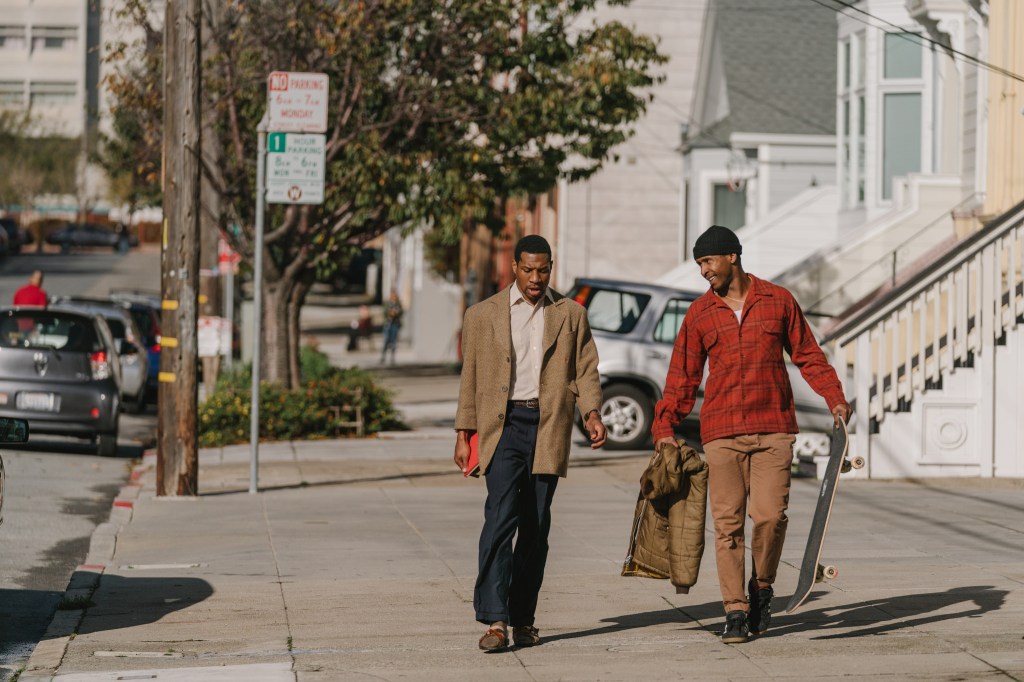
    Two men share one skateboard as they glide down winding hills in the Bay Area.

    It’s a beautiful picture wrapped in early morning light, but what’s most striking is how instantly personal the relationship is.

    Joe Talbot’s Sundance award winning film follows these two men across a changing city in a simple tale that evokes much more than it ever says.

    A story of friendship and holding onto a place to call home at any cost, “The Last Black Man in San Francisco” is perfectly imperfect, a singular vision from a soulful first-time feature film director whose technical flaws bring his movie to life.

    Written by Talbot and star Jimmy Fails based on Fails’ real life, the film plays silent observer to one man’s relentlessness trying to regain his childhood home built by his grandfather.

    Alongside his best friend and introverted playwright Mont, Jimmy wanders in and around San Francisco searching for a sense of family and safety.

    Fails never acts as Jimmy; he’s constantly reliving real experiences or fictionalized approximations of true events in a way that almost feels invasive on the part of viewers.

    Talbot often lingers on private moments in Jimmy’s life that quietly resonate with audiences thanks to unspoken outpouring of emotion on Jimmy’s face.

    It’s incredible to believe that Fails has never appeared in a feature length film before, let alone carried one as he does with “Last Black Man.”

    Fails’ heart and soul drip off the canvas of each frame for an intimate, intoxicating performance.

    Equally transformative as Mont is Jonathan Majors, who melts into the nuanced role with ease. Constantly writing or sketching in a red notebook, Majors’ Mont is a quiet obsessive brought to life through observation and careful consideration until something profound results.

    It’s a performance worthy of supporting actor award nominations alone.

    As a pair, Fails and Majors have an easy, familial chemistry that suggests deep-seeded friendship in unspoken terms and bring out the best in each other’s performance. Jimmy and Mont’s co-dependency is beautifully illustrated by the actors as a perfect symbiosis of friendship.

    The soul of a dying city resonates throughout “Last Black Man” as the film poetically paints a portrait of gentrification with rich baths of sunlight.

    Films often encapsulate a place to the point that the world of the movie becomes a character in its own right.

    To a degree, that’s true here of San Francisco with its rolling hills and bay landscapes.

    But the third lead of “Last Black Man” is an old Victorian house with a witch’s hat roofline, boldly inviting windows and a gorgeous pipe organ carved into its frame.

    Talbot and cinematographer Adam Newport-Berra allow the house to feel immensely vast and yet very intimate by placing the camera at the widest angles to give viewers a sense of scope and help contextualize Jimmy’s attachment to an aging building.

    The film also boasts an intoxicating score from Emile Mossari that enriches each scene with additional depth and emotion, though it’s a masterful take on “San Francisco (Be Sure to Wear Flowers in Your Hair)” sung in the film by Michael Marshall to reflect a tonal change in the third act that solidifies the soundtrack’s essential core.

    “Last Black Man” exudes such emotion moment by moment that it often overwhelms the storyline, which becomes less and less important as the minutes tick by until the fitting conclusion.

    In this way, the film evokes the work of fellow Bay Area writer/director Barry Jenkins, especially his Oscar-winning film “Moonlight.”

    Although “Last Black Man” has little chance of earning the same level of awards season acclaim, it would be no surprise to see the film littered across critics’ best of 2019 lists and a strong contender at the Independent Spirit Awards.

    “The Last Black Man in San Francisco” will go down as one of 2019’s and most underseen films. It’s a striking and haunting piece of cinema that will resonate for a long time with audiences lucky enough to see it in theaters.

  • Toy Story 4: To infinity and beyond

    Toy Story 4: To infinity and beyond

    Children don’t appreciate kids’ movies.

    Good writing, top notch animation, quality vocal talent to bring characters to life, these things are unimportant to a child.

    They just want to be entertained.

    “Toy Story 4,” the latest feature from Disney-owned Pixar Studios, may not be the most entertaining movie.

    It’s one heck of a piece of cinema though.

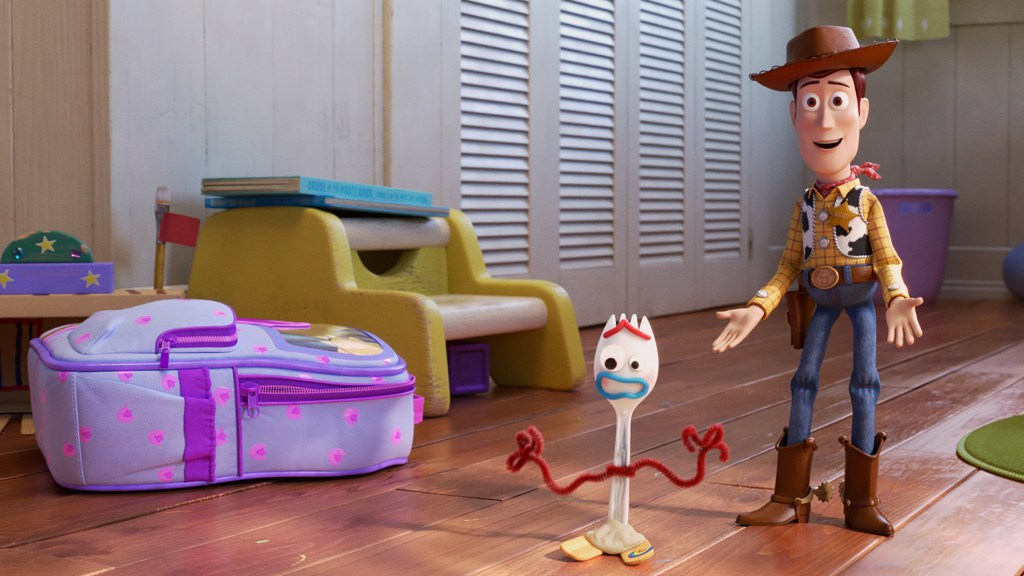
    After Woody, Buzz Lightyear and the rest of the toys from Andy’s room finally settle in with new owner Bonnie, their new adventure sees the gang off to infinity and beyond on a RV trip with Bonnie and her hand-made toy, Forky.

    Who voices characters plays a key role to the success of any animated film and the “Toy Story” franchise has been impeccable in this regard since the beginning.

    However, with this fourth film, viewers finally get to understand why casting a generational talent and two-time Oscar winner like Tom Hanks as Woody the cowboy elevates an entire project to the next level.

    Hanks has always been the best thing about “Toy Story” films and his vocal performance this go-round is breathtakingly masterful.

    The screenplay leans heavily on Woody’s emotional changes and character development as an impetus to introduce a strange new toy to the world. Hanks brings instant credibility and earnestness to the role of caretaker and his vibrant inflections both animate the dialogue for children and inform older viewers about his changing emotional state.

    For a franchise to be revisited so quickly after concluding a fitting end to a trilogy requires exceptional, undeniable reasoning.

    “Toy Story 4” has to exist just to ensure Hanks’ excellence fulfilling Woody’s legacy sees the light of day.

    Tim Allen’s Buzz Lightyear has to take a relative backseat to Hanks’ Woody as part of the narrative, but the film does offer Allen a significant secondary storyline about inner voice that resonates well for both Buzz and Woody.

    With “Toy Story 4” focused on Woody, many of the other memorable returning characters take a back seat here, ceding room for new voice talent to deliver impactful performances without overwhelming the main journey.

    Keanu Reeves is an absolute scene-stealer playing up to his surfer-bro stereotype with a hilarious turn as Canadian motorcycle daredevil toy Duke Caboom. Likewise, Keegan-Michael Key and Jordan Peele bring their improvisational comedy to life with some genuine laughs as a pair of plush animals stuck together by fabric.

    The real winner among newcomers, however, is Tony Hale’s terrific work with a part that could have gone disastrously wrong: Forky, a handmade toy crafted by Bonnie from a spork.

    Forky looks strange and out of place, made from thrown out parts with an existential crisis to return to the trash.

    In the wrong hands, Forky could have been so grating that the entire film gets knocked off balance. But Hale gradually gives a warmth to Forky as he bonds with Hanks’ Woody that his strangeness becomes endearing to the audience.

    “Toy Story” movies have felt on the cutting edge visually when they arrived in theaters and the newest iteration is intricately detailed, nearly lifelike.

    The Pixar animators do such a fantastic job of bringing the world to life that audiences almost take what they’re seeing before them for granted as the exceptional becomes naturally ordinary in short order.

    Each scene is intricately detailed and worthy of stopping frame by frame to examine the rich background Pixar animators create, especially in an antique store that features more Easter eggs than any viewer will be able to spot in a dozen viewings.

    A shoo-in nomination for Best Animated Feature at the Academy Awards, “Toy Story 4” might be the favorite when all is said and done after the third installment won the same award in 2011. The first two “Toy Story” films were made prior to the addition of a Best Animated Feature category in 2002 although the original was given a Special Achievement Academy Award in 1996.

    Kids will watch “Toy Story 4” with wide eyes enjoying the whole ride and not fully understanding how good what they’re seeing actually is.

    For adults with (or without) children, Pixar hits another home run with a film that’s worth seeing in theaters for the visual quality and Hanks’ performancealone.

  • Murder Mystery: An unnecessary whodunit?

    Murder Mystery: An unnecessary whodunit?

    Perhaps the biggest saving grace about “Murder Mystery,” the latest movie partnership between Adam Sandler’s Happy Madison Productions and Netflix, is that no one will have to pay money to sit in a movie theater to endure 100-plus minutes of subpar cinema.

    It isn’t just that the production design is simplified to a level that almost none of the crime comedy’s supposedly luxurious foreign locales look authentic or that the jokes are so incredibly on the nose.

    Watching “Murder Mystery” in one sitting is a chore to endure and certainly one you wouldn’t want to have to sit through in public. Yet somehow, it still isn’t the worst film to be released in 2019.

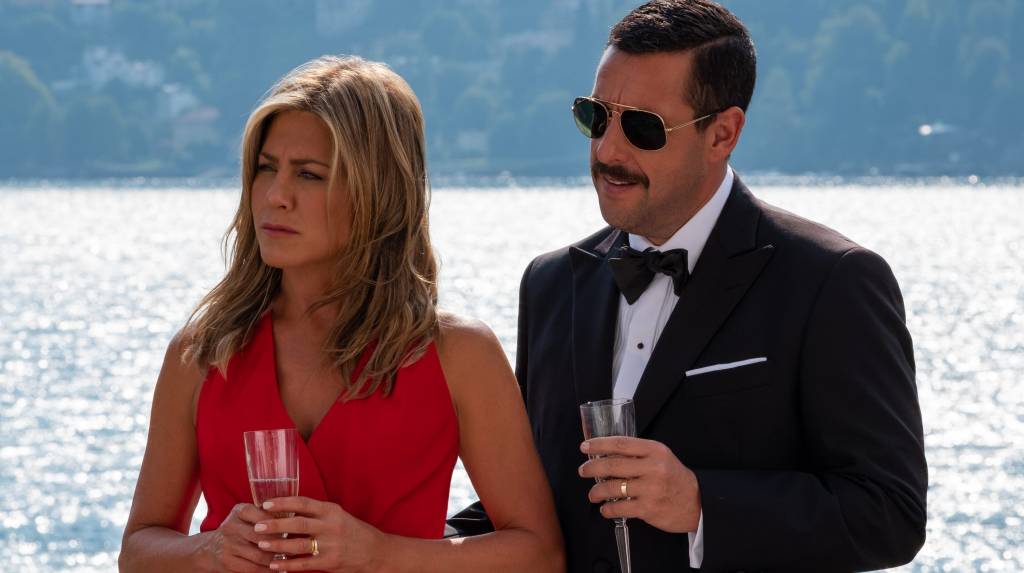
    This wannabe romp finds Sandler reteamed with his “Just Go With It” co-star Jennifer Aniston as a lower middle-class New York married couple en route to the cheapest possible European vacation when they get swept up into a rich playboy’s world of drama, intrigue and “dun dun dun” murder.

    The film’s title should be a warning sign to potential audiences of what’s to come as it isn’t called “Murder Mystery” in a fun, satirical way, but rather as if screenwriter James Vanderbilt left it in an early draft of the script instead of “insert movie title here” and forgot to come back and think of an actual title for the movie.

    Little more can be expected of a comedy penned by the writer of such hits as “Independence Day: Resurgence,” the two “Amazing Spider-Man” films and stunningly enough, “Zodiac,” David Fincher’s cult crime classic.

    Shockingly, “Murder Mystery” shows marked improvement relative to other Happy Madison-Netflix joint ventures as this Sandler misfire is decidedly better than the unwatchable western spoof “The Ridiculous 6” or the similarly bland action adventure “The Do-Over.” Having low expectations going into “Murder Mystery” certainly helps.

    One might expect A-list talent like Aniston and Sandler to elevate the material more than they do here with the end result being a star-studded version of a Mary Kate and Ashley Olsen TV mystery movie.

    “Murder Mystery” is a film that will make one yearn for the good old days of “Paul Blart: Mall Cop,” when badly written crime caper comedies has the common sense to hire Kevin James instead of acting talent that could actually be put to good use.

    If this is the kind of inane, laugh-every-five-minute feature Sandler has to put out on streaming services to allow him to take chances on dramatic work in films like “Punch Drunk Love” and “The Meyerowitz Stories,” so be it.

    It’d just be nice if the world’s top streaming service would pony up a few extra dollars for better screenwriters.

  • Late Night: The headline of my analysis is complacency

    Late Night: The headline of my analysis is complacency

    Most moviegoers will see acting legend on the big screen this weekend as the head of an organization protecting Earth from aliens in the blockbuster sequel offshoot “Men In Black: International.”

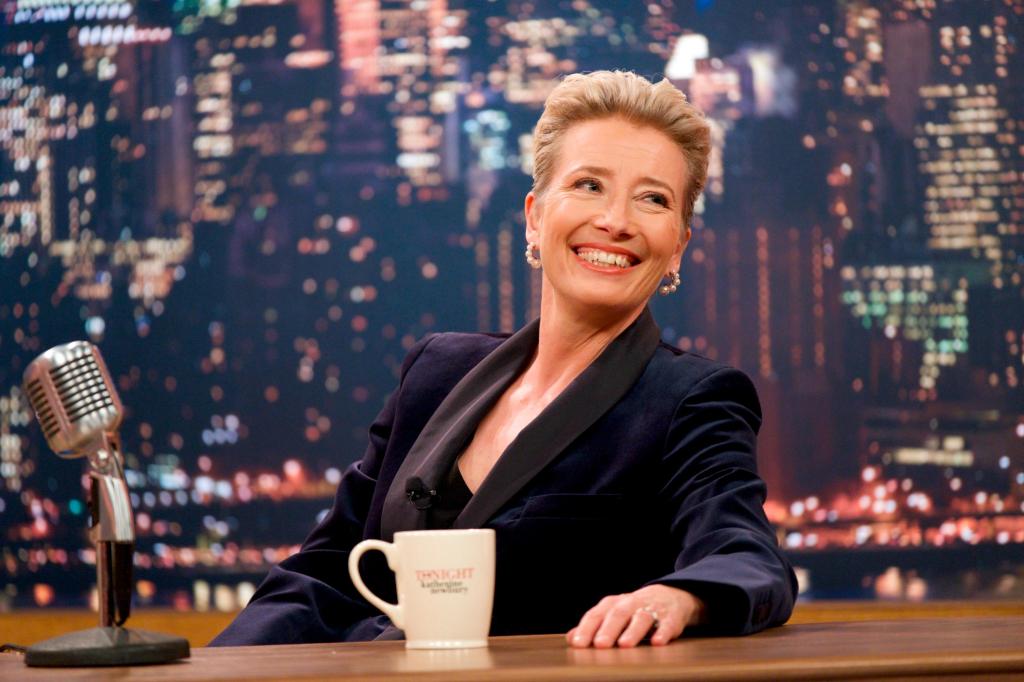
    Where they should be her, however, is the underappreciated gem “Late Night,” a dramedy that sees Thompson as a late-night talk show host about to get the boot from a new network CEO just as the show hires its only female writer among an all-male staff.

    The two-time Academy Award winner gives her best performance in at least five years as bullheaded comedienne Katherine Newbury, a stalwart of late-night television whose comedy tastes don’t align with modern misogynistic humor prevalent on the circuit.

    Penned by talented former television writer and “Late Night” co-star Mindy Kaling, the film blends sharp tongues and wide-eyed optimism for an exceptional dramedy with a fresh point of view.

    As screenwriter, Kaling trusts her audience to be smartly engaged in the quick-witted material. “Late Night” overtly and subversively satires the boys’ club mentality of popular entertainment through the lens of a talk show writers’ room.

    There’s a lot of sameness prevalent across studio comedies over the past several years and although “Late Night” follows a traditional rom-com plot structure with Molly and Katherine’s friendship substituting for the love angle, Kaling’s script and Nisha Ganatra’s direction give the film a fresh perspective lacking in bigger films like “Long Shot” and “The Upside.”

    Thompson’s performance early in the film delivering biting remarks with vigor resonates well with the audience and evokes Katherine’s unseen earlier stand-up work. Her prickly demeanor has a strong foundation in Thompson’s construction of the character and Kaling’s expert writing of a role she designed for the Oscar winner.

    As the film progresses, Thompson tweaks Katherine’s personality to reflect how her growing unease with work and the impact Kaling’s Molly have on her.

    For her own merit, Kaling wholly inhabits a character she designed as an approximation of herself. Her Molly is a naïve, yet boundlessly optimistic risktaker who finds her voice early in the film and cannot help but speak brutal honesty in the kindest, most adorable ways possible.

    On her own, the performance is nothing remarkable, but in tandem with Thompson’s masterful work as Katherine, the two develop a banter of hesitant respect that evolves into admiration or mild friendship depending on the perspective that’s genuinely exciting to watch.

    Their bond is complemented by Thompson’s wonderful chemistry with veteran character actor John Lithgow, who constantly steals scenes as Katherine’s longtime partner Walter. While their verbal dynamic is impressive, the amount of drama Thompson and Lithgow are able to create together in limited screen time with the words Katherine and Walter do not say to each other is equally profound.

    “Late Night” finds and maintains a proper balance between lighthearted comedy and intentional drama thanks to Kaling’s nuanced screenplay brought to life with care by Ganatra.

    While “bright-eyed novice works for prickly older boss” may come across as invading “The Devil Wears Prada” territory at first glance, “Late Night” changes the dynamic by making Molly and Katherine’s relationship more territorial.

    “Late Night” is an incredibly smart film, almost too smart at times for its own good. Katherine’s dry witticisms and high concept humor are excellent, thought-provoking commentary that often comes at too rapid of a pace for casual audiences to keep up with.

    The film hardly masks its contempt for male dominated writers’ rooms, often for the sake of humor. A consequence of this decision is an assortment of thinly written characters Molly interacts with in the workplace who all feel like different shades of the same person and are occasionally redundant to the plot.

    “Late Night” comes out far too early in the year for the winning dramedy to be a serious awards contender. Its best shot lies in the original screenplay category following in the footsteps of fellow Amazon Studios film and Oscar nominee “The Big Sick.”

    Thompson should also be a consideration for her fantastic character work, although the lead actress category is usually filled with more showy, dramatic performances.

    Whether it’s at the nearest theater on the big screen or at home months from now exclusively on Amazon Prime, “Late Night” is a must see Friday night date movie that will resonate with audiences long after the credits roll.