Author: Matt Ward

  • The Children Act: Impact of a choice

    The Children Act: Impact of a choice

    Religion, morality and the law play a large role in “The Children Act,” a very exacting, almost clinical British courtroom drama.

    But it’s in the interpersonal relationships of the main characters where the film shines in spite of the otherwise stuffy, cold narrative.

    A collaboration between a group of producers including BBC Films and indie-heavyweight A24, “The Children Act” takes audiences on the other side of the courtroom as Mrs. Justice Fiona Maye takes on a heavy workload deciding complicated family court cases at the expense of her strained marriage.

    A decidedly urgent and complex case involving a 17-year-old leukemia patient refusing blood transfusions on religious grounds proves as life-altering for the judge as the patient.

    Such a cold, calculated film wouldn’t work without the electric and captivating performance from Emma Thompson as Fiona, often called “My Lady” as a sign of respect, disdain or admiration by various characters throughout the 100-minute running time.

    As one character observes, viewers can easily see Fiona thinking as Thompson grinds the gears of her brain in a subtle, yet marked way.

    Each decision is swift and precise, yet the downward spirals of self control failing to compromise with emotion weighs on Thompson’s somber gaze.

    So much of the screenplay, penned by “Atonement” author Ian McEwen based on his 2014 novel of the same name, balances on the notion of choice and the ramifications therein.

    Thompson’s performance perfectly encapsulates this notion as Fiona’s rational judgment gives way to complex moral ambiguity.

    As much as viewers are to emphasize with Thompson’s rigid and faltering Fiona, Stanley Tucci draws audiences in with a blunt, matter-of-fact affectation paired with natural charm as her husband Jack.

    In limited scenes, Tucci is able to generate enough exasperation to propel Jack towards ending his marriage, yet in a manner that seems casually reasonable.

    Moments between Thompson and Tucci are so wonderfully fleeting that an entire two-hour feature could be devoted to the Maye’s marriage and viewers would be raptured. The subtle nuances in how Tucci and Thompson speak (and don’t speak) to each other make for terrific bursts of emotion in an otherwise languid screenplay.

    “Dunkirk” star Fionn Whitehall is impressive in a challenging role as the patient of Fiona’s case, though difficulties present themselves in the final act of the film due largely to McEwen’s plot.

    While there’s a sobering coldness to the entire screenplay, occasionally these moments of succinct dialogue find the mark brilliantly. Only in a dry British film can a character outright admit “I think I’m going to have an affair” to his wife with equal parts humor and dramatic tension.

    Director Richard Eyre, who thrived on social tension with “Notes on a Scandal,” takes an observational, protracted tone with his filmmaking here. Shots linger longer than they probably should and often preclude tension by setting the camera a bit too far away from the actors.

    The result is a mixed bag with Thompson and Tucci lifting up the entire project, though the film likely won’t have enough critical or commercial appeal to garner award season recognition.

    With the prevalence of big studio films in theaters, solid adult dramas like “The Children Act” have been pushed to smaller screens.

    Cobbled together on a relatively limited budget, there isn’t much of a place for “The Children Act” theatrically, opening this past weekend on just three screens nationwide. However, a partnership with DirecTV has pushed “The Children Act” to a much wider audience base, where it is available for rent or purchase on most streaming services.

    Strong performances from leads Thompson and Tucci with crisp, impactful dialogue make “The Children Act” a feature film worth renting for a night at home.

  • To All The Boys I’ve Loved Before: Bringing back the rom-com

    To All The Boys I’ve Loved Before: Bringing back the rom-com

    Romantic comedies are making a comeback.

    Three decades after the now classic John Hughes movies and more than five years since “Silver Linings Playbook” was the last rom-com nominated for an Oscar, the genre is seeing a revival thanks to diversity in filmmaking and unlikely distributor support.

    Films like “Book Club,” “Love Simon” and “Crazy Rich Asians” have sprinkled into theaters in 2018, but nowhere has the romantic comedy had a greater impact than on Netflix.

    The latest in a growing line of rom-coms to hit the streaming service may in fact be the year’s best.

    Based on the novel of the same name, “To All The Boys I’ve Loved Before” takes everything audiences love about the genre and wraps it in a Hughes-esque bow to offer viewers a carefree, easily rewatchable film sure to entertain movie lovers of all ages.

    In true rom-com fashion, shy high school junior Lara Jean crushes on cute boys but can’t bring herself to tell them. Instead she pens love letters stowed safely in her room….. until they are mailed out and typical rom-com hijinks ensue.

    There’s no reinvention of the wheel here and much of “To All The Boys” is exactly what one might expect to happen. But even when audiences know where they’re going in advance, the ride is just so gosh darn enjoyable thanks to breakout performances from the film’s young leads.

    Lana Condor has floated in the background of major studio films like “X-Men: Apocalypse” and “Patriots Day,” but it’s with “To All The Boys” that Condor is able to spread her acting wings with a genuine, relatable performance not expected of a young actress making their leading debut.

    Her Lara Jean is exceptional among wallflower characters, as Condor radiates Lara Jean’s presence scene to scene in a way that makes others take notice and not at the same time.

    Often, viewers rally behind a protagonist because of the actor in the role. Condor isn’t playing Lara Jean. She (and the audience by extension) is Lara Jean.

    The film finds unique balance for Condor’s performance in the casually charming Noah Centineo, a relative newcomer who brings emotional gravitas to the typically nothing part of the cute boy Lara Jean likes in spite of herself. There’s a palpable tension in scenes between Condor and Centineo that doesn’t pervade other sections of the film, as if to emphasize how intensely Centineo’s Peter is bringing out the true Lara Jean.

    If Condor is the pulse of the film, Centineo is the heartbeat that brings “To All The Boys” to a higher level than the usual rom-com fodder.

    This pair of fresh talent, along with first time screenwriter Sofia Alvarez and second time director Susan Johnson, give “To All The Boys” a light, breezy tone that would never pick up traction theatrically.

    Major studios have proven less willing to commit financially to small or even mid-tier projects, spending all their capital on big stars, big explosions and cinematic universes.

    Netflix has attempted to capitalize on this market inefficiency, scooping up rom-coms left and right in hopes of flooding the market and making the streaming service synonymous with the film genre.

    Recent efforts have seen Netflix find various degrees of success with films like “Set It Up” and the recent Lily James romantic dramedy “The Guernsey Literary and Potato Peel Pie Society” striking a chord with audiences, while the star studded “Like Father” proved to be a slight misstep.

    Netflix also aggressively went after distribution rights to box office smash hit “Crazy Rich Asians,” a film that highly benefits from being seen on large screens due to the luxuriousness of Singapore and the visually lavish cinematography.

    In much the same way, “To All The Boys” is much more suited for the small screens of Netflix as the film’s conversational tone and simplistic cinematography feel more at home on a mid sized television or cell phone.

    Ironically, it’s “To All The Boys” that is the better overall film, packing the emotional depth and well-written script “Crazy Rich Asians” lacks.

    One of the year’s best films, “To All The Boys I’ve Loved Before” deserves a place at the top of any Netflix queue.

  • Operation Finale: Conventionally telling the unconventional

    Operation Finale: Conventionally telling the unconventional

    Spies executing covert missions on foreign soil to kidnap and extract prisoners is action thriller plot 101.

    “Operation Finale,” based on true accounts, opts to reflect on the emotional and mental tolls war, hatred and loss can inflict with the high-stakes machinations taking a relative backseat.
    L

    Director Chris Weitz’s latest feature is the smallest possible version of a film about a group of Israeli Mossad agents tasked with the forced exfiltration of Adolf Eichmann, one of Hitler’s top SS lieutenants and the creator of the “final solution,” better known as the Holocaust.

    Screenwriter Matthew Orton gives audiences a very clinical, paint-by-numbers approach to the nuts and bolts of the operation, choosing to layer in flashback and dream sequences to ground viewers in the humanity of the affair.

    Audiences are to rally behind Peter Malkin, a headstrong agent playing a pivotal role at every turn. In the hands of immensely talented character actor Oscar Isaac, Malkin is brash, yet noble in his pursuit of justice and/or revenge, a dichotomy neither the script nor the man can fully resolve.

    Verbose, heavy dialogue litters key moments of the film and Isaac elevates the material beyond the script page, in no small part due to his wonderful screen partner, Sir Ben Kingsley.

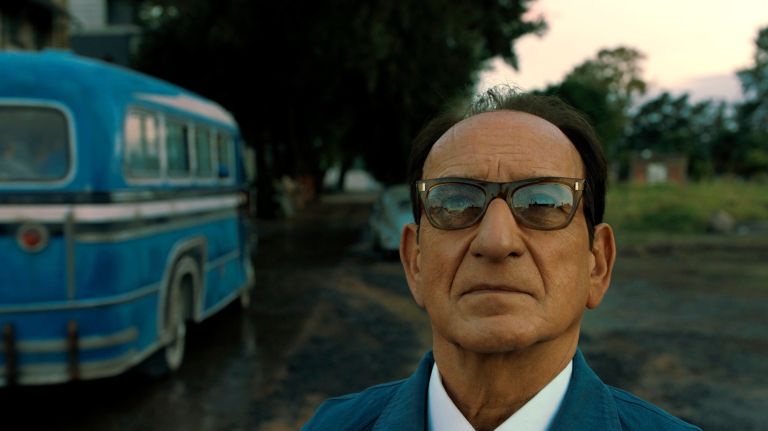
    “Operation Finale” was made, at its core, to give an actor the caliber of Kingsley the chance to play Eichmann and the Oscar winner doesn’t disappoint with a subdued, elegantly reviling performance.

    His Eichmann stalks in the background, haunting early moments in the film before revealing himself to be a rather cautious, subtle character.

    It’s as if Kingsley’s entire performance is toned after a crucial early scene where Nazi supporters violently chant the “Heil Hitler” as Eichmann nods his assent with barely noticed finger tapping.

    The brilliant ways Kingsley is able to internalize and focus Eichmann’s hatred make the verbal sparring between Isaac and Kingsley all the more engaging and result in the film’s best moments.

    A capable supporting cast led by Melanie Laurent as a doctor on the team and possible love interest for Malkin fill in the gaps. But aside from one or two scenes early, the entire affair feels like a slowly burning buildup to Malkin’s face-to-face encounters with Eichmann.

    The deliberate nature of the pacing would work better told in limited miniseries fashion. Within the confines of a two hour narrative, satisfying cinematic highs too often get weighed down by deliberate, yet well intentioned moralizing.

    The film is buoyed by one of the year’s best scores penned by Alexandre Desplat, who won the most recent Best Original Score Academy Award for his work on “The Shape of Water.” Desplat enhances the tension without becoming overly involved, lifting the action sequences and setting the tone with urgency.

    A traditional Oscar-bait movie, “Operation Finale” does not have the staying power nor the command performances necessary to overcome its Labor Day release.

    It probably best serves as a palette cleanser coming out of a sequel heavy summer blockbuster season as studios prepare to release their best films beginning in October.

    Though both Isaac and Kingsley are good in leading roles, neither turn will generate enough goodwill to overcome the buzz surrounding films like Bradley Cooper’s “A Star Is Born” and Ryan Gosling’s “First Man” to earn a nomination.

    Whether a product of the script, the direction or some combination of both, “Operation Finale” drags its feet by a good 10 minutes and could benefit from a tighter, more expedient cut in order to amplify the tension and provide urgency to the characters’ decisions.

    An interesting story competently told, “Operation Finale” does right by its subject matter while not quite rising to the bar of its assembled talent.

  • BlacKkKlansman: The present in the past

    BlacKkKlansman: The present in the past

    Black man infiltrates Ku Klux Klan.

    That’s the hook for the latest Spike Lee joint, a film incredibly of the moment in spite of its 1970s era setting.

    With “BlacKkKlansman,” Lee is back on the scene with his most powerful and important film since “Malcolm X,” delivering two hours of gripping, masterful drama, humor and social commentary in a way only the two-time Academy Award nominee can.

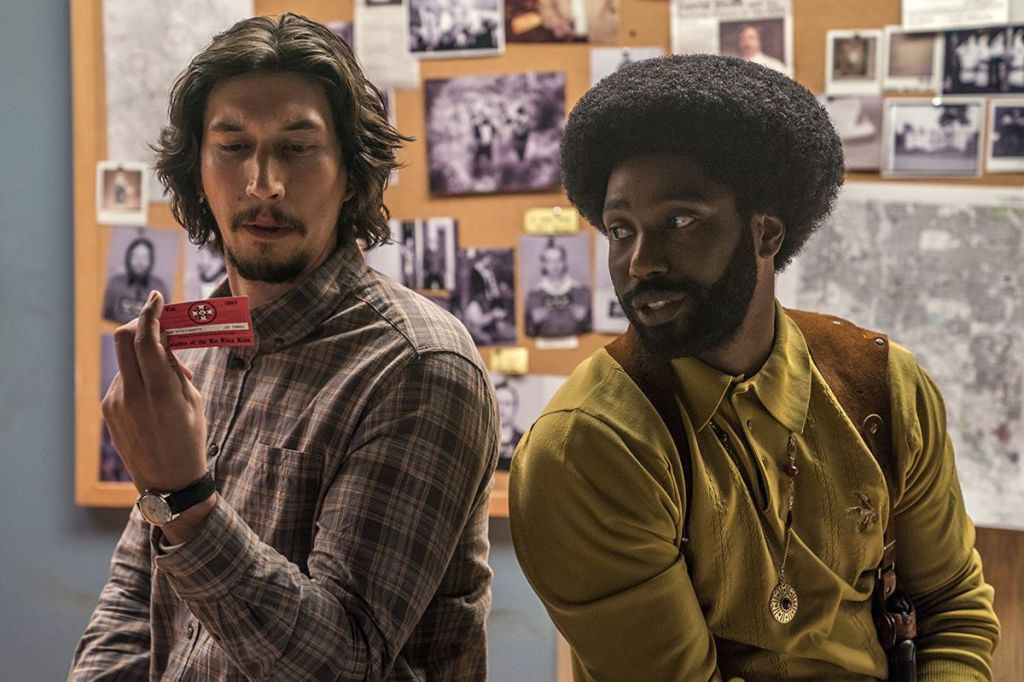
    Based on the memoirs of Ron Stallworth, the first African American police officer in the history of Colorado Springs, “BlacKkKlansman” takes the unbelievably true account of a 1978 criminal investigation into a local chapter of the KKK and lifts the tale into the cinematic stratosphere.

    Amid the humorous absurdity of events, Lee strikes a searing, somber tone for the vast majority of “BlacKkKlansman.”

    Bright and vivid cinematography stylized in a vintage mix of 1970s Blaxploitation films and Lee’s unique visual style, the film turns cold in a hurry as true evil reveals itself.

    Perhaps the most chilling of all is how effortlessly Lee parallels 1970s racism with present day society and gives viewers the sense events in “BlacKkKlansman” could happen tomorrow.

    As Stallworth, John David Washington delivers a star-making performance with an unique balance of charisma and sense of place. The young actor earns the trust of audiences early in the film, which allows the increasing absurdity to remain grounded.

    How he approaches each scene as Stallworth varies slightly from scene partner to scene partner, providing depth of character as Stallworth has to identify with the black power movement at one moment and then adjust himself mentally when interacting with fellow officers and then yet again when on the phone with Klansmen.

    Perhaps the best young character actor working today, Adam Driver works wonders as an undercover cop who has to pretend to be Ron Stallworth when meeting with Klansmen face to face.

    His ability to internalize his own character’s thoughts and feelings while externalize the racist persona he and the real Stallworth create is nothing short of masterful.

    Topher Grace — known for his lead role on television’s “That 70s Show” — delivers a career-best performance as David Duke, then Grand Wizard of the Klan.

    The ease with which Grace replicates Duke’s ability to woo audiences with hate speech is subversively subtle and effective.

    The chances of turning such an easy character to hate into caricature are immense, especially given the fantastical comedy involved in phone conversations between Stallworth and Duke.

    Grace swings hard the other way, infusing Duke with a casual conversation tone that emphasizes just how matter-of-fact racism and bigotry can be.

    Through Grace and the other actors portraying Klansmen, Lee is able to contemporize the plot and give context to modern political issues to strike up conversation.

    There’s a great deal of interesting commentary on cinema on top of the social and political issues you’d typically expect from a Spike Lee joint.

    Characters discuss Blaxploitation films like “Shaft” and “Superfly” in terms of how the depiction of African Americans in those films influences the greater social climate.

    But it’s in Lee’s overt references to the controversial 1915 D.W. Griffith Klan propaganda film “Birth of a Nation” that “BlacKkKlansman” speaks most eloquently.

    Griffith’s use of cross-cutting between two scenes occurring simultaneously in “Birth of a Nation” is replicated to great effect as a Klan initiation and subsequent screening of the film is counterbalanced with Harry Belafonte’s poignant recounting of a lynching in Waco.

    It’s in these 10 minutes that Lee captures the dissonance in expected symmetry with cinematic impact you won’t find on screen anywhere else in 2018.

    Cinematographer Chayse Irvin, who shot Beyonce’s “Lemonade” music video, grounds “BlacKkKlansman” in the heart of the 70s visually. Shooting on film, Irvin enriches the movie’s color palette scene by scene to aid Lee’s effort to contrast Stallworth and police from the Klan they were infiltrating.

    “BlacKkKlansman” is the year’s first virtual lock for a Best Picture nomination at next year’s Academy Awards. Lee’s achievements on this film as both a visual and dramatic storyteller virtually assure his first Best Director nod as well.

    The winner of the Grand Prix at this year’s Cannes Film Festival may also garner acting noms for Washington and potentially both Driver and Grace in the supporting actor category.

    A best adapted screenplay win is virtually assured among more technical categories and best editing may not be too far away from a certainty either.

    Without doubt, “BlacKkKlansman” is the best film to arrive in theaters so far in 2018 and certainly the year’s most important.

    Visually dynamic with vivid storytelling and award-worthy performances, this Spike Lee joint is an absolute must see film in theaters and one that will resonate long after the somber, powerful coda.

  • Blaze: Behind the music

    Blaze: Behind the music

    Biopics are movies made about stars.

    Blaze Foley was never a star, simply a mythical folk hero who played with Townes Van Zandt and had his songs covered by the likes of John Prine, Merle Haggard and Willie Nelson.

    It’s fitting then that the independent film telling his story isn’t a traditional paint-by-numbers biopic.

    Filled with raw grittiness and passion, “Blaze” is a cinematic work of art on par with films like “Inside Llewyn Davis” and “Crazy Heart,” an ode to a musical legend.

    “Blaze” also happens to be a terrific achievement for the film’s director and co-writer, four time Academy Award nominee Ethan Hawke.

    His best directorial work to date, “Blaze” is ethereal and emotional, visually captivating and scored with an alluring array of Foley’s own tunes sung by musician Ben Dickey who stars as Blaze.

    Unlike a traditional music film, “Blaze” does not follow a “cradle to grave” plotline. The movie opens with Blaze at his most wild, hopped up on drugs and banging away at a drum set while ranting about Cesar Chavez.

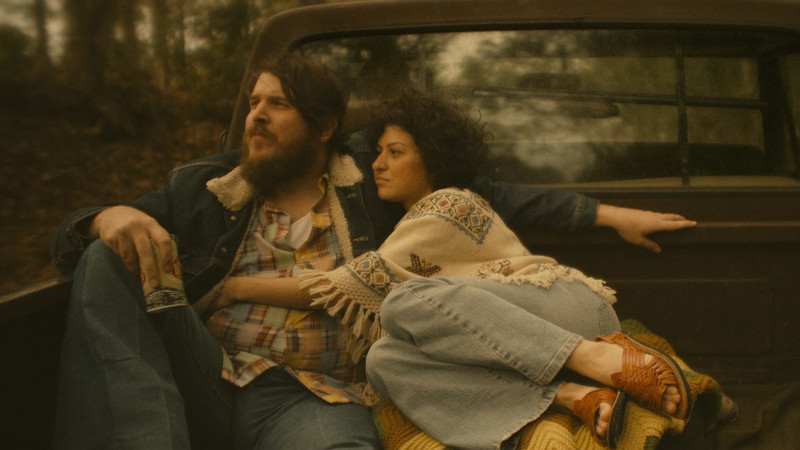
    Almost immediately, viewers are transported to what feels like a different world entirely, a melancholy love story between a young Blaze and the Jewish actress he would run away with to live in a treehouse in the woods.

    Whether intentionally or not, Hawke gives viewers momentarily glimpses into Foley’s fragile psyche and these fragments, however fleeting, linger throughout the two-hour running time that becomes a visual tapestry for Blaze’s music.

    Dickey embodies Blaze in a way that feels immensely lived in, much in the same way you might describe an inhabited performance from the likes of Gary Oldman or Daniel Day-Lewis.

    This is especially stunning considering Dickey makes his acting debut for longtime friend Hawke, who pulls out a sobering, bittersweet turn from the novice actor.

    What Hawke and Dickey understand about Foley, it seems, is how theatricality and musicality intertwine into his on-stage performances and Dickey is able to extend that emotion over to the character’s talking voice.

    It doesn’t hurt that many of Dickey’s best scenes are paired opposite a riveting, beautiful performance from Alia Shawkat as Sybil Rosen, Foley’s first love and muse.

    Shawkat carries the weight of Sybil’s emotions right on the edge of her lips, in the pupils of her eyes, in such a way that feels both effortless and demonstrably difficult.

    Dickey and Shawkat have magnetic chemistry not in the traditional physical sense, but with deep emotional bonds that push and pull back and forth as Blaze and Sybil fall in and out of love.

    It’s a true testament to how perfectly cast they are as well as to Hawke’s commitment to making the whole film feel rich and authentic.

    This extends to his ensemble cast, which could have easily been littered with star power.

    Hawke’s relentlessness to capture the essence of Foley and his era of country music necessitated the casting of pitch-perfect secondary leads that push Dickey’s Blaze forward.

    To that end, Charlie Sexton is a revelation as Foley’s friend and musical contemporary Townes Van Zandt, bringing gravitas and quiet confidence to the role of primary storyteller. Sexton has such command of the screen that draws audiences further into the story, while still keeping viewers locked in on Dickey’s Blaze.

    Josh Hamilton continues an impressive year of performances, pairing his work here as Blaze’s close friend Zee with a poignant supporting turn in Bo Burnham’s “Eighth Grade.”

    Stars do come out in smaller roles with the legendary Kris Kristofferson crushing an extended sequence as Blaze’s father, while recent Oscar winner Sam Rockwell and frequent Hawke collaborator Richard Linklater join the cast as record executives.

    Music drives the film from start to finish, wandering from place to place tangentially as if an improvised jazz solo, or perhaps more appropriately, one of Blaze’s long-winded monologues that serve as preamble to his songs.

    The visuals Hawke and cinematographer Steve Cosens are able to achieve in “Blaze” provide a wonderful backdrop for the whole affair.

    Drenched in natural light, “Blaze” can meander from the sepia-tone haze of Foley’s wooded escape to the dank, dark haunts of the Austin Outhouse bar where he played his final show.

    It’s in these scenes that Hawke shows true artistry as a director, following random patrons and Blaze himself around the bar, inside and out, without missing a beat. The look of Foley recording his live album covered in red neon with a wall-sized American flag behind him is the kind of cinematic iconography rarely seen on the big screen.

    It doesn’t really matter if audiences have heard of Blaze Foley prior to watching the film. There’s enough of his life and free-flowing personality seared into the film to satisfy the curiosity of any moviegoer.

    At worst, “Blaze” will have audiences downloading Foley’s music before leaving the theater.

    A gorgeous portrait of a man who preferred the anonymity of legend over the notoriety of stardom, “Blaze” revels in artistic homage of a subject truly dedicated to the poetry of love and songwriting.

    This is the Ethan Hawke film you have to go out of your way to see as soon as possible. It will be well worth the journey.

  • Like Father: The perfect Netflix movie

    Like Father: The perfect Netflix movie

    Netflix has always been a great source for binge-watching television programs you need to catch up on or seeing a movie you missed in theaters.

    Their dive into original programming started with successful miniseries like “House of Cards” and “Orange Is The New Black,” shows that helped popularize the mantra, “Netflix and chill.”

    An initial foray into becoming a full-fledged movie studio resulted in the purchase of critically acclaimed films like “Beasts of No Nation” and last year’s Oscar-nominated “Mudbound.”

    Ever expanding their empire in hopes of competing with the movie-going experience, Netflix has sought in recent months to corner the market on romantic comedies with films like “The Kissing Booth” and “Set It Up” hitting the streaming service.

    The latest big feature on Netflix, writer/director Lauren Miller’s “Like Father,” is the definition of this new breed of filmmaking, a modernized version of 90s rom-comes popularized by Tom Hanks and Meg Ryan.

    In this not romantic rom-com, Kristen Bell plays Rachel, a work-a-holic New Yorker ditched on her wedding day for being too committed to work.

    Amid the ensuing drunken stupor, Rachel invites her estranged father Harry (Kelsey Grammer) to join her on the week-long cruise intended to be her honeymoon.

    Bell and Grammer have solid on-screen chemistry and their scenes occasionally pack zip, but much of the time the actors themselves show as much disinterest in the film themselves as their characters are expected to have about their awkward vacation in the first place.

    In fact, the only performer who looks genuinely excited to be in the movie is Seth Rogen, box office success and perpetually stoned funnyman who simultaneously feels too good and not good enough for “Like Father.”

    Cast because of (or in spite of) his marriage to the film’s writer/director, Rogen pops on screen as a recent divorcee and potential love interest for Rachel.

    But because Miller either doesn’t know what lane she wants her film to go down or she wants to include everything she’s thinking and feeling, her film wanders aimlessly for much of the 95-minute running time.

    Occasionally, “Like Father” will work its way through a cookie-cutter list of familiar relationship comedy tropes that work as boxes to check off rather than crafted plot points.

    At times, “Like Father” feels less like a feature film and more like one gigantic advertisement for the Royal Caribbean cruise line. Extended montages both on and off the ship have a distinct “come sail away” vibe with that signature buttery shine you’d come to expect from discount travel agencies.

    Even the three couples Rachel and Harry dine with — an adorable older couple on their 50th anniversary, a middle-age African American couple each on their second marriage and a hip, attractive gay couple — reek of focus group casting.

    Everything hits a little too on-the-nose from visual cues to character development to overall storytelling. Rachel and Harry watch Kurt Russell and Goldie Hawn in “Overboard” because of course they do.

    Viewer expectations will be met at a very tolerable, mediocre level and for a film with an unknown budget and hidden audience numbers, “Like Father” serves its purposes well.

    Like many of the recent stream of Netflix “original” films, “Like Father” is pleasantly unremarkable cinematically, which plays well for the majority of Americans who will wind up watching it on their cell phones.

    Its almost painstaking mediocrity makes it an ideal movie for the streaming service’s casual audience looking for something low-key to watch with some microwave popcorn on a Tuesday night on the couch.

    Inoffensive, passable movies like “Like Father” have a real place in cinema and moving them off the big screen and onto streaming services is a great way to revitalize the relationship comedy genre that’s largely missing from theaters.

    While the streaming service’s recent hit”Set It Up” is better as a whole, there’s enough good in “Like Father” to add to your Netflix queue and give a chance to on a rainy day.

  • Eighth Grade: The R-rated lives of teenage girls

    Eighth Grade: The R-rated lives of teenage girls

    Nine times out of 10, movies are for escapism, a chance to remove yourself from the cares, worries and needs of the day.

    To simply be transported elsewhere.

    “Eighth Grade” isn’t one of those films.

    From first time writer/director Bo Burnham, a 27-year-old stand-up comedian, this searing, unexpected tale of a 13-year-old girl’s final days in middle school is every bit of life in 2018.

    The expectation is that introspective, philosophical films are centered around pensive, wistful older men. “Eighth Grade” subverts that tradition by following 13-year-old wallflower Kayla in the final moments before middle school ends.

    Being popular, liking a boy and hoping he likes you back, the life or death tragedies of someone too young to know true life or death tragedies are genuine in a way cinema doesn’t normally approach middle school drama.

    There’s a raw, flawed quality to “Eighth Grade” that permeates from start to finish with “actors” taking Burnham’s script and becoming hyper-realized versions of themselves. The magic of the movie comes from how little movie magic there truly is.

    Dialogue lacks refinement, scenes flicker in bouts of light and darkness, zits; the flaws are celebrated through the simplicity of acknowledgment.

    Burnham’s greatest success as a writer/director isn’t found in a single moment or in the terrific performances he captures from real eighth graders. “Eighth Grade” works because Burnham envelops the entire film in reality, flaws and all, and doesn’t get in his own way by doing too much.

    The same can easily be said of the dynamic 15-year-old actress who stars as Kayla, Elsie Fisher. Filming just a week after finishing middle school herself, the then 13-year-old Fisher channels the awkward shyness that comes from a young person wanting to be more outgoing than they truly are.

    Because she’s obviously lived in these moments so recently, there’s a natural, effortlessness to her performance, which changes on a dime when Kayla is at the dinner table with her single father, at school surrounded by the same kids she’s spent eight years with or alone in her bedroom where no one is watching.

    “Eighth Grade” is a fictionalized portrait of hope and existential crisis all smashed up into one messy heap of emotions. It requires the genuine, humble performance Fisher excels at bringing to the screen at every turn, making her experiences infinitely relatable even for those who — like the filmmaker — have never been a 13-year-old girl.

    “Eighth Grade” revels in the uncomfortable, pressing audiences to squirm in their seats lightheartedly as Kayla attempts to flirt with a crush and then in more serious, compromising situations as well.

    Burnham pulls no punches in the film, opting to press into subjects like depression, sexual experience (or lack thereof) and school violence rather than skirt the issue.

    A visceral, gripping tale, “Eighth Grade” captures an innate authenticity and sense of place within modern culture for teens and pre-teens both cinematically and emotionally.

    Social media — Snapchat and Instagram, rather than dated apps like Facebook and Twitter — provide context into Kayla’s inner thoughts through visual storytelling. Audiences are able to ride the emotional roller coaster of a 13-year-old girl by watching her angst over taking the perfect selfie.

    The YouTube vlogs she makes over the course of the week also greatly enhance viewers’ understanding of existential crisis among early teens while simultaneously wrapping the film in a neat little bow of movie magic.

    Sadly, this “indie darling” probably won’t gain enough positive momentum from an early August release to break into awards season consideration, though “Eighth Grade” will be sure to play a prominent role in a large number of critics’ top 10 lists at the end of the year.

    Smaller groups, such as the Film Independent Spirit Awards, will likely honor Burnham for his terrific debut as a filmmaker and Fisher on her breakout lead performance.

    Viewers may cringe more than once for Kayla. “Eighth Grade” is intended to be an unsettling experience.

    At the same time, Burnham has crafted a film that stays with its audience long after the credits roll.

    Parents may not want to bring their pre-teen or teenage children to see “Eighth Grade,” but there’s simply nothing in the R-rated film that doesn’t already happen in middle schools across the country.

    It’s a conversation starter to be sure, but “Eighth Grade” proves the need for honest and open communication with families and friends.

    A singular experience unlikely to be matched this year, “Eighth Grade” is 2018 both cinematically and in reality.

  • Mission: Impossible – Fallout: The last Blockbuster

    Mission: Impossible – Fallout: The last Blockbuster

    Love him or hate him, there’s no denying Tom Cruise is a movie star.

    His latest film, “Mission: Impossible – Fallout,” cements Cruise as the last true Movie Star in capital letters, someone whose talent and charisma transcends box office success, critical acclaim and award season notoriety.

    Cruise is a generational talent that has defined true stardom, that collaboration between cinema and celebrity people only talk about in past tense terms referencing Marlon Brando, Marilyn Monroe or Humphrey Bogart.

    He puts his rubber stamp on modern moviemaking with “Fallout,” an action film that simply shouldn’t work as well as it does.

    There’s nothing revolutionary about the plot, which follows the same basic format as the classic television show of the same name upon which it is based. Ethan Hunt and his team of Impossible Mission Force (IMF) agents must stop a psychopathic arms dealer from obtaining a Macguffin and causing international catastrophes.

    This time, the Macguffin is a case of three plutonium balls intended for trade to a vigilante dead-set on detonating nuclear weapons for maximum global conflict.

    The plot doesn’t entirely matter to the success of “Fallout.” It’s more of a means for propelling Cruise forward at breakneck speed.

    There’s about 10 minutes at the outset of the film that orients the audience and establishes the most clear emotional stakes in the history of the franchise.

    Then writer/director Christopher McQuarrie cranks the dial to 100 and sets Cruise loose for the next two hours in the most dazzling thrill ride you’re likely to see this year.

    None of it works without Cruise.

    In a world where over-reliance on computer-generated images have made the outrageous seem matter-of-fact, what Cruise does in his sixth turn as Hunt feels almost too possible given how easy movie magicians at a desk could make it look.

    And yet, “Fallout” sees Tom Cruise, Movie Star, literally jump out of airplanes 25,000 feet in the air and choreograph a mid-air rescue that works like a stunning dance of fear and tension.

    Cruise spends months learning to fly — and then actually piloting — helicopters in dazzling dogfight sequences. Incredibly, this doesn’t feel authentic in the moment on a first viewing.

    Yet somehow more incredibly, it is.

    The cinematic precision and practical stunt work at play in “Fallout” reveal itself in staggering fashion on a second, third or fourth trip to theaters.

    Oscar winner “Mad Max: Fury Road” was lauded several years ago for its dynamic practical effects and movie magic featuring stunt men.

    “Mission: Impossible – Fallout” takes things to the next level.

    Cruise could have, and almost certainly should have, legitimately died five different times over the course of filming.

    The fact that he only broke his ankle and delayed production eight weeks is simply astounding.

    There’s a real emotional depth to his performance, too, given the daredevil nature of his stunt work.

    Because everything audiences see is really happening, the hesitations we see on Cruise’s face are genuine. We can find ourselves churning our minds alongside him during these moments of peril.

    Suspending disbelief isn’t necessarily because it’s the disbelief that makes the impossible happening in front of you even more incredible.

    It certainly doesn’t hurt to have a talented and diverse supporting cast including a stoically serious Ving Rhames, relatable and hilarious Simon Pegg and alluring Rebecca Ferguson to pair with Cruise while Angela Bassett and Alec Baldwin provide sizable resistance and gravitas.

    While Jeremy Renner had firmly planted himself in the “Mission: Impossible” franchise the last two outings, his absence here doesn’t feel missed.

    McQuarrie helps carry the weight by stepping up considerably in the director’s chair, taking lessons learned from his last outing in “Rogue Nation”and pairing it with real stakes moment to moment you’d find in the more grounded Jason Bourne franchise or the recent James Bond films.

    The thing that truly sets “Mission: Impossible – Fallout” apart from your average action film is its unwavering commitment to relentless, dynamic fun. Cruise and McQuarrie rev the engines from moment one and take off on the cinematic Autobahn.

    Though a trip down memory lane watching the prior films of the franchise (especially the first, third and fifth) will help inform viewers, you don’t have to know a lot going in to enjoy the heck out of “Fallout.”

    You have to see this film on the big screen.

    They don’t make movies like this anymore.

  • Sorry To Bother You: Real life in comedic absurdity

    Sorry To Bother You: Real life in comedic absurdity

    A good movie trailer will entice you to watch a film and hopefully not spoil anything.

    A great one will get you in the theater and leave you baffled when the world of the film becomes so much deeper and unexpected.

    Such is the case with “Sorry To Bother You,” a hit film at this year’s Sundance Film Festival now making its way to larger audiences across the country.

    Watch the trailer if you’d like, but be prepared for just about anything.

    At first glance, writer/director Boots Riley seems to have made a stylized, yet mundane feature about office life in Oakland.

    But to hear him tell it, his debut feature comments on a plethora of social and political topics over the course of 105 minutes because any story that’s merely about one idea isn’t worth telling.

    Structurally, “Sorry To Bother You” maintains a traditional, easy to follow plotline led by Lakeith Stanfield’s Cassius Green, an unemployed man who takes up work at a telemarketing firm in order to move out of his uncle’s garage.

    As he climbs up the ladder of success by mastering his “white voice” to increase sales, “Sorry To Bother You” begins a rollercoaster ride of original, cinematic grandeur that will shock reserved audiences and invigorate viewers looking for fresh perspectives.

    Stanfield, known for the hit TV show “Atlanta” and last year’s Oscar winning “Get Out,” breaks out as a lead actor in a major way here as Cassius, a good-hearted man of the people conflicted by the power of money versus social justice.

    Stanfield builds Cassius’ growth over the course of the movie, slowly and organically as if he is learning about himself simultaneously to Cassius. This allows the highs and lows Cassius faces over the increasingly absurdist comedy to feel authentic and grounded.

    Conversely, Tessa Thompson has a decidedly less dramatic character arc as Cassius’ fiancee Detroit, though the power of her character evolves significantly over the course of the film.

    The supporting performance pack comedic punch with notable turns from Danny Glover as a veteran coworker of Cassius and Patton Oswalt and David Cross in off screen roles as “white voices” for some of the most pivotal characters.

    Armie Hammer takes the most chances — most of which pay off — as a playboy CEO that’s one part Mark Cuban, two parts “Wolf of Wall Street” and 100 percent out of his mind.

    Unlike anything Hammer has done before, the “Call Me By Your Name” really goes for broke here in a performance that leans towards caricature without completely tipping over the edge.

    Visually, “Sorry To Bother You” is a cavalcade of hues clashing and smashing against Riley’s anarchist screenplay with reckless abandon.

    Like the film’s script, there’s so many hidden layers within shots from the obvious costume alterations of Thompson’s Detroit to the more subtle, emotionally calculated photo Cassius hangs everywhere he goes.

    Once viewers are bombarded with the cinematic spectacle that is the first viewing, Riley’s nuanced examination (and almost entire rejection) of cinematic and political convention leap to the forefront.

    The eccentricities and stylistic barrel rolls “Sorry To Bother You” grinds into audiences shouldn’t work on any plausible level, technically or theatrically.

    Riley, a storytelling hip-hop artist by trade, defies the odds with captivating flair, taking the mind’s eye of a pre-teen boy and cramming modern societal commentary for one of the decade’s most outlandishly wonderful films.

    Though ardent support will be given to make “Sorry To Bother You” a contender for award season nominations, the film is far more likely to garner recognition from independent filmmakers than more mainstream groups despite the Academy’s concerted effort to diversify the Oscar voting base.

    Considerable acclaim for Riley’s unique style and direction as well as terrific lead performances from Stanfield and Thompson could easily see the trio earn acclaim regionally as well.

    “Sorry To Bother You” is a film that strives and intends to bother audiences.

    Fight the urge to dismiss the unorthodox filmmaking and indulge in a cinematic adventure unlike anything you’ve seen for a long time.

  • Skyscraper: Hanging by a thread

    Skyscraper: Hanging by a thread

    “Skyscraper” is a film made in the wrong era.

    If it was made in the 1990s, “Skyscraper” would fit right in during the heyday of gloriously terrible action films that would pick up a second life on basic cable like “Dante’s Peak” or “Cliffhanger.”

    A clear homage to unfiltered, low-budget, high-octane thrill rides of the past, this is a movie every Steven Seagal and Jean Claude Van Damme fan will love and a film both Seagal and Van Damme would dream of starring in.

    In their stead, “Skyscraper” boasts bankable action star Dwayne “The Rock” Johnson, an actor who has surpassed the need to reference his professional wrestling past in most performances. Yet here, Johnson’s long standing fighting credentials in and out of the ring are an asset throughout.

    Johnson stars as a man who must rescue his family from a tall building while Eastern European villains attempt to steal something from behind the locked vault doors of the building’s Asian owner.

    That it comes out on the 30th anniversary of “Die Hard” is by no mistake.

    “Skyscraper” is a film that tries so hard to replicate the magic of John McTiernan’s 1980s classic that homage seems a trite, simplistic description.

    The cinematic lovechild of the Bruce Willis action flick and Steve McQueen’s 1974 thriller “The Towering Inferno,” “Skyscraper” pulls no punches as it slingshots, fisticuffs and duct tapes its way into the hearts of 17-year-old boys and men who used to be 17-year-old boys across the country.

    If this were in the hands of any other action star, “Skyscraper” would likely be found in the bargain bin of the straight to DVD section of your local grocery store or gas station. With Johnson, however, the ridiculous plot and borrowed action sequences have at least some semblance of originality.

    The natural charisma he brings from his wrestling persona “The Rock” combined with Johnson’s humble humanity from his personal life meld into a convincing enough portrait of a man trying to save his family with little bloodshed. While other action heroes would rely on firearms prowess, the physicality Johnson delivers feels plausible in spite of how incredulous the circumstances get.

    When he needs to be, Johnson becomes our last true action star.

    The film is littered with an array of instantly forgettable performances that are quintessential action movie tropes.

    What sets “Skyscraper” apart, even if just slightly, is a welcome return from 90s television star and “Scream” queen Neve Campbell, who impresses in limited screen time as Johnson’s wife, a former combat medic who can hold her own when called upon.

    Writer/director Rawson Marshall Thurber has made a living comedically with films like “Dodgeball” and “Central Intelligence,” but capably manages to craft a fun, albeit derivative popcorn flick with “Skyscraper.”

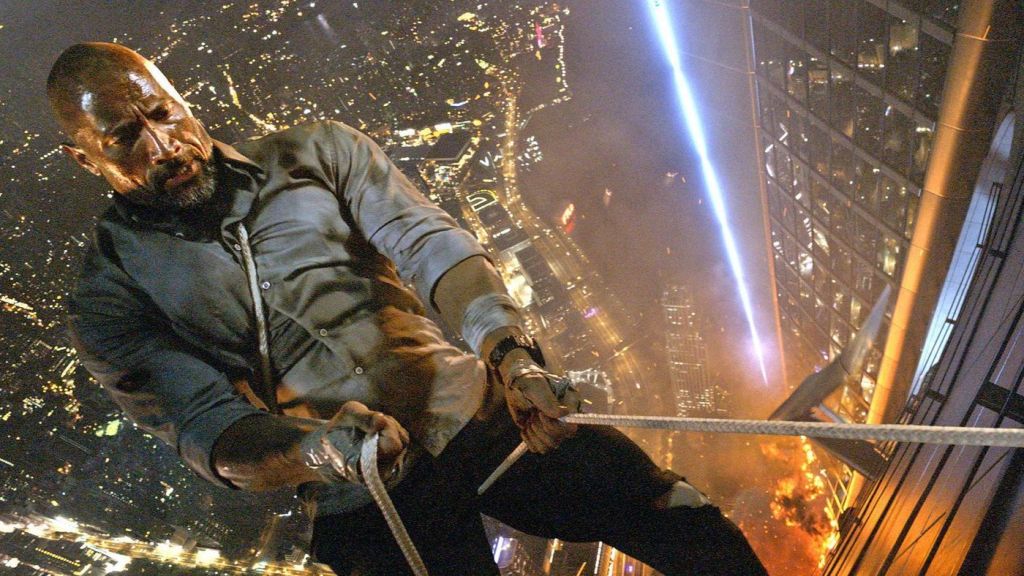
    Certain moments within the film have real tension, especially as Johnson dangles from staggering heights time and again. Though action sequences lack the practical effects of the “Mission: Impossible” franchise or the visceral quality of the Jason Bourne films, there’s no shortage of entertainment value to be found.

    To be sure, “Skyscraper” isn’t a good movie. In fact, the latest movie from “The Rock” is downright terrible.
    ….in all the best ways.

    Infinitely re-watchable and a lighthearted spectacle of amusingly terrifying heights from start to finish, “Skyscraper” defines the notion of a film that’s far better than it has any right to be.

    Whether we like it or not, it’s a film whose cinematic shelf life will far exceed a month-long stay at the box office.

    Odds are good that televisions across America will stop down to make “Skyscraper” appointment viewing when it inevitably becomes a staple of a station like TNT or FX.