Author: Matt Ward

  • Deepwater Horizon: Heroes amid disaster

    Deepwater Horizon: Heroes amid disaster

    You’ll probably leave the theater a little upset and pretty angry.

    That doesn’t mean audiences shouldn’t flock to the theater in droves to see “Deepwater Horizon,” the based-on-a-true-story disaster film from “Lone Survivor” director Peter Berg and star Mark Wahlberg.

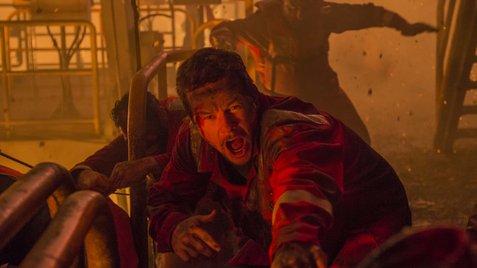
    The new film follows veteran driller Mike Williams (Wahlberg) and assorted crew members of the offshore oil drilling unit Deepwater Horizon as they prepare to open a new well for British Petroleum (BP)  off the coast of Louisiana. Faulty installation of cement at the base of the well helped lead to catastrophic problems, major explosions and oil spilling into the Gulf of Mexico. 

    While recent biopics like “Sully” have delved into the aftermath of major events – Tom Hanks’ film focuses on the NTSB investigation of the plane landing on the Hudson River – “Deepwater Horizon” approaches its events in more chronological, straightforward terms, leaving out the investigation into BP. However the oil company is represented in Berg’s movie as a major villain, primarily through John Malkovich’s expert portrayal of BP executive Donald Vidrine.

    In order to keep “Deepwater Horizon” as much of an action/thriller as possible, Berg’s film rarely utilizes the impassioned soliloquys usually found in biopic dramas and offers a “no frills” approach to his cinema. As a result, the acting performances in the film are somewhat tampered down.  

    The film’s main focus, Mike Williams, is portrayed by Wahlberg with much gusto. But as with so many other Wahlberg performances, a solid effort from the veteran Boston actor is overshadowed by another actor, the spectacle of the movie itself, or in the case of “Deepwater Horizon” both.

    Malkovich’s Donald Vidrine doesn’t get a lot of screen time in the overall scheme of the movie, but his perfect portrayal of the greedy, conniving BP executive is the best piece of acting in the entire film. His confrontation scene with Wahlberg shortly before the explosions begin give a dynamic summary of BP’s attitudes towards the events causing the disaster. In fact, “Deepwater Horizon” would have been a much different and arguably much better film had the Vidrine character been expanded significantly. 

    Aside from Wahlberg, “Deepwater Horizon” leans heavy on a talented, but secondary supporting cast including Kurt Russell as the rig’s captain, Dylan O’Brian as a driller working the main floor of the rig and Gina Rodriguez as the ship’s pilot. Among these performances, Kate Hudson offers her best work in several years in the small, but crucial role as Williams’ wife Felicia.

    The effectiveness in Hudson’s portrayal, representing all of the families of Deepwater Horizon crew members, helps viewers emotionally invest in the outcome of the film. Many times in films like this, the stereotypical “family member left at home” character is played incredibly shallow and the “back home” relationship for the main character is better left on the editing room floor.

    With “Deepwater Horizon,” Mike’s relationship with his wife is the emotional core of the entire film and drives home the dramatic elements of a largely action-based feature. Hudson and Wahlberg show good chemistry in limited screen time together and their efforts make the overall narrative more convincing as a result.

    Perhaps the biggest flaw within “Deepwater Horizon” lies in Matthew Michael Carnahan and Matthew Sand’s screenplay, which rarely shies away from the overt technical jargon related to offshore oil drilling. Whereas a film like Oliver Stone’s “Snowden” goes to extreme lengths to simplify a complex topic like government surveillance, “Deepwater Horizon” powers through conversation after conversation between workers on the Deepwater Horizon without much care given to audiences’ understanding of why the explosion and subsequent spill happens. 

    Viewers will eventually infer the basics of the whys and hows, but the screenplay refuses to slow down in lieu of maintaining a brisk pace. Those sparked to learn more about the technical aspects of the disaster from watching “Deepwater Horizon” should seek out the 2014 documentary “The Great Invisible,” a South by Southwest Film Festival award winning film that covers the root causes of the disaster as well as the ensuing government investigation.  

    “Deepwater Horizon” is unlikely to receive any critical accolades this fall, though that isn’t because Berg’s film isn’t worth spending 107 minutes on in theaters.

    An imperfect film, “Deepwater Horizon” will likely leave viewers with questions about real life events and in utter awe over how many individuals’ lives were saved by the bravery of the rig’s crew and other extraordinary circumstances. Overall, the “Lone Survivor” team of Berg and Wahlberg make a taut, engaging film that audiences won’t be disappointed in once they leave the cinema.
  • The Magnificent Seven: Not your father’s western

    The Magnificent Seven: Not your father’s western

    ​“The Magnificent Seven” is a completely unnecessary remake.

    It’s not because the Denzel Washington led western isn’t a quality movie, but rather that the re-imagining of the 1960 film starring Yul Brenner and Steve McQueen doesn’t actually resemble the original film itself. In fact, the newest film from director Antoine Fuqua would probably be better served with a different title altogether as Fuqua’s movie is more in-the-style-of “The Magnificent Seven” than a true remake.

    The bare-bone essentials are the same: seven mercenary gunmen protect a town from a ruthless villain and his large army of bandits. That’s pretty much all the two films share in common besides their name. Brenner and company fought for a purpose; the new team fights because they don’t have anything better to do.

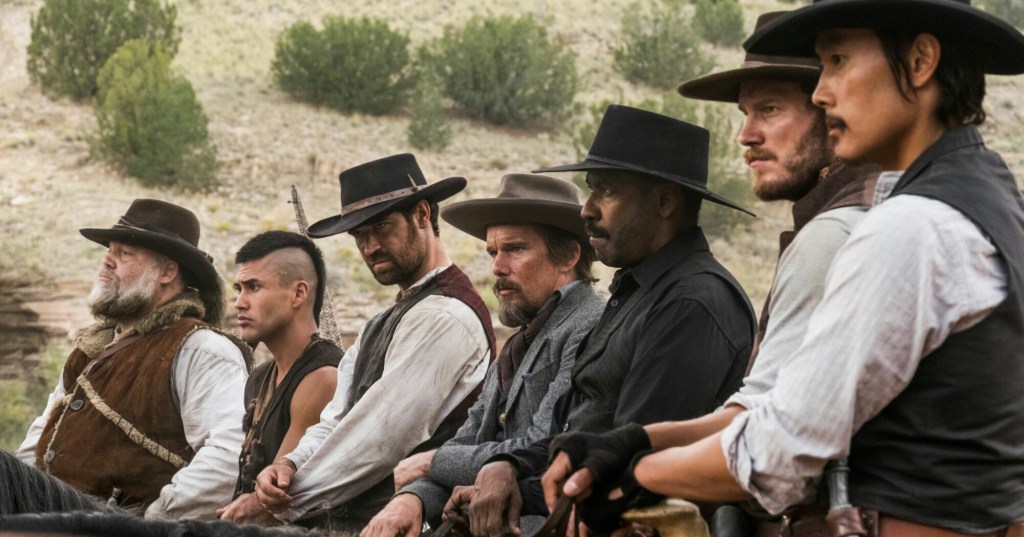
    Amid the often chaotic frenzy within the film, Washington brings his usual gravitas to the role of bounty hunter Sam Chisholm, leader of the “seven.” Audiences are able to buy into the group coalescing as one as a result of Washington’s stature and presence on screen, commanding the respect of his fellow actors and the audience watching comfortably in their seats.

    Chris Pratt is an inspired choice to play the group’s unofficial lieutenant, smart-mouthed playboy gunslinger Josh Faraday. The former funnyman turned action star keeps “The Magnificent Seven” balanced with his wit and charm, offsetting the more deliberate performance from Washington.

    Unfortunately, Ethan Hawke’s turn as Civil War sharpshooter Goodnight Robicheaux was criminally underutilized in the film. Hawke has the capability to perform at an incredibly highly level dramatically, but not enough time was spent developing Robicheaux’s wariness to use his weapon. 

    It’s this sort of character development that Fuqua opts to minimize for the sake of the action sequences, proving the director doesn’t get the point of classic western films like “The Magnificent Seven.” The why characters act the way the do is often as important if not more so than what they do. Fuqua oversimplifies these character nuances, turning them into mere anecdotes in service of explosions. This isn’t to say that “The Magnificent Seven” isn’t a largely entertaining film. It certainly is. It just could have been a lot more.

    Among the secondary cast, the film’s best performance comes from veteran character actor Vincent D’Onofrio as rugged mountain-man Jack Horne. Most of the characters in “Magnificent Seven” are pretty bland as individuals and serve mainly to further the action sequences late in the film. D’Onofrio brings a life to Horne with a striking accent and depth of emotion unusual in Fuqua’s movies outside of “Training Day.” Indeed, it’s D’Onofrio’s work that is most reminiscent of the Brenner-McQueen film, where each of the seven are given definitive characters from which to work with. 

    Peter Sarsgaard delivers an embarrassingly memorable performance as the villainous industrialist Bartholomew Bogue ruthlessly terrorizing the small town. Just shy of mustache twisting, Sarsgaard’s Bogue is a subpar imitation of Daniel Day-Lewis’s Oscar winning performance with a similar character in “There Will Be Blood.” For as strong as many of the heroes in “The Magnificent Seven” are, the film’s villain is equally as weak making for a somewhat underwhelming conclusion.

    Director Antoine Fuqua makes the most of a pedestrian screenplay by Nic Pizzolatto and Richard Wenk, combining vintage western landscapes with modern action sequences to provide a largely compelling outcome from what could have been a terrible film. Each scene is vibrant and pops off the screen thanks in large part to cinematographer Mauro Fiore. From a directorial sense, “The Magnificent Seven” is a western film that acts more like a traditional action thriller both to the movie’s credit and hindrance at various times over the course of two hours.

    Moviegoers expecting an update on the western classic similar to how the Coen Brothers updated the John Wayne classic “True Grit” may leave disappointed. “The Magnificent Seven” couldn’t be much farther from the film it takes its name from.

    But if you’re able to ignore or forget the film’s cinematic heritage, “The Magnificent Seven” is a largely entertaining romp of a western that emulates blockbuster action films in the most satisfying ways. Washington and Pratt deliver a fun time at the cinema worth heading out to theaters for.

  • Snowden: NSA surveillance for dummies

    Snowden: NSA surveillance for dummies

    ​There’s an inevitable desire to start constantly looking over your shoulder and watching what you post on social media after screening the political drama “Snowden,” now in theaters.

    Oscar winner Oliver Stone’s paranoia-inducing image rehabilitation feature narrative on famed former NSA analyst and fugitive Edward Snowden hits heavy for those relatively uninformed about the titular character’s life and actions. However, for news-minded individuals, “Snowden” comes across as an uninspired, paint-by-numbers tale about love in the time of mass surveillance.

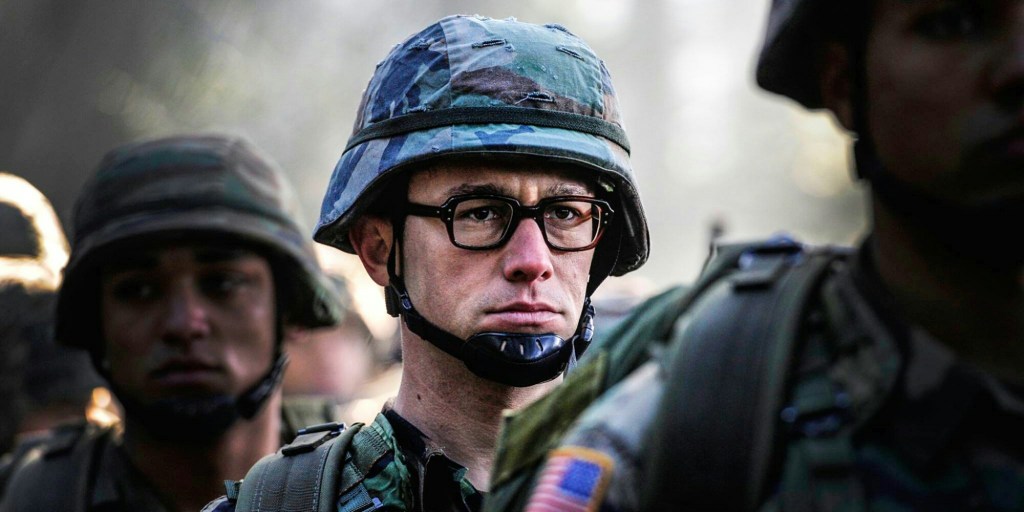
    Told in an awkward flash-back, flash-forward narrative structure, Stone’s film follows Snowden (Joseph Gordon-Levitt) as he comes to work for the CIA and later the NSA. He serves the country with the best of intentions for many years while falling in love with his longtime girlfriend, Lindsey Mills (Shailene Woodley). When Snowden is tasked with working on NSA surveillance programs targeting large numbers of U.S. citizens, he makes a break out of the country with highly classified intel in tow.

    More biopic than political thriller, Stone and co-screenwriter Kieran Fitzgerald opt to humanize the polarizing Snowden for audiences through a significantly developed love story with Mills. While this allows viewers to be better able to put themselves in Snowden’s shoes, it reinforces the dramatization of Snowden’s life story more so than an average biopic would. In this sense, “Snowden” becomes the cliff notes to a true person’s life story, the “Idiot’s Guide to NSA Surveillance” if you will.

    It feels like the intent of the filmmakers – and star Gordon-Levitt has spoken publically to this effect – that “Snowden” is simply a means through which audiences will begin a conversation about the issues raised in the film and do more research on their own. In this respect, the film takes a great deal of time dramatizing the filming of the Oscar-winning documentary “Citizenfour,” which shows a real-life Snowden working with journalists to expose secret government programs to the general public.

    Watching “Citizenfour” or seeing Snowden speak publically, it’s readily apparent how spot on Gordon-Levitt’s portrayal of the whistleblower truly is. He captures Snowden’s unique cadence and accent perfectly, adopting his eccentric mannerisms in a vividly imaginative performance. It’s unlikely that he will get major awards recognition for his efforts, especially given the subject, but Gordon-Levitt still turns in one of 2016’s best performances in an otherwise pedestrian film.

    After starting her career with terrific turns in independent films like “The Descendants” and “The Spectacular Now,” Woodley has been languishing away in franchise fodder through three “Divergent” movies before returning to drama with “Snowden.” 

    It’s evident that Woodley gives the role of Mills her full effort, especially during argument scenes opposite Gordon-Levitt. But the middling screenplay leaves Mills languishing from start to finish, operating simply as character witness for Stone’s hero-making effort for Snowden rather than her own unique character.

    “Snowden” boasts an impressive and deep supporting cast including Oscar winner Melissa Leo as documentarian Laura Poitras, Tom Wilkinson and Zachary Quinto as a pair of Guardian journalists and Rhys Ifans as Snowden’s mentor/boss with nefarious intentions. These performances all serve the narrative relatively well, but it’s Nicolas Cage’s outlandish casting and effort as a CIA trainer and friend that feels over the top and ridiculous. Nearly all of the actors in “Snowden” do an effective job of supporting Gordon-Levitt’s turn as Snowden, but Cage just brings the movie to a screeching halt in his limited screen time.

    For whatever reason, “Snowden” just doesn’t feel like an Oliver Stone movie. Frequently a risk taker with his films, Stone just takes the easiest road and plays the entire film pretty safe both visually and narratively in service of his obvious goal of lionizing Snowden as a whistleblowing patriot.

    The result is a disjointed, haphazard film that is probably better suited as a rental or streaming option several months from now rather than a film audiences need to rush out to theaters to see in spite of a terrific Gordon-Levitt performance.

    “Citizenfour,” the Oscar winning documentary highlighted in “Snowden,” comes highly recommended and should fill moviegoers’ Snowden needs until the Oliver Stone hero-making piece arrives in home video.

  • Sully: Hanks soars once again

    Sully: Hanks soars once again

    ​What happens to unlikely heroes after their miraculous deeds?

    Academy Award winning director Clint Eastwood seeks to answer this complex question with yet another introspective look at a recent American hero following 2014’s spectacular “American Sniper.”

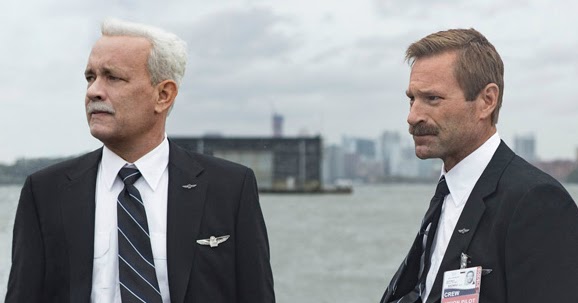
    In “Sully,” Eastwood examines the “hero on the Hudson,” veteran U.S. Airways pilot Chesley “Sully” Sullenberger as he constantly relives his 208-second flight from LaGuardia Airport which ended with a forced water landing on the Hudson River. Based on true events, Sully (Oscar winner Tom Hanks) and his first officer Jeff Skiles (Aaron Eckhart) are questioned by media and the suspicious National Transportation Safety Board (NTSB) investigators in the days immediately following the January 15, 2009 incident.

    Told almost exclusively from the perspective of Sully himself, Eastwood’s film forces Sullenberger to relive (and occasionally hallucinate) about the fateful flight, which makes the veteran pilot question whether he made the right decision. 

    As the titular hero, Hanks is mesmerizing in his unsettled confusion with Sullenberger’s frequent, yet private emotional breakdowns serving as many of the film’s best moments. While “Sully” drifts into police-procedural territory in the final third as the NTSB investigation wraps up, Hanks elevates average dialogue with his quintessential everyman performance style. Despite his storied career, “Sully” may prove to be Hanks’ defining performance over the latter stages of his career and certainly over the last decade. An Academy Award nomination for his performance would not be out of the question.

    Eckhart gives a serviceable, largely unmemorable effort as first officer Skiles, essentially riding shotgun to a career-defining Hanks performance. In a film where so many characters felt authentic, Skiles sticks out as Aaron Eckhart reading the lines given to the character of Skiles rather than Eckhart actually becoming Skiles. However, this isn’t particularly detrimental to the overall success of the film.

    Veteran character actress Laura Linney offers a strong supporting performance as Sullenberger’s wife Lorraine. The part is especially difficult as Lorraine is separated from the rest of the cast and only has scenes with her husband over the telephone. Not being able to see and react off your acting partner with their physical presence can be immensely challenging, though Linney handles the role well.  Her performance helps round out Sully’s character and allows Hanks to portray the pilot’s rare emotional releases.

    The first film to be shot entirely with IMAX cameras, “Sully” is visually spectacular from start to finish and especially shines in the air during scenes depicting the plane crash. This is approached from a variety of angles and perspectives throughout the film and cinematographer Tom Stern does a terrific job of making each scene feel cohesive and yet fresh at the same time. Reliving the harrowing events over and over will probably make you leery of flying any time soon, however.

    Eastwood continues to prove himself to be one of the elite filmmakers of our time with “Sully,” which features Eastwood’s no-frills directorial style and original music. Like so many other Eastwood films, “Sully” plows forward from act to act with solid pacing, picturesque shots and solid acting performances across the board. It’s thanks to Eastwood that planes crash-landing on the Hudson River are shown in the least flashy, blockbuster way possible.

    “Sully” should be a shoe-in for several technical awards as the film’s depiction of the plane landing on the Hudson will likely be one of the year’s most visually impressive moments. Academy Award nominations could also be in the cards for Hanks as Best Actor, Eastwood as Best Director and the film for Best Picture depending on how the rest of 2016 plays out.

    Led by a career-defining performance from Hanks and impressive cinematography, “Sully” is a sure bet to be an audience favorite and is definitely worth the trip to the theaters.

  • The Light Between Oceans: Vikander, Fassbender put on acting clinic

    The Light Between Oceans: Vikander, Fassbender put on acting clinic

    ​Every year there’s a film that sneaks its way through theaters without much commercial fanfare and then makes a strong showing in Oscar nominations.

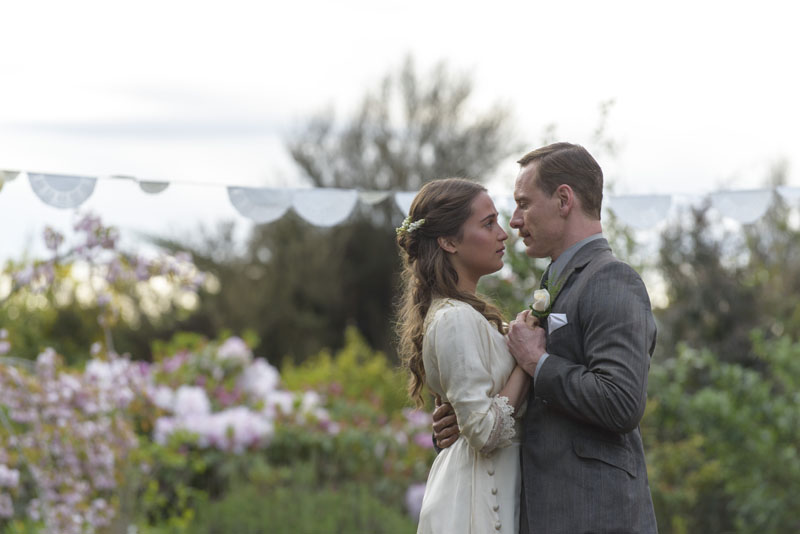
    In 2016 that film is assuredly “The Light Between Oceans,” a picturesque, romantic period drama featuring reigning Best Supporting Actress winner Alicia Vikander and Oscar nominee Michael Fassbender along with a terrific supporting performance from Academy Award winner Rachel Weisz.

    Based on the 2012 novel by M.L. Stedman, “The Light Between Oceans” follows Tom (Fassbender), a single man returning from war to take post on a remote lighthouse and falls in love with a young Australian woman (Vikander) living on a nearby island. Though it’s fair to call the film a romance, Tom and Isabel’s courtship isn’t at the center of their story. Rather, Tom and Isabel’s struggle to form a family while living away from civilization proves to be the catalyst for their emotionally gripping tale.

    This is a movie best viewed with fresh eyes. More so than many other films, divulging too much about the plot (or watching the film’s trailer for that matter) may prove to be catastrophic for viewers’ ultimate enjoyment of “The Light Between Oceans.” 

    It’s hard to play stoicism in a romance much better than Fassbender does as Tom, a man shattered by the things he saw and did as a soldier in the Western front of World War I. His performance is the near perfect definition of melancholy early in the film. The way Tom is transformed – brought back to life, as it were – by Isabel over the course of the film is remarkable. A nomination will likely elude Fassbender this year given a number of much flashier performances yet to hit the big screen this fall, but the performance is definitely worthy of consideration.

    While Tom anchors the narrative structure of the film and takes a majority of the screen time, “The Light Between Oceans” is Vikander’s movie and her performance is beautifully crushing. It’s impossible to keep your eyes off her Isabel, emotionally mesmerizing and layered beyond compare. Her scenes of grieving loss toward the latter part of the film’s first hour are devastatingly poignant.

    In a film filled with highlights, Vikander is the best thing about “The Light Between Oceans” and it’s not particularly close. Another Oscar nomination feels inevitable at this point and a second straight win for the Swedish actress wouldn’t be out of line either.

    Weisz doesn’t make an appearance in the film until the second hour as the relationship between Tom and Isabel is given time to bloom. But once the former Oscar winner hits the screen as a grieving widow, Weisz holds her own against strong efforts from Vikander and Fassbender. It’s difficult to spend too much time on Weisz’s performance without revealing too many plot points, but her work is often exceptional and just occasionally too stiff for the overall tone of the film.

    Director Derek Cianfrance moves “The Light Between Oceans” at a much slower, leisurely pace than his dynamic previous films “Blue Valentine” and “The Place Beyond the Pines.” Yet despite the slow, two-hour build to the movie’s third act crescendo, “The Light Between Oceans” maintains constantly entrancing cinema, thanks in large part to the masterful performances Cianfrance is able to draw from his lead actors.

    The film is additionally bolstered by Adam Arkapaw’s stunning cinematography, which Cianfrance uses to frame the beginning and end of each scene.

    Unfortunately, “The Light Between Oceans” was released far too early in 2016 for major consideration in Best Picture races come awards season, though Vikander’s standout work will remain firmly in the Oscar hunt. Regardless, Cianfrance’s largely riveting melodrama will appeal to fans of period cinema and of the lead actors.

    It wouldn’t come as any surprise to see “The Light Between Oceans” end 2016 as one of the year’s 10 best movies and those willing to take a chance on the film in theaters shouldn’t be disappointed.

  • Hell or High Water: The best movie of the year

    Hell or High Water: The best movie of the year

    ​“Hell or High Water” is the best film you’ll see this year.

    This isn’t hyperbole or a statement made lightly, especially given the fact that there’s still four months and an entire season of Academy Award candidates yet to be released.

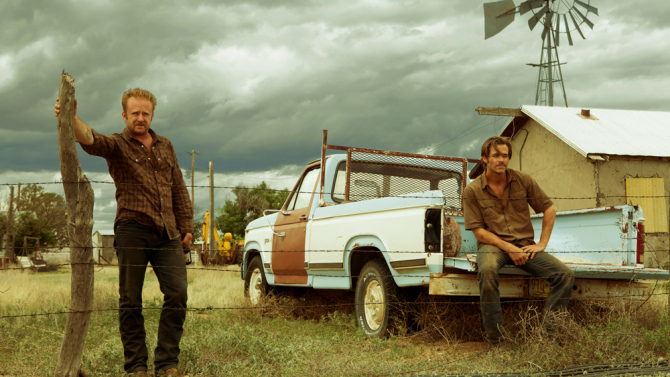
    Beautifully crafted and acted, the first major release film from director David Mackenzie stars Chris Pine and Ben Foster as brothers who resort to robbing banks in sleepy West Texas towns while being pursued by a grizzled veteran Texas Ranger played by Jeff Bridges.

    “Hell or High Water” is a funky combination of thriller and neo-Western ripped straight out of a different era. Were they alive today, “High Water” is a movie that Steve McQueen and/or James Dean might star in – a quintessential tale of antiheros running from the law for morally just reasons. “Hell or High Water” is “The Getaway” with a conscience; a western “Rebel Without A Cause.”

    What Mackenzie hits audiences over the head with from the outset is Giles Nuttgens’ artistic, nuanced cinematography that paints the film’s West Texas landscape so perfectly. Nuttgens and Mackenzie masterfully use the natural lights and shadows of early sunrises and sunsets to mask the film’s slower, poignant moments, helping to keep audiences engaged in between tense action. Effectively shooting in low light situations is a difficult skill to master and Nuttgens does the best job of any cinematographer in 2016 of handling this challenge.

    Pine has proven to be a very capable leading man especially in popcorn franchise films. But he has never been quite as elegant and layered with a performance as he is in “High Water.” His broken, weathered effort is award worthy as a man struggling to balance the death of his mother, a dying family ranch and two sons from a failed marriage. There’s just enough stoicism in his performance to balance the more manic turn from Foster that elevates the entire film beyond crime genre stereotypes.

    At first glance, Foster doesn’t appear to be the ideal choice to play the demonstrative, devil-may-care older brother. The veteran character actor has waded in these waters many times before and often overacted with gimmicky caricatures. In “High Water,” Foster teeters right on the cusp of going too far with the part. but whether it’s Mackenzie holding him back or Foster finally playing with restraint, his performance is safely just on the edge of crazy without billowing over into complete madness. Foster’s innate chemistry with Pine in the film is undeniable and it’s in their kinship that the film truly shines.

    Inevitably, Bridges’ performance in “High Water” will be compared to Tommy Lee Jones’ effort in the similar, yet much darker Coen Brothers film “No Country for Old Men.” The parts are different sides of the same coin, the aging Texas lawman out for one last ride. In “High Water,” Bridges does display a very effective “I’m too old for this” mentality, but it’s couple with an uniquely crude and albeit racist sense of humor that’s unexpectedly brilliant. There’s a great deal of levity in Bridges’ partnership with a younger Native American colleague that tracks quite nicely throughout the film. When looking back on Bridges’ career, “High Water” will ultimately represent one of his best performances in a long, storied filmography.

    British director Mackenzie seems well at home shooting a film so entrenched in the desolate West Texas plains and his movie offers terrific, cutting insight to life in stagnant rural economies. Many of the sleepy cities portrayed in “Hell or High Water” feel like modern day ghost towns with the entire film playing out as if it were a Clint Eastwood western from the 1960s. Mackenzie does a masterful job of adapting screenwriter Taylor Sheridan’s script, matching the tone of the pitch-perfect dialogue with visual cues and backgrounds that build layers of depth to the overall finished product.

    Several months from now, critics and award voters will likely overlook this small, limited release independent western in favor of “showy”-er efforts from bigger names in biopics with acting performances from Pine and Bridges as well as Mackenzie’s directorial effort feeling like major snubs.

    But it’s not an exaggeration to say that “Hell or High Water” is the best film of 2016, even with four months left in the year. It’s the single best piece of cinema that you could possibly watch in a theater right now and an absolute must see film.

  • War Dogs: Weapons of mass enjoyment

    War Dogs: Weapons of mass enjoyment

    ​“War Dogs” seeks to answer a pretty simple question asked by CNN’s Wolf Blitzer in the film’s trailer.

    “How did two 20-something young men land a $300 million Pentagon contract?” 

    If you keep watching the rest of the trailer, the film attempts to highlight the exploits of Jewish-American gunrunners with the same comedic precision of “The Wolf of Wall Street.” It even extolls the virtues of the film’s director, Todd Phillips, A.K.A. the “Hangover” guy.

    Yes, “War Dogs” is a hilarious film, perhaps even the best comedy of the year. But it also aspires to become much more than that and largely succeeds in bringing in powerful dramatic moments as well.

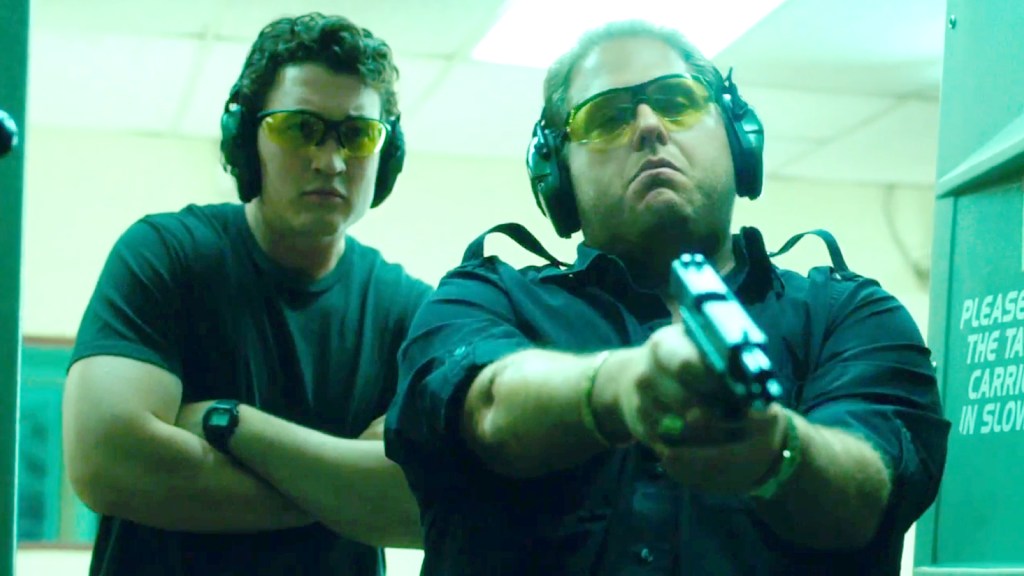
    Viewers become introduced into the world of “mostly” legal gunrunning through the eyes of David Packouz (Miles Teller) who quit his job massaging Miami’s rich and famous when his childhood best friend Efraim Diveroli (Jonah Hill) convinces him to become partners in a small arms dealing business that works exclusively on government contracts. As the size of the contracts grow, the tension and danger grow for David, who’s hiding his business from his peace-loving pregnant girlfriend.

    “War Dogs” jumps off the screen early in the film with its often bombastic comedy, but settles in to a nice medium between humor and surprisingly compelling dramatic moments. Viewers will likely never expect the film’s emotional stakes and might even miss some subtle beats of drama amid all the laughter.

    Much like his Academy Award nominated turn in “The Wolf of Wall Street,” Hill dazzles with another outstanding effort as Diveroli. His work is just on the cusp of being over-the-top in many scenes which harken back to Hill’s time with teenage raunch comedies like “Superbad.” But it’s beautifully juxtaposed against terrific scenes of calm clarity that make Diveroli a complexly manic and depraved man who attempts to become the Al Pacino character from “Scarface” that he so admires.

    While many audiences will key in on Hill’s antics and chaotic performance, Teller continues to impress with his understated, controlled effort as Packouz in both his role as the narrator and the main character of the film. Hill is able to play the gambit of emotions with Diveroli because Teller balances out the dynamic between the two friends/business partners so well. Playing against type, he does a masterful job of being the rationale everyman character to give viewers someone to relate to amid all the insanity of the gunrunning world.

    Oscar nominated actor and frequent Phillips collaborator Bradley Cooper makes a small, but important appearance as an arms dealer hoping to partner with the leads on a major government contract. His performance is relatively uneven, but efficient in bringing the necessary gravitas to the part that allows for the plot to move forward convincingly.

    “War Dogs” feels like a departure for Phillips, who’s spent years making R-rated comedies to varying degrees of success. But while his previous efforts like “Old School” and “The Hangover” trilogy skimp on the dramatic counterbalance to all the flatulence and sex jokes, “War Dogs” has some real moments of clarity and drama in its final act. The humor’s still there throughout and the entire film feels like a nice change of pace for Phillips and Teller, while continuing the same path of serious comedic work Hill has been choosing the last several years.

    The gunrunning film doesn’t stray too far to examine the morality of these “war dogs” making money off of violence and murder, nor does it examine the issue from the side of the government purchasing all the weapons to arm third-world nations. “War Dogs” stays firmly entrenched in the bizarre series of circumstances that allowed two young relative unknowns to become major players in war profiteering business enterprises and how ridiculous these circumstances are.

    With its unique blend of comedy, drama and just a pinch of action, “War Dogs” is without a doubt the best mainstream film of the summer and a must see film for adult audiences willing to check their opinions at the door and not let political leanings one way or the other affect their movie going experience. 

  • Pete’s Dragon: A refreshing family hit

    Pete’s Dragon: A refreshing family hit

    ​Dragons might be an unusual choice for a childhood best friend, but the love between a young boy and his fire-breathing friend make for a captivating, heartwarming tale in the Disney remake “Pete’s Dragon.”

    Moviegoers needn’t worry about having seen the 1977 animated musical version of the film as nearly everything from the original version has been scrubbed over and re-written by Texas native writer/director David Lowery.

    Pretty much all that remains is an orphaned boy named Pete (Oakes Fegley) is helped by a mysterious, yet friendly dragon he calls Elliot and the two live for many years out in the Pacific Northwest forest. Several years later when logging crews begin to tear down his wooded home, Pete is discovered and taken in by a forest ranger named Grace (Bryce Dallas Howard). Separated from his only friend, Elliot must track down Pete while avoiding workers who want to capture a dragon.

    http://m.youtube.com/watch?v=fPOamb6d_20
    “Pete’s Dragon” marks the first major film role for Fegley, who delivers a heart-wrenching, soulful performance as Pete. Forced from the outset to display a wide array of emotions, Fegley handles each scene with proper care and is especially touching at the film’s outset when tragedy forces Pete to go it alone in the woods. It’s much too early to determine Fegley’s future given the fickle nature of child actors, but he should be a staple in similar roles for the next several years.

    Howard continues to elevate her profile with a terrific effort in “Pete’s Dragon” following a breakout in last year’s franchise smash “Jurassic World” opposite Chris Pratt. As Grace, Howard is far from the best thing about “Pete’s Dragon,” but adequately fills a pretty formulaic role.

    Oscar winner Robert Redford delivers one of his best performances in several years in a supporting role as Grace’s father and town storyteller who happens to be the only other person to have ever seen a dragon. It’s a touching, memorable effort from Redford, who has a natural charm with the young performers he works opposite and easy father-daughter chemistry with Howard.

    Awards aren’t given to these sorts of supporting performances, but Redford takes the small, simple part and knocks it out of the park with grace.

    “Star Trek” actor Karl Urban is enjoyably evil-adjacent as the film’s requisite villain, a logger who leads a team of nameless henchmen deep into the forest to capture Elliot in hopes of making money. It’s a decent change of pace for Urban coming off three sci-fi adventure films, though his work here is not as thoughtful as in previous films.

    If you’re still looking for a reason to catch “Pete’s Dragon” in theaters, look no further than Elliot the dragon, a CGI marvel on par with the animals in Disney’s other 2016 hit remake “The Jungle Book.” Elliot looks much more menacing in three-dimensional computer graphics than the flat animation of the 1977 original, but what is really stunning about Elliot is how gracefully the animators are able to digitally melt Elliot in and out of the background like a chameleon. This next-level CGI work helps flesh out the performances of actors who are emoting against thin air and the film feels a lot more authentic as a result in spite of the film’s inauthentic premise.

    Indie film director Lowery shows an adept, expert hand at the wheel of the smartly paced adventure, in much the same way as his 2013 romance drama “Ain’t Them Bodies Saints” starring Casey Affleck and Rooney Mara. Like Colin Trevorrow with “Jurassic World”  before him, Lowery proves that talented independent directors can successfully make the jump to big-budget films quite nicely.

    “Pete’s Dragon” is one of the year’s most refreshing surprise hits and definitely worth a trip to the theaters for movie lovers of all ages.

  • Suicide Squad: Roll with the punches

    Suicide Squad: Roll with the punches

    ​Bad guys you may or may not have ever heard of get coerced into fighting for good in the latest “superhero” film from Warner Brothers and DC Comics.

    “Suicide Squad” is a largely enjoyable mess of a movie where director David Ayer invites viewers on a nearly two-hour thrill ride, but moviegoers have to concede some things first.

    Sure, you’ve likely never heard of or seen most of these villains (or the actors playing them) before, but just go with it.

    It’s true that “Suicide Squad” underwent massive changes following the poor reception for DC’s last film, the fatally flawed “Batman v Superman: Dawn of Justice.” Just go with it.

    And yes, there are characters in the “Suicide Squad” who don’t really say much or have any impact on the plot in any way, shape or form. Just go with it.

    If you’re able to buy in and ignore all of these conceits, forgetting the fact that much of the plot makes no sense whatsoever, you’re in for a pretty fun ride. 

    The plot is relatively straightforward. Following the events of “Batman v Superman,” the world is in need of some extra protection and the government decides to launch a program where a team of supervillains – including ultra-sniper Deadshot (Will Smith) and psychotic assistant Harley Quinn (Margot Robbie) — are assembled Avengers-style to combat an unknown threat to Gotham City. To keep them in line, a bomb is inserted in their neck and will be detonated if they disobey. Then off to war they go.

    Robbie, who has constantly been a standout performer lately, delivers the single best performance in “Suicide Squad,” bordering on delirious, deranged and delightful as villainess Harley Quinn. The film plays to Robbie’s strong suits using her beauty and quirky humor and her chemistry is especially clear with “Focus” co-star Smith. Given how good Robbie is in the role, Warner Brothers and DC are already developing a film based around the Harley Quinn character, a smart move by the studio.

    Smith is solid in a large ensemble role as expert hitman Deadshot. For a character never previously introduced in DC’s cinematic lore, Smith and Ayer do a great job of quickly developing the character for unfamiliar audiences. Smith feels freer as an actor in “Suicide Squad” freed from the burden of carrying the film. Deadshot is one of Smith’s better performances this decade, which feels wasted in an otherwise middling movie.

    In what ultimately becomes nothing more than an extended cameo appearance, Jared Leto is the film’s biggest misfire as the iconic Batman villain The Joker. Granted, Heath Ledger’s Oscar-winning performance as The Joker in “The Dark Knight” was a nearly insurmountable hill for Leto to climb to put his own stamp on the part.

    His haphazard performance paired with the weird 20s gangster direction Ayer and Leto decided to take the character fall completely flat. It’s the single biggest disappointment for an actor playing a part in a film based on a comic book ever.

    It’s difficult to tell if Ayer is truly at fault for the disjointed storytelling and tone of “Suicide Squad,” which ping-pongs from character to character at the drop of a hat, sometimes for no real reason. Ayer claims that the film viewers see in theaters represents his cut of the film. It’s hard to believe him given the many reports of Warner Brothers developing their own separate cut of the film and how different “Suicide Squad” feels from Ayer’s other films like “End of Watch” and “Fury.”

    There are plenty of things to like about “Suicide Squad,” especially Robbie’s maddeningly brilliant take on a classic Batman villain. Though not a flawless movie, the action thrill ride represents the last true summer blockbuster film in 2016 and is worth checking out for those looking to turn off their brains and have a fun evening at the theater.

  • Jason Bourne: Return of a legend

    Jason Bourne: Return of a legend

    ​Actions speak louder than words.

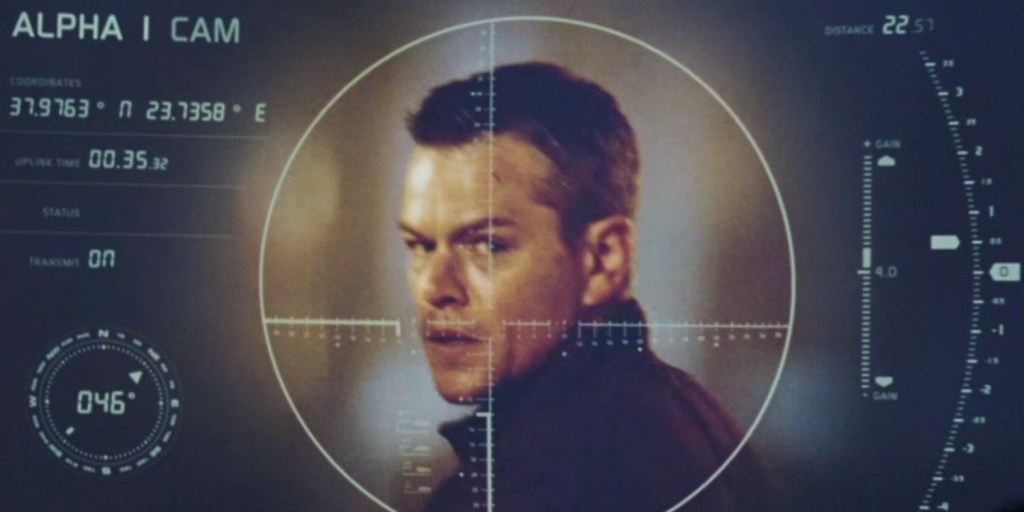
    Matt Damon doesn’t say a whole lot in “Jason Bourne,” his fourth turn as the amnesiac assassin out to find himself in a clandestine world. But he doesn’t need to either.

    The world around Bourne has changed dramatically since his last on-screen appearance nearly a decade ago in “The Bourne Ultimatum.” NSA contractor Edward Snowden’s releasing of classified documents outlining secret U.S. surveillance programs watching over everyone all the time have a profound impact on “Jason Bourne.”

    It’s probably a good idea not to say very much when every conversation, movement and keystroke is being compiled, catalogued and analyzed at every turn. The world of the original “Bourne” trilogy has evolved into a much darker and scarily plausible one.

    “Jason Bourne” finds a tortured Bourne putting himself through unnecessary pain as a way to atone for his sins as an assassin, when former CIA colleague turned radicalized hacker Nicky Parsons (Julia Stiles) tracks down Bourne after stealing information on covert kill-squad programs like the one Bourne was born from. Using the intel, Bourne goes on an intercontinental quest for answers, including startling information about his father.

    Despite how similar “Jason Bourne” is to all the other “Bourne” films, it’s still the best traditional action movie to hit the big screen since last year’s “Mission Impossible: Rogue Nation.”

    Damon gives yet another dazzling performance, saying much more with his body language than he has to in the approximately 25 lines of dialogue Bourne has in the film. The ruthless, almost robotic efficiency he displays during action sequences is wonderfully offset by moments of genuine emotion as he flashes back to memories of his father.

    Texas native and Academy Award winner Tommy Lee Jones takes aim at bringing Bourne down as CIA director Robert Dewey, a character that feels like an older version of Jones’ iconic U.S. Marshal Sam Gerard in 1993’s “The Fugitive.” It’s a solid, unspectacular role-filling performance that gets consistently shown up by whichever other stars are in the scene, which is unfortunate as it constantly feels like there’s more Jones could give to the role.

    Oscar winner Alicia Vikander breathes new life into the “Bourne” franchise as CIA cyber-ops chief Heather Lee, perhaps the most complex and dynamic character outside of Bourne himself in the entire series of films. Vikander shows an adept hand at playing both sides (the government and Bourne) against the middle while she seeks out her own unknown end. 

    The biggest lesson that Hollywood can learn from films like “Jason Bourne” is that superior acting talent can elevate standard action fodder to new heights, something the “Bourne” franchise has shown time and again with performers like Clive Owen, David Strathairn, Chris Cooper and Joan Allen.

    Veteran character actor Vincent Cassel is yet another example of this at work, following in the footsteps of Owen and Karl Urban before him as the nameless, shadowy killer just one step behind hunting Bourne. Viewers learn more about Cassel’s character, known simply as “The Asset,” than previous iterations of this character and Cassel is a perfect actor to carry the heavier load. His performance is menacing, yet elegant and a terrific counterbalance to both his rival, Bourne, and boss Dewey.

    The biggest weakness in “Jason Bourne” has to be the mediocre direction of Paul Greengrass, now on his third turn at the helm of the franchise. Greengrass’ insistence on over-utilizing the shaky-cam motion style of cinematography he popularized in “Bourne Supremacy” makes the new film extremely herky-jerk, even in static scenes of dialogue that don’t need any stylistic frills.

    While the shaky-cam style provides a frenetic energy to action sequences, “Jason Bourne” suffers from the fact that there is so much chaos in everything from major car chases to the simplest of hand-to-hand combat scenes. Greengrass gets in his own way trying to replicate the visual style and thoroughly impedes viewers’ understanding of most of the major set pieces in the film.

    For all its limitations, “Jason Bourne” is anything but a bad movie and every single installment in the “Bourne” franchise proves to be a superior piece of action filmmaking, including the much maligned “Bourne Legacy” offshoot starring Jeremy Renner.

    Moviegoers are probably going to want to watch the first three “Bourne” movies with Damon before heading out to catch “Jason Bourne” on the big screen. But watch quickly as “Jason Bourne” is a deadly fun time and an absolute must see at a local movie theater.