Dead on arrival.
Angered by a Seth Rogen-James Franco buddy comedy that saw the duo attempt to assassinate Kim Jong-un, North Koreans hacked emails and threatened war if 2014’s “The Interview” was released into American theaters.
Despite their best efforts, last year’s email hack of Sony Entertainment executives didn’t kill the raunchy buddy comedy, released video on demand to widespread support from celebrities and First Amendment activists alike. In fact, controversies surrounding the film likely helped “The Interview” do better than it would have with a regular theatrical release.
North Koreans helped get the ball rolling to kill a major Hollywood film, but it just wasn’t the one they intended.
The romantic dramedy “Aloha” — directed by famed auteur Cameron Crowe and starring multiple Academy Award nominees — has actually taken the brunt of the fallout from last year’s incident, falling flat on its face in its opening weekend thanks in large part to mismanagement by a Hollywood studio.
Emails from former Sony exec Amy Pascal released to the world via WikiLeaks months in advance of last Friday’s premiere doomed the film from the outset, letting moviegoers across the nation in on the fact that studio execs had zero confidence in the quirky Crowe offering.
Sony’s lack of commitment to the project — then labeled as “Untitled Cameron Crowe Project” or simply “Hawaii” — continued through the film’s marketing¸ which consists of one poorly designed poster and one incredibly misleading trailer. Ultimately, this strategy was felt at the box office, where the film opened at just over $10 million — well behind the new disaster film “San Andreas” starring Dwayne Johnson and at least four other films released in prior weeks.
Hollywood didn’t believe in “Aloha,” so why should viewers?
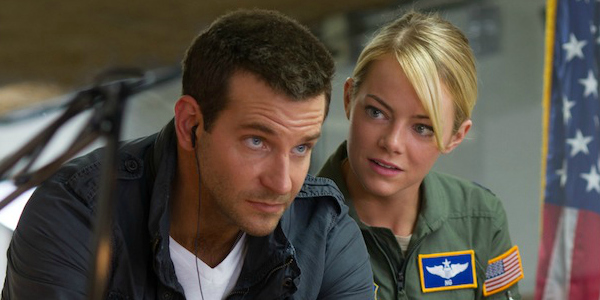
To be fair, “Aloha” is a little messy in the script and frayed around the edges, but a solid effort from two-time Academy Award nominee Bradley Cooper is worth the price of admission alone. There’s no transformative performance like when Cooper melted into the role of Chris Kyle for last year’s “American Sniper,” but Cooper’s honest portrayal of a man in turmoil paces the layered storylines and gives weight to a dramedy in a genre where gravitas is at a premium.
Emma Stone, on the other hand, gives an uneven performance as Cooper’s primary love interest, which feels incredibly out of place with the charming Rachel McAdams waiting in the wings as his ex-girlfriend. Crowe could have returned to the “Almost Famous” well and pulled another compelling performance out of Kate Hudson, who did her best work under Crowe’s direction.
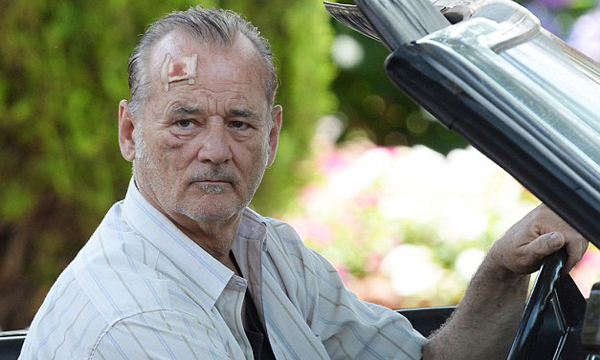
But this nitpicking at relatively minor flaws — especially given strong supporting work from Alec Baldwin, Danny McBride, John Krasinski and Bill Murray — feels superfluous when the biggest naysayers of the feature are the studio executives charged with putting a good movie on screen.
Never has a film cried out for a director’s cut release more than “Aloha,” which could not possibly reflect Crowe’s true vision. When studio execs spend more time “quality controlling” one of Hollywood’s most enigmatic directors than keeping lesser films like “Paul Blart: Mall Cop 2,” “Chappie” and the upcoming inevitable flop “Pixels,” audiences are in trouble.
The public narrative of Crowe’s failure as a writer/director since the release of “Jerry Maguire” in 1996 is entirely overblown. His films — with multi-layered, complex writing and more genuinely authentic then 95 percent of studio-released features — can’t be easily labeled, which makes things complicated for studios who try to oversimplify movies with big name stars in the quest for the almighty dollar.
Obsessed with the bankability of its stars, studio execs failed to produce “Aloha” as a high dollar independent film — a prestige piece, if you will, where movie quality trumps financial profit. Their failure to do so toned the death knell of what could have been Cameron Crowe’s comeback as a writer/director. We moviegoers have missed out as a result.
Sony fundamentally misunderstood what “Aloha” was intended to be — a slice of life dramedy where real life situations are played out in an authentic fashion — and instead tried to cram a homage to Cooper’s “Silver Linings Playbook” down Crowe’s throat in “quality control” discussions.
Ultimately, Amy Pascal — now pushed out of her executive’s chair and shockingly given creative control over the future of the “Spiderman” film franchise — ruined “Aloha” for viewers by not allowing Crowe to function as a more independent director under the studio’s Sony Pictures Classics
division.