
Tag: Chris Pratt

  • The Magnificent Seven: Not your father’s western

    The Magnificent Seven: Not your father’s western

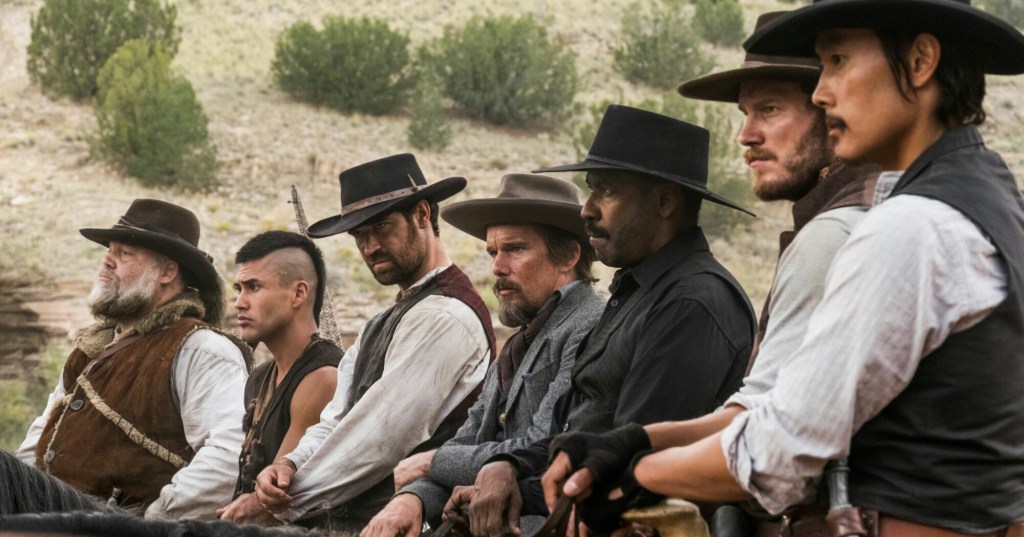
    ​“The Magnificent Seven” is a completely unnecessary remake.

    It’s not because the Denzel Washington led western isn’t a quality movie, but rather that the re-imagining of the 1960 film starring Yul Brenner and Steve McQueen doesn’t actually resemble the original film itself. In fact, the newest film from director Antoine Fuqua would probably be better served with a different title altogether as Fuqua’s movie is more in-the-style-of “The Magnificent Seven” than a true remake.

    The bare-bone essentials are the same: seven mercenary gunmen protect a town from a ruthless villain and his large army of bandits. That’s pretty much all the two films share in common besides their name. Brenner and company fought for a purpose; the new team fights because they don’t have anything better to do.

    Amid the often chaotic frenzy within the film, Washington brings his usual gravitas to the role of bounty hunter Sam Chisholm, leader of the “seven.” Audiences are able to buy into the group coalescing as one as a result of Washington’s stature and presence on screen, commanding the respect of his fellow actors and the audience watching comfortably in their seats.

    Chris Pratt is an inspired choice to play the group’s unofficial lieutenant, smart-mouthed playboy gunslinger Josh Faraday. The former funnyman turned action star keeps “The Magnificent Seven” balanced with his wit and charm, offsetting the more deliberate performance from Washington.

    Unfortunately, Ethan Hawke’s turn as Civil War sharpshooter Goodnight Robicheaux was criminally underutilized in the film. Hawke has the capability to perform at an incredibly highly level dramatically, but not enough time was spent developing Robicheaux’s wariness to use his weapon. 

    It’s this sort of character development that Fuqua opts to minimize for the sake of the action sequences, proving the director doesn’t get the point of classic western films like “The Magnificent Seven.” The why characters act the way the do is often as important if not more so than what they do. Fuqua oversimplifies these character nuances, turning them into mere anecdotes in service of explosions. This isn’t to say that “The Magnificent Seven” isn’t a largely entertaining film. It certainly is. It just could have been a lot more.

    Among the secondary cast, the film’s best performance comes from veteran character actor Vincent D’Onofrio as rugged mountain-man Jack Horne. Most of the characters in “Magnificent Seven” are pretty bland as individuals and serve mainly to further the action sequences late in the film. D’Onofrio brings a life to Horne with a striking accent and depth of emotion unusual in Fuqua’s movies outside of “Training Day.” Indeed, it’s D’Onofrio’s work that is most reminiscent of the Brenner-McQueen film, where each of the seven are given definitive characters from which to work with. 

    Peter Sarsgaard delivers an embarrassingly memorable performance as the villainous industrialist Bartholomew Bogue ruthlessly terrorizing the small town. Just shy of mustache twisting, Sarsgaard’s Bogue is a subpar imitation of Daniel Day-Lewis’s Oscar winning performance with a similar character in “There Will Be Blood.” For as strong as many of the heroes in “The Magnificent Seven” are, the film’s villain is equally as weak making for a somewhat underwhelming conclusion.

    Director Antoine Fuqua makes the most of a pedestrian screenplay by Nic Pizzolatto and Richard Wenk, combining vintage western landscapes with modern action sequences to provide a largely compelling outcome from what could have been a terrible film. Each scene is vibrant and pops off the screen thanks in large part to cinematographer Mauro Fiore. From a directorial sense, “The Magnificent Seven” is a western film that acts more like a traditional action thriller both to the movie’s credit and hindrance at various times over the course of two hours.

    Moviegoers expecting an update on the western classic similar to how the Coen Brothers updated the John Wayne classic “True Grit” may leave disappointed. “The Magnificent Seven” couldn’t be much farther from the film it takes its name from.

    But if you’re able to ignore or forget the film’s cinematic heritage, “The Magnificent Seven” is a largely entertaining romp of a western that emulates blockbuster action films in the most satisfying ways. Washington and Pratt deliver a fun time at the cinema worth heading out to theaters for.
  • Jurassic World: Nostalgia at its finest in action adventure

    Jurassic World: Nostalgia at its finest in action adventure

    Sequels that genuinely work, or even come remotely close to living up to the original film, are few and far between.

    While last weekend’s smash hit “Jurassic World” isn’t exactly a modern carbon copy of Steven Spielberg’s 1993 masterpiece “Jurassic Park,” so much of what made the original feature awe-inspiring, terrifying and innovative is preserved in what very well may be the summer’s best blockbuster film.

    Brash, loud and in your face, “Jurassic World” gives viewers everything they could possibly want from a return to Isla Nublar, scene of the original film’s theme park turned prehistoric demolition derby, but cranks everything about the original up to 11 while expounding on what might happen if the doomed park actually opened for business.

    Besides the big, bad dinos, the first thing that jumps out on screen is the unabashed product placement throughout the film for everything from Hilton hotels to Samsung to the Jimmy Buffett Margaritaville restaurant on the main plaza (look out for Buffett himself in a mid-film scene running from loose pterodactyls.) “Jurassic World” subtly pumps out an ironic anti-commercialization sentiment, where everything’s for sale to the highest bidder. A great short scene featuring Jake Johnson of “New Girl” hammers home this point to humorous effect, wondering when Pepsisaurus is coming.

    Director Colin Trevorrow hasn’t done much in his Hollywood career, with only the Aubrey Plaza-led indie dramedy “Safety Not Guaranteed” to his credit, but the young filmmaker proves incredibly adept in the world of big-budget blockbusters, revitalizing a major film franchise in a way that hasn’t been done since “Casino Royale” breathed new life into the James Bond franchise.

    Properly paced and well conceived on a shot-for-shot basis, Trevorrow’s film moves along at a steady clip, keeping viewers on the edge of their seats throughout.

    However, “Jurassic World” lacks the quieter moments the original film thrived in, softer scenes in between the chaos of the park’s decimation. Instead, the fourth iteration ramps up the spectacle, adding bigger, badder, cooler dinosaurs and genetic hybrids to the mix, leaning on 20-plus years of advancements in computer generated imagery and cinematography to do much of the heavy lifting. As a result, each of the film’s 15-plus dinosaurs are more dynamic and captivating, upping the ante for the inevitable sequel(s) to come.

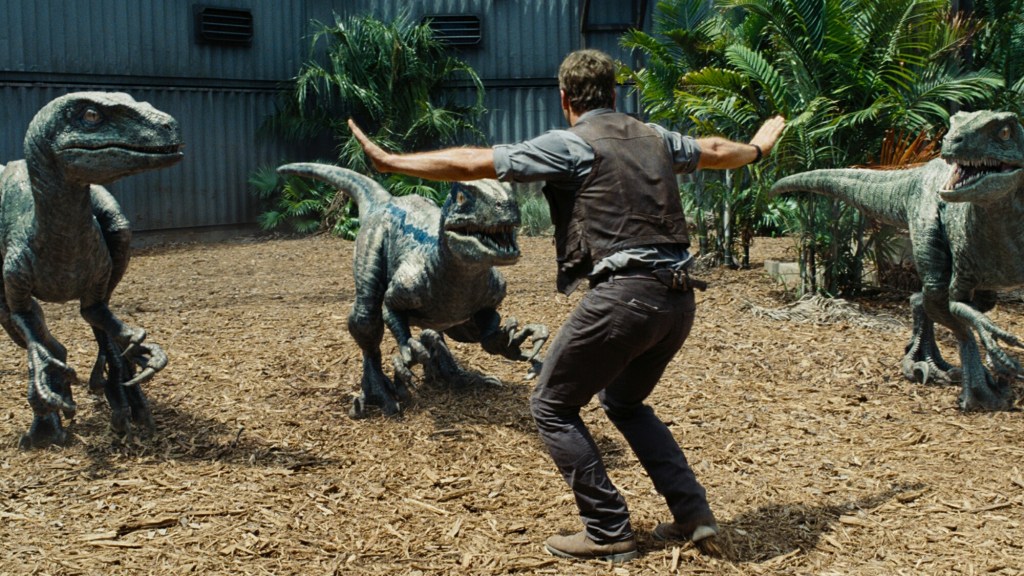
    While the dinosaurs — especially the anti-hero velociraptors returning from “Jurassic Park” and the monstrous water-locked Mosasaurus — are the film’s primary stars, Trevorrow’s blockbuster benefits from a top performance from one of Hollywood’s next generation of leading men, the charismatic Chris Pratt.

    Best known for his roles on “Parks and Recreation” and Marvel’s “Guardians of the Galaxy” franchise, Pratt combines his trademark wit with a cool, calm demeanor to bring a modern version of the Indiana Jones character to life in a franchise that needs his unique kind of gravitas to bring the film together.

    On the other hand, Bryce Dallas Howard lacks the requisite star power to keep up with Pratt, both in the physical and emotional stakes of the film, leaving viewers wanting an Anne Hathaway-type actress to help develop and fully round out her park leader. Her park manager character Claire seems to be written to have served a dual role as a hybrid femme fatale/damsel in distress, but Howard never seems to truly grasp either side.

    She opts to play the role like Sandra Bullock, circa 1995, flightly, neurotic and slightly manic in a way that takes a step back from all the progressive roles and performances viewers have seen from female actresses this year. Within the context of the film, the performance generally works, but it’s a mild disappointment nevertheless.

    Because “Jurassic World” follows its parent film almost to the point of remake, much of the feature’s emotional stakes are tied into Claire’s teen and pre-teen nephews, played by relative newcomers Nick Robinson and Ty Simpkins. The younger Simpkins gives a more consistent performance throughout the film and helps younger viewers identify with the film in much the same way that Timmy, original park owner John Hammond’s grandson, does in “Jurassic Park.”

    Strong supporting performances from veteran character actors Vincent D’Onofrio and B.D. Wong, who returns from the original film, help to provide foils for Pratt, and to a lesser extent Howard, play off of during those few and far between scenes not to feature the film’s dynamic dinosaurs.

    Ardent fans of the 1993 original film in the franchise will delight in multiple viewings of “Jurassic World” as Trevorrow takes great care to sprinkle “Jurassic Park” references, both obvious and subtle, into the film. Everything from the expository cartoon character Mr. DNA to the famed spitting dinosaur Dilophosaurus to smaller line callbacks are peppered throughout “Jurassic World,” helping to give the modern film a more classic feel.

    Breathtaking at times and heartpounding at others, “Jurassic World” is the sequel that “The Lost World: Jurassic Park” should have been, but wasn’t quite. This must-see cinematic thrill ride offers a little bit of something for both viewers new to the franchise and those intimately familiar with Spielberg’s classic original installment.