
Tag: Christoph Waltz

  • The Legend of Tarzan: Welcome (back) to the jungle

    The Legend of Tarzan: Welcome (back) to the jungle

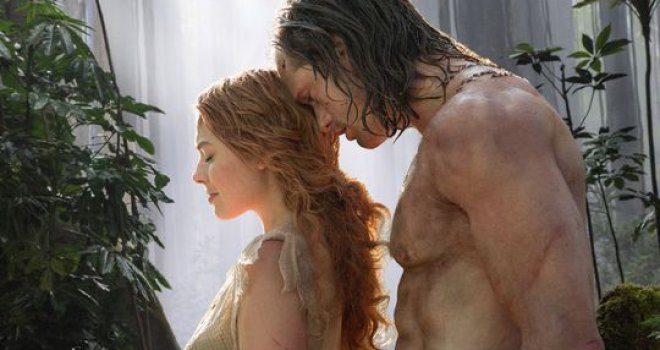
    ​Tarzan, classic vine-swinger and “lord of the jungle,” returns to theaters with a muddled, haphazard effort from Warner Brothers entitled “The Legend of Tarzan.”

    Unfortunately for moviegoers, nobody’s really sure what that legend truly is.

    Unlike previous incarnations of the Tarzan film series, “Legend of Tarzan” opens 10 years following Tarzan’s first meeting with Jane. They’re now happily married and living in a family estate in England, when John Clayton (aka Tarzan) receives an invitation from the King of Belgium to visit Clayton’s birthplace, the Congolese jungle he has just colonized. The rest of the primary storyline involves an nefarious plot to turn Tarzan over to a vengeful tribe warlord seeking to kill Tarzan in retribution for the death of his son.

    “Legend of Tarzan” feels like the sequel to an origin film that never got made. As a result, scenes dedicated to Tarzan’s youth being raised by gorillas in the jungle are crammed into the storyline. Compelling though they may be, the frequent flashbacks often muddle an otherwise paint-by-numbers screenplay from Adam Cozad and Craig Brewer. In trying to tie in young Tarzan, older Tarzan and civilized John Clayton together in one cohesive script, Cozad and Brewer don’t get any of the three right.

    “True Blood” star Alexander Skarsgard certainly looks the part of Tarzan with his long flowing locks and chiseled, muscular exterior. Since “Legend of Tarzan” essentially makes Tarzan into a superhero, looks are pretty much all Skarsgard needs to be effective in the role.

    However, much of the early portion of “Legend of Tarzan” focuses on Tarzan’s alter ego, John Clayton, the British aristocrat Tarzan was to become before his English parents died in the jungle. The film opens with Skarsgard as Clayton and it’s easy to see how uncomfortable Skarsgard is with the role, simply biding his time before the shirt comes off and his hulking grunts can take over. A better actor could have conveyed both sides of John Clayton/Tarzan well, but filmmakers clearly opted for style over substance with Skarsgard.

    Margot Robbie, on the other hand, clearly handles the balance between British life and jungle life well as Tarzan’s wife, Jane. It’s uncertain whether Robbie’s magnetism or Skarsgard’s underwhelming performance is responsible for making Jane a more interesting and compelling character to watch throughout the film, but Robbie proves herself to be the single best thing about “Legend of Tarzan.”

    Oscar winner Christoph Waltz has made a career out of playing mustache-twirling villains, but his portrayal of nefarious, power hungry Belgian emissary Leon Rom feels more cookie-cutter bland than usual. Rom isn’t menacing or conniving, just a mediocre brand of evil without much character development. Waltz hasn’t underperformed this much since his failed villain turn in “The Green Hornet.”

    Well versed at stealing films from a supporting role, Samuel L. Jackson does just that as American emissary George Washington Williams, a marksman with a rifle who ultimately serves as Tarzan’s right-hand man in the jungle. 

    A small, but important part of “Legend of Tarzan” deals with colonial Belgium enslaving the tribes of Congo. Within this poorly-written screenplay, Jackson is able to breathe life into complex issues of race relations and equality while still serving the greater goals of the movie. Jackson is the perfect choice for the film and the only actor who could have made Williams more than a stereotype.

    David Yates, best known for his work helming the final four “Harry Potter” films, essentially does the directing equivalent of treading water, keeping audiences afloat with largely engaging action sequences and well-shot scenery. But Yates never takes “Legend of Tarzan” to the same level as “The Jungle Book,” Disney’s superior CGI-heavy film adapting a classic jungle tale to the big screen.

    “Legend of Tarzan” probably isn’t for younger viewers either as the film certainly earns its PG-13 rating in violence and a sexually provocative scene between Skarsgard and Robbie early in the film.

    Moviegoers will certainly not be disappointed in any money they spend to see “Legend of Tarzan” in theaters, but it shouldn’t be spent at the expense of vastly superior films still in theaters like “Finding Dory.”
  • Spectre: A love letter to James Bond

    Spectre: A love letter to James Bond

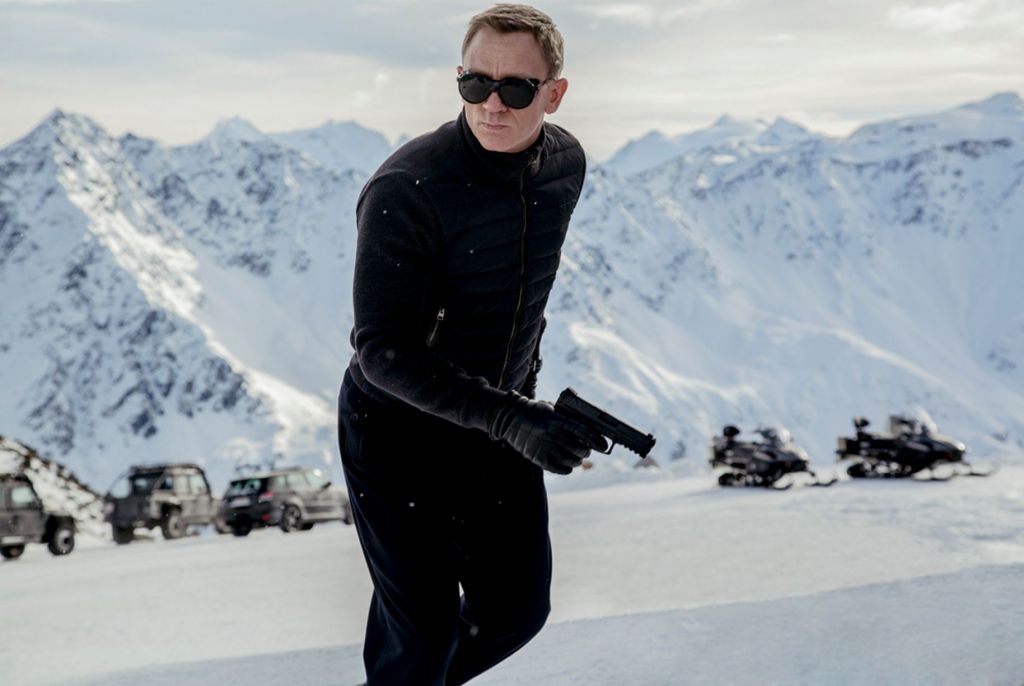
    For all of the explosions, near death experiences and high speed car chases in the blockbuster smash hit “Spectre,” Daniel Craig’s fourth performance in the longest running film franchise in history is — at the end of the day – a love letter to James Bond.

    There’s the iconic hand-to-hand combat scene on a train lifted from “From Russia With Love,” gadget-rigged luxury sports cars and picturesque secret bases stashed away in remote foreign locales.

    Expert fans can probably find a reference or two from every single previous Bond film, right down to the skeleton suit Craig dons in tribute to the recently deceased Geoffrey Holder, who played the memorable villain Baron Samedi in Roger Moore’s Bond debut “Live and Let Die” in 1973.

    “Spectre” marks the 24th original movie in the series made by Eon Productions, though a pair of films – 1967’s “Casino Royale” with Peter Sellers and 1983’s “Never Say Never Again” with original Bond Sean Connery – were also made outside of the official franchise.

    More so than any other film in the franchise, “Spectre” treats longtime Bond fans to the most well rounded film in the series as director Sam Mendes is able to balance modern screenplay and cinematography with vintage Bond motifs in a largely compelling way. While his first Bond film, “Skyfall,” debuted to much acclaim in 2012, it lacked the panache and bravado inherent in the series, opting for more of an introspective character study than an action-adventure film.

    “Spectre” turns up the heat from the outset, leading with a visually stunning opening action sequence during a Day of the Dead festival in Mexico City, where Bond faces off with a terrorist on the side of a helicopter mid-flight. Cinematographer Hoyte van Hoytema of “Interstellar” and “Tinker Tailor Soldier Spy” offers moviegoers a bold, yet gritty viewing experience, maintaining the tone of “Skyfall” while upping the ante.

    Moviegoers brand new to the 007 franchise will likely struggle to keep up with all of the overt and obscure references made to previous Bond films in “Spectre,” which continues a four-film plot arc started in 2006’s “Casino Royale” and picks up several months following the end of 2012’s “Skyfall.”

    There’s less spying going on in “Spectre” than an one-man vendetta for bloodshed, continuing a downward spiral for a cinematic icon that hasn’t been explored in detail since George Lazenby took on the role for “On Her Majesty’s Secret Service” in 1969.

    James Bond, the character, is unquestionably different things to different people based simply on their favorite actor to take on the role, usually the one playing the part when they were younger.

    While Connery’s Bond is still the most iconic version of the role – the debonair super spy who uses his charms and above average fighting skills to stay alive in service to Britain – the role has evolved significantly over time, with Craig’s Bond almost entirely dropping the word spy entirely. In fact, Craig’s iteration has become a cold, ruthless killer and is described as an assassin rather than spy at nearly every turn.

    To this end, Craig is effective and captivating as Bond, further cementing his place as the best performer in the role since Connery, though no one will mistake his attempts at Moore-esque humor as noteworthy. In fact, the incredibly dry nature of the humor in “Spectre” largely falls flat, though Rory Kinnear’s second go-round as gadget maker Q does hit most of the marks in the film’s funniest moments.

    As Mendes delves further into the psyche of Bond by reliving his childhood and his tumultuous relationships with women, “Blue is the Warmest Color” actress Lea Seydoux faces the unenviable task of trying to match Bond toe to toe on an intellectual and physical level, but can’t keep up. This makes their obvious romantic connections fall flat as Seydoux isn’t able to convincingly challenge Bond like Eva Green in “Casino Royale” or Diana Rigg in “On Her Majesty’s Secret Service,” of which “Spectre” takes most of its inspiration.

    Great Bond films can be defined as much by the quality of their villains as the quality of their Bonds and “Spectre” swings for the fences with Christoph Waltz, an actor whose body of work has felt like resume-building for his role as Franz Oberhauser in this 24th adventure of 007. Waltz comes out with the exact gusto required of a classic Bond villain, but is cut off at the knees by the screenplay, which limits his potential impact.

    If the writers of “Spectre” had given Oberhauser a monumental speech like Javier Bardem got with his rat monologue midway through “Skyfall,” viewers would probably be viewing Waltz’s performance much differently.

    The choice to include “Sherlock” villain Andrew Scott In “Spectre” was an inspired one, though the script reduces his character to a character limiting, one-note viewpoint that wastes Scott’s incredible talents. Ironically, the best supporting performance in “Spectre” is given by the nearly-mute Dave Bautista, a former professional wrestler who evokes classic Bond villains Oddjob and Jaws while providing a terrific physical counterbalance to Bond.

    Where “Spectre” really falters, however, is in its normally iconic title sequence – which usually features scantily clad women and shadowed figures in an entrancing scene choreographed to the film’s theme song. Everything about the title sequence in “Spectre” is in a word, wrong.

    Sam Smith’s whiny, desperate song “Writing’s on the Wall” is a huge disappointment vocally in spite of it actually being good music lyrically. Smith’s frantic wailings combined with the subpar title sequence make for a largely disengaging moment in the film that viewers will likely be fast-forwarding through when “Spectre” comes out on Bluray and DVD.

    The most important thing for moviegoers to remember about “Spectre” heading into the film is that it isn’t “Skyfall 2.0” and wasn’t meant to be. “Skyfall” had a definitive and finite plot structure that came to a firmly resolved conclusion, making it necessary for Mendes to explore a completely different part of Bond. Viewing “Spectre” as simply the follow-up to “Skyfall” isn’t the right mentality to have and will largely leave moviegoers thinking that way disappointed.

    If Twitter, Facebook and scores of film critics abounded in 1965, Connery’s now-classic “Thunderball” would have been raked over the coals for not living up to the expectations of the film that preceded it: “Goldfinger,” still one of the three or four best Bond films in the franchise five decades later.

    “Spectre” isn’t the best Daniel Craig film in the Bond franchise, but it still ranks as one of the series’ most complete and creative installments and is worth making the effort to seek out in theaters.

  • Horrible Bosses 2: Comedic sequel underwhelms

    Horrible Bosses 2: Comedic sequel underwhelms

    It’s easy to tell when a screenwriter is actually trying and when they’re filling in the blanks around a tired, formulaic plot.

    “Horrible Bosses 2,” the sequel to the aptly named “Horrible Bosses,” is a fill-in the-blanks kind of movie — largely unfunny and 100 percent a cash grab sequel in a “Spaceballs 2: The Quest for More Money” sort of way.

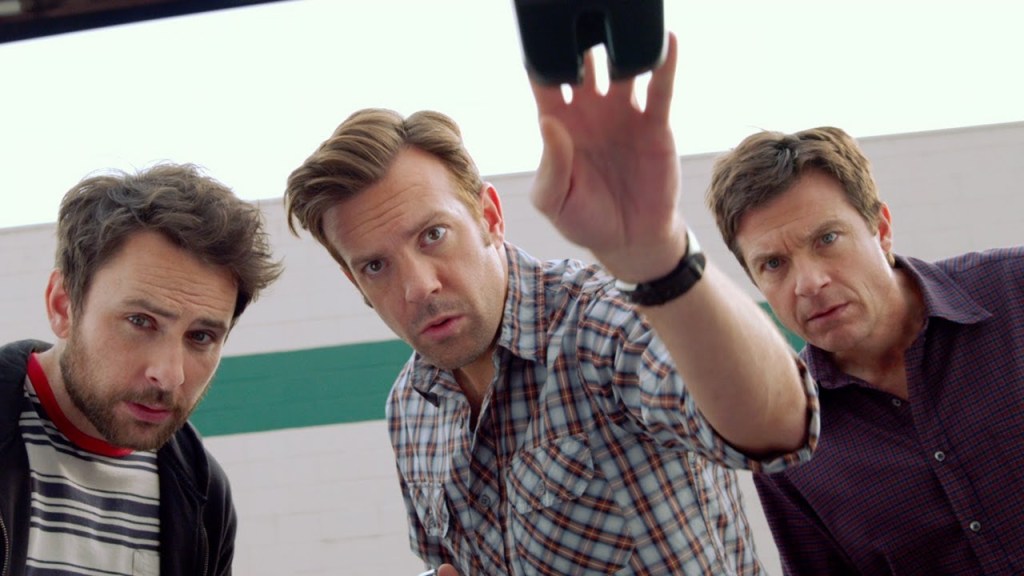
    Jason Bateman, Jason Sudeikis and Charlie Bay reprise their roles from the original, which saw the trio poorly attempt to murder their terrible bosses.

    Scenes between the trio, which worked well in the original film, fall much flatter in the sequel as none of the characters have developed beyond the loose framework created in the original.

    The film suffers from the same fate “The Hangover 2” did as neither sequel is able to replicate the humor or maintain the momentum created by the first film despite trying to copy the original beat for beat.

    Jamie Foxx, in a slightly larger role this go-round as a vaguely successful criminal, provides the best work of the film and delivers most of the best lines.

    Both the old and new “bosses” are underwhelming. Kevin Spacey and Jennifer Aniston are milder caricatures of their already broad stereotypes from the original film, while new “bosses” Chris Pine and Christoph Waltz both fail to bring anything substantial to their father-son roles.

    It’s especially disappointing for Oscar-winner Waltz, who cannot seem to gain ground as an actor outside of a Tarantino film.

    Hardcore fans of the first film will likely find the shortcomings of the sequel more forgivable, but those unfamiliar with the original would be wise to stay away.