Tag: Dakota Johnson

  • Fifty Shades Darker: Erotic sequel eases up on romance, sexuality

    Fifty Shades Darker: Erotic sequel eases up on romance, sexuality

    “Every fairy tale has a dark side.” – ‘Fifty Shades Darker’ tagline    

    Sexual romance drama franchise “Fifty Shades” returned to theaters this weekend with the arrival of “Fifty Shades Darker,” a film that feels safer and brighter than it probably should.

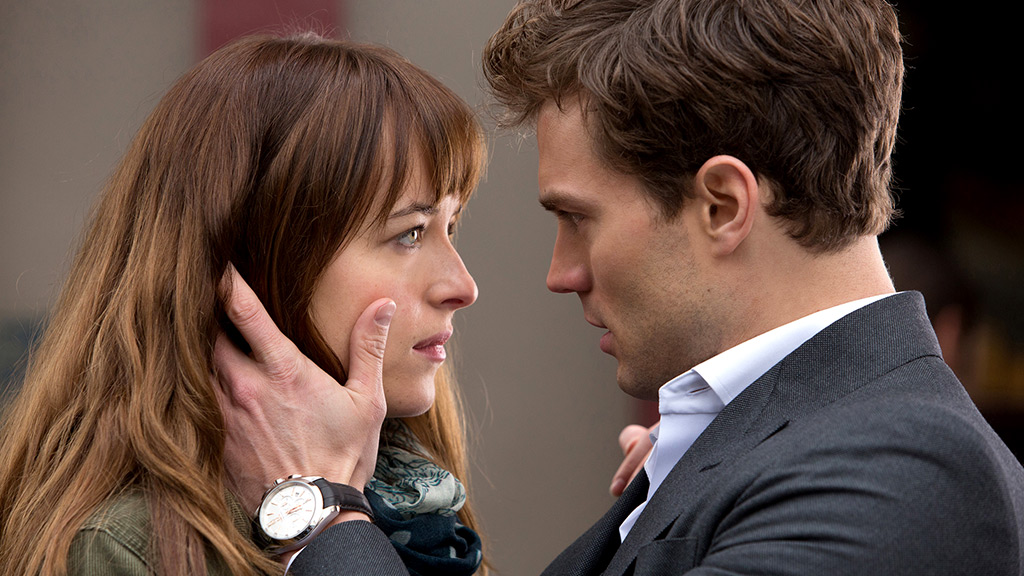
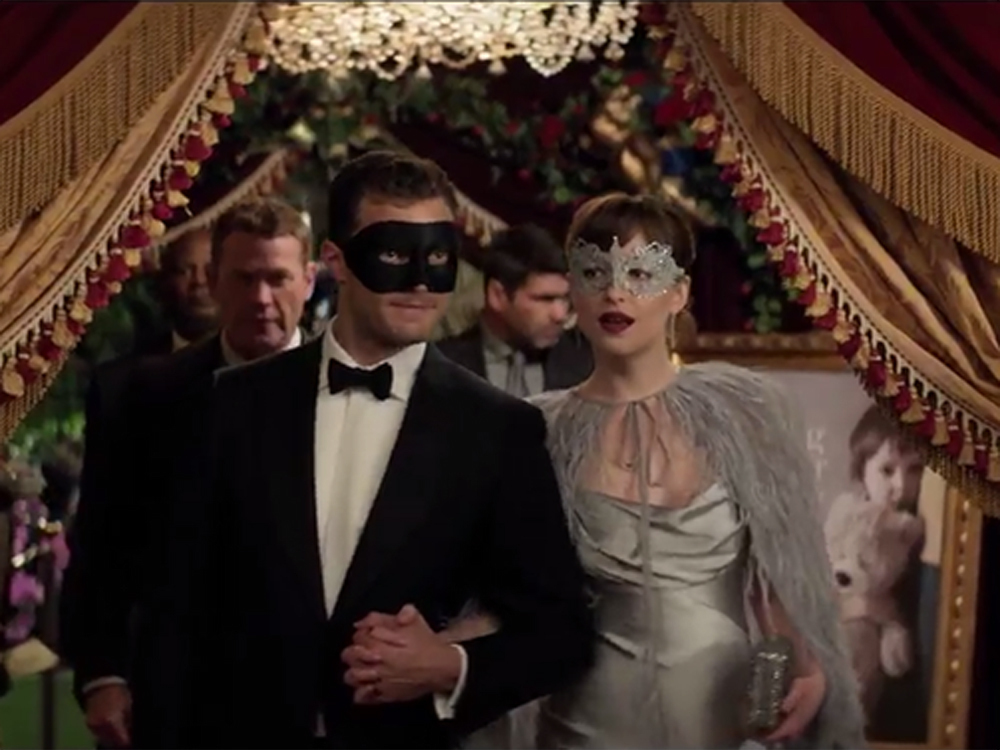
    Adapted from the E.L. James’ novel, “Darker” follows up within days after the conclusion of 2015’s “Fifty Shades of Grey” as billionaire and self-described sadist Christian Grey (Jamie Dornan) attempts to regain his ex Ana Steele (Dakota Johnson). The BDSM violence that caused Ana to ditch Christian at the end of the first film is washed away, first by Ana and later by the filmmakers as the dark allure of the first movie becomes largely abandoned for a plot ripped from a Lifetime TV special.


    Johnson continues to be the shining light in this otherwise languishing, vapid franchise. She gives another dazzling performance considering the poor quality of Niall Leonard’s haphazard screenplay and talentless costars bringing little to the table. Her visible lack of chemistry with Dornan – to the point that Johnson reportedly had to down shots of whiskey before shooting sex scenes – completely destroys the film’s romantic angle, though Johnson surely cannot be blamed.

    Much like in “Fifty Shades of Grey,” Dornan attacks Christian with a monotone, almost robotic droll that often lulls audiences to sleep. Unable to identify with his character in any substantial way, Dornan resorts himself to softening his lines to make them sound sexy. The constant whisper he uses as Christian dulls the senses and completely undermines Christian’s complex backstory.

    Far too often on a scene to scene basis, the result has Johnson acting against a whispering wall of emotionless abs regurgitating lines off a page rather than a composed, professional performer. 

    It should be expected that the couple’s sexual exploits would be ramped up in the film to compensate for the lackluster on-screen romance, but the exact opposite is true of “Darker.” In lieu of the erotic kinks and BDSM subculture, director James Foley drives viewers down the road to traditional thriller but fails to bring the same level of suspense he did while at the helm of the “House of Cards” Netflix series.

    Canadian actor Eric Johnson underwhelms as Ana’s domineering, sexually aggressive boss Jack, while Australian actress Bella Heathcote isn’t entirely to blame for the paint-by-numbers manic ex with a grudge Leila, a character destroyed by Leonard’s uneven script.

    Kim Basinger, brought in simply due to her “9½ Weeks” erotic drama credentials, mails in a bland, uninspired performance as Elena Lincoln, a villainous romantic rival from Christian’s past who saunters in to “intimidate” Ana. The five minutes of effort Basinger puts into the role feels more appropriate for a daytime soap opera rather than a major motion picture.

    What truly works in “Darker” is a series of secret understandings. 

    Audience members understand that “Darker” is the kind of movie you want to go and see in the theater with your girlfriends and never discuss publicly, pure sexual escapism.

    The filmmakers – from the studio heads to the writers to the director and on down the line – know that things like coherent plot points, compelling characters and nuanced performances don’t matter. A movie like “Fifty Shades Darker” is the cinematic equivalent of Fabio-adorned novels.

    Ardent fans of the book trilogy and/or the “Fifty Shades of Grey” film adaptation may find “Darker” to their liking in spite of the major writing and acting flaws. Those viewers should also stick around through the credits to watch a small teaser trailer for the final movie in the trilogy, “Fifty Shades Freed,” slated for Valentine’s Day weekend 2018.

    There’s little romance – or sex for that matter – in “Fifty Shades Darker,” a film probably better suited for private enjoyment when its inevitable “unrated” release hits DVD and Bluray later this year.
  • How to Be Single: Leading ladies make middling rom-com work

    How to Be Single: Leading ladies make middling rom-com work

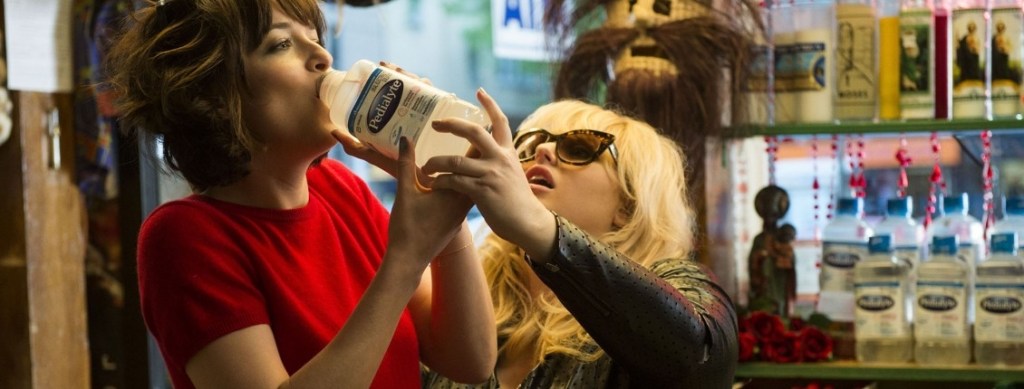
    Dakota Johnson breaks up with a boyfriend to find herself.

    Rebel Wilson wants to teach her how single life – and sexual promiscuity – can be really fun.

    Leslie Mann puts her job as an OB-GYN over relationships and the possibility of motherhood.

    Alison Brie thinks she can manipulate the 10 online dating services she uses to find Mr. Right.

    It’s in this vapid, unoriginal “Sex in the City” rip-off premise that audiences find themselves thrust into with “How to Be Single,” a film that unabashedly promotes Singles Awareness Day over Valentine’s Day in a Valentine’s Day weekend release.

    What makes this rom-com work, however, is the general likeability of its female stars, which help keep audiences engaged during moments when viewers begin to realize just what shitty people the characters are poorly written to be for much of the nearly two-hour movie.

    Johnson shows glimmers of star power and can be very good when given quality material, but scenes where she is able to flex her acting muscles are few and far between in “How to Be Single.” Her Alice has the same innocent charm and charisma Johnson displayed to great effect in “Fifty Shades of Grey” and her beguiling presence works as the film’s central character.

    Wilson continues her run of playing the same, tired comic relief sidekick audiences have seen her meander through since “Pitch Perfect.” It’s beyond time to see if she’s capable of playing anything else and take the next step in her career as Melissa McCarthy did with “St. Vincent.” 

    By now, writers pitching scripts have to be describing similar roles as “a Rebel Wilson-type” so as not to make it sound offensive when they really mean “a fat, overtly sexual best friend type who doesn’t seem to mind being called slutty.”

    Criminally underrated as a comedic actress, Brie makes the most of a limited part as desperate for love Lucy. However, the film’s poor plot structure renders her character almost completely useless and leaves viewers wondering how the hell she gets invited to Alice’s birthday party when she’s never spoken to her once.

    Brie could have been better served playing Alice and giving the film added comic timing that Johnson never really seems to nail down.

    The stereotypical elder stateswoman, Mann cruises through her part with relative ease, especially once her character takes the inevitably rom-com stereotypical step of going through in-vitro fertilization and getting pregnant on her own.

    The men of “How to Be Single” especially come off as terrible people, save for the exceedingly sweet Jake Lacy as a relentless suitor for Mann’s Meg. Nearly all of the choices made by the male characters – and to a large extent, the female characters as well – are reprehensively terrible decisions. It’s as if director Christian Ditter and the screenwriters want viewers to think these people are all assholes.

    The script penned by Dana Fox, Abby Kohn and Marc Silverstein based off a book of the same name by Liz Tuccillo aims for something higher than the usual romantic comedy fare, but largely misses from a structural standpoint as viewers bounce around from character to character.

    It’s a plot device used in recent Garry Marshall films like “Valentine’s Day” and “New Year’s Eve,” though “Single” is a much better movie than both those
    ensemble comedies. As much as the film derides “Sex and the City” and “Bridget Jones’ Diary,” “How to Be Single” is indeed the cinematic heir to that style of rom-com, with Johnson’s Alice as close as it may come to a new age Carrie Bradshaw.

    Perhaps not enough credit has been given to how much “How to Be Single” overcomes its glaring flaws and is largely entertaining throughout. The four leading ladies are able to carry an otherwise lackluster film and keep audiences engaged when another cast of the same characters could not.

    It might not be the second coming of “When Harry Met Sally” or “Sleepless in Seattle,” but “How to Be Single” is worth checking out as a date night for couples or a girls’ night for all the single ladies the film attempts to inspire.

  • Black Mass: Depp, Edgerton shine in ensemble gangster flick

    Black Mass: Depp, Edgerton shine in ensemble gangster flick

    Johnny Depp is different things to different people.

    He’s borderline flamboyant, swashbuckling pirate Johnny Depp to many filmgoers; undercover teen cop Johnny Depp to an older generation and an enigmatic Mad Hatter Johnny Depp to a much younger subsect of audiences.

    There’s no mistaking that the charming when he wants to be, brooding when he needs to be and enigmatic always Johnny Depp feels at home in any number of characters.

    But it seems that every five years or so, audiences are treated to the best kind of Depp, crime drama anti-hero Johnny Depp. We’ve seen this Depp play undercover agents in “Donnie Brasco,” drug lords in “Blow” and famous gangsters in “Public Enemies.”

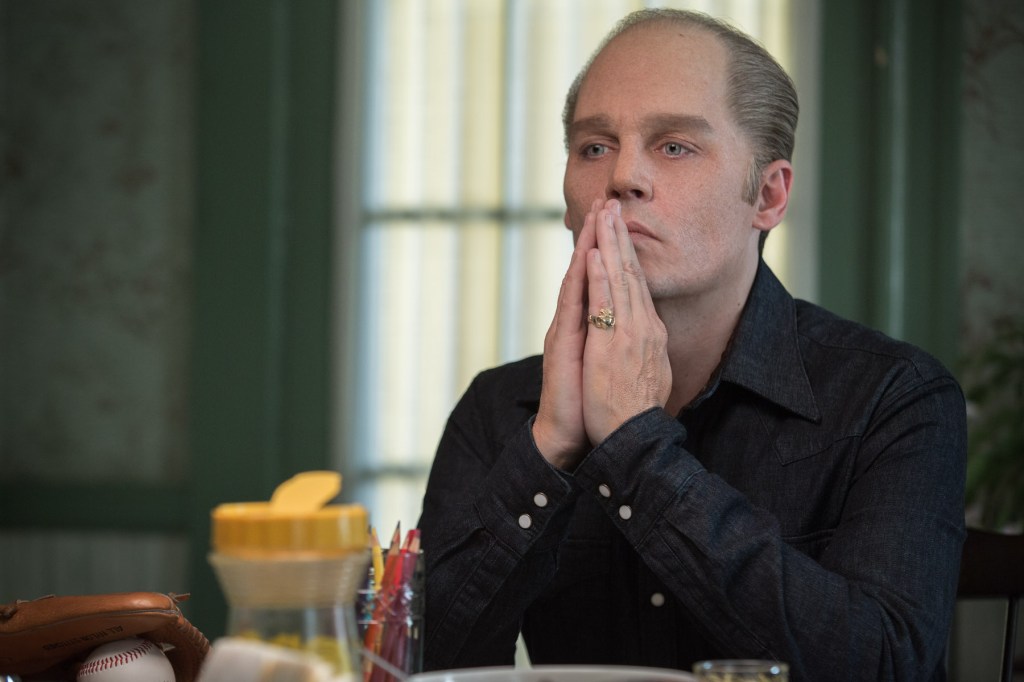
    Six years after he died on the street as famed bank robber John Dillinger, crime drama anti-hero Johnny Depp is back and channeling a “The Departed”-era Jack Nicholson as real life Boston kingpin James “Whitey” Bulger in Scott Cooper’s “Black Mass.”

    Wire to wire in the film, Depp is unrelentingly dominant in every scene he’s in, a choice well suited for the part. Bulger commands with an absolute authority over those who work for him – and even those who don’t – and Depp plays the part with the same bravado. The performance is layered in quieter moments within “Black Mass” where Depp shows a hint of a gentler side to the brutally violent mob boss in scenes between Bulger and his mother as well as his young son.

    While “Black Mass” is rightfully billed as Depp’s movie, Joel Edgerton – most recently the writer/director/star of “The Gift” – gives an award-worthy performance as Bulger’s childhood friend turned FBI handler John Connolly. Edgerton portrays Connolly with the same moxie and bravado as Depp handles Bulger, just on the other side of the law. It’s as if the two actors are playing one person on opposite sides of the coin.

    Edgerton’s role is pivotal in making “Black Mass” an ensemble piece rather than allowing the actors to essentially become live set dressing for Depp’s one-man-show.

    While Depp and Edgerton do the bulk of the heavy lifting on screen, “Black Mass” boasts a fantastic cast who all deserved screen time that Cooper couldn’t add onto a two-hour running time.

    Oscar-nominated British actor Benedict Cumberbatch does a much better job offering a compelling and credible Boston accent in “Black Mass” as opposed to his jarring and uneven Southern twang in “August Osage County.” The Brit consistently delivers top-notch performances across the board and, with accent in place, helps to round out Bulger’s character as a moral counterbalance to Bulger. Cumberbatch gives Bulger’s straight-laced state senator brother a refined civility that implies moral high ground with just a wink to the audience that thinks might not be what they seem.

    Some of the film’s best work comes from its secondary actors, most notably Dakota Johnson of “Fifty Shades of Grey” fame. Johnson goes toe-to-toe with Depp in several scenes as Bulger’s girlfriend/baby mama with a dazzling exchange between the on-screen couple at a hospital being one of the best moments in a film filled with explosive dialogue and stunning cinematography.

    There’s a strong effort made by Cooper to evoke classic gangster clicks of the past within “Black Mass.” Elements of everything from “Casino” to “The Godfather” trilogy to “The Departed” are represented as layers upon layers of cinematic depth within the movie, as if Cooper feels assured of his film’s place among the canon of the genre.

    Indeed, it’s no coincidence that “Black Mass” hits the big screen in the same month as the 25th anniversary of Martin Scorcese’s masterpiece “Goodfellas,” which seems like an obvious companion film for “Black Mass.” Both are lengthy, high-drama, gangster flicks made with a flair for the cinematically extravagant. It makes sense.

    Yet, the true cinematic counterpart for a film like “Black Mass” is David O. Russell’s “American Hustle,” a feature that layers historical fact with creative embellishments that old school filmmakers might dub “movie magic” combined with a deep and talented cast of actors at the top of their game. Both films exude a manic energy about them that pervades both the onscreen performances and visual style. Additionally, the plot device used to give equal time and weight to both sides of the law in “Black Mass” feels more like “Hustle” than “The Departed” in terms of the script’s arc and dialogue, especially when comparing Edgerton’s performance to Bradley Cooper’s spastic FBI agent in “Hustle.”

    Visually impressive and filled with quality acting performances throughout, “Black Mass” does right by the gangster genre it attempts to join the canon of and is worth finding in an area theater.

  • Fifty Shades of Grey: Chemistry, quality missing in film adaptation

    Fifty Shades of Grey: Chemistry, quality missing in film adaptation

    It takes two to tango — one to lead and one to follow — in the feature film adaptation of E.L. James’ best-selling erotic novel “Fifty Shades of Grey.”

    The follower, Dakota Johnson as the naïve and bookish Anastasia, is a breath of fresh air anytime she appears on screen and truly gives 110 percent of herself to every scene no matter how much clothing she wears.

    However, the leader, Jamie Dornan as the charismatic and mysterious billionaire Christian, can’t dance to save his life.

    In relationship-heavy two-handers like “Fifty Shades of Grey,” it’s important that both leads utilize the other’s performance to help elevate their own, but Johnson is acting against a brick wall.

    There’s only so much an actor can do when given nothing to work with. It’s what makes Johnson’s honest portrayal of the loss of innocence more noteworthy.

    It’s easy to tell that Dornan isn’t anywhere close to being the first choice for the role, as the Irish-born actor can’t seem to find any depth to a man hiding dark secrets.

    He struggles to identify with the character and placates that lack of connection — and subsequent lack of chemistry with Johnson — by softening each of his lines to make them sound more attractive.

    Whispering can be sexy, but not when it’s the only tone of voice used over a two-hour period.

    Just as miscast as Dornan is sophomore director Sam Taylor-Johnson, whose lack of vision clouds any real character development in either lead and limits the film to late-night Cinemax fodder.

    There’s no creativity in the film’s construction or development as if the actors directed themselves.

    It’s ironic (and rather sad) that “Fifty Shades of Grey” scored the biggest opening weekend in history by a female director at just under $91 million.

    Passionate filmgoers angry about the omission of Ava DuVernay from best director accolades for “Selma” need to be just as upset, if not more so, that Taylor-Johnson’s pedestrian, banal effort will be considered a greater success by Hollywood standards than the Martin Luther King, Jr. biopic based solely on box office revenue.

    The “Fifty Shades” film is simply a tent pole in service of a financial empire — a means to further line investors’ pocketbooks through the licensing of everything from lingerie, oils and wine to stuffed teddy bears with handcuffs in their paws. 

    “Fifty Shades” doesn’t need to be good to feed the beast, just buzz-worthy enough to draw interest and push product on the most ardent “Shade”-oholics.

    There’s about 20 minutes worth of sex scenes in “Fifty Shades,” significantly toned down from the source material. Taylor-Johnson’s film sticks mostly to topless and rear nudity along with some glimpses of hair in places usually not shown on the big screen.

    Who would have guessed that a movie about bondage and dominance could be so mundane?

    For a book about sex, the film adaptation of “Fifty Shades of Grey” isn’t so much about the BDSM lifestyle as it is an inferior study of compulsion and control.

    What doesn’t work most about this lackluster, cookie-cutter, sex-by-numbers escapade is the lack of character development, leaving viewers simply ogling Ana and Christian rather than identifying with them.

    It could very well be that Dornan can’t handle a complex character, but even the most average thespian could act circles around Dornan’s bland, one-note, uninspired whisper performance.

    Marcia Gay Harden is largely wasted in a throwaway cameo role as Christian’s mother.

    On the good side, cinematographer Seamus McGarvey — who shot “Marvel’s The Avengers” and “Atonement” — does a wonderful job lighting and framing each scene.

    Additionally, the film’s soundtrack boasts an impressive selection of top artists, including multiple tracks from Beyonce, whose remix of “Crazy in Love” is top notch, and Annie Lennox, whose cover of the classic song, “I’ll Put A Spell On You” at the film’s outset fools viewers that they’ll see a better movie than they ultimately get.

    As is the case in many other genres, independent films like “Blue Valentine” and “Secretary” do a much better job balancing the emotional and physical of psychologically challenging romantic relationships.

    “Fifty Shades” is much too mainstream to be filmed with an NC-17 hard cut that would offend too much of the country; too erotic to be given a softer, more emotional cut that truly examines the choices and mindset of those who explore BDSM lifestyles; and certainly too poorly made to deserve a sequel, but too financially important not to.