
Tag: Felicity Jones

  • Rogue One: Star Wars like no other

    Rogue One: Star Wars like no other

    There’s a reason “Rogue One,” the latest in the world’s most popular film franchises, is tagged as “A Star Wars Story” rather than given an episode number like every other movie in the George Lucas series.

    Like its vigilante, independent title might suggest, “Rogue One” stands alone from all seven previous “Star Wars” films in nearly every way, from plot to characters to cinematography. Though it falls within the same universe, “Rogue One” is far from a traditional “Star Wars” film.

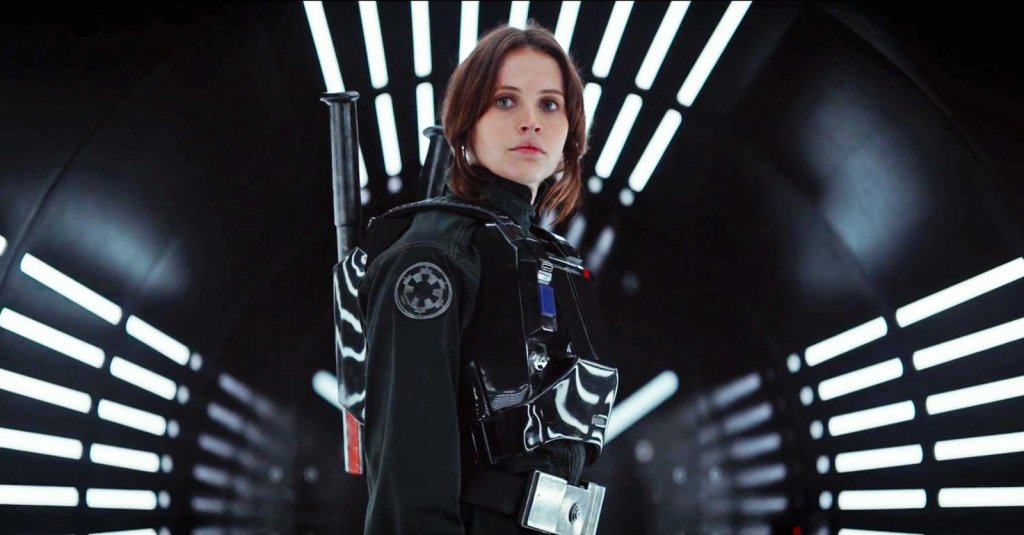
    Set sometime between the events of 2005’s “Episode III: Revenge of the Sith” and the 1977 original “Episode IV: A New Hope,” “Rogue One” focuses on a secret Rebel mission to steal the blueprints to the Empire’s recently completed Death Star battle station capable of wiping out entire planets. The team is comprised of entirely new characters to the franchise led by a young thief Jyn Erso (Oscar nominee Felicity Jones).


    Director Gareth Edwards’ foray into “Star Wars” operates in the darker, Empire-dominated mold of the prequel trilogy and “The Empire Strikes Back,” though “Rogue One” also often feels like a World War II era war epic set in the far reaches of space. This heavier tone culminates in one of the franchise’s best extended action sequences late in the film’s third act as the body count on both sides inevitably ramps up.

    Jones carries “Rogue One” with gusto similar to Daisy Ridley’s magnificent performance in last year’s “The Force Awakens,” though viewers never get to see the same level of character development in Jones’ Jyn as Ridley’s Rey. The main issue here is that both filmmaker and viewer know that Rey will be a major player in the franchise for several films to come, while Jyn’s story is completely contained in the stand-alone nature of “Rogue One” as a whole.

    “Rogue One” also benefits from a solid supporting cast led by Diego Luna as a Rebel Alliance captain tasked with tracking Jyn down, Forest Whitaker as Jyn’s mentor Saw Gerrera and Riz Ahmed as a Empire pilot sneaking secrets to the Rebellion.

    Like most “Star Wars” entries, one of the best parts of “Rogue One” is in its robots, namely the reprogrammed Empire robot K-2SO voiced by “Firefly” star Alan Tudyk. The script is strongest in K-2SO’s dry humor while predicting the probability of disaster at every turn and Tudyk’s ability to relay sarcasm in relative monotone effectively is key to the portrayal.

    Edwards’ film extends the film’s darker, grittier tone into the cinematography, which relies on tempered browns and grays unlike the bright vibrancy of JJ Abrams’ “The Force Awakens.” His expert use of angles to pit viewers within the shoes of the Rebel Alliance as they take on much larger Empire forces is also a highlight visually in the film’s final hour.

    There’s also a terrific use of CGI to help tie “Rogue One” in to other “Star Wars” films in spite of the circumstances. In order to bring classic villain Grand Moth Tarkin into the movie after the death of original actor Peter Cushing, filmmakers used CGI and digitally altered reference footage to insert Cushing’s likeness over the face of Guy Henry, who acted and voiced Tarkin for “Rogue One.” Fans of the franchise will find it nearly impossible to tell the difference without looking for it, which is a great accomplishment.

    Because “Rogue One” may not have long-term impact on the “Star Wars” story moving forward, it may not seem to some potential moviegoers that catching this off-shoot film in theaters would be necessary. This would be a tremendous mistake.

    “Rogue One” certainly stands out as the year’s best big-budget popcorn franchise film and does a masterful job of filling in the gaps between the original and prequel trilogies of “Star Wars.” The film’s dazzling third act is worth the price of admission alone as Edwards melds old world battle sequences with modern technology to create engaging, visually compelling cinema.

    More than any other film in the franchise since “A New Hope,” “Rogue One” is the most accessible “Star Wars” movie for those audience members unable to tell a Wookie from a Ewok and requires no prior knowledge before viewing.

    If you’re heading to the movies this holiday season, you could do a lot worse than checking out likely one of 2016’s ten best films.
  • Inferno: Hanks, Howard can’t bring the heat

    Inferno: Hanks, Howard can’t bring the heat

    It’s difficult to imagine a film called “Inferno” would be one to pull its punches.

    But aside from a few interesting moments early, Ron Howard’s adaptation of the Dan Brown novel by the same name goes out of its way to play it safe.

    This makes Tom Hanks’ third turn as expert symbologist Robert Langdon a largely flat, uninspiring jaunt around Europe on par with the film adaptation of “Angels and Demons” and well below “The Da Vinci Code.”


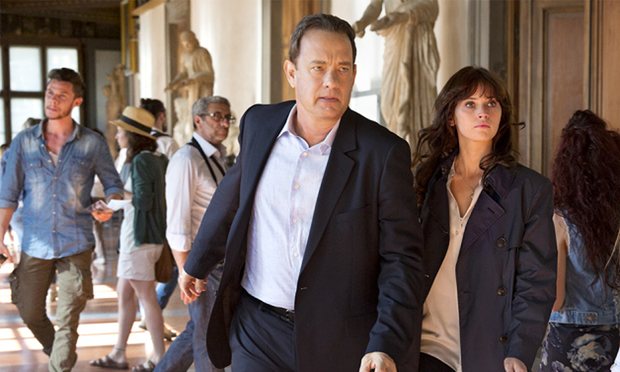
    Langdon awakens in a hospital room with a gunshot wound to the head and short term memory loss, tasked with solving a series of puzzles left by a billionaire madman with an obsession with Dante’s classic “Inferno.” Aided by a beautiful doctor (Felicity Jones), Langdon must evade questionable law enforcement officers and solve the mystery to stop a plague from killing half of civilization.

    Hanks has great familiarity with the Indiana Jones-esque Langdon, who essentially devolves into a Harvard-educated version of Matt Damon’s amnesiac Jason Bourne without the killer fight skills in “Inferno.” But three films into the role, it’s readily apparent that one of Hollywood’s best actors cannot muster up enough enthusiasm to elevate the material beyond second tier action fodder. 

    Academy Award nominee Jones makes her biggest feature film appearance to date in “Inferno,” though her role as Langdon ally Sienna Brooks isn’t quite an auspicious major motion picture debut. Looking back, it’s clear moviegoers will remember her 2016 more for her lead performance in the upcoming “Star Wars” standalone film “Rogue One” in December. 

    As Brooks, Jones isn’t quite a damsel in distress or the Watson to Langdon’s Sherlock Holmes or any other definable characteristic. What comes across on screen is an awkwardly lethargic female lead whose main purpose is to take some of the expositional dialogue off Hanks’ shoulders and advance the plot forward.

    Ben Foster, who was incredible as an anti-hero bank robber in “Hell or High Water,” comes off equally as generic as the film’s main villain, Zobrist. The script pulls a lot of the punch from the character, but Foster plays Zobrist with little gusto given the fact that his character is trying to murder half the world’s population. It’s proper casting executed poorly. 

    The film’s best moments come in Langdon’s many visions caused by amnesia, where Langdon glimpses clues to the puzzle as a terror-filled apocalypse. Because “Inferno” is a PG-13 adventure made for wide audiences, Howard doesn’t go too over the top with the gore for his Halloween weekend release. But the departure is the most welcome piece of cinema within “Inferno” as a whole.

    Screenwriter David Koepp could easily be excused from simplifying Brown’s novel for film adaptation by cutting some corners early in the screenplay and eliminating minor fringe characters. What there really isn’t an excuse for, however, is the massive alterations to the film’s final act, which fundamentally changes the core motivations for several characters and weakens Brown’s unique original ending.

    “Inferno” doesn’t really hold up over the course of two hours thanks in large part to poor plot structure and a middling effort from Hanks. The result is a decent, not good thriller that symbolizes a significant downward trend in the Robert Langdon franchise that only ardent Hanks fans may leave the theaters happy with.

    Though Howard may finally be running out of steam, “Inferno” is still worth taking a chance on in theaters for those willing to turn their brains off for 90-plus minutes and just enjoy the ride.

  • The Theory of Everything: Hawking biopic astounds

    The Theory of Everything: Hawking biopic astounds

    Eddie Redmayne better be nominated for an Academy Award.

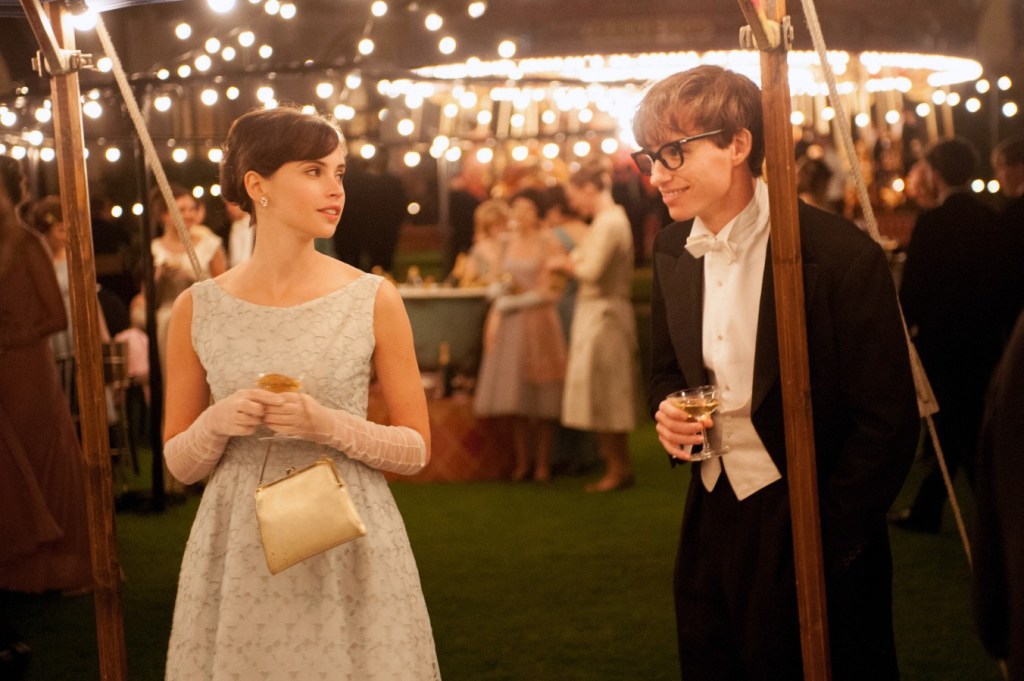
    He might not win, but with a pitch-perfect performance requiring such specific nuance in physicality, Redmayne certainly deserves acclaim for his turn as famed physicist Stephen Hawking in the British drama “The Theory of Everything.”

    An hour into the film, it’s all too easy to forget that Redmayne is an actor portraying a character on screen.

    While the film certainly deals with Hawking’s emergence as one of the world’s premiere scientists, “The Theory of Everything” focuses more on the development of Hawking’s relationship with his future wife, Jane, amid the onset of his debilitating ALS, also known as Lou Gehrig’s disease.

    One part biopic and two parts love story, the film works only because Redmayne’s heartbreaking portrayal of Hawking pairs perfectly with Felicity Jones’ understated, yet firm Jane.

    In fact, the film is at its best when it avoids the complex physics and sticks with the simplest notion of unbridled love and emotion.

    The story, while following true events and a lackluster screenplay from Anthony McCarten, is elevated by both lead actors’ performances as well as the light, delicate touch of director James Marsh — best known for his Oscar-winning documentary “Man on Wire.”

    Each scene is carefully detailed visually, from the movement of the camera — especially in memorable 360-degree rotation moments — to the richness of the colors captured by cinematographer Benoît Delhomme.

    While not on the upper echelon of cinema to be released this fall, “The Theory of Everything” is a poignant and bittersweet biopic worthy of making an effort to find before the Academy Awards early next year.