
Best selling books don’t usually translate all that well onto the big screen in major motion picture adaptations. It’s why the ones that work – like “Fight Club,” “The Godfather,” “The Wizard of Oz” and more – are widely heralded.
Book to film is an inexact science, one that requires a deft hand at the director’s chair and especially in the screenplay adaptation.
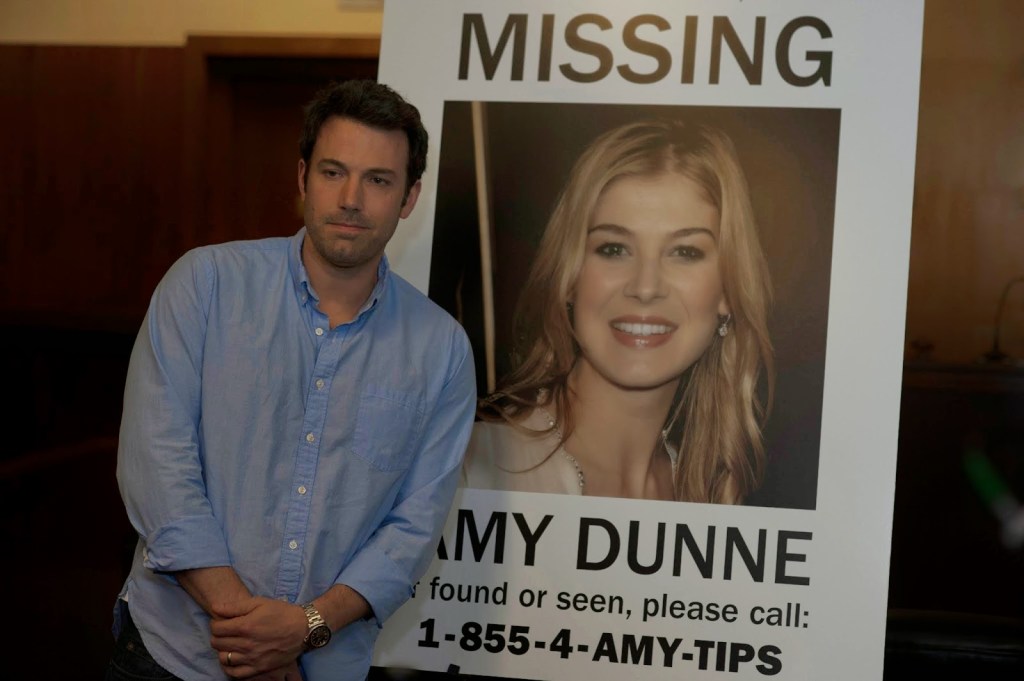
“The Girl On The Train” starring Golden Globe winner Emily Blunt follows an emerging trend of relationship-driven mystery/thrillers that have made the leap from the printed word to the cinemas. The standard-bearer in this subgenre, David Fincher’s “Gone Girl,” is the most frequently used comparison for Tate Taylor’s adaptation of the Paula Hawkins penned “The Girl On The Train.” But that logic just simply isn’t fair to either film.
Blunt stars as Rachel, an alcoholic divorcee with a penchant for spying on a beautiful couple seemingly in love while riding a train from her suburban home into the city for work. When Rachel catches the woman kissing another man on her patio and Rachel’s voyeuristic fantasies are shattered, all hell later breaks loose as the woman turns up missing and Rachel is pegged as a prime suspect in her disappearance.
As the film’s titular character, Blunt is simply marvelous as “girl on the train” Rachel, weaving in and out of various states of inebriation with remarkable care and subtlety. Viewers are readily able to infer just how many cocktails Rachel has had from one scene to the next by the degree to which Blunt elevates or subdues her performance. It’s the single best portrayal of chronic alcoholism and depression in many years.
In the moments where the audience is allowed to follow Rachel through the mystery, “Girl On The Train” is a taut, potent thriller. If Taylor’s entire film were told from the perspective of Blunt’s uniquely devastating, beautifully layered character, “Girl On The Train” would be a runaway smash success.
Unfortunately, Taylor misinterprets his film as an ensemble film and slightly marginalizes Blunt’s tour de force effort. “Girl On The Train” is a star vehicle for Blunt and the single best piece of acting so far in her emerging powerhouse career. Blunt proves to be too talented for most of her cast mates – whom she dominates from scene to scene effortlessly – or the film’s disjointed, poorly penned script from Erin Cressida Wilson.
Haley Bennett, fresh off a turn in the action-western “The Magnificent Seven,” remains stoically cold in her portrayal of the film’s missing person, Megan. Her performance both hinders and hurts the overall tone of “Girl On The Train” over the course of two hours as Megan is both devilishly engaging and clinically un-relatable for viewers. Luke Evans, who plays Megan’s husband Scott, is equally stoic and difficult to read, making for often clunky viewing experiences in scenes featuring the two actors.
Justin Theroux as Rachel’s ex-husband Tom and Rebecca Ferguson as his new wife Anna are competent in their limited screen time throughout the majority of the film, but are criminally underutilized as a whole. Their scenes opposite Blunt are some of the highlights of the entire movie and could have been easily expanded based on the source novel.
In this same respect, character actor Edgar Ramirez is largely wasted in a subservient, plot-driven role as Megan’s psychiatrist as was Allison Janney as a one-dimensional and stereotypical bulldog detective investigating Megan’s disappearance.
This is representative of the fatal flaw, if there is one, within Taylor’s movie. Simply put, “The Girl On The Train” feels like the visual CliffsNotes version of Hawkins’ novel rather than the reimagining of her best-selling thriller. Cressida Wilson does a poor job adapting the book into screenplay format, leaving Taylor with little ability to make the high level thriller he believed he could make.
However, it should be said that audiences completely foreign to the source novel will likely be engrossed with the theatrical version of “The Girl On The Train” from start to finish in spite of its many issues. Despite the fact that Taylor’s film often devolves into “Lifetime movie on steroids” territory, there are audiences who will truly love this film. Ardent fans of Hawkins’ novel just probably won’t be among them.