Tag: Idris Elba

  • Zootopia: Animals live out loud in instant Disney classic

    Zootopia: Animals live out loud in instant Disney classic

    There’s something for everyone with Disney’s latest animated classic, “Zootopia,” which arrived in theaters Friday.

    The appeal for children should be obvious as kids will be drawn to the vibrant world of the film, where animals of all shapes and sizes co-exist in harmony, while behaving and working like human beings.

    Parents will get to revel in all of the subtle (and not so subtle) hidden jokes stashed throughout as the film goes out of its way to make “Zootopia” equally appealing for adults. For example, a large subplot of the film parodies Marlon Brando’s larger than life character in “The Godfather” and is one of the best comedic representations of the gangster classic ever.

    “Zootopia” offers a complex, wonderfully developed world filled a nearly unlimited assortment of animals as viewers follow a young rabbit named Judy as she struggles to become, and later fit in, as a police officer in the big city of Zootopia.

    Paired with a con-artist fox and tasked with tracking down a missing otter, Judy’s adventure is one part buddy cop flick and two parts vintage film noir, mixed in Disney’s superior animation style and littered with top notch vocal talent.

    Visually, the film from directors Byron Howard and Rich Moore and co-director Jared Bush is vivid and dynamic with each district within “Zootopia” having its own distinct cinematic style. Rural Bunnyburrow feels lifted straight from early spring advertisements for Peeps while the Rainforest District is dark and drips of tension pulled from “The African Queen.”

    Every single frame of “Zootopia” is littered with immense detail, both in the technical wizardry required to create the film and within the countless Easter eggs for fans to chuckle at during inevitable second, third, or 50th viewings of the film in theaters or at home.

    Ginnifer Goodwin of the television show “Once Upon a Time” is refreshing and charming as the voice of Judy, while Jason Bateman is ideally cast as the slick, wisecracking fox Nick Wilde. Their banter propels “Zootopia” through both hilarious and emotional moments; Goodwin and Bateman both prove more than up for the task.

    The film’s talented ensemble cast astounds as well, led by Idris Elba as a water buffalo who’s chief of police, Octavia Spencer as a grieving otter, J.K. Simmons as a lion elected mayor of Zootopia and indie comic Jenny Slate as a meekly sheep serving as assistant mayor.
    https://m.youtube.com/watch?v=zQ2XkyDTW34
    Messages run deep within “Zootopia,” led by the universally understood “anyone can be anything they want to be” that propels Judy on her journey to become a police officer despite skepticism from everyone around her.

    Disney also tackles diversity issues head-on with great success, using the film’s central storyline to explore topics such as racial profiling and stereotyping. “Zootopia” focuses on the concept of predators versus prey – where 90 percent of mammals are prey and only 10 percent are predators – to help make well designed points about acceptance and inclusion.

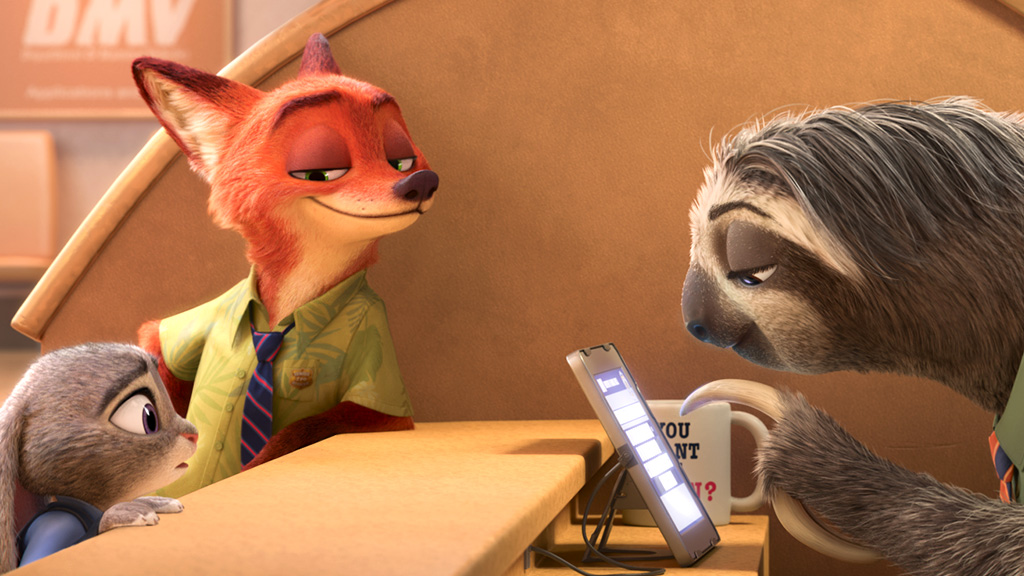
    There are numerous stereotypes within “Zootopia,” but universally they are about the jobs the animals hold and done for comedic effect. Bateman’s slick fox opens the film as a hustler, the workers at the Department of Mammal Vehicles (DMV) are slow-moving sloths and there’s a terrific “blink-and-you’ll-miss-it” joke about bankers being lemmings that will have fans of Oscar nominee “The Big Short” rolling in their seats.

    Along with “Frozen” and “Big Hero 6” before it, Walt Disney Animation Studios continues an astounding trend of producing most of the decade’s best animated films and represents the studio’s best three-picture run since the early 90s brought viewers “Beauty and the Beast,” “Aladdin” and “The Lion King.”

    Parents and children of all ages will enjoy this layered, hilarious entry into the family friendly film genre and a movie sure to give the long anticipated sequel to “Finding Nemo” – the aptly titled “Finding Dory” – a run for its money when that Pixar film arrives this summer.

    Regardless of genre, “Zootopia” is perhaps the most complete film to arrive so far in 2016 and without a doubt is a can’t miss experience for young and old alike in theaters.
  • Spotlight: Journalism docudrama an instant classic

    Spotlight: Journalism docudrama an instant classic

    Every once in a while, a movie comes along that shows its viewers the power of no-frills, no-nonsense drama in a way that just smacks you in the face, shakes you awake and says “This is what good cinema is truly about.”

    “Spotlight” is one of those films.

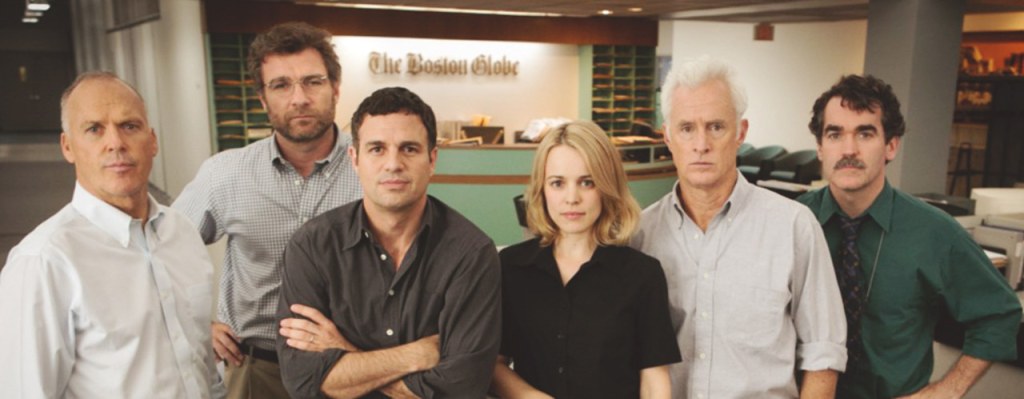
    Tom McCarthy’s film, based on a script he co-wrote with Josh Singer, follows the four person Spotlight investigative reporting team of the Boston Globe as they discover a massive cover up by the Catholic Church to hide Boston area priests who used their position to sexually assault children.

    Their work, done over the course of months-long investigation in 2001-02, culminated in a Pulitzer Prize award for the Globe team as well as massive legal settlements for the hundreds of abuse victims across the Boston archdiocese and thousands of victims nationwide.

    While the film follows real life events, “Spotlight” focuses on the reporters building the story, rather than the acts of the priests themselves in much the same way that the iconic journalism film “All The President’s Men” followed Woodward and Bernstein and not the Nixon administration’s downfall following the Watergate break-in.

    “Spotlight” is a love letter to journalism in its truest form, when hard-working, well intentioned reporters set out to cover important stories that aren’t easy to tell. McCarthy’s film follows the team’s investigation from the fringes inward, unpeeling layers of the scandal like an onion in a way that hasn’t been done since “All The President’s Men.”

    Probably the biggest achievement for McCarthy as co-writer and director is how “Spotlight” takes a relatively mundane, dialogue-heavy plot structure and molds it into engaging, vibrant cinema. Few other films could have made searching through thousands upon thousands of church and legal documents as intriguing as “Spotlight” does.

    With as dialogue heavy of a film as “Spotlight” is, its success lives and dies by its ensemble cast, led by the four person Spotlight team which features Academy Award nominees Mark Ruffalo and Michael Keaton as well as one of Hollywood’s best young actresses in Rachel McAdams.

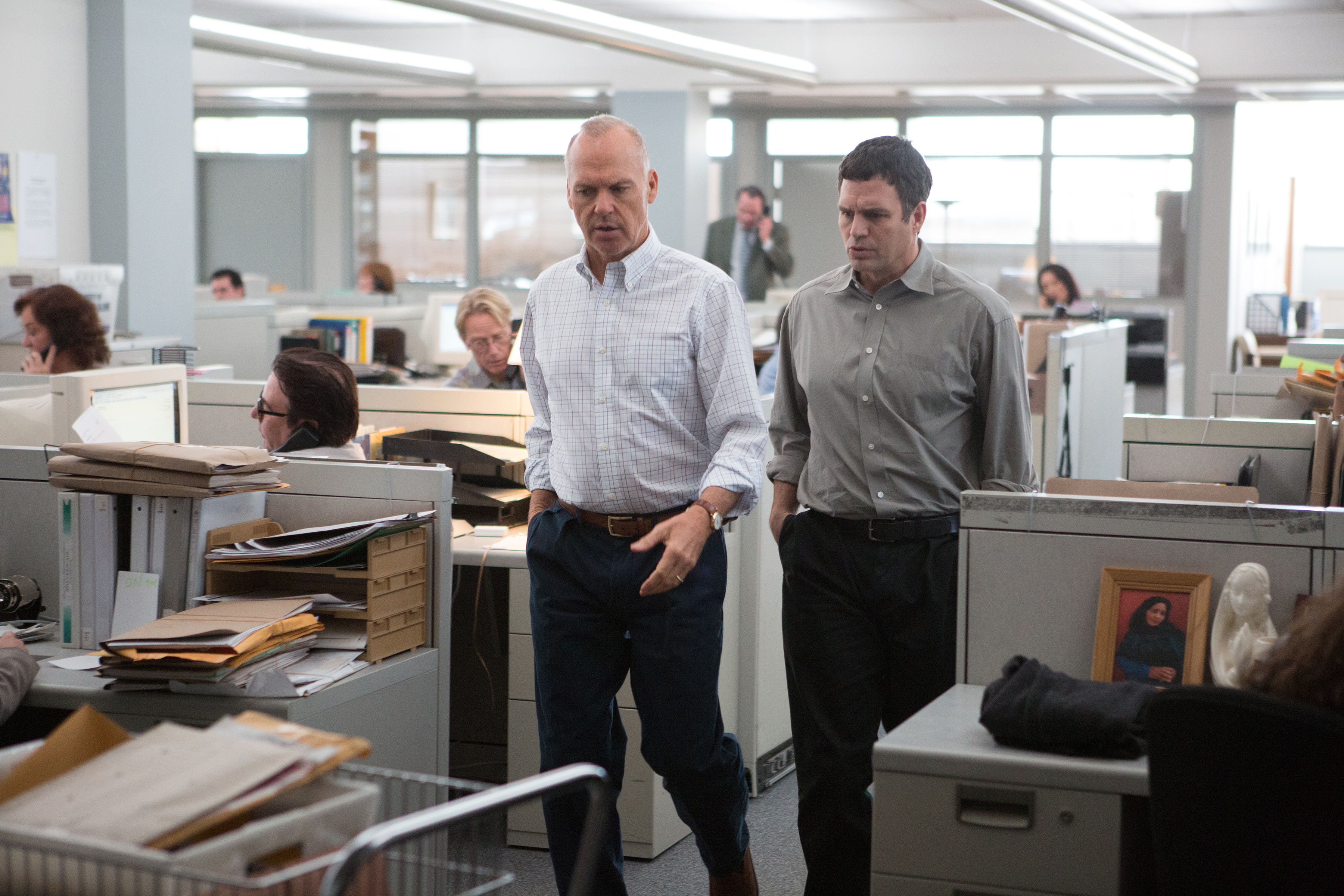
    spotlight-michael-keaton-mark-ruffalo.jpg

    Ruffalo plays the dogged veteran reporter struggling with the moral and religious implications of his team’s investigations with ease, bringing the most complexity to his character out of any of the film’s 10 major performances. His scenes interviewing Stanley Tucci’s Mitch Garabedian are some of the best segments in the entire film and serve as a reminder to younger audiences that Ruffalo has some serious acting chops when he’s not trampling around as the Incredible Hulk in the “Avengers” movies.

    His performance, along with Keaton’s as team leader ‘Robby’ Robinson, should earn him a well deserved Academy Award nomination alongside Matt Damon of “The Martian” and Leonardo DiCaprio of “The Revenant” in the lead actor category, though many have campaigned for all the “Spotlight” cast members in supporting categories arguing that the film doesn’t have a true lead.

    Keaton should be a shoo-in as well in the supporting actor race, which boasts an increasingly crowded field along with Mark Rylance of “Bridge of Spies,” Sylvester Stallone of “Creed” and Idris Elba of “Beasts of No Nation.”

    McAdams also fares well as the team’s lone female reporter, a position that doesn’t make her a lesser member but aides her as she is able to compassionately draw information from many of the film’s most prominent sources, the boys now men who were victims of assault by their priest.

    All three lead reporters – Ruffalo, Keaton and McAdams – take turns serving as the film’s catalyst and it’s difficult to separate these performances from each other, which is why “Spotlight” should be a lock to win any best ensemble cast awards.

    The secondary characters of “Spotlight” including Globe bigwigs played by Liev Schreiber and John Slattery and sources played by Jamey Sheridan and Stanley Tucci help round out the film’s stellar cast in a production where each scene is only valued by its weakest on screen performer. “Spotlight” has no weak links.

    Aside from one climatic scene in the film’s later stages that will ultimately serve as Ruffalo’s highlight reel for Oscar voters, “Spotlight” opts for substance over style, meticulously driving forward scene by scene as viewers hop from one piece of the investigation to another as the Spotlight team uncovers it.

    The film also serves as a love letter to Boston, with McCarthy taking painstaking care to ensure that each and every detail within “Spotlight” feels regionally centered around one of the nation’s most tight-knit cities.

    Understanding Boston during the time of the investigation is a key element in the viewing experience, giving moviegoers added insight into the difficulties of pursuing a story in a town where silence and unquestioned loyalty are primary virtues.

    In the same way, McCarthy’s film is perhaps the most authentic film about the inner workings of newspaper journalism in more than 20 years. Newsroom scenes were shot largely in the actual offices of the Boston Globe with actual Globe reporters in the background.

    Everything about how reporters interacted, interviewed sources and collaborated feels real in a way most films about the profession haven’t been able to match. “Spotlight” joins a pantheon of elite newspaper journalism films alongside “Citizen Kane,” “Zodiac” and the quintessential “All The President’s Men.”

    Not only is “Spotlight” one of the year’s top two or three movies, it’s perhaps one of the five most important films released in the past several years.

    The film serves as a reminder to its viewers both of the need for quality, well researched journalism in a “give it to me now” news era and of the virtues of simple, yet effective movie-making.

  • Beasts of No Nation: Netflix bursts into Oscar race with thrilling drama

    Beasts of No Nation: Netflix bursts into Oscar race with thrilling drama

    Netflix is changing the entertainment business. Again.

    After revolutionizing how we consume home video with their DVD mailing and online streaming services, the Internet mega-power broke barriers with their original television content, winning Emmys for “House of Cards” and “Orange is the New Black.” This massive change allowed viewers to binge watch an entire season within days of watching the season premiere while never having to stop for a commercial break.

    Netflix is back again with another groundbreaking endeavor, seeking to revolutionize feature films once again by producing their own full length feature films and releasing them simultaneously online and in theaters. While a major threat to the movie theater industry, such efforts could be game changing for audiences and for independent filmmakers trying to expand their reach.

    While Netflix has been successful in the past with documentaries “The Square” and “Virunga,” their biggest foray into feature filmmaking, “Beasts of No Nation,” is sure to leap right into the middle of Academy Award consideration in both the Best Picture and Best Supporting Actor categories.

    Based on the 2005 novel of the same name by Uzodinma Iweala, “Beasts” follows a young West African boy, Agu, taken in by a charismatic warlord known simply as Commandant after his family is murdered by the government’s army amid civil war. Expertly made, the movie is a gripping, soul searching tailspin through one of the most devastating situations realistically imaginable. While fictional, every single second of “Beasts” is plausible and drags the viewer through an experience not to be missed.

    Abraham Attah, a newcomer from Ghana, leaps into the hearts of audiences with his bold and soulful portrayal of Agu, a young boy forced into manhood under the worst possible circumstances. Attah plays Agu like an open book and with no apprehensions, providing an unique authenticity to “Beasts” that few other actors – experienced or otherwise – could have pulled off. While his journey onto the screen is most similar to Oscar nominee Barkhad Abdi of “Captain Phillips,” Attah’s effortless performance far surpasses Abdi’s and would be more deserving of acclaim in the Best Actor race, though that field will inevitably be too crowded for Attah to break through.

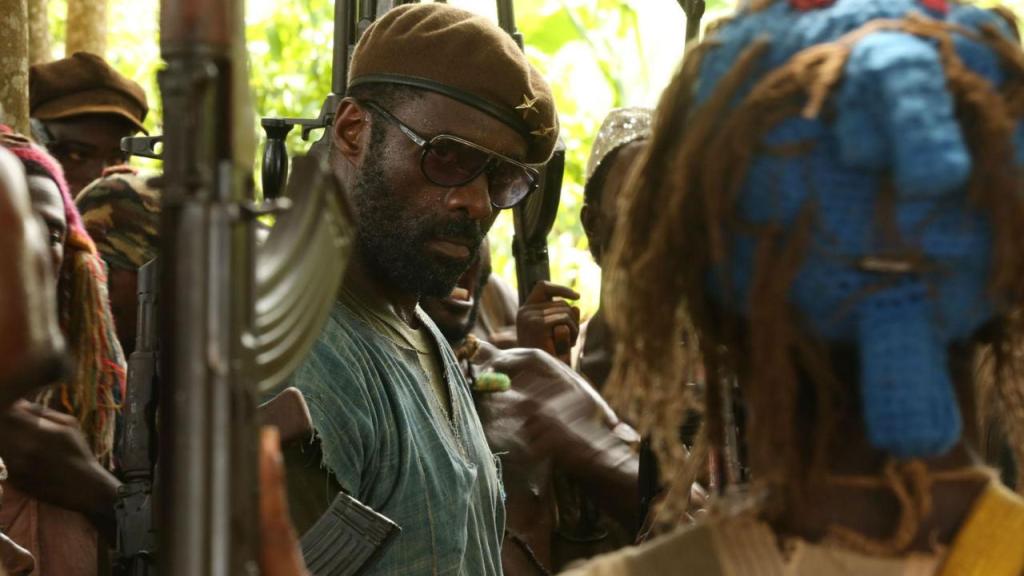
    Idris Elba mesmerizes as Commandant, dominating the screen both in his aggressive demeanor and impactful, charismatic soliloquies. Even those familiar with his work on “The Wire” or his turn as Nelson Mandela in “Mandela: Long Walk to Freedom” will find Elba nearly unrecognizable as he melts into the brutal soothsayer. The performance clearly establishes Elba as the frontrunner for Best Supporting Actor, though some voters will be turned off from the gruesome brutality “Beasts” displays.

    Without a doubt, the authenticity of “Beasts of No Nation” is undeniable. Though almost every viewer has no clue what life in a war-ravaged, third world country is like, director Cary Fukunaga transports audiences into realities that few have ever experienced so vividly. “Beasts” is certainly not for the faint at heart as the heart pounding war drama has Agu being forced to hack a man to death with a machete, rape and other graphic violence during the final two thirds of the film. Not all audiences will be able to make it through these challenging scenes.

    But Fukunaga balances the brutality in such a way that it’s hard not to be in awe of the beauty of his work at times on a shot by shot, scene by scene basis – especially in a gorgeous section of “Beasts” where Agu participates in a village raid while high on a herbal hallucinogen. Fukunaga overexposes and accentuates the reds to a brilliantly stunning degree, making the actual events of the scene somewhat more tolerable to bear.

    The film is written, directed and shot by Fukunaga, best known for the 2011 adaptation of “Jane Eyre” and directing the first season of HBO’s “True Detective.” Bold and beautiful from the outset, “Beasts of No Nation” is made for the big screen with its bold and vivid colors, probably needing movie theater technology to fully enjoy its nuances, especially during night scenes.

    However, the film stands up on smaller screens for those enjoying at home or on the go via Netflix. “Beasts” is too good a movie and far too accessible for the average audience to be avoided. Viewers of appropriate age need to make whatever effort is needed to seek out “Beasts,” and the Netflix connection will help boost viewership far beyond whatever it might have drawn in only a limited theatrical release.

    When the film’s content becomes almost too much for the viewer to stand, that’s when Fukunaga takes over, with his unique and picturesque visual style compensating for the brutality of “Beasts” with beauty. This counter-play works splendidly from start to finish, entrancing audiences in a way that war has not been shown since “Saving Private Ryan.”

    Definitely among one of the five best films released so far in 2015, “Beasts of No Nation” has to be a serious contender for major awards early next year and firmly plants the flag in the ground for Netflix as someone to be reckoned with in feature filmmaking going forward.