
Tag: Kate Hudson

  • Deepwater Horizon: Heroes amid disaster

    Deepwater Horizon: Heroes amid disaster

    You’ll probably leave the theater a little upset and pretty angry.

    That doesn’t mean audiences shouldn’t flock to the theater in droves to see “Deepwater Horizon,” the based-on-a-true-story disaster film from “Lone Survivor” director Peter Berg and star Mark Wahlberg.

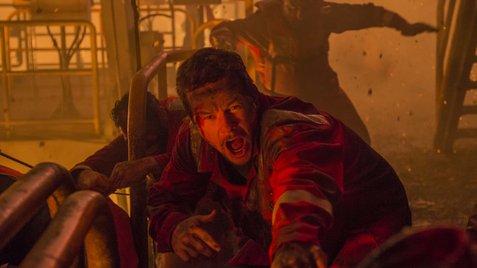
    The new film follows veteran driller Mike Williams (Wahlberg) and assorted crew members of the offshore oil drilling unit Deepwater Horizon as they prepare to open a new well for British Petroleum (BP)  off the coast of Louisiana. Faulty installation of cement at the base of the well helped lead to catastrophic problems, major explosions and oil spilling into the Gulf of Mexico. 

    While recent biopics like “Sully” have delved into the aftermath of major events – Tom Hanks’ film focuses on the NTSB investigation of the plane landing on the Hudson River – “Deepwater Horizon” approaches its events in more chronological, straightforward terms, leaving out the investigation into BP. However the oil company is represented in Berg’s movie as a major villain, primarily through John Malkovich’s expert portrayal of BP executive Donald Vidrine.

    In order to keep “Deepwater Horizon” as much of an action/thriller as possible, Berg’s film rarely utilizes the impassioned soliloquys usually found in biopic dramas and offers a “no frills” approach to his cinema. As a result, the acting performances in the film are somewhat tampered down.  

    The film’s main focus, Mike Williams, is portrayed by Wahlberg with much gusto. But as with so many other Wahlberg performances, a solid effort from the veteran Boston actor is overshadowed by another actor, the spectacle of the movie itself, or in the case of “Deepwater Horizon” both.

    Malkovich’s Donald Vidrine doesn’t get a lot of screen time in the overall scheme of the movie, but his perfect portrayal of the greedy, conniving BP executive is the best piece of acting in the entire film. His confrontation scene with Wahlberg shortly before the explosions begin give a dynamic summary of BP’s attitudes towards the events causing the disaster. In fact, “Deepwater Horizon” would have been a much different and arguably much better film had the Vidrine character been expanded significantly. 

    Aside from Wahlberg, “Deepwater Horizon” leans heavy on a talented, but secondary supporting cast including Kurt Russell as the rig’s captain, Dylan O’Brian as a driller working the main floor of the rig and Gina Rodriguez as the ship’s pilot. Among these performances, Kate Hudson offers her best work in several years in the small, but crucial role as Williams’ wife Felicia.

    The effectiveness in Hudson’s portrayal, representing all of the families of Deepwater Horizon crew members, helps viewers emotionally invest in the outcome of the film. Many times in films like this, the stereotypical “family member left at home” character is played incredibly shallow and the “back home” relationship for the main character is better left on the editing room floor.

    With “Deepwater Horizon,” Mike’s relationship with his wife is the emotional core of the entire film and drives home the dramatic elements of a largely action-based feature. Hudson and Wahlberg show good chemistry in limited screen time together and their efforts make the overall narrative more convincing as a result.

    Perhaps the biggest flaw within “Deepwater Horizon” lies in Matthew Michael Carnahan and Matthew Sand’s screenplay, which rarely shies away from the overt technical jargon related to offshore oil drilling. Whereas a film like Oliver Stone’s “Snowden” goes to extreme lengths to simplify a complex topic like government surveillance, “Deepwater Horizon” powers through conversation after conversation between workers on the Deepwater Horizon without much care given to audiences’ understanding of why the explosion and subsequent spill happens. 

    Viewers will eventually infer the basics of the whys and hows, but the screenplay refuses to slow down in lieu of maintaining a brisk pace. Those sparked to learn more about the technical aspects of the disaster from watching “Deepwater Horizon” should seek out the 2014 documentary “The Great Invisible,” a South by Southwest Film Festival award winning film that covers the root causes of the disaster as well as the ensuing government investigation.  

    “Deepwater Horizon” is unlikely to receive any critical accolades this fall, though that isn’t because Berg’s film isn’t worth spending 107 minutes on in theaters.

    An imperfect film, “Deepwater Horizon” will likely leave viewers with questions about real life events and in utter awe over how many individuals’ lives were saved by the bravery of the rig’s crew and other extraordinary circumstances. Overall, the “Lone Survivor” team of Berg and Wahlberg make a taut, engaging film that audiences won’t be disappointed in once they leave the cinema.

  • Mother’s Day: Moms deserve better than subpar comedy tribute

    Mother’s Day: Moms deserve better than subpar comedy tribute

    Mother’s Day is a holiday celebrated annually to honor women have born, adopted or raised children with an emphasis on the mother-child relationship.

    “Mother’s Day” is a newly released movie directed by Garry Marshall that does pretty much none of that.

    Marshall’s film is a romantic comedy without any romance and lacking in comedy; it’s a family drama that doesn’t have much heart; and it’s a tearjerker that won’t make many in the audience cry.

    Filled with a celebrity cast including Jennifer Aniston, Julia Roberts and Kate Hudson, “Mother’s Day” doesn’t pick a direction and stay on a particular course. Instead, Marshall and the four screenwriters given credit for the film attempt to go everywhere at one and end up taking the audience nowhere.

    Like its spiritual predecessors “Valentine’s Day” and “New Year’s Eve,” “Mother’s Day” relies on overly coincidental relationships between its main characters who otherwise don’t interact with each other at all.

    Jesse (Hudson) and her sister Gabi (Sarah Chalke) are hiding their marriages from overly conservative Texas parents who wouldn’t accept Jesse’s inter-racial relationship nor Gabi’s lesbian life partner.

    Writing hurts the cast of “Mother’s Day” the most in this storyline as neither Hudson nor veteran character actress Margo Martindale as the girls’ mother has any space in the script to develop a true character.

    Talented though she may be, Martindale gets the worst of this, given an horrendously unfunny racist part to play. It’s near appalling how implausible overcoming years of inheerent racism could be overcome in a single afternoon, yet the film’s writers telegraph this (and every other ending) from a mile away.

    Jesse’s friend Sandy (Aniston), who she barely interacts with, is struggling to accept her ex-husband’s new 20-something wife and life of luxury. Aniston gets by with what little she has to work with, though she has rarely been an actress that rises above the level of material given to here.

    Britt Robertson’s Kristin – connected to Jesse only through a flimsy “Mommy and Me” class viewers never see – won’t get married to the father of her daughter as she feels abandoned by the mother who gave her up for adoption (Roberts). Roberts received $3 million for four days of shooting on “Mother’s Day” and her in-it-for-the-paycheck performance reflects her obvious disinterest.

    It’s unfortunate for Robertson to continue missing out on a quality script as the “Tomorrowland” and “Longest Ride” actress has true potential if ever given the chance to play a well written character on the big screen.

    Any one of these storylines could have been made into a decently plausible, though not terribly original film. Yet “Mother’s Day” insists on cramming them all together, irreparably damaging any chance “Mother’s Day” had of actually being any good.

    As a director, Marshall does a surprisingly poor job of directing as dialogue scenes often contain characters speaking with their backs to the camera so often it feels as though key lines in the script were re-written after the film was completed. The veteran director misses the mark on covering up these changes, completely ruining any hope viewers may have of forgetting they’re watching actors on a soundstage.

    Well intentioned as it may be, Marshall’s “Mother’s Day” fails to properly develop any of its main characters. The film relies on the audience’s predisposition to liking its lead actresses to counter act the fact that the script does not really give viewers much of a reasons to like the characters themselves.

    While most of the characters learn a seemingly life changing lesson about tolerance, grief or parenthood, none of these character arcs truly feel earned and are the result of the filmmakers’ desire to wrap “Mother’s Day” up in a tight little bow.

    Rather than taking their mother out to a dark theater where families cannot talk to see the film, audiences would be better served having a nice family meal and conversation at home. Next year, “Mother’s Day” might make a decent way to close out the holiday weekend on your couch, but nothing more.

  • Kung Fu Panda 3: Sequel gives families something fun in slow January

    Kung Fu Panda 3: Sequel gives families something fun in slow January

    DreamWorks Animation, a studio that’s struggled to find success in the last five years aside from 2014’s How to Train Your Dragon 2, burst back onto the scene in a major way last weekend with the release of Kung Fu Panda 3, which returned unlikely hero Po and his gang of do-gooder friends back to action.

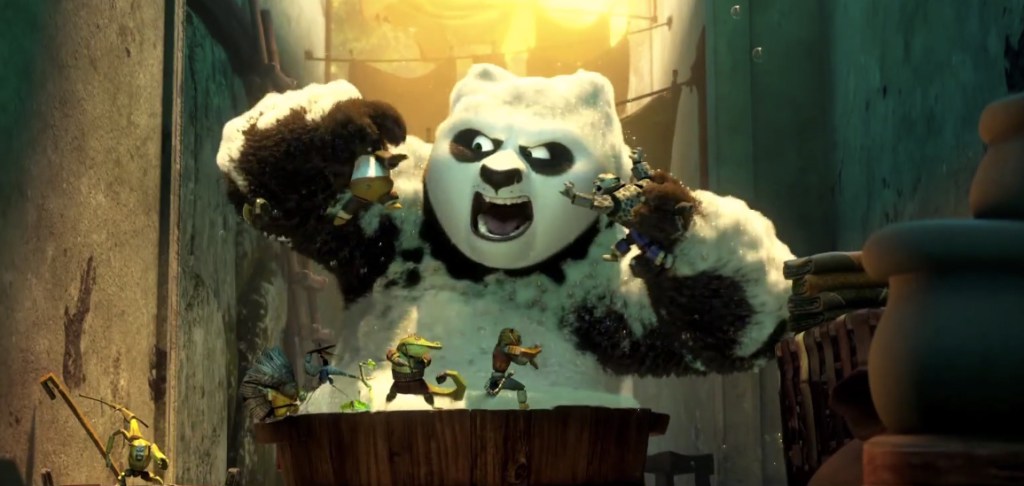
    While Pixar has been at the forefront of innovative animation with the visual marvels that were Inside Out and The Good Dinosaur, DreamWorks succeeds with a film that looks like a hand-drawn comic book brought to life rather than computer generated cinema.

    What makes the Kung Fu Panda series flow – aside from the top-notch animation of course – is the talented and deep cast of voice actors led by the lovable Jack Black as Po.

    Black brings such a warm effervescence to the role that it’s nearly impossible for kids and adults alike not to enjoy scenes featuring Po being silly or a tad slow. The effortless way Black is able to elevate the third installment’s poorly written script from Jonathan Aibel and Glenn Berger well beyond what the film should have been capable of is truly remarkable.

    In addition to returning voice talent including Angelina Jolie, Dustin Hoffman, Jackie Chan, Lucy Liu, David Cross and Seth Rogen, Kung Fu Panda 3 also sports a trio of new characters to the mix with varying degrees of success.

    Oscar winner J.K. Simmons, who wowed audiences as a villainous jazz band leader in Whiplash, proves he can bring the bad with only his voice as the evil Kai, a bull on the rampage who comes back from the dead to steal everyone’s chi. As ridiculous as that sounds, Simmons makes the character work by not taking things so seriously and just letting Kai flow out of him. Simmons, an expert character actor, was a pitch perfect choice for the role.

    image

    In the other major plot line of the film, Po finally learns he’s not the last panda on the planet and meets his dad Li, voiced by Breaking Bad’s Bryan Cranston, and a host of other pandas, including a pseudo-love interest in Mei Mei, voiced by Kate Hudson.

    Of the two, Cranston’s Li is much more successful, mainly because Cranston is given a much wider berth from which to work with and is a central part of moving the story along. Hudson’s Mei Mei feels rather pointless in the grand scheme of things, since directors Alessandro Carloni and Jennifer Yuh opt to back off from a connection between Po and Mei Mei as soon as they establish one. The film would have been better off saving Mei Mei for the inevitable fourth installment and featuring a possible romance storyline front and center.

    Look, this is an animated film with a target audience of elementary and early middle school students, so we’re not talking about a future Oscar winner here,
    though a nomination for best animated film wouldn’t be out of the question based on the visual merits of the movie alone.

    The script is sparse and bland and there’s too many pop culture references (including a homage to Imagine Dragons’ song “I’m So Sorry” and a way outdated and super obvious “Kung Fu Fighting” leading into the credits), but the third installment lives up to expectations and more.

    It’s early in the year, but Kung Fu Panda 3 is one of 2016’s best releases and something children and adults of all ages can enjoy together.