
Tag: Michael Bay

  • Teenage Mutant Ninja Turtles 2: Half-shelled heroes

    Teenage Mutant Ninja Turtles 2: Half-shelled heroes

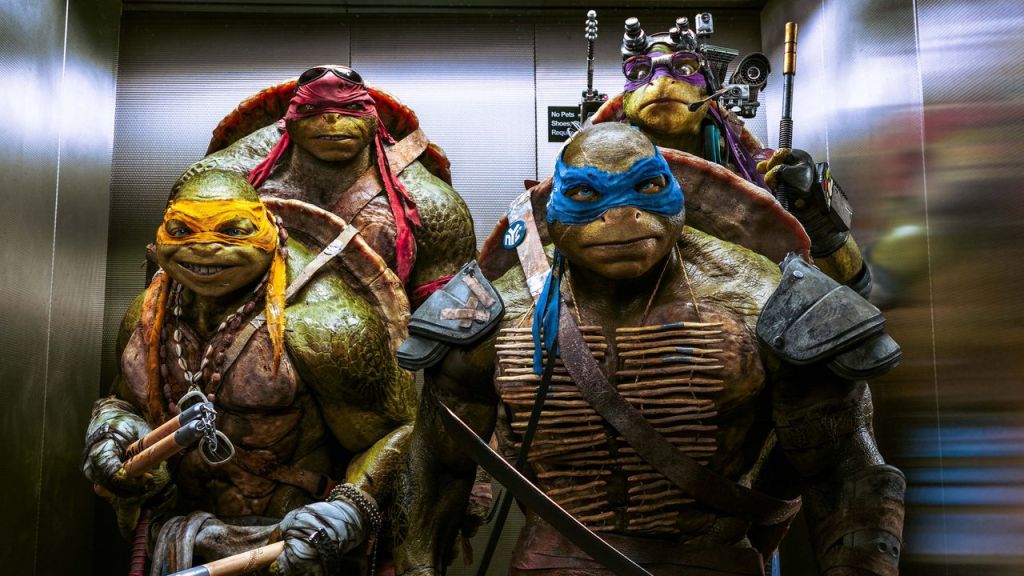
    ​“Teenage Mutant Ninja Turtles: Out of the Shadows” was made for the 12-year-old boy in all of us. The one who loves gooey cheese pizza and ninja stars and beating up bad guys just because.

    After a recent film reboot, the self-proclaimed “heroes in a half-shell” from late 80s and early 90s Saturday morning cartoon lore are back to save New York City once again and keep children largely entertained for about 90 minutes.

    In this installment, the four turtles – Leonardo, Raphael, Michelangelo and Donatello – must stop their arch-nemesis Shredder and his goons from opening a portal to another dimension for aliens bent on world domination. If this sounds like a pre-teen version of the plot to “Marvel’s The Avengers,” it’s because it probably is.

    The turtles, along with mutant rhinoceros Rocksteady and warthog Bebop, are filmed via motion-capture, just like the villainous Gollum was performed by Andy Serkis in the “Lord of the Rings” and “The Hobbit” trilogies. 

    The animations used to turn actors in green suits into cartoon animals with fighting abilities doesn’t work quite as well as the filmmakers might have hoped. Given the next-level computer graphics of Disney’s recent reboot “The Jungle Book,” these turtles can’t quite cut it visually and the voice talent behind these CGI characters can’t elevate a pedestrian script from Josh Appelbaum and Andre Nemec.

    After breaking out in the first two “Transformers” films as the stereotypical hot girl following around large superheroes trying to save the world, Megan Fox returns to the TMNT franchise as April O’Neil, an attractive TV news reporter following the turtles around as they try to save the world. Surprisingly enough, Fox gives the best performance in the entire film, which should tell you everything you need to know about “Out of the Shadows.”

    Television star Stephen Amell of “Arrow” fame joins the cast this go-round as the iconic TMNT sidekick Casey Jones, a vigilante cop sporting hockey gear as weapons. Amell doesn’t have much character development or story arc to go on, an unfortunate, yet all too frequent occurrence among the actors portraying humans in the film.

    The film’s four primary villains – Shredder (Brian Tee), Bebop (Gary Anthony Williams), Rocksteady (Stephen “Sheamus” Farrelly) and Krang (Brad Garrett) – are all comically undeveloped, with the whole purpose to just become meaningless obstacles for the turtles to overcome. While not all superhero films have deep, purposeful connections between hero and villain, a lot more work could have been done in the script-writing phase to make “Out of the Shadows” more well-rounded cinematically.

    Tyler Perry, the film’s most high-profile star, plays a smaller supporting role as the possibly evil, but definitely mad scientist Baxter Stockman. The character, and especially Perry as an actor, deserve a shot to be the primary foil for the turtles in an inevitable sequel as Perry’s squirrely performance is the most interesting acting audiences will find in a “Teenage Mutant Ninja Turtles” film.

    Because the film is produced by heavyweight action film director Michael Bay, “Out of the Shadows” is most successful in its biggest, loudest moments where the turtles take on Shredder and his Foot Clan head on. While not entirely original, the battle sequences are bold, frantic and largely compelling at an age-appropriate level for the pre-teens in the film’s target audience demographic. 

    In this regard, the turtles seem to be a more viable starter option than the Avengers of Marvel’s cinematic universe for kids not quite ready for the complexities of more adult action-adventure films.

    Where “Out of the Shadows” falls flat, however, is in the action-less rest of the film, which proves to be ultimately boring and comparable filler meant to bridge the gap between fight scenes. It’s a shame as Fox and Perry both show enough promise in their roles to develop a reasonably smart storyline around.

    What director Dave Green ultimately relies on to propel the film forward is forgiveness on the part of younger viewers just excited to see the action scenes and 80s/90s nostalgia on the part of older audiences with enough background knowledge on the cartoon and comic book series to overcome the film’s shortcomings.

    For fans of the 2014 reboot, “Teenage Mutant Ninja Turtles: Out of the Shadows” proves to be on par, if not a little above the previous entry in the TMNT franchise worth giving a shot in theaters.

    Newcomers, however, might want to rent or stream “Teenage Mutant Ninja Turtles” first before committing to more of the same. 
  • 13 Hours: Check politics at the door

    13 Hours: Check politics at the door

    Politics will likely play a large role in how audiences respond to Michael Bay’s latest action adventure film “13 Hours” because with a subtitle like “The Secret Soldiers of Benghazi,” it’s going to prove nearly impossible to check preconceived notions at the door.

    There’s no politicians in “13 Hours” – from President Barack Obama to Secretary of State Hillary Clinton all the way on down – as Bay focuses on a procedural day by day, minute by minute account of the fateful attack by Libyan insurgents on a U.S. consulate housing Ambassador Chris Stevens and a small State Department detail on Sept. 11, 2012.

    Most of the harrowing account – taken from the 2014 novel “13 Hours: The Inside Account of What Really Happened in Benghazi” – focuses on six military veterans working as CIA security contractors (known as the Global Response Staff or GRS in the film) at a secret annex less than a mile from the consulate.

    To Bay and screenwriter Chuck Hogan, who the individual members of the GRS team are as people is wholly secondary to what they did in the days leading up to and during the Libyan assault on first the compound and later on the CIA annex.

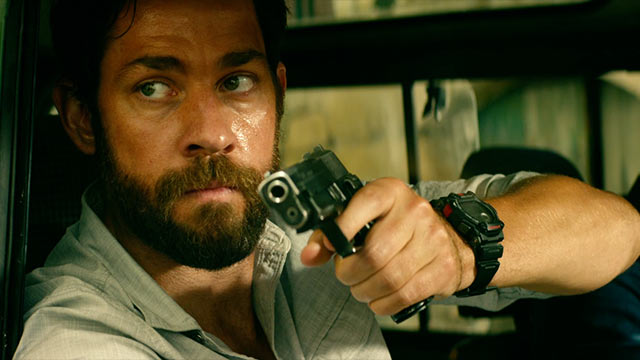
    In this effort, Bay casts a ragtag group of secondary actors who, in the heat of battle, looks nearly identical, save for an African American member of the State Department’s security detail played by Demetrius Grosse and “The Office” star John Krasinski.

    image

    Where as patriotic military films released in the last few years have relied on box office heavyweights to carry the bulk of the load – Bradley Cooper in “American Sniper” and Mark Wahlberg in “Lone Survivor” – “13 Hours” has the nuts and bolts story of what happened in Benghazi take center stage, trumping character development or storyline.

    The film’s battle sequences are especially authentic thanks to both Bay’s tremendous finesse with handling high-octane action movies and three of the actual CIA security contractors – John “Tig” Tiegen, Mark “Oz” Geist and Kristian “Tanto” Paronto” – serving as special consultants working with the actors during shooting.

    “13 Hours” opts for style over substance at every turn, with a visually dynamic, seemingly endless montage of wartime violence that many viewers would find exhilarating if the events were simply fiction. There’s a constant state of surrealism that leaves audiences thinking “How did this happen?” that makes the whole story feel false except for the fact that we all know it to be a largely truthful account based on dozens of reports from boots on the ground and analysts at home.

    The frantic nature of the action – and relative obscurity of most of the actors and extras playing combatants on both sides of the battle – prevents viewers from orienting themselves within the fray for much of any initial viewing of the film. Bay jumps from battle location to battle location with such frequency that getting any semblance of how the combat is progressing or where events are occurring in the context geographically proves incredibly difficult.

    Audience members will likely find themselves emotionally latching on to Krasinski, the most recognizable of any of the film’s stars, like a guiding star to navigate in the blood, guts and darkness of “13 Hours.” He offers as compelling a performance as you’re likely to find in a Michael Bay film, given how paint-by-numbers the script feels and how little attention is paid to offering any more than a bare bones profile of the soldiers involved.

    At nearly two-and-a-half hours long, “13 Hours” wears on viewers in the latter stages of battle as it’s easy to feel a similar mental and emotional toll to what the soldiers experienced witnessing the initial attack on the U.S. consulate and having to idly stand by and watch.

    The biggest flaw within the film lies in the editing bay, where sequences within “13 Hours” could have been better organized and/or tightened to improve the viewing experience. Sitting in the theater, the film feels about 20 minutes longer than it needs to be, especially in the days prior to the attack.

    Unlike “Zero Dark Thirty,” where the search to find Osama bin Laden is as important (if not more so) to the success of that film than the actual mission to kill the Al Queda terrorist leader, the Benghazi attacks are more important to both Bay as director and the audiences watching the film.

    Despite its flaws, “13 Hours: The Secret Soldiers of Benghazi” signifies an upward trend for Bay, the once successful director of action smash hits like “The Rock” and “Bad Boys” lambasting in overplayed, poorly made “Transformers” sequel fodder. The less he recycles his own films and finds new and original ways to attack the action genre, the better off we as audience members are.

    Setting aside right and left wing divisiveness, audience members who check their personal politics at the door will find “13 Hours” to be a riveting and harrowing portrayal of one of America’s most tragic and yet heroic moments this century.

    It isn’t about the politics, it’s about what happened on the ground. Through that lens, Bay and his team get things right and honor the memory of those who served and those we lost.