Tag: Miles Teller

  • War Dogs: Weapons of mass enjoyment

    War Dogs: Weapons of mass enjoyment

    ​“War Dogs” seeks to answer a pretty simple question asked by CNN’s Wolf Blitzer in the film’s trailer.

    “How did two 20-something young men land a $300 million Pentagon contract?” 

    If you keep watching the rest of the trailer, the film attempts to highlight the exploits of Jewish-American gunrunners with the same comedic precision of “The Wolf of Wall Street.” It even extolls the virtues of the film’s director, Todd Phillips, A.K.A. the “Hangover” guy.

    Yes, “War Dogs” is a hilarious film, perhaps even the best comedy of the year. But it also aspires to become much more than that and largely succeeds in bringing in powerful dramatic moments as well.

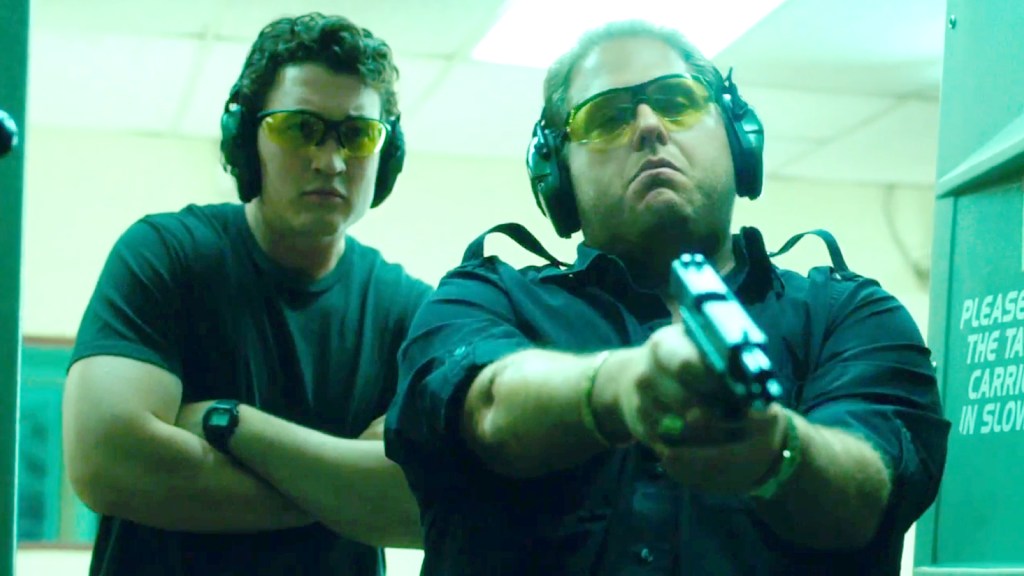
    Viewers become introduced into the world of “mostly” legal gunrunning through the eyes of David Packouz (Miles Teller) who quit his job massaging Miami’s rich and famous when his childhood best friend Efraim Diveroli (Jonah Hill) convinces him to become partners in a small arms dealing business that works exclusively on government contracts. As the size of the contracts grow, the tension and danger grow for David, who’s hiding his business from his peace-loving pregnant girlfriend.

    “War Dogs” jumps off the screen early in the film with its often bombastic comedy, but settles in to a nice medium between humor and surprisingly compelling dramatic moments. Viewers will likely never expect the film’s emotional stakes and might even miss some subtle beats of drama amid all the laughter.

    Much like his Academy Award nominated turn in “The Wolf of Wall Street,” Hill dazzles with another outstanding effort as Diveroli. His work is just on the cusp of being over-the-top in many scenes which harken back to Hill’s time with teenage raunch comedies like “Superbad.” But it’s beautifully juxtaposed against terrific scenes of calm clarity that make Diveroli a complexly manic and depraved man who attempts to become the Al Pacino character from “Scarface” that he so admires.

    While many audiences will key in on Hill’s antics and chaotic performance, Teller continues to impress with his understated, controlled effort as Packouz in both his role as the narrator and the main character of the film. Hill is able to play the gambit of emotions with Diveroli because Teller balances out the dynamic between the two friends/business partners so well. Playing against type, he does a masterful job of being the rationale everyman character to give viewers someone to relate to amid all the insanity of the gunrunning world.

    Oscar nominated actor and frequent Phillips collaborator Bradley Cooper makes a small, but important appearance as an arms dealer hoping to partner with the leads on a major government contract. His performance is relatively uneven, but efficient in bringing the necessary gravitas to the part that allows for the plot to move forward convincingly.

    “War Dogs” feels like a departure for Phillips, who’s spent years making R-rated comedies to varying degrees of success. But while his previous efforts like “Old School” and “The Hangover” trilogy skimp on the dramatic counterbalance to all the flatulence and sex jokes, “War Dogs” has some real moments of clarity and drama in its final act. The humor’s still there throughout and the entire film feels like a nice change of pace for Phillips and Teller, while continuing the same path of serious comedic work Hill has been choosing the last several years.

    The gunrunning film doesn’t stray too far to examine the morality of these “war dogs” making money off of violence and murder, nor does it examine the issue from the side of the government purchasing all the weapons to arm third-world nations. “War Dogs” stays firmly entrenched in the bizarre series of circumstances that allowed two young relative unknowns to become major players in war profiteering business enterprises and how ridiculous these circumstances are.

    With its unique blend of comedy, drama and just a pinch of action, “War Dogs” is without a doubt the best mainstream film of the summer and a must see film for adult audiences willing to check their opinions at the door and not let political leanings one way or the other affect their movie going experience. 
  • The Divergent Series Allegiant: Sleepwalking through cinema

    The Divergent Series Allegiant: Sleepwalking through cinema

    If you’ve ever wanted to take a long nap while watching a movie in theaters, there’s likely no better film to snooze through this year than “The Divergent Series: Allegiant.”

    No one will blame you, least of all the film’s cast and crew, who sleepwalk their way through “Allegiant,” the third in the teen dystopian film franchise based on the books by Veronica Roth.

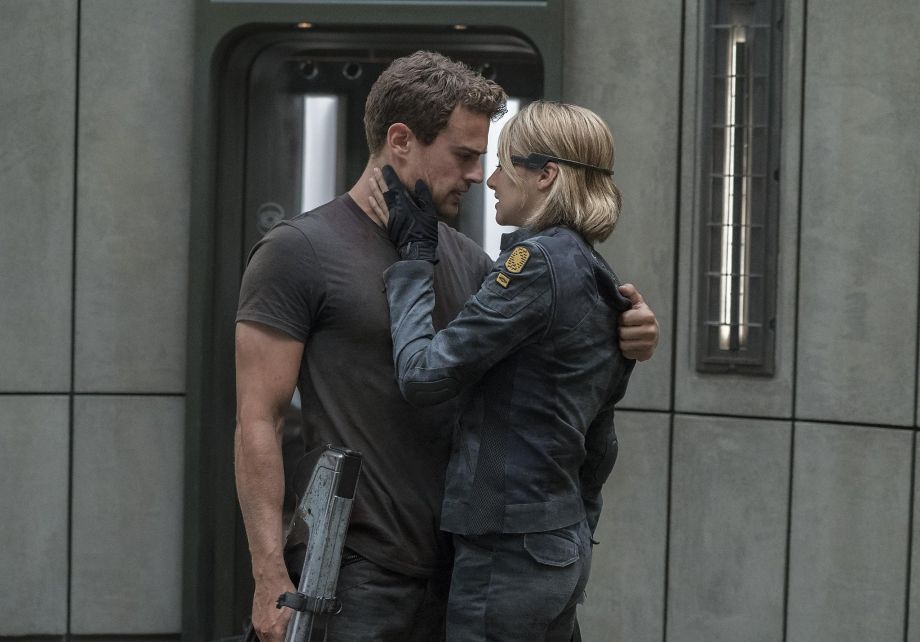
    Based on the first half of the final book in the trilogy, the latest movie finds rebellious teen Tris leading a small band of friends outside the walled compound of what used to be Chicago. Their escape and journey beyond the walls they’ve always known should be compelling cinema, but nothing ever comes together in director Robert Schwentke’s lackluster film.

    There’s no sense of urgency in “Allegiant,” an all too damning indictment of a series well past the point of usefulness to a broad audience.
    https://m.youtube.com/watch?v=0G0C-vMHcQY
    Shailene Woodley does a passable job as Tris, though her character is relegated to the background for much of the film leaving Woodley with almost nothing to do.

    Much of the focus in her stead is given to Theo James, who plays Tris’ love interest Four. James gives a very mechanical, almost robotic performance — and in a film littered with miscues – focusing much of “Allegiant” on James proves to be the movie’s biggest mistake.

    Across the board, lines of dialogue are delivered in the most mundane ways imaginable, where even Oscar winner Octavia Spencer cannot muster the desire to rise above the bland material on the script page. As a result, her performance as resistance leader Johanna screams of a woman who simply doesn’t want to be there and viewers can immediately read it on Spencer’s face.

    The lone newcomer to the “Divergent” franchise, Jeff Daniels gives the villainous leader David very little character beyond the script and is only mildly effective as a foil for either Tris or Four. Daniels has played better villains in other films, though the material he’s given here is largely to blame.

    Perhaps the most effective performance in the entire film comes from Miles Teller, who thrives in any role where he is allowed to be a smarmy jerk to everyone he encounters.

    Teller’s Peter reads as wholly unlikeable throughout all three “Divergent” films, but it takes a true talent of Teller’s caliber to beautifully and seamlessly bend back and forth between good and evil that viewers never truly know Peter’s intentions.
    https://m.youtube.com/watch?v=VZoNM1q6_8M
    Visually, it’s easy to see where most of the film’s $110 million budget went given the extraordinarily high use of CGI in “Allegiant” compared to the first two installments in the film franchise.

    While the decent action scenes make the most use out of the film’s CGI-heavy production value, there’s simply not enough dynamic moments in “Allegiant” to justify the cost of making the film nor the time audiences spend watching the film.

    Lionsgate, the studio behind both the “Divergent” and “The Hunger Games” films, largely destroyed any potential for success by splitting the final book into two parts.

    In rushing to get “Allegiant” in theaters one year after the previous entry “Insurgent,” the script penned by Adam Cooper, Bill Collage and Noah Oppenheim is lacks any oomph and lazily stumbles from scene to scene. Only Teller is able to lift the material to new heights.

    Scenes of dialogue often are poorly shot. Schwentke’s near-universal use of green screens and computer generated imagery to develop the film’s background stand out like a sore thumb in the film’s tediously slow moments.

    Ardent fans of the “Divergent” series, be it the book or film version, will largely be satisfied with how true “Allegiant” is to the source material. The decision to split the third book into two films, however, leaves “Allegiant” with too little action or drama to keep viewers actively engaged for the 110-minute running time.

    Average moviegoers deciding whether or not to catch “Allegiant” in theaters would probably be better off waiting until the film’s release on DVD and streaming later this year.

  • Fantastic Four: Reboot of comic book classic falls flat

    Fantastic Four: Reboot of comic book classic falls flat

    Someone in Hollywood better take note quick.

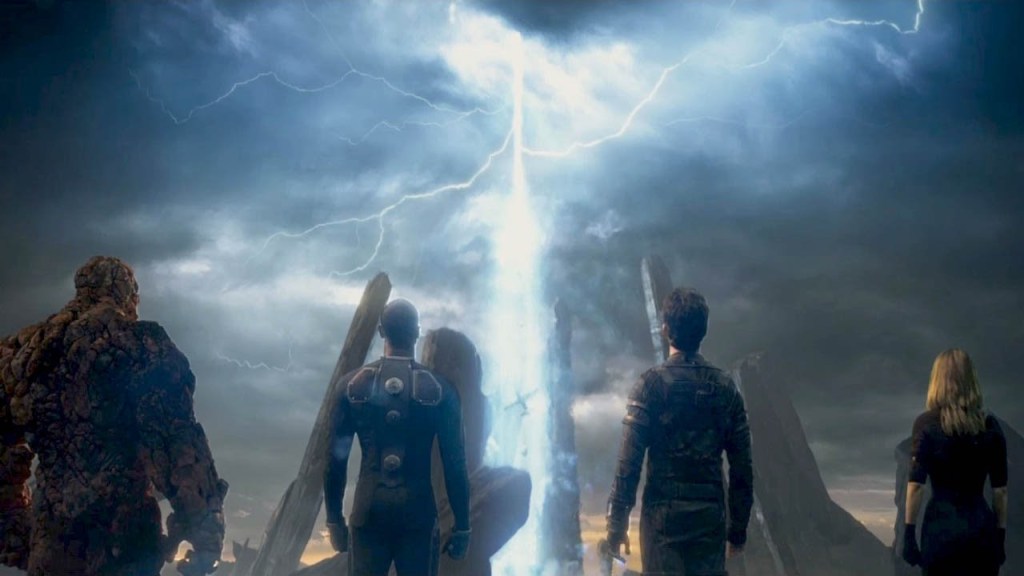
    Indie darling and rising character actor Miles Teller needs a star vehicle ASAP, but “Fantastic Four” just isn’t it.

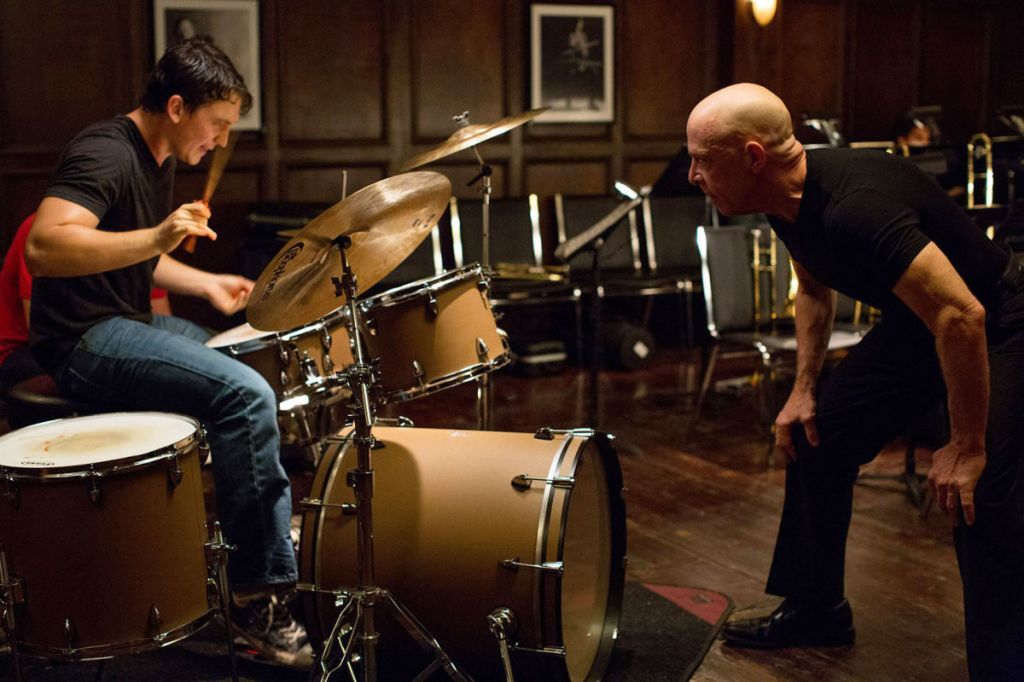
    It’s hard not to feel bad for the star of last year’s Sundance winner and Academy Award nominated “Whiplash,” who played the perfect whipping boy to J.K. Simmons in the heavy drama.

    To go from one of the most well-written and pitch perfect features of 2014 to perhaps the most inept, slow and tedious films of 2015 is a major step back for Teller, one he doesn’t deserve.

    Teller invests heavily in his role as super-nerd turned world’s stretchiest man Reed Richards, but with a subpar film that even director Josh Trank has disowned, Teller might have been better off staying on the indie circuit until next “Allegiant: Part 1.”

    His “Fantastic Four” cast mate Michael B. Jordan — who had his own indie breakout with “Fruitvale Station” and “Chronicle” — doesn’t have this problem as he will debut as the son of boxing legend Apollo Creed in the “Rocky” franchise sequel “Creed” later this year.

    Audiences aren’t having much fun watching “Fantastic Four” and it’s pretty evident from the onscreen performances that the actors aren’t much into things either.

    Chronicled with production problems from the start — everything from casting to editing issues abounded on the film — put “Fantastic Four” at such a disadvantage that no one involved seems interested in salvaging something worthwhile out of the project.

    Trailers for the film make it appear as if there will be a significant amount of high-octane battle sequences, teasing viewers with a small glimpse of things to come.

    Unfortunately, the joke’s on audiences.

    The dialogue-heavy, action-light feature doesn’t see the “Fantastic Four” become fantastic and absorb their superpowers until nearly an hour into the film, a forgivable concept if there’s something more that the movie has to offer, but there’s not.

    For an action movie to have about three minutes of real action out of the 100 minute running time is a real disappointment.

    Those same trailers have touted the real reason to catch “Fantastic Four” — a glimpse at next year’s highly anticipated “Deadpool” starring Ryan Reynolds, though you can always just catch that over and over again on YouTube.

    The original “Fantastic Four,” made a decade earlier in 2005, lacked a lot of the cinematic pizazz that its 2015 reboot has — from vastly improved CGI to a grittier, more contemporary visual style to a more talented group of actors.

    But the original — helmed by Jessica Alba and a pre-Captain America Chris Evans — has a distinct and action-packed script, making it a more compelling film in spite of major casting, directorial and other cinematic issues.

    Trank’s film and cast with something on par with the 2005 script would have made for a much better film and not one that makes audiences wonder if it’s worse than the universally panned “Green Lantern.”

    Regardless of whose fault this train wreck of a film is — whether it be Trank as the director, backing studio 20th Century Fox or the writing trio of Trank, Simon Kinberg and Jeremy Slater — “Fantastic Four” is the complete cinematic opposite of its superhero counterparts like “Ant-Man” and “Guardians of the Galaxy.”

    The two recent Marvel Studios films pack on both physical and comedic punches while “Fantastic Four” takes too long with the set up for audiences to enjoy the pay off.

    For all its many warts, “Fantastic Four” is no more substandard than, say, “Pixels” or “Ted 2,” pointless wastes of time in their own right.

    There’s still blockbuster action films yet to come in 2015. “Fantastic Four” just isn’t one of them.

  • Whiplash: Strike up the band for visual jazz experience

    Whiplash: Strike up the band for visual jazz experience

    How can you see jazz? It’s easy to hear and a delight to listen to, but how can one visualize jazz in pictures rather than sounds?

    Is it in a contrast of colors? Harsh browns and tans counterbalancing bright hues of blue? The dueling colors of black and white intermixing like yin and yang.

    The best independent film of our time — winner of both the audience and grand jury awards at the 30th Sundance Film Festival in January — explores just such a topic.

    “Whiplash,” which easily moves into the top spot as 2014’s best film, features Miles Teller and J.K. Simmons in an emotional tug-of-war style dance that engulfs the viewer in a 106-minute free-style jazz duet of obsession and the pursuit of greatness.

    Teller’s Andrew, a first-year jazz student at one of the country’s top music schools, goes head-to-head with top band instructor Simmons in a game of cat-and-mouse musical psychology featuring some of the best back and forth dialogue this side of “Silence of the Lambs.”

    Director Damien Chazelle‘s second foray into feature-length filmmaking is a cinematic spectacle from the opening seconds with young drum prodigy Andrew plodding away at his kit through the visually stunning final performance sequence that amounts to beautiful musical combat.

    Each and every note, both visually and audibly, is carefully crafted by Chazelle and right on point thanks in large part to a brilliant cutting by the film’s editor Tom Cross, who splices together the most stunning musical sequences filmed in nearly a decade.

    Teller, a drummer in his own right, plays all of Andrew’s music with fervor. All of the remaining musicians in the film are accomplished professionals or music students, which gives the movie added authenticity.

    The soundtrack is worth a listen on its own, but viewers should take care to see the film prior to listening to the score in its entirety as several scenes between Teller and Simmons are included as tracks.

    While jazz is definitely the driving force of “Whiplash,” the film is — at its core — a spiraling case of obsession.

    Both leads turn in the best performances of their careers, with a resurrected Paul Reiser playing a key supporting role as Teller’s father.

    The tense dynamic between teacher and student is brought to fortissimo thanks in large part to the effortless chemistry Simmons and Teller share on screen.

    Intentional or not, “Whiplash” is visual jazz, audio art come to life on screen in deep, richer layers of color and a film sure to be atop most critics’ best of 2014 lists.