Tag: Oscar Isaac

  • X-Men Apocalypse: As the world ends

    X-Men Apocalypse: As the world ends

    ​Superheroes once again battle to save the world from the end of days in “X-Men: Apocalypse,” sure to be one of the summer’s biggest films.

    Ripped straight out of one of Marvel Comics’ most celebrated storylines, the ninth film in the X-Men franchise follows a team of mutants as they battle Apocalypse, the world’s first mutant returned to Earth after centuries underground seeking to bring us all back to the Stone Age.

    Director Bryan Singer and screenwriter Simon Kinberg attempt to infuse the seemingly straight-forward action adventure with layers of internal emotional conflict, though the degree to which they work often varies wildly.

    Michael Fassbender, perhaps the most talented performer in the film, unsurprisingly does the best job of handling the film’s emotional content. As the metal-manipulating renegade Magneto, Fassbender convincingly portrays the man under the helmet struggling to deal with the murder of family members during the Holocaust and in rural Poland in the 1980s.

    Comic book characters portrayed on screen rarely get the concept of grief and loss right, and nobody in the history of superhero movies has done it better than Fassbender, who brings genuine authenticity to an incredibly inauthentic world.

    It’s difficult to blame 20th Century Fox for insisting on a bulked up role in the X-Men franchise for Mystique, a shape-shifting villainess from the comics who just happens to be played by one of the world’s biggest stars in Jennifer Lawrence.

    Lawrence does her best to act as a guide for a bevy of younger co-stars re-introducing their characters into the X-Men film universe from psychic Jean Grey (Sophie Turner) and laser-eyed Cyclops (Tye Sheridan) to teleporting wunderkind Nightcrawler (Kodi Smit-McPhee). Lawrence’s presence in the group makes the new ensemble cast easier to accept as a whole, though structurally it would have behooved filmmakers to turn that role over to James McAvoy’s Professor Xavier.

    McAvoy shows great empathy and pain in a role he’s much too good of an actor for, but his steady on-screen presences ends up making “Apocalypse” much better than it probably should be.

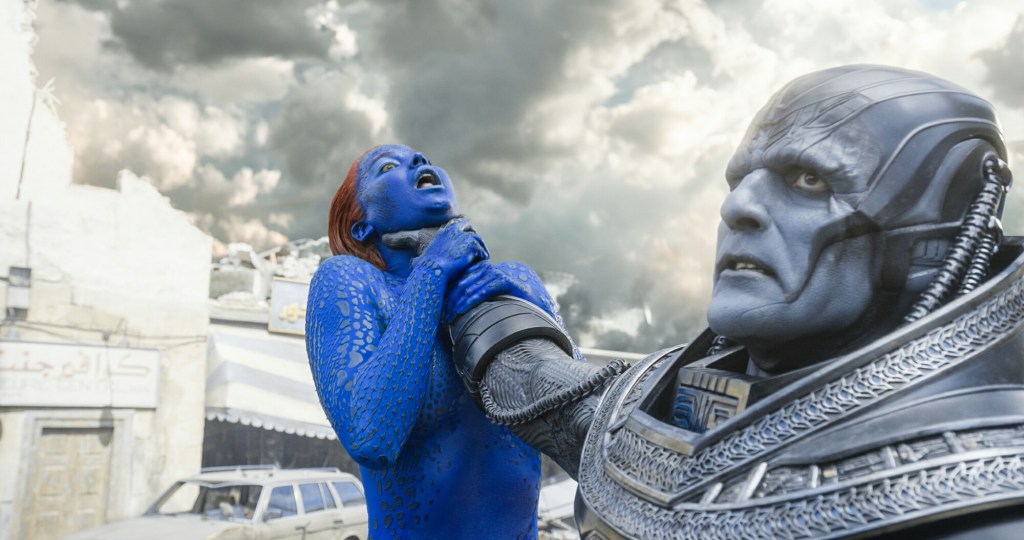
    After wowing in independent films like “Ex Machina” and taking a lead role as Poe Dameron in last year’s “Star Wars Episode VII: The Force Awakens,” Oscar Isaac is largely wasted hiding behind a massive amount of makeup as the villainous title character. 

    Isaac has always been fantastic in being able to emote through his facial expressions and the design of Apocalypse completely renders that ability impossible. His costume and makeup leave Apocalypse with a flat, unchanging gray face, making Isaac unrecognizable. 

    Hugh Jackman’s brief cameo appearance gives viewers a lot of hope for next year’s “Wolverine 3,” which will be rated R and should stay truer to the more violent, gruesome aspects of the character’s comic book origins. While not overly graphic, his extended cameo is surely the most intense and savage action sequence in the X-Men film franchise.

    Singer returns to the franchise with another solid effort, though the balance between storylines, emotional character arcs and fight scenes isn’t exactly on point throughout the entire film.

    Where Singer succeeds is in the moments everyone will be talking about following a screening of “Apocalypse,” Quicksilver’s action sequences. 

    Expanding the role of the character beyond an extended cameo in “Days of Future Past,” the film best takes advantage of Quicksilver’s enhanced speed by slowing down the action for the viewer, so that audiences see fight scenes as the hero does. These cinematically stunning moments are some of the best visual work Hollywood has produced this year and alone makes “Apocalypse” worth watching on the big screen.

    While “Apocalypse” is intended to be the third in a rebooted X-Men movie franchise following 2011’s “X-Men: First Class” and 2014’s “X-Men: Days of Future Past,” it relies pretty heavily on knowledge of previous films and lore from the original comic books. It’s not impossible for first-time viewers to enjoy “Apocalypse” without any previous exposure to the X-Men, but it certainly helps.

    Even long-time comic book nerds will likely find themselves pulling out their smartphones after a screening and heading to Wikipedia to research the film’s more obscure references, especially the mysterious teaser for “Wolverine 3” at the end of the credits.

    Like all large-team superhero movies, “X-Men: Apocalypse” can rightfully be accused of spreading itself thin by going in too many different directions in order to please both fans of the different characters and the actors themselves. “Apocalypse” could definitely benefit from tightening up the ensemble cast and devoting more time to the emotional journeys of its leads.

    However, moviegoers looking for a little excitement this summer could do much worse than “X-Men: Apocalypse,” which rides the backs of Fassbender, Lawrence and McAvoy to carry the bulk of a fun, turn-your-brain-off adventure ride worth seeing in theaters.
  • Star Wars The Force Awakens: Episode VII fulfills legacy of original trilogy

    Star Wars The Force Awakens: Episode VII fulfills legacy of original trilogy

    Heading in to the seventh installment in the famed science fiction franchise, it seemed almost certain that “Star Wars: The Force Awakens” – which opened Thursday evening – would either bomb or blow viewers away. There didn’t really seem to be an in-between.

    Fans were right to be cautiously optimistic about the first true sequel in the series after being let down when a much-hyped “Star Wars Episode I: The Phantom Menace” debuted to less than glowing reviews from both critics and die-hards alike in 1999. Two subsequent prequels – “Attack of the Clones” and “Revenge of the Sith” – fared better, but neither felt up to par with the original trilogy.

    Sixteen years later, “The Force Awakens” fulfills the promise of what “The Phantom Menace” could have been – a true space adventure that takes advantage of modern technology filled with everything fans decked out in Jedi robes and Stormtrooper costumes lining up outside theaters hours in advance of the first showing had hoped for.

    Visually, the film is the best entry in the entire catalog of “Star Wars” installments, which should surprise no one. While the action sequences don’t quite rise to “The Empire Strikes Back” level of enjoyment in storytelling, combat on the ground and in the skies is more compelling than it probably ought to be thanks in large part to director J.J. Abrams layering of smaller moments to create tension and character development throughout each sequence.

    What sets “The Force Awakens” apart from the rest of the franchise, even more so than the spectacular cinematography and effects, are the talented cast members added to the “Star Wars” universe in the seventh episode of the series.

    Perhaps the biggest flaw of the “Star Wars” prequel trilogy was poor acting from major characters in the film, most notably Hayden Christensen’s stiff, lifeless portrayal of a pre-Darth Vader Anakin Skywalker. That, coupled with a largely racist caricature akin to the crows of “Dumbo” in Jar Jar Binks and subpar screenwriting, led to a disappointing series that hardcore fans either force themselves to watch or ignore completely.

    Abrams, coming off a widely successful turn rebooting the “Star Trek” franchise, hits the mark with three “Force Awakens” cast members brand new to the
    “Star Wars” series.

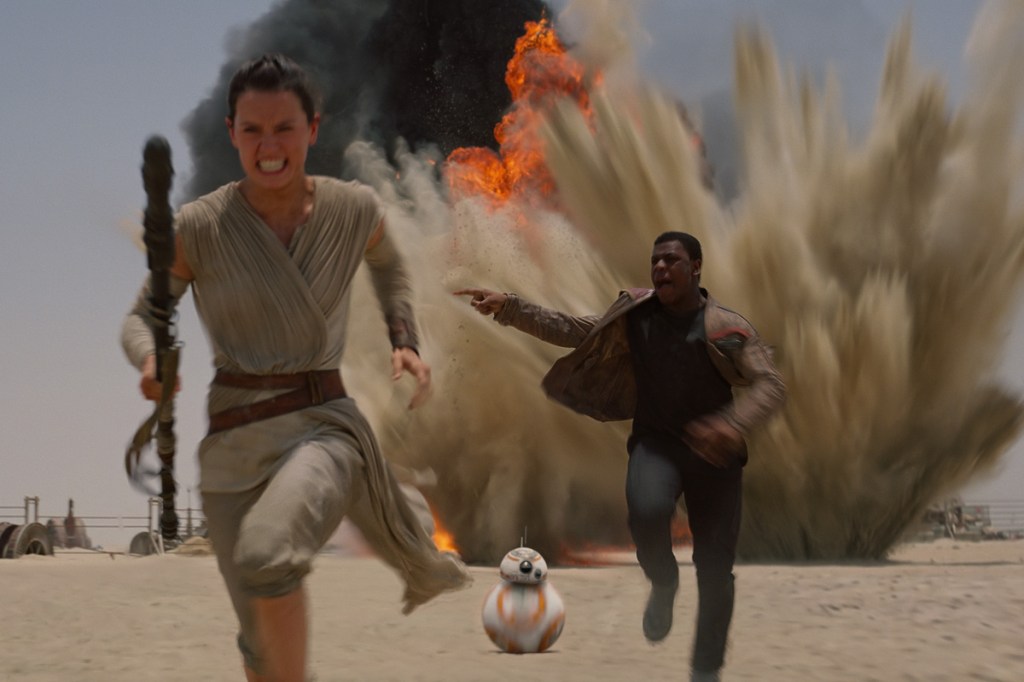
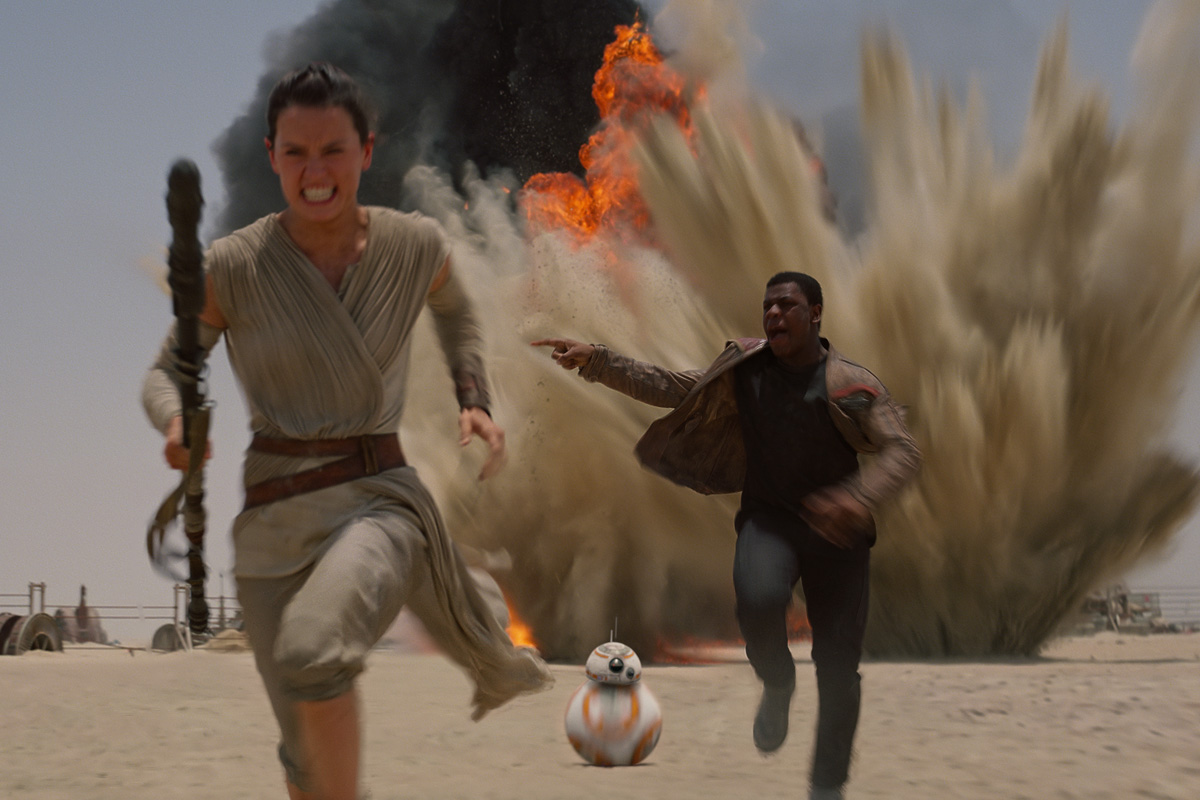
    John Boyega offers up the series’ most emotionally conflicted performance as a young Stormtrooper struggling to perform his duties in service to an evil new alliance. Unknown to American audiences with a cult British film under his belt, Boyega could easily prove to be the new face of the “Star Wars” franchise in much the same way Mark Hamill was 30 years ago.

    image

    The film’s true star, Daisy Ridley, is a revelation as Rey, a young scavenger on Jakku who gets thrust into a pivotal role in yet another civil war by happenstance. Her performance is more layered and effective than either Natalie Portman’s Padme Amidala in the prequel trilogy or Carrie Fisher’s iconic, yet one-note turn as Princess Leia in the original trilogy.

    While it’s still early in her career, “The Force Awakens” could be the star making action vehicle for Ridley that “The Hunger Games” was for Academy Award winner Jennifer Lawrence. Female characters have largely been underdeveloped caricatures in the science fiction genre, though Ridley absolutely nails the mold-breaking character of Rey. Leaning the future of the “Star Wars” franchise on her shoulders wouldn’t be the worst way to move the series forward.

    The most famous of Abrams’ three new stars, Oscar Isaac of the critically acclaimed “Ex Machina” and “A Most Violent Year,” actually has the least to do in the film as the Rebellion’s best pilot. His role as Poe Dameron feels more like a teaser for a much bigger part in future installments and while Isaac is one of the best character actors around, there isn’t much room for him to show off his stuff.

    Shorting Isaac screen time was probably for the best as it saves room for extended sequences featuring screen legend Harrison Ford as his iconic rebel without a cause, Han Solo, and Peter Mayhew as the formidable Chewbacca. Ford’s return is especially memorable and while not necessarily on par from an acting perspective, his fourth turn as Solo is as crucial to making “The Force Awakens” work as a film as Sylvester Stallone as Rocky Balboa in “Creed.”

    The only true flaw within the latest “Star Wars” adventure lies in its clunky, derivative screenplay, which at times feels more like a remake of the 1978 original film than a new adventure. The disappearance and later return of one major character with only a cursory explanation feels like an afterthought rather than true decision making about how to utilize the part.

    While advances have been made in almost all aspects, the seventh episode’s script is almost comically formulaic, as if screenwriters Lawrence Kasdan, Michael Arndt and Abrams copied previous entries in the “Star Wars” franchise and copy-pasted new character names and dialogue over a template plot structure.

    A major twist in the plot revealed to viewers two-thirds through the film could have completely ruined a lesser version of “Force Awakens,” but Abrams handles the rest of the film with such care and aplomb that the impact of the franchise altering twist will be sustainable in the long term. Having talented new actors to carry the torch forward certainly helps.

    As a standalone movie, “Star Wars: The Force Awakens” is solidly one of 2015’s five best films, on par with George Miller’s post-apocalyptic masterpiece “Mad Max: Fury Road” and just a step or two below Ridley Scott’s “The Martian.”

    In the context of the “Star Wars” franchise, “The Force Awakens” far exceeds the trilogy from the late 1990s and early 2000s and serves as the true return for cinema’s premiere space adventure series.

    Oftentimes as fans, we build up in our heads what another film continuing the stories of our favorite movies might look like, who we’d cast in it, what would happen and how awesome that would be if filmmakers could pull the movies we have in our minds out of our heads and onto the big screen for all to enjoy.

    Normally, when those films actually come out, we end up having to say, “Well, it wasn’t as good as what I thought it’d be.”

    Don’t worry. You’re not going to be saying that about “The Force Awakens,” as both Jedi and Sith alike can rejoice that the newest “Star Wars” film gives them everything they were hoping for and more.

  • A Most Violent Year: Quiet drama honors gangster genre

    A Most Violent Year: Quiet drama honors gangster genre

    Hollywood is putting serious pocket change into remaking vintage films using modern technology for new audiences.

    It seems as though no film is beyond the grasp of remake-hungry directors, though there are still some movies that need to be left untouched.

    You just can’t remake “The Godfather.”

    “A Most Violent Year,” a little-seen film that the National Board of Review chose as the best of 2014, isn’t a “Godfather” rip-off or remake, but carries with it all the lessons modern filmmakers can learn from the Francis Ford Coppola crime classic.

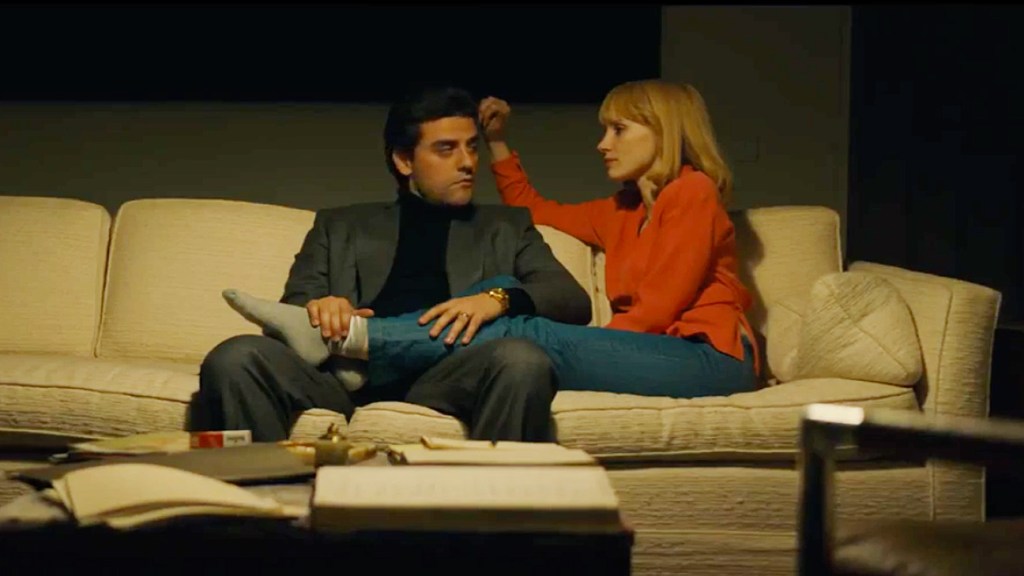
    J.C. Chandor’s third feature film — following 2011’s breakout hit “Margin Call” and 2013’s “All Is Lost” — stars Oscar Isaac as a businessman trying to stay clean in a dirty, corrupt heating oil industry.

    The film gets its title from the background in which it is set — New York City in 1981, a disproportionately violent year in the town’s history.

    At its core, “A Most Violent Year” is a brilliantly simple film masquerading as a gangster morality play.

    Isaac’s Abel Morales, a Latin American immigrant who believes in the “American dream” in its purest form, wants to do right by his wife and daughters.

    His sense of honor in a land of thieves and crooks that rob his company help define him as a more conflicted, modern day Michael Corleone, a role Isaac plays with understated, refined grace.

    Counter-balancing Abel in their marriage, Jessica Chastain continues to prove why she’s the best actress working in Hollywood with a scene-stealing performance as Abel’s wife, Anna, whose Mob family background casts a shadow over Abel’s legitimate business operations.

    It’s Chastain’s on-screen presence that sneaks up on viewers focused on the nuances of Isaac’s performance as Anna provides the unseen but loudly heard muscle backing Abel’s calm and calculated demeanor.

    Chandor’s script provides both Juilliard-trained actors a treasure-trove of character development material from which to mine, allowing Isaac and Chastain to give some of the year’s most compelling performances.

    As Abel’s right-hand-man, Albert Brooks lightly evokes Robert Duvall’s performance as concerned mob lawyer Tom Hagen from “The Godfather,” while “Selma” star David Oyelowo is capable as an assistant district attorney investigating the Morales’ business.

    But it’s Elyes Gabel — in a critical supporting role as a fearful truck driver thinking of taking matters into his own hands — that offers up the best work from the supporting cast.

    His nuanced performance helps give added meaning to the delicate balance between right and wrong in Abel’s struggle to achieve the American dream.

    “A Most Violent Year” is as important a film for what isn’t on screen as for what is.

    Chastain, with her finger on the trigger throughout, is never granted the opportunity to explode into rage and order a “Godfather”-esque series of hits to even the score.

    Chandor, in both his script and direction, values restraint as a means to uphold Abel’s moral compass and flip the stereotypical gangster genre on its head.

    For a film titled “A Most Violent Year,” there’s a glaring minimalism of actual violence in preference to the looming threat of violence, terror through fear, rather than action.

    The film will likely be remembered most for its climatic chase scene, clearly influenced by “The French Connection.”

    It’s actually “A Most Violent Year” and not “Selma” that has suffered most from poor release scheduling, which prevented the film from real consideration for Academy Award nominations.

    A Golden Globe nominee, Chastain would have been the shining star in an otherwise lackluster Best Supporting Actress category, while Isaac would have found himself in the middle of a difficult to crack Best Actor race.

    Cinematographer Bradford Young, also responsible for the Oscar-nominated biopic “Selma,” provides a gritty depth to “A Most Violent Year,” evoking classic ’70s films like “Taxi Driver” and “Dirty Harry.”

    Many critics bemoan a lack of a nomination for Young’s work shooting “Selma,” but “A Most Violent Year” is his career best work.

    Chandor’s best effort to date, “A Most Violent Year” honors its gangster genre predecessors while going somewhere new in the story telling, a lesson worth learning by the rest of Hollywood.