Tag: Pixar

  • Finding Dory: Get lost once again

    Finding Dory: Get lost once again

    ​Rarely does a film sequel exceed high expectations, let alone surpass the original movie it is based on.

    “Finding Dory” is one of those sequels.

    More than a decade after the release of Pixar’s Oscar-winning “Finding Nemo,” the Disney-owned company returns with a nearly flawless follow-up and prove that oftentimes the best sequels are the ones that studios take the extra time to get right.

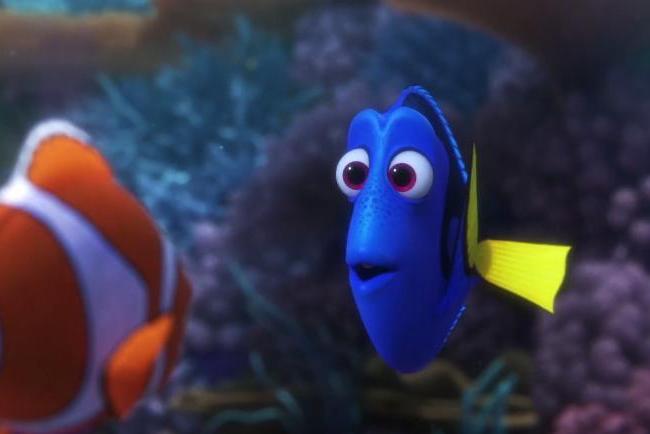
    Dory, a loveable blue tang fish with short term memory loss, heads across the Pacific Ocean in search of the parents she forgot one year following the events of “Nemo.” When she loses her way and is captured by a California aquarium, her clownfish friends Marlin and Nemo must come to her rescue and help Dory reunite with her family.

    Though the plotline is a little bit on the nose given its incredibly similar narrative to the first film, “Dory” is otherwise a perfect family-friendly animated film and surprisingly improves on “Nemo” at nearly every turn.

    With more of the spotlight on Dory this go-round, Ellen Degeneres is spectacular voicing the charming, yet aloof star and elevating the material from writer/director Andrew Stanton to the next level. More than a decade later, Degeneres’ vocal performance in “Nemo” is still the main highlight of one of Disney/Pixar’s most iconic film and she’s even better in an expanded role.

    Many critics have argued for the inclusion of a voice performance in acting category nominations at the annual Academy Awards and few efforts seem more perfect for honoring than Degeneres. The way she is able to infuse Dory with wonder, confusion, heart, humor and life simply by reading words on a page is remarkable. 

    Voice actors have the seemingly impossible task of bringing a story to life without benefit of seeing the scene they’re acting in, with animators designing each character around a pre-recorded vocal performance. Dory’s visual demeanor, attitude and vibrancy on screen is equally attributable to Degeneres’ imagination and acting. No voice actor has been more instrumental to the overall success of their film than Degeneres to “Nemo” and “Dory.”

    Albert Brooks returns to voice Dory’s fatherly friend Marlin, while Hayden Rolence takes over the part of Nemo from Alexander Gould, whose voice has deepened since “Finding Nemo” premiered in 2003. Neither character is as fully developed in “Dory” as Stanton rightly focuses most of the storyline on Dory’s quest and introduces several new characters to the mix.

    “Dory” also sports an impressive supporting cast including Diane Keaton and Eugene Levy as Dory’s parents, Kaitlin Olson as a near-sighted whale shark and Ty Burrell as a beluga whale. Veteran television star Ed O’Neill voices disgruntled octopus Hank, who begrudgingly forms a friendship with Dory. 

    Among the newcomers to the film, O’Neill stands out as the highlight, perfectly matching Degeneres step for step as Hank and Dory make their way through the aquarium. Pixar gives Hank a chameleon-like ability to blend into any background, which stands as the most visually impressive part of a stellar cinematic experience.

    “Finding Dory” is also buoyed by what is likely to be next year’s Academy Award winner for best animated short with “Piper,” the most visually stunning piece of animation in years.

    “Piper” follows a baby sandpiper bird learning about water along a beach, something that doesn’t in and of itself seem all that remarkable. The true brilliance of “Piper” is when audiences realize that they’re watching animation and not something filmed by Disneynature. The short’s director, Alan Barillaro, spent years fine-tuning flawlessly realistic animation of the tiny sandpiper with additional care taken to every feather. “Piper” pairs amazingly well with “Dory” to create a sublime movie going experience.

    Well worth the price of admission, “Finding Dory” is sure to be an iconic animated film on the same level as “Finding Nemo” before it and should be the front-runner to take home the Academy Award for best animated film over Disney’s “Zootopia” and a promising slate of family-friendly films still to be released later this year.

    Ordering tickets online well in advance of show time is highly recommended as “Dory” is going to be one of those films audiences return to see multiple times in theaters, especially families with small children. An instant classic, “Finding Dory” is more than your typical kids’ movie and a must-find for moviegoers of all ages.
  • Kung Fu Panda 3: Sequel gives families something fun in slow January

    Kung Fu Panda 3: Sequel gives families something fun in slow January

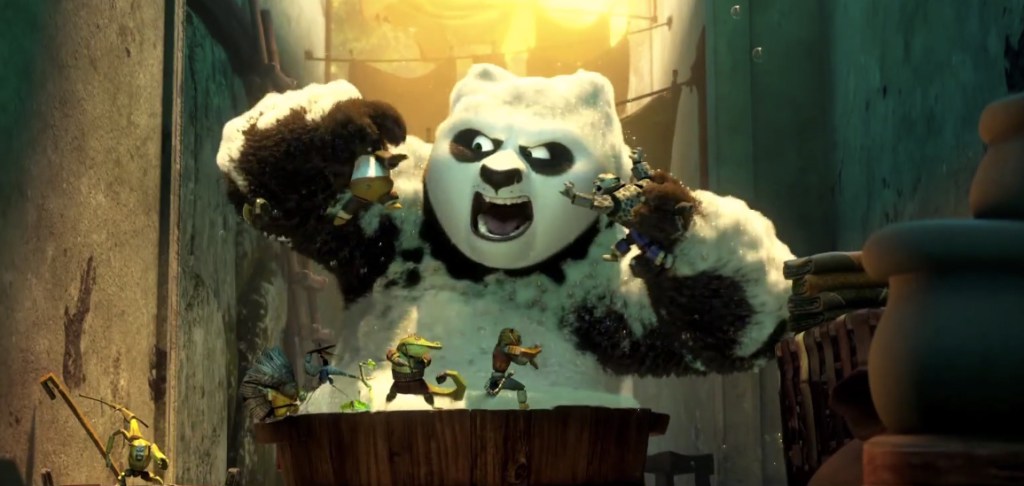
    DreamWorks Animation, a studio that’s struggled to find success in the last five years aside from 2014’s How to Train Your Dragon 2, burst back onto the scene in a major way last weekend with the release of Kung Fu Panda 3, which returned unlikely hero Po and his gang of do-gooder friends back to action.

    While Pixar has been at the forefront of innovative animation with the visual marvels that were Inside Out and The Good Dinosaur, DreamWorks succeeds with a film that looks like a hand-drawn comic book brought to life rather than computer generated cinema.

    What makes the Kung Fu Panda series flow – aside from the top-notch animation of course – is the talented and deep cast of voice actors led by the lovable Jack Black as Po.

    Black brings such a warm effervescence to the role that it’s nearly impossible for kids and adults alike not to enjoy scenes featuring Po being silly or a tad slow. The effortless way Black is able to elevate the third installment’s poorly written script from Jonathan Aibel and Glenn Berger well beyond what the film should have been capable of is truly remarkable.

    In addition to returning voice talent including Angelina Jolie, Dustin Hoffman, Jackie Chan, Lucy Liu, David Cross and Seth Rogen, Kung Fu Panda 3 also sports a trio of new characters to the mix with varying degrees of success.

    Oscar winner J.K. Simmons, who wowed audiences as a villainous jazz band leader in Whiplash, proves he can bring the bad with only his voice as the evil Kai, a bull on the rampage who comes back from the dead to steal everyone’s chi. As ridiculous as that sounds, Simmons makes the character work by not taking things so seriously and just letting Kai flow out of him. Simmons, an expert character actor, was a pitch perfect choice for the role.

    image

    In the other major plot line of the film, Po finally learns he’s not the last panda on the planet and meets his dad Li, voiced by Breaking Bad’s Bryan Cranston, and a host of other pandas, including a pseudo-love interest in Mei Mei, voiced by Kate Hudson.

    Of the two, Cranston’s Li is much more successful, mainly because Cranston is given a much wider berth from which to work with and is a central part of moving the story along. Hudson’s Mei Mei feels rather pointless in the grand scheme of things, since directors Alessandro Carloni and Jennifer Yuh opt to back off from a connection between Po and Mei Mei as soon as they establish one. The film would have been better off saving Mei Mei for the inevitable fourth installment and featuring a possible romance storyline front and center.

    Look, this is an animated film with a target audience of elementary and early middle school students, so we’re not talking about a future Oscar winner here,
    though a nomination for best animated film wouldn’t be out of the question based on the visual merits of the movie alone.

    The script is sparse and bland and there’s too many pop culture references (including a homage to Imagine Dragons’ song “I’m So Sorry” and a way outdated and super obvious “Kung Fu Fighting” leading into the credits), but the third installment lives up to expectations and more.

    It’s early in the year, but Kung Fu Panda 3 is one of 2016’s best releases and something children and adults of all ages can enjoy together.

  • Inside Out: Pixar returns to animated genre with maturity

    Inside Out: Pixar returns to animated genre with maturity

    If Christopher Nolan made a children’s movie, it might end up something very similar to “Inside Out,” the latest Disney/Pixar blockbuster to hit theaters.

    The ultimate thinking man’s kids’ film (both figuratively and literally), director Pete Docter’s third feature film is incredibly layered and cerebral in much more complex ways than his other features, 2001’s “Monsters, Inc.” and 2009’s “Up.”

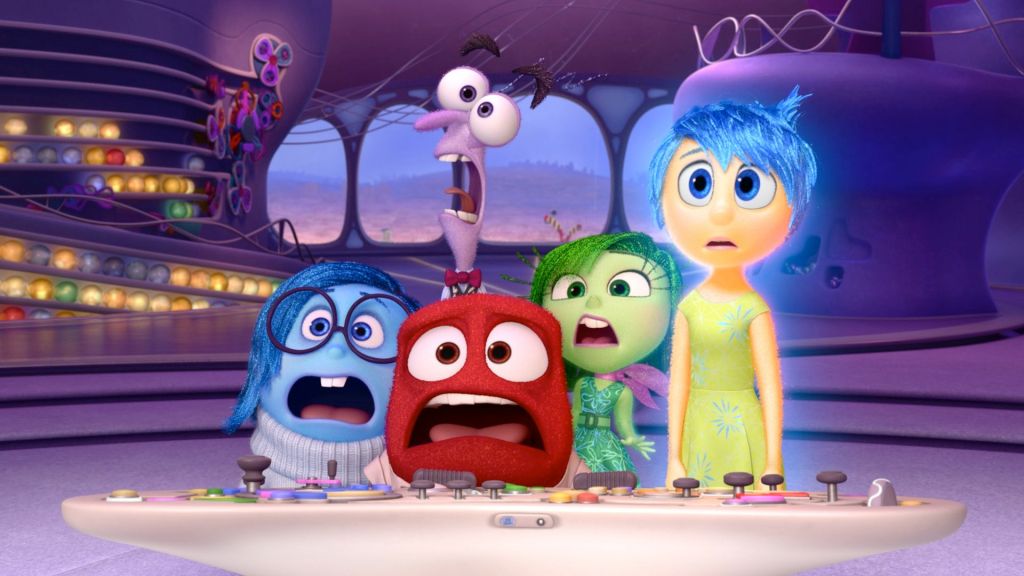
    On the surface, “Inside Out” focuses on the emotional states (Joy, Sadness, Fear, Disgust and Anger) of a pre-teen girl named Riley, whose family moves from Minnesota to San Francisco abruptly and without warning. Much of the film is viewed from inside Riley’s brain, with Riley herself reduced to nothing more than a secondary character. Visually, the difference between the real world and the one in Riley’s head is defined by brightness, with real world scenes more tampered down than the vividly bright world of her mind.

    While not exactly on par with Pixar’s upper echelon features like “Toy Story” and “Finding Nemo,” “Inside Out” does mark a much needed return to the big screen for one of animation’s top studios, whose last release, “Monsters University,” came out in 2013. Thankfully, Pixar is back in a big and bright way with “Inside Out” and viewers will get a second helping of Pixar later this year with the release of “The Good Dinosaur.”

    The journey itself doesn’t provide anything new or extraordinary, but what sets “Inside Out” apart from more pedestrian children’s movies is just how inventive the film is conceptually. Animation usually deals with the surreal and unbelievable on an external scale — i.e. What if all my toys came to life when I’m not around?

    Turning the camera around and looking internally within oneself is something generally left up to high concept science fiction films.  While Docter’s film is certainly not without its flaws — running time being a major concern as “Inside Out” tends to drag in the middle — it does reflect a major step forward in animation and family-friendly films in general.

    Visually, the film is one of Pixar’s better works, dynamic and vivid inside Riley’s mind, while at the same time, the real world feels authentic to the eye in a much more realistic way than your average animated films. There’s two distinct animation styles at play in the film and both stand out on their own while working in harmony with each other.

    For as good as the directorial and animation work is, “Inside Out” doesn’t click in quite the same way without the dynamic and rich vocals of lead voice actress Amy Poehler, whose glee as the emotion Joy evokes much of the high energy character that Poehler became famous for as government worker Leslie Knope in TV’s “Parks and Recreation.”

    So much of the success in animated films is getting the lead voice actors right, from Tim Allen and Tom Hanks in “Toy Story” to Ellen DeGeneres in “Finding Nemo” and Idina Menzel and Kristen Bell in “Frozen.” A good vocal talent can elevate animation beyond the visual and bring the cartoons to life, whereas poor, miscast voices just clutter things up.

    Poehler, who’s lived on high-energy performances, is ideally suited to play the perpetually perky Joy, leading a rag-tag group of emotions voiced by comedic all-stars like Bill Hader (Fear) and Mindy Kaling (Disgust). Comic Lewis Black, who humorously yells through much of his standup, fits like a glove as Anger, the best animated emotion, drawn flame red, stocky and evocative of the stereotypical newsroom editor, complete with a thick mustache reminiscent of Mike Ditka.
    https://m.youtube.com/watch?v=k1oXx4delIY
    It should come as no surprise to fans of the American version of the hit television comedy, “The Office” that Poehler’s main counterbalance, always gloomy Sadness, would be voiced by Phyllis Smith, who perfected the role as a Debbie Downer cubicle worker. Smith brings all the fervor from her classic television performances to the big screen and is a refreshing new voice to animation, one to stick around for a long time.

    Veteran character actor Richard Kind stands out among the vocal talent in a secondary role as Riley’s imaginary best friend, Bing Bong, slowly being forgotten as she gets older.

    “Inside Out” forces younger viewers to ask difficult questions like “Why is sometimes being sad a good thing?” and “How do I best deal with change?” While conceptually geared more toward pre-teen and teenage audiences, younger viewers will still find a great deal of enjoyment following Joy and Sadness as they fight to make their way back home.

    Audiences are seeing Pixar grow up as a studio with “Inside Out,” a more mature offering that still keeps in the overall mold of classic animated hits, but shows more depth and deserves multiple viewings to understand all the film’s subtle complexities.

    ‘Lava’

    Following an ongoing Disney trend for family-friendly entertainment, a short film entitled “Lava” is screened prior to the start of “Inside Out.”

    Basically a music video drawn out a tad too long at six-plus minutes, “Lava” follows the story of a lonely volcano looking to find his volcano soulmate.

    The effort is cutesy and just slightly over the top, not really living up to the much higher standards of “Inside Out,” though the song itself is memorable and catchy.

    Don’t fret if you’re running behind at the concession stand, however, as “Lava” isn’t the must see that its feature partner is.