

Tag: Rooney Mara

  • Lion: Young boy’s tale of loss turns into journey of hope

    Lion: Young boy’s tale of loss turns into journey of hope

    Labelling Golden Globe and Academy Award nominee “Lion” something reductive like “the Google Earth movie” is unnecessarily unfair to the emotional, inspirational film from director Garth Davis.

    “Lion” is a family story about loss and hope, searching for a sense of place and identity. The poignant, touching tale is adapted from Saroo Brierley’s autobiographical book “A Long Way Home” by writer Luke Davies and is told in two parts broken up into hour-long segments. 

    The first tells the gripping, tragic tale of five-year-old Saroo, a boy living in rural India who is separated from his family and awakes in Calcutta alone hundreds of miles away from home. The second features a mature Saroo living in Tasmania with his adoptive parents, who longs for connection to his birth mother and brother and begins a search using the new Google Earth mapping program.


    While there are much more famous performers in “Lion,” young Sunny Pawar gives the film’s best and most devastating performance as the young Saroo. Pawar opens the film with such vibrancy of life and then slowly has it ripped away from him, leaving Pawar completely lost in the moments to incredibly heart-wrenching effect. “Lion” is as poignant of a film as it is wholly due to Pawar’s unique ability to draw audiences in and captivate their hearts, a talent few adults – let alone children –  have.

    Abhishek Bharate also delivers in spades with a strong performance as Saroo’s protective older brother, Guddu, who serves as much as a surrogate father to Saroo as he does a loyal brother. Bharate does a terrific job supporting Pawar’s touching portrayal without getting in the way.

    As the older Saroo, Dev Patel is an emotional wreck struggling to internalize his longings, hiding them from his adoptive family and girlfriend. Scene to scene, moment by moment, Patel slowly unravels Saroo’s inner demons as if they were layers of an onion being pulled apart. Audiences can feel Pawar’s performance haunting Saroo in Patel’s eyes as the pain of loss bubbles to the surface. It’s an emotional, touching portrayal that represents Patel’s best work to date.

    Oscar winner Nicole Kidman is a likely nominee for her supporting work as Saroo’s adoptive mother. In each scene whether she’s working opposite Patel or Pawar, Kidman brings such a motherly warmth to the performance that might often be phoned in by a less committed actress. One scene late in the film where Saroo confronts his mother about why she did not have any biological children of her own will probably serve as her highlight reel for a presumptive Academy Award nomination.

    “Lion” doesn’t give talented young actress Rooney Mara much to do, and as such her performance as Saroo’s girlfriend who helps get the ball rolling on his quest to find his family is pretty underwhelming. It feels as though script sacrifices were made to invest more time in Pawar, Patel and Kidman, though doing so at the expense of someone like Mara feels like a waste.

    Davis does a great job as director in staying out of the way for the most part, allowing the film’s performances to speak for themselves. 

    The film’s strongest point, more so than even its terrific cast, is the brilliant cinematography from director of photography Greig Fraser. In the film’s first half, Fraser brings the camera lower and angles upward, allowing viewers to experience India from young Saroo’s perspective. The intimate and often haunting images this shooting style allows give “Lion” a special vibrancy not normally found in biopic dramas.

    While not the obvious choice for a night out at the theaters or for the year’s top cinema prizes, “Lion” is well worth the price of admission and could be an upset winner in several major Oscar categories at next month’s ceremony. Its true story and efforts to raise awareness and funding for India’s large “street children” population will tug at audiences’ heartstrings as well.
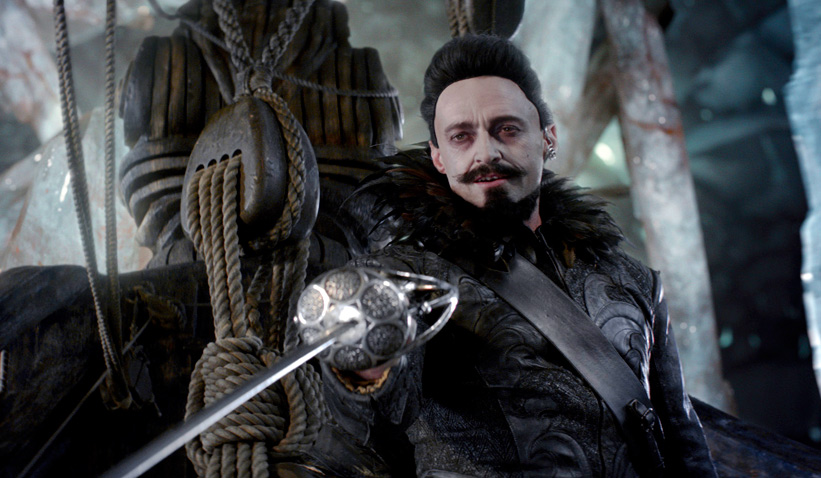
  • Pan: Quirky retelling of classic tale requires embracing the absurd

    Pan: Quirky retelling of classic tale requires embracing the absurd

    Hugh Jackman and a chorus of hundreds beckons the call: “Here we are now; entertain us!”

    Over and over and over again in a melancholic work camp chant, they intone, pleading to be quenched in their thirst for violent justice, screaming Kurt Cobain-penned, 90s grunge rock lyrics.

    The chaotic, post-apocalyptic scene feels like something straight out of George Miller’s epic fantasy “Mad Max: Fury Road,” but that would make just too much sense.

    Instead, what viewers are left with in this very real scene is director Joe Wright’s earliest departure from convention and plot coherency in the atypical children’s film “Pan,” a prequel retelling of the familiar Peter Pan tale.

    It’s scenes like this – and a subsequent attempt to cinematically murder young kids by forcing them off the plank into a pit while chanting “Blitzkrieg Bop” by the Ramones – that are the kind of irrational, obscure nonsense Wright peddles throughout the film that makes viewers wonder just what in the world they’ve gotten themselves into.

    The whole affair – nearly two hours in length – is a children’s apocalyptic nightmare crafted by Wright, whose work is a directorial Frankenstein of Miller and “Alice in Wonderland”-era Tim Burton.           

    Dark and brooding at times when Wright wants to elevate the “steampunk” motifs of the film’s World War II era England settings, “Pan” shines bright visually once viewers transition to Neverland. Wright’s use of enhanced, over-brightened color palettes is reminiscent of Miller’s “Fury Road” as well as Wright’s fantastic 2010 action-thriller “Hanna,” just without the dynamic plot or performances that make those two films stand out.

    Despite secondary lead status in terms of screen time, Jackman dominates the frame both in star power and charisma. Like Angelina Jolie in “Maleficent,” his villainous pirate captain Blackbeard is the reason to show up for “Pan” and he truly looks like he’s enjoying every minute of the experience. Glad someone is.

    Newcomer Levi Miller is capable, though not very memorable as Peter, giving the type of performance you’d expect from an actor playing Pan as if a supporting role and not the titular main character of the film.

    Media concerns about “white-washing” a Native American part aside, Rooney Mara gives exactly the type of off-kilter, quirky look that Wright had to have been going after as native princess Tiger Lily. Like all her performances, Mara commits fully to the role, though there’s not much within the rather generic script to work with.

    The film’s other leading ladies – Amanda Seyfried as Peter’s long lost mother and Cara Delevigne of “Paper Towns” fame as a school of mermaids – aren’t given enough screen time or character development to be relevant to the film, no matter how many mute mermaids Delevigne awkwardly model-faces her way through on screen. Having five sea creatures with Delevigne’s face plastered on them doesn’t change the fact that none of them are worth watching for any length of time. Wright completely misses the mark here.

    Traditionally the villain, Garrett Hedlund’s Captain Hook is friend, not foe, to Peter Pan, though it’s next to impossible to recognize Hedlund as Hook when he thinks he’s playing Indiana Jones. Generic khaki ensemble, dry wit and an aversion to dealing with children make Hedlund less a future pirate and more a Harrison Ford starter kit, except Hedlund lacks the charisma to pull it off. Everything about Hook’s character in “Pan” oozes of a sequel that will likely never get made and viewers are left hanging waiting for something worthwhile to happen. Spoiler alert: nothing ever does.

    In another world where the film’s $150 million budget doesn’t feel like an anchor weighing the pirate adventure film down, Wright’s highly artistic auteur style might actually pay off. There’s several individual moments within “Pan” where viewers will say “That was really cool.” But Wright can’t seem to bridge the large gaps in time between these scenes and in the kids’ film genre, boredom equals doom.

    Audiences are expected to irrationally embrace the absurd and surreal in ‘Pan’ without cause or justification. Better films have been made in this style – even Wright’s own ‘Hanna’ – but none of those are children’s films. The style simply doesn’t work in a genre where the attention spans of audiences wane so much.

    Nothing overty offensive occurs in the film in either script or storytelling, but there’s not much there for children to enjoy either. There’s a much greater chance that younger audiences will leave bored rather than scarred. “Pan” ends up being a decently made film intended for kids, but made for adults.

    All the warning signs are there. Ninety percent of audiences who weren’t born when Nirvana made “Smells Like Teen Spirit” the anthem for a new era of rock rebellion and have no idea who the Ramones are simply aren’t ready for the visual and cultural subtexts an auteur like Wright attempts to salvage his film by cramming into “Pan.”

    At the end of the day, kids who catch the film are going to go home and cry out: “Here we are now; entertain us!”

    “Pan” simply won’t do the trick.