
Tag: Sicario

  • Transpecos: Hill Country Film Festival review

    Transpecos: Hill Country Film Festival review

    It’s hard to imagine a more timely independent feature to hit the big screen in 2016 than Transpecos, Greg Kwedar’s dynamic and explosive thriller along the Texas-Mexico border.

    With homeland security, drug lords and massive wall-building in the news, now more than ever do moviegoers need this film to help them engage in thought provoking discussion thanks to Transpecos’ cinematic world where ambiguity reigns supreme and the lines between right and wrong are blurred to the point of near invisibility.

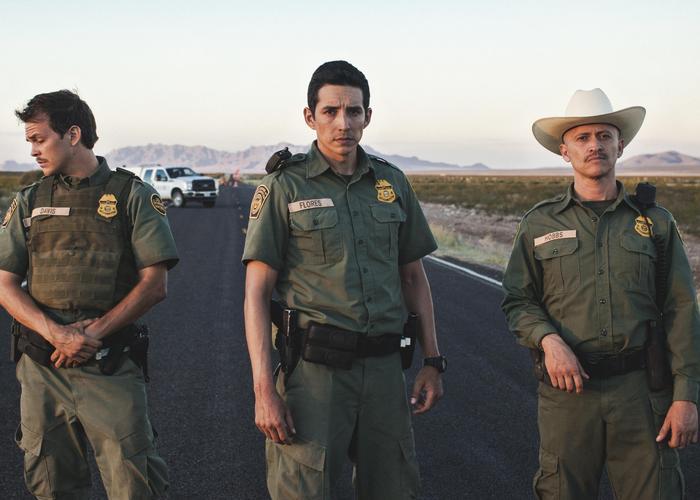
    Transpecos follows three U.S. Border Patrol officers on a seemingly routine morning shift working a mobile checkpoint on a remote desert highway. Things irreparably change for the three when a vehicle stop arouses suspicion and throws their world (quite literally) for a loop. Going much deeper into the plot would ruin several of the major twists and turns Kwedar takes viewers through and would ruin the cinematic experience for newcomers to the film.

    The thriller has wowed audiences across Texas, taking home the audience award in the narrative category from this year’s South by Southwest Film Festival and Dallas International Film Festival. Most recently, Transpecos took home the Cinema Dulce (Best of Fest) award at last weekend’s Hill Country Film Festival in Fredericksburg along with a Best Director nomination for Kwedar and a Best Actor nomination for Gabriel Luna.

    Thankfully, Transpecos’ massive success in such a short time on the festival circuit has led to an early distribution deal with Samuel Goldwyn Films, giving audiences nationwide an opportunity to catch the border thriller with a planned fall release.

    The indie darling pairs nicely with the better known drug cartel drama Sicario starring Emily Blunt and Benicio del Toro. While Transpecos certainly has to cut a couple of corners financially due to an indie budget, there’s no lacking in quality and Transpecos certainly rivals the star-studded Sicario as one of the best films about Homeland Security to come out in recent years.

    The script – penned by Kwedar with co-writer Clint Bentley – paces forward with urgency and immediacy, yet never shies away from taking the time to develop nuanced, meaningful dialogue between its lead actors.

    Each of Transpecos’ three leading men offers distinct layered performances in spite of the incredibly conventional framework of their U.S. Border Patrol officers.

    Hobbs (Clifton Collins, Jr.) is the hard-nosed, rough around the edges yet by-the-book lead officer whose racism hinders his ability to identify with Hispanic civilians and fellow officers. Flores (Luna) represents the All-American Boy Scout struggling to rectify his compassion for others against the brutal life securing the southern border from the illegal drug trade. Davis (Johnny Simmons) is the green rookie seemingly unable to handle the pressure.

    It would be easy to handle each character as limited, generic stereotypes given such formulaic broad strokes for the officers’ backstories. But Kwedar and Bentley have penned one of the decade’s best independently made scripts and the terrific performances Kwedar draws out of his three leads elevates the material even further.

    Luna’s masterful turn as the conflicted Flores paces the character-driven drama within Kwedar’s otherwise tense thriller. His ability to emote both verbally and non-verbally the unease Flores feels about the actions he’s forced to take in the name of doing the right thing is nothing short of astounding.

    Easily a career best performance, Collins shines in Transpecos with ruthless efficiency. While his cast mates are tasked with acting in varying degrees of subtlety, Collins’ turn as Hobbs is powerful and domineering on the borderline of scene chewing, but wholly needed to highlight the delicacy with which his fellow actors are approaching their nuanced characters.

    As rookie officer Davis, Simmons perfectly portrays the ideal fish-out-of-water rookie cop, constantly nervous but confident when he has to be. There’s a tremble in Simmons’ voice that matches the shakes viewers see in Davis’ hands while holding his service weapon, a beautifully delicate touch that doesn’t become overdone as the film progresses.

    Visually, Kwedar beautifully intercuts spectacular wide shots of the terrain with the regular action to provide tonal contrast in the film while the opening action sequence at the traffic stop feels impossible to pull off with limited resources.

    Transpecos manages to perfectly balance its loudest, brash moments with a quiet, haunting score from Aaron and Bryce Dessner of The National. Award-worthy in its own right, the simplicity of musical interludes to enhance and temper the film’s mood at the turn of a dime is reminiscent of Trent Reznor and Atticus Ross’ magnificent score from The Girl With The Dragon Tattoo.

    Remarkably, with each new scene Kwedar is somehow able to elevate Transpecos to yet another level, leaving viewers aching for more. It’s incredible to think that this is Kwedar’s first time behind the camera as a feature film director. He carefully crafts each shot and scene with the elegance of a much more experienced storyteller.

    Kwedar’s film greatly benefits from gorgeous cinematography by Jeffrey Waldron, who creates a fourth character out of the open Texas border terrain. Even in a cold theater, it’s nearly impossible not to feel the heat radiating off of Hobbes, Flores and Davis as they languish in the sun while working a patrol checkpoint.

    Waldron proves to be a master of light and dark, magically adjusting to the blinding yellows of the desert sun and devastatingly cool blues and blacks of nightfall on the Texas frontier with ease. Every frame makes audiences feel like they’re actually there with the performers, a rarity in independent filmmaking.

    As independent features go, you can’t do much better than Transpecos, a film deserving of mainstream commercial and critical success. Thoroughly engaging from the first frame to the final credit roll, the border thriller rivals big budget studio films and proves once again that independent filmmakers can play with the big boys and win.

    Note: This Cinematic Considerations review of Transpecos is one of several films reviewed following the seventh annual Hill Country Film Festival in Fredericksburg, Texas, April 28-May 1. Critic Matt Ward is a programmer for HCFF.
  • The Revenant: DiCaprio’s lead performance Oscar-worthy

    The Revenant: DiCaprio’s lead performance Oscar-worthy

    As you’re sitting in the theater watching Leonardo DiCaprio eating raw bison liver, it’s hard not to wonder to what lengths perhaps the greatest actor never to win an Academy Award will go in pursuit of his art.

    Once you’ve seen “The Revenant” – the closest thing to an absolute lock for a Best Picture Oscar Hollywood produced in 2015 – go online and read what sort of actual hell DiCaprio went through making the epic frontier saga of survival and revenge. It will blow you away nearly as much as the two-and-a-half hour visual masterpiece did.

    Scene by scene, you’ll watch him do something more incredulous and crazy than the last and think aloud director Alejandro Gonzalez Inarritu and his team faked it. Odds are, they didn’t. DiCaprio nearly kills himself in by far the best western film in more than two decades, with his performance as frontier scout Hugh Glass making John Wayne and Clint Eastwood look like scared little children.

    image

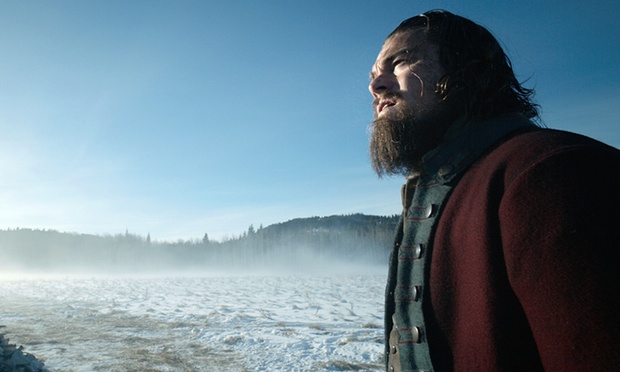
    Within every frame, DiCaprio pierces the audience with his eyes and brings them inside the soul of a frontiersman struggling with loss and pain in the most visceral of ways. His physical performance speaks novels while his mouth rarely opens to speak.

    There’s something hauntingly beautiful about the way DiCaprio is able to transform himself into a character we’ve never seen him come close to portraying before. Hugh Glass is the pinnacle of DiCaprio’s tour de force career and one moviegoers will remember him by for decades to come.

    As much as “The Revenant” is an one-man show, DiCaprio isn’t the only award worthy performer on screen. Glass’ foil as it were – Fitzgerald, the complex man who leaves Glass for dead in the middle of nowhere – is played by acting chameleon Tom Hardy, who melts away into the vigilante fur trapper. Powerful yet subdued, Hardy crushes every scene with a finesse usually found in older, more seasoned performers. Hardy not only deserves, but needs, to be nominated for his first Academy Award for the role, as his performance also elevates scenes with DiCaprio late in the film into the cinematic stratosphere.

    As expedition leader Captain Andrew Henry, Domnhall Gleeson finishes off a stellar 2015 acting run with a compelling performance in support of DiCaprio and Hardy. Gleeson, who wowed with a leading turn in sci-fi thriller “Ex Machina” and supporting roles in both “Brooklyn” and “Star Wars: The Force Awakens,” has certainly proved to be one to watch out for in the coming years.

    The only flaw within “The Revenant” – if there is one at all – comes from the film’s slow, arduous pace, which will daunt some viewers. Inarritu stretches each scene to its absolute limit visually, in the performances he pulls from his actors and even in length. It takes a deft hand to make such painstaking trials and tribulations feel emotionally rewarding to watch and the Oscar-winning director succeeds to a large extent.

    Inarritu continues the same visual style that made last year’s Best Picture winner “Birdman” so striking, with long, uncut tracking shots following the action of “The Revenant.” Though not made to look like one continuous take spread over the course of nearly three hours, scenes go by for eight to 10 minutes at a time effortlessly, most notably during a harrowing bear attack and the opening action sequence, which sees DiCaprio and his band of fur trappers attacked by a tribe of Native Americans.

    Action pulsates during this scene from gun battle to hand-to-hand combat and back again so flawlessly that it’s difficult to comprehend in the moment just how beautifully the artistry of creating that scene was possible. The opening battle favorably evokes the emotions and awe viewers felt the first time they watched U.S. troops storm the beaches at Normandy at the beginning of Steven Spielberg’s masterpiece “Saving Private Ryan.” Inarritu opts for more artistry in his work than the gritty realism of Spielberg’s WWII classic, but “The Revenant” still manages to feel authentic and immersive.

    There’s a lot of violence on screen – not to the extent as Quentin Tarantino’s self-indulgent “The Hateful Eight” – and all of it feels necessary and dynamic within real contexts, though viewers might occasionally find themselves wincing at the sight of a bloodied and beaten DiCaprio at the paws of a grizzly. The bear attack scene will likely become the film’s most iconic and is transformative in the sense that it feels less like part of a fictional movie and more like an in-the-moment observation of a genuine attack.

    The coup de grace that brings “The Revenant” together as a whole is the camerawork of director of photography Emmanuel Lubezki, a two-time Oscar winner for “Gravity” and “Birdman” and a certain nominee for the same cinematography prize this year. For all the grand bravado of George Miller’s “Mad Max: Fury Road” or Denis Villeneuve’s quiet and dark “Sicario,” you won’t find a better looking movie visually than “The Revenant,” shot entirely using natural light in cold, wide open expanses of Canada and Argentina which evoke the frontier Pacific Northwest of the film’s setting.

    Lubezki’s genius – with obvious and immense credit to Inarritu as director – pours out on screen as viewers are immersed into the world of frontier fur trappers. If it’s possible to feel cold just by watching events unfold on screen, “The Revenant” does that. Natural lighting helps put the audience in the moment in ways few other films are able to. Watching “The Revenant” on the biggest possible screen is an absolute must. Smaller screens – especially TVs and tablets – won’t do this film justice at all.

    While Inarritu, Hardy and certainly Lubezki are all worthy of accolades during this awards season, all three pale in comparison to DiCaprio’s acting masterpiece, which is in the highest stratosphere of 21st Century performances. The raw, visceral nature of his work prove without a shadow of a doubt that if DiCaprio doesn’t win an Oscar for his performance as Glass, he never will.

    Don’t make the mistake of waiting to see “The Revenant,” hoping to catch one of 2015’s four best films on DVD or Bluray months from now. Run, don’t walk to your local movie theater and catch a piece of cinematic heaven on screen.