
Tag: Star Wars

  • Rogue One: Star Wars like no other

    Rogue One: Star Wars like no other

    There’s a reason “Rogue One,” the latest in the world’s most popular film franchises, is tagged as “A Star Wars Story” rather than given an episode number like every other movie in the George Lucas series.

    Like its vigilante, independent title might suggest, “Rogue One” stands alone from all seven previous “Star Wars” films in nearly every way, from plot to characters to cinematography. Though it falls within the same universe, “Rogue One” is far from a traditional “Star Wars” film.

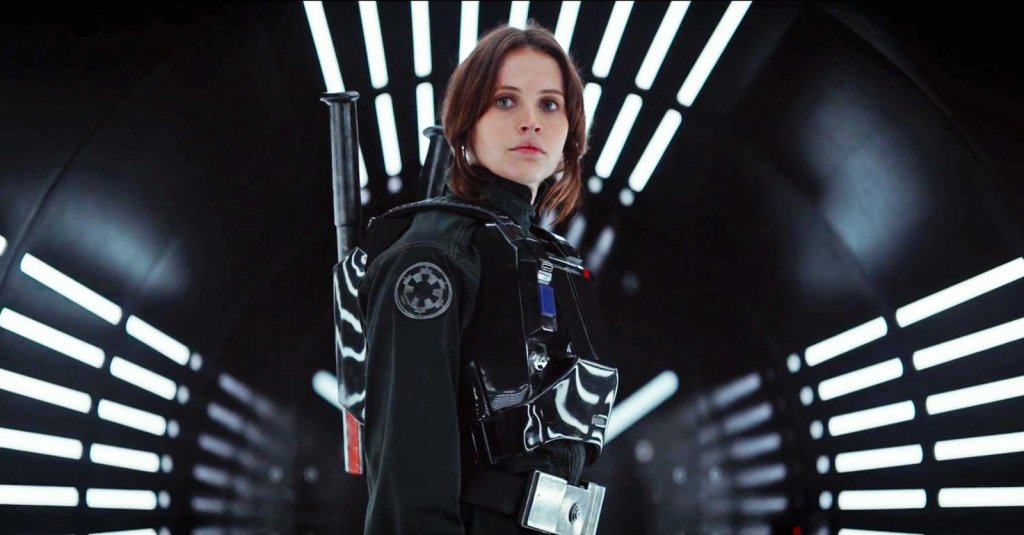
    Set sometime between the events of 2005’s “Episode III: Revenge of the Sith” and the 1977 original “Episode IV: A New Hope,” “Rogue One” focuses on a secret Rebel mission to steal the blueprints to the Empire’s recently completed Death Star battle station capable of wiping out entire planets. The team is comprised of entirely new characters to the franchise led by a young thief Jyn Erso (Oscar nominee Felicity Jones).


    Director Gareth Edwards’ foray into “Star Wars” operates in the darker, Empire-dominated mold of the prequel trilogy and “The Empire Strikes Back,” though “Rogue One” also often feels like a World War II era war epic set in the far reaches of space. This heavier tone culminates in one of the franchise’s best extended action sequences late in the film’s third act as the body count on both sides inevitably ramps up.

    Jones carries “Rogue One” with gusto similar to Daisy Ridley’s magnificent performance in last year’s “The Force Awakens,” though viewers never get to see the same level of character development in Jones’ Jyn as Ridley’s Rey. The main issue here is that both filmmaker and viewer know that Rey will be a major player in the franchise for several films to come, while Jyn’s story is completely contained in the stand-alone nature of “Rogue One” as a whole.

    “Rogue One” also benefits from a solid supporting cast led by Diego Luna as a Rebel Alliance captain tasked with tracking Jyn down, Forest Whitaker as Jyn’s mentor Saw Gerrera and Riz Ahmed as a Empire pilot sneaking secrets to the Rebellion.

    Like most “Star Wars” entries, one of the best parts of “Rogue One” is in its robots, namely the reprogrammed Empire robot K-2SO voiced by “Firefly” star Alan Tudyk. The script is strongest in K-2SO’s dry humor while predicting the probability of disaster at every turn and Tudyk’s ability to relay sarcasm in relative monotone effectively is key to the portrayal.

    Edwards’ film extends the film’s darker, grittier tone into the cinematography, which relies on tempered browns and grays unlike the bright vibrancy of JJ Abrams’ “The Force Awakens.” His expert use of angles to pit viewers within the shoes of the Rebel Alliance as they take on much larger Empire forces is also a highlight visually in the film’s final hour.

    There’s also a terrific use of CGI to help tie “Rogue One” in to other “Star Wars” films in spite of the circumstances. In order to bring classic villain Grand Moth Tarkin into the movie after the death of original actor Peter Cushing, filmmakers used CGI and digitally altered reference footage to insert Cushing’s likeness over the face of Guy Henry, who acted and voiced Tarkin for “Rogue One.” Fans of the franchise will find it nearly impossible to tell the difference without looking for it, which is a great accomplishment.

    Because “Rogue One” may not have long-term impact on the “Star Wars” story moving forward, it may not seem to some potential moviegoers that catching this off-shoot film in theaters would be necessary. This would be a tremendous mistake.

    “Rogue One” certainly stands out as the year’s best big-budget popcorn franchise film and does a masterful job of filling in the gaps between the original and prequel trilogies of “Star Wars.” The film’s dazzling third act is worth the price of admission alone as Edwards melds old world battle sequences with modern technology to create engaging, visually compelling cinema.

    More than any other film in the franchise since “A New Hope,” “Rogue One” is the most accessible “Star Wars” movie for those audience members unable to tell a Wookie from a Ewok and requires no prior knowledge before viewing.

    If you’re heading to the movies this holiday season, you could do a lot worse than checking out likely one of 2016’s ten best films.
  • Star Wars The Force Awakens: Episode VII fulfills legacy of original trilogy

    Star Wars The Force Awakens: Episode VII fulfills legacy of original trilogy

    Heading in to the seventh installment in the famed science fiction franchise, it seemed almost certain that “Star Wars: The Force Awakens” – which opened Thursday evening – would either bomb or blow viewers away. There didn’t really seem to be an in-between.

    Fans were right to be cautiously optimistic about the first true sequel in the series after being let down when a much-hyped “Star Wars Episode I: The Phantom Menace” debuted to less than glowing reviews from both critics and die-hards alike in 1999. Two subsequent prequels – “Attack of the Clones” and “Revenge of the Sith” – fared better, but neither felt up to par with the original trilogy.

    Sixteen years later, “The Force Awakens” fulfills the promise of what “The Phantom Menace” could have been – a true space adventure that takes advantage of modern technology filled with everything fans decked out in Jedi robes and Stormtrooper costumes lining up outside theaters hours in advance of the first showing had hoped for.

    Visually, the film is the best entry in the entire catalog of “Star Wars” installments, which should surprise no one. While the action sequences don’t quite rise to “The Empire Strikes Back” level of enjoyment in storytelling, combat on the ground and in the skies is more compelling than it probably ought to be thanks in large part to director J.J. Abrams layering of smaller moments to create tension and character development throughout each sequence.

    What sets “The Force Awakens” apart from the rest of the franchise, even more so than the spectacular cinematography and effects, are the talented cast members added to the “Star Wars” universe in the seventh episode of the series.

    Perhaps the biggest flaw of the “Star Wars” prequel trilogy was poor acting from major characters in the film, most notably Hayden Christensen’s stiff, lifeless portrayal of a pre-Darth Vader Anakin Skywalker. That, coupled with a largely racist caricature akin to the crows of “Dumbo” in Jar Jar Binks and subpar screenwriting, led to a disappointing series that hardcore fans either force themselves to watch or ignore completely.

    Abrams, coming off a widely successful turn rebooting the “Star Trek” franchise, hits the mark with three “Force Awakens” cast members brand new to the
    “Star Wars” series.

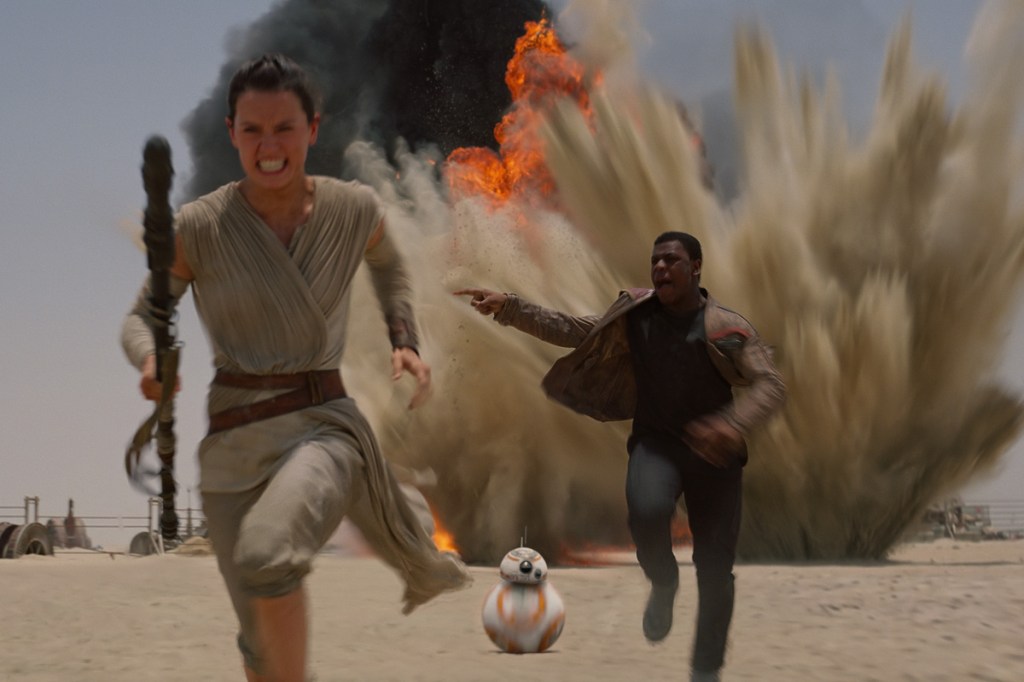
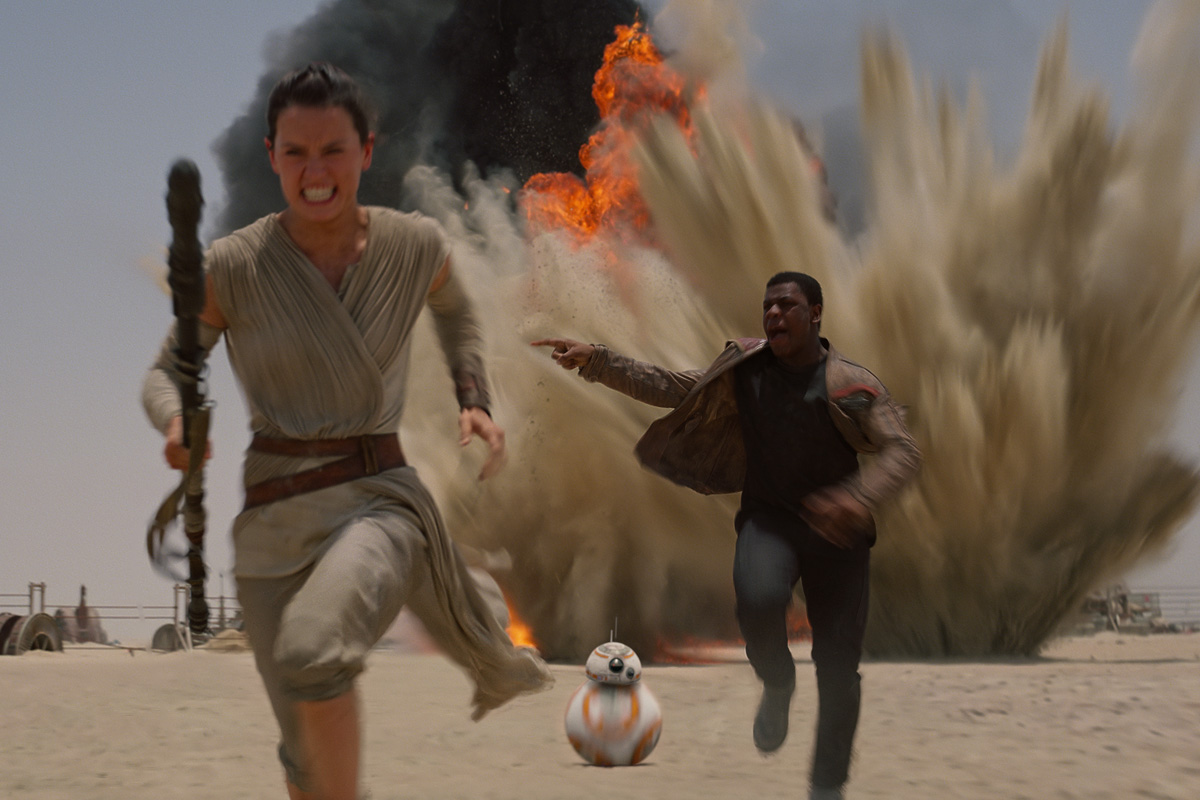
    John Boyega offers up the series’ most emotionally conflicted performance as a young Stormtrooper struggling to perform his duties in service to an evil new alliance. Unknown to American audiences with a cult British film under his belt, Boyega could easily prove to be the new face of the “Star Wars” franchise in much the same way Mark Hamill was 30 years ago.

    image

    The film’s true star, Daisy Ridley, is a revelation as Rey, a young scavenger on Jakku who gets thrust into a pivotal role in yet another civil war by happenstance. Her performance is more layered and effective than either Natalie Portman’s Padme Amidala in the prequel trilogy or Carrie Fisher’s iconic, yet one-note turn as Princess Leia in the original trilogy.

    While it’s still early in her career, “The Force Awakens” could be the star making action vehicle for Ridley that “The Hunger Games” was for Academy Award winner Jennifer Lawrence. Female characters have largely been underdeveloped caricatures in the science fiction genre, though Ridley absolutely nails the mold-breaking character of Rey. Leaning the future of the “Star Wars” franchise on her shoulders wouldn’t be the worst way to move the series forward.

    The most famous of Abrams’ three new stars, Oscar Isaac of the critically acclaimed “Ex Machina” and “A Most Violent Year,” actually has the least to do in the film as the Rebellion’s best pilot. His role as Poe Dameron feels more like a teaser for a much bigger part in future installments and while Isaac is one of the best character actors around, there isn’t much room for him to show off his stuff.

    Shorting Isaac screen time was probably for the best as it saves room for extended sequences featuring screen legend Harrison Ford as his iconic rebel without a cause, Han Solo, and Peter Mayhew as the formidable Chewbacca. Ford’s return is especially memorable and while not necessarily on par from an acting perspective, his fourth turn as Solo is as crucial to making “The Force Awakens” work as a film as Sylvester Stallone as Rocky Balboa in “Creed.”

    The only true flaw within the latest “Star Wars” adventure lies in its clunky, derivative screenplay, which at times feels more like a remake of the 1978 original film than a new adventure. The disappearance and later return of one major character with only a cursory explanation feels like an afterthought rather than true decision making about how to utilize the part.

    While advances have been made in almost all aspects, the seventh episode’s script is almost comically formulaic, as if screenwriters Lawrence Kasdan, Michael Arndt and Abrams copied previous entries in the “Star Wars” franchise and copy-pasted new character names and dialogue over a template plot structure.

    A major twist in the plot revealed to viewers two-thirds through the film could have completely ruined a lesser version of “Force Awakens,” but Abrams handles the rest of the film with such care and aplomb that the impact of the franchise altering twist will be sustainable in the long term. Having talented new actors to carry the torch forward certainly helps.

    As a standalone movie, “Star Wars: The Force Awakens” is solidly one of 2015’s five best films, on par with George Miller’s post-apocalyptic masterpiece “Mad Max: Fury Road” and just a step or two below Ridley Scott’s “The Martian.”

    In the context of the “Star Wars” franchise, “The Force Awakens” far exceeds the trilogy from the late 1990s and early 2000s and serves as the true return for cinema’s premiere space adventure series.

    Oftentimes as fans, we build up in our heads what another film continuing the stories of our favorite movies might look like, who we’d cast in it, what would happen and how awesome that would be if filmmakers could pull the movies we have in our minds out of our heads and onto the big screen for all to enjoy.

    Normally, when those films actually come out, we end up having to say, “Well, it wasn’t as good as what I thought it’d be.”

    Don’t worry. You’re not going to be saying that about “The Force Awakens,” as both Jedi and Sith alike can rejoice that the newest “Star Wars” film gives them everything they were hoping for and more.