
Tag: Steve McQueen

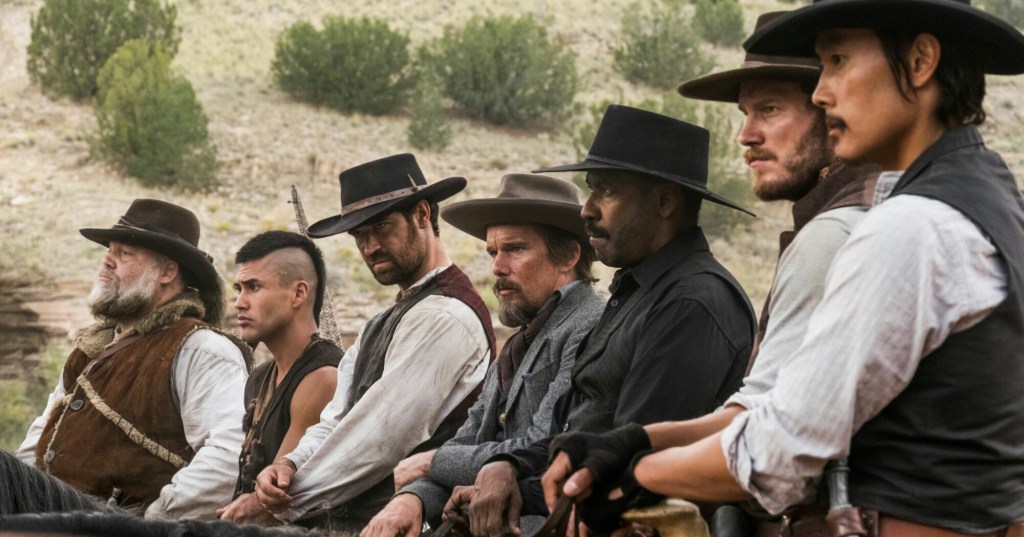
  • The Magnificent Seven: Not your father’s western

    The Magnificent Seven: Not your father’s western

    ​“The Magnificent Seven” is a completely unnecessary remake.

    It’s not because the Denzel Washington led western isn’t a quality movie, but rather that the re-imagining of the 1960 film starring Yul Brenner and Steve McQueen doesn’t actually resemble the original film itself. In fact, the newest film from director Antoine Fuqua would probably be better served with a different title altogether as Fuqua’s movie is more in-the-style-of “The Magnificent Seven” than a true remake.

    The bare-bone essentials are the same: seven mercenary gunmen protect a town from a ruthless villain and his large army of bandits. That’s pretty much all the two films share in common besides their name. Brenner and company fought for a purpose; the new team fights because they don’t have anything better to do.

    Amid the often chaotic frenzy within the film, Washington brings his usual gravitas to the role of bounty hunter Sam Chisholm, leader of the “seven.” Audiences are able to buy into the group coalescing as one as a result of Washington’s stature and presence on screen, commanding the respect of his fellow actors and the audience watching comfortably in their seats.

    Chris Pratt is an inspired choice to play the group’s unofficial lieutenant, smart-mouthed playboy gunslinger Josh Faraday. The former funnyman turned action star keeps “The Magnificent Seven” balanced with his wit and charm, offsetting the more deliberate performance from Washington.

    Unfortunately, Ethan Hawke’s turn as Civil War sharpshooter Goodnight Robicheaux was criminally underutilized in the film. Hawke has the capability to perform at an incredibly highly level dramatically, but not enough time was spent developing Robicheaux’s wariness to use his weapon. 

    It’s this sort of character development that Fuqua opts to minimize for the sake of the action sequences, proving the director doesn’t get the point of classic western films like “The Magnificent Seven.” The why characters act the way the do is often as important if not more so than what they do. Fuqua oversimplifies these character nuances, turning them into mere anecdotes in service of explosions. This isn’t to say that “The Magnificent Seven” isn’t a largely entertaining film. It certainly is. It just could have been a lot more.

    Among the secondary cast, the film’s best performance comes from veteran character actor Vincent D’Onofrio as rugged mountain-man Jack Horne. Most of the characters in “Magnificent Seven” are pretty bland as individuals and serve mainly to further the action sequences late in the film. D’Onofrio brings a life to Horne with a striking accent and depth of emotion unusual in Fuqua’s movies outside of “Training Day.” Indeed, it’s D’Onofrio’s work that is most reminiscent of the Brenner-McQueen film, where each of the seven are given definitive characters from which to work with. 

    Peter Sarsgaard delivers an embarrassingly memorable performance as the villainous industrialist Bartholomew Bogue ruthlessly terrorizing the small town. Just shy of mustache twisting, Sarsgaard’s Bogue is a subpar imitation of Daniel Day-Lewis’s Oscar winning performance with a similar character in “There Will Be Blood.” For as strong as many of the heroes in “The Magnificent Seven” are, the film’s villain is equally as weak making for a somewhat underwhelming conclusion.

    Director Antoine Fuqua makes the most of a pedestrian screenplay by Nic Pizzolatto and Richard Wenk, combining vintage western landscapes with modern action sequences to provide a largely compelling outcome from what could have been a terrible film. Each scene is vibrant and pops off the screen thanks in large part to cinematographer Mauro Fiore. From a directorial sense, “The Magnificent Seven” is a western film that acts more like a traditional action thriller both to the movie’s credit and hindrance at various times over the course of two hours.

    Moviegoers expecting an update on the western classic similar to how the Coen Brothers updated the John Wayne classic “True Grit” may leave disappointed. “The Magnificent Seven” couldn’t be much farther from the film it takes its name from.

    But if you’re able to ignore or forget the film’s cinematic heritage, “The Magnificent Seven” is a largely entertaining romp of a western that emulates blockbuster action films in the most satisfying ways. Washington and Pratt deliver a fun time at the cinema worth heading out to theaters for.
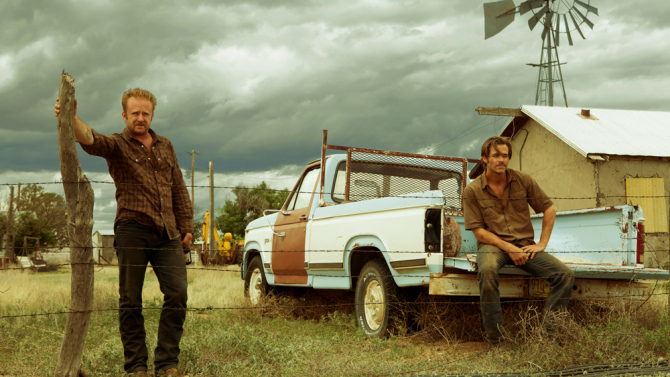
  • Hell or High Water: The best movie of the year

    Hell or High Water: The best movie of the year

    ​“Hell or High Water” is the best film you’ll see this year.

    This isn’t hyperbole or a statement made lightly, especially given the fact that there’s still four months and an entire season of Academy Award candidates yet to be released.

    Beautifully crafted and acted, the first major release film from director David Mackenzie stars Chris Pine and Ben Foster as brothers who resort to robbing banks in sleepy West Texas towns while being pursued by a grizzled veteran Texas Ranger played by Jeff Bridges.

    “Hell or High Water” is a funky combination of thriller and neo-Western ripped straight out of a different era. Were they alive today, “High Water” is a movie that Steve McQueen and/or James Dean might star in – a quintessential tale of antiheros running from the law for morally just reasons. “Hell or High Water” is “The Getaway” with a conscience; a western “Rebel Without A Cause.”

    What Mackenzie hits audiences over the head with from the outset is Giles Nuttgens’ artistic, nuanced cinematography that paints the film’s West Texas landscape so perfectly. Nuttgens and Mackenzie masterfully use the natural lights and shadows of early sunrises and sunsets to mask the film’s slower, poignant moments, helping to keep audiences engaged in between tense action. Effectively shooting in low light situations is a difficult skill to master and Nuttgens does the best job of any cinematographer in 2016 of handling this challenge.

    Pine has proven to be a very capable leading man especially in popcorn franchise films. But he has never been quite as elegant and layered with a performance as he is in “High Water.” His broken, weathered effort is award worthy as a man struggling to balance the death of his mother, a dying family ranch and two sons from a failed marriage. There’s just enough stoicism in his performance to balance the more manic turn from Foster that elevates the entire film beyond crime genre stereotypes.

    At first glance, Foster doesn’t appear to be the ideal choice to play the demonstrative, devil-may-care older brother. The veteran character actor has waded in these waters many times before and often overacted with gimmicky caricatures. In “High Water,” Foster teeters right on the cusp of going too far with the part. but whether it’s Mackenzie holding him back or Foster finally playing with restraint, his performance is safely just on the edge of crazy without billowing over into complete madness. Foster’s innate chemistry with Pine in the film is undeniable and it’s in their kinship that the film truly shines.

    Inevitably, Bridges’ performance in “High Water” will be compared to Tommy Lee Jones’ effort in the similar, yet much darker Coen Brothers film “No Country for Old Men.” The parts are different sides of the same coin, the aging Texas lawman out for one last ride. In “High Water,” Bridges does display a very effective “I’m too old for this” mentality, but it’s couple with an uniquely crude and albeit racist sense of humor that’s unexpectedly brilliant. There’s a great deal of levity in Bridges’ partnership with a younger Native American colleague that tracks quite nicely throughout the film. When looking back on Bridges’ career, “High Water” will ultimately represent one of his best performances in a long, storied filmography.

    British director Mackenzie seems well at home shooting a film so entrenched in the desolate West Texas plains and his movie offers terrific, cutting insight to life in stagnant rural economies. Many of the sleepy cities portrayed in “Hell or High Water” feel like modern day ghost towns with the entire film playing out as if it were a Clint Eastwood western from the 1960s. Mackenzie does a masterful job of adapting screenwriter Taylor Sheridan’s script, matching the tone of the pitch-perfect dialogue with visual cues and backgrounds that build layers of depth to the overall finished product.

    Several months from now, critics and award voters will likely overlook this small, limited release independent western in favor of “showy”-er efforts from bigger names in biopics with acting performances from Pine and Bridges as well as Mackenzie’s directorial effort feeling like major snubs.

    But it’s not an exaggeration to say that “Hell or High Water” is the best film of 2016, even with four months left in the year. It’s the single best piece of cinema that you could possibly watch in a theater right now and an absolute must see film.