
Year: 2017

  • War Machine: All satire on the western front

    May 28, 2017 · Watch the official trailer

    Brad Pitt’s new movie “War Machine” finds the veteran actor starring in a satirical fictionalization of real U.S. military operations in Afghanistan.

    The only problem is that despite having one of the biggest names in Hollywood headlining writer/director David Michôd’s film, moviegoers will likely never see the $60 million project on the big screen.

    Released this weekend alongside a new “Pirates of the Caribbean” film and the R-rated reimagining of the 90s television “Baywatch,” “War Machine” is perhaps the biggest original movie project from online streaming service Netflix, who produced the film alongside Pitt’s Plan B.

    The Netflix original is unquestionably the best new movie released over the Memorial Day weekend, though it will likely have the least number of viewers in spite of being accessible in the privacy of your own home.

    A fictionalized account of the last months of duty for General Stanley McChrystal, “War Machine” follows four star general Glen McMahon and his staff as they are assigned to lead a team of international forces in Afghanistan. Frustrated by what he perceives to be a lack of support from civilian politicians, McMahon heads across Europe to muster additional troops when President Obama approves 10,000 fewer soldiers than he requested.

    The entire affair is “Dr. Strangelove” more than it is “Patton;” an absurdist comedy with moments of true emotional weight subtlety mixed throughout the narrative. “War Machine” may turn off as many viewers as it creates ardent fans with its broad, dry humor.

    Aside from his side-splitting turn in the Coen Brothers’ “Burn After Reading,” Pitt has never been as over-the-top as he is here as McMahon. The character is admittedly little more than a caricature of McChrystal, the former head of operations in Afghanistan fired by President Obama.

    However, Pitt is able to evoke a strong reaction from his fellow performers and audiences at every turn with a squinty right eye, indecipherably thick accent and absurd jogging strides. It’s a performance so broad and elevated that it’s often hard to appreciate just how subtle some of the knowing nods to the audience Pitt sneaks in to scenes. McMahon is a Pitt performance that will go underappreciated by most, but is among his strongest comedic efforts.

    “War Machine” also features a number of terrific actors in smaller parts including Oscar winner Ben Kingsley as Afghani President Karzai, Tilda Swinton as a German politician and Anthony Michael Hall as McMahon’s second in command. “Brooklyn” star Emory Cohen is a highlight of the film in a tight-lipped role as McMahon’s nearly-silent personal aide though Cohen plays the part as more of a militaristic, yet dutiful butler.

    Where the satirical dramedy might throw viewers for a loop is in the film’s confusing structure, told largely through the use of an outside narrator writing about McMahon. At times, Scoot McNairy’s narration as Rolling Stone writer Sean Cullen adds to the humor, giving scenes the final punchline needed to hammer home Michôd’s point. At other times, the all-knowing voice distracts from the scene in action.

    “War Machine” likely won’t be eligible to win any major awards this fall as there are no plans to screen the film theatrically. Netflix is also facing similar issues right now at the Cannes Film Festival, where organizers are reluctant to make the Netflix film “Okja” eligible for the prestigious Palme d’Or award as the film will not screen in French cinemas.

    Still, Michôd’s film remains the best piece of new cinema you’ll find following Memorial Day and represents another career highlight for Pitt. Spend a night in and take a chance on “War Machine.” You may be pleasantly surprised.

    Continue the conversation online at cinematicconsiderations.com.
  • The Wizard of Lies: Quality cinema on the small screen

    May 22, 2017 · Watch the official trailer

    Robert De Niro dangles a rich man on a string, feigning a lack of interest in the random partygoer’s investment offer which a drum beat tones on in the background.

    $100 million, $250 million, $300 million, the price keeps rising. De Niro stays firm as the verbal dance continues for several minutes before the final handshake, never really knowing who the slick businessman he spars with is and caring even less.

    It’s exactly the kind of exchange you’d expect to see in a biopic film about notorious financier-turned-swindler Bernie Madoff starring the two-time Academy Award winner. A movie about the biggest financial fraud in American history is expected to play it big, especially when the events the film relives have resulted in $50 billion in losses for millions of Americans.

    And yet somehow, it’s the only scene of its kind anywhere in “The Wizard of Lies,” a HBO Original Film from “Rain Man” director Barry Levinson adapted from the non-fiction book of the same name by Diana Henriques.

    Recent films focusing on real-life economic crisis like Martin Scorsese’s “The Wolf of Wall Street” or Adam McKay’s “The Big Short” have flaunted the largeness of the playboy traders making it rich. “The Wizard of Lies” doesn’t do that.

    Madoff, as intimately written on the page and wonderfully portrayed by De Niro on the screen, is a catalyst for the action around him, a larger-than-life presence that’s felt in those in the surrounding aura rather than heard booming with fantastical monologues.

    “The Wizard of Lies” tells Madoff’s tale from a variety of perspectives, including journalists interviewing Madoff after his conviction, the FBI investigating his scheme after his admission and within the inner monologues of Madoff’s wife and two sons.

    Levinson leaps forward and backward chronologically over the course of the film, not relying on conventional story structure to explain the what and how of Madoff’s scheme. Rather, “The Wizard of Lies” is less about the man himself than it is the emotional wreckage his fraudulent empire left in the wake of its collapse. There are moments of bizarre art-house cinema when Madoff wakes up in the middle of an Ambien suicide attempt to confront the demons in his own head.

    Throughout all the chaos, De Niro keeps aplomb as Madoff, projecting a stoic confidence that resonates to the audience familiar with the actor’s lengthy career in gangster films. De Niro perfectly exudes Madoff’s relentless commitment to hiding the fraud at any cost and mirrors that with a wonderful frankness once the scheme is revealed. “The Wizard of Lies” is perhaps the least flashy performance De Niro has offered in nearly a decade and it works wonders.

    A nearly unrecognizable Michelle Pfeiffer is a revelation as Madoff’s wife Ruth, whose world is thrown into complete upheaval upon the arrest of her husband and the abandonment of everyone around her. The inner turmoil she radiates off the screen in her performance is captivating even in scenes with the gravitation force that is De Niro’s Madoff.

    There’s a number of spectacular supporting performances layered throughout “The Wizard of Lies” from Hank Azaria’s wonderful effort as Madoff’s right-hand-man Frank to Michael Kostroff’s turn as brother Peter Madoff and “House of Cards” alum Kristen Connolly’s Stephanie Madoff.

    But it’s the work of Alessandro Nivola as Madoff’s elder son Mark that will tear audiences apart emotionally. At the outset, it might appear as if the role will be limited to a relative footnote in the larger Madoff scandal picture. As the film progresses, Nivola drags Mark through a limitless sea of depression, authentically capturing the elder son’s despair in a raw, visceral way that accents and elevates the nuances of De Niro’s performance.

    Released with little fanfare on premium cable, “The Wizard of Lies” won’t be getting a lot of attention critically or commercially amid the wealth of summer blockbuster entertainment heading to theaters.

    But for moviegoers looking to take a chance on elevated, character-driven drama and seeking top-notch acting performances, it’s hard to do much better this month than “The Wizard of Lies.”

    Continue the conversation online at cinematicconsiderations.com.
  • King Arthur: Legend of the Sword: A medieval roller-coaster

    May 15, 2017 · Watch the official trailer

    It’s hard to watch “King Arthur: Legend of the Sword” and not feel at least a little bit cheated.

    On paper, an inventive reimagining of the classic Camelot tale directed by British auteur Guy Ritchie featuring two-time Oscar nominee Jude Law and “Sons of Anarchy” star Charlie Hunnam should be a terrific movie.

    Unfortunately, “King Arthur” is an uneven film that leaves too much on the table. The film is hampered with a poorly mismanaged script ripe with underdeveloped characters and way too many hints about franchise possibilities that might not ever materialize.

    At times, it’s hard to ignore the idea that $175 million went into the making of a medieval mess that could have been better spent on a third “Sherlock Holmes” film directed by Ritchie or any number of smaller, more cinematically worthy projects.

    This revival of classic literature alters Arthur’s backstory, canonizing the future King of England with an all too familiar origin story most often found in comic book movies. Young Arthur’s parents are slain during a coup by his nefarious uncle Vortigern (Law), but not before the young boy escapes in a Moses-like trip down the river to be found by a group of prostitutes who raise him in their brothel.

    Hunnam approaches the role of Arthur as if he were a budding superhero rather than the medieval leader of knights that audiences may be familiar with. While there’s nothing bad about his performance, it does often feel like Hunnam is thinking Arthur’s emotions rather than actually feeling them.

    This is especially true when Arthur first pulls the famed Excalibur sword from the stone and is learning to handle the magic of his weapon. Hunnam acts like he’s constantly reminding himself to be uneased by his newfound powers. Viewers can see this thought process in motion every time Hunnam squints his eyes in frustration and/or pain though it’s never quite clear if the actor knows which emotion Arthur is feeling.

    Law, on the other hand, turns in a largely stoic, monotone performance as Vortigern, verbally emoting with the same controlled loud whisper whether Vortigern is subjugating peasants or murdering family members in traditional Shakespearean fashion.

    “King Arthur” also features a wide assortment of supporting characters that the film simply doesn’t give enough time to, including Djimon Hounsou’s Bedivere, Astrid Berges-Frisbey’s mysterious Mage or Eric Bana’s scene-stealing turn as Arthur’s father Uther.

    Ritchie occasionally infuses his dry wit into the film’s script through hilarious monologues narrating montage sequences that will remind “Sherlock Holmes” fans of the slow-motion fight scenes Ritchie shot for Robert Downey Jr. It’s one of the few signature trademarks of the British auteur recognizable in the two-hour slog of a film that often borders on rough caricature of Peter Jackson’s “Lord of the Rings” trilogy.

    “King Arthur” displays moments of brilliance early before falling prey to a haphazard second act where Arthur has to find himself in traditional superhero origin story fashion. A solid, yet unspectacular third act helps viewers end on a high note in what could have easily been a rocky finish.

    There probably won’t be any better way to see “King Arthur” than on the big screen, where its technical merits and engaging battle sequences are on full display. Any added crispness watching the film later on Bluray might offer is largely diminished by the heavy, dark tones of the movie’s under-lit cinematography that fade sharpness into the black.

    Plus, if there’s any salvaging the film’s legacy and potential for additional installments, moviegoers need to see “King Arthur” in theaters in hopes that Warner Brothers might see the added revenue boost as potential to keep future Camelot projects alive.

    “King Arthur: Legend of the Sword” might not be the universal crowd-pleaser that the studio might have wanted it to be, but the medieval tale is a largely engaging action adventure worth considering for viewers’ next trip to the movies.

    Continue the conversation online at cinematicconsiderations.com.

  • Guardians of the Galaxy Vol. 2: The superhero party continues

    May 8, 2017 · Watch the official teaser

    Marvel threw audiences a curveball three years ago with the feature film adaptation of an obscure, whimsically irreverent space odyssey comic. Nobody saw the overwhelming commercial or critical success of “Guardians of the Galaxy” coming.

    The ragtag team of Star-Lord, Gamora, Drax, Rocket and Groot returned to the big screen Friday with the aptly titled “Guardians of the Galaxy Vol. 2” with a $145 million opening weekend that took no one by surprise.

    Set in the months following the end of the original film, “Vol. 2” finds the Guardians on the run from a race of gold-plated aliens known as “The Sovereign” when they stumble across Star-Lord’s long-lost father, the celestial Ego (Kurt Russell). Played at a much more emotional level than the 2014 movie, the notion of whether family is built from blood or bond strikes at the core of “Vol. 2.”

    Comedic character actor Chris Pratt brings the right amount of snark and heart in his second go-round as the team’s de facto leader, Peter “Star-Lord” Quill. A combination of one part Indiana Jones, two parts funnyman, Pratt’s Star-Lord is the glue of “Vol. 2” both structurally from a plot perspective and also emotionally from a character development perspective.

    Finding the right balance between the humor in the lighter moments and the depth of the heavier ones is a tricky task in comic book films like “Guardians,” but Pratt toes the line quite nicely.

    It helps that Pratt has terrific natural chemistry with Russell, who effortlessly sinks into the role of Ego the father. Russell doesn’t quite hit the mark, however, as Ego the comic book character as his performance falters when the plot requires him to engage in “nerd-speak.” When the moments happen where Pratt and Russell are able to ignore the “green screen nature” of the film and have a real conversation, Russell’s work sparks off the screen.

    There are any number of interesting performances within “Vol. 2” from Dave Bautista’s surprisingly good comedic timing as Drax to Michael Rooker’s wonderfully layered turn as Star-Lord’s mentor Yondu to Bradley Cooper’s engaging work as the voice of Rocket.

    But the star of the film’s trailers – a miniature sapling version of Groot – is everything audiences could have hoped for and more in small, concentrated doses. Seeing “Baby Groot” dance around and ride a space rat while the rest of the team fights a giant octopus might be the best title sequence in any Marvel Cinematic Universe film.

    Equally impressive are the film’s well constructed action scenes, each uniquely linked to a song in the fantastic vintage soundtrack including Fleetwood Mac’s “The Chain,” Sweet’s “Fox On The Run” and Jay and the Americans’ “Come a Little Bit Closer.” While not as instantly recognizable as the original soundtrack, song selection in “Vol. 2” matches “Guardians of the Galaxy” in overall quality and ability to blend the music perfectly into the larger context of the film.

    “Vol. 2” ends up being one of the more successful sequels in the Marvel Cinematic Universe as Gunn is able to infuse the space comedy follow-up with the original film’s signature wit and panache.

    Rarely does it feel like Gunn reaches for a joke or tries too hard to recreate the magic of the first movie. Rather, “Vol. 2” lives as a natural continuation of everything that made “Guardians of the Galaxy” great the first go-around. While it isn’t quite on par with the phenomenal sequels to “Captain America,” “Vol. 2” sits firmly ahead of lackluster continuations of “Iron Man” and “Thor.”

    Advanced knowledge of the Marvel Cinematic Universe or the comic book origins of the franchise isn’t required to enjoy “Guardians of the Galaxy Vol. 2,” though some of the film’s five post-credit scenes won’t make a lot of sense to first-time viewers.

    What “Vol. 2” does deliver in spades is a humorous, oftentimes hilarious two-hour thrill ride that may also tug at the heartstrings along the way. As comic book adaptations go, it’s hard to ask for much more out of an enjoyable time at the movies.

    Continue the conversation online at cinematicconsiderations.com.

  • The Circle: Thinking too hard

    May 1, 2017 · Watch the official trailer

    Debate between individual privacy and global security strikes the heart of James Ponsoldt’s new film, “The Circle,” starring Tom Hanks and Emma Watson.

    Based on the Dave Eggers book of the same name, the film confronts the hotly contested debate between liberty and protection in complex, heavy terms often much too taxing for the average moviegoer.

    The movie follows Mae (Watson), a new hire at the technological commune known as The Circle, which is essentially an evil version of Apple under Steve Jobs. The Jobs-esque character, Bailey, works as one of two heads of the company that develops incredible technology to simplify and at the same time surveil every action in a person’s life. This weighty material is much too complex for its intended teenage audience and often borders on the absurd in order to keep the momentum of the plot rolling forward.

    It’s rare to see Hanks play a less than genuine character, though even in his perceived villainy it’s difficult to imagine Hanks’ Bailey as anything less than a tech-savvy iteration of Hanks himself. Not enough is in the script, or in Hanks’ performance, to pull audiences away from instinctively rooting for his character based on the fact Hanks is portraying the role no matter how sinister Bailey may actually be under the surface.

    “Harry Potter” and “Beauty and the Beast” star Watson maintains her usual level of charm as Mae, but isn’t able to bring much depth beyond what little is written on the page. Her chemistry with the distinctly lackluster “Boyhood” star Ellar Coltrane as her outsider friend and possible love interest Mercer is incredibly unbelievable, mostly due to Coltrane’s stagnant, one-note performance.

    In her own right, Watson commits fully to the role of Mae, thrusting her character forward as a driven, determined woman fighting for herself and for her family. The relationships she is able to build in short order with parents Bonnie (Glenne Headly) and Vinnie (Bill Paxton) are some of the most satisfying of the entire film despite the poorly conceived subplots which track Mae’s movements outside The Circle.

    “Star Wars: The Force Awakens” star John Boyega is criminally underutilized as the original founder of the Circle working to keep the company working towards its original intention from within. Aside from one or two cursory scenes with Watson, Boyega is largely relegated to the background with the occasional cutaway to his Ty looking angrily on as all the “Circlers” as they are called become increasingly indoctrinated into the technologically socialist system.

    “The Circle” is exceedingly technical in its verbosity at times, leaving audiences to ponder what in the world Hanks and Watson are pontificating about in their elitist discourse about existentialism.

    Even the previous sentence, written especially to mimic the style of writing Ponsoldt did in adapting Eggers’ book to screenplay form, doesn’t hold a candle to the film’s unnecessary over-complication of the plot to make “The Circle” seem like heavier subject matter than it actually is.

    As a director, Ponsoldt generally keeps “The Circle” moving at a relatively efficient pace although scenes shot outside the Circle have a definitive slower pace than moments with Hanks and Watson on screen together. “The Circle” often portrays itself to be a thinking man’s movie, but lacks the ability to connect with audience members in a way that would strike up conversation after a screening.

    There isn’t anything overtly wrong with “The Circle” outside of Ponsoldt’s ineffective screenplay and ardent fans of Watson might find the entire cinematic experience worth two hours in the theaters. But for most, the lack of truly dynamic thrills combined with a subpar script puts the science-fiction drama outside the circle of films worth spending the extra dollars on in theaters.

    Continue the conversation online at cinematicconsiderations.com.

  • Gifted: Evans, Grace charm audiences

    Gifted: Evans, Grace charm audiences

    Chemistry between performers can go a long way to help or hurt a movie.

    Two actors who share good rapport and work together frequently provide an added spark that audiences pick up on, enhancing a film. Actors without chemistry often wreck well-intention projects both critically and commercially.

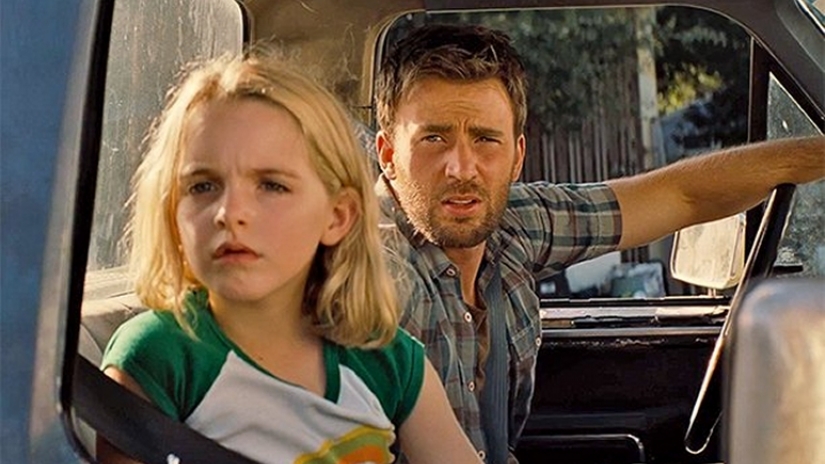
    “Gifted,” a film that could easily have been written and produced on the Lifetime Movie Network, is a surprisingly refreshing family dramedy solely because of remarkable chemistry between “Captain America” star Chris Evans and young actress McKenna Grace.

    The film follows Frank (Evans, a loner working as a boat repairman in Florida, as he bonds with and cares for his niece Mary (Grace) after the death of her mother.  First grader Mary’s mathematical wizardry solving differential equations puts her in the spotlight and in the sights of her estranged grandmother Evelyn (Lindsay Duncan), who seeks to farm her granddaughter out to universities and think tank groups solving impossible proofs.

    Stepping outside the Marvel franchise for the first time in years in a leading performance, Evans takes to both the drama and witty banter of Tom Flynn’s script as Frank. It’s a strong change of pace for cinema’s Captain America to portray honesty and vulnerability in a realistic manner, which Evans largely succeeds in on a scene to scene basis.

    Evans may be the box-office draw, but Grace is the absolute star of Gifted with her beautifully touching performance as young genius Mary. In a role that could destroy the entire picture if done poorly, Grace gives Mary an authentic, genuine heart that radiates off the screen. Her chemistry opposite Evans is remarkable and reflects a well-developed bond between the two actors that extends into the performances. It’s a wonderful turn that may remind some of a young Dakota Fanning.

    Though it never falls completely over into full-fledged villainy, Duncan’s one-note turn as Mary’s fame-obsessed, stereotypically British grandmother Evelyn is perhaps the weakest part of a strong supporting cast. Her cold, callous demeanor never really takes on any layers or changes when Evelyn is addressing Mary or Frank, displaying a lack of true understanding of the character. The performance is serviceable at best and advances the story forward without adding to it in any definitive way.

    Comedienne Jenny Slate takes a more serious turn as Mary’s elementary school teacher Bonnie and is largely successful supporting both Evans and Grace’s lead performances. Bonnie is a pretty thinly written part that Slate doesn’t do a lot to extend beyond the page, but the modicum of emotion she displays serves the film well.

    Oscar winner Octavia Spencer also fills one of the film’s thinly written supporting roles as landlord and family friend Roberta. Like Slate’s Bonnie, there’s not much to Roberta, but Spencer’s natural charisma and warmth provides gravitas to a part desperately in need of credibility with the audience.

    Director Marc Webb does an effective job of making an engaging, mostly entertaining film from start to finish. Webb begins to stumble towards the finish line the further “Gifted” strays from Evans and Grace together on screen in service of extended moments of courtroom drama. For the most part, “Gifted” is a paint-by-numbers script helmed by a director more than willing to stay within the lines cinematically.

    The film’s biggest draws – its unconventional premises and two lead performers – more than hold up their end of the bargain as Frank and Mary’s adorable relationship delivers a genuinely enjoyable experience at the movies. 

    Audiences intrigued by the film’s trailer should make their way to theaters, though waiting until “Gifted” hits an inevitable long run on basic cable wouldn’t be a mistake either.

  • The Fate of the Furious: No slowing down

    April 17, 2017 · Watch the official trailer

    There’s a street race to open “Fate of the Furious” that sees Vin Diesel’s Dominic Toretto put his ride on the line against a Cuban crime lord.

    It’s the only true element of the original “Fast and the Furious” film left in the franchise as the series evolved out of its urban drag racing beginnings into a series of heist movies.

    Now in its eighth iteration, the franchise moves beyond crime capers into full-fledged espionage films with “Fate of the Furious,” a high-octane thriller that rarely lets off the gas for more than a scene or two.

    Renegade outlaw Toretto relinquishes his “family first” code of honor and betrays his team to work with elite cyberterrorist Cipher (Charlize Theron), a master manipulator with eyes on a nuclear arsenal. When Toretto goes rogue, his old crew is brought in to team with a group of unlikely allies to bring Cipher down.

    “Fate of the Furious” isn’t about the acting; it’s about action, more action and then some more action. Director F. Gary Gray’s film moves at a rapid fire pace that keeps the audience engaged and not worrying about all that character development that isn’t happening on screen.

    The better part of Diesel’s career has been Toretto, a character so ingrained in the actor’s subconscious that he can’t stop playing his “Fast and Furious” part in movies outside the franchise. His passion for the series – combined with his love for his friend and co-star, the late Paul Walker – bring an added sense of energy and commitment to the performance that feels relatable despite the Sylvester Stallone-esque meathead persona Diesel replicates.

    Increased roles for both Dwayne “The Rock” Johnson and Jason Statham pay enormous dividends in “Fate of the Furious” as the duo are able to carry the bulk of the heavy lifting outside the driver’s seat. The verbal jousting between Johnson’s Luke Hobbs and Statham’s Deckard Shaw plays a terrific undercard to the film and sets up a prison break sequence that proves to be the movie’s biggest highlight.

    If there is a real shortcoming in this thrill-seeking adventure, Oscar winner Theron emerges as the weak link with a bland, uninspired performance that belies her true talent. Terrible dreadlock haircut aside, Theron proved more than capable of handling herself physically in “Mad Max: Fury Road” and to leave her character hiding behind muscle and aimlessly ranting like a Roger Moore-era Bond villain feels wasteful.

    Best known for his critically-acclaimed biopic “Straight Outta Compton,” Gray shows off his excellent directing skills in “Fate of the Furious,” leaning heavily on quality action thrills from his background helming “The Italian Job” and “The Negotiator” while maintaining a consistent tone from start to finish.

    In a series known for its fast cars and wild stunts, the hits keep on coming in “Fate of the Furious” with increasingly outlandish and yet totally enjoyable action sequences mixing vehicular insanity with terrifically choreographed hand-to-hand combat. The film constantly seeks to top itself on a scene-to-scene basis and often hits the mark.

    First-time viewers unfamiliar with the “Fast and Furious” franchise shouldn’t have a hard time picking up the basics amid all the explosions and high-speed chase sequences. Enough of “Fate of the Furious” is self-contained or explained through context that watching all seven prior installments of the series would be necessary before heading to the theaters.

    Audiences will be hard-pressed to find a more enjoyable evening at the movies over the next couple of weeks than “Fate of the Furious,” which should rule the box office for the rest of April until Marvel’s “Guardians of the Galaxy Vol. 2” shatters records in early May.

    Buckle up for the ride as this eighth “Fast and Furious” movie will leave viewers strapped to their seats with quality popcorn entertainment typically found much later in the summer. Turn off your brain and enjoy; “Fate of the Furious” is an absolute treat to watch.

    Continue the conversation online at cinematicconsiderations.com.

  • Going In Style: Heist movie equal parts hits and misses 

    Going In Style: Heist movie equal parts hits and misses 

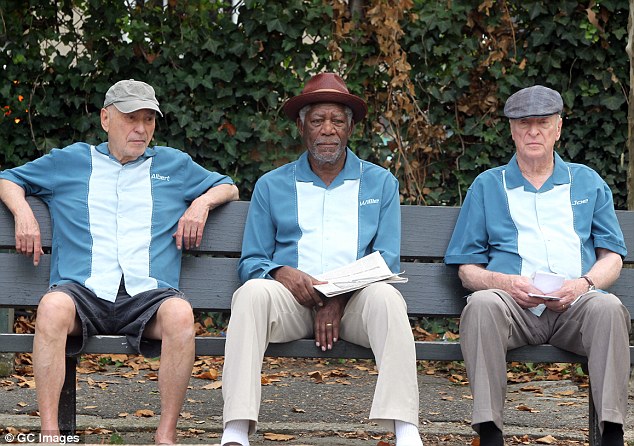
    There’s nothing terribly wrong with “Going In Style,” the comedy crime caper about aging steel workers who plan a bank heist after being robbed of their pensions.

    But for a film starring three Academy Award winners, director Zach Braff’s adaptation of the 1979 movie of the same name just feels flat. “Going In Style” is a leisurely stroll through the park rather than the raucous joyride audiences may have expected going into the theaters.

    Senior citizens Joe (Michael Caine), Willie (Morgan Freeman) and Al (Alan Arkin) have worked together for decades, but a poor economy has left them out of work and without their pensions. When Joe observes a bank robbery take place, he gathers his longtime friends together to settle the score and  make their families whole.

    It’s impossible to discuss the performance of any one of the leads without the other two, mainly because the characters Arkin, Caine and Freeman play are so interchangeable and shades of the same basic archetype: senior gentleman doing bad for altruistic purposes.

    The chemistry between the trio is considerable and makes up most of the best moments within “Going In Style.” Banter between Joe, Willie and Al is dynamically genuine and the three actors feel like they’ve been friends for years. 

    Scenes involving all three leads work better than any single subplot – Joe’s house has been foreclosed on, Willie can’t afford to fly cross-country to see his granddaughter and Al is getting romantically involved with a supermarket employee. Each of the three leads is given ample screen time to shine on their own, but it’s hard as a viewer not to want “Going In Style” to rush the trio back together again.

    “Back To The Future” star Christopher Lloyd makes the most of his short time on screen as aloof, misguided lodge buddy Milton. There’s so much charm in Lloyd’s effortless performance that it’s constantly heart-warming to see Milton every time he shows up. It’s the perfect supporting role of the movie. Milton appears often enough to get a laugh or two at his expense, but not so often that the returns diminish in quality.

    Ann-Margret is a welcome surprise as Al’s love interest Annie, though nothing in her small supporting performance is remarkably dissimilar to her turn in the “Grumpy Old Men” movies.

    Braff is not the best choice to direct “Going In Style” as he lacks the vision necessary to adapt Theodore Melfi’s script into a crisp, energetic comedy. His films work best when he directs his own material, which reflect the slow, plodding mumblecore genre of movies Braff helped create with pictures like his 2004 effort “Garden State.” 

    Melfi should have taken the reins on the film, coming off of back to back success directing his screenplays for 2014’s “St. Vincent” and the 2016 Academy Award nominated box-office hit “Hidden Figures.” Both of those films have a more engaging, character-driven pace that Melfi could have infused “Going In Style” with to make the overall experience more enjoyable.

    You can’t really go too wrong with Freeman, Caine and Arkin headlining a movie, though “Going In Style” isn’t exactly a strong entry in the filmography of any of the Oscar winners.

    The “go big or go home” mentality of the bank heist plot doesn’t particularly mesh well with the low energy screen adaptation, making “Going In Style” a largely forgettable movie experience.

    Audiences already planning a trip to the theaters might consider “Going In Style” as a better option than other critical and commercial misses, but it’s not a film worth going out of your way to see as soon as possible.

  • The Last Word: Maclaine shines in dramedy

    The Last Word: Maclaine shines in dramedy

    Sometimes you have to look a little harder for quality cinema, especially during months where blockbusters worth the price of admission are few and far between. Often, smaller independent or art-house films provide a bridge in these leaner times.

    Director Mark Pellington’s “The Last Word” with Shirley MacLaine and Amanda Seyfried is a perfect example of a film audiences may have to go out of their way to find, but will be greatly rewarded for their efforts. The emotional, poignant relationship dramedy will resonate with viewers young and old alike.

    MacLaine stars as Harriet, a semi-retired advertising executive with a superiority complex and need to micro-manage every aspect of her life that drives friends, family and co-workers away. Preparing for the final stages of her life, the meticulous Brenda forces her way into a young writer’s life and insists on crafting the perfect obituary to encapsulate the life Brenda believes she’s led.

    Oscar winner MacLaine commands the screen with a stern, foreboding presence that never truly softens, but changes gradually and subtly over the course of the film as the people around Brenda have a growing impact in her life. Nothing about her performance is particularly endearing, but it was never meant to be and the rigidness of Brenda’s personality seems to crack with small pockets of sunshine. MacLaine is wonderful at displaying Brenda’s wonder at the changes in herself while doing everything in her power to keep it all internal. Looking back at the end of 2017, this may very well be one of the year’s most underrated performances.

    Seyfried holds her own opposite the headstrong, brash turn MacLaine gives with a solid, unspectacular performance as obituary writer and occasional essayist Anne, though it’s clear from the outset that her limited role serves mostly to accentuate MacLaine’s scene-chewing. While Seyfried is good in the role, it’s hard to take your eyes off MacLaine.

    The same can be said of young AnnJewel Lee Dixon who plays Brenda, a young orphan Harriet takes under her wing through a Big Brothers/Big Sisters program. Dixon gives it her all mimicking and giving MacLaine the same brash attitude Harriet exudes, but the chemistry between the duo just doesn’t resonate as much as Pellington probably would like it to. Ironically, there’s actually a much stronger connection between Seyfried and Dixon in limited moments than either actress with MacLaine.

    The weakest link in “The Last Word” is Pellington’s lazy, pedantic direction that keeps the film from really flowing from start to finish. The final product is able to overcome a lack of cohesiveness early and audiences willing to stick with the film and its unlikely premise will find themselves charmed by MacLaine in spite of Pellington.

    “The Last Word” features a terrific screenplay from Stuart Ross Fink that challenges audiences to reflect on their own concepts of identity, mortality and legacy through a perfect blend of humor and drama that may bring some viewers to tears by the film’s end.

    Music plays a large role in the film as Harriet and Anne bond over a mutual love for vinyl records and Harriet takes a job as a local radio disc jockey. As such, “The Last Word” also boasts an impressive and layered soundtrack with songs from Al Lerner, Arbuckle, The Kinks and more providing much needed context and accompaniment to the movie.

    It might take a little bit of extra effort to find “The Last Word” on the big screen, but the cinematic experience and Maclaine’s wonderful performance is well worth the journey. Thanks to its stars and a deftly written script, it’s an utterly charming film that will leave viewers inspired to make every moment in their lives matter.

    Seek the movie out in theaters or wait until its home video release, but make sure you give this touching indie film a chance.

  • Power Rangers: Old-school heroes for a new-school era

    March 27, 2017 · Watch the official trailer

    Nostalgia is key in the latest reimagining of “Saban’s Power Rangers,” the latest in an ever-growing onslaught of superhero movie franchises.

    Based on the original version of the classic 90s Saturday morning television series, this iteration pretty much insists that audiences not think to hard and just accept the outlandishness of it all. “Power Rangers” is for the 10-year-old kid inside all of us.

    The film lifts heavily in tone from John Hughes’ 80s coming-of-age classic “The Breakfast Club” in order to set the stage for “Power Rangers.” Five teens from different walks of life – the jock, the cheerleader, the nerd, the outsider and the loner – are brought together by fate, and for some Saturday detention.

    Through an overly convoluted set of circumstances, they stumble upon glowing coins of power buried deep within a mine. The coins grant them the abilities of “Power Rangers,” a galactic team charged with protecting the universe from a villainous ex-Ranger named Rita Repulsa (Elizabeth Banks).

    Unlike traditional superhero origin stories, “Power Rangers” insists on maintaining prolonged character development scenes in place of early action sequences, cramming all the excitement of the film into the last 20-25 minutes. This works to the movie’s benefit in that the high of the conclusion is pronounced compared to the rest of the film, though a mismanaged script from John Gatins wanders around a bit too much.

    The main cast of Dacre Montgomery, Naomi Scott, RJ Cyler, Ludi Lin and Becky G. are all relative unknowns, which gives the new Power Rangers team a vibrant freshness and allows audiences to authentically experience the actors originate the roles without thinking about other television/film work. Of this group, Cyler is perhaps the best known of the group for his turn as Earl in the 2015 indie darling “Me and Earl and the Dying Girl.” His performance as introvert nerd Billy, who later becomes the Blue Ranger, is the strongest of the five and provides much needed levity and humor throughout.

    Banks does a tolerable job as villainess Rita Repulsa, though the character is woefully underwritten for her talents and was never a quality opponent for the superhero team in the original TV series. Her performance succeeds simply in providing a means to an end for a film entirely focused on the new Power Rangers and not on their foe.

    “Power Rangers” is better than it probably has any right to be, not that any of the credit should go to director Dean Israelite. Choices Israelite makes at every turn within the film feel as if he’s lifting elements straight off the screen from other directors like the aforementioned Hughes and explosion-happy filmmaker Michael Bay.

    The fact that “Power Rangers” is even tolerable for its 124 minute running time and set up for five planned follow-up films is a large testament to the lead cast and their commitment to combining a fresh quality to their characters while maintaining a strong sense of childhood nostalgia. When Israelite gets out of his own way long enough, “Power Rangers” has some genuine quality moments like the campfire scene late in the film.

    Given a new director and better script, there is considerable potential moving forward for a “Power Rangers” franchise to become worthy of additional sequels along the same vein as the “Transformers” and “Teenage Mutant Ninja Turtles” series of films.

    “Saban’s Power Rangers” will likely appeal best to viewers who grew up on the original television series in the mid-90s wanting to take a trip back to their youth for a couple of hours. Other moviegoers might want to consider other options in theaters and wait to catch up on the reboot until its home release.

    Continue the conversation online at cinematicconsiderations.com.