Year: 2020

  • Birds Of Prey: Identity crisis

    Birds Of Prey: Identity crisis

    She’s just an ordinary girl who loves her breakfast sandwich.

    Sure, she also loves money, the ability to do whatever she wants without recourse or retribution and her pet hyena, Bruce.

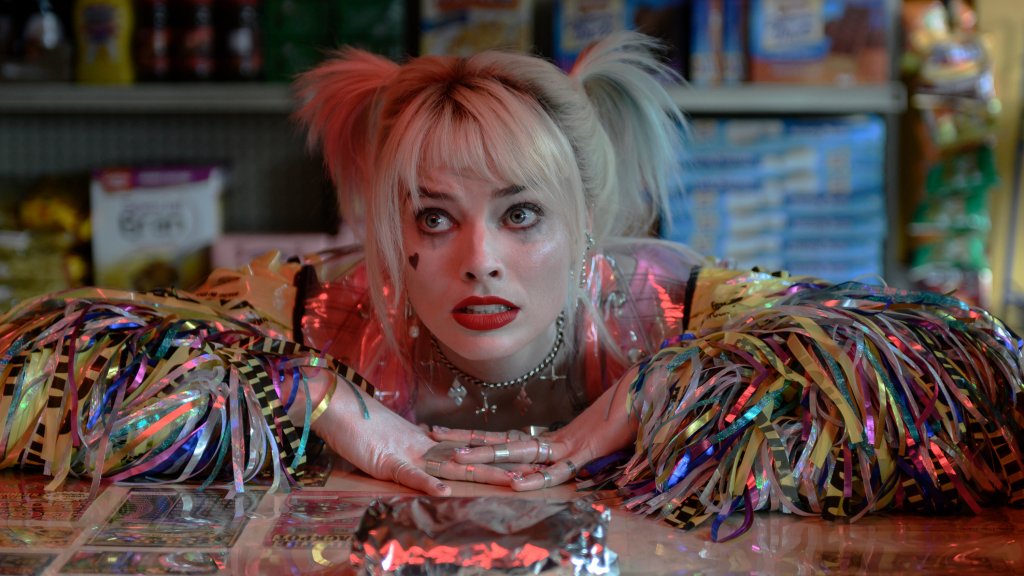
    But Harley Quinn – at least as seen through the lens of Margot Robbie’s gobsmackingly fun portrayal – isn’t simply a bad guy. She’s misunderstood.

    An inevitability following the breakout success of Robbie’s Quinn in 2016’s “Suicide Squad,” this year’s first comic book film takes her supporting character and places her right in the middle of the action with “Birds of Prey: And the Fantabulous Emancipation of One Harley Quinn.”

    Director Cathy Yan’s sophomore feature follows the classic Batman villainess immediately after her breakup with The Joker, which puts a target on her back from both cops and robbers alike. The quest for a diamond holding bank account numbers serves as a MacGuffin to keep the action going as audiences bounce around Gotham City with Quinn and the titular Birds of Prey.

    As comic book movies go, “Birds of Prey” isn’t aiming to be weighty material and the below-par screenplay from writer Christina Hodson cripples major sections of the film’s narrative structure and cohesion.

    But the driving force that makes Yan’s film successful is Robbie’s relentless energy and charm as Quinn, taking everything audiences loved about her quirky turn in “Suicide Squad” and ramping it up to 11 for a frantic, maniacal performance that pushes a middling story forward.

    Robbie’s Quinn maintains a free-spirited attitude that is a breath of fresh air every time her slightly twisted smile, multicolored pigtails and overly dramatic eyes pop up on screen. The Australian actress pulls viewers in and gets them to root for an unlikely anti-hero with disarming comic timing and quick-witted flashes of sanity from Quinn’s previous life as a psychologist.

    Other characters in “Birds of Prey” become more interesting not for what those actors are bringing to the film, but rather how Robbie is able to bounce off of them as audiences are endeared to whatever Quinn’s going to do next.

    When “Birds of Prey” turns away from Robbie’s radiantly maniacal turn, Yan’s film begins to veer off the rails as viewers are shown the larger narrative from the perspective of new, thinly written characters that only work about half the time.

    Character actress Rosie Perez makes the most of her meatiest role in years as marginalized detective Renee Montoya, taking Montoya’s one defining trait in the film – a hardheadedness developed from watching too much 1980s cop dramas – and making it work for the character as something that gets the intended laughs, but also provides a worthy foil for Robbie.

    Mary Elizabeth Winstead – either by choice or by lack of character development – infuses her performance as the crossbow-wielding assassin Huntress with a monotone, almost vapid lack of personality that occasionally makes for a well-timed joke, but equally feels unnecessary and bland in comparison to the bright characters around her.

    There’s a strange implied homoerotic bond between the film’s two primary male characters – both major villains – in Ewan McGregor’s Black Mask and Chris Messina’s Victor Zsasz that goes far enough to define both characters as sociopaths who share a romanticism for violence but not far enough that it does anything to make either character compelling or interesting.

    What stands out most aside from Quinn is the brilliantly shot and designed fight choreography that puts the viewer in the middle of the action in a way that feels fresh and quintessentially part of the main character.

    Each fight takes on a different life based on the setting while maintaining a free-flowing consistency that combines humor and authentically plausible action for a comic book film. Robbie and the stunt coordinators take great care to vary up Quinn’s move set from battle to battle based on the weapons she’s wielding and the fluid use of martial arts is on par with the “John Wick” films.

    Films made from DC Comics have largely taken a backseat to the Marvel Cinematic Universe ever since the conclusion of Christopher Nolan’s “Dark Knight” trilogy of Batman films, but it seems that Warner Brothers has begun to figure out a successful format with brighter, lighter films like “Wonder Woman,” “Aquaman” and now “Birds of Prey.”

    If the trend continues while the studio also backs more artistic, prestige-driven adaptations like the Oscar-nominated “Joker,” it’s possible that the DC universe of films could surpass Marvel in the next several years if Disney fails to connect with audiences in a post- “Avengers” world.

    Although “Birds of Prey” suffers from an identity issue that can’t decide if Robbie’s Quinn can carry an entire film on her own, the fantabulous highs far outweigh the middling lows and make this comic book lark a film worth seeing amid a disappointing February slate at the box office
  • The universal language of cinema: ‘Parasite’ breaks barriers as 92nd Academy Award winner for Best Picture

    The universal language of cinema: ‘Parasite’ breaks barriers as 92nd Academy Award winner for Best Picture

    Once you overcome the one-inch tall barrier of subtitles, you will be introduced to so many more amazing films. – Bong Joon-ho, Oscar-winning writer and director of “Parasite”

    Before Sunday night, a lot of things were different in the world of cinema.

    A foreign language film had never won Best Picture at the Academy Awards; no South Korean film had ever earned a nomination; Walt Disney was the only person in Oscar history to win four awards at the same ceremony, doing so in 1954.

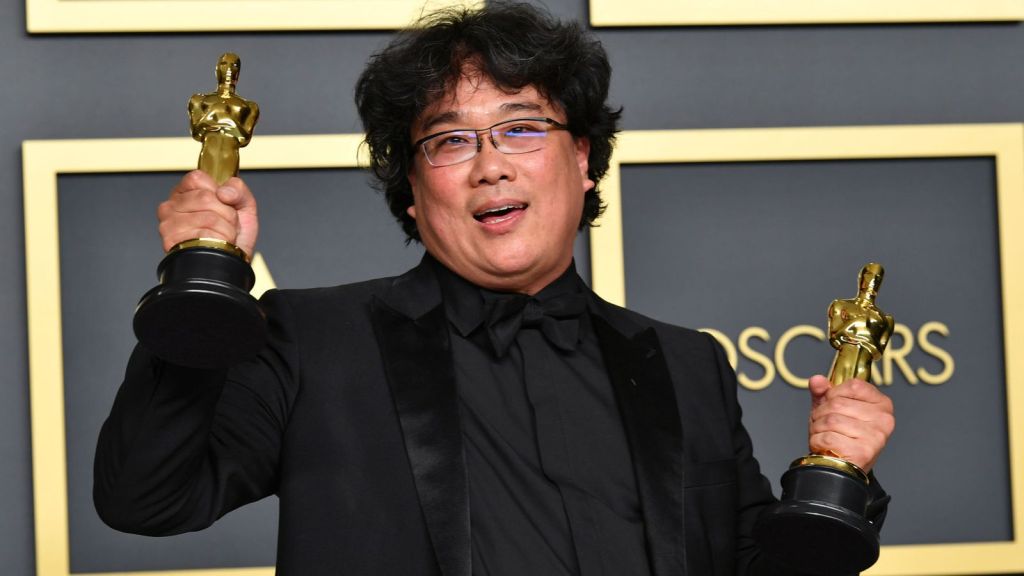
    Bong Joon-ho and the 92nd Academy Awards changed film history forever.

    The South Korean writer/director’s seventh feature, “Parasite,” a haunting and arresting drama with elements of comedy and paranoia, took home the Academy Award for Best Picture this weekend with a dynamic, unflinching look at families at the top and bottom of South Korea’s social strata.

    With wins for Best Direction, Best Original Screenplay and Best International Feature, Bong joins Disney as a four-time Oscar winner on the same night and cements South Korean cinema on the map.

    Now available widely for home viewing, there’s absolutely no reason to avoid seeing one of the best films of the 2010’s, especially as “Parasite” will likely dominate film conversation for months to come.

    Missing out at this point puts audiences at risk of ruining the film as the less viewers know about the film before seeing “Parasite,” the better the cinematic experience will be.

    In the simplest terms, “Parasite” is about two families, the affluent Park family living in a walled manor on a hill and the impoverished Kim family leeching off open Wi-Fi and free extermination in their semi-basement flat.

    When the Kim’s son is hired to serve as an English tutor for the Park’s teenage daughter, it sets in motion a series of events that will irrevocably change both families for life.

    Twists and turns masterfully crafted into the story are offset by moments of extremely poignant subtlety as Bong envelopes audiences in a world that seems infinitely close and yet constantly out of reach through perfect shot selection and camera movement that puts the viewers’ eyes on exactly what they need to see at the exact moment they need to see it.

    Although set in Seoul, the universal film realistically could have taken place anywhere and in any language with its observations on economic class conflict, greed and deception. Its biggest hindrance to mainstream success has been a relative unwillingness for subtitled films, though Bong has crafted a theatrical experience that far transcends any language barrier.

    “Parasite” is an arresting display of cinema mastery that reveals its many layers over repeat viewings and a feature whose humor, tension and drama interweave majestically over the terse two-hour running time.

    Perspective is of key importance to “Parasite” as viewers are left questioning events in the film from every angle, not knowing what’s coming next or where it’s coming from. The Oscar-winning screenplay written by Bong and Han Jin-won is an unparalleled combination of tension and release that keeps audiences on the edge of their seats.

    What’s most important about the unprecedented success of “Parasite” is what it means for the Academy moving forward, and hopefully, for the film industry as a whole.

    It’s truly remarkable that a foreign-language film broke through and won in four out of the six categories it was nominated in. But at the same time, “Parasite” failed to receive a deserved cinematography nod and none of the film’s illustrious cast was honored with a nomination despite the film winning Best Ensemble at the Screen Actors Guild awards.

    “Parasite” relies on eight actors to deliver memorable, pitch-perfect performances in order to pull off Bong’s layered screenplay and there isn’t a false step among the entire cast. Each member of the family – father, mother, son and daughter – is in sharp contrast from their mirror in the other family, as if they were playing the opposite side of the same coin.

    This year’s Academy Award Best Picture winner is a truly special, audacious cinematic masterpiece that’s uniquely of this moment in time and yet transcends the world we’re living in.

    “Parasite” was the best film of 2019, arguably the greatest film of the last decade and the correct choice by Academy voters Sunday evening.

  • 92nd Academy Awards preview: Parasite v 1917

    92nd Academy Awards preview: Parasite v 1917

    For the sake of posterity, here are my predictions and thoughts on tonight’s Academy Awards:

    Best Picture:

    Going to win – 1917, the runaway winner at BAFTA and odds on favorite tonight, the Academy will likely favor an old standard in Best Picture winners: the technically proficient, period war epic

    Should win – Parasite, probably sitting in the runner-up chair, Bong Joon-Ho’s masterpiece has a strong chance to pull the upset thanks to the preferential balloting system and is the year’s best film by a significant margin

    Dark horse – Once Upon A Time In Hollywood, the Academy loves movies about Hollywood and this Quentin Tarantino period dramedy is probably the most accessible of his filmography to Oscar voters

    Best Director:

    Going to win – Sam Mendes for 1917, Mendes should get the BP boost along with the film’s overwhelmingly spectacular technical achievements to hand him an Oscar for putting all the right pieces around him

    Should win – Bong Joon-Ho for Parasite, same story, different category, Bong creates a rich, deep world that constantly keeps audiences on the edge of their seat and masters nuance from start to finish

    Dark horse – Realistically no one, although some voters will cast their ballots for Tarantino, one of Hollywood’s best auteurs never to win this award

    Best Actor:

    Going to win – Joaquin Phoenix for Joker, the darkest, most actor-y performance of the year is essentially a guaranteed first time win for Phoenix, who elevates an otherwise marginal comic book movie to Best Picture contender worthy status

    Should win – Adam Driver for Marriage Story, a performance that is probably more nuanced than Phoenix but less showy, which doesn’t bode well given Phoenix has swept everywhere else

    Dark horse – None.

    Best Actress:

    Going to win – Renée Zellweger for Judy, a tolerable performance in a vastly mediocre film that somehow got crowned as the best of the year back in September without any real discussion or debate

    Should win – Saoirse Ronan for Little Women, a four-time Oscar nominee by the age of 25, Ronan puts together her most Oscar-y performance yet as Jo March, but with a depth of conviction and character that underlies her immense talent.

    Dark horse – Scarlett Johansson for Marriage Story, double nominated in both lead and supporting actress, Johansson is better in the first twenty minutes of Noah Baumbach’s film than Zellweger is at any moment of Judy

    Best Supporting Actor:

    Going to win – Brad Pitt for Once Upon A Time In Hollywood, a much deserved accolade for one of cinema’s best character actors who just happens to be among its most attractive, which shields out sometimes how good of a performer he is and how effortless it is for Pitt to be charming.

    Should win – Pitt

    Dark horse – Joe Pesci for The Irishman or Tom Hanks for A Beautiful Day In The Neighborhood, 2019 was a terrific year for supporting actors and both of these men could easily have run away with the award in another year.

    Best Supporting Actress:

    Going to win – Laura Dern for Marriage Story, another example of a race that was over before it began, Dern is good as a no-prisoners-taken divorce attorney but there are other performances that are as good or better that deserve more attention as well.

    Should win – Florence Pugh for Little Women, the breakout star of Midsommar takes a reviled literary character and turns the tables on audiences with a standout performance as Amy March. The most difficult performance to pull off of any of these nominees, Pugh knocks it out of the park.

    Dark horse – None

    Best Original Screenplay:

    Going to win – Parasite

    Should win – Parasite

    Dark horse – Once Upon A Time In Hollywood


    Best Adapted Screenplay: 

    Going to win – Jojo Rabbit

    Should win – Little Women

    Dark horse – The Irishman

    Best Animated Feature:

    Going to win – Klaus

    Should win – Toy Story 4

    Best International Feature:

    Going to win – Parasite

    Should win – Parasite

    Best Documentary Feature:

    Going to win – American Factory

    Should win – American Factory

    Best Original Score:

    Going to win – Joker

    Should win – 1917

    Best Original Song:

    Going to win – “(I’m Gonna) Love Me Again” from Rocketman

    Should win – “(I’m Gonna) Love Me Again” from Rocketman

    Best Sound Editing and Mixing:

    Going to win – 1917

    Should win – 1917 for editing, Once Upon A Time in Hollywood for mixing

    Best Production Design:

    Going to win – 1917

    Should win – Parasite

    Best Cinematography:

    Going to win – 1917

    Should win – 1917

    Best Makeup and Hairstyling:

    Going to win – Bombshell

    Should win – Bombshell

    Best Costume Design:

    Going to win – Jojo Rabbit

    Should win – Once Upon A Time in Hollywood

    Best Film Editing:

    Going to win – Parasite

    Should win – Parasite

    Best Visual Effects:

    Going to win – 1917

    Should win – 1917

  • Miss Americana: Moments in the spotlight

    February 2, 2020 · Watch the official trailer

    Taylor Swift is tired of simply being a “good girl.”

    A new documentary that debuted last month at the Sundance Film Festival, “Miss Americana,” seeks to bring audiences into the music icon’s inner circle as Swift’s evolving celebrity and relationship with the public drives her toward activism.

    To a large extent, “Miss Americana” feels like an 85-minute explanation of why she’s shied away from controversy for most of her public life and a call to arms for her newfound political voice.

    The film covers most of Swift’s life in traditional biographical style, from her pre-stardom days writing songs in diaries through her debut in country music to years of large stadium tours.

    “Miss Americana” is made in patchwork, often feeling like a series of smaller behind-the-scenes and biographical videos made for a YouTube channel that are stitched together for a larger narrative.

    It’s a strange combination of the substantive and the superficial as candid moments of a pensive Swift philosophizing on stardom and equality are cross cut with sugary-sweet clips heavily influenced by the pop star’s public relations team.

    To be sure, the fact that a documentary about Swift exists at all is a calculation, a clearly defined act of public relations intended to sway opinion towards a woman who admittedly has sought self-worth based on the applause of strangers.

    “Miss Americana” seems to provide unprecedented access to Swift and director Lana Wilson uses Swift’s inner monologue to essentially narrate the film as the lone voice telling her own story. But even this backstage, at home, on the road footage feels curated, almost rehearsed in a way, letting audiences in to the moments that Swift and her management team want viewers to see.

    This gives “Miss Americana” an authentically inauthentic feel from start to finish and makes the documentary unlikely to convert those who aren’t in love with Swift’s music to her side.

    Since Swift is the only person interviewed for the documentary, segments of “Miss Americana” come across as cold, lonely diatribe from an individual still struggling to understand the spotlight her increasing fame has given her.

    The back half of “Miss Americana” slowly morphs into Swift’s personal evolution as a political influencer, using her instant access to millions of Americans via social media to rally youth participation in the election process as well as endorse Democratic candidates in her home state of Tennessee.

    Swift describes her choice to stay out of the political arena for much of her career as “being a good girl,” opting to remain silent on issues of the day and just “sing break-up songs.”

    The most impactful scene of this period of the film – a sit-down between Swift, her father and other middle-aged men in her inner circle debating the release of her first political statement on Instagram – feels slightly disingenuous. This isn’t to say that the meeting was faked or rehearsed, but simply that there’s not enough substance or time in the documentary given to these discussions to not make the scene come across as superficial.

    The film’s best moments come in the studio, or occasionally at home, when Swift works on developing the hooks, lyrics and sounds that turn into her 2017 album “Reputation” and 2019’s “Lover.” It’s genuinely entertaining to see an incredibly talented songwriter develop lyrics on the fly, blending chords and mixing tracks in a matter of moments that turn into hit records on the radio.

    And yet, even these sessions are somewhat marred by the indulgent choice to capture the development of the political anthem that plays over the end credits, “Only The Young,” a rallying cry to her younger fans.

    While good-intentioned, the almost circular nature of filming the creation of a song written for the film comes across as calculated and pre-determined, rendering an ungenuine feeling to the entire project.

    Netflix is a tailor-made partner for this kind of documentary, offering instant, wide-spread accessibility to a casual viewing audience who will treat “Miss Americana” more as a free add-on to their existing subscription rather than a film they’re spending money to see.

    The easy viewing, 85-minute run time gives “Miss Americana” almost universal appeal as background noise at home while doing other activities. Only hardcore fans of Swift will truly remain engaged for the entire duration and yet most audiences will enjoy their time with the pop icon.

  • Dear Basketball: Preserving the legacy of a man, not just a legend

    Dear Basketball: Preserving the legacy of a man, not just a legend

    I never liked Kobe Bryant growing up.

    To me, a life-long Dallas Mavericks fan, he was a smug, self-indulgent rival who wasn’t as good as everyone else thought he was.

    As a film aficionado and budding critic, it bothered me even more that one of my most-disliked sports antagonists won an Academy Award. It reeked of the bravado that annoyed me watching him dunk on Mavs centers or bank in game winning jumpers in route to another championship he didn’t deserve.

    Part of the pageantry about sports is creating and hating the villain. It’s what endears us to our heroes who best someone else’s hero that we view through the lens of the enemy.

    I was in a movie theater Sunday afternoon watching the film I intended to write this review over, Guy Ritchie’s crime caper “The Gentlemen” starring Matthew McConaughey, Colin Farrell and Hugh Grant.

    About halfway through the film, I was strangely moved to do something I rarely do in a theater; stop watching and check my phone.

    The screen flashed up with several text messages, a missed phone call and an ESPN news alert, all of which were commonplace for me to see once the credits start rolling on a movie.

    For some reason, instead of putting my phone away, I walked down the aisle and into the hallway, far enough out of view to not interrupt other audience members, but close enough to keep myself inside the world of the film.

    I opened my phone again expecting to see some text messages that wouldn’t matter in the long run and someone I needed to call back on my way home.

    The ESPN alert jumped to the top of the screen, “Breaking News: Kobe Bryant killed in helicopter crash at 41.”

    It was an unexpected, stunning revelation and one I couldn’t stop thinking about amid the ensuing diatribe and violence that concluded Ritchie’s film.

    It’s lingered in the back of my mind all afternoon and evening; someone I grew up watching and reviling was gone in the most tragic of fashions along with eight other people I’d never known of or met, among them his 13-year-old daughter Gianna.

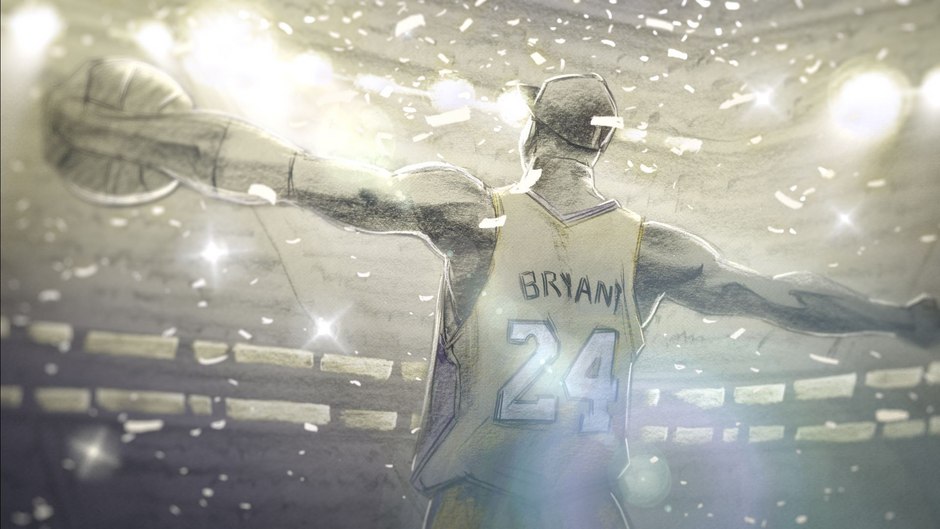
    The thoughts that clouded my mind brought me to the one piece of Kobe lore that I’d never seen before: “Dear Basketball,” the five-minute film based on his retirement poem that won Bryant an Academy Award in 2018 for best animated short.

    Director and animator Glen Keane takes Bryant’s words penned for an article in The Player’s Tribune and vividly animates them through hand-sketched pencil work that leaps off the screen in spite of its two-dimensional style.

    As Kobe narrates his own story, audiences are shown his legacy not through championships, but through the impact Bryant’s relentless passion for a sport had on him as a man, illustrating his growth from a six-year-old boy shooting hoops with his dad’s rolled-up tube socks into a legendary member of the Los Angeles Lakers.

    It’s a touching short that grows more poignant now on the day of his passing, hearing Bryant talking about savoring “every moment we have left together, the good and the bad” in a way that becomes a rallying cry for renewed hope in whatever passions we may have.

    Oscar-winner John Williams pens a sweeping score that combines the majesty of athletic competition with the final notes of impending exit. It veers slightly toward the point of excessive, but still hits home hard enough to draw tears from even the most stubborn of viewers.

    Keane’s expert use of color palette keeps the focus on Bryant, muting nearly everything but the yellow and purple of Kobe’s jersey and layering black strokes to enhance detail in life-like comic book form, enveloping the Bryant of “Dear Basketball” to superhero status in the mind’s eye of Kobe as a child.

    “Dear Basketball” perfectly illustrates not the myth that was created for him, but the inner soul of the man himself.

    Poetry and poignancy was something I never expected from Bryant.

    The Kobe I thought I knew wasn’t capable of that.

    It’s saddening to think that only his untimely passing – and especially that of his teenage daughter – would bring me to reframe the image of him in my mind’s eye.

    The power of film comes from its ability to have an impact on its audience and to preserve eternally people and moments in time.

    In this regard, “Dear Basketball” is a perfect film, keeping the memory of a legend, but more importantly a man, alive.


    The animated short film, “Dear Basketball,” can be seen online at believeentertainmentgroup.com/portfolio-item/dear-basketball.

  • Just Mercy: Truth in the final hours

    Just Mercy: Truth in the final hours

    A star-studded, politically relevant courtroom drama based on a true story released right in the middle of awards season is typically the kind of film Oscar voters and general audiences eat up.

    So why is no one going to see “Just Mercy,” the latest film from indie darling director Destin Daniel Cretton starring a pair of Academy Award winners and led by “Black Panther” standout Michael B. Jordan?

    There’s nothing wrong with the film. It’s a perfectly adequate, well-crafted feature that tells a simple story in poignant, heartfelt ways.

    “Just Mercy” just happens to be about seven years too late.

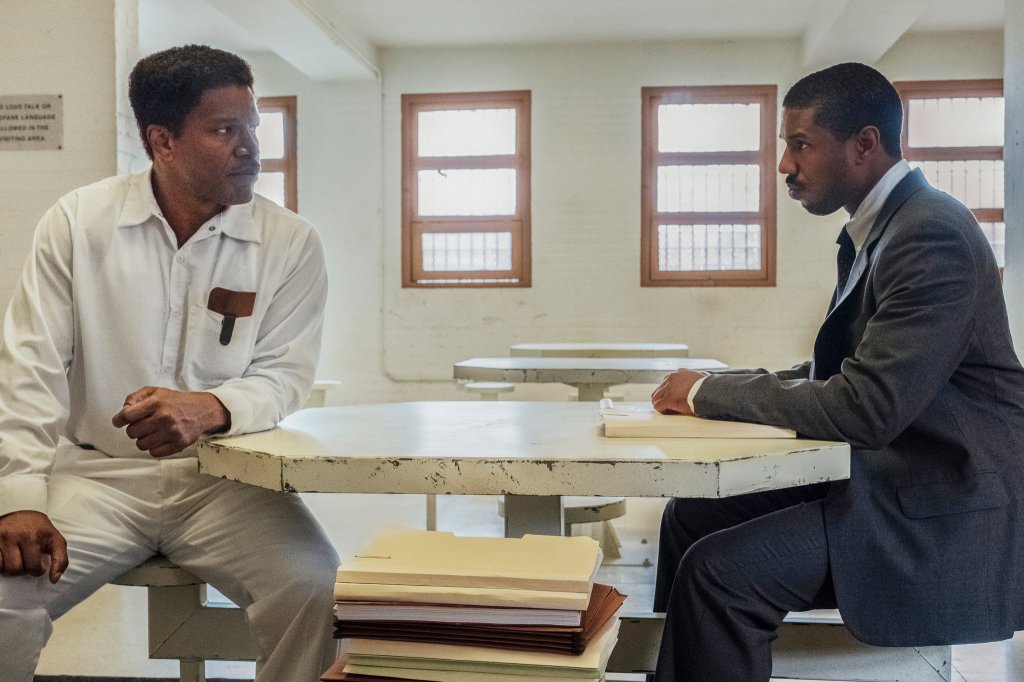
    The film follows the beginnings of the Equal Rights Institute, a non-profit law firm started by Harvard-educated African American lawyer Bryan Stevenson who moves to the heart of Alabama to counsel disenfranchised and wrongly condemned death row inmates on their final appeals.

    While encompassing the first years of the institute in general, the film most closely follows the case of Walter McMillian, wrongly convicted for the murder of an 18-year-old woman in spite of significant evidence ignored during his racially charged trial.

    Despite being based on Stevenson’s autobiography of the same name, “Just Mercy” serves more as an acting tour de force for a trio of talented character actors, most notably Oscar winner Jamie Foxx delivering his best performance in over five years as McMillian.

    Foxx brings an earnest heart to the role that been hardened not by the prison that’s stolen his life from him, but by an ever-increasing distrust of a justice system that’s failed him time and again.

    His chemistry opposite Michael B. Jordan’s steady, stoic turn as Stevenson is consistently solid throughout the film, but what sets Foxx apart in “Just Mercy” is the emotional bonds his McMillian is able to form beyond walls with two adjacent death row inmates played by Rob Morgan and O’Shea Jackson, Jr.

    Unable to see or feel the others’ presence, the three men instantly develop an emotional rapport and support that feels earned in spite of the extraordinary circumstances around them and help provide the film’s most heart-wrenching moment at the end of the second act following the decision of one inmate’s final appeal.

    In the least heralded great performance of 2019, Morgan blows audiences away with a remorseful passion mixed with bewilderment and confusion that will leave viewers stunned and awe-struck.

    Similarly, Tim Blake Nelson plays a pivotal role as a fellow inmate accusing McMillian of the murder whose confrontations with Stevenson feel comically caricature at first glance but becomes revelatory as the film catapults its way through the courtroom stage.

    “Just Mercy” fails to make the most of its biggest box office draws as Jordan is a serviceable protagonist through which to follow the story, but he never truly makes much of a mark on the film as Stevenson. Likewise, Oscar winning actress Brie Larson lends her credibility and star power to her third collaboration with Cretton after “Short Term 12” and “The Glass Castle,” but is given almost nothing to do in a small role as Stevenson’s aide.

    The fatal flaw within “Just Mercy” is that the scope of the film exceeds the Stevenson-McMillian relationship far too much for a tight narrative structure, but doesn’t expand the world wide enough to justify a lengthy 137-minute running time. While the subject matter is more than worthy of chronicling, Cretton sacrifices a relatively thin plotline for character moments better suited for television miniseries.

    Cretton doesn’t force the action visually in any special way, leaving the audience to rely on the ensemble cast’s largely terrific performances to prop up the film as a whole. The cinematography doesn’t get in the way and the musical score swells at all the expected moments, but the whole project technically reminds of an extended television crime procedural rather than a weighty, cinematic courtroom drama.

    “Just Mercy” will have a stronger run on streaming platform and home video rather than on the big screen as Warner Brothers rightly focuses their attention on larger projects like “Joker” and “Richard Jewell.”

    A competently made, brilliantly acted drama, “Just Mercy” is worth taking a chance on later this year when the film is made available for private home viewing.

  • 1917: War close at hand

    1917: War close at hand

    You’ll never see Roger Deakins on screen, but he’s in every frame of director Sam Mendes’ new war epic “1917,” from the opening frames bathed across a sea of endless green grass until the final cut to black before the credits.

    World-renowned as a master craftsman in his art, the British-born Deakins achieves his magnum opus with “1917” – a visual spectacle combining his years of experience as film’s premiere cinematographer and his unique eye for capturing fleeting moments to last a lifetime.

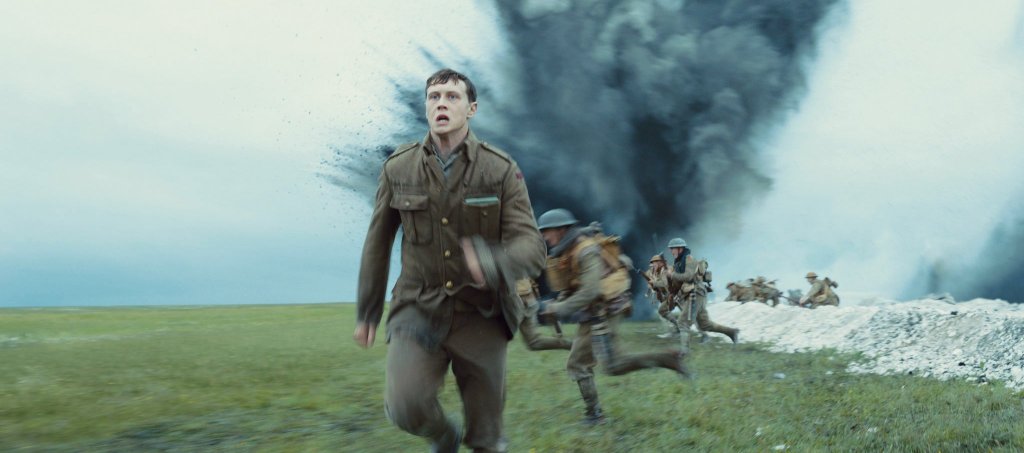
    The film intends to follow two young English lance corporals as they journey across enemy lines during World War I to deliver a message calling off an impending attack on German forces that will ambush and kill 1600 British soldiers, and for the most part, it does so considerably well.

    What “1917” truly is, however, is an arresting, unparalleled feat of technical cinema that will dazzle audiences with its extended, world-spanning one-take camera work that pulls audiences in and gives the effect of continuous, unedited filming over the course of two hours, fully immersing viewers in the shoes of two brave, yet scared young men.

    George MacKay and Dean-Charles Chapman propel the engine that makes “1917” work as Lance Corporals Schofield and Blake, respectively. Their easy chemistry amid the most difficult working conditions for actors is especially impressive and the relatively limited dialogue in the screenplay allows for the pair to wear their emotions on their sleeve with haunting eyes.

    “1917” pulls the camera in close on both performers and presses in on these non-verbal cues to show, not tell audiences about the mental strains placed on young WWI servicemen and MacKay’s stoicism matched with Chapman’s heart leaps off the screen at every turn.

    Though the bulk of the film follows the two young leads, “1917” is also littered by brilliant supporting turns from a number of talented British character actors from Colin Firth and Benedict Cumberbatch, to Mark Strong, as well as Andrew Scott and Richard Madden. Each actor pops up at exactly the right moment to provide gravitas and emotional depth.

    The film’s harrowing subject matter and plot leave audiences constantly on edge as Schofield and Blake could easily encounter imminent death over every ridge or around the next corner. An unbroken, continuous camera frame heightens this suspense and keeps audiences dialed in to the duo’s circumstances, equally unsure what’s to come next.

    Mendes and Deakins masterfully contend with the elements over the course of meticulously pre-conceived panning shots, often relying on natural light to illuminate scenes and operating free-flowing panoramic cameras that allowed for steady and smooth 360-degree rotation.

    Each second of “1917” is a precisely choreographed dance between actors and camera operators, moving across dynamic, uneven terrain and across miles of intricate bunkers and sets hand-crafted for shooting.

    Mendes and editor Lee Smith blend scenes together confidently with limited breaks in the dynamic visuals, cheating slightly as the camera is obscured from viewing Schofield and Blake at various points to hide cuts in the film. Most viewers won’t notice these slight imperfections in the cinema that provide the overall look of the film as they will be too entrenched in the pair’s plight and Thomas Newman’s gripping score to peer behind the curtain.

    A multiple Golden Globe winner, “1917” is certain to be one of the most nominated Academy Award contenders this spring, immediately vaulting into frontrunner status for cinematography, direction and production design. Newman’s haunting, pitch-perfect orchestral score should win as well, though it has lost recently to Hildur Guõnadóttir’s equally transfixing accompaniment to the comic book origin film “Joker.”

    The film could easily win Best Picture following its Best Motion Picture – Drama win at the Golden Globes, but could just as easily fall into the same trap other technically profound films like “Gravity” and “Mad Max: Fury Road” did at the Oscars, winning in many smaller categories but missing out on the top prize.

    There’s absolutely no reason to see “1917” on anything less than the biggest, best screen imaginable – even if that means avoiding closer theaters. A visual marvel unlike any other, “1917” requires a grandiose, epic cinematic experience to match the vastness of the film itself.

  • Uncut Gems: Loving the uncomfortable

    Uncut Gems: Loving the uncomfortable

    Tense situations often provide for the best drama and leave bystanders watching things unfolding on the sidelines captivated in awe.

    It’s a compulsion that pulls us to slow down and gawk at accidents and train-wrecks; the very thing that allows a television program like “The Jerry Springer Show” to exist.

    Cinematically, that uncomfortable draw that keeps audiences on the edge of their seats can be the same feeling that prevents people from seeing an incredible film more than once.

    The much heralded, Golden Globe-winning “Joker” is like that, as is the latest feature from Josh and Benny Safdie, the writer-director brother indie darling tandem behind 2017’s standout crime drama “Good Time.”

    With their new movie “Uncut Gems,” the Safdie brothers crank the volume up to 11 on their signature brand of frenetic, gritty New York City film spectacle in a must-see, then likely never see again drama.

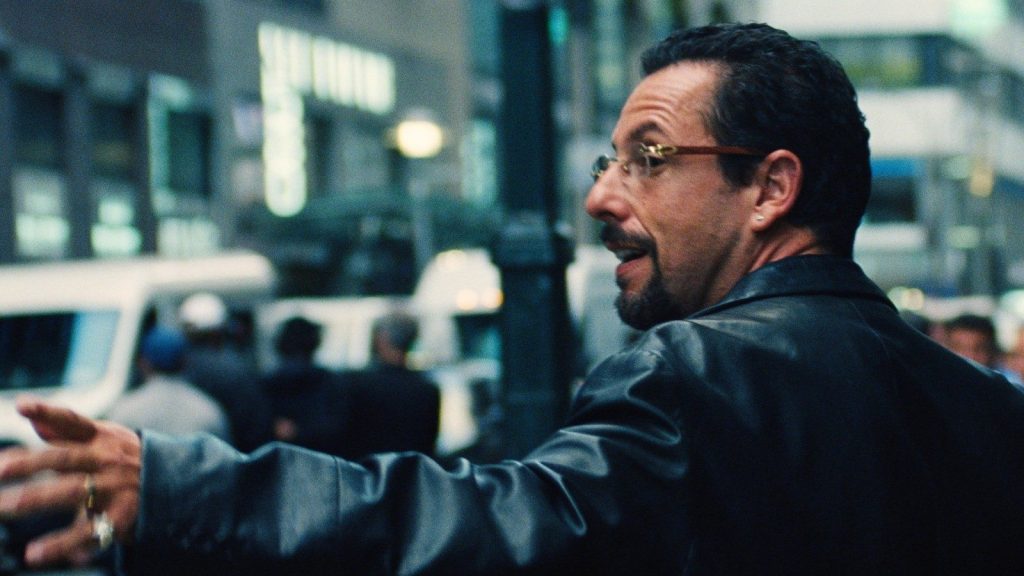
    Adam Sandler gives the transformative performance of his career as Howard Ratner, a diamond district jeweler whose obsession with sports gambling and the big score puts him at odds with clients, loan sharks and his estranged family.

    Sandler disappears so fully into Howard that it’s often hard to remember Sandler’s comedic work during “Gems.” There’s an eccentricity to Sandler’s performance that emboldens audiences to live inside the world of the film and accept this familiar character on his own terms and not as it relates to Sandler.

    When audiences watch an actor like Robert De Niro or Al Pacino, they often find themselves engulfed within their performances and still never take their minds off the fact that De Niro or Pacino are playing the parts. Who they are as personalities can never be totally removed from the work.

    Sandler’s Howard pulls viewers in so fully – in large part thanks to the Safdies’ pitch-perfect screenplay – that the comedian himself fades away behind the glasses and goatee, something Sandler has never been able to pull off before in a 20-plus year movie career.

    The film’s ensemble cast boasts a bevy of talented character actors with ruthless, memorable work including Eric Bogosian as a vindictive loan shark, Broadway and “Frozen” star Idina Menzel stunning as Howard’s angry wife Dinah and Lakeith Stanfield as Howard’s assistant and client valet.

    Former National Basketball Association star Kevin Garnett delivers a tremendous, intense performance as a fictionalized version of himself in one of the best acting performances by any major sports athlete, enhancing the film with an authentic, controlled turn that pushes the drama in new directions.

    The film’s breakout star is newcomer Julia Fox, who pulls focus away from Sandler in a wonderful supporting turn as Howard’s employee/mistress. Fox charms audiences in a way that feels manipulative but largely isn’t and her presence on screen is reminiscent of the dynamic energy Margot Robbie brought to her first major role in Martin Scorsese’s “The Wolf of Wall Street.”

    What sets “Gems” apart is the film’s relentless uncertainty where literally any outcome or repercussion can occur at any time. This keeps viewers apprehensively engaged and tense, forcing them into Howard’s corner as every action he takes feels like a miniature wager with ever-growing stakes.

    It’s a tremendous pairing of screenplay and performance that allows the chaotic pace of the film to genuine and earned rather than deliberately contrived. The Safdies, who have sought Sandler for the role of Howard for the better part of a decade, perfectly pen a character to fit the longtime comedic actor’s unique quirks in such a way that opens up Sandler to a world of new opportunities cinematically.

    Shot on 35 mm film, the visual artistry of “Gems” maintains a raw, gritty vibrancy and the Safdie brothers play with lights and colors to keep the dynamic energy of their screenplay alive regardless of the situation. This works especially well during a scene where Howard enters a club filled with blacklights which gives the screen an off blue hue complemented by a bright neon orange hoodie worn by a character antagonizing Howard that visually represents the story the Safdies are trying to tell.

    “Gems” is likely far too controversial for major awards season considerations although the movie will likely be heralded by critics and independent film groups.

    Sandler has an outside chance for a best actor nomination if newer members of the Academy rally behind him and the film, though it’s more likely their support will go to Eddie Murphy’s turn as a struggling comic turned movie star in Netflix’s “Dolemite Is My Name.”

    “Uncut Gems” clearly stands out as one of 2019’s best independent films and a dramatic career pinnacle for Sandler that needs to be seen on the big screen to truly be appreciated.