Year: 2021

  • Tom Clancy’s Without Remorse: Vengeance served ice cold

    Tom Clancy’s Without Remorse: Vengeance served ice cold

    Somber can be a valuable emotion in espionage thrillers.

    Cold, calculated violence from an agent infiltrating behind enemy lines to extract a target, steal intelligence or disrupt the opposition at any cost is often engaging, entertaining drama ripe for cinema.

    Amazon’s attempt to get into the spy genre, however, is so emotionless that it becomes a stale, forgettable journey across the globe featuring faceless villains with horrible aim, melodramatic fodder passing itself as character development and serviceable action sequences. 

    Based off the novel, Tom Clancy’s Without Remorse intends itself to be a gritty action thriller with a mixture of modern espionage and good old fashioned brutality, yet director Stefano Sollima can’t communicate clearly with his audience aside from handing the plot over way too quickly.

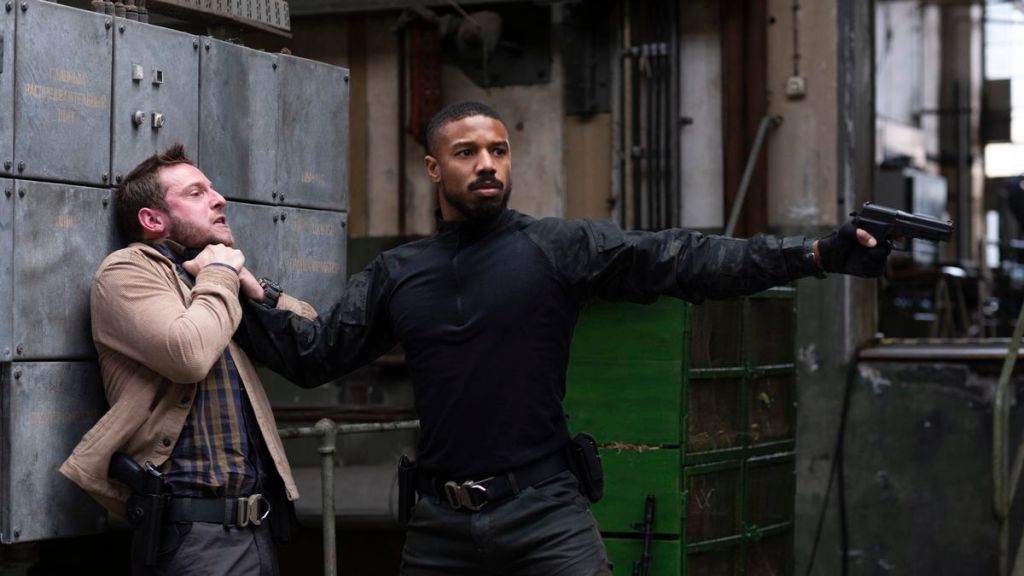
    Creed star Michael B. Jordan gives a solid effort as John Kelly, a Special Forces operative on a quest for vengeance after his wife and unborn child are murdered by a professional hit squad in his home.

    But his work is consistently, painstakingly undercut by a screenplay revived by Sicario writer Taylor Sheridan that takes the loosest adaptation of its source material and weaves a by-the-numbers revenge thriller that never gets off the ground. Without Remorse becomes the 2020’s equivalent of a 90’s Steven Seagal film with Jordan a marked improvement as an actor.

    Jordan offers the grit to bring Kelly’s callous nature to bear after the murder of his wife, but these moments often feel hollow because there isn’t any palpable chemistry between Jordan and Lauren London as Pam.

    Jordan domineers over his costars to the point they almost aren’t acting in the same movie. He brings energy and intensity to each scene that isn’t ever matched, leaving scenes to feel disjointed or one-note.

    The supporting cast has talent, although Sollima cannot compel nuance from those around Kelly.

    Jodie Turner-Smith, a radiant actress in Queen and Slim, is an overly rigid wall of stoicism as Kelly’s military partner. While it’s clear she put in the work to handle herself in action sequences, there’s a robotic quality to her performance that comes across as mechanical and devoid of personality.

    The same is true of Jamie Bell’s CIA deputy director Robert Ritter and Guy Pearce’s Defense Secretary Clay, who play the role of secret-keepers so tight to the chest that the audience is rarely clued in on what’s going on in their heads. 

    Though it makes sense that a film about covert operations would largely take place at night, Sollima does an inadequate job of framing its stars distinctly in natural or added light to keep Jordan or his antagonists out of the shadows even in moments of pure dialogue.

    Hiding most of the action under cover of smoke and darkness masks subpar choreography and large sections of Without Remorse require viewers to slog through the scenery to make heads or tails of the nonsensicalities.

    In the moments where the action is well thought out, Sollima showers the scene with warmer light to accentuate the hand-to-hand combat of a close-quarters fight in a prison cell or the dying fluorescents of an airplane cargo bay.

    It often feels like Without Remorse is an audition tape for Jordan to helm a different action/adventure franchise as his talents feel largely wasted here with a middling to subpar script and exceptionally poor direction telegraphs every plot twist from a mile away.

    Paramount sold off the film to Amazon Studios in late 2020 after pulling it off its release schedule twice due to the COVID-19 pandemic and the online streamer pushed Without Remorse out with little fanfare last weekend.

    Ultimately, Without Remorse is a middling thriller where the bullets fly fast and loose and the drama takes a backseat to R-rated, yet bloodless violence. Jordan’s effort and the occasionally fun action sequences make it a casual watch candidate while doing chores at home.
  • Oscars 2021*: Nomadland win slighted

    Oscars 2021*: Nomadland win slighted

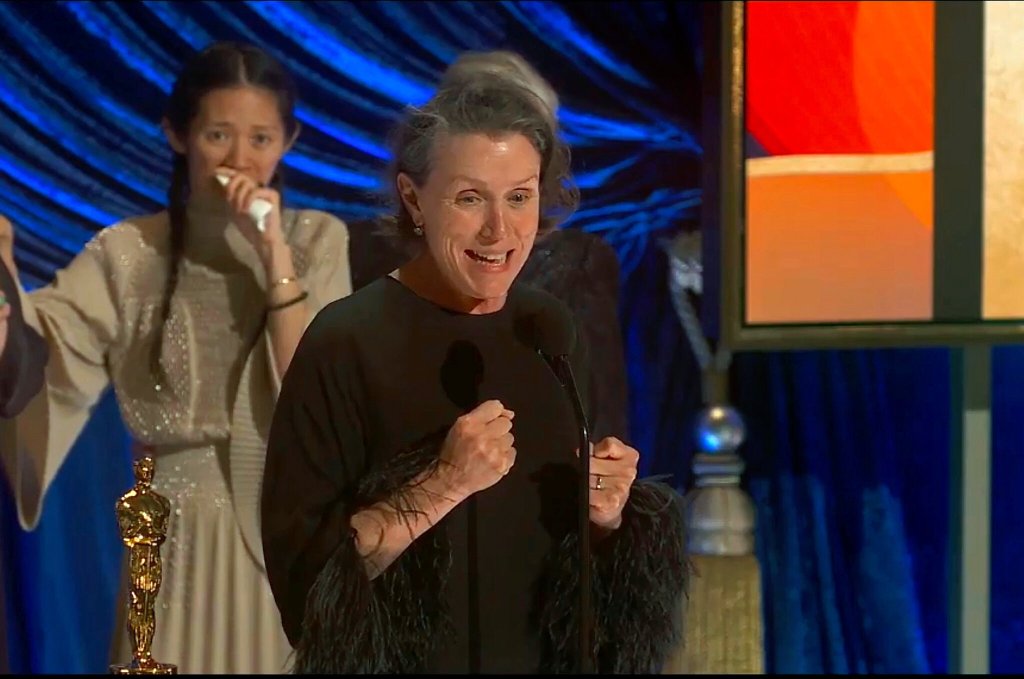
    “One day very, very soon take everyone you know into a theater, shoulder to shoulder, in that dark space and watch every film that is represented here tonight.” – Three-time Academy Award winner Frances McDormand, accepting the Best Picture Oscar for her film Nomadland

    Those who believe the Academy Awards don’t matter will point to Sunday evening’s ceremony as a prime example.

    After a tumultuous year where moviegoers were prevented from seeing a majority of the nominees on the big screen, the Oscars were meant to be a celebration of the industry’s perseverance and hope for the future.

    But the disjointed, often disingenuous gala held inside Los Angeles’ Union Station will forever dampen the luster of its nominees and winners – especially its Best Picture honoree Nomadland, Chloé Zhao’s intimate portrait of life on the open roads during harsh economic times in the American West.

    When people should be celebrating this magnificently small independent feature and star Frances McDormand’s wolf cry to propel moviegoers back to the cinemas, it will be forever tarnished by winning that prize before the final commercial break only to have McDormand with very little left to say after her Best Actress win and Sir Anthony Hopkins a no-show to accept his Best Actor prize for The Father.

    The real question now becomes, will moviegoers even bother to watch Nomadland at home where it can easily be streamed with a subscription to Hulu, let alone head out to the nearest cineplex to see such a quiet film “shoulder to shoulder” with fellow theater patrons as McDormand put it.

    A haunting yet powerful portrait of a hidden life across the heartland, Nomadland finds some of the best of America wandering across the country in search of boundless freedom and of themselves.

    McDormand stars as Fern, a seasonal worker traveling the country in an inauspicious white van following the death of her husband and collapse of the town they lived in after the US Gypsum plant closed down. Along the course of her travels, she meets a variety of interesting characters living as van-dwellers.

    Nomadland meanders slowly through its 105-minute running time with a subtle grace that allows for deep reflection. Zhao’s film is an unassuming portrait of Americana through the lens of a woman unable to cope with massive changes in her life.

    Nomadland is a quiet road movie filled with introspection, genuine performances from raw untrained talent and endlessly striking cinematography that maximizes natural light.

    It’s truly disappointing that director of photography Joshua James Richards’ brilliance behind the camera isn’t readily available to be seen at movie theaters across the country as the billowing landscapes and intimate moments he captures transcend what home viewing experiences can provide.

    Richards masterfully utilizes an extended wide angle lens to frame the long, empty vastness of the film’s outdoor landscapes and mirrors that by pulling his camera in close to characters, tightening the frame to the point where there’s nowhere else to look but people telling stories.

    McDormand is certainly worthy of acclaim for this, her third Academy Award for Best Actress following 1996’s Fargo and 2017’s Three Billboards Outside Ebbing, Missouri, the true stars of Nomadland are the ancillary characters Fern meets along the way.

    Real life nomads playing themselves deliver a large majority of the film’s emotional stakes and authenticity. Characters like the reclusive Swankie or energetic Linda May provide Nomadland with a sense of color, bursting any superficial sheen that studio features might have. 

    At times, Zhao’s film becomes almost a documentary with McDormand playing tour guide to an unknown world of America’s heartland. Her film honors the nomadic culture with quiet reverence and respect, allowing these wandering seniors to express themselves in pure honesty that radiates off the screen.

    For the first time since 1971, Best Picture wasn’t the final award handed out at the Academy Awards.

    In doing so – to try and create a moment – the producers ripped away a potential moment for the second female filmmaker to ever win Best Director and a celebration of small, independent filmmaking.

    Nomadland is certainly a worthy Best Picture winner that hopefully will long outlive this miscue and reach a much wider audience in a revitalized movie theater setting or in the comfort of their own homes.

  • The Father: Waging war on aging

    The Father: Waging war on aging

    First time filmmakers delivering quality debut features has been a staple of this year’s award season with Emerald Fennell’s Promising Young Woman and Regina King’s One Night in Miami… as standouts.

    Dramatist Florian Zeller has also become a name to watch in cinema, adapting his critically acclaimed stage play for the big screen and earning five Academy Award nominations including Best Picture, two acting nods and best adapted screenplay.

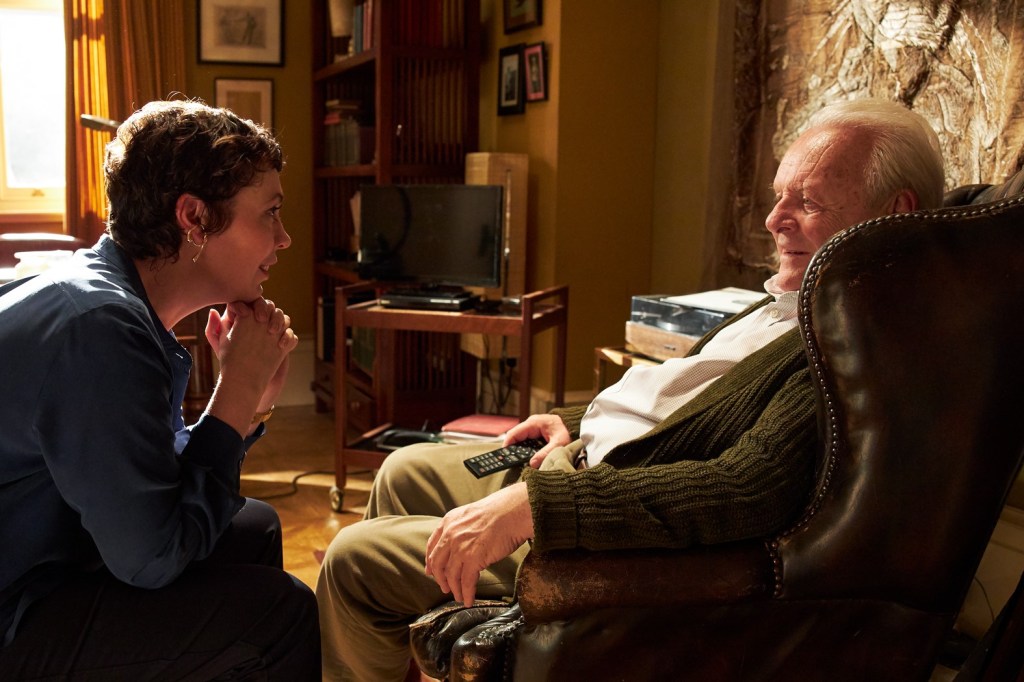
    The Father finds Anthony trying to maintain his independence in spite of his advanced age while his daughter Anne hopes to find a caretaker to help him with his daily life. As he balks at the help of others, Anthony finds himself doubting those around him, his own mind and even reality itself.

    At the core of the film is a terrifically nuanced turn from Sir Anthony Hopkins, for whom Zeller wrote the titular role and named the character after. The Oscar winner is especially adept here at guiding audiences through the tonal shifts in the drama through his performance, which finds Anthony more and more unsure of himself over time.

    Hopkins uses the non-verbal to communicate these changes with both a widening or narrowing of his eyes to give viewers clarity into Anthony’s mental state, but also in his physicality as Hopkins’ gait, shoulder movement and posture inform the larger picture that Anthony’s words cannot express.

    This is especially true as Anthony meets (or more likely re-meets) characters throughout The Father as Hopkins expresses an individuality to each interaction that matches the mood of the scene and yet allows for Anthony’s fading memory to befuddle or confuse things.

    Hopkins’ strongest moments come opposite Olivia Colman as Anne. The pair have an ability to emotionally express how Anthony’s situation has become a burden onto Anne, but in a way that shows off a deep-rooted bond somewhere between comradery and love.

    Zeller’s screenplay is ripe with emotionally taxing yet fulfilling moments that genuinely display the effects mental illness have on the elderly and those who love them. Where it turns from solid script to truly inspired drama, however, is during a second viewing of the film as the pieces are all assembled and early moments take on new meaning with greater context.

    The Father has a very large influence from its theater roots, often feeling immensely small in scale with dialogue-intensive exchanges in tight quarters.

    But the film becomes something much more in its cinematic form thanks to expert, Academy Award nominated editing from Yorgos Lamprinos. Scenes are tied together in such a way – always from Anthony’s perspective – that audiences wander through the film trying to piece together its mysteries like how Anthony attempts to understand an everchanging environment.

    In its stage form, it would be difficult for characters to melt in and out of the action in the same way they do in Zeller’s film. A simple, well-timed cut away masks this process and allows scenes that would change dramatically on stage to occur without incident. 

    The fact that the editing enhances viewers’ understanding of Anthony’s mental and emotional predicament is astounding and very similar stylistically to Tara Miele’s indie fantasy drama Wander Darkly. 

    Visually, The Father suffers slightly from Zeller’s shot construction and staging as his eye for the theater can cause imbalanced framing with slightly askew cameras positioned over the shoulder of actors as they are blurred at the edge of a frame to highlight another.

    The Father is a strong contender this Sunday at the Academy Awards with Hopkins a co-frontrunner for Best Actor alongside the late Chadwick Boseman for Ma Rainey’s Black Bottom. Colman, a recent Oscar winner herself, could be a surprise as well in supporting actress although she is likely running third behind Yuh-Jung Youn in Minari and Maria Bakalova in Borat Subsequent Moviefilm.

    A solid drama with compelling lead performances, The Father certainly deserves the honors it has been bestowed this awards season although it’s safe to say that Zeller’s film could wait until a reasonably priced home viewing rather than premium on-demand rental or a trip to the theater.

  • WeWork: Myth of the unicorn

    WeWork: Myth of the unicorn

    “If you tell a 30-something male that he’s Jesus Christ, he’s inclined to believe you.” – Scott Galloway, marketing professor at N.Y.U.

    An attractive, tall man stands in front of the camera, confident and charming in his demeanor yet fumbling over his words as he attempts to explain a “fundamental shift” in the real estate business.

    Quite suddenly, he lifts his leg and passes gas, which comes across as endearing and mildly funny until time passes with an unfinished monologue underscored by news anchors discussing the financial collapse of his company.

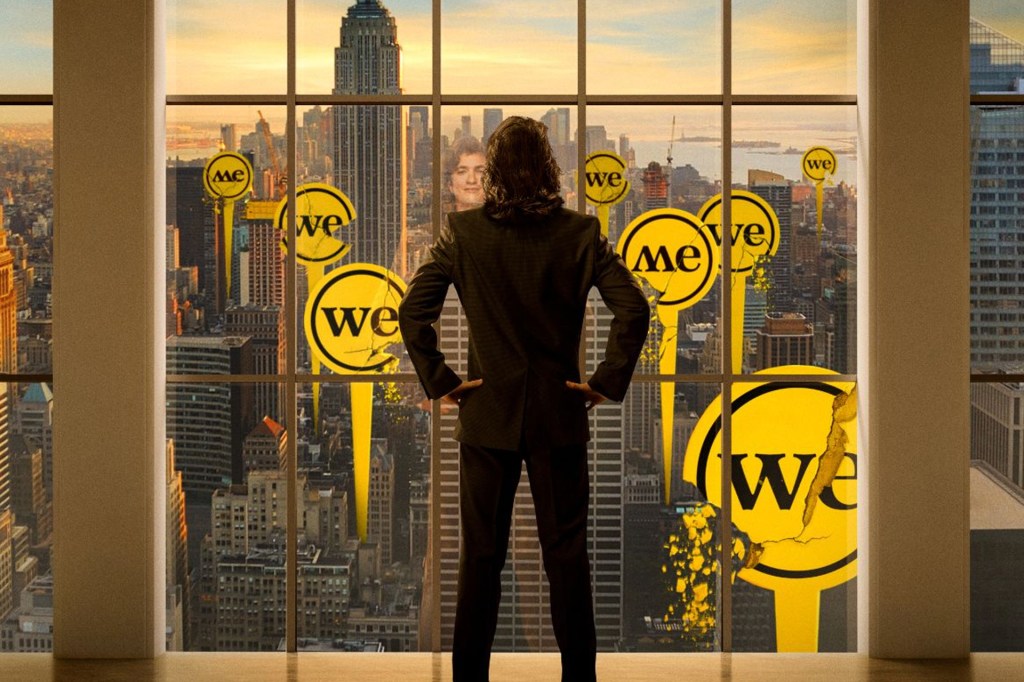
    It’s a tonally mixed, but exactly on point introduction to Adam Neumann, then co-founder and CEO of a tech/real estate startup that ballooned to massive size in ten years only to fall by the wayside in weeks.

    Neumann – and to a certain extent, his company – are the focus of Academy Award nominated director Jed Rothstein’s latest documentary WeWork: or The Making and Breaking of a $47 Billion Unicorn, which dropped on Hulu earlier this month after an impressive debut at this year’s South by Southwest Film Festival.

    WeWork combines the ruthless business ambition of Facebook critique The Social Network and last year’s Fyre Festival documentaries with cult-centric docudramas like The Vow. 

    From the outset, Rothstein allows audiences into the world of WeWork through founder Neumann’s captivating, almost Svengali-like personality boosting big dreams of a connected world through co-habitated work spaces and integrated, communal living.

    Rothstein focuses less on the company itself, which developed real estate in New York City as open plan office buildings for startup businesses and freelancers. Instead, WeWork is almost entirely about the culture, the man behind its vision and how greed and relentless expansion brought the whole thing tumbling down.

    Neumann declined to be interviewed for the documentary, but through a plethora of archival footage, his magnetic presence reverberates across each and every moment.

    There’s something striking about the way films like WeWork come together, often with a massive backlog of behind-the-scenes footage originally commissioned by the subject themselves. It’s clear at times that Neumann is thinking of a grandiose, flattering documentary about his company as he pontificates to camera about his communal ideals.

    Rothstein infuses millennial pop culture sentimentality into his feature that give WeWork a hip style very much in keeping with the free-spirited tone Neumann aspired to for his company.

    The film is very detail oriented about technical business lingo and numbers that may be confusing to those outside corporate structures. Rothstein combats this through the use of computer graphics that simplify the data and present it in a visually digestible way. 

    A thirty second summary of WeWork’s philosophy on “EBITDA” or earnings before interest, taxes, depreciation and amortization takes a complex business evaluation metric and uses quick, flashy graphs to explain to lay viewers exactly how the company was hoodwinking investors. 

    The biggest gap within the WeWork documentary is the void of discussion about co-founder Miguel McKelvey, who remains a part of the company and is shown rarely and mentioned even less. It’s astounding – and almost inconceivable – for a player to have such a significant impact on the creation and operation of a multi-billion dollar business and not become a focus of the documentary.

    In this regard, it’s as WeWork isn’t about the company at all, but more the singularity of Neumann as a mythical figure whose rise and fall glorifies corporate CEOs undeserving of golden parachutes. 

    An interviewee late in the documentary says that “when you focus the story on Adam, you miss how many people worked really hard to bring this impossible vision to life.” That’s true both of the company itself and of Rothstein’s documentary, which uses former WeWork employees to carry the bulk of the interviews but mostly in the context of talking about Neumann and his impact on the company and their lives rather than the group as a whole.

    WeWork will also set the stage for an upcoming miniseries from Apple on the fall of the company with Oscar winners Jared Leto and Anne Hathaway set to star as Neumann and his wife, Rebecca. A second miniseries and additional feature films are also slated according to reports from major industry outlets.

    An early contender for one of the year’s best documentaries, WeWork is a must see experience sure to captivate and likely anger viewers.

  • Godzilla vs Kong: Monster movie fight

    Godzilla vs Kong: Monster movie fight

    Large scale spectacle often serves as a primary reason moviegoers head to the theaters, whether it be epic battles between rival medieval armies or spies preventing world destruction or comic book heroes saving the universe.

    In hopes for a big screen surge, Warner Brothers has put its faith in another tried and true blockbuster genre – the monster movie – with a gigantic showdown long in the making.

    Director Adam Wingard’s Godzilla vs. Kong is exactly what it sounds like, a faceoff between the two most well-known movie monsters, each with a storied cinematic history and primed for a fight expected to draw viewers out of their homes for old school thrills.

    A decision to move King Kong from his remote refuge in search of his native home puts Kong and his protectors in the path of an enraged Godzilla, back on land after three quiet years for unknown reasons.

    At its best, Godzilla vs. Kong lives up to the promise shown in earlier installments like 2014’s Godzilla and 2017’s Kong: Skull Island. At its worst, it devolves into a Pacific Rim-esque mess.

    Godzilla vs. Kong puts the wrong giant at the front as it’s the king of the jungle who truly takes center stage in Wingard’s film.

    Uprooted from his home in Skull Island and forced into a journey of self-discovery, Kong has the most dramatic character development of the entire film while Godzilla slithers in occasionally from underwater to wreak havoc. Both creatures are shown in all their glory from a visual standpoint and the action sequences have a good amount of energy to them.

    Most notably, this third Godzilla entry is perhaps the first this century to showcase the monster in bright daylight for extended periods of time, allowing audiences to truly get the most out of what they came to see: giant creatures beating each other to a pulp and destroying major cities.

    The battles are the focal point for the entire film, receiving the best treatment from Wingard and intricate, thoughtful examinations of how a sea lizard and land-bound monkey might duke it out. An early sequence with Kong transported by boat only to come face to face with Godzilla in the middle of the ocean is especially engaging and creative in this regard.

    The human characters in Godzilla vs. Kong, however, continuously fight an uphill battle for relevance as pretty much all the actors are saddled with outlandish plot devices and laughably subpar dialogue that drags most of the emotional weight out of the film.

    While it’s great to see talents like Rebecca Hall, Julian Dennison, Millie Bobby Brown and especially the underutilized Brian Tyree Henry earn sizable screen time, viewers can easily tell that the material is holding actors back.

    The one exception to this is Kaylee Hottle’s Jia, the one character besides the monsters actually written with purpose and care.

    A deaf character played by a deaf actress, Jia comes across as the most genuine character in the film with a wide open heart and a connection to Kong through sign language that makes sense and helps propel the story forward both logically and emotionally, a rare feat in this action-adventure.

    Wingard and his team take great care to muffle or outright mute the sound at times to put viewers in Jia’s shoes during her interactions with Kong and the ways they inventively craft the relationship between a young girl and a massive giant is perhaps the best human-titan interaction in the entire series.

    It’s impossible to fully divorce a review of Godzilla vs. Kong from a debate about how to watch the film as it is currently playing both in theaters and streaming on HBO Max for the next several weeks.

    If Warner Brothers was intent on releasing one of their tentpole intellectual property features in order to revitalize theaters coming out of the coronavirus pandemic, they would have put their four-hour odyssey Zach Snyder’s Justice League on the big screen rather than making it an exclusive selling point for their affiliated streamer.

    In a normal year, Godzilla vs. Kong would have been a run-of-the-mill, turn-your-brain-off action blockbuster that came and went just as unimpressively as prior Godzilla entry King of the Monsters did in 2019. Wingard’s film feels more important now because, by in large, there is no real competition.

    Truly, the CGI battle sequences and renderings of the titular iconic titans are worthy of the big screen where their grandiose majesty can be fully taken in by the audience. However, these scenes are not transcendent enough nor make up enough of the film’s running time to justify skipping a home viewing experience where Godzilla vs. Kong is certainly worth a shot.

  • Another Round: To life’s freedoms and excesses

    Another Round: To life’s freedoms and excesses

    Danish teenagers play an unusual drinking game at the beginning of director Thomas Vinterberg’s new film.

    Teamed in pairs, they run around a large lake carrying a case of beer and must finish the entire load before they can cross the finish line, where adults cheer them on and police idly look on.

    It’s a familiar tradition in Denmark, a country whose laissez-faire attitudes towards alcohol create the backdrop for the most intriguing premise to a feature film.

    Another Round, starring Mads Mikkelsen, follows four high school teachers plagued with the malaise and minutia of ordinary everyday life. Their solution to rouse them from lethargy in the hopes of being better teachers, more attentive spouses and to feel alive again is to test a theory that they will improve their lives by keeping a constant, yet moderate amount of alcohol in their system.

    If it were an American film, Another Round would be a rumpus comedy that might blend Animal House with American Beauty. But Vinterberg keeps a more deliberate tone that feels looser and free from genre constraints, floating in and out of pace in a naturalistic sense that pervades the lead performance as well as the filmmaking itself.

    Mikkelsen is more subdued than one might expect from a character experimenting with alcohol as intoxication brings out layers within Martin, both positive and negative that Mikkelsen balances to create a sense of believability without excessive sloppiness.

    The shallow lethargy of Martin to open the film, almost to the point where audiences can touch the glazed-over look in Mikkelsen’s lifeless eyes, begins to awaken as alcohol flows into his system to validate the group’s hypothesis. Mikkelsen and Vinterberg take great care to ensure that the path to inebriation feels fluid and in keeping with a larger dramatic narrative rather than for comedic show.

    Within Mikkelsen, viewers are able to feel the pulsating highs and crashing lows of alcoholism in revealing, entertaining ways that ground Vinterberg’s tragicomedy.

    While Martin provides the center of the film, his three comrades in drink – Tommy, Peter and Nikolaj – give Another Round added depth by exploring the differences alcohol may have on people mentally and physically. Thomas Bo Larsen, Lars Ranthe and Magnus Millang perfectly capture the relatable way in which close co-workers can bond together and yet lead separate lives hidden away in solitude.

    The narrative is framed through segments that follow the trajectory of the group’s “research,” with Vinterberg often interrupting the visual space with black screens and small text to indicate text message conversations or lines from the study the group is writing as it is being crafted. Smartly, this also clearly defines for the audience the degree to which Martin and his colleagues are intoxicated, often showing the blood alcohol content level rise on screen as breathalyzers are used.

    Vinterberg’s screenplay – written with Tobias Lindholm – draws the audience in by giving Martin the words to express his emotions as the alcohol increases, but also starts to remove those words at the same rate with a potent poignancy that culminates in one of the year’s most rousing cinematic endings.

    A clear front runner for Best International Feature at this year’s Academy Awards, Another Round also snuck into the Best Director category for Vinterberg, ousting expected nominee Aaron Sorkin for The Trial of the Chicago 7 and contender Regina King for One Night in Miami.

    Another Round isn’t an advertisement for alcohol use in excess, nor is it a treatise on the moral consequences of substance abuse. Countless films have engaged with the subject matter in that way.

    Through Mikkelsen’s splendid performance and a thoughtful screenplay, Vinterberg has captured a largely hopeful outlook that celebrates life and second chances – literally another round of living – that audiences should seek out now that the Oscar contender has arrived on Hulu.

  • Zack Snyder’s Justice League: Same ingredients, brand new dish

    Zack Snyder’s Justice League: Same ingredients, brand new dish

    For years, Marvel Studios has dominated the blockbuster landscape with countless feature films debuting superheroes, building team-ups and raking in cash.

    Its natural comic book rival, DC Comics, has always been behind the curve, attempting to play catch up by fast-tracking their way through Batman, Superman and Wonder Woman films to get to Justice League, their answer to The Avengers, a Joss Whedon movie that propelled Marvel into the cinematic stratosphere financially.

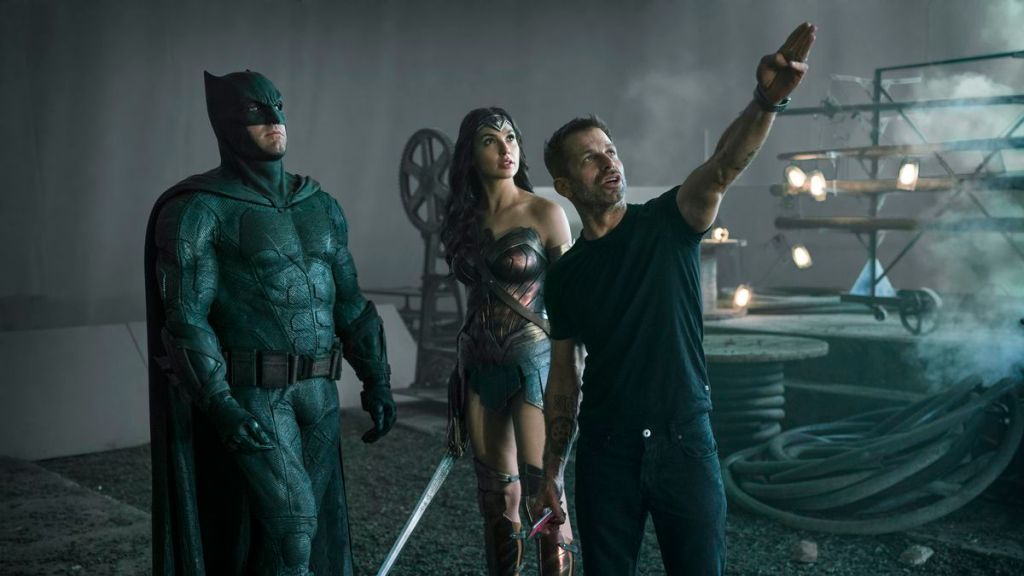
    Director Zack Snyder had been given the reigns to the DC cinematic universe and after semi-successful turns with Man of Steel and Batman v Superman: Dawn of Justice, took the helm on Justice League only to cede control – ironically enough to Whedon – after the death of his teenage daughter during post-production.

    A revitalized, extended version of the film Zack Snyder’s Justice League, better known to comic book fans as the Snyder Cut dropped on HBO Max Thursday four years after Whedon’s version was reviled by ardent fans of the series begging to see Snyder’s vision carried through.

    The plot is largely the same. Bruce Wayne’s Batman has to assemble a team of heroes to attempt to stop an alien invasion from destroying the planet.

    How direction influences everything about a film has never been clearer than examining the differences between Snyder and Whedon’s versions of Justice League. If events in both films didn’t unfold in essentially the same way with the same characters, it would be nearly impossible to see similarities between the two versions.

    Whedon brightens the frame, shrinks action to its core and plays up the comic book nature of his heroes in a PG-13 wonderland that tries to Marvel-ify a DC property. In his eyes, it’s a commercial property.

    Snyder’s voice shines through in the four hour 2021 edition, ramping up the length and brutality of the action sequences and pushing audiences to their absolute limit in a grounded meta-textual commentary on dramatic themes. The Snyder Cut is a somber elegy that happens to be about super heroes, striving for something closer to Christopher Nolan’s Dark Knight trilogy.

    The main performances aren’t altered significantly. Ben Affleck’s Bruce Wayne maintains a gravel texture to his cadence and the added scenes only enhance Batman’s faith in others that stems from events in Batman v Superman.

    The same could be said of Gal Gadot’s Wonder Woman, Henry Cavill’s Superman and Jason Momoa’s Aquaman, larger versions of characters that are already carved in stone.

    But Snyder also extends the film to place newer heroes like The Flash and Cyborg on par with Batman, Superman and Wonder Woman with enhanced character development. 

    Ezra Miller’s Barry Allen (aka The Flash) has the same signature naivety and wit from the 2017 edition, but his motivations for joining the team are more layered and full-fledged.

    Ray Fisher’s Cyborg becomes the lynchpin of the film rather than a hanger-on, giving Fisher the opportunity to infuse his character with a brooding anger that softens subtlety over the course of the film.

    The best performance in the revised cut comes from six-time Oscar nominee Amy Adams, whose Lois Lane carries a major section of the 2021 edition with a deeply stoic melancholia that far exceeds everyone around her. 

    The Snyder Cut is an exceptionally remastered, wholly original version of the framework of “Justice League” that breathes life into the 2017 disaster and gives the film an identity as a film about family, redemption and teamwork that the original simply didn’t have.

    Visually, Snyder makes his version distinctive in two key ways: changing the aspect ratio from widescreen to the virtually square 4:3 and removing the shine off Whedon’s version and replacing it with Snyder’s signature haze that places a weathered texture on the picture.

    Clocking in at just over four hours and nearly double the original version’s run time, the Snyder Cut is really for hardcore comic book movie fans who also devour the extended versions of Peter Jackson’s The Lord of the Rings trilogy and won’t hold up as well for casual moviegoers. It is broken into six segments that almost make the Snyder Cut into a television miniseries capable of binging in one sitting or taking in piecemeal.

    Whether this Snyder Cut will have a major impact on the future of the DC cinematic universe is somewhat unclear. Warner Brothers has not reached back out to the director since splitting in 2017.

    But the same fans who sparked the online movement #ReleaseTheSnyderCut to get the film finalized and into the public could use this massive improvement to reinvigorate the franchise further and make the Snyder Cut a significant moment in cinema history deserving of wider audiences.

  • I Care A Lot: The most legal of scams

    I Care A Lot: The most legal of scams

    Thousands of senior citizens from all walks of life across the country are currently under legal guardianship, a means by which elderly individuals incapacitated from being able to make health and financial decisions for themselves.

    In many situations, this is in the best interest of the individual, deemed a ward of the state and assigned a caretaker to assist with financial, medical and legal transactions on their behalf.

    But as is so often the case, granting power of attorney over another person can be a corruptible action where the guardian looks out for their own self-interest and financial gain as numerous caretakers have been arrested in recent years for exploiting their wards.

    Writer/director J Blakeson points his camera lens squarely on the idea that nefarious people game the legal system to rob others of their life savings with I Care A Lot, a black dramedy that debuted at the 2020 Toronto International Film Festival before releasing on Netflix last month.

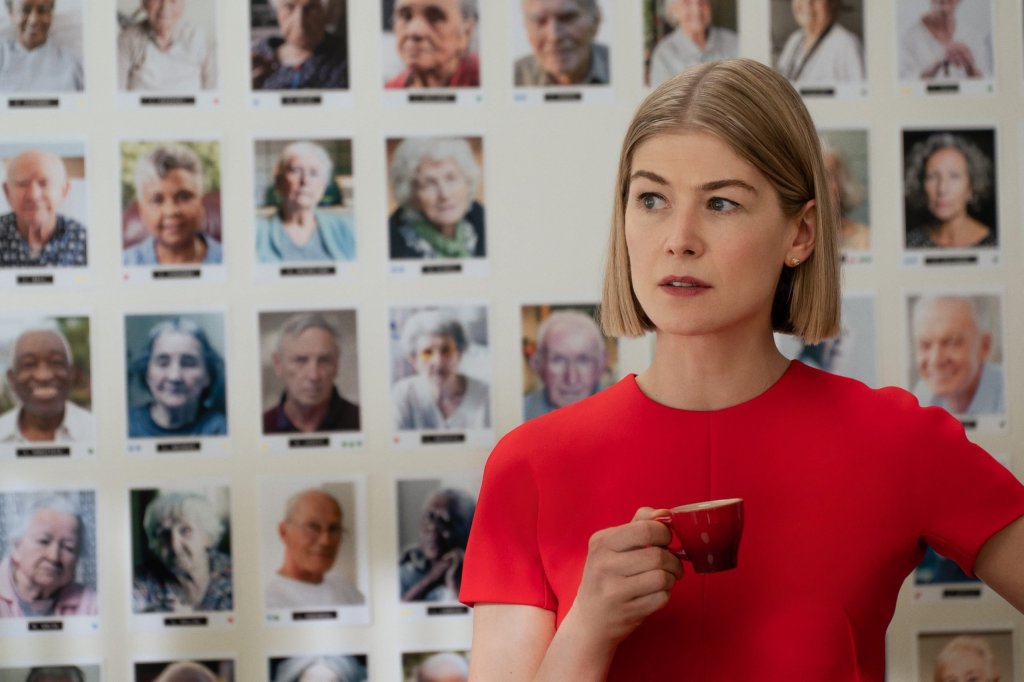
    In the film, Golden Globe and Oscar nominee Rosamund Pike stars as Marla Grayson, who has turned her profession as a legal guardian to senior citizens into a money-making machine, convincing the courts to make rich retirees wards of the state in her care. When her eyes become trained on a new victim, things spiral out of control rather quickly.

    Blakeson infuses his film with an abundance of dry wit painted over a stylized background of bright, shimmering hues that give I Care A Lot that “feels too good to be true” sense of something amiss under the surface. His points on the welfare system for the elderly are well-taken and Blakeson emphasizes the levels of corruption that can occur to swindle the unwitting every step of the way.

    There are no heroes to be found here and as such, it often makes it difficult for the audience to truly connect with the film as viewers are forced to balance one character’s treachery with the next in a way that never truly feels stable.

    In I Care A Lot, Rosamund Pike is a right proper villain as it were. Audiences feel the callousness and depths of Marla’s treachery oozing off every line delivery and the cold, blankness approach Pike brings to the character.

    As the film’s protagonist, Pike goes to great effort in order to ensure an entertaining, engaging character with which to build a feature around. She does so in a way that commands the attention of those around her not with raw magnetism, but with Marla’s sheer willpower and determination to win at any cost.

    Dianne Wiest is terrific in short bursts as Marla’s latest victim-to-be, Jennifer, blending both a naivety and hyper-awareness into a character slowly losing her agency and later her mind as Marla places her in a retirement home to wallow away her days.

    A solid supporting cast including Eiza González as Marla’s partner and assistant, Peter Dinklage as a shadowy figure with ties to Jennifer and Chris Messina as a lawyer trying to free Jennifer give I Care A Lot added personality with vibrant performances and choices that don’t always work but feed into Blakeson’s directorial style.

    I Care A Lot makes great effort to show how the elderly can be blindsided by a variety of corporate interests that take human beings and turn them into commodities for financial profiteering. Almost like something from an Ocean’s Eleven heist, Blakeson meticulously lays this out through a series of handshake deals, private court hearings and fake smiles as Marla and her associates perform their tricks to swindle seniors out of their life savings.

    Blakeson does a terrific job of setting these initial expectations for his audience only to reveal something much more nefarious and darker. All the while, the bright sheen that covers I Care A Lot early visually begins to fade slightly as Marla’s world spirals out of control.

    If Blakeson’s film was through and through the courtroom dark dramedy like originally framed, the premise of I Care A Lot was strong enough to really make it a true standout film. As it is, however, it simply devolves into genre fodder perfect for an intriguing evening Netflix watch on the couch.

  • Minari: Struggling toward the American dream

    Minari: Struggling toward the American dream

    There’s something simple, yet elegant about director Lee Isaac Chung’s latest feature, a semi-autobiographical tale base on his childhood growing up in America’s heartland.

    The story is ordinary – and the cinema understated in large part – but there’s an ethereal quality to his film that opens with a young boy running in an empty field of green and never truly stops flowing in spite of the small character drama within.

    Set during the 1980s in rural Arkansas, Minari follows the Yi family who move to a plot of land so Jacob can fulfill his dream of becoming a vegetable farmer selling his crops to an emerging Korean population in the South. His choices put a strain on his relationship with his wife, while his young son David contends with a health condition and his grandmother that he doesn’t consider to be his grandma.

    Walking Dead and Burning star Steven Yeun centers the film with a driven, considered performance as Jacob, a man whose quest for the American dream begins to isolate him from the family he pulled from California. The forthright confidence of Jacob propels Chung’s narrative forward and allows the audience to examine the family dynamic in idyllic memory but with a hue of sadness and anger that pulls at the edges of this conceit.

    It’s a performance that does tend to swallow the softer, almost muted work of Yeri Han as Monica who shines more in scenes opposite the young children rather than Yeun as her ability to draw compassion for Monica’s children far surpasses the anger she exudes during Monica’s conflicts with Jacob.

    While Yeun is celebrated as the film’s lead, the true star of Minari is eight-year-old Alan Kim, who steals every scene he’s in as David with a childlike wonder and heart. Audiences experience the pain and uncertainty of the family’s plights through David’s eyes and Kim is a wide-open vessel through which viewers can be drawn into the story with his affable humor and inquisitive spirit.

    The grandmother is expertly played by Yuh-jung Youn with a brash yet tender love that anchors the family – especially David and his mother. Moments with the other family members are important to the narrative of Minari, but the best work of the entire film is in scenes simply between Kim and Youn where the awkward unease of a boy meeting a relative for the first time melts into the emotional core thanks to tremendous chemistry between the two actors.

    Will Patton’s Paul brings just the right amount of colorful twist to the story with his eccentric brand of Christianity challenging the Yi family.

    It’s difficult to appreciate Minari receiving accolades in foreign language film categories simply because the majority of the film is in Korean with English subtitles because Minari is an American film about American immigrants living out the American dream. In some ways, it feels reductive to push Chung’s film out of categories and putting it in the box of “foreign film” as Minari deserves much more.

    Chung directs from his own screenplay, which allows him to fully pull from his own childhood to make Minari feel both a distant memory and a clear and immediate reality. This is especially evident in the performances he is able to capture from Kim, Yeun and Youn and extends over to the visual artistry of the film.

    The cinematography of Minari provides both a very muted, unobtrusive look for much of the film to allow for the audience to focus on the dialogue and performances, but it’s in the film’s more grandiose moments that director of photography Lachlan Milne’s work shines. 

    Capturing the countryside in bright, natural lighting, Milne provides a true sense of scale for the wide-open, limitless possibilities of the Yi family’s newfound life creating a farm and also Jacob’s personal hopes for the future as they grow and narrow over the course of Minari.

    The film will likely make the cut for the Oscar Best Picture race, though it will probably see a stronger showing at the Film Independent Spirit Awards than with the Academy. Yeun could see his way into the best actor race in spite of a strong category while Youn should earn a supporting actress nomination but could miss out entirely.

    Minari does suffer from not having a true theatrical release as the gorgeous panoramas and simple narrative beauty would create a terrific word-of-mouth campaign far stronger than the weaker one A24 has given it. With a digital release via video-on-demand to accent a small run in theaters, Minari should be the film ardent cinephiles with an eye for independent cinema seek out in preparation for the delayed awards season.

  • Nomadland: Perspectives from the road

    Nomadland: Perspectives from the road

    Few casual moviegoers will find Chloé Zhao’s latest directorial effort to be their absolute favorite film of the year, but even fewer can reasonably argue that it may be among the very best.

    A haunting yet powerful portrait of a hidden life across the heartland, Nomadland finds some of the best of America wandering across the country in search of boundless freedom and of themselves.

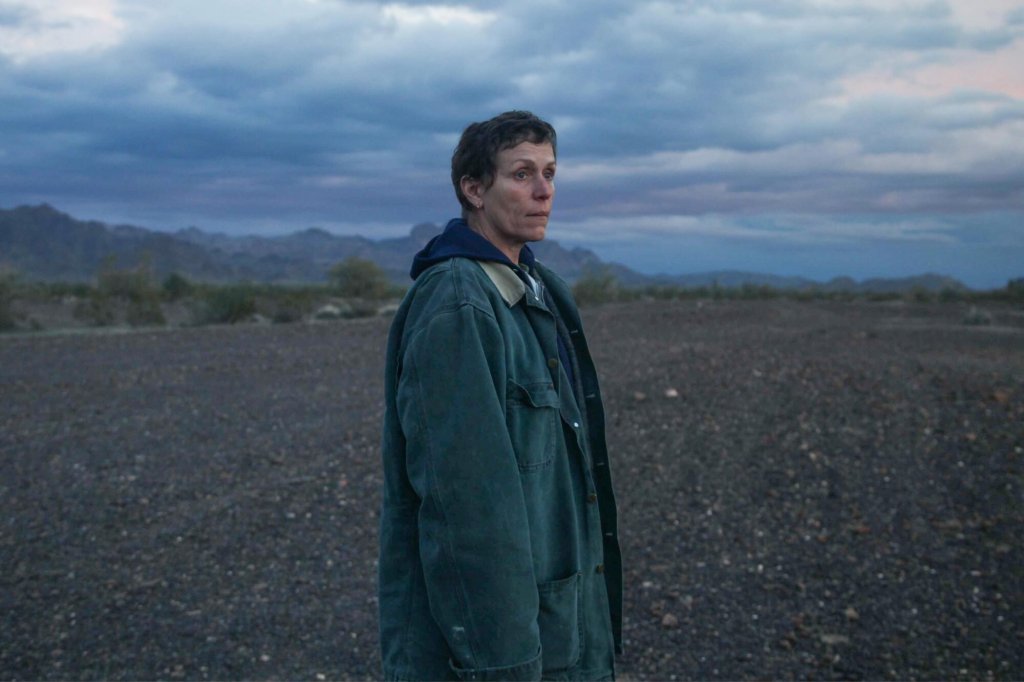
    Frances McDormand stars as Fern, a seasonal worker traveling the country in an inauspicious white van following the death of her husband and collapse of the town they lived in after the US Gypsum plant closed down. Along the course of her travels, she meets a variety of interesting characters living as van-dwellers.

    Rather than forcing plot down the throats of its audience, Nomadland meanders slowly through its 105-minute running time with a subtle grace that allows for deep reflection. Zhao’s film is an unassuming portrait of Americana through the lens of a woman unable to cope with massive changes in her life.

    Nomadland is a quiet road movie filled with introspection, genuine performances from raw untrained talent and endlessly striking cinematography that maximizes natural light.

    At its core is McDormand, who anchors the audience in the world of nomadic living with a somber, intentionally soft performance as Fern. Much of the film follows Fern experiencing life on the open roads for the first time and McDormand draws viewers in with a genuine warmth that masks deep inner pain. 

    What McDormand makes seem so effortless is incredibly difficult to pull off, having Fern be present in the moments presented to her by life’s unpredictability that gives Nomadland a sense of wonderous freedom.

    Nomadland is less a narrative fiction and more an organic work of art thanks in large part to Zhao’s decision to cast nonprofessional actors – real life nomads playing themselves who deliver a large majority of the film’s emotional stakes and authenticity.

    Characters like the reclusive Swankie or energetic Linda May provide Nomadland with a sense of color, bursting any superficial sheen that studio features might have. At times, Zhao’s film becomes almost a documentary with McDormand playing tour guide to an unknown world of America’s heartland. Her film honors the nomadic culture with quiet reverence and respect, allowing these wandering seniors to express themselves in pure honesty that radiates off the screen.

    Aside from McDormand, the one recognizable face is veteran character actor David Strathairn, who plays Dave with a light touch, matching McDormand’s warmth and becoming a small part of the larger picture of the film with a simple presence.

    Zhao takes audiences through Fern’s journey in an endless array of loosely connected vignettes meant to showcase her state of being. Scenes feel immensely organic as if they are occurring in real-time without prompting and Nomadland often has an improvisational quality to its storytelling that likely helped draw the first-time actors out of their shells.

    Cinematographer Joshua James Richards masterfully utilizes an extended wide angle lens to frame the long, empty vastness of the film’s outdoor landscapes and mirrors that by pulling his camera in close to characters, tightening the frame to the point where there’s nowhere else to look but people telling stories.

    Winner of the Golden Globe for Best Motion Picture – Drama, Nomadland is poised to be a frontrunner at this year’s Academy Awards with a Best Picture nomination a foregone conclusion. Zhao, who won Best Director at Sunday’s Golden Globes, is a certainty for an Oscar nomination as is previous winner McDormand, who gives the most subdued, yet enchanting performance of her career.

    A cinematography nod is likely, but larger nominations in categories like adapted screenplay, score and supporting actor for Strathairn could become a precursor for a major awards sweep.

    A fictional film that blends verité documentary storytelling with a loose narrative structure, Nomadland is the epitome of independent cinema at its finest and an absolute must see film streaming on Hulu for easy access by casual audiences.