Author: Matt Ward

  • The Super Mario Bros. Movie: Leveling up

    April 17, 2023 · Watch the trailer

    Solid animated films always draw at the box office, but it’s unlikely that Illumination – the studio behind “Despicable Me” and “Minions” – saw their first partnership with video game maker Nintendo starting off so strong.

    “The Super Mario Bros. Movie” debuted over the long Easter weekend to nearly $400 million globally thanks to a lack of competition in the family-friendly market, some slick marketing and exceptionally impressive visuals that take the classic 1980s video game franchise and modernize it without losing the signature charm of the original characters.

    The film serves as an origin story for the titular brothers Mario and Luigi, who find themselves separated after being sucked into an alternate world through a mysterious green pipe. Mario must team with a young Princess Peach and her Mushroom Kingdom to do battle against Bowser and the Koopas who have captured Luigi.

    While the story is relatively straightforward by family friendly film standards, animated features like “Super Mario Bros.” must rely on a talented ensemble voice cast to carry the narrative and maintain audience engagement. For the most part, the right choices were made with one sizable exception.

    Chris Pratt’s awkward half-Italian, half-goofball blend of an accent with his own cadence makes for a very stilted, uneven Mario that doesn’t quite fit tonally with the rest of the cast. It’s as if Pratt isn’t sure when to lean into the more stereotypical Italian roots of the character and when to bring out his own voice, but it’s clear that the talented comedian isn’t exactly a perfect fit for the lead.

    Conversely, Jack Black deepens his vocals slightly with just a bit of a menace to make the ideal foil in Bowser, who often steals scenes with his misguided, brash portrayal of the villain as an anti-hero in love. Quite often, it’s Bowser who’s the most entertaining character in the entire movie while Mario feels much stiffer despite the desire to have audiences love Mario and hate Bowser.

    The rest of the ensemble cast does a solid job from Anya Taylor-Joy’s terrific blend of serious and silly as Princess Peach to Keegan-Michael Key’s fun-loving Toad to Seth Rogen’s Donkey Kong, which is basically just a less sophomoric take on Rogen’s persona but works within the context of the character.

    One of the most impressive things about “Super Mario Bros.” is just how perfectly the film lifts elements from the various Mario video games and blends them together in a largely cohesive fashion. The score borrows, samples and remixes classic themes from the early days of Nintendo both for character introductions and to engage in the numerous action sequences, while there’s also hidden gems floating throughout the movie to encourage repeat viewings.

    Visually, the animators masterfully capture the game’s side-scroller adventure days in an early scene where Mario helps Luigi make his way through construction in New York City and the links to the Mario Kart era games in several racing sequences are equally impressive.

    It’s a film that looks far better than any Nintendo game would play and really shows off the depth of talent in Illumination’s animation team to depart from their usual style and lean into the classic Nintendo look.

    “Peaches,” the unnecessarily catchy song sung by Black’s Bowser midway through the film is the sort of irreverent fun that could make an appealing Best Original Song candidate at next year’s Academy Awards that could draw a wider audience but isn’t likely to have a great shot at winning.

    Similarly, “Super Mario Bros.” isn’t the frontrunner for Best Animated Feature with a sequel to the Oscar-winning “Spider-Man: Into The Spiderverse” coming later this year, although it feels like a lock to be nominated.

    Visually engaging with a decent plot and enough easter eggs for hardcore fans of the Nintendo series, “The Super Mario Bros. Movie” has solid entertainment for audiences of all ages, but isn’t something that audiences should rush out to see when it will likely be played ad nauseum during at home streaming all summer long.
  • Air: No drama like shoe drama

    April 10, 2023 · Watch the trailer

    A film starring Matt Damon, directed by Ben Affleck and featuring numerous Emmy and Oscar winning talent should have enough star power, but there’s a big absence in Amazon Studios’ first major awards season contender that’s exceptionally noticeable from the outset.

    The docu-drama about a formulative time in the athletic career of the most recognizable sports star of all time doesn’t feature an actor playing Michael Jordan, let alone show his face, over the course of two hours.

    It’s a striking decision to frame a feature around such a compelling figure without including him in the narrative, but Affleck crafts a film that has real energy to maintain audience engagement and pull viewers into the world of competitive business strategy in similar ways to dramas like “Moneyball” and “The Social Network.”

    “Air” follows the journey of then-upstart shoe company Nike as its basketball division led by a middle-aged sad sack scout seeks to land a contract with Jordan before he plays a single game in the National Basketball Association. The film leans into heavy nostalgia for the early 1980s from the opening extended montage through slightly grainy cinematography and a tone-setting soundtrack of classic 80s hits.

    Damon centers the film with a compelling everyman performance as head basketball scout Sonny Vaccaro as the A-lister easily melts himself into the role of audience stand-in and while it’s unlikely that moviegoers should find themselves rooting for a corporation on track to make billions, “Air” and especially Damon lean into the camaraderie and personal relationships between co-workers who are friends first.

    Affleck sometimes feels as if he’s in a different movie than the one he directs when he’s on screen as Nike founder Phil Knight. His performance is exceptionally eccentric and broad, with most of his dialogue setting up or being a dry joke that helps provide levity to the narrative. But in a strange way, Affleck’s avantgarde personality blends quite nicely with the eclectic ensemble and helps create needed narrative tension.

    What really elevates “Air” beyond a standard male-centric docu-drama is Viola Davis’ arresting, scene-stealing supporting performance as Delores Jordan, Michael’s mother. While it’s clear why Michael would insist upon the Oscar-winner playing his mom, Davis elevates what otherwise might have been a throwaway part with a relentless command of the screen.

    Davis challenges Damon’s Vaccaro at every turn with a calm demeanor that reflects Delores’ intense confidence in her son’s talent as well as the historic nature of what a deal would mean for African American athletes navigating white-dominated corporate business contracts.

    “Air” also features terrific supporting work from Jason Bateman as Nike’s marketing director, Chris Tucker in his most dramatic turn since “Silver Linings Playbook” as the director of player relations and Chris Messina as a smarmy agent looking to thwart Nike at every turn.

    Affleck uses the most of Amazon’s spending power to assemble not only a terrific ensemble cast, but exceptional talent behind the camera to help create a dynamic, yet quintessentially 80s world for “Air.” Every bit of production design, set dressing and costuming is meticulous and thorough to transport audiences back in time.

    The film’s visual aesthetic developed by Affleck and cinematographer Robert Richardson starts off a bit jarring as it feels incredibly dated, but as “Air” progresses, audiences grow accustomed to the grain and it becomes clear that Affleck intends viewers to see everything through the lens of 1984.

    “Air” is probably the only major contender for awards that will come out in the first half of the year, but it likely doesn’t have the staying power to last a year-long campaign in many categories. Davis in supporting actress and production design have the best shot of maintaining buzz long enough to potentially win.

    Ardent cinephiles looking for something to check out on the big screen would be hard pressed to find a better adult drama this spring than “Air,” though more casual audiences might want to wait until the film’s inevitable prominent status streaming on Amazon Prime.

  • A Good Person: Compassion in pain, grief

    April 3, 2023 · Watch the official trailer

    No one actively chooses to be an addict.

    It’s not a decision that someone wakes up one day and says “I’m going to drink until I black out” having never done it before or take so many pills that they can’t function without them. It’s a process that happens gradually over time without being fully aware of what’s happening.

    But the underlying causes and effects of addiction to any number of vices has often been a cinematic tale for filmmakers to sink their teeth into.

    Writer/director Zach Braff of “Garden State” and “Scrubs” fame came out of the COVID-19 pandemic with the notion to tell a tale of grief and pain through hope, humor and understanding looking at a more emotional world than non-addicts might realize, all through the eyes of a young woman hopelessly lost in the opioid crisis.

    “A Good Person” follows Allison, a successful pharmaceutical sales rep whose life irrevocably changes when she’s involved in a tragic car accident that leaves her addicted to oxycontin as a way to heal her physical and emotional pain.

    Along the way, she is faced with some bittersweet consequences when she encounters an old acquaintance with his own tragic tale interwoven with Allison’s.

    In a role written for her, Florence Pugh is absolutely masterful as Allison. There’s so much empathy and understanding that radiates off of Pugh’s performance as the young actress becomes overwhelmed with the burden of Allison’s grief and inability to accept guilt.

    It’s a turn that truly mines the depths of what high-functioning addiction can look like without playing the role melodramatically, a straightforward examination of a woman’s fragile emotional state attempting to rebuild her life by any means necessary while struggling with mental health and an addiction to painkillers.

    Oscar winner Morgan Freeman brings his usual gravitas and likeability to Daniel, a fellow addict with close ties to Allison. But for as much as Freeman is a steady presence in the film, Pugh’s singular magnetism overshadows a lot of the straightforward nature of Freeman’s performance and the unlikely friendship they develop over the course of the film doesn’t fully come together.

    Because “A Good Person” deals so specifically about addiction largely from the perspective of addicts, it somewhat feels like the point of view of those suffering alongside addicts becomes somewhat muddled.

    Braff introduces secondary characters like family members and friends, especially Molly Shannon as Allison’s mother Diane, but the anguish they go through watching their loved ones’ pain doesn’t hold the same weight as what Allison and Daniel deal with. For a film well over two hours in length, “A Good Person” has one too many moving parts to showcase this side of addiction.

    Braff’s screenplay does a solid job of breaking up some of the more dramatic themes with an infusion of wit and humor that Pugh knocks out of the park while maintaining Allison’s inner turmoil. These brief moments of levity help to change the pace of “A Good Person” without knocking the wind out of the sails of the overall narrative.

    Pugh also contributes two songs she wrote and performs in the film in the voice of Allison that help showcase her fragile state of mind while offering a semblance of hope for the future. If the Academy wants to start highlighting in more earnest original songs that have genuine impact on the narrative in the films they are sung for, both “The Best Part” and “I Hate Myself” written and performed by an A-lister like Pugh should get a larger spotlight.

    While it certainly is destined for life as a casual watch on a streaming service months from now, “A Good Person” is a quality feature for the first quarter of 2023 and something audiences might consider taking a chance on either theatrically or in an at-home viewing.

  • John Wick: Chapter 4: Action at its absolute finest

    March 27, 2023 · Watch the official trailer

    There will not be a better action movie in 2023.

    That’s the defining characteristic of director Chad Stahelski’s fourth installment in the “John Wick” franchise, which sees a near 60-year-old Keanu Reeves battle a seemingly endless number of henchmen in the most dazzling, creative and largely brutal violent ways possible.

    Over the course of two-and-a-half hours, cinephiles are treated to a smorgasbord of unique, visually inventive action set pieces that will astound and cement the flag for practical effects in action filmmaking in a reminder to moviegoers and fellow filmmakers just how dynamic the simple act of placing a camera in front of real people on a live set can be.

    “John Wick: Chapter 4” features every possible scenario and type of martial arts, hand-to-hand combat, gunfighting, knife-fighting, one-on-one, three-on-one, massive group battles imaginative that all could easily feel formulaic but have a relentless and kinetic energy that never lets up on the gas pedal.

    The film’s 169-minute running time does linger, but rarely in the extensive action sequences. While the narrative structure, emotional core and character development far exceed the prior two installments, it’s clear from the outset that the plot is just a loose structure meant to tie together spectacular visual cinema that showcases the technical mastery Stahelski, his production team and especially his stunt department have over their craft.

    “Chapter 4” continues shortly after the events of the third installment as John remains on the run with an international cabal known as “The High Table” sending its network of assassins after him with a $20 million bounty on his head. John must fight his way across the globe in search of final revenge and his ultimate freedom while confronting demons from his past.

    Reeves excels at a blend of stoicism and emotional strength in the rare moments his John gets to breathe between assassination attempts. The most impressive thing about Reeves’ performance is the physical dexterity he has to contort his body in and around of sticky situations while effortlessly pulling off technical fight choreography.

    “Chapter 4” places Reeves at the center of the frame far less than before, mainly due to the emergence of new secondary characters with equally impressive emotional stakes to support their dynamic fighting styles.

    A veteran of Hong Kong cinema, Donnie Yen steals large parts of “Chapter 4” with his brilliant emotional, yet keenly artistic physicality as John’s longtime friend Caine, who goes blind prior to the events of the film and must rely on his other senses to keep him alive and eliminate his targets.

    It’s an even more impressive feat in fight choreography as Yen and Stahelski cultivate genuinely inventive ways to showcase Caine’s skill as a trained killer while not making his blindness seem like a gimmick, nor turn him into a superhero. The precision required to pull off the stunts Yen does while not being visually engaged with his fight partners is nothing short of masterful and has a similar artistic quality to that of “Crouching Tiger, Hidden Dragon.”

    At its core, “Chapter 4” takes all the small details and improvements that Stahelski has made as a director and assembles them into one largely cohesive visual cavalcade of action brilliance.

    Paired with a career best effort from cinematographer Dan Lausten who also shot the Oscar-winning “Shape of Water,” Stahelski embraces the opportunity to make every moment an eye-catching display worthy of multiple big screen viewings with highlights including an apartment building fight shot completely from an overhead angle, a cross city chase through Paris reminisnent of the “Mission: Impossible” franchise and some of the most hair-raising single take extended fight sequences in cinema history.

    “John Wick: Chapter 4” is far too violent, much too much of a genre flick and arrives way too soon in the calendar year to be recognized by awards bodies, but there’s no doubt of its worthiness on a technical level. Stahelski’s film is an absolute masterclass in stuntwork and capturing action sequences on camera in ways that no moviegoer could deny its quality.

    While the run-time may weigh heavily on some audiences, there’s far too much in its favor for moviegoers not to make “John Wick: Chapter 4” a must see on the biggest screen possible.

  • Shazam! Fury of the Gods: Super bland

    March 20, 2023 · Watch the trailer

    Superhero movies have gone completely stagnant.

    Whether it’s a Marvel or DC Comics property, it seems as though any continuation or spinoff of existing cinematic universe has lost all creativity and originality.

    While Marvel sorts out problems of being too large for its own good, the DC properties owned by Warner Brothers are in equal trouble as they transition away from Zach Snyder’s creative control to James Gunn, who crossed IP lines after directing the forthcoming “Guardians of the Galaxy” sequel.

    Caught in the crossfire of old to new DC cinema are several completed titles that feel out of touch and/or pointless in the grand scheme of comic book movies.

    Dwayne Johnson’s “Black Adam” sputtered out of the gate despite landing an A-list actor to helm a new franchise while a finished “Batgirl” film will never be released publicly in any form. DC is spinning around in circles, sailing with no rudder.

    The surprise breakout of the last round of DC offerings, “Shazam!,” seemed like a way to connect with a younger preteen audience, but the second installment, “Shazam! Fury of the Gods,” removes almost all the light-hearted comedy in service of convoluted villains and unnecessary universe building that will likely be scrapped going forward.

    Two years after the events of the original film, teenage orphan Billy Batson and his adopted siblings have all gained the superhero powers of “Shazam!” and come face to face with ancient Greek gods back to unlock the god realm and enslave humanity.

    Because there are now six superheroes instead of just one and three antagonists rather than the original one, “Fury of the Gods” is massively overstuffed for its two-hour running time with side-plots for each of the primary characters. The intent is to create an extended world that allows audiences to bond with each of the secondary heroes, but there’s little room for comedy as a result and the film feels like much more of a slog to get through.

    Zachary Levi is charming and dorky as the primary hero Shazam, but now fully vested in his powers, the newness of being a superhero has worn off the shine of the unintentional comedy and the awkwardness he displays as Shazam feels forced. And while Asher Angel was a central part of the original film as Billy, so much of “Fate of the Gods” requires him to be in Shazam form that the humanity of the character is almost completely lost.

    If there’s an acting bright spot, it comes from Jack Dylan Grazer as Billy’s best friend Freddie, who brings most of the humor and the heart to the second installment that was a signature of the first film. Grazer’s chemistry with Rachel Zegler – the standout of Steven Spielberg’s “West Side Story” reimagining – is totally lackluster, but both young performers do enough individually to make their narrative cohesive and somewhat engaging.

    The film’s primary villains are played by heavy-hitters Helen Mirren and Lucy Liu, but the screenplay is so woefully underdeveloped that their motivations are bland and sophomoric, a relatively common trait among the film as a whole.

    While the original “Shazam!” had a signature style and tone set by director David F. Sandberg, its sequel doesn’t have the same flair due to a need to make everything bigger and bolder than the first. And whether it’s Sandberg’s direction or DC Studios requiring such CGI-heavy action sequences, “Fury of the Gods” aims to be showy visually at every turn but falls into the same trap that so many comic book films have in recent years and the entire third act just comes across as lazy green screen work.

    The most frustrating part of “Fury of the Gods” is just how inconsequential this all will be as it’s unlikely there will be a third installment in the “Shazam!” franchise under DC’s new model and there’s not enough highlights for the film to stand on its own two feet without being required viewing for other DC movies.

    Ultimately, most moviegoers should opt to wait for the film’s inevitable streaming release on HBO Max to give “Shazam! Fury of the Gods” the casual watch it barely earns rather than waste time and money to see it theatrically.

  • A whole new multiverse: Academy celebrates creativity, unique artistry with Best Picture winner Everything Everywhere All At Once

    A whole new multiverse: Academy celebrates creativity, unique artistry with Best Picture winner Everything Everywhere All At Once

    It was practically unfathomable a year ago that a quirky blend of science fiction, drama and martial arts would be remember by more than a few ardent fans elevating it to cult status.

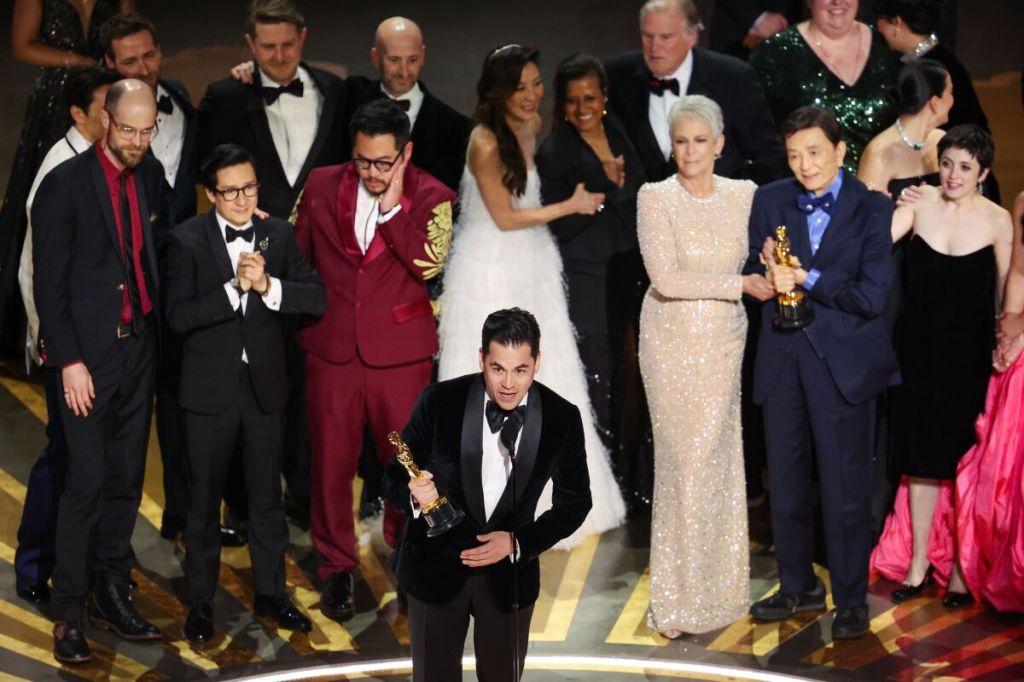
    But 366 days after its debut at the 2022 South by Southwest Film Festival, Everything Everywhere All At Once moved beyond critical and cinephile acclaim by winning seven of its 11 Academy Award nominations Sunday evening including Best Picture.

    While its success certainly signals an ongoing shift in what the Academy considers worthy of its top prizes, All At Once practically sweeping is a striking endorsement in genre filmmaking and original storytelling that should boost the profiles of future projects and promote filmmakers taking risks for the sake of unique creativity.

    All At Once probably isn’t a film that reaches across the spectrum of moviegoers like Top Gun: Maverick or a Steven Spielberg movie might be, but those just stumbling onto this remarkable gem should make every effort to find a way to see it even if it’s too strange or outlandish for more conservative cinephiles.

    Long overdue Best Actress winner Michelle Yeoh stars as Evelyn, a down on her luck Chinese immigrant whose business is on the verge of collapse and her marriage on the brink of divorce. While heading to an IRS audit meeting, Evelyn is confronted by an alternate version of her husband, Waymond, who believes she is the only person capable of stopping the nefarious Jobu Tupaki from collapsing every possible universe.

    Although the film could probably have been successful simply based on the creativity of writing/directing duo Dan Kwan and Daniel Scheinert, collectively known as Daniels, Yeoh brings All At Once to the next level with a nuanced performance that is often frantic, sometimes melancholic, and ever transformative. 

    She becomes a terrific stand-in for the audience as the film progresses with Yeoh’s initial confusion to the world Evelyn is forced into mirroring the bewilderment of viewers.

    If there’s only one reason to see All At Once, it’s for the heartfelt, magnetic performance from Best Supporting Actor winner Ke Huy Quan, who returned to acting for his first role in two decades and steals nearly every scene he’s in as Evelyn’s sheepish, yet adorable husband Waymond. No matter what version of Waymond is in the moment – and all versions are incredible – Quan gives his whole heart to Waymond in a way that just leaps off the screen.

    Another veteran performer – Jamie Lee Curtis – finally got her laurels with a Best Supporting Actress win with an almost unrecognizable turn as the IRS agent assigned to Evelyn’s audit.

    All At Once is even more spectacular in terms of its visual effects, which was developed by a team of only five to create over 500 different shots in the film. Daniels use both practical and computer-generated effects to showcase Evelyn’s bridge between the versions of herself, dubbed “verse jumping” in the movie, and the look of Yeoh rapidly falling backwards is a constant blur of motion and imagery that keeps viewers at the edge of their seats.

    The film also moves at an intensely rapid pace thanks to distinct and swift editing by Paul Rogers, who won for best editing, that makes the most of the dynamic action sequences that perfectly blend martial arts with the strange science fiction elements of the plot.

    The singular vision of All At Once is so outside the box – there’s literally worlds with hot dog hands and pinatas – that rewarding Daniels with both Best Direction and Best Original Screenplay is something that speaks to the film’s technical merits and craft of storytelling, but also to the deep emotional core that resonates from the opening moments through the final credits.

    The Academy’s shift in direction to celebrate the less conventional parts of cinema culminated in heralding in a new era of creative, vibrant and original storytelling.

    In 2022, there simply isn’t a better example of independent artistry and breaking the mold of what movies could be than Everything Everywhere All At Once, a more than worthy Best Picture winner and something that cinephiles would do well to watch (or re-watch) very soon.

  • Creed III: Both sides of the ring

    Creed III: Both sides of the ring

    Cinema has long had a fascination with the pugilistic poetry of boxing and the legacy of its fighters from On The Waterfront to Raging Bull to the Rocky franchise.

    While filmmakers have often used the sport to craft their own unique dramas, the genre of boxing movie laid relatively dormant until Ryan Coogler brought back the thrills and chills of cinematic sports with 2018’s Oscar nominated Creed.

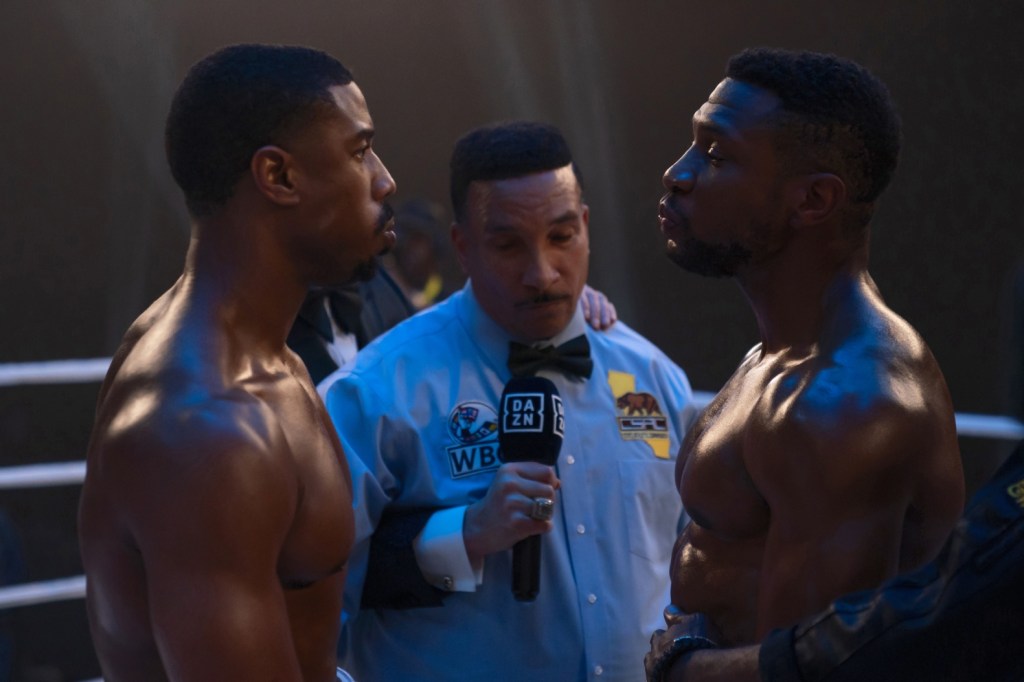
    After taking over the mantle in the first two installments as the titular character, Michael B. Jordan seeks to further forge his own legacy by doubling as both star and director for Creed III, which opened to box office success this past weekend.

    With no mention of the “Italian Stallion,” the third installment in the story of Adonis Creed finds the boxer at the height of his stardom when a close friend from his past reemerges after a long prison sentence looking for his own piece of glory.

    Jordan is solid in his return to the ring as Adonis, though it seems as if his mind is split between the character work in front of him as Creed steps into the roles of father, husband and businessman against the creative vision he must bring behind the camera.

    His chemistry built with Tessa Thompson as Bianca helps carry the familial drama well as Thompson holds most of the emotional burden that Jordan isn’t required to do beyond facial emoting.

    But for all that Jordan brings to the role, it’s often felt like his Adonis is a secondary character in the overall world of the Rocky franchise and its spinoff series, which saw Sylvester Stallone’s Rocky Balboa mentor Adonis and overshadow his protégé.

    Creed III suffers from a similar problem, but it isn’t that Stallone isn’t in the film rather it’s a different supporting performance completely engulfing whatever character work Jordan is doing here.

    A newcomer to the franchise as antagonist “Diamond” Dame Anderson, Jonathan Majors is astonishing in every scene he’s in, even ones where his character motivations are flimsy and underwritten.

    Majors expertly maneuvers his way between being soft and reserved to a brash bravado to an almost psychotic menacing violent caricature. At times, his Dame is an emotionless Mike Tyson hell bent on revenge and destruction, but Majors layers that with a brittle, fragile wounded heart that perfectly balances outward rage with inner turmoil.

    The film is significantly less interesting when Majors isn’t on screen – although this isn’t to say that moments of Adonis’s family drama aren’t compelling or engaging – but rather that they matter less because of how much Majors elevates the overall narrative of Dame’s story.

    Part of the issue is Jordan’s inexperience in the director’s chair, not being able to balance out the film’s multiple storylines effectively and keep audiences engaged with all aspects of the film.

    For baffling reasons, the Adonis/Dame relationship is almost entirely set aside for a half-hour in the second act and cripples the promise and momentum that early scenes have.

    Jordan’s best work behind the camera comes in the opening moments of Creed III where a flashback to Dame and Adonis growing up on the streets of Los Angeles perfectly sets a tone for a new, more dynamic take on the boxing film. There’s a fluid, free flowing nature to the camerawork that often takes on the style of a boxer in constant motion that extends out of the opening sequence into the first fight that announces Jordan’s potential as a dynamic filmmaker.

    Unfortunately, the chances he takes don’t always land as flush as Jordan might like.

    After the opening moments, it seems that Jordan’s major interest as a director is to create unique and original takes on traditional boxing fight choreography and cinematography.

    As the first sports film to use IMAX cameras for its action set pieces, Creed III has some dynamic energy that puts viewers in the ring more intimately than in most films in the genre and the second major bout focusing on Dame is especially engaging from a storytelling perspective as audiences learn more about who Dame is as a person by the way he fights.

    Jordan takes a major risk in the film’s final act that will click with some audiences but leave more traditional boxing fans disappointed with the lack of sports pageantry. There’s a clear influence from Japanese anime in how personal and close-up the camera gets on the fighters and it’s a distinctive signature on the film that doesn’t quite land as much as Jordan might want.

    While it doesn’t quite rise to the level of the original spinoff, Creed III is significantly better than its immediate predecessor in large part due to Majors breathing new life into the franchise and something ardent cinephiles may want to see on the biggest screen possible during a slow start to moviegoing in 2023.

  • Sharper: Deception game

    Sharper: Deception game

    Blink and you’ll probably miss the best movie to have been released in the early doldrums of cinema in 2023.

    While most moviegoers are watching bears on drugs or old women pining for football stars or tiny superheroes, Apple snuck a surprisingly engaging, yet underhanded crime thriller past unsuspecting cinephiles and dropped it on their AppleTV+ streaming service to little fanfare.

    Helmed by Benjamin Caron – a longtime TV director making his feature film debut – Sharper is one of the more elaborate, stylish psychological thrillers to come out in several years, much more dynamic than last year’s Deep Water.

    At the outset, viewers are introduced to Tom, a lonely bookstore owner who falls for a mysterious woman who’s more than meets the eye. As the film expands into the larger world of New York City high society, Sharper does its best to show that nothing is truly as it seems.

    The film is wholistically an ensemble piece, segmented out in parts to focus on events from each of the major characters’ perspectives. The screenplay from writers Brian Gatewood and Alessandro Tanaka has significant bite and layered character development that gives the talented cast plenty of juicy dialogue with which to play and create.

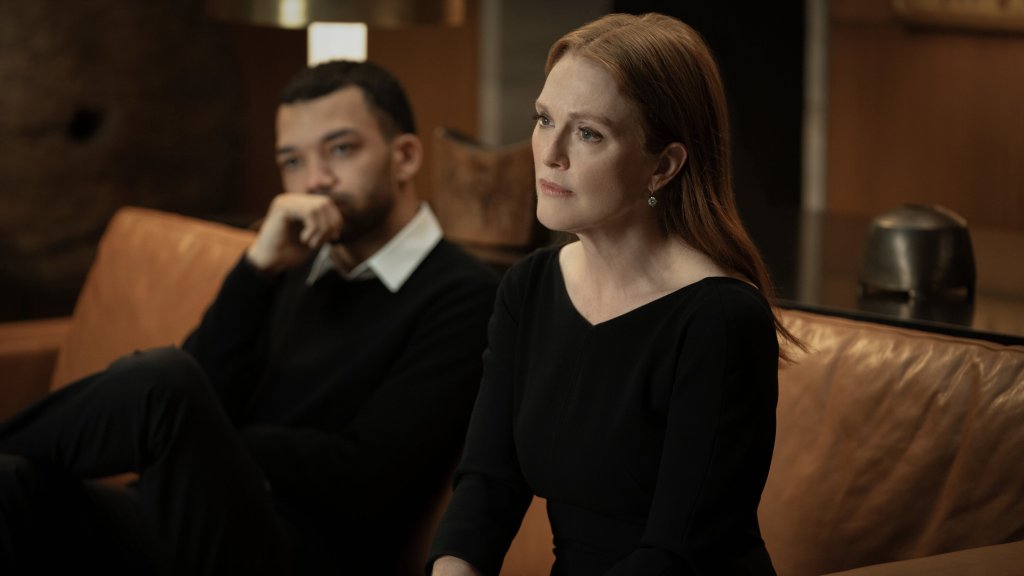
    Justice Smith delivers a career best turn as Tom, hiding his heart from the world until Sandra opens his mind to the possibilities life has to offer. There’s both naivety and emotional loss bubbling under the surface of Smith’s performance, and it creates a strong through line for audiences to stabilize themselves as the plot spins darker by the moment.

    Rising star Briana Middleton has a difficult task as Sandra, having to play demure, decisive and broken, sometimes all at once over the course of her journey. Middleton is especially composed in her first major role, more than holding her own against seasoned character actors.

    Oscar winner Julianne Moore feels somewhat out of place in the grander scheme of Sharper, at times feeling like she’s in a different movie than the rest of her co-stars, but her performance is so specific that it doesn’t particularly hurt the overall narrative.

    Meanwhile, Sebastian Stan is particularly adept at subverting both his own filmography and audience expectations with a wry, slightly underhanded grin and stoic charm that radiates his Max’s ability to always be in control of a situation no matter how outrageous things might become.

    For a first time feature director, Caron does show a heavy hand at times with cross-cutting edits that remind audiences that they are watching a young filmmaker, although the backing of an artistic studio like A24 and the deep pockets of Apple give Sharper a distinctive cinematic flair.

    Cinematographer Charlotte Bruus Christensen maximizes the wide frame to create visually engaging scenes that highlight terrific locations and production design while keeping the actors and dialogue at the forefront.

    If there’s anything that stands out as a fatal flaw in Sharper, it’s the film’s languishing pace that drags out individual scenes with unnecessary intros rather than getting into the heart of the moment. It’s clear that Caron is inspired by psychological thrillers of the past and wants to elongate the haunting musical score from composer Clint Mansell but trimming back Sharper by even 5-10 minutes could have truly elevated the overall narrative to a higher level.

    While it certainly won’t be among the year’s top films, Sharper has enough intrigue, terrific production value and a solid ensemble cast that makes it something worth checking out at home.

  • Ant-Man 3: Big bite, little sting

    Ant-Man 3: Big bite, little sting

    Kevin Feige has some major problems.

    The longtime head behind Marvel Studios and overseer of the Marvel Cinematic Universe (MCU) has often felt untouchable, almost invincible in a way due to his cultivation and crafting of a seemingly endless stream of comic book franchises.

    But at this point, comic book fatigue combined with too much concern for spectacle and laziness in storytelling have left a once great collection of films with no real direction for the future.

    Marvel enters Phase V of its MCU with director Peyton Reed’s third installment in the Ant-Man series with Ant-Man and the Wasp: Quantumania, which seeks to showcase the next intergalactic threat to humanity by shrinking its heroes down to subatomic levels to wage war against a nefarious, mysterious villain.

    Quantumania for almost all its two-hour running time just feels like actors walking around in silly costumes in front of green screens, which really accentuates the ridiculous lengths the MCU must now go to try and craft a new story as it seems they’ve mined all their best material 30-plus films and several spinoff television shows later.

    Films in the MCU have long since not felt like self-contained stories, rather just another random episodic piece of a larger puzzle that audiences leave the theater scratching their heads at.

    From the outset, it’s clear that Quantumania is a small cog in a gigantic money-making machine and that the stakes of the film simply both matters too much and not at all in the grand scheme.

    Perhaps this is due to the studio’s heavy hand on the wheel or Reed’s lack of directorial vision to craft something meaningful, but Quantumania is incredibly bland even in terms of the comic book science fiction mashup that it strives to be.

    Gone almost completely after the first 15 minutes is the wry humor that set the original Ant-Man film apart and made a comedic director like Reed a solid choice at the helm. There’s just no heart to any character motivations and the film lacks the cinematic flair that the first two installments had.

    Ant-Man films, in a general sense, were created to be heist movies and Quantumania is not that at all. It’s a glob of rushed, ill-considered, computer graphic mess thrown onto a screen in order to hold viewers over until the next round of CGI mess.

    Paul Rudd returns as Scott Lang, aka Ant-Man, and is largely stripped of the ability to use his earnest comedic charms aside from select moments at the beginning and conclusion of Quantumania and most of the heroes around him – especially Evangeline Lilly’s Hope Van Dyne and Michael Douglas’ Hank Pym – are underwritten story filler.

    Even Michelle Pfeiffer, whose Janet Van Dyne is the centerpiece of the narrative arc of the film, isn’t able to make what happens in the Quantum Realm exciting or even entertaining.

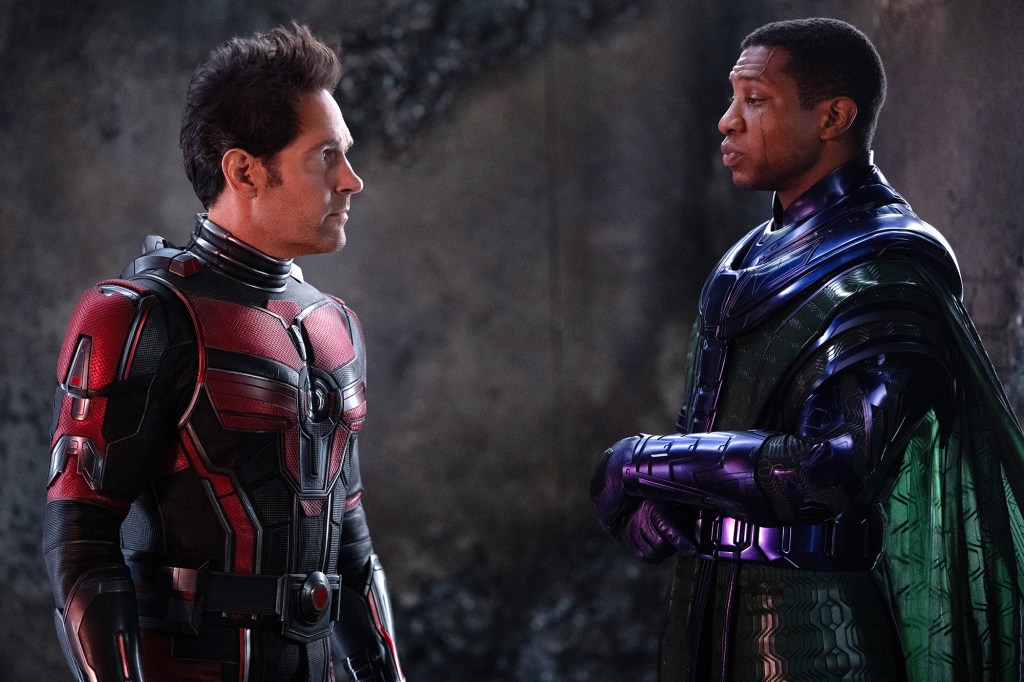
    The film’s saving grace and lone bright spot comes from Jonathan Majors, who has emerged as one of Hollywood’s most compelling young actors and takes what could easily be a silly, mustache-twirling villain character and transforms his Kang the Conqueror into a principled arbiter put at odds with the film’s heroes.

    Majors continues his strong work in the MCU, carrying over from the Loki miniseries on Disney+ that establishes him as the next primary antagonist for the larger Avengers franchise and is quite probably the only compelling reason for cinephiles to be excited about the MCU’s prospects moving forwards.

    Undoubtedly the weakest entry in the Marvel Cinematic Universe since 2013’s Thor: The Dark World – another miss of a sequel meant only to serve as a table setter for things to come – Ant-Man and the Wasp: Quantumania doesn’t need to be seen on the big screen and could easily be skimmed over during an at home viewing on Disney+ for hardcore Marvel fans wanting to prep for the next Avengers film.

  • Your Place or Mine: Where is the love?

    Your Place or Mine: Where is the love?

    Valentine’s Day weekends have always been a landing spot for the charming romantic comedy.

    And while the genre has become all but eradicated from the big screen, streaming services like Netflix, Amazon Prime and Hulu have countless offerings of boy-meets-girl, hijinks ensue until they fall madly in love films.

    In a pre-pandemic world, there would simply be no reason that a rom-com led by Reese Witherspoon and Ashton Kutcher wouldn’t make at least $30 million opening weekend at the box office, but nowadays a movie like writer/director Aline Brosh McKenna’s Your Place or Mine has become consumed by the streaming machine, released this past weekend on Netflix with little fanfare.

    The film’s premise implies a sort of You’ve Got Mail crossed with The Holiday narrative.

    Best friends Peter and Debbie live on opposite coasts and talk every day, but their lives are changed when they swap homes for a week as she pursues a lifelong dream, and he volunteers to watch her awkward teenage son.

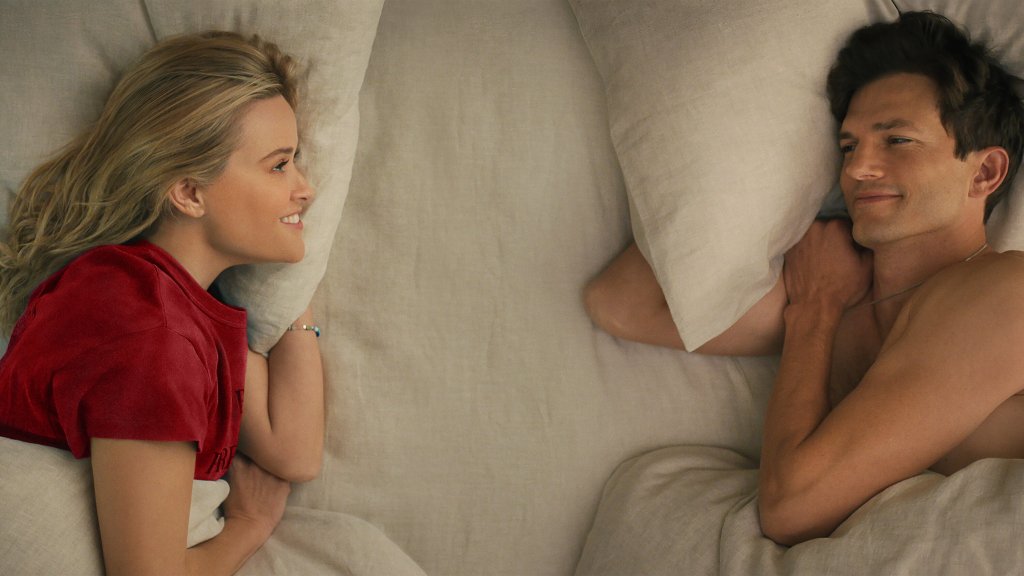
    Witherspoon, a queen of the rom-com genre, is solid here as an independent single mom looking to fulfill her dreams while figuring out who she is in middle age. Because viewers – especially women – will connect with Debbie from fond memories of Witherspoon’s filmography, it’s easy to find Debbie as charmingly quirky and relatable.

    Kutcher, more known for his lovable idiot characters, has a much more difficult task of portraying the constantly suave businessman that’s incredibly against type. His strongest moments, ironically, aren’t with Witherspoon at all, but with Wesley Kimmel as Debbie’s son Jack.

    It’s clear that Peter – and Kutcher by proxy – has a genuine affection for Jack, but absolutely no concept of how to relate to an introverted teen. This should equate to easy laughs, but mostly comes off as wholesome kindness in a begrudgingly sweet way.

    The film serves as McKenna’s directorial debut and how much she’s influenced by her favorite romantic comedies comes out on screen, but also McKenna’s inexperience in the director’s chair carries over in the uneven comedic tone and acting flaws.

    McKenna borrows liberally from Nancy Meyers films in terms of production designs and lavish sets, although it’s often clear when green screens are being used to fill in the background outside Peter’s apartment.

    Structurally, Your Place does a relatively good job of balancing between Debbie and Peter’s storylines though it often feels like two separate 45-minute television episodes mixed in with a crossover episode.

    It isn’t just that Kutcher and Witherspoon lack on screen chemistry.

    Your Place keeps them apart for so much of the film – holding things together with split screen phone calls – that it fundamentally doesn’t make sense how Debbie and Peter move from friendship to romance. It’s as if the two were on completely different movie shoots and only were paired in a half dozen scenes to connect disparate thoughts.

    Looking just beyond the camera line without a scene partner to bounce things off of, Witherspoon and especially Kutcher have no ability to create dynamic chemistry. As a result, most of the early punchlines fall flat which sets an overall tone of blandness that makes jokes later in the film less likely to land.

    Conceptually, Your Place or Mine has the strength to be an above-average romantic comedy, but it feels like McKenna is too overwhelmed behind the camera or too committed to her own screenplay to create a more relaxed, natural tone to her film.

    Ultimately though, a film with so much promise and two solid rom-com leads at the heart should be better than “Your Place or Mine” actually is and easy access on Netflix will leave it buried at the bottom of cinephiles’ queue for years to come.