
Author: Matt Ward

  • 80 For Brady: With love for Touchdown Tom

    80 For Brady: With love for Touchdown Tom

    Six years ago this week, football crafted a story so unlikely that it felt scripted to the point of movie magic in real life.

    An column on cinematicconsiderations.com the evening of the game predicted what was to come:

    Everything about tonight’s incredible, dramatic Super Bowl that saw the New England Patriots rally back from 19 points down to win 34-28 in the first overtime championship game in NFL history begs to be turned into cinema.

    Rather than focusing entirely on the game itself as the column went on to pitch, a more eclectic story of friendship over mutual love and admiration for a star quarterback became the centerpiece to memorialize a historic NFL moment on the big screen while appealing to a much older audience.

    Produced by the titular signal caller Tom Brady and featuring the directorial debut of Kyle Marvin, 80 For Brady is inspired very loosely by the true story of four octogenarian women who have the adventure of their lifetimes making their way to Houston to see their hero play in Super Bowl LI.

    The light-hearted comedy – reminiscent of 2018’s Book Club – stars four of Hollywood’s most iconic leading ladies: Lily Tomlin, Jane Fonda, Rita Moreno and Sally Field. The exceptional, natural chemistry between the group elevates an otherwise lacking screenplay from Emily Halpern and Sarah Haskins for a breezy 90-minutes’ worth of chuckles and the original outright laugh.

    Each of the four women has individual moments to shine with miniature character arcs, Tomlin as the recovering cancer survivor Lou, Fonda as the flirtatious fan-fiction author Trish, Moreno as the fun-loving widow Maura and Field as statistics nerd and former MIT professor Betty. Moreno clearly has the most fun on her own, dominating a scene where Maura holds her own at a high-stakes poker table while hallucinating that she’s celebrity chef Guy Fieri.

    But it’s in the scenes where the legends are in tandem that 80 For Brady really hits its limited stride, clearing out the narrative and allowing the four to banter naturally in the most charming of ways.

    Brady himself makes several cameo appearances in the film, both in the fictionalized narrative and in footage from the Super Bowl itself. While his acting may be a tad stiff at times, there is a solid connection between the football star and Tomlin’s Lou that works particularly well.

    With a first-time director at the helm, 80 For Brady has its significant flaws from a technical perspective. The editing is somewhat disjointed to the point that occasionally the punchlines don’t land with the umph that they otherwise might and once the Super Bowl kicks off in the film, Marvin struggles to balance the on-field and in the stands scenes.

    The work-around of having comedian Rob Corddry and Saturday Night Live alum Alex Moffat essentially narrate the story of the game itself as Patriots fans hosting a video podcast feels especially forced in order to cover the inexperience of a director who cannot blend the fictional narrative with real-life footage properly to maximize the tension and thrill of the Pats’ comeback story.

    But for as much as 80 For Brady presents itself as a sports comedy, at its core, this is a film about friendship and about pursuing dreams at any age. Older audiences will especially enjoy seeing four legendary actresses showing their comedic chops and should take the opportunity to seek this film out in theaters.


  • Shotgun Wedding: Romance moving online

    Shotgun Wedding: Romance moving online

    If there’s one type of movie that hasn’t roared back theatrically after the pandemic, it’s the romantic comedy.

    For every The Lost City that surprises at the box office, there seem to be a half-dozen or more rom-coms that only find success on streaming platforms like Marry Me, Ticket to Paradise or I Want You Back.

    In a continuation of this trend, Lionsgate sold off the rights to its Jennifer Lopez produced tropical getaway film, Shotgun Wedding, which released to little fanfare this weekend on Amazon Prime Video.

    Director Jason Moore – known for the original Pitch Perfect film and the much less successful Tina Fey-Amy Poehler comedy Sisters – takes the helm for a blend of action adventure and 2000s romantic comedy.

    Shotgun Wedding finds Darcy and Tom bringing their quirky families together for a destination wedding on a remote island in the Philippines only to have the bridal party taken hostage by pirates and leaving the bride and groom to rescue them and save the day.

    Without question, Lopez is the primary reason for audiences to give Shotgun Wedding a chance and her turn as Darcy accentuates all the charm and sass that Lopez is known for bringing to her rom-com characters. While the overall film is much more of an ensemble piece and other actors are given better lines in an uneven screenplay from writer Mark Hammer, Darcy is unquestionably the centerpiece of the film structurally and scenes without Lopez being the audience surrogate simply don’t work nearly as well.

    Part of the reason for the disconnect is that the other half of the film requires audiences to try and connect with Josh Duhamel’s largely bland, uninteresting Tom.

    The script asks Tom to be a “groom-zilla,” obsessed with putting on the perfect ceremony for Darcy and Duhamel simply doesn’t have the affability or comedic chops required to convincingly make an unlikeable character likeable.

    It’s somewhat softened, though, by the even more strange presence of Lenny Kravitz as Darcy’s ex-fiance Sean, attempting to pull off a free-spirited vibe reminiscent of Russell Brand in Forgetting Sarah Marshall, but Kravitz is far stiffer with dialogue and comic timing.

    Strange casting for the two main male leads is especially confusing given how strong comedically the larger ensemble cast is from top to bottom.

    White Lotus and American Pie star Jennifer Coolidge is a constant scene stealer as Tom’s outrageous, overbearing mother Carol, while comic legend Cheech Marin handles more dry humor well as Darcy’s rich, distant father Robert and The Good Place alum D’Arcy Carden is richly annoying as Robert’s much younger girlfriend Harriet.

    Structurally, the film really drags in the opening act establishing characters and it isn’t until Tom and Darcy are on the run when Shotgun Wedding picks up any speed or positive momentum.

    The action set pieces aren’t quite on the level of the John Wick films, but Moore and his stunt team lean into the more comedic elements of combat while maintaining a decent amount of violence worthy of the film’s R-rating.

    With more explosions and mother-in-laws expertly handling automatic weapons than the typical romantic comedy, Shotgun Wedding certainly won’t make any cinephiles best of 2023 list, but could fit nicely into plans for a Valentine’s date at home.

  • Plane: Vintage action for the modern era

    Plane: Vintage action for the modern era

    It’s somehow comforting to know that even as cable channels are fading to obscurity with the rise of streaming services, movie studios are still making films whose future lies on basic cable even before the first ticket is sold.

    The marginally violent, action-adventure film is a unique sub-genre that typically centers around Jason Statham, Mel Gibson, Liam Neeson or, on occasion, Sylvester Stallone and it’s a film easily summed up in a quick elevator pitch that doesn’t require much plot, just excuses for action sequences.

    January is usually the best time of year to catch these middling at best movies and 2023’s first offering is exactly what one might expect from a lazily titled one word adventure film like Plane.

    But thanks to a new twist on a tired subgenre, some inventive action and surprisingly grounded performances, Plane isn’t terrible.

    The film’s premise definitely has to be overcome or at least shrugged off a bit for some viewers to take a chance on enjoying.

    Gerard Butler stars as Captain Brodie Torrance, piloting a last-minute redeye across the South China Sea when weather forces him to ground the titular plane on a remote island occupied by violent separatists. With an unlikely ally, Torrance must get everyone out alive.

    Butler isn’t wowing audiences with newfound range as Brodie, but there is an affable charm to his performance early in the film that helps endear him to the audience and make him the ideal candidate to lead everyone to safety. The veteran action star also does a great job in balancing Brodie’s wild emotions against complete inexperience in dangerous settings.

    Conversely, Mike Colter revels in the brooding, silent killer role with an overbearing physicality. His Louis Gaspare is woefully underwritten by screenwriters J.P. Davis and Charles Cumming and it’s clear that director Jean-François Richet only views Louis as a vehicle for violence and mayhem, but Colter maintains a stoic, yet purposeful demeanor that could be star-making in the right action role.

    Without a doubt, Plane is a fatally flawed action movie.

    The plot is convoluted even by genre standards and the dialogue doesn’t leave much to write home about. There isn’t enough depth for the film to stand on its own as a danger in the sky movie or as a hunted by warlords movie, but the two unlikely halves work fluidly on a flimsy premise.

    Where Plane excels as a January popcorn flick are in its numerous set pieces, which evoke better films yet are exceedingly entertaining and lift the overall watchability of Richet’s film exponentially.

    Aerial sequences are engaging because Richet maximizes the tension by always having the camera moving and tightly focused on the actors. There’s a heightened sense of uncertainty in a rather easy to predict film as a result of the in-flight scenes which carries over nicely to the film’s second half on the island.

    Richet steals generously from a wide array of films like Sully to Rambo to Thirteen Hours to No Escape in order to craft an amalgamation of disparate parts that casual audiences will remember after leaving the theater.

    Bullets fly with reckless abandon, but Richet does his best work showcasing the brutality of his action during hand-to-hand combat. This is especially true of an exchange between Butler’s Brodie and a random henchman who sneaks up on him, where Butler can showcase Brodie’s inexperience as a fighter but his determination to live for his daughter.

    While it’s certain to live on for much of 2023 as that film people might casually watch in the background at home doing chores, Plane has some decent enough set pieces and mindless entertainment that cinephiles looking for popcorn escapism might find worthwhile in a theatrical setting.

  • The Whale: Fraser’s emotional odyssey

    The Whale: Fraser’s emotional odyssey

    Film is often about redemption, the seeking of absolution or, at times, both.

    There’s tales about comeback kids, underdogs, the forgotten, the unforgiven, the unforgivable, the isolated.

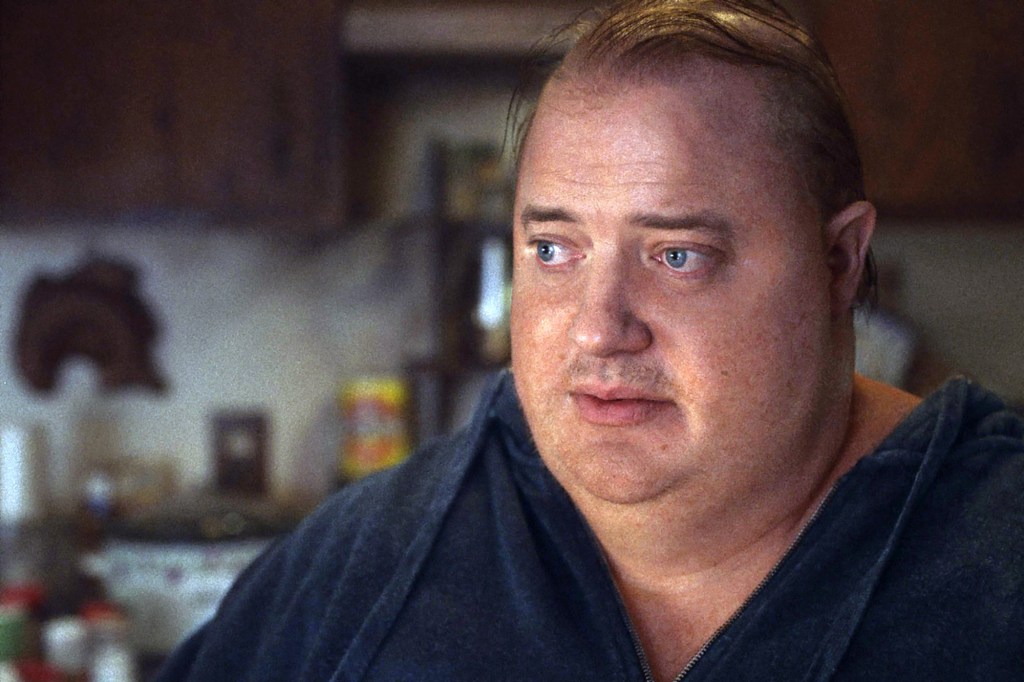
    In a way, director Darren Aronofsky’s latest feature is a bit of all of this, most notably being a return to stardom for Brendan Fraser with the year’s most committed, devastating performance. 

    Structurally, The Whale tells the story of a reclusive, obese English teacher and his attempts to reconnect with his estranged teenage daughter at all costs to his health and psyche. But it’s also an allegory with strong evocations and outright references to the Hermann Melville classic “Moby Dick” and a treatise on mental health traumas.

    There’s a depth of humanity to the film that shouldn’t be there at first glance, but the screenplay from Samuel D. Hunter based on his 2012 play of the same name opens up opportunities for Fraser to overwhelm audiences with a tremendous heartfelt performance.

    Aronofsky and Fraser approach Charlie with such care that once viewers become accustomed to his size, all the matters at the core of the film are the purity of Charlie’s heart and how his inner pain forced him to succumb to chronic overeating and isolation. 

    The weight and eating aren’t done as circus spectacle, though the technical skill and expertise required to design and fit Fraser with a prosthetic suit to realistically make the heavy-set actor appear as if he weighed 600 pounds.

    It’s more clearly, once the story unfolds, that Charlie is a mere vessel by which Aronofsky could reasonably explain intense isolationism and its effects on those around them.

    Unquestionably, it’s Fraser’s most introspective, emotional and powerful performance to date and Aronofsky is able to mine the depths of Fraser’s soul for raw emotional and honesty that hasn’t been shown so far in the veteran actor’s career.

    The film’s small ensemble cast do a solid job helping to frame Charlie’s plight in a larger social context and it’s in scenes between Charlie and his daughter Ellie played by Sadie Sink that the most intriguing, provoking scene-work is done.

    Sink provides The Whale with a raw emotion of blind rage masked behind layers of manipulation as Ellie. Her relentless combativeness doesn’t come across as pure malice, but weathered pain from the toll a strained relationship with Charlie brought upon Ellie during her formulative years.

    It’s a terrific contrast to Hong Chau’s more empathetic, nurturing yet stern caretaker role as Liz, who takes the pain she feels from her own traumas and latches onto Charlie with sympathy rather than disdain.

    The one odd duck in the ensemble is the presence of wandering missionary Thomas, played by Ty Simpkins. While the actor isn’t out of place with his performance, the character of Thomas unnecessarily muddies the waters and takes away from the larger allegory at play.

    The Whale can be a bit heavy-handed in its dialogue at times, especially in the rare moments when Charlie isn’t at the center of conversation. The secondary storylines can become a bit clunky and forced to make additional, unnecessary points about organized religion and homosexuality.

    Audiences will not be capable of being apathetic to the story and its larger themes. The Whale is especially overwhelming in this regard, bathing viewers in a constant tsunami of anger, frustration and sentimentality.

    From a production standpoint, cinematographer Matthew Libatique excels at the ability to make the confining space of Charlie’s small apartment constantly feel large by approaching scenes of dialogue from fresh angles and perspectives to reframe audiences and prevent a stale, monotonous feel to the film.

    With Fraser as a clear-cut Best Actor contender, The Whale was always going to be in the awards season race, but it’s become increasingly likely that it could exceed a single acting nomination and join the Best Picture race, with Chau also receiving enough support to have a chance at a supporting actress nod as well.

    While it certainly won’t be everyone’s cup of tea, The Whale touches upon important social issues from an emotional, yet respectful place and is worth cinephiles spending two hours on at home or in theaters this awards season.

  • Babylon: All the glitz and glamour

    Babylon: All the glitz and glamour

    When auteur directors get to the point in their careers where they have established the pedigree to have carte blanche with a studio’s checkbook, it opens all sorts of possibilities.

    Damien Chazelle – who burst on the scene with Whiplash and is best known for his Oscar winning musical La La Land – dips his toe back in the waters of making movies about Hollywood with a roaring 20s, gallant and audacious examination of the transition from silent films to “the talkies.”

    A three-plus-hour epic odyssey, Babylon follows two newcomers to the industry who are thrust into the spotlight in different ways as well as a veteran silent film star struggling with hubris and finding his place in a changing landscape for the moviemaking business.

    For a film led by Brad Pitt and Margot Robbie, the true star of Babylon is Chazelle.

    From the opening sequence – a relentless, lavish and indulgent 30-minute cavalcade of debauchery in the home of a film producer – Chazelle overwhelms his audience with a plethora of sights and sounds that are bold and audacious, reveling in the same sort of excess as Martin Scorsese’s The Wolf Of Wall Street would, but in a more frivolous, carefree Hollywood ideal.

    Chazelle masterfully whips the camera around a room filled with drugs and nudity as if it were an ingenue taking in the spectacle of Hollywood and succumbing to the seductive, illicit appeal.

    When it comes to the technical aspects of Babylon, the film truly shines in Chazelle’s ability to capture nuance, referencing small pieces of early film history that would take scholars several viewing to find minute trivialities, but at the same time, making the most of modern cinema in order to fully engulf the viewer in the world of Babylon.

    As Nellie, Robbie is a firecracker whose fuse is brightly flickering close to explosion through the entire 180-minute run time. 

    While her franticness as the starry-eyed wild child comes to define everything about Nellie’s character, it’s incredibly impressive just how much control Robbie must change gears at a moment’s notice from laughter to a single tear to everything in between in a split second. 

    In stark contrast, Diego Calva’s Manny is the most restrained character in the film, with Chazelle hoping viewers will view Babylon through his earnest eyes. Amidst the world of chaos, Calva is demonstrably calm and resourceful in the ways Manny climbs the ladder of success and it’s a breakout role showcasing vulnerability and empathy.

    Pitt feels a bit on an island of his own as the silent film star Jack, but it’s a welcome salve from the main storyline of Manny and Nellie. Pitt excels at masking his inner pain and age with the bravado of a typical flawed leading man and the culmination of Jack’s arc throughout the film wouldn’t make any sense with the longing and brooding Pitt is able to subtly bring out in Jack’s eyes.

    If there is a major flaw within the film, Babylon suffers at times with haphazard pacing and balance between its three lead stars which often leaves audiences disoriented and ready for a finale that doesn’t come until much later than expected.

    Babylon features several of what could be considered false endings that jar casual viewers when the credits don’t roll.

    This isn’t to say that the editing is bad by any means. Chazelle and editor Tom Cross are quick on the knife to make vibrant cross-cutting sequences that transport viewers back and forth between different film sets to heighten the urgency of the moment. While there’s a kinetic energy to Babylon, it doesn’t come out evenly which leaves more individual sections of the film as highlights rather than one cohesive piece of cinema.

    At its strongest points, Babylon embraces the artistry of moviemaking whether it be small, intimate tidbits like filmmakers adding dialogue to silent films with handwritten messages on chalkboards to a side-splitting sequence where Nellie must repeat a scene over and over because sound and picture difficulties prevent shooting.

    As is the case with most noisy movies about the film industry, Babylon is sure to be a major player this awards season in everything from best picture to best director and actress to any number of technical categories like production design, costuming, cinematography and composer Justin Hurwitz’s radiant score.

    It’s going to be particularly hard for audiences to completely digest, or even stomach at times, everything that’s going on in the loud, boisterous world of Chazelle’s Babylon, but viewers willing to take the time and effort to allow themselves to be overwhelmed by grandiosity may reasonably find themselves loving and/or loathing enough of the three-hour odyssey worth a trip or two to the biggest screen possible.

  • White Noise: Cinematic static

    White Noise: Cinematic static

    It seems as though every year Netflix puts out a film that makes one wonder how it was greenlit into production. 

    Whether it’s an exorbitant budget for a languishing Martin Scorsese epic like The Irishman or an overly sarcastic, nihilistic dramedy like Adam McKay’s Don’t Look Up, the streaming service can’t quite find its footing for an award season contender to draw large audiences with 2022 being no exception.

    Noah Baumbach, whose previous effort Marriage Story saw Laura Dern win a Best Supporting Actress Oscar, returns to Netflix with an adaptation of Don DeLillo’s avantgarde 1985 novel, the first feature the director has made without telling a completely original story.

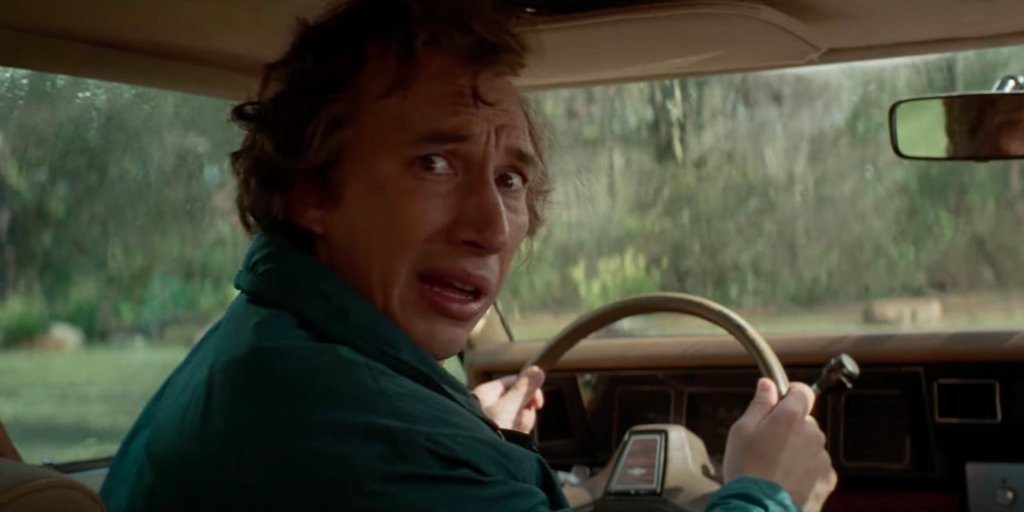
    White Noise is an eclectic, strange, befuddling black dramedy of a feature released in select theaters in early December before hitting the streaming service Dec. 30. The film stars Internet darlings Adam Driver and Greta Gerwig as a couple living in an undisclosed Midwestern town whose lives are uprooted by a chemical spill.

    Baumbach breaks his film into three parts, much like the novel it draws inspiration from, with each section only loosely connected through minor characterization and general themes.

    White Noise is absolutely mystifying for those unfamiliar with the source material and wildly inconsistent in tone. In many ways, it’s like a train wreck that bystanders see coming and can’t look away from, which Baumbach almost revels in with the amount of time he spends on car crashes and people’s voyeuristic nature.

    At the core of the film, Driver as a college professor in Hitler studies is quirky in physicality and dress, but ironically the most normal character in the entire film. The cadence with which his Jack pontificates is in keeping with Baumbach’s idiosyncratic dialogue and it’s clear that Driver relishes each opportunity to emote in a spiritualistic way.

    Conversely, Gerwig – who audiences see significantly less of in the film – is more subdued as White Noise plays out with the most memorable part of her performance being a wacky frizzled 80s haircut and at times, a riff on a Beverly D’Angelo-esque character from National Lampoon’s Vacation.

    The family dynamic doesn’t really evolve much over the two-hour feature, though each younger performer is given some opportunity to shine and moments between Driver and Raffey Cassidy’s eldest daughter character Denise over an unknown prescription are the most entertaining elements of a screenplay that’s all over the map.

    From a production standpoint, White Noise does an exceptional job of creating a hyper-realistic recreation of 1980s middle America with bombastic costuming, over-teased hair and makeup and a fully transformed, inexplicably intricate supermarket viewers could spend hours in actually shopping in and being completely transported back in time.

    There’s an overwhelming brightness to White Noise visually that harkens back to classic John Hughes comedic style and sets an expectation for audiences that the outrageousness of Baumbach’s adaptation of the avantgarde source novel just cannot meet. Much like the Gladneys’ home and family live, the film is stuffed full with detail and nuance to the point where there’s no room for audiences to breathe given the strangeness and complexity of the narrative.

    Given Baumbach’s track record with Marriage Story and Netflix not having a true contender this awards season, it’s possible that White Noise could slip into the nomination mix for accolades like adapted screenplay or production design, but the relative inaccessibility could leave it on the outside looking in.

    After an underwhelming theatrical performance, Baumbach’s film could find much more friendly waters on the streaming service where audiences can process the intricacies in chunks without having to digest the entire feature in one sitting. As it is, White Noise may prove to be too avantgarde and niche for the average moviegoer regardless of the setting.

  • Glass Onion: Whodunnit in the modern era

    Glass Onion: Whodunnit in the modern era

    Three years ago, writer/director Rian Johnson wowed audiences with an unexpected, compelling and hilarious take on the classic Agatha Christie-esque murder mystery genre.

    His Knives Out brought viewers into the world of a rural New England town filled with intrigue, suspicion and family tension while debuting an eccentric Southern detective on par with Hercule Poirot and Sherlock Holmes in Daniel Craig’s Benoit Blanc. 

    The success of Knives Out – which made over $300 million on a $40 million budget – prompted Netflix to spend $469 million to purchase the rights to two additional installments in what would become a franchise centered around Blanc’s exploits.

    The first spiritual sequel opened this past weekend with Glass Onion: A Knives Out Mystery debuting on the streaming service after a limited one-week theatrical run over the Thanksgiving holiday.

    The film sees Blanc whisked into a world of high society and social media stars brought together by a tech billionaire for a murder mystery game that proves deadly and sets Blanc off to find a genuine killer on a remote Greek island.

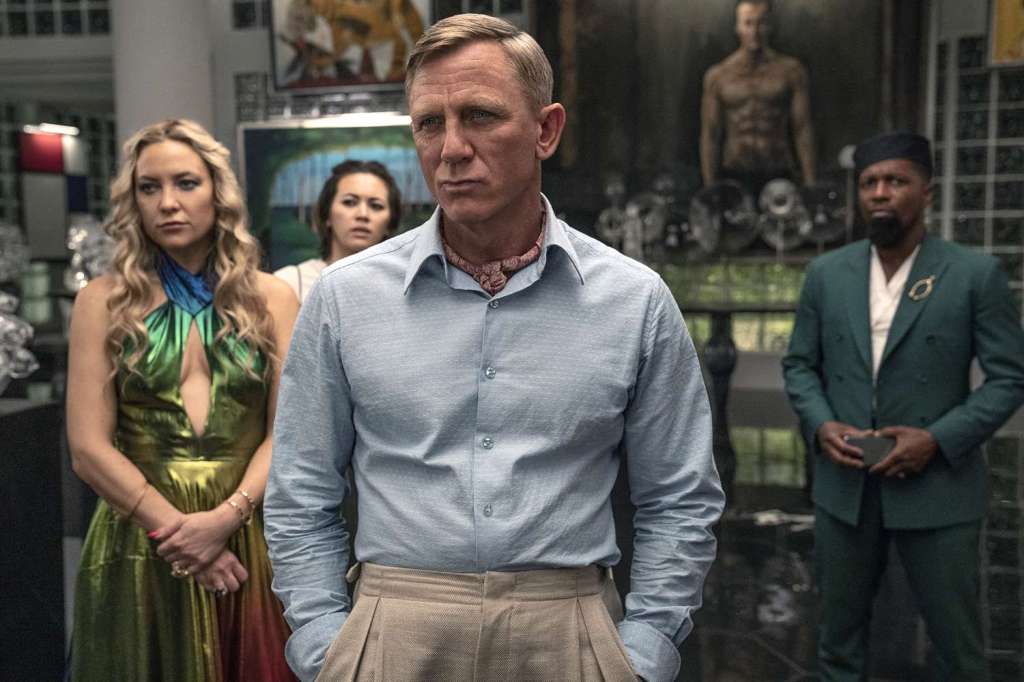
    What truly stands out about Glass Onion are the film’s illustrious and perfectly cast stars, most notably the returning Craig. His Blanc, fully formed in a second installment, is even more dry in his humor and Craig revels in the ability to acutely play the line between investigator and comedian.

    A sequence early in the film that reveals what Blanc has been up to during quarantine for the COVID-19 pandemic is especially sidesplitting in its humor and Johnson deftly sidesteps the pandemic while also addressing directly issues that would arise in an elite world given the circumstances. 

    Glass Onion wouldn’t work as well as it does on Craig’s performance alone.

    Johnson meticulously assembles an ensemble to surround Blanc that ramps up the humorous elements from the original while maintaining quality in the acting as well.

    Even by the standards of murder mystery where viewers must question the motivations of everyone but the detective, Janelle Monae has an arduous task in front of her being especially mysterious and vague and the accolades she’s been receiving as a possible best supporting actress contender are certainly valid.

    The showiest work in the film comes from Kate Hudson and Dave Bautista, who are both truly going for it as over-the-top versions of characters viewers might associate them with from other work, but the smartness of Johnson’s screenplay and guided hand in direction keeps the comedy fresh and not too on the nose.

    Edward Norton feels lighter and as if he’s having more fun with a role in some time as the tech billionaire at the center of the mystery, while Kathryn Hahn comes alive with small repartee that helps keep Johnson’s masterful screenplay at the forefront.

    Because so much of the success of the first film came from a shared viewing experience in theaters, it’s hard not to be somewhat disappointed by first time at home screening of Glass Onion where the wry, smart comedy of Johnson’s screenplay perfectly acted by perhaps the year’s ensemble cast doesn’t land in the same way without others around to share the moment.

    This isn’t to say that Glass Onion isn’t a terrific blockbuster film. Johnson has recaptured the magic of Knives Out and brought it back to life in a new environment that will give audiences something fresh to mull over and find all the hidden easter eggs and clues as the layers unravel.

    There’s been some buzz that Glass Onion would make waves and enter the Academy Awards’ best picture race, though that seems to be overblown somewhat simply due to it being Netflix’s best chance rather than being worthy of a nomination.

    The lack of a true theatrical experience really dulls the shine on Johnson’s film and keeps it from being on par with the original Knives Out, but regardless, Glass Onion: A Knives Out Mystery is certainly an entertaining at home experience that will pull cinephiles out of their seats during family gatherings this holiday season.

  • Avatar 2: Big waves, shallow depth

    Avatar 2: Big waves, shallow depth

    James Cameron hasn’t made a new film in over a decade.

    The blockbuster spectacle-creator behind epic movies like Aliens, The Terminator and Titanic last showed his craft on the big screen in 2009 with a technologically revolutionary feature about human colonizers on a space world in Avatar, an Oscar nominee for Best Picture that won several technical awards.

    Since then, Cameron has long sought to make a follow-up, but sequels languished in pre-production for world building and then a four-year shoot for the next two installments has kept his burgeoning Avatar franchise on hold.

    The wait finally ended this past weekend as Avatar: The Way of Water arrived to great fanfare in theaters nationwide. The immersive world of Pandora takes on new life thanks to digital innovations Cameron adds to his arsenal as audiences are transported under the sea creating new depths and expanding the universe of Cameron’s narrative.

    Way of Water catches up with Jake Sully and his Na’vi family ten years after the events of the original film which saw the tribal clan run Earth military off Pandora completely.  Sully believes himself to be at peace until the “sky-people” return to hunt him down and fully colonize Pandora.

    Returning from the original film, Sam Worthington is less stiff in his second foray as Sully, in part because he doesn’t have to emote in human form and the expressiveness on his face is partially digitized. Even still, Worthington has more of a gruff military persona than anything although it’s clear that he’s capable of showing Sully’s sense of duty as a father. 

    For whatever reason, the Avatar films aren’t as much about character as they are about spectacle. Cameron is less interested in telling a story than crafting a world and this comes through in elongated sequences that take 20 minutes when two would have sufficed.

    Because the characters ultimately don’t matter, the actors portraying them are left with little to identify with. 

    This is especially true of the film’s female performances, where Zoe Saldana is largely left to sob and showcase her action prowess while being shoved into the background after her Neytiri was a pivotal character in the original.

    Kate Winslet joins the cast as a rival chief’s wife and perhaps has 10-15 lines of dialogue despite being in most scenes, while Sigourney Weaver returns as her character’s own daughter in a perplexing, disjointed bit of storytelling that might only make sense when the next film arrives in theaters.

    If there are any stars of the show, they come in the form of the film’s young actors who play the next generation of Na’vi, but truly in Avatar, the only character that matters is Cameron himself.

    For the most part, audiences will come to see Way of Water not for the story, but for the visuals that define the franchise.

    It’s a film that’s gorgeous to look at even with the sound completely off that truly takes advantage of a cinematic master’s ability to visually world-build.

    Underwater sequences bring new life to Way of Water and break up segments of the film that often feel somewhat repetitive to the original film and although it’s somewhat engaging for viewers to feel Pandora just beyond their fingertips, Way of Water isn’t a feature that demands viewing in 3D despite Cameron’s crafting the mold for blockbuster films to leap off the screen for the better part of a decade.

    The film’s over three-hour running time is especially draining on viewers not completely immersed in the story-telling. 

    Despite the visual wonders, there isn’t enough substance to justify the length and Cameron’s cut of the film lacks proper pacing to balance out story with visuals. It’s almost as if the veteran filmmaker decided to leave almost nothing on the cutting room floor, allowing each one of his sequences to play out fully because they look cool rather than adding to the overall narrative.

    As a result, Way of Water can feel at times like a theme park ride rather than a theatrical movie experience.

    Regardless, the film – if on pedigree alone – will be a major contender this awards season for both best picture and a frontrunner in many technical categories, with Cameron likely to be given a best director nomination as well.

    With the holidays bringing families together at the theaters, Avatar: The Way of Water will likely appeal to those wanting to get out of the house and yet feel closer to their own families. Now will be as good a time as ever to see Way of Water the way Cameron intends, but at the end, the sequel fails to live up to the promise of the original.

  • Empire of Light: Cinema in all capital letters

    Empire of Light: Cinema in all capital letters

    One of an auteur’s favorite things to center their films around is the art of cinema itself.

    Filmmakers started off their careers as moviegoers and these experiences color and impact everything about how they write, direct and produce their own work.

    Sam Mendes’ extensive theater and filmmaking background come to fruition with his latest film, Empire of Light, a languishing, self-indulgent look at the world of cinema through the eyes of a box office manager at the Empire Theater in south England.

    It’s a movie that just screams out “CINEMA!” at the top of its lungs even though it doesn’t really understand what exactly that entails or means in the context of the story Empire is trying to tell.

    At the core of its storytelling, Empire is a simple tale of a shy older woman played by Oscar winner Olivia Colman, who befriends and later falls for a black coworker played by Micheal Ward while she is simultaneously coerced into a sexual relationship with her boss.

    Though he’s credited as the lone screenwriter, Mendes isn’t terribly concerned with the narrative at all. It simply serves as a basic structure to center his motif-driven feature on cinematic wonder during a formative time in the early 1980s. This makes Empire exceptionally inaccessible for some audiences who may struggle with the looseness of the narrative and lack of significant plot, yet at the same time, Mendes may draw in certain viewers with the painstaking care to which he showcases the meticulous craft of cinema.

    Structurally, there’s a significant issue relating Colman’s character to Ward’s in a cohesive way as Mendes would rather show than tell audiences how their unlikely romance begins. 

    Empire is more of a think piece than a considered theatrical experience, ironic given how many films are shown within Empire, most notably the Oscar-winning Chariots of Fire which plays a pivotal role in the second act.

    Colman tremendously creates layers to her Hilary, especially as the film lingers on and audiences come to learn more of her backstory which complicates her relationships with everyone around her.

    While it is not as bombastic nor driven as efforts by Cate Blanchett in Tár or Michelle Yeoh in Everything Everywhere All At Once, Colman has the ability to be equally as transfixing and carry the overall narrative forward with a performance that’s among the year’s best.

    Her primary counterpart in Ward’s Stephen is equally as subdued with a quiet earnestness and sentimentality that makes him somewhat a compelling character although much like James Gray’s Armageddon Time, Empire struggles to find the right tone when it comes to racial and societal implications it’s making and a pivotal scene to open the final act really isn’t properly foreshadowed well enough to balance with the overall tone of the film.

    The supporting cast led by Firth as the theater head and Toby Jones as the projectionist is solid but given light character work due to Mendes’ very loose brushstrokes on plot development.

    Without question, the MVP of Empire is the dynamic cinematography from director of photography Roger Deakins, a master at his craft who make every second of Mendes’ film a joy to watch even when the storytelling doesn’t live up to the same expectations.

    He is especially adept at using light in all its forms, both in bright open spaces and tight confining moments as well as the contrasting nature of pitch-black darkened theaters to illuminate the picture coming through the Empire’s projector.

    Many of the moments that work best in Empire come from Deakins’ ability to capture Mendes’ artistic vision for what cinema truly means to both moviegoers and the people who work to bring these cinematic tales to life. 

    Though Empire of Light certainly isn’t for every moviegoer, ardent cinephiles willing to overlook the film’s structural shortcomings and live in the broader pen strokes of Mendes’ vision will find the film to be an intriguing experience in theaters.

  • Devotion: Old school war drama

    Devotion: Old school war drama

    It’s often said that “they just don’t make ‘em like they used to anymore.”

    This is especially true when it comes to the world of filmmaking, where studios are consolidating the types of movies they produce in order to maximize profit margins.

    Whether it’s due to analytics or the whim of a finicky studio head, certain types of films just aren’t being greenlit or given the support that they once did.

    For example, a war drama based on a true story released over the Thanksgiving weekend should have easily played in 3,000+ theaters across the country for the next six weeks. And yet, an incredibly unassuming, patriotic film like director J.D. Dillard’s latest feature has largely flown under the radar.

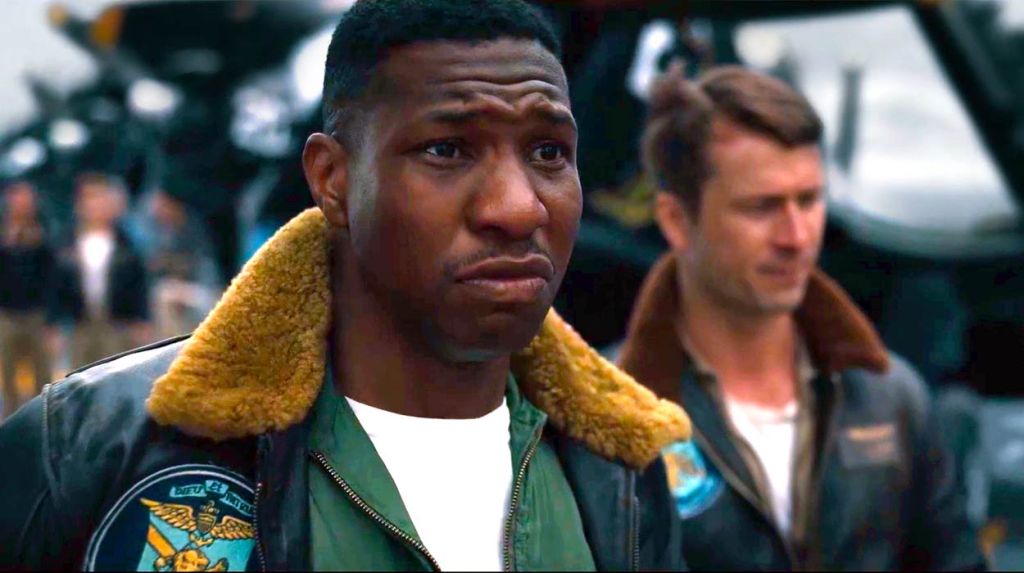
    Devotion, led by burgeoning Jonathan Majors and Glen Powell, tells the story of Ensign Jesse Brown, the first African American naval aviator who flew combat missions during the early moments of the Korean War alongside his Caucasian wingman.

    A blend of popular, successful films like Top Gun: Maverick and Green Book, there’s no reason why Devotion isn’t garnering much wider acclaim and attention from audiences this holiday season.

    The film’s two lead actors have terrific chemistry opposite one another and are equally transfixing on their own.

    Majors’ relatively subdued performance as Brown underscores just how talented of a character actor he’s been since his breakout turn in The Last Black Man in San Francisco.

    He projects a quiet meekness somewhat explained away by Brown’s desire to blend in and maintain his status within the Navy and yet there’s a hidden warmth to the character, especially in moments opposite Christina Jackson as Brown’s wife Daisy that are personal and touching.

    Taking somewhat of a page out of his Top Gun: Maverick co-star Tom Cruise’s book, Powell has a stoicism about him that highlights his Tom Hudner’s sense of duty and patriotism, but there isn’t a rigidity to the character. Powell showcases the ability to harness emotion when needed yet maintains military composure.

    The middling screenplay from writers Jake Crane and Jonathan Stewart – adapting from the book by Adam Makos – does both leads somewhat of a disservice in that there’s really not much deep conversation nor major character development for either lead. 

    It’s as if both are friends through mutual admiration and respect in short order and their differences, while on the surface seem major due to racial politics of the era, are shown to be incredibly minor which leaves both actors little to play with.

    This is also true of the length of the middle section of Devotion, which languishes during a 15-plus minute sequence during the aviators’ shore leave and interaction with a famous film star in Cannes that drags down the overall pace of the film.

    What makes Devotion an emotional and intense experience comes in the film’s final act where audiences see the wingmen fly several combat missions in the heart of Korea.

    Filmed as practically as possible with period aircraft under the supervision of Top Gun: Maverick aerial stunt coordinator Kevin LaRosa, the action sequences are engaging to the point of leaving viewers on the edge of their seats, while not overwrought and in keeping with combat tactics of the era.

    Dillard is well adept at making the transition from drama to action feel smooth and cohesive within the narrative and the cinematography from Erik Messerschmidt is solid throughout while not being obstructive to the acting work at play.

    A solid, unspectacular period war biopic drama criminally underseen this holiday season, Devotion is a film well worth moviegoers taking the time to seek out with friends and family.