Author: Matt Ward

  • Everything Everywhere All At Once: Cinematic beauty in weirdness

    Everything Everywhere All At Once: Cinematic beauty in weirdness

    The directing duo of Dan Kwan and Daniel Scheinert, collectively known as Daniels, have created a brand of cinema flavored with creative ingenuity blended with the bizarre and outlandish that have seen them mystify viewers with flatulent corpses and dark humor with films like 2016’s Swiss Army Man and 2019’s The Death of Dick Long.

    Their third feature together, Everything Everywhere All At Once, takes their obsession with the absurd to new heights cinematically as the pair forge a strange, genre-bending tale that mixes Hong Kong martial arts with sci-fi hijinks, comic book universe hopping with family drama in a compelling, original film unlike anything audiences will see in 2022.

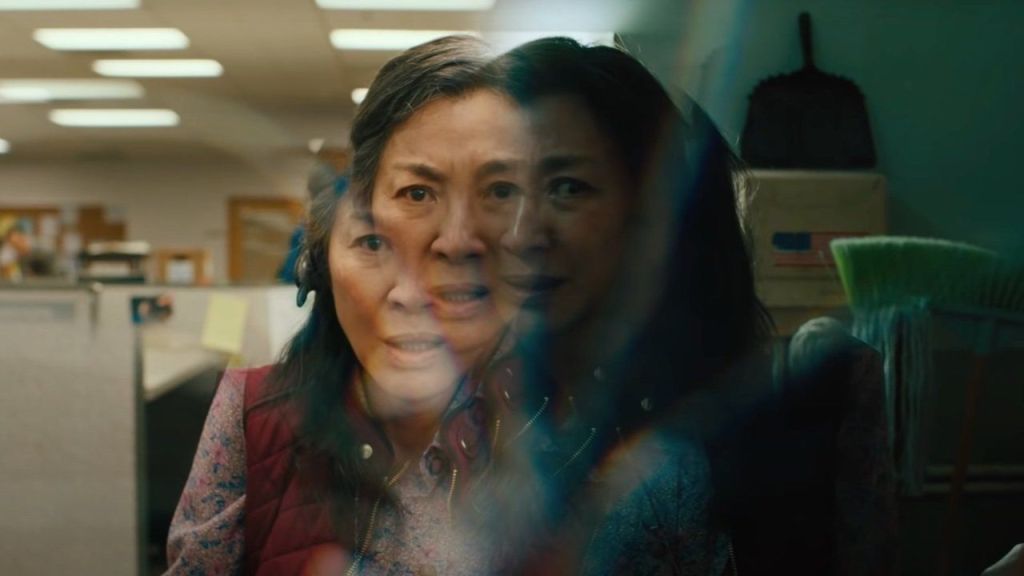
    Michelle Yeoh of Crouching Tiger, Hidden Dragon and Crazy Rich Asians fame stars as Evelyn, a down on her luck Chinese immigrant whose business is on the verge of collapse and her marriage on the brink of divorce. While heading to an IRS audit meeting, Evelyn is confronted by an alternate version of her husband, Waymond, who believes she is the only person capable of stopping the nefarious Jobu Tupaki from collapsing every possible universe.

    While the film could probably have been successful simply based on the Daniels’ creativity, Yeoh brings All At Once to the next level with a nuanced performance that is often frantic, sometimes melancholic, and ever transformative. She becomes a terrific stand-in for the audience as the film progresses with Yeoh’s initial confusion to the world Evelyn is forced into mirroring the bewilderment of viewers.

    As Evelyn grows in confidence and learns skills from alternate reality versions of herself, Yeoh is able to showcase her martial arts prowess and then immediately fall back into a stupor that is practical and convincing to Evelyn’s increasingly outlandish plight and as Evelyn comes to accept the ridiculousness of her situation, Yeoh makes it easier for audiences to suspend their disbelief as well and enjoy the ride.

    Yeoh is aided by a wonderful ensemble cast who must make even wider transformations between their character’s normal selves and bizarre variations.

    Ke Huy Quan returns to acting for his first role in two decades and steals nearly every scene he’s in as Evelyn’s sheepish, yet adorable husband Waymond. No matter what version of Waymond is in the moment – and all versions are incredible – Quan gives his whole heart to Waymond in a way that just leaps off the screen.

    Newcomer Stephanie Hsu is a revelation as the couple’s daughter Joy, a complicated blend of both her parents that allows Hsu to be more eccentric with her alternate versions and Jamie Lee Curtis is almost unrecognizable in a hilarious supporting turn as the IRS agent assigned to Evelyn’s audit.

    All At Once is even more spectacular in terms of its visual effects, which was developed by a team of only five to create over 500 different shots in the film. Daniels use both practical and computer-generated effects to showcase Evelyn’s bridge between the versions of herself, dubbed “verse jumping” in the movie, and the look of Yeoh rapidly falling backwards is a constant blur of motion and imagery that keeps viewers at the edge of their seats.

    The film also moves at an intensely rapid pace thanks to distinct and swift editing by Paul Rogers that makes the most of the dynamic action sequences that perfectly blend martial arts with the strange science fiction elements of the plot.

    Daniels also create a fully realized, wholly immersive world with some of the best production design and costuming that will probably be featured in all of 2022. The depth to which the filmmakers transform a simple office building into a plethora of avenues for creativity cinematically is astonishing and the costume work, especially on Curtis’s Deirdre and also Jobu Topaki showcase the avantgarde uniqueness and originality unmatched in this era.

    Because All At Once is so outside the box – there’s literally worlds with hot dog hands and pinatas – it’s unclear how a film released in the first half of the year will stay in the conversation long enough to earn the awards season acclaim it deserves, but Daniels’ film definitely deserves to stand alongside The Batman as the two features to release before July that need to be remembered by voters months from now.

    Though it will be a fun experience at home for audiences who can’t find it close to them, there’s no doubt that the visual thrill ride of Everything Everywhere All At Once deserves a trip to the cinema to see the Daniels’ vision on the biggest screen possible and this strange, yet heartfelt will no doubt be a top film of the year.
  • The Unbearable Weight Of Massive Talent: Not that he ever left

    The Unbearable Weight Of Massive Talent: Not that he ever left

    What does it truly mean to be a celebrity on a global level? What does that recognizability, especially for those with boisterous personalities, do to an actor’s psyche as the shine starts to fade?

    It’s a nuanced examination that comes from the most unlikely of places, a zany surreal action dramedy where former A-list actor Nicolas Cage takes on perhaps his most challenging role: himself.

    With The Unbearable Weight of Massive Talent, Cage showcases every side of his acting persona, cranking up the volume of his “Cage-yness” to 11 in a performance that’s incredibly neurotic, exceptionally thought out and cerebral, yet quintessentially heartfelt and emotional in a way only the Academy Award winner could.

    The film from writer/director Tom Gormican and co-writer Kevin Etten is a cinematic love letter to Cage’s illustrious and exotic film career, taking audiences on a journey with Nicolas as he battles his inner demons and quite literally talks to his younger self in a wonderful homage to True Romance, the most Nicolas Cage film he was never cast in.

    Talent finds this fictionalized Cage on the brink of retiring from acting following another failed audition when an invitation (and million-dollar incentive) to attend a wealthy businessman’s birthday party in Mallorca, Spain, leads Nick to bond with Javi over vintage German horror films upon his arrival and begin to develop a movie idea together, all while covertly working for the CIA.

    The incredulous nature of the story, while often going to the brink of inexplicable, works amazingly well simply because Cage commits so fully to the fantasy world Gormican and Etten have crafted that viewers cannot help but be carried along for the ride of R-rated hijinks, deep philosophical conversations, and increasingly meta diatribes about the art of screenwriting and hooking audiences into watching a movie.

    Even though the entire film veers into the surreal, there’s a subtle through-layer of Cage working through his own struggles with his public persona and how “out there” he gets in his films leaking into his private life. In a way, Talent is the perfect opportunity for Cage to fully free himself from the crazed 90s action star persona and continue a career revitalization that began with last year’s Pig.

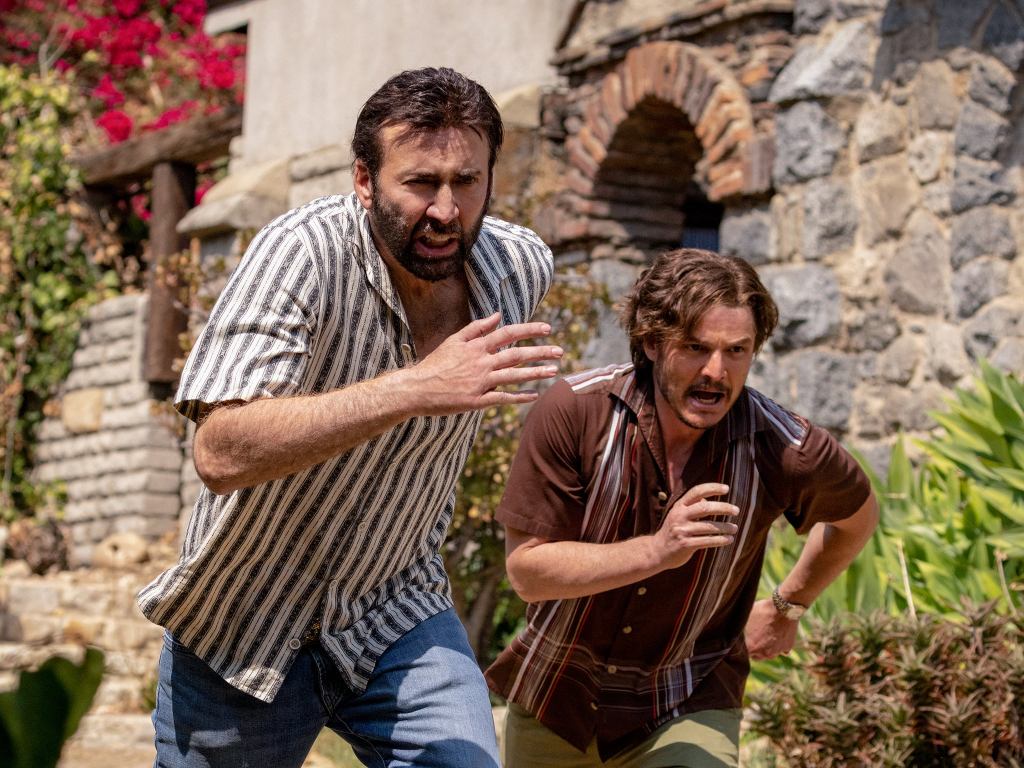
    It’s also so easy to fall in love with this wonderfully strange version of Cage because of how genuine Pedro Pascal’s adoration of Nick pours out in every moment of his performance as Javi.

    Cage and Pascal have a vibrant chemistry that makes silly interactions over the common love of a children’s movie, or an LSD trip feel whimsical and lighthearted rather than completely ridiculous. The affection both actors have for each other seeps into every aspect of their performances and from the 30-minute mark onward, the best parts of the film are Cage and Pascal’s random conversations that could have nothing to do with moving the plot forward, but are riotously entertaining nevertheless.

    Sharon Horgan and Lily Sheen as Cage’s fictional ex-wife and daughter are solid in smaller supporting roles that help ground his performance as a struggle between career and family, while Tiffany Haddish and Ike Barinholtz as two CIA agents pushing Nick to spy on his new friend have some funny moments but are largely just filler to flesh out the incredulous story.

    Gormican doesn’t muddle the frame with big explosions or fancy camera tricks in an homage to Cage’s action roots, but Talent does have a fast pace thanks to exceptionally witty dialogue and the joyride audiences go on is generally smooth despite his relative lack of experience behind the director’s chair.

    The Unbearable Weight of Massive Talent is a phenomenal, quirky love letter to one of Hollywood’s most eccentric fan favorite actors and Cage’s winning performance paired with terrific chemistry opposite Pascal make this unlikely buddy dramedy a major surprise hit in theaters for 2022.

  • Fantastic Beasts: The Secrets Of Dumbledore: Losing the magic touch

    Fantastic Beasts: The Secrets Of Dumbledore: Losing the magic touch

    It’s been two decades since teenage wizard Harry Potter and his friends made their cinematic last stand in the eighth film based off the novels by J.K. Rowling.

    For a variety of reasons, attempts to keep the magic alive today have lost their spark with the third installment in a prequel franchise based on one of Potter’s school textbooks arriving with a whimper both critically and financially.

    Fantastic Beasts: The Secrets of Dumbledore follows magical zoologist Newt Scamander as he’s pulled into an escalating war between good wizards led by Hogwarts headmaster Albus Dumbledore against Gellert Grindlewald, a former love of Dumbledore seeking to establish wizards’ dominance over non-magical humans.

    The biggest problem is that, by and large, this third installment is relatively uneventful and boring, largely circulating around election stealing and magical politics that will put younger audiences to sleep and make adults groan.

    What made the original Harry Potter film franchise so successful was the idea that audiences knew in advance where things were going but were excited to see how they would unfold in cinematic fashion. It also helped that viewers could grow up with Daniel Radcliffe, Emma Watson and Rupert Grint along the way, but the main issue with the stumbling Fantastic Beasts franchise is that the path is far less certain and much less entertaining along the way.

    There’s no consistency in this cobbled together trilogy, which has changed the actor portraying the primary villain, Gellert Grindelwald, in each entry and stumbled through its integration of Harry Potter lore into a prequel where most fan favorite characters haven’t been introduced yet.

    In its attempts to become a more serious film, Dumbledore removes much of the wonder and magic from the Fantastic Beasts franchise in order to reorient the franchise around Jude Law’s titular character to bring the films closer to the world of Harry Potter but further from what made the first film entertaining.

    The beasts themselves, which were the highlight of each of the first two entries, take a relative backseat for much of the nearly two-and-a-half-hour film with fan favorites like lock picking Bowtruckle named Pickett and the gold obsessed Niffler. The primary new “beast” of note is largely used as a Macguffin to further the plot and kept out of sight for the majority of the film.

    In fact, perhaps the best sequence of the entire film involves Newt charming crab like creatures with a fanciful dance.

    Director David Yates and screenwriter Rowling also make the baffling decision to largely sideline major characters from the first two films, reducing Ezra Miller’s prominent role as the “obscurial” Creedence to a mere bit part and benching Katherine Waterston’s Tina, a co-lead with Redmayne for the first two films, almost entirely for Victoria Yeates’ turn as Newt’s longtime assistant, a less interesting and largely unmemorable character.

    But there are some highlights to Dumbledore.

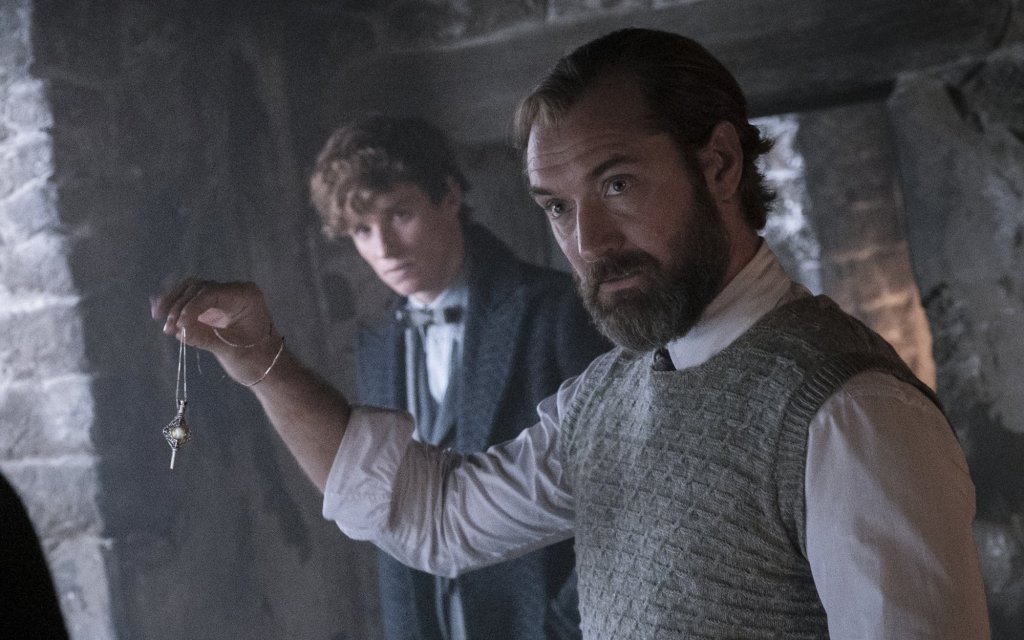
    Law is terrific in the title role and offers some sincere emotional complexity even when it’s not entirely earned. Mads Mikkelsen is somewhat understated taking over the role of Grindelwald and the hints of faded love yet uneasy respect between him and Law are some of the best acting in the entire Fantastic Beasts franchise.

    This isn’t to discount the work of Eddie Redmayne as Newt, either. Redmayne’s genuine affability successfully allows audiences to place themselves in the story seeing things through Newt’s eyes and it keeps large segments of the film afloat.

    While Fantastic Beasts: The Secrets of Dumbledore will need to do big business at the box office to sustain the life of the franchise going forward, the film itself will largely become nothing more than a minor footnote in the larger Wizarding World of Harry Potter and isn’t worth seeking out in theaters.

  • All The Old Knives: Secrets can kill

    All The Old Knives: Secrets can kill

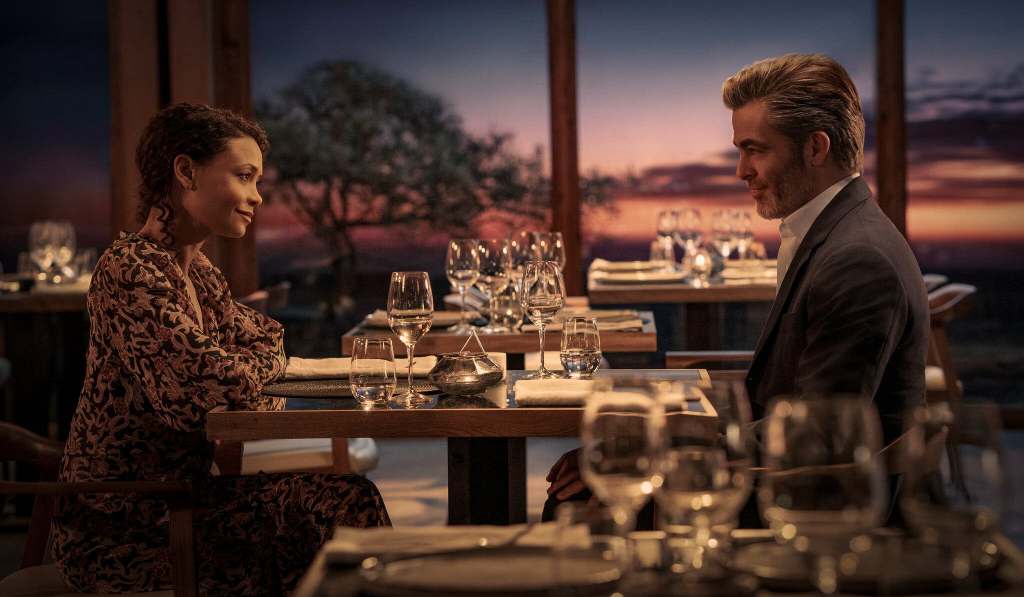
    Former lovers meet up for dinner, talking about the old days over wine and probing each other for information.

    Over the course of a meal, the two fall in and out of love while harboring a weariness that keeps them questioning the other’s intentions and just how honest they are being with one another.

    This conversation carries much of the weight in director Janus Metz’s adaptation of a novel written by Olen Steinhauer that sees these ex-CIA operatives questioning each other and themselves in search of a traitor who aided hijackers in a deadly attack on a Turkish Airlines plane years earlier.

    The kind of movie that nowadays would be stretched into a 10-hour miniseries, All The Old Knives is tighter than it feels as Metz takes his time with the slow-burn pacing and meters out revelations deliberately to keep audiences from deducing the traitor too early.

    Steinhauer adapts his own novel and pens an intricately dense screenplay filled with red herrings that pushes Henry to doubt his own instincts as he interrogates his ex-flame Celia, a prime suspect to be the mole.

    Because so much of Knives is centered around a single conversation in a largely empty restaurant, Metz’s film requires a pair of actors capable of carrying long scenes without much action or demonstrative monologues. Chris Pine and Thandiwe Newton, at first glance, don’t seem like a perfect fit, but their chemistry makes more sense over time.

    As the film progresses, Pine becomes far from the obvious choice to play Henry. In the flashbacks to 2012, he has the suave charm and looks to pull off being a deep cover operative; but in the present day, the decision to weather Pine in salt-and-pepper gray reduces the believability of his character.

    Luckily, these segments are highly dialogue driven and Pine is able to convincingly balance Henry’s role as interrogator with that of a former lover longing to have Celia back in his life.

    Newton has a much harder role to play as Celia, with the present day version being especially apprehensive for unclear reasons while in flashbacks, her vision is clouded by a deep love for Henry. It’s rare that audiences truly know what’s going in either character’s head and Newton does a fine job of masking Celia’s thoughts behinds a veil of timid uncertainty.

    Aside from Pine and Newton, most of the other characters are largely relegated to the background. Lawrence Fishburne does a solid job as the station chief, while Jonathan Pryce is exceptional in a role much too small for the quality of work he delivers here. Even with an overly long running time just under two hours, Knives could have used an extra scene or two between Pine and Pryce catching up in a London pub.

    Knives is highly edited and crosscut in between time periods and within scenes of dialogue to always keep viewers engaged, although the frequent back and forth could prove to be too much for some audiences. The film could also benefit from a bit more streamlining of the constant time-jumping, but location changes and the color of Pine’s hair from moment to moment help keep audiences in the relative know.

    Cinematography from Charlotte Bruus Christensen is often striking, but Metz often forces the camera in more tightly than necessary in dialogue moments leaving the entire film a touch cold in spite of the warmth Christensen provides in lighting scenes.

    While not the most cinematic film that would demand a trip to theaters, All The Old Knives may prove worthwhile to cinephiles appreciative of a slow-burn character driven drama thanks to its ease of access on Amazon Prime.

  • Morbius: Big teeth, no bite

    Morbius: Big teeth, no bite

    Nowadays it seems that studios aren’t really trying as much to hide their greed, especially when as it relates to comic book movies.

    Just one month after Warner Brothers dropped a fantastic, original, and darker take on a classic comic book hero with The Batman, audiences have to suffer through the complete opposite.

    Pushed off for nearly two years due to both the COVID-19 pandemic and its horribly lackluster screenplay, Morbius arrived in theaters this past weekend as Sony looks to capitalize on its hold on Spider-Man related properties by focusing on the web-slingers antagonists.

    A vampire movie that isn’t a horror film and a comic book movie without much excitement, Morbius is a “yada-yada” installment in Sony’s developing Spiderverse, one that brings almost nothing to the table but something that viewers will have to see to fully understand the subsequent films in the expanding universe.

    And this isn’t to say that Morbius is required viewing for upcoming Marvel projects.

    Clearly Marvel chief Kevin Feige isn’t involved in this project with Sony in full control of the independent feature, though a post credit sequence will leave some audiences confused. There are mild references to the events of the significantly superior Marvel Cinematic Universe film Spider-Man: No Way Home, but this isn’t at all the direction the MCU is headed.

    One studio – Marvel – has a clear vision for its cinematic future on both the big and small screen, while the other – Sony – is just throwing things against the wall and seeing what sticks.

    This worked with the first Venom movie as actor/producer Tom Hardy had a distinct idea for how to make the symbiote translate on the big screen visually and comedically, but even that fizzled out on a subpar sequel.

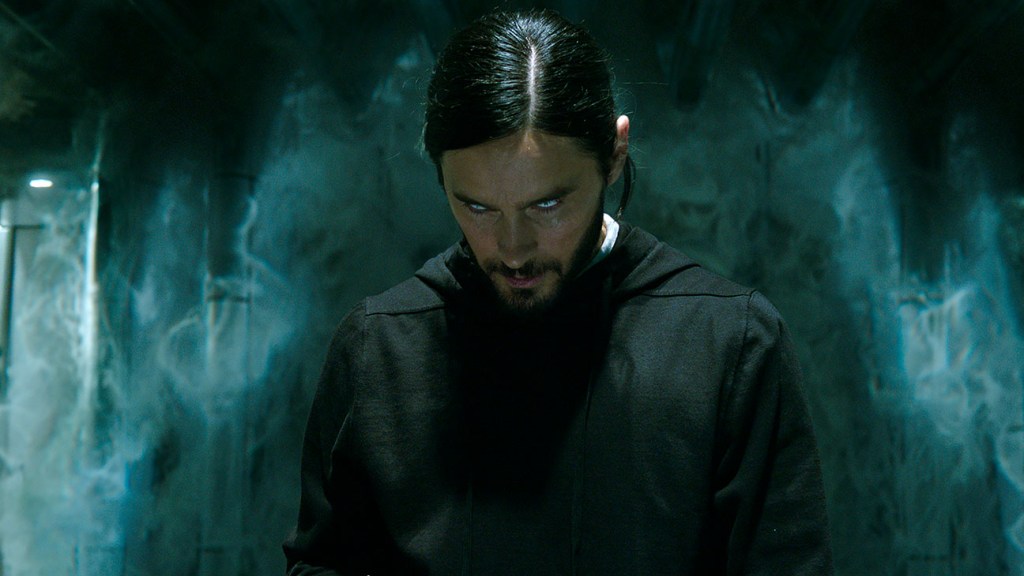
    With Morbius, director Daniel Espinoza and star Jared Leto seem to be simply going through the motions with a film so uniquely uninteresting that it doesn’t really matter if the title character will choose good or evil just as long as he does something worthwhile.

    The premise of Morbius is relatively straightforward, if not inexplicable even by comic books standards. Biochemist Michael Morbius seeks to cure himself of a rare blood disease by splicing his DNA with bats, infecting himself with a hyper-stylized form of vampirism instead. There’s a secondary storyline with an adopted brother who has the same affliction, but the stakes of Michael’s relationships with him and love interest Martina Bancroft are so thinly constructed that they feel like total afterthoughts.

    The decision to keep Morbius at a PG-13 rating is nothing more than a desperate attempt to cash in. Espinoza’s film needs to be rated R to showcase the violence and brutality needed to give a vampire with a conscience any true moral dilemma. When the audience doesn’t see and cannot fully realize how sadistic the bloodlust of the vampire is, it’s impossible to find any way to connect to the storylines or the characters themselves.

    Leto himself isn’t doing the film any favors emotionally, offering a relatively muted performance outside of some solid physicality to highlight the effects of Michael’s disease and he’s routinely outclassed in scenes opposite Doctor Who star Matt Smith as Milo.

    There is one solid sequence featured heavily in the trailers after Michael’s vampirism emerges on a cargo ship that provides some excitement, but the action in Morbius is too infrequent to keep audiences engaged and poor CGI work in the final moments will leave a sour taste in viewers’ mouths.

    Morbius is a film hardcore comic book fans will need to see at some point if they want to have a full picture of where Sony is taking their Spiderverse, but there’s no reason to rush out to theaters for this toothless picture.

  • CODA: Winning with heart

    CODA: Winning with heart

    Fourteen months ago, a small independent film with a largely unknown cast and an Oscar winner in a smaller supporting role debuted to critical acclaim at the Sundance Film Festival, winning top prizes and a hefty payday from Apple.

    The grand jury prize winner was expected to help launch the second wave of subscriptions to AppleTV+, a burgeoning streaming service fighting an uphill battle with stalwarts like Netflix, Amazon and Hulu for viewership.

    Critical success continued when CODA, director Sian Heder’s heartwarming family coming-of-age dramedy, arrived on the streamer last August, but didn’t seem to draw attention in the same way from casual audiences.

    Now there’s not really an excuse for ardent cinephiles to miss CODA despite being exclusive to a secondary streamer as the film took home three Academy Awards including Best Picture Sunday evening during a very congested ceremony that may continue to overshadow this smaller feature.

    Adapted from the 2014 French film La Famille Bélier, Heder’s drama stars Emilia Jones as Ruby, a CODA or “child of deaf adults,” who longs to pursue her passion in music but fears abandoning her parents as the family’s fishing business is threatened.

    It’s the first feature film to debut at Sundance and go on to win Best Picture, and in large part, the underdog win can largely be attributed to the film’s terrific cast of predominantly deaf/non-hearing members that provide the humor, heart, and passion of CODA.

    Troy Kotsur rightly earned his Best Supporting Actor Oscar with a truly layered turn as Ruby’s father Frank, who wonderfully portrays anger and frustration over struggles with the business in one scene and can effortlessly wash that all away to carry the film’s funniest moments as one-half of an awkward parental unit with Marlee Matlin.

    Kotsur’s Oscar moment late in the film in a scene opposite Jones where the two are able to bond over music despite their hearing differences certainly propelled CODA to its win and it’s a genuinely heartwarming moment.

    Jones also has terrific chemistry with Daniel Durant, who plays Ruby’s brother Leo, and it’s Durant’s brash attitude in being the overlooked older brother that helps solidify the terrific family drama.

    CODA suffers somewhat from attempting to bridge together two separate films into one and the quality balance doesn’t quite matchup between the two, which makes its Best Adapted Screenplay win somewhat befuddling. Perhaps voters keyed in on the 40 percent of the script in American Sign Language, which held most of the emotional moments that pulled on voters’ heartstrings.

    The core of the film, where Heder really shines, is in the family drama with Ruby’s struggles to become her own person outside of interpreting for her father and brother for their fishing business. When CODA leans on its deaf cast members, the film is engaging, unique and poignant.

    There’s a secondary storyline that runs largely parallel to the family dynamic that doesn’t particularly mesh well until the final moments of the film. Ruby’s love of singing and involvement with her school choir often feels like an overextended episode of Glee, which is referenced in the movie. Giving this plotline equal weight in the running time – especially with an unneeded love interest – makes CODA artificially long at nearly two hours and separates viewers from the best parts of the film.

    Winning Best Picture gives CODA the higher profile needed to draw audiences in who otherwise would never make an effort to seek it out. But it’s disappointing to see films with greater technical merit and artistic vision not rewarded more for their boldness and risk-taking.

    CODA is far from an unworthy winner and its warmth, heart and uplifting narrative make it the crowd-pleaser that any cinephile would enjoy on a casual Friday night at home.

  • Deep Water: Vengeful infidelity

    Deep Water: Vengeful infidelity

    Director Adrian Lyne, the filmmaker behind some of cinema’s most compelling erotic thrillers, hasn’t stepped behind the camera in two decades.

    The mastermind of Fatal Attraction, Indecent Proposal and Lolita last put out a new movie in 2002 with Unfaithful, a sexy Diane Lane and Richard Gere film that quadrupled its budget in box office revenue.

    With plenty of time to craft his next project, a pair of beautiful stars in the leads and a script based on a story written by the author behind Strangers on a Train and The Talented Mr. Ripley, there shouldn’t have been any reason why Lyne couldn’t execute his vision for a steamy psychological ride that would leave audiences on the edge of their seats for hours.

    That’s perhaps why it’s so disappointing that Deep Water, the latest Hulu original film to hit the streaming service, doesn’t quite maintain its spark in a disjointed feature with lofty highs and lackluster lows.

    Lyne’s film follows Vic Van Allen, a husband teetering on the edge of divorce who allows his wife Melinda to carry on several affairs, although each man who enters the picture mysteriously disappears along the way with Vic as the prime suspect.

    Ben Affleck continues a strong run of character driven performances in recent years as Vic, often brooding through his home with a distant stare that belies unspoken intensity underneath.

    When the situation calls for it, especially in conversations between Vic and other men, Affleck is cerebral and direct in his affectation, driving his point home with a callously calm intimidation to leave viewers guessing.

    Ana de Armas counters Affleck’s more subdued control with a sensual free-spirited approach to Melinda. The chemistry between the two is chaotic and electric. Neither performer fully trusts the other, nor really understands the psychology of their partner and their unease provides the perfect recipe to foster audience suspicion on both their parts.

    Well into the R-rated category essential for successful erotic thrillers, Lyne makes sure his film oozes sexuality through regular, but not gratuitous nudity and intensely intimate moments that further the complexity of Vic and Melinda’s relationship.

    The supporting cast is often treated as disposable as Melinda’s erstwhile lovers, but Grace Jenkins often steals scenes as the Van Allen’s adorable daughter Trixie and Tracy Letts provides much needed gravitas as a friend with concerns about Vic’s motives.

    Though it’s largely a well-shot and well-crafted movie, Deep Water is vastly disappointing at times with its cinematography when Vic and Melinda are driving around town. The shots are hastily put together and the use of green screen technology to layer in the background is shoddy and distracting, especially when looking through the rear window.

    So often, moody moments where composer Marco Beltrani’s score helps paint a picture of a marriage in disarray is paired with deafening silence in the attitudes and faces of Affleck and de Armas, only to have the whole scene ruined by obtrusive lights that feel completely out of place.

    Lyne does a terrific job however framing the audience geographically in each of the film’s locations from the outset. He smartly establishes the sizeable emotional gap in Vic and Melinda’s marriage through an early shot of a stairwell in the couple’s Louisiana home. Melinda disappears up a flight of stairs to the right after glaring wistfully at her husband only to have Vic venture up the adjacent stairs to the left, the separation between them clear from simple blocking.

    The biggest flaw of Deep Water likely is a result of the COVID-19 pandemic as the film was slated to be released in theaters nearly two years ago. It seems the delays caused the filmmakers to overanalyze their screenplay, trimming nearly a half-hour out of the running time.

    What happens in the final cut, unfortunately, is a rushed ending with several unfulfilled or short-changed storylines as if the majority of the third act was abruptly removed. This does help maintain the focus on Vic and Melinda, although much of the larger world-building Lyne establishes in the first 45 minutes becomes wasted as a result.

    Deep Water would have been a major disappointment in a theatrical setting, where its subpar cinematography and disjointed screenplay would prove fatal. But in a more casual streaming setting, it’s exactly the kind of tawdry erotic thriller that could charm ardent cinephiles for a couple of hours on date night.

  • Turning Red: Not so enchanting

    Turning Red: Not so enchanting

    Director Domee Shi isn’t a household name in animated film like Brad Bird, creator of the Incredibles films or Pete Doctor of Inside Out and Soul, are synonymous with Pixar movies.

    But the Chinese-Canadian filmmaker has developed a career out of making animated movies pulling from her heritage, first with the Oscar-winning short film Bao in 2018 and now with her major feature Turning Red, which forgone theaters and moved immediately to the Disney+ streaming service this weekend.

    The film is the second straight Pixar release to premiere exclusively on Disney’s online streaming platform due to the COVID-19 pandemic following Luca last year and while this allows the film to reach a wider audience more easily, Turning Red suffers from lack of studio support and almost feels like an afterthought from a studio whose most successful film in recent memory, “Encanto,” is likely to win multiple Academy Awards later this month.

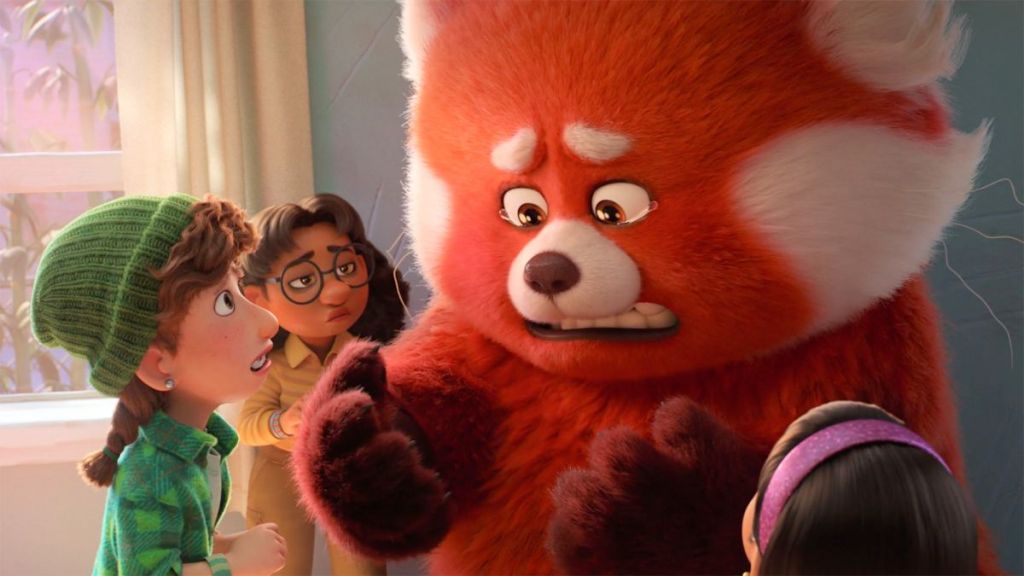
    Shi’s film follows 13-year-old Meilin, an introverted, academic-oriented eighth grader with a small group of close friends who bond over a mutual love for boy band “4Town.” They plan to attend an upcoming concert in their hometown of Toronto, only to be waylaid by Meilin, who turns into a giant red panda when overly excited.

    Rosalie Chiang provides a bright cheer to Meilin, especially when narrating in the first act of the film. When Meilin turns into the panda, Chiang adds a slight panic to her cadence that accentuates Meilin’s frantic excitability.

    Sandra Oh is exceptional as Meilin’s overbearing mother Ming and her line readings of Ming’s frequent screeches instantly transport audiences back to their own childhoods during those moments where their own parents unintentionally embarrass them.

    The best animated portions of the film are when Meilin is in panda form as Turning Red becomes more visually dynamic with a better character model than Meilin in human form.

    Parents of younger children should probably watch Turning Red on their own before deciding whether to allow their kids to watch the film. Some of its rebellious themes, sexual innuendos and allusions to menstruation may not be subjects parents would approve of.

    Pixar’s animation is largely sharp throughout and Shi integrates Japanese anime style often into the design of the film when characters get excited, representing this glee with bulging eyes on the verge of tears that comes from the anime influence.

    The contrast in light and shadow Pixar’s animators are able to develop create a genuine three-dimensional element to the film that also is among the visual highlights.

    Though the film is set in the early 2000s, the only real signpost of the setting comes in the form of the boy band “4Town” that the girls try to see in concert from the opening moments of the film. In that way, Turning Red feels instantly dated as if it should have come out over a decade ago and not in 2022.

    Billie Eilish and Finneas, likely to win an Academy Award for Best Original Song for their theme to the James Bond film No Time To Die, craft several catchy yet unmemorable tunes for “4Town” and it’s in the moments where Turning Red leans into its cultural roots that the film becomes something beyond a strange PG-13 coming-of-age dramedy.

    Because it’s a Pixar film and released in limited theatrical markets to maintain eligibility, Turning Red is a likely contender for Best Animated Feature at next year’s Academy Awards, although the much more anticipated Lightyear spinoff of the Toy Story franchise this summer could push it out of contention.

    Not nearly on the level of Disney’s far superior family magic film Encanto, Turning Red may not be an ideal choice for younger audiences nor as much of a wide-spread crowd pleaser although catching the film on Disney+ offers a great opportunity for families to try the largely entertaining movie at low cost.

  • The Batman: Darkest night

    The Batman: Darkest night

    How is it possible to craft a completely original take on a character that has been reset, rebooted and reimagined countless times in print and on the silver screen over decades?

    It feels as if audiences, especially those soaked in comic book lore, have already seen every possible iteration of reclusive billionaire Bruce Wayne and his nocturnal vigilante alter ego Batman.

    But director and co-writer Matt Reeves has somehow managed to capture the detective element of the character in a fantastic new noir, The Batman, which has rocked the box office to earn more than $120 million in its opening weekend.

    The film follows a vengeful Batman as he and Gotham City police investigate the murders of several key political figures at the hands of a sadistic serial killer leaving riddles at every crime scene.

    Reeves has designed his film in such a way that the usual duality between the Batman and Bruce Wayne personas of the character becomes incredibly lopsided in favor of Batman in this iteration. It’s clear that the filmmaker, and to some extent Pattinson, view Wayne as more of the costume and Batman the real person in a psychological sense.

    Pattinson portrays the character with a weathered distance that isolates him emotionally and narrows the focus to deliberate, exacting violence and considered detective work in the shadows of the night.

    A hero, no matter how reluctant, is only as good as his villain is bad, and Paul Dano’s Riddler is exceptionally twisted and damaged. Dano builds his character around the real-life Zodiac killer and his portrayal leans heavily into the tortured serial killer aesthetic physically.

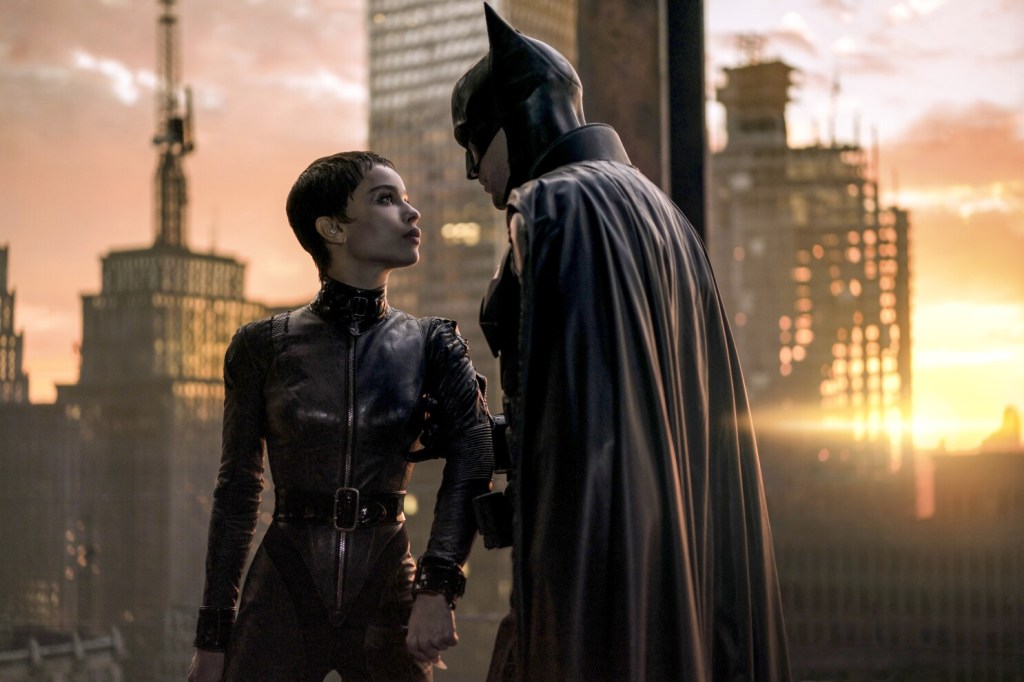
    Though they rarely share the screen together, Pattinson and Dano have better chemistry as antagonists than Pattinson does with “love interest” Zoë Kravitz as Selina Kyle. This isn’t to say that Kravitz isn’t solid in her role as Catwoman, but more on the fact that Pattinson plays Batman with so much disinterest in her welfare that their supposed flirtations feel clunky at times.

    The film’s ensemble cast helps fully realize the deep world that Reeves imagines for Gotham City with terrific performances across the board. Jeffrey Wright as Jim Gordon and Andy Serkis as Alfred provide excellent mentor figures to Batman and Bruce Wayne respectively while John Turturro is astounding as mob boss Carmine Falcone and Colin Farrell disappears into his role as the Penguin.

    Reeves does a lot of world building in The Batman that accounts for the nearly three-hour running time, but his deliberate pacing sometimes borders on excessively slow as he feels the need to show audiences every step of the plot in exacting detail.

    Greig Fraser’s dynamic cinematography leaps off the screen at every turn and perfectly keeps in tone with Reeves’ desire to keep Batman (and the film as a whole) within the shadows as much as possible. The absence of color throughout and Fraser’s expert use of low light make every moment a brighter hue exists pop even more.

    This is especially clear in some of the film’s more artistic moments where a fight sequence in a crowded hallway is illuminated only by gunfire or when Batman’s only light comes from a glowing red flare. Even when the screenplay and Reeves’ exceptionally elongated directorial vision stretch scenes to their limits, Fraser maintains audiences’ undivided attention with completely arresting visuals.

    The look of The Batman from its production design to costuming to how completely unrecognizable Farrell is as The Penguin thanks to transformation by makeup and prosthetic artists gives Reeves’ film a gritty texture that heightens the noir aesthetic to astonishing levels. Michael Giacchino’s haunting score intensifies the fear and melancholy that oozes out of every pore in The Batman.

    While it’s far too early to tell where The Batman might be under consideration for an award season that’s nearly a year away, Reeves’ film is certainly DC’s best chance to earn significant nominations since Christopher Nolan’s The Dark Knight fell just shy of a Best Picture nod at the 81st Academy Awards and won Heath Ledger a posthumous Oscar for Best Supporting Actor.

    Easily the best film based on a DC Comics character in over a decade, The Batman is the year’s first signature blockbuster despite being overly brooding and should be something ardent cinephiles see on the biggest screen possible to fully engage with the dynamic cinematography and world building.

  • Dog: Unlikely compatriots

    Dog: Unlikely compatriots

    Trailers don’t always give the best impression of what a film actually is.

    Sometimes it’s because the studio is attempting to trick potential viewers by showing the best clips in order to maximize profits. Other times, it’s simply because they don’t have any actual clue what kind of movie they have on their hands.

    This is especially problematic for first-time directors, who have to focus on so many different filmmaking elements that they’re unable to home in on a specific tone or try to make their film one genre, when in reality it’s best served as something else entirely.

    Such is the case for Dog, the co-directorial debut of Reid Carolin and Channing Tatum, working off a screenplay written by Carolin and starring Tatum as a former Army Ranger with traumatic brain injuries who is tasked with bringing his fellow Ranger to the funeral of a comrade hundreds of miles away.

    The catch here is that Tatum’s partner for this road film is a Belgian Malinois and while Carolin and Tatum are hoping for laughter with a bit of character building, Dog is at heart a deeply introspective drama with the occasional lighthearted moment to bring levity to weighty concepts like post-traumatic stress disorder, suicide, and other mental health issues that plague returning military personnel.

    In many ways, it reminds of a PG-13 version of Richard Linklater’s heavy road drama Last Flag Flying where the bond between former soldiers comes together over a lengthy trip to a funeral. Dog is exceptionally emotional in key moments as viewers learn more about Tatum’s Jackson and his health issues.

    Tatum delivers some of his most considered dramatic work as Jackson and while it’s natural for him to ease into the more comedic physical elements of the screenplay, it’s clear from the outset that Tatum’s mind is more attuned to Jackson’s fragile emotional state. Tatum plays the part of a wounded soldier trying to toughen up beyond his means well and the conflict running through Jackson’s mind in the more somber moments of the film wear on Tatum’s face in a way that pulls the audience into his consciousness.

    It’s tricky to pull off a two-hander film like this when one of the main protagonists is an animal, but Carolin and Tatum do a solid job of framing the three Belgian Malinois who portray Lulu in such a way that viewers can feel the dog’s emotions in deep, sad eyes and long panting breaths. The camera is often placed back and tilted up several feet away to make Lulu feel bigger than she probably is and also to help put her on more of a level playing field with Tatum.

    Tatum does a fantastic job of showcasing Jackson’s evolving bond with Lulu, which can prove problematic when the scene partner can’t really conceptualize what’s really going on and help to give the actor something to work with emotionally. But throughout, the relationship between man and dog feels genuine, which is the key conceit needed to make the entire film work.

    One of the most underrated things about Dog is the excellent use of the soundtrack, especially in the third act with the Alabama Shakes song “Hold On” anchoring a perfect edited scene transition on a downbeat as well as Chris Stapleton’s “Starting Over” helping to set the tone for the final moments.

    While it certainly won’t be at the top of any year-end list and it’s wildly mislabeled as a more comedic film than what appears on screen, Dog is a pleasant surprise during a time when studios usually release their worst films and is something worth taking a chance on in theaters.