Category: Hill Country Film Festival

  • SEC Ready: Hill Country Film Festival spotlight

    SEC Ready: Hill Country Film Festival spotlight

    Nobody’s calling the University of Texas the big brother of Texas A&M University anymore.

    Not that anyone in Aggieland ever did.

    With the move from the Big 12 Conference to the Southeastern Conference two years ago, the Aggies have officially separated themselves from the perceived shadow of the Longhorns and are well on their way to long term success in the SEC.

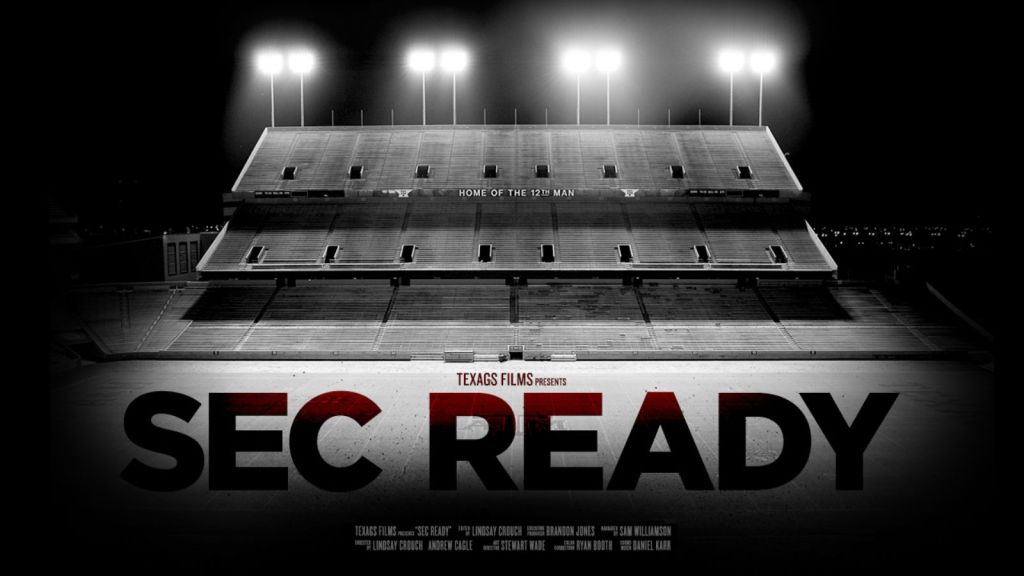
    It’s why Aggie faithful have always believed themselves to be “SEC Ready,” which is also the title of a feature documentary produced by TexAgs Films that will screen tomorrow at the Hill Country Film Festival.

    The movie, released by the A&M-centric media outlet and fan forum in October, is expected to face its first non-Aggie audience at 4:45 p.m. tomorrow afternoon in Theater 1 at Fritztown Cinema.

    “I think both (director) Lindsey (Crouch) and I are looking forward to the screening because it will be the first time that we’ve shown it to a group that’s not an Aggie audience,” executive producer Brandon Jones said. “It will be interesting to put the film out there for people that are film savvy in the best and worst ways.”

    The film begins with the Big 12 Conference in turmoil in 2010, tracks the fight to keep the conference intact despite overtures from the Pac-10 Conference and chronicles the events that ultimately led Texas A&M to the decision to move to the SEC.

    Sports and politics

    Though Heisman Trophy winner (and Kerrville Tivy graduate) Johnny Manziel was a key reason the Aggies have proven themselves to be SEC worthy, the polarizing local figure doesn’t play a major role in the film, which is much more political than a typical sports documentary.

    Given that most of the events in the film were secret, clandestine meetings between conference and university officials, it’s remarkable how the filmmakers were able to make private events without major media coverage fresh and exciting.

    At certain points within the drama of the process, there’s a terrific subcurrent of comedy that lightly jabs several key players in the discussion, most notably Baylor University officials and Big 12 Commissioner Dan Beebe.

    “You think politics is always serious, but there’s these (humorous) stories that they always have and it’s nice to be able to tell those stories,” Crouch said.

    Film nuances

    For first time feature filmmakers, the crew from “SEC Ready” do a masterful job of making a high quality sports documentary on par with the ESPN “30 For 30” series.

    Visually, the documentary is stunning in its use of offsetting stock and interview footage with beautiful and engaging clips of Kyle Field prior to its reconstruction.

    “There’s a number of little mechanisms that she (Crouch) did that I thought really polished out the film,” Jones said. “She did a great job of doing a transition right when someone was making a point — really creative when she would cut to another scene to enhance the point that was being made.”

    Maroon-colored glasses

    Without a doubt, “SEC Ready” approaches every issue discussed in the film from a decidedly pro-A&M perspective. How the film is received by an audience with mixed college affliations is still uncertain.

    Those with maroon-colored glasses will appreciate how dedicated “SEC Ready” is to telling the Aggie story, while  fans of rival schools may scoff at some of the film’s conclusions.

    “I’ve thought about this a lot. Any good documentary that I’ve seen always has to camp out in a vantage point and tell it from that perspective,” Jones said. “If you try to tell (the story) from every perspective, you lose some of that perspective.”

    It’s unfortunate that key players from the other side of the issue — UT athletic director DeLoss Dodds, UT president Bill Powers and Big 12 Commissioner Dan Beebe — all declined interviews for the film.

    A more neutral take on the situation is provided, however, by veteran journalists Kirk Bohls of the Austin American-Statesman and Andy Staples of “Sports Illustrated.”

    Journalists, who by and large should be providing both sides to every story, are a good means to counter the arguments posed by Aggie faithful in the film, but it can’t completely offset what getting even just one opposing voice could have meant for the film.

    “I’ve really proud of what we did because certainly it’s A&M’s story by virtue of who participated in the film, but we didn’t go out of our way to take a bunch of shots at people,” Jones said. “I felt like that, given the content that we had, Lindsey played it really well in how she told that story in putting it together.”

    In fact, it’s Crouch’s neutrality in the filmmaking process (as a University of Miami graduate) that keeps the documentary from spilling over into full-fledged Aggie propaganda.

    Crouch said her non-A&M education “gave me a more objective view of doing it. Having some of the funnier parts (the fake Dan Beebe Twitter account referenced in the film), I remember that and I wasn’t here during that time. Little things that I knew about but that I wasn’t necessarily super informed about, I wanted to add in just because I just remember them.”

    More information on the film is available online at texags.com/secready.

    (Note: Film critic Matt Ward is a programmer for the Hill Country Film Festival.)
  • The Origins of Wit and Humor: Hill Country Film Festival spotlight

    The Origins of Wit and Humor: Hill Country Film Festival spotlight

    Good comedy is hard to find. Movies that consistently make us laugh without being formulaic and/or cliché are fewer and farther apart.

    Originality in the genre — whether it’s Oscar winners like “Birdman” and “Grand Budapest Hotel” or small independent efforts — should be equally celebrated.

    It’s thrust into this environment that Chicago-based filmmakers Christian Gridelli and Hunter Norris find themselves with their debut feature, “The Origins of Wit and Humor,” a multi-layered comedy playing at next weekend’s Hill Country Film Festival.

    Love of the craft

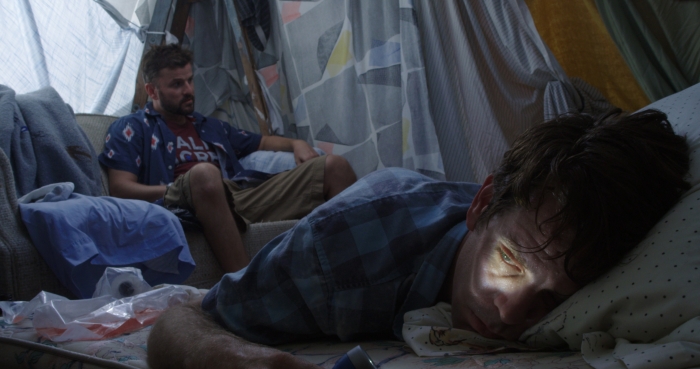
    At the film’s outset, the passion that Gridelli and Norris have for their craft shines through in the writing with a carefully-honed script pitting comedy writer Les (played by Joe Hursley) against himself as he battles with a need for validation while combatting loneliness following a breakup.

    “We’re both huge comedy nerds whether it’s comedy podcasts or films or reading stuff that is related to comedy or interviews with comedians,” Gridelli said. “We soak that stuff up, so it’s kind of been in our DNA for a long time, so that the way we view things at this point is through a comedic lens.”

    The film, which also stars “Super Troopers” alum Steve Lemme as Les’s best friend, Pops, is as much commentary on the comedy genre as it is a comedy in and of itself.

    Aside from the inciting incident of the film — the typical breakup scene — Gridelli and Norris turn from conventional comedy tropes, giving a solid effort with homages to the silent film era and many ’80s screwball comedies.

    “A big thing for us was — this is going to be our first feature — do you write it as you think maybe you can do a little easier or do you write a movie that you think you’d want to see,” Gridelli said. “Some of the more ambitious things we wanted to do with it were stuff we wanted to see. I can’t guarantee that we’ll have money, but I have faith that with our DIY aesthetic and background, that we could make it happen. Not just write ‘some good effort we can make it for the money we have’ movie, (instead) let’s make something that we would want to watch and be proud to have other people watch.”

    Value of the everyman

    “Origins” evokes numerous indie comedies of the past — from the obvious connections to “Super Troopers” with the casting of Lemme to the “UHF”-esque fantasy elements and fragmenting of the script. There’s also a subtle Woody Allen influence hiding in the film’s subtext as Les is one of the most authentic characters in a comedy in several years.

    Les “is a character that is super close to us,” Gridelli said. “In our minds the whole time it was that this is not about girl problems, it’s about problems with yourself.

    “Throughout this movie we just tried to make it really honest, you know? We tried to make at least the main character feel pretty honest, and I feel lucky
    having gone through this and being able to show it to people, they pointed out things that are definitely intentionally in there that I don’t know I necessarily tried to actively draw parallels with, I just tried to make them honest.”

    As viewers follow Les through his journey of self-redemption, the character remains relatable despite the outlandish things that happen to him following his decision to purchase a mail-order tonic that promises to make him irresistibly funny to women.

    “There was a Buster Keaton quote that a funny person does funny things and a comedian does things funny,” Norris said. “It’s weird too because this was a film where we tried to mine a lot of our own personal flaws as well to make a character that seems more believable. Then we’re like, ‘Okay this feels real,’ then we would have someone read the script and they were like ‘Oh, I like what an asshole he is.’”

    Developing the origins

    Like most Allen films, “Origins” is timeless in its construction, creating a world viewers are unable to contextualize in a specific period in time (i.e. no Zooey Deschanel jokes). It’s in the writing, which is incredibly nuanced, that the film is strongest, though it might take viewers several screenings to get all of the little bits that float throughout the film.

    “When we were younger, our process was always to come up with some stupid little joke that made us laugh so much that we just had to get it out there, so we would write a 10-page script around that. That was how our process worked when we were making shorts,” Norris said. “The lens through which we view the world is always a funny one. No matter what happens, we’re the types of people who are going to try and make a joke.”

    Perhaps the most ingenious part of the “Origins” script is to use the titular book that Pops gives Les — which includes the tonic order form — as a structure by which to frame the rest of the film. “Origins” moves chapter to chapter from Prologue to The Dead Frog in a way that combines seemingly unrelated topics — physical comedy versus humor at a wake.

    “That chapter structure actually came after the rough cut,” Norris said. “We were like, ‘Okay I think we need some room to breathe in here and what is a good way to do that that also thematically ties to the movie and that ties with our for lack of a better term, hero’s journey.’”

    “It also gave us a chance to flex a little bit on the title cards,” he added. “Those were really fun for us to do and I think that’s one of those things where our producers were like, that’s where I saw that DimeStore Films aesthetic besides the writing, obviously.”

    Becoming a reality

    The writing duo have spent most of their careers in short film work, starting the transition to features five years ago with the completion of a script that would eventually become “The Origins of Wit and Humor.”

    “When we approach the idea of a dream that becomes a reality and then becomes a nightmare, we’re going to look at it from how is this funny or how does this apply to funny things? So that’s what started off as a guy trying to make people not laugh at him, which to us seems like the craziest thing in the world,” Norris said. “Timing wise, it felt like we’re at the ripe old age of 24 and 25 and it was time for us to try and make a feature. Obviously that took a long time.”

    After getting production company Shatterglass Films to sign on for the project and a successful Kickstarter campaign, principle photography took place over a 17-day period in September 2013, a process Norris admitted “isn’t like making five short films all in a row.”

    Working with a larger team was also a new experience for the self-proclaimed DIYers of filmmaking.

    “Our background is to do all this stuff as sort of a two-man army,” Gridelli said. “In a way, (feature filmmaking) is a lot more liberating just because now we know all these talented people and we can break stuff up into departments, things like that allow you to feel a freedom to focus on directing and working.”

    “It’s a little hard to cede control to someone else is sort of until you can actually see oh they’re amazingly talented,” Norris agreed. “Then you can sleep at night instead of staying up until 4 a.m. looking up 800 bottles on Craigslist.”

    Attention to detail was a key part of the process for the “Origins” team as they attempted to translate a very conversational script into a dynamic feature film.

    “There are a lot of comedies out there right now that are sort of wordy like our script. It is a lot of shot, reverse shot and it’s not very interesting to look at,” Gridelli said. “But if you go back and look at some Woody Allen comedies, there’s always really nice composition going on in there and why can’t we do that with a wordy script?”

    More information on the film is available online at OWHFilm.com.

    (Note: Film critic Matt Ward is a programmer for the Hill Country Film Festival.)
  • Mount Lawrence: Hill Country Film Festival spotlight

    Mount Lawrence: Hill Country Film Festival spotlight

    Wake up, bicycle until you can’t really move anymore, set up camp, go to bed, then repeat ad nauseam for the next five and a half months.

    It’s a formidable challenge for anyone, let alone a filmmaker attempting to chronicle the journey every step of the way, but for Texas native Chandler Wild, it was something he felt compelled to do in order to process his father’s suicide several years earlier.

    The end result of this cycling odyssey spanning 6,700 miles and over 700 hours of footage — Wild’s “Mount Lawrence” — is perhaps the most compelling independent documentary in quite some time and definitely the most visually spectacular.

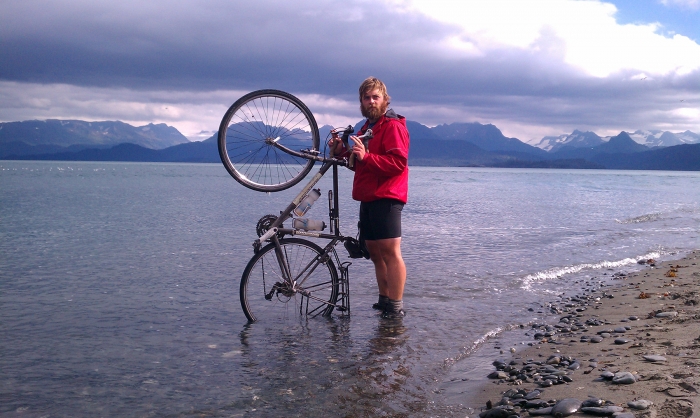
    It follows the young director as he takes off from New York City with a friend on bicycle, bound for Homer, Alaska, and a date with an unnamed mountain he would hike and rename after his father.

    One of the top nominees for Best Feature at this year’s event, the film will be shown later this month at the Hill Country Film Festival.

    Visual travel journal

    “Mount Lawrence” opens with a montage of gorgeous still shots framed in Kodak Ektachrome slides, the ones all too familiar from those family slide shows of days gone by.

    It’s an important tone setter for the remaining 95 minutes of the film, crafted into what Wild described as a “personal essay” but feels more like a visual travel journal as viewers are taken along for the ride — sometimes quite literally, thanks to GoPro technology.

    Each and every frame of the film evokes a wildlife photographer’s sense of visual style, making the most of what ultimately becomes a cinematic love letter to America as much as it is a documentary about understanding loss, depression and suicide.

    Limited crew and the toll of the road forced Wild’s hand as a filmmaker, creating the need for a personal essay style of documentary, he said.

    “It became very apparent as soon as we took off that that wasn’t going to be a reality because I didn’t have the luxury to have a huge team of people,” he said.

    Daily journal notes kept on the road became the footage map of the film as the “Mount Lawrence” team was unable to finance an assistant editor to log each day’s shots.

    “When I went back and edited the whole thing, really the only notes I had were my personal ones about what happened each day,” he said. “As I was working on and writing my outline for what it was going to be, I took mostly from those notes, so I think that’s kind of where that feel comes from.”

    The lonely road

    Even though much of “Mount Lawrence” is a self-reflective solo venture, Wild’s trip — and subsequently the look and feel of his film — became more dynamic with the involvement of various travel companions, who also served as cinematographers chronicling Wild’s journey.

    “In a selfish, narcissistic way, I thought the film was going to be more about me when I initially took off. I’m glad that it wasn’t,” Wild said. “I’m glad that we had these people join because that’s what the film actually came to be about.”

    Sharing
    a personal struggle

    The film works on a larger level — besides just being a visually stunning documentary — because of the very real emotion and heart that seeps through in an authentic manner during Wild’s voice-over commentary track, which help bridge the segments of the film together.

    Because the journey was so personal for Wild, finding that right balance between being the subject and the filmmaker was key to the documentary’s success with audiences.

    “I didn’t know if it was going to be translatable for someone who didn’t know me or my family or my dad and if they would be able to connect with it,” Wild said. “So, on the very top level this feeling that people are connecting with it is a very satisfying and gratifying feeling.”

    The film touches on depression and suicide not in a typical fact-based documentary style, but through Wild’s unique voice as a family member of someone afflicted by the disease, providing a new perspective on the topic.

    “I think that a big part of the growing process personally for me while making the film was suddenly for the first time actually saying the words suicide and depression,” he said. “It takes away from any worry that I have that I’m giving up too much personally to know that people are watching the film and hopefully having conversations about suicide and depression in hopefully a way that allows us to destigmatize this disease in our country.”

    Home movies

    Audiences are able to connect with Wild and his journey thanks to family-made videos that help capture the essence of Wild’s father for viewers who never knew the man.

    “People have responded to it because I think we’re at this point now where since everyone has 20 years of home videos now and the camcorder has become such a part of our lives that it’s almost like they’re not my home videos,” he said. “Everyone has home videos and sees these images of the people in their lives that they’ve lost and there’s this kind of feeling that we get from them that I think that we haven’t totally fleshed out yet as a people.”

    The film uses small clips of Wild’s father in his element — camping in the outdoors — to help put things in context for viewers in a truly authentic way.

    “A lot of people have responded to those really viscerally and it’s pretty cool to see,” Wild said.

    The victory lap

    While it may feel like Wild’s journey starts and ends on a bicycle, some of the most compelling and rewarding elements of “Mount Lawrence” happen off bike — from backpacking in the Pacific Northwest to climbing the Alaskan mountain he would later rename after his father.

    “I got to the end and I could see the mountain, so I was kind of like ‘This is like my victory lap,’” he said. “I genuinely thought it was going to be a nice easy walk to the top.”

    Three days and miles of Alaskan scrub brush later, Wild finally made it to the top where he was only able to spend a short time before weather forced him back down.

    “It really wasn’t until I got to the top and I was able to see the end of the road that I really started to feel like ‘Wow I made it to the end of the road,’” he said.
    Though things were finally settling in about the completion of his journey, the drive back reinforced just how long the road had been.

    “Day by day (on bicycle), it just kind of became a way of life and I thought less about how much distance I had travelled and how much more I had to go and it was more like just wake up and bike,” Wild said, realizing the length of the journey during the 12 days of driving required to get back to New York from Alaska.

    Cutting it all together

    Putting the film together in the editing room became a new mountain to climb in itself as Wild and his editor faced 700 hours of footage to traverse and cut down to a 98-minute feature film.

    “It was almost an exercise in the complete opposite of what the movement of the journey,” he said. “As much as I was moving in the film, I was stationary behind a desk for four months and we just tore through it.”

    “I think if I knew then what I know now it would have been a very difficult process to jump into but I almost jumped into it blind,” he added. “I did the biking portion and now we just have to finish the film portion.”

    Bridging the gap

    Wild is out on the road again, promoting “Mount Lawrence” on the film festival circuit and will take the film on a regional bicycle tour later this year.

    Additionally, his journey making “Mount Lawrence” led to the development of a non-profit group called Healing by Adventure.

    “I knew I wanted to do something to help, but I also knew that I didn’t have any of the education, experience or facilities to offer any kind of psychological support,” Wild said. “I came up with the idea that the best way to bridge those two would be to create a scholarship organization to bridge the gap between outdoor leadership schools and organizations that deal with depression and other mental illnesses.”

    More information on the film is available online at mountlawrencefilm.com.

    (Note: Film critic Matt Ward is a programmer for the Hill Country Film Festival.

  • Sunny in the Dark: Hill Country Film Festival spotlight

    Sunny in the Dark: Hill Country Film Festival spotlight

    Sometimes life gets too tough and you want to shut the world out.

    Imagine being able to close out everything and everyone as soon as you get home from work, only to realize you’re not as alone you think.

    It’s the premise for a horror film, right?

    Not exactly.

    Try Texas-based independent drama.
    https://m.youtube.com/watch?v=efVmkjEHr4M
    Dallas-based filmmaker Courtney Ware will bring the Texas premiere of her feature film debut, “Sunny in the Dark,” to this year’s Hill Country Film Festival.

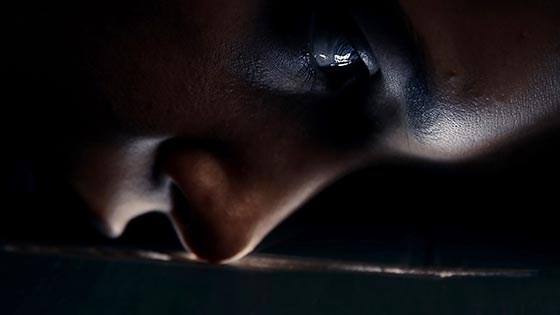
    “‘Sunny in the Dark’ explores the tension between our greatest fear and our greatest desire, and that is to be truly known,” Ware said. “The really unique thing about our film is that there is this sort of your worst nightmare of this woman who’s living in the crawlspace above you and she’s spying on your every move taking notes and watching every moment of your life.”

    World building

    The film, which centers around family therapist Jonah and his apprehension interacting socially with the outside world, utilizes cinematography as much as script or character development to develop a unique dichotomy between Jonah and the homeless girl, Sunny, living in the ceiling of his apartment.

    “The cinematographer, Jake Wilganowski, and I had conversations early on, just about this very vertical world and how do we move the camera in a way that allows us to see it horizontally and move the camera so that we see this world in a vertical way,” Ware said. “We have a few tracking shots that show Jonah and Sunny in the same space, but it’s of course broken up by time or by physical space. It was something that we were very keen on early on.”

    The contrast between worlds — Jonah’s life outside, his isolation at home and Sunny’s cramped crawlspace — is most adeptly realized through Ware’s use of light (or lack thereof).

    Each scene is carefully crafted and dynamic visually, with a nuanced attention to every shadow falling in the nooks and crannies of Jonah’s world.

    The warehouse-esque location that serves as Jonah’s apartment building added new layers of cinematic depth, with a single window providing light into the interior space, Ware said.

    “We were actually able, when we were shooting, to easily go between day and night, which you normally don’t get the luxury of being able to go back and forth that way,” she said. “It kind of helped us bring a consistency to our shots to be able to shoot a direction and to shoot all of the day and the night stuff at that certain direction. I’m so thrilled with how visually everything came together.”

    Acting in the void

    For much of the film, Jay Huguley (Jonah) and Hannah Ward (Sunny) are isolated in solo scenes with no one to lean on, save for a few choice moments with Jonah’s mother, played by famed ‘Batman: The Movie’ actress Lee Meriwether.

    “It’s an interesting thing to have actors sharing scenes where they’re not acting against each other,” Ware said. “Both of them just blew me away when the edit started with how seamlessly their scenes were coming together.”

    While Huguley does a steady job advancing the storyline and keeping the audience engaged, “Sunny in the Dark” works only because of the depth in character Ward was able to pull out of Sunny, a young girl whose complexities are never fully realized but always on display.

    Over 4,000 actresses competed for the role of Sunny, Ware said, but it was Ward’s unique blend of non-verbal cues — which come out in full force in “Sunny” — that helped land her the role.

    “The audition itself was very hard because you’re not speaking dialogue,” Ware said. “I remember very specifically that she was doing something with her hands, just very small movement with her hands and the way that she would touch the floor below her and it was those things that immediately told me that Hannah was the one to play Sunny.”

    Ward, a Hill Country Film Festival nominee for Best Actress, will be in attendance for this year’s event.

    “Hannah Ward does an exceptional job of playing a character (Sunny) that is not quite right.  Her performance deserves a ‘best actress’ nomination,” Chad Mathews, HCFF executive director, said.

    Evolution as a filmmaker

    Spending most of her directorial career making short films, “Sunny in the Dark” is the feature-length debut for Ware as a filmmaker, who saw the additional time to tell the story as both a challenge and a reward.

    “The most fun and the most difficult (part) was figuring out how do we tell this story in over a long period of time,” Ware said. “For me as an editor, figuring out what does pacing mean for a feature film and how do we emotionally bring the audience through over this long period of time and honestly keep the audience interested.”

    While it’s easy to label female directors based on their gender — and Ware admits that the rarity of women in the industry has changed her perspective on the issue — it’s probably appropriate to tag the young director with a different label: Texan.

    “I grew up in this area (Dallas) and I would say I grew up in this industry here,” she said, working as an intern and production assistant at age 18.

    “It’s been a really exciting journey because the crews that I learned from and grew up with are crews that then turn around and worked on my film, which is really incredible to have those relationships and to have that type of trust and ability to work together,” she noted.

    Ware also represents a growing trend of Texas-based filmmakers holding on to their roots and staying grounded in the Lone Star State.

    “Everyone always is asking me, ‘Well when are you moving out to LA or New York?’ and for me, just the types of truths that are in Dallas, it’s a family here,” she said. “I have a great love for working here and I can do everything here that I would need to do elsewhere and I would much prefer to do it with family that I’ve grown up with than anywhere else.”

    The film is just starting out on the festival circuit, with its world premiere held earlier this month at the Arizona International Film Festival.

    Ware hopes that the film continues to connect with audiences as it makes its way across the country, stopping in Dubuque, Iowa, and Newport Beach, California, before coming to Fredericksburg.

    “Hopefully, you fall in love with Sunny and you follow the way that she learns to care for Jonah. It takes a terrifying thing and turns it into really a beautiful relationship, if you will,” Ware said. “It’s a different film. It’s one that has bits of other genres in it but it’s one that I’m extremely excited to share.”

    More information about “Sunny in the Dark” can be found online at sunnyinthedark.com.

    (Note: Film critic Matt Ward is a programmer for the Hill Country Film Festival.)