Historical coverage of Hill Country Film Festival. Preserve for existing festival history; new festival articles may use this only when the event itself is relevant.
One of Hill Country Film Festival’s greatest success stories makes its theatrical debut this weekend.
Last Night in Rozzie, directed by Sean Gannet from a screenplay by Ryan McDonough, won both the Cinema Dulce (Best of Fest) and Best Feature Film award at the 12th annual festival this summer and will open in limited release on the big screen as well as premium video on demand this Friday.
The film originally screened for its world premiere as a short film in 2017 before filmmakers secured the financing to expand their 14-minute piece into a full length feature. Both versions of Rozzie have the same basic outline, although the 80-minute version changes some significant plot choices and recasts the lead actors.
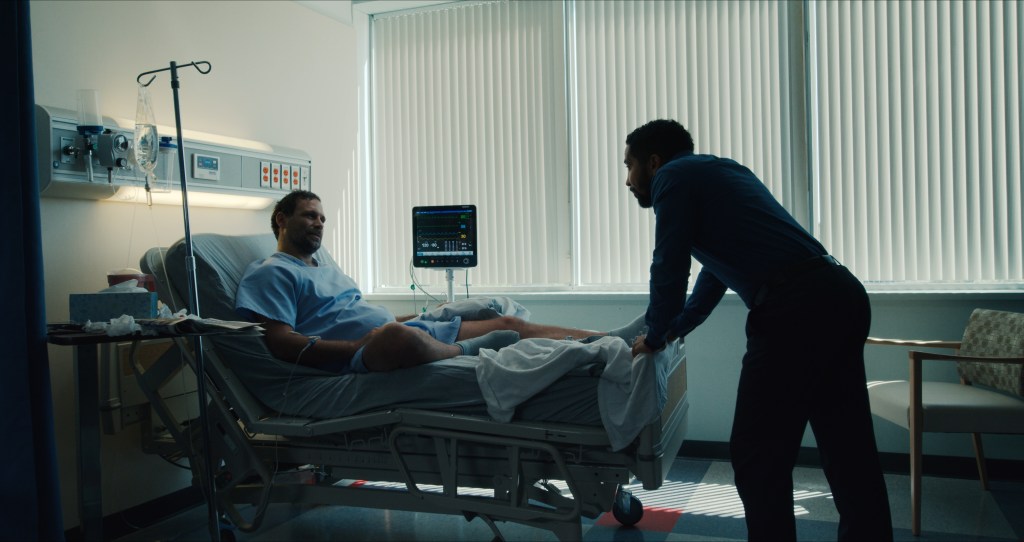
Last Night in Rozzie follows Ronnie, a New York City corporate lawyer pushed back to his roots in the small Boston suburb of Roslindale to reunite his dying friend Joey with his young son and confront the demons 25 years in his past. What complicates things is Joey’s request that Ronnie facilitate the visit without letting his ex-wife – and Ronnie’s childhood crush – Pattie know.
This conceit drives the central narrative and complicates a relatively straightforward story. While it works well to enhance the relationship between Ronnie and Joey, things become a bit wobblier between Ronnie and Pattie as there’s an uncomfortable tension to the core of their interactions placed by the narrative that the film can’t seem to get away from.
Neil Brown Jr. makes the transition from television to movie lead with his first major feature role after several successful seasons on CBS’s Seal Team.
As Ronnie, Brown Jr. is very approachable and engaging to follow for audiences as viewers bounce around Roslindale almost never leaving his side. Often he portrays Ronnie as being wound so tightly that he’s on the verge of breaking, which works in the larger melodrama but also makes Ronnie very inaccessible and distant in relationships.
Without question, the highlight of the entire film is Jeremy Sisto’s magnetic performance as Joey. The energy in scenes doubles any time Sisto is on screen regardless of Joey’s physical state and he constantly draws viewers back into the heart of the film whenever they may begin to disengage from events outside the hospital.
The veteran character actor best known for a four season run on hit NBC crime drama Law and Order commands a range of emotions from humor to anger to deep seeded sadness that moves fluidly throughout. Sisto is brilliant at making the most of a role that keeps him largely confined to a hospital bed and yet it’s as if Sisto’s looming presence dances around scenes he’s not in, elevating occasionally marginal melodrama.
Nicky Whelan is solid in an underdeveloped role as Pattie, a fiercely independent mother who wants nothing more than to shield her son from things of the past. On her own, it’s a strong performance but a constant standoffishness between Ronnie and Pattie makes her work feel relatively disjointed from the rest of the film.
Part of the narrative hook of Rozzie relies on a series of flashbacks to slowly reveal information to the audience about both Ronnie and Joey’s close, yet fractured relationship as well as why Ronnie left town and spirals downward upon his return.
Gannet measures his usage of these scenes, which sharply cut into the flow of the film in order to push the audience emotionally and the effect works moderately well especially at the pivotal moments, though the return to the current timeline can be a bit off-kilter at times.
Visually, Rozzie is exceptionally sharp for an independent film and puts too lush a shine on the more somber story. This decision by Gannet and director of photography Matt Suter doesn’t really make sense until the final moments of the film, where a haze is laid over the screen to bring audiences deeper into Ronnie’s devolving state of mind and helps solidify the film’s ending.
Last Night In Rozzie may not have the star power of large scale adult melodramas, but its independent spirit, universal story and Sisto’s remarkable performance might be the right find for local cinephiles who missed out on its summer screening in Fredericksburg wanting to check it out at home.
Note: Matt Ward is a programmer for the Hill Country Film Festival.
Will Bakke’s latest film wasn’t made with the pandemic in mind.
Shot over 12 nights in a house on the edge of Austin, Bakke and co-writer Michael B. Allen sought to simply create the feel of a Friday night party that everyone has been to in their twenties.
There’s the overly friendly guy, the girl who just wants to leave as soon as possible, so-and-so who’s been out of town so long it feels like they’re a totally different person.
Life always seems to converge in these house parties and The Get Together definitely strives to evoke an early Richard Linklater Slacker, Dazed and Confused vibe with its brisk, engaging narrative.
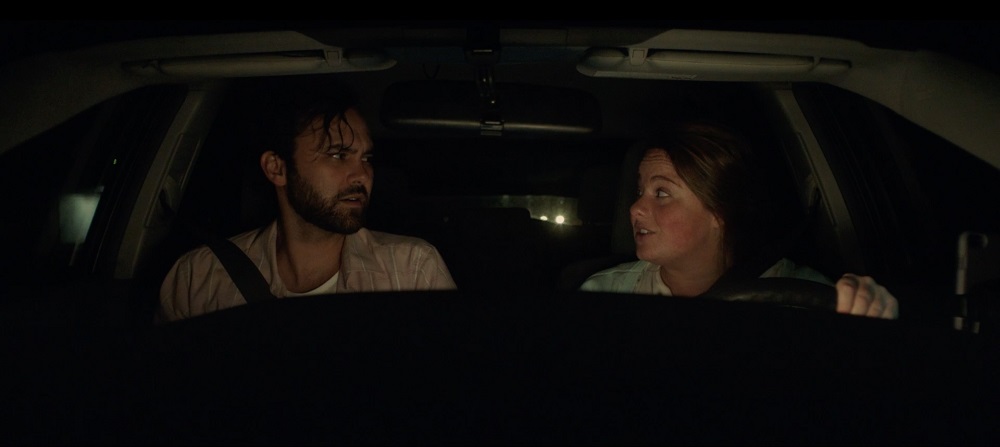
The Get Together follows four people who all end up at the same party but didn’t come as a group. Homebody August stumbles into the situation after a strange encounter as an Uber driver; Damien gets interrupted trying to propose to his girlfriend Betsy by a quirky former classmate; and thirty-something Caleb sullenly tries to find himself after both his bandmates quit on him in the same night.
Though it purports itself to be a party movie, the festivities themselves become more of a backdrop to the characters themselves and their arrival feels genuinely coincidental and could happen in a variety of ubiquitous scenarios beyond a post-college rager.
Courtney Parchman kicks things off with an instant infusion of energy as the frantically overwhelmed August, a loner whose uncomfortability in large parties will immediately resonate with generations of wallflowers wanting to be a part of the action but awkwardly unsure of how to proceed. Her performance is effervescent and endearing, immediately drawing the audience into the narrative in a way that jars viewers when the night restarts from a new perspective.
Alejandro Rose-Garcia melds a relaxed confidence with exasperation and longing to recapture the glory days of his fading youth as Caleb. It’s an impressive effort from the Austin-based musician better known as Shakey Graves, who helps anchor The Get Together with chill bravado masking a wounded soul.
The Get Together mixes its tones between the serious and playful well, but Chad Werner’s all-too-naïve, fun-loving oddball Lucas tiptoes the line of eccentricity without falling over into caricature. Werner is the comedic center of the entire film and despite not being the focus of the film, Lucas is by far the most memorable character and will draw the biggest reactions in a love-him or hate-him way.
The film is reminiscent of many one-night party films, but Bakke and Allen’s decision to restart the night at each act break complicates the structure. The narrative moves precisely to reveal just enough of the larger picture, teasing things to come in such a way that new revelations change the entire outlook.
As a director, Bakke does a terrific job of keeping the audience informed of time and place, something that could easily get confusing over the course of 70 minutes with viewers bouncing back and forth between the same moments from different perspectives.
It’s important in timeline-bending films like these that the filmmaker properly orients us in the visual geography.
The filmmaking team accomplishes this by making the geography visually distinctive. Each location within the house are colorfully hued to trigger in the viewer’s mind where events are taking place. Garrison’s bedroom is shaded in a deep red; the outdoor patio and pool area pop with neon pink and yellow; and the main living areas have a blueish hue.
Made prior to the pandemic, The Get Together is the sort of small indie film that will help remind audiences of what life was like before social distancing and masks, when drinks were shared freely and elbow bumps didn’t take the place of big hugs.
Charming and sure to put a smile on faces, The Get Together deserves a look on demand for independent film lovers ready to engage with friends after considerable time apart.
NOTE: The Get Together was a 2020 selection for the Hill Country Film Festival, where this critic serves as a film programmer. The Get Together was screened Sunday afternoon as part of the organization’s Indie Film Series at Hoffman Haus.
At uncertain times like these, inspirational films can be a salve and reprieve from the outside world and a reminder of wholesome goodness.
Sports movies in particular are a frequent source for these moments of positivity, with themes of underdogs overcoming the odds or unlikely teammates rallying together for a common cause.
A new documentary – which won the prestigious Audience Award at the 2019 Hill Country Film Festival – is a sports film of a forgotten basketball hero who happened to be so much more than just the game he played or the move he invented.
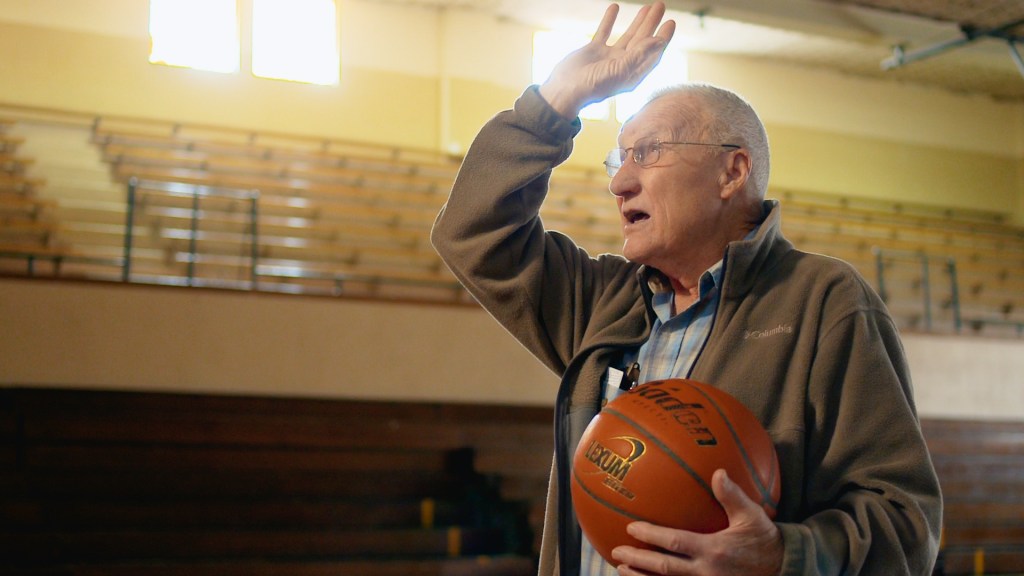
Texas filmmaker Jacob Hamilton follows former University of Wyoming star Kenny Sailors over the span of more than seven decades from his beginnings as a three-time collegiate All-American and national champion as well as his professional career over six seasons.
Through archival footage and interviews with Sailors himself, Hamilton is able to explore the history of basketball until a single decision by one player changed the game permanently.
Then a game primarily played almost entirely on the ground, Sailors revolutionized the sport by being the first major college athlete to leap before shooting the basketball, providing a height advantage over defenders on the ground which rendered his shot nearly unblockable.
“Jump Shot” showcases highlights from the 1940s with Sailors dribbling around the court like a member of the Harlem Globetrotters, stopping on a dime and then rising up for a shot sports fans see in every modern game.
Hamilton and his archival team do a fantastic job of not only finding the footage with help from the University of Wyoming but presenting it in a myriad of ways that elevate the material and are visually stimulating.
One sequence in the middle of the film compares Sailors’ shooting form to that of all-time greats like Michael Jordan, Larry Bird and Stephen Curry, one of the film’s executive producers. Within a single frame, Sailors is rightly placed in the middle of the best shooters in basketball history with each man frozen at the top of their shot, visually confirming Sailors as a pioneer of the game.
Hamilton smartly also uses this archival footage as an interview tool, handing iPads with Sailors’ highlights to a wide variety of basketball legends including Dirk Nowitzki, Hall of Fame coach Bob Knight, Kevin Durant, Nancy Lieberman and Curry.
In a sense, “Jump Shot” could be viewed as a cinematic resume for Sailors to be inducted into the Naismith Basketball Hall of Fame, an accolade members of the University of Wyoming’s athletic department submit Sailors for during the documentary.
Sailors likely wouldn’t have sat for as many interviews as he did – appearing in the majority of the film over age 90 – if all Hamilton was interested in was basketball.
Notoriously humble, Sailors’ humanity and relationships with others shine through like a beam of light over the course of the 80-minute film as Hamilton reveals his courtship and marriage to Marilynne, which in part due to her health, led Sailors away from the game to the Alaskan wilderness.
From his military service to his dedication to family and those he taught, Sailors is rightly portrayed as an American hero worthy of the spotlight the film places upon him. His vibrant personality radiates off the screen so warmly that it’s impossible not to be charmed more by the man, not the legend of a sports revolution.
“Jump Shot: The Kenny Sailors Story” debuted last year at the South by Southwest Film Festival and spent the majority of 2019 touring at festivals across the country. It was slated for a theatrical release earlier this month until the spread of the novel coronavirus shut down movie theaters across the country.
Since then, the film’s producers have leapt on the growing trend of releasing their film digitally in lieu of waiting for theaters to reopen.
This worthy, inspirational documentary will be premiering for the public with a special three-day event release Thursday through Saturday, April 16-18. Audiences will be able to watch the film in the privacy of their own homes by purchasing a $7.99 digital ticket for a 48-hour viewing window at http://www.jumpshotmovie.com.
A portion of proceeds from this event will benefit the Convoy of Hope for COVID-19 meals in affected communities.
More than just a simple sports documentary, “Jump Shot: The Kenny Sailors Story” is a revealing, heartwarming look at a man who lived fully and unapologetically for others and it’s a film well worth seeking out during its limited digital release this weekend.
Why build a physical wall when nature provides a beautiful, scenic barrier already?
It’s one of many questions raised by director Ben Masters’ new documentary, “The River and The Wall,” an up-close, intoxicating feature about border security along the Rio Grande river in south Texas.
Winner of the Louis Black “Lone Star” Award at the 2019 South by Southwest Film Festival and Best Documentary at the 10thannual Hill Country Film Festival in Fredericksburg, “The River and The Wall” views politics through the lens of a nature photographer, opting away from soundbites and towards a cinematic love letter to the beauty of Texas.
The film is currently in limited release in theaters (the best way to view this vivid cinematic documentary) or can be rented from select streaming platforms.
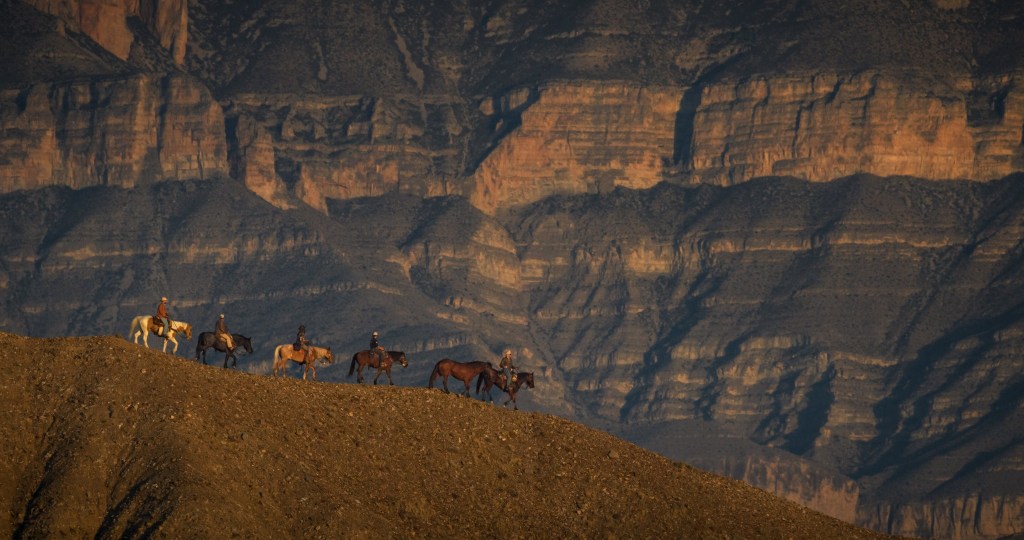
Joined by an ecologist, a wildlife filmmaker, Texas Parks and Wildlife representative and a river guide, Masters and his crew trek across the last untamed portions of Texas, a 1,200-mile stretch between El Paso and the Gulf of Mexico as close to the actual border as possible.
The five-person team travel by bicycle, on horseback and on the river in canoes over the course of nearly three months over dangerous rapids and across harrowing terrain while shooting one of the most scenic, visually captivating documentaries in recent years.
Masters’ film takes a highly complex political problem and removes partisanship from the equation, relying on common sense and a boots-on-the-ground vantage point to provide a fresh perspective to the debate.
While the film makes a strong case against the construction of a continuous wall, Masters builds arguments practically by showing audiences how inefficient and overly burdensome a wall would be in some stretches logistically. Many segments of the natural border between the two nations are divided by large canyons where building a wall would be impractical and threatens to cut off wildlife from their natural habitat and/or access to fresh water.
However, “The River and The Wall” does not argue for complete abandonment of a wall and in fact goes to great lengths to recommend strong border security and additional support for U.S. Border Patrol agents.
To provide context along the journey, Masters interviews stakeholders on the border including landowners and law enforcement officials as well as Republican Congressman Will Hurd and Democratic Congressman Beto O’Rourke.
The realities of illegal immigration aren’t forgotten by the documentary either. Two of the five travelers – Filipe Deandrade and Austin Alvarado – are the children of immigrants who crossed the border without permission and their stories provide context to the hardships faced by Central American refugees seeking asylum.
Events late in the film provide a wonderful, unexpected counterbalance to those stories and leave audiences with complex questions to think about.
What truly sets “The River and The Wall” apart from the typical documentary is the sweeping, grandiose cinematography that Masters’ team is able to capture along largely undeveloped stretches of the Rio Grande Valley.
The film’s striking imagery comes through in panoramic wide shots that maintain the landscape as a primary character in the film rather than simply as a backdrop. These ultra-wide shots illuminate a wall’s current and potential future impact as well as ground the entire feature in nature.
Scenes are vivid and crisp as if they were falling out of the pages of “National Geographic.” There’s no stronger argument for leaving this area untouched by man than the landscapes captured here.
A thought-provoking documentary that blends current events with wildlife cinematography for one of 2019’s best features so far, no discussion about security along the U.S. border with Mexico is complete without having seen “The River and The Wall.”
Some of the best independent features start out as expanded versions of short films – made or just planned in the head of the filmmaker.
Oscar-nominee Whiplash began as a short film from director Damien Chazelle and Hill Country Film Festival alum Before I Disappear began as an Academy Award winning short film called Curfew.
Dependent’s Day, a comedy from writer/director Michael David Lynch that played at last weekend’s Hill Country Film Festival, was conceived in a similar manner. His relationship comedy sprung during the pre-production process of a short film he planned on making featuring a guy who was caught watching pornography while on a babysitting job.
After finding ideally paired actors to fill key roles in the short, Lynch decided to expand the notion into his first full length feature, Dependent’s Day.
The film opens with one of the most original premises in independent comedy in quite some time.
Alice (Benita Robledo) and Cam (Joe Burke) are visiting with their tax accountant going over their latest return when Alice – who just happens to make 10 times as much as broke actor Cam – tosses out the idea of claiming Cam as a dependent on her taxes.
Surprisingly, the accountant buys it and away we go.
Unfortunately, Dependent’s Day doesn’t match the same level of humor consistently throughout the course of the movie as the comedy often feels like a series of short films with the same cast of characters rather than a cohesive narrative.
The film has a number of well above average tent-pole spots key to the overall success of the movie – including a terrifically awkward scene where Alice’s parents unexpectedly show up for a surprise visit during a critical point in Cam and Alice’s relationship. Linking them proves problematic for the filmmakers, though the comedy highlights propel the entire film’s overall success.
It’s easy to peg Dependent’s Day as a homage to early Judd Apatow films with Lynch’s comedy reliant on sexual content to drive the movie’s most hilarious scenes. While independent films typically aren’t rated by the Motion Picture Association of America, this comedy definitely hits the same level of R-rated humor as early Apatow. But Dependent’s Day isn’t Knocked Up or The 40-Year Old Virgin.
Perhaps filming Cam and Alice’s story would have been better served as part of a web series. There’s a distinct connection to Netflix series like Master of None and Love which deal with slow burn changes in relationships and have proven to be infinitely successful.
The best parts of Dependent’s Day are when Burke and Robledo share scenes together, whether in person or on the phone. The dynamic pace of Lynch’s movie significantly suffers, however, when either actor is left alone on screen for a significant period of time. Dependent’s Day’s entire hook rests on the fantastic chemistry of its two lead actors.
As the center-point for the entire film, Burke is lovingly complex as Cam. The affable, aloof loser stereotype in comedy characters is routinely overused and overplayed, but Burke proves that when done correctly, it works wonders. Cam is a relatable character viewers can get behind because Burke – whether drawing from personal experience or not – makes Cam inherently authentic. It’s incredibly believable that somewhere bicycling around Los Angeles right now is a broke actor named Cam whose girlfriend is essentially his sugar mama. Burke’s performance validates this to the highest degree.
HCFF Best Actress winner Robledo probably doesn’t get enough credit for being the rock of Dependent’s Day, developing Alice into a character women (and a lot of guys, too) can rally behind over the course of the movie. The power within her performance isn’t so much what Robledo does verbally with the character, but in her facial expressions, which often perfectly match the expressions women in the audience give while watching Alice on screen.
With two-handers like this comedy, it’s absolutely necessary for the leads to have chemistry to make the film work. Luckily for audiences, Burke and Robledo’s on-screen chemistry is the biggest strength of the entire film.
For an indie comedy, Dependent’s Day looks really good on the big screen thanks to some quality 4K camerawork from Lynch, who also served as the film’s director of photography and editor. In limited exterior shots, Dependent’s Day still makes the city of Los Angeles an important secondary character in the film and helps give viewers a sense of place while attempting to comprehend the complexities of the character development in the film.
As first time independent films go, Dependent’s Day is a solid effort from Lynch, especially when taking into account the strong character work from Burke and Robledo. The comedic elements of the film don’t always match up with the dramatic points and a better narrative structure could have improved the overall success of the film.
But given quality performances from its lead actors, Dependent’s Day is something worth taking a chance on for fans of small, independent-minded comedy.
What’s the worst possible way to propose to the perfect woman?
Thought of it yet?
Odds are whatever you thought of isn’t as outlandish as independent comedy Bear With Us, a hysterical film from director William Stribling and co-writer Russ Nickel. The film had audiences rolling in their seats at last weekend’s Hill Country Film Festival, where Bear With Us took home the prize for Best Feature Film.
Part horror spoof and part screwball comedy, Bear With Us follows out of work hopeless romantic Colin (Mark Jude Sullivan) as he attempts to rekindle his relationship with uptight Quincy (Christy Carlson Romano) with a getaway weekend.
Dragging their best friends Harry (Collin Smith) and Tammy (Alex McKenna) along, the four head out to Harry’s aunt’s cabin in the woods where Colin has a ridiculous plan to propose to Quincy at the end of a fake bear hunt.
If you hold on for the entire ride, the film’s first third is akin to one gigantic set-up to the world’s longest hilarious joke. It takes a while for Stribling and Nickel to establish all of the characters in their story, but once everything is in place, Bear With Us takes off like a rocket ship that refuses to slow down.
Perhaps the most refreshing thing about the 90-minute comedy is how un-referential it is. Aside from the obvious Ranger Rick jokes and Harry watching a single YouTube clip of a fainting goat, Bear With Us is entirely original, in-the-moment comedy. No one is mocking celebrities or making overt nods to their roles in other films. https://m.youtube.com/watch?v=d_Ml4cyWnds
Bear With Us is simply the funniest version of a script built out of a cabin in the woods scenario. No frills, no cheats, just quality comedy.
At some point in their lives, everyone knows or will know a girl like Quincy. (P.S. If you don’t know one, odds are probably pretty good that you’re a Quincy. Anyways…)
Romano perfectly personifies Quincy as that stuck-up witch with a b who truly thinks that average people are beneath her. It’s incredibly easy to overplay such a comically stereotypical role, but Romano does a terrific job of keeping as much of Quincy’s elitist personality non-verbal as she does emoting vocally. To this point, her resting bitch face is absolutely on point.
Her awkward, disinterest chemistry with Sullivan works here because Sullivan throws himself around like a lawn dart in the relentless pursuit of love so easily. While certainly not the best performance in the film, Sullivan pushes the narrative forward in a capable way and allows other actors to shine, though he still gets in a few good laughs every now and again.
For as much as the film is driven by its two primary leads, the magic of Bear With Us comes entirely from its magical secondary cast members, including Adrienne the bear who makes cameo appearances on screen throughout the course of the film.
Ironically, Bear With Us marks the second consecutive Hill Country Film Festival Best Feature Film winner to include a real life bear in the movie following last year’s winner WildLike. Future HCFF filmmakers might just want to take note.
Probably the most famous of Bear With Us’ secondary cast is Glee alum (and HCFF Best Actor nominee) Cheyenne Jackson as rugged outdoorsman Hudson. Jackson pounds the film with an aggressive energy every second he is on screen and it works in spurts, though the schtick gets a tad tiresome by around the 70 minute mark.
Hudson works best when he is shown as a counterbalance to a plucky and aloof forest ranger aptly named Rick (Kevin Carolan). Carolan is a treat to watch with his chirpy personality enjoyable throughout. His performance is a great setup to every single time Rick fails in his quest to protect the bears in his territory, with scenes featuring Chief Ranger Stewart (voice of Lea DeLaria) chewing Rick out on the phone being among the best in the entire film.
Without a doubt, Bear With Us wouldn’t be half the comedy it ends up being without spectacular performances from McKenna as Tammy and Smith as Harry.
At first glance, it might seem as though the characters could be easily written off (or poorly acted) as a stereotypical slutty best friend or a Zach Galifianakis ripoff. However, immense credit must be given to both actors as well as the pitch perfect writing of these characters by Nickel and Stribling to create some of the funniest moments in independent comedy in recent years.
Key to both performances is an acute sense of self-awareness from Tammy and Harry in understanding who they are and how they relate to the rest of the group. It’s a wonderful contrast to the chemically imbalanced duo of Colin and Quincy.
McKenna brightens the screen with a quirky energy that is infectious to watch. It’s easy to tell how much enjoyment she has as an actress to play such a well-written part and it shows in the performance.
Smith is a practical comedy star in the making with such an effortless constant stream of humanity and hilarity as Harry. The way Smith is able to embolden Harry with humanity beyond what is written on the script page and make him such an authentic character is outstanding. There’s very little wonder why Stribling and Nickel wrote the part with Smith in mind.
That being said, a complete spinoff feature or web series starring McKenna and Smith as Tammy and Harry would be infinitely watchable and sorely needed in the indie comedy landscape.
Editing truly helps Nickel and Stribling’s excellent script shine as the film bounces back and forth between multiple simultaneous conversations to help speed things along, and at times, to add a deeper level of humor in scenes. This is especially true in the film’s opening moments, where Colin and Harry are
discussing Colin’s desire to re-propose to Quincy at the same time Quincy hems and haws with Tammy about being too wimpy to break up with Colin.
Stribling made a very astute call for Bear With Us, opting to film in black and white from start to finish. While early in the comedy, the choice felt a little contrived; as Bear With Us progresses into the woods and through the rollercoaster ride, viewers begin to appreciate the added layer of suspense that it gives in moments of humorous tension.
A final word to moviegoers on the fence about Bear With Us: Do yourself a favor.
Assess the film by catching its hilarious trailer.
Prepare to laugh your ass off for a couple of hours.
Execute a plan of action by finding a way to see Bear With Us at a film festival or when it comes out on VOD.
Conquer. (Trust me.)
Note: This Cinematic Considerations review of Bear With Us is one of several films reviewed following the seventh annual Hill Country Film Festival in Fredericksburg, Texas, April 28-May 1. Critic Matt Ward is a programmer for HCFF.
Your average Hollywood thriller nowadays costs anywhere from $25-50 million to make.
Boosted with formulaic scripts that are some variation of explosion here, car chase there with a half dozen gun battles along the way, there’s little originality left in the genre, especially when you get into the world of half-cooked, rushed to the screen sequels.
If the thriller genre is ever going to truly get back to producing quality over quantity, major film studios need to take the lead of independent filmmakers like Blayne Weaver, whose new film Cut to the Chase pairs taut action with engaging, thoughtful storytelling on a shoestring $100,000 budget.
Cut to the Chase closed out day two of the seventh annual Hill Country Film Festival last weekend and earned Weaver the first Best Director award of his lengthy career as a filmmaker. https://m.youtube.com/watch?v=QVsOm42XUUo
In the thriller, writer/director/actor Weaver stars as Max Chase, a career low-life finally trying to turn things around when his sister, assistant district attorney Isobel (Erin Cahill), disappears. With the help of one of her witnesses (Lyndie Greenwood), Max must track down his little sister at any cost, taking on Isobel’s abusive ex (Luke Sexton), the city’s district attorney (Patrick Kirton) and a villainous crime lord known simply as “The Man” (Lance Henriksen)
Cut to the Chase is more than just a catchy name for a film that happens to pair nicely with the main character’s last name.
Weaver does exactly what his film’s title suggests; he cuts to the chase. By skipping a lot of the minutia that bog down thrillers overly concerned with pre-battle exposition, viewers are able to more easily engage with audiences who might not be familiar with the film’s cast from other movies.
Within the first 10 minutes, Max has already verbally duked it out with The Man, hit the bar for some drinks, taken a woman to bed and attempted to run from goons chasing his across the streets of Shreveport. The way Weaver intercuts the film’s title sequence with Max’s first sexual encounter in the film is like an incredible homage to the James Bond movies and a terrific way to keep the action moving all at the same time.
The film’s incredibly compelling opening locks viewers in for the entire 90 minutes as the gas of Cut to the Chase is pretty much held down to the floorboard for the first thirty minutes.
Weaver then downshifts Cut to the Chase to a lower speed as viewers are drawn into the central story of the film – the rocky brother and sister relationship Max shares with Isobel, who has spent years keeping Max out of jail as much as possible.
The success or failure of Cut to the Chase hinges entirely on Weaver’s ability to get audiences to root for career loser anti-hero Max. An unlikeable Max kills this movie within 10 minutes. Thankfully, Weaver’s natural charm makes Max a guy you can’t help but love in spite of his obvious flaws.
In a big budget version of this movie, the studios would likely cast a bigger name like Sam Rockwell in the part, but Weaver gives a performance on par with Rockwell’s work in thrillers like Seven Psychopaths. No matter how bad things get for Max or how brutally he gets the shit kicked out of him, Weaver’s charisma carries the character through.
His charm also enhances the film’s key relationship between Max and Isobel, which is smartly played almost entirely in flashbacks. Viewers are able to get an entire backstory between the siblings with genuinely earned moments spread throughout the film, perfectly timed to correspond with whatever events are occurring in the present storyline.
Most thrillers would attempt to cram all this character development into the film’s prologue (or simply leave it out altogether). Cut to the Chase innovates in this storytelling, which works thanks to the chemistry between Weaver and Cahill.
Damsel-in-distress roles are tough because they’re often underwritten and don’t require a talented actress to perform a substantial function in thrillers. Weaver’s film demands a strong actress to play Isobel and he found one in spades with Cahill, who is able to match Weaver stride for stride in the siblings’ verbal repartee while demonstrating substantial acting chops.
Greenwood, best known for her work on TV’s Sleepy Hollow, convincingly plays the witness with a questionable past, while Henriksen exudes a Christopher Walken-esque gravitas while lurking in the shadows as the film’s requisite big bad guy.
Watch Cut to the Chase at least twice. Weaver has thoroughly layered the film’s primary narrative storyline throughout the film so that once you understand what happened to Isobel, you’ll see how all the clues were there along the way. It’s clever storytelling you rarely see in thrillers nowadays.
And that’s the whole point.
In spite of the limitations shooting a thriller on a shoestring indie film budget creates, Weaver manages to develop an interesting and largely compelling narrative built around strong character development. Cut to the Chase overcomes the odds and gives viewers the charisma and heart of its writer/director/star, making the indie thriller deserving of a wider audience.
Note: This Cinematic Considerations review of Cut to the Chase is one of several films reviewed following the seventh annual Hill Country Film Festival in Fredericksburg, Texas, April 28-May 1. Critic Matt Ward is a programmer for HCFF.
It’s hard to imagine a more timely independent feature to hit the big screen in 2016 than Transpecos, Greg Kwedar’s dynamic and explosive thriller along the Texas-Mexico border.
With homeland security, drug lords and massive wall-building in the news, now more than ever do moviegoers need this film to help them engage in thought provoking discussion thanks to Transpecos’ cinematic world where ambiguity reigns supreme and the lines between right and wrong are blurred to the point of near invisibility.
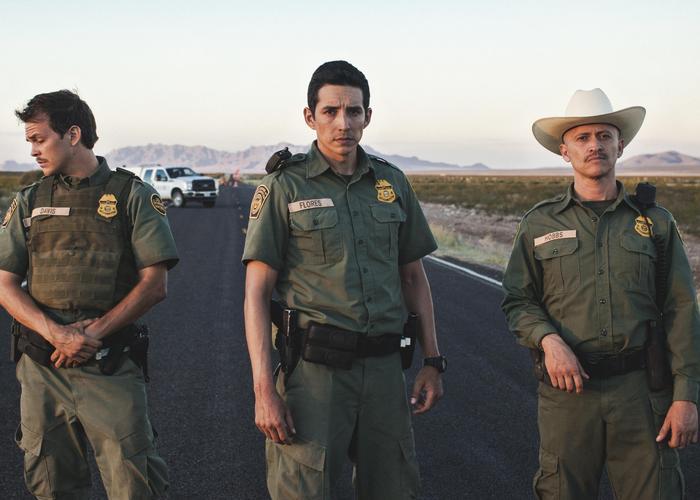
Transpecos follows three U.S. Border Patrol officers on a seemingly routine morning shift working a mobile checkpoint on a remote desert highway. Things irreparably change for the three when a vehicle stop arouses suspicion and throws their world (quite literally) for a loop. Going much deeper into the plot would ruin several of the major twists and turns Kwedar takes viewers through and would ruin the cinematic experience for newcomers to the film.
The thriller has wowed audiences across Texas, taking home the audience award in the narrative category from this year’s South by Southwest Film Festival and Dallas International Film Festival. Most recently, Transpecos took home the Cinema Dulce (Best of Fest) award at last weekend’s Hill Country Film Festival in Fredericksburg along with a Best Director nomination for Kwedar and a Best Actor nomination for Gabriel Luna.
Thankfully, Transpecos’ massive success in such a short time on the festival circuit has led to an early distribution deal with Samuel Goldwyn Films, giving audiences nationwide an opportunity to catch the border thriller with a planned fall release.
The indie darling pairs nicely with the better known drug cartel drama Sicario starring Emily Blunt and Benicio del Toro. While Transpecos certainly has to cut a couple of corners financially due to an indie budget, there’s no lacking in quality and Transpecos certainly rivals the star-studded Sicario as one of the best films about Homeland Security to come out in recent years.
The script – penned by Kwedar with co-writer Clint Bentley – paces forward with urgency and immediacy, yet never shies away from taking the time to develop nuanced, meaningful dialogue between its lead actors.
Each of Transpecos’ three leading men offers distinct layered performances in spite of the incredibly conventional framework of their U.S. Border Patrol officers.
Hobbs (Clifton Collins, Jr.) is the hard-nosed, rough around the edges yet by-the-book lead officer whose racism hinders his ability to identify with Hispanic civilians and fellow officers. Flores (Luna) represents the All-American Boy Scout struggling to rectify his compassion for others against the brutal life securing the southern border from the illegal drug trade. Davis (Johnny Simmons) is the green rookie seemingly unable to handle the pressure.
It would be easy to handle each character as limited, generic stereotypes given such formulaic broad strokes for the officers’ backstories. But Kwedar and Bentley have penned one of the decade’s best independently made scripts and the terrific performances Kwedar draws out of his three leads elevates the material even further.
Luna’s masterful turn as the conflicted Flores paces the character-driven drama within Kwedar’s otherwise tense thriller. His ability to emote both verbally and non-verbally the unease Flores feels about the actions he’s forced to take in the name of doing the right thing is nothing short of astounding.
Easily a career best performance, Collins shines in Transpecos with ruthless efficiency. While his cast mates are tasked with acting in varying degrees of subtlety, Collins’ turn as Hobbs is powerful and domineering on the borderline of scene chewing, but wholly needed to highlight the delicacy with which his fellow actors are approaching their nuanced characters.
As rookie officer Davis, Simmons perfectly portrays the ideal fish-out-of-water rookie cop, constantly nervous but confident when he has to be. There’s a tremble in Simmons’ voice that matches the shakes viewers see in Davis’ hands while holding his service weapon, a beautifully delicate touch that doesn’t become overdone as the film progresses.
Visually, Kwedar beautifully intercuts spectacular wide shots of the terrain with the regular action to provide tonal contrast in the film while the opening action sequence at the traffic stop feels impossible to pull off with limited resources.
Transpecos manages to perfectly balance its loudest, brash moments with a quiet, haunting score from Aaron and Bryce Dessner of The National. Award-worthy in its own right, the simplicity of musical interludes to enhance and temper the film’s mood at the turn of a dime is reminiscent of Trent Reznor and Atticus Ross’ magnificent score from The Girl With The Dragon Tattoo.
Remarkably, with each new scene Kwedar is somehow able to elevate Transpecos to yet another level, leaving viewers aching for more. It’s incredible to think that this is Kwedar’s first time behind the camera as a feature film director. He carefully crafts each shot and scene with the elegance of a much more experienced storyteller.
Kwedar’s film greatly benefits from gorgeous cinematography by Jeffrey Waldron, who creates a fourth character out of the open Texas border terrain. Even in a cold theater, it’s nearly impossible not to feel the heat radiating off of Hobbes, Flores and Davis as they languish in the sun while working a patrol checkpoint.
Waldron proves to be a master of light and dark, magically adjusting to the blinding yellows of the desert sun and devastatingly cool blues and blacks of nightfall on the Texas frontier with ease. Every frame makes audiences feel like they’re actually there with the performers, a rarity in independent filmmaking.
As independent features go, you can’t do much better than Transpecos, a film deserving of mainstream commercial and critical success. Thoroughly engaging from the first frame to the final credit roll, the border thriller rivals big budget studio films and proves once again that independent filmmakers can play with the big boys and win.
Note: This Cinematic Considerations review of Transpecos is one of several films reviewed following the seventh annual Hill Country Film Festival in Fredericksburg, Texas, April 28-May 1. Critic Matt Ward is a programmer for HCFF.
You’ve probably seen Bruce Greenwood in a lot of movies.
He’s one of those “Oh that guy” character actors. You know the ones. A friend will say something like “I really liked (NAME OF ACTOR) in that movie I saw last week,” to which the immediate response is almost always, “Which one is he?” Then the friend explains what movies you’ve seen the actor in and the immediate response is always “Ohhhhh, that guy.” It’s a situation that applied most often to talented veterans like Steve Buscemi before “Boardwalk Empire” or Kevin Spacey before “House of Cards.”
Bruce Greenwood is an “Oh that guy” actor.
This isn’t to slight Greenwood at all, given the quality work he’s done playing the president in both “Thirteen Days” and “National Treasure 2,” Ashley Judd’s ne’er-do-well husband in “Double Jeopardy” and as Chris Pine’s mentor in the “Star Trek” reboots.
Ohhhhh, that guy.
Exactly.
Greenwood finally gets the starring role he rightly deserves in the soon-to-be-released independent drama “Wildlike,” which has played at film festivals across the country, winning 30 best film accolades.
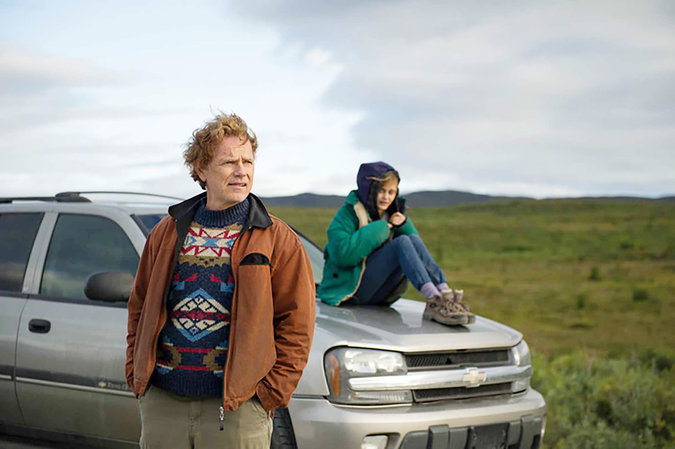
Set almost entirely in the beautiful expanses of Alaska, “Wildlike” follows a troubled teen named Mackenzie, played by Ella Purnell, as she hits the open road to escape her abusive uncle and make it back to Seattle, where she hopes to find her mother. Hiding from authorities she believes will send her back to her uncle, Mackenzie forges into the Alaskan wilderness, where she stumbles upon Bartlett, a gruff, grieving backpacker played by Greenwood, who reluctantly aids Mackenzie on her journey across the wilderness of Denali National Park.
Shot in 35 mm film, the directorial debut feature of producer Frank Hall Green is a stunning visual travelogue of some of the country’s least iconic, but most gorgeous open spaces. Shooting with actual film rather than digital gives “Wildlike” an added richness that helps build cinematic depth and ground the performances in essentially a two-hander plot. Real film is typically cost-prohibitive for independent filmmakers, but thanks to a grant, Green and cinematographer Hillary Spera are able to gift viewers with a visual experience unmatched by other first-time filmmakers.
Greenwood is as steady as fans of his work would come to expect from the veteran character actor, providing a sense of calm for viewers among the sometime frantic nature of Purnell’s performance. As his own issues are slowly revealed in the film’s latter stages, Greenwood and Purnell are able to develop a comfortability with each other as actors that also for increased authenticity in the challenging script material.
Purnell, a young British actress who came onto the scene with “Never Let Me Go” and as a young Angelina Jolie in “Maleficent,” melts into her role as Mackenzie, playing both bitter and confused about her abuse to absolute perfection while simultaneously balancing her own self-discovery about sexuality in adolescence. Not many actresses could have pulled off Purnell’s nuanced performance. Indeed, her work in “Wildlike” is on the same level as Jennifer Lawrence’s in the indie smash hit “Winter’s Bone” that helped launch her career.
Viewers may also recognize Brian Geraghty in a smaller role as Mackenzie’s uncle. Geraghty, best known for his work opposite Jeremy Renner and Anthony Mackie in “The Hurt Locker,” makes the most of his small, but pivotal supporting role.
Moviegoers will likely be overwhelmed by the amount of quality film options set to be released over the next month. Everything from action-adventure films (“The Maze Runner: Scorch Trials) to comedy (“The Intern”), space travel (“The Martian”) to eventual Oscar contenders (“Black Mass,” “Legend”) will hit the big screen within three weeks.
Between now and the end of the year, Hollywood will cram most of the year’s best features into the last three-and-a-half months in an effort to maximize box office returns and Academy Award chances.
Hiding within the fog are smaller, less publicized films like “Wildlike,” which are just as deserving of support from a nuanced, film-obsessed audience. While “Wildlike” will likely never achieve the same cult-like status among hardcore film fans like the sci-fi indie hit “Ex Machina” did early this year, Green’s debut feature — now at 150 film festival screenings and counting — is of similar quality from start to finish.
Visually dynamic with performances to support its artistic style, “Wildlike” is definitely a film worth making the effort to find amid the larger selection of new releases this fall.
A Chipotle in Beverly Hills wouldn’t seem like the ideal spot for crafting top notch independent comedy, but it sure seemed to work for the writing team of Charles Hood and Seth Goldsmith.
What ultimately came from those late night meals/writing sessions was “Night Owls,” which premiered at South by Southwest in March and won the Cinema Dulce (best of fest) award at last weekend’s Hill Country Film Festival in Fredericksburg.
“It’s a crazy, amazing thing to hear people laughing at something you wrote at Chipotle,” Goldsmith said.
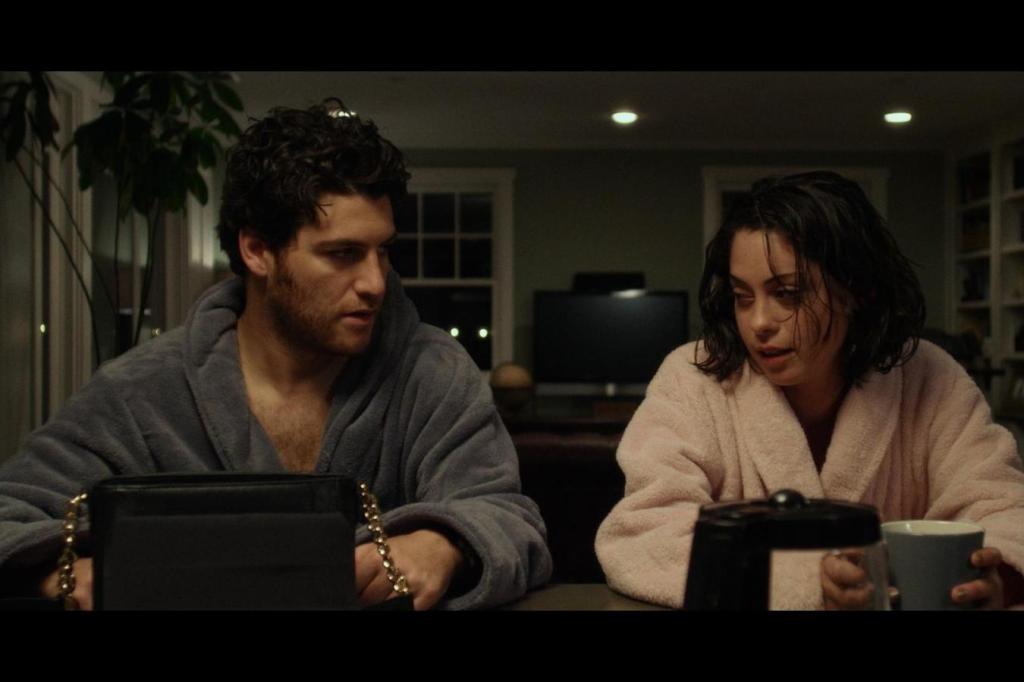
Shot all in one location at a house in Topanga, California, “Night Owls” follows Kevin (Adam Pally) and Madeline (Rosa Salazar) after a one-night stand goes horribly wrong.
While the romantic dramedy is filled with top television actors like Pally (“The Mindy Project”), Emmy-award winner Tony Hale (“Arrested Development,” “Veep”) and Peter Krause (“Parenthood”), the film is still authentically a small indie comedy, something that endeared “Night Owls” to the Hill Country Film Festival staff.
“As an independent film, shot in one location, with a small cast and a minimal production budget, ‘Night Owls’ is the type of movie that exemplifies the indie spirit of our Cinema Dulce award,” Chad Mathews, executive director of the festival, said. “It was an honor to have both Seth Goldsmith and Charles Hood in Fredericksburg for the screening. We wish them much success.”
Crafting the story
“Night Owls” took two years to craft before Hood and Goldsmith finalized the script, a process that helped make both Kevin and Madeline dynamic and authentic characters.
It’s in this slow burn writing process that quality comedies are formed and “Night Owls” is certainly no exception.
“We knew we wanted to make something that was small enough that we could produce on our own,” Hood said. “The basic structure was there from the very first draft, but it was all about getting the characters to where they needed to be, to really get deeper with the characters with each draft.”
The writing process on “Night Owls” feels intimate and personal for Goldsmith and Hood, who grinded away with pitches for the next big studio comedy before opting to find their own voice and not what Hollywood perceived audiences would want.
“For years, we’d been writing spec scripts, trying to sell scripts like ‘Paul Blart: Mall Cop,’ bigger studio comedy stuff that’s more high-concept,” Hood said. “We got to a point where it was just so frustrating (we said) ‘Let’s just write something that we can make on our own and what we really want to make.’”
Making things work
With only five cast members in the entire film, much of “Night Owls” is played as a two-hander between Kevin and Madeline, a move that only works with a pair of quality leads who have instant on-screen chemistry.
The film took off during the casting process, with Goldsmith suggesting Pally, best known at the time for his role on the now-cancelled “Happy Endings.”
“Things went really quickly once Adam got it. It started to become a movie pretty much immediately,” Goldsmith said. “He was a little less nerdy than the type we had in mind (for Kevin), so we were like so how does a guy who’s pretty charming, at least on television, how do we make believe that he’s nerdy and a little bit repressed. What if, when he was a kid, he was a nerdy, fat kid?”
Pally does an admirable job of playing a Tom Hanks-esque everyman in a relatable way.
“There was a smaller scale version of the movie that could have happened. We kind of got the best case scenario,” Hood said. “We were very lucky to get people to like the script enough to get Adam Pally and work from there.”
Ironically, it’s Salazar, the least known star in “Night Owls,” who gives the film’s most complete and dynamic performance. Her Madeline exudes complex and always shifting emotions with relative ease in a wholly believable manner.
“When I met with her after we saw the reels, I thought this girl could really be great,” Hood said. “I sat down with her and was like ‘Wow, she is this character.’ She’s amazing and brings so much to it.”
Salazar joins Ella Purnell of “WildLike” and Hannah Ward of “Sunny in the Dark” in giving the three best individual performances at this year’s Hill Country Film Festival.
While Ward took home the HCFF best actress award, Salazar is equally deserving. There’s just something captivating about her performance that compels viewers to keep their eyes on her at all times.
“We hadn’t heard of her when she was suggested to us,” Goldsmith said. “We watched her reel and were like ‘This girl’s great and I think she’s going to be a star in a week or something.’”
Benefits of one location
Trapping the two leads in a house for the entire 90 minutes, originally written out of necessity, offers more intimacy for Kevin and Madeline to develop their relationship and helps enhance the story in interesting ways.
“We thought ‘How can we keep this as small and as focused as possible,’” Goldsmith said. “Our original vision was going to shoot at a friend’s house and cast people we knew.”
“We like the mystery of not knowing these people and getting to know them, leaking little bits of information to an audience bit by bit,” Hood added.
The set, which doubled as housing for cast and crew, proved troublesome for the film’s production designer, Ayse Arf, who had to clean the house every day before filming could commence.
Most studio comedies now in theaters are incredibly broad, both in humor and in visual style, which makes “Night Owls” refreshing by contrast.
“Our cinematographer, Adrian Correia, is amazing and I wouldn’t want to work without him,” Hood said. “It’s all (shot) in one house and that can be very limiting, but we wanted to open it up and really move the camera around to do interesting stuff.”
The writing duo said the final draft of the script is nothing more than a shooting treatment with Correia, blocking out every frame of every shot.
As a result, there’s a clear sense of directorial style in “Night Owls” that’s not represented in studio comedies, especially in the visual continuity when the film moves from indoors to the backyard and then back inside.
“Through the whole movie, it was about for us playing with the contrast and being okay with having contrast,” Hood said. “A lot of comedies in particular light everything and we don’t like that look as much. I think comedy can work without that look.”
Hood and Goldsmith bonded over the work of Woody Allen as both a writer and filmmaker.
“Both writing and filmmaking. He’s underrated as a director,” Hood said. “People don’t talk about him as much directing wise, but a lot of the shots, when we were staging different scenes, was very Woody Allen-esque.”
The ‘Die Hard’ of comedy
While the film takes its premise from the 1960 Jack Lemmon feature, “The Apartment,” Hood found much of his directorial inspiration for “Night Owls” from an unexpected source, the 1988 action classic “Die Hard.”
“I think it’s interesting that Charles and Adrian ended up shooting it almost like an action movie in the ways it moves,” Goldsmith said. “One of Charles’ big heroes is John McTiernan, who directed ‘Die Hard’ and you can see that influence as much as you can see Woody Allen or Alexander Payne — not in the writing, but in the way they shot the movie.”
The geography of the film — a hallmark of McTiernan’s directorial philosophy — was so important to Hood that he refused to let editor Grant Surmi come to the set. Keeping him away helped ensure that casual viewers would be able to understand the home’s layout.
“When you watch ‘Die Hard,’ he explores every inch of that space and it seems limiting but in the end it isn’t,” Hood said. “‘Die Hard’ is the same way as ‘Night Owls.’ We’re in this one house and it’s about exploring every inch of that house and making it so the audience knows, when you turn that corner, you’re going to go up that staircase.”
Goldsmith joked that “Night Owls” was shot like an action movie as Hood’s audition piece for a blockbuster Hollywood film.
“Charles only directed this movie so he could get a job directing a Marvel movie,” he said. “Everybody gets a Marvel movie.”
Hood’s second directorial feature after 2007’s “Freezer Burn” should rightly boost the writer-director into larger prominence, but if “Night Owls” is the “Die Hard” of comedy, then Salazar is its Bruce Willis, hopefully parlaying a tremendous individual performance into stardom.
Goldsmith and Hood constantly refer to the film’s final product as a “best case scenario,” which benefits audiences more than anyone in this terrific indie comedy.
Check out more about “Night Owls” online at nightowlsmovie.com.
(Note: Film critic Matt Ward is a programmer for the Hill Country Film Festival.)