Category: Superhero Movies

Superhero and comic-book cinema. Secondary topic category for relevant film reviews and analysis.

  • Ant-Man 3: Big bite, little sting

    Ant-Man 3: Big bite, little sting

    Kevin Feige has some major problems.

    The longtime head behind Marvel Studios and overseer of the Marvel Cinematic Universe (MCU) has often felt untouchable, almost invincible in a way due to his cultivation and crafting of a seemingly endless stream of comic book franchises.

    But at this point, comic book fatigue combined with too much concern for spectacle and laziness in storytelling have left a once great collection of films with no real direction for the future.

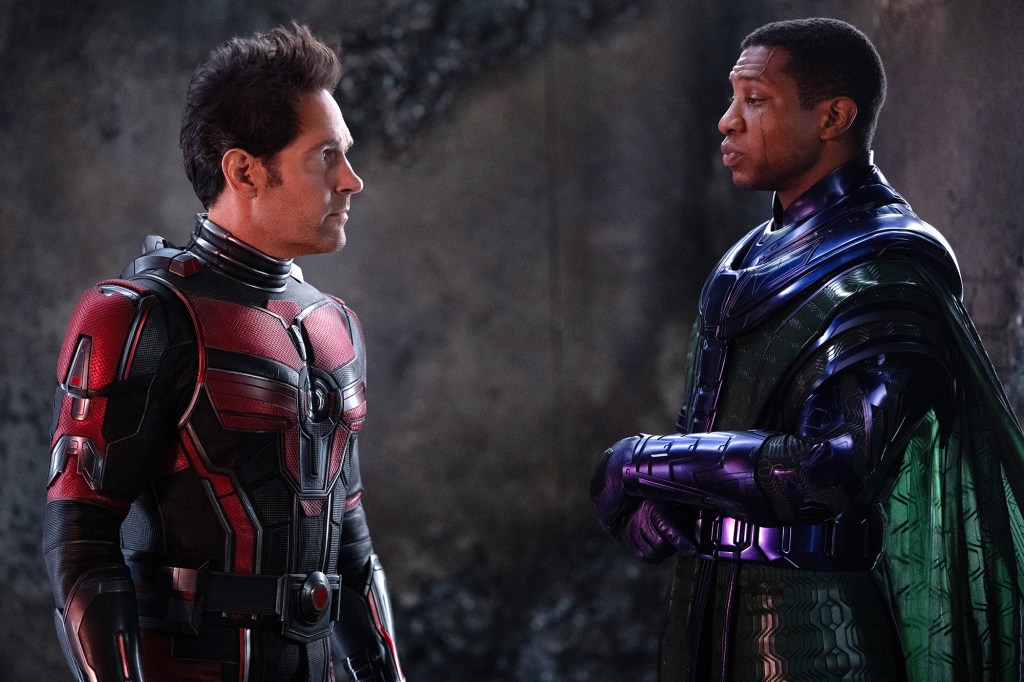
    Marvel enters Phase V of its MCU with director Peyton Reed’s third installment in the Ant-Man series with Ant-Man and the Wasp: Quantumania, which seeks to showcase the next intergalactic threat to humanity by shrinking its heroes down to subatomic levels to wage war against a nefarious, mysterious villain.

    Quantumania for almost all its two-hour running time just feels like actors walking around in silly costumes in front of green screens, which really accentuates the ridiculous lengths the MCU must now go to try and craft a new story as it seems they’ve mined all their best material 30-plus films and several spinoff television shows later.

    Films in the MCU have long since not felt like self-contained stories, rather just another random episodic piece of a larger puzzle that audiences leave the theater scratching their heads at.

    From the outset, it’s clear that Quantumania is a small cog in a gigantic money-making machine and that the stakes of the film simply both matters too much and not at all in the grand scheme.

    Perhaps this is due to the studio’s heavy hand on the wheel or Reed’s lack of directorial vision to craft something meaningful, but Quantumania is incredibly bland even in terms of the comic book science fiction mashup that it strives to be.

    Gone almost completely after the first 15 minutes is the wry humor that set the original Ant-Man film apart and made a comedic director like Reed a solid choice at the helm. There’s just no heart to any character motivations and the film lacks the cinematic flair that the first two installments had.

    Ant-Man films, in a general sense, were created to be heist movies and Quantumania is not that at all. It’s a glob of rushed, ill-considered, computer graphic mess thrown onto a screen in order to hold viewers over until the next round of CGI mess.

    Paul Rudd returns as Scott Lang, aka Ant-Man, and is largely stripped of the ability to use his earnest comedic charms aside from select moments at the beginning and conclusion of Quantumania and most of the heroes around him – especially Evangeline Lilly’s Hope Van Dyne and Michael Douglas’ Hank Pym – are underwritten story filler.

    Even Michelle Pfeiffer, whose Janet Van Dyne is the centerpiece of the narrative arc of the film, isn’t able to make what happens in the Quantum Realm exciting or even entertaining.

    The film’s saving grace and lone bright spot comes from Jonathan Majors, who has emerged as one of Hollywood’s most compelling young actors and takes what could easily be a silly, mustache-twirling villain character and transforms his Kang the Conqueror into a principled arbiter put at odds with the film’s heroes.

    Majors continues his strong work in the MCU, carrying over from the Loki miniseries on Disney+ that establishes him as the next primary antagonist for the larger Avengers franchise and is quite probably the only compelling reason for cinephiles to be excited about the MCU’s prospects moving forwards.

    Undoubtedly the weakest entry in the Marvel Cinematic Universe since 2013’s Thor: The Dark World – another miss of a sequel meant only to serve as a table setter for things to come – Ant-Man and the Wasp: Quantumania doesn’t need to be seen on the big screen and could easily be skimmed over during an at home viewing on Disney+ for hardcore Marvel fans wanting to prep for the next Avengers film.

  • Black Panther Wakanda Forever: Masterfully uneven

    Black Panther Wakanda Forever: Masterfully uneven

    As the Marvel Cinematic Universe (MCU) continues to expand now 30 films deep into its plethora of movie and television franchises, it’s become exceptionally hard for the comic book studio to produce quality entertainment that doesn’t feel repetitive and increasingly mundane.

    Studio head Kevin Feige has done a more than adequate job attempting to fill this gap by finding directors with unique visions to bring bold, fresh ideas both visually and from a storytelling perspective to create buzz and life for his projects. This is especially true with the return of Sam Raimi to Marvel filmmaking with the second Doctor Strange film as well as Oscar winner Chloe Zhao’s Eternals.

    But the most successful pairing of celebrated auteur into the MCU has been Marvel’s relationship with Fruitvale Station director Ryan Coogler, whose 2018 film Black Panther was nominated for a Best Picture Oscar and saw Coogler create a truly dynamic, visually arresting world that felt authentic both to the comic book experience and modern cinema.

    He returns to the MCU director’s chair with his most difficult task to date, continuing the legacy of Black Panther after Chadwick Boseman’s unexpectedly tragic death due to colon cancer in 2020.

    As a result, Black Panther: Wakanda Forever is a conflicted superhero tale without a hero that does a masterful job memorializing Boseman while attempting to sort out its own future in the balance. 

    The best elements of the film come in the more dramatic storytelling moments that it feels Coogler has his hands all over, especially in the opening funeral sequence and endcap of the film that are bathed in bright sunlight and rich costumes from Ruth E. Carter, who won an Oscar for costuming the original Black Panther film and sure to be nominated again for the sequel.

    Coogler’s strengths as a worldbuilding filmmaker continue here though he spends less time developing Wakanda itself opposed to crafting a second underwater civilization to introduce the film’s questionable antihero Namor and the world of Talokan.

    It often feels as though Coogler – perhaps on his own, but more likely at the behest of Marvel – puts as many characters as possible into major parts of Wakanda Forever to find the franchise’s next major star.

    This creates some problematic excess in storylines and a bloated nearly three-hour runtime that while it never feels choppy or poorly edited, it’s as if Wakanda Forever bites off one or two more ideas than it can chew on.

    It appears Letitia Wright’s Shuri, a fan favorite from the original film, is a primary benefactor of the spotlight in Wakanda Forever, a role that the actress is capable of handling but the largely somber, sometimes rageful Shuri is a far cry from Wright’s original interpretation of the character in 2018 and doesn’t quite have the same positive impact.

    Larger roles are given to both Angela Bassett as Queen Ramonda and Danai Gurira as Okoye with both actresses being bright spots in the film for different reasons. Bassett brings much needed gravitas to the dramatic elements while Gurira more than capably handles the intense action sequences Okoye is given, which are the most compelling fights in the entire film.

    Relative newcomer Tenoch Huerta is the most well-rounded character in the film as Namor, both in the fact that Coogler spends the most time developing Namor’s backstory and crafting the world of Talokan, but also allows Huerta to take the time to emotionally mine the complexity of the revamped character to reflect nuanced culture origins evoking Yucatan Maya.

    Much like the original Black Panther, Lupita Nyong’o gets a billing far beneath her considerable talents and the limited moments the Oscar winner can act beyond simple plot mechanizations are among the most compelling in the entire film. 

    What stands out in a negative light about Wakanda Forever is the disparity between Coogler and Marvel within the same film.

    Audiences will clearly see the moments where Coogler has full control over storytelling, visuals and worldbuilding which is awkwardly juxtaposed against audacious and unnecessary illusions to other MCU projects and mediocre CGI battle sequences.

    Awards season expectations for the sequel to Marvel’s lone Best Picture nominee were high, but it feels as though Wakanda Forever will fall significantly short with perhaps only costume, production design and best original song nods.

    The best film in a very weak MCU class post Avengers: Endgame, Black Panther: Wakanda Forever must be seen in the theaters in order to fully engage with Coogler’s more dynamic storytelling while also being the only opportunity audiences will have to enjoy the film without being spoiled about major plot points.

  • Thor Love and Thunder: Thunderstruck

    Thor Love and Thunder: Thunderstruck

    As has been the case for several films now, Marvel Studios finds themselves at a crossroads in a post-Avengers: Endgame era of their cinematic universe.

    Many of their most popular characters are gone from the franchise and the massive decade-long arc came to a head several years ago now, leaving fans clamoring for the breadcrumbs of what’s to come in every single new movie, post-credit sequence or hidden Easter egg.

    It’s as if in the indecisiveness of figuring out what’s next and who Marvel is going to be, everyone forgot about the simple fun of heroes beating up bad guys.

    Taika Waititi’s second foray into the Marvel Cinematic Universe challenges this unease by ignoring it altogether, opting for a relatively straightforward comedy with some deep seeded emotional stakes that doesn’t care about what’s happening in the larger picture. It’s honestly refreshing, harkening back to the early days of the MCU where films were less serial and episodic and more bottled into one storyline that ends when the credits roll.

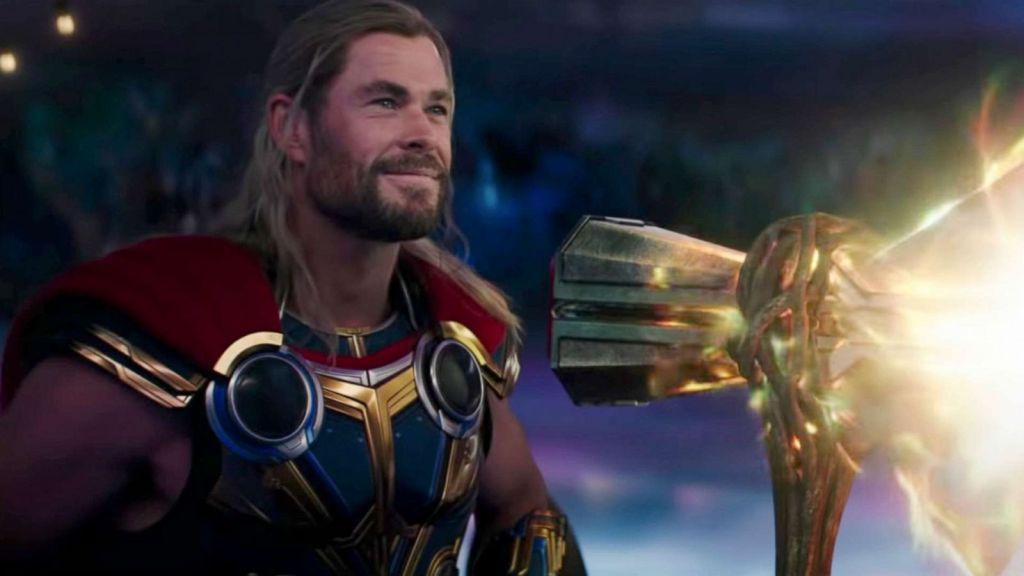
    Thor: Love and Thunder is technically the fourth film to feature the Norse god turned superhero and Chris Hemsworth’s lighthearted performances in recent Marvel films as the titular Thor culminate in a genuinely nuanced turn for a largely comedic actor with the physique of an action star.

    Waititi’s film finds Thor at a similar crossroads to Marvel, somewhat bloated and unsure where to go next. When a wayward devotee to a different god loses faith completely, Thor must stop this alien Gorr before he slaughters every god across the galaxy.

    Hemsworth is giving perhaps his most well-rounded turn now eight Marvel films deep as Thor, relishing in every opportunity to ham it up comedically but also finding the range to be more convincing emotionally. It’s especially difficult to pull off when working opposite computer generated images and Hemsworth is equally adept at subtle facial comedy playing off an ex-girlfriend, new girlfriend gag with Thor’s axe as he is at deeper moments opposite Natalie Portman.

    Christian Bale – best known to superhero film fans for his work as Batman in Christopher Nolan’s Dark Knight trilogy – takes a walk deep into the shadows for his haunting turn as Gorr the God-Butcher. With a look reminiscent of Voldemort from the Harry Potter films and a horror-influenced demeanor, Bale is largely unrecognizable for much of Thunder and drives his performance through genuine emotion and character work often lacking in MCU films.

    In reality, it’s pretty clear that Bale hasn’t seen many – if any – Marvel movies and is approaching Gorr more dramatically than most villains in the series, which helps make Gorr one of the best antagonists in the entire franchise.

    It also helps that Waititi’s strongest moments directorially are in the visuals surrounding Gorr’s character, stripping color and boosting the contrast to the brink to bring the shadow world the character creates to its maximum haunting potential.

    Although the CGI doesn’t always land crisply throughout the film, the hyper-stylized black and white contrast in these sequences add a lot to both the character development and horror-tinged elements of Thunder.

    Portman returns to the Thor films after a nearly-decade long hiatus and is funnier than one might expect in a naivety sort of way as love interest Jane Foster and it’s her ability to bring emotional gravitas in needed moments that helps round out Thor’s character arc relatively smoothly.

    Thunder firmly sits as a middle of the road entry in the larger Marvel Cinematic Universe, not offering enough in either long-term world building nor fully engaging storyline to crack the top tier of MCU movies. But it’s hard to question the film either as it’s clearly superior to many of the early sequels like the second and third Iron Man films and especially Thor: The Dark World.

    Waititi and Hemsworth’s complete transformation of the Thor character from where it was in 2013 as a stiff Shakespearean caricature to arguably the most entertaining Marvel superhero outside of Spider-Man needs to be recognized.

    Thunder does exactly what it needs to, help bridge the gap for Thor after the losses in “Avengers: Endgame” and craft a clear path moving forward. 

    A quirky comedy with a decent amount of heart and some entertaining action sequences along the way, Thor: Love and Thunder is probably a Marvel film ardent fans of the franchise will grow to appreciate more after its theatrical run.

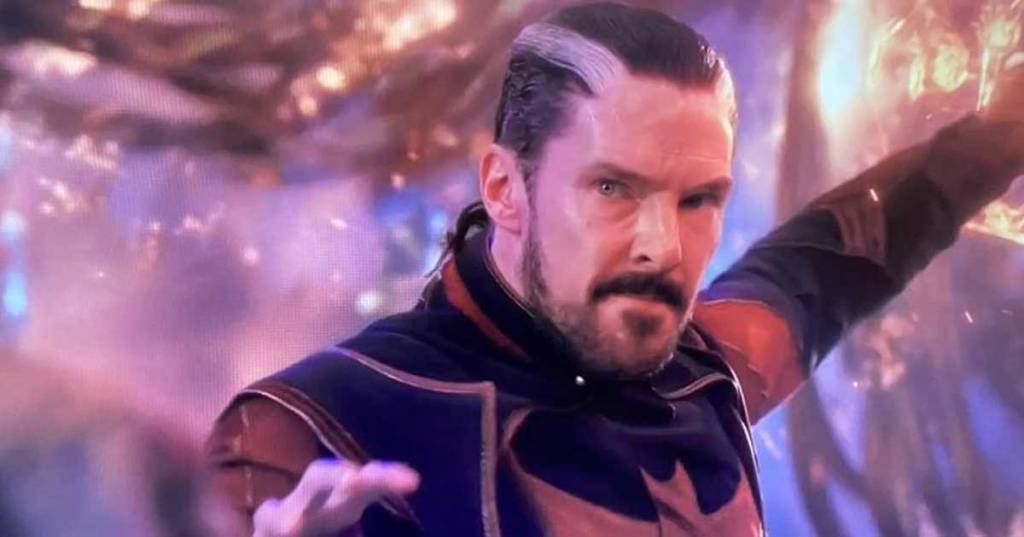
  • Doctor Strange In The Multiverse Of Madness: Strange magic

    Doctor Strange In The Multiverse Of Madness: Strange magic

    Marvel Studios, the comic book film division of Disney, has pushed audiences for more than a decade that a bigger plan is always in the offing.

    It took three phases and over 20 movies for producer Kevin Feige to complete his Infinity Gauntlet saga culminating in Avengers: Endgame and along the way there were times in which things didn’t make a whole lot of sense.

    It’s safe to say Marvel has gone back to the beginning in a post-Endgame world, throwing things against the proverbial wall to see what sticks and then piecing it all together down the road.

    There isn’t a clear vision in their latest film, Doctor Strange In The Multiverse Of Madness, a movie that isn’t entirely about the titular Strange at all. It’s one that requires viewers to watch the Disney+ show WandaVision in order to understand character motivations and blurs exactly what the long term plan is for the larger Marvel Cinematic Universe as a whole to the point that it’s unclear if Feige even knows.

    The simplest way to describe the plot of Madness is that it follows Strange as he ventures across multiple alternate timelines to protect multiverse jumper America Chavez from an unexpected threat to humanities far and wide along the way.

    Director Sam Raimi, working with Marvel again for the first time in 15 years since concluding his own Spider-Man trilogy, has to slog his way through a wildly underwhelming screenplay from Michael Waldron that puts almost no actor in a position to succeed.

    Much of the early portion of Madness has the signature Marvel sheen that seems to sugarcoat most of the MCU outside of the final Avengers films and it isn’t until things take a darker, more sinister turn midway through that Raimi’s directorial eye is allowed to shine through.

    Madness is also unique in that it’s the first film in the MCU to directly pull from Marvel’s Disney+ limited series in order to fully understand the plot of the movie as Raimi’s movie requires audiences to have familiarity with WandaVision and several episodes of the animated What If… to have context for plot points the screenplay glosses over or assumes viewers understand.

    Benedict Cumberbatch does a solid job in his return as Strange, especially with some of the alternative versions of the character audiences meet along the way. But by in large, his character mainly serves as a vehicle to drive the story forward and Strange’s uneasy chemistry with Rachel McAdams’ Christine from the first Doctor Strange film continues to be middling here.

    Elizabeth Olsen is able to pull a rabbit out of her hat by crafting some truly inspired work as Wanda Maximoff, a fallen Avenger mourning the loss of her love in a path twisted by the events of Avengers: Infinity War and WandaVision. She provides Raimi’s film with an intensity that is showcased largely through the cinematography and direction that other actors just don’t seem to rise to the level of.

    Newcomer Xochiti Gomez is serviceable as Chavez, although Waldron’s script basically reduces her character to a Macguffin that is the excuse to tell the story the film does, while not really saying anything about who Chavez is as a person or hero, a larger flaw of the entire screenplay as a whole.

    In a way, the rapid pacing of Madness hinders just how good of a movie it is overall because audiences can’t fully appreciate the nuance of what Raimi achieves cinematically. There’s little time to linger on the wide panoramic shots of the visually stunning worlds Raimi’s production team creates because it has to quickly move on to fan-service cameos or random moments that won’t be fully realized until movies years from now.

    The same is true of the terror-inducing moments he turns simple chase sequences into, with a race down an underground tunnel being the most creative and impactful cinematic moment in a Marvel film for several years.

    There’s a point in the film where it becomes easy for audiences to tell which parts Raimi had control over the style and direction and which were spoon-fed to him by producers reliant on pre-visualized storyboards made before Raimi was ever brought on board.

    Doctor Strange In The Multiverse Of Madness isn’t the groundbreaking horror comic spectacle that some audiences might have been hoping for in a Marvel reunion with Raimi, but his directing is the best part of this middling MCU movie and the main reason to see the film in theaters outside not wanting to be spoiled.

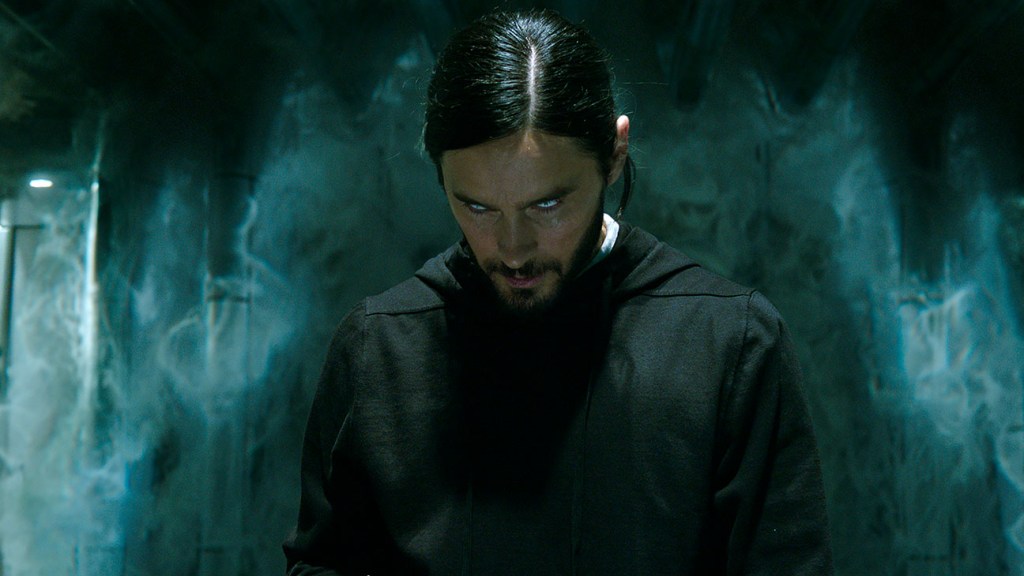
  • Morbius: Big teeth, no bite

    Morbius: Big teeth, no bite

    Nowadays it seems that studios aren’t really trying as much to hide their greed, especially when as it relates to comic book movies.

    Just one month after Warner Brothers dropped a fantastic, original, and darker take on a classic comic book hero with The Batman, audiences have to suffer through the complete opposite.

    Pushed off for nearly two years due to both the COVID-19 pandemic and its horribly lackluster screenplay, Morbius arrived in theaters this past weekend as Sony looks to capitalize on its hold on Spider-Man related properties by focusing on the web-slingers antagonists.

    A vampire movie that isn’t a horror film and a comic book movie without much excitement, Morbius is a “yada-yada” installment in Sony’s developing Spiderverse, one that brings almost nothing to the table but something that viewers will have to see to fully understand the subsequent films in the expanding universe.

    And this isn’t to say that Morbius is required viewing for upcoming Marvel projects.

    Clearly Marvel chief Kevin Feige isn’t involved in this project with Sony in full control of the independent feature, though a post credit sequence will leave some audiences confused. There are mild references to the events of the significantly superior Marvel Cinematic Universe film Spider-Man: No Way Home, but this isn’t at all the direction the MCU is headed.

    One studio – Marvel – has a clear vision for its cinematic future on both the big and small screen, while the other – Sony – is just throwing things against the wall and seeing what sticks.

    This worked with the first Venom movie as actor/producer Tom Hardy had a distinct idea for how to make the symbiote translate on the big screen visually and comedically, but even that fizzled out on a subpar sequel.

    With Morbius, director Daniel Espinoza and star Jared Leto seem to be simply going through the motions with a film so uniquely uninteresting that it doesn’t really matter if the title character will choose good or evil just as long as he does something worthwhile.

    The premise of Morbius is relatively straightforward, if not inexplicable even by comic books standards. Biochemist Michael Morbius seeks to cure himself of a rare blood disease by splicing his DNA with bats, infecting himself with a hyper-stylized form of vampirism instead. There’s a secondary storyline with an adopted brother who has the same affliction, but the stakes of Michael’s relationships with him and love interest Martina Bancroft are so thinly constructed that they feel like total afterthoughts.

    The decision to keep Morbius at a PG-13 rating is nothing more than a desperate attempt to cash in. Espinoza’s film needs to be rated R to showcase the violence and brutality needed to give a vampire with a conscience any true moral dilemma. When the audience doesn’t see and cannot fully realize how sadistic the bloodlust of the vampire is, it’s impossible to find any way to connect to the storylines or the characters themselves.

    Leto himself isn’t doing the film any favors emotionally, offering a relatively muted performance outside of some solid physicality to highlight the effects of Michael’s disease and he’s routinely outclassed in scenes opposite Doctor Who star Matt Smith as Milo.

    There is one solid sequence featured heavily in the trailers after Michael’s vampirism emerges on a cargo ship that provides some excitement, but the action in Morbius is too infrequent to keep audiences engaged and poor CGI work in the final moments will leave a sour taste in viewers’ mouths.

    Morbius is a film hardcore comic book fans will need to see at some point if they want to have a full picture of where Sony is taking their Spiderverse, but there’s no reason to rush out to theaters for this toothless picture.

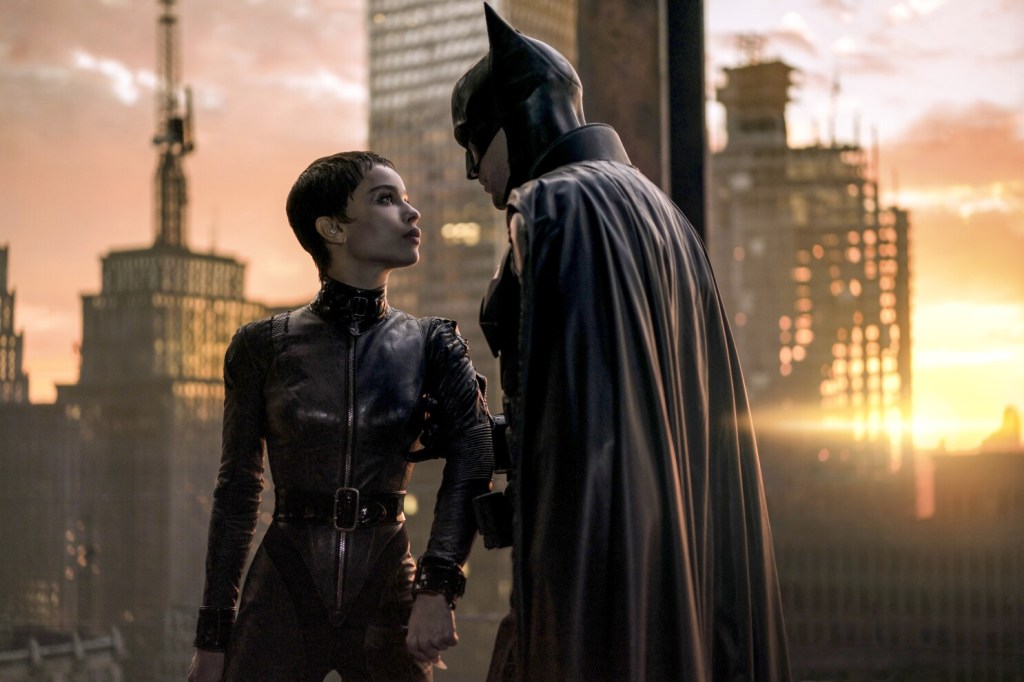
  • The Batman: Darkest night

    The Batman: Darkest night

    How is it possible to craft a completely original take on a character that has been reset, rebooted and reimagined countless times in print and on the silver screen over decades?

    It feels as if audiences, especially those soaked in comic book lore, have already seen every possible iteration of reclusive billionaire Bruce Wayne and his nocturnal vigilante alter ego Batman.

    But director and co-writer Matt Reeves has somehow managed to capture the detective element of the character in a fantastic new noir, The Batman, which has rocked the box office to earn more than $120 million in its opening weekend.

    The film follows a vengeful Batman as he and Gotham City police investigate the murders of several key political figures at the hands of a sadistic serial killer leaving riddles at every crime scene.

    Reeves has designed his film in such a way that the usual duality between the Batman and Bruce Wayne personas of the character becomes incredibly lopsided in favor of Batman in this iteration. It’s clear that the filmmaker, and to some extent Pattinson, view Wayne as more of the costume and Batman the real person in a psychological sense.

    Pattinson portrays the character with a weathered distance that isolates him emotionally and narrows the focus to deliberate, exacting violence and considered detective work in the shadows of the night.

    A hero, no matter how reluctant, is only as good as his villain is bad, and Paul Dano’s Riddler is exceptionally twisted and damaged. Dano builds his character around the real-life Zodiac killer and his portrayal leans heavily into the tortured serial killer aesthetic physically.

    Though they rarely share the screen together, Pattinson and Dano have better chemistry as antagonists than Pattinson does with “love interest” Zoë Kravitz as Selina Kyle. This isn’t to say that Kravitz isn’t solid in her role as Catwoman, but more on the fact that Pattinson plays Batman with so much disinterest in her welfare that their supposed flirtations feel clunky at times.

    The film’s ensemble cast helps fully realize the deep world that Reeves imagines for Gotham City with terrific performances across the board. Jeffrey Wright as Jim Gordon and Andy Serkis as Alfred provide excellent mentor figures to Batman and Bruce Wayne respectively while John Turturro is astounding as mob boss Carmine Falcone and Colin Farrell disappears into his role as the Penguin.

    Reeves does a lot of world building in The Batman that accounts for the nearly three-hour running time, but his deliberate pacing sometimes borders on excessively slow as he feels the need to show audiences every step of the plot in exacting detail.

    Greig Fraser’s dynamic cinematography leaps off the screen at every turn and perfectly keeps in tone with Reeves’ desire to keep Batman (and the film as a whole) within the shadows as much as possible. The absence of color throughout and Fraser’s expert use of low light make every moment a brighter hue exists pop even more.

    This is especially clear in some of the film’s more artistic moments where a fight sequence in a crowded hallway is illuminated only by gunfire or when Batman’s only light comes from a glowing red flare. Even when the screenplay and Reeves’ exceptionally elongated directorial vision stretch scenes to their limits, Fraser maintains audiences’ undivided attention with completely arresting visuals.

    The look of The Batman from its production design to costuming to how completely unrecognizable Farrell is as The Penguin thanks to transformation by makeup and prosthetic artists gives Reeves’ film a gritty texture that heightens the noir aesthetic to astonishing levels. Michael Giacchino’s haunting score intensifies the fear and melancholy that oozes out of every pore in The Batman.

    While it’s far too early to tell where The Batman might be under consideration for an award season that’s nearly a year away, Reeves’ film is certainly DC’s best chance to earn significant nominations since Christopher Nolan’s The Dark Knight fell just shy of a Best Picture nod at the 81st Academy Awards and won Heath Ledger a posthumous Oscar for Best Supporting Actor.

    Easily the best film based on a DC Comics character in over a decade, The Batman is the year’s first signature blockbuster despite being overly brooding and should be something ardent cinephiles see on the biggest screen possible to fully engage with the dynamic cinematography and world building.

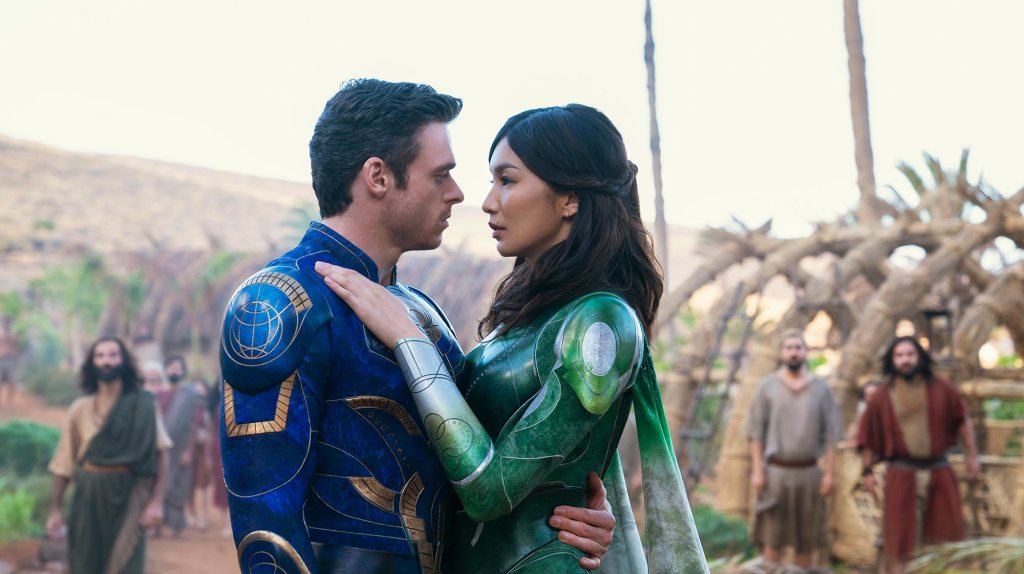
  • Eternals: Reach for the moon, land amongst stars

    Eternals: Reach for the moon, land amongst stars

    There were five movies of build up before Iron Man, Thor, Captain America, Black Widow, Hawkeye and the Incredible Hulk teamed up to save New York City from an invading horde of aliens in 2012’s The Avengers.

    But with the ever expanding universe of spinoff streaming miniseries, fill-in-the-blanks back stories and new character creation, Marvel Studios simply doesn’t have time to develop the necessary lead up to their latest endeavor, a grandiose left-turn in telling a humanistic tale through the eyes of an immortal alien race hiding on Earth for thousands of years.

    Director Chloé Zhao, fresh off an Academy Award for her Best Picture winner Nomadland, bites off more than audiences can easily chew over the course of 150-plus minutes in attempting to introduce 10 new heroes familiar only to the most hardcore of comic book readers while also bouncing back and forth between 7,000 years of history.

    Eternals strives to be a ground-breaking cinematic achievement, Marvel’s experimentation with 2001: A Space Odyssey blended with super-hero team-ups. Selecting Zhao to lead the most expansive, wholly new project in the Marvel Cinematic Universe reflects this desire to broaden the horizons creatively.

    This 26th film in the MCU feels like the studio is stretching their storytelling formula to the widest point imaginable without breaking it entirely, and while Zhao’s directorial style clashes with more bombastic comic book elements, Eternals certainly has more going for it than working against it.

    Zhao’s film tells the saga of the titular alien race sent to Earth by the Celestial Arishem to protect the planet from genetically engineered monsters threatening to devour all life.

    With so much exposition and relatively unknown characters to introduce, it’s hard for any of the expansive “Eternals” cast to develop significant personalities or build a deeper connection for the audience, although the effort is largely good throughout.

    Gemma Chan centers the story as Sersi and often becomes a way in for viewers to hope to find an emotional tie to the plot as Chan’s ability to empathize radiates off her face and in the tone of her voice. It’s clear in her performances that Sersi’s one true love is the people that she secretly protects, while her chemistry with both romantic interests Richard Madden and Kit Harrington are less dynamic.

    Madden is largely effective as a strong, brooding superhero though it isn’t till the final hour in which audiences will understand the conflict in his performance. His chemistry opposite Chan works better when staged in silence under Zhao’s dynamic visuals rather than in dialogue.

    Stars like Angelina Jolie and Salma Hayek bring both high-profile and distinct character work to Eternals, but both are sidelined for large portions of the film and are overshadowed by more compelling performances from Brian Tyree Henry’s more empathic Phastos as well as Kumail Nanjiani and Harish Patel’s Kingo and Karun bringing much needed levity to the slow-burn pacing.

    The film’s largest flaw is trying to do too much, and in doing so, disjointedly tossing viewers in and out of moments to connect with a character only to have three more spring up. It’s why there rarely is enough screen time given to Barry Keoghan’s most conflicted Druig or the bond Jolie’s Thena carves out with Don Lee’s sympathetic Gilgamesh.

    Eternals looks its best when it’s in Zhao’s element as a director, outdoors in practical settings using natural light to give off a cinematic warmth that strives for something more dynamic than usual in a Marvel production, but often the overlaying of CGI-elements like the Deviant creatures the heroes fight clash harshly with the aesthetic Zhao is going for.

    Bringing ten new major characters into a firmly established franchise like the MCU is a gigantic order for any single film to accomplish, and it’s too tall a task for Eternals to match the overall quality of films like Avengers: Endgame, Captain America: Civil War or Thor: Ragnarok.

    But Eternals also opens so many intriguing possibilities for the future of the franchise both from a storytelling perspective and from a directorial one that its impact on the grand scheme of Marvel will likely be felt long after the film itself falls from cultural relevancy.

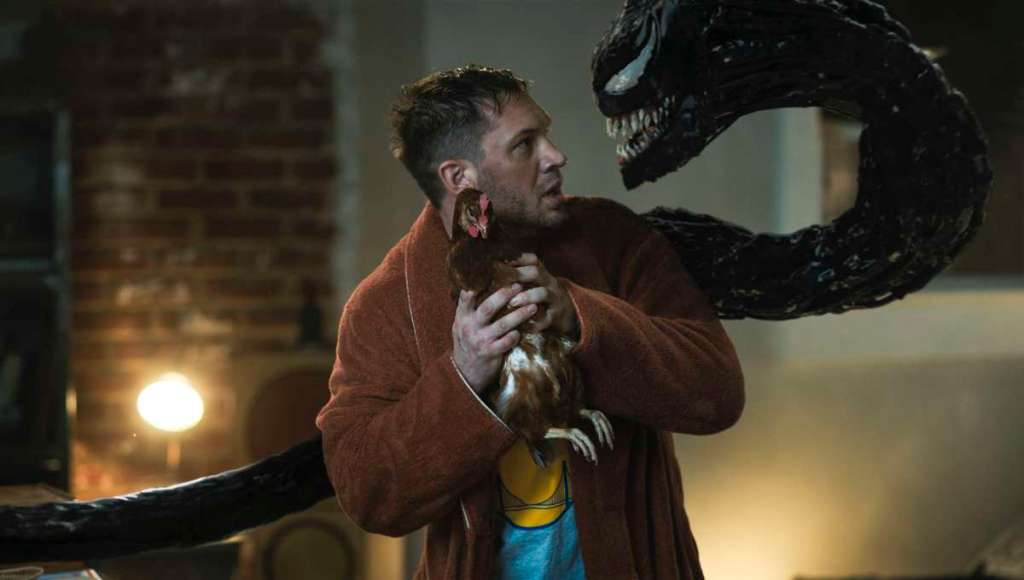
  • Venom Let There Be Carnage: Let there be mild amusement

    Venom Let There Be Carnage: Let there be mild amusement

    With originality dwindling in the blockbuster cinema marketplace, it’s often that viewers might feel like they’re watching the exact same film all over again.

    Three years ago, Sony broke through the comic book ranks with a quirky cult hit spin-off for a classic Spider-Man villain that had a unique charm with an awkward buddy comedy dynamic mixed in with Marvel lore.

    Returning to the well, the follow-up to Venom has pretty much all the same story beats as the first film, an even shorter cut that reduces the film to an episodic feel; the one you’d have to see to understand the ones to follow. 

    Venom: Let There Be Carnage takes its rudimentary shape from serial killer films like Silence of the Lambs as reporter Eddie Brock gets exclusive access to death row inmate Cletus Kasady to tell his story and possibly convince him to reveal details of unsolved murders. When Kasady becomes infected by some of Brock’s blood containing a portion of the symbiote Venom that lives inside Brock, Kasady turns into the villainous Carnage and begins a rampage to find his long-lost love.

    The primary reason the Venom films work at all is Tom Hardy’s committed, manic dual performance both as Brock and the voice of Venom. It’s a blend of comedy and impassioned, positive psychopathy that creates an anti-hero audiences would want to follow around.

    On his own, Hardy’s Brock is pretty much a big loser as Venom admits time and again in both films. He’s a bland, unremarkable reporter with a questionable ability to relate to others and Hardy can be pretty boring to watch when portraying Brock.

    But it fits perfectly with his pitch-perfect voice work as Venom, taking the gravelly tones of his work as Bane in The Dark Knight Rises and twisting them with a quirky naivety that makes Venom the star and comic relief of the film. The script from Kelly Marcel isn’t much beyond a series of cliches and literary references that young viewers won’t recognize, but Hardy’s ability to breathe life into words on a page works exceptionally well. It’s clear that Hardy’s performance as Brock is triggered by listening to his recordings as Venom so Brock literally talks to himself.

    A better movie might have been had if the rest of the film matched Hardy’s dedication and forethought.

    Woody Harrelson has his occasional moments as serial killer Kasady, although whatever nuance he was attempting early in the film fades away into obscurity as Harrelson is covered over by a big red CGI symbiote. By the final half-hour, Harrelson is almost doing nothing more than occasional facial expressions, which is sadly more than is given to the women of the film.

    Michelle Williams returns as Brock’s former fiancée Anne Weying, a pivotal character from the comics that gets pushed off to the side as damsel in distress. Functionally, there’s not much of a reason for the character to be introduced into the film at all other than to advance plot points.

    At least, Naomie Harris’ unrecognizable turn as Kasady’s imprisoned lover Frances Barrison has a significant backstory and moments to shine, even if they are in service of the man in her life.

    This Venom ramps up the violence pretty significantly and teeters close to the edge of an R-rating with the chomping of heads, gruesome stabbings and savagery that often happens in a bloodless way or off-screen to keep the film from losing half its target audience. Much of the action occurs in the shroud of darkness, which helps mask the viciousness of what would actually be occurring if the events took place in real life but also helps to hide the flaws in Sony’s CGI-work.

    There’s nothing exceptionally special that makes the second Venom film worth a trip to the theaters aside from being spoiled about the major plot aspects as well as a critical mid-credit sequence with significant ramifications for the future of the franchise over the coming years. It’s a brisk 90-minute adventure that could provide younger viewers with the occasional thrill on a weekend where other new releases aren’t on their radar, but Venom: Let There Be Carnage wallows in its relative mediocrity compared to other superhero films like Shang-Chi and the Legend of the Ten Rings. 

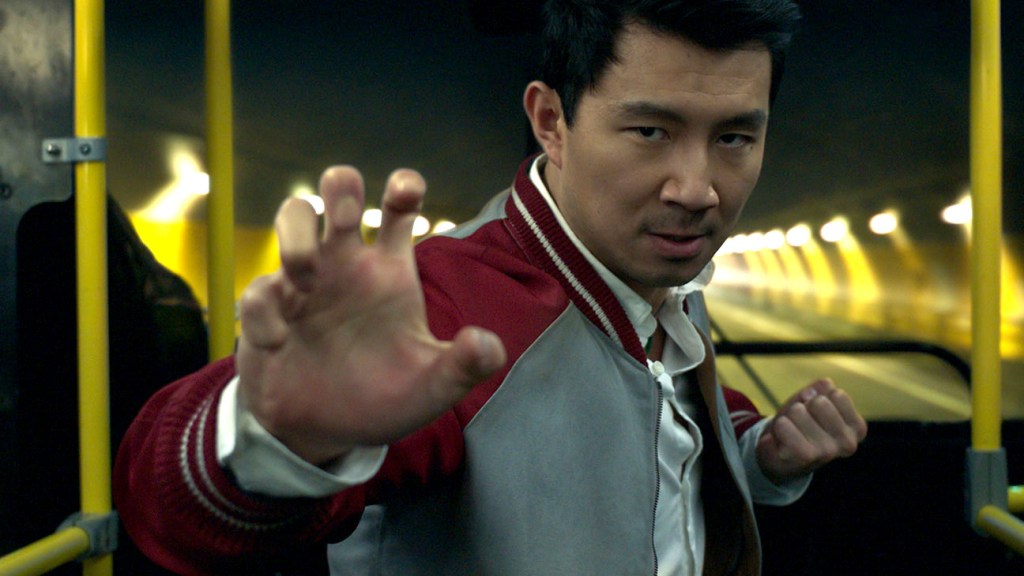
  • Shang-Chi and the Legend of the Ten Rings: Two-thirds of perfection

    Shang-Chi and the Legend of the Ten Rings: Two-thirds of perfection

    Marvel’s latest action-adventure comic book movie, Shang-Chi and the Legend of the Ten Rings, is groundbreaking in a number of ways.

    It’s the milestone 25th film in their cinematic universe to be released and the first to feature an Asian lead, predominantly Asian cast and an Asian director in Destin Daniel Cretton, a massive step forward for representation in American cinema.

    The film also comes at a transition point for the studio, which has finally begun to introduce new characters and worlds following the events of Avengers: Endgame, and places a lot of hopes on relative unknown Simu Liu to break out and help lead the next wave of inevitable sequels and spinoffs.

    Shang-Chi introduces audiences to Shaun, a slacker working as a valet at a downtown San Francisco hotel with his best friend Katy, when thugs attack him on a bus and he reveals expert level martial arts training that allows him to fend off his attackers and spiral the pair down into a world of ancient mysticism and international terrorism.

    The problem with the film’s narrative, however, comes from the fact that it almost isn’t Shang-Chi’s origin story at all. It’s the origins of a much larger universe and the unlikely love between his parents, the villainous leader of a crime syndicate known as The Ten Rings and a woman living in a hidden village empowered with mystic martial arts.

    As Shang-Chi discovers who his parents truly are, audiences begin to see his skill set as a fighter and his moral compass, but there’s not really a character for Liu to build himself around. His Shang-Chi is a steady presence and an excellent fighter to choreograph action sequences, but Cretton and co-writers Dave Callaham and Andrew Lanham saddle the title character as the least interesting out of all the main figures in the film.

    This isn’t to say Liu isn’t a star in the making as Shang-Chi. It’s clear that Marvel has big plans for the character in their expanding universe of content and Liu’s chemistry with Awkwafina as Katy is stellar both emotionally and comedically. He’s also an exceptional fighter, doing most of the stunt work himself.

    Tony Leung as the film’s erstwhile villain steals the entire feature with a layered, emotional performance as a man grief-stricken by the loss of his wife and completely blinded by anger and frustration that builds to rage.

    Fight choreography throughout the film is perhaps some of the strongest in all Marvel movies, focusing heavily on the beautiful artistry of hand-to-hand martial arts combat in sequences that evoke everything from Crouching Tiger, Hidden Dragon to Rumble in the Bronx to the John Wick franchise.

    These sequences are masterfully shot by cinematographer Bill Pope, who floats in and out of each fight like a bird dancing around, moving the frame in such a way that large chunks of the film feel more like ballet and less like fisticuffs. This is especially true of the best moment in the entire film – a flashback recalling how Shang-Chi’s parents first met – that is exquisitely captured and filled with playful, colorful romanticism unlike anything audiences have ever seen in a comic-book movie. 

    As is usually the case with Marvel films, however, the final third of Shang-Chi ventures a bit too much into the CGI-heavy, bombastic set pieces that stretch a simpler story beyond the bounds of the director’s intent and infuse it unnecessarily with a cataclysmic battle for humanity that dissociates viewers from all the great work leading up to that point.

    There’s so much opportunity for growth and Shang-Chi is on the cusp of a great entry into the Marvel Cinematic Universe that the final 20-25 minutes leave a somewhat bitter taste.

    Given the promise of Liu as a mainstay moving forward and the important of the film to the larger franchise as a whole, there’s enough in Shang-Chi to make it a must see though an in theater versus at home screening will depend on viewers’ willingness to not be spoiled in advance. 

  • The Suicide Squad: Second time’s the charm

    The Suicide Squad: Second time’s the charm

    After failing to generate a full-fledged spinoff franchise in 2016, Warner Brothers and DC Comics return to the villain-turned-reluctant-hero well for a second time with The Suicide Squad, a film that adds a word to the title and far brighter, more inventive filmmaking.

    Director James Gunn, who’s largely responsible for making an obscure Marvel comic book into its own successful movie series with Guardians of the Galaxy, comes on board to write and direct the most irreverent, brutal and entertaining film in the entire DC Extended Universe.

    While it’s not quite on the level of top end Marvel movies, The Suicide Squad is far superior to the overly bland and unnecessarily dark David Ayer film Suicide Squad and continues the upward trajectory of the DC franchise as a whole.

    The sequel’s premise is much like the 2016 original as a covert U.S. government operation aims to tackle the most dangerous missions by extorting imprisoned super-villains to risk their lives in exchange for reduced prison sentences. While the mission to destroy “Project Starfish” on a remote island nation serves as the plot device driving the film forward, The Suicide Squad relies heavily on putting its terrific ensemble cast in ridiculous situations and allowing the humor and violence to carry the weight.

    Margot Robbie returns as the infamous Harley Quinn, the lone standout of the original film and one of the few survivors. Much like the 2016 installment, Robbie isn’t the focus of the storyline nor a central character, but her performance draws so much attention with the relentless chaotic energy that she brings to Quinn.

    It isn’t the best version of the character; her turn in the role for last year’s Birds of Prey brought far more development and growth that allowed Robbie to sink her teeth into the material. Her scenes exude a manic-like frenzy state that rationalize delusions and yet there’s a sweet innocence lying under the surface that endears Quinn to the audience in a way unlike any other character.

    Idris Elba and Joel Kinnaman carry the burden of driving the narrative forward with functional, yet underdeveloped military characters that hold the unlikely team together towards their mission, while Sylvester Stallone is a gem providing the voice of the tank-like King Shark that will likely be audiences’ favorite new member of the team.

    Among the new additions, the most talked about will be John Cena’s alpha-male, American vigilante bravado fueled work as Peacemaker, a shoot-first, ask-questions later sort of a guy meant to symbolize imperialism and be a direct political commentary that will alienate a large percentage of the potential viewing audience.

    That being said, it’s among Cena’s strongest acting performances as he is able to channel a character meant to be reviled or rooted for depending on the perspective and Cena has the comic timing to land some of the film’s funniest lines while maintaining a very rigid delivery that accentuates the “what if G.I. Joe had no morals” vision for the character.

    Gunn’s film impresses the most from a visual standpoint, where his innovative use of cinematography provides a fresh perspective on the comic book film genre. These are especially impactful in long, continuous action sequences where the camera naturally pans through the chaos and in one late fight shown in the reflection of a hero’s helmet.

    There’s also a demonstrative, considered use of brighter colors that are both harder to pull off with the CGI used in the film and much more rewarding as action sequences are easier to understand from an audience perspective and feel more spectacular when not shrouded in darkness like so many superhero films opt to do.

    As DC films go – and especially in comparison to the first Suicide Squad film – Gunn’s iteration is exceptionally violent, more than earning its R rating with a disregard for the brutality of murdering endless swarms of nameless goons or blowing a villain away at close range and scattering his brains across the frame.

    The Suicide Squad goes far out of its way to suggest to audiences that they are in for something different from the outset and the tone reminiscent of the irreverent Deadpool films from Ryan Reynolds is more than a knowing nod. Younger children who may have been allowed to see Aquaman or the two Wonder Woman films should not see Gunn’s film for the violence alone, although the adult humor and occasional sexual innuendo isn’t to be scoffed at either.

    The Suicide Squad is well worth a trip to theaters for those interested in a big screen experience and there’s no less enjoyment to be had for those opting to catch Gunn’s film in the privacy of their own homes streaming on HBO Max.