Category: New Releases

Primary category for full-length reviews of newly released films. Select for standard reviews; remove it when publishing After the Credits, Commentary & Essays, or non-review retrospectives. This remains WordPress’s default post category.

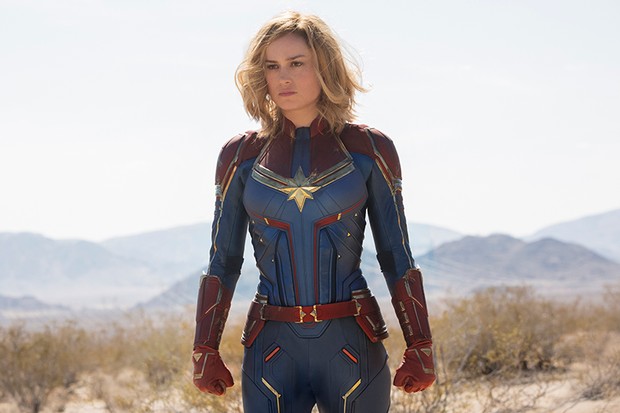
  • Captain Marvel: Pregame to an Endgame

    Captain Marvel: Pregame to an Endgame

    The fate of the universe lies in the balance.

    It’s the central conceit of any galactic space opera or bombastic superhero adventure.

    But rarely does it feel more true than with “Captain Marvel,” the new feature from the indie writing/directing duo of Anna Boden and Ryan Fleck that just also happens to be the 21st entry into the Marvel Cinematic Universe (MCU).

    The weight of the whole MCU – painstakingly choreographed to this moment over more than a decade of movies – now rests on the shoulders of Brie Larson, indie darling turned Oscar winner upon whom the mantle of “first female Marvel hero to earn a solo movie” was thrust.

    By audiences, film critics and the studio alike, expectations for “Captain Marvel” have climbed higher, reached further and compounded faster than any Carol Danvers origin story probably deserves.

    And all that’s before mentioning the three Oscars won a few weeks back by “Black Panther” – first in the history of the MCU – or “Wonder Woman,” the 2017 DC Comics movie “Captain Marvel” will be unfairly be permanently linked with.

    Try as they might, Boden and Fleck don’t quite hit the excessively high mark and yet, somewhat surprisingly, “Captain Marvel” is a largely enjoyable couple of hours.

    In its attempt to serve many masters, “Captain Marvel” carries a clunky, burdensome story filled with a war between noble Kree warriors with literal blue blood and sneaky Skrull shapeshifters, an amnesiac Air Force pilot, the origin story of famed “Avengers” hero Nick Fury and a Calico cat.

    Kree warrior Vers is dropped on Earth circa 1995 for a fish-out-of-water tale that feels eerily reminiscent of other superhero origin stories, which is probably due to the fact that “Captain Marvel” is a bloated amalgamation of MCU origin retreads and riffs on era-appropriate movies like “Terminator II” set to a “Now That’s What I Call The 90s” style soundtrack of bands like Nirvana and No Doubt.

    Like the movie as a whole, Larson is much better in the smaller, more personal moments on Earth as opposed to the grandiose, yet largely frivolous space adventures Vers encounters throughout the film.

    Given more time outside of an amnesiac state, Larson could be quite effective moving forward as the title character, though her Captain Marvel form feels rather perfunctory by comparison to other MCU heroes with richer backstories.

    Larson’s best work in the film comes opposite original “Avengers” star Samuel L. Jackson, who receives ample room to entertain audiences while furthering his own character development as S.H.I.E.L.D. agent Nick Fury.

    There’s a large segment of the film with Larson and Jackson that evokes 90s era buddy cop movies, especially when paired with the scene-stealing cat Goose who provides the film’s best moments ala Groot in the “Guardians of the Galaxy” movies.

    To orient audiences through the minutia and give credibility to the outlandish galactic space war between Kree and Skrull, Marvel employed the talents of Oscar nominee Jude Law and Academy Award winner Annette Bening to deliver lengthy soliloquies about emotional control, the superiority of the Kree nation and eliminating the illegal invaders at any cost.

    Both deliver serviceable efforts, though it’s veteran character actor Ben Mendelsohn who gives the most interesting and dynamic effort of the space-faring members of the “Captain Marvel” cast as Skrull leader Talos with a layered, emotional performance that outshines the “Star Trek” TV show gloop that his alien makeup resembles.

    In a larger sense, “Captain Marvel” buckles under the weight of unrealistic expectations.

    There’s far too much burden on the film to be the definitive “female Marvel superhero” movie and to carry at least five different storylines while also building towards “Avengers: Endgame,” the culmination of more than 10 years of MCU films.

    Far from a failure, though, “Captain Marvel” is a good movie.

    It will inspire young girls to strive for the best versions of themselves and entertain countless moviegoers.

    It just isn’t something audiences have to fight through crowds to see. Simply catch “Captain Marvel” sometime before “Endgame” reimagines the entire superhero landscape on April 26.

    Twenty-one films into cinema’s largest, highest grossing franchise, it’s okay not every single entry into the MCU changes the world.

    “Captain Marvel” is a perfectly adequate, just fine movie and sometimes that’s enough.
  • Alita Battle Angel: Short term wonder

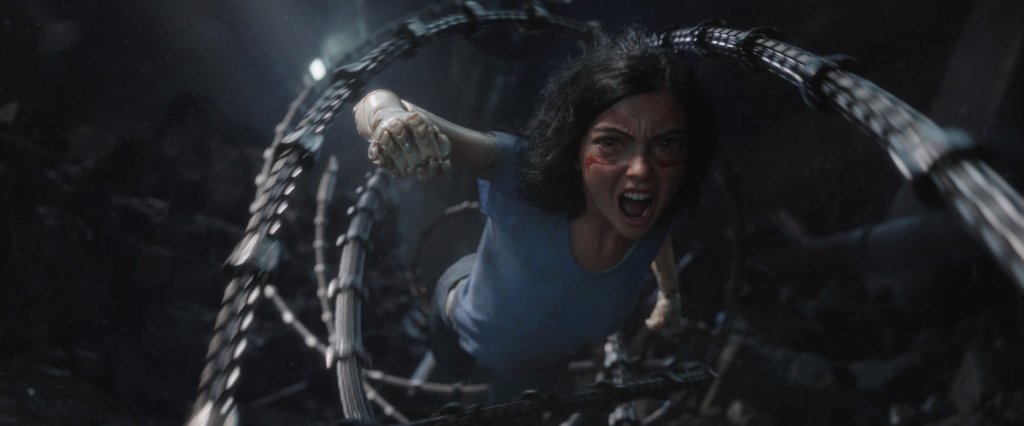
    Alita Battle Angel: Short term wonder

    If there’s ever a time to watch “Alita: Battle Angel,” a clunky, uneven visual spectacle that values its cyber-steampunk style over substance, it’s now.

    The latest film from Texas director Robert Rodriguez is a visual wonder from start to finish that won’t feel special in six months and this franchise hopeful will likely fade into obscurity.

    Based on the Japanese manga comic book series “Gunnm,” “Alita” follows a young cyborg girl rescued from a junkyard unable to remember her past life until she goes out in search of answers amid turmoil between a rich cloud city floating far above impoverished Iron City.

    As a story, it’s largely as unremarkable as it sounds.

    On a big screen, Rodriguez gives audiences a rare peek into the future of cinema.

    “Alita” stands on the forefront of the new age in visual effects with a hyper-realistic style that gives a near lifelike sheen to its cyborg characters.

    In this regard, Rodriguez’s film compares quite favorably to the dynamic effects in Steven Spielberg’s 2018 adventure fantasy “Ready Player One,” which is currently nominated for an Academy Award in visual effects this spring.

    Despite not being seen herself on screen, Rosa Salazar proves herself a star in a fantastic turn as Alita through advanced motion capture technology that was able to gather the nuances of Salazar’s physical performance and digitize it to create Alita.

    Salazar is able to bring warmth and vibrancy to the character both emotionally and vocally with big, piercing eyes and the slightest tremble in her throat.

    A lesser performance could have easily rendered “Alita” unwatchable, but Salazar draws viewers in beyond the special effects to care about Alita as a character.

    Save for the legendary work of Andy Serkis (Gollum in the “Lord of the Rings” films, Caesar in the recent “Planet of the Apes” trilogy), there isn’t a better motion capture performance to hit theaters in five-plus years. Alita alone, both visually and emotionally, is worth the price of admission.

    The film boasts a strong cast of secondary leads including a pair of former Oscar winners in Christoph Waltz and Mahershala Ali, though their work feels perfunctory, almost paint by numbers, in comparison to Salazar and fails to elevate the lackluster script.

    There’s an epic grandeur to “Alita” – from scale to production design to CGI – that haphazardly works in segments and fails to elevate the film in others, though executive producer James Cameron is probably more to blame than Rodriguez.

    Before shifting full attention to his “Avatar” trilogy, Cameron wrote an 180-page screenplay with over 600 pages of notes Rodriguez had to consolidate down into a manageable shooting script.

    As a result, dialogue can feel choppy at times and especially expository. Rodriguez and Cameron never find a way to make conversation between characters as engaging as the action sequences, much like an average musical would “yada yada” its way between songs.

    Like Alita herself, the action usually dazzles in “Alita” as the mixture of motion capture, live action and computer graphics combine for engaging, dynamic moments, especially as Alita takes on the violent world of motor-ball, a futuristic version of roller derby.

    Like “Ready Player One” before it, the visual effects of “Alita” are so striking that an Academy Award nomination is likely despite the film being released over 10 months before voting would begin. There’s some truly special work being done by film artists.

    It’s unfortunate, however, that the story as a whole can’t quite rise to the occasion.

    “Alita” is one of the few remaining films that will suffer significantly in smaller presentation. For even mildly interested moviegoers, it almost has to be seen theatrically as “Alita” becomes less dynamic and enjoyable to watch when the dazzling effects don’t buoy the middling screenplay.

    A mildly entertaining adventure with a lot to see and sequels to set up, “Alita: Battle Angel” is a better representation of the future of film than a good film itself.

  • High Flying Bird: High-rise hoop dreams

    High Flying Bird: High-rise hoop dreams

    Characters go one-on-one both on and off the court in director Steven Soderbergh’s new sports drama “High Flying Bird,” though not much basketball’s being played.

    There’s a ferocity to the head-to-head dialogue in the screenplay from playwright and “Moonlight” creator Tarell Alvin McCraney that seems to mimic intense showdowns Michael Jordan might have had with defenders in his heyday.

    “High Flying Bird” aggressively attacks racial and class warfare in the high-rises, not on the streets. It’s a film where words come with searing precision to provoke response and engage an audience unprepared for the layers within this simple fictionalized sports story.

    McCraney’s screenplay focuses on NBA player agent Ray Burke, forced to balance a naïve top rookie waiting to enter the league with the demands of his cash-strapped agency amid a lockout between players and owners that’s stopped basketball dead in its tracks for nearly six months.

    Soderbergh’s film is “Michael Clayton” in the style of “Jerry Maguire” with the postmodern cinematography of an iPhone 8.

    “High Flying Bird” cuts against the grain at every turn, defying convention with its rapid fire, two-handed dialogue and masterful use of place to frame scenes and individual performers.

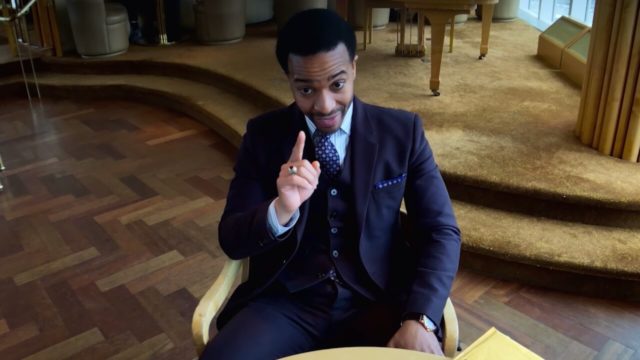
    At the forefront of it all is André Holland, who embraces the film’s kinetic energy as Ray, constantly moving his mouth, his body in brisk strides of intent, his frantically churning mind or some combination of the three.

    From the opening scene, “Bird” soars off the intensity of Holland’s performance, setting a rapid fire pace that carries across the entire film with casual sophistication and confidence.

    The other men of the film deliver solid work: Kyle MacLachlan as a smarmy yet charming team owner, newcomer Melvin Gregg as Ray’s top rookie and an outstanding Bill Duke as area youth basketball coach Spence, whose no-nonsense attitude provides both moments of humor and levity to the film.

    But it’s the women of “Bird” that are the best surprises, especially given how lacking roles for women are in sports films.

    The time in character development given to Zazie Beetz’s Sam, an assistant agent working under Ray, and Sonja Sohn’s Myra, a lawyer representing the players’ union, is unprecedented within the genre and gives “Bird” a tonal sense of balance and depth to the story that is tremendously compelling.

    Both Beetz and Sohn challenge Holland’s Ray in a way that elevates the overall performances, yet it’s a quiet tea with Ray opposite an all star’s mother (played by an unforgettable Jeryl Prescott) that provides one of the film’s most memorable moments.

    With the iPhone and a singular wide angle lens, Soderbergh is able to frame scenes in 360 degrees, giving viewers a full geography of each setting in a matter of seconds.

    A dynamic, pivotal scene late in “Bird” slowly illustrates this freedom as Ray reflects with Spence while shooting hoops in an unbroken camera pan around the court.

    Using the wide angle in close, more intimate shots gives “Bird” a harsh, unique contrast to break up the established visual dynamic of the film. This keeps the viewer interest piqued while maintaining the importance and integrity of McCraney’s screenplay.

    Soaring wide angle shots remove the audience from the urgency of the action and give a sense of anonymity to its bold characters, their machinations made small by the mere placement of the lens. This also allows the world of New York to play an increased role in the film, engulfing and ever present on a moment by moment basis.

    The film is a brisk 90 minutes, sharply and deftly edited by Soderbergh to accentuate the tempo of McCraney’s verbose dialogue, reorienting viewers to examine scenes from new perspectives as words glide off the tip of the tongue.

    The only signposts – stable, static moments to break up a film constantly on the move physically and verbally – are black and white interviews segments with young NBA stars Reggie Jackson, Donovan Mitchell and Karl-Anthony Towns describing their memories of entering the league as a player and businessman.

    “Bird” is intentionally, almost arrogantly complex and vague in its banter and plot. Audiences aren’t supposed to have all the answers on a first viewing.

    Seemingly from nowhere, the first truly great film of the year has arrived in a very 2019 fashion, from an iPhone straight to the streaming service Netflix and back onto a phone again, just like it was meant to be seen.

  • Velvet Buzzsaw: All art is dangerous

    Velvet Buzzsaw: All art is dangerous

    Until recently, buzzworthy films coming out of Robert Redford’s Sundance Film Festival each January took six to eight months to reach a wide audience.

    A major film studio would snap up a noteworthy indie darling and stash it away from moviegoers until the fall and awards season long after the buzz had died down.

    The advent of online streaming services has expedited access for average moviegoers to see these Sundance hits considerably.
    Netflix’s boldest endeavor with

    Sundance – writer/director Dan Gilroy’s artistic supernatural horror-thriller “Velvet Buzzsaw” – sets a new bar for turnaround from festival to mainstream as “Buzzsaw” dropped on the streaming service Friday just four days after premiering at the year’s first major film event.

    Gilroy’s eccentric, occasionally erratic feature serves as both figurative and literal defense for Netflix’s instant gratification film strategy with “Buzzsaw” characters lamenting “What’s the point of art if nobody sees it?”

    Set in the high end Los Angeles art world, “Buzzsaw” revels in Gilroy’s clawing, satirical screenplay that probably thinks itself more important than the artists the film takes down.

    Audiences follow several artists, rival art dealers and a renowned critic as they aimlessly banter for close to 45 minutes until the work of a previously unknown talent is shown.

    The tone changes dramatically as cutting satire turns to light horror masquerading as suspense. Pieces painted partially with the artist’s blood begin to have chilling psychological effects on those who view them for too long.

    For Gilroy the filmmaker, “Buzzsaw” is less dynamic than his audacious and prescient take on the ruthless world of television news with 2014’s “Nightcrawler,” but still reflects a similarly gritty, cynical tone.

    As the name implies, “Buzzsaw” is a somewhat bloody affair, though the film leans away from simple gore for a more exacting, largely unseen violence reliant on implied terror.
    The screenplay is buoyed by a deep, talented cast that give the script’s natural wit added zing.

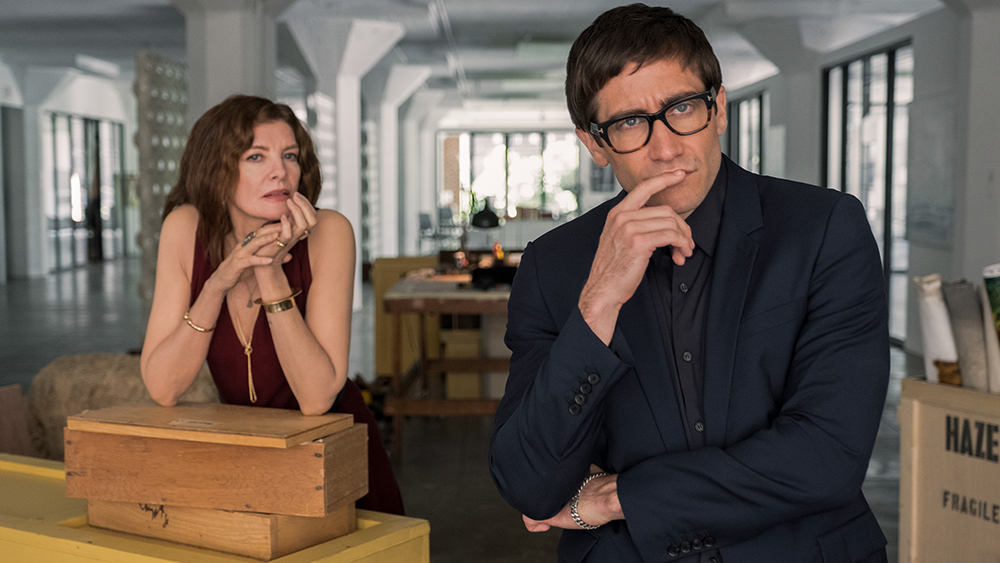
    Gilroy re-teams with his “Nightcrawler” star Jake Gyllenhaal and pulls an increasingly manic, mesmerizing performance out of the Oscar nominated actor.

    As self-important, sexually fluid art critic Morf Vandewalt, Gyllenhaal excels at slowing unraveling Vandewalt’s psyche and allowing audiences to use the character as a touchstone while events become increasingly absurd.

    Rene Russo and Toni Colette both offer a calculated, menacing tone to their work as rival art collectors almost as if they were playing opposite sides of the same coin.

    Although every John Malkovich role begins to feel the same, there’s a seamless authenticity to his turn as a languishing artist tired of the commercialization of his medium and out of ideas.

    Zane Ashton holds her own at times opposite Gyllenhaal as up-and-coming collector Josephina, but the singular charisma within his performance often overshadows her work and the film as a whole.

    With art as the centerpiece of the narrative, it should come as no surprise that “Buzzsaw” takes a lot of chances with camera positioning, lighting and angles that create a visually dynamic spectacle worth watching alone even with the sound off.

    Gilroy and cinematographer Robert Elswit give the film an evocative presence that informs a sense of place and builds toward an unusual climax as viewers wander down the rabbit hole.

    Likely to have been a box office disaster if it had been released theatrically, Gilroy’s film is an ideal choice for streaming as “Buzzsaw” will be endlessly re-watchable for its ardent fans and a cost-free early exit for those who find the esoteric nature of the screenplay unnecessarily snobby.

    Richly artistic and mildly psychotic, “Velvet Buzzsaw” offers up a thrilling Gyllenhaal performance amid an uneven film worth checking out at home.

  • If Beale Street Could Talk: Poetry in motion

    If Beale Street Could Talk: Poetry in motion

    Intertitles, text at the opening of the film, explain how for celebrated author James Baldwin, “every black person born in America was born on Beale Street, born in the black neighborhood of some American city.”
    “Beale Street,” he said, “is our legacy.”

    Within the first five minutes of director Barry Jenkins’ latest film, “If Beale Street Could Talk,” adapted from Baldwin’s 1974 novel of the same name, a distinct tone is set that resonates throughout the next two hours.

    It’s one of idyllic love, wonderfully shimmering in bright colors, fighting to survive. It’s one of weight, pushing its characters through a world set against them.

    Though the “Beale Street” of Baldwin and Jenkins is of Harlem in the 1970s, the film resonates across the decades, proving ever true today in critical and emotional ways.

    “If Beale Street Could Talk” is the best film no one is talking about, and yet it’s also the one moviegoers need to see the most.

    Audiences follow Tish, a 19-year-old girl forced into womanhood as she becomes pregnant by Fonnie, her 22-year-old fiancé and lifelong best friend recently accused of raping a Puerto Rican woman.

    Theirs is a simple story told slowly over the course of two hours as Jenkins allows viewers to linger in the moment and feel the heaviness implicit in the emotional and societal stakes.

    “Beale Street” is a tale of America, told powerfully by a master confident in his craft.

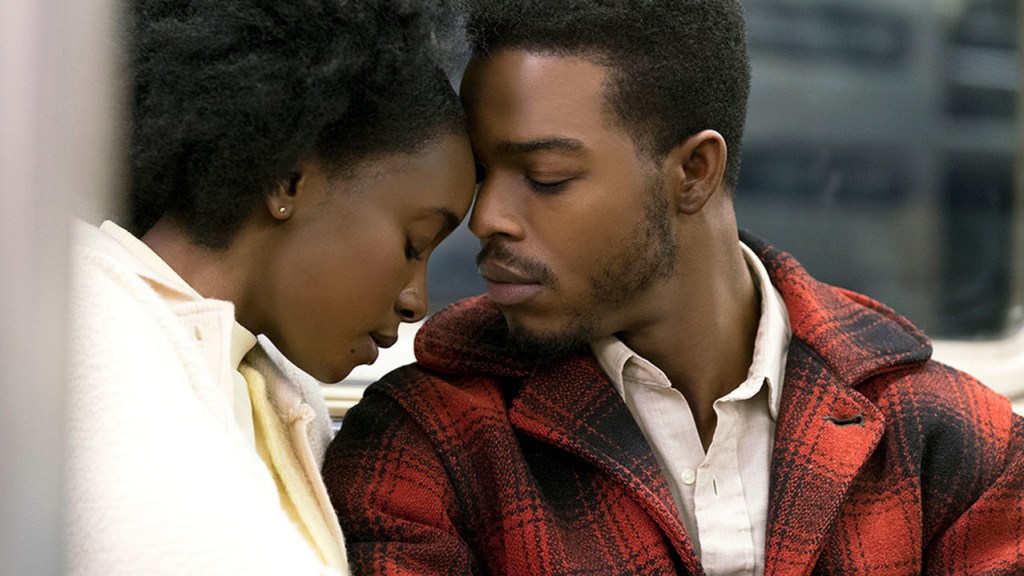
    Key to the success of “Beale Street” is newcomer KiKi Layne, who gives Tish a quiet, humbling grace that belies her unenviable position. As the film’s narrator and protagonist, Layne steadily gives audiences an emotional touchstone to cling to over the course of the movie as well as inform and contextualize the narrative.

    In a year with any number of terrific performances from first-time leading ladies, Layne’s performance shines brightest.

    As Fonnie, Stephan James displays immense range in his eyes, especially as they flicker with the trembling of his voice. This gives Jenkins free range to focus the camera straight on and allow James to bring the audience inside Fonnie’s soul with a crackling look.

    Separated by the glass of a prison visiting room, Jenkins pushes the viewer to become Tish, to become Fonnie, with camera placement as audiences see the world of “Beale Street” as the characters do.

    Recent Golden Globe winner Regina King gives an Oscar-worthy performance as Tish’s mother, balancing quiet strength with painful outbursts of grief in almost effortless fashion.

    Jenkins supplies “Beale Street” with a perfect assortment of talent to bring Baldwin’s characters to life, especially Colman Domingo as Tish’s father.

    But in the matter of 15 minutes, Brian Tyree Henry takes over the entire movie with a dynamic, larger-than-life presence that fills the screen until it shrinks away to nothing.

    Henry and James develop an instant kinship that evolves over the course of a conversation as two old friends slowly lower their guard from “I’m great” to “I’m fine” to finally “I’m not fine.”

    Emotion reverberates throughout “Beale Street” through the artistry of the performances and James Laxton’s expert cinematography, but every peak and valley – no matter how faint or strong – rises and falls on the notes of Nicholas Britell’s flawless score.

    Whether it’s the cringe of a wailing violin or the bravado of a jazz trumpet, Britell sets the tone for each scene and speaks volumes in poignant moments lacking dialogue.

    In a just world, “Beale Street” would easily earn eight Academy Award nominations, but will likely be lucky to receive three or four.

    But as time should tell, awards for this masterpiece will not matter.

    With “Beale Street,” Jenkins cements his status as this generation’s cinematic poet laureate of the American condition. His latest feature is a wonder of true artistry, filled with romance amid pain, grief within joy.

    Spoken with the words of a poet and shown through the lens of a visionary, “If Beale Street Could Talk” is a revelation, a can’t miss, genuine, instant classic piece of art.

  • On The Basis Of Sex: A remarkable life made average

    On The Basis Of Sex: A remarkable life made average

    Every year it seems, Hollywood races out historical docudrama meant to be a rallying cry to remind or influence Americans about a current political topic.

    Last year, Steven Spielberg rushed through a good, not great feature on The Washington Post’s work on the Pentagon Papers as a defense for freedom of the press amid rampant allegations of “fake news.”

    That film, “The Post,” felt incomplete, rushed to theaters in time for the 2018 Oscars at the expense of quality storytelling.

    Director Mimi Leder leads the charge this year with a middling, unexceptional biopic of stalwart Supreme Court Justice Ruth Bader Ginsburg that drives home equality for all under the law, but with a lack of relentlessness or passion that Ginsburg has been known for.

    “On The Basis Of Sex” covers about 15 years of Ginsburg’s life, beginning with her first year at Harvard Law balancing school work, an infant daughter and a husband with testicular cancer and continuing on through her work in the early 1970s seeking equal protection rights for women.

    Leder approaches her subject matter with a paint-by-numbers approach that afflicts a growing plurality of biopic films. It’s one thing to continue the lineage of a tried and true genre; it’s another thing altogether to blandly unoriginal.

    This isn’t to say that “On The Basis Of Sex” is completely without merit. The acting is solid across the board and occasionally exceptional.

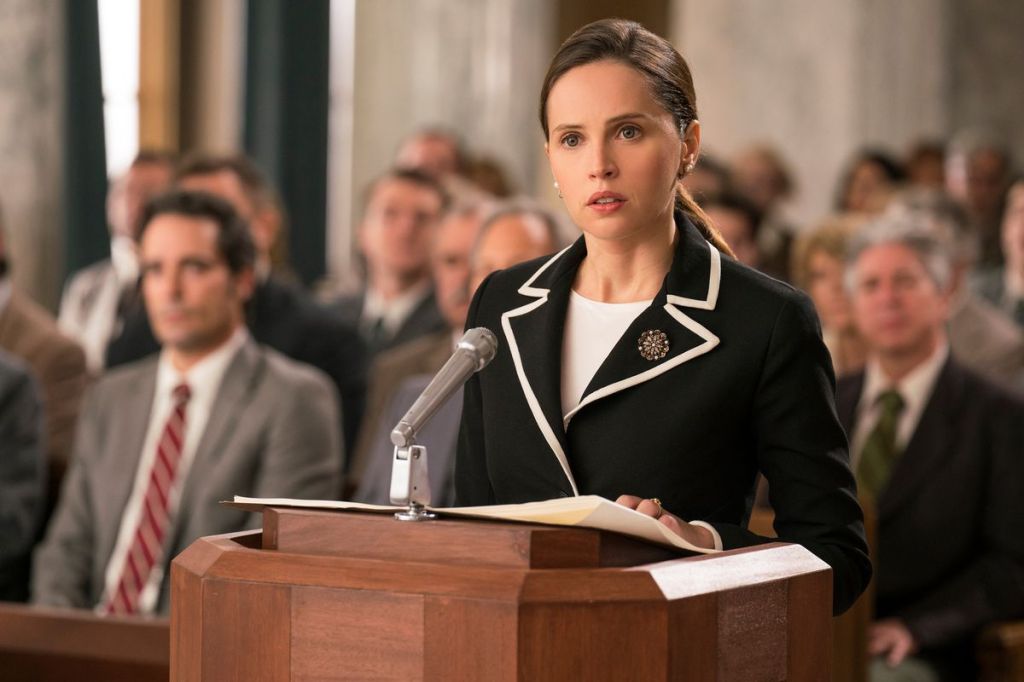
    As Ginsburg, Academy Award nominee Felicity Jones is more than capable of rallying audiences to the future Supreme Court justice’s cause in spite of a rather bland and often legally technical screenplay.

    She conveys the all-consuming vigor Ginsburg has for the law and balances it with compassion for her family and the clients she serves.

    Kathy Bates works wonders in little screen time as pioneering lawyer Dorothy Kenyon and Cailee Spaeny is exceptional in a secondary role as Ginsburg’s free-spirited daughter Jane.

    The men of the film, however, are more of a mixed bag.

    Armie Hammer shows solid chemistry opposite Jones as Ginsburg’s husband Martin and their relationship of equals satisfyingly serves as a metaphor for the equal rights for men and women they strive to achieve in the film.

    Justin Theroux gives a marginal performance as over-antagonizing ACLU lawyer Mel Wulf while “Law and Order” vet Sam Waterston is reduced to a mustache-twirling, simple misogynist as the Harvard Law School dean turned U.S. Solicitor General Erwin Griswold.

    For a film designed to celebrate an icon of American jurisprudence and the women’s rights movement, “On The Basis Of Sex” is aggressively mediocre.

    In the film, Ginsburg states her assertion that “changing the culture means nothing if the law doesn’t change.”

    Leder and screenwriter Daniel Stiepleman take this to heart in their filmmaking, resulting in a feature that fails to properly contextualize the women’s movement often referenced in dialogue but rarely shown on screen.

    Jane attends a Gloria Steinem rally and Ruth walks through a similar protest at Rutgers, but these events feel so superfluous to the film that it marginalizes their importance.

    A fringe Oscar contender at best, it’s increasingly likely that “On The Basis of Sex” is shut out of awards season contention, though a Best Actress nomination for Jones isn’t entirely out of the realm of possibility either.

    In all likelihood, the CNN Films documentary “RBG” will be the only Ginsburg movie this year to receive acclaim and serves as a wonderful film to pair with a screening of “On The Basis Of Sex.”

    Ginsburg’s life is exceptional and the film does a moderately capable job of inspiring audiences on their way out the door.

    “On The Basis Of Sex” is a perfectly fine film that viewers shouldn’t go out of their way to see, but will enjoy at their convenience either on the big screen or at home months from now.

  • Vice: Second in title, first in command

    Vice: Second in title, first in command

    Three years ago, director Adam McKay broke free from his straight comedy roots with “The Big Short,” a darkly humorous, yet revealing examination of the 2008 U.S. financial crisis.

    With big banks in the crosshairs, the film was largely an apolitical (or at least bipartisan) thrashing of the series of events that led America to the mortgage crisis and great economic downturn.

    McKay has set his sights directly on Washington D.C. with his latest feature “Vice,” an idiosyncratic, ruthless commentary on the politics of power.

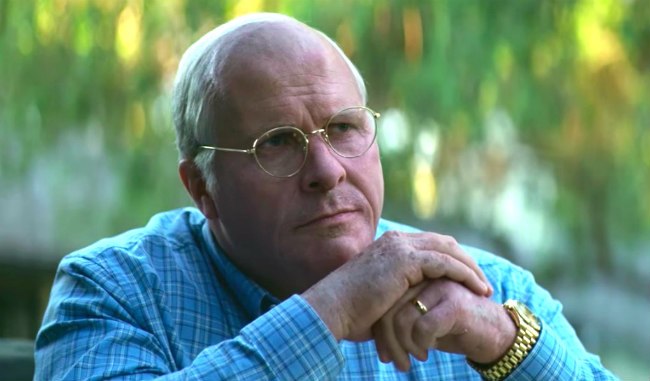
    “Vice” frames McKay’s arguments through the lens of Dick Cheney, vice president to 43th U.S. President George W. Bush and a man the film calls “one of the most secretive leaders in history.

    While McKay paints “Vice” in broad, sweeping strokes as an indictment of the U.S. political arena as a whole, the intricacy and depth Christian Bale achieves in his portrayal is so nuanced and exact that it’s almost as if Bale is acting in a different film than the one McKay directs.

    Bale’s immersive turn as Cheney earned him a Golden Globe Sunday evening and cemented the Academy Award winning actor as a frontrunner to take home an Oscar later this spring.

    It’s almost uncanny just how much of a doppelganger Bale becomes as the cinematic version of Cheney, a dry man of few words that exudes a boring outward persona that allows Cheney to take his political rivals by surprise.

    There’s a measure, deliberate tone to Bale’s performance in “Vice.” Viewers can easily see the wheels churning in Cheney’s brain as he methodically gets what he wants.

    This is brilliantly displayed over a five minute stretch of the movie, where Cheney figuratively reels Bush in like a fish on the line while exacting as much control as he can before accepting an offer to be Bush’s running mate.

    A very game Sam Rockwell, fresh off an Oscar win for “Three Billboards Outside Ebbing, Missouri,” plays a convincing Bush, yet it’s more of an elevated caricature as opposed to Bale’s pinpoint accuracy as Cheney.

    The same is largely true of a terrific Steve Carell as Congressman and later Secretary of Defense Donald Rumsfeld in a turn that is equal parts cerebral and comic with a candid bravado that makes Carell’s Rumsfeld the most larger-than-life character in the film.

    Amy Adams often steals scenes as driven wife Lynne Cheney, portrayed not as a political schemer but rather self-interested kingmaker pushing her husband forward by any means necessary.

    “Vice” strives to tackle the political arena with the same fervor that McKay used in “The Big Short.”

    Though both films intend to find flaws in a bipartisan (or better still, a nonpartisan) manner, “Vice” will easily come across as an attack on the Republican Party, both then and now.

    There are numerous digs – some more veiled than other – intended as potshots at the current administration and media outlet Fox News, but “Vice” almost also serves as McKay’s insistence that things might have been worse off before 2016.

    McKay’s superb screenplay throws viewers for a loop over and over during the early portions of “Vice,” only to seamlessly layer these moments one on top of another like teacups and saucers stacked higher and higher.

    Information is peppered at such a rapid, kinetic pace that some viewers may not be able to keep up with all the political banter relating to executive power and the war in Iraq.

    “Vice” is in all likelihood a lock for a Best Picture Oscar nomination with Bale as a top contender for Best Actor.

    Though Adams and Carell could also earn nods, neither looks to stand a real shot at winning. McKay should be nominated for the film’s excellent screenplay and has a chance at a Best Director nomination as well.

    A mesmerizing turn from Bale as Cheney makes “Vice” well worth the price of admission, though some conservative moviegoers might find the film’s critiques too much for their liking.

  • The Favourite: Three queens and one crown

    The Favourite: Three queens and one crown

    British political and societal dramas are often ripe with stoic, regal performances perfect for awards season acclaim.

    Films like the Best Picture winning “The King’s Speech” or Gary Oldman’s Oscar-winning turn in last year’s “Darkest Hour” are prime examples of major contenders coming from across the pond.

    This year provides moviegoers with yet another intricate examination of the British monarchy, but certainly unlike anything viewers have ever seen before.

    “Downton Abbey,” director Yorgos Lanthimos’ darkly comic latest film is not.

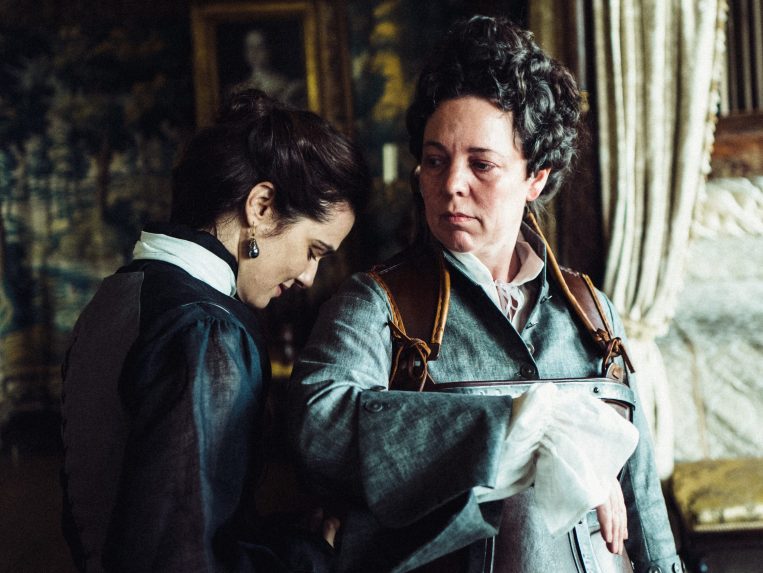
    Filled with fish-eyed lens shots, sexual debauchery and lords throwing rotting fruit at nude servants, “The Favourite” is certainly the unlikeliest of prestige Oscar contenders, but perhaps one of the very best as well.

    Set during the early 18th century, “The Favourite” follows an aging, lonely Queen Anne coaxed into war with the French by her longtime friend and confidante, Lady Sarah.

    When Sarah’s cousin Abigail arrives to serve the Queen, a rivalry ensues that would change the course of British history.

    The film excels primarily thanks to a trio of award-worthy performances, led by a manic, simple yet complex turn by Olivia Colman as Queen Anne. Her performance is stricken with loss and pain, hysterical with the torment of abandonment and yet Colman finds moments of clarity that remind audiences of Anne’s true power.

    Academy Award winner Rachel Weisz brings a scheming, yet firm handed approach to Sarah, keeping her wits while chaos ensues all around her to maintain power by proxy over England.

    Meanwhile, Oscar winner Emma Stone turns on the charms for Abigail in an effort that is part ingénue, part survivalist and part weasel.

    Individually, the performances are top notch, but it is in concert with one another that the trio of “The Favourite” truly excels as the actresses ebb and flow off each other flawlessly.

    The wit of “The Favourite” somewhat undercuts just how expertly Lanthimos balances Anne, Abigail and Sarah on a teetering scale of power, pulling these three dynamic characters up and down with subtlety and ease.

    The screenplay from Deborah Davis and Tony McNamara provides a spectacular backdrop for the three talented actresses, along with the surprisingly effective Nicholas Hoult as opposition leader Harley, to give the year’s best ensemble performance.

    Lanthimos mirrors the beautiful absurdity of the film’s script with a wonderfully obscure shooting style that takes advantage of the vaulted, high ceilings of the castle setting and frames each of its characters in unique, off-kilter angles.

    While the super wide angle shots of the fish eye lens are the most outlandish, each and every shot in “The Favourite” is nuanced to either bolster or tamper a character’s place in power as the intricate game Sarah and Abigail weave around Anne changes scene to scene.

    As such, “The Favourite” could prove overwhelming to some on an initial viewing, though subsequent screenings should help viewers find understanding in Lanthimos’ absurdist world.

    A lock for a Best Picture nod, “The Favourite” could easily garner as many as 9-10 Academy Award nominations next month with Colman as Best Actress, costume design and production design all being virtual locks as well.

    One or both of Stone and Weisz are likely to appear in the Best Supporting Actress category with Lanthimos a strong best for Best Director and Best Original Screenplay.

    Certainly the year’s most bombastic, perversely funny feature, “The Favourite” may be for more open-minded audiences, but it’s such a charmingly quirky film.

    One of 2018’s top five movies, “The Favourite” will stay in the minds of moviegoers long after the credits roll.

  • Mary Poppins Returns: The possible impossible

    Mary Poppins Returns: The possible impossible

    Julie Andrews declined to participate in “Mary Poppins Returns,” a brand new sequel to the 1964 original film she won an Academy Award for, not because she disapproved of the project but rather to avoid being a distraction.

    Disney’s latest film isn’t a “Mary Poppins” redux, nor is it meant to be.

    While clearly influenced by the original in both tone and plot, Rob Marshall’s film is a delightful, charming adventure aimed to be the “Mary Poppins” for a new generation and not simply a nostalgia-infused cash grab remake.

    A Hollywood musical with the talents of Golden Globe nominee Emily Blunt, Broadway mega-star Lin-Manuel Miranda, Angela Lansbury and acting royalty Meryl Streep has an incredibly high floor and “Returns,” though not without its imperfections, is a lighthearted crowd-pleaser for all generations.

    Set about 25 years after the events of the original, “Returns” finds a widowed Michael Banks and his three young children on the brink of losing their family home when Mary Poppins descends from the sky to save the day in her own proper, yet impossible way.

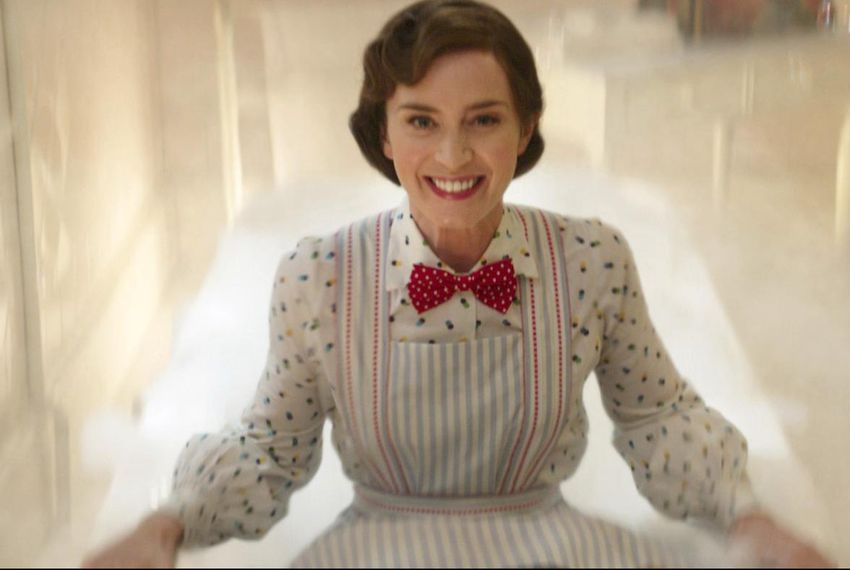
    An Oscar nomination could be in sight for Blunt, practically perfect in a role she was born to play as the titular Mary Poppins. The sly, conniving way she approaches the character works due to her innate charm where terseness comes across as a wink to the audience instead of an insult.

    Blunt’s performance doesn’t really evoke Andrews’, but that’s the goal here. Her reinvention of the character more closely mirrors that of P.L. Travers’ novels and sets a foundation for the entire film to be more theatrical in nature.

    She’s also a perfect pairing with Miranda, a consummate performer who brings a natural enthusiasm to lamplighter Jack that spills off the screen to engage the audience.

    The film’s theatricality brings about the best in Miranda and his affable nature helps offset a slightly wonky British accent for a turn that will leave viewers smiling.

    “Mary Poppins Returns” is winning in its ridiculousness, a celebration of the wonderful weirdness of imagination.

    Only in a quality Disney film can Streep get away with an outlandish Eastern European accent while singing about flippidy-flops and Tolstoy’s “War and Peace” in a way that objectively shouldn’t work but somehow does.

    Marshall’s background as a theater director and choreographer serves “Returns” quite well as the film’s large musical set pieces like the lamplighters’ dance in “Trip A Little Light Fantastic” or the outstanding Cockney romp “A Cover Is Not The Book” full of animated penguins and Miranda’s signature freestyle rapping.

    The longer Miranda or especially Blunt are off screen, however, “Returns” wanes considerably in both pacing and entertainment. A secondary plot device about a bank loan proves somewhat tedious given the two-plus hour running time.

    While there isn’t anything as dynamic as “Supercalifragilisticexpialidocious,” Marc Shaiman’s music is a cheerful accompaniment for the film’s best scenes, with “A Cover Is Not The Book” and “Turning Turtle” as standout numbers musically.

    The trademark blurring of animation and live-action iconic to the original movie returns and produces some spectacular visual sequences as audiences follow a carriage ride around a ceramic bowl in three dimensions.

    “Returns” may sneak into a Best Picture conversation at next spring’s Academy Awards, but it is more likely that nods are in order for Blunt’s charming performance, memorable tunes like “Trip A Little Light Fantastic” and the wonderful production design and costuming.

    As lighthearted films to see with family this holiday season go, viewers won’t be able to find better than the thoroughly enjoyable “Mary Poppins Returns.”

  • Roma: Memories of a childhood

    Roma: Memories of a childhood

    Mexican filmmaker Alfonso Cuarón returns with a stunning, yet melancholic film sure to dazzle audiences who catch his latest work, “Roma,” on the big screen.

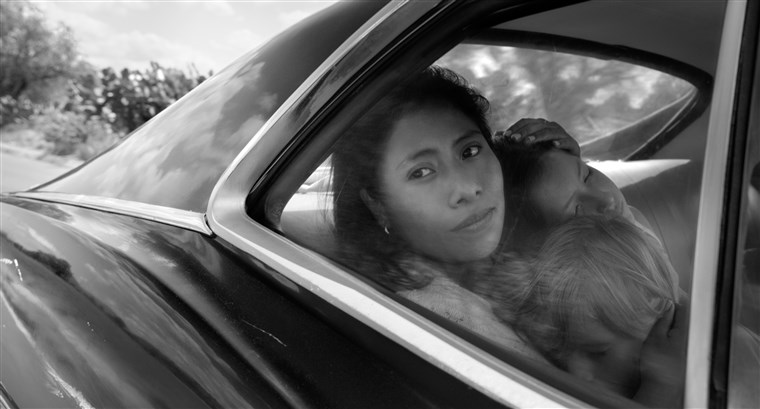
    Dripping in contrast thanks to its harsh black-and-white cinematography, “Roma” is a rich and searing look into Cuarón’s mind through a portrait of his childhood, and yet, chances are you’re never going to get the full “Roma” experience.

    Purchased by Netflix as the streaming service’s premiere awards season contender, “Roma” has had a minor run theatrically in larger markets across the world before making its online debut Friday.

    While this has made the wonderful drama much more accessible to the average moviegoer, ninety percent of audiences for “Roma” will never experience the film as Cuarón intended, especially disappointing given the picturesque, 65mm black-and-white style used to shoot “Roma.”

    There are countless articles online that offer tips on how to configure televisions for optimal viewing of “Roma” for those inclined to get as close as they can to the real thing.

    Set over the course of a year in early 1970s Mexico, “Roma” follows Cleo, a young live-in housekeeper in the employ of a middle-class family living in Mexico City.

    Told in a lingering observational style for much of the film’s two-hour running time, “Roma” often relies on mood, non-verbalized emotion and framing to paint a broad picture of the struggles of two women, Cleo and Sofia, the matriarch of the family and mother to the four children in Cleo’s care.

    “Roma” is by no means an easy watch. There’s an expectation of supreme patience and observation on the part of the viewer to take in the artistry of Cuarón’s work that’s far easier to accomplish in a theater than on a home television or cell phone.

    First time actress Yulitza Aparicio wows with an understated, raw performance that feels effortless yet makes Cleo feel very lived in as a character. Her award-worthy turn feels especially natural due to the way Cuarón frames Aparicio in each shot, allowing audiences to peer inside Cleo’s innermost thoughts without Aparicio having to express them in dialogue.

    Marina de Tavira also stands out in limited screen time as Sofia, balancing compassion for Cleo with a wavering confidence she attempts to maintain for her children.

    The men of “Roma,” few and far between, are portrayed at a distance rather than the intimate closeness audiences feel in Cleo’s presence. This extends to the coldness of the performances themselves, where Fernando Grediaga as Sofia’s husband Antonio and Jorge Antonio Guerrero as Cleo’s boyfriend Fermin display a callousness rare to find in these sorts of family dramas.

    So much of “Roma” feels semi-autobiographical that Cuarón himself becomes the film’s true star despite never appearing on screen. Moments of clarity from memories past bring themselves to life through Cuarón’s art, much like a master painter leaving broad strokes for viewers to interpret.

    The most striking aspect of “Roma” is its technical achievements in visual and sound design.

    Cuarón steps behind the camera to do his own cinematography for the first time and displays expert craftsmanship over long panning shots that track movement fluidly and smoothly in a way that makes viewers take notice but does not distract from the action on screen.

    This is most evident in the film’s best scene, one continuous shot that follows Cleo and the children across a beach and into the ocean and back. There is an immediacy to the cinematography here that gives a floating effect, almost as if audiences are reflecting on a distant memory with vivid recollection.

    The same is true of the film’s expert sound mixing and design, which at first glance isn’t recognizable until voices or other sounds pull viewers’ gazes away from the screen only to realize what they thought they heard from around them was technical wizardry from “Roma.”

    The film is destined to garner Academy Award nominations across the board and is the clear frontrunner in the Best Foreign Language Film category this spring.

    A Best Picture nod is all but assured, though victory in that category is less likely than say, A Star is Born or Green Book, given the Oscars’ preferential balloting system for the category usually results in the most agreed upon good film rather than the best one.

    Netflix has placed all its weight behind Cuarón’s dynamic film in search of its first Best Picture win, though voters could opt to recognize Cuarón as Best Director to shut out the streaming service while still honoring “Roma” as a cinematic achievement.

    Worth seeing in any format, “Roma” is best when viewed on the biggest possible screen with the least amount of distractions. Patient audiences should be rewarded with one of the year’s best dramas from a master craftsman like Cuarón.