Year: 2022

  • Glass Onion: Whodunnit in the modern era

    Glass Onion: Whodunnit in the modern era

    Three years ago, writer/director Rian Johnson wowed audiences with an unexpected, compelling and hilarious take on the classic Agatha Christie-esque murder mystery genre.

    His Knives Out brought viewers into the world of a rural New England town filled with intrigue, suspicion and family tension while debuting an eccentric Southern detective on par with Hercule Poirot and Sherlock Holmes in Daniel Craig’s Benoit Blanc. 

    The success of Knives Out – which made over $300 million on a $40 million budget – prompted Netflix to spend $469 million to purchase the rights to two additional installments in what would become a franchise centered around Blanc’s exploits.

    The first spiritual sequel opened this past weekend with Glass Onion: A Knives Out Mystery debuting on the streaming service after a limited one-week theatrical run over the Thanksgiving holiday.

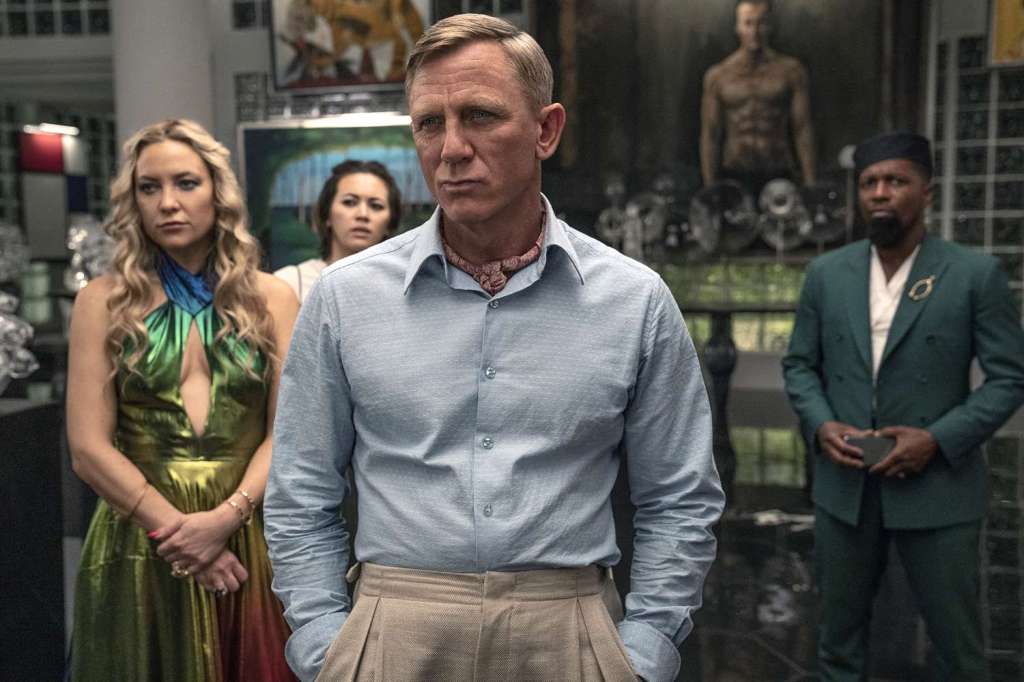
    The film sees Blanc whisked into a world of high society and social media stars brought together by a tech billionaire for a murder mystery game that proves deadly and sets Blanc off to find a genuine killer on a remote Greek island.

    What truly stands out about Glass Onion are the film’s illustrious and perfectly cast stars, most notably the returning Craig. His Blanc, fully formed in a second installment, is even more dry in his humor and Craig revels in the ability to acutely play the line between investigator and comedian.

    A sequence early in the film that reveals what Blanc has been up to during quarantine for the COVID-19 pandemic is especially sidesplitting in its humor and Johnson deftly sidesteps the pandemic while also addressing directly issues that would arise in an elite world given the circumstances. 

    Glass Onion wouldn’t work as well as it does on Craig’s performance alone.

    Johnson meticulously assembles an ensemble to surround Blanc that ramps up the humorous elements from the original while maintaining quality in the acting as well.

    Even by the standards of murder mystery where viewers must question the motivations of everyone but the detective, Janelle Monae has an arduous task in front of her being especially mysterious and vague and the accolades she’s been receiving as a possible best supporting actress contender are certainly valid.

    The showiest work in the film comes from Kate Hudson and Dave Bautista, who are both truly going for it as over-the-top versions of characters viewers might associate them with from other work, but the smartness of Johnson’s screenplay and guided hand in direction keeps the comedy fresh and not too on the nose.

    Edward Norton feels lighter and as if he’s having more fun with a role in some time as the tech billionaire at the center of the mystery, while Kathryn Hahn comes alive with small repartee that helps keep Johnson’s masterful screenplay at the forefront.

    Because so much of the success of the first film came from a shared viewing experience in theaters, it’s hard not to be somewhat disappointed by first time at home screening of Glass Onion where the wry, smart comedy of Johnson’s screenplay perfectly acted by perhaps the year’s ensemble cast doesn’t land in the same way without others around to share the moment.

    This isn’t to say that Glass Onion isn’t a terrific blockbuster film. Johnson has recaptured the magic of Knives Out and brought it back to life in a new environment that will give audiences something fresh to mull over and find all the hidden easter eggs and clues as the layers unravel.

    There’s been some buzz that Glass Onion would make waves and enter the Academy Awards’ best picture race, though that seems to be overblown somewhat simply due to it being Netflix’s best chance rather than being worthy of a nomination.

    The lack of a true theatrical experience really dulls the shine on Johnson’s film and keeps it from being on par with the original Knives Out, but regardless, Glass Onion: A Knives Out Mystery is certainly an entertaining at home experience that will pull cinephiles out of their seats during family gatherings this holiday season.

  • Avatar 2: Big waves, shallow depth

    Avatar 2: Big waves, shallow depth

    James Cameron hasn’t made a new film in over a decade.

    The blockbuster spectacle-creator behind epic movies like Aliens, The Terminator and Titanic last showed his craft on the big screen in 2009 with a technologically revolutionary feature about human colonizers on a space world in Avatar, an Oscar nominee for Best Picture that won several technical awards.

    Since then, Cameron has long sought to make a follow-up, but sequels languished in pre-production for world building and then a four-year shoot for the next two installments has kept his burgeoning Avatar franchise on hold.

    The wait finally ended this past weekend as Avatar: The Way of Water arrived to great fanfare in theaters nationwide. The immersive world of Pandora takes on new life thanks to digital innovations Cameron adds to his arsenal as audiences are transported under the sea creating new depths and expanding the universe of Cameron’s narrative.

    Way of Water catches up with Jake Sully and his Na’vi family ten years after the events of the original film which saw the tribal clan run Earth military off Pandora completely.  Sully believes himself to be at peace until the “sky-people” return to hunt him down and fully colonize Pandora.

    Returning from the original film, Sam Worthington is less stiff in his second foray as Sully, in part because he doesn’t have to emote in human form and the expressiveness on his face is partially digitized. Even still, Worthington has more of a gruff military persona than anything although it’s clear that he’s capable of showing Sully’s sense of duty as a father. 

    For whatever reason, the Avatar films aren’t as much about character as they are about spectacle. Cameron is less interested in telling a story than crafting a world and this comes through in elongated sequences that take 20 minutes when two would have sufficed.

    Because the characters ultimately don’t matter, the actors portraying them are left with little to identify with. 

    This is especially true of the film’s female performances, where Zoe Saldana is largely left to sob and showcase her action prowess while being shoved into the background after her Neytiri was a pivotal character in the original.

    Kate Winslet joins the cast as a rival chief’s wife and perhaps has 10-15 lines of dialogue despite being in most scenes, while Sigourney Weaver returns as her character’s own daughter in a perplexing, disjointed bit of storytelling that might only make sense when the next film arrives in theaters.

    If there are any stars of the show, they come in the form of the film’s young actors who play the next generation of Na’vi, but truly in Avatar, the only character that matters is Cameron himself.

    For the most part, audiences will come to see Way of Water not for the story, but for the visuals that define the franchise.

    It’s a film that’s gorgeous to look at even with the sound completely off that truly takes advantage of a cinematic master’s ability to visually world-build.

    Underwater sequences bring new life to Way of Water and break up segments of the film that often feel somewhat repetitive to the original film and although it’s somewhat engaging for viewers to feel Pandora just beyond their fingertips, Way of Water isn’t a feature that demands viewing in 3D despite Cameron’s crafting the mold for blockbuster films to leap off the screen for the better part of a decade.

    The film’s over three-hour running time is especially draining on viewers not completely immersed in the story-telling. 

    Despite the visual wonders, there isn’t enough substance to justify the length and Cameron’s cut of the film lacks proper pacing to balance out story with visuals. It’s almost as if the veteran filmmaker decided to leave almost nothing on the cutting room floor, allowing each one of his sequences to play out fully because they look cool rather than adding to the overall narrative.

    As a result, Way of Water can feel at times like a theme park ride rather than a theatrical movie experience.

    Regardless, the film – if on pedigree alone – will be a major contender this awards season for both best picture and a frontrunner in many technical categories, with Cameron likely to be given a best director nomination as well.

    With the holidays bringing families together at the theaters, Avatar: The Way of Water will likely appeal to those wanting to get out of the house and yet feel closer to their own families. Now will be as good a time as ever to see Way of Water the way Cameron intends, but at the end, the sequel fails to live up to the promise of the original.

  • Empire of Light: Cinema in all capital letters

    Empire of Light: Cinema in all capital letters

    One of an auteur’s favorite things to center their films around is the art of cinema itself.

    Filmmakers started off their careers as moviegoers and these experiences color and impact everything about how they write, direct and produce their own work.

    Sam Mendes’ extensive theater and filmmaking background come to fruition with his latest film, Empire of Light, a languishing, self-indulgent look at the world of cinema through the eyes of a box office manager at the Empire Theater in south England.

    It’s a movie that just screams out “CINEMA!” at the top of its lungs even though it doesn’t really understand what exactly that entails or means in the context of the story Empire is trying to tell.

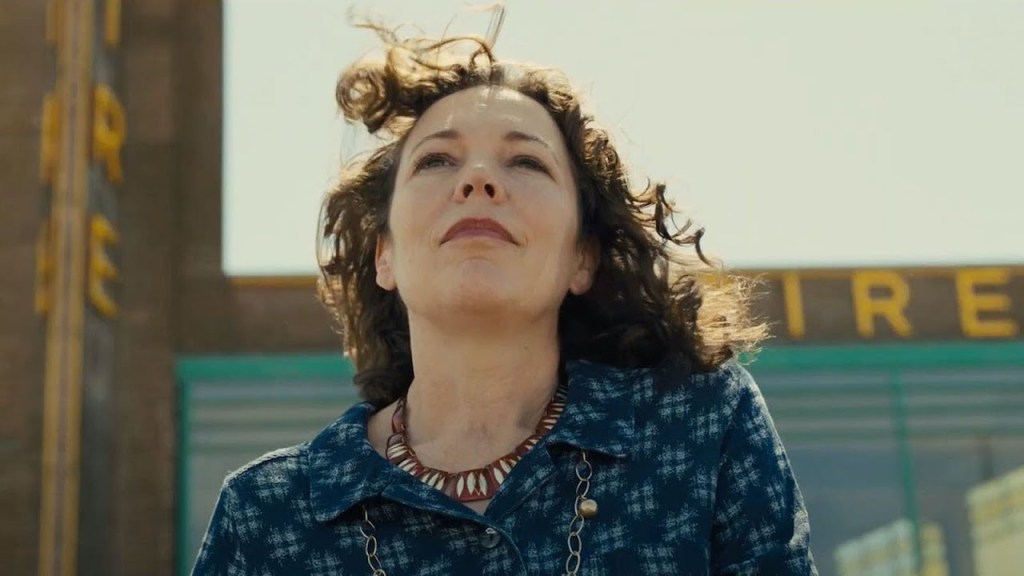
    At the core of its storytelling, Empire is a simple tale of a shy older woman played by Oscar winner Olivia Colman, who befriends and later falls for a black coworker played by Micheal Ward while she is simultaneously coerced into a sexual relationship with her boss.

    Though he’s credited as the lone screenwriter, Mendes isn’t terribly concerned with the narrative at all. It simply serves as a basic structure to center his motif-driven feature on cinematic wonder during a formative time in the early 1980s. This makes Empire exceptionally inaccessible for some audiences who may struggle with the looseness of the narrative and lack of significant plot, yet at the same time, Mendes may draw in certain viewers with the painstaking care to which he showcases the meticulous craft of cinema.

    Structurally, there’s a significant issue relating Colman’s character to Ward’s in a cohesive way as Mendes would rather show than tell audiences how their unlikely romance begins. 

    Empire is more of a think piece than a considered theatrical experience, ironic given how many films are shown within Empire, most notably the Oscar-winning Chariots of Fire which plays a pivotal role in the second act.

    Colman tremendously creates layers to her Hilary, especially as the film lingers on and audiences come to learn more of her backstory which complicates her relationships with everyone around her.

    While it is not as bombastic nor driven as efforts by Cate Blanchett in Tár or Michelle Yeoh in Everything Everywhere All At Once, Colman has the ability to be equally as transfixing and carry the overall narrative forward with a performance that’s among the year’s best.

    Her primary counterpart in Ward’s Stephen is equally as subdued with a quiet earnestness and sentimentality that makes him somewhat a compelling character although much like James Gray’s Armageddon Time, Empire struggles to find the right tone when it comes to racial and societal implications it’s making and a pivotal scene to open the final act really isn’t properly foreshadowed well enough to balance with the overall tone of the film.

    The supporting cast led by Firth as the theater head and Toby Jones as the projectionist is solid but given light character work due to Mendes’ very loose brushstrokes on plot development.

    Without question, the MVP of Empire is the dynamic cinematography from director of photography Roger Deakins, a master at his craft who make every second of Mendes’ film a joy to watch even when the storytelling doesn’t live up to the same expectations.

    He is especially adept at using light in all its forms, both in bright open spaces and tight confining moments as well as the contrasting nature of pitch-black darkened theaters to illuminate the picture coming through the Empire’s projector.

    Many of the moments that work best in Empire come from Deakins’ ability to capture Mendes’ artistic vision for what cinema truly means to both moviegoers and the people who work to bring these cinematic tales to life. 

    Though Empire of Light certainly isn’t for every moviegoer, ardent cinephiles willing to overlook the film’s structural shortcomings and live in the broader pen strokes of Mendes’ vision will find the film to be an intriguing experience in theaters.

  • Devotion: Old school war drama

    Devotion: Old school war drama

    It’s often said that “they just don’t make ‘em like they used to anymore.”

    This is especially true when it comes to the world of filmmaking, where studios are consolidating the types of movies they produce in order to maximize profit margins.

    Whether it’s due to analytics or the whim of a finicky studio head, certain types of films just aren’t being greenlit or given the support that they once did.

    For example, a war drama based on a true story released over the Thanksgiving weekend should have easily played in 3,000+ theaters across the country for the next six weeks. And yet, an incredibly unassuming, patriotic film like director J.D. Dillard’s latest feature has largely flown under the radar.

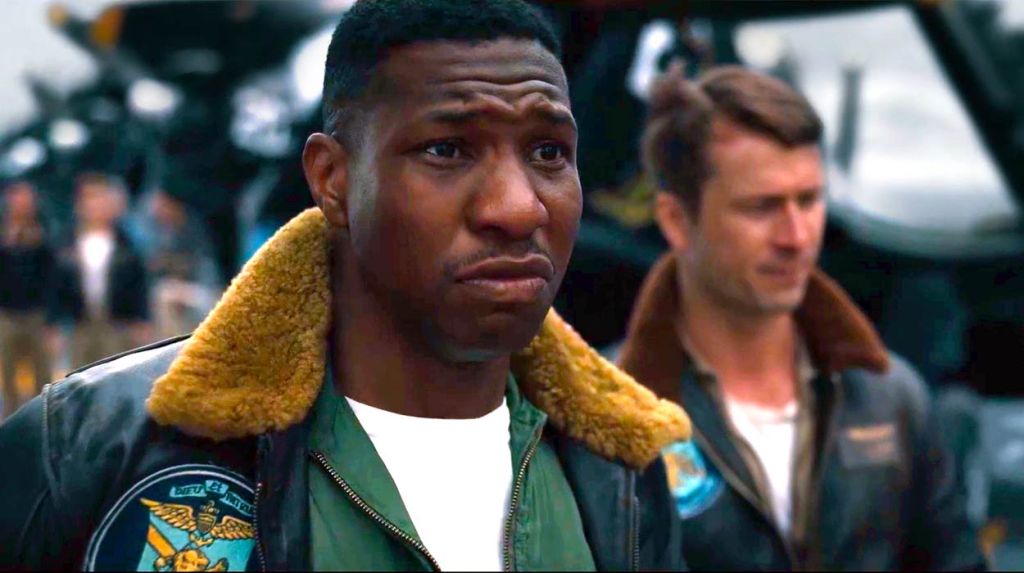
    Devotion, led by burgeoning Jonathan Majors and Glen Powell, tells the story of Ensign Jesse Brown, the first African American naval aviator who flew combat missions during the early moments of the Korean War alongside his Caucasian wingman.

    A blend of popular, successful films like Top Gun: Maverick and Green Book, there’s no reason why Devotion isn’t garnering much wider acclaim and attention from audiences this holiday season.

    The film’s two lead actors have terrific chemistry opposite one another and are equally transfixing on their own.

    Majors’ relatively subdued performance as Brown underscores just how talented of a character actor he’s been since his breakout turn in The Last Black Man in San Francisco.

    He projects a quiet meekness somewhat explained away by Brown’s desire to blend in and maintain his status within the Navy and yet there’s a hidden warmth to the character, especially in moments opposite Christina Jackson as Brown’s wife Daisy that are personal and touching.

    Taking somewhat of a page out of his Top Gun: Maverick co-star Tom Cruise’s book, Powell has a stoicism about him that highlights his Tom Hudner’s sense of duty and patriotism, but there isn’t a rigidity to the character. Powell showcases the ability to harness emotion when needed yet maintains military composure.

    The middling screenplay from writers Jake Crane and Jonathan Stewart – adapting from the book by Adam Makos – does both leads somewhat of a disservice in that there’s really not much deep conversation nor major character development for either lead. 

    It’s as if both are friends through mutual admiration and respect in short order and their differences, while on the surface seem major due to racial politics of the era, are shown to be incredibly minor which leaves both actors little to play with.

    This is also true of the length of the middle section of Devotion, which languishes during a 15-plus minute sequence during the aviators’ shore leave and interaction with a famous film star in Cannes that drags down the overall pace of the film.

    What makes Devotion an emotional and intense experience comes in the film’s final act where audiences see the wingmen fly several combat missions in the heart of Korea.

    Filmed as practically as possible with period aircraft under the supervision of Top Gun: Maverick aerial stunt coordinator Kevin LaRosa, the action sequences are engaging to the point of leaving viewers on the edge of their seats, while not overwrought and in keeping with combat tactics of the era.

    Dillard is well adept at making the transition from drama to action feel smooth and cohesive within the narrative and the cinematography from Erik Messerschmidt is solid throughout while not being obstructive to the acting work at play.

    A solid, unspectacular period war biopic drama criminally underseen this holiday season, Devotion is a film well worth moviegoers taking the time to seek out with friends and family.

  • The Fabelmans: Making movies about making movies

    The Fabelmans: Making movies about making movies

    Steven Spielberg has always been a director who cares deeply about the artistry behind his films.

    Influenced by some of the great filmmakers of the past – most notably John Ford – Spielberg is an exceptional, introspective master of cinema with a clear voice and vision who truly wants to bring magic to the screen at every opportunity.

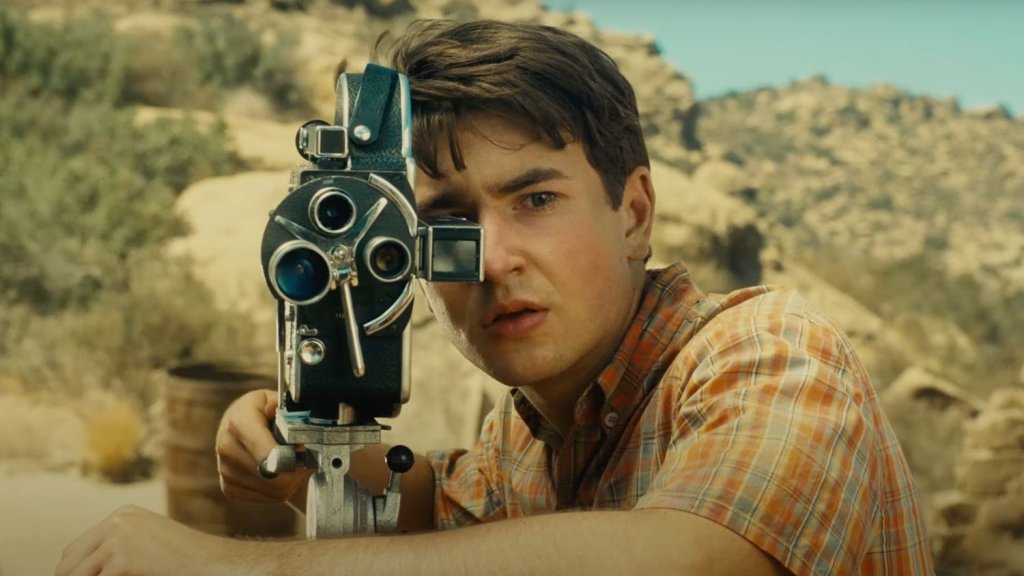
    His latest film, The Fabelmans, is a semi-autobiographical experience that captures so much about what makes Spielberg a great filmmaker, especially when audiences see things through the eyes of young protagonist Sammy.

    But at the same time, The Fabelmans has major flaws due to the film’s uneven storytelling and general lack of cohesive chemistry between its three notable stars.

    Set over a decade from the mid-1950s to early 1960s, the film follows a young boy whose worldview changes so completely because of his first moviegoing experience that he sees life through a camera lens. The Fabelmans also fashions itself as a larger domestic drama in a loving Jewish-American family that struggles with the malaise of the American dream amid unspoken marital problems.

    The most prestige-laden film of 2022, The Fabelmans is a languid cinematic experience that will certainly divide audiences who love the storytelling but not necessarily all the characters throughout.

    At the core of The Fabelmans is a magnetic performance from Gabriel LaBelle as teenage Sammy. The newcomer allows viewers to see things from a completely fresh perspective in an almost reverse ingenue sort of way.

    From the time he first appears on screen about 20 minutes into the film, LaBelle is thoroughly engaging but not overwhelming in becoming a perfect protagonist for audiences to project themselves onto, or more aptly, to project Spielberg himself onto.

    The parents Burt and Mitzi, capably portrayed by Paul Dano and Michelle Williams respectively, are terrific in individual moments though their complete lack of on-screen chemistry is only somewhat incentivized by the screenplay and it’s often unclear how or why the couple are meant to be together in the first place.

    When audiences are allowed to see their relationship through Sammy’s worldview, it makes somewhat more sense, but scenes work much better when the two actors are separated physically as much as emotionally.

    Williams is especially heartbreaking in the dramatic moments and Dano has the capacity for stoic emotional strength, but Spielberg’s major interest isn’t in either character or exploring their relationship, but rather how Sammy’s parents impact Sammy himself.

    Seth Rogen’s awkward placement in the film as Uncle Bennie really stands out like a sore thumb as his natural affability plays against Rogen’s need to be more grounded in the story and it’s always at the front of audiences’ minds that it’s Rogen and not Uncle Bennie, which severely hurts a major plotline.

    On a technical level, The Fabelmans astounds with some captivating cinematography from Janusz Kaminski who has the difficult job to create the world of The Fabelmans overall but on a smaller scale, capturing Sammy’s individual filmmaking style and cinematic vision with period cameras.

    Over the course of the film, audiences see Sammy – and by proxy, Spielberg himself – evolve as a filmmaker and some of the most intriguing moments of The Fabelmans come from seeing a scene play out naturally with Sammy capturing it all and then almost immediately reenact that scene from Sammy’s perspective behind the camera. Both are masterfully captured by Kaminski in different styles that create a layered cinematic texture to Spielberg’s film.

    Without question, Spielberg’s film is sure to receive much acclaim this awards season as the presumptive frontrunner for Best Picture at next year’s Oscars although it certainly isn’t the best film of the year. The Fabelmans is a shoo-in for up to double-digit nominations including in picture, director, original screenplay, actress, cinematography, score and production design.

    Certainly among the year’s most prestigious films, The Fabelmans celebrates both youthful exuberance and a bright-eyed wonder for cinema that makes it a must see in theaters and despite not being quite at the upper echelon of Spielberg’s illustrious career, it’s a movie that will remain in the back of cinephiles’ minds for some time to come.

  • Armageddon Time: Uneven American angst

    Armageddon Time: Uneven American angst

    For whatever reason, 2022 seems to be the year in which celebrated auteurs have decided to collectively look back at their childhoods to mine their youth for dramatic themes and commentary on modern society.

    Whether it be the isolation of the COVID pandemic or these veteran filmmakers actualizing their own autobiographical works, it seems moviegoers will have no shortage of self-indulgent drama this holiday season with Netflix putting their weight behind Alejandro G. Iñárritu’s Bardo, and Steven Spielberg pushing towards another best picture bid with The Fabelmans.

    The first of these major films to play upon this narrative comes from writer/director James Gray, whose film inspired by his youth growing up in 1980s Queens is a captivating yet troubling portrait of an America that feels so far away yet so close.

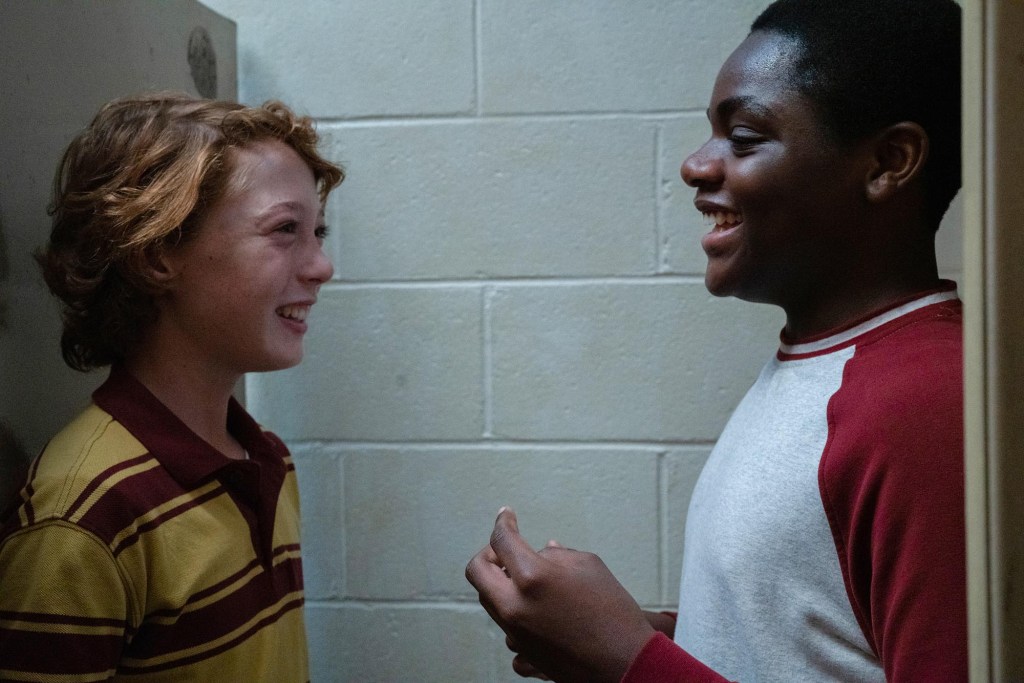
    Armageddon Time follows a young Jewish-American boy who befriends an African American classmate after both are picked on by an overbearing teacher and follows him as he struggles to adapt to familial expectations and a world filled with prejudice.

    While not overly political in nature, Gray’s film certainly takes more advantage of opportunities to villainize one side of the current political spectrum and yet at the same time is a wonderfully touching time capsule of the intimate family drama that Hollywood isn’t really interested in making these days.

    The core of what makes Armageddon Time a movie worth watching are the fantastic ensemble performances, most notably from the two young leads Banks Repeta as Paul and Jaylin Webb as Johnny.

    Because so much of the film leans heavily on Paul’s perspective, Armageddon Time required Gray to find a young performer capable of showing naivety but also a relentless charm amid the tomfoolery of innocent childhood. As Paul, Repeta anchors the film with a steady presence that allows the characters around him to be much more demonstrative, especially his parents played by Jeremy Strong and Anne Hathaway who give compelling performances while not being over-the-top as stereotypical Jewish-American parents.

    While Gray isn’t really interested in the emotional connection between Paul and his parents, both Strong and Hathaway give layered, nuanced turns in limited screen time more separately than in tandem as Armageddon Time primarily operates in one-on-one dialogue scenes.

    The best performance in the entire film and the best chemistry Repeta is able to create with another character comes in Paul’s relationship with his maternal grandfather, Aaron, played by Oscar winner Sir Anthony Hopkins.

    Hopkins’ Aaron is the sort of jovial, heartwarming best friend figure that Paul needs and while Hopkins isn’t necessarily the best choice to round out this family dynamic, on an individual level in scenes with Repeta, Hopkins truly makes Gray’s emotional drama come alive with poise and gravitas that the film does not otherwise have.

    It’s perhaps the most poignant and beautiful supporting performance so far this year and is worth the price of admission alone especially for a pair of scenes between grandfather and grandson that do little to further the film’s narrative but sets the emotional core of the entire feature.

    Armageddon Time has issues relating to a “white savior” narrative or more broadly the racial commentary that Gray doesn’t completely understand that he’s making, but despite this, Webb steals scenes with ease as Johnny despite the problematic ways in which the character is written and underdeveloped. It’s unclear if Gray truly considers Johnny’s financial and societal plight worthy of examination or simple pity at all, which holds the overall film back.

    There’s a world in which Armageddon Time dials back the political commentary in deference to the social and would probably make a more well-rounded film. This is especially true as it relates to the inclusion of members of the extended Trump family into the narrative for little reason, although Jessica Chastain is exceptional in a small cameo as Maryanne Trump.

    Armageddon Time is certainly an aspirational awards contender that doesn’t fully come together cohesively as a narrative but taken in small scene by scene moments would be worthy of an at-home viewing experience later this fall.

  • Black Panther Wakanda Forever: Masterfully uneven

    Black Panther Wakanda Forever: Masterfully uneven

    As the Marvel Cinematic Universe (MCU) continues to expand now 30 films deep into its plethora of movie and television franchises, it’s become exceptionally hard for the comic book studio to produce quality entertainment that doesn’t feel repetitive and increasingly mundane.

    Studio head Kevin Feige has done a more than adequate job attempting to fill this gap by finding directors with unique visions to bring bold, fresh ideas both visually and from a storytelling perspective to create buzz and life for his projects. This is especially true with the return of Sam Raimi to Marvel filmmaking with the second Doctor Strange film as well as Oscar winner Chloe Zhao’s Eternals.

    But the most successful pairing of celebrated auteur into the MCU has been Marvel’s relationship with Fruitvale Station director Ryan Coogler, whose 2018 film Black Panther was nominated for a Best Picture Oscar and saw Coogler create a truly dynamic, visually arresting world that felt authentic both to the comic book experience and modern cinema.

    He returns to the MCU director’s chair with his most difficult task to date, continuing the legacy of Black Panther after Chadwick Boseman’s unexpectedly tragic death due to colon cancer in 2020.

    As a result, Black Panther: Wakanda Forever is a conflicted superhero tale without a hero that does a masterful job memorializing Boseman while attempting to sort out its own future in the balance. 

    The best elements of the film come in the more dramatic storytelling moments that it feels Coogler has his hands all over, especially in the opening funeral sequence and endcap of the film that are bathed in bright sunlight and rich costumes from Ruth E. Carter, who won an Oscar for costuming the original Black Panther film and sure to be nominated again for the sequel.

    Coogler’s strengths as a worldbuilding filmmaker continue here though he spends less time developing Wakanda itself opposed to crafting a second underwater civilization to introduce the film’s questionable antihero Namor and the world of Talokan.

    It often feels as though Coogler – perhaps on his own, but more likely at the behest of Marvel – puts as many characters as possible into major parts of Wakanda Forever to find the franchise’s next major star.

    This creates some problematic excess in storylines and a bloated nearly three-hour runtime that while it never feels choppy or poorly edited, it’s as if Wakanda Forever bites off one or two more ideas than it can chew on.

    It appears Letitia Wright’s Shuri, a fan favorite from the original film, is a primary benefactor of the spotlight in Wakanda Forever, a role that the actress is capable of handling but the largely somber, sometimes rageful Shuri is a far cry from Wright’s original interpretation of the character in 2018 and doesn’t quite have the same positive impact.

    Larger roles are given to both Angela Bassett as Queen Ramonda and Danai Gurira as Okoye with both actresses being bright spots in the film for different reasons. Bassett brings much needed gravitas to the dramatic elements while Gurira more than capably handles the intense action sequences Okoye is given, which are the most compelling fights in the entire film.

    Relative newcomer Tenoch Huerta is the most well-rounded character in the film as Namor, both in the fact that Coogler spends the most time developing Namor’s backstory and crafting the world of Talokan, but also allows Huerta to take the time to emotionally mine the complexity of the revamped character to reflect nuanced culture origins evoking Yucatan Maya.

    Much like the original Black Panther, Lupita Nyong’o gets a billing far beneath her considerable talents and the limited moments the Oscar winner can act beyond simple plot mechanizations are among the most compelling in the entire film. 

    What stands out in a negative light about Wakanda Forever is the disparity between Coogler and Marvel within the same film.

    Audiences will clearly see the moments where Coogler has full control over storytelling, visuals and worldbuilding which is awkwardly juxtaposed against audacious and unnecessary illusions to other MCU projects and mediocre CGI battle sequences.

    Awards season expectations for the sequel to Marvel’s lone Best Picture nominee were high, but it feels as though Wakanda Forever will fall significantly short with perhaps only costume, production design and best original song nods.

    The best film in a very weak MCU class post Avengers: Endgame, Black Panther: Wakanda Forever must be seen in the theaters in order to fully engage with Coogler’s more dynamic storytelling while also being the only opportunity audiences will have to enjoy the film without being spoiled about major plot points.

  • Causeway: Return to form

    Causeway: Return to form

    It’s unclear if Apple, a major player in the technology world but relatively new in film production, has any idea what to do with the movies it releases.

    After making a big splash last year with their surprise Best Picture Oscar winner CODA, the up-and-coming movie studio had several anticipated titles on their slate over the next 18 months but has struggled to choose which, if any, of these films are worth a large theatrical release or even promotion beyond dumping onto its Apple TV+ streaming service to little fanfare.

    Unfortunately, the latter is the case for Academy Award winner Jennifer Lawrence’s first real foray back into dramatic work in many years with the somber independent drama Causeway, the feature film debut for director Lila Neugebauer.

    With Lawrence at her best since an Oscar win in Silver Linings Playbook or perhaps even further back to her debut in Winter’s Bone, there’s absolutely no reason why Causeway shouldn’t be a film at the front of moviegoers’ minds this holiday season and yet somehow a film of this quality just trickles out with little notice.

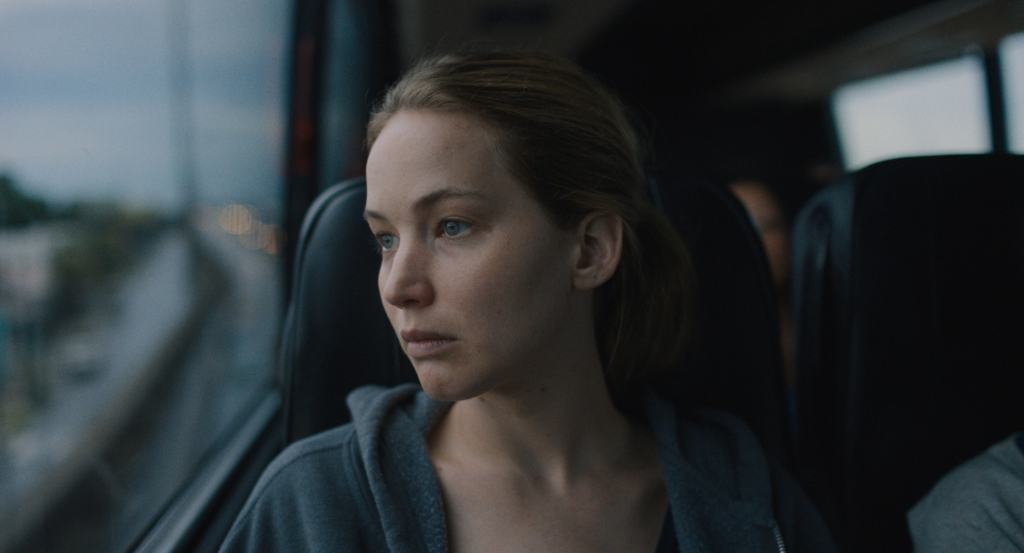
    Causeway, which debuted on Apple TV+ on Friday after a small theatrical release, stars Lawrence as Lynsey, a member of the Army Corps of Engineers returning home to New Orleans to face a grim reality after her unit was decimated by an improvised explosive device in Afghanistan.

    Neugebauer’s film is poignant and small in scope with few characters and a limited world to build around, which keeps the focus almost entirely on Lawrence’s stoic and layered performance throughout.

    It’s a stripped-down turn from the Oscar winner who really feels like she’s getting back to her independent acting roots after toiling away for the better part of a decade in franchise and blockbuster films.

    Lawrence’s commitment to Lynsey’s pain, both in the emotional and physical level, is real and the awkward lack of chemistry Lawrence has with every other character on screen is palpable yet intentional. It’s meant to display Lynsey’s psychological fragility but in a larger sense, the constate state of malaise and unease returning soldiers face when they come home only to feel the pull back to the front lines as quickly as possible.

    It’s a considered performance very reminiscent of turns like Jeremy Renner in The Hurt Locker or Bradley Cooper in American Sniper, although increasingly more subtle and nuanced as Lawrence and Neugebauer take Causeway at a much smaller scale to really individualize Lynsey’s struggles.

    While Causeway fully encircles Lawrence’s Lynsey, it’s not the only astonishing performance in the film. Brian Tyree Henry, a veteran character actor known for the FX television show Atlanta and Barry Jenkins’ drama If Beale Street Could Talk, does his best work since Beale Street as James, an auto mechanic Lynsey befriends upon her return home.

    While at first, the unlikelihood of their friendship confounds audiences, it’s when the film reveals itself and James opens up about his own past that Causeway truly comes alive to allow both phenomenal performers to fully engage with the weight of the drama and mine the emotional depths within.

    As is often the cast with these tiny, considered independent films, Causeway is boosted by incredible yet unobtrusive cinematography from Diego Garcia that really places Lawrence and Henry at the center of the frame while making the city of New Orleans a larger character. There is a lot of beauty within smaller moments simply watching Lynsey clean relatively abandoned pools or seemingly innocuous scenes of dialogue bathed in bright sunlight or deep, rich nighttime black all while perfectly underscored by composer Alex Somers.

    It’s unfortunate that Causeway will likely have no chance at major awards consideration this fall given Apple’s inconsistency in their film promotion though both main actors deserve acclaim and will likely have strong showings among critics’ groups and at the Film Independent Spirit Awards early next year.

    Certainly one of the year’s most underseen dramas, Causeway is a film that audiences will appreciate if they are able to live quietly within the moments that Neugebauer provides and focus on the nuance of the acting within while not being distracted during a home viewing experience.

  • The Banshees of Inisherin: The charm of simple storytelling

    The Banshees of Inisherin: The charm of simple storytelling

    So often movies must have big, grandiose stakes in order to appease a wide audience.

    They have global, if not universal consequences to the world filmmakers create, require massive budgets, large casts, intricate sets and visual effects to become cinematic blockbusters worthy of the big screen.

    The scale to which the average movie has expanded has drastically altered the landscape of modern filmmaking and when more intimate portraits of simplicity are crafted by experts with unique vision and care, this exceedingly rare achievement deserves to be shown to as wide an audience as possible to remind moviegoers that not every movie must be an epic tale.

    Such is the case with Academy Award winner Martin McDonagh’s latest feature, perhaps the simplest of his four films that examines a low-stakes story between two men with a relatively minor grievance and allows it to play out naturally and fluidly over the course of 100 minutes.

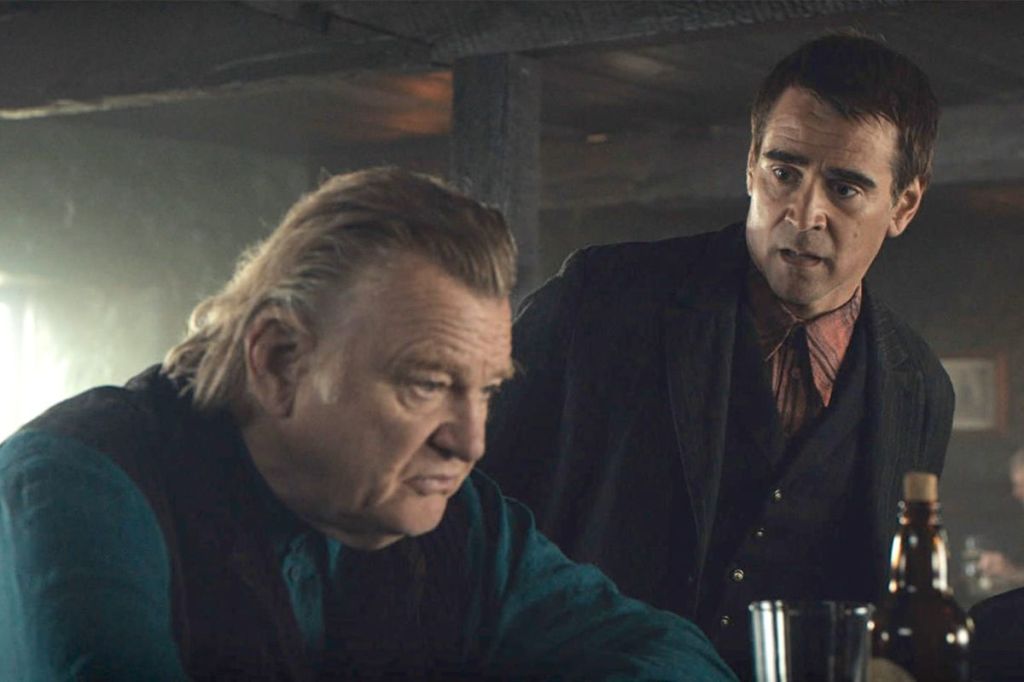
    Set on a remote island off the coast of Ireland, The Banshees of Inisherin follows long-time friends Pádraic and Colm at a crossroads when Pádraic goes to Colm’s house to invite him to the local pub only to realize that Colm no longer wants to be friends or even speak to him ever again.

    Because of the stakes of Banshees are so small, there’s a lot of time for McDonagh and his cast to unpack the seemingly simple act of ending friendship and expand the depths to a scale more befitting of a stage play rather than theatrical cinema. 

    Banshees is McDonagh’s most composed and focused as a screenwriter, with a tightly constructed world that focuses on dialogue rather than bombastic violence like his Oscar-winning Three Billboards Outside Ebbing, Missouri or the audacious Seven Psychopaths. It’s also McDonagh at his strongest in the director’s chair as he commands the camera with an assuredness he hasn’t completely shown before as a filmmaker.

    But it’s clear from the outset that McDonagh’s vision for Banshees is closely woven in with the actors he wrote the film for, reteaming him with his In Bruges stars Colin Farrell and Brendan Gleeson.

    As Pádraig, Farrell takes a rather bland character and invigorates him with more heart than any performance in the talented Irish actor’s career. Farrell portrays Pádraig as charmingly simple and it never feels like Farrell rushes through the moment or overly considers Pádraig’s thoughts, rather the simplicity comes as a natural extension of Farrell’s connection to the character.

    This is especially true when it comes to Pádraig’s devotion to Colm, where the emotional bond between Farrell and Gleeson seeps over into their characters as it would normally resonate better in a stage play. The genuine affection the two have for each other radiates off the screen even as the plot drives Pádraig and Colm further apart.

    Gleeson, though clearly in support, also more than holds his own through a stoic gruffness that keeps viewers on the edge of their seats wondering what Colm’s true motivations are and whether he’ll live up to his words.

    The secondary characters of Banshees, especially Kerry Condon as Pádraig’s sister and Barry Keoghan as the town simpleton, help provide color to the vibrant world McDonagh creates in such a small setting.

    One of the most entertaining elements in Banshees are the ways in which McDonagh utilizes animals as supporting characters, whether it be the emotional connection between Pádraig and his donkey Jenny or a particularly funny exchange between Colm and his dog.

    The film is visually arresting without being distracting from the overall narrative and cinematographer Ben Davis does a remarkable job in both framing and especially lighting Banshees in interesting and engaging ways. This is particularly true in how the town pub is lit and the care used to frame cast members in limited natural lighting.

    Banshees has strong potential to be a major contender this awards season with the film being almost a lock for a Best Picture nomination and McDonagh’s screenplay as well as Farrell’s lead performance likely to receive considerations. It also could easily land in cinematography and score categories as well as propel Gleeson into a supporting actor nod if the film overperforms.

    Sure to be one of the year’s most acclaimed and well-received films, The Banshees of Inisherin deserves a much wider audience than its current limited release and is well worth ardent cinephiles seeking out in theaters.

  • Tár: Measures of time

    Tár: Measures of time

    Time is a very precious and valuable thing.

    What we do with our time, how quickly or slowly life seems to go all feels set at a tempo that we conduct ourselves.

    It’s also at the core of acclaimed writer/director Todd Field’s first film in 16 years, a cerebral, cold, elongated portrait of a woman convinced that she has mastered time itself.

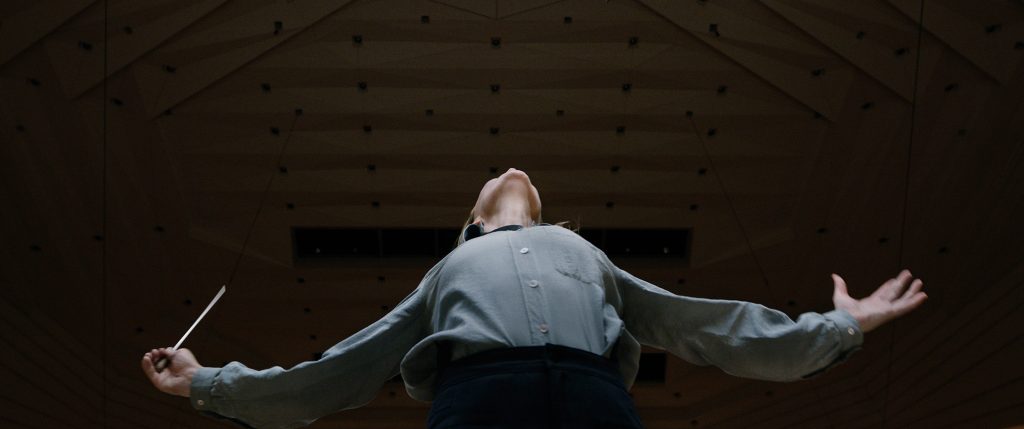
    Featuring one of the year’s most compelling performances from two-time Academy Award winner Cate Blanchett, Tár follows the titular character Lydia Tár, head conductor of the Berlin Symphony Orchestra at the top of her game preparing to achieve the pinnacle of her career when whispers of something darker begin to pervade her life and psychologically terrorize her.

    It’s important to note at the outset that Tár takes its time crafting a world rather than developing a quick, speedy plot for audiences to follow. Field is not entirely concerned with how long scenes take to develop. There are numerous extended tracking shots that cover large portions, if not entire scenes, that while beautiful, elongate Tár to a languishing pace.

    The same is true of Blanchett’s Lydia, a character so demonstrably in control that time is of no great concern to her. Every action, every physical flinch, movement, stroke of her hand is measured beyond all consideration to the point where Lydia truly believes she domineers over time.

    It’s an interesting and engaging way to approach a character and it would completely fail in the hands of anyone other than Blanchett, an actress so cerebral in her performance that viewers can easily see the wheels turning in Lydia’s head even as things begin to spiral out of control.

    Her work is especially compelling in the first act as Blanchett can chew up all the scenery around her and Lydia’s guest lecture at a Juilliard master class will certainly be one of the five best scenes in cinema this year.

    Although Blanchett rightfully dominates every moment in Tár as audiences never leave Lydia’s point of view for more than an instant, the supporting cast is exceptional in their own right, especially Nina Hoss as Lydia’s partner and a member of her orchestra and a fantastically frustrated demure turn from Portrait of a Lady on Fire star Noémie Merlant as Lydia’s assistant Francesca.

    Thanks to Field’s creative vision and Blanchett’s singular performance, Tár is so specific in its world-building and nuanced in detail that it feels as if Lydia is a real person and that Tár is a dramatic biopic in the vein of Pablo Larrain’s Spencer.

    This truly extends throughout the craft with exceptionally cinematic visuals that feel ripped out of a European museum shot by director of photography Florian Hoffmeister and a measured, yet often roaring score from Oscar winning composer Hildur Guônadóttir that blends the work of Gustav Mahler with sounds haunting Lydia’s mind.

    For as much as Tár prides itself and references time as a main theme of the film, editing is by far the weakest element of the film with a painfully slow pace dragging down the quality of the drama in the film’s back half and really making audiences feel the weight of its nearly three-hour running time.

    While it’s still unclear just how well received Tár will be this awards season, Blanchett is undoubtedly the frontrunner to win her third acting Oscar and the film could easily ride her coattails with nominations for Hoss in supporting actress, Field in direction and Hoffmeister in cinematography.

    The best chance for audiences to enjoy Tár is through an immersive cinematic experience on the big screen that requires viewers to maintain constant attention to what’s happening and allow the visual and auditory brilliance to play out. Unfortunately, for those unable to do so, it’s unlikely that at home viewing at a later date would keep viewers from fully investing in Tár.