Year: 2022

  • The Greatest Beer Run Ever: A brew for the boys

    The Greatest Beer Run Ever: A brew for the boys

    What a filmmaker does after they win a Best Picture Academy Award is an incredibly important thing.

    It helps to define their future as a director, but also put into greater context their award-winning film as either fluke or part of a larger catalog of elite work.

    It usually takes several years, if not longer, to see a follow-up film from this caliber of filmmaker and in the case of Green Book writer/director Peter Farrelly, it’s been four years since his biopic dramedy won at the 91stAcademy Awards.

    In the meantime, Farrelly has been dedicating himself to television miniseries but has returned to the big screen earlier this month with another period historical road dramedy in partnership with Apple Original Films and Apple TV+.

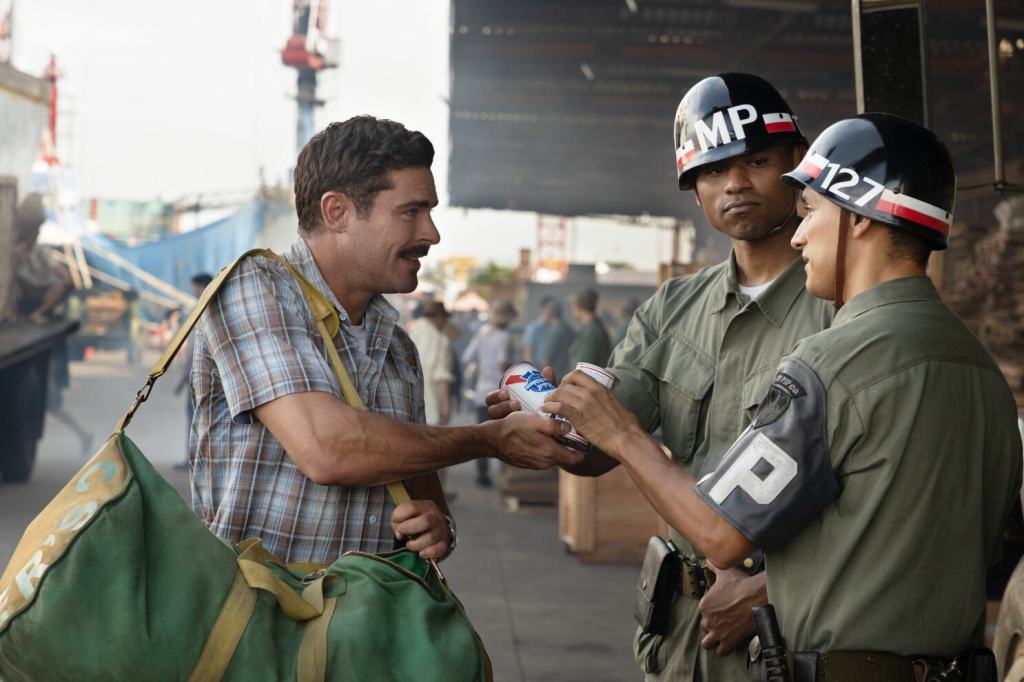
    Based on a true story, The Greatest Beer Run Ever follows a wayward Merchant Marine living in 1960s New York who on a drunken dare decides to travel to Vietnam in the middle of the Vietnam War in order to provide an in-person thank you to his neighborhood friends serving overseas with a cold Pabst Blue Ribbon. Along the way, “Chickie” Donohue is confronted with the realities of an international conflict that no one really understood unless they lived through it themselves.

    Stylistically, Beer Run feels incredibly similar to Green Book. Farrelly takes another fish-out-of-water character and trains the camera on him for two hours as he is dumped in the middle of an unexpected land.

    High School Musical star Zac Efron is woefully miscast in the lead role of Chickie, not by any fault of Efron’s performance but rather an inability of Farrelly to adequately give Efron the character development necessary to really shine.

    In Efron’s performance, Chickie is inept and outrageously lucky despite himself that is described as dumb by other characters in the film and while Efron plays the role with an affable charm, it’s not entirely a believable performance that fully honors the unique story that Farrelly and his team are trying to tell.

    This could have been a performance that would have worked much better had Efron been one of a larger ensemble cast, but because Beer Run requires him to be the sole focus of the entire film and the only character that audiences truly spend more than five minutes with, there’s too much burden on Efron’s shoulders to elevate a middling at best screenplay that lacks complex characters.

    There is a slight accent issue that becomes more tolerable as the film wears on, although it’s never quite clear if Efron is using an affectation based on the real person he’s portraying or creating his own amalgamation of conflicting Boston and New York accents.

    Beer Run has moments where Efron is truly enjoyable, usually in the lighter, more comedic scenes but when the film turns more serious, he tries his best to maintain a proper balance but can’t quite stick the dramatic landing.

    The two most famous of Efron’s co-stars are memorable in Beer Run though neither truly get enough screen time to bring out the best of their capabilities.

    Bill Murray as a retired colonel/bar owner is exceptionally gruff and while it’s easy to see how the young men admire him, Farrelly terribly underwrites the character in his significance.

    To a lesser extent, the same is true of Russell Crowe’s war photographer Arthur Coates who has a confusing mentor relationship with Efron’s Chickie that works better than it probably should thanks to Crowe’s more stoic, dramatic performance.

    Much of the film’s third act solidifies Efron as being a fish-out-of-water in large part thanks to how demonstrably Crowe’s Arthur remains calm amid chaos to counteract Chickie’s frantic nature.

    There are some solid visual moments in Beer Run, largely in the film’s more dramatic battle sequences and though the brutality of the war isn’t explored in detail, there are times in which audiences can feel a small amount of the impact.

    Beer Run will likely be left out of awards season consideration due to its middling performance, which helped Apple decide to push their Will Smith period drama Emancipation up to be their primary contender in 2022.

    It’s somewhat frustrating that a film like The Greatest Beer Run Ever never really got a large theatrical release especially in the more rural areas where Farrelly’s Green Book played exceptionally well in and it’s unlikely that the at home experience on Apple TV+ will live up to what could have been on the big screen this holiday season. 
  • Amsterdam: Nothing beneath the surface

    Amsterdam: Nothing beneath the surface

    What an absolute beautiful mess of a film.

    It’s probably the only real way to describe exactly what convoluted, unengaging yet exceptionally picturesque movie writer/director David O. Russell has made with a tremendously high budget, endlessly talented if often miscast group of actors and one of Hollywood’s best cinematographers at his disposal.

    The former Oscar nominee known for his sharp screenwriting and ability to draw compelling performances from his actors badly misfires with Amsterdam, a tale of three friends in post-World War I America who stumble upon a murder plot with ramifications far deeper than anyone could have expected.

    The heart of the film is solid.

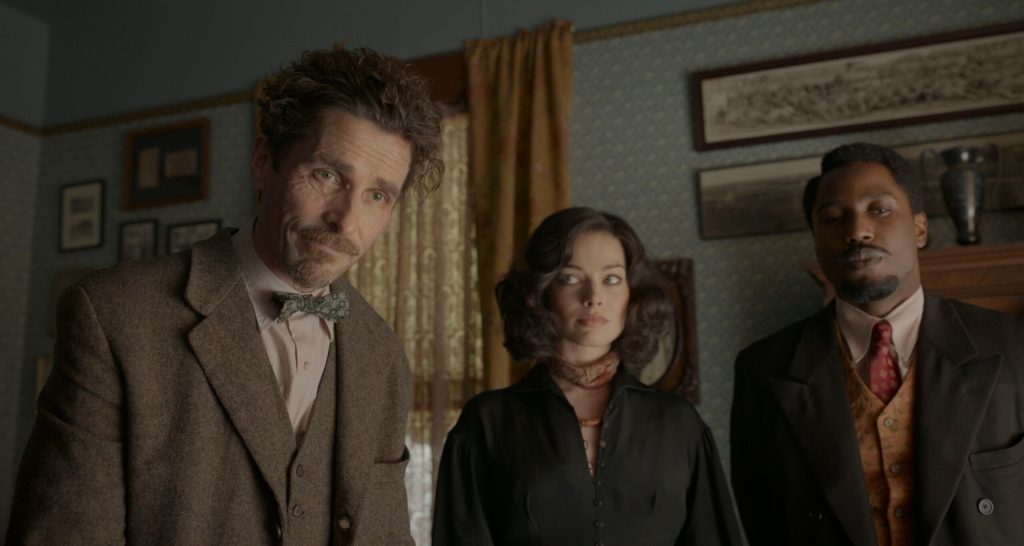
    Christian Bale, John David Washington and Margot Robbie are a fantastic trio to center a feature around and while the romantic chemistry between Robbie and Washington is almost non-existent, there’s a camaraderie to the three that largely works despite itself and makes Amsterdam more than just a plodding watch.

    Bale reteams with his The Fighter director that helped him win a Best Supporting Actor Oscar for the strongest performance in Amsterdam and is by far the most engaging character in the movie, not simply because of his Burt’s impairments – although a glass eye and back brace do give ample room for Bale to play – but his ability to make Burt exceptionally eccentric in physicality and cadence.

    There’s always a slight head tilt or hunch or minor limp that plays up but doesn’t over emphasize Burt’s deformities and with a performer like Bale, it never feels forced or caricature. It’s clear that Bale is swinging for the fences with this work and often hits the right tone, but where things falter does not lie at the feet of the actors rather Russell’s inability to figure out what kind of a film he wants to make.

    Amsterdam is both screwball comedy, political drama, murder mystery, serious, playful, quirky, dry, an amalgamation of way too many disparate parts that boggle viewers’ minds with its incoherency.

    This truly makes an impact in Washington’s performance, who attempts to portray a more straight man to Bale’s free-flowing character while also flailing in efforts to build romantic chemistry with Robbie. The inability of Russell to blend Harold and Valerie’s romance alongside a larger kinship the couple share with their mutual platonic relationships with Burt really keeps the main narrative from truly taking off.

    This isn’t to say that Washington and Robbie are at fault for the problems at hand. Robbie especially is giving a wonderful performance given how poorly the film’s female characters are handled from script to screen, a point also true for the exceptional Anya Taylor-Joy as Valerie’s sister and Zoe Saldana as an autopsy specialist. Indeed, musician Taylor Swift is thrown under the bus in service of Russell’s inept screenplay.

    Often it feels as if Russell is building a larger cast for the sake of extended cameos, taking the main trio on a series of adventures just to insert another big-name performer into the mix.

    If there is a silver lining to Amsterdam, it’s in the masterful cinematography from multi-time Oscar winner Emmanuel Lubezki that will likely be completely overlooked by audiences puzzled at how confusing and muddled the narrative structure of the film is. 

    Amsterdam almost intentionally disorients its viewers with changing tonality endless narration from multiple characters in an attempt to write out of plot-holes.

    It’s easy to forget how beautiful this movie is when it wants to be.

    At the end of Amsterdam, Russell has delivered an incredibly blah movie that thinks it has far more to say than it actually does.

    An Oscar bait film with absolutely no shot at awards season, Amsterdam is a messy film that cinephiles should wait until the film releases on a streaming service before attempting to sit through.

  • Blonde: Cracks below the surface

    Blonde: Cracks below the surface

    The human mind is a fragile thing.

    For as much as we want to believe that we are capable of handling anything that life throws our way, it’s the trauma and mental anguish that goes untreated that often leads to our demise.

    This is very much at the core of writer/director Andrew Dominik’s latest film, an avant-garde fever dream odyssey that follows no rigid plot structure nor overly glamorizes or demonizes its protagonist.

    Based on the fictional novel by Joyce Carol Oates, Blonde isn’t a traditional biopic, although it loosely follows the life of Norma Jean Mortenson, better known to the world as film star and pop culture icon Marilyn Monroe.

    Viewers see Marilyn’s childhood, her rise to stardom and relationships, but what’s most important to Dominik is the emotional toll that Marilyn’s journey takes on her and how the inner conflict between Marilyn the star and Norma Jean the real person comes to affect the tragic deterioration of her mental health.

    In a lot of ways, Blonde is very reminiscent of Pablo Larrain’s Spencer, an equally manic psychological drama from 2021 focusing on the stress and mental anguish of fame through the eyes of Princess Diana, although Larrain has a clearer narrative structure to his film and Dominik widens his gaze to a more ethereal, scattershot approach to hit the highlights of a much longer period.

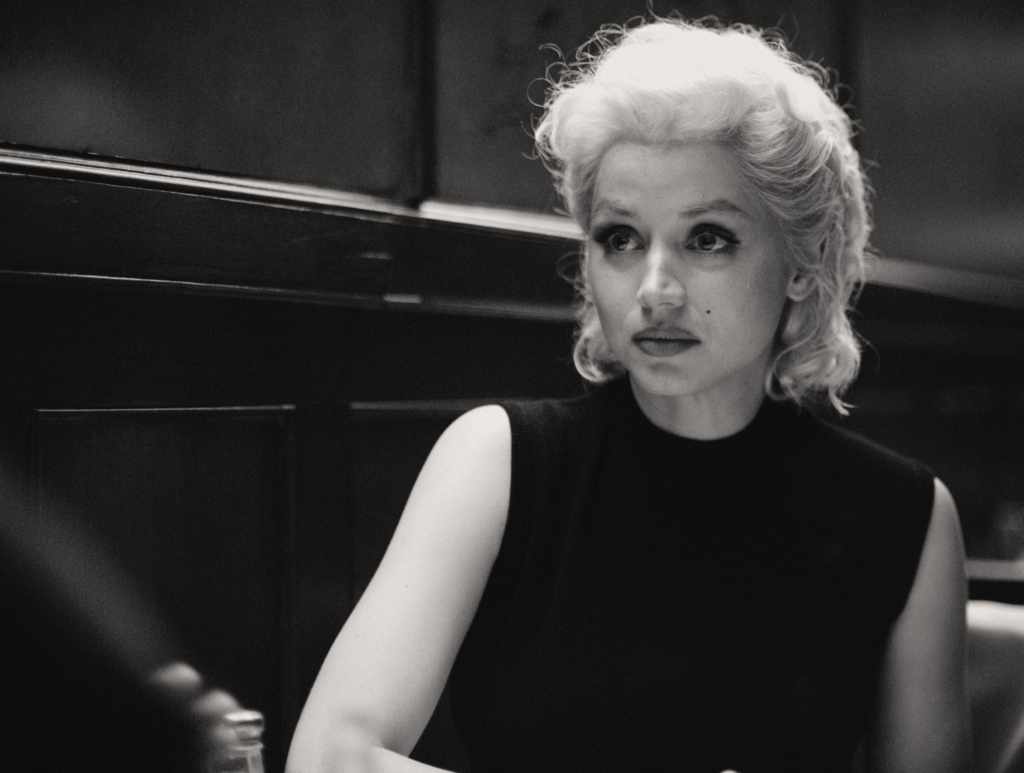
    Up-and-coming actress Ana de Armas astonishes as Marilyn in a performance that’s elegant when it needs to be but constantly in a state of unease and brittle to the point of cracking. It’s clear to see the pain hidden with Marilyn’s eyes as de Armas radiates the hurt while simultaneously attempting to hide it behind a bubbly demeanor and infectious smile that captivates the hearts of millions.

    Dominik and de Armas aren’t necessarily interested in capturing who Marilyn was from a biographical perspective, more examining larger themes, and an overwhelming sense of longing for the father she never knew and the mother taken from her by mental illness.

    Her performance is constantly on a razor’s edge and de Armas brings out the best in a less nuanced role but doesn’t make Monroe a caricature. 

    A lot can be said of the sexuality within Blonde given the film’s NC-17 rating. While it’s true that de Armas spends a considerable amount of time topless, this is more an effect of her fragility in emotional and mental state rather than pure exploitation on Dominik’s part as a director. 

    The brutality of two specific scenes where Marilyn is essentially raped are less demonstrative in their sexuality but feel exceptionally explicit given the helplessness Marilyn feels in each scene and help to further the deterioration of Marilyn’s state of mind.

    Much of the supporting cast floats in and out of Blonde while the focus remains almost exclusively on de Armas.

    Blonde astonishes with its picturesque, complex cinematography from director of photography Chayse Irvin, who with Dominik essentially recreates iconic Monroe still photographs as full layered scenes that float effortlessly between an assortment of aspect ratios as well as in and out of color.

    But the consistency in quality of filmmaking on a frame-to-frame basis never wavers. Blonde is an exceptionally stunning film regardless of what era or visual approach Dominik and his production team choose for any given moment and viewers are always firmly planted in Marilyn’s world visually.

    For a film that runs at nearly three hours, it’s exceptionally well edited – especially transitioning from scene to scene in combination with the visual elements – and although the audience will easily feel the totality of the run time, it’s hard to look away from de Armas’s singular performance.

    There aren’t really any Oscar prospects for Blonde despite its limited theatrical release. The film’s NC-17 rating combined with other more mainstream options on Netflix’s slate will make it unlikely that this controversial drama will make the shortlist for even the most liberal of awards voters despite deserving acclaim in lead actress, cinematography, and score.

    Blonde is a film for few very forgiving cinephiles as many audiences will scorn Monroe’s depiction although de Armas gives the most compelling performance as Marilyn. It’s a more captivating movie on the big screen than it will likely be on Netflix, but the ease of access should broaden the range of viewers who can compartmentalize Blonde into more manageable chunks.

  • Don’t Worry Darling: Down the rabbit hole

    Don’t Worry Darling: Down the rabbit hole


    There’s a fantastic film hiding somewhere deep within Don’t Worry Darling, Olivia Wilde’s follow-up to her surprise hit directorial debut in 2019 with “Booksmart.”

    In an idyllic world, Darling takes an incredible Florence Pugh performance and elevates it with exceptional cinematography and production design as well as an ensemble cast that can help create a larger world and bring an intriguing concept to life.

    The building blocks for a top-five movie of the year are there, but nothing ever really comes together in Darling, a big swing and largely hit-or-miss drama that doesn’t settle on a proper tone nor truly lets the audience in on what’s going on.

    Darling follows Pugh as 1950s suburban housewife Aliceliving out a life of relative luxury in a corporate based community ripped straight out of a mid-20th-century American dream. It’s only when Alice learns that there’s something much darker behind the bright façade that her life begins to spiral.

    The centerpiece of the film, Pugh is exceptional at keeping this fledgling genre-bending drama afloat with a subtly manic performance that leaves audiences constantly questioning if Alice is the crazy one or if everyone around her is.

    As is often the case with her work, Pugh dances around any other actor she’s on screen with and it’s clear on a scene-to-scene basis that her Alice isn’t like anyone else in the film, nor is her performance on the same level as anyone else. It’s a magnetic turn from a brilliant actress that allows the increasingly confusing, bizarre narrative to take shape while keeping viewers interested.

    Pugh being a class above everyone else in Darling is especially true in the wide gap between her work and that of musician Harry Styles cast as Alice’s husband Jack. Their romantic chemistry is increasingly visual through tight camerawork and an emphasis on the physicality of their love.

    But whether it’s the screenplay by Katie Silberman or Styles’ inability to emote or some combination therein, there’s a tone-deafness to their marriage that’s much deeper than Wilde or the script might want to imply.

    The larger ensemble cast does well with what they are given for the most part.

    Chris Pine continues to showcase his ability to be a more well-rounded actor as the Svengali-esque leader of the Victory community. It’s a performance that’s part William Shatner, part Dr. Oz, part Jordan Belfort but always engaging and challenging the audience’s expectations.

    Wilde does a solid job of creating mystery behind Pine’s character visually, largely keeping him in the shadows ever lurking but a firm presence for much of Darling.

    Where it often seems like Wilde doesn’t have as strong of a grasp is in the supporting female performances in the film, which highly evoke a Stepford Wives vibe but just doesn’t fully click.

    It’s problematic that the only African American actress in the film, KiKi Layne, is burdened with a role that accentuates white savior tropes and doesn’t showcase how dynamic of a performer she truly is, but Layne excels at breaking the walls down in an emotional and frantic way.

    Darling boasts some of the most engaging cinematography of the year with director of photography Matthew Libatiqueenveloping the world of Victory with a bright glossy sheen that starts to wear off as the plot unfolds. Darling needs to look perfect in the beginning and progressively become an uglierplace and Libatique becomes a secondary star with a constantly moving camera that spirals and encircles Alice to heighten the tension and Pugh’s magnetic performance.

    It’s nearly impossible to experience Darling objectively given the lengthy behind-the-scenes drama involving several lead actors and the director, which is a shame given how strong much of the film is. Only the third act truly falters and it’s in the final moments where all the goodwill and momentum Wilde and Pugh have built over the course of 70 minutes comes crashing down.

    A Hollywood blockbuster that is meant to be seen on the big screen, Don’t Worry Darling has enough highs to be enjoyable for much of its running time from a magnetic Florence Pugh to exceptional cinematography and production design that make it a movie worth checking out in theaters.

  • Confess, Fletch: The mystery of reinventing the wheel

    Confess, Fletch: The mystery of reinventing the wheel

    Sometimes it’s impossible to fully recapture the magic of what made a classic film great.

    This is especially true in comedy, where age might confuse, muddle, or downright destroy punchlines and characterizations that were likely hilarious decades prior but are out of touch with modern taste and sensibilities.

    It’s likely why there’s been such a gap in revitalizing the Fletch film series based on the novels by Gregory Mcdonald.

    The Chevy Chase-led 1980s comedy saw the Saturday Night Live veteran take a quirky investigative journalist and make him even more eccentric and bizarre in a quintessentially Chase way that’s almost impossible to replicate.

    Filmmaker Greg Mottola, known for movies like Adventureland and Superbad, aptly takes on this challenge with his latest feature, Confess, Fletch, perhaps the most faithful to the original novel that reboots the franchise with a more dry, subdued, and charming Jon Hamm of Mad Men fame as the titular Fletch.

    Largely set in Boston, Confess, Fletch is a film of international mystery and intrigue that’s significantly more light-hearted than many murder mysteries but doesn’t have the same dynamic flair as something like director Rian Johnson’s Knives Out.

    It’s a film that lives and dies on the performance of Hamm, who is probably given the best chance in his career to show off his comedic chops. While the laughs aren’t gut busting, Hamm makes the most of the exceptionally dry dialogue and situations that smart comedy fans will love, and casual moviegoers might not fully appreciate.

    Hamm isn’t trying to recreate the Chase version of Fletch. There are no bombastic cheap jokes, no wild changes in tone. It’s a very demure performance by Hamm relative to the audacious Chase that works much more fluidly with the overall semi-serious noir style of the film.

    Confess, Fletch isn’t a comedy that tries for broad humor, nor does it beat audiences over the head with opportunities to garner a laugh. Quantity over quality is the key to the screenplay from Mottola and co-writer Zev Borow.

    The supporting cast is solid if not mostly unmemorable.

    Two police detectives played by Roy Wood Jr. and Ayden Mayeri are not the bumbling cops that one might expect to find in a mystery comedy like this but play off the dryness of Mottola’s script well. Each bring some unique characterization to otherwise flat characters with their cadence and line delivery that helps bring the comedy off the page.

    If anyone in Confess, Fletch feels more in tune with the original 80s films in their performance, it’s Marcia Gay Harden as a European countess who at times is almost indecipherable with her heavy accent masking dialogue, mumbling through words and phrases and hiding under heavy costuming and thick makeup to cover up the ridiculousness of the character.

    It’s a fun performance that feels a tad too exaggerated compared to everyone else in Confess, Fletch, often taking viewers out of the moment, but one that also adds more color and branches the divide between the Hamm-led and Chase-led versions of the series.

    Confess, Fletch is sharp but unobtrusive in its cinematography and editing, probably the cleanest in the series from a technical and visual aspect with some engaging road sequences that highlight just how different this film will be from the original and evoke more of a dry European flair.

    While there hasn’t been much promotion of the film for its theatrical release, Confess, Fletch will likely gain steam among some cinephiles as they are able to see it either in limited screenings or later in the privacy of their own home on VOD or Showtime.

    Led by a strong performance from Hamm and smart, observant dialogue, Confess, Fletch is a fun start to what appears to be an intrigue fall of murder mystery and comedic dramas that will help give audiences a fun alternative to serialized programming on streaming services.

  • Three Thousand Years of Longing: Pretty in pictures, not so in story

    Three Thousand Years of Longing: Pretty in pictures, not so in story

    What does it mean to tell a story? What does it mean to be a storyteller?

    These are questions that have dated back as far as humans have interacted with one another trying to entertain, enlighten, make points, and create something greater than themselves.

    It’s an existential question that can never truly be answered, but one that director George Miller attempts to tackle with his first feature film since the masterful Mad Max: Fury Road back in 2015.

    Three Thousand Years of Longing, based on a short story by A.S. Byatt, is an avantgarde fantasy romance movie filled with paradox, confusion and simplicity all wrapped around grandiose cinema, practical effects and top-notch actors doing their best to describe the indescribable through words and actions.

    The film follows an aging professor named Alithea on her way to give a lecture when by circumstance and fate, she encounters a mystical Djinn, a genie of sorts, offering to grant her three wishes. From this moment on, Alithea and her Djinn begin a beautiful, yet awkwardly misplaced cinematic dance that will astound some and confound most.

    Miller is an expert at making art out of the bizarre and Longing is no exception. So much of the film is beautifully shot by cinematographer John Seale and each moment is incredibly well composed and visually compelling.

    But for a film about the practice and wonder of storytelling, the storytelling in Longing is the weakest part of the film. It’s a movie based on a short story that probably should have been wrapped up in 60 minutes but takes well over 90 minutes, a film that features stories within stories none of which get to a deeper level and only serve as a “Canterbury Tales”-esque plot device to balance the larger narrative.

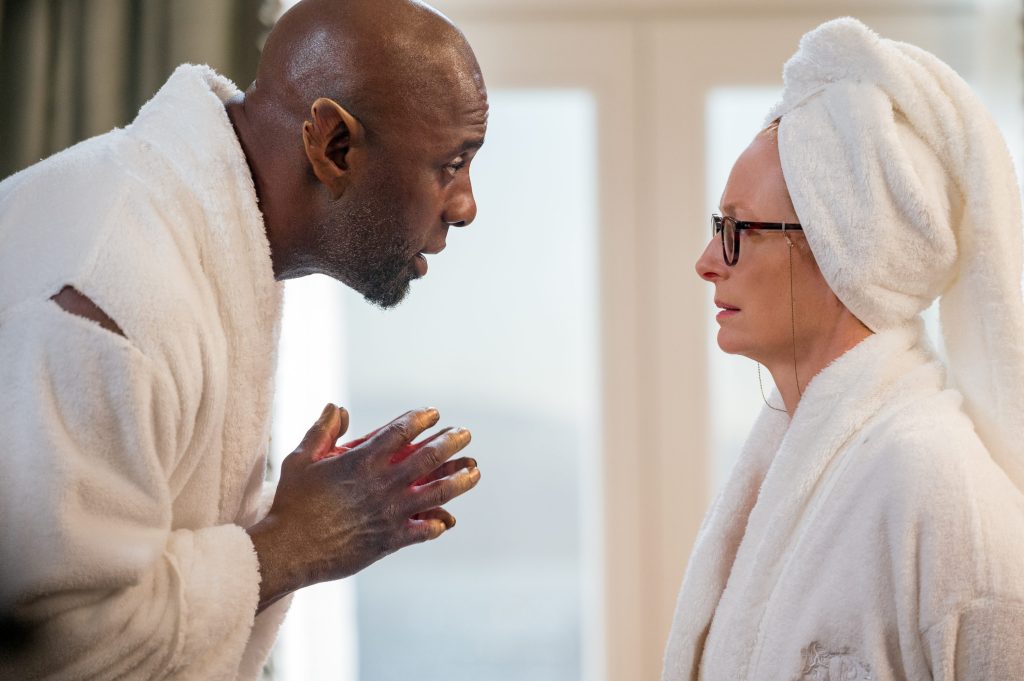
    As a result, as much as audiences would like to know more about Alithea and the Djinn, everything is kept at an arm’s length. Viewers never truly wrap their minds around these characters in the way in which they should thanks to a bizarrely surface level examination of character in service of larger theme and certainly not in the way that talented character actors like Tilda Swinton and Idris Elba deserve.

    Swinton’s Alithea is skeptical and inquisitive in a very quintessentially Swinton-esque way. The character actress revels in the verbosity of the screenplay by Miller and Augusta Gore with Swinton being probably the best choice to play the role, but by the end of 100 minutes, so little growth comes from her performance mainly due to the fact Swinton is a bystander, a secondary character in her own fil, that no deeper meaning is ever truly explored.

    The same thing could easily be said of Elba’s Djinn although audiences do get to experience a wider berth of his performance as the Djinn plays a much more significant role in secondary storylines that predate Alithea. Audiences can feel the longing that the Djinn has, but it’s a largely unresolved, unrequited longing through no fault of Elba’s performance. Because Miller insists on the film being so open-ended, nothing mystical or magical ever materializes.

    What makes Longing a film even remotely worth seeing theatrically are the technical aspects, which are a masterclass taking a subpar screenplay and elevating it to somewhat memorable status through the visual arts. 

    Largely done during the COVID-19 pandemic in small, intimate locations with minimal actors, Miller shoots practically and Longing has a wide array of visual style from tight closeups to make the grandiose Djinn feel even more larger than life to wonderfully engaging medieval set pieces that illustrate the romance of the period rather than the brutality held within.

    A film that should be a shoo-in for awards season contention, Longing is too eccentric and inaccessible even for the most liberal of awards voters and while the technical mastery could very easily be rewarded in a normal year, it seems too farfetched even by Academy standards for recognition.

    Three Thousand Years of Longing is a big swing from a filmmaker with the cinematic credentials to take risks, although it’s a relative misfire despite all the talent involved and one maybe not worth taking a chance on for casual audiences.

  • Honk For Jesus: Ya got trouble in Atlanta City

    Honk For Jesus: Ya got trouble in Atlanta City

    The stage play and musical film “The Music Man” examines the world of the carnival charlatan Harold Hill, a larger-than-life character that transfixes and charms an entire town to his own financial gain.

    A product of the 1950s and early 1960s popular culture, it’s a relatively lighthearted cautionary tale meant to warn audiences away from being taken advantage of by con men posing as a moral compass for others.

    The biggest flaw of “The Music Man” is the surface level examination of who Harold is as a character, and it’s in that spirit that independent filmmaker Adamma Ebo crafts a boisterous tale of grandiose religious zealotry with her Sundance Film Festival selection and feature directorial debut Honk For Jesus. Save Your Soul, which debuted in select theaters and began streaming on Peacock this past weekend.

    Filmed largely in a comedic mock-documentary style popularized by shows like The Office, Parks and Recreation and most recently Abbott Elementary, Honk For Jesus follows Regina Hall’s Trinitie Childs, the proud wife and “first lady” to Southern Baptist mega-church pastor Lee-Curtis as the couple seeks to rebuild the congregation of Wander to Greater Paths, which closed amid a scandal the pastor and his wife refuse to acknowledge publicly, and more importantly, to each other

    The success and failure of Honk For Jesus boils down to the two leading performances, which take up over 90 percent of the entire film, with Hall and This Is Us star Sterling K. Brown more than up for the task.

    The pair take audiences on the journey of the film by slowly revealing the cracks in the marriage of Trinitie and Lee-Curtis, as well as the larger cracks on their individual psyches with care and precision.

    Honk For Jesus isn’t a film that plays for large laughs, but more cutting, nuanced humor that drips throughout Ebo’s screenplay. Unfortunately, the comedic elements often run a bit too dry for home viewing on a streaming platform like Peacock, but this is more than counterbalanced by wonderfully complex drama in the final act.

    Hall is exceptional throughout Honk For Jesus, taking her Tammy Faye Bakker-esque character from superficial stereotype to pained wife struggling with conflicts between her moral compass and Christian duties to her husband. Audiences are able to see the wear and tear strains in Trinitie’s marriage have taken in Hall’s eyes, which begin to lose their luster midway through the film. It’s an exceptional physical performance in a role where it may be more than Ebo expected as a director.

    Brown portrays Lee-Curtis as half carnival barker, half charismatic politician who has bought so deeply into his own story that he cannot even control the increasingly contradictory nature of his choices. It’s by far the most demonstrative performance of Brown’s career and it’s clear that that the actor revels in the wide berth Ebo gives him as a director to be reckless with Lee-Curtis’s choices. 

    The divide in their marriage stands out in just how distant Hall and Brown are from each other as performers and it plays out to great effect as the film veers away from the mockumentary style and leans into the more emotional drama.

    Ebo’s film uses the camera as a storytelling device from the outset, though it may not entirely clear to viewers at first glance.

    Through a subtle, yet distinctive framing trick, Honk For Jesus carries itself in and out of the narrative structure visually more than expected as Ebo swaps a widescreen 2:35:1 format and a more 1:55:1 box format in a second by second basis to indicate moments that are happening in real-time versus ones captured by the documentary crew.

    This doesn’t become apparent until Lee-Curtis and Trinitie engage more directly with the off-screen characters of documentarian Anita and her film crew, one of whom Lee-Curtis thrusts into the narrative in a somewhat shocking scene that brings out the best of Brown’s increasingly manic performance.

    An imperfect film with astonishingly memorable characters, Honk For Jesus. Save Your Soul isn’t necessarily the kind of comedy that would bring down the house in large theaters but may be the perfect dramedy to take a chance on with a home viewing experience on Peacock.

  • Breaking: Past the boiling point

    Breaking: Past the boiling point

    A man walks into an Atlanta area bank.

    Honorably discharged from the Marine Corps, he’s soft and unassuming, calm and friendly to the teller. 

    There’s one problem though. He slides a note across the counter with the words “I have a bomb” on it and sets off a chain reaction of events with unexpected consequences.

    Based on the true story of Brian Easley, the Sundance Film Festival award winning film Breaking dropped with little fanfare this past weekend in moderate theatrical release. It’s clear that Bleecker Street, the studio releasing director Abi Damaris Corbin’s thriller, has no clue what kind of a movie they have on their hands. 

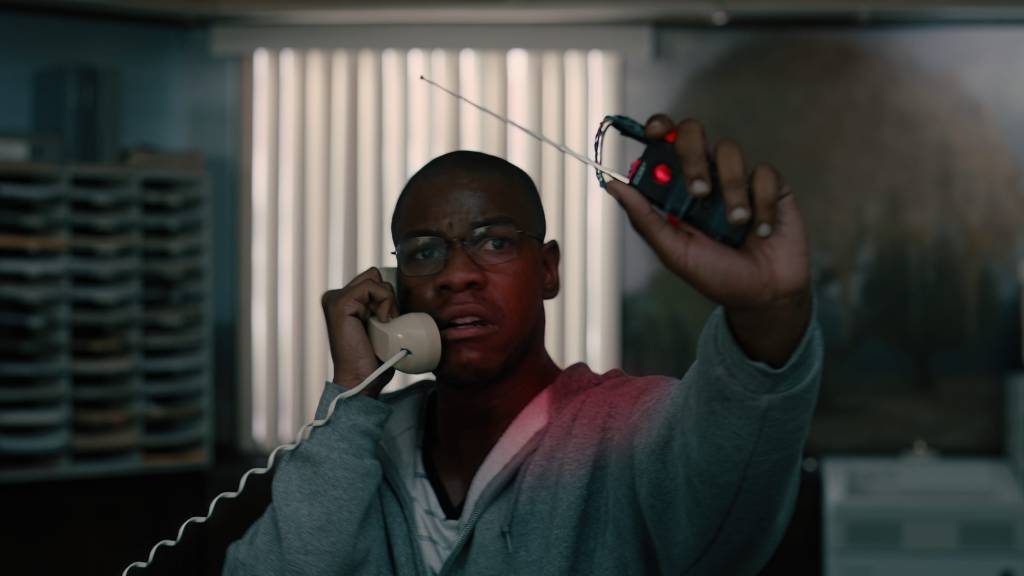
    Breaking should be a film in every theater in America, especially given the dearth of quality options in August, and John Boyega’s leading performance as Brian might end up being one of the most poignant and powerful of the year. 

    The film feels like a blend of Al Pacino’s classic Dog Day Afternoon and films that examine what happens to soldiers when they return home and there’s no war anymore like Thank You For Your Service and The Hurt Locker.

    A majority of the relatively crisp 103-minute running time happens in the bank and when Corbin’s camera is trained on Brian and his two hostages, there’s a unique depth of both emotional drama and subtle character work that isn’t often found in bigger-budget thrillers. 

    The intimacy Corbin draws out from Boyega, especially as she and cinematographer Doug Emmett pull in tight on Brian’s forlorn face, frazzled demeanor and simple appearance create a surprising connection between the audience and Brian. 

    This isn’t to say that viewers suffer from Stockholm Syndrome, the condition that bonds hostages to their captors. Boyega’s translation of Corbin and co-writer Kwame Kwei-Armah’s script never puts the audience in any real danger, which softens Brian’s character without diffusing any of the tension in the bank. 

    Boyega shines in the film’s many emotional moments, both in flashbacks with Brian’s young daughter and in heartbreaking exchanges with the police negotiator and a television producer Brian calls to tell his story. 

    Breaking is perhaps the most complex and thoughtful performance in Boyega’s career as viewers can see the weight of the world being carried on Brian’s shoulders. The way Boyega is able to emote calmly and carefully while showcasing Brian’s increasingly erratic mental health is astonishing. 

    The film is boosted by a strong supporting cast around Boyega that earned the Sundance special jury prize for best ensemble in January. 

    In his final role before his tragic death last year, The Wire star Michael K. Williams brings immense passion and emotional connection as police negotiator Eli Bernard. Though they never share the screen together, Williams and Boyega bring out the best in each other’s performances and the fragility of their bond is among the most compelling moments in the entire film. 

    Nicole Beharie and Selenis Leyva as the two bank employees held hostage provide a great balance to the harrowing events with Beharie’s more calm, rational demeanor offsetting the fearful fluster of Leyva. 

    The biggest flaw in Breaking comes from a lack of consistency in storytelling. When the camera is focused on Brian and his world both in and out of the bank, Corbin’s film is exceedingly compelling and transfixing. 

    As things pan outside of Brian’s purview, especially in scenes featuring the police or Brian’s ex, Breaking doesn’t maintain the same gravitational pull drawing the audience in and it often takes viewers out of the moment. Some sharper editing or more well-rounded characters might have helped here, but it’s clear when Brian is in focus, Breaking really soars. 

    It’s unfortunate that a wider audience will have to wait until Breaking hits a streaming service or on demand before experiencing this largely compelling independent thriller. Strong performances from Boyega and Williams as well as a heart wrenching narrative make it a film that deserves more than what it will likely find at the box office.

    Smart, engaging moviegoers would be well served to seek out Breaking in the next couple of weeks while the cinema slate is lighter.

  • Look Both Ways: One moment, multiple outcomes

    Look Both Ways: One moment, multiple outcomes

    How often are our lives inexplicably and permanently changed by a single moment with major impact on the future?

    One decision, one choice, one matter of happenstance could easy alter the course of individual history. It’s these questions of “what if” that dominate the romantic dramedy genre and for the first time since the 1998 feature Sliding Doors, a new movie confronts the duality of a single moment head on.

    Look Both Ways, which debuts on Netflix this past week, centers around a University of Texas senior and the pregnancy test that could keep her from her dream job as an animator in Los Angeles and propel her into a whole new world of motherhood. Director Wanuri Kahiu’s feature from a script by writer April Prosser blends two distinct narratives – one where Natalie’s test is positive and the other where it’s negative – into a largely successful, if not slightly derivative romantic dramedy that will help tide things over for cinephiles in an August calendar with slim pickings for new cinema.

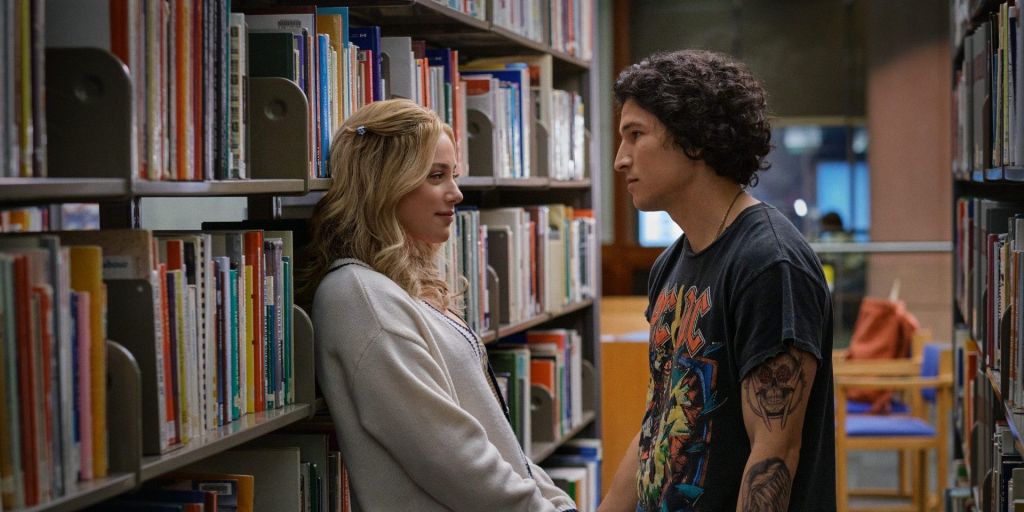
    “Riverdale” star Lili Reinhart pulls double duty as Natalie, fully embracing the challenge of playing the same character from very different perspectives. It’s a performance that’s easy to get behind as a viewer with her affable wit and once the story really picks up, Reinhart capably manages to soften Natalie in both motherhood and adulthood with charm and grace.

    There’s limitations to the character work due to the duality of the narrative as Reinhart has to basically start from scratch twice with small variations on Natalie and build outward from a single inciting incident. Audiences don’t really get a deep understanding of Natalie’s individuality outside of the men in her life and Reinhart doesn’t try to explore with much nuance.

    Danny Ramirez as Natalie’s long-time friend Gabe and David Corenswet as love interest Jake both provide just enough to be plausible romantic outlets for Natalie’s affections, but neither performance is especially memorable once the credits roll.

    In fact, the most engaging work in the film comes from Andrea Savage and Luke Wilson as Natalie’s parents, whose natural chemistry with Reinhart provides the film with some truly endearing moments that are among the highlights of the entire feature.

    The key to the film’s success or failure for audiences mainly comes from the balance in the narrative structure once the central conceit is established. It would be exceptionally easy to ruin Natalie as a balanced character by focusing too much on one version.

    If viewers spend too much time with Natalie as a mother, there’s no room for audiences to connect emotionally with career-focused Natalie and vice versa. Kahiu’s film hinges on the ability to translate Prosser’s screenplay visually, emotionally and in the editing room in a manner that treats both sides of Natalie’s journey with equal focus and clarity.

    This isn’t always an easy hurdle to climb, especially in the early moments as Kahiu must introduce the duality of Look Both Ways by hopping cross country at a moment’s notice with little set up or signposting to viewers that a change is coming. It truly becomes more apparent over time thanks to subtle changes in Natalie’s hair and clothing to reflect visually how much her two lives veer apart.

    Kahiu ties this together strikingly well at times with some impactful animations done in the style of Natalie’s art that help reorient audiences within the realities and timelines.

    There’s nothing especially groundbreaking with this relatively run-of-the-mill dramedy, but Netflix would stand to do well by continuing to pump out these moderately affordable, easily accessible dramedies to fill the void left by major studios who no longer develop mid-budget rom-coms that audiences used to flock to in the early 2000s with stars like Jennifer Aniston and Katherine Heigl.

    Until the box office begins to show light at the end of the tunnel, moving from the summer doldrums into awards season where the biggest films of the year are released beginning in October, it’s hard not to give a dramedy like Look Both Ways a shot for viewers looking to turn off their brains and relax at home.

  • Thirteen Lives: Rescue on an epic scale

    Thirteen Lives: Rescue on an epic scale

    Docudramas give audiences first-hand insight into intense, intimate moments of real people, disasters, and inspirational experiences. 

    Usually tagged with the keyline “based on a true story,” these films bring viewers on a plane bound for the Hudson with Sully himself, on the deck of an exploding oil derrick in the middle of the sea in Deepwater Horizon or on a harrowing quest to free Americans trapped overseas in Argo.

    While often docudramas focus on one or two individuals to showcase the larger event, Ron Howard’s latest film goes extremely wide to highlight the epic scale of people coming together to help prevent a tragedy. 

    Thirteen Lives recreates the global effort to aid in the 2018 rescue of a boys’ soccer team trapped in the flooded Tham Luang cave in Thailand. Working from a screenplay by William Nicholson, Howard’s film attacks the 18-day ordeal from a wide range of perspectives from the team themselves to their parents and Thai government officials to an international group of rescue divers. 

    The scale of the effort is demonstrably clear throughout as the cast of characters plus extras must be in the hundreds. Despite this fact, Howard consistently keeps audiences oriented and in the moment so that it never feels overwhelming and the film’s 147-minute running time gives the director enough space to flesh out characters in multiple arenas. 

    The drawback, however, is that in keeping things so wide open, it’s far easier to viewers to disengage from the story without a consistent character to identify with and endear to. 

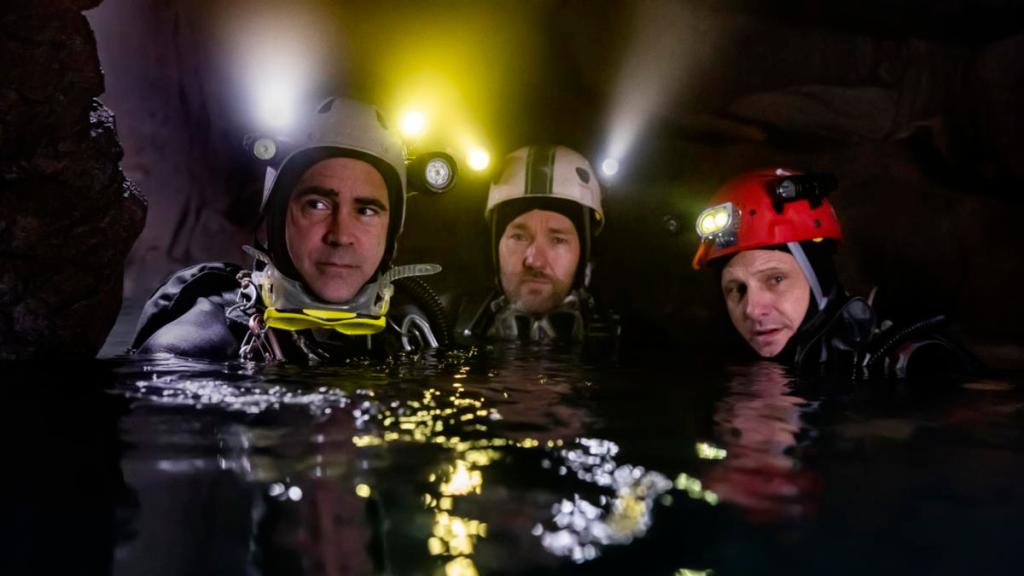
    There aren’t many recognizable stars throughout the first third of Thirteen Lives, and while the story clips along at a decent rate, it isn’t until Colin Farrell and Viggo Mortensen appear as British rescue divers volunteering to aid in the search that any real appreciable character work happens.

    Most of the problem is in the screenplay, where individualism is kept to a minimum to maintain a broad scope and the only memorable Thai characters are the boy who asks to go into the cave before his birthday celebration and the governor forced to stay on and take the fall if disaster strikes.

    Even the international dive team, played by famous character actors like Farrell and Joel Edgerton and an Oscar nominee in Mortensen, don’t really have a compelling story arc and any nuance to their personalities takes a backseat to moving the story forward.

    The rescue itself takes the largest chunk of Thirteen Lives and the cinematography orients audiences well in the visual geography of the cave as divers make their way to the boys. This is further aided by graphics along the way that track the team’s progress into the cave although it becomes somewhat unnecessary in the final stage of the film after the same graphic has appeared many times. 

    Audiences will definitely get a claustrophobic feeling at times thanks to the exceptional underwater cinematography from Sayombhu Mukdeeprom and the fantastic sound design that fully captures the horrifying audible terror of endless rushing water and the sinking feeling of drowning potential at any moment. 

    In fact, if there’s any Oscar potential at all for Thirteen Lives, it’s likely to come in the sound category where the mastery of the technical element truly enhances the narrative as well as the audience experience. 

    While Thirteen Lives enjoyed a limited release in theaters, it’s much better suited for its home watching experience on Amazon Prime, where it dropped last Friday. It’s a prime candidate for more episodic viewing in 20-30 minute chunks rather than all at once, where the scope feels a bit laboring.

    Those who are particularly interested in the story will likely find last year’s exceptional documentary The Rescue from Oscar-winning directors Elizabeth Chai Vasarhelyi and Jimmy Chin to be far more compelling cinematically and from a narrative perspective, though Thirteen Lives is a well composed feature docudrama that will help supplement the larger experience.