Category: Emotional Rantings

  • Triple Frontier: The price of being a soldier

    Triple Frontier: The price of being a soldier

    Filmmaker J.C. Chandor is at his best making intimate, dialogue-heavy films about man’s unrelenting quest for the almighty dollar at any price.

    His 2011 debut “Margin Call” was an intense, diabolical examination of the New York financial services industry that earned him an Oscar nomination for the film’s screenplay.

    Three years later, Chandor returned with “A Most Violent Year,” a subtle and nuanced crime drama about the morally ambiguous world of a heating oil company CEO’s quest for the American dream.

    In his first collaboration with streaming service giant Netflix, Chandor’s “Triple Frontier” presents as a familiar heist film with retired military veterans attempting to rob a Brazilian drug lord.

    But Chandor’s films are never so simple.

    “Triple Frontier” examines what makes a soldier once there’s nothing left to fight for and is a somber, introspective film aside from all the gunfire and chase scenes.
    It’s a brutal, uncompromising look at what happens when a team of elite soldiers assemble on a dangerous mission for self instead of country.

    In “Triple Frontier,” former Special Forces operative Santiago Garcia learns of a hidden fortress of cash in the Brazilian jungle while working for the Colombian government hunting down cocaine dealers.

    With the aid of his reluctant, retired team, Garcia aims to seize millions and take out the region’s deadliest villain.

    Technically profound, yet dense thematically, it’s the kind of film that requires a concentrating, engaged audience with their finger off the stop button, which is a harder sell on Netflix than at a crowded movie theater.

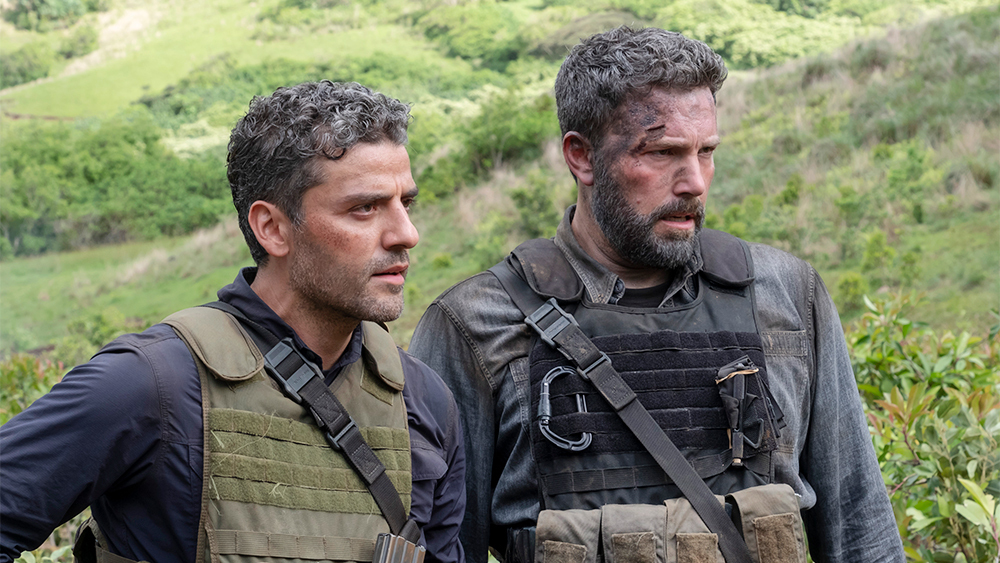
    Key to the overall success of the film is the terrific ensemble cast led by Oscar Isaac as Garcia, whose deliberate performance as the team’s driving force paced the entire film.

    Charlie Hunnam, Garrett Hedlund and Pedro Pascal overcome thinly conceived character archetypes – the pilot with a drug problem, the gunner with a crazy streak, the dutiful straight arrow – and create genuine chemistry among the five leads which carry “Triple Frontier” through its more languishing moments.

    Meanwhile, Ben Affleck gives one of the better turns of his career as Tom Davis, the former team captain emotionally wrecked by retirement, which drove him away from his family. There’s a sincere emptiness to his performance that reflects a sense of deep, profound loss of purpose in post-service veterans.

    Chandor and Affleck carefully build Davis’ mental stability fracturing as the mission develops and the money grows closer in hand.

    Affleck does a tremendous job giving Davis a sense of composure in spite of the increasingly frantic nature of the film’s events and Davis’ evolution over the course of “Triple Frontier” is perhaps the only true character development in the film, which may or may not be intentional on Chandor’s part.

    “Triple Frontier” is the first Chandor film he did not write alone, helping to pen the screenplay with “Zero Dark Thirty” scribe Mark Boal.

    The lack of a complete singular vision does manifest in the somewhat muddled tone of the film, which often skirts character backstory or development for larger general themes like the self worth of military veterans retired from the service or the cost of relentlessly pursuing money.

    Like his other works, “Triple Frontier” can be a grind to get through on an initial viewing because Chandor packs so much into the subtext of his characters.

    There’s some smart musical cues in “Triple Frontier” with a familiar and eclectic soundtrack as well as the best possible cinematic use for Fleetwood Mac’s “The Chain” as a character device.

    On the whole, “Triple Frontier” is a film that deserves multiple viewings to understand the nuance Chandor sews under the surface so that audiences can come down from the shine of the fast-paced action-heist-thriller they were expecting to get for two hours.

    While not quite on par with “A Most Violent Year,” “Triple Frontier” continues Chandor’s strong filmography and is well worth taking a chance on during the next Netflix surfing.
  • Thunder Road: Fortune favors the bold

    Thunder Road: Fortune favors the bold

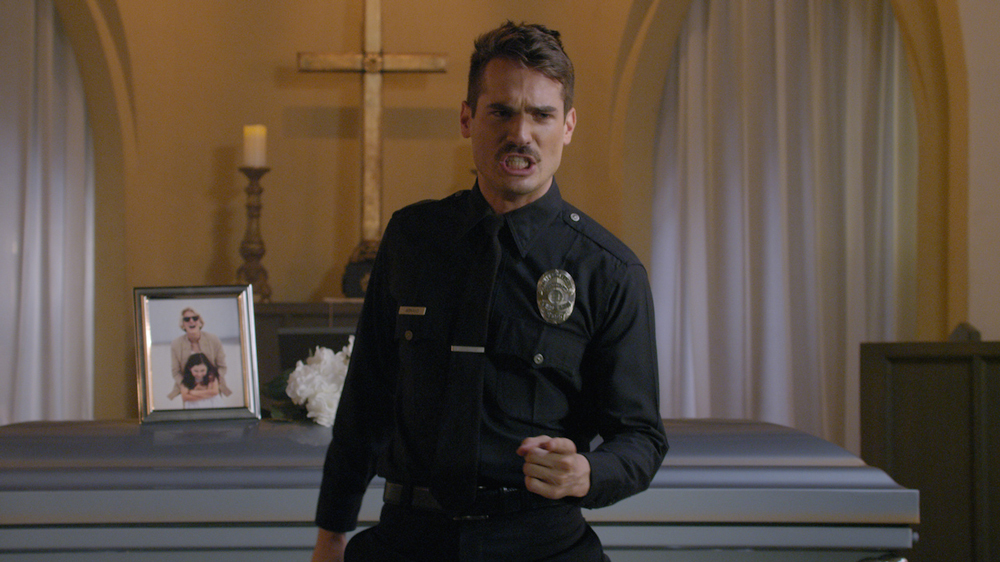
    A static camera slowly presses in.

    It never moves – only zooms deliberately – for what feels like an eternity but is only six or seven minutes as the protagonist mourns the loss of his mother during a chaotic, frantic eulogy at her funeral.

    Over the course of a brisk hour-and-a-half, writer/director/star Jim Cummings delivers a film equally as manic as the character he portrays on screen. It’s a mesmerizing, haunting tale of love, loss and the fleeting nature of time.

    Winner of the 2018 Grand Jury prize at the South by Southwest Film Festival, “Thunder Road” is a striking and poignant piece of independent cinema that will leave audiences wondering how no one made them see it weeks ago.

    Cummings’ film follows Jim, a rural Louisiana beat cop trying to do right by his daughter while grieving over his mother’s death and an impending divorce. His difficulties leave Jim unable to relate rationally and place him at an emotional distance from the surrounding world.

    These awkward moments of irrational anxiety are given ample room to breathe as Cummings’ screenplay and direction expertly allow the gravity of emotions from Jim’s fracturing soul to bubble over the surface.

    “Thunder Road” is a rare feature to bring urgency to the grieving process without feeling contrived or irreverent. Moments of frantic expression are mellowed by a cold sense of place, usually within the same monologue, for a refreshing take on the family drama.

    As Jim, Cummings gives 2018’s most complete and complex acting performance in a turn that though dynamically manic never veers wildly off course.

    Each choice Jim makes moment to moment (and often second to second) is so nuanced and specific that Cummings dances like a ballerina on the line between the tragically absurd and bittersweet beauty.

    It’s a singular, transformative performance that often belies just how good Cummings is as a screenwriter and director. Viewers can’t help but keep their eyes glued to Jim even as everything around him tries to pull focus.

    Characters hover around Jim in constant orbit as his emotional gravity pulls them in and repels them away. Kendal Farr as Jim’s daughter Crystal and Nican Robinson as his best friend and partner Nate are exceptional at reading these shifts and offering genuine, natural reactions within their characters.

    Cummings takes bold chances cinematically in the director’s chair and in the editing room, giving “Thunder Road” an unique style of sequential vignettes rather than traditional narrative. These small jumps can be mildly jarring for the viewers, though their intent continues the overall manic tone of the film.

    There’s a deep passion to the artistry that permeates throughout “Thunder Road,” but nowhere is it more apparent than in the emotional dichotomy of laughter and pain dripping across the pages of Cummings’ script.

    These harsh contrasting tones wear on the sleeve of Cummings’ performance as Jim and seep into his direction of the cinematography, which is simultaneously intently close and observationally distant.

    It’s a hallmark of high caliber independent cinema where the thought and intentionality of the filmmaker is clear and lived in.

    Made for a mere $200,000, Cummings’ nuanced comedy/drama never gained theatrical traction in the United States despite the backing of the Sundance Film Institute and top prize at South by Southwest.

    The film made back its money within a week of its theatrical release in France and has found a new home online with Amazon Prime, waiting with open arms for American audiences to find this bold Southern tale.

    “Thunder Road” is the sort of film worth seeing five times at home on Amazon Prime before even considering watching any of the current releases major movie studios are pushing in theaters.

    A true pinnacle of independent filmmaking achievement, “Thunder Road” clearly cements its status as one of the five best films to be released in 2018 and is an absolute must see film.

  • Easy rider: Academy rewards safe biopic ‘Green Book’ with Best Picture

    Easy rider: Academy rewards safe biopic ‘Green Book’ with Best Picture

    Newly crowned Academy Award winner for Best Picture “Green Book” is like clanging a cowbell at the end of Shoshtakovich’s seventh.

    Everyone who doesn’t understand what that means believes it’s perfect.

    There’s nothing particularly wrong with “Green Book,” a well-acted and competently made film, yet completely ordinary by comparison to other features in the Academy’s Best Picture category.

    It’s just that a film like Peter Farrelly’s enjoyably bland biopic is an Oscar favorite in the same way that the clanging of a bell rings false in a classic operetta.

    Something’s just not right.

    At work here is the Academy’s often problematic preferential balloting system, in which voters rank all nominees for Best Picture.

    If no movie earns over 50 percent of the vote, the lowest ranked film is eliminated and those ballots are redistributed until a film passes the halfway point.

    It’s in this sense that the Best Picture race is film’s equivalent to the Electoral College.

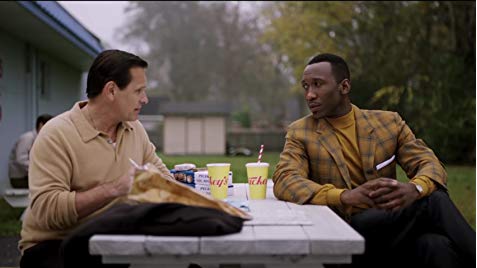
    “Green Book” is self-described as being “inspired by” the real-life friendship of Don Shirley, a famous African-American pianist, and Tony “Lip” Vallelonga, a working class bouncer hired by Shirley to serve as driver/bodyguard for a concert tour of the American South during the 1960s.

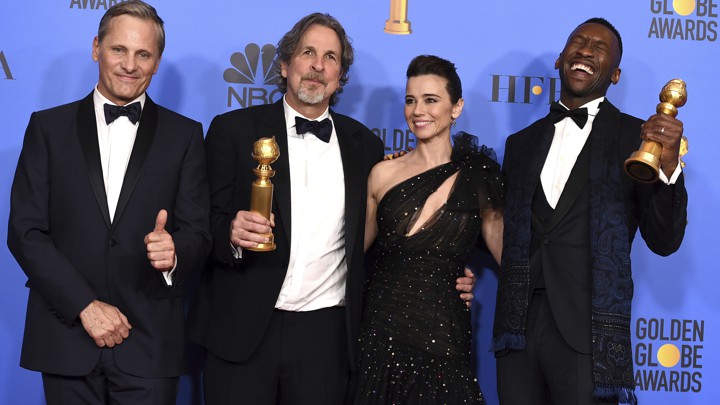
    Featuring now two-time Oscar winner Mahershala Ali as Shirley and Academy Award nominee Viggo Mortensen as Vallelonga, “Green Book” has received acclaim from critics and average viewers alike.

    The film’s Best Picture win isn’t isn’t completely without merit. Mortensen and Ali elevate a middling script with brilliant, dynamic chemistry and deliver knockout scene after knockout scene over the course of a two-hour dramedy.

    Mortensen melts into the “Tony Lip” persona, gaining upwards of 40 pounds while slovenly eating his way both figuratively and literally through scenes. Making a close minded, blue collar brute sympathetic and not stupid requires finesse and Mortensen delivers a memorable, heartwarming performance.

    Despite a secondary part in the film, Ali’s turn as Shirley is more than equal to Mortensen’s Vallelonga, a nuanced effort that masks Shirley’s inner loneliness made all too clear by a revealing twist midway through the film.

    The pair have a dynamic on-screen chemistry that elevates both performances and enhances the entire film as a whole beyond standard biopic fodder when either character is alone on screen.

    It’s easy to forget, however, given how charming Mortensen and Ali are in their roles that “Green Book” lacks true emotional stakes because racism is sugarcoated in the film to such a degree where the actions of discriminatory Caucasians come across as simply unfortunate rather than harrowing or vigorous.

    Hatred and bigotry are easily examined at a distance, none more so than the tepid response given in the script.

    The biggest flaw of an otherwise genuinely enjoyable film, “Green Book” comes across as a novice’s guide to America’s racial divide during the Civil Rights Era, teaching audiences that the titular “Green Book” was essentially an almanac of businesses safe for African-Americans to use while traveling and explaining racism in an almost self-congratulatory, “aren’t we glad Americans aren’t that divided anymore” manner.

    In a year where a Marvel film probes racial identity in a modern context with “Black Panther” and Spike Lee frames “BlacKkKlansman” with the violence of last year’s Charlottesville race riot, this oversimplification sticks out like a sore thumb even more.

    Apparently none of that matters.
    In the afterglow of a “Green Book” victory, I’m reminded of a response I received to my initial review of the film, one that’s stuck with me throughout awards season.
    “I didn’t go to see a Ken Burns documentary,” one reader told me of “Green Book.”

    What mattered is how “Green Book” made her feel, and in that sense, Farrelly’s film is a resounding success.
    It’s nearly impossible to not leave the theater smiling (and perhaps a little misty-eyed) following a showing of “Green Book.”

    Stellar performances from Ali and Mortensen bear that out.

    And yet, there are better movies in 2018 than the one that took home top prize Sunday evening.

    Truly a great film on a first viewing, “Green Book” simply doesn’t age well, no matter how many times you ring the cowbell.

  • Green Book: A beginner’s guide to overcoming racism

    Green Book: A beginner’s guide to overcoming racism

    It’s sometimes easy to forget that #OscarsSoWhite was nearly three years ago, a time when no minority actors or actresses were nominated in back-to-back Academy Award ceremonies.

    Movies like the Best Picture winning  “Moonlight,” “Black Panther” and “BlacKkKlansman” are proof that studios have begun empowering a wider array of filmmakers to examine new and old stories from fresh perspectives.

    The rise of Netflix as a major film studio in its own right has only increased the number of opportunities given to female and minority filmmakers.

    A film like “Green Book,” however, may also signal that we’re not quite there yet.

    Told primarily from the perspective of a racist Italian driver by a white comedy director from a script penned by the driver’s son, “Green Book” is an intoxicating and charming biopic that feels a bit off in message and tone.

    Technical advancements aside, Peter Farrelly’s newest film feels like it was made in 2008 rather than 2018.

    “Green Book” is self-described as being “inspired by” the real-life friendship of Don Shirley, a famous African-American pianist, and Tony “Lip” Vallelonga, a working class bouncer hired by Shirley to serve as driver/bodyguard for a concert tour of the American South during the 1960s.

    Featuring Oscar winner Mahershala Ali as Shirley and Academy Award nominee Viggo Mortensen as Vallelonga, “Green Book” has received acclaim from critics and average viewers alike, taking home the audience award from this year’s Toronto International Film Festival, a showcase event for potential Oscar nominees.

    The praise isn’t without merit. Mortensen and Ali elevate a middling script with brilliant, dynamic chemistry and deliver knockout scene after knockout scene over the course of a two-hour dramedy.

    Mortensen melts into the “Tony Lip” persona, gaining upwards of 40 pounds while slovenly eating his way both figuratively and literally through scenes.  Making a close minded, blue collar brute sympathetic and not stupid requires finesse and Mortensen delivers a memorable, heartwarming performance.

    Despite a secondary part in the film, Ali’s turn as Shirley is more than equal to Mortensen’s Vallelonga, a nuanced effort that masks Shirley’s inner loneliness made all too clear by a revealing twist midway through the film.

    The pair have a dynamic on-screen chemistry that elevates both performances and enhances the entire film as a whole beyond standard biopic fodder when either character is alone on screen.

    It’s easy to forget, however, given how charming Mortensen and Ali are in their roles that “Green Book” lacks true emotional stakes because racism is sugarcoated in the film to such a degree where the actions of discriminatory Caucasians come across as simply unfortunate rather than harrowing or vigorous.

    No more is this clear than in the film’s opening moments, where Tony’s wife Delores has hired a pair of African-American plumbers to fix their sink and offers glasses of water after the work is done.

    When Tony sees this and throws the glasses away after the plumbers leave, Delores (played by a sorely underutilized Linda Cardenelli) digs them back out again and shakes her head as if to say, “Oh that Tony…,” marginalizing and softening the inherently hateful act.

    The biggest flaw of an otherwise genuinely enjoyable film, “Green Book” comes across as a novice’s guide to America’s racial divide during the Civil Rights Era, teaching audiences that the titular “Green Book” was essentially an almanac of businesses safe for African-Americans to use while traveling and explaining racism in an almost self-congratulatory, “aren’t we glad Americans aren’t that divided anymore” manner.

    In a year where a Marvel film probes racial identity in a modern context with “Black Panther” and Spike Lee frames “BlacKkKlansman” with the violence of last year’s Charlottesville race riot, this oversimplification  sticks out like a sore thumb even more.

    “Green Book” certainly has a great deal of potential this awards season, already being named the National Board of Review’s best film of the year. Mortensen and Ali carry the greatest responsibility for this acclaim and likely will rightfully earn Best Actor and Best Supporting Actor nominations for their work.

    A Best Picture nod also seems like a forgone conclusion at this point, though Farrelly’s chances at a direction nomination seem 50/50 at best.

    Despite its problematic rose-colored outlook, “Green Book” still is one of the year’s best films thanks to two stellar acting efforts that make it worth seeking out in theaters.

  • Widows: A most complex crime

    Widows: A most complex crime

    Don’t put “Widows” in a box.

    The latest film from Academy Award winner Steve McQueen isn’t just one type of movie, no matter how much it may seem to be a simple heist thriller at first glance.

    Chicago serves as the backdrop for the entire cinematic experience, and more than just a place for action to happen, “Widows” is a Chicago movie embedded with the violence, conflict, political turmoil and racial divide that gives that town its character.

    So to say that “Widows” is a movie about four women forced together by circumstance to commit armed robbery is oversimplifying the poetic artistry McQueen crafts into a thrilling political, yet human drama.

    This is a film about a city divided by race and politics, united by grief and greed.


    A lesser heist movie would simplify its plot, shorten its running time and ramp up the action. “Widows” slowly burns over the course of two-plus hours to build up to larger themes, all the while providing terrific individual moments from the year’s best ensemble cast.

    Oscar winner Viola Davis stars with a steady, yet emotionally wavering performance as Veronica, the de facto ringleader of the heist. Her work here is less demonstrative than usual as Veronica internalizes her grief and pushes it outward as calm, ruthless efficiency.

    She’s especially good in quiet, tender moments opposite Liam Neeson played out in flashback, where the cool, almost sterile visual look McQueen develops accents the emotional distance playing out on screen.

    Tough as nails “Fast and the Furious” star Michelle Rodriguez layers her usual powerhouse attitude with surprising depth while Cynthia Erivo more than holds her own going head to head with Davis in a compelling, yet underserved role.

    But it’s breakout star Elizabeth Debicki who leaps off the screen as a battered woman seeking to come alive on her own after the death of her abusive husband. The vulnerability she is able to meld with her character’s growing confidence is captivating to watch as Debicki wanders through her character’s self-exploration.

    The men of “Widows” are equally effective in their savagery, especially when it comes to the two-faced politicians who square off throughout the film.

    Colin Farrell turns in his best performance in years as the rising star of a socially and politically affluent family, mirroring wry charm with inner spite towards the African American constituents he tries to court votes from. In this same regard, Oscar winner Robert Duvall chews up the scenery in limited screen time as Farrell’s aging father, a soon-to-be-retiring alderman exerting as much power as he can before his influence runs out.

    Oscar nominee Daniel Kaluuya and Brian Tyree Henry give complexity to what could have easily been mustache-twirling villain roles and further a growing trend within 2018 cinema to explore the motivations of bad guys in a compelling, character-driven manner.

    Quiet but not soft, gritty but not rigid, “Widows” transcends its heist movie categorization and reaffirms that elite level filmmaking can supersede expectations in genres with a middling catalog.

    McQueen presents an alluring and captivating feature without all the bells and whistles prevalent among modern action flicks. Each camera movement feels remarkably intentional and deliberately crafted for an expressed purpose that gives “Widows” a stoic intensity that allows audiences to burrow in on the mesmerizing performances McQueen is able to pull from his actors.

    Camera placement is essential to what the film does (and doesn’t) want to reveal to its audience. “Widows” also features the most intense world-building pan shot in recent memory following Farrell crossing invisible lines of segregation while driving a few city blocks that feel like miles apart.

    Scenes may feel out of touch at first glance and the pacing may be tepid, but the snowball effect the film develops as events spiral towards the conclusion are immensely rewarding.

    The film’s relative shortcomings at the box office have stifled award season discussion, but make no mistake, “Widows” is a more than viable candidate to win any category it’s nominated in.

    Once a virtual lock for a Best Picture nomination, McQueen’s film may not make the final list of 8-10 movies for the top Oscar prize. With Davis coming off a win for “Fences” two years ago, a Best Actress nod is to be expected and Debicki’s breakout turn could easily take a Supporting Actress prize.

    Quiet and deliberate, “Widows” is a commanding, arresting experience that rewards audiences willing to let themselves be pulled into an interwoven tale of crime and corruption, race and class, politics and prejudice.

    Hands down one of the three best films of the year, “Widows” demands to be seen on the big screen and will reverberate in moviegoers’ minds long after the credits roll.

  • Venom: Dr. Hardy and Mr. Mediocre Movie

    Venom: Dr. Hardy and Mr. Mediocre Movie

    Tom Hardy deserves better.

    Watching the talented actor’s latest film, it’s easy to tell that no one on screen cares more about their performance or has thought about their character more than Hardy.

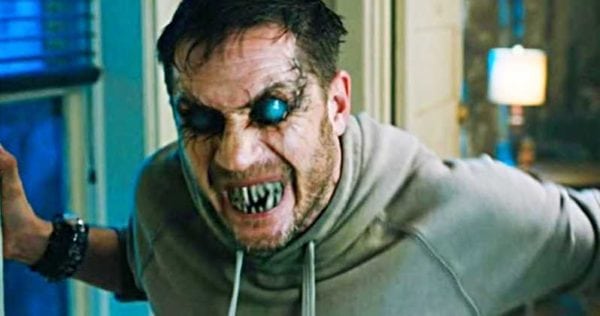
    Everything about his work is nuanced, with immense planning given to the affectation of each line, the physicality involved and the Jekyll and Hyde quality his work espouses.

    But stuck in a superhero movie not produced by Marvel Studios, Hardy feels like he’s running in quicksand with “Venom,” a Spider-Man spinoff that can’t (or won’t) reference Spider-Man.

    Hardy stars as Eddie Brock, an investigative video journalist who learns of experiments combining the homeless of San Francisco with alien symbiotes. When Eddie is exposed, he begins an unlikely alliance with his symbiote, Venom, in a struggle of good versus evil.

    From the outset, it’s clear that Hardy is working the layers of Eddie and Venom (who he also voices) in internal conflict as some sort of mashup of superhero origin story and literary commentary.

    Each part of the character(s) are distinct and unique and Hardy does an impressive job blurring the lines between normality and insanity. His reluctant charm carries the day, especially opposite Michelle Williams, who doesn’t seem all that interested in participating in the film.

    Though Williams is intended to be Hardy’s fiancee, they have the chemistry of mild acquaintances. Hardy’s banter with his Venom alter-ego resonates ten times as much.

    Riz Ahmed has been much more impressive as a villain than he is here as the rather bland Carlton Drake and a talented Jenny Slate is largely wasted with a small nothing part as one of Drake’s scientists that aided Eddie.

    Perhaps the largest problem plaguing “Venom” is just how overworked the whole endeavor feels.

    Hardy has said that his favorite 40 minutes were cut from the film and it’s unclear (but likely) that most of those changes were made as Sony insisted on a more marketable PG-13 rating for the film rather than the intended R rating.

    All of the violence that resonates in the Venom character through the comics is lost without the gore you might find in a “Deadpool” or “Predator” film. As a result, the film feels unnecessarily handicapped.

    There are some great sequences within “Venom,” usually involving Eddie and Venom’s inner monologue as they tear through the city. But 15 percent of a good film does not a quality film make.

    If “Venom” ends up becoming the “Green Lantern” Hardy makes on the way to something better, then all Hardy’s effort will have been worth it.

    This doesn’t feel very likely, however, given the $80 million opening weekend box office Sony raked and their affinity for churhing out bland, PG-13 material in the quest for the almighty dollar. A sequel is coming whether it’s deserved or not.

    “Venom” is an alright movie. Fine even. It just massively underwhelms on its inevitable home on basic cable.

    That nothing would have to be trimmed to make “Venom” ready for broadcast television should tell audiences everything they need to know about a movie where alien lifeforms steal people’s bodies and bite their heads off.

    “Venom” lacks bite.

  • Life Itself: Worlds collide

    Life Itself: Worlds collide

    There are elements of a good movie in “Life Itself,” a deeply thoughtful melodrama from Emmy-winning “This Is Us” creator Dan Fogelman.

    Slowly, painfully over the course of two hours, this is all stripped away as viewers are consistently ripped apart emotionally with jarring, contrived twists of fate.

    It’s all in service of Fogelman’s overarching premise, that life itself is the ultimate unreliable narrator and that at any moment, the rug can be irreversibly pulled out from underneath you with good or (largely) bad consequences.

    Much like “This Is Us,” the premise of “Life Itself” is framed around adorable couple Will and Abby and how the impact of tragedy ripples through generations of their family.

    It’s difficult to explain the film beyond general terms without completely spoiling all the intricate details Fogelman litters into his script. “Life Itself” divides itself into distinct chapters, each with its own portion of the cast, setting and language. (A large segment of the film is set in Spain with Spanish dialogue and English subtitles.)

    The great scenes within “Life Itself,” and there are some truly special pockets within the narrative, usually come when talented actors are left to their own devices to bring depth to a scene.

    An entire film could be made of the relationship between Will and Abby and it would be brilliant and beautiful thanks in large part to the unlikely, yet terrific chemistry between Oscar Isaac and Olivia Wilde.

    Their scene lying in bed together talking about musical comeback albums is perfect, bathed in warm sunlight and incredibly nuanced as Fogelman returns to the moment over and over again to highlight something different.

    Mandy Patinkin is tremendous in a touching sequence as a grandfather consoling her fraught granddaughter. Given the room to play the scene with a range of emotions, Patinkin is a joy to watch, equal parts tender and strong in a complex moment. Fogelman actually enhances this scene through a plot device reliving the scene from several angles.

    About 15 minutes of “Life Itself” is truly special, unique and beautiful cinema. The rest of the film, however, is plain difficult to watch without cringing either for the plight of the characters or the pretentiousness of the screenplay.

    For a film so entranced by its multi-generational premise, Fogelman doesn’t really do an effective job dating the sections of “Life Itself.”

    There’s a few early references to “Pulp Fiction” in a present context and characters in different chapters define their relationship to Bob Dylan music in a present/past way.

    Aside from that, there are no visual or plot cues that inform audiences as to the greater context of “Life Itself,” which makes the whole feature unnecessarily convoluted and muddled.

    It’s clear that Fogelman’s inexperience behind the camera as director was unable to overcome his strict adherence to his languishing, high-brow screenplay.

    At its core, “Life Itself” is 120 minutes of an emotional gut punch to the stomach, insistent on speaking to the power of love and resilience at any cost.

    If Fogelman were able to string out these associated stories into a miniseries or television program, perhaps the premise would be more effective and less brutal. Then again, that’s “This Is Us” in a nutshell.

    The collection of talent Fogelman has assembled to give life to his film merits real consideration for a trip to the cinema. Isaac and Wilde — who simply aren’t in the film enough — are worth the price of admission alone.

    For viewers, it all comes down to whether or not they can handle the emotional trauma “Life Itself” delivers.

    Those who can may find the whole experience rewarding. For those who can’t, “Life Itself” may be pointless.

  • Blaze: Behind the music

    Blaze: Behind the music

    Biopics are movies made about stars.

    Blaze Foley was never a star, simply a mythical folk hero who played with Townes Van Zandt and had his songs covered by the likes of John Prine, Merle Haggard and Willie Nelson.

    It’s fitting then that the independent film telling his story isn’t a traditional paint-by-numbers biopic.

    Filled with raw grittiness and passion, “Blaze” is a cinematic work of art on par with films like “Inside Llewyn Davis” and “Crazy Heart,” an ode to a musical legend.

    “Blaze” also happens to be a terrific achievement for the film’s director and co-writer, four time Academy Award nominee Ethan Hawke.

    His best directorial work to date, “Blaze” is ethereal and emotional, visually captivating and scored with an alluring array of Foley’s own tunes sung by musician Ben Dickey who stars as Blaze.

    Unlike a traditional music film, “Blaze” does not follow a “cradle to grave” plotline. The movie opens with Blaze at his most wild, hopped up on drugs and banging away at a drum set while ranting about Cesar Chavez.

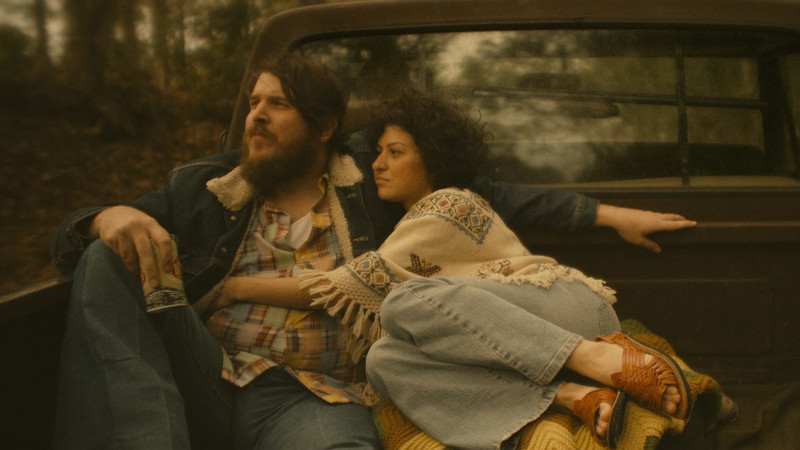
    Almost immediately, viewers are transported to what feels like a different world entirely, a melancholy love story between a young Blaze and the Jewish actress he would run away with to live in a treehouse in the woods.

    Whether intentionally or not, Hawke gives viewers momentarily glimpses into Foley’s fragile psyche and these fragments, however fleeting, linger throughout the two-hour running time that becomes a visual tapestry for Blaze’s music.

    Dickey embodies Blaze in a way that feels immensely lived in, much in the same way you might describe an inhabited performance from the likes of Gary Oldman or Daniel Day-Lewis.

    This is especially stunning considering Dickey makes his acting debut for longtime friend Hawke, who pulls out a sobering, bittersweet turn from the novice actor.

    What Hawke and Dickey understand about Foley, it seems, is how theatricality and musicality intertwine into his on-stage performances and Dickey is able to extend that emotion over to the character’s talking voice.

    It doesn’t hurt that many of Dickey’s best scenes are paired opposite a riveting, beautiful performance from Alia Shawkat as Sybil Rosen, Foley’s first love and muse.

    Shawkat carries the weight of Sybil’s emotions right on the edge of her lips, in the pupils of her eyes, in such a way that feels both effortless and demonstrably difficult.

    Dickey and Shawkat have magnetic chemistry not in the traditional physical sense, but with deep emotional bonds that push and pull back and forth as Blaze and Sybil fall in and out of love.

    It’s a true testament to how perfectly cast they are as well as to Hawke’s commitment to making the whole film feel rich and authentic.

    This extends to his ensemble cast, which could have easily been littered with star power.

    Hawke’s relentlessness to capture the essence of Foley and his era of country music necessitated the casting of pitch-perfect secondary leads that push Dickey’s Blaze forward.

    To that end, Charlie Sexton is a revelation as Foley’s friend and musical contemporary Townes Van Zandt, bringing gravitas and quiet confidence to the role of primary storyteller. Sexton has such command of the screen that draws audiences further into the story, while still keeping viewers locked in on Dickey’s Blaze.

    Josh Hamilton continues an impressive year of performances, pairing his work here as Blaze’s close friend Zee with a poignant supporting turn in Bo Burnham’s “Eighth Grade.”

    Stars do come out in smaller roles with the legendary Kris Kristofferson crushing an extended sequence as Blaze’s father, while recent Oscar winner Sam Rockwell and frequent Hawke collaborator Richard Linklater join the cast as record executives.

    Music drives the film from start to finish, wandering from place to place tangentially as if an improvised jazz solo, or perhaps more appropriately, one of Blaze’s long-winded monologues that serve as preamble to his songs.

    The visuals Hawke and cinematographer Steve Cosens are able to achieve in “Blaze” provide a wonderful backdrop for the whole affair.

    Drenched in natural light, “Blaze” can meander from the sepia-tone haze of Foley’s wooded escape to the dank, dark haunts of the Austin Outhouse bar where he played his final show.

    It’s in these scenes that Hawke shows true artistry as a director, following random patrons and Blaze himself around the bar, inside and out, without missing a beat. The look of Foley recording his live album covered in red neon with a wall-sized American flag behind him is the kind of cinematic iconography rarely seen on the big screen.

    It doesn’t really matter if audiences have heard of Blaze Foley prior to watching the film. There’s enough of his life and free-flowing personality seared into the film to satisfy the curiosity of any moviegoer.

    At worst, “Blaze” will have audiences downloading Foley’s music before leaving the theater.

    A gorgeous portrait of a man who preferred the anonymity of legend over the notoriety of stardom, “Blaze” revels in artistic homage of a subject truly dedicated to the poetry of love and songwriting.

    This is the Ethan Hawke film you have to go out of your way to see as soon as possible. It will be well worth the journey.

  • Sign of the times: Artistic fantasy drama The Shape of Water wins Best Picture Oscar

    Sign of the times: Artistic fantasy drama The Shape of Water wins Best Picture Oscar

    It’s true.

    The reigning Academy Award winner for Best Picture and 13-time Oscar nominee features a scene of inter-species sex between a mute woman and a fish-man-god.

    That’s cinema in the modern era, a changing of the guard that began last year with the surprising upset win by gay coming-of-age story “Moonlight” that continues through genre films like “The Shape of Water,” “Get Out” and most recently with “Black Panther.”

    Fifteen years ago, traditional historic dramas like Steven Spielberg’s “The Post” or Joe Wright’s “Darkest Hour” with an Academy Award-winning performance from Gary Oldman as Winston Churchill would be frontrunners, winning Oscars hand over fist.

    Honors ran the gambit at Sunday evening’s ceremony, a testament to just how deep and diverse the quality of movies being made is today. Nine of 2017’s best features earned a Best Picture nomination, with seven of the nine taking home Academy Awards Sunday night.

    In fact, the year’s best film — Greta Gerwig’s “Lady Bird” — has zero Oscars.

    Cinema is remarkably good at the top right now.

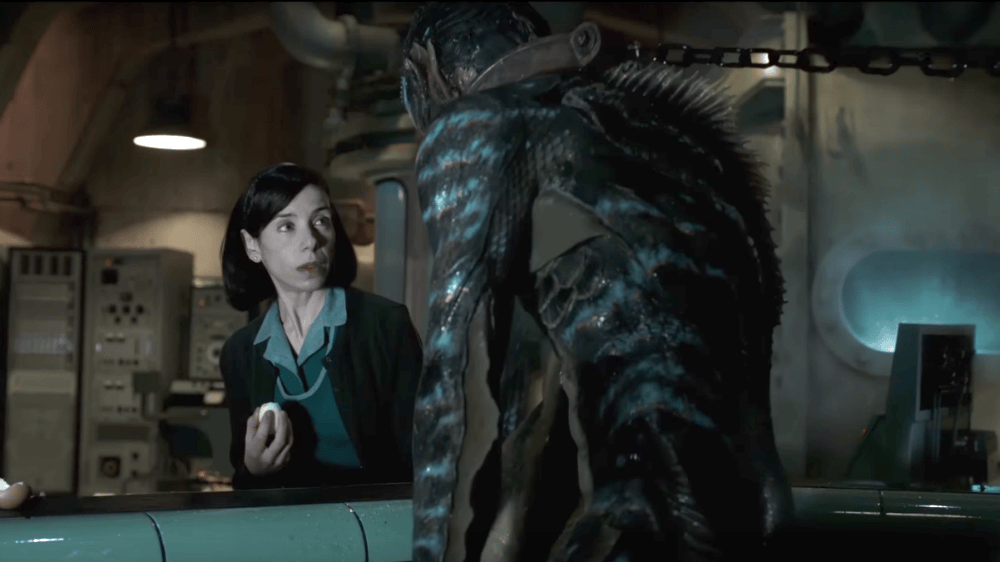
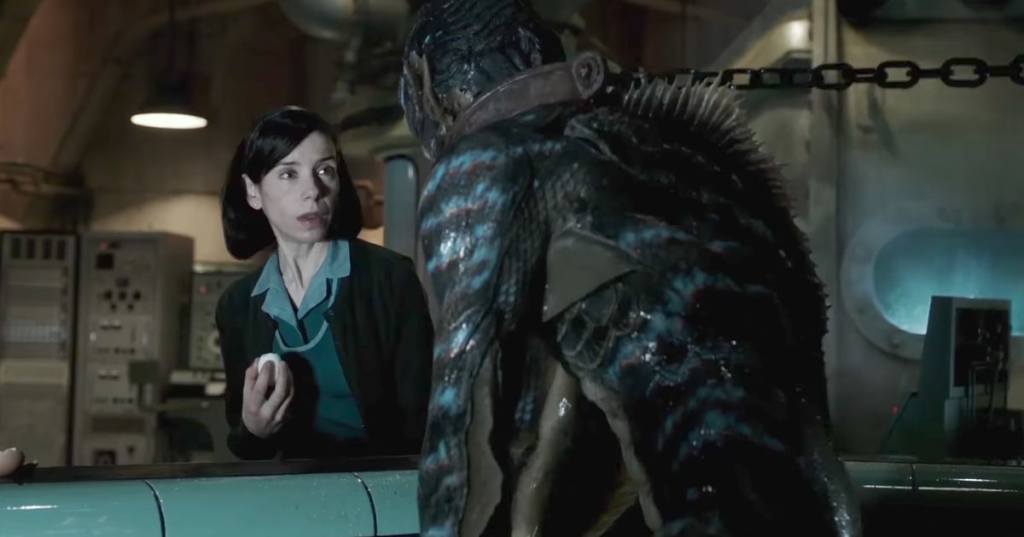
    Take for example, “The Shape of Water,” an admittedly weird, highly stylized genre film about a janitor who falls in love with what is essentially “The Creature from the Black Lagoon.” Conceptually, this shouldn’t be quality cinema.

    Upon closer inspection on the big screen, Oscar-winning director Guillermo del Toro’s fantastical, dark, melancholy monster movie elevates beyond genre expectations to transforms the hearts and minds of cynical moviegoers with an unexpected, deeply personal adventure that will captivate audiences willing to give it a chance.

    “The Shape of Water” is presented in broad brushstrokes painted by a master filmmaker whose 25-plus career in movies have led to this moment, as if every lesson, note or idea del Toro has had for a quarter-century culminated in a two-hour spectacle that has to be seen to be believed.

    Blessed with an Oscar-winning score from Alexandre Desplat, del Toro’s visionary film floats on air as viewers fall in love with Eliza (Academy Award nominee Sally Hawkins), a woman hiding in plain sight struggling to find her voice and clinging to those few who hear it.

    “The Shape of Water” is a celebration of the outsiders – from the handicapped to closeted homosexuals to overlooked minorities – told in mythical fairy tales set in the American 1960s, as if Hans Christian Andersen lived during the Cold War.

    It’s a mistake to passively watch “The Shape of Water,” opting to wait until del Toro’s cinematic opus is available for rental or streaming. For its technical merits alone, “The Shape of Water” to be seen on the big screen where viewers can be completely engulfed by the film’s magical sights and sounds.

    “The Shape of Water” is not for everyone.

    Some audiences will leave aghast at the social and/or moral implications the film espouses; others will find themselves unable to relate to the film’s moderate pacing and stylized storytelling.

    That’s okay. Those viewers need to see movies like “The Shape of Water” in theaters even if they hate it for the rest of their lives.

    If you can allow yourself to be transported inside del Toro’s mind as he intends, “The Shape of Water” is a rare cinematic experience that might only come along once every decade or so.

    Conversations sparked from interesting, engaging cinema seen with friends, family or complete strangers are the lifeblood of a worthwhile moviegoing experience, one you’re not going to get watching a two-hour film on a laptop, 32-inch flat screen television or cell phone.

    2017 was a year of inspirational, controversial, imaginative films that inspire dialogue movies 20 or 30 years simply didn’t do.

    As a representative of everything visionary, diverse and artistic that made last year perhaps the best collection of movies top to bottom this decade, “The Shape of Water” stands as a pinnacle of a changing world in cinema.

    Films about mothers and daughters, or young men exploring their sexual identity, or what race means in America are being made at the highest level now. It’s a trend unlikely to change anytime soon.

    And yes, the “fish-sex movie” is that good. Welcome to a new age.

    Continue the conversation online at cinematicconsiderations.com

  • Oscar nods take ‘Shape’: Recapping 90th Academy Award nominations

    Oscar nods take ‘Shape’: Recapping 90th Academy Award nominations

    So it’s Oscar nomination morning and I have some thoughts….. Let’s get into these picks and do super early winner predictions.

    Best Picture: Call Me By Your Name, Darkest Hour, Dunkirk, Get Out, Lady Bird, Phantom Thread, The Post, The Shape of Water, Three Billboards Outside Ebbing Missouri

    I had seven of these nine nominees yesterday when I made my final picks heading into this morning, with Darkest Hour and Phantom Thread taking spots I had slated to go to I, Tonya and The Florida Project.

    At first glance, there appear to be four serious contenders — Get Out, Lady Bird, The Shape of Water and Three Billboards — with fringe candidates in Call Me By Your Name and Dunkirk. Then there are the just happy to be there films like Darkest Hour, Phantom Thread and The Post.

    Strong support in the technical categories could prove to be gamechanging for Shape of Water, which could go on a Mad Max: Fury Road like run on its way to major Oscar stagecraft wins only to fall just short in the Best Picture race. The Academy’s preferential balloting system will help a film like Lady Bird, which is a consensus favorite, but it’s still too early to see which film faces the inevitable backlash that befalls one major contender each year.

    Right now, this feels like a Shape of Water victory given the film’s 13 nominations. Three Billboards could easily ride momentum from the Golden Globes and SAG Awards to win as well.

    Best Actor: Timothee Chalamet (Call Me By Your Name), Daniel Day-Lewis (Phantom Thread), Daniel Kaluuya (Get Out), Gary Oldman (Darkest Hour), Denzel Washington (Roman J. Israel, Esq)

    This category feels incomplete with the glaring omission of Disaster Artist director/star James Franco, who may or may not have been a casualty of ongoing sexual misconduct allegations that came out after his Golden Globes win. But then again, that didn’t stop the freight train that was Casey Affleck last year for Manchester By The Sea, so who really knows?

    I had Tom Hanks taking the fifth spot in this category as the standard nomination for a beloved performer in a Best Picture nominee that’s probably getting a reputation nod more than one based on merit, but apparently that spot was reserved for Washington in a film that came and went out of theaters without any fanfare or attendance for that matter.

    Daniel Day-Lewis getting a nomination for his reportedly final performance seemed like a given and it’s a great accolade for Kaluuya to earn a Oscar nomination as well, but this is a two horse race between 22-year-old Chalamet and veteran character actor Oldman, who has shockingly only been nominated once for an Academy Award with 2012’s Tinker Tailor Soldier Spy and feels well overdue for a win.

    Give me Golden Globe winner Oldman with a transformative performance in an old school Oscar movie, a stuffy period World War II film where it’s impossible to recognize the actor. It’s a great turn that feels like Winston Churchill is actually there.

    Best Actress: Sally Hawkins (The Shape of Water), Frances McDormand (Three Billboards Outside Ebbing, Missouri), Margot Robbie (I, Tonya), Saoirse Ronan (Lady Bird), Meryl Streep (The Post)

    Best Actress always felt like the easiest category to predict and things fell into place as expected.

    With Golden Globe and SAG wins, McDormand has to be the early favorite here, but this is probably the most competitive category this year and possibly the most competitive slate of actresses to be nominated in the same year this decade.

    21-time nominee and three-time winner Meryl Streep is the least likely to take home a golden statuette this year. Think about that. The 2017 field is deep.

    You could easily make an argument for any of these nominees that would be more than reasonable. Personally, I think this comes down to Ronan’s Dustin Hoffman in The Graduate-esque turn in Greta Gerwig’s fantastic Lady Bird and Hawkins’ spellbinding and silent mastery in Oscar frontrunner The Shape of Water.

    And yet somehow, McDormand winning this category feels inevitable.

    Best Supporting Actor: Willem Dafoe (The Florida Project), Woody Harrelson (Three Billboards Outside Ebbing, Missouri), Richard Jenkins (The Shape of Water), Christopher Plummer (All The Money In The World)

    Michael Stuhlbarg is outstanding in secondary roles for three different Best Picture nominees — Call Me By Your Name, The Post and The Shape of Water — and yet somehow gets left off this list. It just doesn’t feel right.

    Sorry. Moving on.

    Rockwell has been the favorite here for a while now, winning everywhere, but the addition of Harrelson from the same film might split votes and open the door for Dafoe’s well-received turn in an indie darling or more likely Plummer swooping in at the last minute to dominate a J. Paul Getty movie that attempted to wipe the meory of disgraced former star Kevin Spacey.

    Who are we kidding? This is Rockwell’s award to lose, which feels increasingly unlikely by the second.

    Best Supporting Actress: Mary J. Blige (Mudbound), Allison Janney (I, Tonya), Leslie Manville (Phantom Thread), Laurie Metcalf (Lady Bird), Octavia Spencer (The Shape of Water)

    Manville was the only surprise here, taking the spot I had pegged for Holly Hunter of The Big Sick.

    While Blige and Spencer are solid, this comes down to a two-horse race between Janney and Metcalf with Janney the early leader.

    As much as this feels like a toss-up to me, Best Supporting Actress might be the only chance to reward I, Tonya and it feels like the ultimate call.

    Best Director: Christopher Nolan (Dunkirk), Jordan Peele (Get Out), Greta Gerwig (Lady Bird), Paul Thomas Anderson (Phantom Thread), Guillermo del Toro (The Shape of Water)

    I love Nolan as a filmmaker and he’s certainly deserving of acclaim. The same can be said of Gerwig, whose fantastic directorial debut showcases a lot of potential.

    This award has del Toro’s name written all over it, plain and simple. The Shape of Water is his magnum opus, culminating more than two decades of excellence in the industry. Any other winner in this category would be shocking and would spell doom for the film’s Best Picture chances. It just doesn’t seem very likely.

    Other thoughts:

    – I was happy to see well earned screenplay nominations for The Big Sick in the original category and Logan in the adapted category. Neither stands a major chance of winning (Lady Bird or Three Billboards in original and Molly’s Game in adapted).

    – Roger Deakins earned his 14th cinematography nomination and yet somehow has never won. His splendid work in Blade Runner 2049 wouldn’t make a win a career achievement award, though Deakins certainly deserves it.

    – Despite what anyone might tell you to the contrary, Wonder Woman did not get snubbed because it didn’t receive a nomination. Try watching the final 20 minutes of that film and then tell me it earned acclaim. Even when DC gets movies right, they still find ways to screw it up.

    – As I said last year, it’s a mistake for the Academy to simply stream their nominations early in the morning and not broadcast them on national television. It’s a major disservice to the nominees and hurts the potential to reach new audiences.