Category: Oscar Contenders

Oscar contenders, awards-season coverage, awards predictions, nominations, and ceremony analysis. Historical archive category retained at its original URL; use selectively for awards-relevant articles.

  • Whiplash: Strike up the band for visual jazz experience

    Whiplash: Strike up the band for visual jazz experience

    How can you see jazz? It’s easy to hear and a delight to listen to, but how can one visualize jazz in pictures rather than sounds?

    Is it in a contrast of colors? Harsh browns and tans counterbalancing bright hues of blue? The dueling colors of black and white intermixing like yin and yang.

    The best independent film of our time — winner of both the audience and grand jury awards at the 30th Sundance Film Festival in January — explores just such a topic.

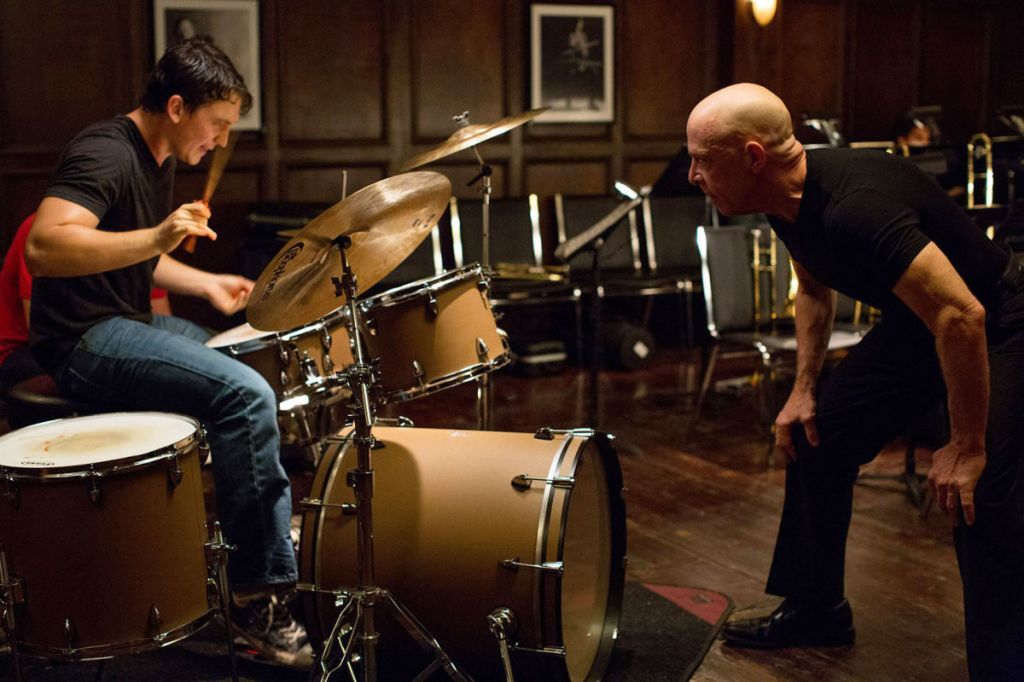
    “Whiplash,” which easily moves into the top spot as 2014’s best film, features Miles Teller and J.K. Simmons in an emotional tug-of-war style dance that engulfs the viewer in a 106-minute free-style jazz duet of obsession and the pursuit of greatness.

    Teller’s Andrew, a first-year jazz student at one of the country’s top music schools, goes head-to-head with top band instructor Simmons in a game of cat-and-mouse musical psychology featuring some of the best back and forth dialogue this side of “Silence of the Lambs.”

    Director Damien Chazelle‘s second foray into feature-length filmmaking is a cinematic spectacle from the opening seconds with young drum prodigy Andrew plodding away at his kit through the visually stunning final performance sequence that amounts to beautiful musical combat.

    Each and every note, both visually and audibly, is carefully crafted by Chazelle and right on point thanks in large part to a brilliant cutting by the film’s editor Tom Cross, who splices together the most stunning musical sequences filmed in nearly a decade.

    Teller, a drummer in his own right, plays all of Andrew’s music with fervor. All of the remaining musicians in the film are accomplished professionals or music students, which gives the movie added authenticity.

    The soundtrack is worth a listen on its own, but viewers should take care to see the film prior to listening to the score in its entirety as several scenes between Teller and Simmons are included as tracks.

    While jazz is definitely the driving force of “Whiplash,” the film is — at its core — a spiraling case of obsession.

    Both leads turn in the best performances of their careers, with a resurrected Paul Reiser playing a key supporting role as Teller’s father.

    The tense dynamic between teacher and student is brought to fortissimo thanks in large part to the effortless chemistry Simmons and Teller share on screen.

    Intentional or not, “Whiplash” is visual jazz, audio art come to life on screen in deep, richer layers of color and a film sure to be atop most critics’ best of 2014 lists.
  • Interstellar: Christopher Nolan hits space odyssey out of the park

    Interstellar: Christopher Nolan hits space odyssey out of the park

    Epic.

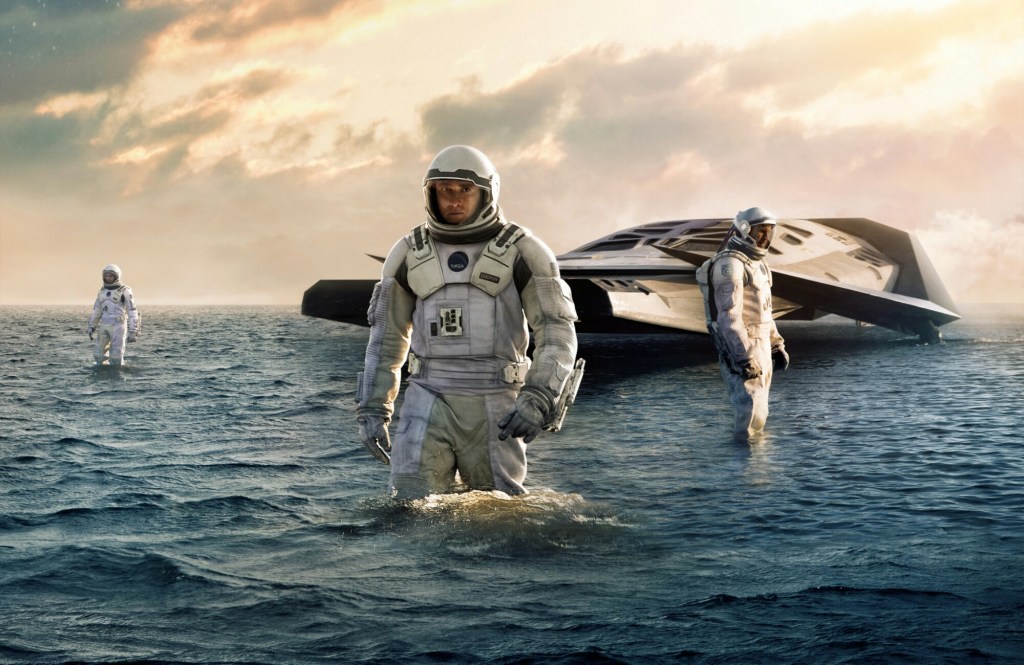
    Everything about the space odyssey “Interstellar” crafted from the mind of director Christopher Nolan oozes with the grandiose brushstrokes of a supreme master of cinema.

    One of 2014’s best offerings, the film is a breath of fresh air in an otherwise lifeless year of filmmaking.

    Where most new movies lack creativity and originality, “Interstellar” bathes in it. There is no other movie like “Interstellar,” a rare feat in cinema.

    Watching the film in its native IMAX is an experience all to itself as the cinematography and visual stimuli on a mammoth screen help give “Interstellar” the weight and impact that is needed to completely immerse the viewer into the experience Nolan creates.

    So much of the film is shot using IMAX-specific cameras that missing out on the “Interstellar” experience on an IMAX screen is like showing up 30 minutes into the film and expecting to see a complete movie.

    The sound could be turned off completely and “Interstellar” would still be better than 90 percent of this year’s releases. Those wanting to see Nolan paint his way through a space odyssey will not be disappointed in the least.

    While the obvious draw of the film is its cinematic brilliance, the movie is filled with a star-studded, but perfectly chosen cast of actors led by Matthew McConaughey in yet another career defining role. His performance is nuanced and understated simultaneously, equally balancing love for his children and the weight of the world on his shoulders.

    The cast is deep and very strong, with terrific performances from Anne Hathaway, Michael Caine, a deceivingly charismatic Matt Damon in a supporting role, Casey Affleck and John Lithgow.

    Perhaps the best performance in the whole film is given by Jessica Chastain, who continues her run as one of the best character actresses of this generation while making the absolute most out of her character lacking in screen time and development.

    People will say that “Interstellar” is too long (two hours and 49 minutes), too slow (at times, they’re right) or too high concept (you don’t need a degree in theoretical physics to understand the movie, but it would probably help.)

    Do not make the mistake of spoiling yourself on the plot in hopes of understanding it better. The less you know, the better off you will be.

    Like Nolan’s “Inception,” “Interstellar” is a film that needs to be experienced with a completely open mind and will likely take several screenings before the viewer can ultimately understand all the complexities of the film.

  • Nightcrawler: Gyllenhaal dominates screen in mesmerizing performance

    Nightcrawler: Gyllenhaal dominates screen in mesmerizing performance

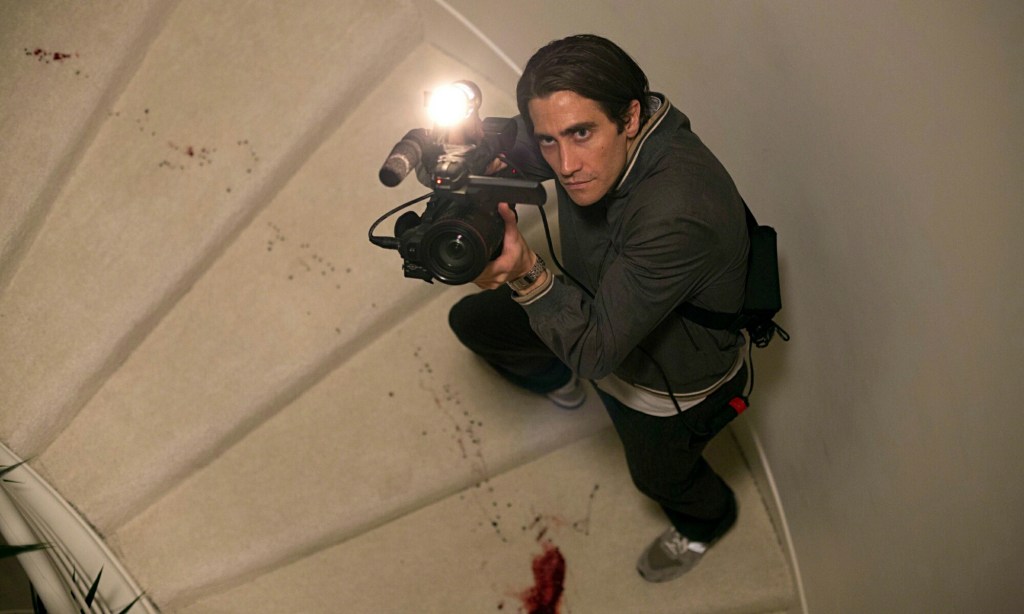
    You’ll probably need more than one viewing to fully appreciate the incredibly cerebral “Nightcrawler,” starring Jake Gyllenhaal as a neurotic loner who stumbles into a career as a “nightcrawler” — a freelance television cameraman tasked with filming crime scenes and car accidents.

    Though its trailer focuses more on the action, “Nightcrawler” is a fairly “talky” film, with Gyllenhaal’s Lou getting most of the movie’s best — and most ominous — lines.

    Lou’s insistence to his intern that he “will never ask you to do something that he would not do himself,” is a common enough phrase used in business taken to a bone-chilling and intense level when viewers actually learn what Lou will do to be first and best at filming a crime scene.

    The faint at heart will not appreciate some of the imagery depicted in the gruesome scenes that match the “if it bleeds, it leads” mentality of the television news programs the film is centered around.

    Gyllenhaal invokes Robert De Niro’s performance in “Taxi Driver” with an added sense of charisma and gravitas, the perfect anti-hero you don’t want to like, but somehow do anyway.

    The film is “Collateral” in a different part of Los Angeles almost to a fault. Gyllenhaal gives a better performance than Tom Cruise, but without the benefit of having an actor the caliber of Jamie Foxx riding shotgun.

    “Nightcrawler,” like its leading character, is inherently and fatally flawed. So much of the film is dark and brooding, with snarky humor built in to cut the tension in just the right ways.

    Writer/director Dan Gilroy hits the mark nine times out of 10 in scenes, with only minor exceptions.

    Where the film doesn’t work is in its obtrusive score by James Newton Howard, whose work distracts and conflicts with the rest of the film. Few movies get the soundtrack so wrong in key moments, especially midway through the film as any tension in a scene between Gyllenhaal and a refined Rene Russo is smashed by music more befitting a Disney feature.

    Overall, the film is a unique mixture of several top-notch movies that preceded it. It’s “Network” in a “Collateral” world; a modern-day “Taxi Driver” meets “L.A. Confidential” with just a sprinkling of “The Usual Suspects” for good measure.

    The best films of 2014 — and it’s sure to continue — are going to be movies like “Nightcrawler” and “Gone Girl” before it, films that are not as straight forward as they appear at first glance, foreboding and requiring intense concentration by the moviegoer to enjoy.

  • Gone Girl: Chilling tale makes great use of Affleck, Pike

    Gone Girl: Chilling tale makes great use of Affleck, Pike

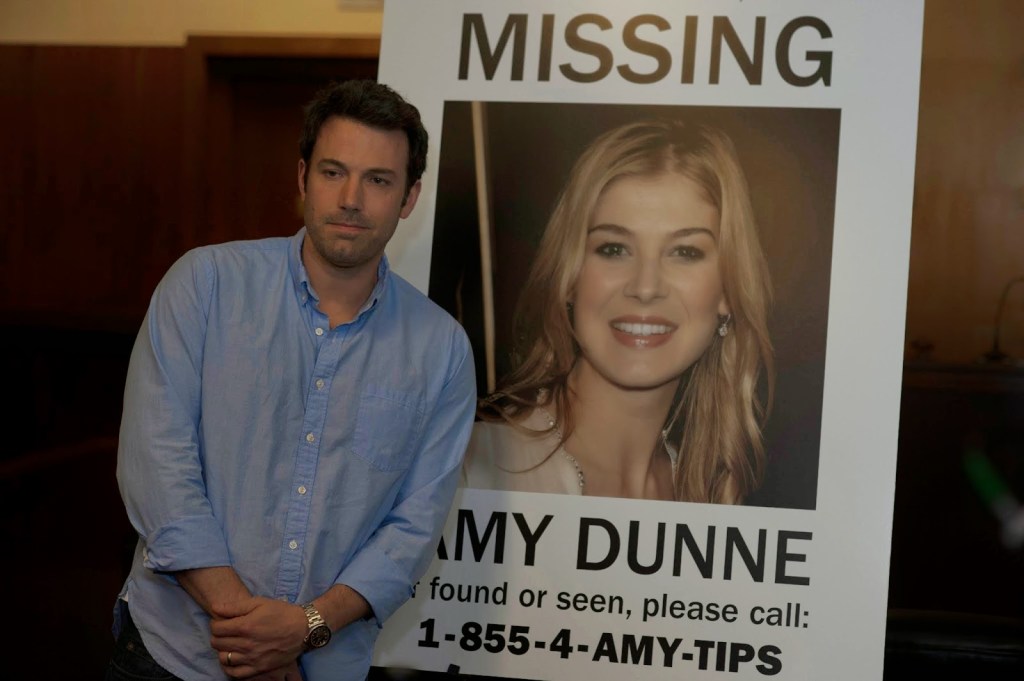
    That subversive grin smeared across Ben Affleck’s face has been plastered all over television and social media for weeks now as “Gone Girl,” the David Fincher adaptation of the best-selling Gillian Flynn novel, hit theaters at the beginning of the month.

    It’s a smart marketing ploy and an ingenious casting choice by Fincher to center his film around Affleck, whose natural charm mixed with the public’s general disdain for anything he’s been involved in before “Gone Baby Gone” make him the ideal guy you’re supposed to hate in a film where Affleck’s character is believed to be involved in the disappearance of his wife.
    https://m.youtube.com/?reload=7&rdm=1zvnba1zc#/watch?v=Ym3LB0lOJ0o
    Fincher has often made smart casting choices that underlie the nature of the character by using public perception of the actor in his favor, most notably Justin Timberlake as Napster founder Sean Parker in “The Social Network.”

    But it’s not Affleck’s terrific performance that stands out in “Gone Girl.” He is very good to be sure, but the shadowing presence of Rosamund Pike as his wife is transformative in a way that few actresses have been able to accomplish.

    Seen through voiceovers and flashback sequences for much of the film, Pike gives weight to the titular ‘gone girl’ Amy in a way that draws the viewer in without becoming too overbearing. The performance, played on a razor’s edge, is a delicate balance between naivety and awareness as the tension mounts between two lovers falling out of love.

    Typical of a David Fincher film, “Gone Girl” is eloquent in its cinematography from the opening sequence of Affleck getting the morning paper on his front lawn to all the psychological tension that evokes his classic “Se7en” and the recent hit “The Girl With The Dragon Tattoo.”

    It’s unfortunate that quite possibly the best film to be released in 2014 will walk away with zero Academy Award wins and only a few nominations, but that’s certainly an easy assumption given voter history in recent years to avoid commercially-successful films.

    Both leads — Pike, especially — are worthy of significant consideration and lead a talented supporting cast that includes brilliant performances by Neil Patrick Harris as an obsessed former lover and Tyler Perry as a pitch-perfect criminal defense attorney.

    “Gone Girl” is the best film, bar none, to be released thus far in 2014 and there are few contenders that will be able the 149-minute thrill ride.