Category: Oscar Contenders

Oscar contenders, awards-season coverage, awards predictions, nominations, and ceremony analysis. Historical archive category retained at its original URL; use selectively for awards-relevant articles.

  • The Hateful Eight: Frontier western offers best, worst of cinema

    The Hateful Eight: Frontier western offers best, worst of cinema

    Quentin Tarantino just isn’t for everyone.

    His most ardent fans – ones who’ve seen “Reservoir Dogs” and “Pulp Fiction” countless times and can quote “True Romance” by heart even though Tarantino just wrote the script – would argue that the director is a cinematic icon and leading provocateur for this generation of filmmakers.

    Others would argue that Tarantino’s movies overtly glamorize violence to the point of poor taste and are unworthy of the critical acclaim they almost universally receive.

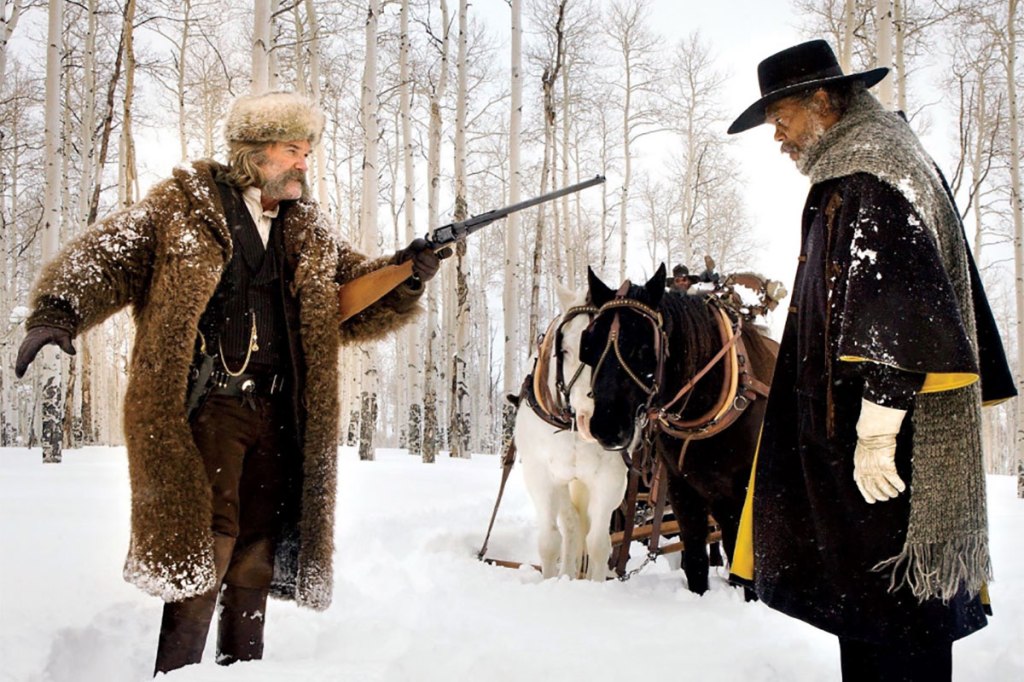
    His newest film, “The Hateful Eight,” is sure to exacerbate those arguments as Hollywood’s most in-your-face director wrings tension within close quarters better than any filmmaker this decade, locking a terrific ensemble cast inside a small haberdashery snowed in during post Civil War Wyoming and letting the chaos ensue.

    The film starts in picturesque expanses along the frontier and squeezes down into a claustrophobic, Alfred Hitchcock-esque mystery thrill ride that will leave viewers on the edge of their seats in the movie’s final hour.

    Describing what occurs in “The Hateful Eight” would deprive potential viewers of the narrative’s glorious twists and turns, but Tarantino’s screenplay effectively utilizes a six chapter structure with dialogue banter closely mirroring a cross between Tarantino’s own “Pulp Fiction” and an Agatha Christie novel.

    All the trademarks of a vintage Tarantino script are there, from the snappy verbal repartee to the scene-smashing monologues and more blood-quenching brutality than one could hope for from one of the masters of gore.

    Moviegoers will be hotly debating Tarantino’s stance on femininity and violence towards women thanks in large part to a revealing and powerful performance from Jennifer Jason Leigh, the only woman among the main cast, and the primary villain at the film’s outset.

    Despite playing a role where she must be brutally beaten by a morally righteous Kurt Russell, Leigh takes the punches and spars right on back with the best of Tarantino’s stellar ensemble. Her performance as the murderous Daisy Domergue, which puts her among the leading contenders for a Best Supporting Actress nomination and the presumptive favorite to win the prize, is as shockingly visceral and poignant as any other performance to come out in 2015.

    Tarantino goes to severe lengths to make Daisy the most androgynous character in recent memory, reinforcing the notion that the character’s gender would not matter and that a male version of Daisy would be treated in the same manner. His take on gender (and racial) equality issues are hammered home with brutal effectiveness, leaving viewers apt to engage in social issues dialogue following a screening in a way no other film has done in years.

    While certainly not the biggest name in the cast, Leigh represents the true on-screen star of “The Hateful Eight,” though Tarantino reminds everyone he’s center stage with plot driving narration throughout.

    Amid the ensemble, Russell – and for that matter an incredibly weathered Bruce Dern – offer the spaghetti western adventure grit and nostalgia in a film that needs gravitas to anchor down the chaos.

    image

    Though it appears from the outset as if Russell will do most of the heavy lifting, Tarantino turns to his most frequent muse, Samuel L. Jackson, to bully his way through the script, dominating scenes filmed in tight quarters like he takes up half the room, no small feat with this ensemble.

    Indeed, Jackson’s crucial monologue at the end of the third chapter is so perfectly crafted that the scene alone represents the hardest working character actor in the business’s best performance since “Pulp Fiction” in 1994.

    “The Hateful Eight” represents Tarantino’s most self indulgent, arrogant entry in his illustrious filmography and the most overtly excessive film since Martin Scorcese used excess to visually describe financial gluttony in “The Wolf of Wall Street” starring Leonardo DiCaprio. At nearly three hours, “Hateful Eight” is almost painstakingly long and feels like the director’s cut of a film half as long. Tarantino wants viewers to feel the length of his movie and it’s impossible to miss.

    Not since “Khartoum” in 1966 has a major motion picture been shot using entirely UltraPanavision 70 mm film, a fact the filmmakers don’t want anyone to forget for a second. The format allows for extreme panoramic shots with exceptional detail in a way matched only by the likes of “Ben-Hur.”

    Sitting in “The Hateful Eight,” there’s never a moment where veteran consumers of Tarantino’s work can believe another director was involved. Tarantino might as well have signed the film reels himself and been in the projectionist’s room in every theater across America.

    He’s there whether audiences want him to be or not. That’s the brilliance of his arrogance. The stench of inevitable death pervades the air moment to moment and scene by scene until the bitter, tumultuous end.

    It’s a cinematic style that will dazzle and insult moviegoers simultaneously, forcing them to turn away and insisting they keep watching over and over again for nearly three hours.

    No other film – and especially no other director – would insist upon the most grandiose, over the top viewing experience, with a pre-film overture, mid-film intermission, retro filming and even a souvenir program shouting “This is how ‘Ben-Hur’ did it” with all the arrogance that implies about his film, the modern day “Ben-Hur” of his mind.

    You want to look away, but you can’t. You want to hate this film, but it’s impossible to on a strictly cinematic level. The brilliance of an arrogance like this is that you hate how right Tarantino is, the best and worst of cinema at the same time.

    “The Hateful Eight” could accurately be described as racist, misogynistic and accepting of both women and minorities all in the same breath. It’s a film that demands thoughtful conversation following screening and compelling cinema for true fans of the visual art form.
  • Joy: Jennifer Lawrence makes Oscar contender work

    Joy: Jennifer Lawrence makes Oscar contender work

    You’re sitting at home on a Tuesday evening relaxing in front of the television and the trailer for “Joy” – one of seven new releases to come out over the Christmas holidays – came on.

    You probably had little to no idea what the hell you just saw.

    image

    It’s a film with Jennifer Lawrence and she’s shooting a shotgun and for some reason there’s Robert DeNiro and Bradley Cooper and why in the world should anyone spend their hard earned dollars watching that movie.

    Ignore the trailers. The marketing execs trying to cut together clips of “Joy” haven’t gotten a movie they were trying to promote this wrong since Sony Pictures failed Cameron Crowe’s “Aloha,” ironically enough starring Cooper.

    Lawrence’s star power alone drove a majority of this weekend’s box office traffic to see the Oscar-contending drama, which should slot in comfortably behind the Will Ferrell-Mark Wahlberg two hander “Daddy’s Home” and a little movie called “Star Wars: The Force Awakens.” But it’s not enough.

    While not quite on the same cinematic level as his last three acting masterpieces – “The Fighter,” “Silver Linings Playbook” and “American Hustle” – director David O. Russell molds a largely successful drama akin to “August: Osage County” with more gusto and business acumen.

    image

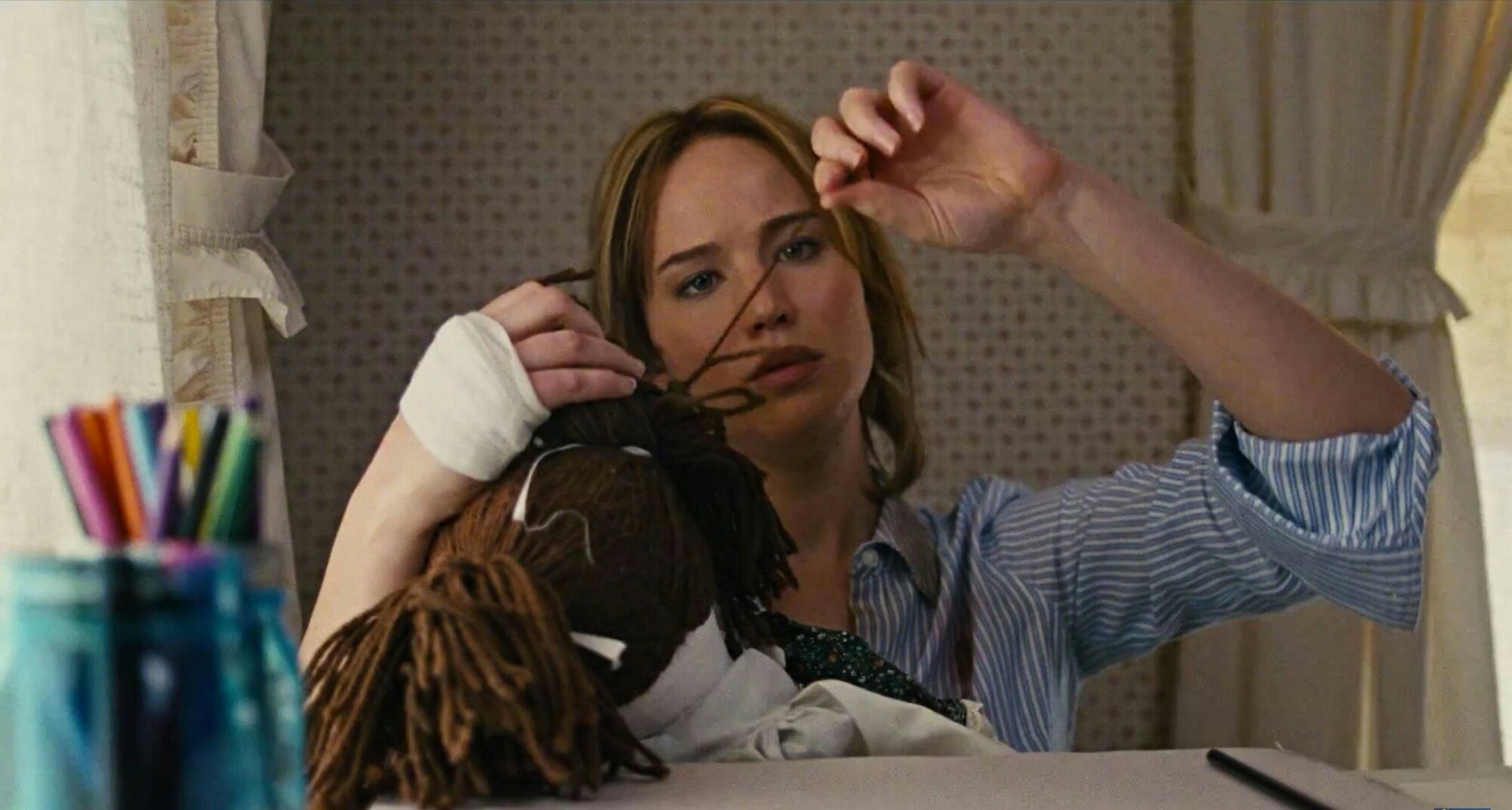
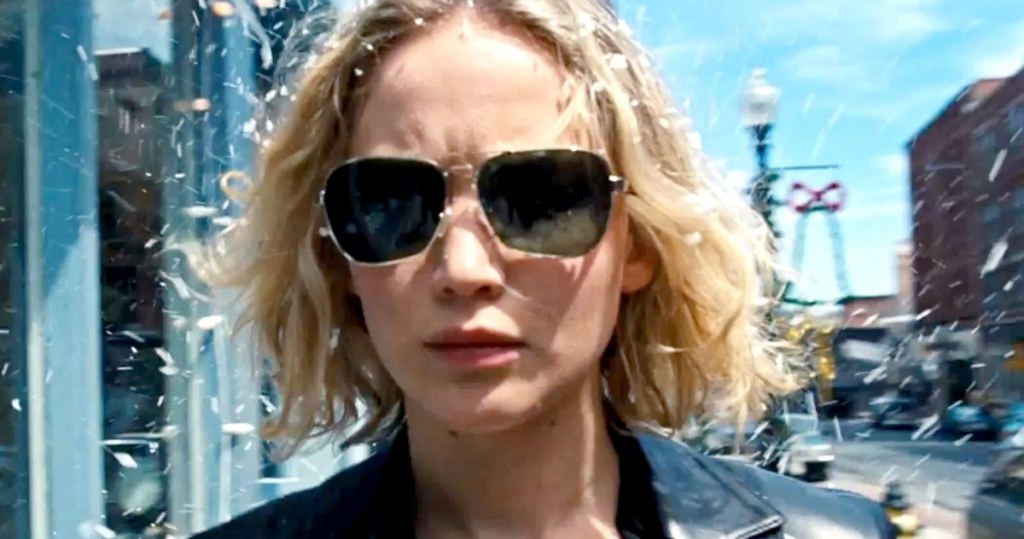
    Lawrence is a near lock for a third consecutive Academy Award nomination under Russell’s direction as Joy Mangano, a smart and resilient woman who overcomes familial burdens and economic hardships while inventing and selling a lightweight, self-wringing mop on the famed QVC television station. Equal parts Marlon Brando and Bette Davis, she attacks scenes with a quiet efficiency, especially during her business negotiation in the film’s final moments.

    “Joy” serves as a perfectly balanced antithesis to the much more widely heralded “Steve Jobs,” which elevates the Apple founder to near mythical antihero heights while the film’s ensemble cast circle around Michael Fassbender as Jobs like planets revolving around the sun.

    Conversely, Lawrence has to pristinely float from chaotic familial relationship to chaotic familial relationship while simultaneously building a nuanced character moving out of the shadows behind much more flamboyant personalities.

    image

    Russell tailor-made the part specifically for Lawrence, who is proving to be his cinematic muse, all the while rightfully knowing that no other actress could have been half as successful. Though some of the scenes aren’t particularly the most well-written by Russell’s lofty standards, Lawrence elevates the material to a higher level and prevents “Joy” from becoming too grandiose or sardonic.

    Her performance serves as a reminder that Lawrence can be one of the top two or three actresses working in Hollywood today, once she finally rids herself of pocket-lining franchise work.

    Cooper, criminally underutilized in “Joy,” gives an effective performance as QVC head honcho Neil Walker, continuing the effortless repartee he shared with Lawrence in “Silver Linings Playbook.” These are two actors who constantly improve each other’s work every second they’re on screen together and viewers are ultimately better off when the duo are paired in scenes together.

    The refreshing thing about “Joy,” especially when it comes to the dynamic between Lawrence and Cooper (or Lawrence and Edgar Ramirez, who plays Joy’s ex-husband), is that romance is so unessential to the story. Very few major studio films with a female lead so brazenly abandon traditional cinematic paradigms to the extent that “Joy” does.

    Mixed in all the numerous time jumps in “Joy” – the film hops from when Joy is a young girl through adulthood and into old age albeit briefly – is a constant reassurance that Joy will be a powerful matriarch who doesn’t need a prince to ensure her family’s safety and happiness.

    She’s guided by her grandmother played by a charming Diane Ladd, receives her financial backing from an Italian widow her father is dating played by Isabella Rossellini and goes toe to toe with her half-sister and full nemesis played by an especially game Elisabeth Rohm.

    Women dominate Joy from start to finish while the men are there to advance the plot and provide a change of pace, quite the cinematic role reversal. “Joy” is by far one of 2015’s most socially progressive films in that regard. Even the actors in the TV soap opera Joy’s mother watches throughout the film are female-dominant led by none other than Susan Lucci.

    Robert De Niro leads the film’s veteran ensemble cast, returning to his usual form as Joy’s brash, yet lovingly charming father. The role is perfect for De Niro, who naturally dominates the screen with his presence, even when he’s not the one speaking.

    Visually, “Joy” has moments of brilliance, especially during close-ups of Lawrence. The film’s ending shot – a tight look at Joy walking down the street – will likely go down as one of the year’s most memorable moments if captured in a single frame. Russell captures his muse in such a way that Lawrence feels like a dead ringer for a starlet from Hollywood’s golden era.

    “Joy” will likely confound viewers structurally, as Russell throws linear timelines out the window, pushing viewers forward and back in time, from coast to coast and in and out of a television screen like a pinball. Moviegoers may struggle with the pinball-esque controlled chaos of “Joy,” especially in the film’s first act.

    Once you get oriented in Russell’s mind and entranced by the world of “Joy,” film fanatics will finally get the small budget feel, big budget backed blockbuster drama everyone hoped “August: Osage County” would be but wasn’t.

    With Lawrence a shoo-in to receive a third Oscar nomination, her performance alone is worth the price of admission, but “Joy” should leave viewers more than satisfied thanks to its talented ensemble cast and a director in Russell who puts the acting first.

  • Spotlight: Journalism docudrama an instant classic

    Spotlight: Journalism docudrama an instant classic

    Every once in a while, a movie comes along that shows its viewers the power of no-frills, no-nonsense drama in a way that just smacks you in the face, shakes you awake and says “This is what good cinema is truly about.”

    “Spotlight” is one of those films.

    Tom McCarthy’s film, based on a script he co-wrote with Josh Singer, follows the four person Spotlight investigative reporting team of the Boston Globe as they discover a massive cover up by the Catholic Church to hide Boston area priests who used their position to sexually assault children.

    Their work, done over the course of months-long investigation in 2001-02, culminated in a Pulitzer Prize award for the Globe team as well as massive legal settlements for the hundreds of abuse victims across the Boston archdiocese and thousands of victims nationwide.

    While the film follows real life events, “Spotlight” focuses on the reporters building the story, rather than the acts of the priests themselves in much the same way that the iconic journalism film “All The President’s Men” followed Woodward and Bernstein and not the Nixon administration’s downfall following the Watergate break-in.

    “Spotlight” is a love letter to journalism in its truest form, when hard-working, well intentioned reporters set out to cover important stories that aren’t easy to tell. McCarthy’s film follows the team’s investigation from the fringes inward, unpeeling layers of the scandal like an onion in a way that hasn’t been done since “All The President’s Men.”

    Probably the biggest achievement for McCarthy as co-writer and director is how “Spotlight” takes a relatively mundane, dialogue-heavy plot structure and molds it into engaging, vibrant cinema. Few other films could have made searching through thousands upon thousands of church and legal documents as intriguing as “Spotlight” does.

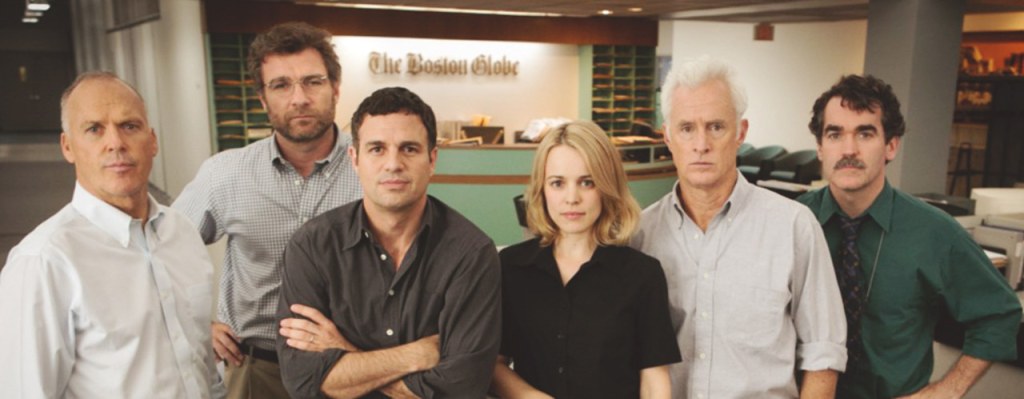
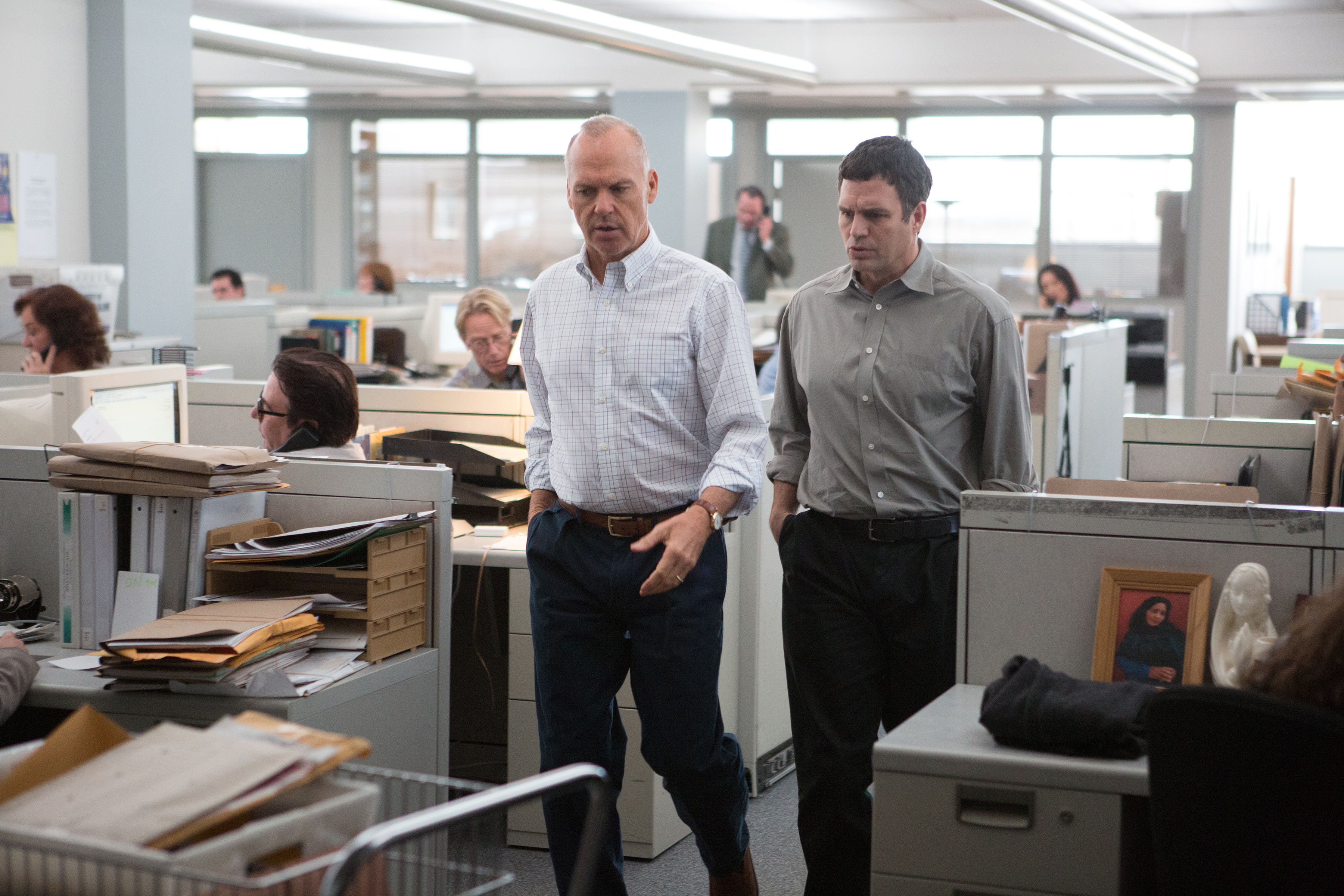
    With as dialogue heavy of a film as “Spotlight” is, its success lives and dies by its ensemble cast, led by the four person Spotlight team which features Academy Award nominees Mark Ruffalo and Michael Keaton as well as one of Hollywood’s best young actresses in Rachel McAdams.

    spotlight-michael-keaton-mark-ruffalo.jpg

    Ruffalo plays the dogged veteran reporter struggling with the moral and religious implications of his team’s investigations with ease, bringing the most complexity to his character out of any of the film’s 10 major performances. His scenes interviewing Stanley Tucci’s Mitch Garabedian are some of the best segments in the entire film and serve as a reminder to younger audiences that Ruffalo has some serious acting chops when he’s not trampling around as the Incredible Hulk in the “Avengers” movies.

    His performance, along with Keaton’s as team leader ‘Robby’ Robinson, should earn him a well deserved Academy Award nomination alongside Matt Damon of “The Martian” and Leonardo DiCaprio of “The Revenant” in the lead actor category, though many have campaigned for all the “Spotlight” cast members in supporting categories arguing that the film doesn’t have a true lead.

    Keaton should be a shoo-in as well in the supporting actor race, which boasts an increasingly crowded field along with Mark Rylance of “Bridge of Spies,” Sylvester Stallone of “Creed” and Idris Elba of “Beasts of No Nation.”

    McAdams also fares well as the team’s lone female reporter, a position that doesn’t make her a lesser member but aides her as she is able to compassionately draw information from many of the film’s most prominent sources, the boys now men who were victims of assault by their priest.

    All three lead reporters – Ruffalo, Keaton and McAdams – take turns serving as the film’s catalyst and it’s difficult to separate these performances from each other, which is why “Spotlight” should be a lock to win any best ensemble cast awards.

    The secondary characters of “Spotlight” including Globe bigwigs played by Liev Schreiber and John Slattery and sources played by Jamey Sheridan and Stanley Tucci help round out the film’s stellar cast in a production where each scene is only valued by its weakest on screen performer. “Spotlight” has no weak links.

    Aside from one climatic scene in the film’s later stages that will ultimately serve as Ruffalo’s highlight reel for Oscar voters, “Spotlight” opts for substance over style, meticulously driving forward scene by scene as viewers hop from one piece of the investigation to another as the Spotlight team uncovers it.

    The film also serves as a love letter to Boston, with McCarthy taking painstaking care to ensure that each and every detail within “Spotlight” feels regionally centered around one of the nation’s most tight-knit cities.

    Understanding Boston during the time of the investigation is a key element in the viewing experience, giving moviegoers added insight into the difficulties of pursuing a story in a town where silence and unquestioned loyalty are primary virtues.

    In the same way, McCarthy’s film is perhaps the most authentic film about the inner workings of newspaper journalism in more than 20 years. Newsroom scenes were shot largely in the actual offices of the Boston Globe with actual Globe reporters in the background.

    Everything about how reporters interacted, interviewed sources and collaborated feels real in a way most films about the profession haven’t been able to match. “Spotlight” joins a pantheon of elite newspaper journalism films alongside “Citizen Kane,” “Zodiac” and the quintessential “All The President’s Men.”

    Not only is “Spotlight” one of the year’s top two or three movies, it’s perhaps one of the five most important films released in the past several years.

    The film serves as a reminder to its viewers both of the need for quality, well researched journalism in a “give it to me now” news era and of the virtues of simple, yet effective movie-making.

  • Beasts of No Nation: Netflix bursts into Oscar race with thrilling drama

    Beasts of No Nation: Netflix bursts into Oscar race with thrilling drama

    Netflix is changing the entertainment business. Again.

    After revolutionizing how we consume home video with their DVD mailing and online streaming services, the Internet mega-power broke barriers with their original television content, winning Emmys for “House of Cards” and “Orange is the New Black.” This massive change allowed viewers to binge watch an entire season within days of watching the season premiere while never having to stop for a commercial break.

    Netflix is back again with another groundbreaking endeavor, seeking to revolutionize feature films once again by producing their own full length feature films and releasing them simultaneously online and in theaters. While a major threat to the movie theater industry, such efforts could be game changing for audiences and for independent filmmakers trying to expand their reach.

    While Netflix has been successful in the past with documentaries “The Square” and “Virunga,” their biggest foray into feature filmmaking, “Beasts of No Nation,” is sure to leap right into the middle of Academy Award consideration in both the Best Picture and Best Supporting Actor categories.

    Based on the 2005 novel of the same name by Uzodinma Iweala, “Beasts” follows a young West African boy, Agu, taken in by a charismatic warlord known simply as Commandant after his family is murdered by the government’s army amid civil war. Expertly made, the movie is a gripping, soul searching tailspin through one of the most devastating situations realistically imaginable. While fictional, every single second of “Beasts” is plausible and drags the viewer through an experience not to be missed.

    Abraham Attah, a newcomer from Ghana, leaps into the hearts of audiences with his bold and soulful portrayal of Agu, a young boy forced into manhood under the worst possible circumstances. Attah plays Agu like an open book and with no apprehensions, providing an unique authenticity to “Beasts” that few other actors – experienced or otherwise – could have pulled off. While his journey onto the screen is most similar to Oscar nominee Barkhad Abdi of “Captain Phillips,” Attah’s effortless performance far surpasses Abdi’s and would be more deserving of acclaim in the Best Actor race, though that field will inevitably be too crowded for Attah to break through.

    Idris Elba mesmerizes as Commandant, dominating the screen both in his aggressive demeanor and impactful, charismatic soliloquies. Even those familiar with his work on “The Wire” or his turn as Nelson Mandela in “Mandela: Long Walk to Freedom” will find Elba nearly unrecognizable as he melts into the brutal soothsayer. The performance clearly establishes Elba as the frontrunner for Best Supporting Actor, though some voters will be turned off from the gruesome brutality “Beasts” displays.

    Without a doubt, the authenticity of “Beasts of No Nation” is undeniable. Though almost every viewer has no clue what life in a war-ravaged, third world country is like, director Cary Fukunaga transports audiences into realities that few have ever experienced so vividly. “Beasts” is certainly not for the faint at heart as the heart pounding war drama has Agu being forced to hack a man to death with a machete, rape and other graphic violence during the final two thirds of the film. Not all audiences will be able to make it through these challenging scenes.

    But Fukunaga balances the brutality in such a way that it’s hard not to be in awe of the beauty of his work at times on a shot by shot, scene by scene basis – especially in a gorgeous section of “Beasts” where Agu participates in a village raid while high on a herbal hallucinogen. Fukunaga overexposes and accentuates the reds to a brilliantly stunning degree, making the actual events of the scene somewhat more tolerable to bear.

    The film is written, directed and shot by Fukunaga, best known for the 2011 adaptation of “Jane Eyre” and directing the first season of HBO’s “True Detective.” Bold and beautiful from the outset, “Beasts of No Nation” is made for the big screen with its bold and vivid colors, probably needing movie theater technology to fully enjoy its nuances, especially during night scenes.

    However, the film stands up on smaller screens for those enjoying at home or on the go via Netflix. “Beasts” is too good a movie and far too accessible for the average audience to be avoided. Viewers of appropriate age need to make whatever effort is needed to seek out “Beasts,” and the Netflix connection will help boost viewership far beyond whatever it might have drawn in only a limited theatrical release.

    When the film’s content becomes almost too much for the viewer to stand, that’s when Fukunaga takes over, with his unique and picturesque visual style compensating for the brutality of “Beasts” with beauty. This counter-play works splendidly from start to finish, entrancing audiences in a way that war has not been shown since “Saving Private Ryan.”

    Definitely among one of the five best films released so far in 2015, “Beasts of No Nation” has to be a serious contender for major awards early next year and firmly plants the flag in the ground for Netflix as someone to be reckoned with in feature filmmaking going forward.

  • Steve Jobs: Perception isn’t reality with Apple founder biopic

    Steve Jobs: Perception isn’t reality with Apple founder biopic

    Steve Jobs was an innovator.

    The man behind the iPod, iMac and one of the enduring beacons of the tech industry hasn’t been gone five years and Hollywood’s already on their second biopic about the enigmatic and fractured genius.

    Two years ago, an independent feature with actor/model/Jobs-lookalike Ashton Kutcher as the Apple co-founder was released to little fanfare and critical derision despite a solid effort done in quick turnaround following Jobs’ death.

    Recently, a much more ballyhooed film that focuses on key moments in his industrial years, “Steve Jobs,” arrived in theaters much to the delight of national critics and to the general shrugs of the general public.

    Since the Kutcher version is — in essence — Intro to Jobs 101, this year’s effort is Jobs 401, designed to be a master class for those seeking to explore the complexities of a man that even his closest friends couldn’t completely relate to or understand.

    It’s in this realm that screenwriter Aaron Sorkin, who spearheaded the film, and director Danny Boyle attempt to wade into previously tread waters with a movie that feels like what might have happened had Jobs made the biopic himself.

    “Steve Jobs” is dazzlingly brilliant when it feels like it; painfully unaware of or brazenly antagonistic about how obtuse it becomes at times; visually appealing in an artistic sense and a film that leaves audiences scratching their heads wondering what the heck just happened.

    Unlike Jobs the man, “Steve Jobs” the movie doesn’t really care much for how the general public will consume the film. Sorkin and, to a lesser extent, Boyle go out of their way to make “Steve Jobs” sardonic and un-relatable, making grandiose assumptions about how much people know about Jobs’ history heading into the film.

    Sorkin — who was probably nominated for an Academy Award for this film when it was announced he would be penning the screenplay back in May 2012 — dominates “Steve Jobs” from the opening seconds until the closing credits without ever appearing once on screen.

    His script utilizes the same three-act structure as Quentin Tarantino’s far superior “Inglourious Basterds,” highlighting three specific events in time and using each as a tent pole of the film, with product launches for the Macintosh in 1984, the NEXT Cube in 1988 and the iMac in 1999 as inciting incidents for “Steve Jobs.”

    Sorkin’s screenplay comes off more like a theatrical play — and would probably be far better off as one — with Jobs lobbing verbal grenades back and forth with nearly everyone he comes into contact with on screen.

    For as much as he is revered by the technology-minded masses, the Jobs character written on the page for talented character actor Michael Fassbender to play is neither hero nor anti-hero, but comes across largely as the endearing villain that audiences await to reform.

    It should come as no surprise that the former Apple employees who consulted with Sorkin on the script — co-founder Steve Wozniak, former Apple CEO John Scully, tech expert Andy Hirtzfeld — come across as sympathetic.

    Structurally, the film is geared as Jobs-centric, with scenes, characters and even the camera to a large extent circling Jobs like planets to the Sun. It’s an innovative way of storytelling that we’ve seen before with last year’s Best Picture winner “Birdman,” though Best Director winner Alejandro González Iñárritu pulls off the task much better than Boyle, who largely takes a backseat to Sorkin’s script and the actors’ performances.

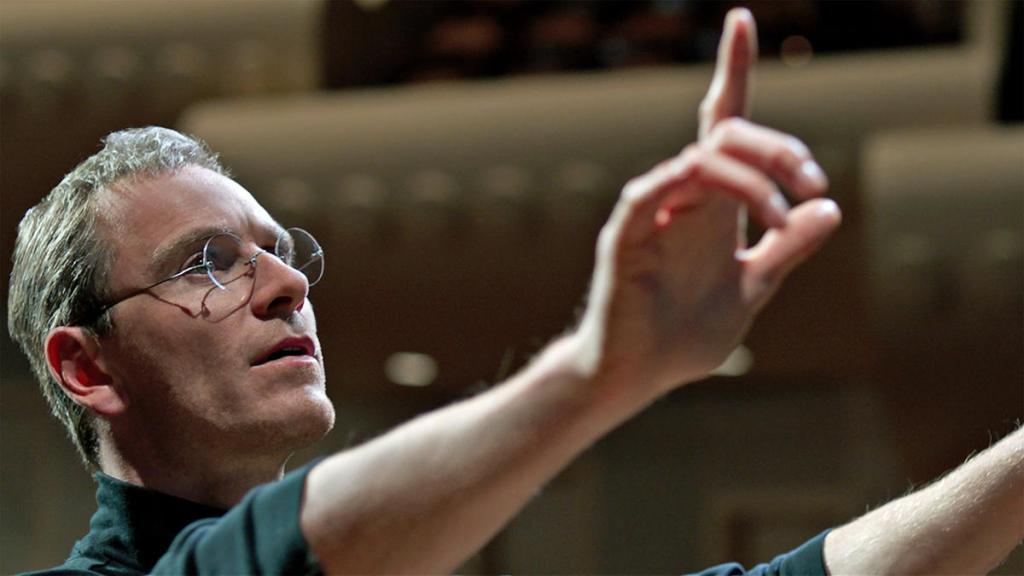
    Fassbender does yeoman’s work carrying the heavy burden of both being the iconic title character and bearing the weight of the film on his shoulders. But as Jobs believes in the film that he is the conductor and everyone else around him are the musicians playing the tunes, in the world of “Steve Jobs,” Sorkin is the conductor with Fassbender, Kate Winslet, Jeff Daniels and even director Boyle just strumming along to his tune.

    Winslet and Daniels are solid in their performances as Apple marketing head Joanna Hoffman and Scully, respectively, though neither give Oscar-worthy efforts in spite of seemingly inevitable nominations.

    The film’s biggest outlier — perpetual stoner actor Seth Rogen — is an oddball choice even for a film filled with eccentricities. Following the lead of his “Freaks and Geeks” brethren James Franco and Jonah Hill, Rogen delves into serious, heady drama with full gusto, but at no point in time does Rogen melt away into the world of Wozniak long enough to make viewer forget the guy from “Knocked Up” is on screen. Hill’s recent successes in “Moneyball” and “The Wolf of Wall Street” help give insight as to why Sorkin and Boyle chose Rogen for the role, but they would have been much better off casting Hill himself instead.

    Katherine Waterston — daughter of “Law and Order” actor Sam Waterston — gives the film’s best performance as Chrisann Brennan, Jobs’ ex-lover and mother to Lisa, whom Jobs denied is his child.

    In a film filled with big name actors playing much more compelling parts, Waterston shines as a woman struggling to make ends meet while the father of her child is one of the world’s richest men. She plays Chrisann with an undeniable vulnerability and draws the audience’s eyes to her despite Sorkin and Boyle’s insistence on a Jobs-centric film.

    Waterston — along with Dakota Johnson’s limited, yet breathtaking work as ‘Whitey’ Bulger’s lover in “Black Mass” — helps cement the makings of a quality next generation of actresses focused on substance over style, continuing the path paved by Jennifer Lawrence in higher-profile films the last several years.

    Seeking to be the iPhone of cinema, “Steve Jobs” is more like the NEXT Cube — innovatively designed without much underneath the surface. It’s also a film that insists upon itself, where viewers feel burdened to appreciate the film more because of its cast and subject matter.

    “Steve Jobs” has the makings of a significantly better film than it actually is, though a nuanced screenplay and solid performances will likely make it an awards contender early next year.

    While worth checking out, audiences shouldn’t be breaking down the doors or waiting in line for hours on end as if it were the iPhone-equivalent the filmmakers hoped “Steve Jobs” would be.

  • Black Mass: Depp, Edgerton shine in ensemble gangster flick

    Black Mass: Depp, Edgerton shine in ensemble gangster flick

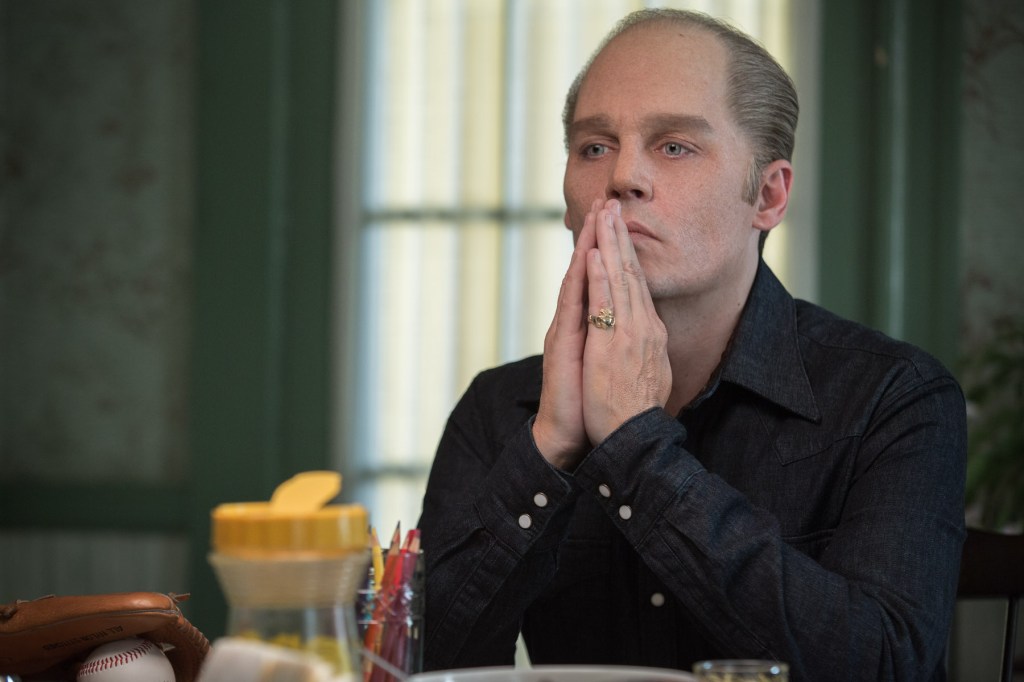
    Johnny Depp is different things to different people.

    He’s borderline flamboyant, swashbuckling pirate Johnny Depp to many filmgoers; undercover teen cop Johnny Depp to an older generation and an enigmatic Mad Hatter Johnny Depp to a much younger subsect of audiences.

    There’s no mistaking that the charming when he wants to be, brooding when he needs to be and enigmatic always Johnny Depp feels at home in any number of characters.

    But it seems that every five years or so, audiences are treated to the best kind of Depp, crime drama anti-hero Johnny Depp. We’ve seen this Depp play undercover agents in “Donnie Brasco,” drug lords in “Blow” and famous gangsters in “Public Enemies.”

    Six years after he died on the street as famed bank robber John Dillinger, crime drama anti-hero Johnny Depp is back and channeling a “The Departed”-era Jack Nicholson as real life Boston kingpin James “Whitey” Bulger in Scott Cooper’s “Black Mass.”

    Wire to wire in the film, Depp is unrelentingly dominant in every scene he’s in, a choice well suited for the part. Bulger commands with an absolute authority over those who work for him – and even those who don’t – and Depp plays the part with the same bravado. The performance is layered in quieter moments within “Black Mass” where Depp shows a hint of a gentler side to the brutally violent mob boss in scenes between Bulger and his mother as well as his young son.

    While “Black Mass” is rightfully billed as Depp’s movie, Joel Edgerton – most recently the writer/director/star of “The Gift” – gives an award-worthy performance as Bulger’s childhood friend turned FBI handler John Connolly. Edgerton portrays Connolly with the same moxie and bravado as Depp handles Bulger, just on the other side of the law. It’s as if the two actors are playing one person on opposite sides of the coin.

    Edgerton’s role is pivotal in making “Black Mass” an ensemble piece rather than allowing the actors to essentially become live set dressing for Depp’s one-man-show.

    While Depp and Edgerton do the bulk of the heavy lifting on screen, “Black Mass” boasts a fantastic cast who all deserved screen time that Cooper couldn’t add onto a two-hour running time.

    Oscar-nominated British actor Benedict Cumberbatch does a much better job offering a compelling and credible Boston accent in “Black Mass” as opposed to his jarring and uneven Southern twang in “August Osage County.” The Brit consistently delivers top-notch performances across the board and, with accent in place, helps to round out Bulger’s character as a moral counterbalance to Bulger. Cumberbatch gives Bulger’s straight-laced state senator brother a refined civility that implies moral high ground with just a wink to the audience that thinks might not be what they seem.

    Some of the film’s best work comes from its secondary actors, most notably Dakota Johnson of “Fifty Shades of Grey” fame. Johnson goes toe-to-toe with Depp in several scenes as Bulger’s girlfriend/baby mama with a dazzling exchange between the on-screen couple at a hospital being one of the best moments in a film filled with explosive dialogue and stunning cinematography.

    There’s a strong effort made by Cooper to evoke classic gangster clicks of the past within “Black Mass.” Elements of everything from “Casino” to “The Godfather” trilogy to “The Departed” are represented as layers upon layers of cinematic depth within the movie, as if Cooper feels assured of his film’s place among the canon of the genre.

    Indeed, it’s no coincidence that “Black Mass” hits the big screen in the same month as the 25th anniversary of Martin Scorcese’s masterpiece “Goodfellas,” which seems like an obvious companion film for “Black Mass.” Both are lengthy, high-drama, gangster flicks made with a flair for the cinematically extravagant. It makes sense.

    Yet, the true cinematic counterpart for a film like “Black Mass” is David O. Russell’s “American Hustle,” a feature that layers historical fact with creative embellishments that old school filmmakers might dub “movie magic” combined with a deep and talented cast of actors at the top of their game. Both films exude a manic energy about them that pervades both the onscreen performances and visual style. Additionally, the plot device used to give equal time and weight to both sides of the law in “Black Mass” feels more like “Hustle” than “The Departed” in terms of the script’s arc and dialogue, especially when comparing Edgerton’s performance to Bradley Cooper’s spastic FBI agent in “Hustle.”

    Visually impressive and filled with quality acting performances throughout, “Black Mass” does right by the gangster genre it attempts to join the canon of and is worth finding in an area theater.

  • Straight Outta Compton: Rap supergroup featured in new biopic

    Straight Outta Compton: Rap supergroup featured in new biopic

    Hollywood has struggled in recent years with developing a broad appeal for its critically popular staple of biographical films, dubbed “biopics,” despite large portions of accolades being heaped upon the genre which brought us Eddie Redmayne’s Oscar-winning portrayal of Stephen Hawking in the little seen “Theory of Everything.”

    For every Bradley Cooper and Clint Eastwood helmed “American Sniper,” there’s at least a half dozen biopics that also hit the big screen to little commercial fanfare, with 2014 bringing audiences retrospectives on Martin Luther King Jr. (“Selma”), Alan Turing (“The Imitation Game”), Louis Zamperini (“Unbroken”) and James Brown (“Get On Up”) to mixed results at the box office. Already, Hollywood has slated films on Apple creator/genius Steve Jobs, jazz musician Miles Davis, chess champion Bobby Fischer and Lili Elbe, a transgender Danish artist.

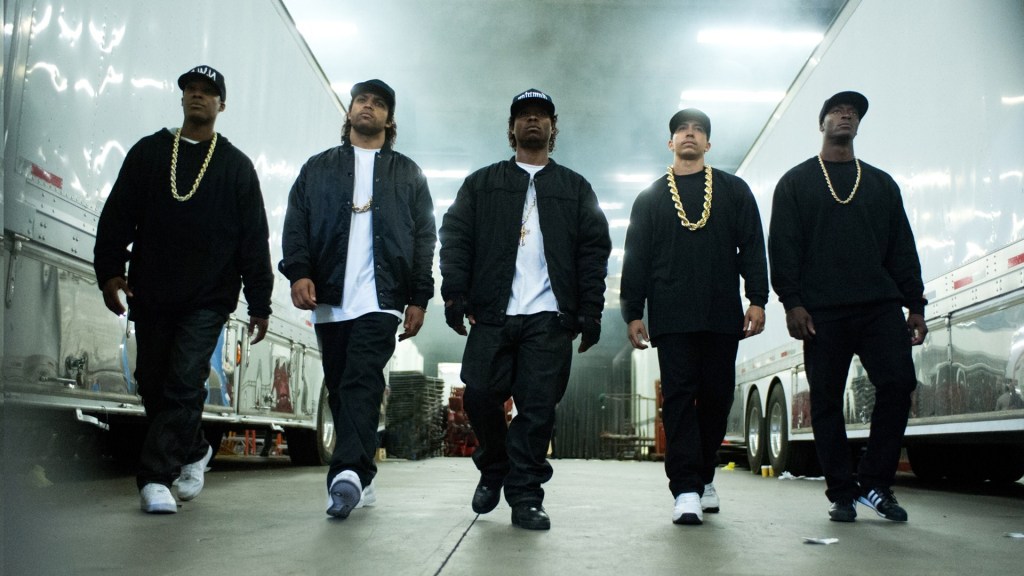
    Like “Sniper” the year prior, one of this year’s best biopics will ultimately be its biggest box office smash as the iconic gangsta rap group N.W.A. is profiled by director F. Gary Gray in “Straight Outta Compton,” which made $60 million domestically in just its first weekend in theaters. The film borrows its name from N.W.A.’s 1988 smash-hit debut studio album and chronicles the adult lives of its three leading members — music producer, DJ and rapper Dr. Dre; MC and future movie star Ice Cube; and the late Eric “Eazy-E” Wright, who died in 1995 following an HIV diagnosis.
    https://m.youtube.com/?reload=7&rdm=1zni797c8#/watch?v=l5r5cZk0EfY
    Littered with racial slurs, drug usage and footage of the Rodney King beatings, “Compton” — as a film about the evolution of hardcore gangsta rap — has to accurately reflect the era and life conditions that brought about N.W.A. in the first place, as Ice Cube eloquently states during a press conference about the group’s most controversial song “F*$# Tha Police” when he says “Our art is a reflection of our reality.” The film makes this difficult time in American history — with high racial tensions and gang warfare — grounded in the minds of audience members despite how hard it may be to endure as a viewer.

    Because of the controversial nature of the film and his relative unknown status as an actor, Jason Mitchell likely won’t receive much acclaim during award season for his performance as Eazy-E, a key member of the group that younger audience members likely may not remember as well as Dr. Dre (for his Beats headphones) and Ice Cube (for his acting in popular comedies).

    Corey Hawkins does well with a limited character in Dr. Dre, who seems more like a third wheel helping to keep the group on track from the background while Eazy-E and Ice Cube do most of the talking. Playing the third banana is a relatively thankless job that Hawkins attacks with quiet aplomb. Ice Cube’s son, O’Shea Jackson Jr., does a tremendous job filling his father’s shoes as well.

    The group’s other members — MC Ren, DJ Yella and The D.O.C. — are represented in the film, but largely pushed to the background in order to make room for Mitchell, Hawkins and Jackson Jr. to have larger roles in the film.

    “Straight Outta Compton” also features Paul Giamatti’s best performance in several years as N.W.A. manager Jerry Heller, who subtly guides N.W.A. to stardom while secretly ripping off lead producer Eazy-E and the group as a whole, who fracture beyond repair when Ice Cube becomes aware of Heller’s manipulative ways. If there is a villain in Gray’s “Compton,” it’s Heller, though infamous rap producer Suge Knight of Death Row Records haunts the film in the fringes, with a separate biopic on Death Row just begging to be produced.

    To be fair, Gray’s film begins to peter out toward the conclusion as “Compton” jumps from one plotline to another at the drop of a hat, leaving audiences reorient themselves mid-scene and missing a great deal of the action. However, once Dre, Eazy-E and Ice Cube are reunited in one cohesive storyline at the conclusion of the film, “Compton” offers a satisfying, yet emotional ending.

    Well-made and well-liked films are especially hard to come by in August, which seems to be typically the last month of the year movie studios like to slate films they have less confidence in before the award season push ramps up in October through the holidays. “Straight Outta Compton” hits theaters at just the perfect time, reminding audiences that films can be emotionally challenging, thought-provoking and entertaining all at the same time.

    While some audience members may not agree with the film’s conclusions or understand all of the history behind the iconic rap group, “Straight Outta Compton” is a must see event as one of the year’s top films deserving both mainstream appeal and critical success.

  • Inside Out: Pixar returns to animated genre with maturity

    Inside Out: Pixar returns to animated genre with maturity

    If Christopher Nolan made a children’s movie, it might end up something very similar to “Inside Out,” the latest Disney/Pixar blockbuster to hit theaters.

    The ultimate thinking man’s kids’ film (both figuratively and literally), director Pete Docter’s third feature film is incredibly layered and cerebral in much more complex ways than his other features, 2001’s “Monsters, Inc.” and 2009’s “Up.”

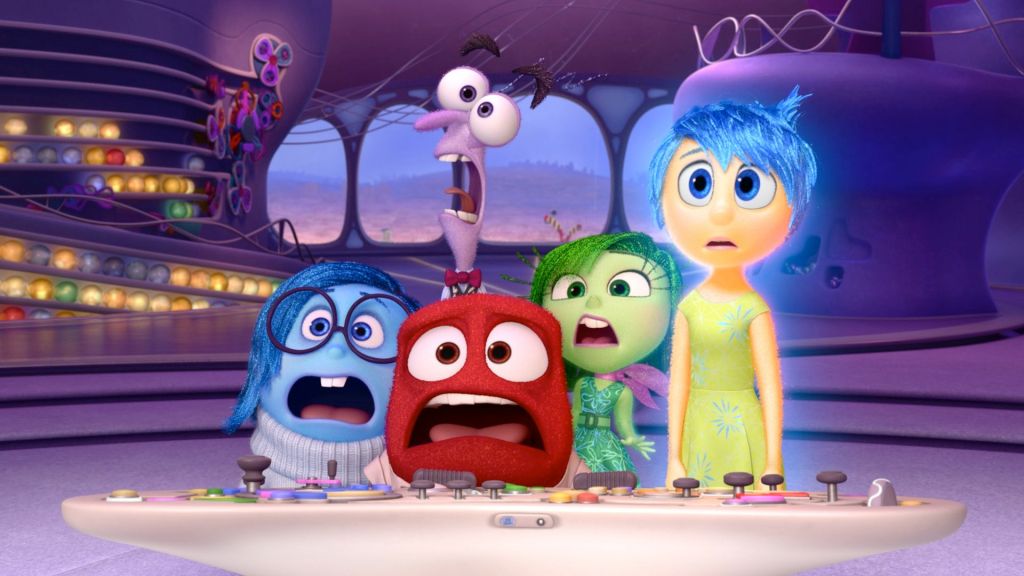
    On the surface, “Inside Out” focuses on the emotional states (Joy, Sadness, Fear, Disgust and Anger) of a pre-teen girl named Riley, whose family moves from Minnesota to San Francisco abruptly and without warning. Much of the film is viewed from inside Riley’s brain, with Riley herself reduced to nothing more than a secondary character. Visually, the difference between the real world and the one in Riley’s head is defined by brightness, with real world scenes more tampered down than the vividly bright world of her mind.

    While not exactly on par with Pixar’s upper echelon features like “Toy Story” and “Finding Nemo,” “Inside Out” does mark a much needed return to the big screen for one of animation’s top studios, whose last release, “Monsters University,” came out in 2013. Thankfully, Pixar is back in a big and bright way with “Inside Out” and viewers will get a second helping of Pixar later this year with the release of “The Good Dinosaur.”

    The journey itself doesn’t provide anything new or extraordinary, but what sets “Inside Out” apart from more pedestrian children’s movies is just how inventive the film is conceptually. Animation usually deals with the surreal and unbelievable on an external scale — i.e. What if all my toys came to life when I’m not around?

    Turning the camera around and looking internally within oneself is something generally left up to high concept science fiction films.  While Docter’s film is certainly not without its flaws — running time being a major concern as “Inside Out” tends to drag in the middle — it does reflect a major step forward in animation and family-friendly films in general.

    Visually, the film is one of Pixar’s better works, dynamic and vivid inside Riley’s mind, while at the same time, the real world feels authentic to the eye in a much more realistic way than your average animated films. There’s two distinct animation styles at play in the film and both stand out on their own while working in harmony with each other.

    For as good as the directorial and animation work is, “Inside Out” doesn’t click in quite the same way without the dynamic and rich vocals of lead voice actress Amy Poehler, whose glee as the emotion Joy evokes much of the high energy character that Poehler became famous for as government worker Leslie Knope in TV’s “Parks and Recreation.”

    So much of the success in animated films is getting the lead voice actors right, from Tim Allen and Tom Hanks in “Toy Story” to Ellen DeGeneres in “Finding Nemo” and Idina Menzel and Kristen Bell in “Frozen.” A good vocal talent can elevate animation beyond the visual and bring the cartoons to life, whereas poor, miscast voices just clutter things up.

    Poehler, who’s lived on high-energy performances, is ideally suited to play the perpetually perky Joy, leading a rag-tag group of emotions voiced by comedic all-stars like Bill Hader (Fear) and Mindy Kaling (Disgust). Comic Lewis Black, who humorously yells through much of his standup, fits like a glove as Anger, the best animated emotion, drawn flame red, stocky and evocative of the stereotypical newsroom editor, complete with a thick mustache reminiscent of Mike Ditka.
    https://m.youtube.com/watch?v=k1oXx4delIY
    It should come as no surprise to fans of the American version of the hit television comedy, “The Office” that Poehler’s main counterbalance, always gloomy Sadness, would be voiced by Phyllis Smith, who perfected the role as a Debbie Downer cubicle worker. Smith brings all the fervor from her classic television performances to the big screen and is a refreshing new voice to animation, one to stick around for a long time.

    Veteran character actor Richard Kind stands out among the vocal talent in a secondary role as Riley’s imaginary best friend, Bing Bong, slowly being forgotten as she gets older.

    “Inside Out” forces younger viewers to ask difficult questions like “Why is sometimes being sad a good thing?” and “How do I best deal with change?” While conceptually geared more toward pre-teen and teenage audiences, younger viewers will still find a great deal of enjoyment following Joy and Sadness as they fight to make their way back home.

    Audiences are seeing Pixar grow up as a studio with “Inside Out,” a more mature offering that still keeps in the overall mold of classic animated hits, but shows more depth and deserves multiple viewings to understand all the film’s subtle complexities.

    ‘Lava’

    Following an ongoing Disney trend for family-friendly entertainment, a short film entitled “Lava” is screened prior to the start of “Inside Out.”

    Basically a music video drawn out a tad too long at six-plus minutes, “Lava” follows the story of a lonely volcano looking to find his volcano soulmate.

    The effort is cutesy and just slightly over the top, not really living up to the much higher standards of “Inside Out,” though the song itself is memorable and catchy.

    Don’t fret if you’re running behind at the concession stand, however, as “Lava” isn’t the must see that its feature partner is.

  • Mad Max Fury Road: Brutally carving roadmap to quality sequels

    Mad Max Fury Road: Brutally carving roadmap to quality sequels

    Two films espousing feminist ideas broke through in a big way commercially last week, but it’s the movie franchise you’d least suspect that does the best job of celebrating women in cinema.

    In fact, it’s just a better movie all the way around.

    Don’t look now, but George Miller, the director behind the Mel Gibson-led “Road Warrior” trilogy, is back with a new installment of “Mad Max” and its “Fury Road” is simply one of the three best films so far in 2015 and by far the year’s most feminist.

    It’s not earth-shattering if viewers haven’t seen the trilogy before heading to theaters for “Fury Road.” In fact, seeing the film with fresh eyes offers a richer perspective on this visually brilliant epic adventure.

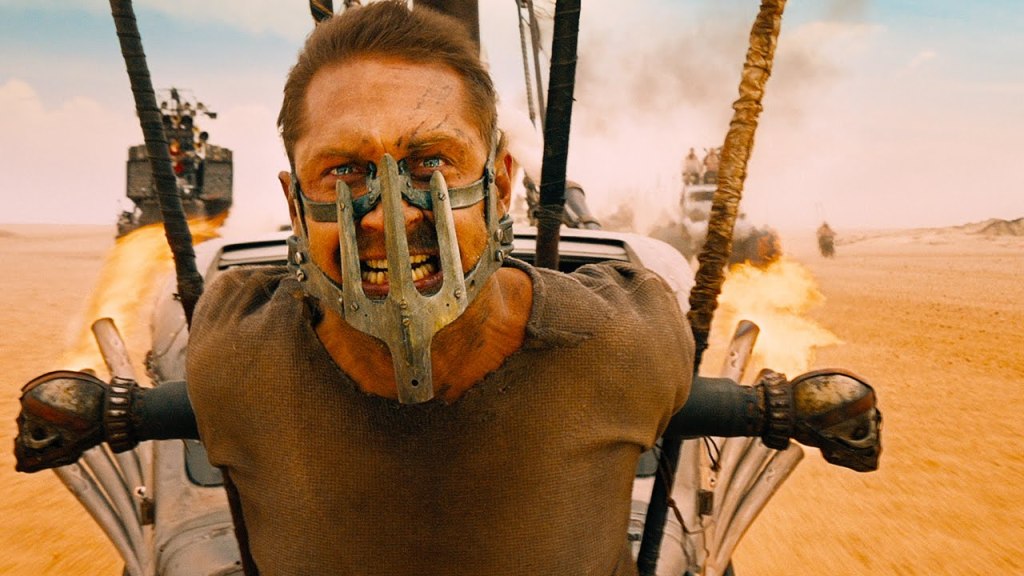
    Tom Hardy — further cementing his status as both leading man and character actor — holds his own as the titular “Mad Max,” taking over where Gibson left off in the mid-1980s.

    It’s Charlize Theron, however, that really drives “Fury Road” with the year’s most powerful feminist performance, kicking ass and taking names as the Imperator Furiosa tasked with secreting five young breeding women away from a cult in a post-apocalyptic desert. The film leans heavily on agenda — some political, some ideological — while also putting female characters in places to shine in what would otherwise be male-driven films.

    Nicholas Hoult — previously best known as Beast in the latest “X-Men” installments — is unrecognizable as the War Boy Nux, teetering on the brink of insanity while somehow not falling all the way over. It’s by far the best performance by a supporting actor so far in 2015, even surpassing a classic Alan Alda performance in “The Longest Ride.”

    While the acting will help carry audiences through scene to scene, what really sets “Fury Road” apart is the work of Miller and cinematographer John Seale to bring the vivid pictures in Miller’s head to life on the big screen.

    Rarely is a film more visually dynamic on a shot to shot basis than “Fury Road,” which keeps viewers on sensory overload for a full two hours. The fact that Miller and stunt coordinator Guy Norris were able to achieve 90 percent of the stunts performed in the film without the aid of computer-generated imagery (CGI) is astounding.

    Watch “Fury Road” and then try to wrap your mind around the fact that Miller also directed “Babe” and the Academy Award-winning animated film “Happy Feet.”
    https://m.youtube.com/watch?v=nr6wdTPGFmI
    To be sure, “Fury Road” is a highly demanding, heavy-metal rage inducing, bullet-to-the-head kind of film for mature audiences only. Miller’s post-apocalyptic action horror odyssey insists upon a rational and engaged audience like last year’s sci-fi adventure “Edge of Tomorrow” with Tom Cruise and Emily Blunt.

    In a cinematic world of sameness, “Fury Road” is Miller’s giant roadmap paving the way for directors to bring some originality to sequel-making. If Hollywood learns nothing else from “Fury Road,” this will still be a major step in the right direction for cinema.

    Audiences who enjoy, or even mildly tolerate, the plot and acting performances in “Fury Road” need to see the film a second time just to fully immerse themselves in the cinematic wasteland Miller creates in the most authentic way possible.

    The first time through, audiences can only experience the film through Miller’s broader strokes, scalding reds and soothing blues washed in the raging hormones of guitar-heavy white noise.

    It’s on the second viewing where audiences can truly appreciate the method to Miller’s madness.

    For a film cooking in Miller’s mind for nearly three decades, the wait is well worth it.

  • Woman In Gold: The allure of a golden woman

    Woman In Gold: The allure of a golden woman

    It’s still the time of year where movies just seem to run together in a way that makes them devoid of anything special or unique.

    Though Hollywood isn’t quite out of this annual funk, the cinematic landscape is starting to escape from the winter wasteland where films go to die and emerging in a spring season that gives moviegoers hope for a quality 2015.

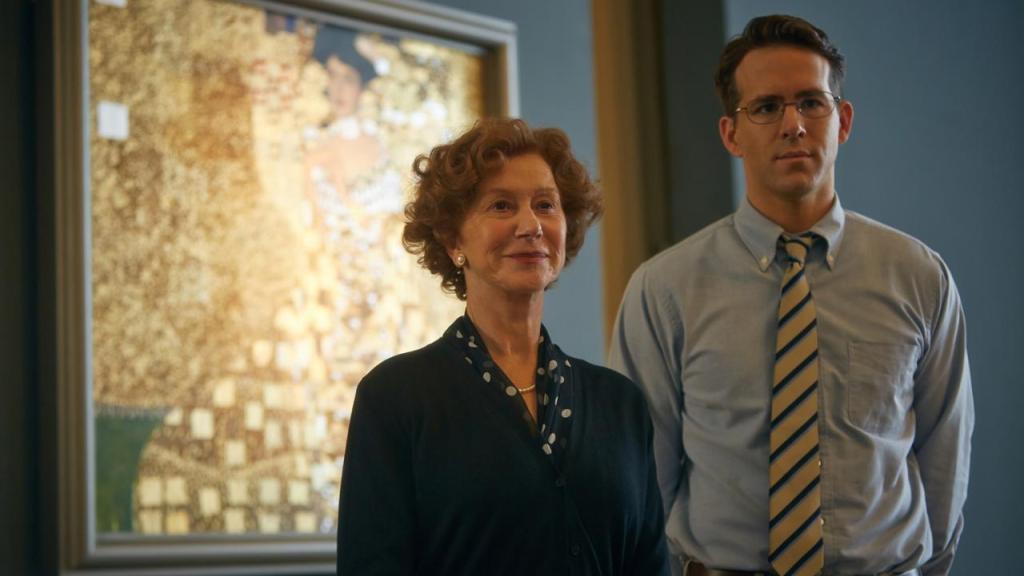
    “Woman in Gold,” despite its flaws, is one of those films that viewers can hang their hopes on, thanks in large part to the acting prowess of Dame Helen Mirren.

    It shouldn’t come as a surprise to regular moviegoers that her dynamic on-screen talent can mesmerize viewers to believe the unbelievable and ignore flaws within the filmmaking.

    Morgan Freeman — and to a lesser extent Meryl Streep — have this same ability.

    Based on a true story, “Woman in Gold” finds Mirren portraying elderly Austrian immigrant Maria Altmann seeking to be reunited with a famed portrait of her aunt stolen from her family by the Nazis and held in legal red tape by Austria.

    The film is well-intentioned, but doesn’t really quite have a true direction, which should fall at the feet of either director Simon Curtis, screenwriter Alexi Kaye Campbell or both.

    Within “Woman in Gold” are three distinctive movies that feel like puzzle pieces that fit together without mashing, but yet are just off enough to not be in the right spot.

    There’s the period drama that focuses on a young girl’s escape from a Nazi-controlled Austria, there’s the courtroom battle drama which finds a mediocre attorney given the case of his lifetime and then there’s the somber reflection drama where an old woman seeks to reclaim a part of her family legacy.

    Put bluntly, “Woman in Gold” is “Schindler’s List,” “A Few Good Men” and “Philomena” all wrapped into one slightly misshapen package.

    But the film works thanks to its leading lady.

    If Helen Mirren says you should take co-star Ryan Reynolds seriously as a fledgling young attorney, then you by golly better take him seriously.

    Indeed, Reynolds gives an admirable effort as Mirren’s lawyer Schoenberg, though it’s still hard to overcome the sly grin subtly belying the actor’s performance.

    It’s as if Reynolds is constantly faced with an overwhelming wave of smarmy typecasting that he bravely swims upstream against in “Woman in Gold,” but the Canadian actor has yet to overcome the stigma of his filmography the way Bradley Cooper did with films like “Silver Linings Playbook” and “American Sniper.”

    Reynolds, in a dramatic role, only works when Mirren is able to elevate the scene as a whole.

    The film’s secondary stars are a mixed bag as Katie Holmes is given almost nothing to do in a wasted role, while Golden Globe nominee Daniel Brühl does yeoman’s work in a critical expository role as an Austrian contact for Mirren and Reynolds.

    The real emerging star of “Woman in Gold” is Tatiana Maslany of “Orphan Black” fame, whose performance as a young Maria, living as a Jewish woman in Austria during World War II, gives the film — and Mirren’s performance — the weight needed to resonate with viewers.

    While the transitions in and out of flashback sequences featuring Maslany are clunky to say the best, each time viewers are established in the WWII-era, the film speeds along.

    “Woman in Gold” establishes itself as the second landmark film in the latter stages of Mirren’s career, joining her work as Queen Elizabeth II in 2006’s “The Queen” as one of the best performances in her illustrious, four-decade career.

    Her decadent work is worth the price of admission alone in an otherwise flawed, but successful period drama.