Category: Oscar Contenders

Oscar contenders, awards-season coverage, awards predictions, nominations, and ceremony analysis. Historical archive category retained at its original URL; use selectively for awards-relevant articles.

  • Still Alice: Oscar contender not up to muster

    Still Alice: Oscar contender not up to muster

    What might have been a touching look at how a close-knit family deals with tragedy in the wake of the mother’s early onset Alzheimer’s diagnosis becomes a trite farce that twists the emotional knife in the backs of its viewers during the independent drama “Still Alice.”

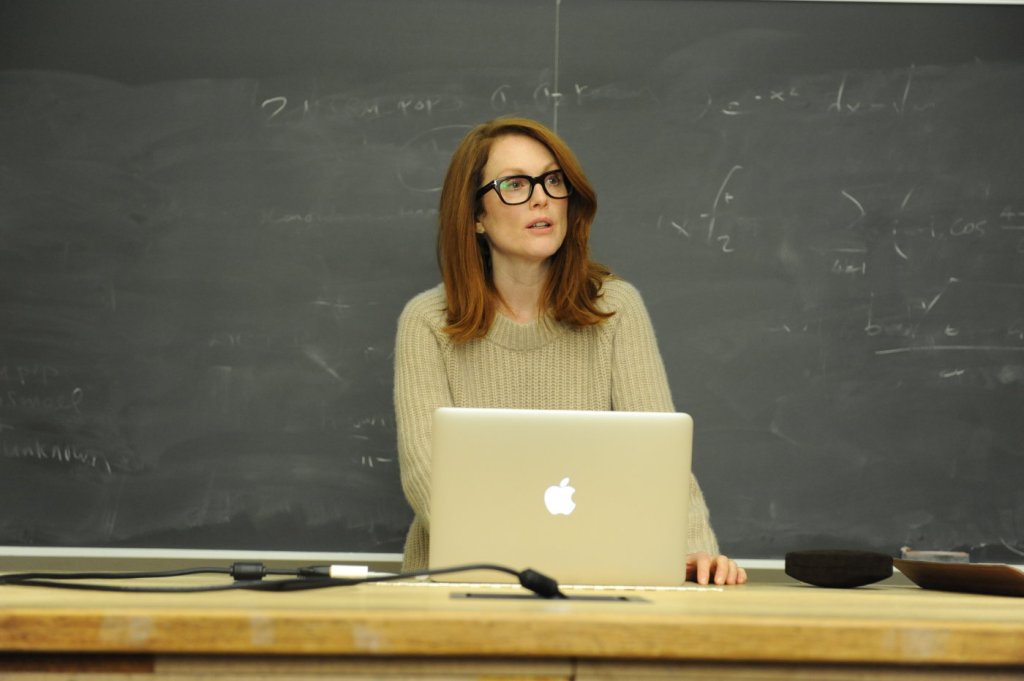
    The film is most notable for Julianne Moore’s Oscar-winning performance as a 50-year-old linguistics professor who slowly loses her memory and capacity to function normally due to the disease.

    There’s nothing wrong with her performance, though this year’s Best Actress win feels more like a career achievement award than the highest praise for her work in “Still Alice.” In a 100-minute film where one lead takes up 90 percent of the screen time, it’s hard not to feel dominated by Moore’s performance.

    As a viewer, there is a strong sense that the audience is being cheated by the script based on the novel of the same name by Lisa Genova.

    There are only flashes of the rest of Alice’s family throughout the film, and all of the impact of what helping someone with Alzheimer’s is like has been lost in the shuffle.

    Actors like Alec Baldwin, as Alice’s husband, and Kate Bosworth, as the eldest daughter, are given cursory nods and only the broadest of character brushstrokes with which to work from.

    Even though he isn’t, it feels as if Baldwin’s husband character is cheating on Alice, and the audience by proxy, while being chopped off at the knees and forced to be the bad guy in a film that doesn’t need one.

    While Moore’s work is good, Kristen Stewart, as the youngest daughter — separated from the rest of her family both emotionally and physically — gives the most impactful performance.

    Given her previous body of work, Stewart will almost certainly not be given the credit she deserves for a uniquely layered performance in a film devoid of depth. There’s so much emotion on the surface of Stewart’s Lydia, while simultaneously, viewers can feel the undercurrent of secret emotions that Lydia feels internally while struggling to accept her mother’s fate.

    “Still Alice” is definitely one of those Oscar-baiting films that cares more about the viewers with Academy votes than the audiences who will end up seeing the film now that it has won gold.

    Aside from ardent fans of Moore, audiences will likely, and should, feel cheated by a subpar shell of quality drama.
  • What we talk about when we talk about Birdman

    What we talk about when we talk about Birdman

    It shouldn’t come as a total shock that “Birdman or (The Unexpected Virtue of Ignorance)” — a very inside acting film — would continue the trend of movies like “The Artist” and “Argo,” winning the Best Picture prize at Sunday’s Academy Awards.

    Now three of the last five films to win the most prestigious award in Hollywood are about Hollywood, actors or some combination of both, and that’s certain to upset a lot of members of the general public, whether they’re indie die-hards who were mystified by Richard Linklater’s 12-year filming odyssey “Boyhood” or patriotic Clint Eastwood backers supporting a box office smash hit in “American Sniper.” But when you watch or re-watch “Birdman” — now out on DVD and Bluray — it’s important to realize just how complete a film “Birdman” is and what exactly we should be talking about when we talk about “Birdman.”

    From the opening seconds, “Birdman” establishes itself as a film that’s going to draw moviegoers in with its visual brilliance, then keep them entranced with stunning performances from its deep and talented cast of actors.

    Newly crowned Best Director Alejandro González Iñárritu, whose previous films include “Babel” and “21 Grams,” provides the initial hook, opting to stage the film in narrow, tight hallways inside the backstage of the St. James Theater in New York City to provide added tension, then flipping cinematic standard on its head by fusing each scene together so that “Birdman” feels like one never-ending, 120-minute shot.

    Each scene is stitched together seamlessly thanks to the artistic savvy of “Gravity” cinematographer Emmanuel Lubezki — recent winner of back-to-back cinematography Oscars — and editors Douglas Crise and Stephen Mirrione.

    Each scene transitions to the next without interruption, mostly done through extended segments of 10 minutes or more. The necessary technique to pull off such a terrific stunt is a beautifully choreographed dance between actors and crew.

    A great deal of technical care has been taken in the movie, which rivals “Gravity” as the most forward-thinking and visually dynamic film in years.

    This sort of digital skill is becoming commonplace — especially in the superhero film genre “Birdman” constantly derides — but never with such grace. It’s a breath of fresh air to see the technical wizardry of a film accent highly skilled and complete acting performances, rather than having gimmicks or special effects operate as a replacement for quality acting.

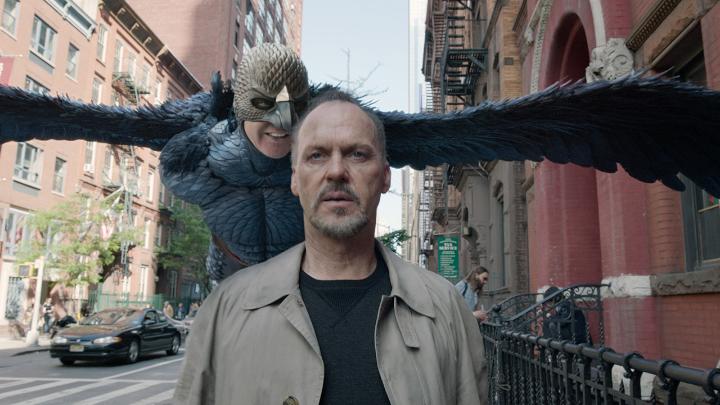
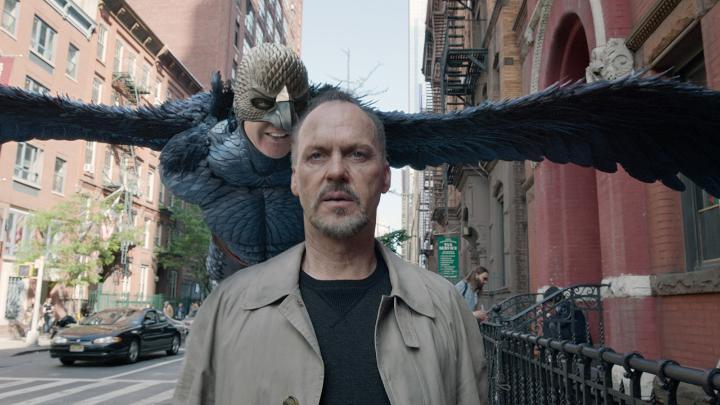
    Much in the same way that David Fincher used who Ben Affleck is as a public figure to great effect in “Gone Girl,” Iñárritu’s choice of former “Batman” star Michael Keaton as the titular “Birdman,” given Keaton’s struggles to overcome the shadow of his role as Batman parallel his character Riggan’s difficulty separating himself mentally from the super hero character Birdman that made him a movie star 20 years ago.

    As a moviegoer, it’s nearly impossible to completely separate Keaton, the actor, with Riggan the character and in the case of “Birdman,” the film takes full advantage of this duality to create a deeply personal and emotionally rich character wanting to prove himself to the world while mistaking adoration for love.

    Keaton, who narrowly lost out to “Theory of Everything” star Eddie Redmayne for a Best Actor Oscar, gives the performance of a lifetime in the role, which ironically enough, should redefine Keaton as a passionate actor outside of the comic book realm.

    Edward Norton, who would have won Best Supporting Actor in a year where J.K. Simmons didn’t blow people away in “Whiplash,” provides Keaton with a sounding board to lob emotional volleys to, both in the film itself and in the Broadway stage show Riggan is producing, an adaptation of the Raymond Carver short story, “What We Talk About When We Talk About Love.”

    Emma Stone — who is slowly, but surely proving herself to be something much more than the limited characters she’s been playing on screen — makes the absolute most out of every second in her performance as Keaton’s drug-addled daughter looking to stay clean while helping her dad reform his own image. The subtle co-dependence the two characters share in their mutual rehabilitation is one of the many great sub-plots in an intricately woven tale.

    Outside of “The Grand Budapest Hotel,” moviegoers would be hard pressed to find such quality acting from so many talented performers — Naomi Watts, Zach Galifianakis, Amy Ryan, Andrea Riseborough.

    But the question still remains: What do we talk about when we talk about “Birdman?”

    How do you explain a meta, highly self-referential dramedy that seems to demean its audience by lavishly deriding the common blockbuster experience?

    Quite simply, “Birdman” is the next step forward in a cinematic evolution that began with James Cameron’s visually transformative “Avatar” and continued with Guillermo del Toro’s space adventure “Gravity.”

    Adding new depth in acting to lofty and innovative cinematography makes “Birdman” the obvious next step in filmmaking, led by Iñárritu, who is up to the task of making all the moving pieces work fluidly and beautifully.

    “Birdman” checks off on all the critical elements of a complete cinematic experience — visual brilliance, acting talent giving top notch performances, elite technical skill and a blue-chip script — and is worthy of its Best Picture statue.

  • A Most Violent Year: Quiet drama honors gangster genre

    A Most Violent Year: Quiet drama honors gangster genre

    Hollywood is putting serious pocket change into remaking vintage films using modern technology for new audiences.

    It seems as though no film is beyond the grasp of remake-hungry directors, though there are still some movies that need to be left untouched.

    You just can’t remake “The Godfather.”

    “A Most Violent Year,” a little-seen film that the National Board of Review chose as the best of 2014, isn’t a “Godfather” rip-off or remake, but carries with it all the lessons modern filmmakers can learn from the Francis Ford Coppola crime classic.

    J.C. Chandor’s third feature film — following 2011’s breakout hit “Margin Call” and 2013’s “All Is Lost” — stars Oscar Isaac as a businessman trying to stay clean in a dirty, corrupt heating oil industry.

    The film gets its title from the background in which it is set — New York City in 1981, a disproportionately violent year in the town’s history.

    At its core, “A Most Violent Year” is a brilliantly simple film masquerading as a gangster morality play.

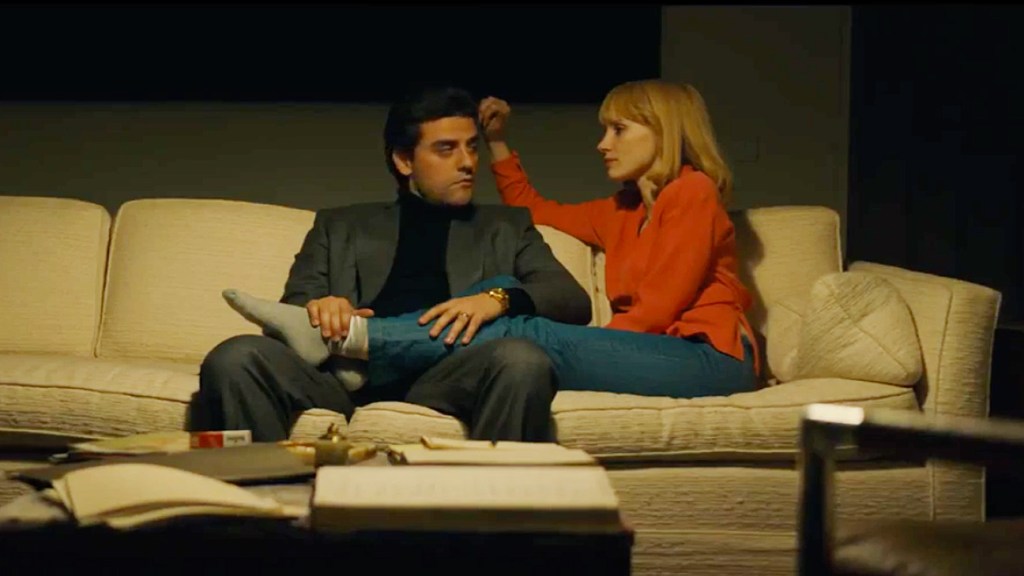
    Isaac’s Abel Morales, a Latin American immigrant who believes in the “American dream” in its purest form, wants to do right by his wife and daughters.

    His sense of honor in a land of thieves and crooks that rob his company help define him as a more conflicted, modern day Michael Corleone, a role Isaac plays with understated, refined grace.

    Counter-balancing Abel in their marriage, Jessica Chastain continues to prove why she’s the best actress working in Hollywood with a scene-stealing performance as Abel’s wife, Anna, whose Mob family background casts a shadow over Abel’s legitimate business operations.

    It’s Chastain’s on-screen presence that sneaks up on viewers focused on the nuances of Isaac’s performance as Anna provides the unseen but loudly heard muscle backing Abel’s calm and calculated demeanor.

    Chandor’s script provides both Juilliard-trained actors a treasure-trove of character development material from which to mine, allowing Isaac and Chastain to give some of the year’s most compelling performances.

    As Abel’s right-hand-man, Albert Brooks lightly evokes Robert Duvall’s performance as concerned mob lawyer Tom Hagen from “The Godfather,” while “Selma” star David Oyelowo is capable as an assistant district attorney investigating the Morales’ business.

    But it’s Elyes Gabel — in a critical supporting role as a fearful truck driver thinking of taking matters into his own hands — that offers up the best work from the supporting cast.

    His nuanced performance helps give added meaning to the delicate balance between right and wrong in Abel’s struggle to achieve the American dream.

    “A Most Violent Year” is as important a film for what isn’t on screen as for what is.

    Chastain, with her finger on the trigger throughout, is never granted the opportunity to explode into rage and order a “Godfather”-esque series of hits to even the score.

    Chandor, in both his script and direction, values restraint as a means to uphold Abel’s moral compass and flip the stereotypical gangster genre on its head.

    For a film titled “A Most Violent Year,” there’s a glaring minimalism of actual violence in preference to the looming threat of violence, terror through fear, rather than action.

    The film will likely be remembered most for its climatic chase scene, clearly influenced by “The French Connection.”

    It’s actually “A Most Violent Year” and not “Selma” that has suffered most from poor release scheduling, which prevented the film from real consideration for Academy Award nominations.

    A Golden Globe nominee, Chastain would have been the shining star in an otherwise lackluster Best Supporting Actress category, while Isaac would have found himself in the middle of a difficult to crack Best Actor race.

    Cinematographer Bradford Young, also responsible for the Oscar-nominated biopic “Selma,” provides a gritty depth to “A Most Violent Year,” evoking classic ’70s films like “Taxi Driver” and “Dirty Harry.”

    Many critics bemoan a lack of a nomination for Young’s work shooting “Selma,” but “A Most Violent Year” is his career best work.

    Chandor’s best effort to date, “A Most Violent Year” honors its gangster genre predecessors while going somewhere new in the story telling, a lesson worth learning by the rest of Hollywood.

  • Selma, The Imitation Game: Strong leads pace Oscar-nominated biopics

    Selma, The Imitation Game: Strong leads pace Oscar-nominated biopics

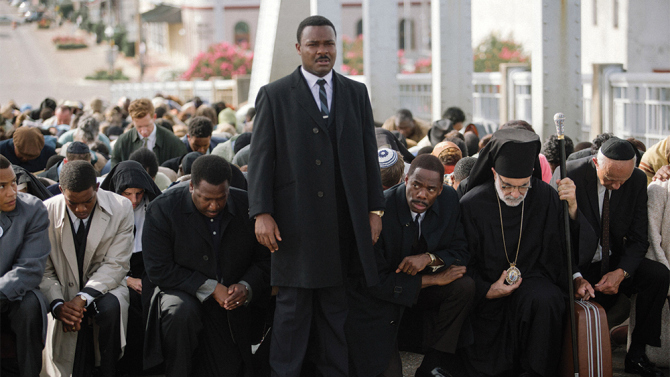
    There’s no reason not to like “Selma,” the Ava DuVernay-helmed drama which chronicles the civil rights march from Selma to Montgomery, Alabama, during the 1960s led by captivating activist Dr. Martin Luther King Jr.

    British actor David Oyelowo makes the most of a poorly outlined script by first time screen-writer Paul Webb, largely succeeding in the attempt to provide a larger picture of King the man while given limited opportunity for character development.

    There are better movies yet to be made about King’s life, achievements and character as DuVernay’s third feature film simply scratches the surface of a complex and powerful leader.

    “Selma” is the rock dancing along the top of the water of importance, skipping around from beatings in the streets to White House visits, from quiet personal moments to loud public emotions without ever diving into any of them.

    Too grand for its own good, the film lacks the depth and gravitas that the first feature centering on King deserves and suffers from the same one-note flatness that befell Angelina Jolie’s “Unbroken.”

    At the outset of the film, DuVernay chooses to counterbalance King’s Nobel Prize acceptance speech with a rural church bombing, a point never revisited again in the film.

    Malcolm X, a significant figure within the civil rights movement, is relegated to a single scene, while a measured performance from Carmen Ejogo as Coretta Scott King is marginalized and largely pushed off to the side.

    Supporting performances in “Selma” are a mixed bag from the uneven, haphazard performance from Tom Wilkinson as Lyndon B. Johnson to the completely flat, uninspired Tim Roth as Alabama governor George Wallace.

    Among the minor players in the film, Henry G. Sanders’ moving portrayal of a grandfather mourning the death of his grandson provides “Selma” with its most poignant moment, and then is relegated again to the background.

    “Selma” is an important film for how it frames today’s fragile racial climate following Ferguson and similar events, but its omission from larger Oscar accolades isn’t a black or white issue, nor is it a political issue. It’s a matter of quality in a given year.

    Half of this year’s nominees for Best Picture are biographical films, and several also worthy films in the same genre (“Big Eyes,” “Foxcatcher”) sit idly by on the sidelines.

    Racial bias didn’t cause the Academy to overlook DuVernay for a directing nomination, but rather that five directors had more impact on cinema this year. The fact that Clint Eastwood — who made a better film (“American Sniper”) and is universally beloved by the Academy in spite of political differences — didn’t receive a directing nomination should be just as shocking.

    The same is true for Oyelowo as King, but the effort doesn’t match up with the likes of Bradley Cooper’s chameleon performance in “American Sniper,” Eddie Redmayne’s physical transformation to play Stephen Hawking in “The Theory of Everything” or Benedict Cumberbatch as code breaker Alan Turing in “The  Imitation Game.”

    What works for the leads in this year’s other top biopics, especially for Cumberbatch, is the depth of character each actor is able to achieve thanks to a quality script and allowances from the director to immerse themselves in the character.

    A film like “The Imitation Game,” which sees Cumberbatch shed most of his “Sherlock” persona to portray a complex man helping to save Britain while hiding a dark secret, offers the time for character development.

    Viewers are allowed to see how Turing became the man who shortened World War II through mathematics, while also providing audiences with the social context in which Turing, a closeted homosexual, lived in.

    Cumberbatch is able to live in the duality of Turing’s character — the public, dry and off-putting persona of Turing the professor as well as the private Turing, struggling with sexuality in an unforgiving world.

    The film, respectively directed by Morten Tyldum, captures Turing in a much more complete way than “Selma” does King, and is helped by a strong performances from Keira Knightley as a colleague aiding in secret due to sexism in the workplace.

    “The Imitation Game” also does a better job of providing larger context to the film’s stakes than “Selma,” whose scenes of violence feel largely forced outside of the troopers’ attack on the bridge.

    “Selma” is a great story told well; “The Imitation Game” is a fine story told greatly.

    Both films are among the year’s best and are worth seeing in theaters, though neither rises to the year’s elite category.

  • American Sniper: Compelling Cooper performance stuns audiences

    American Sniper: Compelling Cooper performance stuns audiences

    By now, if you haven’t seen or heard about Clint Eastwood’s epic war drama “American Sniper,” odds are good that the cell phone reception on that deserted island you’ve been living on is spotty at best.

    The drama kicked off its national release with six Academy Award nominations — including Best Picture and Best Actor for Bradley Cooper — and completely dominated the cinematic landscape.

    The film made $90.2 million, becoming the largest January weekend release in history and besting the $68.5 million pulled in by “Avatar” in a single weekend per “Variety.”

    It isn’t an accident either.

    Whether out of a sense of patriotism or Oscar buzz or a love for war films, Clint Eastwood, Bradley Cooper or any combination of reasons, everyone knows someone who’s seen “American Sniper” at least once, if not many more times.

    What a great thing for cinema that thought is.

    Put all the politics aside. Cast away the agendas on either side of the aisle and what the film is or isn’t saying and whose side “American Sniper” supports on any number of hot-button issues.

    “American Sniper” is an important film within the current cinematic climate because of what the film truly is, an intimate character study of a Texas man. Certainly the context of “American Sniper” is modern warfare, but the film — and especially Cooper’s stunning performance as Navy SEAL Chris Kyle — is much more than a simple story of battles home and abroad.

    Try watching interviews of Chris Kyle promoting his 2012 autobiography, on which “American Sniper” is based, and then see if you can figure out where Kyle stops and Cooper begins in the mesmerizing cinematic portrayal.

    Criticizing the film for its subject matter is criticizing Chris Kyle the man as no actor in several decades has done as complete a job becoming the person they are portraying on screen as Cooper does mirroring Kyle step for step, word for word, nuance for nuance.

    The rare leading man who views himself as more a character actor, opting for substance over style, Cooper’s portrayal transcends the film itself — a remarkable performance from a remarkable actor and one that will define the rest of his long career.

    Sienna Miller does an admirable job facing the daunting task of counterbalancing Cooper’s performance while simultaneously honoring Chris’ wife Taya, who served as a technical advisor on the film. It’s a thankless role that could have been the film’s downfall, but Miller’s performance is steady enough to carry the film forward when needed.

    The biggest flaw in “American Sniper,” which is minor enough in larger context, but noticeable enough to be distracting, is the use of clearly fake, plastic dolls serving as placeholders for real infants during dramatic home scenes between Kyle and his wife.

    It’s baffling that something so trivial and unrealistic would be used and the fake baby’s appearance is so jarring that it can knock viewers completely out of their cinematic experience.

    Obviously, this error can definitely explain Eastwood’s absence from Best Director accolades, but fortunately, “American Sniper” is so brilliant in the other 131 minutes that it’s just as easy to fall right back into when the film moves on.

    What Eastwood gets right in his direction is a delicate balance of an intensely accurate depiction of modern warfare offset with hard-hitting drama, the best of a newer brand of “action-drama” cinema.

    In stark contrast, Michael Mann’s dark and brooding cyber-thriller “Blackhat,” starring Chris Hemsworth as a veteran hacker helping the CIA prevent terrorism, is exactly what Hollywood wrongly assumes complex action-dramas are supposed to be.

    Released last weekend, the film is clunky, overly technical and difficult to follow, definitely not the sort of film Hemsworth fans thought they were getting upon seeing the trailer.

    It’s difficult to believe that “American Sniper” viewers ended up watching the film they believed they were going to after watching its trailer, but not in the same way.

    Eastwood’s film provides so much more depth of character thanks to a complex, yet compelling performance from Cooper.

    Worth every penny of the five, six or seven times it needs to be seen in theaters, “American Sniper” is an instant cinematic classic and among the best films of the 21st century.

  • Revisiting Boyhood: ‘I just thought there’d be more’

    Revisiting Boyhood: ‘I just thought there’d be more’

    Coming-of-age films are nothing new.

    Boy starts out young and naïve, things happen, boy matures, end of film.

    Filmmakers have always circumnavigated lengthy time jumps in these sort of movies by casting multiple actors to play the same part at different ages.

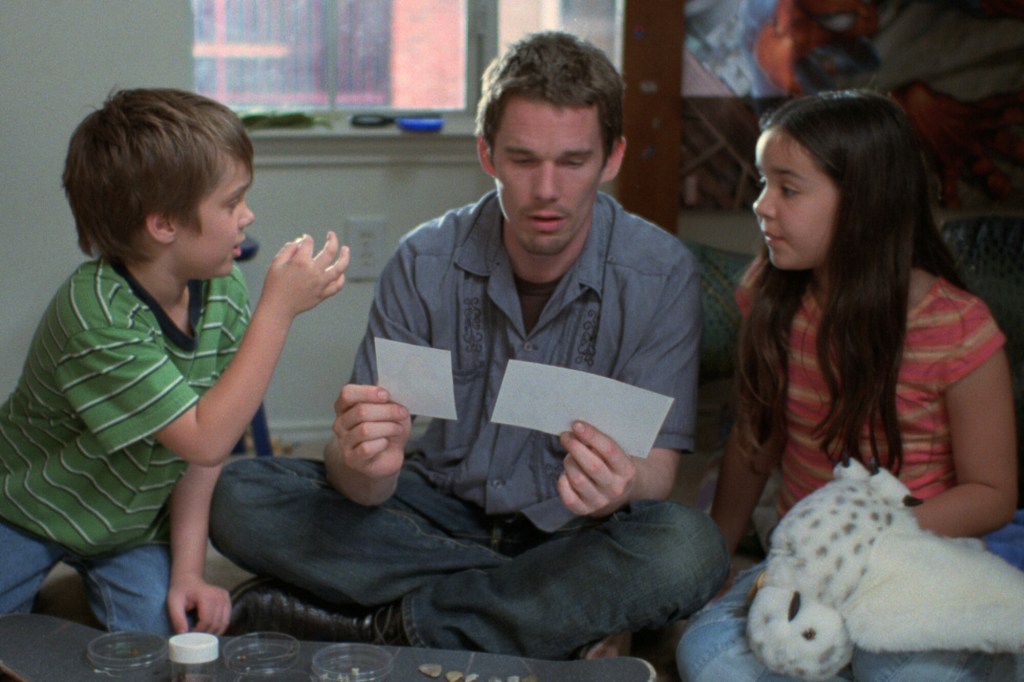
    In the case of the Golden Globe-winning drama “Boyhood,” director Richard Linklater took the slow approach, filming segments of his movie over the past 12 years as young actor Ellar Coltrane grows up in the film around him.

    The film, which missed out on the Cinematic Considerations 10 best films of 2014, is worth a second look following an initial review in September.

    A lot is made of the 12-year filmmaking process, and indeed, “Boyhood” and Linklater need to be commended for their dedication to the project.

    There certainly isn’t another film like “Boyhood,” but that fact alone doesn’t make the film any good, just unique.

    Imagine a film where events feel like they’re happening around the main character rather than to the character, where the character doesn’t really experience any growth or development besides physical appearance and you’d have Mason, “Boyhood’s” defacto protagonist.

    A voyeur of his own life, Mason idly watches as things happen around him. Life affects him only peripherally.

    “Boyhood” is the “Seinfeld” of cinema; it’s a film about nothing.

    You can easily see Coltrane becoming disinterested in the filmmaking process throughout the years, as his character Mason becomes disillusioned from the world.

    Nothing can be done about the film’s significant pacing issue. “Boyhood” cannot shortchange any of the 12 years of filming, making it difficult to leave scenes on the cutting room floor. The film does not move crisply from year to year and two hours into the film, “Boyhood” can easily leave the viewer exhausted past the point of enjoyment.

    There are moments where “Boyhood” rises above its 12-year gimmick and provides quality scenes — most notably sequences featuring Marco Perella’s daring portrayal of Mason’s first alcoholic step-father attempt to propel “Boyhood” in an actual direction.

    Ethan Hawke offers up the film’s best performance and shows the most character development as the frequently absent hippie father turned square dad.

    Groundbreaking not for the content, acting or cinematography, “Boyhood” is heralded for its actual 12-year filming time, allowing characters to naturally age physically on screen.

    There’s been a large amount of groupthink among critics who feel compelled to congratulate Linklater’s determination and creative vision to attempt such a different style of filmmaking that valid critiques of the film’s actual merits have been largely absent.

    These reviews of the film suffer from the same lack of individuality that Mason bemoans to his girlfriend Sheena during a road trip late in the film.

    Set aside the time element of “Boyhood” and what is left? Twelve separate short films loosely tied together based on common characters. Is that truly noteworthy?

    The film is a kitsch time capsule that elevates the mundane for two hours and then laments how boring the journey was.

    When Mason prepares to go off to college, his mother Olivia (Golden Globe-winner Patricia Arquette) cries for her own lost life as much as the departure of her son.

    “I just thought there’d be more,” she laments.

    For “Boyhood,” a critically acclaimed, ground-breaking film, I just thought there’d be more.

  • Into The Woods: Misunderstood film an above-average movie musical

    Into The Woods: Misunderstood film an above-average movie musical

    Many audiences have left the Disney-produced fairy tale film, “Into the Woods,” disappointed and with little right to be.

    Certainly, the studio is to fault for not clearing up the confusion surrounding the film. Too many people have left screenings surprised they just watched a musical and many others probably were in shock when the film doesn’t end with Cinderella’s marriage to the prince.

    But moviegoers should have seen this coming.

    The film, a clear adaptation of Stephen Sondheim’s 1986 Broadway musical of the same name, is a darker intersection of several classic fairytales, including “Cinderella,” “Jack and the Giant Beanstalk” and “Little Red Riding Hood.”

    The Motion Picture Association of America (MPAA) rightly rated “Into the Woods” PG “for thematic elements, fantasy action and peril, and some suggestive material.”

    The film is more “Snow White and the Huntsman” than the animated classic “Snow White and the Seven Dwarves.”
    https://m.youtube.com/watch?v=2Byk9Is3TjY
    Moviegoers, especially those expecting their money back, need to take more care in researching the content of a film before purchasing a ticket. Disney didn’t help matters with an ambiguous trailer promoting the film, but the studio can’t be held entirely responsible.

    Setting aside those complaints, “Into the Woods” does a remarkable job of faithfully adapting Sondheim’s award-winning musical to the big screen.

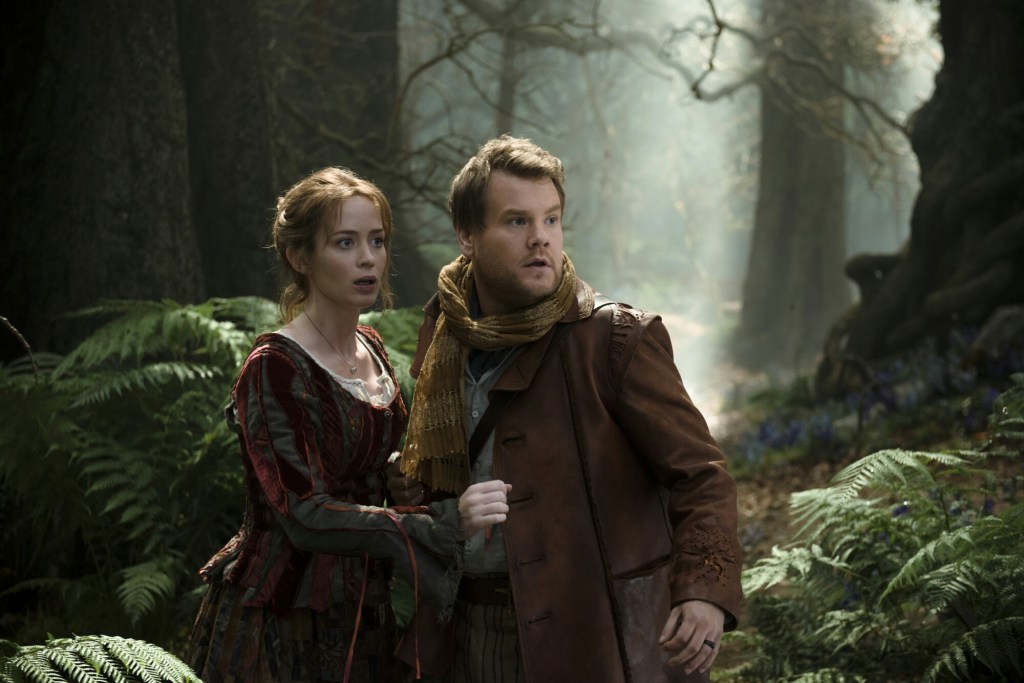
    Director Rob Marshall, best known for his work on the Academy Award-winning “Chicago,” is blessed with a talented cast led by “Pitch Perfect” star Anna Kendrick as Cinderella and British sensation James Corden as the narrating Baker.

    The best performances in the film are actually given by the biggest — and youngest — unknowns with Broadway’s latest “Annie” Lilla Crawford as Little Red Riding Hood and Daniel Huttlestone, best known as Gavroche in Tom Hooper’s Les Misérables, as Jack.

    It’s all too common to cast either actors who can’t sing well enough or worse yet, singers who can’t act well enough to be convincing.

    What works in both performances, more so than any of their more famous counterparts, is that Crawford and Huttlestone maintain a balance in their responsibility both acting the part and singing the songs.

    Huttlestone’s “Giants in the Sky” — along with Kendrick’s “On the Steps of the Palace” and Meryl Streep’s “Witch’s Lament” — is a musical highlight.

    The film isn’t without its flaws. Chris Pine as Cinderella’s prince is largely overdone in a very William Shatner-esque way, which doesn’t really work throughout much of the film, but is quite hilarious within the shirt-ripping, water-splashing duet “Agony.”

    Johnny Depp’s performance as the Wolf felt too campy, though the limited screen time helped prevent the film from veering too close to 2014 “Annie”-bad territory.

    Overall, “Into the Woods” is a surprisingly darker, but satisfying retelling of classic fairy tales and a faithful interpretation of Sondheim’s musical worth seeing.

  • Wild: Witherspoon delivers Oscar worthy performance

    Wild: Witherspoon delivers Oscar worthy performance

    Some films are designed for escapism, a chance to remove the viewer from the everyday grind and stresses of real life and pull them into somewhere new and exciting.

    Other films are meant to draw the viewer into a cinematic experience, offering us something to learn from along the way.

    Cheryl Strayed’s true-life story of a newly single woman hiking the 1,100 mile Pacific Crest Trail as a means to cope with loss isn’t meant as escapism.

    There’s a passionate message of empowerment and rebirth in “Wild,” the latest film from director Jean Marc Vallée of “Dallas Buyers Club” fame. The film is an emotional roller coaster that will resonate with anyone who has lost a close loved one or feels alone with a sense of loss.

    With a terrific script adapted from Strayed’s 2012 book by Nick Hornby, the film itself centers around Strayed’s journey from southern California to Canada and requires a tour de force performance from its leading actress.

    A film like “Gravity,” for example, could have been as good if not a better movie with another actress taking the reins from Sandra Bullock.

    You just can’t make “Wild” work without Reese Witherspoon.

    Witherspoon plays Strayed with total commitment and honesty, baring her soul and body (quite literally) on screen in one of the most heartfelt performances in several years.

    Audiences, especially predominantly female ones, will find themselves drawn to the unbridled vulnerability Witherspoon is able to draw from, pulling viewers deeper into the story.

    Laura Dern, often the daughter and never the mother in feature films, provides a subtle, yet important counterbalance to Witherspoon’s at-times manic performance as Strayed’s mother.

    The Pacific Crest Trail itself becomes a leading character within “Wild” with its expansive and varied landscapes painting a tremendous background for Strayed’s emotional journey of self-forgiveness.

    Vallée’s decision to shoot the trail entirely in natural light is an inspired one that helps to maintain “Wild’s” grounded reality.

    Led by an Oscar-worthy performance from Witherspoon, “Wild” is definitely one of the year’s best films and well worth seeing more than once.

  • The Theory of Everything: Hawking biopic astounds

    The Theory of Everything: Hawking biopic astounds

    Eddie Redmayne better be nominated for an Academy Award.

    He might not win, but with a pitch-perfect performance requiring such specific nuance in physicality, Redmayne certainly deserves acclaim for his turn as famed physicist Stephen Hawking in the British drama “The Theory of Everything.”

    An hour into the film, it’s all too easy to forget that Redmayne is an actor portraying a character on screen.

    While the film certainly deals with Hawking’s emergence as one of the world’s premiere scientists, “The Theory of Everything” focuses more on the development of Hawking’s relationship with his future wife, Jane, amid the onset of his debilitating ALS, also known as Lou Gehrig’s disease.

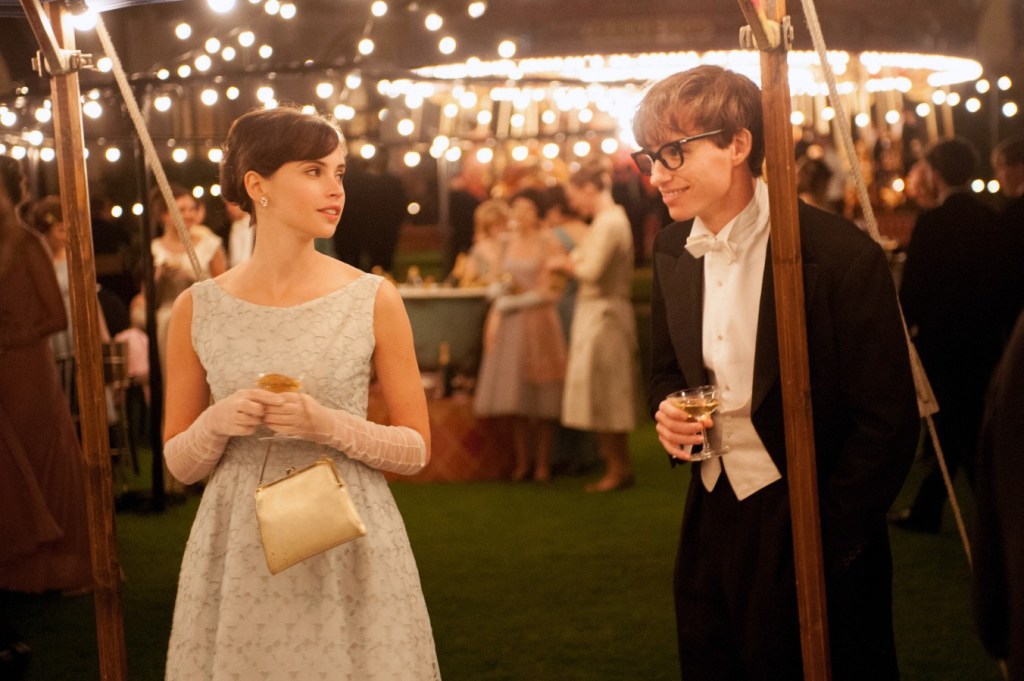
    One part biopic and two parts love story, the film works only because Redmayne’s heartbreaking portrayal of Hawking pairs perfectly with Felicity Jones’ understated, yet firm Jane.

    In fact, the film is at its best when it avoids the complex physics and sticks with the simplest notion of unbridled love and emotion.

    The story, while following true events and a lackluster screenplay from Anthony McCarten, is elevated by both lead actors’ performances as well as the light, delicate touch of director James Marsh — best known for his Oscar-winning documentary “Man on Wire.”

    Each scene is carefully detailed visually, from the movement of the camera — especially in memorable 360-degree rotation moments — to the richness of the colors captured by cinematographer Benoît Delhomme.

    While not on the upper echelon of cinema to be released this fall, “The Theory of Everything” is a poignant and bittersweet biopic worthy of making an effort to find before the Academy Awards early next year.

  • Birdman (or the Unexpected Virtue of Ignorance): Keaton shines in superhero actor rebound

    Birdman (or the Unexpected Virtue of Ignorance): Keaton shines in superhero actor rebound

    It isn’t quite fair to say Michael Keaton is back thanks to his often brilliant performance in “Birdman (or The Unexpected Virtue of Ignorance) because, despite his long absence, Keaton has never performed at this high a level.

    Fact melds well with fiction as Keaton’s struggles to overcome the shadow of his role as Batman parallel his character Riggan’s difficulty separating himself mentally from the super hero character Birdman that made him a movie star 20 years ago.

    The angst Riggan feels throughout the film is identifiable for the viewer because of Keaton’s presence on screen. George Clooney and Matt Damon cannot make that kind of connection with the audience because of how personal the role feels for Keaton.

    Though Keaton is tremendous in a role clearly built for him, he’s not the reason to see perhaps the most innovative film in 2014.

    Director Alejandro González Iñárritu, best known for “21 Grams” and “Babel,” has plotted an intense thriller schemed as a black comedy through the use of extended one-take camera shots that leave the viewer wondering how in the world filmmakers pulled it off.

    Well-pulled off digital trickery as well as creative camera and editing work make “Birdman” feel like one continuous long take with seamless transitions from one scene to the next.

    “Birdman” also boasts a terrific supporting cast, including Emma Stone as Keaton’s recovering addict daughter, a calm Zach Galifianakis as Keaton’s best friend and lawyer and Oscar nominee Amy Ryan as Keaton’s ex-wife.

    All give quality performances, but pale in comparison to the tour de force effort from Edward Norton who provides the perfect foil as Keaton’s acting partner.

    It’s going to be difficult for “Birdman” to find wide mainstream appeal as its highly complex psychology and frantic cinematic style won’t resonate with a larger percentage of audiences.

    It doesn’t help that the film lambasts these same viewers in its not-so-subtle critique of the Hollywood superhero film genre.

    “Birdman” seeks out more sophisticated viewers — the kind who prefer a dramatic Broadway play to “Iron Man 3” — and makes no bones about the latter being a lesser form of art.

    Viewers need to appreciate “Birdman” for the artwork and not necessarily the message if they want to enjoy one of the year’s most innovative pieces of filmmaking.