Category: Oscar Contenders

Oscar contenders, awards-season coverage, awards predictions, nominations, and ceremony analysis. Historical archive category retained at its original URL; use selectively for awards-relevant articles.

  • The Rise of Skywalker: No real end to never-ending saga

    The Rise of Skywalker: No real end to never-ending saga

    Millions upon millions of dollars have been poured into a series of Flash Gordon-esque movies about the unseen “Force” around us for the better part of a half-century.

    Many millions more have been poured into the bank accounts of Disney execs by casual and ardent fans of the acclaimed “Star Wars” franchise that reached its summation this weekend with director JJ Abrams’ second turn at the helm of the series, “The Rise of Skywalker.”

    Equally fulfilling and frustrating, the ninth entry of the Skywalker Saga gives audiences a dynamic and exciting experience to keep family members occupied this holiday season.

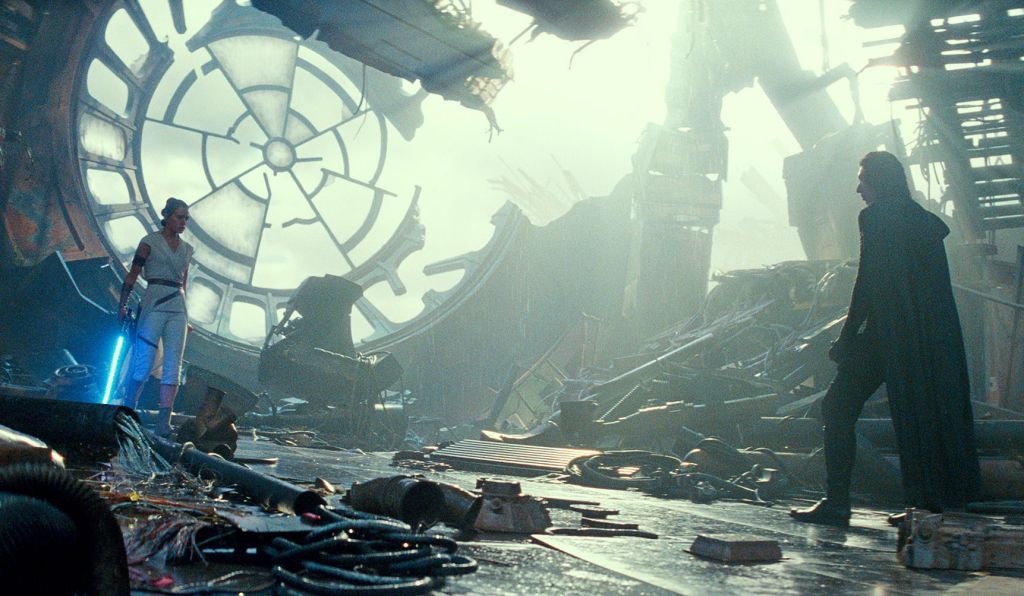
    Set well after the events of the eighth episode “The Last Jedi,” “Skywalker” follows Resistance fighters Rey, Poe Dameron and Finn as they seek to destroy the reborn Emperor Palpatine and escape the clutches of Kylo Ren’s First Order.


    As “Star Wars” films go, “Skywalker” is better than the forgettable prequel trilogy from the early 2000s, but lesser than the first two films of this new trilogy and all of the classic original set of films from the 70s and 80s.

    Young fans to the series won’t know the difference in this tale, which provides a satisfying conclusion to a lengthy tale of good vs. evil, the Force against the Dark Side. It just won’t hold up against the upper echelon of films in the “Star Wars” canon and could be forgotten once the inevitable spinoffs hit theaters.

    For the third straight episode, future Oscar nominee Adam Driver continues to be the best thing about this “Star Wars” trilogy with a layered, considered turn in a franchise that puts character development on the back burner for pomp and circumstance.

    His conflicted villain, Kylo Ren, is a perfect blend of petulant and saddened and Driver takes a role ripe for caricature and breathes depth and life into a one-note emo baddie.

    He’s matched well opposite Daisy Ridley’s most versatile turn in the role of Rey, the last hope of the Resistance seeking her identity while fighting for the lives of her friends. Ridley shows conflict within her own character and the inner turmoil she experiences resonates with audiences and feels as authentic as it can in a nine-film space odyssey.

    Talented actors like Oscar Isaac, Keri Russell and John Boyega are given plenty of screen time, but take a relative back seat to the Rey-Kylo Ren saga and sacrifice for nostalgia’s sake.

    Carrie Fisher, who passed away prior to filming, is in far more of “Skywalker” than expected as Abrams utilizes unused footage from prior films in this trilogy to shape the beginning of the film.

    While admirable, it’s still evident that Fisher’s performance is CGI-ed on top of new footage and there’s a disconnect between characters in scenes opposite her Princess Leia that’s hard to overlook.

    “Skywalker” stumbles most when it forces in plot elements for the sake of fan service or toy marketing.

    One of the best things about Rian Johnson’s superior entry into the Star Wars canon, 2017’s “The Last Jedi,” was the director’s clear vision to make a film on his own terms regardless of fan expectations. “Last Jedi” is largely successful with its bold, audacious subversion of expectations.

    Abrams blatantly walks back Johnson’s film — sidelining characters and tossing aside plot points — in an effort to counteract perceived disappointment to end the trilogy, but this actually has the opposite effect, sacrificing quality for mass appeal.

    The film has some truly remarkable action sequences, though “Skywalker” is far more visually dynamic and inventive fighting on the ground than blowing things up in the air.

    Abrams and cinematographer Dan Mindel put Ridley and Driver through the paces in a whirlwind of lightsaber flares and giving “Skywalker” must-see moments that will stick with audiences far longer than Rey’s ret-conned origin story.

    A potential awards nominee, “Skywalker” probably isn’t on the level it needs to be to receive a Best Picture nomination. John Williams, however, is a strong contender for a Best Original Score nod.

    There’s a little something for everyone in “The Rise of Skywalker” that should drive audiences to theaters in droves and though it’s worth the experience on a big screen, something feels incomplete that keeps Abrams’ film from matching the dazzling heights a “Star Wars” movie is capable of.
  • Marriage Story: Finding the beginning in the end

    Marriage Story: Finding the beginning in the end

    We’ve been told there’s two sides to every story.

    Often it feels as if it’s as simple as the truth and then anything other than the truth.

    But what happens when both sides of the story are true but conflict, or worse yet, outright contradict one another?

    Writer/director Noah Baumbach explores this complex duality through the structure of a fractured relationship in his latest dramedy, “Marriage Story,” a semi-autobiographical film about finding oneself amid divorce.

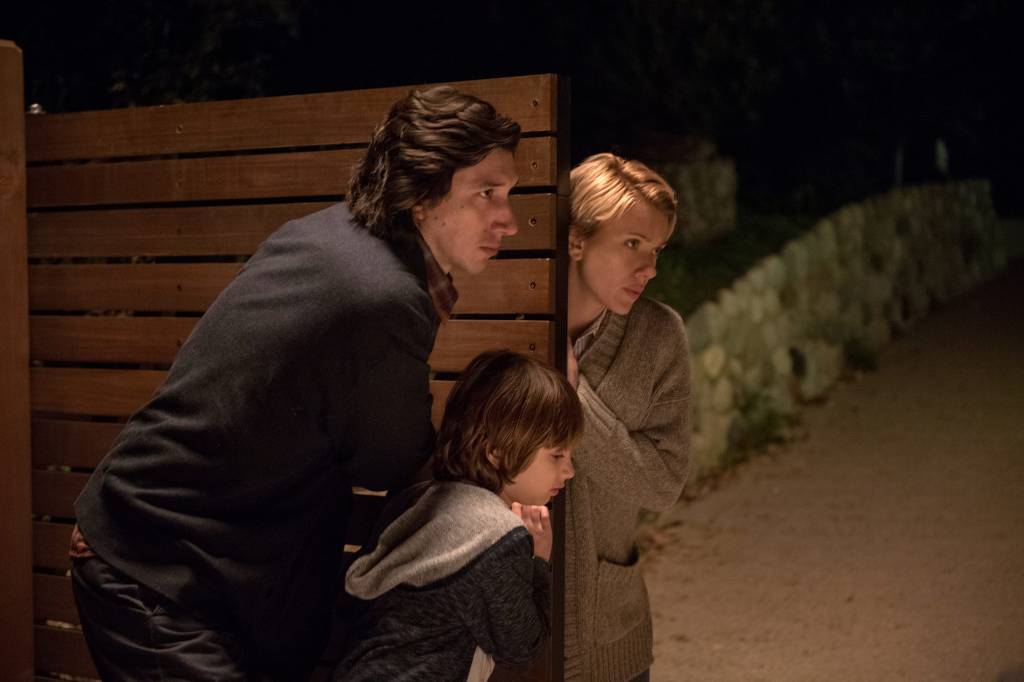
    “Marriage Story” finds New York theater director Charlie and actress Nicole working on their marital issues when Nicole is offered a television pilot in Los Angeles. When Charlie visits California to see Nicole and their young son Henry, divorce papers await as the couple’s relationship dissolves.

    Baumbach’s personal film requires a pair of performers singularly focused on feeling the moment and his selection of Adam Driver and Scarlett Johansson to play the ill-fated couple could not have been more perfect.

    Charlie is exactly the kind of slightly neurotic, disengaged character Driver relishes portraying and he gives Charlie just enough warmth to be a man that audiences will root for as a father, but not so much to prevent doubt from seeping in as to his ignorance of Nicole.

    Charlie’s directorial instincts pushing him to control every aspect of life are brushed aside by circumstances that prevent him from unilateral decision making, giving Driver ample room to find Charlie in a place of re-discovery as both Driver and the character sort through the emotional ballast of the film.

    Johansson finds an emotional fragility in Nicole that endears audiences to her, while slowly beginning to discover her individuality outside her marriage as if she were a caged bird given a key to freedom unsure what to do with an unlocked door.

    If Driver’s Charlie is finding himself again, Johansson portrays Nicole as a woman finding herself for the first time, becoming increasingly emboldened over the course of “Marriage Story” without losing the tremendous heart displayed early in the film.

    Paired together, Driver and Johansson move in synchronicity, pushing and pulling apart magnetically as scenes between the duo often feel like live theater shot on camera. Neither performance works without the other being equally exceptional and Baumbach beautifully adjusts the audience’s relationship to each character as viewers bounce back and forth between the two.

    There’s a sense of perspective reflected back on itself by another person – Charlie to Nicole, Nicole to Charlie – appears to each character to be the antithesis of themselves. Each sees the other through their own jaded lens and neither side tells nor understands the full story.

    Baumbach emphasizes this duality through blocking, physically positioning Charlie and Nicole at odds with each other in the same frame or from fractured one-shots that push each to their respective corners visually.

    The film’s deep and talented cast was recently honored with the Robert Altman Award by the Independent Spirit Awards, given to the year’s best ensemble in an independent film.

    Laura Dern will likely earn her third Oscar nomination with a driven supporting turn as Nicole’s take-no-prisoners attorney Nora, whom Dern infuses life into with a charismatic flair that radiates off the screen at every turn. In the most positive sense, it’s as if Dern is operating in a different film altogether, giving Nora a brazen edge that allows Johansson to explore Nicole’s internal emotions without becoming overly explosive.

    Ray Liotta provides significant spark in scenes as a hotshot lawyer Charlie meets with, while Alan Alda’s calming presence is a wonderful change of pace as another potential attorney. Watching Driver react to the variety in Liotta and Alda’s work offers some of the film’s most refreshingly light-hearted moments.

    Duality is key in all aspects of “Marriage Story.” Scenes, shots of cinematography, acting, camera placement each feel and accentuate this wavering plurality.

    It’s evident that Baumbach has truly considered both Charlie and Nicole’s perspective and there’s true effort to maintain a balance for the audience between Driver and Johansson’s performances.

    However, Baumbach clearly holds a sub-textual preference for Charlie’s relative plight, often siding with Driver’s character in the meticulously crafted screenplay. This comes to a head during a pivotal scene midway through the film where Charlie laments Nicole for being upset by a cheating accusation rather than sharing a laugh with someone else.

    By the end, “Marriage Story” ultimately becomes “Charlie’s Story” as Nicole’s perspective fades and crystalizes while Driver continues to evolve Charlie into something more.

    Visually, “Marriage Story” achieves the cracks in Charlie and Nicole’s relationship through camera placement combined with expert cinematography from Oscar nominee Robbie Ryan, who maintains a muted, yet dynamic energy to the aesthetic of the film. There isn’t a film this year that does a better job of informing character with cinematography than Ryan and Baumbach achieve with “Marriage Story.”

    A critical darling that will be equally loved by awards voters, “Marriage Story” is all but assured Academy Award nominations for Best Picture, Best Director, Best Original Screenplay and acting nods for Driver, Johansson and Dern. How this film fares will likely have much to do with Netflix’s dual-prong campaign that sees the streaming studio trying to bevy the chances of both “Marriage Story” and Martin Scorsese’s mob epic “The Irishman.”

    Netflix may opt to push either film into frontrunner status or continue equal efforts that may negate either movie and propel Quentin Tarantino’s “Once Upon A Time In Hollywood” across the finish line.

    It’s a shame that Baumbach’s meticulously considered, wonderfully crafted drama was not given the same large theatrical run by Netflix as Scorsese received with “The Irishman” as “Marriage Story” is perhaps the finest family drama to be released since at least 2008’s “Revolutionary Road.”

    Deeply thoughtful, emotional and yet surprisingly entertaining, “Marriage Story” is without question one of 2019’s top five films and a must see in theaters or streaming at home on Netflix.

  • A Beautiful Day In The Neighborhood: The measure of a man

    A Beautiful Day In The Neighborhood: The measure of a man

    What is the impact that one person can have on another?

    How is that one life can intensely, irreversibly be altered by coming into contact with someone?

    It’s a common theme in modern cinema, but rarely told as simply and unapologetically in a PG-rated film as director Marielle Heller’s latest film.

    “A Beautiful Day In The Neighborhood” is not a biopic. It’s a wonderfully layered drama about meeting the person you need in your life at exactly the moment you need to meet them.

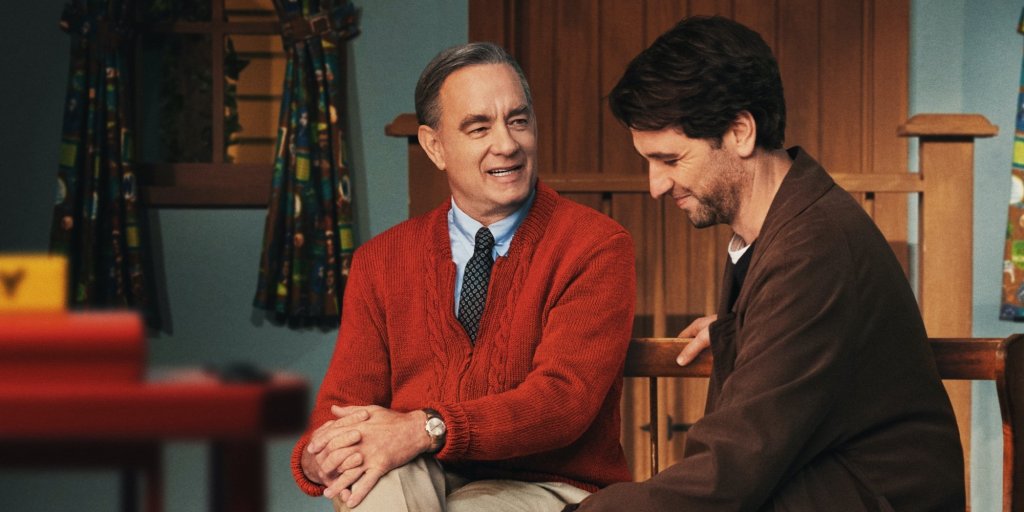
    Inspired by the friendship between celebrated children’s TV show host Fred Rogers and journalist Tom Junod, the movie follows cynical Esquire Magazine feature writer Lloyd Vogel as an assignment to profile Mr. Rogers affects his relationships with his wife as well as his estranged father.

    Two-time Oscar winner Tom Hanks is not the star of the film and the version of Fred Rogers audiences see on screen isn’t intended to be the same man chronicled in last year’s outstanding documentary “Won’t You Be My Neighbor.”

    Casting Hanks as Rogers is a stroke of genius because, on a surface level, the iconic actor known for playing roles of virtue lends instant credibility to Rogers’ genuine warmth and spirit.

    But in the subtext, as viewers question Hanks in the role because he isn’t a perfect mirror image of Rogers, the film’s protagonist – Matthew Rhys’ Vogel – maintains doubts about his authenticity in a way that subtly attaches audiences to Vogel.

    No actor can truly match the singular persona of Fred Rogers, but viewed through the lens of a skeptical journalist, Hanks delivers a more than compelling facsimile that feels pulled from Vogel’s imagination and recollections of the past.

    Rhys pushes the envelope just enough as Vogel to make the film’s dramatic moments compelling, but not so far as to intercede in the moments where it’s clear viewers are meant to just bask in Hanks easily charming audiences with Rogers’ message of kindness at every turn.

    It’s a performance that doesn’t particularly stand out in any way, but Rhys offers enough character development to pay off the film’s overall conceit.

    Veteran character actor Chris Cooper gets the most screen time he’s seen in several years and stuns audiences with a heart wrenching supporting turn as Vogel’s father Jerry.

    Cooper brings a presence to the screen that challenges Rhys at every turn and forces better performances than the screenplay sets up.

    Heller frames her film as if it were an extended episode of “Mr. Rogers Neighborhood,” weaving in and out of the main story with to-camera interludes by Hanks that treat the audience like Rogers’ young viewers and location changing transitions featuring miniature sets like those from the television program.

    Considerable detail went into the film’s production design to get the nuance of the era correct from costumes to virtually identical sets for “Mr. Rogers’ Neighborhood” to the faded texture that permeates across Jody Lee Lipes’ cinematography.

    “Neighborhood” deserves far wider accolades than it will likely get, although Hanks is all but assured an Oscar nomination for Best Supporting Actor and co-frontrunner status with Brad Pitt in “Once Upon A Time In Hollywood.”

    The film has an outside chance at a Best Picture nomination though Heller as director and Rhys as lead actor will likely miss the cut.

    A much more somber film than any true biopic of Fred Rogers probably deserves, the beauty of “Neighborhood” comes from the essence of the man and his impact on those around him rather than his life story.

    No filmmaker will be able to do complete justice to Rogers’ tale better than the 2018 documentary and Heller, Hanks and company opt not to even try.

    Compelling and emotional, “A Beautiful Day In The Neighborhood” is a worthy drama that focuses on impact over legacy in a tale of fathers and sons that will tug at the heartstrings of audiences willing to let their hearts take over for their brains over a two hour period.

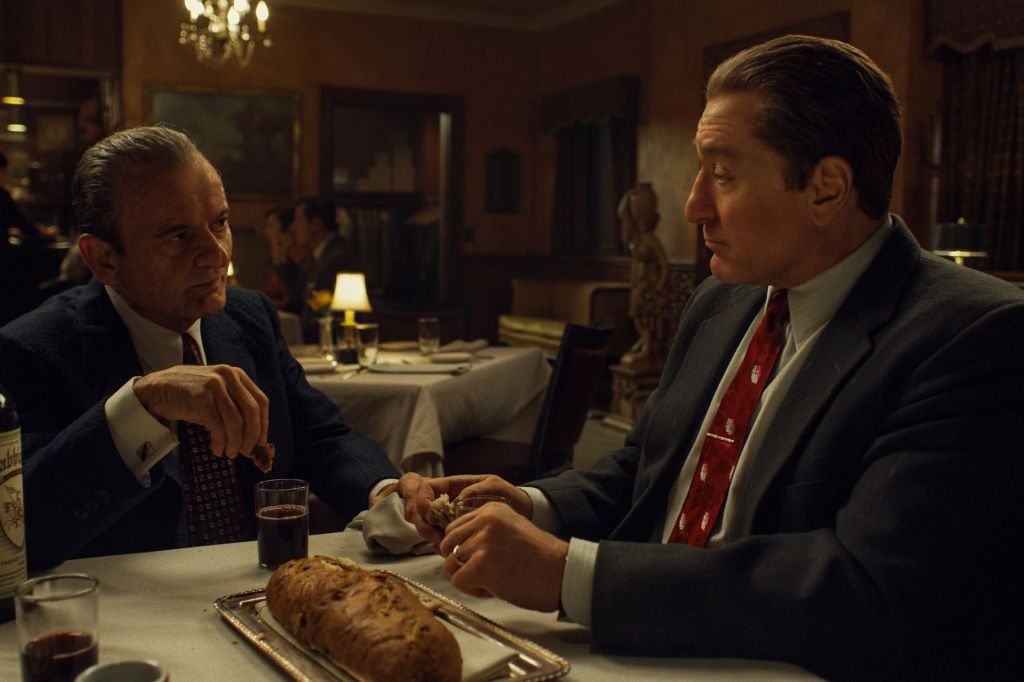
  • The Irishman: Legacy of a cinematic Don

    The Irishman: Legacy of a cinematic Don

    At the end of the day, what’s it all about?

    It’s a question that continuously lingers under the surface of celebrated auteur Martin Scorsese’s latest feature, a melancholy retrospective that acts almost like a career summation filled with riddles of bullets and dynamically vulgar dialogue.

    For the premier filmmaker in the gangster genre, Scorsese’s “The Irishman” definitively closes the book on how crime dramas have been made and any future Mob movie will have to live in a post “Irishman” world.

    This isn’t to say – although exceptional in its own right – that “The Irishman” is on the same level as his classics “Goodfellas” or “Casino” or “The Departed” for that matter.

    But intensely, quietly, there’s a lot on Scorsese’s mind as he puts audiences through an arduous character study on the virtues of loyalty and family and how those often-conflicting ideals can make or ruin the best of men.

    Clocking in at just under three-and-a-half hours long, “The Irishman” is an expansive look into the worlds of organized crime and organized labor that somehow never fully gives a complete picture into either, but positions audiences to view things through the lens of an Irish Teamster who joins the Bufalino crime family as an enforcer.

    The film truly encapsulates a lifetime in American history, chronicling the events of the film with major moments like the assassination of John F. Kennedy and the Bay of Pigs. But “The Irishman” feels epic in scale, layering years upon years of information at the same time body after body falls to gunfire.

    “The Irishman” being the first Scorsese film produced by Netflix seems appropriate as there’s almost an episodic nature to the movie that will allow audiences to break up “The Irishman” into a multiple night viewing experience. That being said, it’s a shame that most audiences will never get to see this gem on a big screen as it’s best when viewers are fully immersed in the world of the film without distractions or interruptions.

    As the titular “Irishman,” two-time Academy Award winner Robert De Niro balances a fine line between uncertain, often competing relationships and his Frank Sheeran is confident, yet more empathic to the mobsters surrounding him than his own family.

    It’s unusual nowadays to see the veteran actor playing the role of mentee rather than mentor, though De Niro flourishes in the part of Mafia apprentice as he displays a rigorous callousness to his work that is matter of fact rather than cold.

    The demonstrativeness that audiences are accustomed to seeing from Al Pacino are ever present in “The Irishman,” as Pacino attacks his dialogue as Teamster boss Jimmy Hoffa with rigor.

    Surprisingly, this vibrancy works for Pacino here. His constant bravado does not overwhelm the film as it usually does and there’s considerable warmth shown by Pacino in smaller moments featuring Hoffa, Sheeran and Sheeran’s daughter Peggy.

    The best performance in the film by a wide margin is a career-best turn from Oscar winner Joe Pesci, who reteams with De Niro and Scorsese for the first time since 1995’s “Casino.”

    As Sheeran’s mentor and a Bufalino crime boss, Pesci is brilliantly understated and quiet in the role, deceptively drawing audiences in with the calm affectation of a friend. He often outduels De Niro and Pacino in intimate moments and is by far the most compelling character whenever he appears on screen.

    “The Irishman” boasts a deep and impressive supporting cast including Harvey Keitel, Ray Romano, Jesse Plemons and Bobby Cannavale. Among the secondary characters, Sheeran’s daughter Peggy – played as a young girl by Lucy Gallina and an adult by Anna Paquin – is the most compelling of all in spite of her lack of dialogue.

    Both Gallina and Paquin exhibit an unspoken depth of emotion within their haunting eyes and most of their incredible two-part performance is fully synchronized through non-verbal cues that inform how audiences view Sheeran.

    The screenplay from Steven Zaillian, adapted from Charles Brandt’s novel “I Heard You Paint Houses,” delivers some knockout dialogue that allows De Niro, and especially Pacino, to produce highlight-reel quality, career-defining scenes.

    Scorsese and Zaillan build “The Irishman” slowly and deliberately over the three-plus hour running time to build to a crescendo of a third act that is both demonstrative and exceptionally pensive for a Scorsese film.

    There’s a finality to “The Irishman” that seems to coincide with Scorsese’s own foray into the gangster genre that comes out in the filmmaking. The extended running time and partnership with Netflix feel like a director unconcerned with audience expectations and wanting to make a film on its own terms.

    A self-homage tracking shot opening the film that mimics the Copacabana scene from “Goodfellas” cements this notion from the word go.

    If this is the last film of Scorsese’s career – though those odds are unlikely – “The Irishman” is a fitting culmination of a master’s work and a movie that will certainly appreciate considerably with age as audiences re-watch it again and again, picking up the subtle flourishes and nuance that come with exception Scorsese filmmaking.

    With the full weight of Netflix behind it, “The Irishman” is certain to be a major player come Oscar season and is a virtual lock for Best Picture and Best Director nominations. Despite a crowded field in the category, De Niro should be one of the final five in the Best Actor category and “The Irishman” could sneak both Pacino and Pesci in Best Supporting Actor, although odds likely favor Pacino’s showy performance over Pesci’s subtlety if only one can get in.

    This film will likely be most remembered as “Scorsese’s Netflix gangster flick” rather than on its own merits by many audiences.

    Those who venture out to find “The Irishman” on a big screen and give themselves over to the world of the Bufalino crime family will find themselves mesmerized and transported by one of America’s finest cinematic craftsmen.

    Unquestionably one of 2019’s top five films, “The Irishman” is more than worth the time regardless of how or when viewers find it.

  • Jojo Rabbit: A funny thing about Adolf Hitler

    Jojo Rabbit: A funny thing about Adolf Hitler

    Comedy is the ultimate playground for escapism, for letting the worries and cares of daily life fade away in order to decompress and unwind.

    The best comedies, though, usually have unexpectedly a little bit more to say on their minds than first glance might suggest.

    There’s a hysterical new comedy hitting theaters this fall that combines a stellar, side-splitting screenplay and award-worthy performances.

    It’s also about Adolf Hitler and the Holocaust.

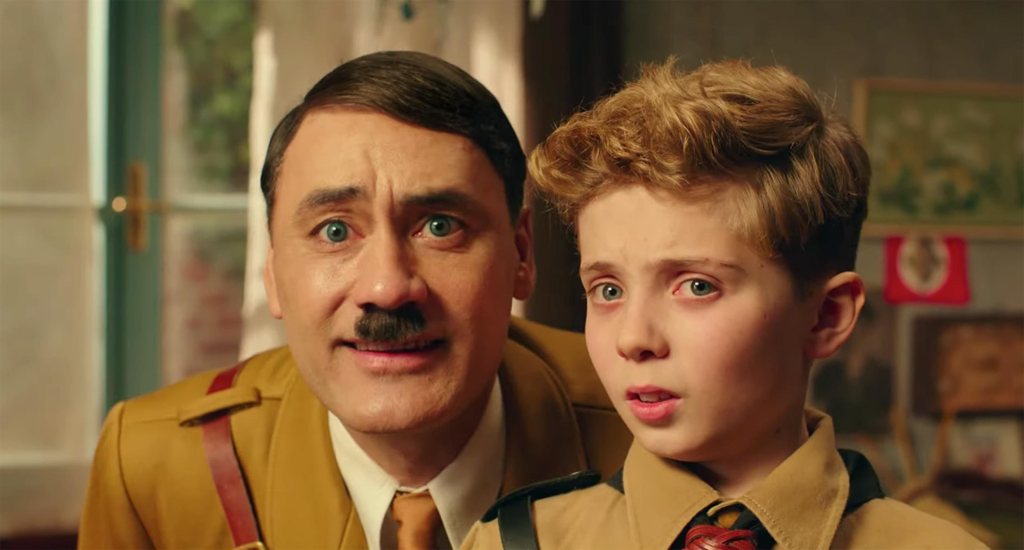
    “Jojo Rabbit,” the latest creation from avant-garde New Zealand writer/director/actor Taika Waititi, is brazenly unlike any other movie in 2019, boldly colorful and wildly subversive, a constant romp of a good time sure to put a smile on many adults’ faces this fall.

    Loosely adapted from the 2008 novel “Caging Skies” by Christine Leunens, “Jojo Rabbit” peers into the world of Nazi Germany through the eyes of 10-year-old Johannes, a deeply patriotic boy attending his first Hitler Youth camp alongside his imaginary friend, a childlike caricature of Adolf Hitler. After finding a Jewish girl in hiding, Jojo’s world changes drastically.

    Making his feature film debut, Roman Griffin Davis is a perfect protagonist for Waititi’s dark comedy. Easy to root for in spite of the outrageous venom that spews from the mouth of a Hitler youth, Davis displays genuine heart and naivety that transcends the hate and allows the dialogue to feel comically satirical.

    The openness Davis brings to his performance works wonders with the film’s female cast, especially Scarlett Johannson in a winning supporting turn as Jojo’s mother and indie darling Thomasin McKenzie as Elsa, the Jewish teen in hiding Jojo stumbles upon.

    Waititi assembles a terrific supporting cast to bring the humor while maintaining dramatic heart with Oscar winner Sam Rockwell, Rebel Wilson and Stephen Merchant as a Gestapo agent as standouts among the secondary characters.

    As is the case with many of his films, however, the comedic scene-stealer in “Jojo Rabbit” is Waititi himself, demonstrably absurd and quirky as the imaginary Adolf. Waititi brilliantly creates this version of the Nazi leader through the mind of his 10-year-old title character, which gives his Adolf a buffoonish quality for comedy. This also allows audiences to peer inside Jojo’s mind as he grows and changes over the course of the film, with Waititi’s Adolf reflecting the inner conflict of a child in war-torn Germany in a sensationally original way.

    “Jojo Rabbit” is smarter both as a film and a screenplay than its colorful, simplistic exterior might suggest. It’s true that Waititi’s latest feature is creatively absurdist and revels in the comedy of truly hateful speech.

    It also has earth-shattering moments of poignancy in stark reminder that the lessons of the past need to be heeded lest they return. The film’s unofficial moniker of being an “anti-hate satire” is incredibly apt.

    The satirical ridiculousness of “Jojo Rabbit” lands big laughs throughout, but there’s some unintended collateral damage that may find audiences uncomfortably giggling at Jewish stereotypes in a more derogatory fashion than one might find in a Mel Brooks film.

    However, there’s a deceptive amount of heart to the film, thanks in large part to Davis’ brilliant innocence in the title role and Johannson’s earnest compassion. “Jojo Rabbit” may be a lighthearted romp for most of its 100-minute running time, but it packs a wallop of dramatic punch at the core of the film.

    It’s quite conceivable that an outlandish, almost garish satire like “Jojo Rabbit” could be a major player come awards season as Waititi’s movie is certainly one of the 10 best films of 2019.

    An outside contender for a Best Picture Oscar nomination, the film is more likely to receive an adapted screenplay nod than anything else, although Johannson’s strong work here should boost her nomination and win chances for a leading role in the upcoming Netflix drama “Marriage Story.”

    Boldly creative in the style of Wes Anderson but with his own satirical quirks, Waititi’s “Jojo Rabbit” is among 2019’s best films and a movie certainly worth seeking out on the nearest big screen.

  • Parasite: South Korean masterpiece one of decade’s best films

    Parasite: South Korean masterpiece one of decade’s best films

    Spoiler alert: The best film of 2019 doesn’t star Leonardo DiCaprio and isn’t directed by Martin Scorsese.

    Average American audiences probably haven’t heard of filmmaker Bong Joon Ho or his frequent collaborator Kang-ho Song, but their latest feature together is the best South Korean film of all time and a top five movie of the last decade by any measure.

    “Parasite,” a haunting and arresting drama with elements of comedy and paranoia, took home the top prize at this year’s Cannes Film Festival with a dynamic, unflinching look at families at the top and bottom of South Korea’s social strata.

    The less audiences know about the film before seeing “Parasite,” the better the cinematic experience will be.

    Twists and turns masterfully crafted into the story will be offset by moments of extremely poignant subtlety as Bong envelopes audiences in a world that seems infinitely close and yet constantly out of reach through perfect shot selection and camera movement that puts the viewers’ eyes on exactly what they need to see at the exact moment they need to see it.

    In the simplest terms, “Parasite” is about two families, the affluent Park family living in a walled manor on a hill and the impoverished Kim family leeching off open Wi-Fi and free extermination in their semi-basement flat.

    When the Kim’s son is hired to serve as an English tutor for the Park’s teenage daughter, it sets in motion a series of events that will irrevocably change both families for life.

    “Parasite” relies on eight actors to deliver memorable, pitch-perfect performances in order to pull off Bong’s layered screenplay and there isn’t a false step among the entire cast.

    Each member of the family – father, mother, son and daughter – is in sharp contrast from their mirror in the other family, as if they were playing the opposite side of the same coin, but not in a duplicate style as in Jordan Peele’s horror film “Us.”

    The cast of “Parasite” excels in the variety of tones Bong moves through and the expressions lingering on the face of Kang-ho Song often allow viewers to peer inside the soul of the film.

    “Parasite” translates perfectly for American audiences as Joon Ho maintains a universality to the film through thematic elements of economic class conflict, greed and deception. Its biggest hindrance to mainstream success is a relative unwillingness for subtitled films, though Bong has crafted a theatrical experience that far transcends any language barrier.

    “Parasite” uses the camera frame as a reflection of the contrasting world views of the poor Kim family and rich Park family. This is most evident in the film’s geography, where staircases are frequently used to depict the upward mobility of the Parks and the downward descent of the Kims.

    Production design in “Parasite” is stunningly effective as Bong’s team constructs a multi-layered mansion from scratch on an outdoor studio lot that seems all too perfect not to be an actual home.

    The Parks’ living room is adorned by a massive wall-sized window into the enclosed front yard, framed to match the film’s 2:39:1 aspect ratio and enhance viewers’ ability to visually peer inside the mindset of the well-off family.

    Cinematographer Kyung-pyo Hong gives “Parasite” an expansive visual style that provides unique geographic perspective at all times, highlighting the space the Park family enjoys in beautiful contrast to the cramped tightness of the Kim family’s world. No matter how close the camera gets to actors, Bong maintains a wide depth of field to constantly change and accentuate the audiences’ peripheral vision.

    Perspective is of key importance to “Parasite” as viewers are left questioning events in the film from every angle, not knowing what’s coming next or where it’s coming from. It’s an unparalleled combination of tension and release that keeps audiences on the edge of their seats.

    “Parasite” will become the first South Korean film to be nominated for an Academy Award, an almost certain lock to win the Oscar for Best International Film. There’s potential for much more acclaim for the Palme d’Or winner from this year’s Cannes Film Festival as “Parasite” deserves to contend for Best Picture, direction, cinematography, production design and supporting actor for Song Kang-ho.

    A contender for the best film of the decade, “Parasite” is a thrilling, absolute masterpiece from one of the world’s greatest auteur directors. Visually stunning and arresting from start to finish, there won’t be a better cinematic experience in theaters all year.

  • Dolemite Is My Name: Return of a comedy legend

    Dolemite Is My Name: Return of a comedy legend

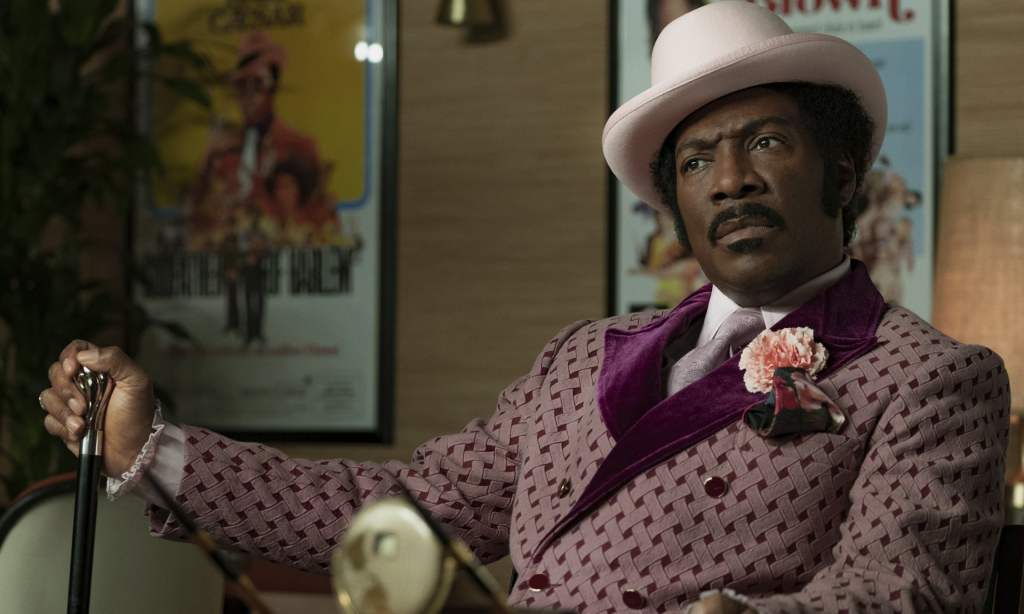
    From the moment he begins a verbal diatribe that drowns out Marvin Gaye, it’s apparent that Eddie Murphy has a special passion for his latest role.

    It’s evident in the way he carries himself, in the timbre of his voice and the cadence with which he recite lyrical tongue-twisters with effortless repetition. Murphy melts into his homage to one of his mentors and heroes, actor/comedian Rudy Ray Moore, the creator of cult classic blaxploitation film “Dolemite.”

    Told in a traditional biopic style, “Dolemite Is My Name” finds Murphy’s Rudy struggling to find a creative outlet after failed singing and dancing careers. When he turns the ramblings of neighborhood homeless men into a comedy act, Rudy creates the character, Dolemite, as a lyrical poet that later became known as “The Godfather of Rap.”

    The film follows Rudy through many career paths and hijinks, maintaining a frantic, cavalier pace that would normally be disengaging for some audiences. But Murphy holds “Dolemite” together with an invigoratingly charming turn as Moore.

    For a movie that’s as crude and risqué as the original subject, Murphy gives such an affable twist to each poetic slander and crass comment that it’s nearly impossible not to root for his Rudy regardless of how many four-letter words fly out of his mouth.

    His Rudy oozes a relentlessness that reflects the passion Murphy clearly shows for the real Moore and there’s a surprising amount of emotional depth that Murphy is able to draw from that separates this performance from an average biopic. There are subtle parallels between Rudy’s rise from obscurity that pair wonderfully with the career resurgence Murphy makes in the role that critics and awards season voters will eat up.

    Thankfully, this is clearly his best work since an Academy Award nominated turn in 2006’s “Dreamgirls” and perhaps the most ideal use of Murphy’s unique comedic talents since the mid-1990s.

    A strong supporting cast gives “Dolemite” the depth needed to elevate beyond a simple character study and among more famous male actors, Da’Vine Joy Randolph steals large segments of the movie as Rudy’s protégé Lady Reed.

    While it’s a humor-filled underdog story throughout, “Dolemite” truly hits its stride in the latter half when Rudy attempts to take his act onto the big screen by self-producing an action/comedy feature film and shooting it in an abandoned drug den.

    This leads Rudy into the path of actor/director D’Urville Martin, masterfully portrayed by an almost unrecognizable Wesley Snipes. Snipes portrays D’Urville with a refined arrogance from a screen credit as an elevator operator in “Rosemary’s Baby.”

    Paired in scenes opposite Murphy, Snipes attacks the dialogue with a vigorous dismissive attitude that matches Murphy in intensity but in a distinctly opposite style that elevates both actors.

    The screenplay from Scott Alexander and Larry Karaszewski follows a note-by-note underdog story that has been done many times over, but the humor and heart director Craig Brewer is able to pull from his performers along with a strong visual style thanks to cinematographer Eric Steelberg elevates “Dolemite Is My Name” to the top of the biopic genre in recent years.

    Murphy deserves his second Oscar nomination for his special turn as Moore, though comedic performances like this rarely get as much recognition as dramatic efforts.

    Costume designer Ruth E. Carter should be a frontrunner to win her second consecutive Academy Award in the category after taking home the trophy last year for “Black Panther.” Clothing leaps off the frame with a vibrant, charismatic flair that elevates the entire production and cements “Dolemite” in the 70s blaxploitation era. There’s a finesse to the design that keeps the costuming from becoming a caricature while maintaining an authenticity that is usually only found in rigid British character dramas.

    The downside to the film’s swift release on Netflix is that “Dolemite” is the perfect film to enjoy with an enthusiastic audience as the communal nature of the comedy is ideal for a shared experience like those depicted in the film itself.

    As a niche biopic, however, “Dolemite” simply won’t garner enough broad support to warrant a large theatrical run and a streaming service will give better opportunities for curious, yet unsure viewers to watch the first 10-15 minutes without committing to a whole moviegoing experience.


    If audiences can tolerate or enjoy outright the crude humor throughout, there’s too much to like about “Dolemite Is My Name” not to give it a chance.

  • Judy: There’s only one true Garland

    Judy: There’s only one true Garland

    When the term “Oscar bait” gets thrown around in film criticism, it’s usually in reference to a film like “Judy.”

    Typically a movie with one central performance based on true events featuring showy, clip-worthy monologues destined for an awards season reel, “Oscar bait” is a film cliché used to describe movies that wouldn’t exist if studios couldn’t buy their way to winning accolades.

    The story writes itself, a former Academy Award winner with nothing much of substance on her resume in many years makes her comeback bringing to life a classic Hollywood icon.

    Critics, audiences and, most importantly, award voters are supposed to revel in this sort of pandering because it honors not just the performer bringing the part to life, but the person being honored with the biopic.

    It’s a standard model used to great success by the likes of Rami Malek in last year’s “Bohemian Rhapsody,” Gary Oldman in 2017’s “Darkest Hour” and Meryl Streep in 2011’s “The Iron Lady.”

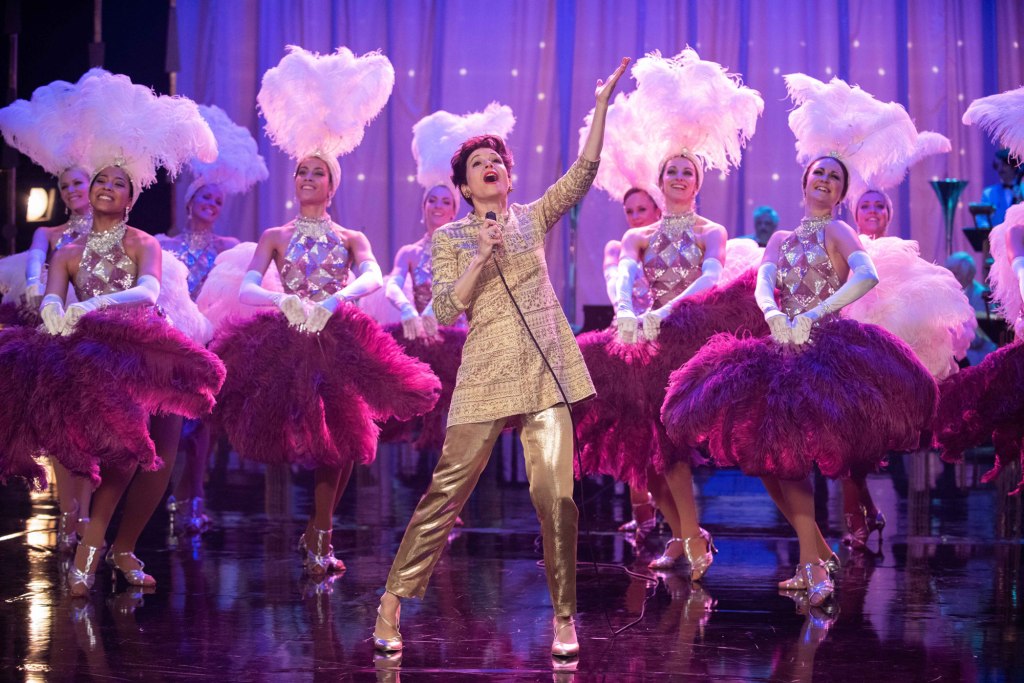
    This time, the performer is Oscar winner Renée Zellweger and the role is that of Hollywood starlet Judy Garland in the final years of her life.

    “Judy” finds the illustrious Garland in her mid-40s, broke and trying to make a living with a concert series at London’s Talk of the Town revue so she can purchase a home for her two young children.

    It’s a meandering, melodramatic biopic adapted from the award-winning play “End of the Rainbow,” that veteran stage director Rupert Goold brought to the big screen as a sweeping musical drama hinging on a knockout lead performance which just doesn’t get there.

    Zellweger’s Garland feels like her Roxie Hart from 2002’s “Chicago” imitating Liza Minnelli, an over-exaggeration that neither says anything new about the subject nor comes across as anything but someone delivering lines as if every word were italicized.

    The Oscar winner has no discernable on-screen chemistry with anyone she shares a scene opposite, least of all Finn Wittrock and his caricature turn as Garland’s future husband Mickey Deans.

    This makes the quick, deep relationship the two form at a party hosted by Minnelli all the more baffling. Audiences can’t buy into their connection and when things inevitably begin to get rocky, Garland’s devastation feels excessive and frivolous.

    The film relies heavily on nostalgia on the part of its viewers to enjoy montages set to classic Garland tunes like “The Trolley Song” and “Get Happy” that establish the illusion of a quality performance. Zellweger genuinely sings her heart out, but the entire affair is far too contrived to ever really resonate with audiences.

    “Judy” goes to great lengths to inform Garland’s final years by showing a young Judy in flashbacks being tormented by the weight of stardom and a Harvey Weinstein-esque controlling producer Louis B. Mayer.

    These flashbacks are done in traditional biopic style and yet lack consistency throughout the film. A large 45-minute segment in the middle third of the film could have used one of these flashbacks to break up the monotony of the latent melodrama.

    Darci Shaw gives the film’s best performance as a doe-eyed young Garland, though Goold and screenwriter Tom Edge don’t give her Judy much to do besides being mildly rebellious before submitting to the rigors of the studio system.

    Much of the rest of the supporting cast is talented, yet entirely forgettable as the screenplay muddles through Garland’s London run with a bittersweet awe culminating in the most ridiculously contrived final number in recent movie musical history.

    Regardless of the picture as a whole, Zellweger is far too popular in much too big a role not to be a surefire nominee for Best Actress come awards season and is the clear frontrunner to win her second Academy Award. However, viewers looking for a dynamic performance about a singer coming apart at the seams should check out the vastly superior and shamefully underseen “Her Smell” with Elizabeth Moss.

    Somewhere over the rainbow, there’s a good film to be made about the life of a Hollywood icon like Garland.

    Unfortunately, “Judy” largely misses the mark and will be forgotten as soon as Zellweger’s seemingly certain acceptance speech concludes.

  • Joker: Origins of psychosis and villainy

    Joker: Origins of psychosis and villainy

    It can be said that there’s no true originality left in cinema.

    Everything seems pulled from pieces of movie history, homages or outright rip-offs of films gone by.

    Audacious and transgressive, Todd Phillips’ “Joker” is clearly influenced by the work of cinematic legend Martin Scorsese, particularly his 1976 classic “Taxi Driver” and the 1983 cult of celebrity dramedy “The King of Comedy.”

    It also happens to be deeply rooted in comic book lore, taking on the origins of a classic Batman villain already played to perfection both by Jack Nicholson in 1989’s “Batman” and by Heath Ledger in an Oscar-winning turn in 2008’s “The Dark Knight.”

    There shouldn’t be a need to take on this maniacal character yet again, but Phillips’ film is exceedingly unique in its interpretation and cements its place alongside movies like 2006’s “V For Vendetta” and 2017’s “Logan” as auteur comic book cinema.

    Set in the backdrop of a downtrodden New York City during the late 1970s, “Joker” serves less as an origin story for a Batman villain than as a character study of a deeply disturbed man.

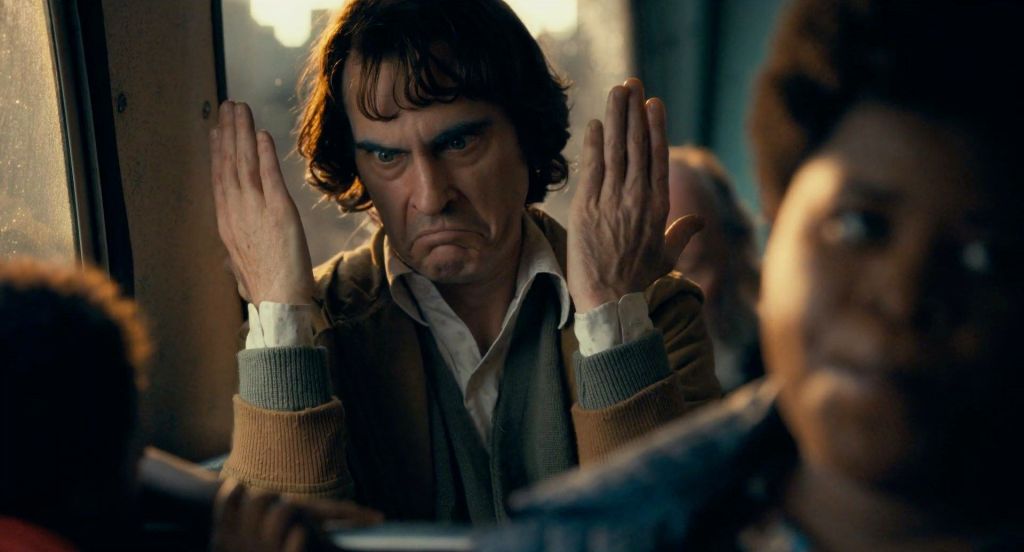
    Professional clown-for-hire Arthur Fleck has dreams of becoming a stand-up comedian like his hero, Murray Franklin, but acts of violence and delusions of grandeur set Arthur down a path he’s unable to come back from.

    “Joker” is a better film the further writer/director Phillips stays away from the movie’s comic book origins and hones in on Arthur’s wavering grasp on sanity.

    The film only works as well as it does thanks to three-time Academy Award nominee Joaquin Phoenix dropped more than 50 pounds in order to transform into Arthur Fleck.

    Phoenix infuses the character with a chilling realism that transfixes and haunts viewers as he descends into madness, adopting clinically diagnosable conditions like uncontrollable laughing and paranoia to add intricate flourishes to his complex performance.

    Though “Joker” doesn’t fully focus on mental health issues, Phoenix takes great care to deliver nuance throughout in a turn that rivals Ledger’s more chaotic work in the role.

    Just as disturbingly provoking is the physicality of Phoenix’s performance as the actor twists and contorts his body so intensely that his spine and ribs almost burst through his skin. There is a considered theatricality to the way Phoenix moves throughout scenes, often gliding across the screen in a frantic, unchoreographed dance.

    “Joker” doesn’t take full advantage of its supporting cast as much as one might expect.

    Robert DeNiro was cast as talk show host Franklin more for his performance in Scorsese’s “The King of Comedy” than for what he could bring to the role itself. Phillips keeps DeNiro’s Franklin at a distance, often only allowing viewers to see the character through Arthur’s pensive gaze.

    Zazie Beetz is considerably effective in limited screen time as Arthur’s neighbor and love interest, though the film fails to fully realize their connection and one or two additional scenes between Beetz and Phoenix could have cemented these unlikely kindred spirits.

    The true standout among the secondary performers in “Joker” is Frances Conroy, who gives a dazzling turn as Arthur’s frail mother, Penny. Largely empathetic, her Penny goes through her own trials in limited screen time and is the most engaging and interesting in scenes opposite Phoenix out of the whole cast

    Violence in “Joker” is gaudy and unapologetic, though rarely as terrifying as the general sense of inevitable dread that lingers and haunts most scenes. There isn’t as much as gun usage as one might expect given the dialogue surrounding the film, yet when Arthur commits violent acts, there is considerable carnage to the scenes that younger audiences used to comic book films will not understand.

    “Joker” feels ripped straight out of another filmmaking era, stylistically and visually, with a gritty texture to each frame. Cinematographer Lawrence Sher harnesses the energy of 1970s crime dramas into his work and frames the entire film around Phoenix’s contorting body to enhance the eccentricity of his performance.

    Shots are stylized and/or lifted from the works of Scorsese with an overt homage to “The Dark Knight” appearing in the final moments.

    There’s an all or nothing prospect to the film’s award season chances. “Joker” will either be a top contender for Best Picture, cinematography, original score, adapted screenplay and direction or will get largely shut out altogether.

    The exception here is Phoenix, whose special performance as the titular character should be a mainstay in the lead actor category regardless of how the movie performs as a whole.

    Winner of the Golden Lion top prize at this year’s Venice Film Festival, “Joker” played to considerably less enthusiasm at the Toronto International Film Festival and has divided critics and regular audiences alike ever since.

    “Joker” requires considerable buy-in from viewers in order to be effective. Those accepting of the way the film washes over audiences will find Phoenix’s Arthur complex to be complex and compelling as “Joker” struts its way to an almost nihilistic conclusion.

    Skeptical audiences, conversely, will likely revile the film for its unfiltered chaos and increasingly manic lead.

    The year’s most divisive and sure to be most talked about film, “Joker” is definitely worth seeing either on the big screen or at home for any ardent cinephile.

  • Ad Astra: Hello darkness, my old friend

    Ad Astra: Hello darkness, my old friend

    In space, no one can feel your pain.

    At least, that’s the conceit of the latest space odyssey to hit the big screen, writer/director James Gray’s “Ad Astra.”

    Melancholy and malaise abound in a slow-burning film ripe with wistful soliloquies delivered as a character-informing score for Gray’s expressionless short story drawn out over two hours.

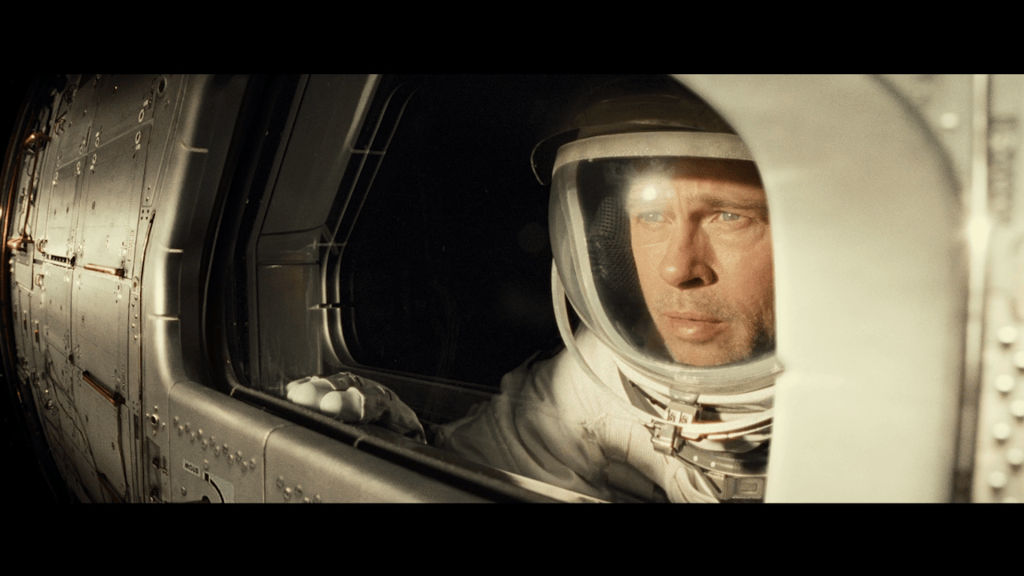
    Brad Pitt stars as Roy McBride, an astronaut tasked with a classified mission to travel across the solar system in search of his long-lost father, a heralded astronaut and scientist in his own regard thought dead until the doomed expedition of the elder McBride rears its ugly head on Earth.

    Each moment in “Ad Astra” is deliberate and considered, allowing events to breathe naturally without rush. In this art-house film with a big studio budget, what happens plot-wise takes a backseat to emotional subtlety.

    Pitt gives one of the best performances of his career as the younger McBride, delivering a stoic, magnetically pensive turn reminiscent of Ryan Gosling’s work as Neil Armstrong in last year’s “First Man.”

    The performance is largely internalized with Pitt only letting audiences into Roy’s psyche through a haunting narration and the faintest whisper of emotion on his face. Roy’s primary character trait – an exceptional cool under pressure calculated as never exceeding 80 heartbeats per minute – serves as the film’s narrative pulse and lays the foundation for Pitt’s entire performance.

    As audiences follow Pitt throughout the solar system, the emotional wear and tear begins to bubble under the surface in a complex, understated performance that will resonate fully with viewers who can identify with Roy’s personal struggles. Those who fail to buy in to Pitt’s subtextual work will likely find “Ad Astra” too tedious and pedantic for their liking.

    In limited screen time, Oscar winner Tommy Lee Jones haunts the entire project with his looming presence as Roy’s father, Clifford. Without much development of his own, Jones’ Clifford challenges and provokes Roy in compelling, interesting ways that will leave audiences pondering the ramifications long after leaving the theaters.

    Everything – and especially everyone – else doesn’t really matter in the greater context of the film except in how their appearance and/or disappearance affects Pitt’s Roy.

    There is a strong supporting cast in “Ad Astra,” but on the whole, they wander in and out of the periphery of Gray’s film in such a tertiary way that even Donald Sutherland is only of use to provide character context to Roy’s journey than serve any actual purpose to the plot.

    Technically proficient and understated in its beauty, “Ad Astra” has moments of action grandeur largely obscured by extensive sequences that highlight the vast emptiness of space.

    Cinematographer Hoyte Van Hoytema subtly acknowledges the loneliness felt by Pitt’s Roy by keeping the visuals sharp yet elusively unremarkable, as if the voids Roy looks out on are as desolate and unremarkable as they seem to the average viewer.

    The camerawork keeps audiences framed in on Roy in every moment either by pushing in on Pitt’s somber profile or placing viewers within his mind’s eye as events unfold around him.

    While it may be off-putting to some audiences, what doesn’t happen in “Ad Astra” is often more important than what actually does, forcing viewers to feel the dread of inevitability surrounding Roy’s mission.

    “Ad Astra” is exactly the kind of artistic, character-driven drama that usually succeeds come awards season, though Gray’s film may not gain the widespread support necessary to gain serious consideration come Oscar season.

    Pitt’s terrific performance here may actually prove to be more useful in a run for the veteran actor in Best Supporting Actor for Quentin Tarantino’s “Once Upon A Time In Hollywood” as voters aggregate his work for both films to justify voting for a nomination/win for a single film as a celebration of Pitt’s year.

    Some audiences may find the film’s slow burn style too tedious for their liking and not in line with the aggressive marketing and trailers for “Ad Astra.”

    Those willing to look beyond the simple plot structure will find Gray’s film a wonderfully nuanced character study that’s bold enough visually to enjoy on the big screen, especially in the IMAX format.