Category: Independent Film

Independent productions and independent cinema coverage. Secondary category; a movie can also be a New Releases review.

  • Be Natural: Uncovering a film legend

    Be Natural: Uncovering a film legend

    Before there was Charlie Chaplin, there was Alice Guy-Blaché.

    Odds are, if you know even just a cursory amount of movie history, the silent film star is one of the first people rattled off the top of the list.

    The industry’s first female filmmaker – involved in almost 1,000 films as some combination of director, writer and producer – rarely comes to mind, if ever.

    A new documentary based on years of research by an independent filmmaker and decades of historical preservation by international archivists seeks to correct all that.

    Written and directed by first-time feature documentarian Pamela B. Green, “Be Natural: The Untold Story of Alice Guy-Blaché” is an interesting, frequently engaging look at a largely forgotten filmmaker whose influence and precedent setting far outweighed her notoriety.

    Green paints a compelling case that Guy-Blaché’s former colleagues sought to revise film history in an attempt to diminish (or in some instances, erase entirely) her contributions to the world of early cinema.

    The documentary premiered last year in the Official Selection of Cannes Classics before making its way through the film festival circuit. “Be Natural” is currently touring the United States and international markets on select dates.

    “Be Natural” acts like a cinematic treasure hunt with Guy-Blaché and Green running concurrent searches over the course of the documentary: Guy-Blaché for her missing film prints and Green for information and sourcing on the director.

    The documentary may wander a bit too much for some casual viewers, especially those unfamiliar or less interested in early cinema history.

    Green often jumps between interviews with famous directors and actresses talking in vague generalities about what life must have been like for her as a pioneer in a male-dominated industry.

    These moments are usually spliced with clips from various Guy-Blaché films in rapid succession to give a broad sense of her filmmaking style in the hopes of making the clips more accessible to casual audiences. At the rate these moments whiz by, however, it’s hard to discern a true sense of Guy-Blaché’s work as a viewer without having an interviewee or the documentary itself describe it.

    Whether it was an editing choice or a lack of large segments of Guy-Blaché’s work, the biggest disappointment of “Be Natural” is the absence of several uninterrupted minutes of one of Guy-Blaché’s signature films to allow audiences to formulate their own opinions of her work.

    Extended clips of her adaptation of the passion story, “The Life of Christ,” or the hysterical comedy, “The Drunken Mattress,” would have been welcome additions to the documentary.

    Small fragments from these films – and a plethora of others – are littered throughout “Be Natural,” although each is so fleeting and often overlapped with other clips or interviewee dialogue that it’s difficult to appreciate any one film from Guy-Blaché’s filmography.

    There’s also a chronological narrative layered into the documentary as Green attempts to piece together Guy-Blaché’s history from birth to death.

    Intense crosscutting in the documentary requires audiences to bounce back and forth through history to the present to archived interviews from the 1950s and 1960s and this can be somewhat jarring for some audiences.

    Green also includes telephone conversations tracking down potential sources that give important storytelling points, but often feel like rehearsed recreations of unrecorded conversations rather than fluid, spontaneous accounts.

    This section admirably blends modern day sleuthing over Google and Skype with wonderfully rendered animations to provide historical context. The film’s 3D model of Guy-Blaché’s Solax Studio headquarters in Fort Lee, New Jersey, is especially effective as it contextualizes the entire filmmaking process succinctly and inventively while giving viewers a profound sense of space and place.

    These dynamic visual moments are the most impressive directorial choice made by Green and really make the most impact as the documentary tries to make its subject matter as accessible to the lay public as possible.

    “Be Natural” is a solid documentary in spite of its storytelling flaws thanks in large part to the compelling subject matter and exceptional animations. It certainly should make viewers want to seek out Guy-Blaché’s work as they become available online.

    Ideally suited for ardent cinephiles, “Be Natural” should prove to have longevity touring various film festivals before finding a home on streaming services where it could be most appreciated.

    Note: ‘Be Natural’ has yet to screen publicly in Texas and a screener copy of the film was provided for review purposes.
  • The Last Black Man in San Francisco: Relentless vision

    The Last Black Man in San Francisco: Relentless vision

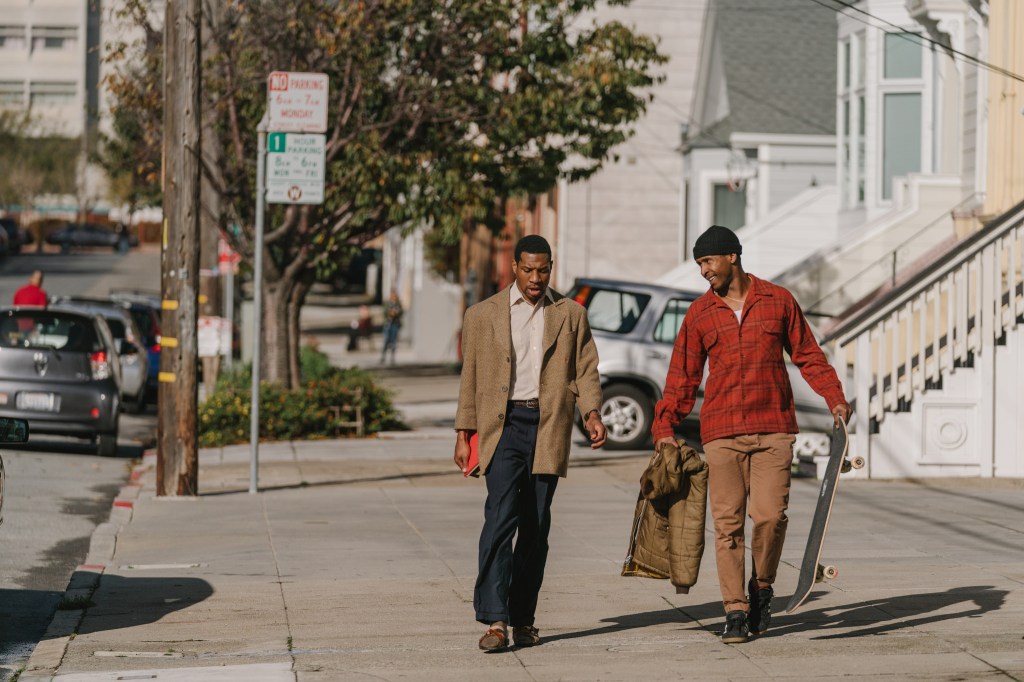
    Two men share one skateboard as they glide down winding hills in the Bay Area.

    It’s a beautiful picture wrapped in early morning light, but what’s most striking is how instantly personal the relationship is.

    Joe Talbot’s Sundance award winning film follows these two men across a changing city in a simple tale that evokes much more than it ever says.

    A story of friendship and holding onto a place to call home at any cost, “The Last Black Man in San Francisco” is perfectly imperfect, a singular vision from a soulful first-time feature film director whose technical flaws bring his movie to life.

    Written by Talbot and star Jimmy Fails based on Fails’ real life, the film plays silent observer to one man’s relentlessness trying to regain his childhood home built by his grandfather.

    Alongside his best friend and introverted playwright Mont, Jimmy wanders in and around San Francisco searching for a sense of family and safety.

    Fails never acts as Jimmy; he’s constantly reliving real experiences or fictionalized approximations of true events in a way that almost feels invasive on the part of viewers.

    Talbot often lingers on private moments in Jimmy’s life that quietly resonate with audiences thanks to unspoken outpouring of emotion on Jimmy’s face.

    It’s incredible to believe that Fails has never appeared in a feature length film before, let alone carried one as he does with “Last Black Man.”

    Fails’ heart and soul drip off the canvas of each frame for an intimate, intoxicating performance.

    Equally transformative as Mont is Jonathan Majors, who melts into the nuanced role with ease. Constantly writing or sketching in a red notebook, Majors’ Mont is a quiet obsessive brought to life through observation and careful consideration until something profound results.

    It’s a performance worthy of supporting actor award nominations alone.

    As a pair, Fails and Majors have an easy, familial chemistry that suggests deep-seeded friendship in unspoken terms and bring out the best in each other’s performance. Jimmy and Mont’s co-dependency is beautifully illustrated by the actors as a perfect symbiosis of friendship.

    The soul of a dying city resonates throughout “Last Black Man” as the film poetically paints a portrait of gentrification with rich baths of sunlight.

    Films often encapsulate a place to the point that the world of the movie becomes a character in its own right.

    To a degree, that’s true here of San Francisco with its rolling hills and bay landscapes.

    But the third lead of “Last Black Man” is an old Victorian house with a witch’s hat roofline, boldly inviting windows and a gorgeous pipe organ carved into its frame.

    Talbot and cinematographer Adam Newport-Berra allow the house to feel immensely vast and yet very intimate by placing the camera at the widest angles to give viewers a sense of scope and help contextualize Jimmy’s attachment to an aging building.

    The film also boasts an intoxicating score from Emile Mossari that enriches each scene with additional depth and emotion, though it’s a masterful take on “San Francisco (Be Sure to Wear Flowers in Your Hair)” sung in the film by Michael Marshall to reflect a tonal change in the third act that solidifies the soundtrack’s essential core.

    “Last Black Man” exudes such emotion moment by moment that it often overwhelms the storyline, which becomes less and less important as the minutes tick by until the fitting conclusion.

    In this way, the film evokes the work of fellow Bay Area writer/director Barry Jenkins, especially his Oscar-winning film “Moonlight.”

    Although “Last Black Man” has little chance of earning the same level of awards season acclaim, it would be no surprise to see the film littered across critics’ best of 2019 lists and a strong contender at the Independent Spirit Awards.

    “The Last Black Man in San Francisco” will go down as one of 2019’s and most underseen films. It’s a striking and haunting piece of cinema that will resonate for a long time with audiences lucky enough to see it in theaters.

  • Booksmart: Fresh perspective

    Booksmart: Fresh perspective

    Once or twice a year, a comedy will come out that has something more on its mind beyond just a quest for cheap laughs.

    In 2019, that film is “Booksmart,” a nuanced and insightful feature that elevates high school movie tropes to new heights.

    Written by four women and helmed by veteran actress turned first time director Olivia Wilde, “Booksmart” doesn’t seek to revolutionize genre as much as it succeeds in rising above it.

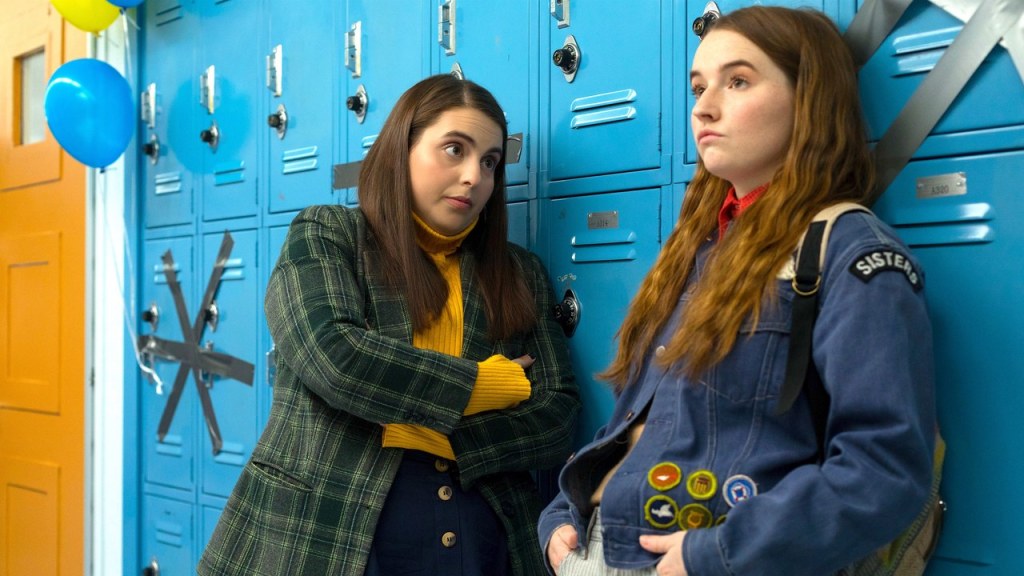
    The latest in a long line of coming-of-age, end of high school dramedies, “Booksmart” follows best friends Molly and Amy on their last day of senior year as the conscientious pair decide to consolidate four years of partying into one wild night.

    Conceptually, “Booksmart” is far from treading new ground. It’s in the execution of Wilde’s artistic indie vision for the film and pitch-perfect chemistry between lead actresses Beanie Feldstein and Kaitlyn Dever as Molly and Amy respectively that set this dramedy apart from the crowd.

    Feldstein embraces the headstrong academic Molly with a vigor relatable to anyone whose high school had an overbearing class president. The bravado with which Feldstein attacks scenes opposite Dever or adults at the school is wonderfully counterbalanced with an internalized desire to keep classmates at arm’s length to prevent getting hurt emotionally.

    Dever takes great care to slowly unfold Amy’s personality as she attempts to overcome personal and romantic insecurities. Her performance elevates non-verbally as Dever lets audiences into Amy’s state of mind through the squint of an eye or sinking of the shoulders.

    Their chemistry together is simply impeccable as Molly and Amy have an instant deep-seeded attachment that feels lived in despite the two actresses having never met before the start of production. The joy expressed on screen when the pair are dancing on the street, bantering in a vehicle or incredulously complementing each other cannot be faked. It’s a palpable energy that radiates off of their performances and permeates throughout the entire film.

    The ensemble cast of “Booksmart” is littered with quality secondary characters that fill the world of the film with their eccentricity, none more so than Billie Lourd’s absurdist free spirit Gigi.

    Lourd shimmers off the screen with a vibrancy that rises to the crest of going over the top but doesn’t quite tip into caricature. Gigi’s aggressive, antagonistic appearances sprinkled throughout “Booksmart” challenge Molly and Amy at key moments while also providing humor in her ridiculousness.

    Even smaller characters – Noah Galvin’s demonstrative thespian and Eduardo Franco’s risk-taking stoner come to mind – have a heightened presence in “Booksmart” that one wouldn’t find in the usual high school comedy. It’s clear that each performer has made a deliberate, intentional choice about their character no matter how essential they are to the story and this gives “Booksmart” a rounder complexity.

    High school comedies rarely go for broke visually, opting for a crowd-pleasing sheen one would usually find on a network television sitcom.

    Wilde goes out of her way to find the most interesting angles from which to frame her characters, drawing audiences in with harsh closeups contrasting with wider shots to keep viewers present in the moment rather than casual observers.

    The cinematography of “Booksmart” has a slight faded quality to it, evoking a recent past though it’s culturally cemented in 2019.

    Viewers can see Wilde’s growth directorially come alive on screen as “Booksmart” becomes a more daring, confident film while marching into its third act.

    There’s a truly special underwater scene scored to Perfume Genius’ “Slip Away” following Amy around a crowded pool that vividly and stunningly tells her quest for self-discovery in pictures and emotions rather than words.

    This kicks off a dynamic 10-minute sequence late in “Booksmart” that may be one of the year’s most special moments featuring more cinematic flair than in any comedy in recent memory.

    Music is instrumental to the success of “Booksmart” both in the modern, yet nostalgic score from Dan The Automator and in the richly curated soundtrack.

    Wilde perfectly chooses songs that speak to the moment and spins tracks in and out of sequences, blending tunes to enhance or interrupt the narrative as needed. This also extends to her deft hand on the sound mixing, altering or cutting out sound entirely to change the viewers’ focus, most notably in a conversation between the two leads at a party.

    “Booksmart” isn’t the funniest movie nor is it the most observational or risqué. What the film overwhelmingly succeeds at is making the seemingly innocuous plight of two well-to-do high school girls feel relatable across generation, gender and sexual identity.

    It’s a decidedly inclusive film in a matter-of-fact way where characters have individual agency over choices they make in the narrative rather than a by-product of limiting stereotypes.

    This is especially true of Amy, a character whose attraction to women is neither marginalized nor overtly celebrated. A rare high school film not about sex, “Booksmart” allows Amy to have complexity rather than limited to merely a funny gay best friend character to a straight lead.

    The film smartly orients audiences by guiding them through the one-night-only narrative odyssey with familiar guideposts as Molly and Amy meander across Los Angeles to find Nick’s party, but again, these tropes do not define what “Booksmart” is.

    An immensely rewatchable experience, the layers of simple complexity in the film will become more apparent as audiences find jokes they laughed over on a first viewing or the unique directorial flourishes Wilde includes.

    “Booksmart” is likely the best film you won’t see in theaters but will watch six months from now and kick yourself from not finding it sooner.

  • The River and The Wall: Politics in perspective

    The River and The Wall: Politics in perspective

    Why build a physical wall when nature provides a beautiful, scenic barrier already?

    It’s one of many questions raised by director Ben Masters’ new documentary, “The River and The Wall,” an up-close, intoxicating feature about border security along the Rio Grande river in south Texas.

    Winner of the Louis Black “Lone Star” Award at the 2019 South by Southwest Film Festival and Best Documentary at the 10thannual Hill Country Film Festival in Fredericksburg, “The River and The Wall” views politics through the lens of a nature photographer, opting away from soundbites and towards a cinematic love letter to the beauty of Texas.

    The film is currently in limited release in theaters (the best way to view this vivid cinematic documentary) or can be rented from select streaming platforms.

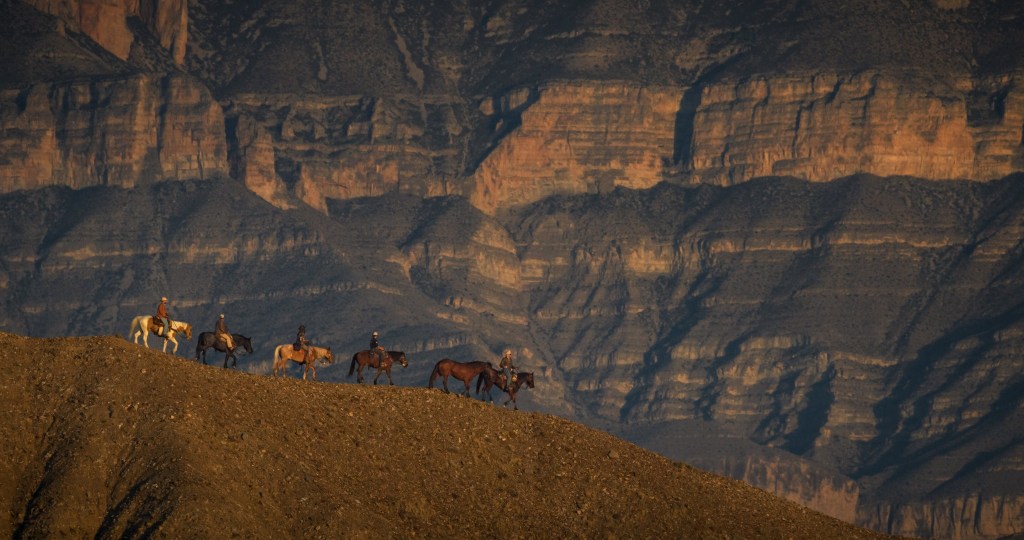
    Joined by an ecologist, a wildlife filmmaker, Texas Parks and Wildlife representative and a river guide, Masters and his crew trek across the last untamed portions of Texas, a 1,200-mile stretch between El Paso and the Gulf of Mexico as close to the actual border as possible.

    The five-person team travel by bicycle, on horseback and on the river in canoes over the course of nearly three months over dangerous rapids and across harrowing terrain while shooting one of the most scenic, visually captivating documentaries in recent years.

    Masters’ film takes a highly complex political problem and removes partisanship from the equation, relying on common sense and a boots-on-the-ground vantage point to provide a fresh perspective to the debate.

    While the film makes a strong case against the construction of a continuous wall, Masters builds arguments practically by showing audiences how inefficient and overly burdensome a wall would be in some stretches logistically. Many segments of the natural border between the two nations are divided by large canyons where building a wall would be impractical and threatens to cut off wildlife from their natural habitat and/or access to fresh water.

    However, “The River and The Wall” does not argue for complete abandonment of a wall and in fact goes to great lengths to recommend strong border security and additional support for U.S. Border Patrol agents.

    To provide context along the journey, Masters interviews stakeholders on the border including landowners and law enforcement officials as well as Republican Congressman Will Hurd and Democratic Congressman Beto O’Rourke.

    The realities of illegal immigration aren’t forgotten by the documentary either. Two of the five travelers – Filipe Deandrade and Austin Alvarado – are the children of immigrants who crossed the border without permission and their stories provide context to the hardships faced by Central American refugees seeking asylum.

    Events late in the film provide a wonderful, unexpected counterbalance to those stories and leave audiences with complex questions to think about.

    What truly sets “The River and The Wall” apart from the typical documentary is the sweeping, grandiose cinematography that Masters’ team is able to capture along largely undeveloped stretches of the Rio Grande Valley.

    The film’s striking imagery comes through in panoramic wide shots that maintain the landscape as a primary character in the film rather than simply as a backdrop. These ultra-wide shots illuminate a wall’s current and potential future impact as well as ground the entire feature in nature.

    Scenes are vivid and crisp as if they were falling out of the pages of “National Geographic.” There’s no stronger argument for leaving this area untouched by man than the landscapes captured here.

    A thought-provoking documentary that blends current events with wildlife cinematography for one of 2019’s best features so far, no discussion about security along the U.S. border with Mexico is complete without having seen “The River and The Wall.”

  • Thunder Road: Fortune favors the bold

    Thunder Road: Fortune favors the bold

    A static camera slowly presses in.

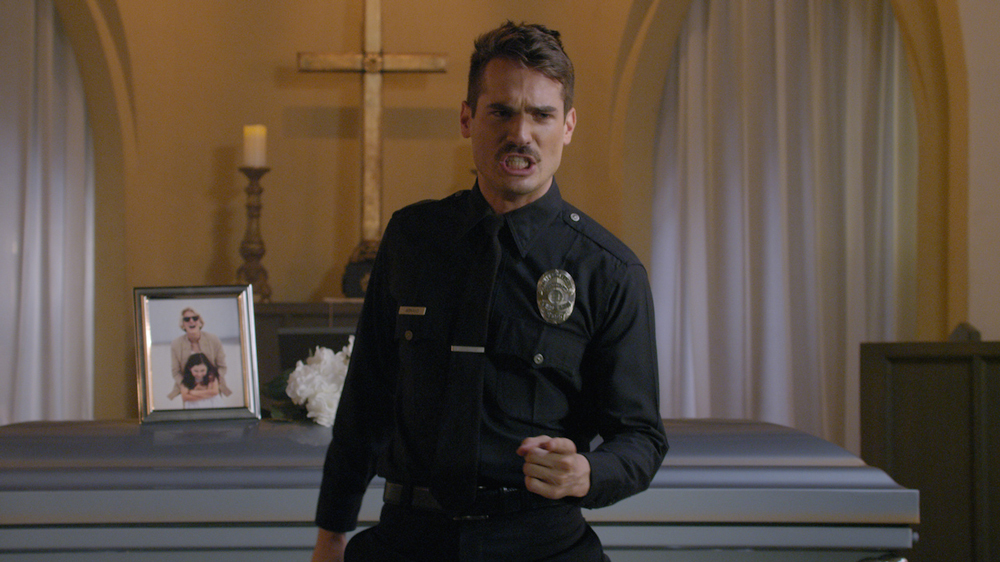
    It never moves – only zooms deliberately – for what feels like an eternity but is only six or seven minutes as the protagonist mourns the loss of his mother during a chaotic, frantic eulogy at her funeral.

    Over the course of a brisk hour-and-a-half, writer/director/star Jim Cummings delivers a film equally as manic as the character he portrays on screen. It’s a mesmerizing, haunting tale of love, loss and the fleeting nature of time.

    Winner of the 2018 Grand Jury prize at the South by Southwest Film Festival, “Thunder Road” is a striking and poignant piece of independent cinema that will leave audiences wondering how no one made them see it weeks ago.

    Cummings’ film follows Jim, a rural Louisiana beat cop trying to do right by his daughter while grieving over his mother’s death and an impending divorce. His difficulties leave Jim unable to relate rationally and place him at an emotional distance from the surrounding world.

    These awkward moments of irrational anxiety are given ample room to breathe as Cummings’ screenplay and direction expertly allow the gravity of emotions from Jim’s fracturing soul to bubble over the surface.

    “Thunder Road” is a rare feature to bring urgency to the grieving process without feeling contrived or irreverent. Moments of frantic expression are mellowed by a cold sense of place, usually within the same monologue, for a refreshing take on the family drama.

    As Jim, Cummings gives 2018’s most complete and complex acting performance in a turn that though dynamically manic never veers wildly off course.

    Each choice Jim makes moment to moment (and often second to second) is so nuanced and specific that Cummings dances like a ballerina on the line between the tragically absurd and bittersweet beauty.

    It’s a singular, transformative performance that often belies just how good Cummings is as a screenwriter and director. Viewers can’t help but keep their eyes glued to Jim even as everything around him tries to pull focus.

    Characters hover around Jim in constant orbit as his emotional gravity pulls them in and repels them away. Kendal Farr as Jim’s daughter Crystal and Nican Robinson as his best friend and partner Nate are exceptional at reading these shifts and offering genuine, natural reactions within their characters.

    Cummings takes bold chances cinematically in the director’s chair and in the editing room, giving “Thunder Road” an unique style of sequential vignettes rather than traditional narrative. These small jumps can be mildly jarring for the viewers, though their intent continues the overall manic tone of the film.

    There’s a deep passion to the artistry that permeates throughout “Thunder Road,” but nowhere is it more apparent than in the emotional dichotomy of laughter and pain dripping across the pages of Cummings’ script.

    These harsh contrasting tones wear on the sleeve of Cummings’ performance as Jim and seep into his direction of the cinematography, which is simultaneously intently close and observationally distant.

    It’s a hallmark of high caliber independent cinema where the thought and intentionality of the filmmaker is clear and lived in.

    Made for a mere $200,000, Cummings’ nuanced comedy/drama never gained theatrical traction in the United States despite the backing of the Sundance Film Institute and top prize at South by Southwest.

    The film made back its money within a week of its theatrical release in France and has found a new home online with Amazon Prime, waiting with open arms for American audiences to find this bold Southern tale.

    “Thunder Road” is the sort of film worth seeing five times at home on Amazon Prime before even considering watching any of the current releases major movie studios are pushing in theaters.

    A true pinnacle of independent filmmaking achievement, “Thunder Road” clearly cements its status as one of the five best films to be released in 2018 and is an absolute must see film.