Category: Independent Film

Independent productions and independent cinema coverage. Secondary category; a movie can also be a New Releases review.

  • The Artist’s Wife: The artistry of fading memory

    The Artist’s Wife: The artistry of fading memory

    Films often do a remarkable job of showcasing what disease does to a person both mentally and physically.

    In 2014, Eddie Redmayne transformed himself to play Stephen Hawking struggling with early-onset ALS in an Oscar-winning role in The Theory of Everything and Julianne Moore received an Academy Award for playing a doctor diagnosed with Alzheimer’s in Still Alice.

    What doesn’t usually take center stage in these sorts of films, however, is how the discovery of disease affects family members who play caretaker.

    Director Tom Dolby’s latest feature, The Artist’s Wife, puts that at the forefront in a somber, yet intriguing look at a woman struggling with her own identity and self-worth while handling her successful husband’s deteroriation at the hands of dementia.

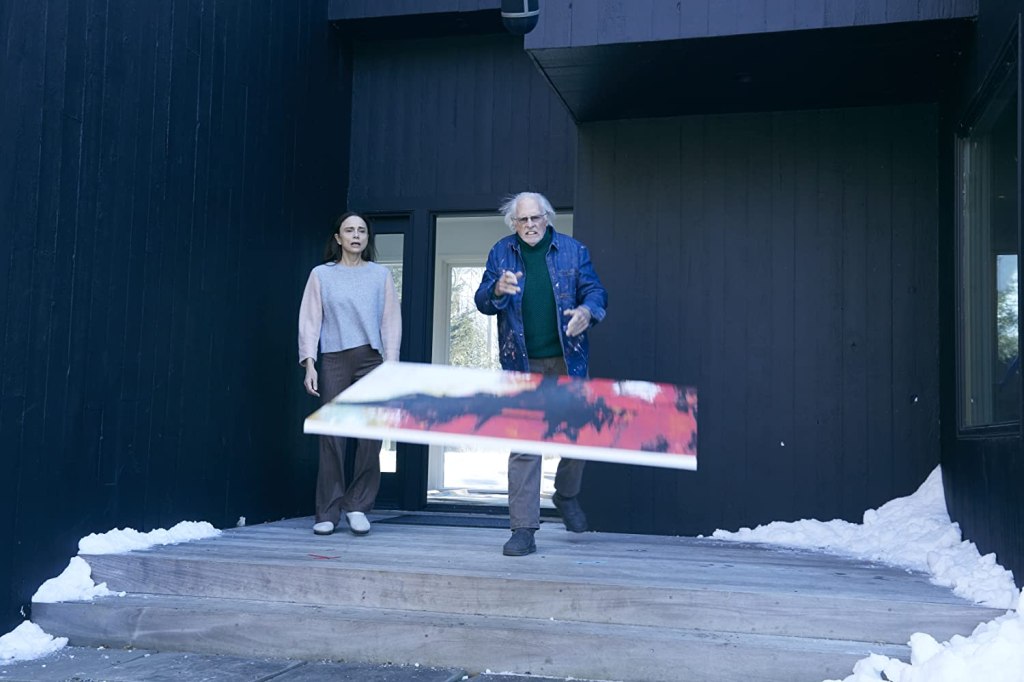
    Claire must navigate helping Richard prepare for his next showcase at a major New York art gallery while trying to reconnect him with his estranged daughter before his memory of her fades.

    Lena Olin carries the film with an erratic yet considered stoicism as the weight of her obligations sink her into emotional turmoil. Her Claire is passionate about her husband and outwardly plays the doting spouse only to find herself taking refuge away from Richard in the city or in conversation with anyone other than her husband.

    It’s a similar, yet less showy performance than Glenn Close gave in her Academy Award-nominated turn in 2017’s The Wife, a film Dolby’s feature evokes but doesn’t attempt to copy.

    As is probably expected of the role, it’s hard not to pay full attention to Bruce Dern’s Richard every time he appears on screen. Richard is by far the most demonstrative character, quickly losing all worries of social decorum or shame.

    Much of The Artist’s Wife is tampered down with subtly and nuance and Dern never feels constrained in a role that acts as a release valve for all the tension Doyle builds into his screenplay. It’s a performance that isn’t bombastic beyond what appears on the page, but Dern pushes the envelope when required in a turn that might be his best since his 2013 Oscar nominated effort in Alexander Payne’s Nebraska.

    Juliet Rylance – stepdaughter of Oscar-winner Mark Rylance – plays the emotionally distant, yet warm-hearted Angela with a proper sense of caution.

    A film about painters has a sense of responsibility to be visually cinematic and Dolby’s feature does an effective job of steering the viewers through his narrative with a largely picturesque landscape captured effectively in wide shots that evoke some of Richard and Claire’s work without being specific.

    Ryan Earl Parker’s camerawork is unobtrusive, yet less memorable in scenes with heavy dialogue as the focus shifts to the narrative drama at hand and less of the subtlety of the film’s overall themes of isolation and an artist’s drive to create.

    The biggest letdown of The Artist’s Wife is an over-used, excessively melodramatic score from composer Jeff Grace that just screams “feel sad here” as an audible means to express melancholy. Luckily, Dolby pulls back on the music cues as the narrative unfolds and the film becomes less cliché, but to a large extent, the damage has already been done to reduce the overall quality of the cinematic experience.

    Though it boasts Oscar nominees in both Olin (Enemies, A Love Story) and Dern (Coming Home, Nebraska), there doesn’t seem to be any awards season potential for The Artist’s Wife beyond a single nod at the Film Independent Spirit Awards in an acting or screenwriting category.

    A well-intentioned film that has some genuine, quality moments, The Artist’s Wife languishes in melodrama a bit too much to justify seeking it out in its limited theatrical run or opening weekend rental on video-on-demand. When it eventually finds its way to a streaming service, that may finally be the time for casual cinephiles to check out Olin and Dern’s solid performances.

  • Irresistible: Big spin in a small town

    Irresistible: Big spin in a small town

    Politics is broken.

    It’s the thesis statement that lies under the surface of former Daily Show host turned filmmaker Jon Stewart’s latest feature and one that evokes a gentler version of the outrage he displayed in a viral moment on CNN’s Crossfire in 2004, raking pundits Tucker Carlson and Paul Begala over the coals for hyper-partisanship ruining American democracy in his opinion.

    Written in the aftermath of the 2016 U.S. presidential election, the dramatic satire Irresistible finds Stewart opining against the relentless combativeness of two-party partisan politics and influence of money over the democratic process.

    To make his point, Stewart sets a pair of high-dollar strategists – Democrat hype man Greg Zimmer played by Steve Carell and Republican spin specialist Faith Brewster played by Rose Byrne – on a small, rural town in Wisconsin. Backing different candidates in a mayoral race, the film devolves into a political arms race to outspend the opponent and win by any cost.

    As both screenwriter and director, Stewart places his voice silently at the center of the frame, making careful observers keenly aware of the issues he takes with political campaigns. This is especially true in a second viewing of Irresistible, where the curtains are completely drawn back and audiences can see the wizard hiding in the corner.

    To the extent that it makes Stewart’s argument, Irresistible works in large part due to the talented ensemble cast led by Stewart’s former Daily Show colleague and Oscar-nominated actor Carell as Gary, a DC insider who orders “a Bud and a burger” every night for dinner at the local tavern because it’s what he believes people from Wisconsin would order and not what he actually wants.

    There are flashes of idealism in Carell’s performance as Gary has moments of genuine, heartfelt desire to see his candidate win the mayoral race in the hopes of bringing a divided America together, but this is often outweighed by a dogged pursuit of a win at any cost. Carell’s excitability in the performance is moderate, yet significant like a dog feeling compelled to chase a car on instinct alone.

    Byrne, on the other hand, gives Faith a very knowing charm as a no-hesitation political assassin willing to do whatever it takes to gain the upper hand in the political process. It’s clear Stewart finds fault in both sides of the aisle but expresses clear disdain for underhanded tactics from conservatives more so than from liberals in Byrne’s decidedly villainous performance.

    Veteran character actor Chris Cooper gets more screen time here than he probably has in much of the last seven or eight years, leaving an immeasurable mark on the film with a subtle humility and earnestness as Jack, a retire Marine colonel who Gary recruits to run as the Democratic challenger to a popular Republican mayor.

    The townspeople have a basic, almost nondescript mannerism that Irresistible essentially floats over them which plays into the notion that politicians and their consultants don’t actually listen to their constituents.

    As much as Irresistible could become a Republican hit piece, Stewart’s screenplay uses both sides to show the flaws in national politics in a small, digestible scale. The writing is exceptionally biting, but not every point lands cleanly as Stewart’s direction doesn’t match the level of the dialogue.

    Irresistible needed a more seasoned hand behind the director’s chair to navigate the tricky balance between satire and drama, like Barry Levinson was able to do with David Mamet’s screenplay for the similar Wag The Dog from 1997. 

    There are weird tonal shifts in the direction, where Stewart will repeat parts of a scene for comedic effect and then follow a character’s back through another scene. The lack of directorial style feels more like Stewart watched a movie the day before shooting each particular sequence and tried to emulate whatever directorial style he watched rather than developing his own.

    A moderate success that could have been strikingly biting in its critique, Irresistible drags on a little more than a film with a 100-minute running time probably should. Now available for home rental at a reasonable price, Stewart’s second feature could be worth the time for viewers tired of hyper-partisan politics.

  • Boys State: For the people, by the people

    Boys State: For the people, by the people

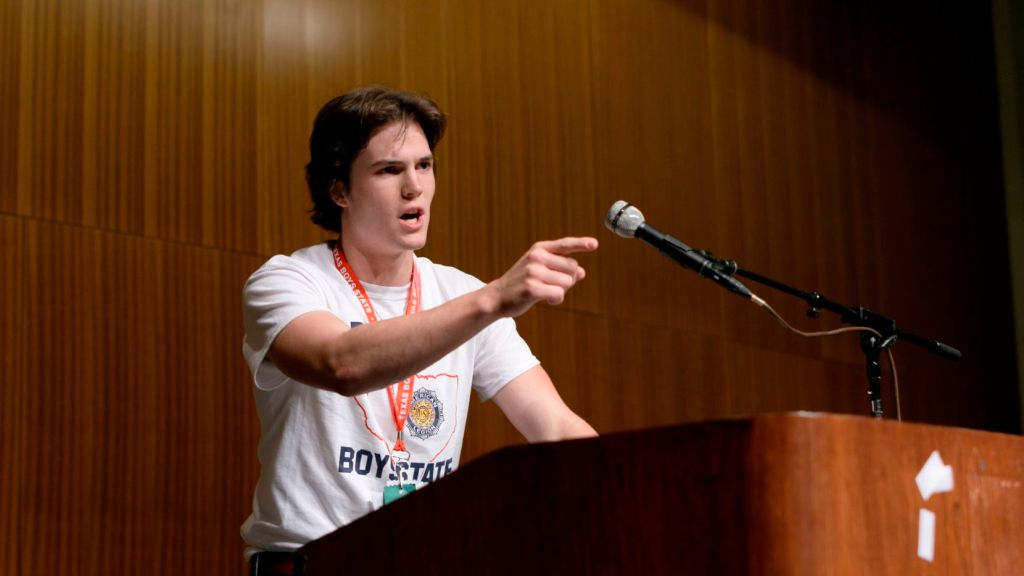
    Over 1,200 high school boys gather annually in Austin to participate in a seven-day democratic experiment designed to test their mettle.

    A mock government program put on nationwide by the American Legion, Boys State challenges these young men to form their own political parties, hold primaries and eventually a statewide race for a variety of offices culminating in a gubernatorial election.

    Each iteration of this lesson in political gamesmanship masquerading as a crash course in civics is unique, although the Sundance Film Festival award winning documentary “Boys State” from co-directors Amanda McBaine and Jesse Moss provides an exceptionally compelling look inside the minds of future American leadership with their nearly two-hour feature on the 2018 Texas Boys State program.

    McBaine and Moss perfectly set the stage from the outset, highlighting major political leaders including President Bill Clinton, Supreme Court Justice Samuel Alito and commentator Rush Limbaugh as alumni of the program.

    “Boys State” is intended to feel like a glimpse into the crystal ball of America’s political future and it’s often revealing to watch aspiring young men hoping to make a difference in their world see what it takes to be successful – balancing bipartisanship with charisma, ideals with the relentless pursuit of a win.

    At the film’s core, four major participants emerge representing the elected leadership of both the Federalist and Nationalist political parties created for the program and it’s through these stories that audiences are able to gain an understanding of how the next generation of political leaders will be molded and come to shape America’s identity.

    For as much as the film gets in close with the participants and has the feeling of a raw political campaign, “Boys State” is strikingly cinematic with its camerawork, lingering on intense closeups as events unfold in real time and giving the film a scripted fictional vibe that could have some viewers doubting the authenticity of the scenes.

    The choice to have the major characters interviewed on a long loveseat works wonders in the film’s latter half as the boys become more comfortable and honest in front of the camera, often sprawling out like relaxed chameleons letting audiences in on their secrets as if it were an episode of television reality game show “Survivor.”

    Somewhat surprisingly, a film entitled “Boys State” that follows young men creating their own political agendas and campaigns fails to truly address the masculinity of their decision-making process, especially on the issue of abortion. 

    One candidate’s revelation about hiding their pro-choice beliefs to try and garner favor with potential votes is especially compelling as the Boys State program begins to escalate and normalize “dirty tricks” politics.

    As filmmakers, the directors attempt to portray this neutrally but it’s often with a tinge of sadness for the lack of bipartisanship and morality.

    It’s best summed up by one of the participants, who comments that a rival is a “fantastic politician, but I don’t think that a fantastic politician is a compliment either.”

    Like the program itself, “Boys State” makes ardent attempts to be non-partisan in its approach and allow events to unfold naturally, but the subjects it chooses inherently give the feature a liberal tint that conservatives may latch onto to dismiss the film as a whole.

    The star of “Boys State” is unassuming, mild-mannered Steven Garza, born in Mission, Texas to an immigrant mother before moving to Houston. Shown early in the film wearing a “Beto for Senate” t-shirt and shyly introducing himself to other participants, his rise to a potential run for governor is the single most compelling storyline within “Boys State” and riveting to watch.

    At times, McBaine and Moss’s love for Garza overwhelms the larger narrative of the film and tilts the political balance a tad too far, but by that point, viewers are so invested in the outcome of a mock race that happened two years ago, it hardly matters.

    With the humor of “Election” and the heart of “Boyhood,” this verité film is an enthralling look at American politics through the lens of those who will come to shape it for the next 40-50 years. Without question the best documentary to be released thus far in 2020, “Boys State” proves that quality storytelling can be crafted in the genre with substance and soul, making it a must watch on AppleTV.

  • Tread: Mayhem in a small town

    Tread: Mayhem in a small town

    Granby, Colorado feels like the sort of small town you’d find in every state across America.

    Industrious, hardworking, the kind of place where neighbors know all the scuttlebutt within a few hours and there’s hardly a stranger because everyone is on a first name basis.

    The fact that the events depicted in director Paul Solet’s gripping documentary “Tread” could plausibly happen in any small town are frightening, but like a train wreck you can’t look away from, what happened on June 4, 2004 is a mesmerizing display of anarchic chaos viewers will want to see more of just to figure out how one man pulled it off.

    At the center of the documentary is Marvin Heemeyer, an Air Force veteran more than capable with a welding iron and the owner of Granby’s muffler shop, which he purchased at auction for a remarkably low sum of money only to find himself in legal battle with government officials and a rival business owner over water and sewer connections, property easements and fines.

    It’s clear from the outset where “Tread” is heading; the opening preamble makes clear Heemeyer’s destructive intent with a fortified bulldozer causing chaos and massive property damage throughout the town.

    But Solet also reveals how things escalated to that point and Heemeyer’s amazement that he could keep his plot a secret in a notoriously nosy small town.

    A series of audio tapes recorded by Heemeyer give the audience a unique perspective into the changing mentality the former military serviceman had as he felt gradually separated from the outside world by political actors out to get him.

    Solet perfectly weaves Heemeyer into the documentary’s narrative, overlaying his prerecorded dialogue over reenactments of key moments to give context and allow viewers inside the mind of the man silently being portrayed on screen.

    Heemeyer is portrayed by actor Robert Fleet, usually from behind and framed like a specter haunting the film and foreshadowing the carnage of steel to come. The reenactments are largely silent and brilliantly captured by cinematographer Zoran Popovic with a dynamic visual style that bursts off the screen.

    Much of the film’s first act centers around city politics as Heemeyer does battle with Granby water commissioners and the town council over his muffler shop and the adjacent land slated to be a concrete batch plant.

    For a while, “Tread” makes a compelling case to draw viewers to Heemeyer’s side as the audio tapes explain how his rights were being infringed upon by malicious government officials working in conjunction with the concrete plant.

    But though Solet never truly discusses mental illness as a potential reason for Heemeyer’s subsequent actions, the documentary morphs over its second and third act to a more bombastic, dramatic style in keeping with Heemeyer’s increasingly paranoid ramblings.

    Reenactments of the buildup are solid throughout, but it’s in the third act as Heemeyer starts the engine and begins his rampage that Solet’s best directorial work really shines. 

    Unable to rely on archival news footage or police cameras, “Tread” designs action sequences that replicate the creation of Heemeyer’s destructive bulldozer and its initial assault on property across the small Colorado town.

    The film debuted at the 2019 South by Southwest Film Festival   before a limited theatrical run in February 2020. “Tread” launched on Netflix this past week and is certain to be among the streaming service’s more popular documentary titles, seamlessly fitting in the same mold of hit docuseries like “Tiger King” and “Making A Murderer” that follow eccentric men, government conspiracy theories and outlandishly true stories to compel audiences to watch every second over and over again.

    An alluring look at a man past his breaking point, small town politics and bizarre, unforgettable crime, “Tread” is a mesmerizing 90-minute thrill ride that pushes the limits of conventional documentary filmmaking – often crossing the line to traditional fictional narrative – in order to keep viewers on the edge of their seats for the mayhem they know is inevitable.

  • Radioactive: Experimentation in biopic film

    Radioactive: Experimentation in biopic film

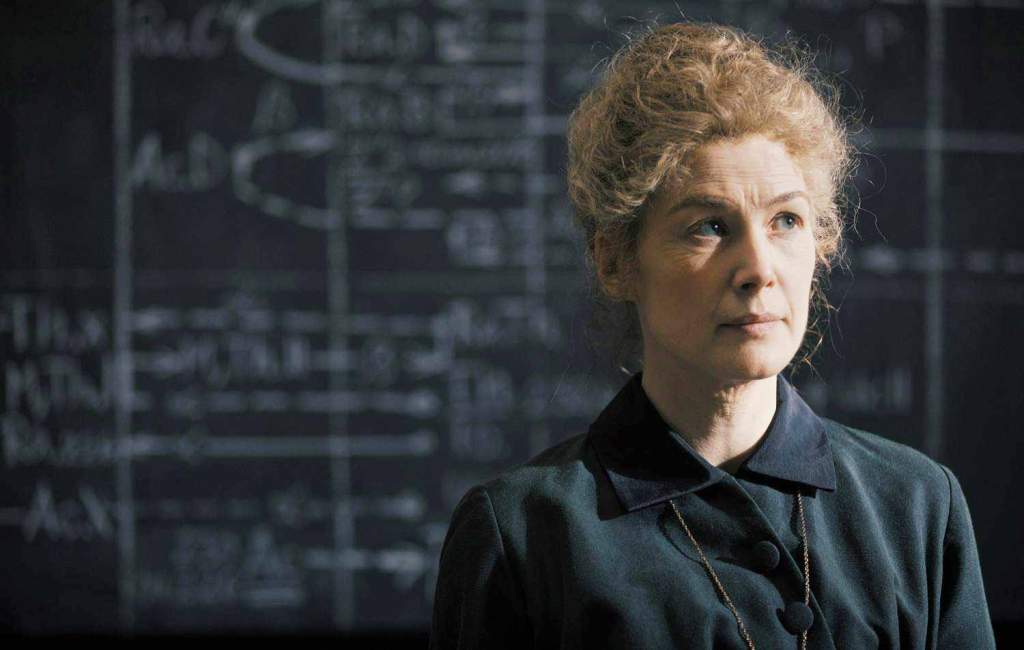
    It’s unclear exactly why an avant-garde, cinematic biopic of the adult life of famed scientist Marie Curie was needed, but such is the world of film in 2020.

    Opting not for the sidesplitting, yet emotional dramedy that powered 2016’s “Hidden Figures,” the demure albeit strange film “Radioactive” from director Marjane Satrapi presents Curie in a traditional light before mixing her journey to multiple Nobel Prizes with flashforward dream states to the conflicted impact of her work.

    The result is a tonal mismatch of middling standards that wastes a strong performance from its lead actress and the bold, audacious cinematography that will likely keep some viewers watching the largely frustrating film until its conclusion.

    Based on a graphic novel on the life of Madame Curie, “Radioactive” primarily focuses on the scientific work of the first female professor at the Sorbonne over a 20-year-period from the 1890s through the 1910s as she digs into the possibility of new elements, discovering their instability and becoming a French sensation in more ways than one.

    As Marie, Oscar nominee Rosamund Pike gives a measured, yet powerful performance that comes across both as cold and abrupt yet endearing in a way that viewers want to rally behind her Marie.

    The singularity of her work often overwhelms the performances of others sharing the screen with her, which is probably to be intended in most circumstances but plays a tricky part in the chemistry between Pike’s Marie and Sam Riley’s Pierre.

    It’s easy to tell that the standoffishness of their pairing is a decided part of Pike’s approach to the role, but the clinical nature only works for her performance as Riley is more stiff than stoic. In smaller moments when viewers are seeing Pierre through Marie’s eyes, there is a small amount of warmth to be felt towards Riley’s performance, but for the most part, Pike feels as if she’s acting to thin air around her.

    Anya Taylor-Joy – beyond exceptional in “Emma” earlier this year – does well in a lackluster smaller role as Curie’s elder daughter Irène, adopting Pike’s mannerisms and demeanor subtly, but with intention. The remainder of the supporting cast is as unexceptional as Satrapi treats them in the film.

    “Radioactive” spends more time on the science the Curies discovered together than their personal romance, although how the film approaches Pierre’s impact on Marie after his death is perhaps the eccentricity of the screenplay that works the best and provides for the most interesting moments in the final act.

    Screenwriter Jack Thorne plays with the narrative structure by throwing audiences up and down the historical timeline at will, opening with Marie’s final moments and tossing in sequences of her youth in Poland as well as the consequences of her discoveries long after her death seemingly at random.

    To find viewers wandering through the remnants of Chernobyl is a puzzling detour that challenges the notion of Marie’s credibility as the heroine of her own tale, with Thorne almost positing her as anti-hero or incapable of seeing the downside of her discovery. “Radioactive” fails to reckon with these charges as much as it probably needs to for Thorne’s argument to be successful with audiences.

    There is an impressive visual style to “Radioactive” that’s perhaps a bit too heavy-handed with darkness and shadows in scenes of deep black, but the cinematography of Anthony Dod Mantle has a kinetic edge that reflects Satrapi’s overall vision for her film. 

    The film’s strengths – an exceptional Pike, engaging and dynamic visuals and a haunting score – keep “Radioactive” from being a waste of time, although Satrapi’s latest feature isn’t really worth seeking out on Amazon Prime by anyone other than the most curious of ardent cinephiles.

  • Palm Springs: Hot film at the right time

    Palm Springs: Hot film at the right time

    It’s often said that a movie can feel of the moment, that it came out at exactly the right place and time for audiences to identify with and feel heard.

    “Palm Springs,” a small romantic comedy that debuted at this year’s Sundance Film Festival when things were normal, has a very “of the moment” vibe that no one – not even first-time director Max Barbakow or screenwriter Andy Siara – could have seen coming.

    At its core, “Palm Springs” is a film about isolation and how we deal with feelings of empty aloneness even as people seemingly float around us.

    In the “new normal” of social distancing and mask wearing for self-protection and the safety of those around us – especially in the heat of summer – there’s an interpersonal disconnect to life in 2020 that “Palm Springs” intimately captures with its quirky take on a familiar narrative.

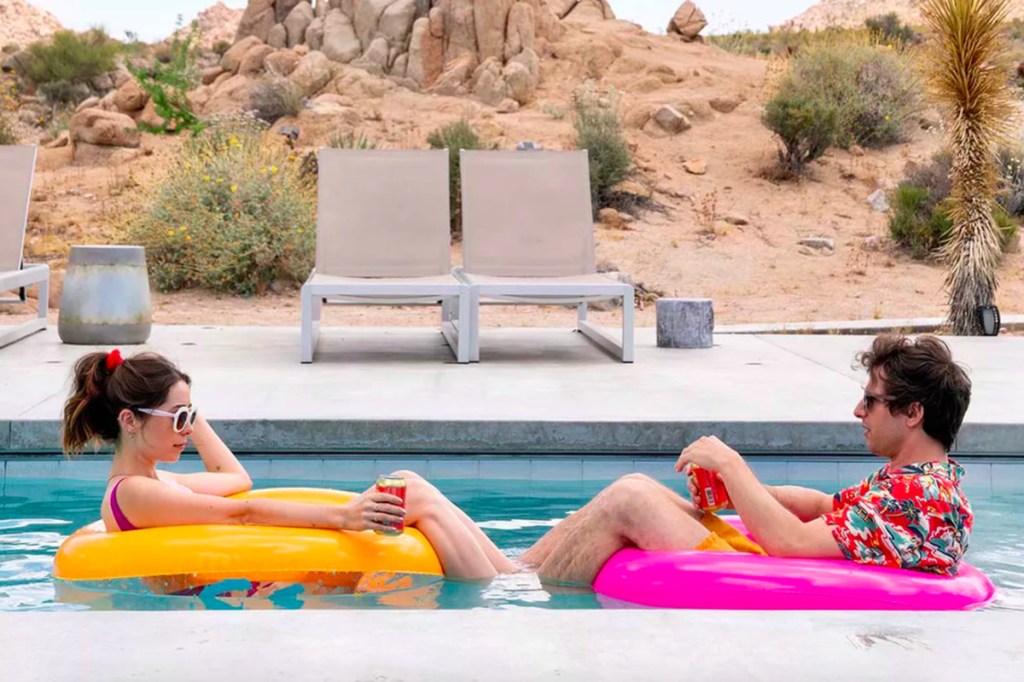
    The film follows Nyles, a carefree loner stuck at another wedding with his cheating girlfriend, when he strikes up a friendship with maid-of-honor Sarah. The next morning, things become complicated when the new friends cannot escape each other, the desert wedding venue or themselves.

    “Saturday Night Live” alum Andy Samberg is an affable yet quirky choice for Nyles, shining here in more serious comedic fodder than audiences may be used to seeing from him in comedic film work. The general sense of apathy he brings to the character feels authentic to the plot rather than a forced device to create conflict and Samberg is genuinely entertaining throughout the film even as the tone changes at a whim.

    His laissez-faire attitude also serves as a perfect foil for the more aggressive and standoffish Sarah, played by “How I Met Your Mother” actress Cristin Milioti.

    While it’s clear that Samberg is the main focus of “Palm Springs,” Milioti frequently steals scenes with her expressive eyes and wry attitude that she flings into snarky lines of dialogue as Sarah challenges and mystifies Nyles.

    The hate-to-like-to-love path romantic comedies often take doesn’t hinder the chemistry between Samberg and Milioti as both performers are so in the moment that it pulls the audience in from the outlandishness of the circumstances Nyles and Sarah are in.

    Oscar winner and veteran character actor J.K. Simmons gets to flex his comedic and dramatic chops in the film’s primary supporting role as most of the ensemble cast feel like bystanders in Nyles’ and Sarah’s story rather than a true part of the narrative. His Roy leans into the no-nonsense attitude that is prevalent in a great Simmons performance while also providing much needed gravitas throughout and some key emotional depth.

    Instead of rebooting the plot of one of Hollywood’s most beloved rom-coms, Barbakow and Siara peel elements of “Fear and Loathing in Las Vegas” to give “Palm Springs” a hot yellow hue while rearranging the timeline in order to give their own perspective on the genre without becoming a rip-off of a classic.

    The film moves at a pretty rapid pace, infusing character development within each scene as moments of calm among the chaos. It’s a brisk 90-minute adventure that feels right for keeping the plot from veering too wildly off course, as if it were a singular episode of a longer series audiences were dropped into the middle of.

    It’s important that first-time viewers go into “Palm Springs” with as little information as possible, even avoiding trailers if at all possible as the film’s unique hook is better without prior knowledge. Doing this increases the boldness of Siara’s screenplay and the genuine chemistry between Samberg and Milioti as unlikely partners dealing with the plot’s twists and turns.

    One of the hottest films to come out of the 2020 Sundance Film Festival, “Palm Springs” was acquired by Hulu for a record-breaking $17 million, the highest distribution deal in the history of the festival.

    “Palm Springs” has the comedic fun of an irreverent Judd Apatow movie with a smartly penned script, crisp direction and a wildly entertaining narrative that makes it a must-see home viewing on Hulu.

  • Shirley: The horror of everyday life

    Shirley: The horror of everyday life

    Movie goers are often frightened by things that aren’t real – clowns with red balloons living in the sewers, killers that strike in dreams with a bladed claw, vampires, mummies and witches.

    But in a simpler, yet somehow more complex way, it’s the things that are plausibly realistic and feel authentic to our own lives that prove to be the greater terror.

    While major studios spend large stacks of cash on increasingly bombastic thrills and chills, smaller independent filmmakers find an unsettling world in more intimate settings where tension builds in close quarters and psychologically rather than physically.

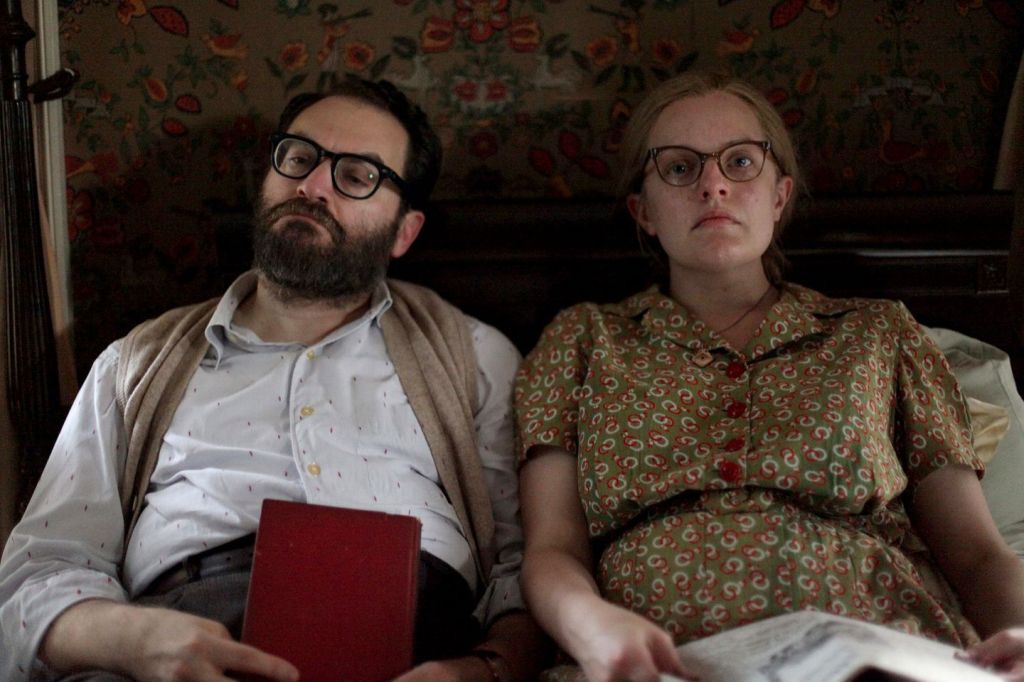
    Based loosely on the life of Gothic novelist Shirley Jackson, director Josephine Decker’s latest film peers into the 1950s world of Jackson and her husband, a prominent college professor, as they play host to a recently married young couple. As Shirley and Rose grow closer, the newlywed becomes entranced in Shirley’s writing methods in a film that melds fantasy and reality.

    Elisabeth Moss plays Shirley with an erratic blend of manic episodes, lucid calm and measured maliciousness that provides the entire film with a center point on which to twist and turn its allegorical, fantastical tale. 

    Even in moments when Shirley cannot bring herself to move an inch, Moss is mesmerizing to behold on screen, captivating the audience into a trance with her distant, glossy stare into nothing.

    It’s such a multifaceted, layered performance that it almost feels as if Moss is revealing Shirley to viewers like peeling an onion.

    Newcomer Odessa Young is equally as entrancing with an ingénue performance as Rose that slowly turns towards a maddening cynicism as her naivety to the world around her is stripped away.

    As Shirley begins to envision Rose as Paula, the protagonist in the novel she’s writing, Young steps into that role as well, blurring the lines between the reality of the film and an imagined desperation that led to Paula’s death. 

    Young is able to capture both Rose and Paula with subtle flourishes that might indicate to the viewer which of the two audiences are seeing, but the differences Young plays with are so minute that viewers’ reality becomes warped in scenes that become increasingly melancholic psychological warfare played on the characters and the audience themselves.

    The men of “Shirley” take a relative backseat to Shirley and Rose’s ever-changing friendship, although veteran character actor Michael Stuhlbarg turns in a wonderfully devious performance as Shirley’s calculating husband Stanley.

    Decker and screenwriter Sarah Gubbins adapt Susan Scarf Merrell’s novel “Shirley: A Novel” with the same tension and dread that one might find in Jackson’s writing.

    Expertly written with memorable, dry dialogue, it’s a treatise on rebellion from traditional gender roles for women at the time and nihilism on a woman’s lack of standing in regard to her spouse and her peers.

    Moss and Young dance a delicate balance between all the overt and subversive themes that plague both Shirley and Rose which draw them together as unlikely kin, but it’s never aggressive or over-the-top. The terror comes from the inevitability of events and the horrors of everyday life and both actresses ease into the tension naturally that gives “Shirley” an authentic feel despite the film’s largely fictionalized story.

    “Shirley” is just as eccentric and temperamental a film as its title character, fervently mixing its tones, plot structure and character development to elude, captivate and intrigue its audience.

    A horror tragedy where real life holds the terror rather than jump scares, “Shirley” commands attention from the first frame with its subtle, haunting demeanor.

    Decker and cinematographer Sturla Brandth Grøvlen keep the film increasingly askew visually by orienting the frame just left or right of center on the actor – thus shattering the rule of thirds – or twisting the camera as if the viewer were looking at the action with a tilted head. This also extends to the wide and varied use of closeups, which never feel cohesive or identical from use to use and often feel a bit too personal, just as Shirley does with her houseguests.

    Although loosened qualifications due to the coronavirus pandemic does make it eligible for Oscar consideration, “Shirley” will likely be too avant-garde for Academy voters and just in the right wheelhouse for critics’ groups and the Film Independent Spirit Awards, where Moss will be a frontrunner for Best Actress among Picture, writing and directorial nominations for the film as a whole.

    An audacious and captivating independent arthouse mystery drama, “Shirley” won’t sit well with many potential audiences but for those wanting more of Moss’ terrific work in genre films like “The Invisible Man” or “Her Smell” will find “Shirley” an alluring, thrillingly horrible feature they just can’t turn away from.

  • The Half of It: Dig deeper into Netflix’s vault

    The Half of It: Dig deeper into Netflix’s vault

    Two out of every three Netflix Original films aren’t worth the price of admission.

    They’re the bargain bin, direct-to-DVD level fodder usually starring David Spade or that one girl who used to be on that one television show back in the day. You don’t remember her name, but it doesn’t really matter.

    With the coronavirus pandemic keeping movie theaters closed, it’s prime ground for viewers to flock to streaming services like Netflix in spades. But how do you decipher the good from the bad while thumbing through titles at random based on algorithms and past viewing history?

    Netflix hopes audiences will use their formulas to find movies like “The Lovebirds,” a subpar comedy starring Kumail Nanjiani and Issa Rae that the streamer bought from Paramount Pictures after COVID-19 made its way across the United States.

    With endless suggestions of “You Might Also Like” or “Recommended for You,” it’s a film with minority stars with name appeal that the service wants to draw attention to.

    Hidden somewhere in the middle, however, is a smaller independent film, “The Half of It,” dropped as an “original” about a month ago with no word of mouth and without the technical profile afforded to bigger names in lesser films.

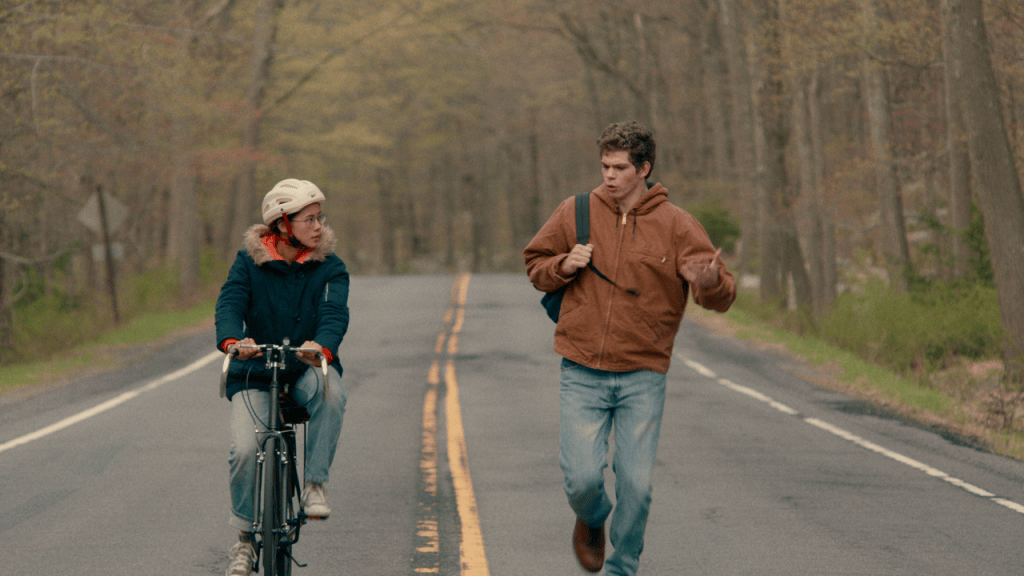
    Writer/director Alice Wu’s romantic comedy based loosely around the classic tale of “Cyrano de Bergerac,” “The Half of It” follows Ellie, a young Asian-American girl out of place in rural Washington convinced by a jock to write a love letter to his crush, only to find herself falling for the crush as well.

    It’s a film that quotes Oscar Wilde and opens with an animated sequence recreating an Ancient Greek myth about the separation of the soul, longing to find your other half and that feeling when the two halves meet. Sophisticated in its language but relatable at its core, “The Half of It” is an earnest, well-made romantic dramedy released at the perfect time for those looking for simple goodness.

    Star of television’s “Nancy Drew,” newcomer Leah Lewis blends a wry humor and kind soul with the sort of hopeless romanticism that people feel but never truly express. She’s able to express Ellie’s isolation as an outsider from an emotional level but in a way that feels honest for a character naturally reserved and apprehensive about her perception among her peers.

    Daniel Diemer gives Paul an endearing naïveté that makes the typical jock character feel richer and less of a simpleton stereotype. His Paul wears his heart on his sleeve but has no idea how to show its and Diemer plays this well with facial expressions that make his longing seem charming and his pleading for help romantic rather than desperate.

    Alexxis Lemire does a wonderful job playing Aster with a performance typical of the ideal “manic pixie dream girl” trope of certain romantic comedies, the love interest audiences can relate to and adore from afar without ever truly getting to know. Lemire is enthusiastically approachable while working with Wu to create a character that hides her true feelings and intentions behind a candy-coated wall of innocence.

    Wu’s adoration for these three characters envelopes the entirety of “The Half of It,” from her nuanced screenplay to the way in which she directs the film and positions the audiences firmly in Ellie’s corner with lingering feelings for those she comes into contact with.

    The film’s romances are not about lusting but rather innocent longing, which gives “The Half of It” a wholesome feel without becoming overly sappy. As Ellie suggests during an early narration, this isn’t a love story or “at least one where anyone gets what they want.”

    There’s a sense of authenticity to this sort of storytelling, an honesty that comes out in the screenplay and the performances that make “The Half of It” feel earnest and plausible in viewers’ own lives even if the actual events would never occur to them or someone they know.

    Though it wanders off at times with superfluous side plots, the core triangle of pseudo-friendship and romance-at-a-distance between Ellie, Paul and Aster are so compelling that makes “The Half of It” an elegant, yet simple and sincere independent dramedy well worth checking out on Netflix.

  • Emma: Comedic matters of the heart

    Emma: Comedic matters of the heart

    Smaller films – like independent features or period dramas – usually require word of mouth to jump start their box office success and get in front of as many eyes as possible.

    Autumn de Wilde made her feature directorial debut in February with a modest period comedy that was about to take off commercially after early critical success.

    Then the novel coronavirus pandemic forced movie theaters to close and her film, “Emma,” went from playing across the country to $20 on-demand streaming within a matter of two weeks.

    Films like “Emma” that were in this flux point are now beginning to see wider audiences with cheaper online rental prices as well as Redbox, and there’s simply not a better film from a pack that includes “The Invisible Man,” “The Call of the Wild” and “The Way Back” of these pandemic casualties for new viewers to take a chance on than de Wilde’s audaciously vibrant and fun adaptation.

    Based on the classic novel of the same name by Jane Austen, “Emma” follows the titular character as she meddles in the romantic lives of those around her in a small English village in the name of playing “matchmaker” only to become drawn into the world of romance herself. 

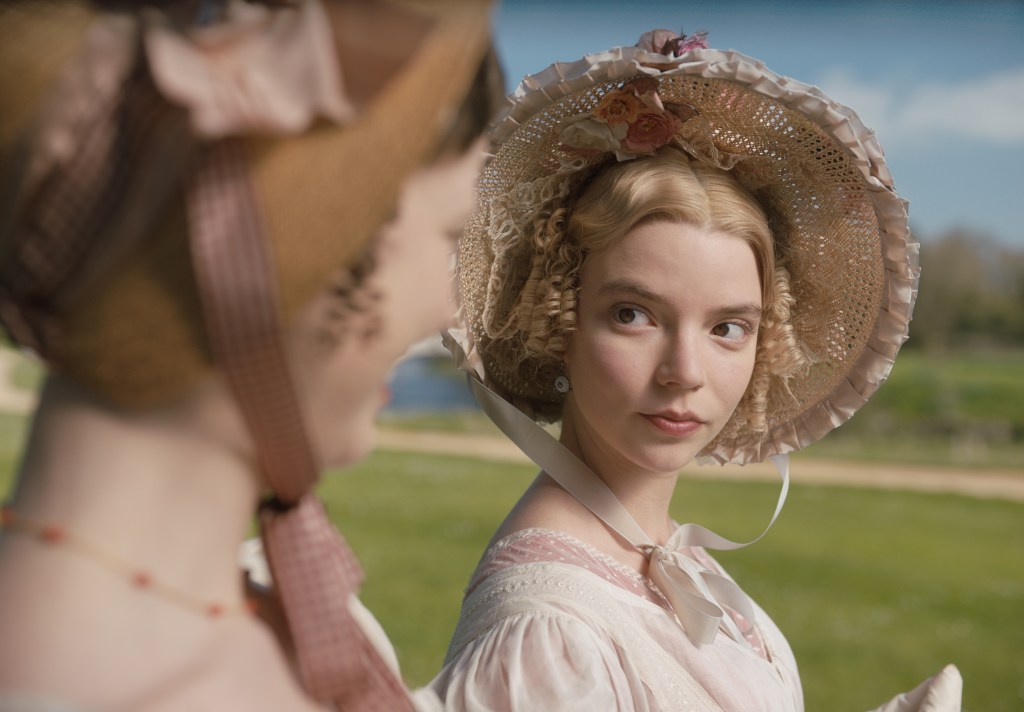
    Anya Taylor-Joy is transcendent as Emma, relishing the opportunity to play with Austen’s dialogue in sharp quips or overly polite platitudes.

    Her choices are deliberate and forceful but done with a grace that fits the time period and still represents the modern sensibilities that de Wilde and screenwriter Eleanor Catton layer into the structure of the adaptation.

    But where her effort truly shines is in her eyes, which captivate and draw audiences into Emma’s mindset as de Wilde keeps the camera lingering on Taylor-Joy despite the action of a scene playing out elsewhere, so viewers are privy to Emma’s inner monologue.

    With the flicker of a lash or a turn of the ball, Taylor-Joy expresses so much with her eyes in cast aside glances, eye rolls and longing looks that de Wilde frames beautifully in a variety of portrait angles.

    Mia Goth takes admiration and glee to considerable heights before bringing Emma’s closest friend Harriet into her own woman. Goth does an exceptional job of subtly mimicking Taylor-Joy’s physical mannerisms without overly calling attention to how much Harriet longs to be Emma, a delicate balance that never feels over the line. 

    Bill Nighy is wonderful as always as Emma’s father Mr. Woodcock, infusing his character with a charming general unawareness of events around him, but with plenty of gravitas that cements the distinction other characters place on him and his ability to seemingly break out of his stupor to show off the great man Woodcock once was.

    The film’s terrific supporting cast provide plentiful color to the world of “Emma,” with Miranda Hart’s endearing annoyance as Miss Bates and Johnny Flynn’s lustful, bordering on duplicitous turn as town preacher Mr. Elton as standouts.

    “Emma” suffers early to fully orient viewers unfamiliar with the Austen novel in the world of Highbury, a small town in the English countryside whose residents each display unique eccentricities in rapid fire, almost whispered dialogue that may leave newcomers spinning.

    Once audiences find their place, however, the repartee and dynamic vision for the film create the perfect setting for fantastic period comedy.

    The picturesque setting and remarkable production design are well framed by cinematographer Christopher Blauvelt, who captures events either with a wide berth to give a sense of scale and grandeur or in tightly on characters faces and profiles, which offers a more artistic approach.

    Even if there weren’t a dearth of feature films eligible due to the novel coronavirus pandemic, “Emma” would still be a strong contender for Academy Award consideration for its vibrant, colorful production design by Kave Quinn and brilliantly textured, eye-popping costumes from Oscar winner Alexandra Byrne.

    Both critical elements of the film are beyond reproach from a technical level and yet give “Emma” a distinctly modern feel well in keeping with de Wilde’s vision for the film as a whole and Taylor-Joy’s magnetic performance that should still be on the minds of voters months from now.

    Fans of “Downton Abbey,” Jane Austen novels or the Oscar nominated period farce comedy “The Favourite” will find themselves giggling with pleasure at the dry witted, well crafted “Emma.” With a terrific directorial debut and a magnetic lead performance, it’s a must see at home watch for ardent cinephiles struggling to find something new on a streaming service.

  • The Rhythm Section: The inner soul of pain

    The Rhythm Section: The inner soul of pain

    Movie trailers can be a deceptive thing.

    They can make comedies seem side-splittingly funny even though they used all the good jokes in the ad. Horror flicks can seem scarier in two minutes of previews than 95 minutes of an actual feature.

    And in some cases, a wily editor can cut together a trailer that changes the genre and intent of a film altogether, misleading potential audiences to think they’re getting something that they’re not and tanking the long-term viability of a movie in search of getting viewers to buy tickets opening weekend.

    Pushed as a high-voltage action thriller with a dazzling, beautiful lead actress, “The Rhythm Section” is a slow-burn espionage drama about a woman’s search for revenge and redemption following unimaginable loss.

    This isn’t “witness the birth of an assassin” as the film’s tagline suggests.

    It’s “observe the rebirth of a victim who’s not dead yet.”

    Director Reed Morano’s feature follows Stephanie Patrick, a woman whose idyllic life shatters after the death of her entire family in a plane crash. When a journalist finds her prostituting and taking drugs to ease her pain, the information he reveals to her sets Stephanie on a collision course with the truth that the crash might not have been accidental.

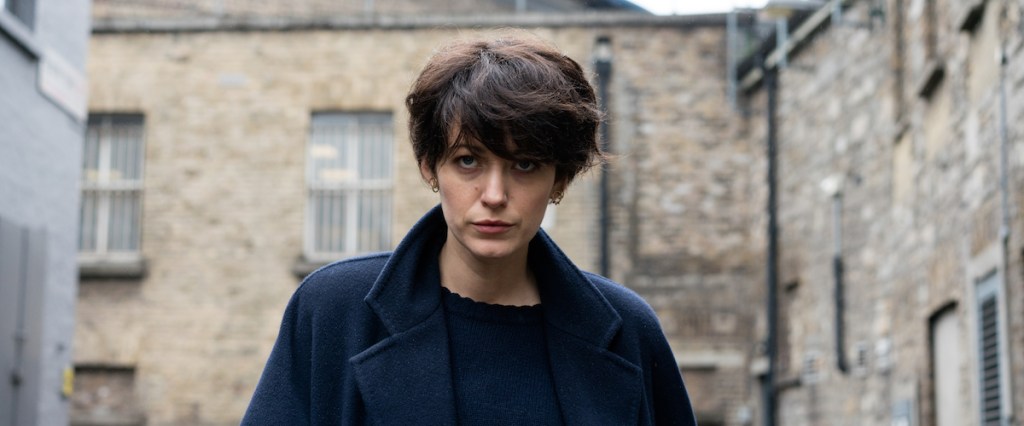
    Given a part with real depth, Blake Lively has the ability to be the best actress in any scene opposite any other performer. “The Rhythm Section” gives Lively the time and character background to immerse herself into a world of emotional frailty and loss covered by an almost impenetrable facade of numbed apathy.

    Her transformation as Stephanie from joyful to hopeless soul to would-be revenge assassin builds around the emotional burden Stephanie carries first, with flashbacks drawing audiences into her mental state and grounding the whole film with the weight of her sorrow.

    The why Stephanie acts the way she does and decides to go on her quest for revenge – an attempt to make herself somewhat whole again – is more important to “The Rhythm Section” than the how she actually carries out her missions. 

    Her soul ripping apart at the seams in high-stress moments brings about the sort of fractured humanity that blockbuster action films just won’t delve into and Lively excels in these moments as Stephanie’s humanity causes hesitations that become her biggest flaw in her new line of work and her biggest asset in regaining herself.

    Jude Law is solid, not spectacular as a former MI6 agent who takes Stephanie under his wing and points her safely into harm’s way, while Sterling K. Brown tries hard but feels out of sync with the rest of the film as an intelligence broker Stephanie seeks information from.

    Action scenes are not as big and bold as the film’s trailer – and likely a majority of its initial audience – projected. Like the rest of “The Rhythm Section,” violence is intimate and in close quarters to keep audiences firmly in Stephanie’s mind as events whirl around her. The camera rarely strays from her vantage point, which amps up the urgency of scenes.

    Visually, “The Rhythm Section” benefits from Oscar-nominated cinematographer Sean Bobbitt teaming up with Morano – a cinematographer in her own right – to progress the style of the film from chaotic, drug-induced mania to a colder, distant look as the camera work mirrors Stephanie’s evolution as a character. Bobbitt makes an arresting use of light and shadow to give the film a gritty texture uncommon to action films outside of the Jason Bourne franchise.

    “The Rhythm Section” was never going to work on the big screen, especially not with the pressure placed on its success by Paramount to recoup its $50 million budget by immediately placing the film in over 3,000 theaters during late January.

    An arthouse film released in a blockbuster world, “The Rhythm Section” fits the mold of theatrical adaptations of John le Carré novels like “Tinker Tailor Soldier Spy” and “A Most Wanted Man” or intimate spy thrillers like Steven Soderbergh’s underappreciated 2012 gem “Haywire.”

    With movie audiences staying at home and in constant need of something different, perhaps a fantastic leading effort from Lively, grounded drama and rich cinematography, there’s hardly a better time to take a chance on this well-made arthouse espionage thriller.