Category: Independent Film

Independent productions and independent cinema coverage. Secondary category; a movie can also be a New Releases review.

  • Dog: Unlikely compatriots

    Dog: Unlikely compatriots

    Trailers don’t always give the best impression of what a film actually is.

    Sometimes it’s because the studio is attempting to trick potential viewers by showing the best clips in order to maximize profits. Other times, it’s simply because they don’t have any actual clue what kind of movie they have on their hands.

    This is especially problematic for first-time directors, who have to focus on so many different filmmaking elements that they’re unable to home in on a specific tone or try to make their film one genre, when in reality it’s best served as something else entirely.

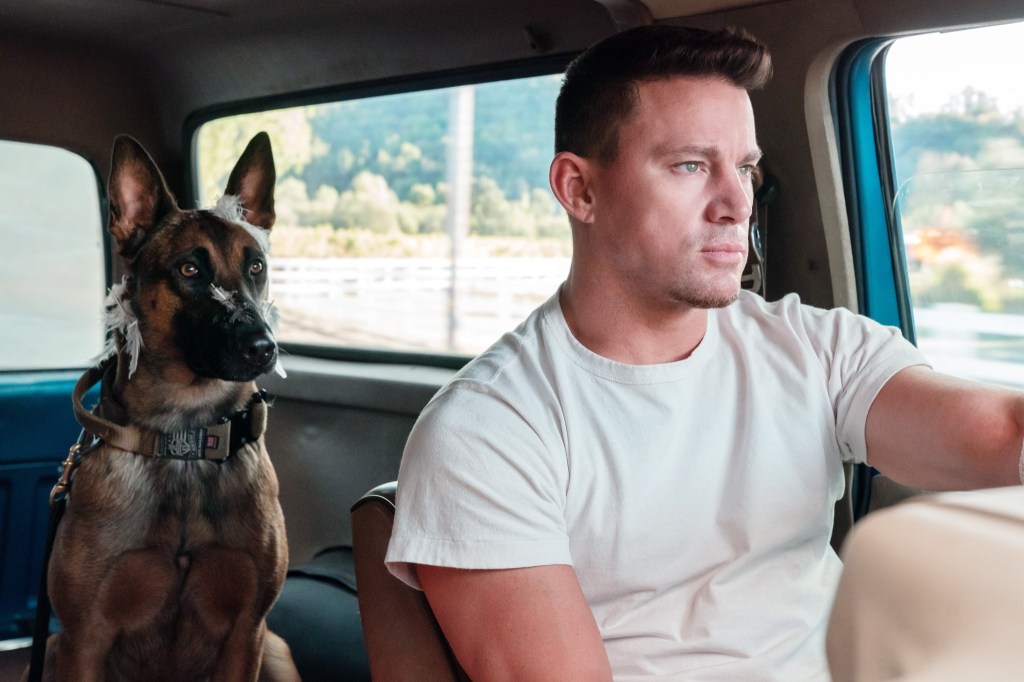
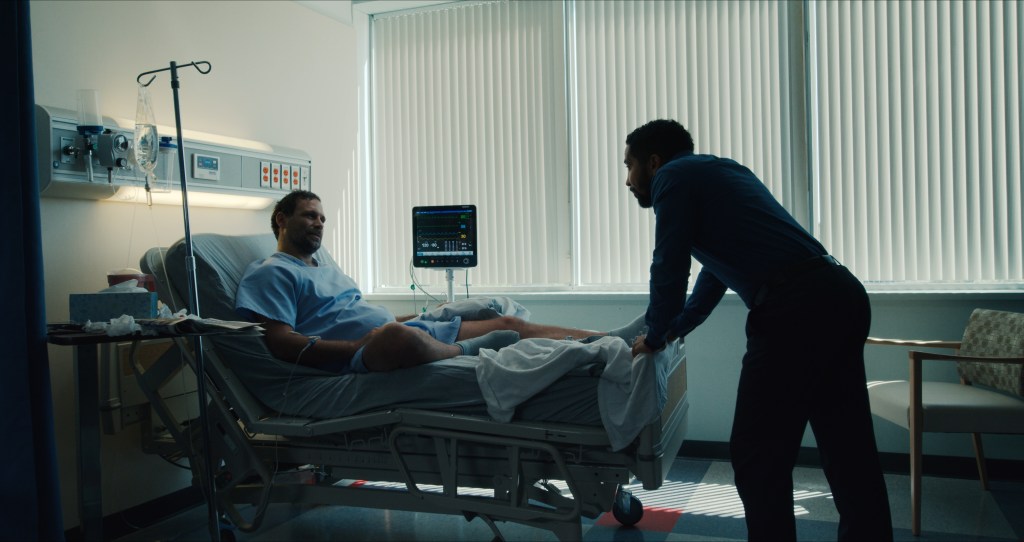
    Such is the case for Dog, the co-directorial debut of Reid Carolin and Channing Tatum, working off a screenplay written by Carolin and starring Tatum as a former Army Ranger with traumatic brain injuries who is tasked with bringing his fellow Ranger to the funeral of a comrade hundreds of miles away.

    The catch here is that Tatum’s partner for this road film is a Belgian Malinois and while Carolin and Tatum are hoping for laughter with a bit of character building, Dog is at heart a deeply introspective drama with the occasional lighthearted moment to bring levity to weighty concepts like post-traumatic stress disorder, suicide, and other mental health issues that plague returning military personnel.

    In many ways, it reminds of a PG-13 version of Richard Linklater’s heavy road drama Last Flag Flying where the bond between former soldiers comes together over a lengthy trip to a funeral. Dog is exceptionally emotional in key moments as viewers learn more about Tatum’s Jackson and his health issues.

    Tatum delivers some of his most considered dramatic work as Jackson and while it’s natural for him to ease into the more comedic physical elements of the screenplay, it’s clear from the outset that Tatum’s mind is more attuned to Jackson’s fragile emotional state. Tatum plays the part of a wounded soldier trying to toughen up beyond his means well and the conflict running through Jackson’s mind in the more somber moments of the film wear on Tatum’s face in a way that pulls the audience into his consciousness.

    It’s tricky to pull off a two-hander film like this when one of the main protagonists is an animal, but Carolin and Tatum do a solid job of framing the three Belgian Malinois who portray Lulu in such a way that viewers can feel the dog’s emotions in deep, sad eyes and long panting breaths. The camera is often placed back and tilted up several feet away to make Lulu feel bigger than she probably is and also to help put her on more of a level playing field with Tatum.

    Tatum does a fantastic job of showcasing Jackson’s evolving bond with Lulu, which can prove problematic when the scene partner can’t really conceptualize what’s really going on and help to give the actor something to work with emotionally. But throughout, the relationship between man and dog feels genuine, which is the key conceit needed to make the entire film work.

    One of the most underrated things about Dog is the excellent use of the soundtrack, especially in the third act with the Alabama Shakes song “Hold On” anchoring a perfect edited scene transition on a downbeat as well as Chris Stapleton’s “Starting Over” helping to set the tone for the final moments.

    While it certainly won’t be at the top of any year-end list and it’s wildly mislabeled as a more comedic film than what appears on screen, Dog is a pleasant surprise during a time when studios usually release their worst films and is something worth taking a chance on in theaters.
  • Mass: Big drama in small spaces

    Mass: Big drama in small spaces

    Robert Redford’s Sundance Film Festival has always been the premiere way for independent filmmakers to debut their work and kick off a full year of promotion to find an audience.

    This year’s festival has gone digital due to the Omicron variant of COVID-19 preventing cinephiles from catching the best 2022 has to offer so far in person, but 2021 Sundance entries are making their way to general audiences.

    Without question, the best film at last year’s festival comes from first-time writer/director Fran Kranz, who astonishingly crafts an intensely theatrical film plugged into current events and sure to tug at heart strings.

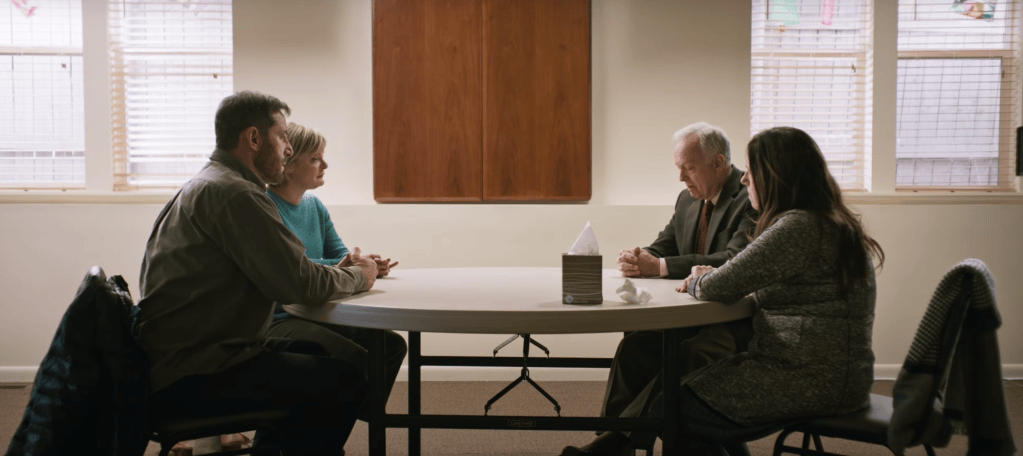
    Mass has a simple through-line. Two couples meet in a church basement to discuss an unforgivable tragedy. One couple’s son murdered the other as part of a mass shooting at a local high school and as part of the intense healing process, both couples agree to meet to discuss their sons’ lives and grieve.

    The four stars at the center of the film are expertly cast and all deliver remarkable performances worthy of making Mass the best ensemble film of the year and any of the four leads worthy of individual recognition.

    Ann Dowd’s Linda shows remarkable perseverance and boundless empathy despite the emotional devastation of her son’s actions, perfectly balancing Reed Birney’s matter of fact melancholia as Richard, the father who felt incapable of helping his son.

    Jason Isaacs covers Jay’s self-righteousness with a methodical, deliberate pursuit of understanding that borders on callous without completing crossing the line, while Martha Plimpton’s Gail expertly harbors anger mixed with profound sorrow without a real place to put either.

    While the physical distance between the four actors feels wide in the intimately tight shots Kranz chooses, their emotional distance is even more pronounced, a testament to just how specific and nuanced each choice of gesture, emphasis of phrase, undercutting of dialogue is. 

    Birney and Dowd have an unspoken chasm between them as Richard and Linda still cannot fully comprehend the rationale of their son’s actions, which has driven a wedge in their marriage.

    Jay and Gail have a much more supportive relationship that Isaacs and Plimpton timidly show in smaller moments of Mass, but each showcase how their pain manifests on an individual level that neither can truly console the other about.

    Kranz’s near-flawless screenplay takes the proper amount of care to establish what needs to be explained to the audience while not spoon-feeding them everything like many dialogue-driven films feel compelled to do.

    Tension and apprehension build slowly over the course of the first thirty minutes as the two couples prepare to meet and spend awkward early moments together.

    The film’s cinematography is not obtrusive, but not overly simplistic either as Kranz and cinematographer Ryan Jackson-Healy press in on the actors’ faces as events unfold to hyper-focus on reactions and intimidate revelations. This works especially well with the extensive and much needed cross-cut editing style of Yang-Hua Hu, who balances the emotions of whoever is speaking with genuine reactions of those hearing them.

    Visually, Mass begins mostly with the actors shown in pairs, capturing Jay and Gail supporting each other or Richard and Linda sharing stories in two-person frames. By the climax, however, Franz cuts the room down even further, keeping each actor secluded in their own frame to maximize the isolation each character feels and heighten the dramatic tension with rapid-fire cross cutting in a way that makes Mass more like a cinematic experience than just an exceptionally well filmed stage play.

    For a film that takes place almost exclusively in a small room with four people seated around one table, the visuals and editing give Mass a larger-than-life aesthetic that pushes the audience into the fray of these conversations as if viewers are observing from just a foot or two away.

    Every moment cinematically is considered carefully in choosing the focus, often keeping audiences hearing the words of a vulnerable Linda while staring into the heartbroken eyes of Gail or pressed into the snarl of Jay’s disgust as Richard describes ignorance of perceived warning signs.

    If the camera panned wider or the script was done as a stage play, audiences would be so hyper-sensitive to watch the speaker that they would perpetually lose the masterful non-verbal reactive work, which becomes almost more important than Kranz’s words or the actors’ line delivery. The emotion comes from seeing the pain in an unflinching, closeup way that only cinema could provide.

    A sure-fire winner at the Film Independent Spirit Awards, Mass also has somewhat of a chance to factor into this year’s Oscar race with Dowd’s performance seeming like the best opportunity to be recognized as a supporting actress if eligibility allows.

    Now available to a wider audience, Mass is an absolute must-see film for cinephiles looking for a substantial drama sure to make an impact in the relative doldrums of January.

  • Last Night in Rozzie: Independent hit a solid double

    Last Night in Rozzie: Independent hit a solid double

    One of Hill Country Film Festival’s greatest success stories makes its theatrical debut this weekend.

    Last Night in Rozzie, directed by Sean Gannet from a screenplay by Ryan McDonough, won both the Cinema Dulce (Best of Fest) and Best Feature Film award at the 12th annual festival this summer and will open in limited release on the big screen as well as premium video on demand this Friday.

    The film originally screened for its world premiere as a short film in 2017 before filmmakers secured the financing to expand their 14-minute piece into a full length feature. Both versions of Rozzie have the same basic outline, although the 80-minute version changes some significant plot choices and recasts the lead actors.

    Last Night in Rozzie follows Ronnie, a New York City corporate lawyer pushed back to his roots in the small Boston suburb of Roslindale to reunite his dying friend Joey with his young son and confront the demons 25 years in his past. What complicates things is Joey’s request that Ronnie facilitate the visit without letting his ex-wife – and Ronnie’s childhood crush – Pattie know.

    This conceit drives the central narrative and complicates a relatively straightforward story. While it works well to enhance the relationship between Ronnie and Joey, things become a bit wobblier between Ronnie and Pattie as there’s an uncomfortable tension to the core of their interactions placed by the narrative that the film can’t seem to get away from.

    Neil Brown Jr. makes the transition from television to movie lead with his first major feature role after several successful seasons on CBS’s Seal Team.

    As Ronnie, Brown Jr. is very approachable and engaging to follow for audiences as viewers bounce around Roslindale almost never leaving his side. Often he portrays Ronnie as being wound so tightly that he’s on the verge of breaking, which works in the larger melodrama but also makes Ronnie very inaccessible and distant in relationships.

    Without question, the highlight of the entire film is Jeremy Sisto’s magnetic performance as Joey. The energy in scenes doubles any time Sisto is on screen regardless of Joey’s physical state and he constantly draws viewers back into the heart of the film whenever they may begin to disengage from events outside the hospital.

    The veteran character actor best known for a four season run on hit NBC crime drama Law and Order commands a range of emotions from humor to anger to deep seeded sadness that moves fluidly throughout. Sisto is brilliant at making the most of a role that keeps him largely confined to a hospital bed and yet it’s as if Sisto’s looming presence dances around scenes he’s not in, elevating occasionally marginal melodrama.

    Nicky Whelan is solid in an underdeveloped role as Pattie, a fiercely independent mother who wants nothing more than to shield her son from things of the past. On her own, it’s a strong performance but a constant standoffishness between Ronnie and Pattie makes her work feel relatively disjointed from the rest of the film.

    Part of the narrative hook of Rozzie relies on a series of flashbacks to slowly reveal information to the audience about both Ronnie and Joey’s close, yet fractured relationship as well as why Ronnie left town and spirals downward upon his return.

    Gannet measures his usage of these scenes, which sharply cut into the flow of the film in order to push the audience emotionally and the effect works moderately well especially at the pivotal moments, though the return to the current timeline can be a bit off-kilter at times.

    Visually, Rozzie is exceptionally sharp for an independent film and puts too lush a shine on the more somber story. This decision by Gannet and director of photography Matt Suter doesn’t really make sense until the final moments of the film, where a haze is laid over the screen to bring audiences deeper into Ronnie’s devolving state of mind and helps solidify the film’s ending.

    Last Night In Rozzie may not have the star power of large scale adult melodramas, but its independent spirit, universal story and Sisto’s remarkable performance might be the right find for local cinephiles who missed out on its summer screening in Fredericksburg wanting to check it out at home.

    Note: Matt Ward is a programmer for the Hill Country Film Festival.

  • Stillwater: Floating under the radar

    Stillwater: Floating under the radar

    One of the year’s best films can’t seem to find its audience.

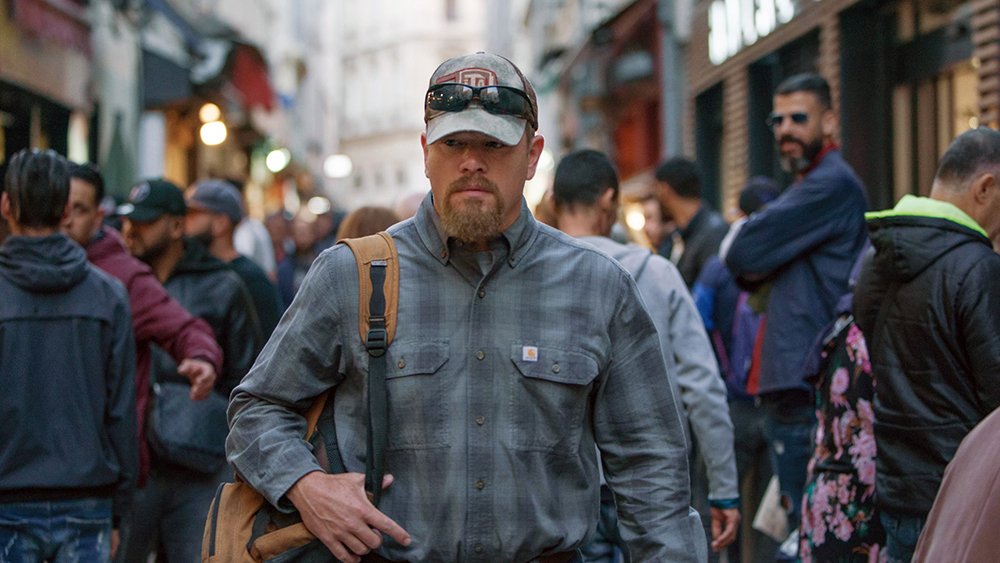
    With an Oscar winner at the helm and box office draw Matt Damon delivering one of the finest performances of his career, Stillwater should have been a no-doubt buzzworthy feature that drove viewers to the theater for what was marketed as a high-stakes thriller.

    And yet, director/co-writer Tom McCarthy’s latest film and his major studio follow-up to Best Picture winner Spotlight has gone considerably under the radar in spite of critical acclaim and raucous support at its debut during this year’s Cannes Film Festival.

    Part of the issue is tone.

    The film sees Damon portray an Oklahoma roughneck travel to Marseilles visiting his daughter in hopes of securing her freedom five years after she was imprisoned for the death of her roommate. Marketing and trailers project Stillwater as an intense thriller in the vein of the Taken franchise, though it’s considerably more restrained and somewhat melodramatic over the course of 140 minutes.

    Coproduced by American and French studios, there’s a considerable blending of American intensity with moderate European filmmaking that gives Stillwater a brooding tone which could dissuade casual moviegoers. But the deliberate pace is actually one of the strongest elements of the film, which allows McCarthy’s introspective script to shine and drive the narrative based on character rather than simple plot.

    Damon delivers an intensely introspective performance as Bill, a man seemingly wandering his way through life with little purpose or perspective until the events of the film grow to completely reshape him as a father, and perhaps more importantly, as a man.

    There are moments of rage that will evoke his work in the Jason Bourne franchise, and audiences longing for the action thriller they believe they were promised by the trailer will long for more. 

    But it’s in the reflective work that Damon puts Bill through where his performance truly shines.

    Over the course of the film Bill connects with a mother and her young daughter, becoming somewhat of a surrogate father as audiences see Damon slowly soften as if he were seeking amends for past sins in a pseudo do-over penance.

    The relationship Damon is able to create with first-time actress Lilou Siauvaud as Maya develops naturally with the pair building bridges across generational and emotional differences in spite of language barriers. Moments where the pair begin to teach each other English and French are quite charming and often provide the slightest sense of levity to break up the heavier drama that prevails throughout.

    Abigail Breslin is solid as Bill’s daughter, though the screenplay and the larger feature as a whole keep Allison at a distance from audiences, muddying the waters to accentuate the central mystery and maintaining the focus on Bill himself.

    Camille Cottin is excellent as Maya’s mother Virginie, operating both as a narrative link to drive the story forward translating for Bill and the audience and as a beacon for Bill to find himself in this foreign world culture that he doesn’t understand as a blue collar American.

    Cinematography from Masanobu Takayanagi is largely handheld and natural, allowing the city of Marseilles to fill the background with its unique beauty and plurality as a city of elite and lower class. McCarthy and Takayanagi do a wonderful job of using the visual to help create the world of the film without becoming a distraction from the character work.

    Focus Features seems to have moved Stillwater off its Academy Awards marketing campaign, pushing the film into premium video on demand while it’s still screening theatrically. Unfortunately, Damon’s chances of earning a Best Actor nod seem unlikely as comments he made during the press tour for the film have moved him almost certainly out of the running.

    By the time all is said and done, Stillwater could very well top a list of 2021 films that no one is talking about despite being among the most original and captivating.

    Damon’s performance is beyond reproach and the considerable talent around him both on screen and off make Stillwater a film audiences should seek out at home or on the big screen.

  • No Sudden Move: A crime thriller for Steven

    No Sudden Move: A crime thriller for Steven

    Steven Soderbergh makes movies with only one audience in mind: Steven Soderbergh.

    The filmmaker behind classics like Erin Brockovich, the Ocean’s Eleven trilogy and Traffic is well into a point in his career where he has a clear vision for what he wants to do, can do it quickly and loves to experiment with the visual form as his own personal art project. 

    It’s why he can quickly move from shooting a basketball drama on iPhones with High Flying Bird to plot-twisting vignette pieces strung together in The Laundromat to his latest film, a period crime drama that may fly well over the heads of casual audiences but could make ardent cinephiles re-watch over and over again for the little cinematic flourishes.

    Three random criminals unfamiliar with each other are hired to “babysit” a blackmail victim and his family, only to see their relatively simple assignment spiral far beyond their control and sink far into the deeps of the underbelly of 1950s Detroit. While it rarely confronts these issues head-on, No Sudden Move reeks with deep-seeded racism and disenfranchisement of the period and larger conspiracy on a national level.

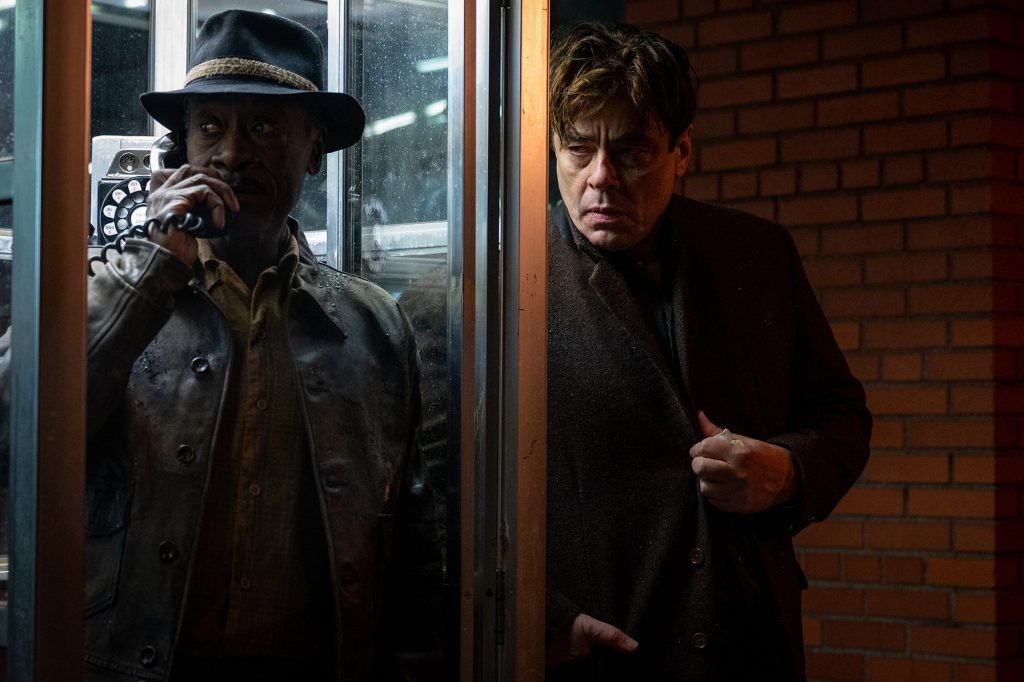
    At the center of the film, Don Cheadle is a contemplative force as Curt Goynes, fresh out of prison and in need of quick cash. Although audiences are never truly sure what anyone in the film is thinking, Cheadle allows viewers to see Curt’s mind constantly churning possible scenarios and escape hatches in order to make it through rich and alive.

    It’s the least flashy performance in a film filled with characters, yet Cheadle’s constant, steady presence gives the audience something to latch onto as the slow-burn, deliberate narrative moves along.

    This is perfectly contrast by a dodgy, controlled mania from mobster-on-the-out Ronald Russo, played by Benicio del Toro. The Usual Suspects star is tailor-made for these sort of crime thrillers as his work often leaves viewers on the edge of their seat in nervous anticipation of what’s to come next as del Toro plays each role so in the moment that there’s genuine surprise as events roll out in real time.

    Cheadle and del Toro have choppy chemistry on-screen, but this works in a film where trust is at an intense low and both actors feel like they’re working each other so as not to get worked themselves.

    The film boasts a cavalcade of terrific performers littered throughout that give No Sudden Move a distinctly vibrant, character driven feel.

    Kieran Culkin is intensely slimy as a criminal ringleader, while Ray Liotta evokes the dark side of his Goodfellas past as an unscrupulous crime boss. Uncut Gems breakout Julia Fox steals scenes as Liotta’s wife who may be cheating with Ronald, while David Harbour gives one of his best performances as the main victim with secrets of his own.

    A major cameo left unspoiled here is the perfect jarring awake of the audience that the film needs to ramp things up to its climatic end and the scene featuring the uncredited star is among the most intriguing. Writer Ed Solomon’s terrific screenplay truly comes alive in this moment as a discussion of the randomness of events melds with social context that puts everything that came before into a new light.

    Nothing is given or telegraphed to the audience as the plot weaves and winds its way through the narrative. Soderbergh and Solomon make a clear, conscious decision not to let the minutia of over explanation get in the way of driving things forward as the camera follows Curt and Ronald deeper into trouble.

    No Sudden Move floats through its two-hour run time thanks to some silky, velvet covered visuals from Soderbergh in conjunction with cinematographer Peter Andrews. Shot with modern cameras equipped with period lenses, most scenes have a fish-eye quality to them that rounds and obscures the view. This pairs exceptionally well with Soderbergh’s high contrast lighting and distinctly off-kilter camera placement that finds the audience looking up from a tilted head at characters or at an almost two-dimensional parallel.

    Warner Brothers’ decision to release No Sudden Move in July exclusively on HBO Max pretty much excludes any possibility of an awards season run for the Soderbergh film, which is among the very best of his last decade of work. It’s doubly disappointing not to be able to watch this mid-budget adult drama on the big screen as it’s exactly the kind of film that could draw out moviegoers hoping to make a return to the theater after more than a year away to see a film that isn’t a popcorn franchise film.

    No Sudden Move is a low-risk, high-reward offering for cinephiles who will either quickly engage with Soderbergh’s unique perspective or be able to move on to other films without too much commitment thanks to it streaming on HBO Max.

  • 12 Mighty Orphans: Feel-good fumble

    12 Mighty Orphans: Feel-good fumble

    Inspirational sports films have practically become a tradition on par with events like the World Series, Super Bowl or Kentucky Derby.

    Without fail, it’s expected – almost demanded – that there will be one every year.

    Texas director Ty Roberts has brought audiences an emotional drama based on a true story from his home state, putting viewers on the sidelines with an underdog football team with an exceptional amount of heart.

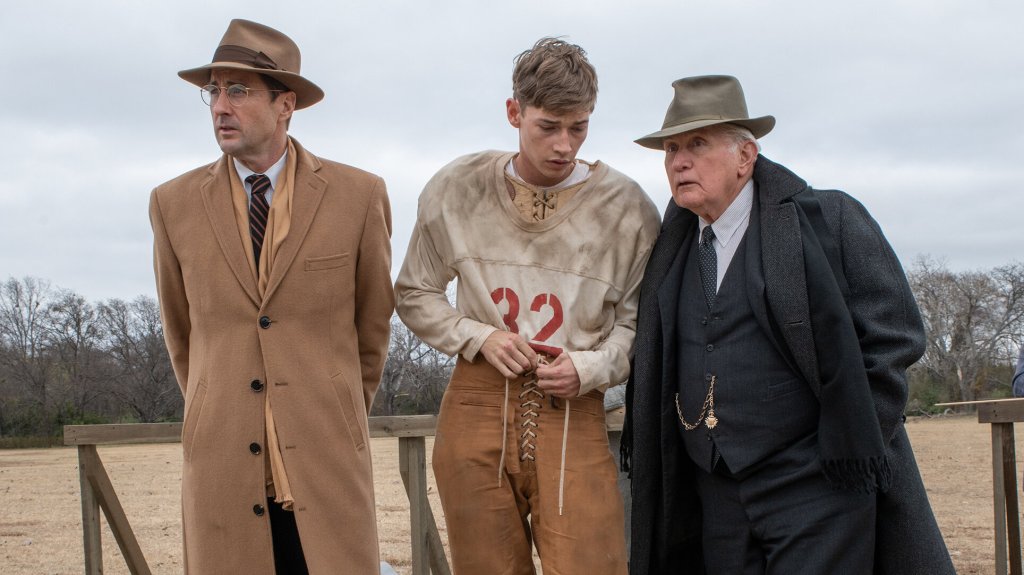
    His film 12 Mighty Orphans debuted in Texas theaters last week concurrently with its premiere at the Tribeca Festival in New York City. The drama stars Luke Wilson as Rusty Russell, the first football coach hired at the Masonic Home and School of Texas, an orphanage where abandoned teenage boys create their own sense of family by fighting to compete against other Texas high schools and vie for a state championship.

    At times, it’s next to impossible not to roll the eyes at a sports film leaning so heavily into the melodrama that the orchestral cues meant to bring on the tears completely water down any sizable impact the film could have made on the audience.

    Wilson is a compelling lead actor in Orphans, offering compassion to the students he relates to as a former orphan himself. His Russell provides a calm in rough waters and Wilson moves smoothly throughout tender moments guiding the young men on and off the field.

    When the film moves deeper into Russell’s past, Roberts wavers on how well he explains the character’s military history, though Wilson is adept at finding a balance between Russell’s personal struggles and being strong for his team.

    At his side every step of the way, Golden Globe winner Martin Sheen is a delight as team physician turned assistant coach Doc Hall. Though the centerpiece of his character is an affinity for sneaking shots of whiskey at any given moment, it’s surprisingly the one flaw written into the film that isn’t overplayed.

    Sheen wryly provided the film with both gravitas and a warm, lighthearted comedic touch that keeps the energy in moments where Roberts’ film could go off the rails and he has a wonderful chemistry with Wilson that draws audiences in to the notion that the team could make it deep into the postseason.

    Because there are twelve players on the team and a limited running time, some of the orphans get pushed into the background to accommodate larger storylines. Among the key players, Jake Austin Walker is the highlight as the standoffish, brute Hardy. Walker commands the screen whenever he appears and brings an intensity to his performance that radiates the apprehensive nature of the character perfectly.

    For some reason, melodramas like Orphans artificially create villains to heighten the plight of the heroes and the ones created here feel exceptionally inauthentic.

    Seinfeld and Jurassic Park actor Wayne Knight plays a magnificently spot on caricature of Snidely Whiplash, the old cartoon baddie who would routinely tie up women to railroad tracks and twist his pencil-thin mustache.

    But in this case, Knight has become an abusive, thieving teacher at the home with no depth of character or nuance. From the moment he arrives on screen in the opening moments to the final scenes, his Frank Wynn undercuts all the heartwarming momentum Wilson and Sheen develop with the orphans themselves, shattering any illusion or viewer engagement.

    The same could be said for the work of the film’s co-writer Lane Garrison, who is cast as a rival football coach with an impishly cruel streak added almost exclusively to make Wilson’s Russell look better by default. Not only does Wilson not need this to achieve the sympathy of the audience, but it also actually weakens his character by implying that both men are at the same level of their coaching.

    Distributor Sony Pictures Classics has done the film very little favors releasing the film more than two months before the start of high school football two-a-days, where the anticipation for the gridiron would be at its highest.

    Eventually, 12 Mighty Orphans will likely make its way into a rotation of feel-good sports films that high school coaches could play for extra motivation for the team before a big game ala Remember the Titans or Woodlawn, but casual moviegoers shouldn’t go out of their way to seek out this middling feature that comes up short of the goal line.

  • All These Sons: Tribeca At Home review

    All These Sons: Tribeca At Home review

    Gun violence is senseless.

    Nowhere in the United States is it more prevalent than Chicago, where more people are shot and killed than in New York City and Los Angeles combined.

    For filmmakers Joshua Altman and Bing Liu’s latest documentary All These Sons, approaching the sensitive subject meant dealing with the trauma and emotional scars that linger long after bullet wounds have healed.

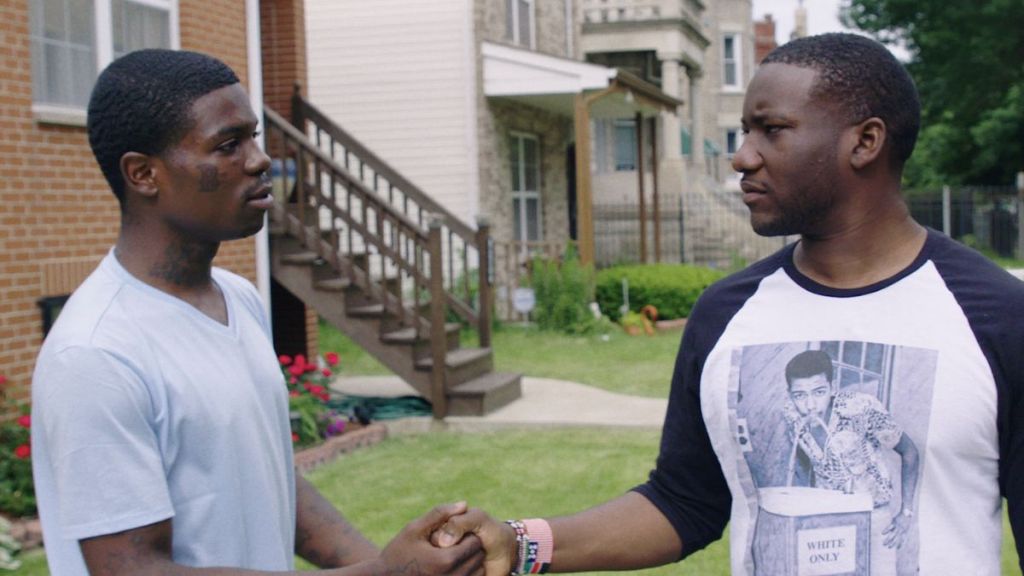
    Their focus is on a pair of social service support groups for young African American men on the west and south side of Chicago that help stop the constantly revolving cycle of violence.

    At the film’s core are Marshall Hatch Jr., the son of an area priest who leads youth through a construction trades program to keep them off the streets, and Billy Moore, leading a redemption program of his own after being on both sides of gun violence, first shooting a high school basketball standout in his youth and later losing his own son in a shooting.

    All These Sons also profiles the struggles of men like Zay Manning – shot during the course of the program and ready to retaliate on a moment’s notice – and Shamont Slaughter, whose inner turmoil pushes him to the brink following the tragic shooting of his younger brother.

    Altman and Liu capture the immediate fear that pushes these young men into acts of aggression: a perception that a rival might be calling in friends for a hit, the need to closely watch every car that drives past looking for the barrel of a gun, the escalating do-or-die mentality that ends with the pulling of a trigger.

    All These Sons showcases the urgency needed to curb gun violence in Chicago, but more importantly, it highlights the impactful, redemptive work being done by local organizations hoping to transform potential victims and perpetrators to end the cycle of killing.

    Many of the men attending these programs have either known someone shot or been shot themselves, which has left long-lasting scars and post-traumatic stress that can be triggered by simply walking down the street and noticing an unfamiliar or threatening face.

    By focusing not on the tragedy of gun violence but the hope of redemption, All These Sons prevents the struggles of men like Shamont and Zay from being exploitive and maintains their fallible humanity.

    All These Sons doesn’t try to over analyze or dramatize the violence that haunts every moment of the film. It’s a story of hopeful redemption littered with emotional, philosophical conversations about anger, forgiveness and PTSD.

    The cinematography is simple, yet impactful with an emphasis on unobtrusive, verité style that leaves the audience feeling as if they are an invisible bystander witnessing the evolution of young men moving away from a dangerous path. The visuals also do a masterful job of highlighting Chicago’s beauty in limited wide angle shots that allow audiences to feel a larger sense of scale that helps ground just how personal and intimate the stories of All These Sons are.

    This is especially true during a nighttime scene on the Fourth of July, where Chicago police vans are cruising down the streets with fireworks lighting up all around them, cross cutting with images of young African American boys setting off sparklers in school playgrounds. 

    What should be a glorious expression of American pride is offset immediately with news footage from the following Monday, where it was announced that 1,500 officers working overtime were deployed over the weekend and still 66 people were wounded and six died due to gun violence.

    Composer Kris Bowers accents the film with a subtle, yet powerful orchestral score that helps to create the emotional backdrop for key moments.

    A surefire contender for best independent documentary next award season, All These Sons should also be on the Oscar shortlist for documentary feature and will finish 2020 as one of the year’s top films regardless of genre.

    Liu, who directed the terrific 2018 doc Minding The Gap, returns with something less personal but equally as powerful that will generate meaningful conversations for film lovers in all walks of life.

    This review was written after screening as part of the 2021 Tribeca Festival online.

  • The Courier: Unlikely assets, improbable odds

    The Courier: Unlikely assets, improbable odds

    British period dramas often have a reserved, stuffy quality to them that keeps the audience at a distance.

    While viewers get to know the characters and feel for their plight, it’s hard to connect as an audience member to the genre.

    Director Dominic Cooke keeps his latest feature in this standoffish distance, but it becomes something more with compelling characters and intriguing spy-craft at the ready.

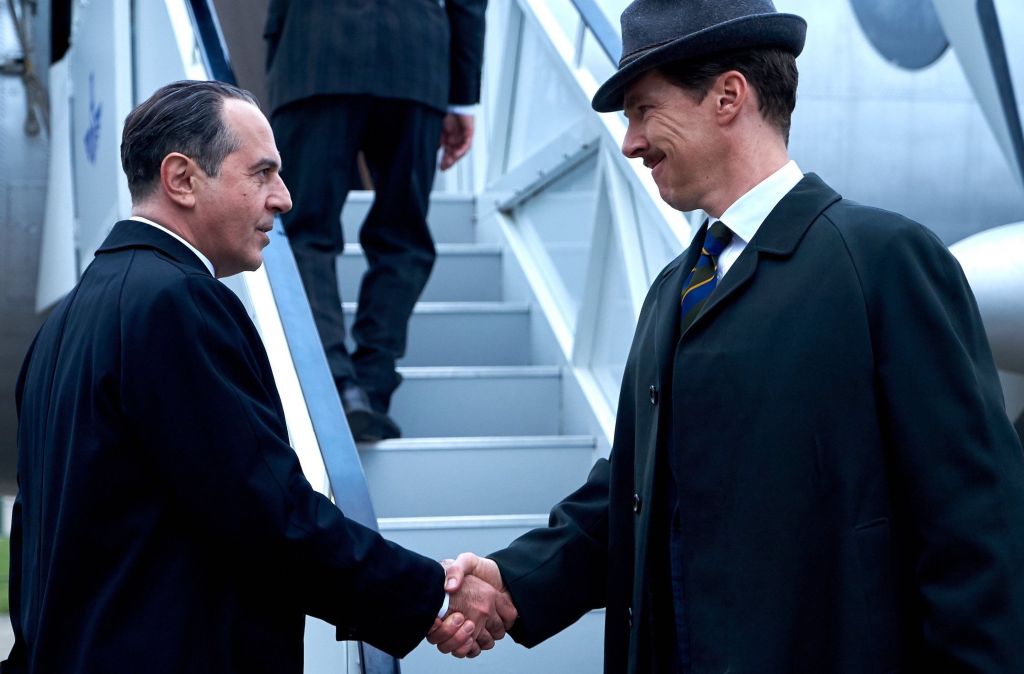
    Based on real events, The Courier follows businessman Greville Wynne who is recruited by American and British intelligence to serve as an intermediary traveling to the Soviet Union in order to receive vital information that could put an end to the Cuban Missile Crisis.

    At the core of The Courier are a pair of exceptional leading performances that elevate the entire film beyond simple period drama or espionage thriller territory.

    Academy Award nominee Benedict Cumberbatch gives a stirring performance as Wynne, invigorating the character with a nervous energy that heightens his portrayal of the “amateur” spy. Cumberbatch is a very deliberate actor whose internal monologue often reads like a book across his face, which serves him well here as the everyman Wynne begins to fray at the edges under immense pressure.

    His sincerity and earnestness make Cumberbatch a perfect counterpart to Merab Ninidze, playing the Soviet informant Oleg Penkovsky with a hardened shell that melts quietly over the course of the film as Wynne and Penkovsky form their unlikely bond.

    Ninidze approaches the role from the burden Penkovsky feels weighing on him, knowledge that could lead to nuclear war and conflict over if and how to provide a warning to the other side in order to stop it. 

    The film’s supporting cast does a solid job of supporting Cumberbatch in his performance within Britain, especially Rachel Brosnahan as an ambitious CIA operative trying subtly to take charge of the operation and Jessie Buckley as Wynne’s suspicious wife whose appearance doesn’t truly come into its own until her final scenes.

    Penned by Tom O’Connor, the screenplay approaches Wynne and Penkovsky’s relationship as a dance, an unromantic courtship of wary acquaintances seeking to prevent nuclear war.

    While the spy work is important to propelling the story forward, the film takes great care to fully establish trust between the pair – and through Cumberbatch and Ninidze’s performances – pull the audience into the narrative because of the characters as much as what they are doing.

    The Courier grounds itself within the true history of the Cuban Missile Crisis by frequently using news broadcasts and speeches from figures like President John F. Kennedy to set the stage for events to come. 

    The only exception in this regard, however, is when Cooke puts the focus on Communist Party chairman Nikita Khrushchev, casting actor Vladimir Chuprikov to play the Soviet leader so audiences can see Penkovsky attending high-level meetings to blend the world of reality and docudrama.

    The film’s pacing is cumbersome and meticulous as serious period spy films tend to be and casual viewers could become bored or lost in the minutia. The Courier doesn’t have the splashy spectacle of undercover spy-craft that propels action forward, but the distinct dramatic dialogue on a scene-to-scene basis reminds favorably of the Tom Hanks-led 2015 film Bridge of Spies.

    A demonstrative, rousing score from composer Abel Korzeniowski heightens the cerebral tension within scenes, especially as suspicions begin to rise from all sides as The Courier hurtles its way toward the tumultuous third act.

    In many ways, The Courier perhaps suffered more than most films did as a result of the COVID-19 pandemic. After a solid debut at the 2020 Sundance Film Festival, it was set up for a strong fall theatrical release through Lionsgate that would have drawn in ardent cinephiles hungry for period drama.

    Three times delayed and pushed back, The Courier stumbled out in March to little fanfare as a relative afterthought during the midst of awards season.

    Now available widely to rent or stream on demand, the solemn, yet powerful character-focused espionage drama should prove to be worth the wait for fans of John le Carré novels and slow-burn cinema.

  • The Get Together: Been a long time since party time

    The Get Together: Been a long time since party time

    Will Bakke’s latest film wasn’t made with the pandemic in mind.

    Shot over 12 nights in a house on the edge of Austin, Bakke and co-writer Michael B. Allen sought to simply create the feel of a Friday night party that everyone has been to in their twenties.

    There’s the overly friendly guy, the girl who just wants to leave as soon as possible, so-and-so who’s been out of town so long it feels like they’re a totally different person.

    Life always seems to converge in these house parties and The Get Together definitely strives to evoke an early Richard Linklater Slacker, Dazed and Confused vibe with its brisk, engaging narrative.

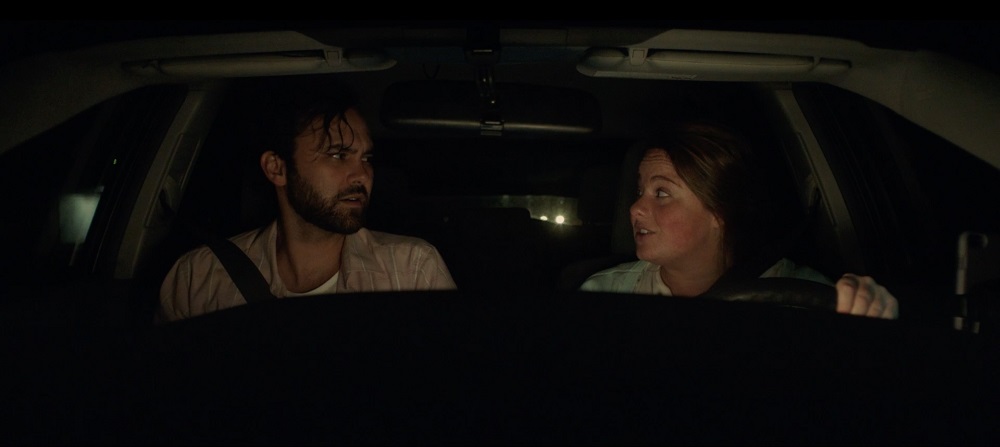
    The Get Together follows four people who all end up at the same party but didn’t come as a group. Homebody August stumbles into the situation after a strange encounter as an Uber driver; Damien gets interrupted trying to propose to his girlfriend Betsy by a quirky former classmate; and thirty-something Caleb sullenly tries to find himself after both his bandmates quit on him in the same night.

    Though it purports itself to be a party movie, the festivities themselves become more of a backdrop to the characters themselves and their arrival feels genuinely coincidental and could happen in a variety of ubiquitous scenarios beyond a post-college rager.

    Courtney Parchman kicks things off with an instant infusion of energy as the frantically overwhelmed August, a loner whose uncomfortability in large parties will immediately resonate with generations of wallflowers wanting to be a part of the action but awkwardly unsure of how to proceed. Her performance is effervescent and endearing, immediately drawing the audience into the narrative in a way that jars viewers when the night restarts from a new perspective.

    Alejandro Rose-Garcia melds a relaxed confidence with exasperation and longing to recapture the glory days of his fading youth as Caleb. It’s an impressive effort from the Austin-based musician better known as Shakey Graves, who helps anchor The Get Together with chill bravado masking a wounded soul.

    The Get Together mixes its tones between the serious and playful well, but Chad Werner’s all-too-naïve, fun-loving oddball Lucas tiptoes the line of eccentricity without falling over into caricature. Werner is the comedic center of the entire film and despite not being the focus of the film, Lucas is by far the most memorable character and will draw the biggest reactions in a love-him or hate-him way.

    The film is reminiscent of many one-night party films, but Bakke and Allen’s decision to restart the night at each act break complicates the structure. The narrative moves precisely to reveal just enough of the larger picture, teasing things to come in such a way that new revelations change the entire outlook.

    As a director, Bakke does a terrific job of keeping the audience informed of time and place, something that could easily get confusing over the course of 70 minutes with viewers bouncing back and forth between the same moments from different perspectives.

    It’s important in timeline-bending films like these that the filmmaker properly orients us in the visual geography.

    The filmmaking team accomplishes this by making the geography visually distinctive. Each location within the house are colorfully hued to trigger in the viewer’s mind where events are taking place. Garrison’s bedroom is shaded in a deep red; the outdoor patio and pool area pop with neon pink and yellow; and the main living areas have a blueish hue.

    Made prior to the pandemic, The Get Together is the sort of small indie film that will help remind audiences of what life was like before social distancing and masks, when drinks were shared freely and elbow bumps didn’t take the place of big hugs.

    Charming and sure to put a smile on faces, The Get Together deserves a look on demand for independent film lovers ready to engage with friends after considerable time apart.

    NOTE: The Get Together was a 2020 selection for the Hill Country Film Festival, where this critic serves as a film programmer. The Get Together was screened Sunday afternoon as part of the organization’s Indie Film Series at Hoffman Haus.

  • Minari: Struggling toward the American dream

    Minari: Struggling toward the American dream

    There’s something simple, yet elegant about director Lee Isaac Chung’s latest feature, a semi-autobiographical tale base on his childhood growing up in America’s heartland.

    The story is ordinary – and the cinema understated in large part – but there’s an ethereal quality to his film that opens with a young boy running in an empty field of green and never truly stops flowing in spite of the small character drama within.

    Set during the 1980s in rural Arkansas, Minari follows the Yi family who move to a plot of land so Jacob can fulfill his dream of becoming a vegetable farmer selling his crops to an emerging Korean population in the South. His choices put a strain on his relationship with his wife, while his young son David contends with a health condition and his grandmother that he doesn’t consider to be his grandma.

    Walking Dead and Burning star Steven Yeun centers the film with a driven, considered performance as Jacob, a man whose quest for the American dream begins to isolate him from the family he pulled from California. The forthright confidence of Jacob propels Chung’s narrative forward and allows the audience to examine the family dynamic in idyllic memory but with a hue of sadness and anger that pulls at the edges of this conceit.

    It’s a performance that does tend to swallow the softer, almost muted work of Yeri Han as Monica who shines more in scenes opposite the young children rather than Yeun as her ability to draw compassion for Monica’s children far surpasses the anger she exudes during Monica’s conflicts with Jacob.

    While Yeun is celebrated as the film’s lead, the true star of Minari is eight-year-old Alan Kim, who steals every scene he’s in as David with a childlike wonder and heart. Audiences experience the pain and uncertainty of the family’s plights through David’s eyes and Kim is a wide-open vessel through which viewers can be drawn into the story with his affable humor and inquisitive spirit.

    The grandmother is expertly played by Yuh-jung Youn with a brash yet tender love that anchors the family – especially David and his mother. Moments with the other family members are important to the narrative of Minari, but the best work of the entire film is in scenes simply between Kim and Youn where the awkward unease of a boy meeting a relative for the first time melts into the emotional core thanks to tremendous chemistry between the two actors.

    Will Patton’s Paul brings just the right amount of colorful twist to the story with his eccentric brand of Christianity challenging the Yi family.

    It’s difficult to appreciate Minari receiving accolades in foreign language film categories simply because the majority of the film is in Korean with English subtitles because Minari is an American film about American immigrants living out the American dream. In some ways, it feels reductive to push Chung’s film out of categories and putting it in the box of “foreign film” as Minari deserves much more.

    Chung directs from his own screenplay, which allows him to fully pull from his own childhood to make Minari feel both a distant memory and a clear and immediate reality. This is especially evident in the performances he is able to capture from Kim, Yeun and Youn and extends over to the visual artistry of the film.

    The cinematography of Minari provides both a very muted, unobtrusive look for much of the film to allow for the audience to focus on the dialogue and performances, but it’s in the film’s more grandiose moments that director of photography Lachlan Milne’s work shines. 

    Capturing the countryside in bright, natural lighting, Milne provides a true sense of scale for the wide-open, limitless possibilities of the Yi family’s newfound life creating a farm and also Jacob’s personal hopes for the future as they grow and narrow over the course of Minari.

    The film will likely make the cut for the Oscar Best Picture race, though it will probably see a stronger showing at the Film Independent Spirit Awards than with the Academy. Yeun could see his way into the best actor race in spite of a strong category while Youn should earn a supporting actress nomination but could miss out entirely.

    Minari does suffer from not having a true theatrical release as the gorgeous panoramas and simple narrative beauty would create a terrific word-of-mouth campaign far stronger than the weaker one A24 has given it. With a digital release via video-on-demand to accent a small run in theaters, Minari should be the film ardent cinephiles with an eye for independent cinema seek out in preparation for the delayed awards season.