Category: Independent Film

Independent productions and independent cinema coverage. Secondary category; a movie can also be a New Releases review.

  • Arkansas: One too many slashes

    Arkansas: One too many slashes

    When actors make the transition from being in front of the camera to behind it in the director’s chair, the quality of their work can vary greatly depending on not just their talent in a new role on a film set.

    First time directors may lean on key assistants or department heads to help shape their vision or these actors may want to direct themselves on screen, fully immersing themselves in multiple worlds simultaneously.

    Clark Duke – a veteran comic actor known for smaller roles in ensemble films and guest spots on TV sitcoms – makes the leap with his feature directorial debut “Arkansas,” based on the 2009 novel of the same name by John Brandon.

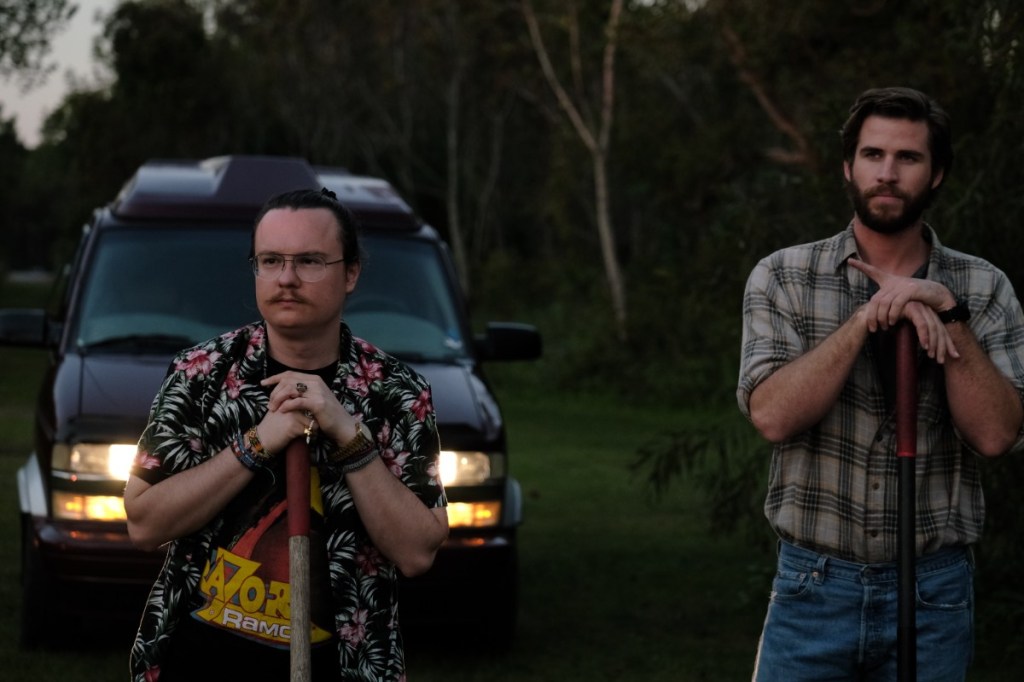
    On top of directing and producing “Arkansas,” Duke also co-wrote the screenplay with Andrew Boonkrong and cast himself as Swin, one of two naïve drug dealers who serve as the film’s protagonists.

    Cutting across much of the South but set primarily in the titular state, “Arkansas” follows Kyle and Swin as they attempt to climb the ranks of a drug trafficking ring led by a mysterious dealer known simply as Frog. After a job turns bad, Kyle and Swin are forced to keep up appearances while dealing with the fallout that could get them killed.

    On paper, it’s a feature with elements of traditional crime, noir and black comedy that would appeal to a broad audience, but “Arkansas” is a middling independent movie that suffers most from its creator taking on far too much. 

    The film’s significant identity crisis stems from Duke wanting to put every idea he had from a writing perspective into the screenplay, trying to emulate all his favorite directors and their contrasting styles and on top of all of that, reinvent himself as an actor by taking on a meaty, transformational part unlike anything he’s ever done before.

    Technically, Duke achieves all of this with “Arkansas.”

    His script is inventive, playing with the narrative structure both in time-jumping between decades and focusing on different characters by breaking up the film into chapters as master screenwriter Quentin Tarantino might do.

    Duke’s direction is engaging, pushing a heavy hand visually at times with bold night cinematography that helps set the mood of “Arkansas;” although it’s not particularly surprising that the film’s best scenes directorially come when Duke’s Swin isn’t in them, which allows the filmmaker to focus on the whole scene and not confine himself to a single character.

    As an on-screen performer, Duke swings for the fences with a nearly unrecognizable look, hiding behind glasses and a wiry mustache, dulling his accent slightly and evoking a strange combination of Phillip Seymour Hoffman and Steve Buscemi for the film’s most interesting performance.

    And yet, all the pieces that Duke assembles together to create the world he envisioned for 
    “Arkansas” become a garbled noir mess with mixed tones that reflect his love for Martin Scorsese’s “Goodfellas” one minute and the Coen brothers’ “No Country For Old Men” the next.

    A strong ensemble cast led by John Malkovich’s signature eccentricity as a state park ranger and Vince Vaughn maintaining understated composure in a significant role as a pawn shop owner give “Arkansas” plenty of flavor that it richly needs, while Eden Brolin (daughter of Josh) is a welcome surprise as Swin’s love interest.

    Characters in “Arkansas” are vague, but memorable enough to have a Tarantino-esque vibe that any one of them could have their own story or film made about them.

    The rare exception here is Liam Hemsworth’s Kyle, who gives a solid effort opposite Duke but isn’t rough enough around the edges to play the sort of dirtbag that would pair well with Swin. It’s key to the success or failure of the film that Swin and Kyle feel like they’ve come from similar backgrounds to wind up at the same place, but Hemsworth isn’t matching Duke’s dedication to the part and falls flat relative to the rest of the cast.

    “Arkansas” suffers greatly from missing out on a theatrical release, opting for a May 5 release on Bluray and streaming platforms after the film’s world premiere at this year’s South by Southwest Film Festival was cancelled due to the coronavirus pandemic.

    It’s a movie that needs an actively engaged, rowdy audience to laugh and reinforce the film’s dark humor and it needs a confining theater to prevent viewers from checking out as Duke resets the film over and over again by switching decades and perspectives.

    The best chance for “Arkansas” to find its audience and have viewers appreciate its uneven eccentricities is for people to wait until the film inevitably lands on a streaming service where viewers can take a free chance on Duke’s directorial debut.
  • Blow The Man Down: The secrets women will keep

    Blow The Man Down: The secrets women will keep

    Grizzled fishermen singing old sea shanties is an unexpected, yet perfect way to set the mood for a fresh independent dark comedic noir mystery film from Amazon Studios.

    A feature debut for the writing/directing team of Bridget Savage Cole and Danielle Krudy, “Blow The Man Down” is a striking, exceptionally crafted work of art that pulls in some of the best elements of “Fargo,” Agatha Christie novels and “Gilmore Girls” to create a unique take on the genre.

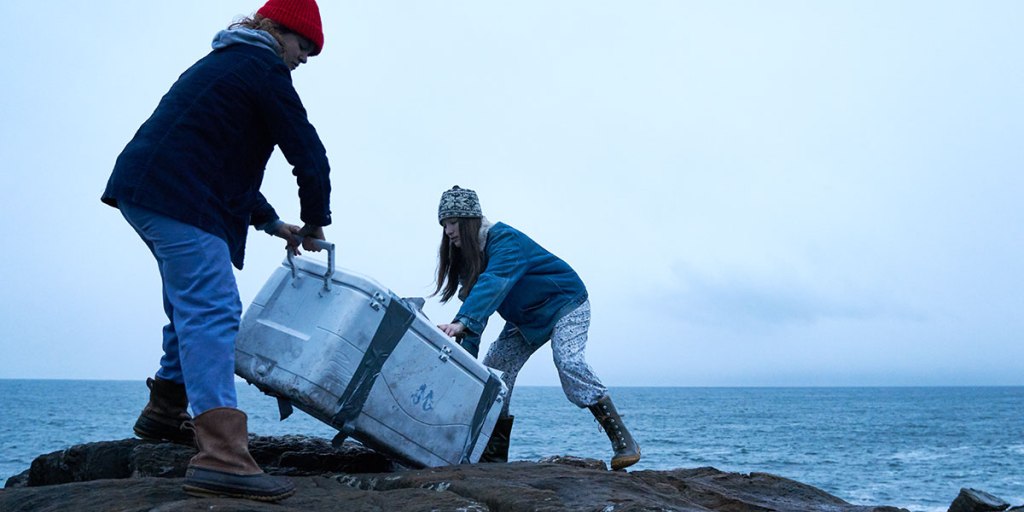
    Set in a remote fishing town in Maine, “Blow The Man Down” follows sisters Priscilla and Mary Beth Connolly in the days following their mother’s funeral as a confrontation with a strange man leads the women down a path of murder and intrigue that entwines their close-knit community.

    Newcomer Sophie Lowe brings a quiet, introspective presence to Priscilla – commonly known as Pris – and audiences can feel the wheels constantly churning in her head despite a lack of reaction by all outward appearances. There’s a sadness at the front of her performance that leaves Pris numb to the world around her that occasionally comes across as cold and callous, but Lowe softens the edges enough to ensure that this never feels to the point of being calculating.

    “Homeland” star Morgan Saylor floats across the screen with reckless abandon, playing on Mary Beth’s impulsive nature to deliver a performance that draws viewers in without ever letting them get on Mary Beth’s side.

    Lowe and Saylor have remarkable chemistry as sisters who double as identical opposites. Their reactions, although in contradiction with one another are perfectly in character and feel at times as if the same person is having two different reactions to one event. Mary Beth’s frantic emotions coalesce with Pris’s controlled demeanor to balance the sisters out as a rational unit.

    Lowe plays off Saylor’s impulsiveness with a muted reaction that crystalizes her Priscilla as a cinematic inverse of Mary Beth, the same, but opposite person. Even at the times when it seems the two flip roles, Saylor turns down Mary Beth’s irrational nature as Lowe escalates Priscilla’s desperation to maintain this sense of balance.

    With a brisk pace and laundry list of characters that populate Easter Cove, “Blow The Man Down” leaves audiences constantly yearning for more from the film’s terrific ensemble cast, which includes Academy Award nominee June Squibb and three-time Emmy Award winner Margo Martindale.

    Martindale casts an especially large shadow over the mystery of the film as a ruthless bed-and-breakfast owner who expertly utilizes both charm and intimidation to get her way. In a screenplay that infers much more than it explains outright, Martindale perfectly uses her screen presence and inflection to make Mrs. Devlin authentically respected and feared.

    Facial expressions play a key role in helping audiences navigate their way through the narrative web and Martindale is always able to maintain the proper tone with a subtle glance or twist of her mouth. There simply isn’t enough of Martindale in “Blow The Man Down,” which could easily have been turned into an eight-episode HBO miniseries.

    Cole and Krudy are meticulous in the details of their world building, from costuming and production design to authentic casting and dialogue that gives viewers a true sense of place. Even though mystery is a primary element of the film, “Blow The Man Down” reveals its secrets as a part of world building rather than simply laying out the elements of the suspense in connect the dots fashion.

    Camerawork presses in tightly on its leads to accentuate the tension and claustrophobia Pris and Mary Beth feel as their small world further closes in on them.

    While the editing might feel unnecessarily jumpy at first glance, Cole and Krudy ping-pong back and forth between various camera angles within the same scene to capture specific images, disorient the viewer to heighten their attention or build suspense. Each element of the film from the script to the cast to the production team has a kinetic, frantic energy that provides a unique overall tone and visual style for the feature.

    Composers Jordan Dykstra and Brian McOmber provide a mesmerizing soundtrack that heightens all the emotions that buzz around key moments in the film. Their exceptional use of strings jumps off the screen within the first 20 minutes and leaves audiences paralyzed with its ominous reverberations any time their score seeps its way back into the film.

    If the tension provided in the soundtrack begins to suffocate audiences, revisiting the singing fishermen several times over the course of the 90-minute feature becomes a soothing reprieve from a makeshift Greek chorus.

    The film debuted almost a year ago at the 2019 Tribeca Film Festival, where it was acquired for distribution by Amazon. After screening at the Toronto International Film Festival in September, “Blow The Man Down” skipped a theatrical release and was added to Amazon Prime in mid-March.

    Tightly wrapped into a 90-minute frame, “Blow The Man Down” offers plenty of tense drama, dry humor and noir uncertainty to keep audiences entranced in the world Cole and Krudy create in their small Maine fishing town. Easily accessible at home on Amazon’s streaming platform, “Blow The Man Down” is easily one of the best and most unique films to be released so far in 2020 and well worth investing in for part of an afternoon or evening.

  • Jump Shot: More than a simple act

    Jump Shot: More than a simple act

    At uncertain times like these, inspirational films can be a salve and reprieve from the outside world and a reminder of wholesome goodness.

    Sports movies in particular are a frequent source for these moments of positivity, with themes of underdogs overcoming the odds or unlikely teammates rallying together for a common cause.

    A new documentary – which won the prestigious Audience Award at the 2019 Hill Country Film Festival – is a sports film of a forgotten basketball hero who happened to be so much more than just the game he played or the move he invented.

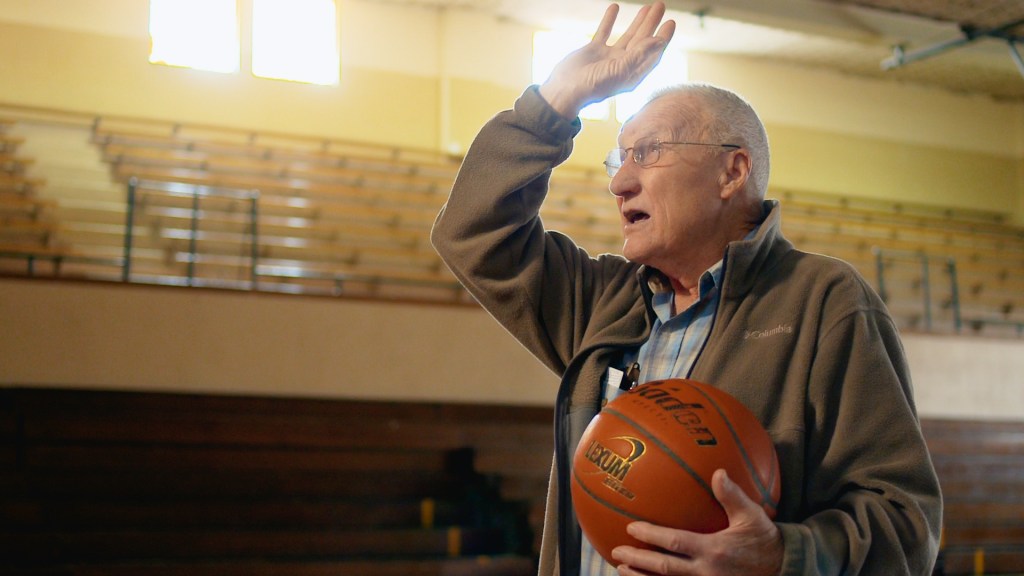
    Texas filmmaker Jacob Hamilton follows former University of Wyoming star Kenny Sailors over the span of more than seven decades from his beginnings as a three-time collegiate All-American and national champion as well as his professional career over six seasons.

    Through archival footage and interviews with Sailors himself, Hamilton is able to explore the history of basketball until a single decision by one player changed the game permanently.

    Then a game primarily played almost entirely on the ground, Sailors revolutionized the sport by being the first major college athlete to leap before shooting the basketball, providing a height advantage over defenders on the ground which rendered his shot nearly unblockable.

    “Jump Shot” showcases highlights from the 1940s with Sailors dribbling around the court like a member of the Harlem Globetrotters, stopping on a dime and then rising up for a shot sports fans see in every modern game.

    Hamilton and his archival team do a fantastic job of not only finding the footage with help from the University of Wyoming but presenting it in a myriad of ways that elevate the material and are visually stimulating.

    One sequence in the middle of the film compares Sailors’ shooting form to that of all-time greats like Michael Jordan, Larry Bird and Stephen Curry, one of the film’s executive producers. Within a single frame, Sailors is rightly placed in the middle of the best shooters in basketball history with each man frozen at the top of their shot, visually confirming Sailors as a pioneer of the game.

    Hamilton smartly also uses this archival footage as an interview tool, handing iPads with Sailors’ highlights to a wide variety of basketball legends including Dirk Nowitzki, Hall of Fame coach Bob Knight, Kevin Durant, Nancy Lieberman and Curry.

    In a sense, “Jump Shot” could be viewed as a cinematic resume for Sailors to be inducted into the Naismith Basketball Hall of Fame, an accolade members of the University of Wyoming’s athletic department submit Sailors for during the documentary.

    Sailors likely wouldn’t have sat for as many interviews as he did – appearing in the majority of the film over age 90 – if all Hamilton was interested in was basketball.

    Notoriously humble, Sailors’ humanity and relationships with others shine through like a beam of light over the course of the 80-minute film as Hamilton reveals his courtship and marriage to Marilynne, which in part due to her health, led Sailors away from the game to the Alaskan wilderness.

    From his military service to his dedication to family and those he taught, Sailors is rightly portrayed as an American hero worthy of the spotlight the film places upon him. His vibrant personality radiates off the screen so warmly that it’s impossible not to be charmed more by the man, not the legend of a sports revolution.

    “Jump Shot: The Kenny Sailors Story” debuted last year at the South by Southwest Film Festival and spent the majority of 2019 touring at festivals across the country. It was slated for a theatrical release earlier this month until the spread of the novel coronavirus shut down movie theaters across the country.

    Since then, the film’s producers have leapt on the growing trend of releasing their film digitally in lieu of waiting for theaters to reopen.

    This worthy, inspirational documentary will be premiering for the public with a special three-day event release Thursday through Saturday, April 16-18. Audiences will be able to watch the film in the privacy of their own homes by purchasing a $7.99 digital ticket for a 48-hour viewing window at http://www.jumpshotmovie.com.

    A portion of proceeds from this event will benefit the Convoy of Hope for COVID-19 meals in affected communities.

    More than just a simple sports documentary, “Jump Shot: The Kenny Sailors Story” is a revealing, heartwarming look at a man who lived fully and unapologetically for others and it’s a film well worth seeking out during its limited digital release this weekend.

  • Portrait of a Lady on Fire: Subtlety in romance

    Portrait of a Lady on Fire: Subtlety in romance

    Desire is all about delay.

    The anticipation, the angst, the longing all cascading towards a moment of passion.

    It’s a difficult trick to pull off in the world of cinema, but Céline Sciamma’s “Portrait of a Lady on Fire” builds from embers into a raging inferno of emotion in one of the best romance films in ten years.

    The French filmmaker progresses from a trilogy of coming-of-age features into the world of adulthood with a pitch perfect examination of nuanced affection that turns to admiration that begets passionate lust with a daring contemporary feel to a period love story.

    Set on an isolated island in Brittany in the end of the eighteenth century, Sciamma’s fourth feature follows Marianne, a young artist commissioned to paint a wedding portrait of a woman without her knowledge.

    Key to the success of “Portrait” is the relationship between model and artist, an examination of the soul that Sciamma deciphers as much as a mirror of self-reflection as a keen eye peering into the world of another.

    The film lives and dies on the performances of its two leads and Noémie Merlant brings an effortless earnestness to Marianne that pairs perfectly with Adéle Haenel’s quiet intensity as Héloïse. Each moment in the film feels genuinely considered, not by the actresses portraying the characters, but by Marianne and Héloïse themselves.

    Dialogue in a script can provide the context for someone being unable to say what they feel, but the right amount of hesitation or inflection in a voice can be just as breathtaking. Merlant and Haenel are masterful at pulling at the seams of Sciamma’s screenplay and digging beneath the surface of the script in a richly intimate, physical way that smolders in intensity without the two ever touching.

    Framed together in a single shot along the cliffs of Brittany, the pair challenge each other with inquisitive, stolen glances that flicker like embers off the screen. “Portrait” captures intimacy as it grows and changes better than any romance film in a decade and the collaboration between actresses and filmmaker shimmers as viewers fall in love with Héloïse, then Marianne, and then both of them together and apart.

    Their dynamic chemistry is offset slightly by the presence of a third major character in an otherwise sparsely cast film.

    Typically in a film like this, Luàna Bajrami’s Sophie would be a distracting interloper character that pulls audiences away from the primary romance. But Bajrami matches both leads in quiet intensity with a stoic, yet emotional turn that enriches the world of the film and accentuates the progression of Marianne and Héloïse’s relationship.

    Sciamma expertly crafts art into the visual style of “Portrait,” building a world of undeniable cinematic moments that often feel like paintings stacked on top of one another to build a story.

    So much of this artistry comes through in how the audience is introduced to Héloïse through Marianne’s lens as Sciamma takes viewers on an elaborate examination of Haenel, her hair, her earlobes, her piercing eyes. Every detail that Marianne paints into existence on canvas is masterfully imprinted into the hearts of engaged audience members with careful precision and expert cinematography from Claire Mathon.

    The romance of the film comes not just from the brilliant chemistry Merlant and Haenel share on screen, but in the way it is portrayed through the camera lens with longing, lingering shots mixed with stolen glances that push the audience into the middle of a forbidden love affair.

    The best French film in many years, “Portrait of a Lady on Fire” was eligible for awards season acclaim, usually playing as a de facto runner up to eventual Oscar Best Picture winner “Parasite” in international feature categories. Astoundingly, the French film community chose not to submit “Portrait” for major Academy Award consideration, opting for the political crime drama “Les Misérables,” which recently took home the country’s top film prize.

    Emotionally stirring and wonderfully subdued, “Portrait of a Lady on Fire” is a daring and expressive film that dazzles in its simplicity and feels of the moment in spite of its period setting.

    Sciamma’s film is a must for cinephiles willing to overcome the one-inch tall barrier of subtitles and a thought-provoking drama that lingers long after the credits roll.

  • Uncut Gems: Loving the uncomfortable

    Uncut Gems: Loving the uncomfortable

    Tense situations often provide for the best drama and leave bystanders watching things unfolding on the sidelines captivated in awe.

    It’s a compulsion that pulls us to slow down and gawk at accidents and train-wrecks; the very thing that allows a television program like “The Jerry Springer Show” to exist.

    Cinematically, that uncomfortable draw that keeps audiences on the edge of their seats can be the same feeling that prevents people from seeing an incredible film more than once.

    The much heralded, Golden Globe-winning “Joker” is like that, as is the latest feature from Josh and Benny Safdie, the writer-director brother indie darling tandem behind 2017’s standout crime drama “Good Time.”

    With their new movie “Uncut Gems,” the Safdie brothers crank the volume up to 11 on their signature brand of frenetic, gritty New York City film spectacle in a must-see, then likely never see again drama.

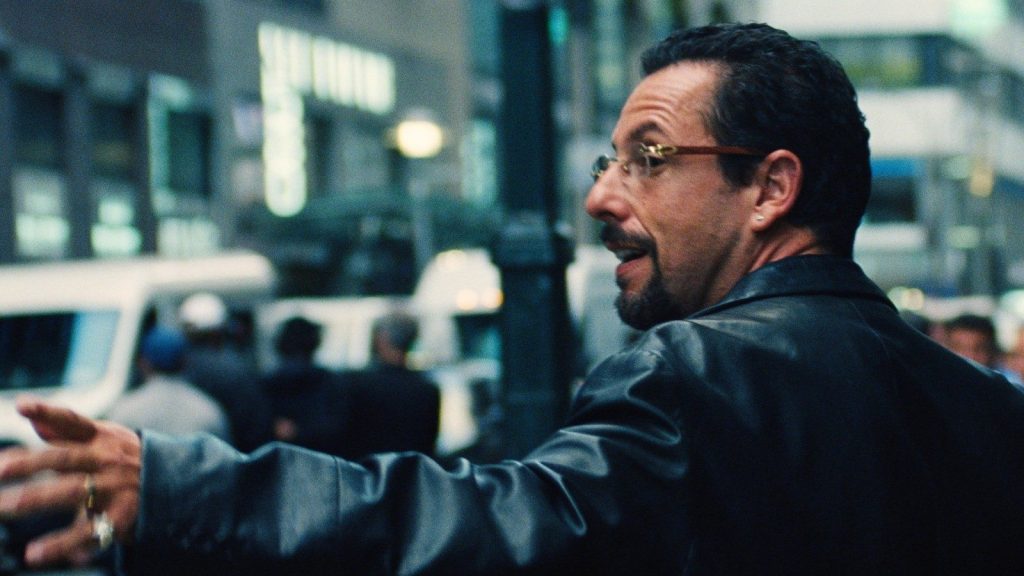
    Adam Sandler gives the transformative performance of his career as Howard Ratner, a diamond district jeweler whose obsession with sports gambling and the big score puts him at odds with clients, loan sharks and his estranged family.

    Sandler disappears so fully into Howard that it’s often hard to remember Sandler’s comedic work during “Gems.” There’s an eccentricity to Sandler’s performance that emboldens audiences to live inside the world of the film and accept this familiar character on his own terms and not as it relates to Sandler.

    When audiences watch an actor like Robert De Niro or Al Pacino, they often find themselves engulfed within their performances and still never take their minds off the fact that De Niro or Pacino are playing the parts. Who they are as personalities can never be totally removed from the work.

    Sandler’s Howard pulls viewers in so fully – in large part thanks to the Safdies’ pitch-perfect screenplay – that the comedian himself fades away behind the glasses and goatee, something Sandler has never been able to pull off before in a 20-plus year movie career.

    The film’s ensemble cast boasts a bevy of talented character actors with ruthless, memorable work including Eric Bogosian as a vindictive loan shark, Broadway and “Frozen” star Idina Menzel stunning as Howard’s angry wife Dinah and Lakeith Stanfield as Howard’s assistant and client valet.

    Former National Basketball Association star Kevin Garnett delivers a tremendous, intense performance as a fictionalized version of himself in one of the best acting performances by any major sports athlete, enhancing the film with an authentic, controlled turn that pushes the drama in new directions.

    The film’s breakout star is newcomer Julia Fox, who pulls focus away from Sandler in a wonderful supporting turn as Howard’s employee/mistress. Fox charms audiences in a way that feels manipulative but largely isn’t and her presence on screen is reminiscent of the dynamic energy Margot Robbie brought to her first major role in Martin Scorsese’s “The Wolf of Wall Street.”

    What sets “Gems” apart is the film’s relentless uncertainty where literally any outcome or repercussion can occur at any time. This keeps viewers apprehensively engaged and tense, forcing them into Howard’s corner as every action he takes feels like a miniature wager with ever-growing stakes.

    It’s a tremendous pairing of screenplay and performance that allows the chaotic pace of the film to genuine and earned rather than deliberately contrived. The Safdies, who have sought Sandler for the role of Howard for the better part of a decade, perfectly pen a character to fit the longtime comedic actor’s unique quirks in such a way that opens up Sandler to a world of new opportunities cinematically.

    Shot on 35 mm film, the visual artistry of “Gems” maintains a raw, gritty vibrancy and the Safdie brothers play with lights and colors to keep the dynamic energy of their screenplay alive regardless of the situation. This works especially well during a scene where Howard enters a club filled with blacklights which gives the screen an off blue hue complemented by a bright neon orange hoodie worn by a character antagonizing Howard that visually represents the story the Safdies are trying to tell.

    “Gems” is likely far too controversial for major awards season considerations although the movie will likely be heralded by critics and independent film groups.

    Sandler has an outside chance for a best actor nomination if newer members of the Academy rally behind him and the film, though it’s more likely their support will go to Eddie Murphy’s turn as a struggling comic turned movie star in Netflix’s “Dolemite Is My Name.”

    “Uncut Gems” clearly stands out as one of 2019’s best independent films and a dramatic career pinnacle for Sandler that needs to be seen on the big screen to truly be appreciated.

  • Jojo Rabbit: A funny thing about Adolf Hitler

    Jojo Rabbit: A funny thing about Adolf Hitler

    Comedy is the ultimate playground for escapism, for letting the worries and cares of daily life fade away in order to decompress and unwind.

    The best comedies, though, usually have unexpectedly a little bit more to say on their minds than first glance might suggest.

    There’s a hysterical new comedy hitting theaters this fall that combines a stellar, side-splitting screenplay and award-worthy performances.

    It’s also about Adolf Hitler and the Holocaust.

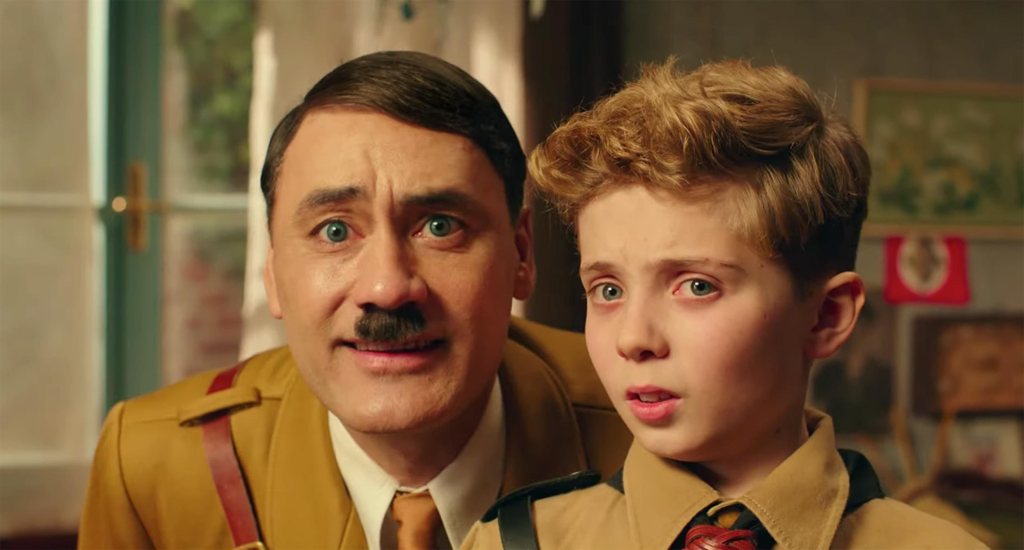
    “Jojo Rabbit,” the latest creation from avant-garde New Zealand writer/director/actor Taika Waititi, is brazenly unlike any other movie in 2019, boldly colorful and wildly subversive, a constant romp of a good time sure to put a smile on many adults’ faces this fall.

    Loosely adapted from the 2008 novel “Caging Skies” by Christine Leunens, “Jojo Rabbit” peers into the world of Nazi Germany through the eyes of 10-year-old Johannes, a deeply patriotic boy attending his first Hitler Youth camp alongside his imaginary friend, a childlike caricature of Adolf Hitler. After finding a Jewish girl in hiding, Jojo’s world changes drastically.

    Making his feature film debut, Roman Griffin Davis is a perfect protagonist for Waititi’s dark comedy. Easy to root for in spite of the outrageous venom that spews from the mouth of a Hitler youth, Davis displays genuine heart and naivety that transcends the hate and allows the dialogue to feel comically satirical.

    The openness Davis brings to his performance works wonders with the film’s female cast, especially Scarlett Johannson in a winning supporting turn as Jojo’s mother and indie darling Thomasin McKenzie as Elsa, the Jewish teen in hiding Jojo stumbles upon.

    Waititi assembles a terrific supporting cast to bring the humor while maintaining dramatic heart with Oscar winner Sam Rockwell, Rebel Wilson and Stephen Merchant as a Gestapo agent as standouts among the secondary characters.

    As is the case with many of his films, however, the comedic scene-stealer in “Jojo Rabbit” is Waititi himself, demonstrably absurd and quirky as the imaginary Adolf. Waititi brilliantly creates this version of the Nazi leader through the mind of his 10-year-old title character, which gives his Adolf a buffoonish quality for comedy. This also allows audiences to peer inside Jojo’s mind as he grows and changes over the course of the film, with Waititi’s Adolf reflecting the inner conflict of a child in war-torn Germany in a sensationally original way.

    “Jojo Rabbit” is smarter both as a film and a screenplay than its colorful, simplistic exterior might suggest. It’s true that Waititi’s latest feature is creatively absurdist and revels in the comedy of truly hateful speech.

    It also has earth-shattering moments of poignancy in stark reminder that the lessons of the past need to be heeded lest they return. The film’s unofficial moniker of being an “anti-hate satire” is incredibly apt.

    The satirical ridiculousness of “Jojo Rabbit” lands big laughs throughout, but there’s some unintended collateral damage that may find audiences uncomfortably giggling at Jewish stereotypes in a more derogatory fashion than one might find in a Mel Brooks film.

    However, there’s a deceptive amount of heart to the film, thanks in large part to Davis’ brilliant innocence in the title role and Johannson’s earnest compassion. “Jojo Rabbit” may be a lighthearted romp for most of its 100-minute running time, but it packs a wallop of dramatic punch at the core of the film.

    It’s quite conceivable that an outlandish, almost garish satire like “Jojo Rabbit” could be a major player come awards season as Waititi’s movie is certainly one of the 10 best films of 2019.

    An outside contender for a Best Picture Oscar nomination, the film is more likely to receive an adapted screenplay nod than anything else, although Johannson’s strong work here should boost her nomination and win chances for a leading role in the upcoming Netflix drama “Marriage Story.”

    Boldly creative in the style of Wes Anderson but with his own satirical quirks, Waititi’s “Jojo Rabbit” is among 2019’s best films and a movie certainly worth seeking out on the nearest big screen.

  • The Peanut Butter Falcon: Two bandits on the run

    The Peanut Butter Falcon: Two bandits on the run

    Anyone can tell a story.

    How you tell it is often as important, if not more important, than the story itself.

    When we talk about feel-good stories – tales that warm your heart and ease your mind – there’s a tendency for certain storytellers to emotionally manipulate their audience with a piece of dialogue, burst of somber music or a plethora of other ways.

    When a movie comes along that is pure and genuine in its feel-good storytelling, that has to be celebrated.

    Raw and unrefined, “The Peanut Butter Falcon” is a testament to the power of independent filmmaking.

    Writer/directors Tyler Nilson and Mike Schwartz create a world that has an almost primal authenticity and tells a story so plainly that the lack of a saccharin sugar-coated texture feels infinitely refreshing.

    The best feel-good stories are those that are genuine and authentic, often with a grit and edge that propels the story forward in unique and interesting ways.

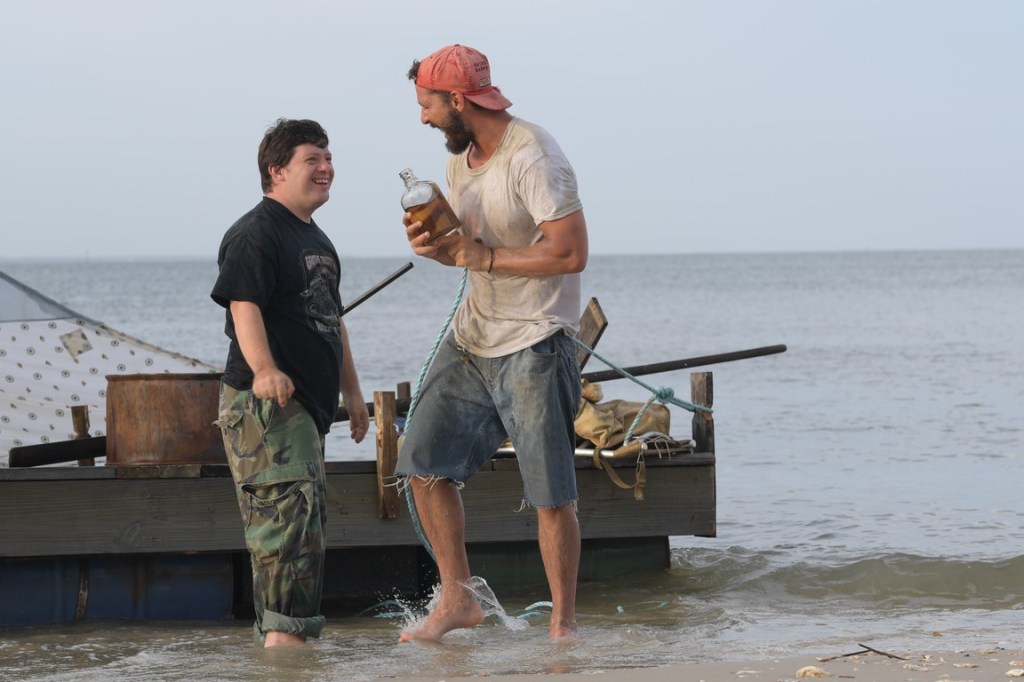
    “The Peanut Butter Falcon” follows Zak, a young man with Down Syndrome and dreams of becoming a professional wrestler like his hero The Salt Water Redneck. After escaping from the retirement home he lives in, Zak makes his way through the great outdoors towards wrestling school with the help of a man on the run.

    What holds “The Peanut Butter Falcon” together are a pair of unlikely performances that work incredibly well together.

    Newcomer Zack Gottsagen steals scene after scene against much more famous costars as the earnest yet determined Zak.

    Gottsagen infuses the character with a matter-of-fact naivety about the world outside his home that underlies how remarkably warm and genuine both the character and the actor are moment to moment.

    Nilson and Schwartz crafted “The Peanut Butter Falcon” for Gottsagen after being drawn to his presence, which reverberates off the screen. It’s a perfect match of performer and screenplay.

    Gottsagen’s strongest moments in the film are smaller, intimate conversations opposite Shia LeBeouf as fellow wayward traveler Tyler.

    The bond the two actors are able to develop feels uniquely authentic as LeBeouf’s Tyler takes a mentorship role to Zak in much the same way audiences see Tyler’s older brother care for him in flashbacks.

    LeBeouf is a terrific choice for Tyler as the troubled young actor seems to be pursuing a similar path of redemption amidst rebellion as the character he portrays. Presumptions about his real-life persona leak into audiences’ reaction to Tyler, making the journey his character takes with Zak all the more effective.

    Dakota Johnson gives an admirable turn in a woefully underwritten part as Zak’s caretaker out searching for him while Zak and Tyler travel south. Her chemistry with LeBeouf doesn’t work nearly as well as either actor does opposite Gottsagen, who provides the emotional core of the film with his boundless heart.

    The film is scattered with a number of wonderful smaller performances from the likes of Oscar nominees Bruce Dern and John Hawkes, former professional wrestlers Jake “The Snake” Roberts and Mick Foley and character actors Jon Bernthal and Thomas Haden Church that help to build the world of the film.

    Though the screenplay certainly evokes Mark Twain, where a natural Americana truly sinks in is in the film’s visceral cinematography.

    Much of the outdoor camerawork shines through a faded haze as if audiences are peering through panes of glass to watch Tyler and Zak on their Tom Sawyer-esque adventures.

    Visually, “The Peanut Butter Falcon” reinforces the notion of wayward travelers as director of photography Nigel Bluck makes great use of the film’s wide scope to bring the expanses of the southeast U.S. coastline to life as a secondary character.

    A true indie darling without the notoriety or star power to drive audiences to theaters, “The Peanut Butter Falcon” will likely be one of those underseen gems that viewers will find by happy accident on a streaming service one day.

    Those who dare to take an adventure to their local cinema will be thoroughly satisfied with the raw simplicity of the filmmaking and charmed by Gottsagen’s winning performance.

  • American Factory: The price of globalization

    American Factory: The price of globalization

    There have been a number of exceptional documentaries released in 2019 covering a range of political, historical and pop culture topics.

    Perhaps none sits quite on the threshold of where the United States stands currently in an everchanging global economy than the latest Netflix release, “American Factory.”

    A top non-fiction film and award winner to come out of this year’s Sundance Film Festival, this immersive look at international business, the daily struggles of blue collar workers and the growing threat of automation to large scale employment was recently chosen by former President Barack Obama and his wife Michelle to be the first film produced under their Higher Ground Productions label.

    Co-directors Steven Bognar and Julia Reichert embed themselves for several years at a closed General Motors plant in Dayton, Ohio which was in the process of being reopened to mass produce automobile glass for the Chinese company Fuyao.

    The filmmakers have incredible, unfathomable access both to employees on the floor and at home, but more astoundingly to top level execs at Fuyao speaking frankly in closed door meetings filmed as part of the documentary.

    Though viewers are likely to take one side or the other, Bognar and Reichert tell the story of Fuyao Glass America (FGA) as impartially as possible which allows their subjects remarkable authenticity as a result.

    “American Factory” approaches the Dayton plant from socioeconomic perspectives, but it’s nearly impossible to remove a viewer’s political biases from factoring in as audiences decide whether or not to support Fuyao’s corporate agenda or a growing effort on the floor to unionize labor.

    Perhaps the first scene that truly showcases the uniqueness and access of “American Factory” relates to the film’s lone political figure, Democratic Senator Sherrod Brown.

    Brown gives a speech at the grand opening of the FGA facility and includes unprompted support for the unionization of Fuyao employees, the first major reference to the theme in the film.

    Almost immediately, Bognar and Reichert take audiences behind the scenes with furious Fuyao executives railing against Brown’s brazen politization of their event, leaving one exec to swear that the senator would never set foot on the property again and suggesting that he would use ribbon cutting scissors to decapitate Brown.

    In this regard, the filmmakers do a remarkable job of showcasing the feelings audiences would expect the subjects to have off camera by somehow getting all involved to be exceptionally candid in their remarks.

    Since the film’s release, Fuyao has disputed some of the translations in the film, specifically remarks made by FGA chief executive officer Jeff Liu, where he is shown telling company chairman Cao Dewang that American employees supporting unionization efforts at the company had been fired.

    At its core, “American Factory” is a film about the cultural divide between blue collar Ohio workers on one side of the spectrum and Fuyao corporate management and supervisors sent from other facilities in China on the other.

    The duality of the struggle for these two cultures to co-exist in business is a tenuous balance and one that Bognar and Reichert go to great lengths to ensure their film tells both sides of this international tale.

    Viewers get incredible insight into how the American and Chinese subjects perceive each other at the outset and how that perception changes over time. What appear to be cultural sensitivity training seminars for incoming Chinese staff are perhaps the most surprising and telling scenes in the entire documentary as Fuyao execs frankly describe American workers as uninspired and entitled.

    The filmmakers include a wide array of subjects that color the documentary well, though few aside from Chairman Cao play a significant enough role in the film to be especially memorable on their own.

    This generalization affords “American Factory” the ability to universalize the stories of over 2,000 workers while still feeling extensive.

    Cinematography is bold throughout and often makes the seemingly mundane routine of making automobile glass feel artistic and beautiful.

    “American Factory” should prove to be a major player come awards season as Bognar and Reichert took home the Directing Award: U.S. Documentary at Sundance.

    With Netflix continuing a strong push in the category and the film being the first produced by the Obamas’ Higher Ground, “American Factory” seems likely to be an Academy Award nominee for Best Documentary next winter, if not the presumptive favorite.

    An easily accessible film thanks to Netflix’s decide to stream it day and date with its limited theatrical release, “American Factory” should be atop any ardent cinephile’s queue and is the best documentary to date in 2019.

  • The Souvenir: Love and other drugs

    The Souvenir: Love and other drugs

    Joanna Hogg doesn’t make life easy on her audience.

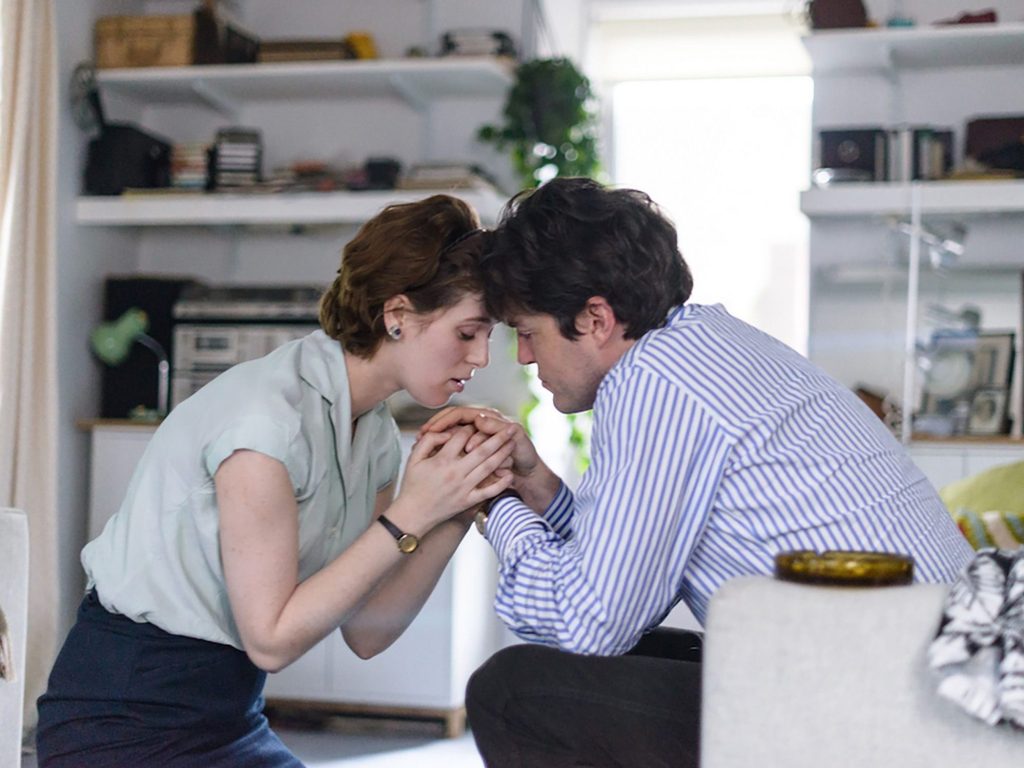
    Subtlety and layers of hidden context abound in her latest feature, “The Souvenir,” a semi-autobiographical drama she wrote and directed about a young film student’s destructive love affair with an older man set in the 1980s.

    Audiences are shown bits of Julie and Anthony’s time together in a piecemeal, fragmented way that’s part slice of lice, part melodrama and unlike any romance film viewers have likely seen before.

    “The Souvenir” plays out like a memory piece, following Julie down the rabbit hole of a relationship she’s unprepared to have consume her so deeply.

    Honor Swinton Byrne is astonishing as the idyllic ingenue of privilege whose inexperience living in a middle-class world is overwhelmed by Anthony’s increasing presence in her life.

    Byrne approaches the role with a genuine naivety that goes beyond the fact that “The Souvenir” is her first major on-screen performance. It’s often as if Julie is dipping her toes into the real world for the first time, scene by scene, growing and changing in subtle ways that even she fails to recognize.

    Tom Burke gives Anthony a dismissive distance that evokes an impression of callousness warmed or at least charmed by Julie’s infatuation. Over the course of the film, Burke reveals Anthony’s darker eccentricities slowly and meticulously so as to remove the veil from the eyes of both Julie and the audience in such a way that reveals Anthony’s true self while keeping Julie’s heart in the palm of his hand.

    “The Souvenir” is a portrait of an artist struggling to define herself based on a submissive relationship with a domineering personality. Whether that portrait is of Julie the character, Joanna the filmmaker or somewhere in between is the film’s greatest unanswerable question.

    Some audiences will find “The Souvenir” inaccessibly distant and cold for a variety of reasons: the film languishes in minutia rather than advancing plot in a significant way, there’s always a hidden double meaning lying under the surface of every scene, many conversations are technical meta-commentary on Hogg making the film audiences are watching in real time.

    Viewers have been conditioned to expect reliability from filmmakers on a narrative structure and other basic conceits of dialogue and character development that Hogg ignores here.

    It feels impossible to fully determine on an initial viewing whether events in “The Souvenir” happen linearly, are spiraling downward in circles or mismatched across the timeline as if they are moments in a dream coming into focus at random.

    The same can be said about the reality of “The Souvenir” in a much more compelling way.

    The things that happen to Julie within the main structure of the film appear to coexist with Julie’s work filming a fictional world based on her experiences that’s also layered within Hogg’s semi-autobiographical screenplay.

    Complex cinematography also plays a role here. Hogg layers her film with old photographs and Super-8 footage Hogg took in her youth that’s meant to represent Julie’s developing work.

    Blended with director of photography David Raedeker’s work in both film and digital crafted to look like 16 mm film, “The Souvenir” has a constantly fluid, changing visual style that magnifies the haze of memory the film aspires.

    Acute audiences will rightfully find themselves questioning each scene, wondering where things are going or, more to the point, where things might have been. It’s a rare and provoking concept to formulate a feature film around, incredibly meta and a way to accent mood and character over plot.

    “The Souvenir” seems better suited for a major showing at the British Academy Film Awards (BAFTAs) rather than the Oscars as Hogg’s feature is likely to be a frontrunner for Outstanding British Film and the Rising Star award for Byrne.

    A complex look at the power of infatuation, “The Souvenir” certainly earns its place among the year’s best films and multiple screenings can only enhance one’s understanding and appreciation for Hogg’s introspective work.

  • The Farewell: The value of a good lie

    The Farewell: The value of a good lie

    Many of the best films are personal, whether they be exact recreations of past events in the lives of those making them or simple adaptations of real life.

    Writer/director Lulu Wang took a unique cultural moment from her own life for her second feature film, “The Farewell.”

    “Based on an actual lie” as the film’s title card states, “The Farewell” fictionalizes a pivotal moment in Wang’s family as the structure for an intimate examination of life, joy and identity, both personal and cultural.

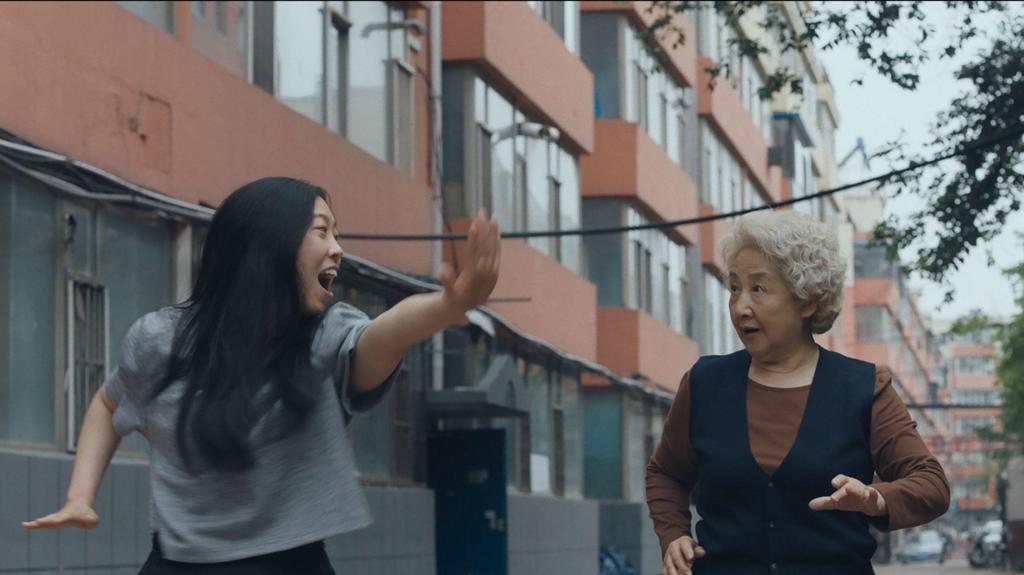
    Billi, a Chinese-American immigrant, returns to China when her grandmother Nai Nai is diagnosed with Stage 4 lung cancer. The film is a touching portrait of a multi-generational family in turmoil as they decide not to tell Nai Nai of her diagnosis but plan a rushed wedding as an excuse for family to see her one last time.

    Designed as an ensemble piece, the acting in “The Farewell” is strong throughout and yet it’s the relationship between Billi and Nai Nai that carries the heart and soul of Wang’s film.

    Actress and rapper Awkwafina gives her best, most dramatic performance to date in her first leading role as Billi.

    The usually demonstrative performer takes a measured approach to the character, often saying more with a look than words in an emotional, personal turn. This isn’t to say that Awkwafina lacks comedically here, as the moments of humor are delivered with ease.

    Awkwafina’s ability to take heavier material and play it authenticity is a wonderful surprise that makes “The Farewell” something special.

    However, the film’s true star is Shuzhen Zhao as Nai Nai, a perfect burst of warmth every time she appears on screen.

    The first-time performer is tailor made for the pivotal role of grandmother and family matriarch with a presence that is equally regal and vibrant.

    “The Farewell” works as well as it does because audiences are able to easily relate to and fall in love with Zhao’s natural performance. For 90 minutes, she is the audience’s “Nai Nai,” the Chinese word for grandmother.

    Subtle and soulful, “The Farewell” is a masterful demonstration of restraint. It’s a film that could have easily been pushed to its comedic and dramatic limits with forceful, awards-bait exaggerations of dialogue.

    Wang and her cast take a carefully considered, nuanced approach to the storytelling, giving moments time to breathe naturally without pulling away from the invasive awkwardness viewers will certainly feel at times throughout the film.

    This does not mean that “The Farewell” is excessive with its time. Wang smartly jump cuts from scene to scene (or occasionally within the same moment) to give audiences the feeling of time or location changing without actually spending the time to show the action on screen.

    Wang insists on a present audience to engage with her film, one that can react to moments as they happen naturally without prompting on the part of the filmmakers.

    This is especially true when it comes to the shrewd decision to make “The Farewell” a multi-lingual piece of cinema.

    Rather than force characters to speak English instead of their native language to accommodate American audiences, much of “The Farewell” is spoken in Mandarin with English subtitles. This language barrier plays as a character point for Billi, whose Chinese is admittedly not great, and allows for her to openly communicate with family members in English without Nai Nai understanding.

    “The Farewell” is assured to be a top awards contender on the independent circuit. Though its place come Oscar season is less certain, Wang’s film is one of two features to be released so far in 2019 – “Once Upon A Time In Hollywood” being the other – that could make major waves at the Academy Awards.

    Wang could easily be nominated for her well-crafted screenplay and direction, while Awkwafina and Zhao are certainly worthy of Best Actress and Best Supporting Actress nominations respectively.

    Powerfully subdued and thoughtful, “The Farewell” is a terrific independent film that will remain among the year’s best and one that is worth seeking out in theaters.