Primary category for full-length reviews of newly released films. Select for standard reviews; remove it when publishing After the Credits, Commentary & Essays, or non-review retrospectives. This remains WordPress’s default post category.
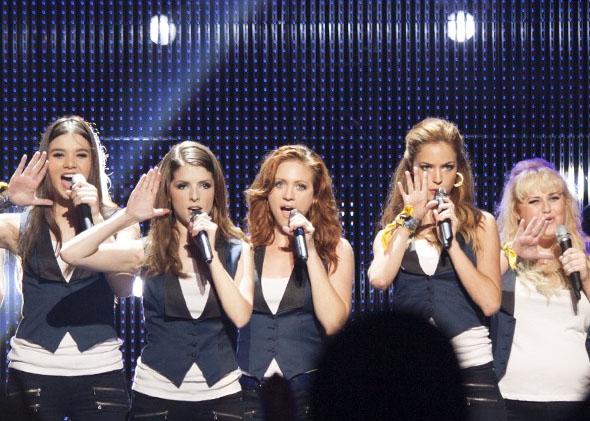
While “Mad Max: Fury Road” does a masterful job of weaving a feminist message into an action film, “Pitch Perfect 2” smashes stereotypes straight out of a Spice Girls song over viewers’ heads like that annoying song you can’t get out of your head stuck on repeat for hours on end.
That song, by the way, in “Pitch Perfect 2” is the Pitbull song “Timber” featuring Kesha.
For a film designed to celebrate individuality and diversity, the second a Capella theatrical go-round is the ultimate vanilla of films, providing audiences with absolutely nothing that they haven’t seen before.
“Pitch Perfect 2” is what happens when you take a mediocre, fourth season episode of the television show “Glee” and perform a ‘mash-up’ with the script to 1994’s “D2: The Mighty Ducks,” which featured a young Joshua Jackson taking a rag-tag group of hockey players into international competition, representing America against an evil European squad clad in black.
Sound familiar?
Everything about this off-pitch sequel is nothing more than a rehash of the first film in the franchise and the answer to the question romantic comedy audiences ask for about five seconds after they leave the theater, but before they realize they don’t care: “I wonder what happens to those characters in like five years.”
The biggest mistake made by screenwriter Kay Cannon is relegating Academy Award-nominee Anna Kendrick to the background in a franchise that only exists because of her leading performance in the 2012 original.
The film lacks the dynamic personality and wry charm that Kendrick feels most at ease in, with Cannon opting to write the franchise’s star off as a secondary plot element to give more screen time for poorly timed jokes about weight and sex issues.
With her career living in the shadow of her own Fat Amy character, Rebel Wilson continues to stumble down the haphazard path of Melissa McCarthy down the track to one-trick pony land.
Because remakes are the kitsch films to make in Hollywood, it feels like a “Thelma and Louise” reboot with McCarthy and Wilson inevitably has to be a year or two away. Some poor screenwriter has to have tossed this around at some point, right?
Perhaps it’s the comedy genre that suffers most in the second go-round. Originality isn’t as essential in B-rated action films, as has been proven on six occasions by the “Fast and Furious” franchise.
Did we not learn our lesson from “Caddyshack II” that comedy sequels are a bad idea?
More than any other type of film, the art of making people laugh is inherently more difficult than, say, making people cry. It’s why good actors do drama and great actors have the timing for comedy.
Films like the Reese Witherspoon and Sofia Vergara-driven “Hot Pursuit” don’t help the matter any, especially when that derivative mess of a feature is one of only a handful of movies led by strong, independent women this year.
Since there’s still another week of waiting for Anna Kendrick to save audiences with “Pitch Perfect 2,” avid moviegoers are forced to hit the independent film circuit for good laughs, but even that’s a mixed bag.
Enter Kristen Wiig.
While many viewers will remember her best for her roles on “Saturday Night Live” and breaking into Hollywood with the sensational “Bridesmaids,” it’s in the smaller, independent films that Wiig does her finest work.
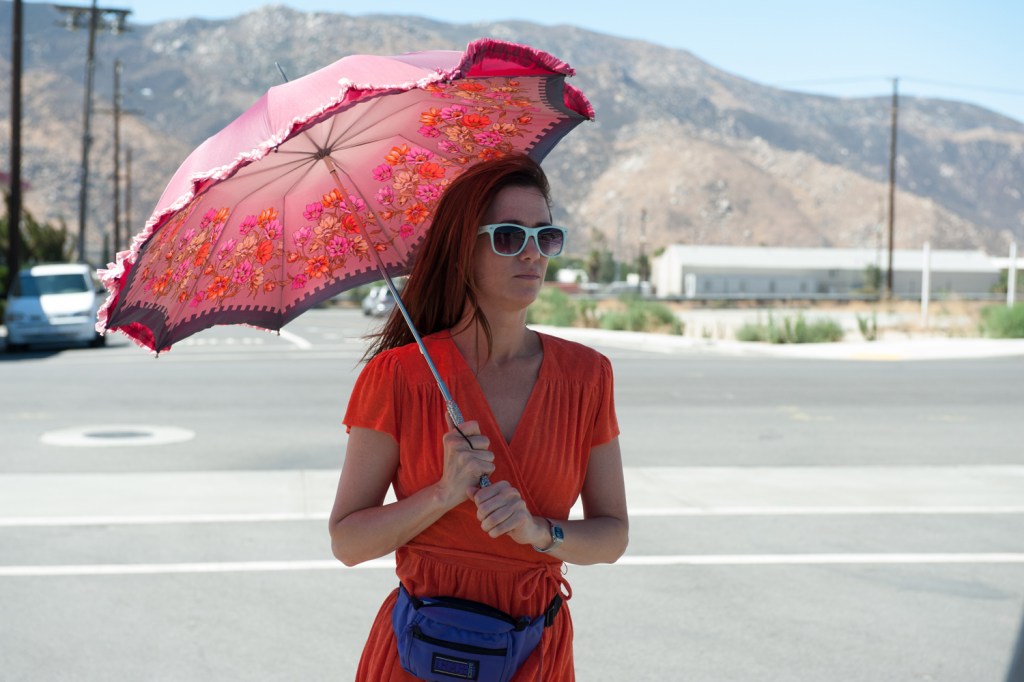
Her latest feature, “Welcome to Me,” is no exception.
The film, available on demand and expanding theatrically across the country, follows Wiig’s Alice Krieg, a woman with borderline personality disorder who purchases her own daytime talk show after winning $86 million in the lottery.
It’s a film that, in the hands of a major studio, could have become another “Hot Pursuit,” oversaturated with unnecessary pop culture references and self-deprecating humor.
There’s little of that “studio humor” in “Welcome to Me,” a refreshingly wonderful film that evokes so many great cult classic comedies.
Wiig shows off her emotional range — proving that talented performers with acting chops can be just as adept in drama as they are in comedy.
Quirky and slightly off-putting at first, there’s just enough charm slipped into Wiig’s Alice that allows viewers to settle comfortably into the film and, ultimately, root for the best things for Alice.
The movie also boasts a strong supporting cast, including veteran actors, including Tim Robbins, James Marsden, Joan Cusack, Alan Tudyk and Jennifer Jason Leigh as well as Linda Cardellini and Wes Bentley.
In its purest sense, “Welcome to Me” is the modern, feminine companion film to the cult classic comedy “UHF” starring Weird Al Yankovic.
Much of the film occurs within the confines of Alice’s show, aptly titled “Welcome to Me,” and it helps viewers come to understand the uniqueness of Alice’s character in a new and original way through a terrific script by Eliot Laurence.
Alice’s borderline personality disorder defines who she is as a character, but Laurence never lets the script devolve into caricature.
It would have been easy to have Wiig push her off the emotional edge and make something more akin to “The Truman Show” or “Nightcrawler,” where Jake Gyllenhaal’s obsessions consume him.
Laurence makes sure audience members are laughing with Alice as she works through life off her medication, not at her.
To be sure, “Welcome to Me” isn’t the feel-good movie of the summer by any means. The film is a hard R with explicit content and rough around its comedic edges. It definitely takes a refined, mature audience in order for “Welcome to Me” to be understood and appreciated in the right contexts.
But, on Wiig’s performance alone, the film is definitely one of the best dramedies to come along in several years and a worthy choice for age-appropriate audiences.
Not faring well on the independent dramedy circuit is the up-and-down “Adult Beginners” from writer and star Nick Kroll of “The League.”
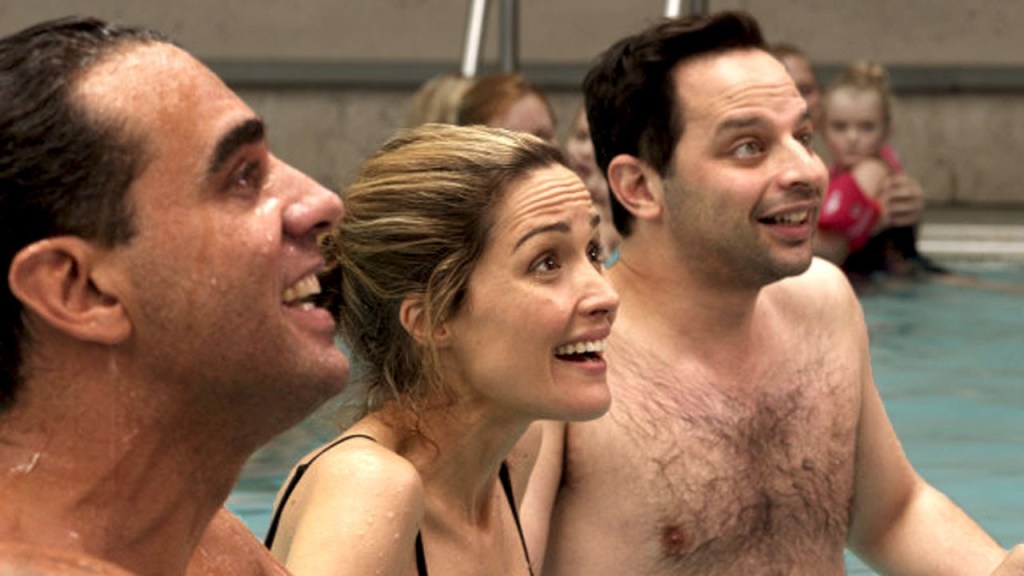
Boasting a strong cast — including Rose Byrne of “Neighbors” and veteran character actor Bobby Cannavale — the film has flashes of greatness, but never rises above its script, which has a distinct “done too many times before” vibe to it.
It’s easy for viewers to track the predictable “Adult Beginners,” which follows Kroll’s Jake as he loses everything and is forced to move in with his pregnant sister (Byrne) and her husband (Cannavale).
While scenes between Kroll and his young nephew, Teddy, are cute and perhaps the most humorous of the film, truly funny jokes are few and far between as originality in comedy continues to be harder and harder to find.
Probably the biggest flaw in “Adult Beginners” comes from the uneven tone of the film, which makes an incredibly bumpy transition from studio comedy to independent drama in the final act.
Ironically, the film’s closest comparison is the Weinstein Company dramedy “St. Vincent,” which remains a superior version of the same sort of film.
“Adult Beginners” isn’t the best independent dramedy making the rounds right now, especially with 2015 Hill Country Film Festival Cinema Dulce winner “Night Owls” looming on the horizon.
But for those seeking something different while browsing video on-demand selections, “Adult Beginners” is still worth a look.
What exactly do we as viewers want out of superhero movies anymore?
Last weekend’s release of the cinematic blockbuster “Avengers: Age of Ultron” has moviegoers questioning themselves and everything they know about the emerging titan genre of cinema.
It’s almost as if it’s not enough for a quality superhero movie to be engaging and thrilling and witty with quality direction, a good script and compelling performances.
Nothing seems like it’s going to come close any time soon to the apex of the genre, Christopher Nolan’s cinematic experience, “The Dark Knight,” but when it comes to true fantasy superhero films, things don’t get much better than BOTH “Avengers” films.
Director Joss Whedon’s first foray into the Marvel Studios world was a culmination of years executing a carefully crafted vision that took comic book films to a whole other level. Anticipation grew with every post credits teaser and film announcement. “The Avengers” rode in on so much positive momentum that it feels as viewers have cheated themselves out of a great movie, expecting a life changing experience.
The Marvel Cinematic Universe — a franchise beginning with 2008’s “Iron Man” and spanning 11 released films through “Age of Ultron” — is a highly integrated world that continues to expand in scale with each installment. In fact, 11 more films are already on the books through 2019, with “Ant-Man” expected to debut July 17.
It’s certainly not impossible to catch on to the events of “Age of Ultron” without catching up on all the carefully constructed backstories expounded on in the franchise, but understanding what’s going on scene to scene will be extremely difficult.
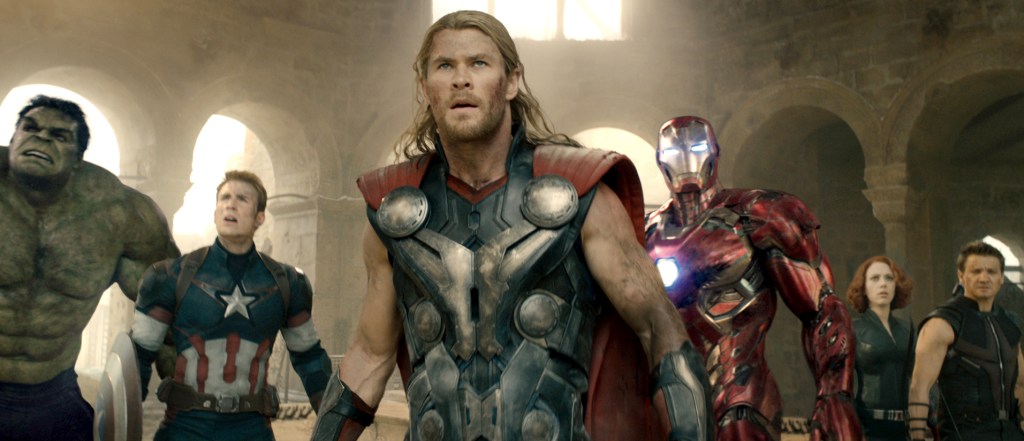
“The Avengers” is nothing more than the “Ocean’s 11” of superhero films as Iron Man, Captain America, Thor and the gang are all back in the fold for world saving part two with a handful of secondary characters like War Machine and Falcon tossed in for good measure.
The real star of the second Avengers go-round is Jeremy Renner, whose Hawkeye character went from mindless servant in the first film to the emotional core of “Age of Ultron.” Renner, perhaps the most talented actor among the leading men, handles his role with a quiet, yet firm control. Viewers are best able to understand the stakes of each mission through his eyes, especially as his Hawkeye is one of the most human characters in the Marvel franchise.
Robert Downey Jr. and Chris Evans continue to build tension between their respective Iron Man and Captain America characters, further laying the groundwork for an expected battle between the two in next year’s “Captain America: Civil War.” Downey, who usually overwhelms any scene he’s in as Iron Man, is more relaxed and has taken a relative backseat in “Age of Ultron,” despite being the impetus for much of the film’s plot.
Chris Hemsworth does yeoman’s work as the background character tasked with making the mundane expository information seem interesting, though there’s so much going on in “Age of Ultron,” it’s hard to see how Whedon could have expanded his role without significantly increasing the 150 minute running time.
As the power-crazed robot Ultron, James Spader provides the most compelling villain in the Marvel universe. His Ultron is calculated, yet multidimensional and there’s no other actor that could have pulled off the dry wit and candor that Spader provides to add depth to a relatively simple character. It would have been very easy for Spader to simply phone in his performance, recording everything via voiceover and calling it a day. Spader’s on-set work, especially in the motion capture work, is readily apparent on screen and helps to round out Ultron.
The “Age of Ultron” script benefits greatly from Whedon’s comedic barbs, which worked so well in “The Avengers.” In fact, the first half of the film is quite possibly the funniest movie to have been released in the last six months.
Violence typical of superhero movies is prevalent in “Age of Ultron,” though only slightly darker than the first “Avengers” installment. Parents need to be aware that a romantic subplot between Mark Ruffalo’s Hulk and Scarlett Johannsson’s Black Widow involves discussion of forced female sterilization.
Ultimately, the question of whether or not individual viewers will enjoy “Age of Ultron” comes down to what they want out of superhero movies nowadays.
Those not content with simply enjoying popcorn films and that crave a deeper level of thinking will probably leave theaters disappointed. Make no mistake, however, this latest Marvel installment is leaps and bounds better than the three most recent films featuring Avengers in solo missions — “Iron Man 3,” “Thor: The Dark World” and “Captain America: The Winter Soldier.”
It’s interesting that the most unknown superheroes put on screen, last year’s surprise smash hit “Guardians of the Galaxy,” arrived in theaters immediately before “Age of Ultron.” It seems that this film in particular — with its originality, humor and likeable cast of misfit characters — has changed the way that viewers approach “Age of Ultron.” Flip the release dates of these two films and there’s little doubt that audiences would respond better to both films, especially “Ultron.”
For those viewers who can’t get enough of the Marvel Cinematic Universe — the ones who have forgiven the significant flaws in “Iron Man 3” and don’t mind multiple Hulk recastings (Eric Bana in “Hulk” to Edward Norton in “The Incredible Hulk” to Ruffalo in the Avengers films) — this installment in the franchise is everything they could have possibly wanted out of the film and more.
Fans will geek out over that incredible fight between Iron Man and the Hulk that’s been taunting them in trailers and, save for Clark Gregg’s Coulson character who migrated over to ABC’s “Agents of SHIELD,” everything they love about “The Avengers” is back, bigger and louder than before.
To be sure, “Age of Ultron” probably needs multiple viewings before judgment is passed because there’s so much going on in every scene. But for a franchise that has given audiences top-notch entertainment for nearly a decade and surprised at every term, doesn’t the Marvel Cinematic Universe deserve the benefit of the doubt?
Whedon’s “Age of Ultron,” probably his last Marvel film in the foreseeable future, has exactly the right amount of action, emotion, humor and heart that should keep audiences on the edge of their seats clamoring for more. At the end of the day, isn’t that what viewers ultimately want out of their superhero films?
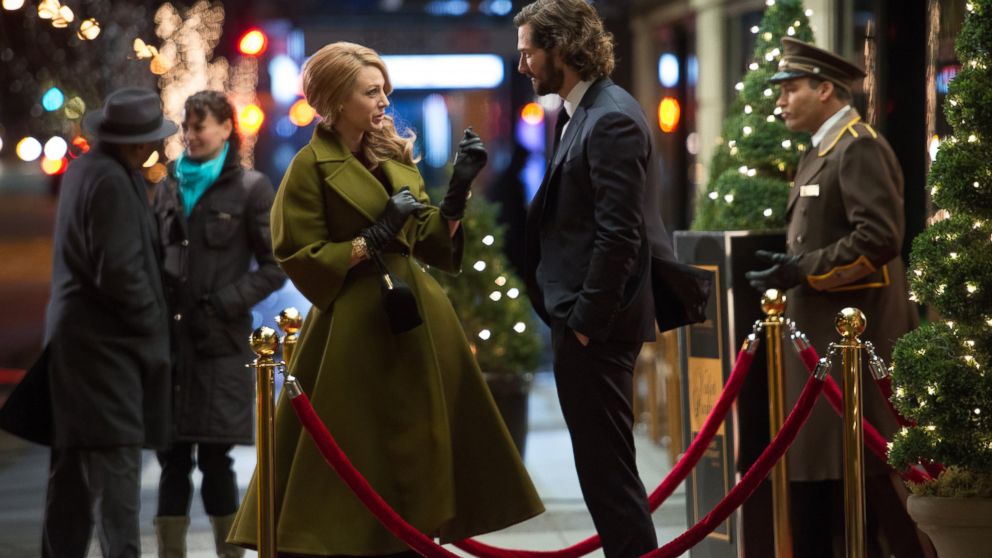
Don’t look now, but Blake Lively is a movie STAR deserving of capital letters and could very well become a future Best Actress award winner.
“The Age of Adaline,” an otherwise pedestrian film, is nothing short of a coming out party for the young actress. Sure, Lively doesn’t have the film credits and accolades on the mantle like Jennifer Lawrence, but few young actresses can captivate an audience like Lively does in “Adaline.”
From the moment Lively appears on screen, every little thing she does is mesmerizing — a true vintage Hollywood performance evoking Audrey Hepburn. This shouldn’t come as much of a surprise to avid Lively fans, who had to be blown away by her transformative performance as a drugged out harlot in the spectacular heist film “The Town.”
The sky is the limit for Lively, which is much more than can be said for the rest of a messy and underwhelming “Age of Adaline.” Co-star Michiel Huisman is way out of his class trying to draw viewers away from Lively even for a brief moment. His angsty, generic boyfriend character is a borderline stalker with a supposed heart of gold, but audiences are left wondering why he is deserving of such a beautiful, yet flawed character.
The plot, which hammers home the same tired romance tropes in science fiction fashion like “About Time” and “The Time Traveler’s Wife,” is nothing much to write home about, although Lively elevates each scene she’s in far beyond the quality of the written page.
Secondary roles — which feel like cameos by comparison — given to Ellen Burstyn and Harrison Ford are well acted, yet conceptually flawed and lacking development. Only Lively’s Adaline is both given the time to fully develop as a character on screen and have an actor worthy of the role on screen.
Viewers should consider themselves lucky the Adaline part went to Lively and not its original star, Katherine Heigl. Sometimes one performance can completely make or break a film’s critical and box office success, and Lionsgate hit a home run with Lively, who likely was the only actress besides Anne Hathaway that could have successfully pulled off the role. Lively’s performance alone pushed “Adaline” out of the cinematic gutter and into a date night movie legitimately worth seeing in theaters.
Lively will blow you away with her classic elegance, grace and charm and sometimes, especially this time, that’s enough.
It’s still the time of year where movies just seem to run together in a way that makes them devoid of anything special or unique.
Though Hollywood isn’t quite out of this annual funk, the cinematic landscape is starting to escape from the winter wasteland where films go to die and emerging in a spring season that gives moviegoers hope for a quality 2015.
“Woman in Gold,” despite its flaws, is one of those films that viewers can hang their hopes on, thanks in large part to the acting prowess of Dame Helen Mirren.
It shouldn’t come as a surprise to regular moviegoers that her dynamic on-screen talent can mesmerize viewers to believe the unbelievable and ignore flaws within the filmmaking.
Morgan Freeman — and to a lesser extent Meryl Streep — have this same ability.
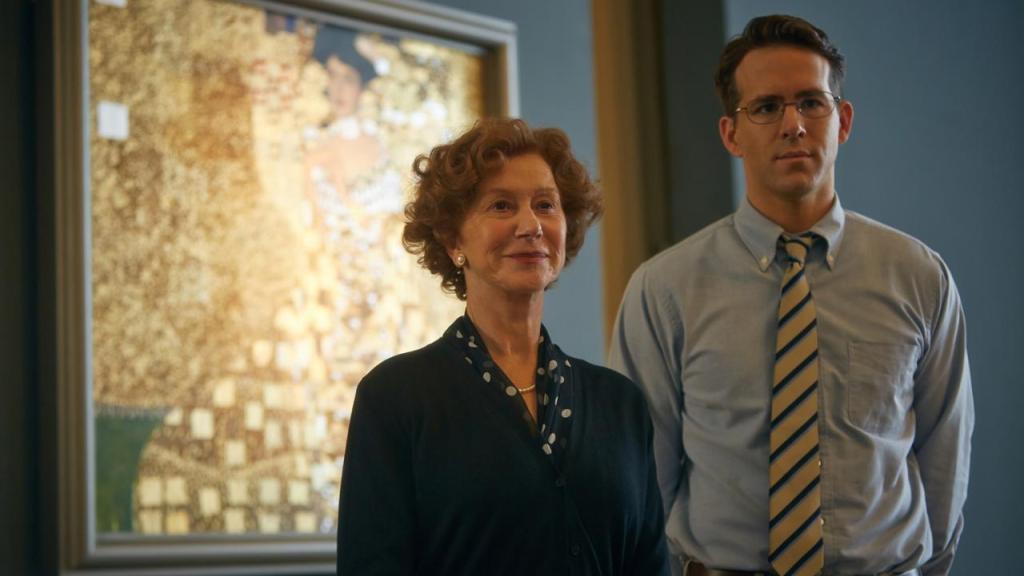
Based on a true story, “Woman in Gold” finds Mirren portraying elderly Austrian immigrant Maria Altmann seeking to be reunited with a famed portrait of her aunt stolen from her family by the Nazis and held in legal red tape by Austria.
The film is well-intentioned, but doesn’t really quite have a true direction, which should fall at the feet of either director Simon Curtis, screenwriter Alexi Kaye Campbell or both.
Within “Woman in Gold” are three distinctive movies that feel like puzzle pieces that fit together without mashing, but yet are just off enough to not be in the right spot.
There’s the period drama that focuses on a young girl’s escape from a Nazi-controlled Austria, there’s the courtroom battle drama which finds a mediocre attorney given the case of his lifetime and then there’s the somber reflection drama where an old woman seeks to reclaim a part of her family legacy.
Put bluntly, “Woman in Gold” is “Schindler’s List,” “A Few Good Men” and “Philomena” all wrapped into one slightly misshapen package.
But the film works thanks to its leading lady.
If Helen Mirren says you should take co-star Ryan Reynolds seriously as a fledgling young attorney, then you by golly better take him seriously.
Indeed, Reynolds gives an admirable effort as Mirren’s lawyer Schoenberg, though it’s still hard to overcome the sly grin subtly belying the actor’s performance.
It’s as if Reynolds is constantly faced with an overwhelming wave of smarmy typecasting that he bravely swims upstream against in “Woman in Gold,” but the Canadian actor has yet to overcome the stigma of his filmography the way Bradley Cooper did with films like “Silver Linings Playbook” and “American Sniper.”
Reynolds, in a dramatic role, only works when Mirren is able to elevate the scene as a whole.
The film’s secondary stars are a mixed bag as Katie Holmes is given almost nothing to do in a wasted role, while Golden Globe nominee Daniel Brühl does yeoman’s work in a critical expository role as an Austrian contact for Mirren and Reynolds.
The real emerging star of “Woman in Gold” is Tatiana Maslany of “Orphan Black” fame, whose performance as a young Maria, living as a Jewish woman in Austria during World War II, gives the film — and Mirren’s performance — the weight needed to resonate with viewers.
While the transitions in and out of flashback sequences featuring Maslany are clunky to say the best, each time viewers are established in the WWII-era, the film speeds along.
“Woman in Gold” establishes itself as the second landmark film in the latter stages of Mirren’s career, joining her work as Queen Elizabeth II in 2006’s “The Queen” as one of the best performances in her illustrious, four-decade career.
Her decadent work is worth the price of admission alone in an otherwise flawed, but successful period drama.
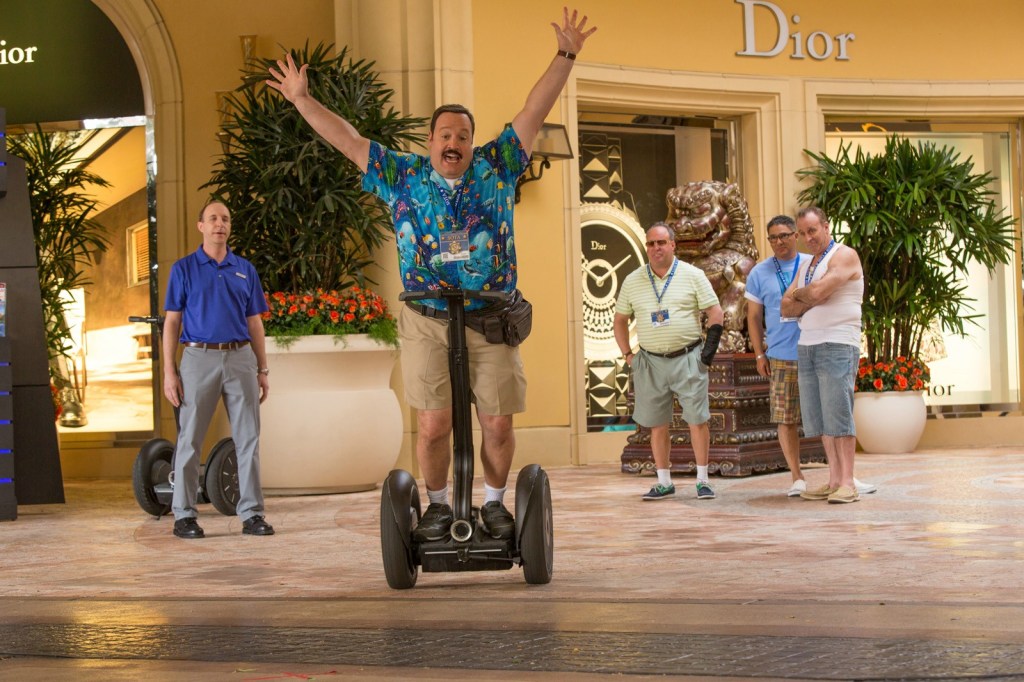
This week’s biggest release, “Paul Blart: Mall Cop 2,” arrives in theaters on the assumption that bigger is better — both figuratively and literally — when it comes to sequels.
Yet, like the lackluster “Dumb and Dumber To” before it, “Blart 2” is a sequel no one really asked for.
The premise of star Kevin James getting an all-expenses paid vacation to Las Vegas and saving art from being stolen from the Wynn casino is flimsy.
Somehow, the jokes — which even the youngest viewers can see coming from miles away — are worse.
To be sure, this is probably family-friendly filmmaking, but “entertainment” might not be the best word to describe what “Blart 2” ends up being.
Moviegoers, especially families, deserve better from Hollywood studios than this. Their voice needs to be heard at the box office.
Almost a year following its world premiere at the 2014 Cannes Film Festival, “Lost River,” the directorial debut of mercurial talent Ryan Gosling has finally wandered onto screens across America via video on demand.
It’s likely that the loud chorus of boos that the film received from the Cannes audience has shelved the film for this long, but it’s important to remember that Cannes audiences also took Harmony Korine’s South Beach odyssey “Spring Breakers” — a film that holds up surprisingly well in retrospect — to task.
It certainly wouldn’t be surprising if critics will continue their boisterous disapproval as “Lost River” finally makes its way over to America, but a word of caution: Don’t lose sight of the forest for all of the trees when it comes to this film.
Released commercially in the United Kingdom with a limited U.S. run on Friday, the film has glimpses of brilliance masked in a world of confusion. Nothing about what happens in the 95-minute feature makes any sense.
For all the negativity surrounding this movie — and it will come washing down like the dams that symbolically flooded entire towns to help create the world of “Lost River” — what may very well be lost (no pun intended) within the discussion is that, at its core, it’s an art film.
Like its kindred spirit “Beasts of the Southern Wild,” Gosling’s debut feature is an independent showcase of visual artistry loosely framed around recent socio-economic problems in the U.S. with dank, Detroit-esque Lost River replacing the Louisiana bayous found in “Beasts.”
There’s a whole of talent — including “Mad Men” veteran Christina Hendricks, former “Doctor Who” Matt Smith, Gosling love Eva Mendes and Saoirse Ronan of “The Grand Budapest Hotel — found onscreen for the tale of a single mother and her two sons trying to survive in a semi-post-apocalyptic outskirt of what is likely Detroit.
Two parts sci-fi, one part melodrama with splashes of horror tossed in for good measure — the film is not for the faint at heart as both Hendricks and Mendes perform graphic and grotesque mutilation scenes as part of an underground violence disco styled like a strip club.
Enigmatic from start to finish, “Lost River” bathes in its own uniqueness, reveling in an attempt to make every shot of the film feel like a canvas hanging in the Metropolitan Museum of Western Art.
Gosling directs like an artist who believes he is painting a cinematic masterpiece with broad strokes of genius and he’s not entirely wrong in that assumption.
But yet again, the fatal flaw of “Lost River” is that none of it — from the acting to the plot to the cinematography and soundtrack — makes any sense. It’s a point that cannot be expressed enough.
Fans of Gosling hoping to catch a glimpse of the next stage of his career need to understand that the future holds more “Drive” than “The Notebook.”
How he navigates the waters of his own journey as an auteur will likely decide the ultimate fate of “Lost River,” a film that moviegoers need to make their own decisions about.
For all the talk about the emergence of Clint Eastwood’s son, Scott, if there’s one thing that should be absolutely clear to moviegoers following a screening of “The Longest Ride,” it’s that Alda is a cinematic treasure we all need to be thankful for.
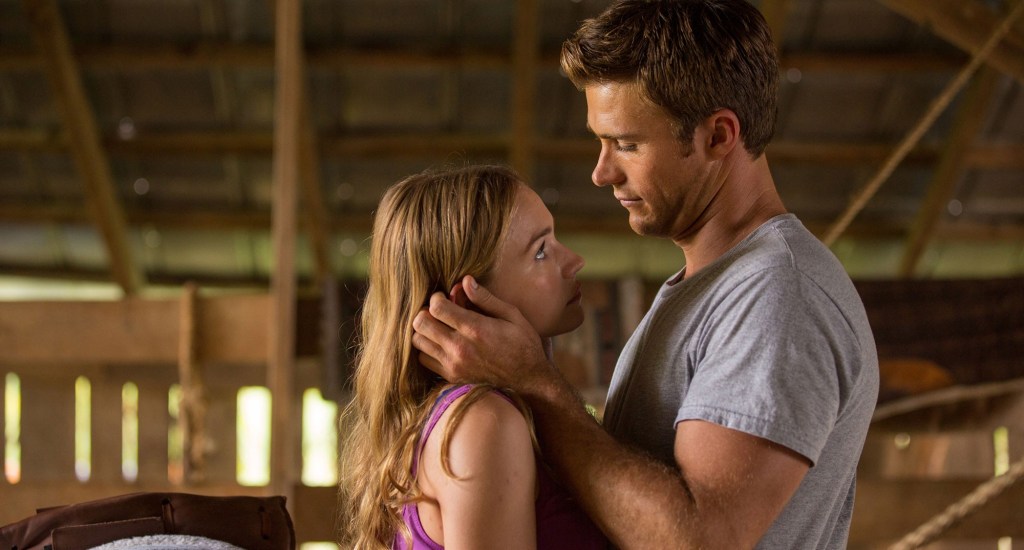
The latest in an increasingly predictable line of films based on Nicholas Sparks novels finds the younger Eastwood as a pro bull rider and the perfect Southern gentleman who falls in love with a young art student played by Britt Robertson of the upcoming “Tomorrowland.”
There’s nothing really memorable or overly heartwarming about their romance beyond the superficial. In fact, their love affair isn’t even the one that viewers will cling to by the time the film ends.
Clint isn’t coming to rescue his son from himself or from viewers, but Alda saves the day as the charming and charismatic patron saint of the film, an elderly gentleman saved by the young couple who both take a respectable Southern shine to him.
Through flashback sequences, Alda shares the story of his own great love affair portrayed by “Boardwalk Empire” star Jack Huston and Oona Chaplin, granddaughter of the famed silent film star Charlie Chaplin.
The depth of character development taken by all three elder actors completely outshines Eastwood and Robertson, though that may very well be due in part to better material.
Viewers become much more invested in the film during the Huston-Chaplin love affair as described by Alda, ironically causing moviegoers to inherently care more about the secondary romance between Eastwood and Robertson in spite of its relative campiness.
Alda’s performance in the film — by far the best work by any supporting actor so far this year — is reason enough to go and see an otherwise pedestrian romance film.
There’s likely a better date night movie on the way with the release of the Blake Lively-led “The Age of Adaline” on April 24, but for couples who just can’t wait to get to the movies, you can’t go wrong with “The Longest Ride.”
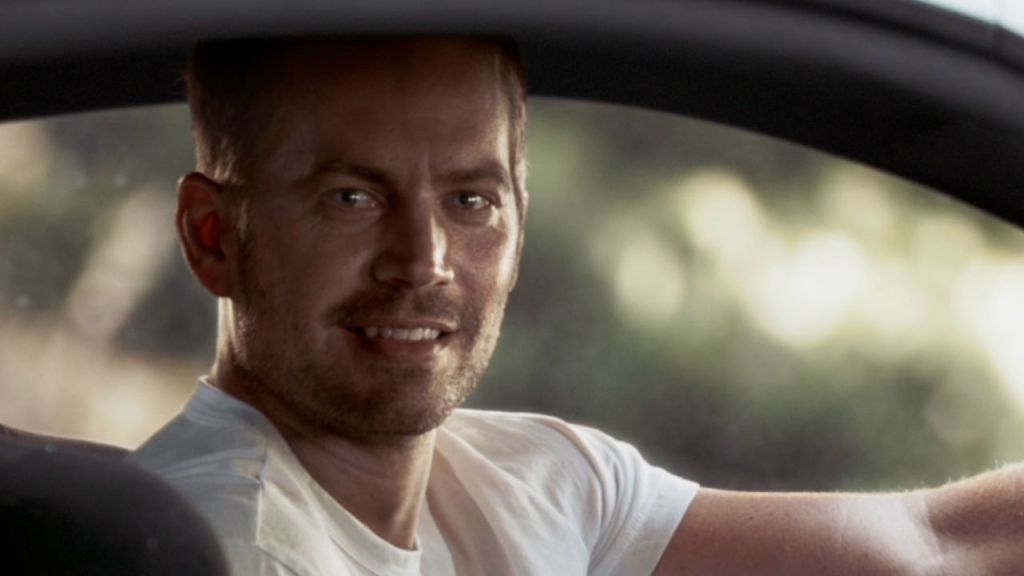
“Furious 7,” the latest in the street racing “The Fast and the Furious” franchise, will forever be tied to the tragic death of leading man Paul Walker, who makes his final on screen appearance nearly two years after a fatal, yet unrelated, car accident.
It’s a tragedy tied to a film in much the same way that Heath Ledger’s death looms large over “The Dark Knight,” a film Ledger posthumously won a Best Supporting Actor Oscar for as the perfect superhero villain Joker.
Walker’s untimely death hovers in the background of “Furious 7,” never more poignant than in scenes where street racing crew members Tyrese and Ludacris vow never to attend another funeral for a member of their unlikely band of antihero criminals. Family plays a large role both on and off screen in “Furious 7” as stars Walker and Vin Diesel became as close as brothers.
Every moment within the film, otherwise a straightforward action sequel, takes on a new depth that is unmatched within the genre and also unrepeatable within cinema.
Few moviegoers who have followed Walker’s career, mostly through this series of films, will be able to leave theaters with dry eyes. The film’s final moments — a touching retrospective look at Walker and a final scene with Diesel — represent the most authentic cinema the action genre has produced in at least a decade.
But unfortunately for newcomers, this impact will be largely missed as “Furious 7” requires — and almost insists upon — viewers having previously seen the first six iterations of the franchise. Even the outlier third film “The Fast and The Furious: Tokyo Drift” plays a significant role in the plot of “Furious 7.” Clearly, the film isn’t intended for drop-in, first time viewers, but there’s still enough consistent action pacing “Furious 7” to keep newcomers engaged in the movie.
One of the more successful movie franchises out there, these notably top notch, B-rate action fodder films work consistently from sequel to sequel because the franchise slowly builds up its cast of characters, not over burdening viewers with too much back story to decipher in a genre that demands less thinking. Adding a major player like The Rock in the series’ fifth iteration — and now Jason Statham in its seventh — is a slow burn that works much better than “The Expendables” franchise at developing a series the right way.
“Furious 7” ascribes to the “bigger is better” school of action films largely populated by the work of director Michael Bay, but director James Wan makes the most of his debut in the “Furious” franchise. Cars parachuting from airplanes like soldiers and crashing through skyscraper after skyscraper works because of the trend set by the franchise.
On the whole, “Furious 7” rightfully serves as Walker’s cinematic swan song and respectfully honors his memory in a way that still leaves the door cracked open just enough for the racing to continue on for many years to come.