Category: New Releases

Primary category for full-length reviews of newly released films. Select for standard reviews; remove it when publishing After the Credits, Commentary & Essays, or non-review retrospectives. This remains WordPress’s default post category.

  • Get Hard: Failing cultural sensitivity tests

    Get Hard: Failing cultural sensitivity tests

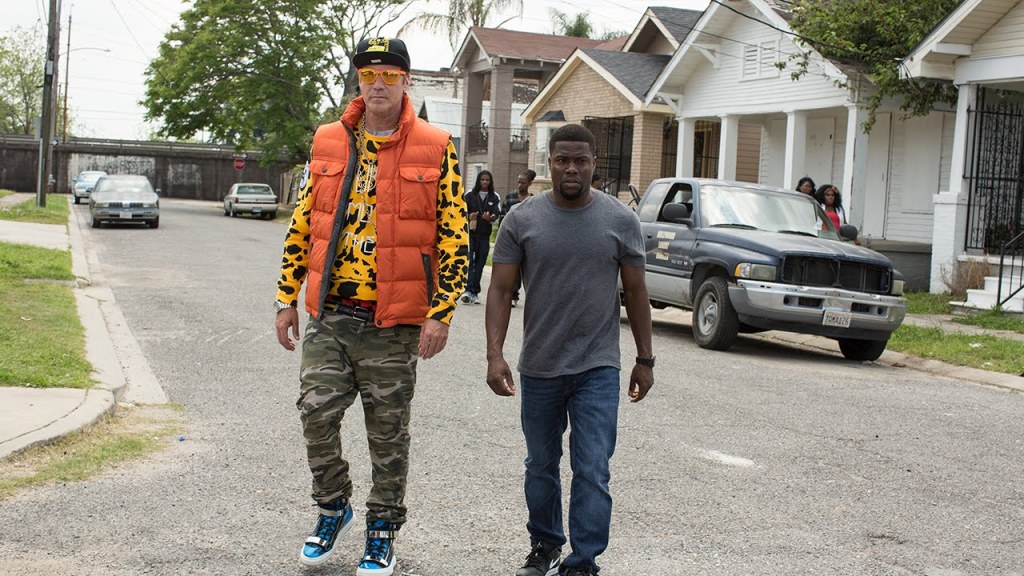
    Things would have been better off if Kevin Hart and Will Ferrell teamed up to develop a remake of the classic Eddie Murphy-Dan Aykroyd comedy “Trading Places.”

    It’s the direction that their latest film, the double-entendre heavy “Get Hard,” heads down and the part of the raunchy comedy that actually works.

    Aside from some gratuitous rear nudity from Ferrell to “set the mood,” the first 20 minutes of “Get Hard” is actually inspired comedy, filled with thoughtful, well-conceived jokes that skirt the outside edges of decent taste without outright jumping the shark.

    Once the plot really takes shape and a straight-laced Hart has to fake a prison record to help a frightened Ferrell prepare for jail time, things go from funny to sad in short order.

    There’s no reason for most of what ensues, as every racial stereotype under the sun is broadly reinforced in highly amateurish ways.

    For every five failed attempts at humor — most notably Hart’s lazy attempts to give Ferrell permission to call him the N-word — there’s a single smart sequence, like when Hart tells Ferrell the story of how he went to prison by stealing the plot line of “Boyz N The Hood.”

    Hart’s character, a self-proclaimed “Cliff Huxtable”-type African American working man, is nothing more than the racial stereotypes that Ferrell’s character believes him to be. Increasingly, Hart has become reliant on debasing and reinforcing these stereotypes in pursuit of the almighty dollar, countermanding all the work films like “Selma” do to advance African American cinema.

    Worse than the culturally-insensitive racial overtones of “Get Hard” is the incessant homophobic double entendre that pervade the film.

    Because the film assumes the notion that the only way to survive prison is to endure constant male-on-male rape, Ferrell subjects himself to countless “preparations” for this stereotypical “don’t drop the soap” culture.

    “Get Hard” features more jokes about “keistering” items up a man’s backside than any film that has been released in the past five years and also crosses the boundaries of shock comedy in a bathroom sequence where Ferrell wipes his face down exposed male genitalia.

    It’s important to note all this “comedy” in specifics to reinforce the notion that potential moviegoers, especially parents of teenagers, need to do the appropriate amount of research about a movie before heading to the theaters.

    Somewhere within “Get Hard” is a clever and thoughtful film that attempts to bring Ferrell’s stagnant comedic persona back to life.

    However, “Get Hard” softens in the middle, unveiling a seedy underbelly that will likely disappoint more casual filmgoers.

    If gross out comedies are your thing, “Get Hard” is exactly what you’re looking for in theaters this week. If not, you might want to pop in a copy of “Trading Places” instead.
  • Home: Parsons elevates middling animated comedy

    Home: Parsons elevates middling animated comedy

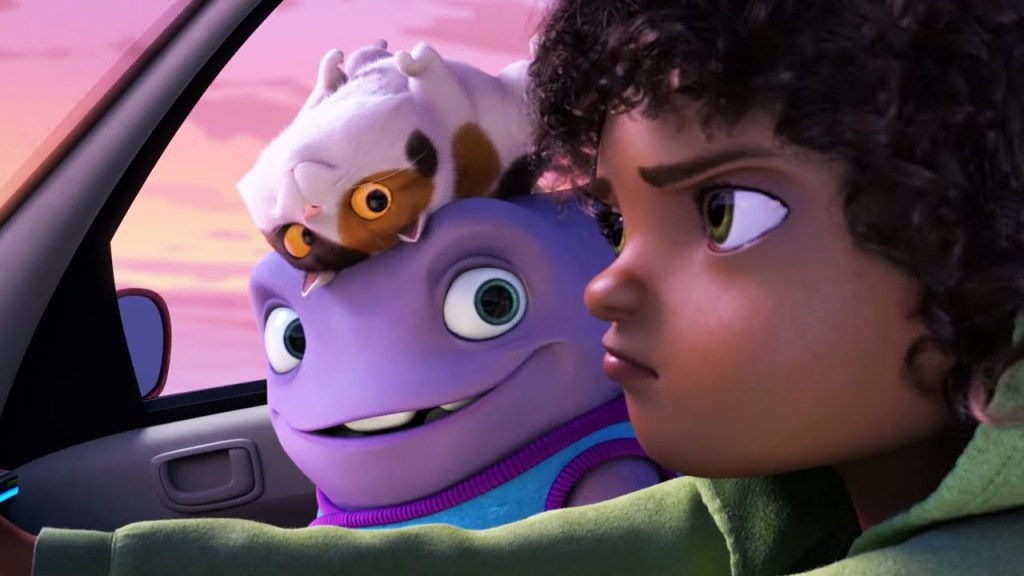
    “Home,” the latest animated feature film from DreamWorks Pictures, doesn’t break any new ground in family-friendly entertainment. You can see each and every twist coming from a mile away.

    What sets this animated tale of a lost girl and her unlikely alien friend apart is the terrific voice acting work from “Big Bang Theory” star Jim Parsons, whose animated career will surely take off following the success of his pixelated debut this week.

    So much of “Home” can be broadly labelled as just OK, successful but generally mediocre — from the plotline viewers can see coming from miles away to an often flat visual style and subpar voice acting from singers Rihanna and Jennifer Lopez, likely done in order to get the popular artists to donate singles to the film’s soundtrack.

    Large portions of the end of “Home” take on music video qualities as the story and character dialogue are muted for ambient music selections by both singer/actresses.

    What saves “Home” for moviegoers is Parsons, who brings everything fans love about Sheldon, his Emmy-award winning character from television’s “The Big Bang Theory,” to his small alien character Oh.

    In a role that had to be written specifically with Parsons in mind, Oh speaks in an adorable Yoda-like broken English that teeters on the edge of annoying without crossing all the way over.

    It’s easy to see that the Boovs, the alien race of “Home,” are little more than rip-offs of the widely successful Minions from the “Despicable Me” franchise that are getting their own feature this summer.

    Parsons, however, brings the Boovs (and the film in general) out of mediocrity with his affability and charm, giving warmth to Oh that most other voice talent wouldn’t be able to provide.

    “Home” isn’t a “Frozen”-like instant animated classic by any means, but for families looking to get out of the house on the weekend, it’s a solid movie sure not to offend or largely disappoint audiences.

  • Insurgent: Up-and-down Divergent entry a step in right direction

    Powerful and bold performances from young women have dominated the cinematic landscape early in 2015, from Dakota Johnson’s career-changing performance in “Fifty Shades of Grey” to a Disney blockbuster in “Cinderella.”

    While the year’s most gripping performance from a leading actress so far — Jennifer Lawrence in the limited release “Serena” — has been relegated to the second tier of cinema known as video on demand, the first quarter of 2015 will be capped off with yet another top young actress ruling the box office.

    Shailene Woodley, star of last year’s summer romance “The Fault in Our Stars,” returns to blockbuster action with “The Divergent Series: Insurgent” now blasting its way into theaters.
    https://m.youtube.com/watch?v=suZcGoRLXkU
    The sequel to last year’s “Divergent” is cinematic fun at its most basic level. Though the film sits at nearly two hours long, events fly by a crisp pace and press viewers into the back of their seat, forcing them to remain engaged in order to keep up with all of the moving parts.

    Newcomers to the series — based on a trilogy of books from Veronica Roth — will be largely lost, however, as Tris (Woodley) and her small band of fellow rebels flee from a controlling army led by Jeanine, played by a screen-chewing Kate Winslet.

    Scenes fly from peace-loving Amity to post-apocalyptic Factionless to ultra-sleek Candor so quickly it’s hard to tell exactly how much time has passed.

    However far along you think you are into “Insurgent,” subtract about 15 minutes and you’re probably in the right ballpark.

    It’s because the plot advances with machine-gun-like urgency that “Insurgent” finds itself falling short of greatness.

    There’s so many moving pieces that it’s nearly a complete waste of the film’s talented cast of stars, save for leads Woodley and Theo James as her tag-along boyfriend suffering from major daddy issues.

    All the key players from the original “Divergent” film return from Oscar-winner Winslet and Ashley Judd to rising stars Miles Teller and Ansel Engort.

    Throw another couple of heavy-hitter actresses in Octavia Spencer and Naomi Watts into the mix and there should be a quality movie lost in there somewhere.

    Though it’s a major concern for the cast across the board, Woodley can’t act within the context of this film and not because she lacks the talent. Her work in 2011’s “The Descendants” and 2013’s “The Spectacular Now” are clear reflections of a budding superstar on the rise.

    “Insurgent,” directed by Robert Schwentke from a script treated by at least three separate writers, swaps character development for the sake of additional action – a tradeoff the makers of “The Hunger Games” series haven’t forced upon its star, Lawrence.

    For Woodley to play the heroine, she is required to act with one hand tied behind her back, given nothing to mold a character from.

    Stripped away are Tris’ emotional stakes as it’s hard to care much about a character who can only feel the weight of her parents’ death when it’s convenient to advance action scenes.

    For as much as the frantic pace of “Insurgent” keeps viewers engaged in the plot, lack of character development and Schwentke’s lack of direction in general has the “Divergent” franchise running in neutral, good enough to keep the money rolling in for the future of the series, but not on par with “The Hunger Games” shadow the series finds itself hiding within.

    Action scenes within the film are dynamic and highly technical, significantly ramping up the visual effects in the second go-round of the series.

    It’s clear that key scenes were shot with the intent of making them feel iconic. Schwentke becomes incredibly heavy-handed during the film’s pivotal simulation testing scenes, forcing Woodley to break down glass barriers ad nauseam in order to make the most of his 3D effects budget.

    Watching “Insurgent” on a 2D screen, as most moviegoers will do, fails to achieve the intended effect, however.

    A solid B-rate blockbuster intended primarily for the teenage demographic, “The Divergent Series: Insurgent” is worth a look in theaters as much of the film’s action sequences will be further diminished on a smaller screen.

    2015 might not become the year of the leading lady — there’s still a lot of big-name actors yet to take a bow on screen this year — but significant strides have been made in recent months to put young actresses at the forefront of cinema, a good sign of things still to come.

    image

  • Cinderella: Disney hits the mark with live-action adaptation

    Cinderella: Disney hits the mark with live-action adaptation

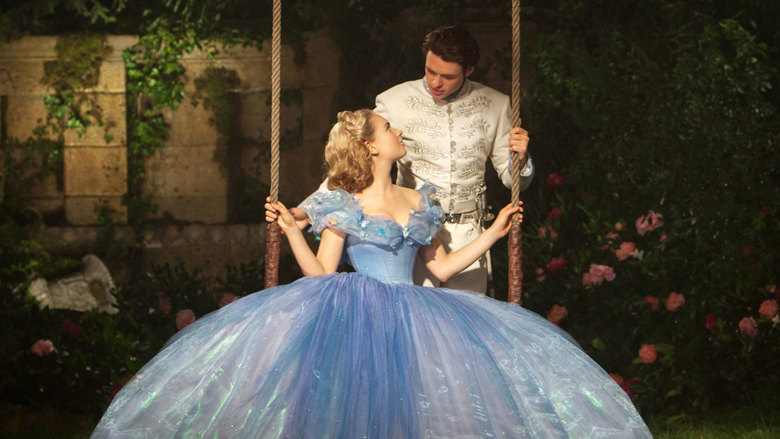
    Somewhere in between “Maleficent” and “Snow White and the Huntsman” lies the latest live-action fairytale feature film adaptation, Disney’s “Cinderella,” starring Lily James in the title role and Cate Blanchett as the evil stepmother.

    A very familiar tale to most moviegoers, “Cinderella” doesn’t stray much from conventional Disney retellings of the fairytale, though there is an added emphasis on Cinderella’s parents prior to their off-screen deaths in order to help strengthen the backstory. Director Kenneth Branagh utilizes his Shakespearean roots to full effect as he elevates pedestrian conversations to uneven effect. Some scenes, especially between Cinderella and her father, hit home, while conversations between the Prince and his father feel unnecessarily heavy. While younger viewers will happily ignore the depths of Branagh’s effort, older viewers may feel the film too heavy in terms of its emotional stakes for a traditional Disney fairytale.

    While James is supposed to draw viewers’ attention as Cinderella, it’s hard to keep your eyes off Blanchett, who replicates Glenn Close’s performance from “101 Dalmatians” to a near-perfect T. There’s just enough smirk and power to Blanchett in the role that dominates the screen while not feeling over the top.
    https://m.youtube.com/watch?v=20DF6U1HcGQ
    It’s a little jarring at first to see Helena Bonham Carter — frequently the dressed-down villainess in these sorts of films (i.e. “Harry Potter” franchise, “Sweeney Todd”) — as a light-hearted and effervescent Fairy Godmother, but like Blanchett, Bonham Carter fills up the screen every second she appears in the film without completely overpowering James. In fact, “Cinderella” feels like a training course for the young “Downton Abbey” actress, who is likely to emerge as one of Hollywood’s better young actresses.

    “Cinderella” will definitely work its way back into conversation later this year as the film is a near lock to be nominated for a number of technical Academy Award nominations, including production design and costumes as well as hair and makeup.

    Computer-generated imagery does have a significant place within “Cinderella,” which is a strange thing to say, given how vivid the hand-drawn animated classic from the 1950s was.

    Fans of the “golden age” film will likely feel a little uneasy at some of the technological advancements which have made nostalgic elements of “Cinderella” seem faded, especially as it relates to the Fairy Godmother and her magic.

    Where Disney’s CGI specialists have improved on the classic film is the development of Cinderella’s four mice friends, who become humorous sidekicks with individually developed personalities over the course of the movie. Known more as an actor’s director than a technician’s director, Branagh has improved significantly as a director dealing with special effects and CGI in “Cinderella” since the release of “Thor” in 2011.

    The film, while a quality feature mainly aimed at families, is really a secondary attraction compared to its seven-minute counterpart, a delightful animated short film called “Frozen Fever” which precedes “Cinderella.”

    Mostly done to whet viewers’ appetites until the release of the recently announced “Frozen 2,” audiences will be able to check back in with Elsa, Anna, Olaf and the whole gang from 2013’s best-selling animated juggernaut as Elsa tries to throw Anna a birthday party while suffering from a cold, which ultimately causes her to sneeze out mini-snowmen.

    For the most part, “Frozen Fever” is little more than an extended music video for a new song from Idina Menzel (Elsa) and Kristen Bell (Anna)  entitled “Making Today a Perfect Day.” It’s not quite as dynamic as “Let It Go,” but definitely on par with the secondary “Frozen” hits like “Do You Want to Build a Snowman” and “In Summer.”

    There’s no need in denying it; you’re probably going to see “Cinderella” in theaters for the “Frozen Fever,” but be sure to stick around and enjoy a quality family film, which seem to be fewer and farther between in the Hollywood landscape.

  • Run All Night: Haven’t we learned already?

    Run All Night: Haven’t we learned already?

    Shouldn’t it be a given by now that it’s not a good idea to mess with Liam Neeson’s family?

    It’s getting to the point where these stories don’t even really need to be told. Viewers can just replicate an entire Liam Neeson movie in their mind based on the most simplistic plots.

    Reteaming with the director of such lackluster Neeson action films as “Unknown” and “Nonstop,” “Run All Night” is no exception. Neeson, this time lightly disguised as an aging Irish hit man, has just murdered his boss’s son in order to save his own estranged child. Both Neeson and his son, played by Joel Kinneman in a performance just this side of Jamie Dornan in “Fifty Shades of Grey” awful, have to “run all night” to hide from Ed Harris.

    Director Jaume Collet-Serra does the right thing in casting — with a few major exceptions — pairing Neeson on screen with some of Hollywood’s best character actors in Harris, “Full Metal Jacket” star Vincent D’Onofrio and Nick Nolte. Though those four actors never all share screen time together, having all four involved in the project should have resulted in a better movie than “Run All Night” ends up being.

    It’s a little out of sorts to see Common — now an Oscar winner after the success of his collaboration with John Legend for the hit song “Glory” in the film “Selma — as a stereotypical and largely silent assassin hunting down Neeson and Kinneman. We’ve seen quality actors take on these small, but important hitman roles to great effect in the past, but Common is no Clive Owen in “The Bourne Identity.”

    There’s no subtlety to Common’s performance, but that’s probably blame that needs to be placed on Collet-Serra, who just doesn’t seem to find the right balance between quality acting and quality action. It’s possible to have both in the same film, but there are only flashes of that in “Run All Night.”

    This isn’t to say that “Run All Night” isn’t still worth seeing. The film is definitely what viewers probably thought they were going to get with Neeson’s last movie, “A Walk Among The Tombstones,” which played out more crime procedural than dark action-packed thriller.

    Led by quality performances from Neeson (who can probably sleepwalk through a couple more action movies without viewers noticing) and the always rock-steady Harris, “Run All Night” is just the kind of B-level action movie that some viewers need this time of year to help prepare them for the onslaught of summer blockbusters to come.

  • Second Best Exotic Marigold Hotel: Sequel avoids traditional pitfalls

    Second Best Exotic Marigold Hotel: Sequel avoids traditional pitfalls

    Not much needs to be said about big budget R-rated films “Chappie” and “Unfinished Business,” which both crashed and burned commercially and critically this weekend. Hollywood can sift through the wreckage for what’s left of Vince Vaughn’s career at another time.

    But there’s something to be said for an upward trend in cinema that shined brightly this week on the big screen as the sequel to the 2012 hit film “The Best Exotic Marigold Hotel” outdrew most movies on the opening weekend of Spring Break season despite playing in a third of theaters nationally.

    With the success of films like “Marigold” (now in its “Second Best” installation), “The Bucket List” and “Last Vegas,” it seems that there’s an emerging marketplace for light-hearted comedies starring big-name actors beginning to reach the twilight of their careers (and lives). 

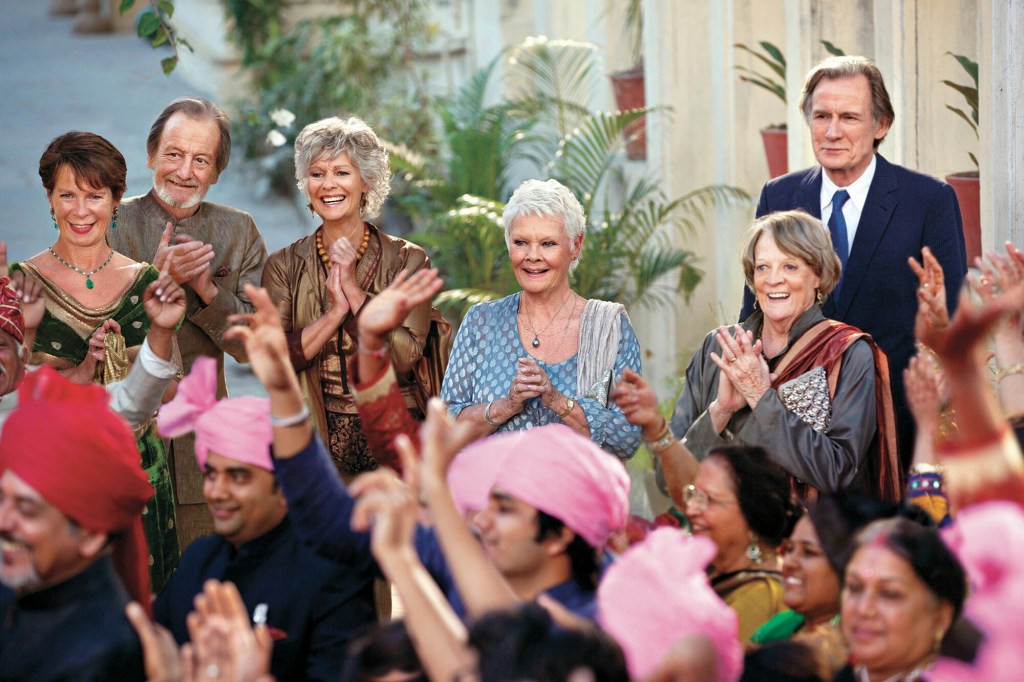
    For the second iteration of India’s only hotel for the “elderly and beautiful,” director John Madden — best known for the Oscar-winning “Shakespeare in Love” — re-gathers the original film’s cast, adding fresh face silver-fox Richard Gere to the mix as a new hotel guest.

    Sequels can be hit-or-miss, especially for first-time viewers who’ve missed out on two hours’ worth of back story, but that never seems to be an issue here as “Marigold” is a film about the people themselves, rather than the seemingly cliché and mundane events they get themselves into while living in an unusual world.

    Don’t get caught up in all the minutia of the rapid fire plot turns as Madden tries to keep viewers engaged in eight or more plotlines all at once.

    Much in the same way we as moviegoers forgive lesser action films for subpar plots because we just want to see things blow up, there’s not a whole lot of originality to the second “Marigold” go-round, but that’s not really a problem in this light-hearted feature.

    It’s easy to tell that the cast, which includes a veritable who’s who list of British acting royalty (including two Dames in Judi Dench and Maggie Smith), really enjoys working together in a laid back and fun atmosphere. It’s readily apparent, especially in Smith’s performance as the aging guest turned co-manager.

    But it’s Dev Patel — best known as the adult lead of the 2009 Academy Award-winning “Slumdog Millionaire” — who gives the best performance in the film, returning to the series as the frantic, yet good-natured hotel owner Sonny.

    Among the chaos of all the different plot lines that zigzag across India, Patel’s nuanced and pitch-perfect performance serves as the comedic heartbeat of “Marigold.”

    Like its closest cinematic sibling, “The Hundred-Foot Journey,” “Marigold” stuns visually, thanks to picturesque landscapes and well designed cinematography from director of photography Ben Smithard.

    Well worth the price of admission, “The Second Best Exotic Marigold Hotel” offers a hearty amount of laughs and the requisite amount of tenderness, while side-stepping the flaws most sequels fall prey to.

  • Still Alice: Oscar contender not up to muster

    Still Alice: Oscar contender not up to muster

    What might have been a touching look at how a close-knit family deals with tragedy in the wake of the mother’s early onset Alzheimer’s diagnosis becomes a trite farce that twists the emotional knife in the backs of its viewers during the independent drama “Still Alice.”

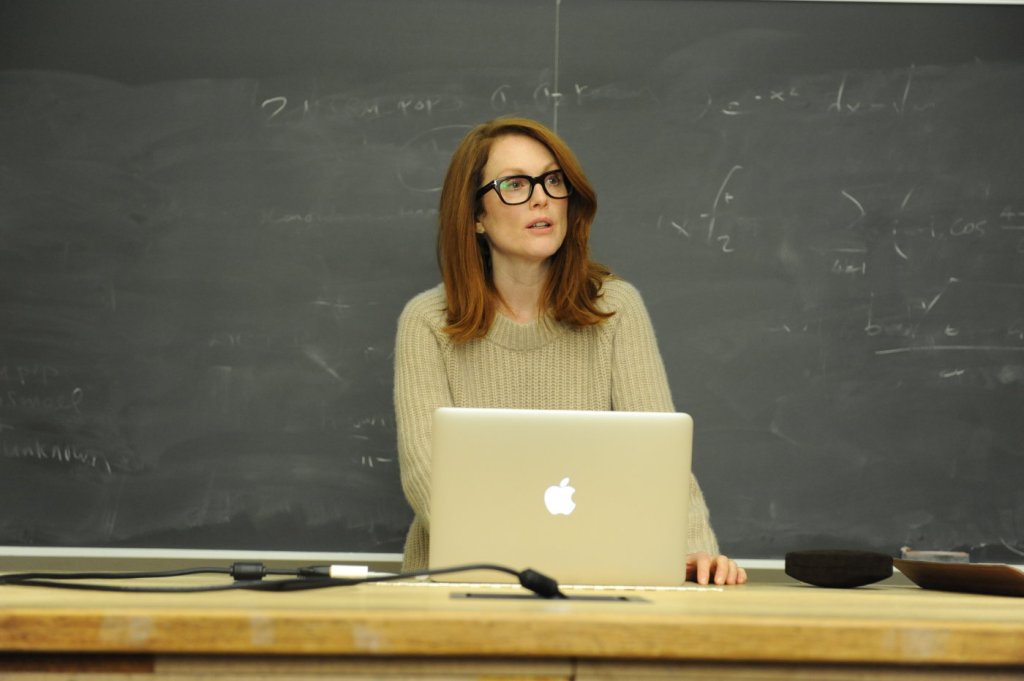
    The film is most notable for Julianne Moore’s Oscar-winning performance as a 50-year-old linguistics professor who slowly loses her memory and capacity to function normally due to the disease.

    There’s nothing wrong with her performance, though this year’s Best Actress win feels more like a career achievement award than the highest praise for her work in “Still Alice.” In a 100-minute film where one lead takes up 90 percent of the screen time, it’s hard not to feel dominated by Moore’s performance.

    As a viewer, there is a strong sense that the audience is being cheated by the script based on the novel of the same name by Lisa Genova.

    There are only flashes of the rest of Alice’s family throughout the film, and all of the impact of what helping someone with Alzheimer’s is like has been lost in the shuffle.

    Actors like Alec Baldwin, as Alice’s husband, and Kate Bosworth, as the eldest daughter, are given cursory nods and only the broadest of character brushstrokes with which to work from.

    Even though he isn’t, it feels as if Baldwin’s husband character is cheating on Alice, and the audience by proxy, while being chopped off at the knees and forced to be the bad guy in a film that doesn’t need one.

    While Moore’s work is good, Kristen Stewart, as the youngest daughter — separated from the rest of her family both emotionally and physically — gives the most impactful performance.

    Given her previous body of work, Stewart will almost certainly not be given the credit she deserves for a uniquely layered performance in a film devoid of depth. There’s so much emotion on the surface of Stewart’s Lydia, while simultaneously, viewers can feel the undercurrent of secret emotions that Lydia feels internally while struggling to accept her mother’s fate.

    “Still Alice” is definitely one of those Oscar-baiting films that cares more about the viewers with Academy votes than the audiences who will end up seeing the film now that it has won gold.

    Aside from ardent fans of Moore, audiences will likely, and should, feel cheated by a subpar shell of quality drama.

  • Serena: Cooper, Lawrence make most of uneven frontier drama

    Serena: Cooper, Lawrence make most of uneven frontier drama

    Pair a three-time Academy Award-nominated actor with an Oscar-winning actress and put them in a hauntingly beautiful period film and it would seem like a recipe for instant success.

    Yet “Serena,” the third on-screen pairing between Bradley Cooper and Jennifer Lawrence, takes major missteps that equal or slightly outpace its positive strides, making for an uneven and mundane film as a whole.

    Most of the blame, as it were — because conceptually, this is a film that should have fared significantly better — should be laid at the feet of Danish director Susanne Bier and screenwriter Christopher Kyle for their mismanagement of the film adaptation of the 2008 Ron Rash novel of the same name.

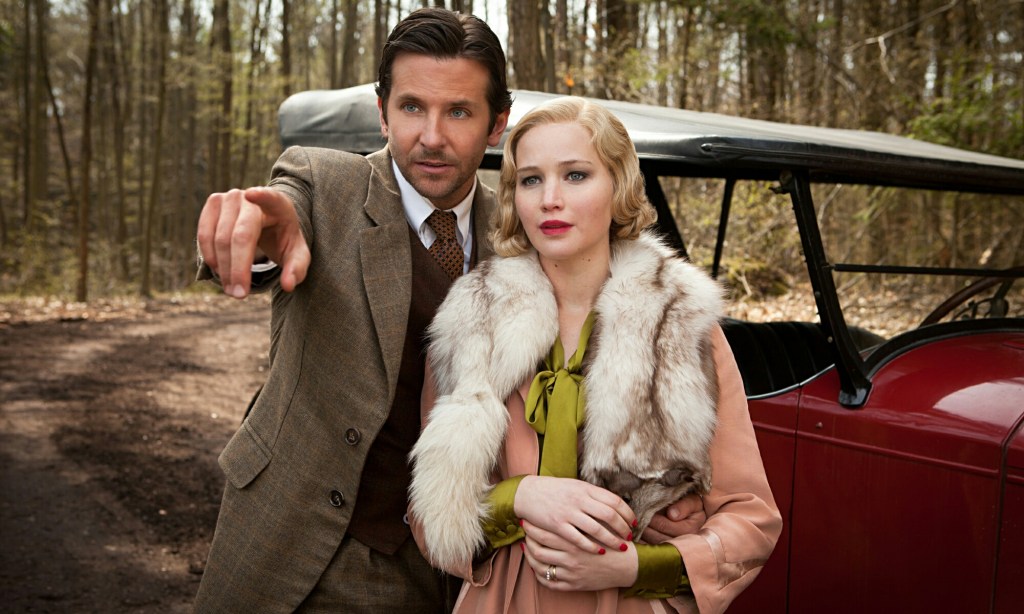
    Set in North Carolina during the 1920s, the movie centers around an up-and-coming logging company owner (Cooper) whose life changes when he falls instantly in love with a beautiful, yet troubled young woman named Serena (Lawrence), who will stop at nothing to keep their love alive.

    How and why the couple falls in love is left up to nothing more than a single chance encounter followed up by a sloppily shot encounter on horseback in a field.

    Bier and Kyle’s decision to fast-track the romance leaves viewers without any reason to invest in the characters and forces Cooper and Lawrence to rely on their innate chemistry developed in another movie (“Silver Linings Playbook”) under the guidance of a superior director (David O. Russell).

    The chemistry between the duo is palpable and is especially noticeable in the sex scenes with “Serena,” but even two incredibly talented actors can’t seem to find a way to make a lackluster script work to their full advantage.

    A film about passionate love and the desperation it can create needs the time to explore the romance between the leads, an almost unforgiveable oversight.

    “Serena,” which was filmed before “American Hustle” and has sat on the studio’s shelf for over two years, is just missing that little bit of finesse and craftsmanship from the director’s chair necessary to keep the pacing steady and viewers engaged.

    Not surprisingly, the movie falters most often when Lawrence and Cooper are not on-screen together. Lawrence, harkening back to a classic era of cinema in both look and demeanor, can hold her own with the limited material, while Cooper — who increasingly approaches leading roles with a character actor’s mentality — has a rougher go-round dealing with a lack of script depth.

    Veteran character actors Rhys Ifans and Toby Jones do a decent job in their roles as a mysterious, veteran logger and the town sheriff, respectively.

    Though the film deserves better than its eventual branding as “that other Bradley Cooper-Jennifer Lawrence movie,” “Serena” needed a different director to fully realize a quality period drama from a terrific concept for a movie.

    Despite all its flaws, “Serena” is still the best film to be released so far in 2015, though its pacing issues and early release date will, in all likelihood, bar the film from receiving any accolades come award season.

    The film is currently available via video on demand and is expected to receive a limited theater run beginning later this month.

  • Focus: Smith, Robbie have decent chemistry in romantic heist flick

    Focus: Smith, Robbie have decent chemistry in romantic heist flick

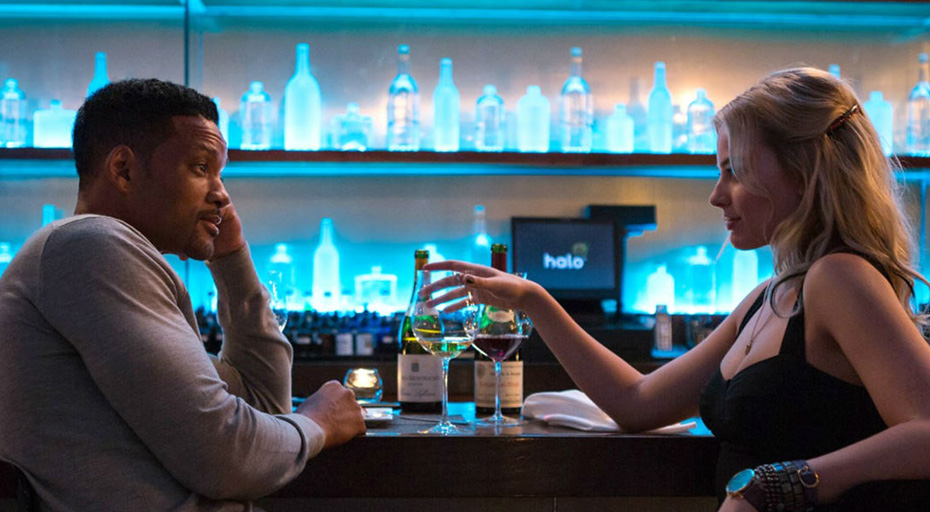
    There’s a lot of layers to the latest offering from Will Smith, who starts the long road back from cinematic wasteland with the romantic drama-comedy heist film, “Focus,” co-starring “Wolf of Wall Street” starlet Margot Robbie.

    There’s the con, led by Smith as the consummate con artist, practiced in deceit.

    There’s the romance, with Robbie slithering her way into Smith’s gang and into his heart.

    There’s the comedy, led by some witty one-liners from Smith and hilarious supporting performances from Adrian Martinez as Smith’s running buddy Farhad and “Law and Order: SVU” alum B.D. Wong in a scene-stealing performance as a billionaire gambler willing to throw down the big bucks.

    There’s some drama, too, but of the four genres melded into “Focus,” the drama doesn’t really hit home due mainly to a lack of real chemistry between Smith and Robbie.

    Hollywood would be well served to develop more quality heist films, because it’s in those moments where “Focus” — under the guide of “Crazy, Stupid, Love” directors John Requa and Glenn Ficarra — shines the brightest. When the film is about the con and in service to the con, “Focus” keeps viewers coming back for more.

    It’s in those moments in between — where the witty banter is exchanged for longing — that things just don’t stick fully.

    After several lackluster outings, “Focus” seems to be a step in the right direction for Smith, who’s gradually finding himself in the latter stages of his career. He hasn’t made it back to “Ali” territory yet, but it’s by no means time to put the final nail in the coffin, either.

    “Focus” is ideal date night fodder for movie-going couples, with half the film aimed at guys seeking adventure and the other half for girls needing a new romantic comedy.

    There’s just enough of both there to make a trip to the theaters worth your time.

  • McFarland USA: Disney offers heartwarming sports tale

    McFarland USA: Disney offers heartwarming sports tale

    January and February are usually the time of year where films the major studios aren’t real comfortable with get released and it’s often a wasteland of below-par cinema.

    Every once in a while, during this time of year, a film overcomes this stigma and becomes something worthwhile.

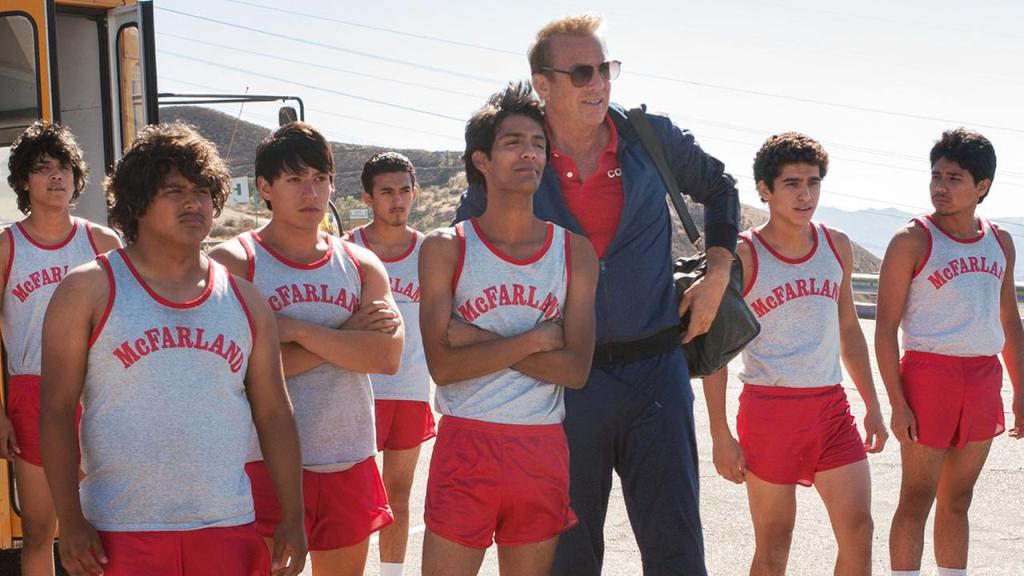
    Such is the case with the latest Disney release — “McFarland, USA” — starring the timeless Kevin Costner in a true story about a white football coach who, through a series of unfortunate events, becomes the first cross country coach at a predominately Hispanic high school in McFarland, California.
    https://m.youtube.com/watch?v=j-VAOlHGE6Q
    These sort of generical sports movie off-shoots of “Rudy” typically aren’t worth a trip to the theaters, but “McFarland” goes beyond the traditional and brings an added depth to the race relations discussion now so prominent in Hollywood with films like “Selma.”

    Costner, while keeping his usual charm, isn’t the primary reason the film succeeds, but rather the bridge that keeps the whole picture moving along.

    The group of talented young Latino actors tasked with portraying the underdog, but hardworking original McFarland cross country team — led by Carlos Pratts as the team’s best runner and a heartwarming performance from Ramiro Rodriguez as the tubby Danny pulling up the anchor — give the film just the right amount of heart.

    Though the film takes great effort to have Maria Bello and “Homeland” actress Morgan Saylor as the secondary leads, it’s in scenes where the team interacts with Costner that “McFarland” shines the most, largely due to the compelling relationship built up between the young actors as a whole.

    Director Niki Caro takes his time finding a groove within “McFarland” and as a result, the film doesn’t really take off until the final third, when the focus becomes more about a coach and his team crossing traditional racial barriers and finding a way to win.

    A heartwarming family tale, “McFarland, USA” is definitely worth checking out now.