Category: Oscar Contenders

Oscar contenders, awards-season coverage, awards predictions, nominations, and ceremony analysis. Historical archive category retained at its original URL; use selectively for awards-relevant articles.

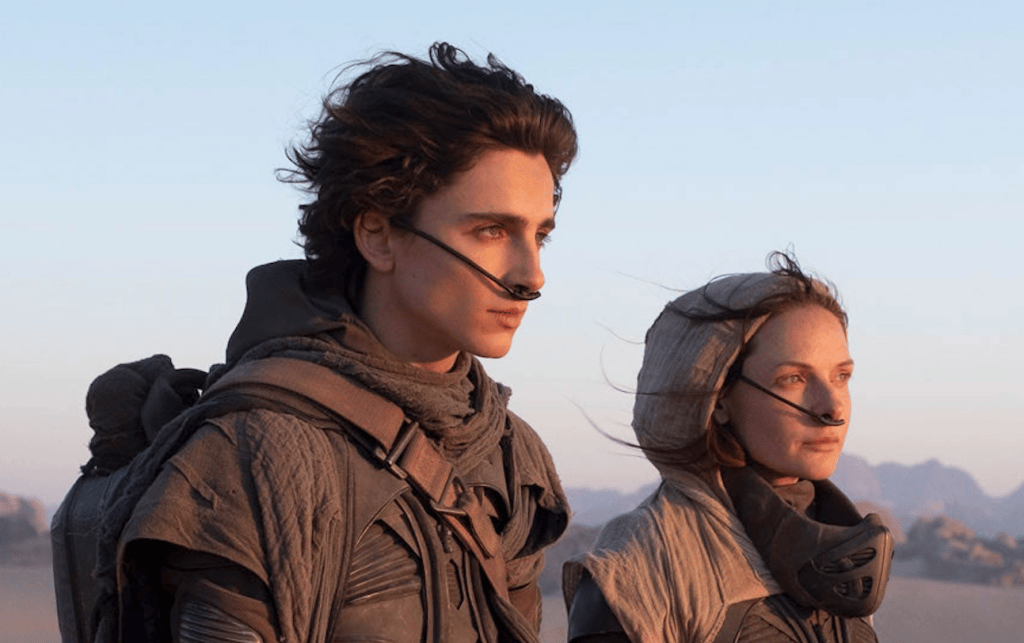
  • Dune: Building a spice world

    Dune: Building a spice world

    World building in cinema can be a richly rewarding experience that will encircle and fully immerse the audience, pulling them out of their everyday lives and transporting them beyond their mind’s eye.

    Crafting something intricate that will stand up to scrutiny and encourage repeat viewings while not overwhelming casual audiences is an especially tricky feat to accomplish. It’s one that director Denis Villeneuve tackles head-on with a flair for dramatic, picturesque visuals with a moving art gallery aesthetic that will surely thrill many and confound others.

    Based on the Frank Herbert science fiction novel of the same name, Dune follows the son of a noble family charged with protecting valuable natural resources on the galaxy’s most dangerous planet while being thrust into a destiny beyond his understanding. 

    Villeneuve takes exceptional care to fully design and intricately flourish every note of Herbert’s novel to the point where the 155-minute run time of a film originally titled Dune: Part One feels narratively incomplete.

    Because things are so long-winded in exposition and orienting viewers in the smaller details of the world of Arrakis, Dune can occasionally feel hollow and emotionally distant as characters pontificate about religious prophecies that never fully flesh out or political relationships that won’t come into play until an expected second film finishes Herbert’s original narrative.

    Timothée Chalamet delivers a relatively commanding performance as the main character Paul, especially in more intense moments where Paul seemingly loses control over his emotions. Much of his role has softer tones as Paul attempts to find his way through a strange new world and because of the film’s structure, the work he’s doing likely will not pay off until the sequel bridges the gap.

    Dune has a star-studded ensemble cast to surround Chalamet with, all of whom give considered, meaningful turns to help create the world of Villeneuve’s film.

    Rebecca Ferguson gives the most emotionally resonant performance as Paul’s mother and it’s in the smaller moments opposite Chalamet or the confrontational moments with Charlotte Rampling that she truly shines.

    Oscar Isaac is much more stoic and polished here than audiences may have seen him as more brash in the Star Wars sequels, but his Duke Leto is a drumbeat from which Villeneuve is able to build the political world of Dune.

    For most of the 155-minute run time, Zendaya’s Chani appears simply as a clairvoyant vision in Paul’s dreams, a far-away whisper of things to come while not providing much to the actual film. Her presence is mainly to foreshadow the importance of her character in a potential second film not yet greenlit for production.

    Smaller turns for Dave Bautista, Josh Brolin and Stellan Skarsgård also feel like placeholders for part two, though it’s Jason Momoa’s strongest theatrical turn as Paul’s weapons trainer and confidant Duncan Idaho that serves as standout among the secondary cast.

    Villeneuve’s films have always had magical, artistic cinematography at the forefront and Dune is no exception with Greig Fraser’s visuals providing the backbone of the entire movie in keeping casual audiences engaged during the many overwrought and confusing moments for those unfamiliar with the novel’s canon.

    It’s clear every frame of Dune has meaning beyond the simple visuals seen at first glance and exploring the nuance and unspoken iconography translated from Herbert’s novel will be a treasure trove that ardent fans will be scouring and debating over for years to come.

    Even without dialogue or Hans Zimmer’s pulsating, ever-present score pounding in the ears of audiences, Villeneuve and Fraser have created a tapestry of art that transcends most big-budget blockbuster films and will remain the largest selling point for skeptical first-timers.

    With a production as audacious and bold as Dune is, the exceptional quality of technical aspects of the film make it ripe for nominations, and likely wins, come awards season in below-the-line categories like cinematography, production design, editing and original score. In all likelihood, a Best Picture nod at the Oscars would make too much sense while voters could opt for more developed performances in other films rather than recognizing the ensemble cast of Dune in any notable way.

    The spectacle on such an epic scale almost demands audiences seek Dune out in the largest theater possible to maximize the “experience” of it all, though the relative ease of access on HBO Max for more casual audiences to pause, rewind or segment out the film’s exceedingly dense subject matter and world building is more than acceptable as well.

    Regardless, Villeneuve has crafted one of the year’s most complex and artistic cinematic films worthy of both acclaim and moviegoers’ time.
  • The Last Duel: A matter of perspective

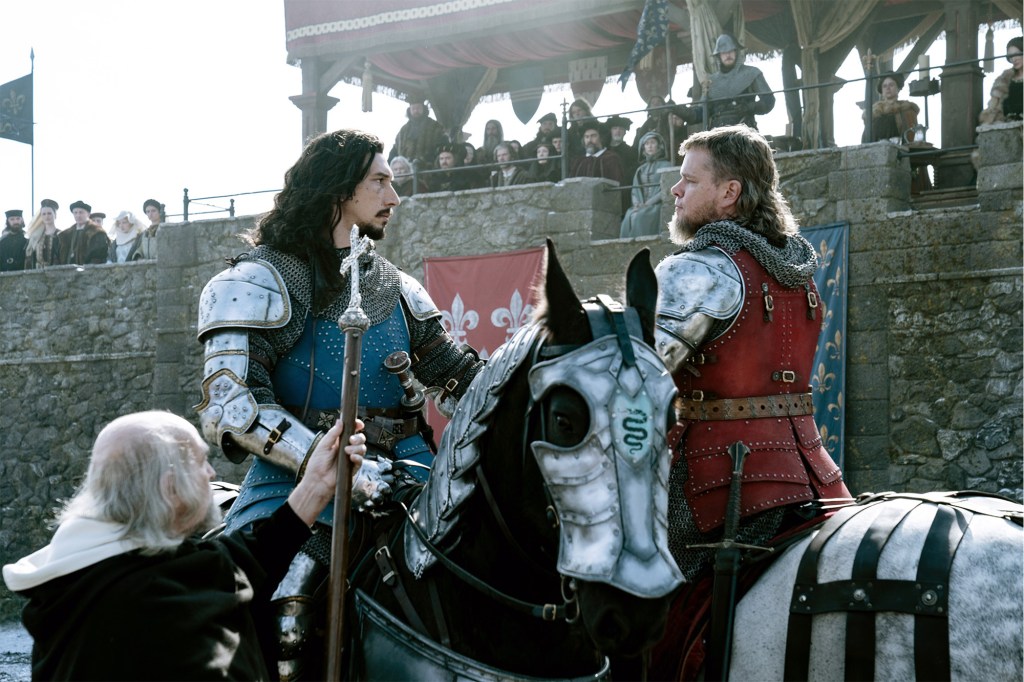
    The Last Duel: A matter of perspective

    Two men – former close friends – battle to the death for honor and the truth in God’s eyes.

    It’s a singular moment in time that frames director Ridley Scott’s latest film, an epic two-and-a-half hour medieval odyssey featuring the first script penned by Ben Affleck and Matt Damon since the duo won the Oscar for original screenplay for 1997’s Good Will Hunting.

    But The Last Duel is about so much more than a brutal fight played out in front of thousands of Parisians.

    While audiences see Sir Jean de Carrouges and Jacques Le Gris being dressed for combat, a third person is also readying for this moment, de Carrouges’ wife Marguerite, and it’s her equal footing to two polar opposite men that truly gives The Last Duel a unique and remarkably compelling narrative to draw viewers in. 

    Based on the true story of the last sanctioned duel in France, the film follows the lives of three individuals over the course of a decade during the 1360s and the rape allegation that brought all three to the brink of death in front of the king.

    All three lead performances are distinctly intertwined because of the narrative structure segmenting out the events of the film into chapters, each focused from the vantage point of the primary character of the chapter.

    This creates a dynamic energy to scenes as they unfold a second or third time, allowing the actors to change tone, physical presence or mannerisms with the same blocking and dialogue to completely transform everything audiences have come to know about the character up until that point.

    Damon’s de Carrouges maintains the physicality and brutishness of a battle-tested soldier whose rough edges put him at a distance from those around him and leave him on the outside of high society. In the first chapter from his perspective, de Carrouges has a softer underbelly of emotion for both his mother and his wife, Marguerite, that sets him up to be the hero of the tale.

    When the story turns to Marguerite or even more darkly to Le Gris, Damon sheds the emotional heart and plunges into a bitter, vindictive persona that indicates how those around him perceive de Carrouges to be.

    Conversely, Adam Driver’s exceptionally shrewd work as Le Gris has a smarm-filled villainy that makes him easily reviling but does a remarkable job of rounding out the character during the middle chapter that makes Le Gris the opposite side of the coin to de Carrouges as one who uses his charm and smarts to curry favor rather than by brute force.

    The film’s best work comes from Killing Eve star Jodie Comer, whose presence lingers throughout much of the film but truly comes alive once The Last Duel essentially cedes itself over to Marguerite for the final lead-up to the duel. Her performance is warm and cheery, somber and melancholic, up and down as the moment and perspective calls for.

    Marguerite’s motivations are the least clearly defined of the three characters, which increases the degree of difficulty in pulling off such a magnetic performance, but Comer astounds with terrific poise and wonderful chemistry (or lack thereof as is called for) with her co-stars.

    The exceptional screenplay weaves moments in time seamlessly by replicating them through the eyes of each of the three main characters, giving audiences perspective on how each sees the world by showing how events (or perceptions of events) differ based on who is living through them.

    While this plays out solidly in interactions between de Carrouges and Le Gris, what’s more compelling is how approaching the narrative in a tri-fold, blended manner impacts the sexual dynamic of how the men believe their interactions with Marguerite are before revealing the truth through her eyes.

    Putting Marguerite on equal footing with the two men in her life requires a deft screenplay, rounded out by writer Nicole Holofcener who takes the lead in the final chapter and creates the film’s most emotional moments in establishing Marguerite’s state of mind as she fights for agency in a world of men who never truly believe her.

    The Last Duel is the kind of quality epic period drama that the Academy usually recognizes heavily come Oscar season though it’s unclear whether this will be the Scott-directed, Driver-starring feature voters will lean towards with the crime biopic House of Gucci still to come this fall. It certainly has the ability to earn Best Picture and Best Actress nominations in addition to several below-the-line categories but could be passed over for flashier films.

    There’s a brutality to the violence that could be off-putting to more casual viewers, but ardent cinephiles looking for a grandiose big-budget drama with movie stars at the top of their game will easily find what they are looking for with The Last Duel.

  • No Time To Die: The final adventure

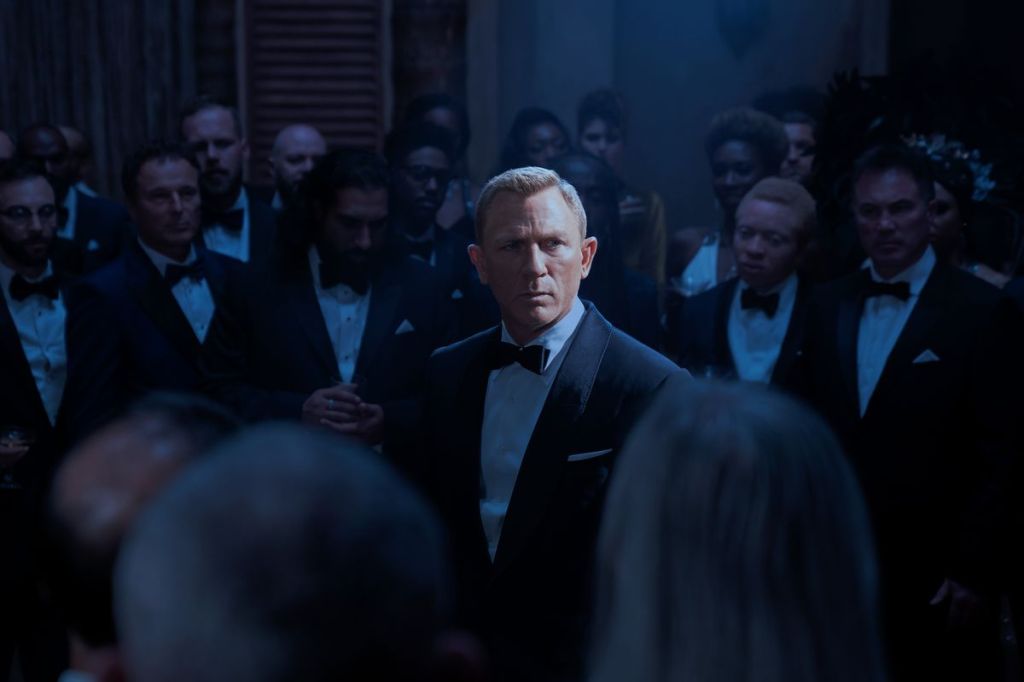
    No Time To Die: The final adventure

    What defines James Bond, the longest running character in cinema history?

    Is it the suits that make the man or the boundless charisma that gets him to have his way with women? Does it have to do with the gadgetry he receives from MI-6’s Q-Branch, the exotic locations he travels to or the megalomaniac villains he faces off against?

    Depending on where audiences fall on this question, their mileage may vary somewhat wildly with No Time To Die, Daniel Craig’s fifth and final outing as Ian Fleming’s iconic British spy.

    It’s a definitive endcap to a nearly two-decade run that began with 2006’s Casino Royale as the series wove an increasingly intricate plotline with devastating emotional impact to Bond and those left in the wake of the trail he made globetrotting for queen and country.

    Director Cary Joji Fukunaga cements Craig’s legacy as a premiere, top-shelf Bond with a final chapter that a wonderful job of capping off the good and bad of the previous four films.

    Every aspect that could be left open-ended is clearly wrapped up in a neat bow riddled with bullet holes, tears and blood, while delivering on some classic Bond tropes that make No Time To Die reminiscent of early 007 formulaic plotlines.

    The film largely takes place five years following the events of Spectre, with Bond in retirement on a beach in Jamaica until old friend and CIA operative Felix Leiter convinces 007 to return to action in search of a missing MI-6 scientist working on a nano-technology that could have devasting global impact. Along the way, Bond encounters the remnants of the Spectre organization with a blood vendetta against him, his former flame Dr. Madeleine Swann and a new foe shrouded in mystery and grudges of his own to bear.

    In his final turn as the premiere spy, Craig turns in his most complicated, conflicted and poignant work as Bond. It rivals his turn in Skyfall as one of the best in the entire franchise as Craig carries the emotional weight of constant and perpetual loss around Bond. The five-film series has deconstructed the 007 character than any arc or actor has in the past and the burden has given the ability for Craig to find a depth to the character that bears out magnificently in the final moments of No Time To Die.

    For much of the film, it’s a heavier drama that focuses on Bond coming to terms with himself in his retirement while the world changes around him and watching Craig grapple with the finality of moments as they occur is exceptionally special.

    His chemistry with Léa Seydoux, who returns from Spectre as Bond’s love interest Madeleine Swann, is somewhat rocky at best, though the screenplay does a much better job of fleshing out her backstory in this installment and allowing Seydoux to find genuine emotion and character motivation to play with.

    Her best work, ironically, comes in scenes without Craig where Seydoux is able to wrestle with Madeleine’s demons head on. One striking moment that truly showcases the acting quality that comes out in large segments of No Time To Die is in Swann’s office where she is confronted unexpectedly and directly by her own childhood trauma in a way that alters her performance and sets in motion the remainder of the film in a terrific way.

    Academy Award winner Rami Malek imposes an often terrifying, methodical gravitas as poison merchant of sorts Lyutsifer Safin. There’s a pace and control to Malek’s line delivery that exudes a brooding malicious streak bubbling just underneath the surface and highlights just how cunningly smart Safin is in order to manipulate situations to his advantage. Safin becomes one of Bond’s most formidable foes not by physical force, but through psychological warfare.

    Though his time opposite Craig in the same scene is rather limited by Bond franchise standards, the impact of their moments together is monumental in the magnitude of the impact on the series, and more importantly, as stand-alone scenes where two terrific actors can play and make the most of some of the best written parts of No Time To Die.

    Fukunaga approaches the unenviable burden of summing up the Craig 007 story with an emphasis on creating visually engaging, character driven moments that allow the actors freedom to experiment and create on their own terms, but also have a dynamic energy that keeps audience engagement high.

    No Time To Die is the longest of any film in the franchise, which speaks to how much Fukunaga as well as producers Barbara Broccoli and Michael G. Wilson aim to fully close the chapter on Craig’s tenure as 007. While some could rightfully argue that the nearly three hour running time is excessive, the film rarely drags once it gets its footing and audiences actively engaged in the plot shouldn’t feel any pull to check their watch.

    Cinematographer Linus Sandgren, who won an Academy Award for his work on La La Land, gives No Time To Die a vibrant palette of colors that come in stark contrast to mood driven visuals from Roger Deakins in Skyfall and Hoyte van Hoytema in Spectre. Much of the look of the film has a distinctly modern interpretation of the visual style from early Sean Connery films like Dr. No and Thunderball thanks to the sharp eye of Sandgren focusing on warmer colors to give No Time To Die an exotic feel.

    Sandgren captures both the extravagant locales and intimidate moments with such precision that they truly need to be experienced on the biggest screen possible and many action sequences were designed and are best in the massively immersive IMAX format.

    The 25th entry in the Bond franchise features some magnificent and thrilling action sequences from a wild getaway chase in a remote Italian village with 007’s signature Aston Martin DB5 to a sexy and inventive shootout in Cuba alongside Ana de Armas who doesn’t get nearly enough screen-time as her character deserves.

    The final act of No Time To Die blends weighty drama with intense action well and all across a large compound that production designer Mark Tildseley and his team make so expansive that it adds to the grandiose nature of Bond villain lairs while also keeping with recent tradition of grounding them within a larger realm of believability.

    Billie Eilish’s melancholic title track perfectly sets the stage for what’s to come over the next two-plus hours. With lyrics that capture the impact of the opening preamble, Eilish’s mix of light airy whispers and stronger punches of tone make for an Oscar-worthy song that actually resonates over the course of No Time To Die.

    It’s far too early to determine where exactly No Time To Die fits in the larger scale of the James Bond legacy, although it would be hard to see a way another film could do a better job of showcasing Daniel Craig’s immense talent and care for the part as well as create edge-of-your-seat thrills.

    It’s not Casino Royale or Skyfall, but No Time To Die sits comfortably on a tier or even half-tier below those masterful films and is definitely worth the time and effort to watch the conclusion to this era of James Bond on the biggest screen possible.

  • Stillwater: Floating under the radar

    Stillwater: Floating under the radar

    One of the year’s best films can’t seem to find its audience.

    With an Oscar winner at the helm and box office draw Matt Damon delivering one of the finest performances of his career, Stillwater should have been a no-doubt buzzworthy feature that drove viewers to the theater for what was marketed as a high-stakes thriller.

    And yet, director/co-writer Tom McCarthy’s latest film and his major studio follow-up to Best Picture winner Spotlight has gone considerably under the radar in spite of critical acclaim and raucous support at its debut during this year’s Cannes Film Festival.

    Part of the issue is tone.

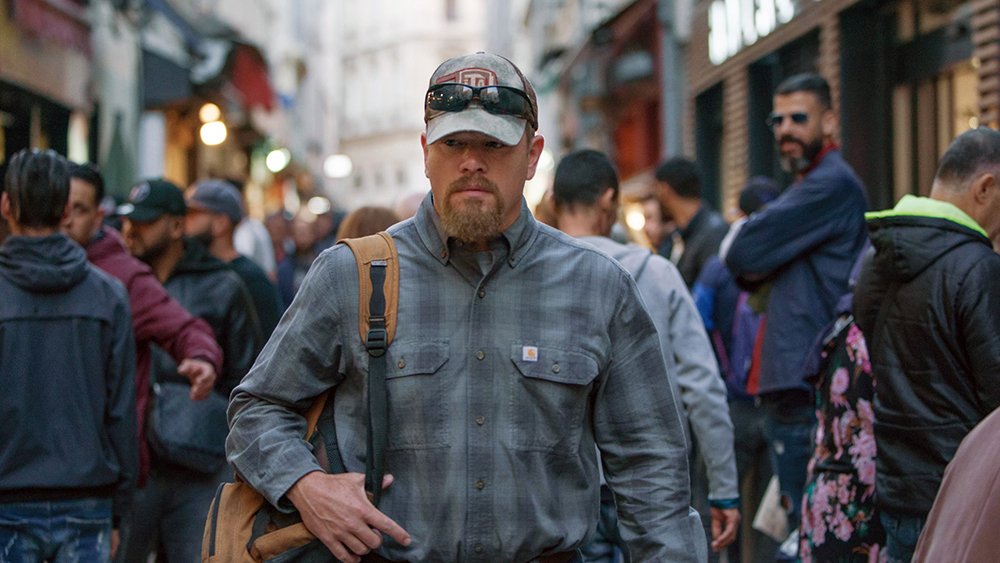
    The film sees Damon portray an Oklahoma roughneck travel to Marseilles visiting his daughter in hopes of securing her freedom five years after she was imprisoned for the death of her roommate. Marketing and trailers project Stillwater as an intense thriller in the vein of the Taken franchise, though it’s considerably more restrained and somewhat melodramatic over the course of 140 minutes.

    Coproduced by American and French studios, there’s a considerable blending of American intensity with moderate European filmmaking that gives Stillwater a brooding tone which could dissuade casual moviegoers. But the deliberate pace is actually one of the strongest elements of the film, which allows McCarthy’s introspective script to shine and drive the narrative based on character rather than simple plot.

    Damon delivers an intensely introspective performance as Bill, a man seemingly wandering his way through life with little purpose or perspective until the events of the film grow to completely reshape him as a father, and perhaps more importantly, as a man.

    There are moments of rage that will evoke his work in the Jason Bourne franchise, and audiences longing for the action thriller they believe they were promised by the trailer will long for more. 

    But it’s in the reflective work that Damon puts Bill through where his performance truly shines.

    Over the course of the film Bill connects with a mother and her young daughter, becoming somewhat of a surrogate father as audiences see Damon slowly soften as if he were seeking amends for past sins in a pseudo do-over penance.

    The relationship Damon is able to create with first-time actress Lilou Siauvaud as Maya develops naturally with the pair building bridges across generational and emotional differences in spite of language barriers. Moments where the pair begin to teach each other English and French are quite charming and often provide the slightest sense of levity to break up the heavier drama that prevails throughout.

    Abigail Breslin is solid as Bill’s daughter, though the screenplay and the larger feature as a whole keep Allison at a distance from audiences, muddying the waters to accentuate the central mystery and maintaining the focus on Bill himself.

    Camille Cottin is excellent as Maya’s mother Virginie, operating both as a narrative link to drive the story forward translating for Bill and the audience and as a beacon for Bill to find himself in this foreign world culture that he doesn’t understand as a blue collar American.

    Cinematography from Masanobu Takayanagi is largely handheld and natural, allowing the city of Marseilles to fill the background with its unique beauty and plurality as a city of elite and lower class. McCarthy and Takayanagi do a wonderful job of using the visual to help create the world of the film without becoming a distraction from the character work.

    Focus Features seems to have moved Stillwater off its Academy Awards marketing campaign, pushing the film into premium video on demand while it’s still screening theatrically. Unfortunately, Damon’s chances of earning a Best Actor nod seem unlikely as comments he made during the press tour for the film have moved him almost certainly out of the running.

    By the time all is said and done, Stillwater could very well top a list of 2021 films that no one is talking about despite being among the most original and captivating.

    Damon’s performance is beyond reproach and the considerable talent around him both on screen and off make Stillwater a film audiences should seek out at home or on the big screen.

  • In The Heights: Capturing the spirit of community

    In The Heights: Capturing the spirit of community

    Much of great filmmaking comes down to proper world building, creating a community within the narrative to help bring the audience into an unfamiliar, unique place.

    Filmmakers often showcase the worlds in which they come from, which makes authentic portrayals of diverse communities rarer than they should be.

    Lin-Manuel Miranda’s first Broadway smash hit took audiences into his community, a melting pot of Latino immigrants from all walks of life. Paired with the vision of “Crazy Rich Asians” director Jon M. Chu, In The Heights pushes underrepresented voices to the forefront of major box office cinema with one of the year’s most vibrant and joyous film.

    Based on the Tony Award winning musical, In The Heights follows a summer in the lives of four young residents in the Washington Heights district of New York City, a diverse immigrant community staving off gentrification and generational expectations.

    After breaking out in Miranda’s “Hamilton” and the 2018 remake of “A Star is Born,” Anthony Ramos should be a full-fledged star after this performance as Usnavi, a young bodega shop owner with dreams of returning to the Dominican Republic to rebuild his father’s beachside bar.

    It’s within Ramos’ eyes that audiences are pulled into the world of the film and his everyman persona carries the narrative through its relatively disjointed moments leaping between multiple storylines.

    Melissa Barrera is a revelation to American audiences as the Mexican actress breaks out in a big way with a passionate, wide-eyed turn as Usnavi’s love interest, Vanessa, who longs to leave her job at the local salon to become a high-end fashion designer.

    A secondary love story between Leslie Grace’s Nina and Corey Hawkins’ Benny worked better in the Broadway production than in the film version as neither character gets the full character development needed to get audiences to buy in to their romance.

    “NYPD Blue” star Jimmy Smits provides a commanding, fatherly presence as taxi cab company owner Kevin Rosario, while Miranda himself takes on a smaller role as the piragua salesman that doubles as a sort of Greek chorus to reinforce the larger community presence.

    The best work in the entire film comes from Olga Merediz, who offers a simply perfect turn as the neighborhood matriarch Abuela Claudia. In what becomes the emotional core of In The Heights, Merediz personifies the immigrant struggle masterfully over the course of a single song and her portrayal of Abuela’s quiet confidence and faith in God becomes a guiding light for not just the community but the other actors as well.

    The tenderness in Abuela and Usnavi’s relationship is exceptional and bridges the gap between the first and second act perfectly.

    Chu has the ability to create visual spectacle that becomes cinema magic in short bursts. The style he developed for “Crazy Rich Asians” translates incredibly well for the musical moments in this film. Bright, vivid imagery that radiates joy into the hearts of audiences are perfectly edited to match the rhythms and flows of Miranda’s music.

    The bombastic showstopper “96,000” set at a local pool features a cast of nearly a hundred basking in the outdoor sun while slamming their hands into the water and encapsulates the pulse of the community in one hopeful set of images.

    Conversely, Chu’s nuanced, almost theatrical take on “Pacencia Y Fe” is far more intimate, trapping audiences in narrow, confining hallways meant to symbolize the struggles immigrants faced in their new life in America. It’s a breathtaking sequence that will likely help Merediz contend for an Academy Award as a supporting actress after earning a Tony nomination for the same role as a part of the original Broadway cast in 2008.

    If there are shortcomings to the musical adaptation, the most glaring comes out in between songs as the energy and vibrancy are tempered down by exposition. Chu struggles in these moments to provide the amount of urgency needed to maintain the audience’s attention, but it’s swiftly regained as soon as the next number kicks off.

    The driving force of the narrative is a sweltering heat wave that leads to a blackout in the neighborhood, but visually, In The Heights lacks the ability to indicate just how hot it is on the block besides sweat stains on the backs and underarms of shirts even though the characters aren’t sweating themselves.

    In The Heights will likely be a popular prediction for major nominations next awards season, but an early June release and the looming West Side Story remake from Steven Spielberg slated this December could leave the crowd-pleaser on the outside looking in.

    Film lovers intrigued by In The Heights should make the effort to seek out the film both in theaters and on HBO Max. The musical format lends itself to easy viewings on a streaming service at home as audiences can create their own intermissions between musical sequences and Chu’s visual language makes a perfect backdrop for the casually engaged.

    But it’s also important to catch In The Heights on the biggest screen possible, where the spectacle of the vibrant musical can be fully appreciated.

    More importantly, it’s a chance to vote with the almighty dollar to convince studios that culturally diverse cinema is not a niche market and offers something for every moviegoer.

    In that regard, In The Heights is a true triumph.

  • Cruella: Is there redemption for villainy?

    Cruella: Is there redemption for villainy?

    Growing up on animated films, there are any number of terrifying villains that easily scare young children with their wicked and cruel nature.

    One such baddie with a demonic last name and a penchant for turning puppies into fashion statements felt especially repulsive and scary to adolescent cinephiles.

    After two Angelina Jolie-led features putting the antagonist of Sleeping Beauty at the center of the plot, the Mickey Mouse company has set its sights on a redemption – or at least anti-hero – arc for Cruella De Vil.

    Director Craig Gillespie’s Cruella far exceeds the expectations of previous live action iterations of classic Disney animated IP and is a ton of fun for adults who grew up on either the 1961 animated feature One Hundred and One Dalmatians or Glenn Close’s turn as the villainess in 1996’s live-action 101 Dalmatians.

    The film is essentially an origin story for the character, set in London during the punk-rock 1970s as a young Cruella seeks to make a name for herself in the fashion world while also picking pockets alongside a pair of thieves she befriends along the way.

    It’s an incredibly difficult task for Gillespie and Disney to salvage the Cruella character and it shouldn’t be possible given just how reviling her intentions have proven to be.

    Simply put, the only reason Cruella works at all is casting Oscar winner Emma Stone in the title role.

    Her performance as the reimagined Cruella is very against type for her and yet exactly what Gillespie needs to center the entire film. Audiences need to be magnetized by the actor in the tole to overcome the fact that they are conditioned to be reviled at a villainess who eventually plots to turn dalmatians into a fur coat.

    Cruella also provides the additional challenge of presenting the title character as a dual personality – the kinder, more reserved Estella and the darker, aggressive Cruella. Stone has to maintain a keen sense of where the character is within the context of the script and within each scene and does a terrific job of blending the two into one cohesive performance.

    Emma Thompson does a terrific job as fashion designer The Baroness, who serves as the film’s antagonist. Alongside Joel Fry’s charming work as Jasper, Paul Walter Hauser continues to prove why he’s one of the best character actors in Hollywood today with a delightfully humorous turn as absent-minded henchman Horace.

    Gillespie certainly leaves his mark on the film for better (dynamic visuals and cutting dialogue) and for worse (unnecessarily long handicam shots, excessive run time at over 130 minutes).

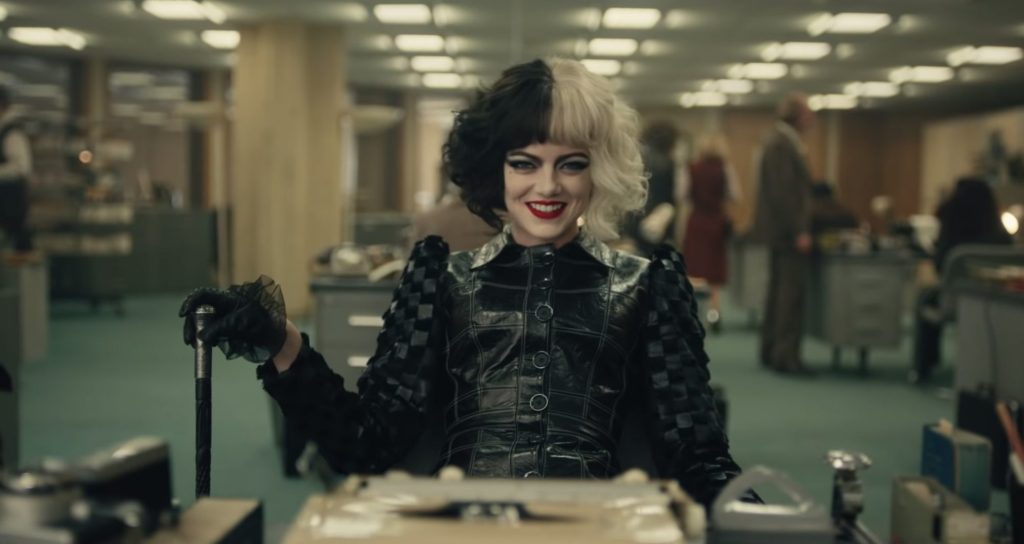
    The technical aspects of Cruella are especially alluring with two-time Academy Award winning costume designer Jenny Beavan making the film an absolute must re-watch simply for the endless plethora of fantastical, outlandishly fashionable pieces of art that Stone, Thompson and countless extras wear scene to scene.

    In a film that sparks from a woman’s obsession with fashion, Beavan creates a whole world within each stitch, color palette decision and cut. Often viewers are so drawn in by what Stone is wearing that her magnetic performance becomes somewhat hidden behind artistry in black and white.

    The visual paradise of Cruella extends to its entire production design – a hallmark of any top-caliber Disney film – as 1970s London engulfs the screen through elaborate staging and crisp, emboldened cinematography from director of photography Nicolas Karakatsanis.

    A signature of Gillespie’s style in 2017’s terrific biopic I, Tonya, major moments in Cruella are themed with ‘needle drop’ infusions of a variety of era-appropriate punk rock anthems. In one or two instances, these ‘drops’ add to the larger personality of the film, but often the ‘Now That’s What I Call Music!’-esque soundtrack drowns out Oscar-winning composer Nicholas Britell’s masterful mood-setting score.

    Cruella could easily become a frontrunner in technical categories come awards season, especially in costumes and production design.

    Where the film may get lost, however, is in its marketing as parents of younger children may simply see the Disney origin story as a family friendly outing at the movies.

    Gillespie’s film is much darker and more relentless with its pace than a typical Disney venture and children may get lost, confused or bored by large stretches of the film. Adults, though, should revel in just how uniquely ambitious this interpretation becomes.

    It’s incredibly reductive to suggest Cruella is an amalgamation of Joker, Birds of Prey and The Devil Wears Prada, but there’s certainly parallels there that are unmistakable comparison points between this film and those “influences.”

    The least Disney movie of all traditional Disney films in quite some time, Cruella marches to the beat of its own black and white drum while simply not caring about audience expectations or response.

    Perhaps the most pleasant surprise so far in 2021, Cruella is certainly worth seeking out in theaters although probably not quite worth a $29.99 price point for home viewing on Disney+.

  • Oscars 2021*: Nomadland win slighted

    Oscars 2021*: Nomadland win slighted

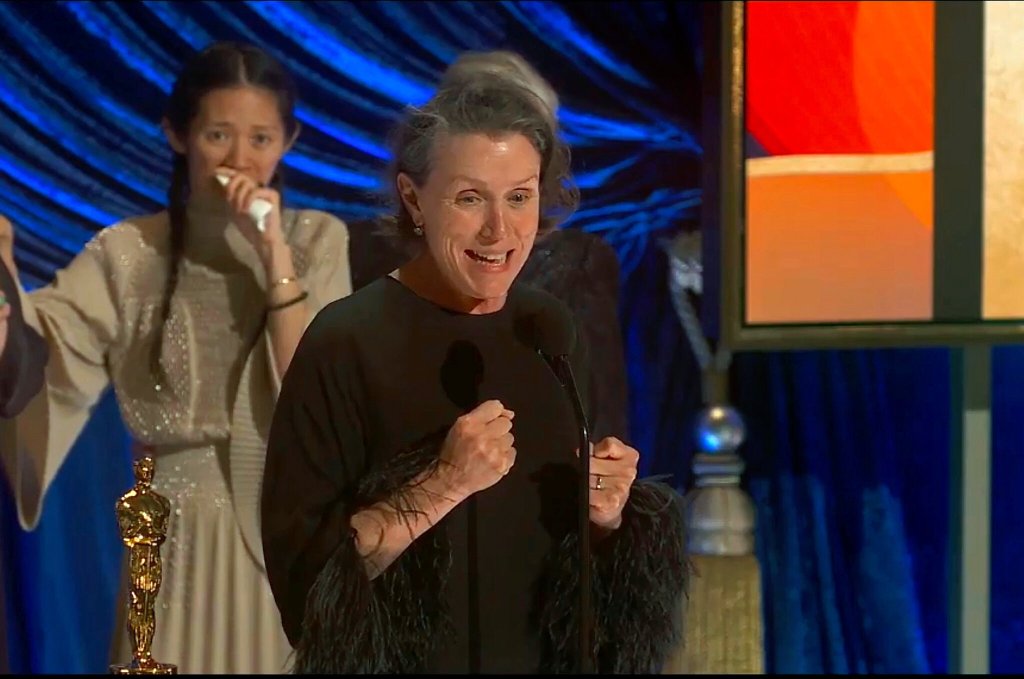
    “One day very, very soon take everyone you know into a theater, shoulder to shoulder, in that dark space and watch every film that is represented here tonight.” – Three-time Academy Award winner Frances McDormand, accepting the Best Picture Oscar for her film Nomadland

    Those who believe the Academy Awards don’t matter will point to Sunday evening’s ceremony as a prime example.

    After a tumultuous year where moviegoers were prevented from seeing a majority of the nominees on the big screen, the Oscars were meant to be a celebration of the industry’s perseverance and hope for the future.

    But the disjointed, often disingenuous gala held inside Los Angeles’ Union Station will forever dampen the luster of its nominees and winners – especially its Best Picture honoree Nomadland, Chloé Zhao’s intimate portrait of life on the open roads during harsh economic times in the American West.

    When people should be celebrating this magnificently small independent feature and star Frances McDormand’s wolf cry to propel moviegoers back to the cinemas, it will be forever tarnished by winning that prize before the final commercial break only to have McDormand with very little left to say after her Best Actress win and Sir Anthony Hopkins a no-show to accept his Best Actor prize for The Father.

    The real question now becomes, will moviegoers even bother to watch Nomadland at home where it can easily be streamed with a subscription to Hulu, let alone head out to the nearest cineplex to see such a quiet film “shoulder to shoulder” with fellow theater patrons as McDormand put it.

    A haunting yet powerful portrait of a hidden life across the heartland, Nomadland finds some of the best of America wandering across the country in search of boundless freedom and of themselves.

    McDormand stars as Fern, a seasonal worker traveling the country in an inauspicious white van following the death of her husband and collapse of the town they lived in after the US Gypsum plant closed down. Along the course of her travels, she meets a variety of interesting characters living as van-dwellers.

    Nomadland meanders slowly through its 105-minute running time with a subtle grace that allows for deep reflection. Zhao’s film is an unassuming portrait of Americana through the lens of a woman unable to cope with massive changes in her life.

    Nomadland is a quiet road movie filled with introspection, genuine performances from raw untrained talent and endlessly striking cinematography that maximizes natural light.

    It’s truly disappointing that director of photography Joshua James Richards’ brilliance behind the camera isn’t readily available to be seen at movie theaters across the country as the billowing landscapes and intimate moments he captures transcend what home viewing experiences can provide.

    Richards masterfully utilizes an extended wide angle lens to frame the long, empty vastness of the film’s outdoor landscapes and mirrors that by pulling his camera in close to characters, tightening the frame to the point where there’s nowhere else to look but people telling stories.

    McDormand is certainly worthy of acclaim for this, her third Academy Award for Best Actress following 1996’s Fargo and 2017’s Three Billboards Outside Ebbing, Missouri, the true stars of Nomadland are the ancillary characters Fern meets along the way.

    Real life nomads playing themselves deliver a large majority of the film’s emotional stakes and authenticity. Characters like the reclusive Swankie or energetic Linda May provide Nomadland with a sense of color, bursting any superficial sheen that studio features might have. 

    At times, Zhao’s film becomes almost a documentary with McDormand playing tour guide to an unknown world of America’s heartland. Her film honors the nomadic culture with quiet reverence and respect, allowing these wandering seniors to express themselves in pure honesty that radiates off the screen.

    For the first time since 1971, Best Picture wasn’t the final award handed out at the Academy Awards.

    In doing so – to try and create a moment – the producers ripped away a potential moment for the second female filmmaker to ever win Best Director and a celebration of small, independent filmmaking.

    Nomadland is certainly a worthy Best Picture winner that hopefully will long outlive this miscue and reach a much wider audience in a revitalized movie theater setting or in the comfort of their own homes.

  • The Father: Waging war on aging

    The Father: Waging war on aging

    First time filmmakers delivering quality debut features has been a staple of this year’s award season with Emerald Fennell’s Promising Young Woman and Regina King’s One Night in Miami… as standouts.

    Dramatist Florian Zeller has also become a name to watch in cinema, adapting his critically acclaimed stage play for the big screen and earning five Academy Award nominations including Best Picture, two acting nods and best adapted screenplay.

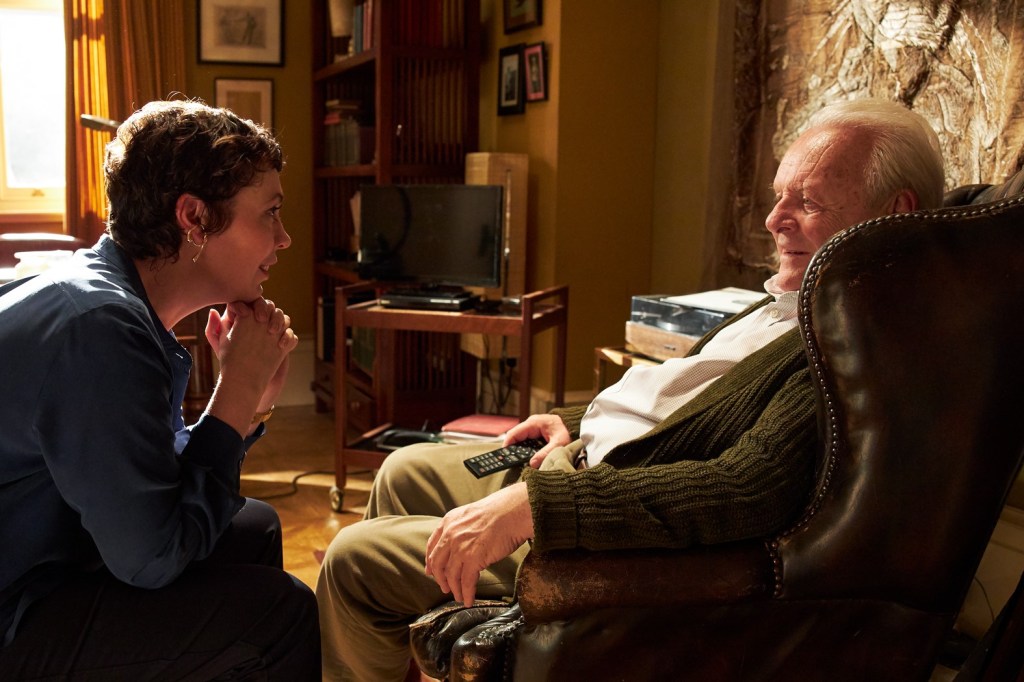
    The Father finds Anthony trying to maintain his independence in spite of his advanced age while his daughter Anne hopes to find a caretaker to help him with his daily life. As he balks at the help of others, Anthony finds himself doubting those around him, his own mind and even reality itself.

    At the core of the film is a terrifically nuanced turn from Sir Anthony Hopkins, for whom Zeller wrote the titular role and named the character after. The Oscar winner is especially adept here at guiding audiences through the tonal shifts in the drama through his performance, which finds Anthony more and more unsure of himself over time.

    Hopkins uses the non-verbal to communicate these changes with both a widening or narrowing of his eyes to give viewers clarity into Anthony’s mental state, but also in his physicality as Hopkins’ gait, shoulder movement and posture inform the larger picture that Anthony’s words cannot express.

    This is especially true as Anthony meets (or more likely re-meets) characters throughout The Father as Hopkins expresses an individuality to each interaction that matches the mood of the scene and yet allows for Anthony’s fading memory to befuddle or confuse things.

    Hopkins’ strongest moments come opposite Olivia Colman as Anne. The pair have an ability to emotionally express how Anthony’s situation has become a burden onto Anne, but in a way that shows off a deep-rooted bond somewhere between comradery and love.

    Zeller’s screenplay is ripe with emotionally taxing yet fulfilling moments that genuinely display the effects mental illness have on the elderly and those who love them. Where it turns from solid script to truly inspired drama, however, is during a second viewing of the film as the pieces are all assembled and early moments take on new meaning with greater context.

    The Father has a very large influence from its theater roots, often feeling immensely small in scale with dialogue-intensive exchanges in tight quarters.

    But the film becomes something much more in its cinematic form thanks to expert, Academy Award nominated editing from Yorgos Lamprinos. Scenes are tied together in such a way – always from Anthony’s perspective – that audiences wander through the film trying to piece together its mysteries like how Anthony attempts to understand an everchanging environment.

    In its stage form, it would be difficult for characters to melt in and out of the action in the same way they do in Zeller’s film. A simple, well-timed cut away masks this process and allows scenes that would change dramatically on stage to occur without incident. 

    The fact that the editing enhances viewers’ understanding of Anthony’s mental and emotional predicament is astounding and very similar stylistically to Tara Miele’s indie fantasy drama Wander Darkly. 

    Visually, The Father suffers slightly from Zeller’s shot construction and staging as his eye for the theater can cause imbalanced framing with slightly askew cameras positioned over the shoulder of actors as they are blurred at the edge of a frame to highlight another.

    The Father is a strong contender this Sunday at the Academy Awards with Hopkins a co-frontrunner for Best Actor alongside the late Chadwick Boseman for Ma Rainey’s Black Bottom. Colman, a recent Oscar winner herself, could be a surprise as well in supporting actress although she is likely running third behind Yuh-Jung Youn in Minari and Maria Bakalova in Borat Subsequent Moviefilm.

    A solid drama with compelling lead performances, The Father certainly deserves the honors it has been bestowed this awards season although it’s safe to say that Zeller’s film could wait until a reasonably priced home viewing rather than premium on-demand rental or a trip to the theater.

  • Another Round: To life’s freedoms and excesses

    Another Round: To life’s freedoms and excesses

    Danish teenagers play an unusual drinking game at the beginning of director Thomas Vinterberg’s new film.

    Teamed in pairs, they run around a large lake carrying a case of beer and must finish the entire load before they can cross the finish line, where adults cheer them on and police idly look on.

    It’s a familiar tradition in Denmark, a country whose laissez-faire attitudes towards alcohol create the backdrop for the most intriguing premise to a feature film.

    Another Round, starring Mads Mikkelsen, follows four high school teachers plagued with the malaise and minutia of ordinary everyday life. Their solution to rouse them from lethargy in the hopes of being better teachers, more attentive spouses and to feel alive again is to test a theory that they will improve their lives by keeping a constant, yet moderate amount of alcohol in their system.

    If it were an American film, Another Round would be a rumpus comedy that might blend Animal House with American Beauty. But Vinterberg keeps a more deliberate tone that feels looser and free from genre constraints, floating in and out of pace in a naturalistic sense that pervades the lead performance as well as the filmmaking itself.

    Mikkelsen is more subdued than one might expect from a character experimenting with alcohol as intoxication brings out layers within Martin, both positive and negative that Mikkelsen balances to create a sense of believability without excessive sloppiness.

    The shallow lethargy of Martin to open the film, almost to the point where audiences can touch the glazed-over look in Mikkelsen’s lifeless eyes, begins to awaken as alcohol flows into his system to validate the group’s hypothesis. Mikkelsen and Vinterberg take great care to ensure that the path to inebriation feels fluid and in keeping with a larger dramatic narrative rather than for comedic show.

    Within Mikkelsen, viewers are able to feel the pulsating highs and crashing lows of alcoholism in revealing, entertaining ways that ground Vinterberg’s tragicomedy.

    While Martin provides the center of the film, his three comrades in drink – Tommy, Peter and Nikolaj – give Another Round added depth by exploring the differences alcohol may have on people mentally and physically. Thomas Bo Larsen, Lars Ranthe and Magnus Millang perfectly capture the relatable way in which close co-workers can bond together and yet lead separate lives hidden away in solitude.

    The narrative is framed through segments that follow the trajectory of the group’s “research,” with Vinterberg often interrupting the visual space with black screens and small text to indicate text message conversations or lines from the study the group is writing as it is being crafted. Smartly, this also clearly defines for the audience the degree to which Martin and his colleagues are intoxicated, often showing the blood alcohol content level rise on screen as breathalyzers are used.

    Vinterberg’s screenplay – written with Tobias Lindholm – draws the audience in by giving Martin the words to express his emotions as the alcohol increases, but also starts to remove those words at the same rate with a potent poignancy that culminates in one of the year’s most rousing cinematic endings.

    A clear front runner for Best International Feature at this year’s Academy Awards, Another Round also snuck into the Best Director category for Vinterberg, ousting expected nominee Aaron Sorkin for The Trial of the Chicago 7 and contender Regina King for One Night in Miami.

    Another Round isn’t an advertisement for alcohol use in excess, nor is it a treatise on the moral consequences of substance abuse. Countless films have engaged with the subject matter in that way.

    Through Mikkelsen’s splendid performance and a thoughtful screenplay, Vinterberg has captured a largely hopeful outlook that celebrates life and second chances – literally another round of living – that audiences should seek out now that the Oscar contender has arrived on Hulu.

  • Minari: Struggling toward the American dream

    Minari: Struggling toward the American dream

    There’s something simple, yet elegant about director Lee Isaac Chung’s latest feature, a semi-autobiographical tale base on his childhood growing up in America’s heartland.

    The story is ordinary – and the cinema understated in large part – but there’s an ethereal quality to his film that opens with a young boy running in an empty field of green and never truly stops flowing in spite of the small character drama within.

    Set during the 1980s in rural Arkansas, Minari follows the Yi family who move to a plot of land so Jacob can fulfill his dream of becoming a vegetable farmer selling his crops to an emerging Korean population in the South. His choices put a strain on his relationship with his wife, while his young son David contends with a health condition and his grandmother that he doesn’t consider to be his grandma.

    Walking Dead and Burning star Steven Yeun centers the film with a driven, considered performance as Jacob, a man whose quest for the American dream begins to isolate him from the family he pulled from California. The forthright confidence of Jacob propels Chung’s narrative forward and allows the audience to examine the family dynamic in idyllic memory but with a hue of sadness and anger that pulls at the edges of this conceit.

    It’s a performance that does tend to swallow the softer, almost muted work of Yeri Han as Monica who shines more in scenes opposite the young children rather than Yeun as her ability to draw compassion for Monica’s children far surpasses the anger she exudes during Monica’s conflicts with Jacob.

    While Yeun is celebrated as the film’s lead, the true star of Minari is eight-year-old Alan Kim, who steals every scene he’s in as David with a childlike wonder and heart. Audiences experience the pain and uncertainty of the family’s plights through David’s eyes and Kim is a wide-open vessel through which viewers can be drawn into the story with his affable humor and inquisitive spirit.

    The grandmother is expertly played by Yuh-jung Youn with a brash yet tender love that anchors the family – especially David and his mother. Moments with the other family members are important to the narrative of Minari, but the best work of the entire film is in scenes simply between Kim and Youn where the awkward unease of a boy meeting a relative for the first time melts into the emotional core thanks to tremendous chemistry between the two actors.

    Will Patton’s Paul brings just the right amount of colorful twist to the story with his eccentric brand of Christianity challenging the Yi family.

    It’s difficult to appreciate Minari receiving accolades in foreign language film categories simply because the majority of the film is in Korean with English subtitles because Minari is an American film about American immigrants living out the American dream. In some ways, it feels reductive to push Chung’s film out of categories and putting it in the box of “foreign film” as Minari deserves much more.

    Chung directs from his own screenplay, which allows him to fully pull from his own childhood to make Minari feel both a distant memory and a clear and immediate reality. This is especially evident in the performances he is able to capture from Kim, Yeun and Youn and extends over to the visual artistry of the film.

    The cinematography of Minari provides both a very muted, unobtrusive look for much of the film to allow for the audience to focus on the dialogue and performances, but it’s in the film’s more grandiose moments that director of photography Lachlan Milne’s work shines. 

    Capturing the countryside in bright, natural lighting, Milne provides a true sense of scale for the wide-open, limitless possibilities of the Yi family’s newfound life creating a farm and also Jacob’s personal hopes for the future as they grow and narrow over the course of Minari.

    The film will likely make the cut for the Oscar Best Picture race, though it will probably see a stronger showing at the Film Independent Spirit Awards than with the Academy. Yeun could see his way into the best actor race in spite of a strong category while Youn should earn a supporting actress nomination but could miss out entirely.

    Minari does suffer from not having a true theatrical release as the gorgeous panoramas and simple narrative beauty would create a terrific word-of-mouth campaign far stronger than the weaker one A24 has given it. With a digital release via video-on-demand to accent a small run in theaters, Minari should be the film ardent cinephiles with an eye for independent cinema seek out in preparation for the delayed awards season.