Category: Streaming

Reviews of films whose primary release is on a streaming service. Assign for streaming-origin releases, not simply because a theatrical film is later available online.

  • Your Place or Mine: Where is the love?

    Your Place or Mine: Where is the love?

    Valentine’s Day weekends have always been a landing spot for the charming romantic comedy.

    And while the genre has become all but eradicated from the big screen, streaming services like Netflix, Amazon Prime and Hulu have countless offerings of boy-meets-girl, hijinks ensue until they fall madly in love films.

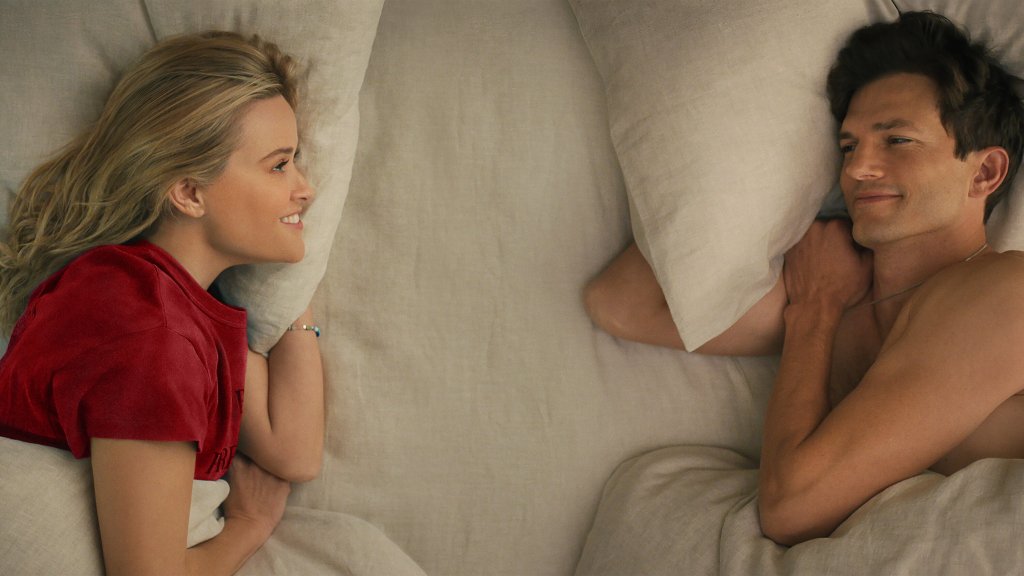
    In a pre-pandemic world, there would simply be no reason that a rom-com led by Reese Witherspoon and Ashton Kutcher wouldn’t make at least $30 million opening weekend at the box office, but nowadays a movie like writer/director Aline Brosh McKenna’s Your Place or Mine has become consumed by the streaming machine, released this past weekend on Netflix with little fanfare.

    The film’s premise implies a sort of You’ve Got Mail crossed with The Holiday narrative.

    Best friends Peter and Debbie live on opposite coasts and talk every day, but their lives are changed when they swap homes for a week as she pursues a lifelong dream, and he volunteers to watch her awkward teenage son.

    Witherspoon, a queen of the rom-com genre, is solid here as an independent single mom looking to fulfill her dreams while figuring out who she is in middle age. Because viewers – especially women – will connect with Debbie from fond memories of Witherspoon’s filmography, it’s easy to find Debbie as charmingly quirky and relatable.

    Kutcher, more known for his lovable idiot characters, has a much more difficult task of portraying the constantly suave businessman that’s incredibly against type. His strongest moments, ironically, aren’t with Witherspoon at all, but with Wesley Kimmel as Debbie’s son Jack.

    It’s clear that Peter – and Kutcher by proxy – has a genuine affection for Jack, but absolutely no concept of how to relate to an introverted teen. This should equate to easy laughs, but mostly comes off as wholesome kindness in a begrudgingly sweet way.

    The film serves as McKenna’s directorial debut and how much she’s influenced by her favorite romantic comedies comes out on screen, but also McKenna’s inexperience in the director’s chair carries over in the uneven comedic tone and acting flaws.

    McKenna borrows liberally from Nancy Meyers films in terms of production designs and lavish sets, although it’s often clear when green screens are being used to fill in the background outside Peter’s apartment.

    Structurally, Your Place does a relatively good job of balancing between Debbie and Peter’s storylines though it often feels like two separate 45-minute television episodes mixed in with a crossover episode.

    It isn’t just that Kutcher and Witherspoon lack on screen chemistry.

    Your Place keeps them apart for so much of the film – holding things together with split screen phone calls – that it fundamentally doesn’t make sense how Debbie and Peter move from friendship to romance. It’s as if the two were on completely different movie shoots and only were paired in a half dozen scenes to connect disparate thoughts.

    Looking just beyond the camera line without a scene partner to bounce things off of, Witherspoon and especially Kutcher have no ability to create dynamic chemistry. As a result, most of the early punchlines fall flat which sets an overall tone of blandness that makes jokes later in the film less likely to land.

    Conceptually, Your Place or Mine has the strength to be an above-average romantic comedy, but it feels like McKenna is too overwhelmed behind the camera or too committed to her own screenplay to create a more relaxed, natural tone to her film.

    Ultimately though, a film with so much promise and two solid rom-com leads at the heart should be better than “Your Place or Mine” actually is and easy access on Netflix will leave it buried at the bottom of cinephiles’ queue for years to come.

  • White Noise: Cinematic static

    White Noise: Cinematic static

    It seems as though every year Netflix puts out a film that makes one wonder how it was greenlit into production. 

    Whether it’s an exorbitant budget for a languishing Martin Scorsese epic like The Irishman or an overly sarcastic, nihilistic dramedy like Adam McKay’s Don’t Look Up, the streaming service can’t quite find its footing for an award season contender to draw large audiences with 2022 being no exception.

    Noah Baumbach, whose previous effort Marriage Story saw Laura Dern win a Best Supporting Actress Oscar, returns to Netflix with an adaptation of Don DeLillo’s avantgarde 1985 novel, the first feature the director has made without telling a completely original story.

    White Noise is an eclectic, strange, befuddling black dramedy of a feature released in select theaters in early December before hitting the streaming service Dec. 30. The film stars Internet darlings Adam Driver and Greta Gerwig as a couple living in an undisclosed Midwestern town whose lives are uprooted by a chemical spill.

    Baumbach breaks his film into three parts, much like the novel it draws inspiration from, with each section only loosely connected through minor characterization and general themes.

    White Noise is absolutely mystifying for those unfamiliar with the source material and wildly inconsistent in tone. In many ways, it’s like a train wreck that bystanders see coming and can’t look away from, which Baumbach almost revels in with the amount of time he spends on car crashes and people’s voyeuristic nature.

    At the core of the film, Driver as a college professor in Hitler studies is quirky in physicality and dress, but ironically the most normal character in the entire film. The cadence with which his Jack pontificates is in keeping with Baumbach’s idiosyncratic dialogue and it’s clear that Driver relishes each opportunity to emote in a spiritualistic way.

    Conversely, Gerwig – who audiences see significantly less of in the film – is more subdued as White Noise plays out with the most memorable part of her performance being a wacky frizzled 80s haircut and at times, a riff on a Beverly D’Angelo-esque character from National Lampoon’s Vacation.

    The family dynamic doesn’t really evolve much over the two-hour feature, though each younger performer is given some opportunity to shine and moments between Driver and Raffey Cassidy’s eldest daughter character Denise over an unknown prescription are the most entertaining elements of a screenplay that’s all over the map.

    From a production standpoint, White Noise does an exceptional job of creating a hyper-realistic recreation of 1980s middle America with bombastic costuming, over-teased hair and makeup and a fully transformed, inexplicably intricate supermarket viewers could spend hours in actually shopping in and being completely transported back in time.

    There’s an overwhelming brightness to White Noise visually that harkens back to classic John Hughes comedic style and sets an expectation for audiences that the outrageousness of Baumbach’s adaptation of the avantgarde source novel just cannot meet. Much like the Gladneys’ home and family live, the film is stuffed full with detail and nuance to the point where there’s no room for audiences to breathe given the strangeness and complexity of the narrative.

    Given Baumbach’s track record with Marriage Story and Netflix not having a true contender this awards season, it’s possible that White Noise could slip into the nomination mix for accolades like adapted screenplay or production design, but the relative inaccessibility could leave it on the outside looking in.

    After an underwhelming theatrical performance, Baumbach’s film could find much more friendly waters on the streaming service where audiences can process the intricacies in chunks without having to digest the entire feature in one sitting. As it is, White Noise may prove to be too avantgarde and niche for the average moviegoer regardless of the setting.

  • Glass Onion: Whodunnit in the modern era

    Glass Onion: Whodunnit in the modern era

    Three years ago, writer/director Rian Johnson wowed audiences with an unexpected, compelling and hilarious take on the classic Agatha Christie-esque murder mystery genre.

    His Knives Out brought viewers into the world of a rural New England town filled with intrigue, suspicion and family tension while debuting an eccentric Southern detective on par with Hercule Poirot and Sherlock Holmes in Daniel Craig’s Benoit Blanc. 

    The success of Knives Out – which made over $300 million on a $40 million budget – prompted Netflix to spend $469 million to purchase the rights to two additional installments in what would become a franchise centered around Blanc’s exploits.

    The first spiritual sequel opened this past weekend with Glass Onion: A Knives Out Mystery debuting on the streaming service after a limited one-week theatrical run over the Thanksgiving holiday.

    The film sees Blanc whisked into a world of high society and social media stars brought together by a tech billionaire for a murder mystery game that proves deadly and sets Blanc off to find a genuine killer on a remote Greek island.

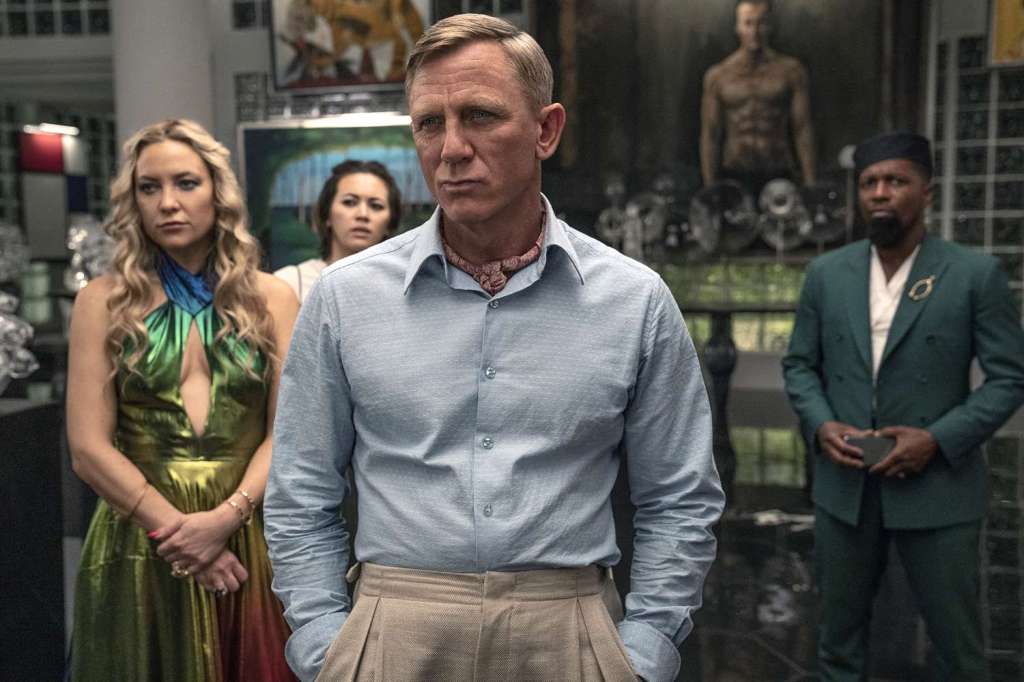
    What truly stands out about Glass Onion are the film’s illustrious and perfectly cast stars, most notably the returning Craig. His Blanc, fully formed in a second installment, is even more dry in his humor and Craig revels in the ability to acutely play the line between investigator and comedian.

    A sequence early in the film that reveals what Blanc has been up to during quarantine for the COVID-19 pandemic is especially sidesplitting in its humor and Johnson deftly sidesteps the pandemic while also addressing directly issues that would arise in an elite world given the circumstances. 

    Glass Onion wouldn’t work as well as it does on Craig’s performance alone.

    Johnson meticulously assembles an ensemble to surround Blanc that ramps up the humorous elements from the original while maintaining quality in the acting as well.

    Even by the standards of murder mystery where viewers must question the motivations of everyone but the detective, Janelle Monae has an arduous task in front of her being especially mysterious and vague and the accolades she’s been receiving as a possible best supporting actress contender are certainly valid.

    The showiest work in the film comes from Kate Hudson and Dave Bautista, who are both truly going for it as over-the-top versions of characters viewers might associate them with from other work, but the smartness of Johnson’s screenplay and guided hand in direction keeps the comedy fresh and not too on the nose.

    Edward Norton feels lighter and as if he’s having more fun with a role in some time as the tech billionaire at the center of the mystery, while Kathryn Hahn comes alive with small repartee that helps keep Johnson’s masterful screenplay at the forefront.

    Because so much of the success of the first film came from a shared viewing experience in theaters, it’s hard not to be somewhat disappointed by first time at home screening of Glass Onion where the wry, smart comedy of Johnson’s screenplay perfectly acted by perhaps the year’s ensemble cast doesn’t land in the same way without others around to share the moment.

    This isn’t to say that Glass Onion isn’t a terrific blockbuster film. Johnson has recaptured the magic of Knives Out and brought it back to life in a new environment that will give audiences something fresh to mull over and find all the hidden easter eggs and clues as the layers unravel.

    There’s been some buzz that Glass Onion would make waves and enter the Academy Awards’ best picture race, though that seems to be overblown somewhat simply due to it being Netflix’s best chance rather than being worthy of a nomination.

    The lack of a true theatrical experience really dulls the shine on Johnson’s film and keeps it from being on par with the original Knives Out, but regardless, Glass Onion: A Knives Out Mystery is certainly an entertaining at home experience that will pull cinephiles out of their seats during family gatherings this holiday season.

  • Blonde: Cracks below the surface

    Blonde: Cracks below the surface

    The human mind is a fragile thing.

    For as much as we want to believe that we are capable of handling anything that life throws our way, it’s the trauma and mental anguish that goes untreated that often leads to our demise.

    This is very much at the core of writer/director Andrew Dominik’s latest film, an avant-garde fever dream odyssey that follows no rigid plot structure nor overly glamorizes or demonizes its protagonist.

    Based on the fictional novel by Joyce Carol Oates, Blonde isn’t a traditional biopic, although it loosely follows the life of Norma Jean Mortenson, better known to the world as film star and pop culture icon Marilyn Monroe.

    Viewers see Marilyn’s childhood, her rise to stardom and relationships, but what’s most important to Dominik is the emotional toll that Marilyn’s journey takes on her and how the inner conflict between Marilyn the star and Norma Jean the real person comes to affect the tragic deterioration of her mental health.

    In a lot of ways, Blonde is very reminiscent of Pablo Larrain’s Spencer, an equally manic psychological drama from 2021 focusing on the stress and mental anguish of fame through the eyes of Princess Diana, although Larrain has a clearer narrative structure to his film and Dominik widens his gaze to a more ethereal, scattershot approach to hit the highlights of a much longer period.

    Up-and-coming actress Ana de Armas astonishes as Marilyn in a performance that’s elegant when it needs to be but constantly in a state of unease and brittle to the point of cracking. It’s clear to see the pain hidden with Marilyn’s eyes as de Armas radiates the hurt while simultaneously attempting to hide it behind a bubbly demeanor and infectious smile that captivates the hearts of millions.

    Dominik and de Armas aren’t necessarily interested in capturing who Marilyn was from a biographical perspective, more examining larger themes, and an overwhelming sense of longing for the father she never knew and the mother taken from her by mental illness.

    Her performance is constantly on a razor’s edge and de Armas brings out the best in a less nuanced role but doesn’t make Monroe a caricature. 

    A lot can be said of the sexuality within Blonde given the film’s NC-17 rating. While it’s true that de Armas spends a considerable amount of time topless, this is more an effect of her fragility in emotional and mental state rather than pure exploitation on Dominik’s part as a director. 

    The brutality of two specific scenes where Marilyn is essentially raped are less demonstrative in their sexuality but feel exceptionally explicit given the helplessness Marilyn feels in each scene and help to further the deterioration of Marilyn’s state of mind.

    Much of the supporting cast floats in and out of Blonde while the focus remains almost exclusively on de Armas.

    Blonde astonishes with its picturesque, complex cinematography from director of photography Chayse Irvin, who with Dominik essentially recreates iconic Monroe still photographs as full layered scenes that float effortlessly between an assortment of aspect ratios as well as in and out of color.

    But the consistency in quality of filmmaking on a frame-to-frame basis never wavers. Blonde is an exceptionally stunning film regardless of what era or visual approach Dominik and his production team choose for any given moment and viewers are always firmly planted in Marilyn’s world visually.

    For a film that runs at nearly three hours, it’s exceptionally well edited – especially transitioning from scene to scene in combination with the visual elements – and although the audience will easily feel the totality of the run time, it’s hard to look away from de Armas’s singular performance.

    There aren’t really any Oscar prospects for Blonde despite its limited theatrical release. The film’s NC-17 rating combined with other more mainstream options on Netflix’s slate will make it unlikely that this controversial drama will make the shortlist for even the most liberal of awards voters despite deserving acclaim in lead actress, cinematography, and score.

    Blonde is a film for few very forgiving cinephiles as many audiences will scorn Monroe’s depiction although de Armas gives the most compelling performance as Marilyn. It’s a more captivating movie on the big screen than it will likely be on Netflix, but the ease of access should broaden the range of viewers who can compartmentalize Blonde into more manageable chunks.

  • Look Both Ways: One moment, multiple outcomes

    Look Both Ways: One moment, multiple outcomes

    How often are our lives inexplicably and permanently changed by a single moment with major impact on the future?

    One decision, one choice, one matter of happenstance could easy alter the course of individual history. It’s these questions of “what if” that dominate the romantic dramedy genre and for the first time since the 1998 feature Sliding Doors, a new movie confronts the duality of a single moment head on.

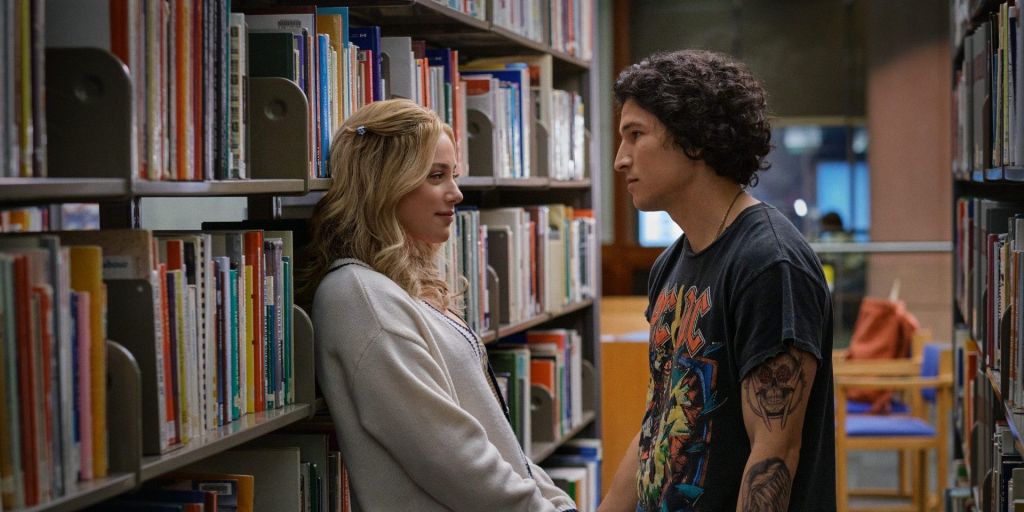
    Look Both Ways, which debuts on Netflix this past week, centers around a University of Texas senior and the pregnancy test that could keep her from her dream job as an animator in Los Angeles and propel her into a whole new world of motherhood. Director Wanuri Kahiu’s feature from a script by writer April Prosser blends two distinct narratives – one where Natalie’s test is positive and the other where it’s negative – into a largely successful, if not slightly derivative romantic dramedy that will help tide things over for cinephiles in an August calendar with slim pickings for new cinema.

    “Riverdale” star Lili Reinhart pulls double duty as Natalie, fully embracing the challenge of playing the same character from very different perspectives. It’s a performance that’s easy to get behind as a viewer with her affable wit and once the story really picks up, Reinhart capably manages to soften Natalie in both motherhood and adulthood with charm and grace.

    There’s limitations to the character work due to the duality of the narrative as Reinhart has to basically start from scratch twice with small variations on Natalie and build outward from a single inciting incident. Audiences don’t really get a deep understanding of Natalie’s individuality outside of the men in her life and Reinhart doesn’t try to explore with much nuance.

    Danny Ramirez as Natalie’s long-time friend Gabe and David Corenswet as love interest Jake both provide just enough to be plausible romantic outlets for Natalie’s affections, but neither performance is especially memorable once the credits roll.

    In fact, the most engaging work in the film comes from Andrea Savage and Luke Wilson as Natalie’s parents, whose natural chemistry with Reinhart provides the film with some truly endearing moments that are among the highlights of the entire feature.

    The key to the film’s success or failure for audiences mainly comes from the balance in the narrative structure once the central conceit is established. It would be exceptionally easy to ruin Natalie as a balanced character by focusing too much on one version.

    If viewers spend too much time with Natalie as a mother, there’s no room for audiences to connect emotionally with career-focused Natalie and vice versa. Kahiu’s film hinges on the ability to translate Prosser’s screenplay visually, emotionally and in the editing room in a manner that treats both sides of Natalie’s journey with equal focus and clarity.

    This isn’t always an easy hurdle to climb, especially in the early moments as Kahiu must introduce the duality of Look Both Ways by hopping cross country at a moment’s notice with little set up or signposting to viewers that a change is coming. It truly becomes more apparent over time thanks to subtle changes in Natalie’s hair and clothing to reflect visually how much her two lives veer apart.

    Kahiu ties this together strikingly well at times with some impactful animations done in the style of Natalie’s art that help reorient audiences within the realities and timelines.

    There’s nothing especially groundbreaking with this relatively run-of-the-mill dramedy, but Netflix would stand to do well by continuing to pump out these moderately affordable, easily accessible dramedies to fill the void left by major studios who no longer develop mid-budget rom-coms that audiences used to flock to in the early 2000s with stars like Jennifer Aniston and Katherine Heigl.

    Until the box office begins to show light at the end of the tunnel, moving from the summer doldrums into awards season where the biggest films of the year are released beginning in October, it’s hard not to give a dramedy like Look Both Ways a shot for viewers looking to turn off their brains and relax at home.

  • The Gray Man: Action for the sake of action

    The Gray Man: Action for the sake of action

    No one seems to mind when every romantic comedy follows the exact same plot.

    Boy meets girl, girl falls for boy, something outlandish happens to separate them, love brings them back together. Rinse. Dry. Repeat.

    Somewhere along the way, it seems that moviegoers have lost their appetite – or perhaps more aptly, critics have lost their taste – for by-the-numbers action films that focus on big fight sequences and a standard plot because of too many franchises churning out the same thing over and over again.

    Directors Joe and Anthony Russo, known for big, bombastic Marvel Cinematic Universe movies, take on the action genre from a comic-book free perspective with a relatively original tale about a convicted criminal turned CIA assassin trapped in a world of political espionage and intrigue.

    And while the screenplay from Joe Russo along with Christopher Markus and Stephen McFeely certainly doesn’t break any new ground in the genre, their film The Gray Man delivers solid entertainment with some terrific action sequences, a convincing cast of character driven actors and some inventive stunt work.

    The film finds Six stuck in prison without a hope of parole for decades when a CIA officer hands him a get-out-of-jail-free card in exchange for lifetime service as a company hitman taking out bad guys off the books at Washington’s request. When Six is asked to take out a spy with compromising intel on the new bosses at Langley, he’s forced to go on the run in search of answers.

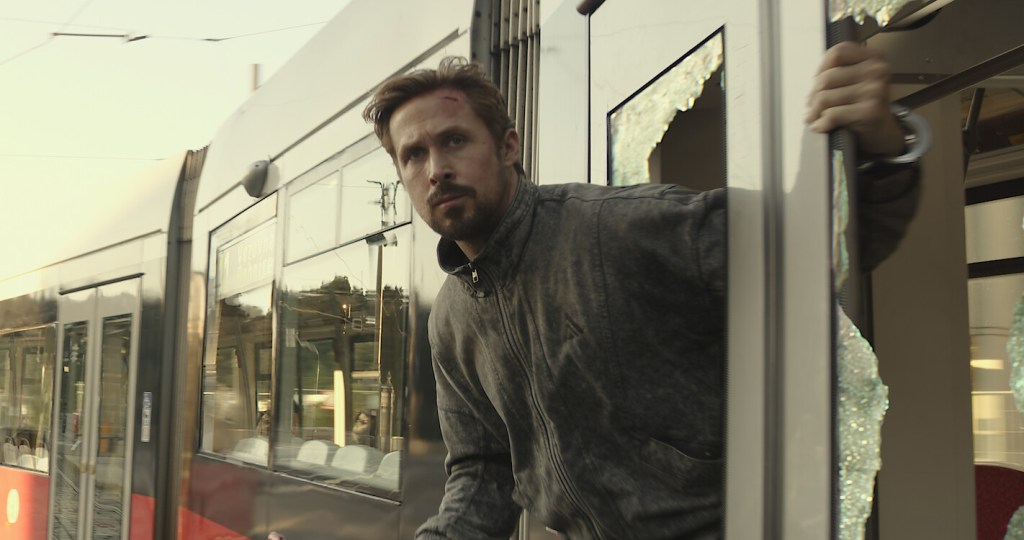
    It’s clear from the outset that the titular character is intended to be an offshoot of Matt Damon’s famous Jason Bourne character without the memory loss and in reality, this shouldn’t work as anything more than a subpar copycat. But Ryan Gosling’s exceptionally dry performance offsetting his natural charisma gives Six a more well-rounded personality than one might expect from what’s on the page.

    Even as things become more chaotic and the world around him spins into disarray, Gosling’s performance is unfrayed. Six’s motivations are rarely in doubt and his skills never questioned simply due to the instant gravitas Gosling brings to the role and the commitment he has to the drama in fight sequences.

    Lines in the script like “You want to make an omelet? You gotta kill some people.” are especially cringy, but Chris Evans does such a terrific job relishing the over-the-top nature of his villainous mercenary Lloyd that the ridiculous becomes comical in the best way. Evans plays up every moment with a zeal befitting an 80s wrestling heel, complete with an absurd crewcut/macho mustache straight out of a Jean-Claude Van Damme direct to DVD release.

    The Gray Man also boasts a bevy of very capable supporting performers smartly cast to accent the two leads. No Time To Die scene-stealer Ana de Armas proves why she rightly deserves her own action movie with a wonderful blend of defiant energy and stunt prowess, while Billy Bob Thornton and Alfre Woodard are exceptional as Six’s former handler/father figure and a CIA station chief respectively.

    The one sore spot in the cast, unfortunately, is Bridgerton star Rene-Jean Page, whose turn as a CIA deputy director with secrets to hide doesn’t rise to the same level as Gosling and Evans, making his Denny Carmichael miserably weak and ineffective, almost totally skippable as audiences await a Gosling/Evans faceoff.

    Action sequences litter every inch of The Gray Man with engaging hand-to-hand combat moments transitioning in and out of much larger, showy sequences with massive explosions that ramp up both the violence and the unbridled entertainment. For a movie about rival hitmen, The Gray Man puts the most creativity and passion into its action, which makes it immensely watchable regardless of the relatively flimsy premise that surrounds it.

    While it’s a film that probably benefits greatly from a big screen setting like its limited theatrical debut last week, its ease of access as The Gray Man hits Netflix on Friday makes it an easy choice for action genre fans and those willing to turn off their brains for a couple of hours for mindless entertainment.

  • Hustle: Hoopin’ with heart

    Hustle: Hoopin’ with heart

    Adam Sandler’s prolific career on Saturday Night Live and a plethora of mid-1990s comedies haven’t kept the funnyman from large swings and misses during the past seven years as his Happy Madison Productions has partnered exclusively with streaming service Netflix to create content.

    The laughs haven’t quite landed for the comedian in quite some time, though Sandler has proven to be exceptional playing against type in more dramatic roles with films like 2017’s The Meyerowitz Stories and 2019’s Uncut Gems.

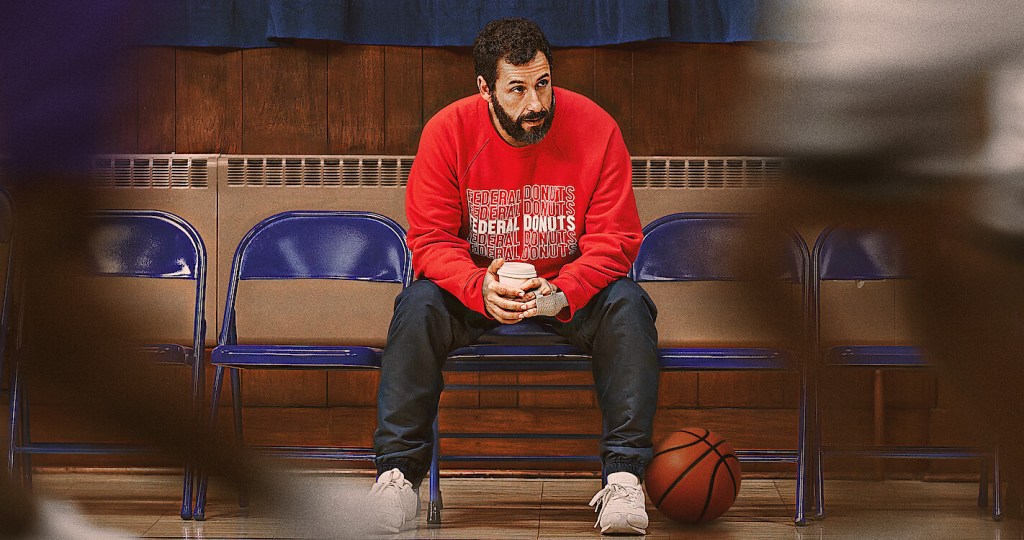
    Hopefully, Sandler may have found the formula to success with his production company, leaning more dramatic than comedic with his latest Netflix partnership, the sports dramedy Hustle, which finds Sandler portraying a basketball scout traveling the world to find the missing piece of a championship team for the Philadelphia 76ers.

    Director Jeremiah Zagar’s film works with a more subdued Sandler perfectly matched opposite real NBA player Juancho Hernangòmez of the Denver Nuggets, who plays a diamond-in-the-rough prospect from Spanish mean streets that Sandler’s Stanley Sugarman must bring to the U.S. and convince teams that Bo has what it takes to be a star.

    Sandler leans into the everyman, blue-collar personality of Stanley that’s quiet when he needs to be and demonstrative when he has to be. The character doesn’t truly come alive until he meets Bo, and audiences can clearly see the light come on in Stanley’s eyes when he realizes just how special Bo is as both a player and a person. 

    The drive that Sandler showcases in these training scenes with Bo is highly reminiscent of another classic Philly sports movie, Rocky, with Sandler perfectly becoming the Mickey-like father figure to Bo’s Rocky. Hustle leans into this connection strongly, especially in the extended montages and sequences where Bo has to run up a hill faster and faster each day to demonstrate his work ethic and emerging talent, much in the same way as the iconic steps sequence in the Oscar-winning boxing film.

    For a first-time actor, Hernangòmez is ideally cast as Bo and while it’s clear that he has the basketball chops to nail the role, what sets him apart from other athletes-turned-actors is the effortlessness he can pull off the emotional moments of the film. It’s rare for someone with as little experiences as Hernangòmez must genuinely develop chemistry with other actors and have a naturalness to his performance that will make audiences forget who they’re watching and live in the world of the film.

    This is also true to a lesser extent for other basketball players playing roles instead of themselves. Minnesota Timberwolves star Anthony Edwards does a terrific job playing the trash-talking antagonist Kermit Wilt-Washington and former Houston Rockets guard and TNT analyst Kenny Smith is a natural as Stanley’s ex-teammate and player agent Leon Rich.

    Hustle is also accented nicely with veteran character actors filling key supporting roles with Robert Duvall making a terrific extended cameo as the team’s owner, Ben Foster as his son and a primary antagonist for Stanley, and Queen Latifah as Stanley’s mostly supportive wife.

    Zagar does a great job of making Hustle feel more cinematic than the average sports dramedy, cutting the frame to a more widescreen 1x85x1 to elongate the visuals horizontally. This works especially well in the basketball segments to help viewers feel the width and length Bo has as a tall, dominant player as well as the overall chaotic movement street hoops can achieve as audiences watch all the players simultaneously.

    Combined with a mood-driven score and heavy contrast on colors, there’s an inherent gritty quality to Hustle that helps establish the credibility of the film overall.

    Hustle is exactly the sort of mid-budget sports dramedy that should have been played theatrically, but Netflix also gives the film a much wider potential audiences immediately and Zagar’s film puts Sandler in the right position to make a movie that viewers should go out of their way to check out.

  • Senior Year: High school do-over

    Senior Year: High school do-over

    Movie fans haven’t seen Australian comedienne Rebel Wilson on the big screen for a couple years now after her last comedy The Hustle, a subpar remake of the 1980’s classic Dirty Rotten Scoundrels opposite Anne Hathaway, bombed at the box office just prior to the COVID-19 outbreak.

    With Wilson, originality is key as parts where she’s inventing something new allow her humor to pop a bit more on screen. Though there is some very basic tropes to her new comedy that make director Alex Hardcastle’s feature film debut a bit formulaic, Senior Year is a fun throwback to late 90s-early 2000s mid-budget comedies that movie studios just aren’t making that much anymore.

    At its core, Senior Year is a slightly more risqué version of the 1999 rom com Never Been Kissed with a twist.

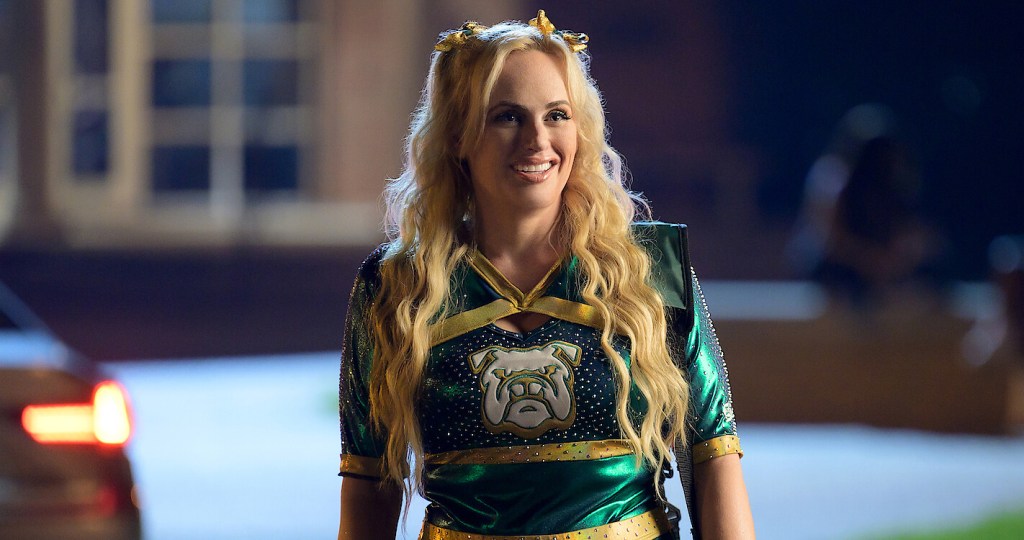
    Wilson plays Steph, a 37-year-old woman who awakes from a 20-year coma after a cheerleading accident a month before graduation. Determined to finally get the prom queen crown she felt she deserved back in 1999, Steph reenrolls at her old high school to become popular in an era of social media and community activism she’s completely unprepared for.

    The key to this film working on any level is Wilson, who elevates a very middling script with her brash, yet bubbly personality that endears viewers to Steph from the outset and allows audiences to roll with the punches as Senior Year does a roller-coaster ride between genuinely funny and cringe funny moments.

    As solid as Wilson is at carrying the film, Angourie Rice steals every scene she’s in as the 1999 version of Steph with a confidence and charm that plays a fun twist on the Lindsey Lohan character from Mean Girls.

    Mary Holland teeters on the edge of being too grating while complicating Steph’s life as her former best friend turned high school principal Martha. It’s a performance that makes viewers want to grab Martha and shake some common sense into her, but Holland is able to keep from going completely overboard with Martha’s rigid adherence to not offending anyone at any cost. Martha almost completely sucks the fun out of Senior Year at times, but Holland helps Wilson to make a bigger impact as a result.

    Clueless star Alicia Silverstone is a welcome sight in what amounts to an extended, yet pivotal cameo as one of Steph’s idols while Saturday Night Live alum Chris Parnell brings a sweet affable charm to Steph’s dad in both timelines that helps hold the film together.

    The film’s screenplay penned by Andrew Knauer, Arthur Pielli and co-star Brandon Scott Jones is probably the weakest element as its best jokes are more visual than written and the majority of the plot points are telegraphed so obviously that audiences will know exactly where things are headed by the 15-minute mark.

    Light nostalgia for the “Total Request Live”-era of the late 1990s is the most fun part of “Senior Year” both from the countless references in dialogue as well as a hysterical shot-for-shot reenactment of the classic Britney Spears music video for “You Drive Me Crazy” that allows Wilson to put her physical comedy chops to the best use since the Pitch Perfect trilogy.

    It’s strange that Paramount would essentially sell off this movie to Netflix instead of premiering it in theaters or on their own streaming service, Paramount+. Senior Year is equally as charming and entertaining as 2019’s Isn’t It Romantic, another Wilson-led rom-com that made $48 million on a $31 million budget. 

    Perhaps streaming services will be the new forever home for mid-budget romantic comedies in a post-COVID landscape, but this lighthearted fare also seems to be the perfect Friday date night movie for younger couples to enjoy in a cinema landscape increasingly devoid of alternatives.

    While not a laugh out loud riot for two hours, Senior Year certainly is a comedy with enough humor to keep casual audiences interested with its ease of access on Netflix.

  • Home Team: Matter of inopportune timing

    Home Team: Matter of inopportune timing

    Super Bowl championship winning coach Sean Payton announced he was leaving his New Orleans Saints after 16 years with the franchise last week.

    Just days after his decision, a brand-new Netflix film about a pivotal moment in Payton’s coaching career ironically debuted focusing on yet another time Payton was away from his Saints.

    Home Team, a collaboration between Adam Sandler’s Happy Madison Productions and Netflix, is based on his life during the 2012 NFL season, where Payton was suspended by Commissioner Roger Goodell for an entire year due to a scandal where assistant coaches paid bounties to players for injuring their opponents.

    The Kevin James-led film follows Payton back in his hometown of Argyle, Texas, where he helps a rag-tag middle school football team, including his young son Connor, turn around a losing season.

    James is perhaps the most serious he has been in his entire filmography as Payton, a man struggling to find his identity without a job for a year while trying to reconnect with his son. James has truly funny comedic moments that come as natural extensions of the script rather than the comedian trying too hard to force the issue and over-power the punchline.

    There’s a genuine warmth to his performance that endears the audience to Payton’s plight and helps build the foundation of an easy, yet enjoyable sports comedy.

    Twilight star Taylor Lautner plays the team’s young head coach and while his performance is somewhat static and monotonous, it plays well opposite James and some of the more outgoing young stars on the team.

    Because every football movie seems to require an alcoholic assistant coach, Gary Valentine stumbles through his lines physically and verbally as Mitch Bizone. For a PG-rated film, pre-teens may find Valentine’s performance comedic, but it truly comes across as ineffective and just slightly over-the-top.

    Rob Schneider plays Payton’s ex-wife’s new husband, a vegan holistic teacher who serves no real purpose other than to make James seem more normal and relatable by comparison.

    Directors Charles and Daniel Kinnane do their best to mimic classic sports films like The Bad News Bears and The Sandlot with their film and, at times, their direction evokes those films in a positive light.

    But for the most part, Home Team suffers from the same overwrought sports cliches that plague so many movies in this genre and leans in a bit too much into the light-hearted, boisterous physical comedy prevalent in Sandler-produced films. There are several extraneous characters written into the screenplay from Chris Titone and Keith Blum that feel design just to elongate the film’s running time and Texas football fans will have issues with the timeline and season schedule represented for middle school teams in the movie.

    As Netflix films go, Home Team is at best a middling feature not worth a look for adult cinephiles who haven’t poured through the studio’s extensive catalog of prestige films like The Power of the Dog and Tick, Tick, Boom. But for young moviegoers looking for something along the same lines as American Underdog that they can watch in the privacy of their homes, they could do far worse.

  • Don’t Look Up: Stop worrying and love the comet

    Don’t Look Up: Stop worrying and love the comet

    Stanley Kubrick made Dr. Strangelove, a quintessential black comedy of the 1960s starring Peter Sellers as a treatise against the uneasy relationship between America and Russia’s nuclear arms race.

    It’s one of the driest modern comedic films with a biting screenplay and pitch-perfect acting that fully realizes its auteur’s vision and works on numerous levels for casual as well as fully engaged audiences.

    Adam McKay, the filmmaker behind several of this generation’s most beloved comedies, must be a huge fan of Kubrick’s seminal classic, as his latest feature takes a similar approach to modern politics and the public’s relative disinterest in the possibility for natural global catastrophes.

    Don’t Look Up is the third in a series of sardonic, topical films from McKay and his first collaboration with Netflix, an overly stylized movie that aims to be far cleverer than it actually is and misses the mark about half the time as the comedian strives to make too many social and political points.

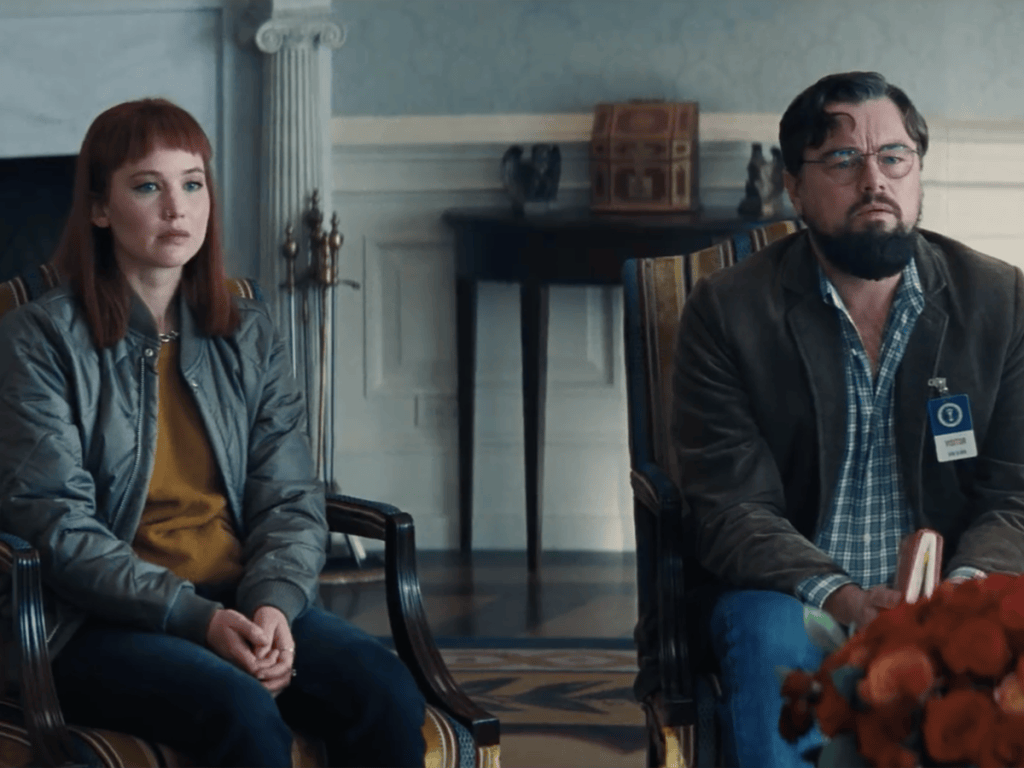
    Oscar winners Leonardo DiCaprio and Jennifer Lawrence star as a pair of Michigan State University scientists who discover a massive comet on a direct collision course with planet Earth that will wipe out all civilization. Although this is the basic premise behind disaster films like Armageddon and Deep Impact, McKay’s film takes a much calmer, more esoteric approach more in keeping with Kubrick’s passive-aggressive approach to message-based storytelling in Strangelove.

    Lawrence makes her cinematic return after several years off with her trademark sarcasm cranked up to an 11. The Academy Award winner relishes every opportunity to sink her teeth into cutting remarks written by McKay that seem targeted at other characters in the film but are truly meant for audience members at home to reflect on their own world view.

    By contrast, DiCaprio has the more mellow of the two lead performances, if such a thing is possible and masks his natural charm and good looks behind poor hair and shoddy glasses to allow a quiet, nuanced character to emerge. His Randall suffers from several psychological maladies from anxiety to depression that give DiCaprio a wide berth from which to play his most skittish role and often the most amusing character on screen.

    The film boasts an impressive ensemble cast with Tyler Perry and Cate Blanchett being the perfect foils for DiCaprio as a morning talk-show team that challenges his morality and sanity in a Network-esque fashion, while Meryl Streep and Jonah Hill are more frustratingly over-the-top as the inept president and her son, the chief of staff, meant to exaggerate the trivialities of the Trump administration.

    McKay actually has an impressive screenplay that is more sardonic and cutting than either of his Oscar-nominated films The Big Short and Vice. But as a director, he fails to bring his own writing to life consistently by keeping audiences out of the joke for far too long at moments and being overly ambitious in the editing room.

    Don’t Look Up jumps back and forth between scenes at a rapid-fire pace in an attempt to jar audiences awake to the messages McKay espouses in his narrative, but he goes to this well far too often so that it becomes messy and unnecessarily convoluted. 

    A big swing from an award-contending director with the most star-studded cast this season, Don’t Look Up likely won’t receive the accolades that Netflix might have hoped for when the studio acquired the project from Paramount Pictures and spent $75 million to make the film. There’s too much talent involved to completely count the picture out of races, but it’s unlikely that Netflix will push too hard with the more well-received drama The Power of the Dog also in the fold for the streamer.

    McKay’s film has a lot of individual moments that make Don’t Look Up a terrific black comedy warning about political and social divisiveness in a way that reflects Strangelove. But it’s terribly inconsistent in both its comedy and narrative structure, which makes the feature a frustrating film to watch.