Category: Streaming

Reviews of films whose primary release is on a streaming service. Assign for streaming-origin releases, not simply because a theatrical film is later available online.

  • The Social Dilemma: Unplug from the matrix

    The Social Dilemma: Unplug from the matrix

    A new documentary on Netflix – currently ranked as the seventh most watched film in the United States per the streaming service – openly calls for viewers not to click on recommended videos and to make choices for themselves.

    It’s one of the many contradictions littered throughout director Jeff Orlowski’s strange yet insightful documentary/drama The Social Dilemma, which premiered at this year’s Sundance Film Festival before dropping on Netflix this past Friday.

    Speaking with many disillusioned former executives at major technology companies like Google, Facebook and Pinterest, Orlowski lays out the framework for a compelling argument about how irresponsible management (or lack thereof) has led to relentless volatility online that spills over into real life with increased political polarization and a lack of civil discourse.

    While fellow Netflix documentary The Great Hack presents big tech’s data mining issues through a political lens via Cambridge Analytica’s role in the 2016 U.S. presidential election, The Social Dilemma offers a more societal approach with a focus on the tricks and mechanics social media companies use to keep users online and engaged with their content.

    The film features prominent advocates for responsible tech development led by former Google design ethicist Tristan Harris, who went on to help found the Center for Humane Technology but no current CEOs are included in the interviews. Fortunately, Facebook founder Mark Zuckerberg’s several appearances before Congress do give balance to the documentary, which often feels like a horror film.

    Orlowski lays plainly the stealth ways tech companies drive the way their users think as one interviewee describes Google searches that begin with “climate change is,” noting that based on the user’s location and other collected data, what populates to fill out the suggested searches could easily vary from person to person.

    The film’s biggest challenge, however, is presenting its arguments in such a way that it becomes relatable to younger audiences who may be in need of this advice more than any other generation.

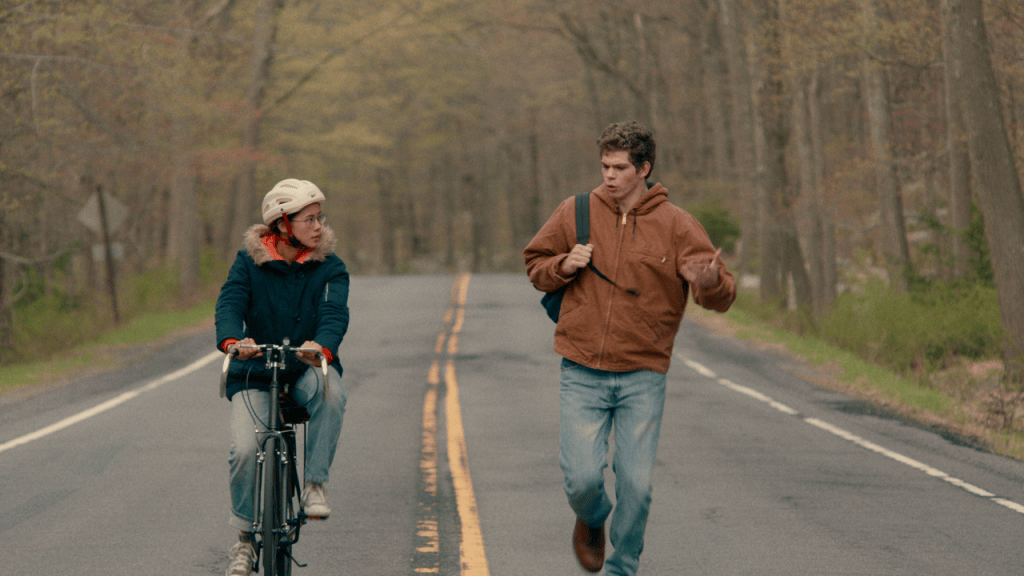
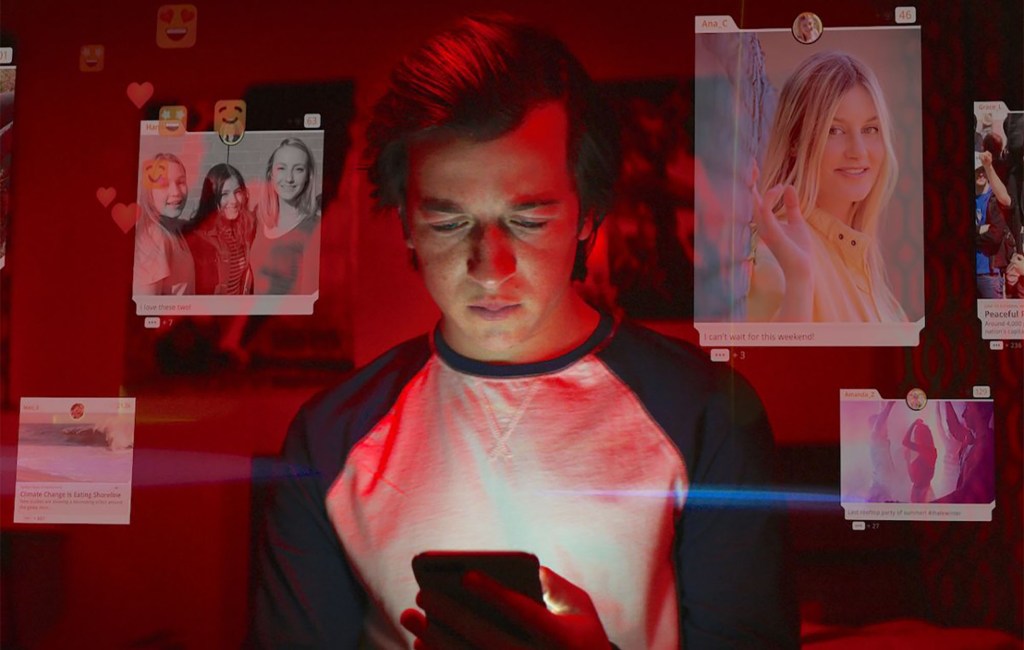
    Orlowski attacks this problem head-on by supplementing the traditional “talking head” segments that pervade traditional documentary filmmaking with a fictionalized account of a teenage brother and sister struggling with phone addiction, especially to social media programs that grow to shape how they view themselves and the world around them.

    Within these interludes, Skyler Gizondo gives the part of Ben an often glazed over look in his eyes as if Ben is being hypnotized and emotionally manipulated by the things he watches on his phone. It’s part after school special level acting and part dramatic choice to make these segments feel like melodrama.

    Audiences familiar with traditional documentary filmmaking will find these asides to be off-putting, taking them out of the flow of the narrative and making the film seem less urgent than the discussion taking place actually is.

    But on the other hand, these interludes might actually be the most important part of The Social Dilemma no matter how poorly constructed or acted they are if their intended audience begins to scale back the tremendous amount of reliance on social media in their day-to-day lives.

    It’s ironic that a film essentially warning its audience to leave social media is somehow also driving traffic back to the same outlets it advocates against as viewers feel compelled to see for themselves just how manipulative companies like Facebook, Instagram and Twitter are being.

    There’s certainly a dynamic to where viewers will be either scrolling through their social media accounts while watching The Social Dilemma on their smart TVs or pausing the film to check out the latest goings-on while streaming on their phone.

    Although the information is unevenly presented, there’s still too much compelling discussion to be had about the pervasive role of social media in modern society not to make The Social Dilemma a worthwhile entry point to a larger conversation with family members, children or close friends.

  • Project Power: Action to tide us over

    Project Power: Action to tide us over

    Christopher Nolan’s sci-fi drama odyssey “Tenet” released internationally this past weekend, a film that was supposed to be the big blockbuster feature to reopen movie theaters across the United States.

    Instead, Warner Brothers is slated to release the film on Labor Day weekend after pushing it back several times throughout the summer, leaving a gaping hole in the action-adventure genre that usually dominates June, July and August.

    Streaming services have stepped up to the plate, giving audiences films that were supposed to supplement movies like “Top Gun: Maverick” (delayed until Christmas 2020), “Fast and Furious 9” (moved to April 2021) and “Black Widow” (pushed to November 2020).

    Now Netflix Original movies like Chris Hemsworth’s “Extraction,” Mark Wahlberg’s “Spenser Confidential” and Charlize Theron’s “The Old Guard” have received prominent, uncontested opportunities to dominate the action conversation and propel the start of new franchises.

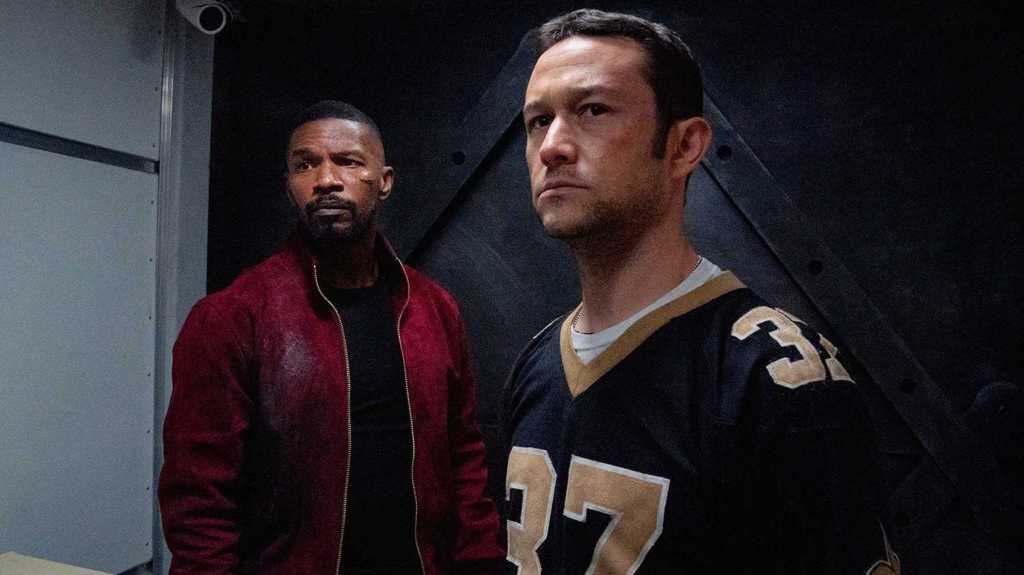
    The latest in the line of upstart genre fodder, “Project Power,” dropped on the streaming service last week and features Oscar-winner Jamie Foxx and “Inception” star Joseph Gordon-Levitt in a dark, violent superhero origin story set in New Orleans that wouldn’t shine in normal times, but has stayed at the top of viewers’ Netflix queues for the better part of two weeks now.

    “Project Power” blends Bradley Cooper’s 2011 film “Limitless” with a variety of dark superhero films to create a fantastic premise for a movie that doesn’t quite live up to its potential for cinematic extravagance with depth of character.

    A lone New Orleans police officer and former soldier work with a teenage drug dealer to find the source of a strange new drug on the market in the Bayou that imbues whoever takes it with a different superpower lasting five minutes.

    Foxx is solid as ever as the former soldier on a relentless mission, playing anti-hero quite well with an alluring charm and no-nonsense physicality required in blockbuster action fodder. His character’s limited backstory is intentionally vague at the outset, but Foxx languishes in the mundane rather than creating his own character beyond the page.

    Likewise, Gordon-Levitt is likeable but largely forgettable as the renegade cop bending the rules to even the playing field with the bad guys. There are a couple of entertaining moments that allow the veteran actor to showcase his acting and fighting skills, but it’s clear co-directors Henry Joost and Ariel Schulman don’t have a knack for working with actors.

    The film’s best performance by a large margin comes from Dominique Fishback, who takes the largely generic role of teenage lookout/informant and brings a real sense of purpose and emotion to the part, often outclassing her more famous on-screen partners in scenes with a genuine passion for the moment.

    A significant portion of the budget was spent on lavish cinematography from Michael Simmonds and high-quality special effect to showcase the powers in the film, but not every sequence lands properly.

    Because so much of the film is set at night, there’s a difficulty Joost and Schulman find in presenting the full potential of the powers in a darkened haze and it often gives the abilities an almost laughable blandness.

    At other times, the film is quite striking – especially during a mid-film bank heist sequence – and draws audiences back into the middling storyline.

    While not game-changing or exceptional in any particular way, “Project Power” is infinitely watchable, which makes it a perfect fit for streaming services filled with casual watchers who will discount its structural and screenplay flaws and simply enjoy the relative chaos.

    Until a way is made for audiences to return safely to the theatrical experience in large numbers, more films like this will find their way into the cinematic sphere of relevance.

    “Project Power” is like so many other on-demand releases to come out in 2020 that would be massive disappointments in theaters but worth giving a shot to on Netflix, who will gladly capitalize on the additional eyeballs to generate revenue and sequel opportunities.

  • Tread: Mayhem in a small town

    Tread: Mayhem in a small town

    Granby, Colorado feels like the sort of small town you’d find in every state across America.

    Industrious, hardworking, the kind of place where neighbors know all the scuttlebutt within a few hours and there’s hardly a stranger because everyone is on a first name basis.

    The fact that the events depicted in director Paul Solet’s gripping documentary “Tread” could plausibly happen in any small town are frightening, but like a train wreck you can’t look away from, what happened on June 4, 2004 is a mesmerizing display of anarchic chaos viewers will want to see more of just to figure out how one man pulled it off.

    At the center of the documentary is Marvin Heemeyer, an Air Force veteran more than capable with a welding iron and the owner of Granby’s muffler shop, which he purchased at auction for a remarkably low sum of money only to find himself in legal battle with government officials and a rival business owner over water and sewer connections, property easements and fines.

    It’s clear from the outset where “Tread” is heading; the opening preamble makes clear Heemeyer’s destructive intent with a fortified bulldozer causing chaos and massive property damage throughout the town.

    But Solet also reveals how things escalated to that point and Heemeyer’s amazement that he could keep his plot a secret in a notoriously nosy small town.

    A series of audio tapes recorded by Heemeyer give the audience a unique perspective into the changing mentality the former military serviceman had as he felt gradually separated from the outside world by political actors out to get him.

    Solet perfectly weaves Heemeyer into the documentary’s narrative, overlaying his prerecorded dialogue over reenactments of key moments to give context and allow viewers inside the mind of the man silently being portrayed on screen.

    Heemeyer is portrayed by actor Robert Fleet, usually from behind and framed like a specter haunting the film and foreshadowing the carnage of steel to come. The reenactments are largely silent and brilliantly captured by cinematographer Zoran Popovic with a dynamic visual style that bursts off the screen.

    Much of the film’s first act centers around city politics as Heemeyer does battle with Granby water commissioners and the town council over his muffler shop and the adjacent land slated to be a concrete batch plant.

    For a while, “Tread” makes a compelling case to draw viewers to Heemeyer’s side as the audio tapes explain how his rights were being infringed upon by malicious government officials working in conjunction with the concrete plant.

    But though Solet never truly discusses mental illness as a potential reason for Heemeyer’s subsequent actions, the documentary morphs over its second and third act to a more bombastic, dramatic style in keeping with Heemeyer’s increasingly paranoid ramblings.

    Reenactments of the buildup are solid throughout, but it’s in the third act as Heemeyer starts the engine and begins his rampage that Solet’s best directorial work really shines. 

    Unable to rely on archival news footage or police cameras, “Tread” designs action sequences that replicate the creation of Heemeyer’s destructive bulldozer and its initial assault on property across the small Colorado town.

    The film debuted at the 2019 South by Southwest Film Festival   before a limited theatrical run in February 2020. “Tread” launched on Netflix this past week and is certain to be among the streaming service’s more popular documentary titles, seamlessly fitting in the same mold of hit docuseries like “Tiger King” and “Making A Murderer” that follow eccentric men, government conspiracy theories and outlandishly true stories to compel audiences to watch every second over and over again.

    An alluring look at a man past his breaking point, small town politics and bizarre, unforgettable crime, “Tread” is a mesmerizing 90-minute thrill ride that pushes the limits of conventional documentary filmmaking – often crossing the line to traditional fictional narrative – in order to keep viewers on the edge of their seats for the mayhem they know is inevitable.

  • Da 5 Bloods: Battle scars never fully heal

    Da 5 Bloods: Battle scars never fully heal

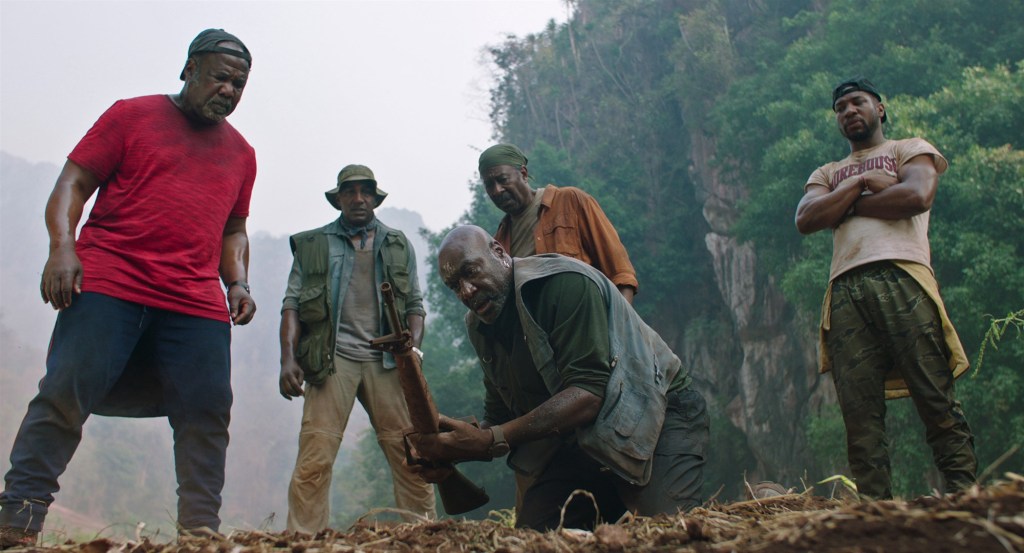
    Four men – aging Vietnam vets laden with the scars of their service – return to the land that forged them in search of their fallen commander’s grave and the gold bullion that lies with it.

    For a filmmaker like Oliver Stone, this story would be a bombastic tale of frustration and anger boiling to the surface without much humanity under the surface.

    Director Spike Lee, however, uses the narrative as a device to educate about the struggles of African American armed forces far from home during the civil rights movement and how racial identity and politics affected a generation of servicemen.

    The film, “Da 5 Bloods,” finds Lee pulling from all the corners of his mind, grabbing subtle and overt cinematic homages to “Apocalypse Now” or the philosophical diatribes of Richard Linklater films and interspersing them with news footage that recontextualizes fictional events.

    Though part of an ensemble piece in practice, Delroy Lindo shines above the rest with a career-best performance as Paul, whose grief and post-traumatic stress rip at him from the seams as he tries to maintain an outward strength and resolve through thinly veiled contempt that borders on outright hatred.

    Lindo is able to masterfully fill Paul with an anguish that comes to define his soul and the choices that he makes, evoking shades of Colonel Kurtz with as perfectly conflicted a portrayal of PTSD that has been on screen in years. 

    Following up on his incredible turn in the independent drama “The Last Black Man in San Francisco,” Jonathan Majors delivers a brilliantly understated performance as Paul’s son, David, taking the forefront when needed to go toe-to-toe with a magnetic Lindo and almost fading into the background to allow the four surviving members of the unit to have their moments independent of the current timeline.

    Broadway veteran Norm Lewis as well as “The Wire” stars Clarke Peters and Isiah Whitlock Jr. give the core cast a dynamic energy and team with Lindo to create an invaluable, genuine bond that feels authentic to those forged in combat.

    Chadwick Boseman offers stern charisma in a small supporting turn as “Stormin’ Norman” during flashback sequences, commanding the screen with his presence in a way that evokes Malcolm X in his physicality and Martin Luther King, Jr. in his words.

    Lee opts to have the four surviving Bloods be played by the same actor in multiple eras without the de-aging process that plagued last year’s “The Irishman,” which does not hinder the flashback sequences as much as might be expected, although the age difference between Boseman and his fellow actors does feel wider upon closer inspection.

    Subtle when he wants to be and demonstrative when he feels he has to be to make his point, Lee commands “Da 5 Bloods” with a deft hand behind the director’s chair and a firm grip in the edit bay. 

    “Da 5 Bloods” has the auteur’s signature ambivalence to audience reaction, morphing the visual style and pacing of his film as he sees fits with little regard to how the viewer will follow the action. Historical footage/stills are intercut within scenes as they are referenced to accent the narrative, inform the viewer and, at times, jolt them out of their relative comfort as a third-party observer.

    Lee and cinematographer Newton Thomas Sigel use a variety of aspect ratios to differentiate timelines in the film. 

    Present day has a thin, wide cinemascope to reflect both modern filmmaking and take in more of Vietnamese city and jungle landscapes. This works in perfect opposition to the faded, square visuals of flashbacks to “the American War” as it is referenced in the film, where a newsreel style gives a sense of distance and observation while keeping viewers engaged in the moment.

    The film’s tremendous and sweeping musical score from Terence Blanchard is paired with poignant and pointed selections from the discography of Marvin Gaye. Lee infuses “Da 5 Bloods” with Gaye’s harmonies to challenge and set the mood of the film – foreshadowing events with the seductive “Inner City Blues (Make Me Wanna Holler)” opening the film and an acapella rendition of “What’s Going On” magically priming the audience for the concluding final act.

    “Da 5 Bloods” may not have the universal support come awards season that Lee’s previous feature, “BlacKkKlansman,” had on its way to six Oscar nominations including a win for Best Adapted Screenplay. The film’s eccentricities and early summer release may doom a wide campaign, but Lindo rightly should be in the conversation for an individual acting nod with his career-best performance.

    It should come as no surprise that Lee struggled to gain traction with studios to make his follow-up to the financially successful “BlacKkKlansman” more avantgarde than his commercial successes and Netflix is ideal for the instant rewatchability of a film that’s in dire need of multiple viewings to fully understand Lee’s point of view.

    Cinematically complex and audacious in how it challenges and sparks conversation in its audiences, “Da 5 Bloods” sees a true auteur make a film that’s incredibly timely amid current events and one worth checking out on the streaming service.

  • The Half of It: Dig deeper into Netflix’s vault

    The Half of It: Dig deeper into Netflix’s vault

    Two out of every three Netflix Original films aren’t worth the price of admission.

    They’re the bargain bin, direct-to-DVD level fodder usually starring David Spade or that one girl who used to be on that one television show back in the day. You don’t remember her name, but it doesn’t really matter.

    With the coronavirus pandemic keeping movie theaters closed, it’s prime ground for viewers to flock to streaming services like Netflix in spades. But how do you decipher the good from the bad while thumbing through titles at random based on algorithms and past viewing history?

    Netflix hopes audiences will use their formulas to find movies like “The Lovebirds,” a subpar comedy starring Kumail Nanjiani and Issa Rae that the streamer bought from Paramount Pictures after COVID-19 made its way across the United States.

    With endless suggestions of “You Might Also Like” or “Recommended for You,” it’s a film with minority stars with name appeal that the service wants to draw attention to.

    Hidden somewhere in the middle, however, is a smaller independent film, “The Half of It,” dropped as an “original” about a month ago with no word of mouth and without the technical profile afforded to bigger names in lesser films.

    Writer/director Alice Wu’s romantic comedy based loosely around the classic tale of “Cyrano de Bergerac,” “The Half of It” follows Ellie, a young Asian-American girl out of place in rural Washington convinced by a jock to write a love letter to his crush, only to find herself falling for the crush as well.

    It’s a film that quotes Oscar Wilde and opens with an animated sequence recreating an Ancient Greek myth about the separation of the soul, longing to find your other half and that feeling when the two halves meet. Sophisticated in its language but relatable at its core, “The Half of It” is an earnest, well-made romantic dramedy released at the perfect time for those looking for simple goodness.

    Star of television’s “Nancy Drew,” newcomer Leah Lewis blends a wry humor and kind soul with the sort of hopeless romanticism that people feel but never truly express. She’s able to express Ellie’s isolation as an outsider from an emotional level but in a way that feels honest for a character naturally reserved and apprehensive about her perception among her peers.

    Daniel Diemer gives Paul an endearing naïveté that makes the typical jock character feel richer and less of a simpleton stereotype. His Paul wears his heart on his sleeve but has no idea how to show its and Diemer plays this well with facial expressions that make his longing seem charming and his pleading for help romantic rather than desperate.

    Alexxis Lemire does a wonderful job playing Aster with a performance typical of the ideal “manic pixie dream girl” trope of certain romantic comedies, the love interest audiences can relate to and adore from afar without ever truly getting to know. Lemire is enthusiastically approachable while working with Wu to create a character that hides her true feelings and intentions behind a candy-coated wall of innocence.

    Wu’s adoration for these three characters envelopes the entirety of “The Half of It,” from her nuanced screenplay to the way in which she directs the film and positions the audiences firmly in Ellie’s corner with lingering feelings for those she comes into contact with.

    The film’s romances are not about lusting but rather innocent longing, which gives “The Half of It” a wholesome feel without becoming overly sappy. As Ellie suggests during an early narration, this isn’t a love story or “at least one where anyone gets what they want.”

    There’s a sense of authenticity to this sort of storytelling, an honesty that comes out in the screenplay and the performances that make “The Half of It” feel earnest and plausible in viewers’ own lives even if the actual events would never occur to them or someone they know.

    Though it wanders off at times with superfluous side plots, the core triangle of pseudo-friendship and romance-at-a-distance between Ellie, Paul and Aster are so compelling that makes “The Half of It” an elegant, yet simple and sincere independent dramedy well worth checking out on Netflix.

  • Extraction: Violence in the melodrama

    Extraction: Violence in the melodrama

    Sam Hargrave’s directorial debut couldn’t have gone much better.

    The former stunt coordinator and second unit director landed Thor himself, Australian actor Chris Hemsworth to play the film’s lead with a script written by “Avengers: Endgame” co-director Joe Russo.

    Within its first month, over 90 million people have seen Hargrave’s “Extraction” and a sequel to the Netflix original action thriller has already been greenlit for production after the coronavirus pandemic ends.

    “Extraction” follows Tyler Rake, a former Australian special forces operative turned mercenary tasked with rescuing the son of a top Indian drug lord from his main Bangladeshi rival. Infiltrating into the heart of Dhaka, Bangladesh’s capital city, Rake must avoid rogue agents, police and military personnel as well as drug syndicate members to sneak the teen out of the country safely.

    Hemsworth is an exceptional choice to play Tyler Rake, a solid actor who knows how to use his imposing physicality effectively in combat situations. Hemsworth and Hargrave work together to create a dynamic energy to the way Rake moves through a fight sequence, always pushing forward into the next attack and relying on instinct to propel Rake through a constant survival mode.

    The Australian actor also does a solid job of remaining numb to the outside world for the majority of “Extraction,” only allowing Rake’s emotions to boil to the surface once things have broken down too far.

    Most of the rest of the cast is unremarkably bland, aside from Rudhraksh Jaiswal as the kidnapped teen, Ovi, who shows appropriate fear and a great amount of heart, and David Harbour in a solid supporting role as a former teammate of Rake’s trying to survive in Bangladesh as a mercenary.

    The best action movie to be released since movie theaters closed in March, “Extraction” excels in the stunt-heavy sequences that prove to be in Hargrave’s wheelhouse.

    A combination of tactical gun battles and hand-to-hand combat in close proximity to the camera, the film evokes both the brutality of the “John Wick” franchise and the finesse of “Atomic Blonde,” a Charlize Theron-led action spy thriller that Hargrave served as stunt coordinator on.

    The film’s signature set piece is an 11-minute chase sequence to conclude the first act of “Extraction,” where Hargrave uses techniques made popular in films like last year’s “1917” to cut the scene together in a way where it appears to the audience to be one continuous shot.

    Cinematography by Newton Thomas Sigel – solid throughout – is especially effective here as he weaves audiences through a forest into a small town, in and out of buildings and car crashes without slowing the relentless pace and explosive firepower.

    There’s an expert fluidity to how the camera dances around the action in full 360 degrees, synced in time with Hargrave’s flawless fight choreography that has Hemsworth fend off up to five assailants at a time with both his fists and an array of weapons at Rake’s disposal. This sequence, along with a pivotal set piece on a crowded bridge, are worth taking a chance on the film alone.

    “Extraction” tries very hard to be something more than just brutality. The screenplay – penned by Russo based on a story from several writers including Russo’s brother Anthony – works at layering multiple relationships between fathers and sons as motivation for action in the plot.

    One father forces another father to rescue his son by threatening harm to the second father’s son; Rake refuses to give up on his assignment because he sees his own son in Ovi and cannot bring himself to let Ovi die.

    In between all the gruesome killing and intense chase sequences, “Extraction” cranks the volume down to nearly zero with mundane, predictable melodrama that serves as both emotional palate cleanser and bathroom break time before things kick into gear again.

    Like something straight out of a morning soap opera, familial strife and personal loss are shown poorly to an excruciating degree as Hemsworth’s Rake floats in and out of hazy flashbacks set to an intentionally wistful score from composers Alex Belcher and Henry Jackman.

    While necessary to flesh out the plot, these interludes are so poorly executed by Hargrave and his team that they become a wet blanket for the entire film.

    But for a director taking a significant step up from crew work to a major Netflix feature, “Extraction” highlights Hargrave’s immense talent crafting excellent action sequences that lift the entire project to must see territory for about 30-35 minutes of a nearly two-hour film.

    Casual viewing on a streaming platform is the ideal scenario for watching this action thriller that will entertain on a Friday evening at home.

  • Uncorked: Fathers and sons

    Uncorked: Fathers and sons

    Over the last several years, major film directors have made their way to the small screen, making limited series in search of creative freedom and risk-taking with the help of content hungry streaming services.

    Slowly but surely, this trend is starting to pay dividends for movie lovers as young, talented television writers and creators are making their way to feature films.

    Prentice Penny, show runner and one of the executive producers of the hit HBO series “Insecure,” partnered with Netflix for his directorial debut “Uncorked,” which debuted on the platform last weekend.

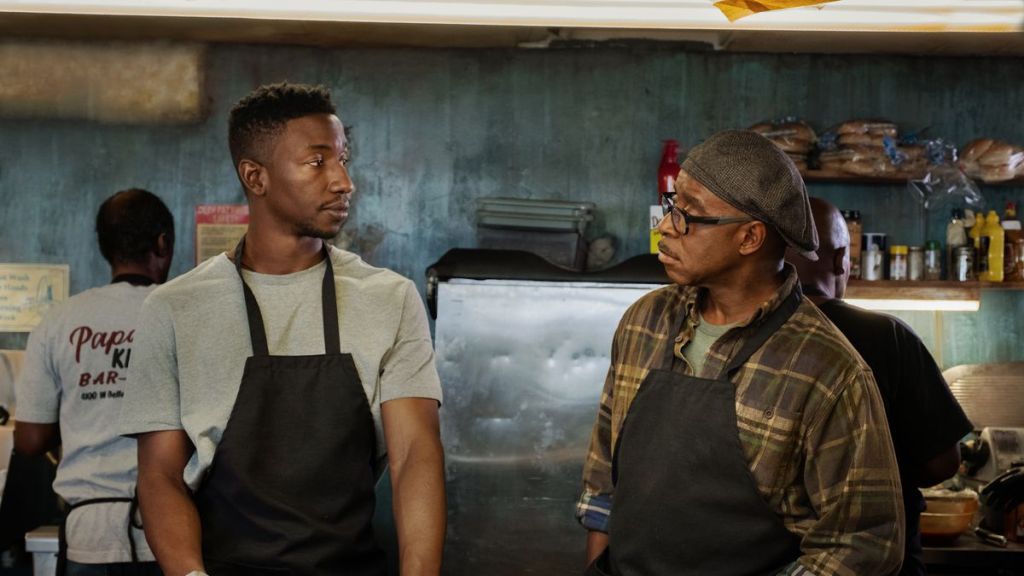
    “Uncorked” follows a young African American man in Memphis looking to break into a world dominated by white men as he seeks to become a master sommelier, an elite accreditation for wine professionals. Elijah struggles to balance his love of wine with familial obligations, mostly put upon him by his father who runs the family’s popular barbecue stand.

    Mamoudou Athie gives a solid, unspectacular performance as Elijah, offering the character the cool civility and demeanor required of a master sommelier candidate but with enough personality to carry scenes in the barbecue stand and at home.

    Emmy winner Courtney B. Vance is the ideal choice to play Elijah’s father Louis as the “American Crime Story” star provides immense gravitas and credibility to the project with his understated performance that belies the tremendous amount of work he’s doing with a limited part.

    Vance wears the burden of family legacy well in the role as Louis presses Elijah with a stoic, yet heavy hand and the transformation of his character over the course of the film feels genuine and earned.

    Veteran comedienne Niecy Nash steals every scene she’s in with her most compelling work to date as Elijah’s mother Sylvia, a cancer survivor trying to bridge the gap between father and son while stoking Elijah’s passion for wine. Her performance has the traditional humorous line deliveries viewers are accustomed to from Nash, but there’s also a refreshing tenderness to her work that helps Sylvia resonate with audiences in a way they can’t get to with Elijah or Louis.

    Penny takes liberties with his screenplay to paint a larger picture with broad brushstrokes, often leaving audiences to fill in the blanks as time fluidly progresses at various rates over the course of the film.

    For example, the development of Elijah’s relationship with Tanya floats in the background of his larger struggle between wine and barbecue. Landmark moments in their romance are shown – their flirtatious meeting discussing wine as rap artists, a first date at a roller rink, meeting his parents – but their love remains shallow and out of focus.

    Penny trusts his audience to fill in the gaps, leaving aspects intentionally unwritten to keep focus on the worlds of wine and barbecue, passion and family, pulling Elijah in different directions.

    It’s a bold strategy that doesn’t entirely pay off for viewers, who will occasionally have trouble orienting themselves after unannounced leaps in time.

    Visually, “Uncorked” has a smoky, seductive hue that draws audiences in and cinematographer Elliot Davis elevates the film with an engaging energy that pairs well with the rhythmic hip-hop soundtrack transitioning in and out of dialogue scenes.

    “Uncorked” was slated to debut earlier this month at the South by Southwest Film Festival in Austin, a premiere cancelled due to the coronavirus pandemic that would have provided a much-needed word of mouth boost as it headed toward its release on Netflix this past Friday.

    An imperfect film in many ways, “Uncorked” does provide a welcome respite from current events and a promising feature debut from a filmmaker to watch in the future.

  • Spenser Confidential: Last man standing

    Spenser Confidential: Last man standing

    It started with unflappable British spy James Bond heading for the hills as “No Time To Die” moved from a mid-April release to late November.

    Within the last week, film studios have been shelving their biggest upcoming releases with Disney’s “Mulan” postponed indefinitely and Universal’s ninth “Fast and the Furious” film pushed to 2021 amid growing concerns for public safety due to the coronavirus outbreak globally.

    As ardent film fans stay away from their local movie theaters, one studio hopes to reel in all the attention with a full court press of new releases. Netflix, the streaming service now doubling as its own production house, will have released 17 new feature films in the first four months of 2020, compared to 18 major releases from the six other large studios combined.

    For films still in theaters, box office numbers have sharply dropped relative to expectations across the board due to lower attendance with most films falling by 60% or more from the previous week.

    One film that would have been affected by this economic downturn is Mark Wahlberg’s new crime dramedy “Spenser Confidential” from longtime collaborator and director Peter Berg, a middling, uneven flick that would be considered a massive bomb if it opened in theaters last weekend.

    Luckily, it’s the number one most watched film on Netflix according to the streaming service as audiences stay home and give a movie they probably wouldn’t consider paying to see a shot.

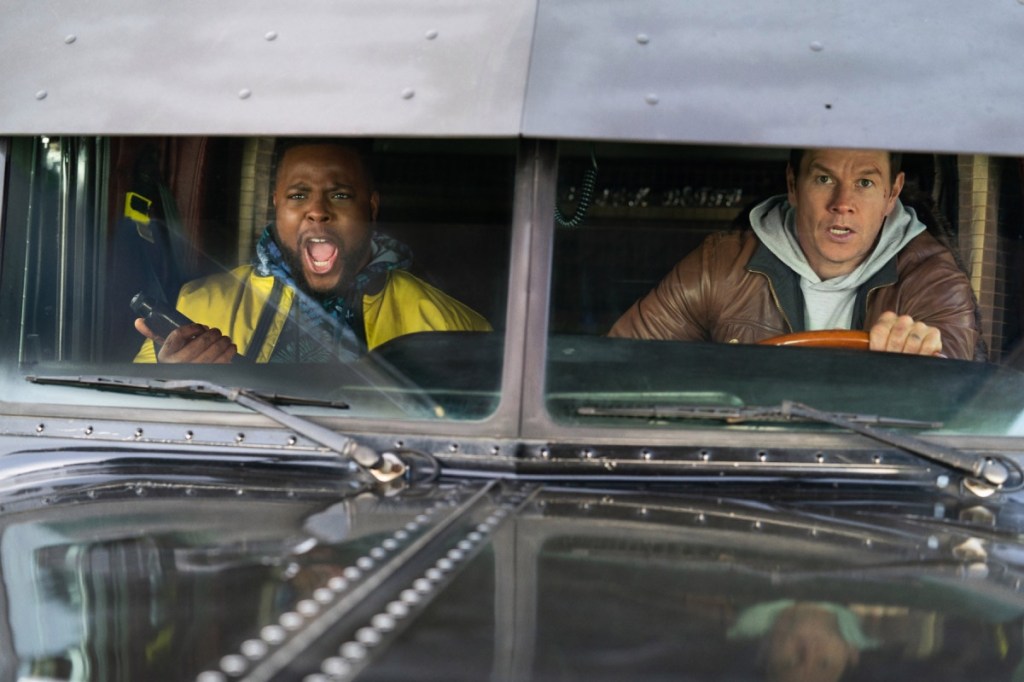
    Based on the 80s private-eye TV series “Spencer for Hire” and the novel “Wonderland” by Ace Atkins, “Spenser Confidential” follows Wahlberg as former Boston cop Spenser, fresh on the streets after serving a five-year prison sentence for assaulting a superior officer. When that officer and another detective are brutally murdered, Spenser cannot look away and privately investigates the crimes with the aid of his roommate, Hawk.

    The title role is a perfect summary of what Wahlberg is best at as an actor: no-nonsense toughness with a dry wit and casual charm. There isn’t much to the role, nor Wahlberg’s performance for that matter, but the movie fits the actor’s strengths to a T and makes the overall movie-watching experience better than if the role were played by a younger, less confident actor.

    His brash, standoffish demeanor puts him at odds from a chemistry perspective with Winston Duke, whose equally tough-guy persona as Hawk clashes with both actors essentially trying to be the alpha in the relationship. Duke, relatively unknown by comparison to Wahlberg despite memorable roles in “Black Panther” and “Us,” takes a backseat for the most partbut there is still an unease that never really cements into an engaging relationship.

    This isn’t the case with Wahlberg and Alan Arkin, playing Spenser’s mentor Henry with ease and a brilliant sense of comic timing. Their chemistry is naturally and effortless, making for the most engaging, entertaining sections of otherwise listless action fodder.

    Because so many viewers have a Netflix subscription for other reasons – binging television shows, access to classic movies, etc. – turning on “Spenser Confidential” feels like playing with house money. A byproduct of this is diminishing viewer expectations, a film watched on Netflix or Amazon or Hulu doesn’t have to be as remarkable, or in some cases, good at all. It just needs to be worth time because it feels free to watch.

    In this context, “Spenser Confidential” is definitely a film checking out for movie-fans social distancing and self-quarantining due to coronavirus. It’s not great, nor a movie that needs to be seen on a big screen, but in this time of uncertainty, any casual distraction that can allow people to turn off their minds and relax is a welcome reprieve.

  • The Last Thing He Wanted: Short term loss, long term value

    The Last Thing He Wanted: Short term loss, long term value

    With a seemingly endless budget, Netflix continues to pour money into project after project with avid disregard for the bottom line.

    This strategy may seem counter-intuitive to budget conscious business owners, but for film lovers, the streaming service writing blank checks to everyone from Martin Scorsese to Noah Baumbach to Michael Bay is an overall win.

    Some productions may miss the mark financially, but the expansive spending spree has given filmmakers a chance to produce more daring endeavors and creative risks that should make directors better at their craft.

    Dee Rees – an African-American writer/director who broke out in 2017 with the Oscar nominated drama “Mudbound” – received a major push from the streaming service for her follow-up feature based on a Joan Didion novel of the same name, “The Last Thing He Wanted,” which premiered earlier this year at the Sundance Film Festival and dropped on Netflix last weekend.

    Filled with major star power in Oscar winners Anne Hathaway and Ben Affleck and the promise of an emerging filmmaker, “The Last Thing” has the pizzazz and the cinematic bravado necessary for a taut political thriller, but the film falls flat from the outset with an unnecessarily confusing, lackluster screenplay.

    Hathaway stars as an investigative journalist whose pursuit of the story overlaps with a guilt-propelled errand thrust upon her by her unstable father and pushes her into the middle of an international labyrinth of drugs and violence that could prove to be her undoing.

    The former Academy Award-winning actress is an apt choice for audiences to follow around for the majority of the film’s two-hour run time, but Hathaway plays the character at such a cautious distance that it’s nearly impossible for viewers to get fully behind her performance enough to maintain interest in the haphazard political intrigue.

    Her best moments come in the film’s opening third, which takes advantage of Hathaway’s emotional intensity both verbally and within her eyes. This manifests itself differently as her character investigates potential war crimes in Latin America versus personal crisis with her father as well as her daughter at boarding school.

    Hathaway is well matched with veteran character actor Willem Dafoe, an alert and present performer willing to take risks as Hathaway’s estranged father slowly deteriorating mentally. Their scenes are dynamic and resonate with audiences long after Dafoe leaves the screen, a rarity in Rees’ film.

    Although Dafoe does venture over into the realm of caricature at times, his performance still carries large segments of “The Last Thing” with a bright, engaging turn that breathes life into the sails of the narrative.

    The weakest link in the film is Affleck’s stiff, dry turn as a political instigator from Washington with questionable motivations. If the description of the character feels vague, it’s likely because Affleck doesn’t bring much to the performance beyond a simple, almost clinical recitation of dialogue from Rees’ screenplay and it doesn’t hold up comparatively to his recent work in another Netflix original film, J.C. Chandor’s 2019 feature “Triple Frontier.”

    As is to be expected with a high-budget political thriller, “The Last Thing” rounds out its considerable supporting cast with a cavalcade of moderately familiar faces that provide depth and richness to a world that far exceeds its middling story, including exceptional turns from Rosie Perez as Hathaway’s investigative partner and Edi Gathegi as a rival gun runner.

    The adaptation of Didion’s novel is problematic and messy, from the lingering and verbose prose narration that gives context to the mental state of Hathaway’s character to the ping-pong storyline jumping to the muddling of a relatively straightforward narrative.

    This feels more a fault of Rees as screenwriter – a credit she shares with Marco Villalobos – than as a director as her visual storytelling is sometimes engaging and always interesting with strong cinematography from Bobby Bukowski.

    For a variety of reasons, “The Last Thing He Wanted” doesn’t really pull together as a compelling narrative but the shades of a taut political thriller can be seen in the shadows.

    Ultimately, this makes Netflix’s spending to give Rees a chance to grow as a filmmaker worth their investment and “The Last Thing He Wanted” is a perfect movie for audiences interested in the genre to take a low-risk chance on.

  • Marriage Story: Finding the beginning in the end

    Marriage Story: Finding the beginning in the end

    We’ve been told there’s two sides to every story.

    Often it feels as if it’s as simple as the truth and then anything other than the truth.

    But what happens when both sides of the story are true but conflict, or worse yet, outright contradict one another?

    Writer/director Noah Baumbach explores this complex duality through the structure of a fractured relationship in his latest dramedy, “Marriage Story,” a semi-autobiographical film about finding oneself amid divorce.

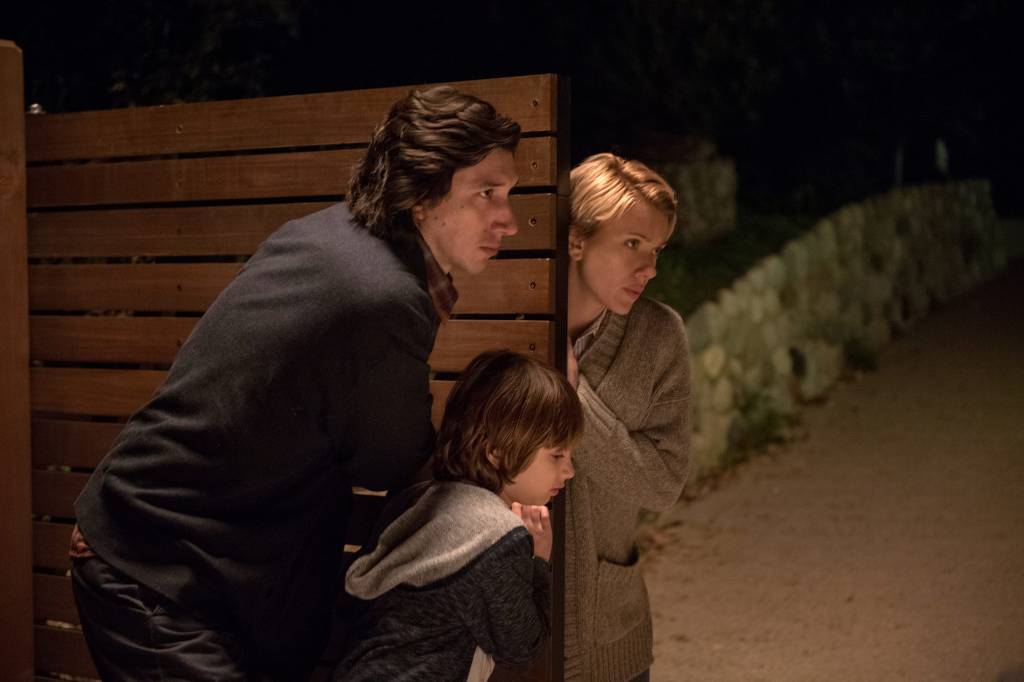
    “Marriage Story” finds New York theater director Charlie and actress Nicole working on their marital issues when Nicole is offered a television pilot in Los Angeles. When Charlie visits California to see Nicole and their young son Henry, divorce papers await as the couple’s relationship dissolves.

    Baumbach’s personal film requires a pair of performers singularly focused on feeling the moment and his selection of Adam Driver and Scarlett Johansson to play the ill-fated couple could not have been more perfect.

    Charlie is exactly the kind of slightly neurotic, disengaged character Driver relishes portraying and he gives Charlie just enough warmth to be a man that audiences will root for as a father, but not so much to prevent doubt from seeping in as to his ignorance of Nicole.

    Charlie’s directorial instincts pushing him to control every aspect of life are brushed aside by circumstances that prevent him from unilateral decision making, giving Driver ample room to find Charlie in a place of re-discovery as both Driver and the character sort through the emotional ballast of the film.

    Johansson finds an emotional fragility in Nicole that endears audiences to her, while slowly beginning to discover her individuality outside her marriage as if she were a caged bird given a key to freedom unsure what to do with an unlocked door.

    If Driver’s Charlie is finding himself again, Johansson portrays Nicole as a woman finding herself for the first time, becoming increasingly emboldened over the course of “Marriage Story” without losing the tremendous heart displayed early in the film.

    Paired together, Driver and Johansson move in synchronicity, pushing and pulling apart magnetically as scenes between the duo often feel like live theater shot on camera. Neither performance works without the other being equally exceptional and Baumbach beautifully adjusts the audience’s relationship to each character as viewers bounce back and forth between the two.

    There’s a sense of perspective reflected back on itself by another person – Charlie to Nicole, Nicole to Charlie – appears to each character to be the antithesis of themselves. Each sees the other through their own jaded lens and neither side tells nor understands the full story.

    Baumbach emphasizes this duality through blocking, physically positioning Charlie and Nicole at odds with each other in the same frame or from fractured one-shots that push each to their respective corners visually.

    The film’s deep and talented cast was recently honored with the Robert Altman Award by the Independent Spirit Awards, given to the year’s best ensemble in an independent film.

    Laura Dern will likely earn her third Oscar nomination with a driven supporting turn as Nicole’s take-no-prisoners attorney Nora, whom Dern infuses life into with a charismatic flair that radiates off the screen at every turn. In the most positive sense, it’s as if Dern is operating in a different film altogether, giving Nora a brazen edge that allows Johansson to explore Nicole’s internal emotions without becoming overly explosive.

    Ray Liotta provides significant spark in scenes as a hotshot lawyer Charlie meets with, while Alan Alda’s calming presence is a wonderful change of pace as another potential attorney. Watching Driver react to the variety in Liotta and Alda’s work offers some of the film’s most refreshingly light-hearted moments.

    Duality is key in all aspects of “Marriage Story.” Scenes, shots of cinematography, acting, camera placement each feel and accentuate this wavering plurality.

    It’s evident that Baumbach has truly considered both Charlie and Nicole’s perspective and there’s true effort to maintain a balance for the audience between Driver and Johansson’s performances.

    However, Baumbach clearly holds a sub-textual preference for Charlie’s relative plight, often siding with Driver’s character in the meticulously crafted screenplay. This comes to a head during a pivotal scene midway through the film where Charlie laments Nicole for being upset by a cheating accusation rather than sharing a laugh with someone else.

    By the end, “Marriage Story” ultimately becomes “Charlie’s Story” as Nicole’s perspective fades and crystalizes while Driver continues to evolve Charlie into something more.

    Visually, “Marriage Story” achieves the cracks in Charlie and Nicole’s relationship through camera placement combined with expert cinematography from Oscar nominee Robbie Ryan, who maintains a muted, yet dynamic energy to the aesthetic of the film. There isn’t a film this year that does a better job of informing character with cinematography than Ryan and Baumbach achieve with “Marriage Story.”

    A critical darling that will be equally loved by awards voters, “Marriage Story” is all but assured Academy Award nominations for Best Picture, Best Director, Best Original Screenplay and acting nods for Driver, Johansson and Dern. How this film fares will likely have much to do with Netflix’s dual-prong campaign that sees the streaming studio trying to bevy the chances of both “Marriage Story” and Martin Scorsese’s mob epic “The Irishman.”

    Netflix may opt to push either film into frontrunner status or continue equal efforts that may negate either movie and propel Quentin Tarantino’s “Once Upon A Time In Hollywood” across the finish line.

    It’s a shame that Baumbach’s meticulously considered, wonderfully crafted drama was not given the same large theatrical run by Netflix as Scorsese received with “The Irishman” as “Marriage Story” is perhaps the finest family drama to be released since at least 2008’s “Revolutionary Road.”

    Deeply thoughtful, emotional and yet surprisingly entertaining, “Marriage Story” is without question one of 2019’s top five films and a must see in theaters or streaming at home on Netflix.