Category: Streaming

Reviews of films whose primary release is on a streaming service. Assign for streaming-origin releases, not simply because a theatrical film is later available online.

  • The Power of the Dog: Melancholy in the old west

    The Power of the Dog: Melancholy in the old west

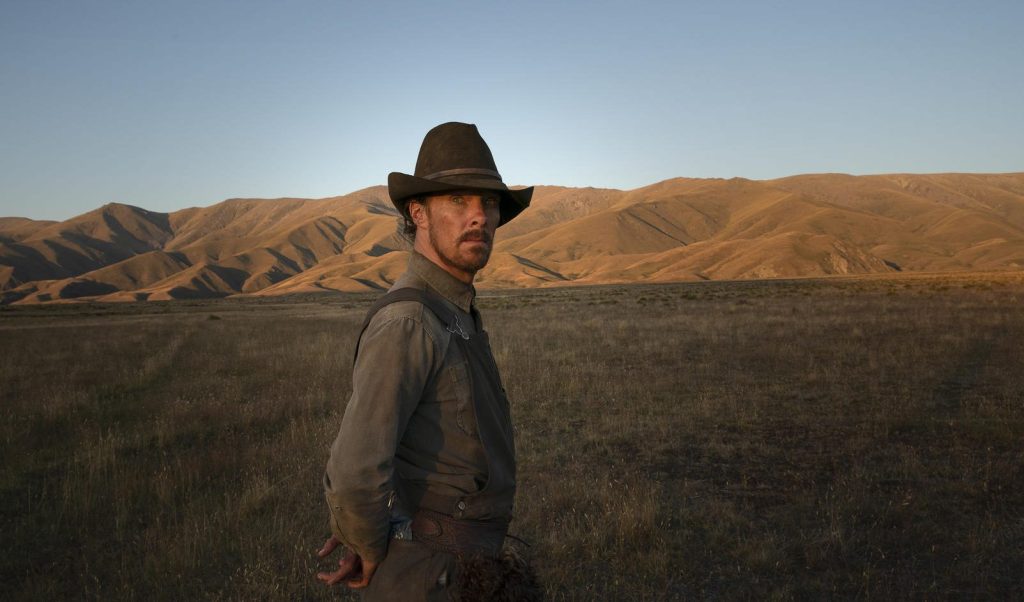
    There’s no gunfights in Netflix’s largest awards contending release, a western starring Oscar nominee Benedict Cumberbatch as a Montana rancher in the 1920s.

    Director Jane Campion’s first film in more than a decade, The Power of the Dog is a subtle, slow-burn character driven drama examining life in the rural hills, what it means to be a man and the things we all too often leave unspoken.

    The highly acclaimed film will likely land on any number of “best-of” lists from critics and awards groups this spring, though its languishing melancholy and leisurely pace will likely inhibit casual viewers or traditional fans of the western genre from enjoying Campion’s technically brilliant work.

    Based on the novel of the same name by Thomas Savage, The Power of the Dog follows the Burbank brothers, Phil and George, as they run their family’s Montana ranch. Their normal lives change permanently when George marries meek widow Rose and brings her and her socially awkward son Peter to live with them.

    Cumberbatch is the antithesis of expectations as Phil, the bullying ranch foreman whose misogyny pervades every inch of the film, endearing him to his workers and reviling him to Rose and Peter. Because he doesn’t have the physicality to domineer over other actors, Cumberbatch terrorizes the screen with his intimidating facial expressions and sharply delivered dialogue done with a menace that oozes out of every frame.

    It’s a performance that’s heliocentric to The Power of the Dog with all the other leads basing their work as a reaction to what Cumberbatch brings to the screen as Phil.

    Kirsten Dunst’s ability to wonderfully showcase Rose’s increasing isolation and emotional spiral seems reflexive, a complete character haunted and defined by the specter of Cumberbatch’s ominous presence.

    Jesse Plemons’s George is largely crafted around his fragile relationship with his brother and the dynamic between Plemons and Cumberbatch teeters on the brink of a confrontation between the brothers that is years in the making but just hasn’t happened yet.

    The soft to Cumberbatch’s hard, Plemons approaches George with a light touch as if gently brushing those around him with a feather, which makes Rose and George’s relationship as implausible as possible while still setting the stage for the real emotional weight of the film between Phil and Peter.

    Australian actor Kody Smit-McPhee hides much of Peter’s guile behind a wall of fragility that keeps him away from some of Phil’s wrath. While the physicality of his performance has a brittleness as if Peter will crumble under the weight of toxic masculinity, there’s just a gleam of awareness in his eye or the miniscule facial tic that clues audiences in to Peter’s ever moving mind.

    Campion’s narrative structure breaks the film into chapters that bounce the audience forward in time as necessary to advance the simplest parts of the story while overlooking those unimportant to Campion’s gaze. The biggest sacrifice in this, unfortunately, is Rose and George’s romance, which is almost exclusively implied and never stated. Their love is set off at a distance and fades considerably after the first 45 minutes.

    There is a sense that this makes the film somewhat empty as nearly half the film is dedicated to moments of increasing tension without dialogue, but when the almost silent moments do land, they are incredibly effective.

    The most striking thing about The Power of the Dog is the masterful cinematography from Ari Wegner, who relishes in the robust visual tapestry of the New Zealand locations used to mimic Montana and creates arresting moments in wide angle panoramas to help Oscar nominee Jonny Greenwood’s transfixing score to set the emotional tone of the film.

    Campion and Wegner actively engage audiences with intriguing camera angles and offsetting vantage points that take a traditional scene and turn it on its head. Regardless of what is happening, there’s always a keen sense of the physical geography that gives audiences a sense of place within the ranch or beyond, most notably when actors are in frame together but at considerable distance.

    It seems impossible that The Power of the Dog will not be a major awards season contender, especially in Best Picture, Best Actor for Cumberbatch and Best Director for Campion. The film’s production elements from design to cinematography to score to costuming all feel like certain nominations as well.

    Ardent cinephiles will likely become enraptures with the slow, deliberate energy of Campion’s feature while casual viewers won’t be pleased by the tediousness of its melancholy. Luckily, its position as the premier film to debut this month on Netflix makes it worthy of a cinematic flyer for patient audiences.


  • Gunpowder Milkshake: Janey’s got a gun

    Gunpowder Milkshake: Janey’s got a gun

    Gunpowder Milkshake never had a chance at a theatrical run. The film’s biggest star is Karen Gillan, a talented actress with major ensemble roles in the Marvel Cinematic Universe as villainous half-robot Nebula and alongside Dwayne Johnson and Kevin Hart in the Jumanji reboot films.

    A major studio eyeing box office success isn’t going to put their resources into a female-led action ensemble film without a big name draw at the top of the billing and as much as Carla Gugino, Lena Headey, Michelle Yeoh and Angela Bassett bring to Gunpowder Milkshake, it’s not enough to entice someone to finance getting the film onto the big screen in any significant way.

    But in many ways, writer/director Navot Papushado’s first major feature is the perfect streamer movie.

    Highly influenced by films like John Wick, Atomic Blonde, Kingsman and the complete works of Quentin Tarantino, Gunpowder Milkshake opts for flashy neon colors, brutal violence and simple matter-of-fact dialogue to bulldoze its way through the narrative with as little world building as possible.

    The film finds Gillan’s Sam as a hitwoman on the run after betraying the organization that hired her to protect an innocent young girl kidnapped by clumsy, greedy lowlifes. When Sam and her ward, Emily, make it to a safe house, they are greeted by women from Sam’s past that prove to be key allies in a war against all comers.

    Gillan is a generally enjoyable lead to follow over the course of two hours as her strong comedic timing really allows for the moments of levity to strike home well in the sparing moments they occur. A large segment of her Sam does feel somewhat lifted from Keanu Reaves’ titular performance in the John Wick series with a stoic, slightly muted monotone delivery for much of the film and a clear decision to internalize all of Sam’s childhood trauma and turn it into cold-blooded violence that anchors the film.

    Despite the ridiculous nature of many of the situations the film puts her in, Gillan is able to carry action sequences with the gusto necessary to allow audiences to maintain a suspension of disbelief that makes the scenes implausibly enjoyable rather than short circuiting viewers’ engagement with the movie.

    At her side for most of the running time is Chloe Coleman, who’s far more charming here than in last year’s underwhelming family action adventure My Spy. Coleman lays out Emily’s emotions bare and holds her own in scenes opposite Gillan, especially when the pair are trying to escape a slew of armed baddies in a bulletproof red speedster.

    There’s a decent blend of homage and originality to the film’s many fight sequences, from a battle in a dimly-lit bowling alley with faded neon lights meant to evoke shades of Kill Bill to a fight in a hospital hallway that provides some of the most inventive choreography in several years in spite of a ridiculous pretext.

    Stylistically, the action sequences vary in weapon choice to a much larger degree than the average thriller would and the film’s lone car chase scene has a distinctly original twist that is among the highlights. Cinematographer Michael Seresin does a solid job capturing moments from unique vantage points that emphasize and accentuate the bright visual color palette of Gunpowder Milkshake, but it’s often undercut by uneven editing.

    It’s a significantly superior film to Charlize Theron’s Netflix action adventure film The Old Guard, but not quite on the level of her big screen hip action thriller Atomic Blonde, from which Papushado draws some inspiration.

    While not among the best films of the year, the ease of access and high rewatchability make Gunpowder Milkshake a clear choice for action fans to take a chance on with their Netflix subscriptions while waiting for the next Marvel film or John Wick installment to arrive.

  • I Care A Lot: The most legal of scams

    I Care A Lot: The most legal of scams

    Thousands of senior citizens from all walks of life across the country are currently under legal guardianship, a means by which elderly individuals incapacitated from being able to make health and financial decisions for themselves.

    In many situations, this is in the best interest of the individual, deemed a ward of the state and assigned a caretaker to assist with financial, medical and legal transactions on their behalf.

    But as is so often the case, granting power of attorney over another person can be a corruptible action where the guardian looks out for their own self-interest and financial gain as numerous caretakers have been arrested in recent years for exploiting their wards.

    Writer/director J Blakeson points his camera lens squarely on the idea that nefarious people game the legal system to rob others of their life savings with I Care A Lot, a black dramedy that debuted at the 2020 Toronto International Film Festival before releasing on Netflix last month.

    In the film, Golden Globe and Oscar nominee Rosamund Pike stars as Marla Grayson, who has turned her profession as a legal guardian to senior citizens into a money-making machine, convincing the courts to make rich retirees wards of the state in her care. When her eyes become trained on a new victim, things spiral out of control rather quickly.

    Blakeson infuses his film with an abundance of dry wit painted over a stylized background of bright, shimmering hues that give I Care A Lot that “feels too good to be true” sense of something amiss under the surface. His points on the welfare system for the elderly are well-taken and Blakeson emphasizes the levels of corruption that can occur to swindle the unwitting every step of the way.

    There are no heroes to be found here and as such, it often makes it difficult for the audience to truly connect with the film as viewers are forced to balance one character’s treachery with the next in a way that never truly feels stable.

    In I Care A Lot, Rosamund Pike is a right proper villain as it were. Audiences feel the callousness and depths of Marla’s treachery oozing off every line delivery and the cold, blankness approach Pike brings to the character.

    As the film’s protagonist, Pike goes to great effort in order to ensure an entertaining, engaging character with which to build a feature around. She does so in a way that commands the attention of those around her not with raw magnetism, but with Marla’s sheer willpower and determination to win at any cost.

    Dianne Wiest is terrific in short bursts as Marla’s latest victim-to-be, Jennifer, blending both a naivety and hyper-awareness into a character slowly losing her agency and later her mind as Marla places her in a retirement home to wallow away her days.

    A solid supporting cast including Eiza González as Marla’s partner and assistant, Peter Dinklage as a shadowy figure with ties to Jennifer and Chris Messina as a lawyer trying to free Jennifer give I Care A Lot added personality with vibrant performances and choices that don’t always work but feed into Blakeson’s directorial style.

    I Care A Lot makes great effort to show how the elderly can be blindsided by a variety of corporate interests that take human beings and turn them into commodities for financial profiteering. Almost like something from an Ocean’s Eleven heist, Blakeson meticulously lays this out through a series of handshake deals, private court hearings and fake smiles as Marla and her associates perform their tricks to swindle seniors out of their life savings.

    Blakeson does a terrific job of setting these initial expectations for his audience only to reveal something much more nefarious and darker. All the while, the bright sheen that covers I Care A Lot early visually begins to fade slightly as Marla’s world spirals out of control.

    If Blakeson’s film was through and through the courtroom dark dramedy like originally framed, the premise of I Care A Lot was strong enough to really make it a true standout film. As it is, however, it simply devolves into genre fodder perfect for an intriguing evening Netflix watch on the couch.

  • Mank: Citizen Mankiewicz

    Mank: Citizen Mankiewicz

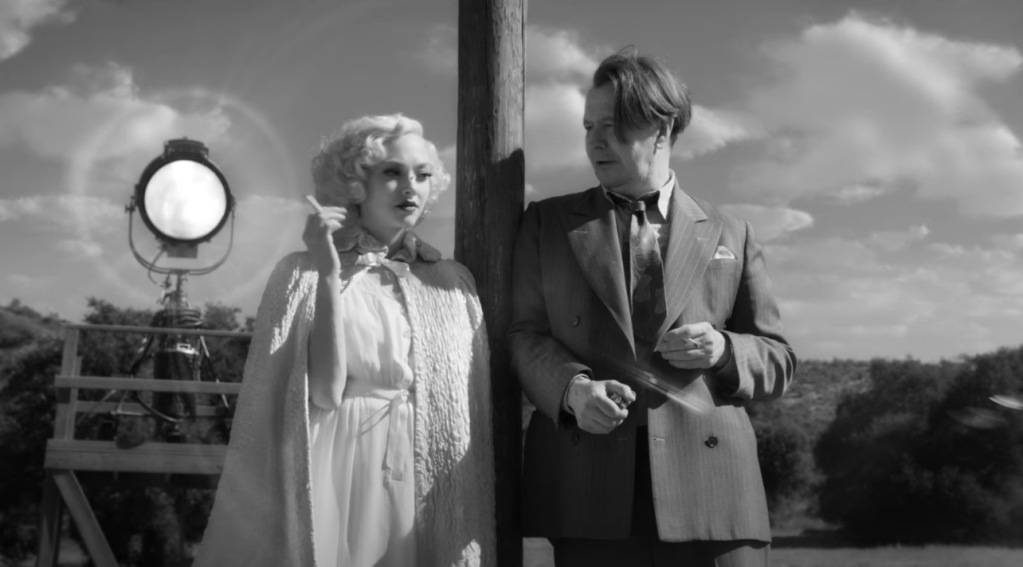
    Though it’s expressed as a work of fiction, film scholars commonly understand the 1941 cinema classic Citizen Kane to be an unofficial biopic of newspaper magnate William Randolph Hearst and the launching of Orson Welles’ film career.

    But the film also served as the magnum opus of social critic and Hollywood screenwriter Herman J. Mankiewicz, a man who battled with Welles for writing credit and was a frequent guest of Hearst through his connections with MGM executive Louis B. Mayer.

    Some 80 years after the release of the lauded film masterpiece, Netflix partnered on a long-shelved project of celebrate auteur David Fincher, an artistic biopic of Mankiewicz that harkens back to classic Hollywood and meticulously revers both the original film and the man who wrote it without ever fully letting audiences in on either.

    In many ways, Mank is to Citizen Kane what “Rosencrantz and Guildenstern are Dead” is to “Hamlet,” a narrow examination of a classic piece of art from the perspective from a character on the fringes of the original story.

    Mank isn’t about what many expected before its release – the battle between Mankiewicz and Welles over screenwriting credit for Kane. Rather, the film posits itself as a deep character study of the M.G.M. script writer largely prior to Welles’ heavy involvement in the film itself.

    Fincher – adapting a script from his late father Jack – uses Kane as a meta-text to construct the entire narrative of Mank from the visual cues and camera framing that feel lifted right off the R.K.O. studio lot to the back and forth structure panning back and forth in Mank’s life providing context for the scene that’s just played out on screen.

    If Citizen Kane creates a portrait of a complicated man from the memories of those around him, Mank creates a portrait of another complicated man from the memories he tells himself.

    Oscar winner Gary Oldman portrays the title character with the vigor of someone who has spent his whole life narrating and commenting on the lives of others – fictional and real – but has never really turned his mind towards himself. It’s a beautifully controlled performance that often harkens back to Welles’ turn as the indominable Charles Foster Kane of the 1941 film, but with a different twist that punches up Mank’s eccentricities.

    The film hinges not on Mank’s ability to pen the screenplay for Kane, but on his relationships with three women – a distant marriage to wife Sara, an affable fondness for actress and Hearst mistress Marion Davies and unlikely friendship with secretary Rita Alexander.

    Oldman approaches his chemistry with each of the three women differently while still maintaining a constant dry witticism that subdues those around him.

    Lily Collins and Tuppence Middleton do admirable jobs as Rita and Sara, respectively, but both are outshined by Amanda Seyfried’s enchanting, almost radiant performance as Marion Davies, a picture perfect take on vintage Hollywood ingénues.

    It’s remarkable how closely Seyfried mirrors her wide-eyed turn as Davies to the one given by Dorothy Comingore as Susan Alexander Kane in Citizen Kane, as if Seyfried herself fades off the screen and leaves Davies to play the real-life inspiration for the second Mrs. Kane. Scenes with Seyfried and Oldman have a heightened intensity and sparkle compared to the rest of Mank.

    Netflix’s home viewing experience that will make Mank a far more approachable film also has the unfortunate effect of handcuffing the quality of Erik Messerschmidt‘s expert black-and-white cinematography.

    Messerschmidt plays with light and shadow to create a compelling texture to scenes, engulfing the audience in a sea of bright white or endless void of darkness at a moment’s notice to reflect the overall tone of a scene and it’s in its boundlessly spectacular visuals that Mank truly feels like Fincher has studied Kane as the text for his film as Welles did with John Ford’s Stagecoach prior to shooting Kane.

    But seen on a small screen, especially one with limited resolution quality or poor contrast settings, Mank will become muddled to the point of losing its pre-Technicolor cinematic luster, a shame given how striking it must be on the big screen.

    Like its cinematic inspiration, Mank is poised to be a major player at the Academy Awards with likely nominations for Best Picture, Best Director, Best Actor, Best Supporting Actress, Best Original Screenplay, Best Original Score, Best Cinematography and Best Production Design. Prestige films about Hollywood have always overperformed at the Oscars and it’s easy to see Mank taking a similar path to the one The Artist did as a nostalgia for vintage moviemaking carries it to numerous trophies.

    A thoroughly complicated and difficult picture to make and to sit through, Mank is sure to tantalize cinephiles and befuddle casual moviegoers. It feels impossible to completely appreciate and comprehend the depth of detail and cinematic texture Fincher and his team have painstakingly layered into a feature that feels like a masterpiece, though only history will ever tell if it actually becomes one.

  • Hillbilly Elegy: In search of Oscar gold

    Hillbilly Elegy: In search of Oscar gold

    Hillbilly Elegy has everything awards season voters seem to want in a best picture contender.

    It’s a film with A-list actors giving showy performances in an adaptation of a true story from an Academy Award winning director set in the recent past that gives insight into the current political climate.

    There’s plenty of golden reasons why Netflix paid $45 million in January for the rights to this “Oscar bait” feature, but none of them add up to terrific cinema.

    Based on the 2016 memoir of the same name from J.D. Vance, Hillbilly Elegy follows a Yale law student returning home to his poor family in Ohio after a family emergency while reflecting on his youth growing up with his sister and drug-addled mother.

    Director Ron Howard teams with screenwriter Vanessa Taylor to present the film both in the present and alternating flashbacks, which would work better if they were shot and framed in more distinctly separate ways. As it is, the retelling of J.D.’s youth feels more like a series of loosely constructed vignettes than a cohesive storyline driven by character development.

    Perhaps that’s the fatal flaw of a film like Hillbilly Elegy, or perhaps its point altogether, that no characters truly change all that much from beginning to end. Likeable characters at the beginning of the film are still likeable; troubled characters rarely seem to redeem themselves beyond a stereotypical picking themselves up by the bootstraps and working hard motif.

    Melodrama is laid on thick, almost to the point of cable television special with heavy orchestral scores to reinforce mood.

    The lackluster story – and especially the underwhelming script – do no favors to Academy Award nominee Amy Adams, who is truly going for it as J.D.’s drug addicted mother Bev. It’s an unrestrained performance that doesn’t have an expected signature monologue of rage or anguish, but there’s a demonstrative excitement bordering on anxiety to her work here that feels a touch overdone at moments.

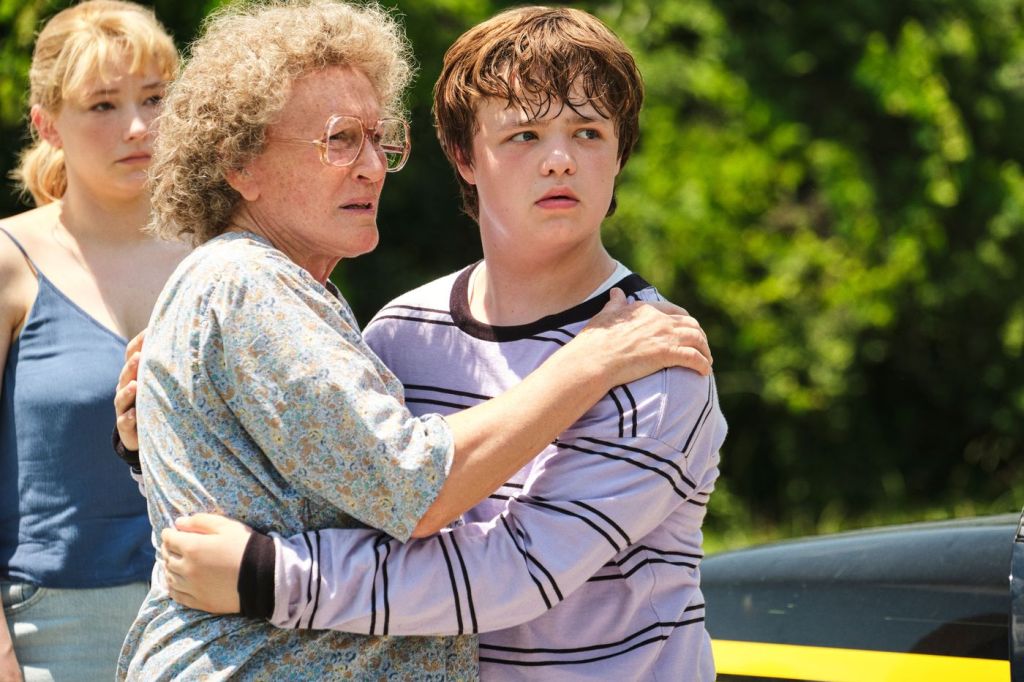
    Glenn Close – who holds a record for the most Oscar nominations for an actress without a win – is sure to be a major contender for Best Supporting Actress in the film’s best performance as J.D.’s Mamaw. Her tough exterior combined with a winning heart of gold make Close’s work the most complicated yet rewarding effort in Hillbilly Elegy with Mamaw often serving as the stand-in for the audience’s perspective on events or the one true character viewers find themselves rooting for regardless of the situation.

    The lead role of J.D. – played as a youth by Owen Asztalos and as an adult by Gabriel Basso – is especially disjointed. While Asztalos has remarkable chemistry with both Close and Adams and is largely effective in endearing himself to the audience, Basso’s standoffish, rather cold demeanor provides a stark contrast to the character that makes it harder to get behind his point of view from an audience perspective.

    Haley Bennett is solid in an underwritten turn as J.D.’s older sister Lindsay, providing strength to her family when they need it but keeping her distance as much as possible to protect her own children from their grandmother. Ironically enough, Bennett is also featured in another Netflix adaptation of a critically acclaimed novel released in 2020, the far superior Western noir The Devil All The Time starring Tom Holland. 

    Slumdog Millionaire actress Freida Pinto sadly serves as essentially window dressing in a throwaway role as J.D.’s girlfriend Usha.

    A film designed to win awards is surely going to be on the short list in any number of categories given the relative lack of competition this year, although it’s likely that only Close plays any serious threat to win.

    There’s plenty of opportunity for Howard and Taylor to provide social or political commentary with the film, but by in large they simply don’t. Hillbilly Elegy is aggressively safe, spelling things out for audiences far more than needed and telegraphing events incredibly transparently so there lacks suspense or dramatic tension.

    In its intention not to offend, Hillbilly Elegy doesn’t say what the filmmaker or Vance himself truly mean which provides for an easier watch, something Netflix may be going after here.

    Along with the upcoming Mank from director David Fincher, Hillbilly Elegy is one of Netflix’s biggest releases of 2020 and will certainly be one of the year’s more talked about films regardless of where it ends up on awards season ballots, making it a worthwhile watch for ardent cinephiles already subscribed to the streaming service.

  • Holidate: A partner for all seasons

    Holidate: A partner for all seasons

    Fresh off of Halloween and on the way to more family holidays, Netflix is bound to cash in on the dearth of end of the year films with a number of seasonally themed features.

    Their newest hit, which has topped the streaming service’s most-watched charts in the United States since its debut two weeks ago, is an objectively bad movie that knows its limitations and makes the most of its flaws, creating the must-see, fun terrible film of the year.

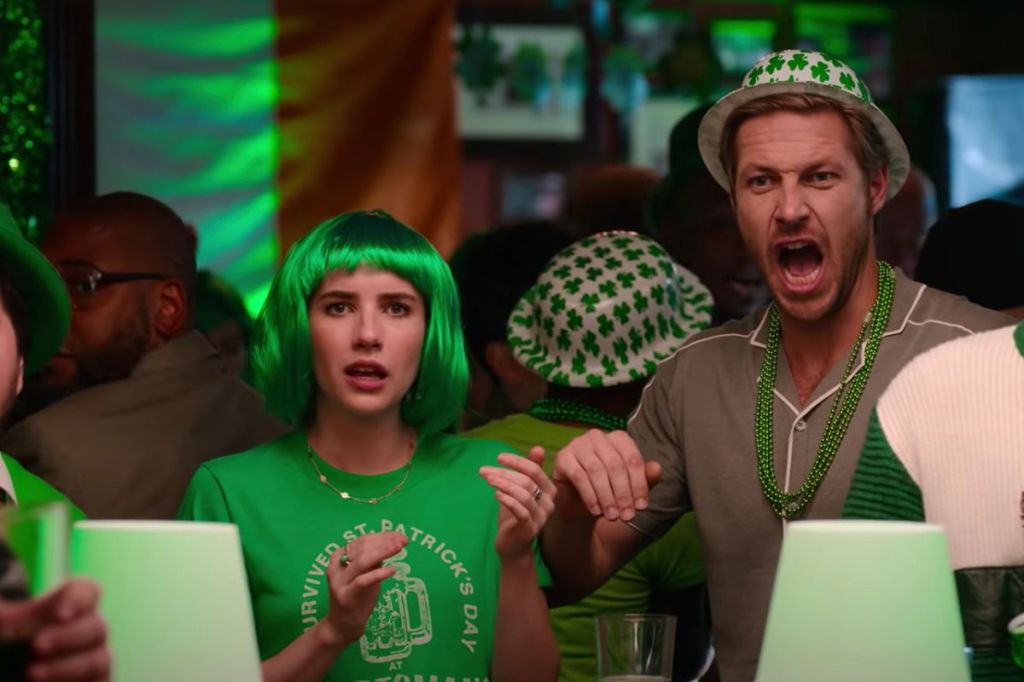
    Director John Whitesell’s Holidate stars Emma Roberts and Luke Bracey as a pair of strangers tired of being alone for the holidays who decide to pair up as platonic plus-ones for every imaginable celebration throughout the year.

    It’s a classic setup, but Holidate is more like a naughty Hallmark movie, sappy sweet and filled with traditional hate-to-like-to-love romance, but with implied sexuality and cursing one would never find on the family friendly television channel.

    The script from Tiffany Paulsen is written in such a way where the end is always in sight from the beginning and there’s lots of overt meta-textual commentary about movie romances from Roberts’ Sloane lamenting how women are never actually taking a break from dating when the perfect guy comes along to a spoof of the iconic lift scene in Dirty Dancing.

    Roberts comes across as just likeable enough to root for, but also nails an obscenely selfish streak that her Sloane isn’t totally aware she has but that everyone around her resents.

    She has decent chemistry with Australian actor Bracey, who’s charming enough for the role of Jackson – the titular “holidate” – but lacks a broader charisma to keep audiences intrigued by what’s going on in his character’s life outside of his budding relationship with Sloane. 

    Frances Fisher is exceptionally abrasive in the best way as Sloane’s overbearing mother dead set on finding her daughter a husband as quickly as possible. She takes the direct dialogue and gives it a sharp twinge that twists the knife on Sloane’s loneliness while still reflecting the modicum of affection she clearly has for her daughter.

    Tony Award winner Kristen Chenoweth delivers her most audacious performance to date, relishing every opportunity to be as naughty as she can as Sloane’s promiscuous aunt, Susan. It’s a turn that’s train-wreck waiting to happen, cringeworthy but in a way that audiences can’t help but keep watching as their bodies recoil away from the screen.

    Holidate relishes any opportunity to take a holiday and make it insufferable for Sloane and Jackson as a way to force them together, be it a nauseating wedding dance to “I’ll Make Love to You” from Boyz II Men to implying the most disgusting possible end to a Halloween party. By pushing them together in these outlandish ways, Paulsen and Whitesell follow the exact rom-com motifs they have Sloane repeatedly mock in a meta-textual way that doesn’t quite hit the mark.

    A second Holidate film is already in the works as Netflix seeks to capitalize on the breakout success of this feature, with Paulsen already lining out the plotline based on revelations from the film’s credits.

    It’s a smart business venture for the streaming service and a welcome sight for fans of Holidate, which should be increasingly popular amid a holiday season where more and more people will be home longing for the comfort of friends and family amid a resurgent pandemic.

    The film is certainly geared for couples cozying up near the fireplace on a cold holiday evening and Holidate is probably worth giving a casual chance for fans of naughty humor and the rom-com genre as a whole.

  • The Trial of the Chicago 7: Turning words into actions

    The Trial of the Chicago 7: Turning words into actions

    Cinematic wordsmith Aaron Sorkin is back at it again, with his dogged brain gushing dialogue onto script pages filled with unforgettable moments and sharp, biting lines.

    The man behind powerful screenplays like A Few Good Men, The Social Network and Moneyball takes his second turn behind the director’s chair, filming a script he wrote himself about the events surrounding the 1968 Democratic National Convention.

    The Trial of the Chicago 7 is a highly charged political courtroom drama that weaves its way into the current national spotlight by following a series of protests from groups trying to end the Vietnam War by staging demonstrations at a park in Chicago near the site where Democrats were nominating Hubert Humphrey for president.

    Subsequent violent acts between protestors and Chicago police were met months later with the indictments of eight leaders of several different political organizations by federal prosecutors charging the anti-establishment movement with inciting riots.

    At times, Chicago 7 is brilliant, leaning heavily on Sorkin’s extreme talents as a wordsmith to craft engaging and memorable moments. At other times, it becomes overly procedural and languishes in the melodrama that borders on an episode of Law and Order with blatant partiality and surreal buffoonery on the part of law enforcement that would feel comical if scenes weren’t based on real events.

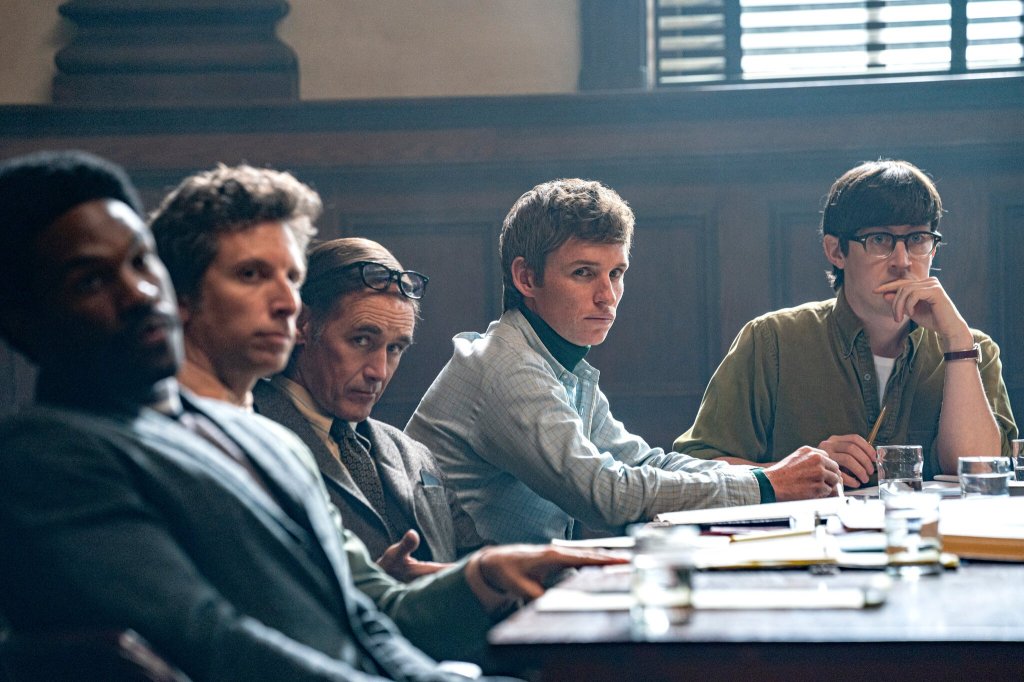
    Sorkin relies on his deep ensemble cast to lift the words off the page, including a pair of Academy Award winners with Eddie Redmayne as student protest organizer Tom Hayden and Mark Rylance as lead defense attorney William Kunstler.

    Known for his more exasperated, showy performances, Redmayne is much more reserved and in control of his emotions as Hayden, often trying to be a sense of reason among all of the film’s dynamic tension while still pushing for an end to the Vietnam War.

    Rylance provides the film with gravitas and, alongside veteran character actor Frank Langella as Judge Julius Hoffman and Joseph Gordon-Levitt as lead prosecutor Richard Schultz, gives Sorkin’s legal-heavy dialogue a sense of purpose and understanding for average audience members not as familiar with court proceedings.

    Comedic actor Sacha Baron Cohen gives perhaps his most serious and best performance to date as mild antagonist and co-defendant Abbie Hoffman, whose pejorative rantings and snide commentary offer a searing commentary on the film’s events while also serving as a large majority of the much-needed levity. Sorkin places Baron Cohen just off the center of the action to serve as a sort of satirical Greek chorus, alongside Jeremy Strong as fellow Yuppie leader Jerry Rubin, and his college speeches that come across as part stand-up, part political rally are among the most engaging moments of the entire film.

    The film’s best, yet underserved plot line finds Yahya Abdul-Mateen II in a breakout performance as Black Panther leader Bobby Seale, a target of relentless harassment by a prejudiced and less-than-subtly racist system seeking to incarcerate him by any means necessary.

    Shown almost entirely in courtroom scenes with the other defendants, Abdul-Mateen commands the attention of viewers regardless of what is happening around him with an undeniable strength and charisma. 

    Sorkin shows significant improvement as a director with his second film, raising the stakes both in terms of visuals and scale over his 2017 feature Molly’s Game with Jessica Chastain and Kevin Costner.

    Chicago 7 has grand, sweeping camera actions that flow in and out of conversations and character movement to give the audience a sense of scale. 

    The cinematography and production design are exceptional in this regard, but it’s the expert editing of Alan Baumgarten that keeps the momentum rolling and allows Sorkin to navigate through events in a loop-de-loop, forward and backward in time style with expert use of cross-cutting between scenes at the trial, the protest and the ensuing violence.

    A film that has screamed for awards consideration since its production was announced, Chicago 7 feels to be a shoo-in for a number of nominations at the next Academy Awards ceremony as other contenders give away to releases in 2021. The film is a likely Best Picture contender along with Original Screenplay and acting nominations for former winners Redmayne and Rylance as well as Baron Cohen and Langella feel well within the realm of possibility.

    It should come as little surprise that Chicago 7 lands in the top tier of films to be released in 2020, standing around the same level as fellow Netflix dramas Da 5 Bloods and The Devil All The Time; this reflects both a similar standard for the streaming giant in terms of quality and also just how narrow the pool for high quality films is given the constant back-shuffling of cinematic blockbusters.

    Chicago 7 still serves as a major step forward for a screenwriter turned filmmaker with a lot on his ever-running mind and something worth checking out on Netflix for cinephiles starved for quality drama and relentless dialogue.

  • Enola Holmes: Nancy Drew she is not

    Enola Holmes: Nancy Drew she is not

    Things happen to protagonists in movies.

    It’s what drives the plot forward and makes for compelling entertainment.

    But more often than not, it’s the male characters who have much or all of the agency in a film – an understood, yet not explicitly stated ability to impact or change the overall course of events.

    This is especially true of films directed by men, even when the movie features one or more female protagonists.

    A new Netflix film – directed by Harry Bradbeer from a screenplay by Jack Thorne – revels in its ability to push back against this narrative, thanks in large part to the film’s producer and star, Stranger Things actress Millie Bobby Brown.

    Based on the first of a series of novels by Nancy Springer, Enola Holmes follows the teenage sister of world-renowned detective Sherlock Holmes as she escapes from family members wanting to place her in a boarding school and sets off on a quest to find her mother, who disappeared suddenly on Enola’s sixteenth birthday.

    While it’s certainly true of mystery films in general that events happen around Enola without her involvement, this is a movie where the drive comes from an impassioned lead, the root narrative is based on female empowerment in a restrictive 19th century England and the core dynamic stems from a mother-daughter relationship that haunts Enola in a positive way from start to finish.

    Brown is electric and exceptionally charming as the title character, giving Enola a plucky, headstrong attitude that radiates energy off the screen and makes audiences glad to be along for the somewhat bumpy ride.

    While some screenplays use narration as a crutch to prop up a lack of character development or to speed through plot elements, Enola Holmes breaks the fourth wall as Brown often speaks directly to viewers to both give insight into what’s happening on screen and to comment on the stupidity of those around her.

    In these asides, Brown dazzles with a charm that evokes both a classic Jane Austen heroine and a snark distinct to portrayals of the character’s more famous brother, Sherlock.

    The film never shies away from acknowledging the Sir Arthur Conan Doyle master detective, although Henry Cavill’s more restrained performance as Sherlock is more bemused older brother than wickedly smart sleuth. His is a more sympathetic turn than Benedict Cumberbatch’s eccentric post-modern version in the BBC series Sherlock and less bombastic than Robert Downey Jr. in the similarly styled Sherlock Holmes films from Guy Ritchie.

    Oscar nominee Helena Bonham Carter leaves a long shadow over the entire film as Enola’s mother Eudoria, played mostly in flashbacks set over a number of years that help form the basis for Brown’s development of the Enola character as well as hide clues to solve the lingering mystery of the film.

    Enola Holmes is far more colorful than any other iteration of the British super-sleuth canon originally developed by author Doyle as the England of the film is brighter and more cinematic, keeping with what one might expect of a Jane Austen adaptation.

    But the punches rarely get pulled as Bradbeer and Brown bring a grit to the film’s action sequences. Fight sequences are structured to make Enola a wiry, agile fighter as opposed to the traditional brawler style of her brother Sherlock and there’s a kinetic rhythm to the action that makes everything feel orderly, yet like frantic chaos.

    Enola Holmes moves at a brisk pace as viewers jet around the English countryside in search of the next clue to an ever-changing mystery and only in the last 20-30 minutes does the weight of the two-plus hour adventure feel slightly burdensome.

    Bradbeer does a great job of creating an extensive world that could lead in a variety of different directions as a franchise starter for Brown and yet simultaneously building a somewhat tightly composed singular mystery that wraps up cleanly over the course of 120 minutes.

    A sequel to Elona Holmes, practically a given with its high viewership and Netflix’s wide array of film development, would actually be a welcome addition to the catalog and something worth pursuing.

    Enola Holmes definitely targets younger women as the primary audience, but there’s a genuine warmth and lighthearted nature to the entire film that will make this inevitable franchise starter something both men and women can enjoy.

  • Dick Johnson is Dead: Long live Dick Johnson

    Dick Johnson is Dead: Long live Dick Johnson

    How do we confront the inevitability of death?

    Without fail, everyone will ultimately succumb to their mortality, but when it’s staring you in the face, what is the best way of processing it?

    More so, is there a way to best handle the looming death of a loved one?

    Documentarian Kirsten Johnson tackles these questions head on in a strange, yet beautiful and uncompromising new film, Dick Johnson is Dead, which premiered on Netflix last weekend.

    The feature is a wild variation from her normal work observing subjects from afar, blending intimate personal footage with fantastical hyper-reality to occasionally leave audiences questioning where the line between fiction and documentary really lies.

    Filmed over the course of several years, Dick Johnson is Dead serves as a memoir to Johnson’s family as well as a portrait of a love between a daughter and her father, a recently retired Seattle psychiatrist who is moved to a small New York City apartment after being diagnosed with dementia.

    Audiences are treated to this warm-hearted, jolly man in his best days and in his worst, allowing the viewer to feel the full emotional impact Kirsten feels as Dick’s memories slowly fade away from him.

    Though there’s a plethora of figures in the 90-minute feature, there’s only one true character, Dick Johnson himself. Viewers watch him experience a cognitive recognition of his dementia that fades in and out and the simple joy that he personifies in his unvarnished smile radiates through the screen with a blinding glow.

    It’s in his relationship with his daughter Kirsten that the documentary truly comes alive. The rapport that filmmaker and subject have are intertwined with genuine warmth that only comes from a paternal bond. Dick is only involved with the film project because of his daughter, and his enthusiastic participation throughout showcases the tender, emotional love they have for one another.

    Kirsten herself becomes a character in the film in a much different way than filmmakers traditionally create for themselves. So often directors hide themselves inside their films through the eye of the camera lens – and Johnson does this to tremendous effect during showy, artistic moments – but it’s in her on-screen relationship with Dick that helps provide context.

    The cinematographer-turned-director-turned-subject places herself along the side of the frame, always keeping the focus on Dick, as if everything in the world revolves around her father. It’s a caring reverence that helps endear the audience further to this genuine, affable gentleman.

    Constant throughout the film is this meta-textual subplot where the Johnsons stage and film various death scenes for Dick, often with the help of stuntmen being hit by a car or falling down a flight of stairs. The director Johnson brings audiences behind the scenes as these sequences are staged – often in the middle of showing them happen – in order to keep up with an ever bending, twisting timeline.

    One of Dick’s friends is overwhelmed by the strangeness that filming this feature creates, lamenting at one point that he has to “keep reminding myself that this is a movie.”

    Somewhere along the way, Dick Johnson is Dead becomes a commentary on the filmmaking process, inserting the filmmaker herself into the storyline to describe how and why certain events are being included and further complicates in a richly unique way the strange marriage this film makes between fiction and documentary.

    Sadly, 2020 is the perfect year for a documentary with this subject matter to arrive as the COVID-19 pandemic puts the frailty of the older population into the spotlight. While Dick Johnson is Dead would normally be on the shortlist for Oscar contention, the unusual circumstances surrounding this year’s selection process will likely guarantee Johnson’s first Academy Award nomination as a director after shooting Laura Poitras’s 2014 Oscar-winning documentary Citizenfour about NSA whistleblower Edward Snowden.

    In a larger sense, Dick Johnson is Dead preserves the filmmaker’s father for immortality on the screen as Dick’s essence shines brightly even as the light in his eyes begins to fade.

    The subject matter may be heavily, but it’s treated with a light humor and shown with such care that what might feel morbid actually becomes celebratory, a rare feat for such heavy material.

    A major contender for the year’s best documentary film, Dick Johnson is Dead deserves a wide audience prepared for its unusual premise and subject matter and Netflix serves as an ideal way for cinephiles to stream this wonderfully quirky film as soon as possible.

  • The Devil All The Time: Saints and sinners soaked in blood

    The Devil All The Time: Saints and sinners soaked in blood

    Fathers can pass a lot of things down to their sons: the love of a local sports team, good genes for height or a large inheritance.

    But it’s two wildly differing concepts – violence and religious faith – that boldly intersect in writer/director Antonio Campos’s latest film, a sprawling tale of wolves in sheep’s clothing where the purity of both saints and sinners is never fully assured.

    Based on the 2011 novel of the same name by Donald Kay Pollack, The Devil All The Time is a multigenerational Gothic noir thriller set on the border between Ohio and West Virginia from the 1940s through the 1960s. The film skips its way up and down the timeline but primarily focuses on a reserved young man named Arvin and how his relationship with his father, a World War II veteran, came to shape his life and the violent destiny of a wide array of characters.

    Much will be made about how far away Arvin is from the Spider-Man character Tom Holland is most famous for, but what won’t be talked about enough is just how remarkably the British actor melts into the role with a subdued calm that masks brutal inner turmoil.

    It’s one thing to be a master of broad facial expressions – and Holland has proved with his superhero career that he is just that – but it’s quite another to reveal so much while moving so little. Holland feels relentlessly tense in his cheekbones in a way that allows his eyes to slowly reveal Arvin’s inner monologue for his most compelling performance to date.

    From the moment he appears on screen, Robert Pattinson is mesmerizing to watch as a preacher who uses his position for nefarious purposes. Pattinson imbues Preston Teagardin with a menacing, yet seductive charm that pushes audiences away only to draw them in closer.

    A character actor thrust into the limelight with the Twilight films and the upcoming Batman reboot, Pattinson creates a wholly unique persona in Teagardin, a man who seems completely out of place leading a rural church but intoxicates everyone around him with his persuasive soliloquies.

    What truly makes this film feel special is the strength of its ensemble cast from It star Bill Skarsgård as a troubled World War II veteran to Mia Waskiowska and Eliza Scanlen as a mother and daughter both taken by silver-tongued preachers with questionable motives.

    But because the film tries to do so much and be incredibly faithful to the original novel, character development becomes thin for secondary roles like Jason Clarke and Riley Keough’s travelling serial killers or Sebastian Stan’s corrupt sheriff.

    Devil doesn’t really take off until Holland’s first appearance on screen over 40 minutes in, nor does it truly shine before Pattinson’s initial crooked smile several scenes later. Campos’s film is highly rewarding for those who stay with it, but the feature becomes a grind for the first hour.

    Visually, Devil showcases its rural, mid-century setting with a panoramic palette of pale colors marred with deep off-black hues shot on 35mm film by cinematographer Lol Crawley.

    It’s rarely more apparent that Devil is adapting a novel than in the film’s use of narration to set the mood of scenes and reveal characters’ inner thoughts to the audience without other dialogue. Campos makes the outstanding choice of using the book’s author to give the narration throughout with Pollock perfectly capturing the tone in a supporting way that doesn’t distract from the overall feature but makes Devil a visual novel in both good and bad ways.

    While there are some gruesome moments, the film puts more weight into the lead up and aftermath of its violence than on the actual acts themselves. Campos restrains the impulse to overly glorify the bloody nature of his film, dealing rather with the ramifications of individuals’ actions.

    Purchased by Netflix as a potential awards contender, Devil doesn’t really seem to have the legs to hold up over a long campaign season like Spike Lee’s Da 5 Bloods.

    The strong acting performances – especially a layered turn from Holland unlike anything the young actor has shown before – make The Devil All The Time an interesting and thought provoking crime thriller for those willing to stay with the lengthy setup and winding narrative structure.