Category: Streaming

Reviews of films whose primary release is on a streaming service. Assign for streaming-origin releases, not simply because a theatrical film is later available online.

  • The Irishman: Legacy of a cinematic Don

    The Irishman: Legacy of a cinematic Don

    At the end of the day, what’s it all about?

    It’s a question that continuously lingers under the surface of celebrated auteur Martin Scorsese’s latest feature, a melancholy retrospective that acts almost like a career summation filled with riddles of bullets and dynamically vulgar dialogue.

    For the premier filmmaker in the gangster genre, Scorsese’s “The Irishman” definitively closes the book on how crime dramas have been made and any future Mob movie will have to live in a post “Irishman” world.

    This isn’t to say – although exceptional in its own right – that “The Irishman” is on the same level as his classics “Goodfellas” or “Casino” or “The Departed” for that matter.

    But intensely, quietly, there’s a lot on Scorsese’s mind as he puts audiences through an arduous character study on the virtues of loyalty and family and how those often-conflicting ideals can make or ruin the best of men.

    Clocking in at just under three-and-a-half hours long, “The Irishman” is an expansive look into the worlds of organized crime and organized labor that somehow never fully gives a complete picture into either, but positions audiences to view things through the lens of an Irish Teamster who joins the Bufalino crime family as an enforcer.

    The film truly encapsulates a lifetime in American history, chronicling the events of the film with major moments like the assassination of John F. Kennedy and the Bay of Pigs. But “The Irishman” feels epic in scale, layering years upon years of information at the same time body after body falls to gunfire.

    “The Irishman” being the first Scorsese film produced by Netflix seems appropriate as there’s almost an episodic nature to the movie that will allow audiences to break up “The Irishman” into a multiple night viewing experience. That being said, it’s a shame that most audiences will never get to see this gem on a big screen as it’s best when viewers are fully immersed in the world of the film without distractions or interruptions.

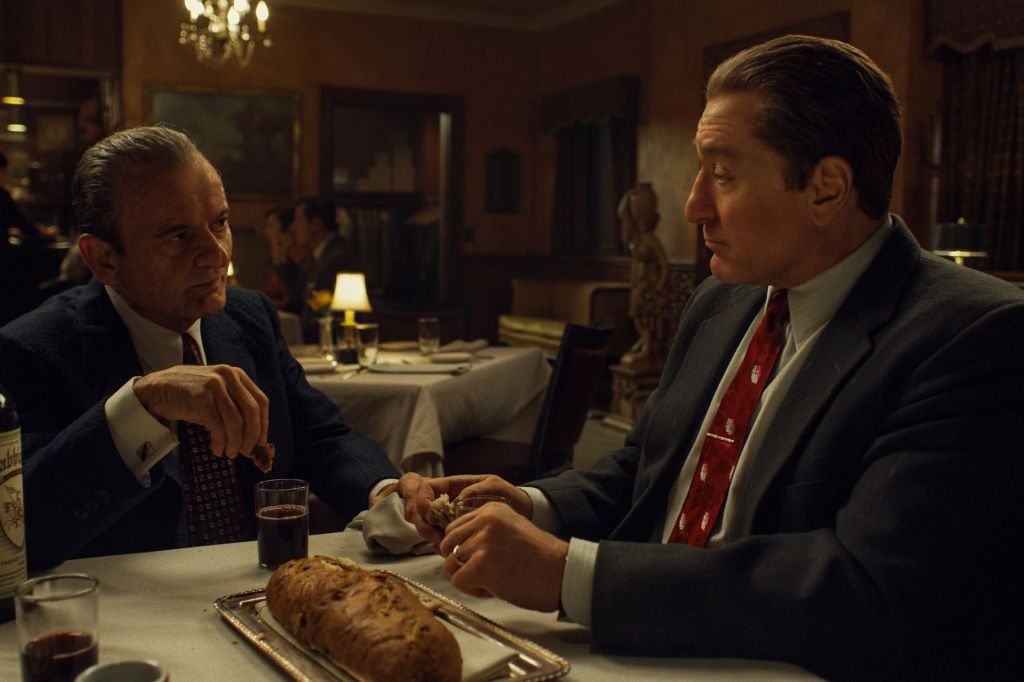
    As the titular “Irishman,” two-time Academy Award winner Robert De Niro balances a fine line between uncertain, often competing relationships and his Frank Sheeran is confident, yet more empathic to the mobsters surrounding him than his own family.

    It’s unusual nowadays to see the veteran actor playing the role of mentee rather than mentor, though De Niro flourishes in the part of Mafia apprentice as he displays a rigorous callousness to his work that is matter of fact rather than cold.

    The demonstrativeness that audiences are accustomed to seeing from Al Pacino are ever present in “The Irishman,” as Pacino attacks his dialogue as Teamster boss Jimmy Hoffa with rigor.

    Surprisingly, this vibrancy works for Pacino here. His constant bravado does not overwhelm the film as it usually does and there’s considerable warmth shown by Pacino in smaller moments featuring Hoffa, Sheeran and Sheeran’s daughter Peggy.

    The best performance in the film by a wide margin is a career-best turn from Oscar winner Joe Pesci, who reteams with De Niro and Scorsese for the first time since 1995’s “Casino.”

    As Sheeran’s mentor and a Bufalino crime boss, Pesci is brilliantly understated and quiet in the role, deceptively drawing audiences in with the calm affectation of a friend. He often outduels De Niro and Pacino in intimate moments and is by far the most compelling character whenever he appears on screen.

    “The Irishman” boasts a deep and impressive supporting cast including Harvey Keitel, Ray Romano, Jesse Plemons and Bobby Cannavale. Among the secondary characters, Sheeran’s daughter Peggy – played as a young girl by Lucy Gallina and an adult by Anna Paquin – is the most compelling of all in spite of her lack of dialogue.

    Both Gallina and Paquin exhibit an unspoken depth of emotion within their haunting eyes and most of their incredible two-part performance is fully synchronized through non-verbal cues that inform how audiences view Sheeran.

    The screenplay from Steven Zaillian, adapted from Charles Brandt’s novel “I Heard You Paint Houses,” delivers some knockout dialogue that allows De Niro, and especially Pacino, to produce highlight-reel quality, career-defining scenes.

    Scorsese and Zaillan build “The Irishman” slowly and deliberately over the three-plus hour running time to build to a crescendo of a third act that is both demonstrative and exceptionally pensive for a Scorsese film.

    There’s a finality to “The Irishman” that seems to coincide with Scorsese’s own foray into the gangster genre that comes out in the filmmaking. The extended running time and partnership with Netflix feel like a director unconcerned with audience expectations and wanting to make a film on its own terms.

    A self-homage tracking shot opening the film that mimics the Copacabana scene from “Goodfellas” cements this notion from the word go.

    If this is the last film of Scorsese’s career – though those odds are unlikely – “The Irishman” is a fitting culmination of a master’s work and a movie that will certainly appreciate considerably with age as audiences re-watch it again and again, picking up the subtle flourishes and nuance that come with exception Scorsese filmmaking.

    With the full weight of Netflix behind it, “The Irishman” is certain to be a major player come Oscar season and is a virtual lock for Best Picture and Best Director nominations. Despite a crowded field in the category, De Niro should be one of the final five in the Best Actor category and “The Irishman” could sneak both Pacino and Pesci in Best Supporting Actor, although odds likely favor Pacino’s showy performance over Pesci’s subtlety if only one can get in.

    This film will likely be most remembered as “Scorsese’s Netflix gangster flick” rather than on its own merits by many audiences.

    Those who venture out to find “The Irishman” on a big screen and give themselves over to the world of the Bufalino crime family will find themselves mesmerized and transported by one of America’s finest cinematic craftsmen.

    Unquestionably one of 2019’s top five films, “The Irishman” is more than worth the time regardless of how or when viewers find it.
  • Dolemite Is My Name: Return of a comedy legend

    Dolemite Is My Name: Return of a comedy legend

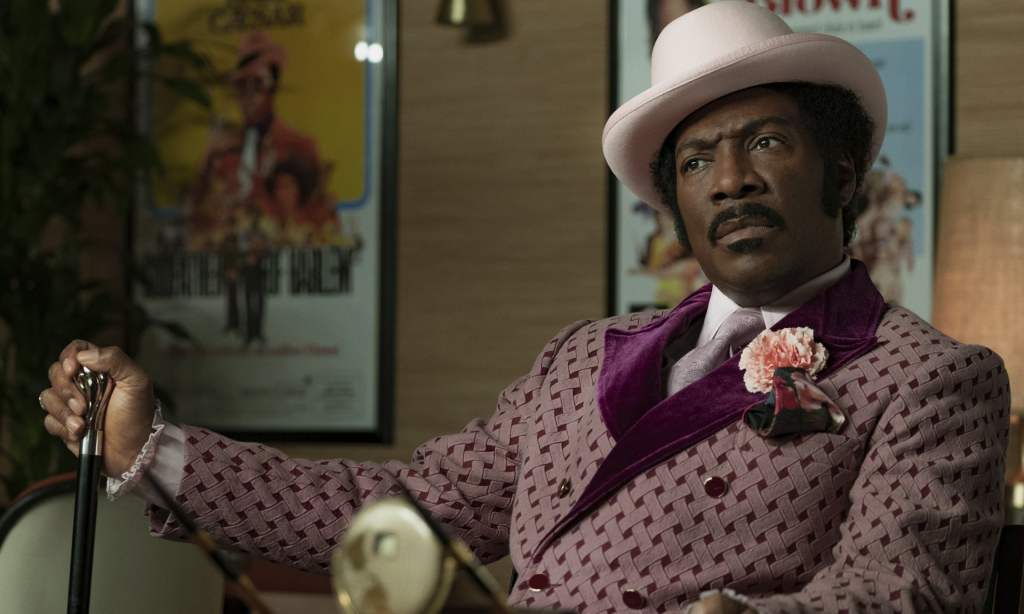
    From the moment he begins a verbal diatribe that drowns out Marvin Gaye, it’s apparent that Eddie Murphy has a special passion for his latest role.

    It’s evident in the way he carries himself, in the timbre of his voice and the cadence with which he recite lyrical tongue-twisters with effortless repetition. Murphy melts into his homage to one of his mentors and heroes, actor/comedian Rudy Ray Moore, the creator of cult classic blaxploitation film “Dolemite.”

    Told in a traditional biopic style, “Dolemite Is My Name” finds Murphy’s Rudy struggling to find a creative outlet after failed singing and dancing careers. When he turns the ramblings of neighborhood homeless men into a comedy act, Rudy creates the character, Dolemite, as a lyrical poet that later became known as “The Godfather of Rap.”

    The film follows Rudy through many career paths and hijinks, maintaining a frantic, cavalier pace that would normally be disengaging for some audiences. But Murphy holds “Dolemite” together with an invigoratingly charming turn as Moore.

    For a movie that’s as crude and risqué as the original subject, Murphy gives such an affable twist to each poetic slander and crass comment that it’s nearly impossible not to root for his Rudy regardless of how many four-letter words fly out of his mouth.

    His Rudy oozes a relentlessness that reflects the passion Murphy clearly shows for the real Moore and there’s a surprising amount of emotional depth that Murphy is able to draw from that separates this performance from an average biopic. There are subtle parallels between Rudy’s rise from obscurity that pair wonderfully with the career resurgence Murphy makes in the role that critics and awards season voters will eat up.

    Thankfully, this is clearly his best work since an Academy Award nominated turn in 2006’s “Dreamgirls” and perhaps the most ideal use of Murphy’s unique comedic talents since the mid-1990s.

    A strong supporting cast gives “Dolemite” the depth needed to elevate beyond a simple character study and among more famous male actors, Da’Vine Joy Randolph steals large segments of the movie as Rudy’s protégé Lady Reed.

    While it’s a humor-filled underdog story throughout, “Dolemite” truly hits its stride in the latter half when Rudy attempts to take his act onto the big screen by self-producing an action/comedy feature film and shooting it in an abandoned drug den.

    This leads Rudy into the path of actor/director D’Urville Martin, masterfully portrayed by an almost unrecognizable Wesley Snipes. Snipes portrays D’Urville with a refined arrogance from a screen credit as an elevator operator in “Rosemary’s Baby.”

    Paired in scenes opposite Murphy, Snipes attacks the dialogue with a vigorous dismissive attitude that matches Murphy in intensity but in a distinctly opposite style that elevates both actors.

    The screenplay from Scott Alexander and Larry Karaszewski follows a note-by-note underdog story that has been done many times over, but the humor and heart director Craig Brewer is able to pull from his performers along with a strong visual style thanks to cinematographer Eric Steelberg elevates “Dolemite Is My Name” to the top of the biopic genre in recent years.

    Murphy deserves his second Oscar nomination for his special turn as Moore, though comedic performances like this rarely get as much recognition as dramatic efforts.

    Costume designer Ruth E. Carter should be a frontrunner to win her second consecutive Academy Award in the category after taking home the trophy last year for “Black Panther.” Clothing leaps off the frame with a vibrant, charismatic flair that elevates the entire production and cements “Dolemite” in the 70s blaxploitation era. There’s a finesse to the design that keeps the costuming from becoming a caricature while maintaining an authenticity that is usually only found in rigid British character dramas.

    The downside to the film’s swift release on Netflix is that “Dolemite” is the perfect film to enjoy with an enthusiastic audience as the communal nature of the comedy is ideal for a shared experience like those depicted in the film itself.

    As a niche biopic, however, “Dolemite” simply won’t garner enough broad support to warrant a large theatrical run and a streaming service will give better opportunities for curious, yet unsure viewers to watch the first 10-15 minutes without committing to a whole moviegoing experience.


    If audiences can tolerate or enjoy outright the crude humor throughout, there’s too much to like about “Dolemite Is My Name” not to give it a chance.

  • The Laundromat: The muddled world of international finance

    The Laundromat: The muddled world of international finance

    Taking risks in filmmaking can be a bold way to put a unique spin on stories we already know well.

    Biopics and other movies about historical events and figures are often chronological and stale, though recent efforts to infuse life into the genre have proven to be a welcome change.

    Since writer/director Todd McKay’s darkly comic take on the financial crisis of 2008 won him Oscar nominations for his film “The Big Short,” filmmakers have blurred the lines with comedic attempts at retelling history from former White House officials in “Vice” to ice skating scandals in “I, Tonya” to the sexual harassment claims at Fox News in the upcoming “Bombshell.”

    A new Netflix film attempts to join these ranks as director Steven Soderbergh takes on international tax evasion and the Panama Papers with his new feature, “The Laundromat,” a star-studded mess of a movie that bounces around far too much to be largely enjoyable.

    Told in a series of vignettes, the film follows a pair of lawyers who create shell companies in order to conceal money for greedy clients. A series of seemingly unrelated incidents like insurance scams and infidelity find a common denominator in the Mossack Fonseca law firm.

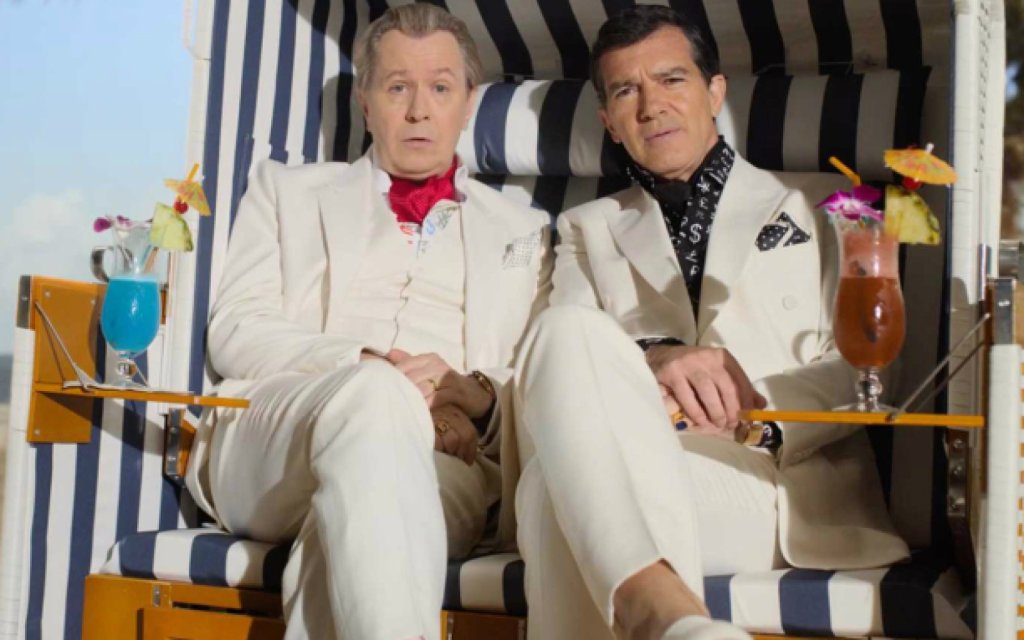
    In his first major role since winning an Oscar for 2017’s “Darkest Hour,” Gary Oldman ramps up a quirky accent and a wry, knowing smile as attorney Jürgen Mossack. It’s a surprising, almost baffling choice for the veteran actor who plays for the laughs that only come once in every three attempts.

    There’s not enough time for Oldman to develop anything beyond a mild caricature of a man that many have heard of but few know anything of significance about.

    The same can be said of Antonio Banderas’ Ramón Fonseca, the relative straight man to Oldman’s more comic portrayal. Charmingly refreshing yet forgettable, Banderas is a welcome salve for the chaos of “The Laundromat” and not memorable enough to warrant a bigger role in the film.

    Oscar winner Meryl Streep stands in for hundreds of Mossack Fonseca fraud victims in a composite role as a woman digging into a fake insurance policy.

    It’s vastly entertaining to watch Streep bumble about in scarves and pantsuits with a broad performance and yet there’s still a lot left on the table as Soderbergh reorients audiences to other characters despite a concerted effort to rally them behind Streep’s Ellen.

    This is further exacerbated when it comes to the deep supporting cast including the likes of Jeffery Wright, James Cromwell, Sharon Stone and a host of others who feel more like passing shadows rather than characters in an ongoing story.

    While “The Big Short” does a magnificent job of simplifying economic concepts for a broad audience, “The Laundromat” wobbles through these explanations and often leaves unfamiliar viewers wondering what’s actually going on.

    Screenwriter Scott Z. Burns attempts to break these complexities apart by allowing Mossack and Fonseca to narrate each segment of the film as a sort of de facto explanation of their greed, but it becomes far too messy the further down the rabbit hole the movie travels leading to an inexplicable and poorly contrived conclusion.

    It’s unclear whether this is a directorial choice or simply a poor screenwriting decision, but “The Laundromat” is significantly the lesser of Soderbergh’s two Netflix features to arrive in 2019.

    His sports drama “High Flying Bird” is much more dynamic visually thanks to inventive use of iPhone cinematography and well worth checking out on Netflix over “The Laundromat.”

    An October release with mainstays like Streep and Oldman in leading roles usually spells awards season success, but “The Laundromat” is far too strange a film for most voters to take seriously.

    Netflix has backed off Soderbergh’s film as a contender in order to push all their chips in for writer/director Noah Baumbach’s latest, the yet-to-be-released drama “Marriage Story,” and Martin Scorsese’s crime drama “The Irishman.”

    Banderas has a strong likelihood for awards season consideration as well, though voters will be praising his work in Pedro Almodovar’s “Pain and Glory” rather than his turn as Fonseca.

    “The Laundromat” isn’t the kind of film that requires going out of the way to see in theaters but is certainly worth taking a chance on now that it’s available to stream.

  • American Factory: The price of globalization

    American Factory: The price of globalization

    There have been a number of exceptional documentaries released in 2019 covering a range of political, historical and pop culture topics.

    Perhaps none sits quite on the threshold of where the United States stands currently in an everchanging global economy than the latest Netflix release, “American Factory.”

    A top non-fiction film and award winner to come out of this year’s Sundance Film Festival, this immersive look at international business, the daily struggles of blue collar workers and the growing threat of automation to large scale employment was recently chosen by former President Barack Obama and his wife Michelle to be the first film produced under their Higher Ground Productions label.

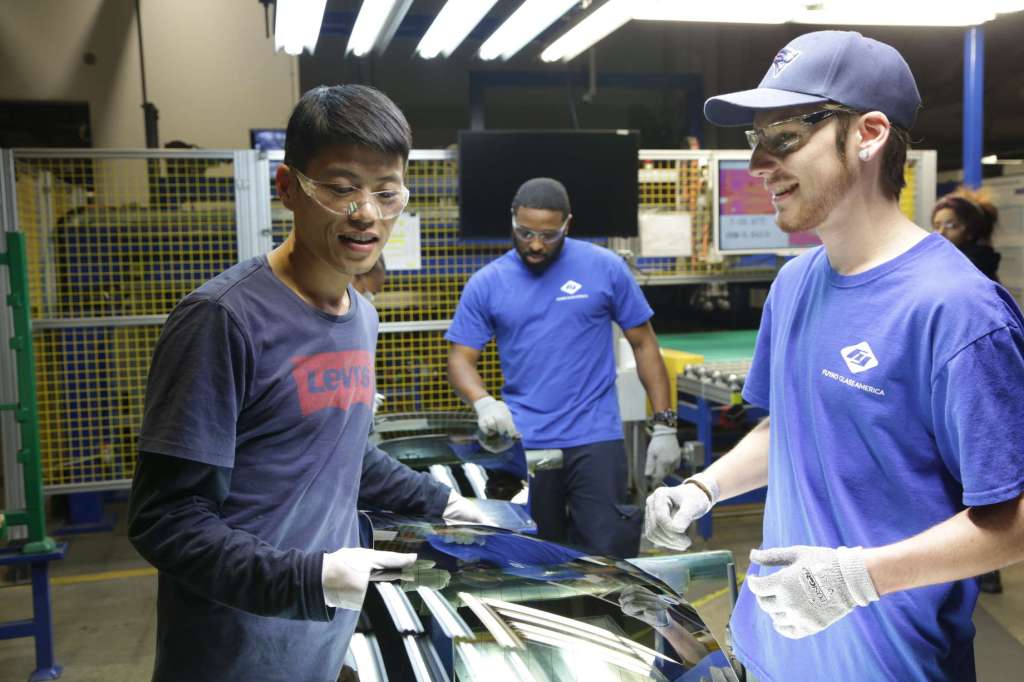
    Co-directors Steven Bognar and Julia Reichert embed themselves for several years at a closed General Motors plant in Dayton, Ohio which was in the process of being reopened to mass produce automobile glass for the Chinese company Fuyao.

    The filmmakers have incredible, unfathomable access both to employees on the floor and at home, but more astoundingly to top level execs at Fuyao speaking frankly in closed door meetings filmed as part of the documentary.

    Though viewers are likely to take one side or the other, Bognar and Reichert tell the story of Fuyao Glass America (FGA) as impartially as possible which allows their subjects remarkable authenticity as a result.

    “American Factory” approaches the Dayton plant from socioeconomic perspectives, but it’s nearly impossible to remove a viewer’s political biases from factoring in as audiences decide whether or not to support Fuyao’s corporate agenda or a growing effort on the floor to unionize labor.

    Perhaps the first scene that truly showcases the uniqueness and access of “American Factory” relates to the film’s lone political figure, Democratic Senator Sherrod Brown.

    Brown gives a speech at the grand opening of the FGA facility and includes unprompted support for the unionization of Fuyao employees, the first major reference to the theme in the film.

    Almost immediately, Bognar and Reichert take audiences behind the scenes with furious Fuyao executives railing against Brown’s brazen politization of their event, leaving one exec to swear that the senator would never set foot on the property again and suggesting that he would use ribbon cutting scissors to decapitate Brown.

    In this regard, the filmmakers do a remarkable job of showcasing the feelings audiences would expect the subjects to have off camera by somehow getting all involved to be exceptionally candid in their remarks.

    Since the film’s release, Fuyao has disputed some of the translations in the film, specifically remarks made by FGA chief executive officer Jeff Liu, where he is shown telling company chairman Cao Dewang that American employees supporting unionization efforts at the company had been fired.

    At its core, “American Factory” is a film about the cultural divide between blue collar Ohio workers on one side of the spectrum and Fuyao corporate management and supervisors sent from other facilities in China on the other.

    The duality of the struggle for these two cultures to co-exist in business is a tenuous balance and one that Bognar and Reichert go to great lengths to ensure their film tells both sides of this international tale.

    Viewers get incredible insight into how the American and Chinese subjects perceive each other at the outset and how that perception changes over time. What appear to be cultural sensitivity training seminars for incoming Chinese staff are perhaps the most surprising and telling scenes in the entire documentary as Fuyao execs frankly describe American workers as uninspired and entitled.

    The filmmakers include a wide array of subjects that color the documentary well, though few aside from Chairman Cao play a significant enough role in the film to be especially memorable on their own.

    This generalization affords “American Factory” the ability to universalize the stories of over 2,000 workers while still feeling extensive.

    Cinematography is bold throughout and often makes the seemingly mundane routine of making automobile glass feel artistic and beautiful.

    “American Factory” should prove to be a major player come awards season as Bognar and Reichert took home the Directing Award: U.S. Documentary at Sundance.

    With Netflix continuing a strong push in the category and the film being the first produced by the Obamas’ Higher Ground, “American Factory” seems likely to be an Academy Award nominee for Best Documentary next winter, if not the presumptive favorite.

    An easily accessible film thanks to Netflix’s decide to stream it day and date with its limited theatrical release, “American Factory” should be atop any ardent cinephile’s queue and is the best documentary to date in 2019.

  • Murder Mystery: An unnecessary whodunit?

    Murder Mystery: An unnecessary whodunit?

    Perhaps the biggest saving grace about “Murder Mystery,” the latest movie partnership between Adam Sandler’s Happy Madison Productions and Netflix, is that no one will have to pay money to sit in a movie theater to endure 100-plus minutes of subpar cinema.

    It isn’t just that the production design is simplified to a level that almost none of the crime comedy’s supposedly luxurious foreign locales look authentic or that the jokes are so incredibly on the nose.

    Watching “Murder Mystery” in one sitting is a chore to endure and certainly one you wouldn’t want to have to sit through in public. Yet somehow, it still isn’t the worst film to be released in 2019.

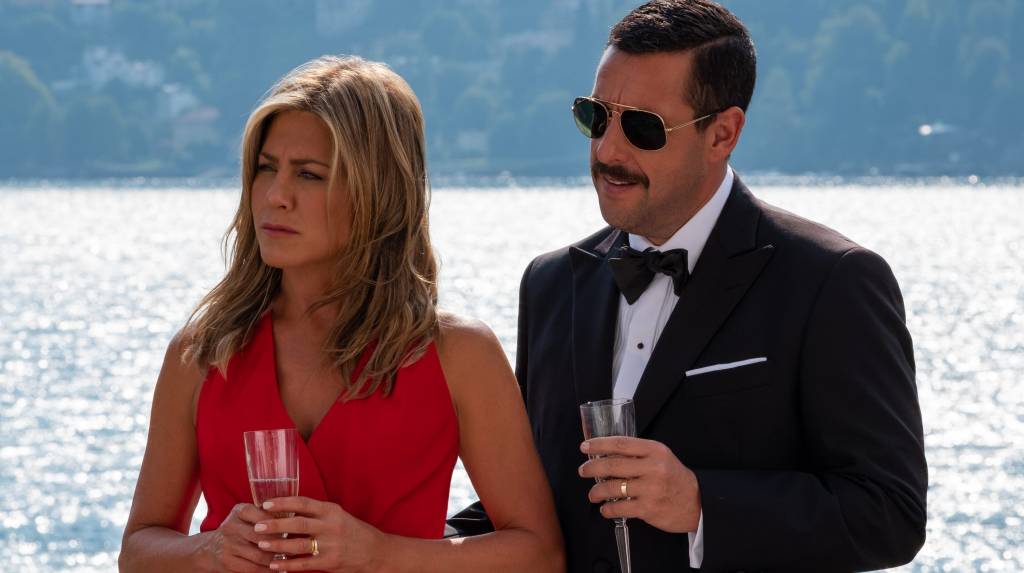
    This wannabe romp finds Sandler reteamed with his “Just Go With It” co-star Jennifer Aniston as a lower middle-class New York married couple en route to the cheapest possible European vacation when they get swept up into a rich playboy’s world of drama, intrigue and “dun dun dun” murder.

    The film’s title should be a warning sign to potential audiences of what’s to come as it isn’t called “Murder Mystery” in a fun, satirical way, but rather as if screenwriter James Vanderbilt left it in an early draft of the script instead of “insert movie title here” and forgot to come back and think of an actual title for the movie.

    Little more can be expected of a comedy penned by the writer of such hits as “Independence Day: Resurgence,” the two “Amazing Spider-Man” films and stunningly enough, “Zodiac,” David Fincher’s cult crime classic.

    Shockingly, “Murder Mystery” shows marked improvement relative to other Happy Madison-Netflix joint ventures as this Sandler misfire is decidedly better than the unwatchable western spoof “The Ridiculous 6” or the similarly bland action adventure “The Do-Over.” Having low expectations going into “Murder Mystery” certainly helps.

    One might expect A-list talent like Aniston and Sandler to elevate the material more than they do here with the end result being a star-studded version of a Mary Kate and Ashley Olsen TV mystery movie.

    “Murder Mystery” is a film that will make one yearn for the good old days of “Paul Blart: Mall Cop,” when badly written crime caper comedies has the common sense to hire Kevin James instead of acting talent that could actually be put to good use.

    If this is the kind of inane, laugh-every-five-minute feature Sandler has to put out on streaming services to allow him to take chances on dramatic work in films like “Punch Drunk Love” and “The Meyerowitz Stories,” so be it.

    It’d just be nice if the world’s top streaming service would pony up a few extra dollars for better screenwriters.

  • Knock Down The House: Celebrating the outsiders

    Knock Down The House: Celebrating the outsiders

    Documentaries change in the minds of viewers when they know the outcome before it happens on screen.

    Usually it’s the ends justifying the means, the result giving audiences a reason to watch a journey.

    Director Rachel Lears didn’t know that the 18 months spent chronicling the lives of four women running as outsider candidates in Democratic primary elections would turn into a Sundance and South by Southwest film festival sensation that would be snapped up by Netflix for a prime time May 1 national release.

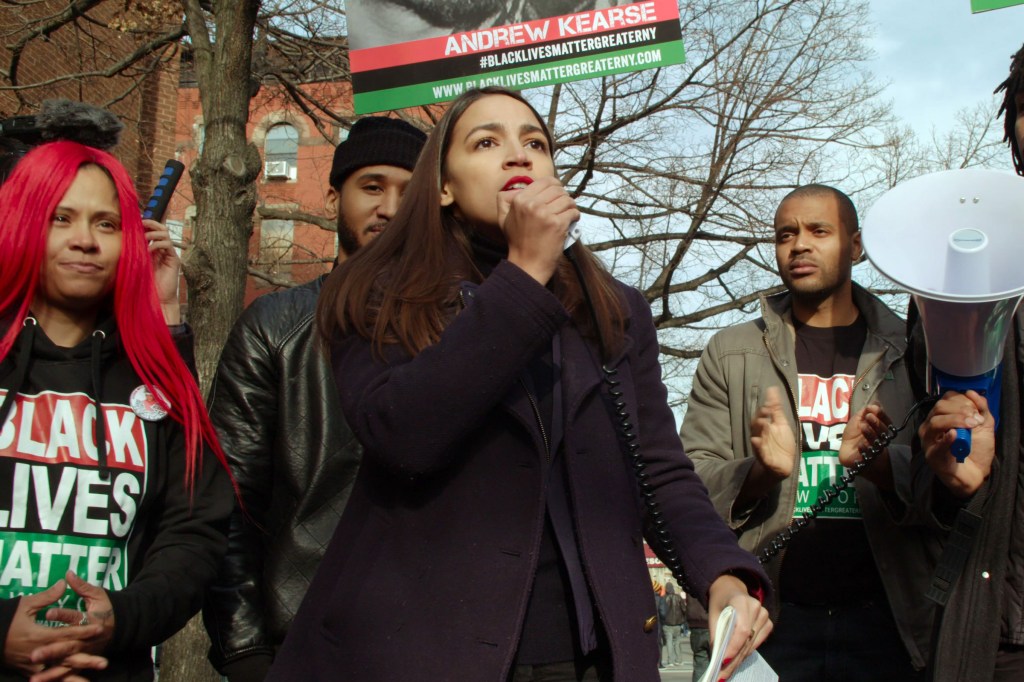
    Enter Alexandra Ocasio-Cortez, a now-infamous spitfire politician making waves on national news and late night television.

    Lears’ film showcases the freshman Congresswoman before the phenomenon, hauling buckets of ice to bartend at a small New York restaurant making it paycheck to paycheck. Knowing what has become of “AOC” makes “Knock Down The House” even more entertaining and engaging, but the heart of this compelling film comes from the struggle.

    “Knock Down The House” follows four first-time political candidates – all women running against incumbent Democratic members of Congress – as they embark on a seemingly impossible task of taking on the establishment in hopes of representing the working class.

    For close to two years, Lears chronicles the journey of Amy Vilela – a grieving mother challenging for the 4th Congressional District seat from Nevada, – Paula Jean Swearengin – a coal miner’s daughter fighting for a Senate seat out of West Virginia, – Cori Bush – an African American woman taking on an incumbent for Missouri’s 1st Congressional District seat in the aftermath of the Ferguson race riots – and Ocasio-Cortez running for New York’s 14th Congressional District seat amid the political machine stacked against her.

    Somewhat surprisingly, “Knock Down The House” doesn’t pit liberals against conservatives. By focusing entirely on the 2018 Democratic primaries, Lears’ film is solely about a movement of political outsiders taking on the establishment rather than issue politics. It’s a challenge to the status quo for lower-case democracy rather than upper-case Democrats.

    Ocasio-Cortez best describes this in the film when she says of her primary race: ‘This is not just about Democrat versus Republican. In fact, it’s so far away from that. It’s not Left or Right. It’s up and down.’

    “Knock Down The House” does a terrific job of showing the uphill battle outside candidates face while taking down established politicians. Lears includes a number of dramatic moments to reflect this difficulty, most notably Ocasio-Cortez and her team needing to collect over 10,000 signatures from New York voters to help ensure she gets on the ballot despite only being required to collect 1,250.

    Lears occasionally struggles with keeping a wide focus to the documentary as the film routinely turns into the Alexandria Ocasio-Cortez show. Balancing a rising star against the other subjects is a tricky endeavor for Lears to manage as Ocasio-Cortez is by far the most dynamic and compelling figure in the entire documentary.

    “Knock Down The House” could have very easily been Ocasio-Cortez’s story alone, but there are great moments with the other women running peppered throughout the film that inform and echo the primary story of the film, Ocasio-Cortez’s improbable win over longtime Democratic stalwart Joe Crowley of New York’s 14th Congressional District.

    Notable in their relative absence from the documentary are the subjects’ primary opponents, especially Crowley, who is often represented through television clips and a striking scene midway through the film where Ocasio-Cortez is forced to “debate” a Crowley representative at a Town Hall in the Bronx as Crowley is too busy to be bothered with campaigning for his own re-election.

    A phone call between Swearengin and Senator Joe Manchin also sets a real distance between the outsider candidates and their established opponents and helps frame for the audience just how distant these political newcomers truly are.

    Lears includes a note within the film’s credits that Crowley, Manchin and Bush’s opponent Lacy Clay all turned down opportunities to appear in the film, which also helps reinforce that establishment candidates do not regard their challengers as being on equal footing.

    The film occasionally ties the four women together, both by capturing them at meetings they all attend or in references to how their individual campaigns could help/hurt each other and future candidates in similar outsider situations.

    Though it follows progressive Democrats fighting for room in their own party, “Knock Down The House” could just as easily have been a story of conservatives trying to break into the Republican establishment.

    The fact that high-quality docs like “Knock Down The House” and the soon-to-be-released “Running With Beto” on HBO later this month are made widely accessible to the public is a great sign for strong independent filmmakers to increase their resolve amid the blockbuster-ization of big screen theaters.

    As political documentaries go, “Knock Down The House” is on par with films like “Weiner,” “Citizenfour” and “Get Me Roger Stone” in terms of both quality, compelling cinema and unparalleled, nuanced access to key figures affecting current events on a daily basis.

    If it is able to qualify for Academy Awards consideration, “Knock Down The House” is a sure-fire best documentary nominee that moviegoers can breeze through on a casual evening at home, well worth the time spent.

  • The Highwaymen: The long road to justice

    The Highwaymen: The long road to justice

    Movies aren’t allowed to take their time on the big screen anymore.

    Describing a film as slow and intimate has become a cinematic death knell as meticulous drama has ventured off the silver screen for greener pastures on television miniseries or streaming services.

    A tale about famed criminals Bonnie Parker and Clyde Barrow, for example, has to have any number of shootouts, car chases and suspense in order to make an impact on audiences, right?

    Thankfully, director John Lee Hancock doesn’t seem to think so.
    His latest feature, “The Highwaymen” made for Netflix, is a deliberately paced, moderate film that keeps the infamous Bonnie and Clyde on the fringes.

    Audiences rarely get more than a glimpse of high heels and tommy-guns because for once, the focus isn’t on the criminals.

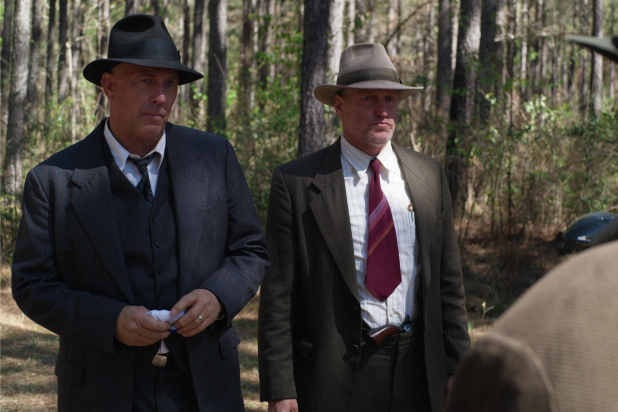
    Screenwriter John Fusco puts viewers squarely in the weathered shoes of retired Texas Ranger Frank Hamer, pulled back into the line of duty as a state-sanctioned vigilante put on Bonnie and Clyde’s trail two years into their cross country crime spree.

    As the film’s title implies, “The Highwaymen” becomes a road movie of sorts, positioning this modern Western of sorts as a slow journey towards inevitability and a hail of gunfire.

    As Hamer, Kevin Costner evokes early John Wayne mixed with late Clint Eastwood for a determined, yet introspective performance.

    Using as few words as possible, Costner maximizes their impact both in what Hamer says and, more importantly, how Hamer says it in a verbal and non-verbal sense.

    It’s easy to feel the road wearing on Hamer’s psyche as Costner carries the burden of being a sanctioned killer of men. There’s a quiet intensity to his performance that is striking the closer viewers grow towards Hamer.

    Costner is matched step for step by a wonderful turn from Woody Harrelson as Hamer’s partner in the hunt, Maney Gault.

    Harrelson is able to bring a modicum of levity to a film in desperate need of emotional release while still maintaining an equal footing with Costner dramatically.

    He is able to keep Maney’s bout with alcoholism a key part of the character without making it the entire character, and a key monologue late in the film may prove to be Harrelson’s best work in at least five years.

    While the film occasionally stumbles out of the starting block, “The Highwaymen” is riveting in its slow-burn once both leads are on the chase and their balance of comfort amidst unease with each other is remarkable.

    Hancock’s film also boasts a solid supporting cast led most notably by Oscar winner Kathy Bates as Texas governor ‘Ma’ Ferguson.

    Cinematographer John Schwartzman brings a vivid eye for the near-center frame, putting the action of a scene just off from where it would be traditionally to create an unique perspective on a familiar tale.

    The heightened palette of the cinematography is striking against the wonderful production design from Michael Corenblith and his team that firmly places “The Highwaymen” in the 1930s while keeping a modern aesthetic that’s reminiscent to Michael Mann’s similar, yet superior John Dillinger film “Public Enemies.”

    Fusco’s screenplay is often far too exacting for the tone Hancock has established, with a tell, don’t show style of dialogue that oversimplifies the narrative for its audience.

    When Fusco slows the tempo down to match the film’s moderate pace, Costner and Harrelson are able to deliver dynamic, compelling performances both on the surface and in the subtext.

    “The Highwaymen” is a testament to the great value two talented actors given the time and space to develop character can be to cinema.

    A somber, yet relentless film, “The Highwaymen” perfectly pairs Costner and Harrelson for a classic modern Western worth checking out.

  • Triple Frontier: The price of being a soldier

    Triple Frontier: The price of being a soldier

    Filmmaker J.C. Chandor is at his best making intimate, dialogue-heavy films about man’s unrelenting quest for the almighty dollar at any price.

    His 2011 debut “Margin Call” was an intense, diabolical examination of the New York financial services industry that earned him an Oscar nomination for the film’s screenplay.

    Three years later, Chandor returned with “A Most Violent Year,” a subtle and nuanced crime drama about the morally ambiguous world of a heating oil company CEO’s quest for the American dream.

    In his first collaboration with streaming service giant Netflix, Chandor’s “Triple Frontier” presents as a familiar heist film with retired military veterans attempting to rob a Brazilian drug lord.

    But Chandor’s films are never so simple.

    “Triple Frontier” examines what makes a soldier once there’s nothing left to fight for and is a somber, introspective film aside from all the gunfire and chase scenes.
    It’s a brutal, uncompromising look at what happens when a team of elite soldiers assemble on a dangerous mission for self instead of country.

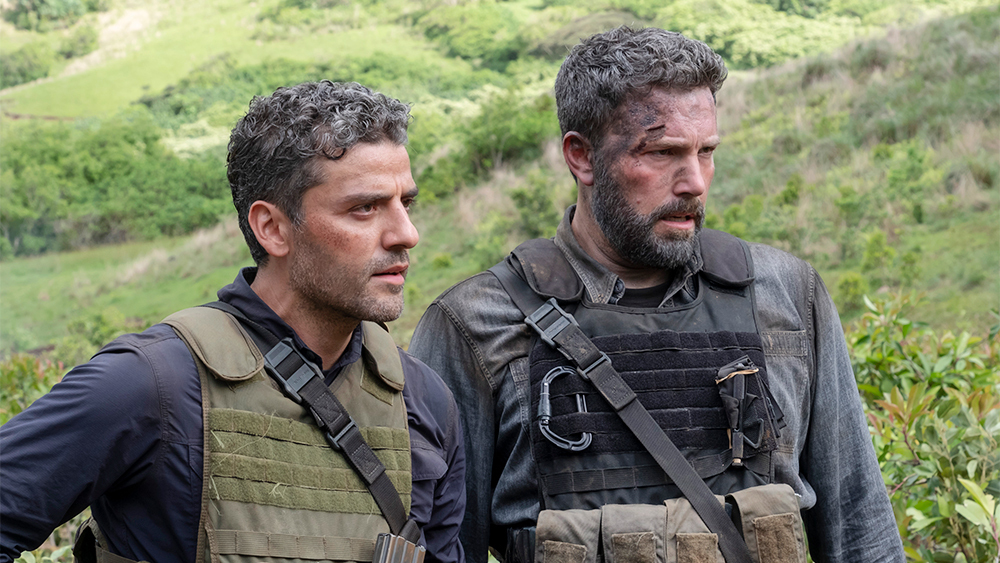
    In “Triple Frontier,” former Special Forces operative Santiago Garcia learns of a hidden fortress of cash in the Brazilian jungle while working for the Colombian government hunting down cocaine dealers.

    With the aid of his reluctant, retired team, Garcia aims to seize millions and take out the region’s deadliest villain.

    Technically profound, yet dense thematically, it’s the kind of film that requires a concentrating, engaged audience with their finger off the stop button, which is a harder sell on Netflix than at a crowded movie theater.

    Key to the overall success of the film is the terrific ensemble cast led by Oscar Isaac as Garcia, whose deliberate performance as the team’s driving force paced the entire film.

    Charlie Hunnam, Garrett Hedlund and Pedro Pascal overcome thinly conceived character archetypes – the pilot with a drug problem, the gunner with a crazy streak, the dutiful straight arrow – and create genuine chemistry among the five leads which carry “Triple Frontier” through its more languishing moments.

    Meanwhile, Ben Affleck gives one of the better turns of his career as Tom Davis, the former team captain emotionally wrecked by retirement, which drove him away from his family. There’s a sincere emptiness to his performance that reflects a sense of deep, profound loss of purpose in post-service veterans.

    Chandor and Affleck carefully build Davis’ mental stability fracturing as the mission develops and the money grows closer in hand.

    Affleck does a tremendous job giving Davis a sense of composure in spite of the increasingly frantic nature of the film’s events and Davis’ evolution over the course of “Triple Frontier” is perhaps the only true character development in the film, which may or may not be intentional on Chandor’s part.

    “Triple Frontier” is the first Chandor film he did not write alone, helping to pen the screenplay with “Zero Dark Thirty” scribe Mark Boal.

    The lack of a complete singular vision does manifest in the somewhat muddled tone of the film, which often skirts character backstory or development for larger general themes like the self worth of military veterans retired from the service or the cost of relentlessly pursuing money.

    Like his other works, “Triple Frontier” can be a grind to get through on an initial viewing because Chandor packs so much into the subtext of his characters.

    There’s some smart musical cues in “Triple Frontier” with a familiar and eclectic soundtrack as well as the best possible cinematic use for Fleetwood Mac’s “The Chain” as a character device.

    On the whole, “Triple Frontier” is a film that deserves multiple viewings to understand the nuance Chandor sews under the surface so that audiences can come down from the shine of the fast-paced action-heist-thriller they were expecting to get for two hours.

    While not quite on par with “A Most Violent Year,” “Triple Frontier” continues Chandor’s strong filmography and is well worth taking a chance on during the next Netflix surfing.

  • High Flying Bird: High-rise hoop dreams

    High Flying Bird: High-rise hoop dreams

    Characters go one-on-one both on and off the court in director Steven Soderbergh’s new sports drama “High Flying Bird,” though not much basketball’s being played.

    There’s a ferocity to the head-to-head dialogue in the screenplay from playwright and “Moonlight” creator Tarell Alvin McCraney that seems to mimic intense showdowns Michael Jordan might have had with defenders in his heyday.

    “High Flying Bird” aggressively attacks racial and class warfare in the high-rises, not on the streets. It’s a film where words come with searing precision to provoke response and engage an audience unprepared for the layers within this simple fictionalized sports story.

    McCraney’s screenplay focuses on NBA player agent Ray Burke, forced to balance a naïve top rookie waiting to enter the league with the demands of his cash-strapped agency amid a lockout between players and owners that’s stopped basketball dead in its tracks for nearly six months.

    Soderbergh’s film is “Michael Clayton” in the style of “Jerry Maguire” with the postmodern cinematography of an iPhone 8.

    “High Flying Bird” cuts against the grain at every turn, defying convention with its rapid fire, two-handed dialogue and masterful use of place to frame scenes and individual performers.

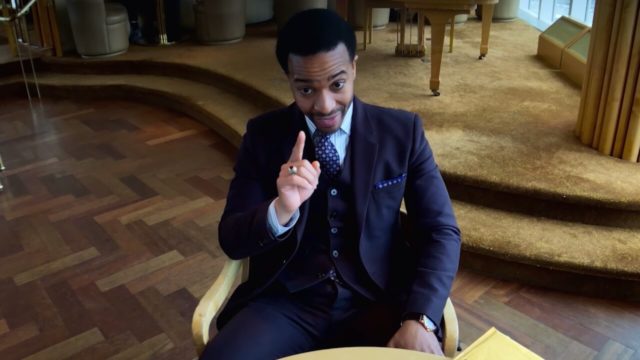
    At the forefront of it all is André Holland, who embraces the film’s kinetic energy as Ray, constantly moving his mouth, his body in brisk strides of intent, his frantically churning mind or some combination of the three.

    From the opening scene, “Bird” soars off the intensity of Holland’s performance, setting a rapid fire pace that carries across the entire film with casual sophistication and confidence.

    The other men of the film deliver solid work: Kyle MacLachlan as a smarmy yet charming team owner, newcomer Melvin Gregg as Ray’s top rookie and an outstanding Bill Duke as area youth basketball coach Spence, whose no-nonsense attitude provides both moments of humor and levity to the film.

    But it’s the women of “Bird” that are the best surprises, especially given how lacking roles for women are in sports films.

    The time in character development given to Zazie Beetz’s Sam, an assistant agent working under Ray, and Sonja Sohn’s Myra, a lawyer representing the players’ union, is unprecedented within the genre and gives “Bird” a tonal sense of balance and depth to the story that is tremendously compelling.

    Both Beetz and Sohn challenge Holland’s Ray in a way that elevates the overall performances, yet it’s a quiet tea with Ray opposite an all star’s mother (played by an unforgettable Jeryl Prescott) that provides one of the film’s most memorable moments.

    With the iPhone and a singular wide angle lens, Soderbergh is able to frame scenes in 360 degrees, giving viewers a full geography of each setting in a matter of seconds.

    A dynamic, pivotal scene late in “Bird” slowly illustrates this freedom as Ray reflects with Spence while shooting hoops in an unbroken camera pan around the court.

    Using the wide angle in close, more intimate shots gives “Bird” a harsh, unique contrast to break up the established visual dynamic of the film. This keeps the viewer interest piqued while maintaining the importance and integrity of McCraney’s screenplay.

    Soaring wide angle shots remove the audience from the urgency of the action and give a sense of anonymity to its bold characters, their machinations made small by the mere placement of the lens. This also allows the world of New York to play an increased role in the film, engulfing and ever present on a moment by moment basis.

    The film is a brisk 90 minutes, sharply and deftly edited by Soderbergh to accentuate the tempo of McCraney’s verbose dialogue, reorienting viewers to examine scenes from new perspectives as words glide off the tip of the tongue.

    The only signposts – stable, static moments to break up a film constantly on the move physically and verbally – are black and white interviews segments with young NBA stars Reggie Jackson, Donovan Mitchell and Karl-Anthony Towns describing their memories of entering the league as a player and businessman.

    “Bird” is intentionally, almost arrogantly complex and vague in its banter and plot. Audiences aren’t supposed to have all the answers on a first viewing.

    Seemingly from nowhere, the first truly great film of the year has arrived in a very 2019 fashion, from an iPhone straight to the streaming service Netflix and back onto a phone again, just like it was meant to be seen.

  • Velvet Buzzsaw: All art is dangerous

    Velvet Buzzsaw: All art is dangerous

    Until recently, buzzworthy films coming out of Robert Redford’s Sundance Film Festival each January took six to eight months to reach a wide audience.

    A major film studio would snap up a noteworthy indie darling and stash it away from moviegoers until the fall and awards season long after the buzz had died down.

    The advent of online streaming services has expedited access for average moviegoers to see these Sundance hits considerably.
    Netflix’s boldest endeavor with

    Sundance – writer/director Dan Gilroy’s artistic supernatural horror-thriller “Velvet Buzzsaw” – sets a new bar for turnaround from festival to mainstream as “Buzzsaw” dropped on the streaming service Friday just four days after premiering at the year’s first major film event.

    Gilroy’s eccentric, occasionally erratic feature serves as both figurative and literal defense for Netflix’s instant gratification film strategy with “Buzzsaw” characters lamenting “What’s the point of art if nobody sees it?”

    Set in the high end Los Angeles art world, “Buzzsaw” revels in Gilroy’s clawing, satirical screenplay that probably thinks itself more important than the artists the film takes down.

    Audiences follow several artists, rival art dealers and a renowned critic as they aimlessly banter for close to 45 minutes until the work of a previously unknown talent is shown.

    The tone changes dramatically as cutting satire turns to light horror masquerading as suspense. Pieces painted partially with the artist’s blood begin to have chilling psychological effects on those who view them for too long.

    For Gilroy the filmmaker, “Buzzsaw” is less dynamic than his audacious and prescient take on the ruthless world of television news with 2014’s “Nightcrawler,” but still reflects a similarly gritty, cynical tone.

    As the name implies, “Buzzsaw” is a somewhat bloody affair, though the film leans away from simple gore for a more exacting, largely unseen violence reliant on implied terror.
    The screenplay is buoyed by a deep, talented cast that give the script’s natural wit added zing.

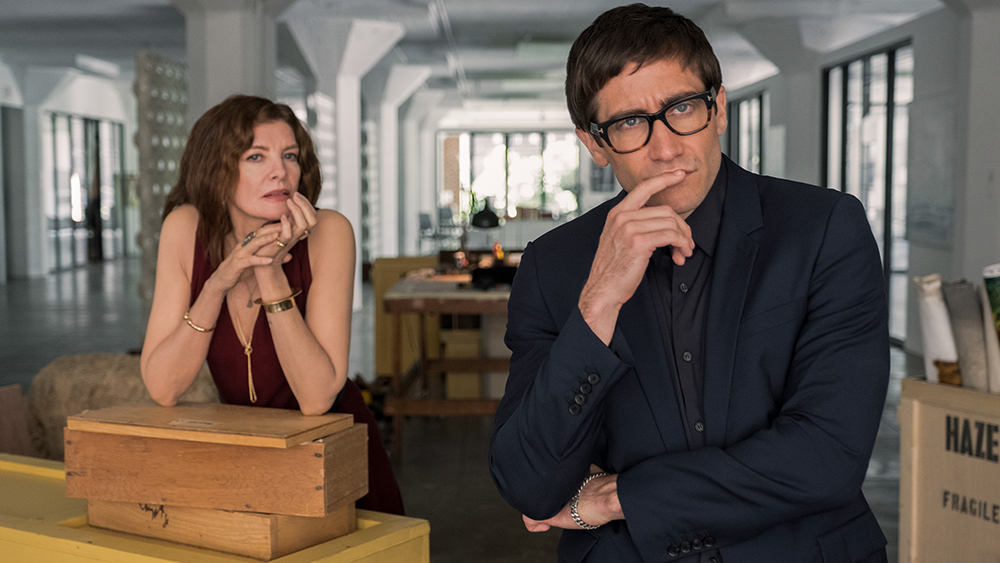
    Gilroy re-teams with his “Nightcrawler” star Jake Gyllenhaal and pulls an increasingly manic, mesmerizing performance out of the Oscar nominated actor.

    As self-important, sexually fluid art critic Morf Vandewalt, Gyllenhaal excels at slowing unraveling Vandewalt’s psyche and allowing audiences to use the character as a touchstone while events become increasingly absurd.

    Rene Russo and Toni Colette both offer a calculated, menacing tone to their work as rival art collectors almost as if they were playing opposite sides of the same coin.

    Although every John Malkovich role begins to feel the same, there’s a seamless authenticity to his turn as a languishing artist tired of the commercialization of his medium and out of ideas.

    Zane Ashton holds her own at times opposite Gyllenhaal as up-and-coming collector Josephina, but the singular charisma within his performance often overshadows her work and the film as a whole.

    With art as the centerpiece of the narrative, it should come as no surprise that “Buzzsaw” takes a lot of chances with camera positioning, lighting and angles that create a visually dynamic spectacle worth watching alone even with the sound off.

    Gilroy and cinematographer Robert Elswit give the film an evocative presence that informs a sense of place and builds toward an unusual climax as viewers wander down the rabbit hole.

    Likely to have been a box office disaster if it had been released theatrically, Gilroy’s film is an ideal choice for streaming as “Buzzsaw” will be endlessly re-watchable for its ardent fans and a cost-free early exit for those who find the esoteric nature of the screenplay unnecessarily snobby.

    Richly artistic and mildly psychotic, “Velvet Buzzsaw” offers up a thrilling Gyllenhaal performance amid an uneven film worth checking out at home.